Get 50% OFF All Premium 3D & STL Models!

In the dynamic realm of digital design, the demand for incredibly detailed and technically sound 3D assets continues to surge. From cinematic automotive renders that blur the line between virtual and reality, to immersive gaming experiences and interactive AR/VR showcases, the quality of a 3D model dictates the success of a project. A cornerstone of this digital landscape is the expertly crafted 3D car model, an asset that requires a meticulous blend of artistic precision and technical optimization.
Today, we delve into the intricate world of professional 3D car modeling, exploring the critical factors that define a truly exceptional asset. We’ll examine the technical underpinnings, workflow considerations across various platforms like 3ds Max, Blender, and Unreal Engine, and demonstrate how a premium model can revolutionize your creative and commercial endeavors. At the heart of our discussion will be an exemplary asset: the Lamborghini Huracán Performante LP 640-4 2017 3D Model, a meticulously optimized digital recreation that embodies the pinnacle of design and technical excellence for discerning professionals.
Choosing the correct file format for your 3D car model is a foundational decision that impacts workflow efficiency, compatibility, and the ultimate application of your asset. Each format serves distinct purposes, offering unique advantages depending on whether you’re working on high-end rendering, real-time game development, or 3D printing. Understanding these nuances is crucial for any serious 3D artist or developer, especially when sourcing assets from platforms like 88cars3d.com which offer a wide array of options.
The .blend format is the native file type for Blender, a powerful and increasingly prevalent open-source 3D creation suite. When you acquire a .blend file, you’re getting a complete, fully editable Blender scene. This includes not just the mesh data, but also materials, textures, lighting setups, cameras, animations, and even physics simulations. For artists deeply integrated into the Blender ecosystem, this format offers unparalleled flexibility for further customization, modification of UVs, material tweaks, or even re-rigging specific components like the active aerodynamic elements of a car like the Lamborghini Huracán Performante. It’s ideal for projects where deep creative control and a Blender-centric pipeline are desired.
.fbx (Filmbox) is a proprietary file format owned by Autodesk, but it has become an undisputed industry standard for exchanging 3D data between various software applications. Its strength lies in its ability to support not only mesh geometry but also critical elements like skeletal animation, blend shapes, lights, cameras, and material properties. This makes .fbx an ideal choice for pipelines involving multiple software packages, such as modeling in 3ds Max, texturing in Substance Painter, and then exporting to game engines like Unreal Engine or Unity. For game development, the .fbx of the Lamborghini Huracán Performante LP 640-4 2017 3D Model would be precisely what you’d import for character rigs, vehicle animations, and scene composition.
The .obj (Wavefront OBJ) format is one of the oldest and most universally supported 3D file formats. It primarily stores geometric data, including vertices, normals, UV coordinates, and faces, often accompanied by an .mtl (material template library) file for basic material properties and texture references. While .obj does not support animation or rigging, its widespread compatibility across virtually all 3D software makes it an excellent choice for straightforward mesh exchange. If you need a clean mesh of the Lamborghini Huracán Performante for sculpting, retopology, or simply as a base for a new project in a less common 3D application, .obj is a reliable fallback.
.glb (GL Transmission Format Binary) is the binary version of glTF, a royalty-free specification for the efficient transmission and loading of 3D scenes and models by applications. What makes .glb stand out is its “self-contained” nature; it bundles all necessary data, including textures and animations, into a single file. This optimization makes it incredibly efficient for web-based 3D viewers, augmented reality (AR), and virtual reality (VR) applications. For showcasing the Lamborghini Huracán Performante LP 640-4 2017 3D Model in a browser-based configurator or an AR experience on a mobile device, .glb is the format of choice, ensuring quick loading and excellent visual fidelity.
.stl (Stereolithography) is the de facto standard for 3D printing. This format represents a 3D model as a series of connected triangles, describing only the surface geometry without any color, texture, or material information. When preparing the Lamborghini Huracán Performante for a physical print, converting it to .stl is the crucial step. It ensures the model is watertight and manifold, characteristics essential for successful fabrication. While not suitable for rendering or animation, its simplicity and ubiquity in the 3D printing world make it indispensable for creating tangible models.
The .ply (Polygon File Format) is another format for storing 3D data, particularly useful for scanned data, CAD, and scientific applications where precision and a wider range of data types are important. Beyond vertices and faces, .ply can also store color, transparency, confidence values, and normal vectors for each vertex, making it more comprehensive for certain analytical tasks than .obj. While less common for general animation or game development, it serves niche applications requiring highly accurate mesh representation, such as reverse engineering or detailed surface analysis of automotive components.
While not a universal file format in the same vein as .fbx or .obj, the inclusion of .unreal signifies an asset that has been specifically prepared and optimized for direct integration into Unreal Engine. This typically means the model comes as a .uasset file or an optimized .fbx structure ready for import, complete with appropriate materials, UVs, collision meshes, and sometimes even LODs (Level of Detail) already configured. For developers looking to drop the Lamborghini Huracán Performante LP 640-4 2017 3D Model straight into an Unreal project without extensive setup, this format saves considerable time and effort, ensuring it’s battle-tested for real-time performance.
Finally, the .max format is the native scene file for Autodesk 3ds Max, a long-standing industry leader for 3D modeling, animation, and rendering. Similar to .blend, a .max file contains a complete 3ds Max scene, including all geometry, modifiers, materials, textures, lights, cameras, and animation data. For users of 3ds Max, this format provides the most comprehensive access to the original project, allowing for intricate modifications, advanced rigging, and high-fidelity rendering using integrated renderers like V-Ray or Corona. Professionals utilizing 3ds Max for automotive rendering or advanced visualizations will find the .max version of the Lamborghini Huracán Performante LP 640-4 2017 3D Model invaluable for their workflows.
Creating a high-quality 3D car model, especially for an iconic vehicle like the Lamborghini Huracán Performante LP 640-4 2017, is a sophisticated art form demanding precision and technical mastery. It’s not just about aesthetics; it’s about the underlying structure that enables versatility across different applications.
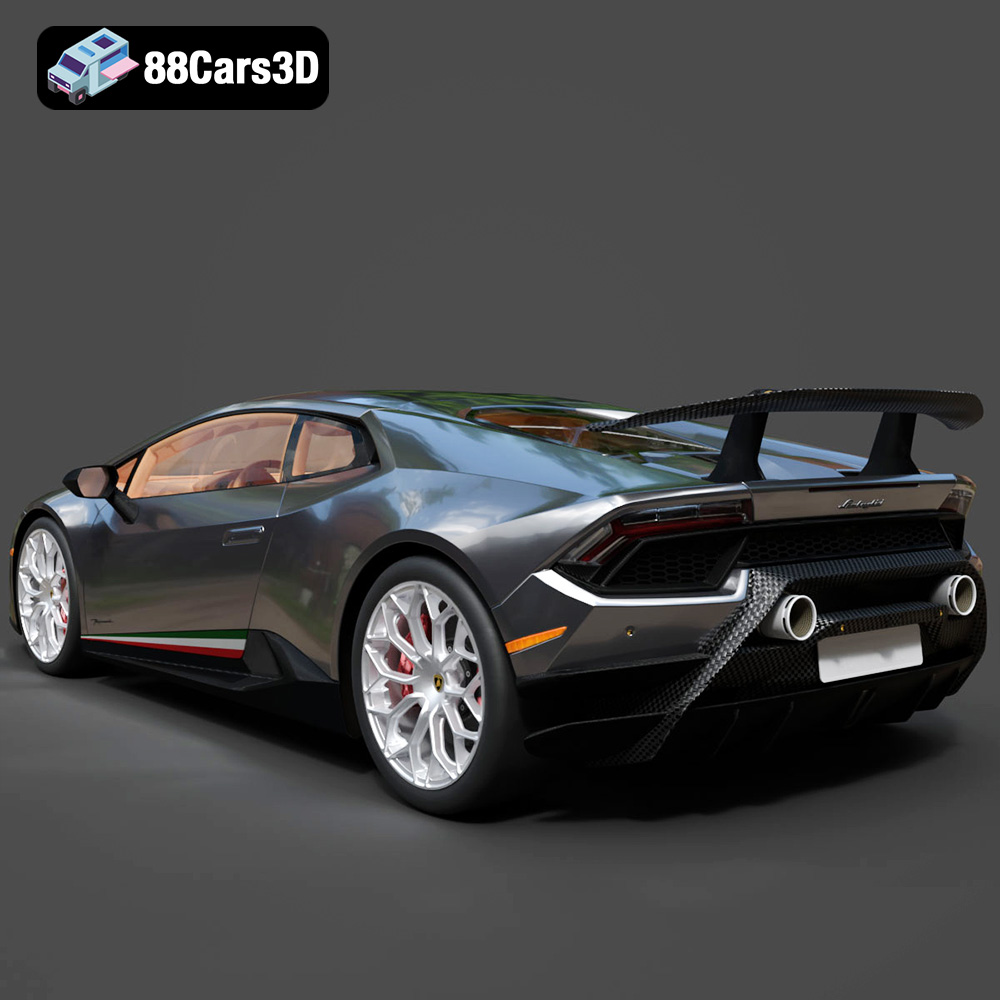
The first step in crafting any impressive 3D car model is an unwavering commitment to accuracy. For the Lamborghini Huracán Performante, this means meticulously replicating its distinctive aggressive aerodynamic geometry, inspired by its Nürburgring pedigree. Details like the signature high-mounted dual exhausts, the massive forged composite rear wing, and the deep front splitter are not merely sculpted but dimensionally precise. Every curve, vent, and panel gap must faithfully mirror the real-world counterpart. The Lamborghini Huracán Performante LP 640-4 2017 3D Model exemplifies this, capturing the razor-sharp aesthetic and the revolutionary ALA (Aerodinamica Lamborghini Attiva) system that defines its track-focused persona.
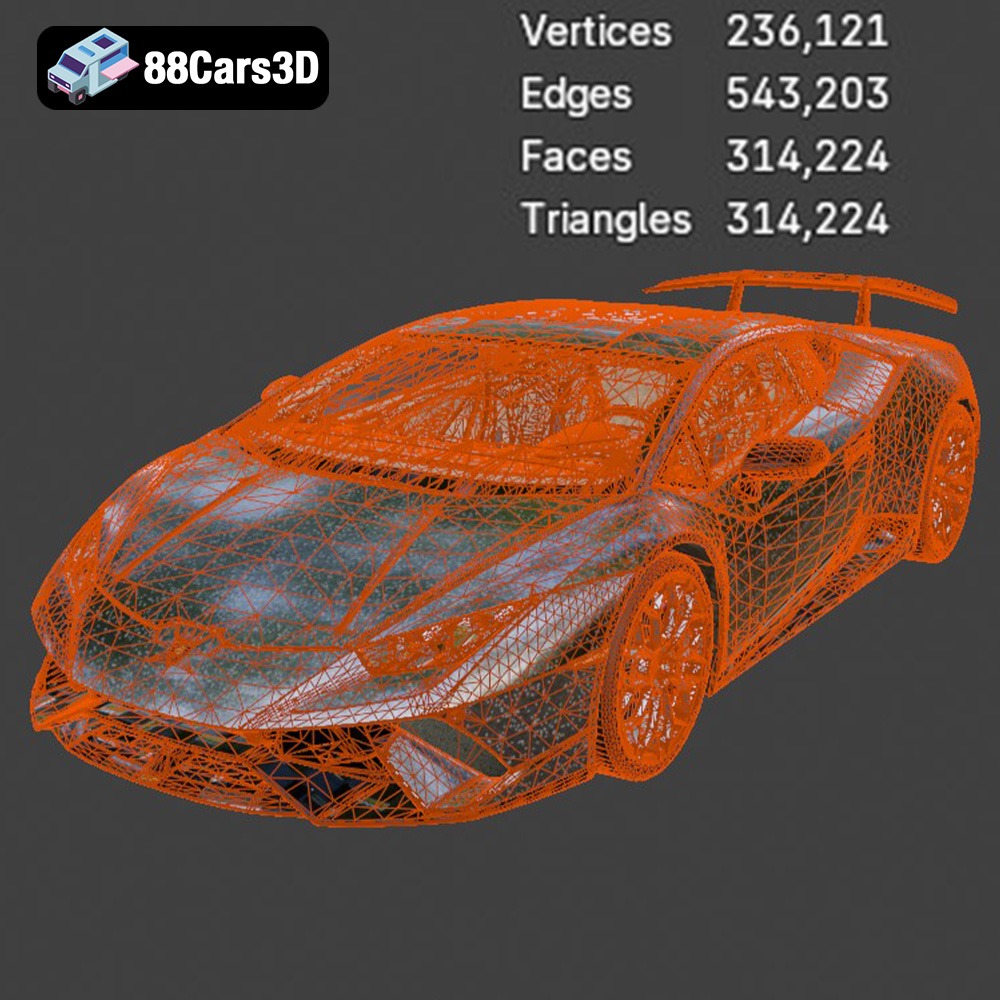
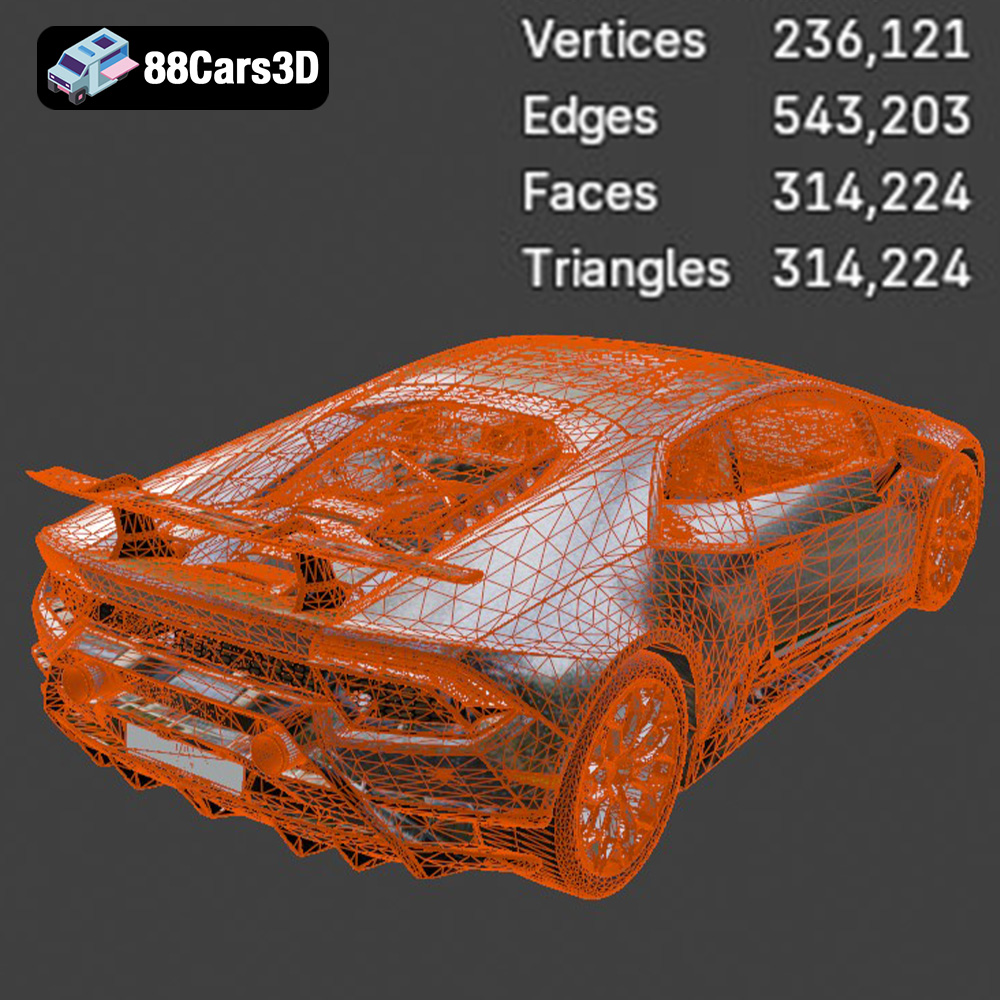
Beyond visual fidelity, the technical foundation of a 3D model lies in its topology – the arrangement of vertices, edges, and faces that form the mesh. A clean, optimized topology is paramount for smooth deformations during animation, efficient UV mapping, and scalable performance across different render engines and real-time applications. The Lamborghini Huracán Performante LP 640-4 2017 3D Model boasts an incredibly efficient mid-polygon topology, with just over 314,000 triangles. This strikes a flawless balance: it’s detailed enough for stunning close-up automotive renders, yet lightweight enough to serve as a hero vehicle in modern game engines. The quad-based structure, as indicated by its wireframe renders, is a hallmark of professional modeling, facilitating easier subdivision and cleaner UV unwrapping.
This level of optimization means the model can perform smoothly at 60+ FPS in demanding environments like Unreal Engine or Unity, making it an absolute dream for game developers.
The visual impact of a 3D car model is heavily reliant on its materials and textures. For a supercar like the Performante, this includes intricate details such as Lamborghini’s unique “Forged Composite” carbon fiber textures on the wing and aerodynamic elements, the metallic sheen of the paintwork, and the intricate details of the lightweight forged alloy wheels and massive carbon-ceramic brake calipers. The model provides elements mapped for these specialized textures, allowing artists to achieve photorealistic results in their renders. Interior features, such as premium sport bucket seat geometry designed for Alcantara texture mapping and the hexagonal-themed center console, further contribute to the immersive experience, whether for a static render or a first-person POV in VR.
In the fiercely competitive world of game development, balancing visual splendor with real-time performance is a perpetual challenge. High-quality 3D car models like the Lamborghini Huracán Performante LP 640-4 2017 3D Model offer game developers a crucial head start, providing a production-ready asset tailored for demanding interactive environments.
Modern game engines such as Unreal Engine and Unity require assets that are not only visually impressive but also highly optimized for real-time rendering. The Lamborghini Huracán Performante model, with its mid-polygon count of approximately 314k triangles, hits this sweet spot perfectly. This poly count is high enough to retain crucial detail for a hero vehicle – a car that players will drive and interact with extensively – yet low enough to ensure smooth frame rates. For games like high-speed racing simulators, open-world titles, or VR driving experiences, such optimization is non-negotiable. Developers can drop this model into their scenes knowing it will perform efficiently without bogging down the rendering pipeline.
A static model, no matter how beautiful, won’t suffice for an interactive experience. The Lamborghini Huracán Performante LP 640-4 2017 3D Model is designed with animation in mind. Separate components for wheels, steering, and doors allow game developers to rig the vehicle for realistic movement and interaction. This means players can experience:
This pre-segmented geometry significantly reduces development time, allowing teams to focus on gameplay mechanics rather than basic asset preparation.
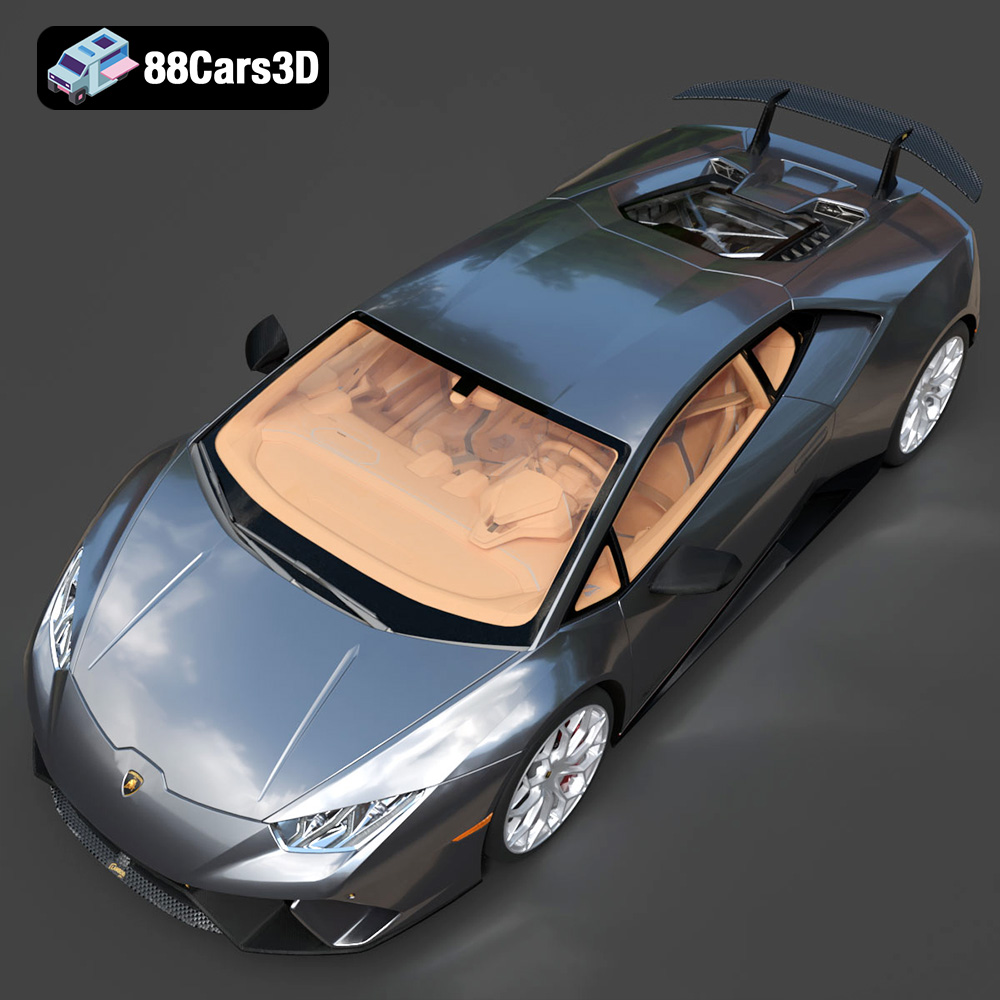
For games or VR experiences that offer a first-person perspective, the interior of a vehicle is just as important as the exterior. The Lamborghini Huracán Performante model features an authentic, track-focused cockpit layout, optimized for smooth first-person POV. This includes premium sport bucket seat geometry, the signature flat-bottom steering wheel with the red Anima driving mode selector, and the hexagonal-themed center console. These details are carefully crafted to provide an immersive experience without incurring unnecessary performance costs, ensuring that players feel truly “inside” the supercar.
The power of a high-quality 3D car model extends far beyond game engines. In the realm of automotive rendering and visualization, these assets are the foundation for stunning marketing campaigns, product showcases, and immersive virtual experiences that define the luxury automotive industry.
For advertising agencies, automotive designers, and visualization specialists, photorealism is the ultimate goal. Software like 3ds Max, Blender (with Cycles), and their respective rendering engines (V-Ray, Corona Renderer, Arnold) are crucial tools. The Lamborghini Huracán Performante LP 640-4 2017 3D Model, with its accurate proportions, clean topology, and well-defined material zones, serves as an exceptional base for achieving these hyper-realistic visuals. Artists can:
The inclusion of .max and .blend formats ensures native compatibility with these powerful platforms, giving artists complete control over every aspect of the scene.
Consider a scenario where an advertising agency needs to create a high-octane commercial for a new luxury vehicle line. Rather than organizing expensive and logistically challenging physical photoshoots, they can utilize a premium 3D asset like the Lamborghini Huracán Performante. Starting with the model from 88cars3d.com, artists in 3ds Max could integrate the car into various dynamic environments – perhaps racing through a digitally created mountain pass or parked majestically in front of a futuristic skyscraper. With the model’s pre-segmented parts for wheels and steering, they can animate realistic driving sequences and even customize the exterior paint colors to match striking factory Ad Personam options, achieving a level of creative control and cost-effectiveness impossible with physical production.
The future of automotive sales and marketing increasingly involves augmented reality (AR) and virtual reality (VR). Optimized 3D models are essential for creating interactive digital showrooms, supercar configurators, and mobile AR experiences. The Performante model’s efficient poly count makes it excellent for these applications, ensuring smooth performance on a range of devices. Customers could virtually walk around the car, open its doors, explore the interior in VR, or even place a life-sized Lamborghini Huracán Performante in their driveway using AR on their smartphone – all powered by a single, high-fidelity 3D asset. The .glb format is particularly beneficial for these web and mobile-centric deployments.
While often associated with digital displays, high-quality 3D car models also bridge the gap into the physical world through 3D printing. For hobbyists, collectors, and even professional prototypers, converting a detailed digital asset into a tangible object offers a unique dimension of appreciation and utility.
The primary format for 3D printing is .stl (Stereolithography). The Lamborghini Huracán Performante LP 640-4 2017 3D Model is convertible to this format, allowing users to transform the digital supercar into a physical scale model. This process requires careful attention to detail to ensure the integrity of the mesh for successful printing. Key considerations include:
The model’s clean topology, designed for smooth surfaces and sharp edges, translates well into a physical print, capturing the aggressive aero edges and intricate wheel spokes of the Performante.
Achieving a high-quality 3D print of a detailed automotive model requires specific settings and techniques. The product description provides excellent guidance:
This level of detailed guidance ensures that hobbyists and professionals alike can achieve outstanding physical replicas of the Lamborghini Huracán Performante LP 640-4 2017.
Once printed, the journey to a flawless physical model continues with post-processing. This typically involves:
The meticulous detail of the original 3D car model ensures that even after the physical printing and finishing process, the essence of the Lamborghini Huracán Performante is perfectly preserved.
The utility of a high-fidelity 3D car model like the Lamborghini Huracán Performante LP 640-4 2017 3D Model extends across a multitude of professional domains, significantly impacting efficiency and creative possibilities.
For an indie game studio working on a new racing simulator, sourcing premium, game-ready assets is paramount. Developing a highly detailed vehicle from scratch can consume hundreds of hours of an artist’s time, diverting resources from core gameplay development. By acquiring the Lamborghini Huracán Performante model from 88cars3d.com, the studio gains immediate access to a fully optimized asset. Its 314k triangle count and clean topology mean it can be directly integrated into Unreal Engine or Unity, saving weeks of modeling, optimization, and UV mapping. The pre-segmented wheels and steering components further streamline the rigging process, allowing programmers to quickly implement driving physics and animation. This translates directly into faster development cycles and a higher-quality end product for players.
In the competitive automotive market, breathtaking visuals are key to capturing consumer attention. A major automotive brand might not be selling a Lamborghini directly, but could use such a model in a broader “dream car garage” advertisement or a virtual concept car configurator. An advertising agency, tasked with creating a stunning visual campaign, can leverage the photorealistic capabilities of the Performante model. Using 3ds Max or Blender, they can create dynamic scenes that are impossible or cost-prohibitive in real life. Imagine the Huracán Performante dramatically parked on the surface of Mars, or racing through a futuristic cityscape – these scenarios are only limited by imagination, not by the cost of location scouting or logistics, thanks to high-quality 3D car models.
For companies specializing in augmented and virtual reality experiences, assets that are both visually rich and performant are gold. A luxury car dealership developing an AR app for potential buyers could integrate the Lamborghini Huracán Performante LP 640-4 2017 3D Model. Customers could then use their phones to project a life-sized virtual Performante into their driveways, examining it from every angle, exploring its interior, and even customizing paint colors in real-time. The model’s optimized geometry and multiple file formats (especially .glb for web/AR) ensure a seamless and responsive experience on mobile devices, providing an innovative and engaging way to interact with a dream car before a physical visit. This bridges the gap between digital aspiration and tangible desire.
Beyond commercial applications, high-fidelity 3D car models serve valuable educational and archival purposes. Design schools can use the Performante model to teach students about advanced automotive aerodynamics, surface modeling techniques, and material rendering. Museums or automotive historians could use the model to digitally preserve iconic vehicles, creating interactive exhibits that allow users to explore the intricate details of a supercar that might be rare or inaccessible in person. The precision of these 3D car models ensures that every detail, from the ALA system to the forged composite textures, is accurately represented for study and appreciation.
The journey through the creation and application of high-fidelity 3D car models reveals a critical intersection of art and engineering. From the foundational choice of file formats to the meticulous sculpting of topology and the sophisticated rendering of materials, every step contributes to an asset’s versatility and value. The Lamborghini Huracán Performante LP 640-4 2017 3D Model stands as a testament to this intricate process, offering a meticulously optimized digital recreation that excels across a spectrum of professional applications.
Whether you are a game developer crafting the next-generation racing simulator, an automotive renderer striving for photorealistic marketing visuals, an AR/VR innovator building immersive digital showrooms, or a hobbyist aspiring to 3D print a stunning replica, this model provides the robust foundation you need. Its balanced poly count, accurate detailing, and clean geometry ensure it’s a production-ready asset right out of the box, saving invaluable development time and elevating the quality of your output. As the demand for sophisticated digital content continues to grow, investing in high-quality 3D car models from trusted sources like 88cars3d.com is not just a purchase, but a strategic decision to empower your creative vision and drive your projects forward with unparalleled efficiency and visual fidelity.
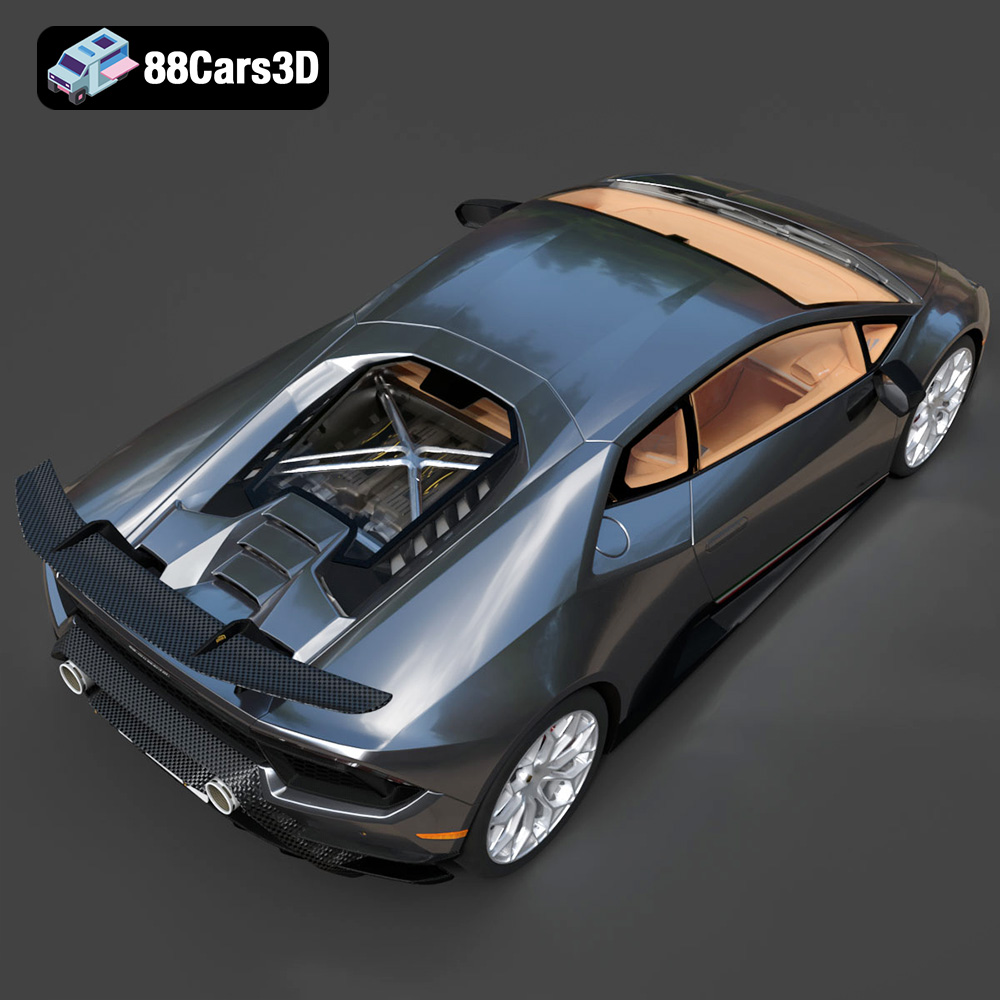
The Lamborghini Huracán Performante LP 640-4 (2017) 3D Model is a meticulously optimized digital recreation of the track-focused Italian supercar. Born to dominate the Nürburgring, the Performante takes the dramatic styling of the standard Huracán and injects it with aggressive, motorsport-derived aerodynamics, most notably the revolutionary ALA (Aerodinamica Lamborghini Attiva) system and widespread use of forged carbon fiber. This 3D model accurately captures the razor-sharp aesthetic of the Performante, featuring the signature high-mounted dual exhausts, the massive forged composite rear wing, a deep front splitter, and the unmistakable wedge-shaped profile. Built with an incredibly efficient and clean mid-polygon topology (just over 314k triangles), it strikes a flawless balance. It provides exceptional visual fidelity for stunning close-up automotive renders while remaining perfectly lightweight for use as a hero vehicle in modern real-time game engines.
$9.99
.automotive
.blend
.fbx
.huracan
.lamborghini
.rendering
.sports car
.stl
.supercar
.v10
3D Print Model
3D Printable
and modern Volvo factory colors (like Sage Green
Automotive Collectible
Car Prototype
car-3d-model
Digital Manufacture
FDM Ready
game-ready
Glacier Silver
lp640-4
Manifold Geometry.
mid-poly
Miniature Car
or Crystal White) paired with a gloss black roof.3D Printing
performante
Physical Asset
primer
Resin Print
Scale Model
SLA
Tabletop Display
track-car
VR/AR
wheel arches