Get 50% OFF All Premium 3D & STL Models!

“`html
3D printing has revolutionized model making, allowing enthusiasts to bring their favorite cars to life in miniature. But what truly sets a 3D printed car model apart is the intricate detail – the accurate badges, emblems, and custom touches that capture the essence of the original vehicle. This comprehensive guide will walk you through the process of adding car logos, emblems, and custom details to your STL files, ensuring stunningly realistic and personalized 3D printed car models. Whether you’re a seasoned 3D printing veteran or just starting your journey, this article provides the technical knowledge and practical tips needed to elevate your creations. We’ll explore essential software tools, mesh manipulation techniques, and best practices for achieving professional-quality results. Platforms like 88cars3d.com offer a fantastic starting point with a wide array of high-quality car models in STL format, ready to be customized with your unique flair. Get ready to transform your 3D prints from simple models into breathtaking replicas.
Before diving into adding details, it’s crucial to understand the foundation: the STL file format and its underlying mesh structure. STL (Stereolithography) files represent 3D models as a collection of interconnected triangles that approximate the surface geometry. The density and arrangement of these triangles, known as the mesh topology, directly impact the print quality and the level of detail that can be accurately reproduced.
A higher triangle count results in a smoother surface and finer details, but it also increases file size and processing time. For car models, especially when adding small logos and emblems, a balance between detail and manageability is key. Think of it like image resolution: a higher resolution image allows for finer details, but the file size is much larger. In 3D printing, this translates to more accurate curves and sharper edges on your logos and emblems.
A “manifold” mesh is a closed, watertight surface essential for successful 3D printing. Non-manifold edges or gaps in the mesh can lead to printing errors and incomplete models. Software like Meshmixer and Netfabb are invaluable for detecting and automatically repairing these issues. These tools analyze the STL file, identify errors such as holes, flipped normals (surfaces pointing the wrong way), and intersecting triangles, and then automatically correct them, ensuring a printable and high-quality model.
Several software options are available for adding logos and details to STL files, each with its strengths and weaknesses. The choice depends on your experience level, budget, and the complexity of the desired modifications. Popular choices include Meshmixer, Blender, and Tinkercad.
Meshmixer excels in sculpting, combining meshes, and adding details. Its “Sculpt” tools allow you to directly manipulate the surface of the model, creating embossed or engraved logos. The “Boolean” operations (Union, Difference, Intersection) can be used to seamlessly merge logos onto the car body. For example, you can import an STL file of a logo, position it on the car model, and then use the “Boolean Difference” operation to subtract the logo shape from the car’s surface, creating an engraved effect.
Blender is a powerful, open-source 3D creation suite offering unparalleled control over mesh editing and sculpting. While it has a steeper learning curve, Blender provides the tools necessary for creating complex and highly detailed models. You can import logos as vector graphics (SVG), convert them to 3D meshes, and then precisely position and integrate them into the car model’s surface. Blender’s modifiers, such as the “Shrinkwrap” modifier, are particularly useful for conforming the logo mesh to the curved surfaces of the car body.
The quality of your logo or emblem files is critical for achieving crisp and detailed 3D prints. Ideally, you should start with vector graphics (SVG format) or high-resolution images that can be converted into 3D meshes. Poor quality source files will result in pixelated or distorted logos on your 3D printed model.
Vector graphics (SVG) are resolution-independent, meaning they can be scaled without losing quality. Raster images (JPEG, PNG) are composed of pixels and will become pixelated when enlarged. For logos, SVG files are the preferred choice as they ensure sharp edges and clean lines, even when scaled up for 3D printing. Programs like Adobe Illustrator or Inkscape can be used to create or convert logos into SVG format.
If you only have raster images, you can use online converters or software like Blender to trace the image and create a 3D mesh. However, be aware that this process can introduce inaccuracies and require manual cleanup to ensure a clean and printable mesh. When converting, experiment with different threshold settings to achieve the best balance between detail and simplicity. Too many triangles can overload your printer, while too few can result in a blocky and unrefined logo.
Now, let’s walk through the process of adding logos and emblems using Meshmixer, a widely accessible and user-friendly software. This process can be adapted for other software as well, but Meshmixer provides a great starting point.
Once you’ve added the logos and emblems, the next step is to prepare the model for 3D printing. This involves slicing the STL file into layers and generating support structures to prevent overhangs from collapsing during printing. The right settings can drastically improve the quality and success rate of your prints.
Layer height determines the vertical resolution of your print. Lower layer heights (e.g., 0.1mm) produce smoother surfaces and finer details but increase print time. For car models with intricate logos, a layer height between 0.1mm and 0.15mm is often a good compromise. Infill density affects the strength and weight of the model. For purely aesthetic models, a low infill (e.g., 10-15%) is sufficient. For functional parts or models that need to withstand stress, a higher infill (e.g., 20-30%) is recommended. The pattern of the infill can also be adjusted; for example, a gyroid infill provides excellent strength in all directions. When downloading models from marketplaces such as 88cars3d.com, ensure you check the recommended settings for optimal results.
Support structures are temporary structures that support overhangs and prevent them from collapsing during printing. Software like Cura and PrusaSlicer offer automatic support generation, but you can also manually add or modify supports to optimize them for specific areas. Consider using tree supports, which are more efficient in material usage and easier to remove than linear supports. After printing, carefully remove the supports using pliers or a hobby knife. Post-processing techniques like sanding can be used to smooth any remaining support marks.
The choice of material and printer settings significantly impact the final result. Different materials offer different properties in terms of strength, flexibility, and surface finish. Understanding these properties and tailoring your printer settings accordingly is essential for achieving optimal results.
FDM (Fused Deposition Modeling) printing uses filaments of plastic that are melted and extruded layer by layer. FDM printers are generally more affordable and suitable for larger models, but they typically produce less detailed prints than resin printers. Resin printing uses liquid resin that is cured by UV light. Resin printers excel in producing highly detailed models with smooth surfaces, making them ideal for intricate logos and emblems. However, resin prints can be more brittle and require post-processing steps like washing and curing.
For FDM printing, use a smaller nozzle size (e.g., 0.4mm or 0.25mm) to improve detail. Reduce the print speed to allow for more precise deposition of material. Adjust the temperature settings according to the material manufacturer’s recommendations. For resin printing, optimize the exposure time for each layer to ensure proper curing and prevent warping. Calibrate your printer regularly and perform test prints to fine-tune the settings for your specific material and model.
Even with careful planning and preparation, 3D printing can sometimes present challenges. Understanding common issues and having effective troubleshooting strategies is crucial for achieving successful prints. Furthermore, post-processing techniques can enhance the appearance and durability of your finished model.
Warping occurs when the corners of the print lift off the print bed due to uneven cooling. To prevent warping, ensure the print bed is properly leveled and heated. Use bed adhesion aids like glue stick or hairspray. Enclosing the printer can also help to maintain a consistent temperature and prevent drafts. For materials like ABS, a heated enclosure is essential.
Post-processing techniques can significantly improve the surface finish of your 3D printed car model. Sanding with progressively finer grits of sandpaper smooths out layer lines and imperfections. Painting adds color and realism to the model. Use a primer before painting to ensure proper adhesion. Consider using an airbrush for a smooth and even finish. If your car model consists of multiple parts, carefully assemble them using glue or fasteners. Platforms like 88cars3d.com offer print-ready STL files that are designed for easy assembly.
Adding car logos, emblems, and custom details to STL files is a rewarding process that allows you to create truly unique and personalized 3D printed car models. By understanding the intricacies of STL file structure, mastering mesh manipulation techniques, and optimizing slicing and printer settings, you can achieve professional-quality results. Remember to start with high-quality logo files, choose the right software for your skill level, and carefully prepare your model for printing. Experiment with different materials and settings to find the optimal combination for your specific project. Finally, don’t be afraid to troubleshoot and learn from your mistakes. With practice and patience, you’ll be able to transform your 3D prints into stunningly realistic and personalized replicas of your favorite cars. Now, armed with this knowledge, take your 3D printed car models to the next level and showcase your passion for automotive design!
“`
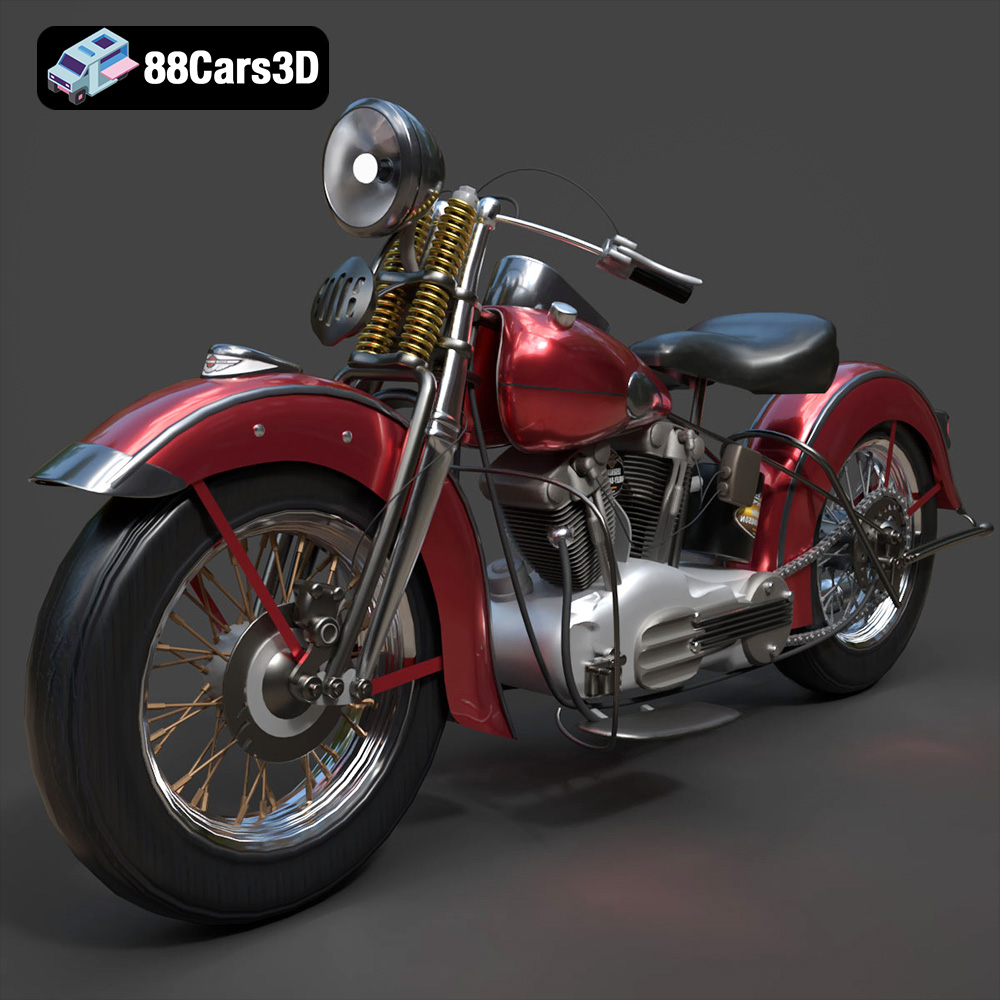
Texture: Yes
Material: Yes
Download the Harley Davidson F 1946 3D Model featuring clean geometry, realistic detailing, and a fully modeled interior. Includes .blend, .fbx, .obj, .glb, .stl, .ply, .unreal, and .max formats for rendering, simulation, and game development.
Price: $19.99
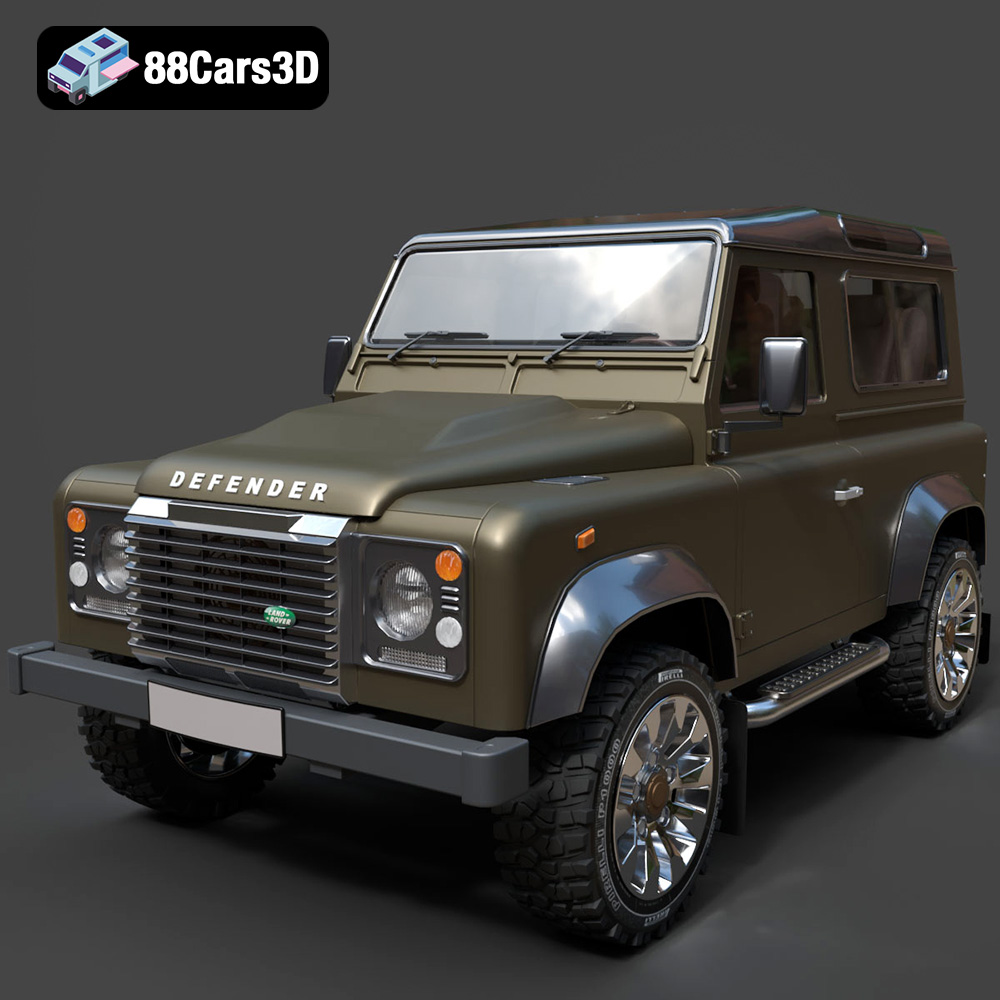
Texture: Yes
Material: Yes
Download the Land Rover Defender Works V8 3D Model featuring clean geometry, realistic detailing, and a fully modeled interior. Includes .blend, .fbx, .obj, .glb, .stl, .ply, .unreal, and .max formats for rendering, simulation, and game development.
Price: $19.99
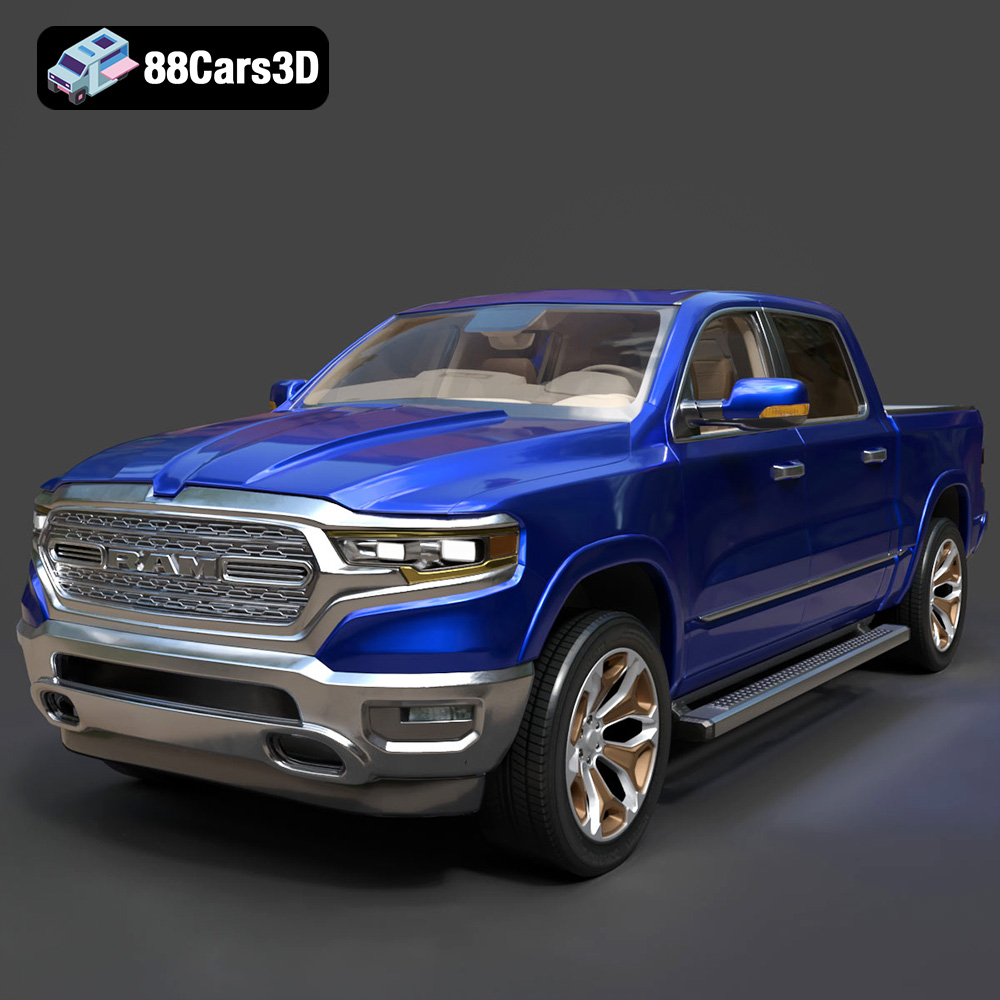
Texture: Yes
Material: Yes
Download the Dodge RAM 2019 3D Model featuring clean geometry, realistic detailing, and a fully modeled interior. Includes .blend, .fbx, .obj, .glb, .stl, .ply, .unreal, and .max formats for rendering, simulation, and game development.
Price: $19.99
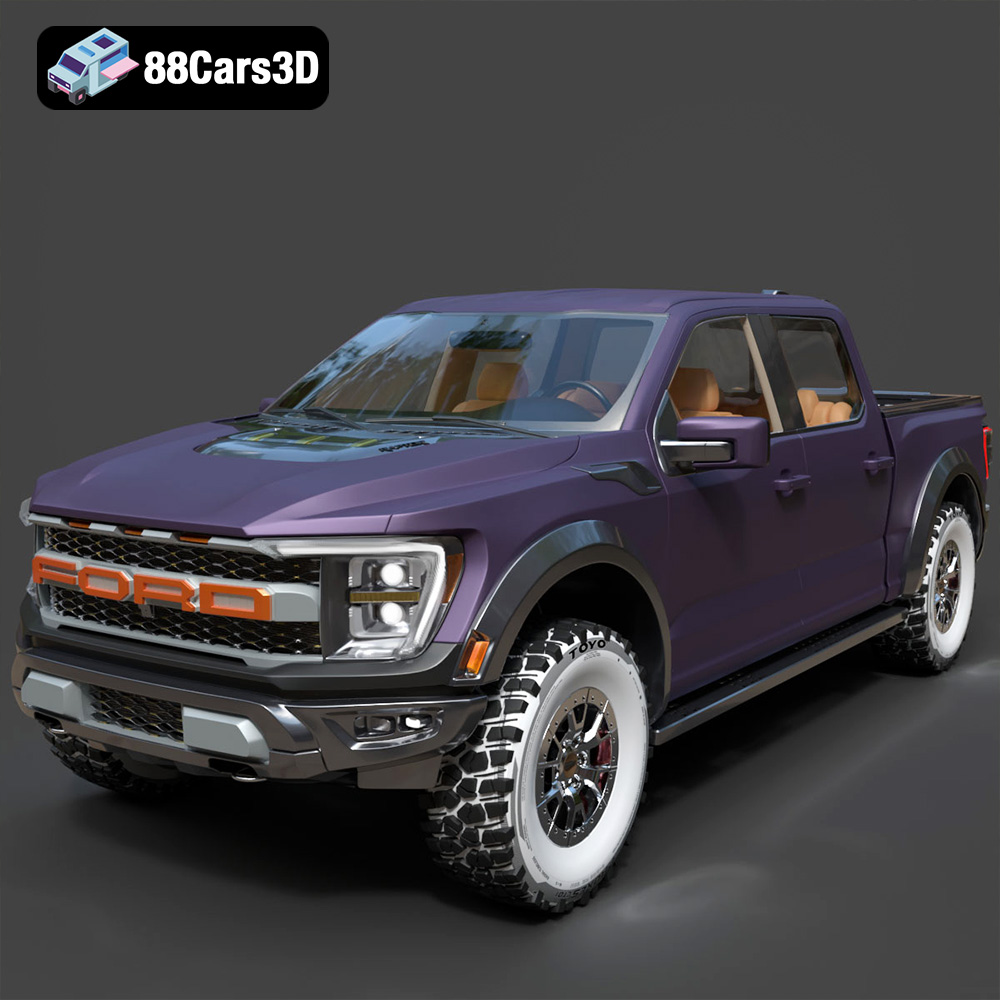
Texture: Yes | Material: Yes Download the ultra-high-detail Ford F-150 Raptor 2021 3D Model (8.73M Triangles). Features uncompromised widebody styling, fully modeled Fox Live Valve suspension, 37-inch tires, and interior. Perfect for premium VFX, cinematic rendering, and ArchViz. Includes .blend, .fbx, .obj, .glb, .stl, and .max formats.
Price: $29.99
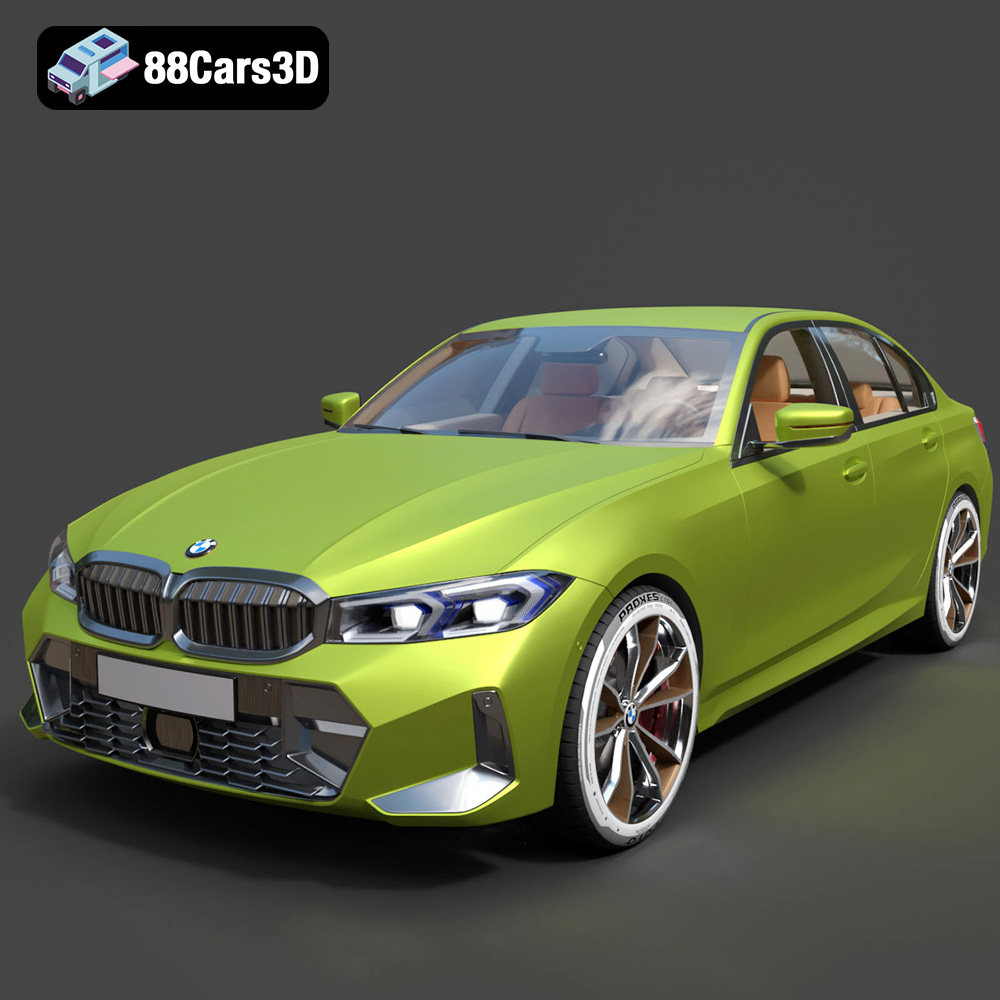
Texture: Yes | Material: Yes Download the ultra-high-detail BMW 3 Series Limousine (2022) 3D Model (4.16M Triangles). Features the modernized G20 LCI exterior, the all-new BMW Curved Display interior, and ultra-dense topology. Perfect for ArchViz, VFX, and cinematic rendering. Includes .blend, .fbx, .obj, .glb, .stl, and .max formats.
Price: $19.99
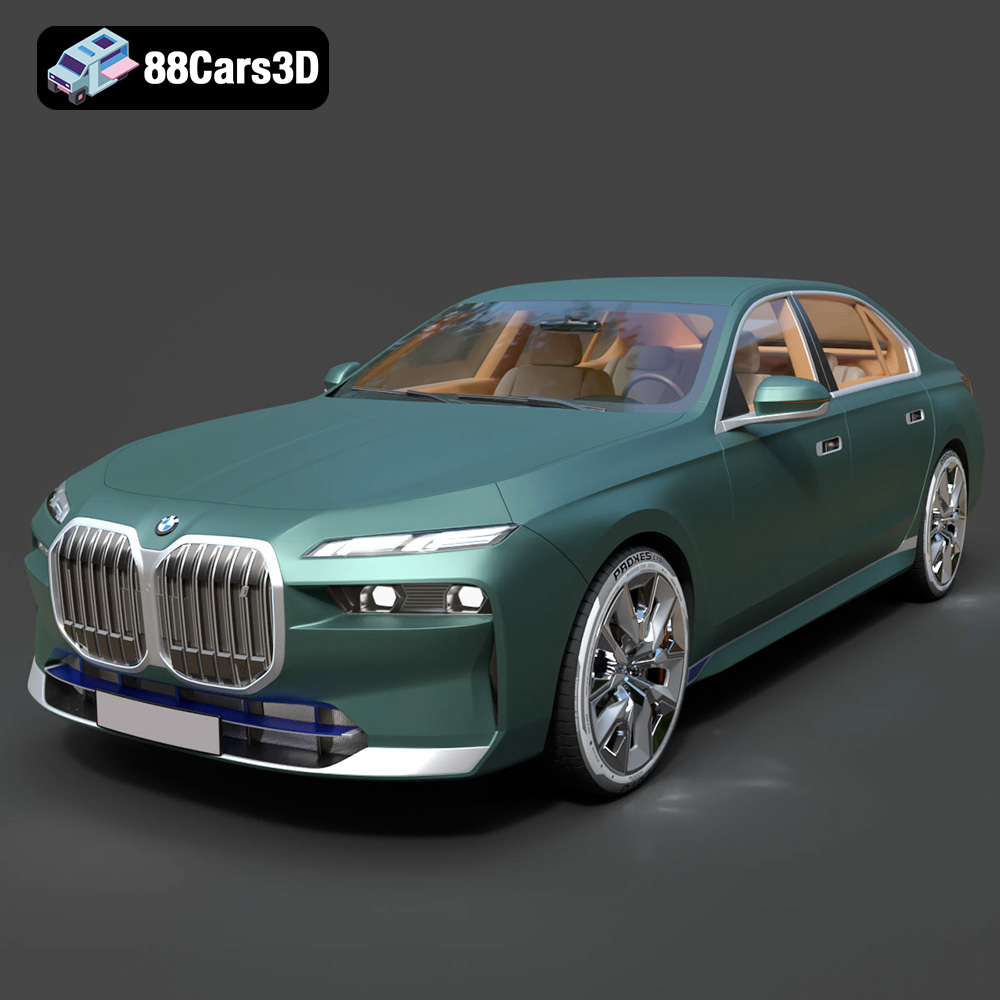
Texture: Yes | Material: Yes Download the ultra-high-detail BMW i7 (2023) 3D Model (4.14M Triangles). Features the illuminated kidney grille, split crystal headlights, fully modeled Theatre Screen interior, and monolithic luxury styling. Perfect for ArchViz, VFX, and cinematic rendering. Includes .blend, .fbx, .obj, .glb, .stl, and .max formats.
Price: $19.99
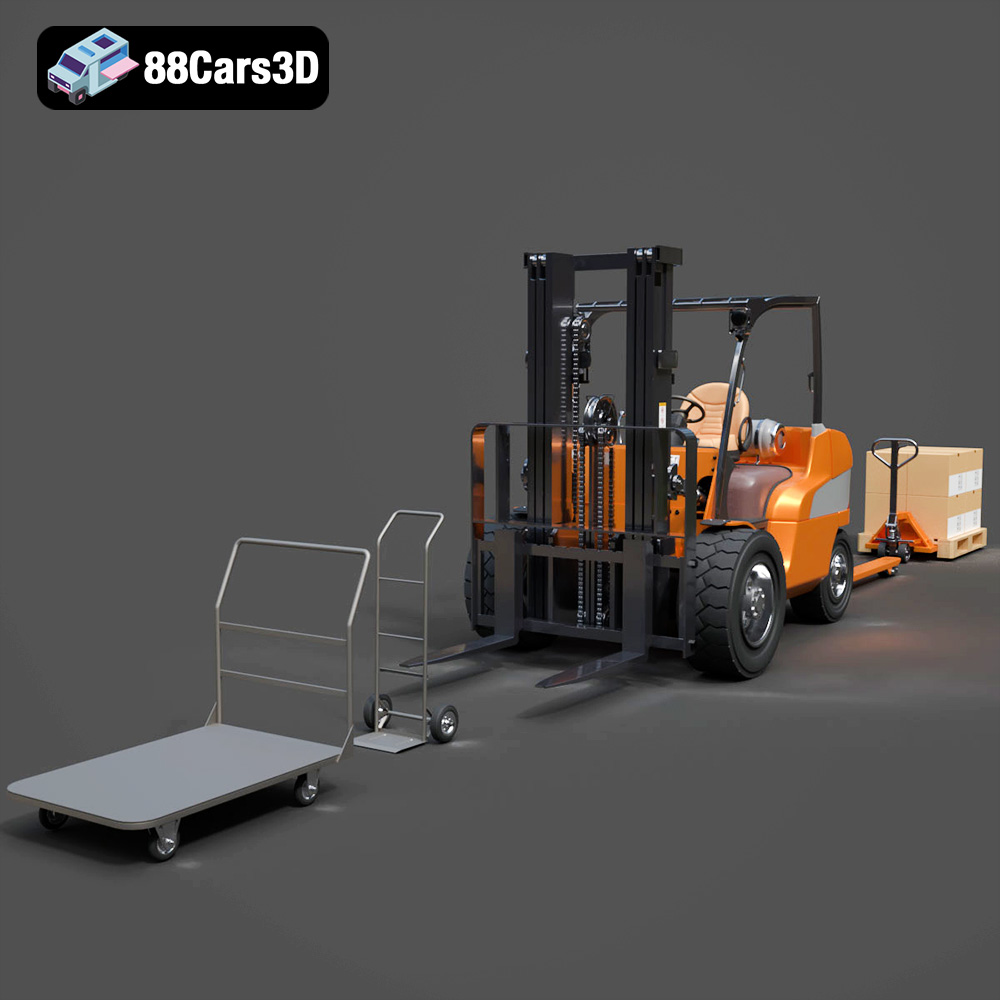
Texture: Yes | Material: Yes Download the highly detailed CAT Manual Loader & Warehouse Carts Kit 3D Model (2.4M Triangles). Features a macro-detailed hydraulic pallet jack, heavy-duty forks, and transport carts. Perfect for industrial ArchViz, factory rendering, and logistics simulations. Includes .blend, .fbx, .obj, .glb, .stl, and .max formats.
Price: $19.99

Texture: Yes | Material: Yes
Download the highly optimized Mazda CX-5 2014 3D Model (294k Triangles). Features the dynamic Kodo design language, signature grille, and a clean interior. Perfectly balanced for ArchViz, background traffic, and game development. Includes .blend, .fbx, .obj, .glb, .stl, and .max formats.
Price: $19.99
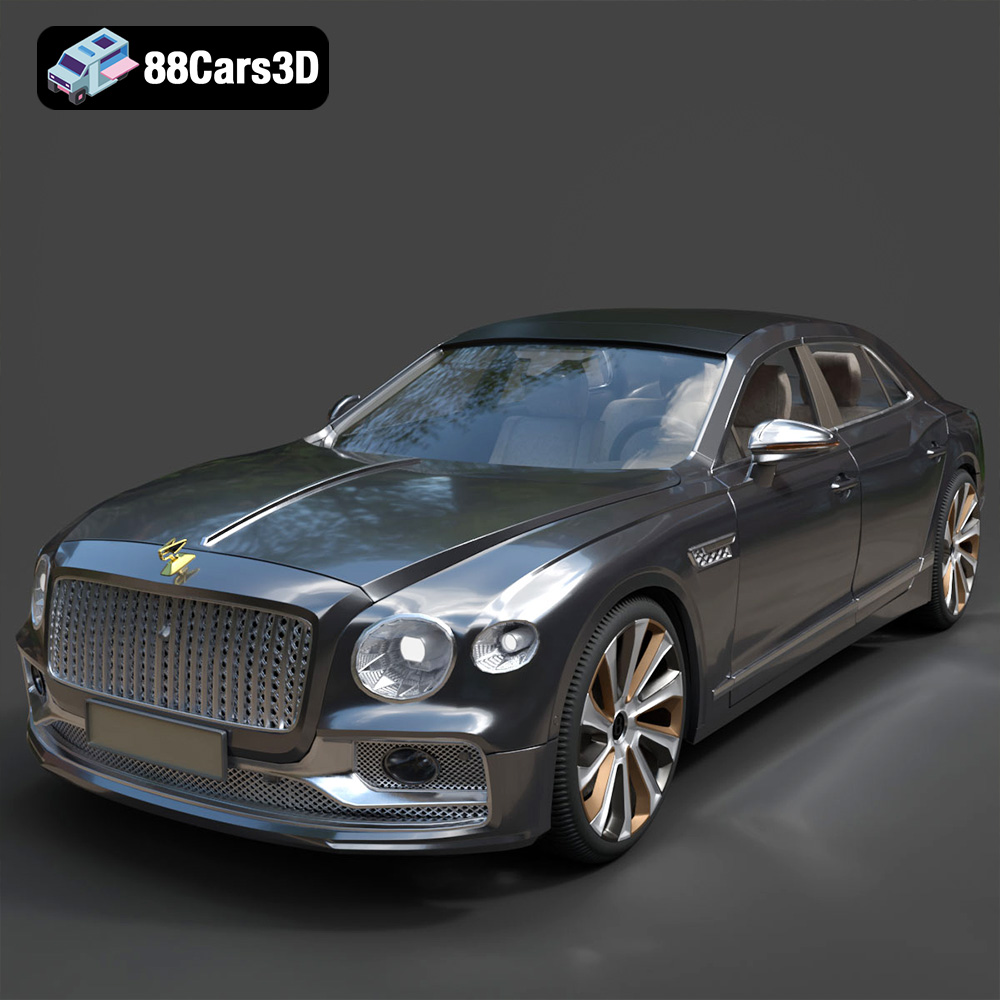
Texture: Yes | Material: Yes Download the ultra-high-detail Bentley Flying Spur Mulliner 2022 3D Model (2.94M Triangles). Features the bespoke Double Diamond grille, a fully modeled diamond-quilted interior, and exquisite luxury styling. Perfect for high-end ArchViz, VFX, and cinematic rendering. Includes .blend, .fbx, .obj, .glb, .stl, and .max formats.
Price: $19.90
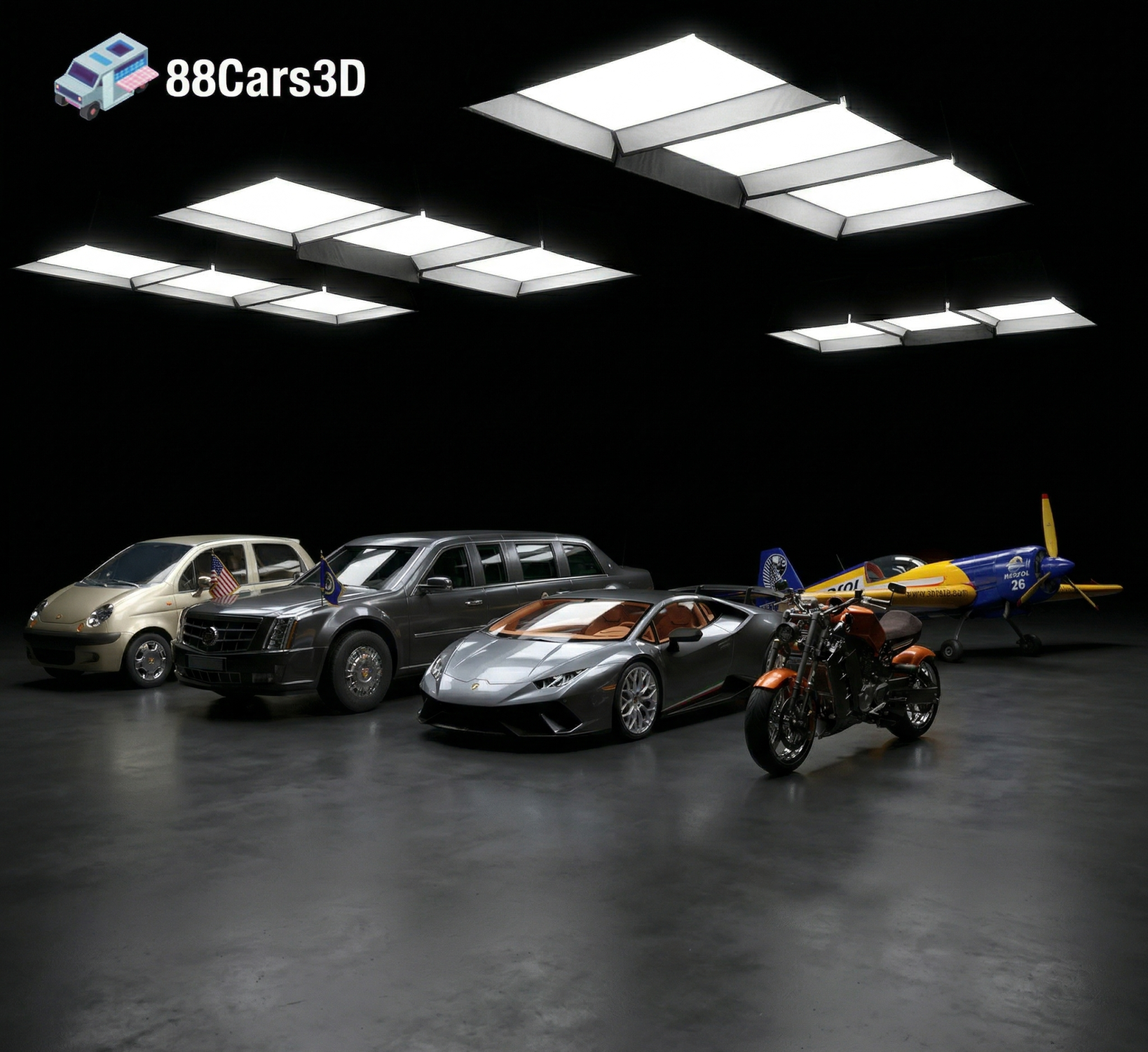
Texture: Yes | Material: Yes | 3D Printable: Yes. Download the Ultimate Creators’ Showcase featuring 5 premium 3D models: Lamborghini Huracan, ZAV Concept Motorcycle, Sukhoi SU-26, Presidential Limousine, and Daewoo Damas. Optimized for 4K CGI rendering and 3D printing. Save massive with this exclusive multi-category bundle!
Price: $99.99

