Get 50% OFF All Premium 3D & STL Models!

In the dynamic world of 3D visualization, the demand for authentic, high-quality assets is paramount. Whether you’re an automotive designer striving for photorealistic renders, a game developer crafting immersive open worlds, or an AR/VR enthusiast building interactive experiences, the foundation of your project lies in the quality of your 3D models. Sourcing meticulously crafted assets can save countless hours of development time, allowing artists and engineers to focus on creativity and innovation rather than starting from scratch. Today, we delve into the technical intricacies and creative potential offered by a truly iconic piece of design history – the Vespa VNB 125-B, available as a premium 3D model, and explore how such specialized assets elevate professional workflows across various industries.
The Vespa VNB 125-B represents more than just a scooter; it’s a symbol of post-war Italian elegance, practical mobility, and timeless design. Its smooth curves and distinctive silhouette evoke a sense of nostalgia and charm that transcends generations. When translated into a 3D model, this classic vehicle becomes an invaluable tool for artists seeking to inject character and historical accuracy into their digital scenes. From vintage branding campaigns to period-correct game environments, a well-executed 3D rendition of the Vespa VNB 125-B provides an unparalleled level of detail and versatility, making it a standout asset in any professional library. As we navigate the complexities of 3D production, understanding the technical backbone of such models is crucial, starting with the fundamental building blocks: file formats.
The interoperability of 3D models across various software and platforms hinges on understanding different file formats. Each format has its strengths, optimized for specific use cases from real-time rendering to 3D printing. Selecting the right format ensures compatibility, preserves data integrity, and streamlines your workflow. The Vespa VNB 125-B 3D Model comes with a comprehensive suite of file types, providing maximum flexibility for any project. Let’s break down the most common and their technical implications.
The .blend format is Blender’s native file type, offering a complete scene package. It stores not just the mesh data, but also materials, textures, lighting, cameras, animation data, and even physics simulations. For artists working primarily within Blender, this format provides full editability and access to all modifiers, non-destructive workflows, and Cycles or Eevee render setups. It’s ideal for deep customization, complex scene assembly, and leveraging Blender’s robust suite of tools for modeling, sculpting, and texturing the Vespa VNB 125-B.
.fbx (Filmbox) is one of the most widely adopted interchange formats in 3D production, especially favored for game development (Unreal, Unity) and animation pipelines. It supports geometry, materials, textures, animations, and skeletal data. For the Vespa VNB 125-B, an .fbx export ensures that the clean topology, proper pivot points for animation (e.g., wheels, steering), and applied materials translate seamlessly into engines like Unreal, making it an excellent choice for real-time environments and cinematic sequences where performance and accurate data transfer are critical. Its binary nature typically results in smaller file sizes compared to text-based formats.
.obj (Wavefront OBJ) is a universal geometry definition file format. It’s renowned for its simplicity and wide compatibility, making it a safe bet for cross-software transfers when you primarily need mesh data. While it doesn’t store animation or complex material setups directly, it references external .mtl (material) files for basic color and texture information. For the Vespa VNB 125-B, the .obj format is perfect for importing into virtually any 3D application for clean geometry, ready for new material assignments or retopology work. Its human-readable text-based structure can also be an advantage for debugging.
.glb (GL Transmission Format Binary) is the binary version of glTF, a royalty-free specification for 3D scenes and models. Designed for efficient transmission and loading of 3D content, especially on the web, AR, and VR applications, .glb packages all assets (geometry, materials, textures, animations) into a single file. This makes it incredibly streamlined for showcasing the Vespa VNB 125-B in interactive browser experiences, augmented reality apps, or lightweight virtual environments, ensuring quick load times and broad device support.
.stl (Stereolithography) is the de facto standard for 3D printing. It describes only the surface geometry of a 3D object using a collection of interconnected triangles. The Vespa VNB 125-B 3D Model, when provided in .stl, is optimized for additive manufacturing, ensuring a watertight mesh suitable for slicer software. This allows users to create physical miniatures or scale models of the classic scooter, bringing the digital asset into the tangible world with precision, especially useful for collectible enthusiasts or product prototyping.
.ply (Polygon File Format) is another format that stores graphical object definitions, commonly used in applications that deal with scanned 3D data or for scientific visualization. It can store various properties beyond just geometry, such as color, transparency, surface normals, and texture coordinates. For precision applications like CAD integration, architectural visualization, or technical analysis of the Vespa VNB 125-B’s form, .ply can be a robust choice for capturing detailed mesh information.
While not a universal file extension in the same vein as .fbx or .obj, “.unreal” typically refers to an asset that has been specifically prepared or exported with Unreal Engine’s conventions and optimizations in mind. This might imply optimized poly counts, proper UV mapping, PBR material setups, and specific collision meshes, ensuring the Vespa VNB 125-B is drag-and-drop ready for game development or real-time architectural visualization projects within the Unreal ecosystem. Such assets drastically reduce the time spent on import, material setup, and performance tuning.
The .max format is the native file type for Autodesk 3ds Max, a powerful 3D modeling, animation, and rendering software. Similar to .blend, it contains all scene data including geometry, materials (V-Ray, Corona, Arnold), lights, cameras, and animations. Having the Vespa VNB 125-B in .max format grants 3ds Max users full control over the original model’s hierarchy, modifiers, and rendering settings, allowing for deep customization and high-fidelity rendering for advertising, film, and architectural visualization.
The true value of a premium 3D model like the Vespa VNB 125-B lies in its underlying technical quality. This isn’t merely a visual representation; it’s a precisely engineered digital asset designed for maximum utility across diverse professional applications. The attention to detail, from its accurate proportions to its clean mesh, ensures seamless integration and outstanding results.
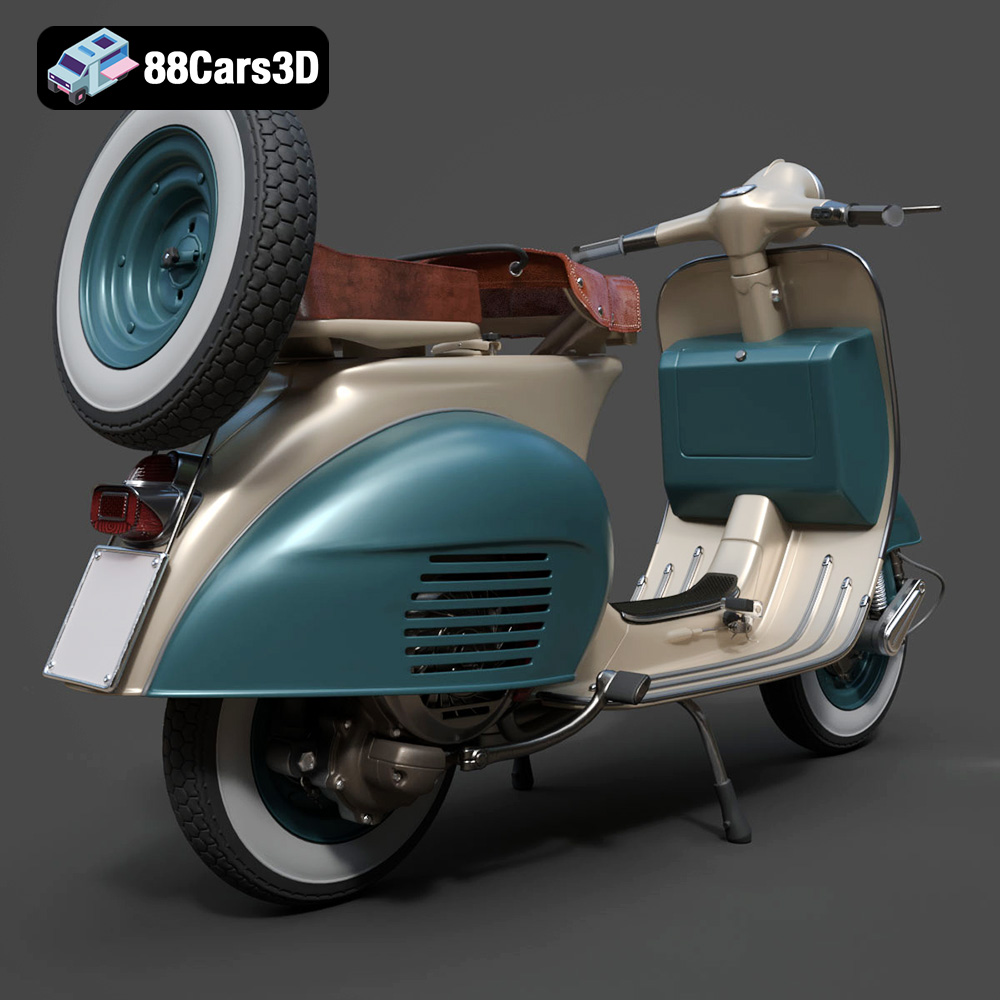
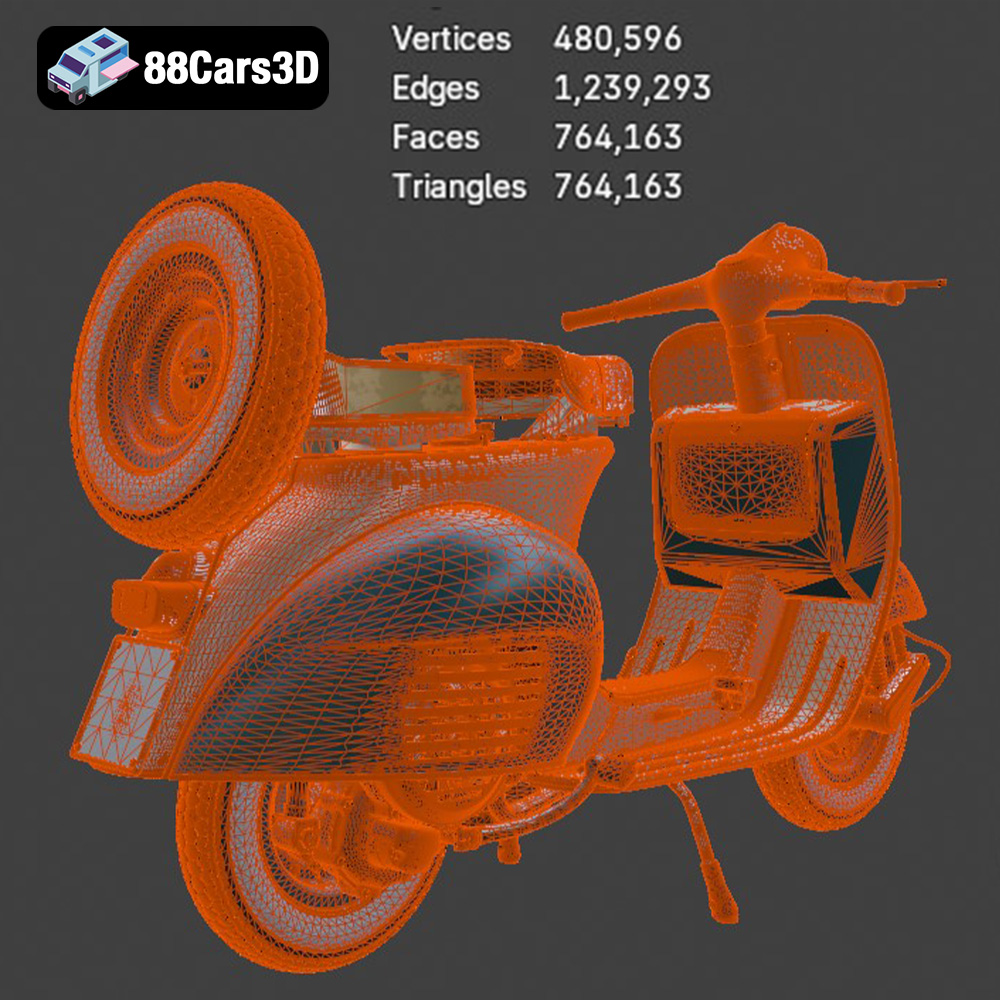
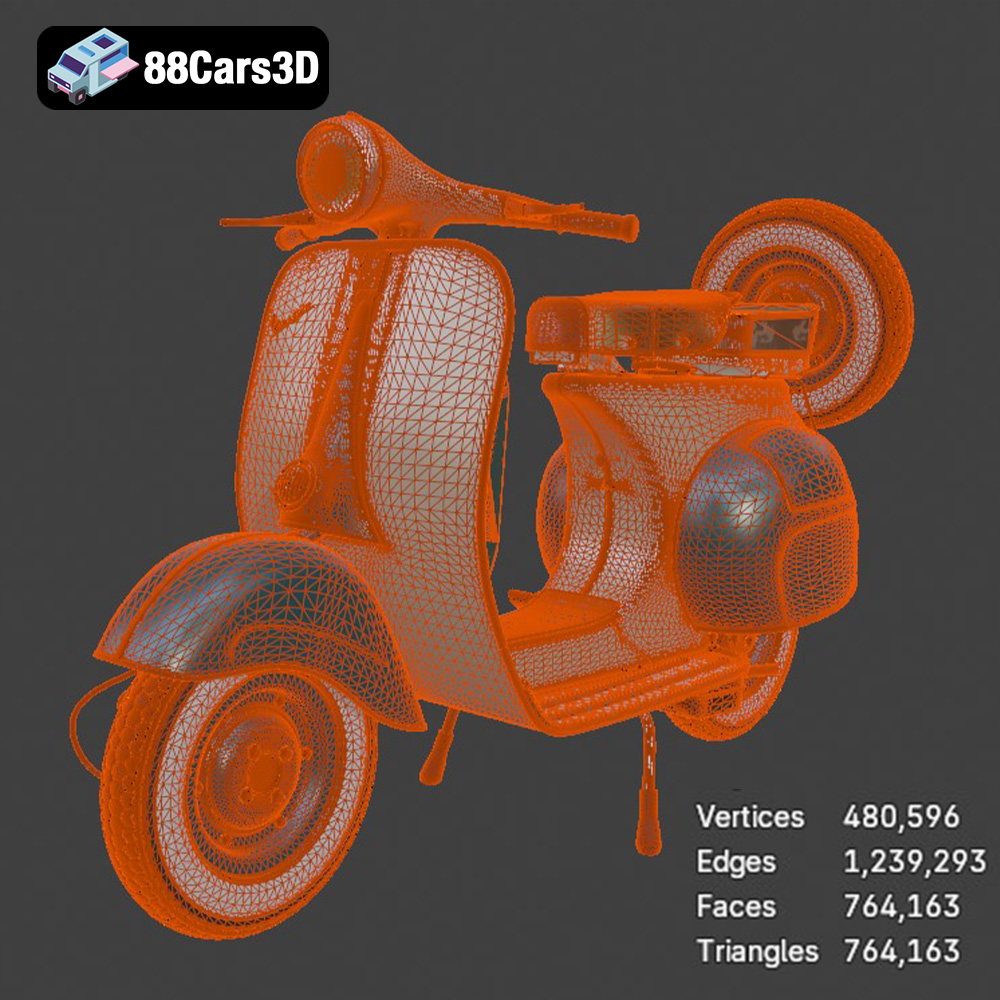
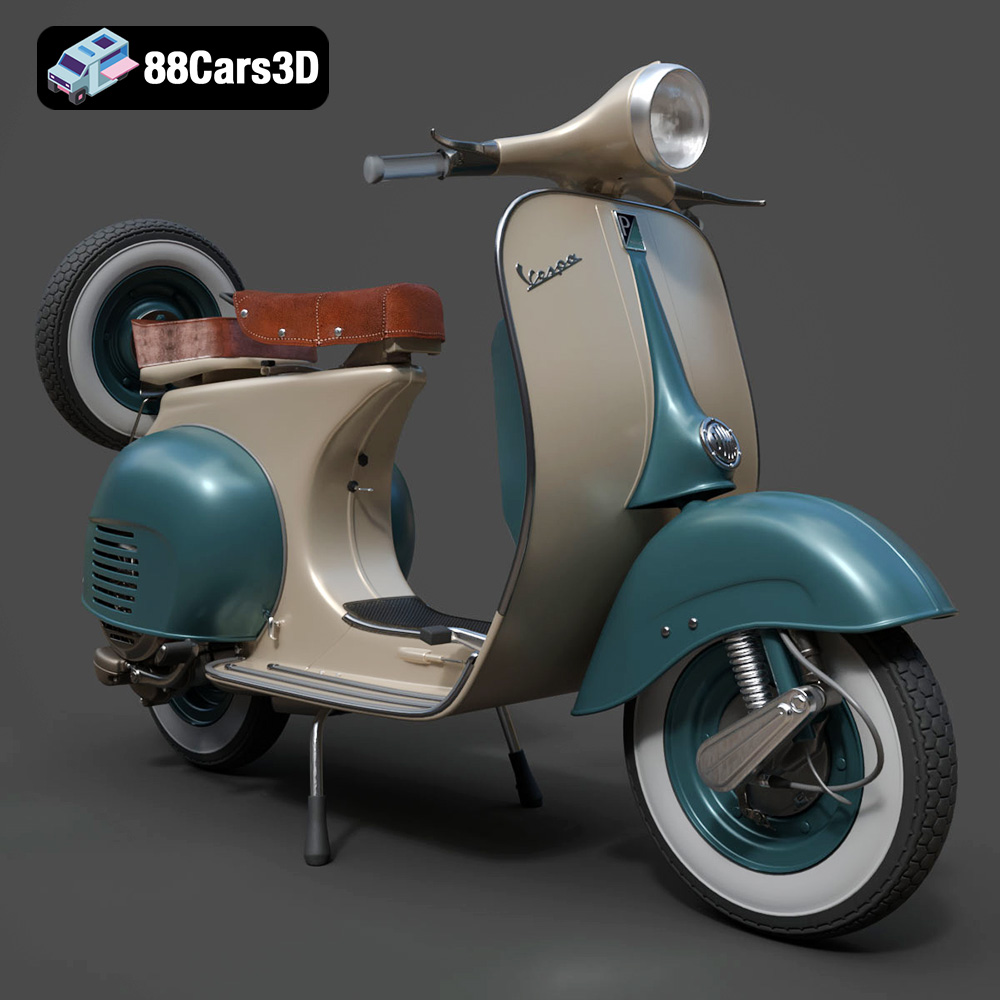
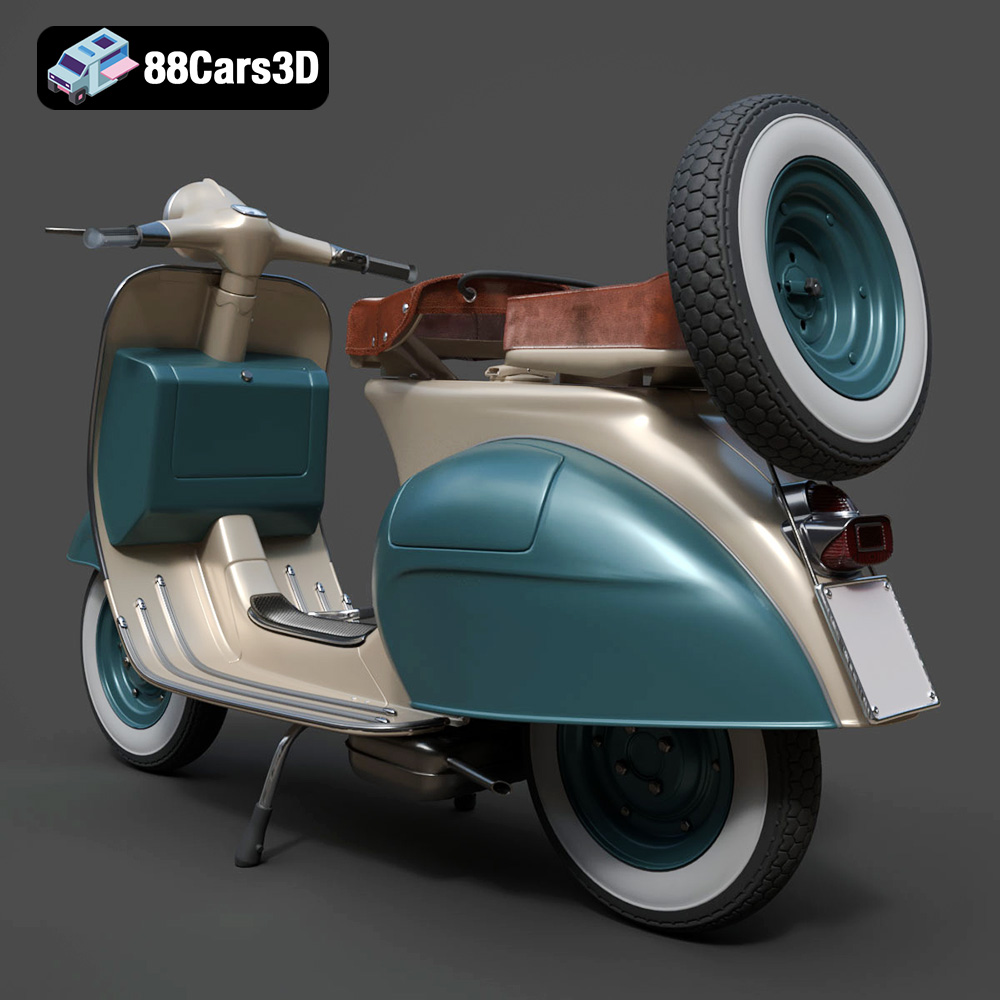
The Vespa VNB 125-B 3D Model is a testament to meticulous craftsmanship. It accurately captures the monocoque steel body construction, rounded front leg shield, chrome-trimmed circular headlamp, and the vintage wheel configuration that define the early 1960s variant. This level of anatomical correctness is crucial for automotive rendering, where even subtle deviations can break realism. Beyond visual accuracy, the model boasts a clean and well-organized mesh structure. This means optimized polygon flow, which is vital for performance in real-time engines and for smooth subdivision in high-fidelity rendering. Clean topology simplifies UV mapping, texturing, and rigging, ensuring that the model behaves predictably during animation or deformation. This attention to underlying geometry is what separates a generic 3D model from a professional-grade asset ready for prime-time use.
Crucial for any realistic integration is adherence to real-world scale. The Vespa VNB 125-B 3D Model is built with precise dimensions, ensuring it fits naturally within scenes, whether it’s an architectural visualization project or a sprawling open-world game. Furthermore, the technical advantages extend to its articulation. Features like separate wheels and a dedicated steering assembly are not just aesthetic details; they are functional components. The proper pivot setup for steering and wheel rotation allows for seamless animation, essential for dynamic sequences in film, advertising, or interactive simulations. This pre-rigged capability significantly reduces setup time for animators and technical artists, allowing them to focus on creative storytelling rather than mechanical rigging.
A versatile 3D asset like the Vespa VNB 125-B is designed to be a linchpin in various professional pipelines. Its inherent quality and included file formats make it readily adaptable, accelerating production timelines and enabling artists to achieve stunning results. Professionals seeking top-tier 3D car models and vehicle assets often turn to curated marketplaces like 88cars3d.com for such robust resources.
For high-fidelity automotive rendering, the Vespa VNB 125-B excels. In 3ds Max, users can leverage the .max format to access the full scene, complete with materials optimized for renderers like V-Ray or Corona. This allows for immediate, photorealistic output in lifestyle branding visuals, cinematic period productions, or detailed product showcases. Artists can easily adjust lighting, camera angles, and material properties to achieve specific moods—from the warm glow of a Mediterranean sunset to the crisp light of a European morning. Similarly, Blender users benefit from the .blend file, which provides a fully editable scene, allowing for advanced texturing with Cycles or real-time visualization with Eevee. The clean geometry ensures smooth shading even under intense scrutiny, making it perfect for close-up shots.
The clean geometry and optimized polygon flow of this classic scooter make it an ideal game asset. Using the .fbx or .unreal formats, developers can quickly import the Vespa into game engines like Unreal Engine or Unity. Its real-world scale and proper pivot points are crucial for setting up physics, vehicle controls, and character interactions in urban open-world games or 1960s-themed environments. For AR/VR experiences, the .glb format is particularly beneficial. Its optimized nature ensures quick loading and smooth performance on mobile devices and VR headsets, allowing for immersive retro vehicle showrooms or interactive classic scooter experiences. Imagine virtually parking this iconic Vespa in your living room through an AR app, or exploring it in a VR garage.
Beyond direct rendering, the Vespa VNB 125-B 3D Model serves as an excellent foundation for post-production workflows. Artists can render the model with various passes (diffuse, specular, normal, Z-depth, ambient occlusion) and composite it seamlessly into live-action footage or photographic backdrops. The accuracy of the model ensures that shadows, reflections, and perspective integrate perfectly, creating convincing virtual additions to real-world scenes. This is particularly valuable for advertising agencies creating compelling visual campaigns or filmmakers enhancing their visual effects.
The versatility of the Vespa VNB 125-B 3D Model extends far beyond basic integration. Its design and structure offer immense potential for customization and application across a wide spectrum of creative and technical projects. From cinematic storytelling to interactive exhibits, this model is a robust starting point.
This Vespa model is “perfect for retro European streets, café scenes, coastal promenades, lifestyle branding visuals, and cinematic period productions.” Imagine it parked outside a quaint Italian cafe, its pastel paint reflecting the morning sun, or cruising along a scenic coastal road in a vintage film sequence. Its historical accuracy and charming aesthetics provide instant context and character to any scene. Artists can easily incorporate it into detailed environments, adding a layer of realism and emotional depth that elevates the narrative. The ability to configure single or dual seat variations, add vintage registration plates, or even integrate a rear rack or spare wheel accessory provides endless opportunities for scene variations and storytelling.
The model’s clean geometry and well-structured files allow for extensive customization. Users can effortlessly change body colors to classic pastel schemes, experiment with different material finishes—from weathered patinas to showroom-fresh gloss—and modify chrome detailing. For automotive rendering, this means tailoring the scooter to match specific brand guidelines or artistic directions. For game development, multiple color variants or accessory attachments can increase environmental diversity and player choice. Furthermore, the ability to adjust lighting for daylight, sunset, or cinematic scenes within your chosen 3D software offers complete control over the model’s presentation, ensuring it always looks its best under any conditions.
Beyond commercial applications, the Vespa VNB 125-B 3D Model is an invaluable asset for educational institutions and historical archives. Its accurate digital recreation can be used for virtual restoration visualization, mechanical demonstration projects, or interactive historical tours. Students can explore its design, mechanics, and cultural significance in a hands-on digital format. Museums can create engaging exhibits that allow visitors to “disassemble” and examine the scooter’s components, providing a deeper understanding of its engineering and heritage.
The journey of a 3D model doesn’t always end on a screen. For many enthusiasts and professionals, the ability to bring a digital asset into the physical world through 3D printing offers an entirely new dimension of engagement. The Vespa VNB 125-B 3D Model, with its included .stl format, is perfectly poised for this transition, transforming from a virtual object to a tangible collectible.
When preparing a 3D model for printing, specific considerations come into play. The Vespa VNB 125-B model is convertible to .stl format, which means its geometry is manifold (watertight), free of non-manifold edges, and optimized for slicer software. The recommended scales of 1:18, 1:12, or 1:10 allow for various display options, from desk miniatures to larger, more detailed scale models. Layer height recommendations (0.08–0.16 mm) suggest a balance between speed and detail, ensuring that the Vespa’s characteristic curves and fine detailing, such as the circular headlight housing and side panel vents, are faithfully reproduced.
Successful 3D printing requires strategic planning. For the Vespa VNB 125-B, support structures are “Required for handlebar, exhaust, and center stand,” which are common overhangs in vehicle models. The recommended print orientation—body printed upright for a smooth curved finish, with wheels printed separately—is a best practice to minimize visible layer lines on prominent surfaces and ensure maximum detail on separate, intricate components. Once printed, the true artistry begins with post-processing. “Sanding, primer, gloss pastel or cream paint finish, chrome detailing recommended” points to the steps needed to elevate a raw print into a museum-quality replica. This meticulous approach to painting and finishing transforms the physical model, allowing its classic Italian charm to truly shine, making it an excellent 3D printable miniature car or scale display model for collectors.
The world of 3D modeling is an intricate blend of art and engineering, where every detail, from poly count to file format, contributes to the final masterpiece. The Vespa VNB 125-B 3D Model exemplifies this synergy, offering a meticulously crafted digital asset that transcends mere aesthetics. Its accurate detailing, clean topology, and comprehensive file format support (including .blend, .fbx, .obj, .glb, .stl, .ply, .unreal, and .max) make it an indispensable tool for a wide array of professionals.
Whether your goal is to produce stunning automotive rendering for advertising, develop immersive game assets for a new open-world title, create engaging AR/VR experiences, or even bring the iconic scooter to life as a 3D printable collectible, this model provides the robust foundation you need. Its versatility, coupled with the precision of its design, empowers creators to push the boundaries of digital visualization and physical fabrication.
For artists, developers, and enthusiasts seeking the highest standard in 3D car models and vehicle assets, marketplaces like 88cars3d.com offer a curated selection of premium content. Investing in assets of this caliber not only streamlines production but also elevates the quality and impact of your creative projects, allowing you to focus on innovation and storytelling. The Vespa VNB 125-B isn’t just a model; it’s a gateway to bringing timeless design into your next digital or physical creation.
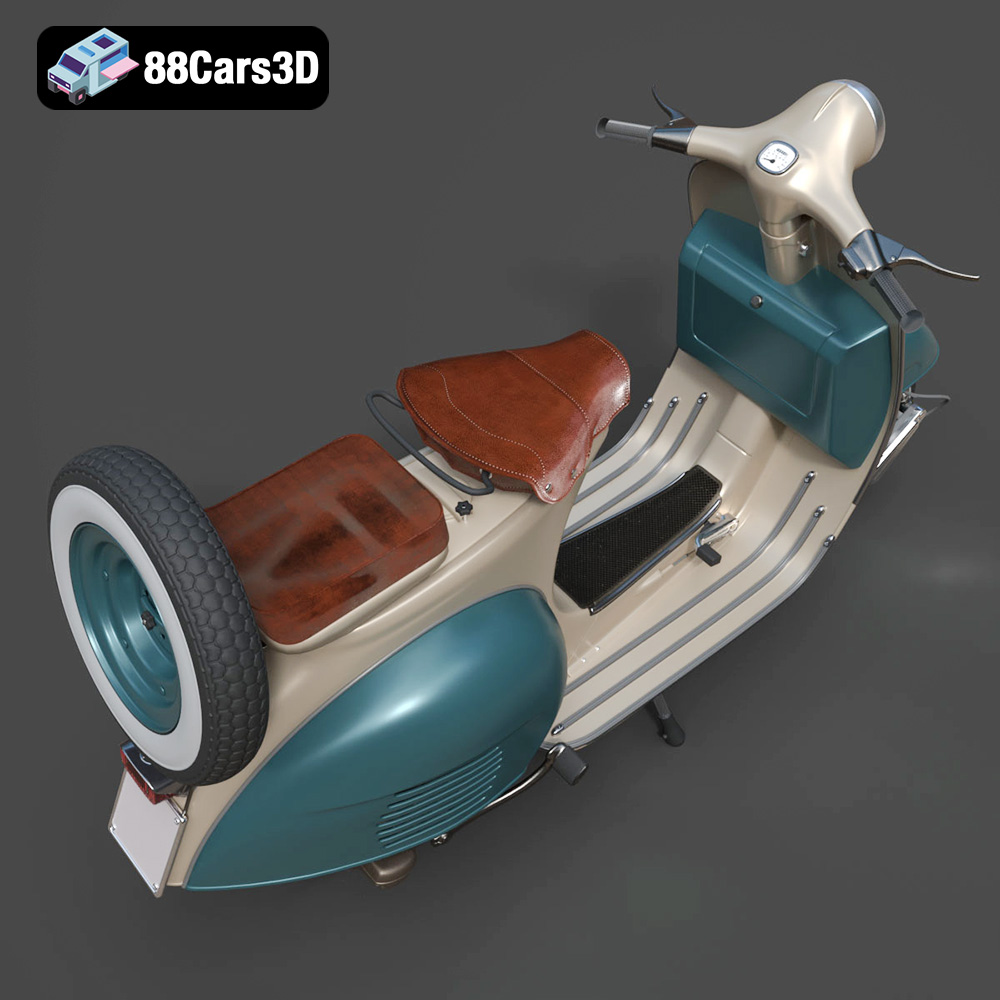
The Vespa VNB 125-B 3D Model is a high-detail digital recreation of the classic Italian scooter variant from the early 1960s. The VNB 125-B maintained the timeless Vespa silhouette while incorporating subtle production refinements, improved mechanical components, and refined detailing that defined the era of practical European urban mobility. This 3D model accurately captures the monocoque steel body construction, rounded front leg shield, chrome-trimmed circular headlamp, vented side panels, exposed handlebar assembly, and vintage wheel configuration. Built with clean topology and real-world scale accuracy, it is ideal for rendering, animation, simulation, game development, and AR/VR classic vehicle environments. Perfect for retro European streets, café scenes, coastal promenades, lifestyle branding visuals, and cinematic period productions.
$9.99
.arvr
.blend
.classicscooter
.fbx
.gameasset
.glb
.italianscooter
.max
.motorcycle3dmodel
.obj
.ply
.rendering
.retro
.simulation
.stl
.twowheeler
.unreal
.urbanvehicle
.vespa
.vintagevehicle
.vnb125b