Get 50% OFF All Premium 3D & STL Models!

The world of 3D modeling has revolutionized countless industries, and the automotive sector is no exception. From breathtaking automotive rendering to immersive game assets and precise 3D printing, high-quality 3D car models are indispensable. Whether you’re an experienced 3D artist, a game developer pushing the boundaries of realism, or a product designer visualizing the next generation of vehicles, this guide will delve into the key aspects of working with 3D car models, covering everything from file formats to optimization techniques. We’ll explore how meticulously crafted models can elevate your projects, saving time and resources while delivering stunning results. At 88cars3d.com, you can find a wide variety of meticulously crafted 3D car models designed to meet the demanding needs of professionals across various industries.
3D car models are no longer confined to a single application. Their versatility has opened doors to a wide range of industries and creative endeavors.
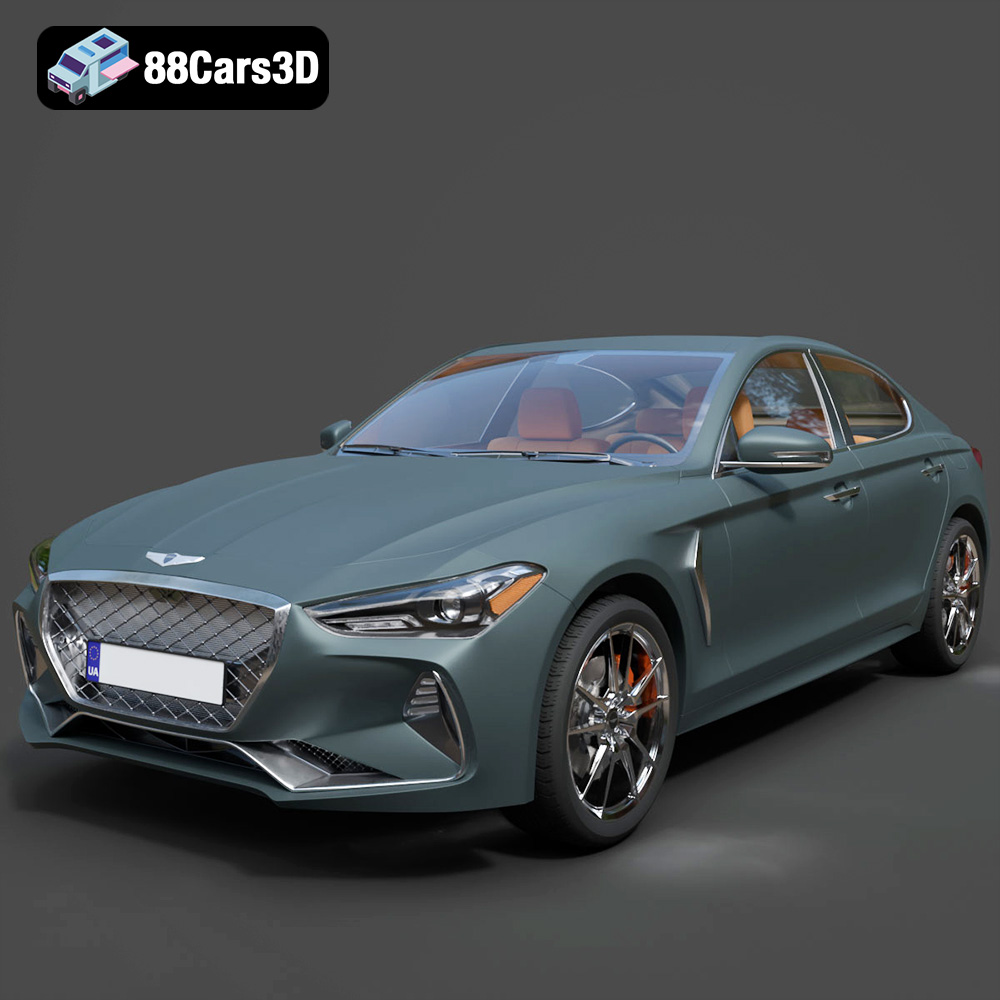
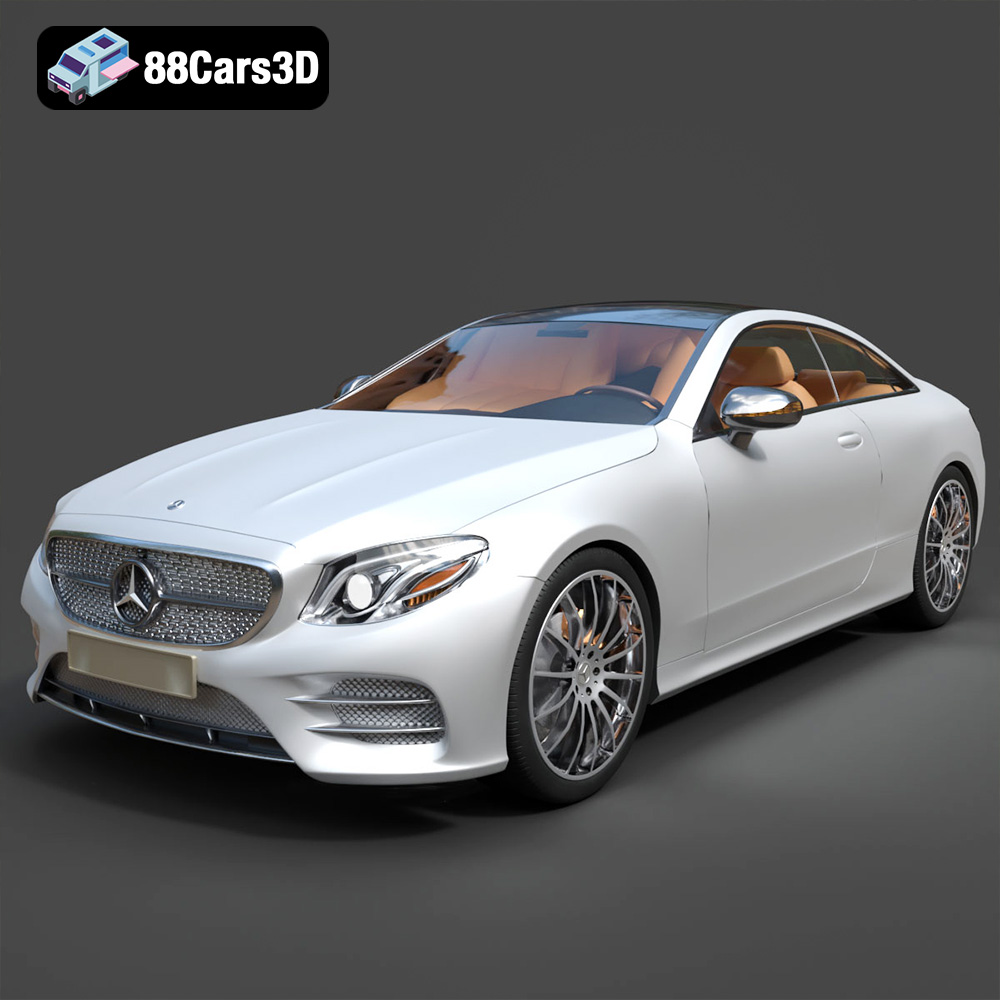
Automotive rendering is a cornerstone of the design and marketing process. 3D car models allow designers to visualize their concepts with photorealistic accuracy, enabling them to refine shapes, experiment with materials, and explore various color schemes before committing to physical prototypes. High-quality renderings are also crucial for marketing campaigns, allowing companies to showcase their vehicles in visually compelling ways.
In the gaming world, 3D car models are essential for creating immersive and engaging experiences. Whether it’s a realistic racing simulator or an open-world adventure, detailed and optimized models bring vehicles to life. Game developers rely on accurate representations to provide players with a convincing sense of speed, handling, and visual fidelity. Careful consideration of polygon counts, textures, and material properties is critical for achieving optimal performance without sacrificing visual quality.
The rise of 3D printing has opened up new possibilities for automotive enthusiasts and designers. 3D car models can be used to create scale models, prototypes, and even functional parts. The accuracy and detail of the original model directly impact the quality of the printed output, making high-resolution models crucial for successful 3D printing projects. Formats like .STL are particularly well-suited for this application.
Choosing the right file format is crucial for ensuring compatibility and optimal performance throughout your workflow. Each format has its strengths and weaknesses, making it essential to understand their specific characteristics.
.blend files are the native format for Blender, a popular open-source 3D creation suite. This format stores all the information related to the scene, including the mesh data, textures, materials, modifiers, and animation data. Its primary advantage is its full editability within Blender. When you open a .blend file, you have complete control over every aspect of the model and its scene. However, .blend files are typically not directly compatible with other software without exporting to a different format. They are ideal for projects that are primarily or exclusively developed within Blender. The format includes complex data structures to manage Blender’s powerful feature set, which can make it less suitable for direct exchange with real-time engines without optimization.
.fbx (Filmbox) is a widely supported format developed by Autodesk, designed for interoperability between different 3D software packages and game engines. It can store mesh data, textures, materials, animations, and skeletal rigging. The key advantage of .fbx is its compatibility with major game engines like Unreal Engine and Unity, making it an ideal choice for game asset development. It also supports scene hierarchy, allowing you to maintain the organization of your model when importing it into another application. .fbx is an excellent choice when exchanging models between different software packages or deploying them in real-time environments. It can be configured to embed textures directly into the file, simplifying asset management.
.obj (Wavefront Object) is a simple and widely supported format that stores mesh data, texture coordinates, and normals. While it doesn’t support animations or skeletal rigging, its simplicity makes it a universally compatible option for transferring models between different 3D software packages. It typically comes with a .mtl file which specifies material properties. It’s a good choice for static models or when animation data is not required. The .obj format is text-based, making it easily readable and editable, though this can also result in larger file sizes compared to binary formats.
.glb (GL Transmission Format Binary) is a binary file format designed for efficient transmission and loading of 3D models in web-based applications, augmented reality (AR), and virtual reality (VR) environments. It’s based on the glTF (GL Transmission Format) standard. .glb files can contain mesh data, textures, materials, and animations, all packed into a single file. Its compact size and optimized structure make it ideal for delivering 3D content over the web and in resource-constrained environments. .glb is increasingly becoming the preferred format for AR/VR applications due to its efficiency and support for PBR (Physically Based Rendering) materials.
.stl (Stereolithography) is a format primarily used for 3D printing. It represents the surface geometry of a 3D object using a collection of triangles. The .stl format is simple and widely supported by 3D printing software. However, it only stores the surface geometry and doesn’t contain any information about color, textures, or materials. When exporting to .stl, it’s crucial to ensure that the model is watertight (i.e., free of holes or gaps) to prevent errors during the printing process. Different .stl formats can represent data in ASCII or Binary form, with the latter being more compact. Precision is important to ensure a high-quality print.
.ply (Polygon File Format) is a format that can store a variety of data, including vertex positions, normals, colors, and texture coordinates. It’s often used in CAD (Computer-Aided Design) applications and for storing 3D scan data. The .ply format can represent models as a collection of faces or as a point cloud. It’s a versatile format that can handle complex geometries and a wide range of data types, making it suitable for applications that require high precision and detailed information. While primarily used for scan data, it can be imported into various 3D modeling applications for further processing.
While not a direct file format, the term “.unreal” often refers to assets specifically prepared for import into the Unreal Engine. These assets are typically in .fbx format, but they have been optimized and configured to work seamlessly within the Unreal Engine environment. This includes setting up materials, textures, and collision meshes. These assets often include custom shaders or blueprints configured specifically for the model. Models ready to import as .unreal assets are geared toward faster and easier integration into the Unreal Engine.
.max is the native file format for Autodesk 3ds Max, a professional 3D modeling, animation, and rendering software. Like .blend files, .max files store all the information related to the scene, including the mesh data, textures, materials, lighting, cameras, and animation data. Its primary advantage is its full editability within 3ds Max. When you open a .max file, you have complete control over every aspect of the model and its scene. However, .max files are typically not directly compatible with other software without exporting to a different format. The format is ideal for projects that are primarily or exclusively developed within 3ds Max and often leverages the powerful toolsets within the software.
Optimization is a critical step in preparing 3D car models for real-time applications, such as games and interactive visualizations. A well-optimized model can significantly improve performance without sacrificing visual quality.
Polygon count is a key factor affecting performance. Reducing the number of polygons in a model can significantly improve rendering speed. Techniques like decimation and retopology can be used to simplify the geometry while preserving the overall shape and detail. The goal is to find the right balance between visual fidelity and performance. For example, areas that are less visible or have minimal impact on the silhouette can be simplified more aggressively than areas that are highly detailed.
UV unwrapping is the process of flattening the 3D model’s surface onto a 2D plane, allowing textures to be applied. Efficient UV unwrapping can minimize texture distortion and maximize texture resolution. Optimizing textures involves choosing the appropriate resolution and file format to minimize file size without sacrificing visual quality. Techniques like texture atlasing, where multiple textures are combined into a single image, can also reduce the number of draw calls and improve performance. PBR (Physically Based Rendering) textures, which define material properties like albedo, roughness, and metallicness, are increasingly used in modern rendering pipelines.
Level of Detail (LOD) is a technique where multiple versions of a model are created with varying levels of detail. The engine then switches between these versions based on the distance from the camera. When the car is far away, a low-poly version is used, and when it’s close up, a high-poly version is displayed. This technique significantly reduces the rendering load without impacting the visual quality at typical viewing distances. Creating LODs can be time-consuming, but it’s a highly effective way to optimize performance in games and other real-time applications.
Let’s examine some practical workflows for using 3D car models in popular software packages.
3ds Max is a powerful tool for creating high-quality 3D car models. The workflow typically involves:
3ds Max offers a wide range of tools and features for creating stunning automotive renderings. Its robust animation capabilities also make it suitable for creating promotional videos and interactive visualizations.
Blender is a popular open-source 3D creation suite that offers a comprehensive set of tools for modeling, sculpting, texturing, and rendering. The workflow is similar to 3ds Max, but Blender’s node-based material system provides a powerful and flexible way to create complex materials. Blender’s Eevee real-time renderer is excellent for quick previews, while the Cycles path-tracing renderer delivers photorealistic results. Blender’s active community and extensive online resources make it a great choice for both beginners and experienced 3D artists. As mentioned before, .blend files are native to Blender and fully editable.
Unreal Engine is a powerful game engine that allows you to create visually stunning and immersive games. The workflow for integrating 3D car models into Unreal Engine typically involves:
Unreal Engine’s Blueprint visual scripting system allows you to easily create interactive behaviors and game mechanics for your 3D car models. Unreal Engine’s real-time rendering capabilities and extensive feature set make it a great choice for creating realistic and engaging driving experiences.
Let’s look at some real-world examples of how 3D car models are used in different industries.
A leading automotive manufacturer uses 3D car models to visualize new designs and concepts. By creating photorealistic renderings, they can evaluate the aesthetics of different designs and make informed decisions before investing in physical prototypes. The 3D models are also used to create marketing materials, such as brochures and website images, showcasing the vehicle’s features and benefits.
A game development studio uses high-quality 3D car models to create a realistic racing simulation. The models are meticulously detailed and optimized for performance, allowing players to experience the thrill of driving a real car in a virtual environment. The studio also uses 3D scanning to capture real-world vehicles and create highly accurate representations in the game.
The future of 3D car models is bright, with ongoing advancements in technology and growing demand across various industries. The rise of augmented reality (AR) and virtual reality (VR) will further drive the need for high-quality, optimized models for immersive experiences. Real-time rendering technology will continue to improve, enabling even more realistic and interactive visualizations. The quality and availability of 3D car models at 88cars3d.com exemplifies the direction of the industry.
3D car models are a powerful tool for automotive rendering, game asset development, 3D printing, and a multitude of other applications. By understanding the different file formats, optimization techniques, and workflows, you can unlock the full potential of these models and elevate your projects to new heights. Remember to choose the right format for your needs, optimize your models for performance, and leverage the power of industry-standard software to bring your visions to life. Whether you’re designing the next generation of vehicles, creating immersive gaming experiences, or bringing your ideas to life through 3D printing, 3D car models are an essential asset. Explore the diverse collection of high-quality models available at 88cars3d.com to find the perfect fit for your next project.

Price: $129.99

Price: $99.99

Price: $89.99