Get 50% OFF All Premium 3D & STL Models!

In the dynamic world of 3D design, the pursuit of realism and precision is a constant endeavor. From immersive video games to breathtaking architectural visualizations and intricate product showcases, the demand for high-fidelity 3D assets continues to grow. For automotive enthusiasts and digital artists alike, capturing the raw essence and mechanical beauty of a custom vehicle is a particularly rewarding challenge. Today, we’re diving deep into an exceptional asset that embodies this spirit: the Custom_Motorcycle 3D Model from 88cars3d.com.
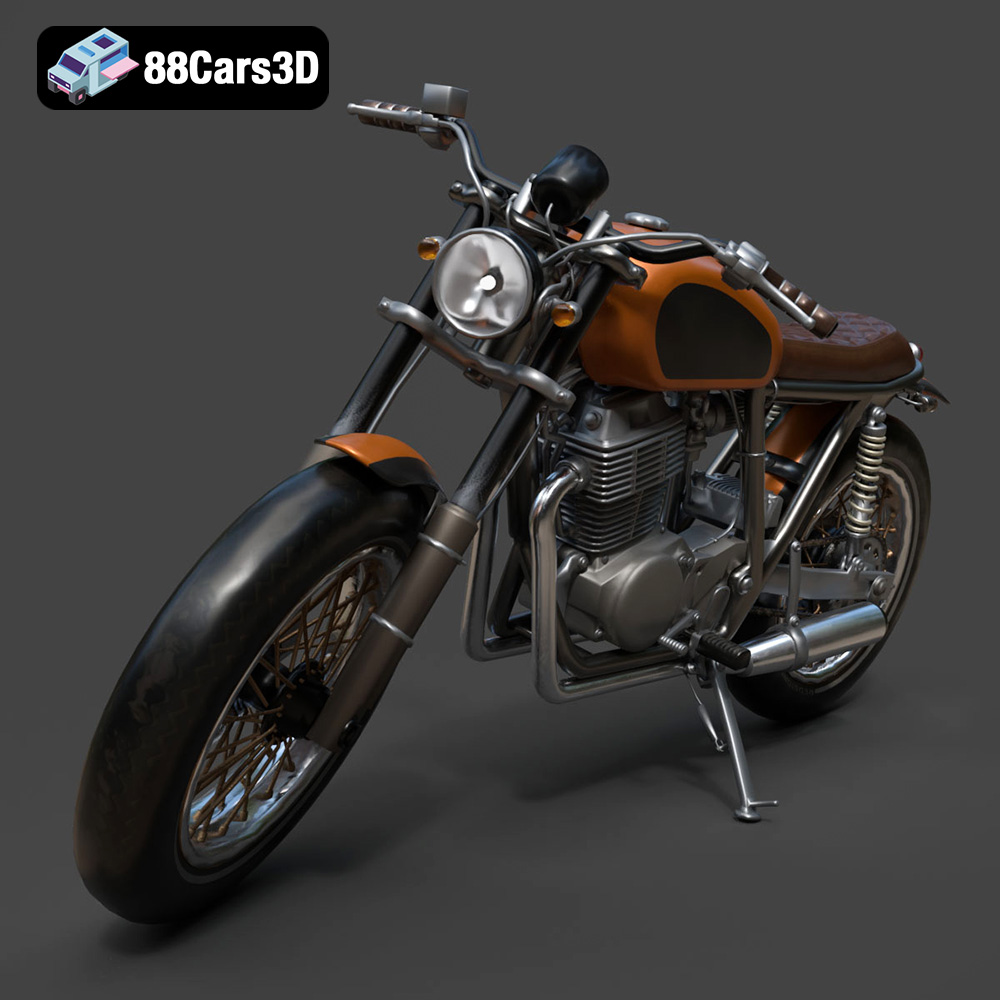
This isn’t just any motorcycle model; it’s a meticulously crafted digital recreation designed to reflect the bespoke, one-of-a-kind artistry found in real-world custom bike culture. With its aggressive styling, exposed engine components, and premium aftermarket detailing, this asset offers an unparalleled foundation for a myriad of professional applications. Whether you’re an automotive renderer aiming for photorealism, a game developer seeking authentic vehicles, or a designer exploring the frontiers of 3D printing, this model provides the technical depth and visual fidelity necessary to elevate your projects.
Creating a digital replica of a custom motorcycle requires a blend of artistic vision and rigorous engineering. Each curve, weld, and mechanical component must be rendered with absolute precision to convey the handmade quality and robust performance associated with these unique machines. The Custom_Motorcycle 3D Model meticulously addresses these demands, standing as a testament to advanced 3D modeling techniques.
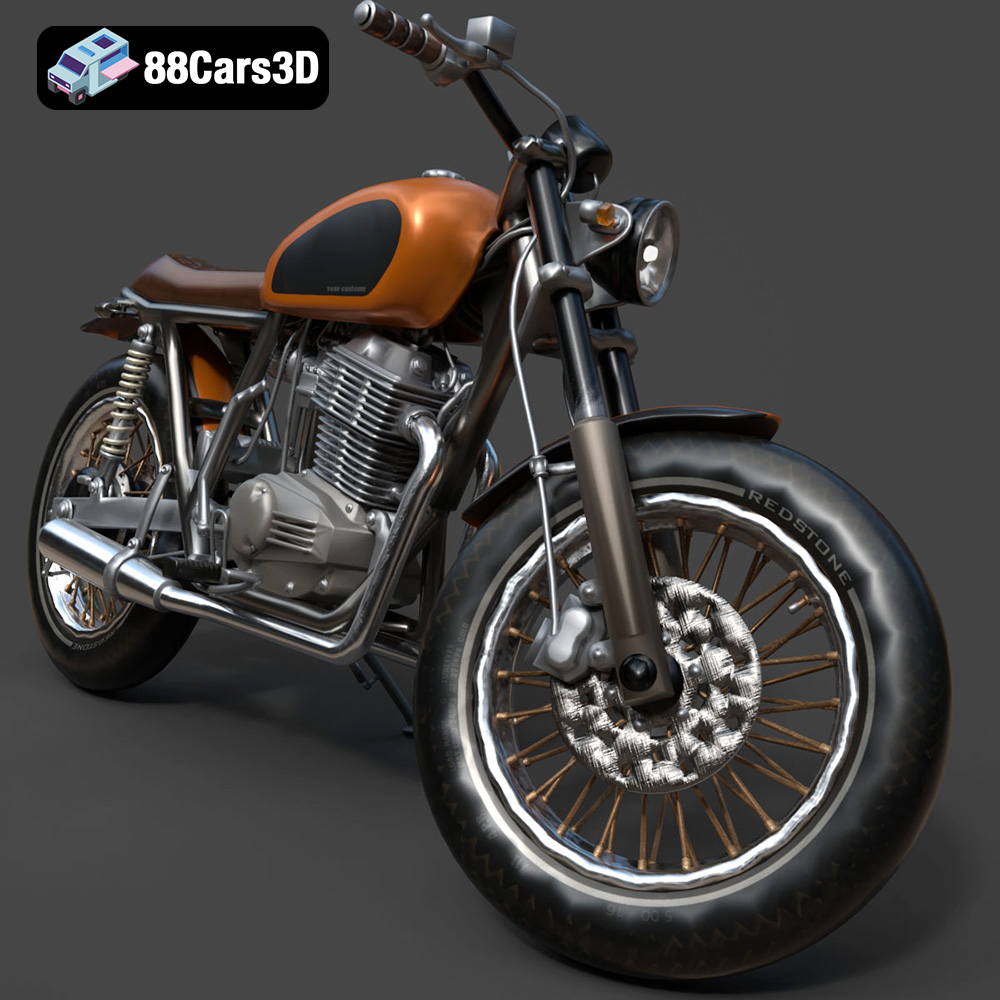
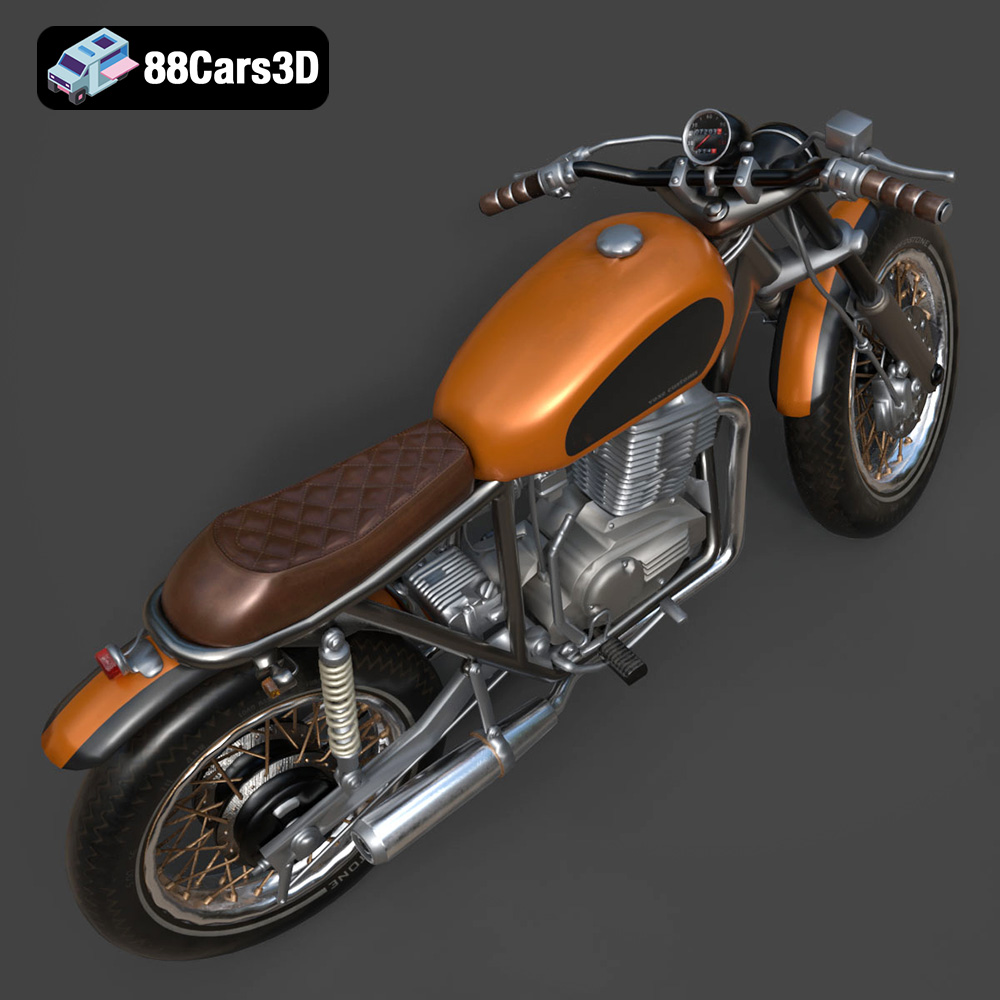
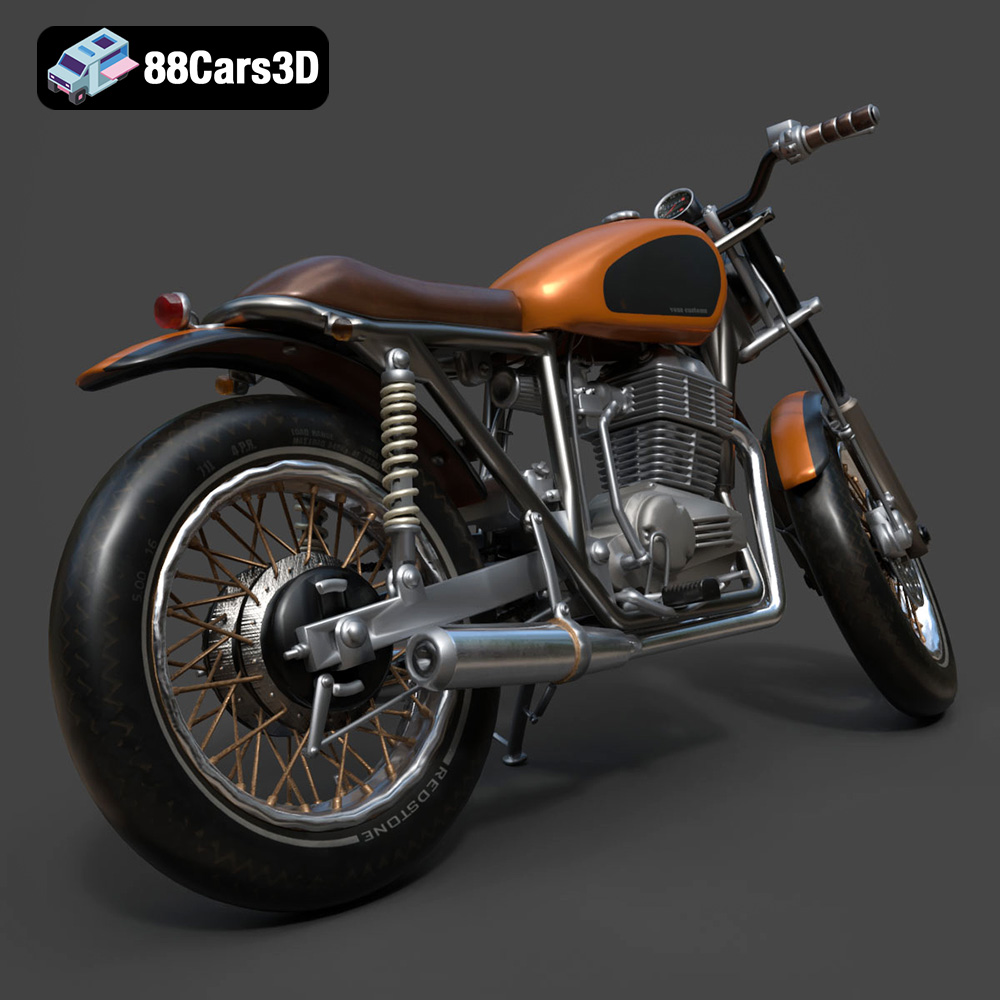
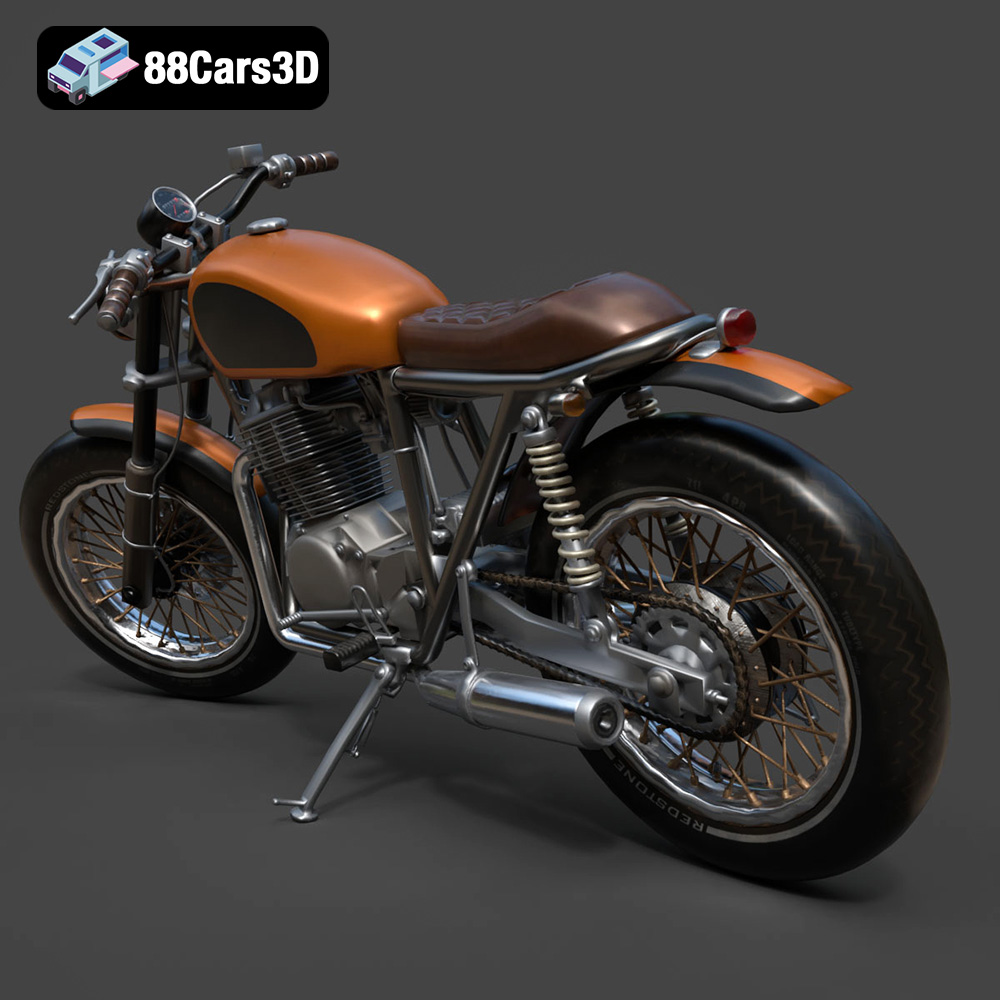
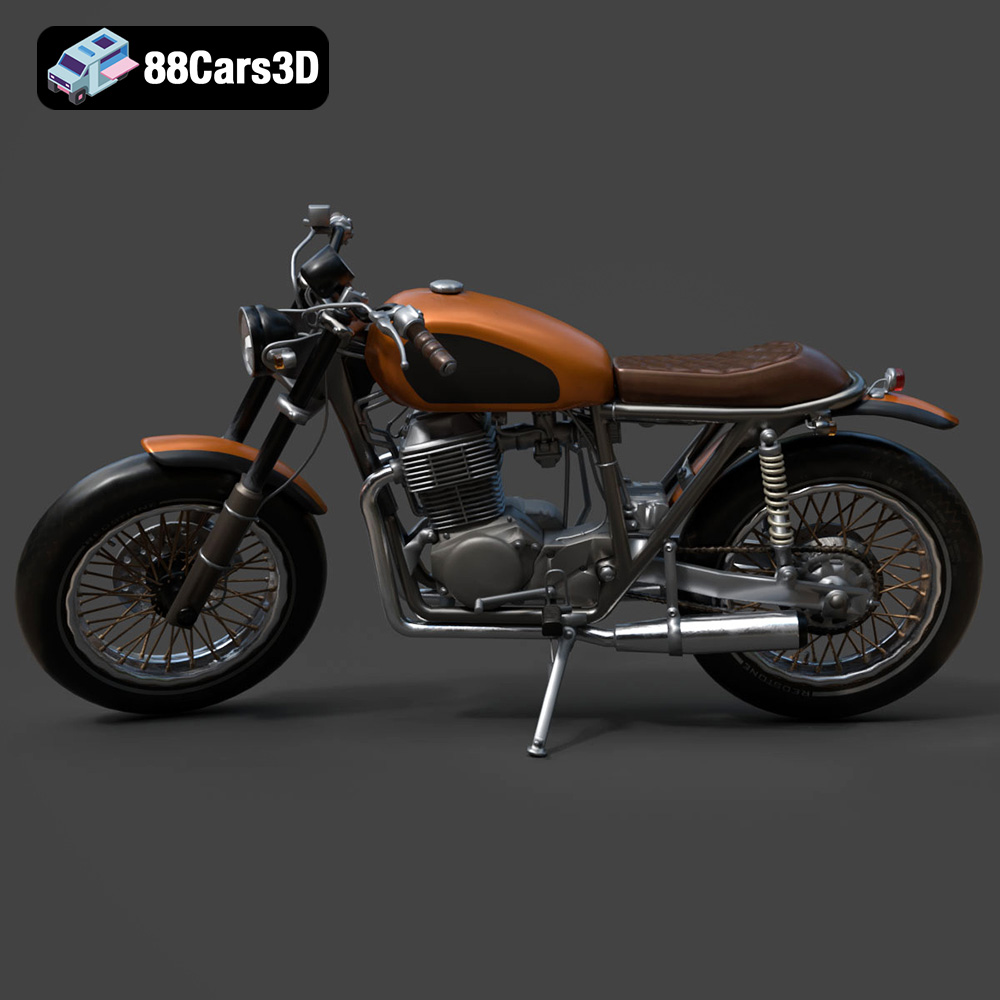
The product description highlights a wealth of intricate features, from its modified frame geometry, which can adapt to bobber, chopper, or cafe racer aesthetics, to its handcrafted-style fuel tank and intricate custom exhaust system. These aren’t merely decorative elements; they are geometrically precise representations that contribute to the model’s overall realism and appeal. The exposed engine block and transmission assembly are particularly notable, featuring dense, clean topology that supports close-up rendering where every bolt and pipe needs to be perfect. Specialized custom wheel designs, whether intricate wire-spoke or machined alloy, further enhance its visual impact, making it ideal for high-end automotive rendering and visualization projects.
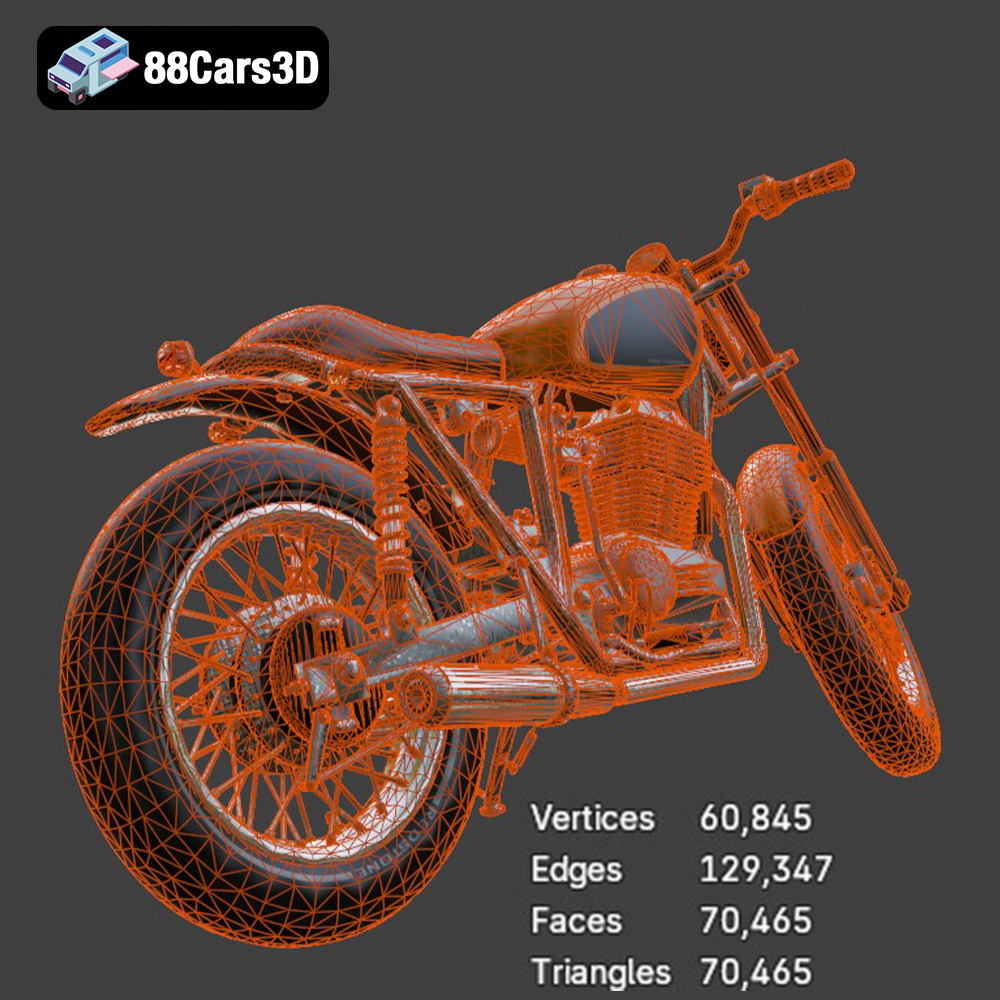
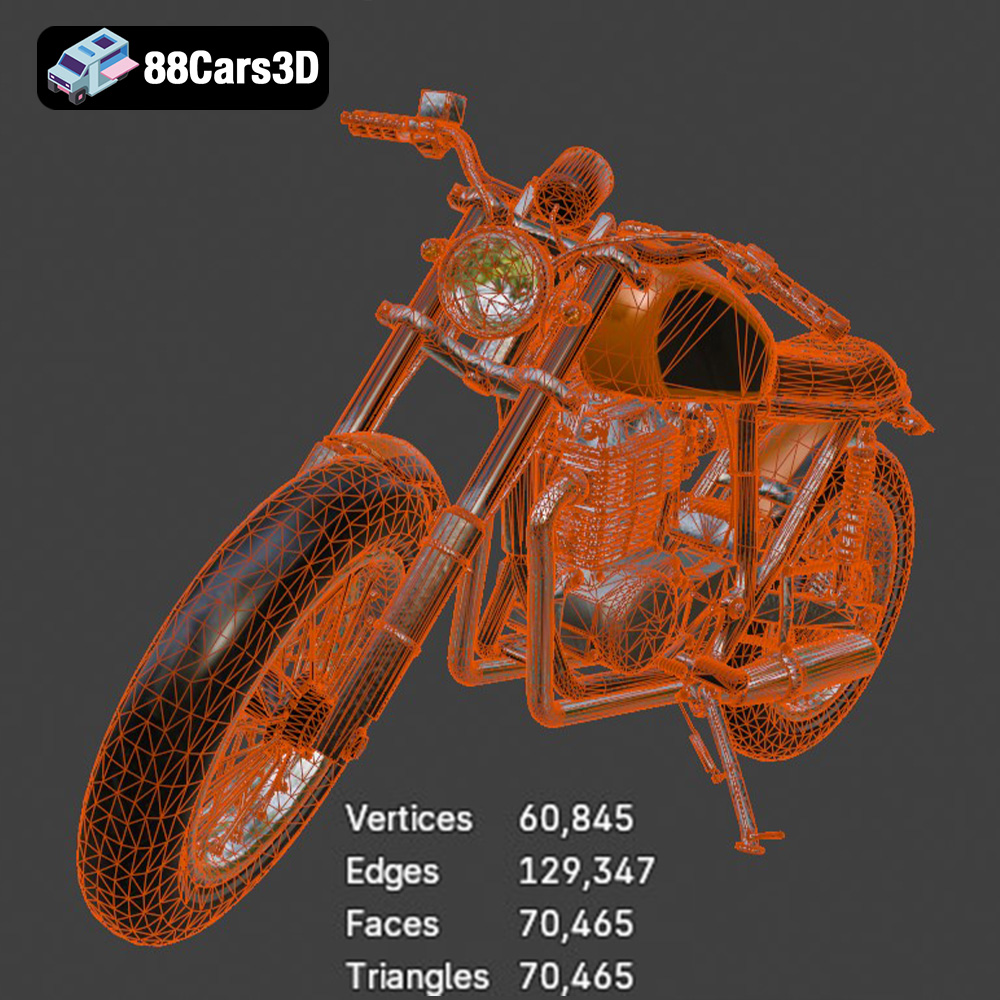
At the core of any professional 3D asset lies its topology. The Custom_Motorcycle 3D Model boasts a high-poly, well-organized mesh structure with 945,800 vertices, 1,860,200 edges, and 910,500 faces/polygons (or triangles). This significant poly count is not arbitrary; it’s a deliberate choice to ensure maximum mechanical realism. For projects demanding studio-quality renders or highly detailed in-game cinematics, this level of detail is crucial. It allows for smooth curves, crisp edges, and the faithful reproduction of complex mechanical parts without relying excessively on normal maps for surface detail, thus providing a richer foundation for texturing and lighting.
The choice of file format is paramount in any 3D workflow, dictating compatibility, feature retention, and optimization for specific applications. The Custom_Motorcycle 3D Model is provided in an impressive array of formats, ensuring maximum versatility across diverse pipelines. Understanding each format’s strengths is key to leveraging this asset effectively.
The .blend format is Blender’s native file type, offering a comprehensive and fully editable scene. When you download the Custom_Motorcycle model in .blend format, you’re not just getting the mesh; you’re getting the entire Blender project. This includes materials, textures (if packed within the file), lighting setups, camera positions, and any modifiers applied to the mesh. For users deeply integrated into the Blender ecosystem, this is invaluable. It allows for immediate customization, re-texturing, animation, and rendering using Blender’s powerful Cycles or Eevee render engines. Artists can easily adjust the bespoke custom frame geometry, modify engine components, or explore new material finishes directly within the familiar Blender interface without loss of data fidelity.
.fbx (Filmbox) is arguably the most widely adopted format for exchanging 3D data between different software applications. Developed by Autodesk, it’s known for its robust support for mesh geometry, materials, textures, animations, and even rigging. For the Custom_Motorcycle 3D Model, the .fbx version is ideal for transferring the asset into game engines like Unreal Engine and Unity, or other DCC (Digital Content Creation) tools such as Maya, 3ds Max (if not using the native .max file), or Cinema 4D. Its versatility makes it a cornerstone for real-time pipelines and collaborative projects where multiple software packages are in use. The .fbx format ensures that the separate wheels, suspension forks, and steering components of the motorcycle retain their hierarchical structure, making them ready for animation.
The .obj (Wavefront Object) format is one of the oldest and most universal 3D file formats. While it doesn’t support advanced features like rigging or animation directly, it’s excellent for geometry and basic material information. Its strength lies in its simplicity and widespread compatibility, making it a reliable choice for cross-software data transfer where only the mesh and basic UVs are needed. If you’re importing the Custom_Motorcycle into a niche software or a different 3D package for simple rendering or modeling tasks, .obj is a dependable fallback, ensuring that the core geometry and UV mapping are preserved.
.glb (GL Transmission Format Binary) is an increasingly vital format, especially for web-based 3D, Augmented Reality (AR), and Virtual Reality (VR) applications. It’s a binary version of glTF, designed to be a single-file delivery format containing model data, textures, and animations. The .glb version of the Custom_Motorcycle is highly optimized for fast loading and efficient rendering in real-time environments, making it perfect for immersive virtual custom shops, interactive bike configurators, or displaying the model directly in a web browser. Its compact nature and support for PBR (Physically Based Rendering) materials make it essential for modern interactive experiences.
.stl (Stereolithography) is the de facto standard for 3D printing. This format represents a 3D model as a series of connected triangles, describing only the surface geometry of the object. It’s crucial for converting digital designs into physical objects. The Custom_Motorcycle 3D Model’s availability in .stl format means it’s ready for display-scale custom motorcycle hobbyists to bring it to life on their 3D printers. The manifold geometry ensures printability, making the transition from screen to tangible model seamless for applications ranging from scale models to custom collectible figurines.
.ply (Polygon File Format or Stanford Triangle Format) is another format often used for storing 3D data, particularly from 3D scanners or for applications requiring precise mesh data. It can store not only the geometry but also properties like color, transparency, and even normal vectors for each vertex or face. While less common for direct asset exchange than .fbx or .obj, its inclusion provides an option for more technical applications, such as CAD integration, scientific visualization, or detailed mesh analysis of the Custom_Motorcycle’s intricate components.
The inclusion of a dedicated .unreal file (or an Unreal Engine-ready asset package) signifies that the Custom_Motorcycle 3D Model is prepped for direct import and optimal performance within Unreal Engine. This often means the asset has been properly scaled, has appropriate collision meshes, is structured with efficient materials, and may include pre-optimized LODs (Levels of Detail). For game developers utilizing Unreal Engine, this format drastically reduces setup time, allowing them to drop the high-detail model directly into their biker-themed open-world games or custom vehicle packs and immediately begin working on lighting, physics, and gameplay integration.
Finally, the .max format is the native file format for Autodesk 3ds Max, one of the leading software packages for 3D modeling, animation, and rendering. Providing the Custom_Motorcycle in .max ensures that 3ds Max users get the complete, editable project file, similar to the .blend experience for Blender users. This means access to all original scene data, including modifiers, materials (often V-Ray or Corona ready), lighting setups, and camera configurations. This is critical for users who need to fully customize the model, integrate it into existing 3ds Max scenes, or take advantage of its powerful rendering capabilities for high-resolution studio renders and cinematic productions.
The provision of the Custom_Motorcycle 3D Model in these diverse formats underscores its professional-grade quality and accessibility. Whether you’re a Blender artist, an Unreal developer, or a 3D printing enthusiast, this comprehensive file support ensures that the model seamlessly integrates into your preferred workflow, delivering exceptional results.
A high-quality 3D asset like the Custom_Motorcycle 3D Model from 88cars3d.com isn’t just a static object; it’s a dynamic tool that can be integrated into various professional workflows to achieve stunning results. Its robust construction and detailed design make it suitable for a wide range of applications, from cinematic rendering to interactive game environments.
For automotive artists and visualization specialists, the Custom_Motorcycle model is a dream come true. Its high-poly mesh and detailed components—like the exposed engine block, handcrafted fuel tank, and custom exhaust system with realistic weld and heat-stain material zones—are perfect for studio-quality renders. In workflows utilizing software like 3ds Max with V-Ray or Corona Renderer, or Blender with Cycles, the process typically involves:
Integrating a high-detail model like the Custom_Motorcycle into game engines such as Unreal Engine or Unity requires a strategic approach. While the model is high-poly, its organized mesh structure provides an excellent foundation for optimization:
The Custom_Motorcycle 3D Model is also perfectly suited for cutting-edge AR/VR applications. The .glb format, optimized for web and real-time display, makes it an ideal candidate for immersive experiences:
Beyond digital screens, the Custom_Motorcycle 3D Model offers the exciting possibility of tangible creation through 3D printing. This capability transforms a virtual asset into a physical collectible, opening new avenues for hobbyists and professionals alike.
The inclusion of the .stl format, specifically designed for additive manufacturing, makes the transition to a physical object straightforward. However, successful 3D printing, especially for a complex model like a motorcycle, requires careful consideration of settings:
Bringing a 3D-printed custom motorcycle to life is an art form in itself. The post-processing steps are where the true craftsmanship shines through:
The ability to physically manifest the Custom_Motorcycle 3D Model provides an unparalleled tactile experience, making it not just a digital asset but a blueprint for physical creation. This truly expands the utility of models found on marketplaces like 88cars3d.com.
The true value of a premium 3D asset lies not just in its visual appeal but in its underlying technical specifications. The Custom_Motorcycle 3D Model excels in this regard, offering a robust foundation for intricate projects.
With 945,800 vertices, 1,860,200 edges, and 910,500 faces/polygons, this model is firmly in the “high-poly” category. This density is a deliberate design choice that affords exceptional detail without relying heavily on normal maps for intricate forms. For close-up renderings, virtual photography, and even large-scale 3D prints, this means that real geometric detail is present, allowing for crisper shadows, more accurate reflections, and a truly three-dimensional sense of form. The well-organized mesh structure ensures that even with a high polygon count, the model remains manageable and allows for clean subdivision if further smoothing is desired, or efficient retopology for lower-poly versions.
The model adheres to real-world scale accuracy, which is paramount for seamless integration into various scenes. Whether you’re placing it alongside an architectural visualization or incorporating it into a virtual garage environment, having an accurate scale ensures that the motorcycle looks proportionate and believable. Furthermore, the proper pivot setup for steering, wheel rotation, and kickstand articulation is a critical technical advantage. This pre-configured functionality drastically speeds up the animation workflow, allowing animators to easily pose the bike, simulate turns, or deploy the kickstand without extensive rigging overhead. This attention to detail reflects a professional understanding of how 3D assets are used in production environments.
One of the most appealing aspects of a high-quality 3D model is its adaptability. The Custom_Motorcycle 3D Model offers significant customization options, allowing artists to tailor it to specific project requirements:
This flexibility transforms the Custom_Motorcycle 3D Model from a static purchase into a dynamic base asset that can be continually re-imagined and re-purposed across countless creative endeavors.
The versatility of a high-quality 3D asset like the Custom_Motorcycle 3D Model from 88cars3d.com extends across numerous industries, demonstrating its practical value in real-world scenarios.
Imagine a high-octane commercial for an energy drink, featuring a rugged rider on a custom chopper roaring through a dystopian cityscape. The Custom_Motorcycle 3D Model, with its detailed engine and aggressive styling, could be the star. Its high poly count and realistic materials make it perfect for close-up shots and slow-motion sequences where every gleam of chrome and every texture of leather needs to hold up to scrutiny on a large screen. For film directors or VFX artists, having such a detailed asset pre-made saves immense time and resources, allowing them to focus on storytelling and visual effects rather than modeling from scratch.
While primarily a vehicle, this custom motorcycle can dramatically enhance architectural visualization projects. Consider a sleek, modern garage adjacent to a luxury home. Placing the Custom_Motorcycle 3D Model within this scene instantly injects personality, a sense of lifestyle, and adds a focal point that humanizes the sterile environment. Its presence suggests a specific owner with discerning taste, elevating the overall narrative of the architectural render. The model’s real-world scale ensures it fits perfectly within the environment, contributing to the scene’s realism.
For aftermarket parts manufacturers or custom bike builders, virtual product photography offers a cost-effective and highly flexible alternative to traditional photoshoots. The Custom_Motorcycle 3D Model can serve as a canvas for showcasing new parts—custom handlebars, unique exhaust designs, or specialized wheels. By rendering the model with different configurations, lighting, and backgrounds, companies can generate an endless array of marketing materials without the expense of physical prototyping or studio time. Its optimized geometry for first-person POV rendering also makes it ideal for showcasing cockpit and rider interface features in a dynamic way.
The Custom_Motorcycle 3D Model is far more than just a digital asset; it is a meticulously engineered piece of digital craftsmanship designed to meet the rigorous demands of professional 3D production. From its intricate mechanical details and robust high-poly topology to its exceptional versatility across numerous file formats, this model is a powerhouse for creative projects.
Whether your goal is to produce breathtaking automotive rendering, develop immersive game assets, create interactive AR/VR experiences, or bring a tangible custom bike to life through 3D printing, this model offers the foundation for success. Its comprehensive feature set, combined with the detailed technical specifications and customization options, makes it an invaluable addition to any 3D artist’s toolkit.
For those seeking high-quality 3D car models and exceptional vehicle assets, 88cars3d.com continues to be a go-to resource, providing assets like the Custom_Motorcycle 3D Model that truly empower creativity and elevate digital workflows. Dive into the world of custom bikes and unlock new possibilities for your projects with this outstanding model.
The Custom_Motorcycle 3D Model is a high-detail digital recreation of a bespoke, one-of-a-kind two-wheeled build. Designed to capture the raw mechanical beauty and rebellious spirit of custom bike culture, this model combines aggressive styling, exposed engine components, and premium aftermarket detailing that reflects top-tier motorcycle craftsmanship. This 3D model accurately represents a modified frame geometry, a handcrafted fuel tank, an intricate custom exhaust system, specialized wheels, and a highly detailed engine block. Built with dense, clean topology for premium visual fidelity and real-world scale accuracy, it is ideal for close-up rendering, automotive visualization, animation, game development, and AR/VR garage showcases. Perfect for gritty urban street scenes, high-end automotive galleries, biker lifestyle campaigns, and cinematic productions.
$9.99
.biker
.blend
.bobber
.chopper
.fbx
.obj
.rendering
.stl
3d printing
cafe-racer
custom-bike
custom-motorcycle
engine-details
game asset
high poly
motorcycle-3d-model
two-wheeler
VR/AR