Get 50% OFF All Premium 3D & STL Models!

In the rapidly evolving landscape of digital visualization, the demand for high-fidelity 3D assets is ever-present. From breathtaking architectural renders to immersive gaming worlds and interactive AR/VR experiences, the quality of a 3D model can make or break a project. Automotive visualization, in particular, stands at the forefront of this trend, requiring unparalleled accuracy and detail to convey the essence of modern vehicles. Professionals in this field understand that a truly exceptional 3D car model is more than just a mesh; it’s a meticulously crafted digital sculpture, ready to perform across a multitude of platforms and applications.
Today, we delve deep into the technical intricacies and creative potential offered by such assets, using the exemplary Volvo XC40 Recharge (2020) 3D Model as our prime illustration. This model isn’t just a representation; it’s a testament to the blend of artistry and engineering required to bring real-world automotive design into the digital realm, perfectly balancing crisp visual fidelity with optimized performance. Whether you’re a seasoned ArchViz artist, a game developer pushing graphical boundaries, or an innovator in AR/VR, understanding the profound impact of well-constructed 3D car models is crucial for success.
The versatility of a high-quality 3D model, such as the Volvo XC40 Recharge (2020) 3D Model, is largely defined by the file formats it supports. Each format serves a specific purpose, catering to different stages of a workflow, software compatibilities, and end-use applications. Selecting the correct format is paramount for maintaining data integrity, optimizing performance, and ensuring a seamless pipeline.
The `.blend` file is the native format for Blender, a powerful open-source 3D creation suite. When you acquire a model in `.blend` format, you’re getting a fully editable Blender scene. This includes not just the mesh geometry, but also materials, textures, lighting setups, camera positions, animations, and even physics simulations. For artists working primarily in Blender, this is often the preferred format as it offers maximum flexibility for modifications, rigging, and rendering within the Blender environment without any loss of data or conversion artifacts. The Volvo XC40 Recharge 3D Model in `.blend` provides a comprehensive starting point for any Blender-centric project.
`.fbx` (Filmbox) is arguably the most widely used proprietary 3D file format for exchanging data between various 3D applications, especially in game development and real-time visualization. Developed by Autodesk, it supports a wide range of 3D data, including geometry, materials, textures, animations, and skeletal rigs. Its robustness and broad adoption make it ideal for pipelines involving Unreal Engine, Unity, 3ds Max, Maya, and more. When moving a model like the XC40 Recharge into a game engine, `.fbx` is typically the go-to format, ensuring that UVs, materials (though sometimes requiring re-setup), and hierarchy are preserved as much as possible.
The `.obj` (Wavefront OBJ) format is a simple, universally compatible format that primarily stores 3D geometry (vertices, normals, texture coordinates, and faces). While it doesn’t store animation or rigging data, its widespread support across virtually every 3D software makes it an excellent choice for basic mesh exchange. It’s particularly useful when you need to import a model into an application that might not support `.fbx` or native formats, or when you only need the raw geometric data. Materials are typically defined in a separate `.mtl` file that accompanies the `.obj` file.
`.glb` (GL Transmission Format Binary) is the binary version of glTF, an open-standard 3D file format developed by the Khronos Group. It’s specifically designed for efficient transmission and loading of 3D scenes and models by applications, often referred to as the “JPEG of 3D.” `.glb` packs all model data (geometry, materials, textures, animations) into a single, compact file, making it exceptionally well-suited for web-based AR/VR experiences, browser-based configurators, and mobile applications where file size and loading speed are critical. The Volvo XC40 Recharge (2020) 3D Model in `.glb` format is perfect for interactive digital showrooms or rapid prototyping.
`.stl` (STereoLithography) is the most common file format used for 3D printing. It represents a 3D model as a series of connected triangles, describing only the surface geometry of the object. It doesn’t contain color, texture, or material information. For designers looking to transform the digital Volvo XC40 Recharge into a physical scale model, the `.stl` format is essential. It provides the manifold (watertight) mesh data required by slicing software to generate print instructions.
`.ply` (Polygon File Format) is another format that stores 3D data, often used in scientific and engineering applications, as well as by 3D scanners. It can store a variety of properties including color, transparency, normals, texture coordinates, and even reliability information. While less common for general 3D asset exchange than `.fbx` or `.obj`, `.ply` is valued for its precision and ability to store complex attribute data, making it suitable for CAD, analysis, or specific visualization tasks where detailed mesh properties are crucial.
The `.unreal` format isn’t a single file type but rather an indication that the asset is provided in a form highly optimized and ready for direct import into Unreal Engine projects. This often means it comes pre-packaged with proper material setups, optimized LODs (Levels of Detail), collision meshes, and sometimes even blueprint configurations. For game developers or real-time visualization artists, this “engine-ready” designation significantly accelerates the integration process, minimizing the time spent on manual setup within Unreal Engine.
Similar to `.blend` for Blender, `.max` is the native project file format for Autodesk 3ds Max. This format contains everything within a 3ds Max scene: geometry, modifiers, materials, textures, lights, cameras, animations, and scene settings. For 3ds Max users, a `.max` file of the Volvo XC40 Recharge (2020) 3D Model offers the most complete and editable version of the asset, allowing for full customization and integration into complex rendering and animation projects.
The comprehensive range of formats supported by the Volvo XC40 Recharge (2020) 3D Model underscores its versatility and value, ensuring that professionals across various disciplines can leverage this premium asset effectively.
Creating a truly photorealistic and functionally robust 3D car model is an intricate process that demands both artistic vision and rigorous technical execution. It’s a journey from initial concept and reference gathering to final optimization, where every polygon and texture map contributes to the overall fidelity and utility. The Volvo XC40 Recharge (2020) 3D Model serves as an excellent case study for dissecting these critical elements.
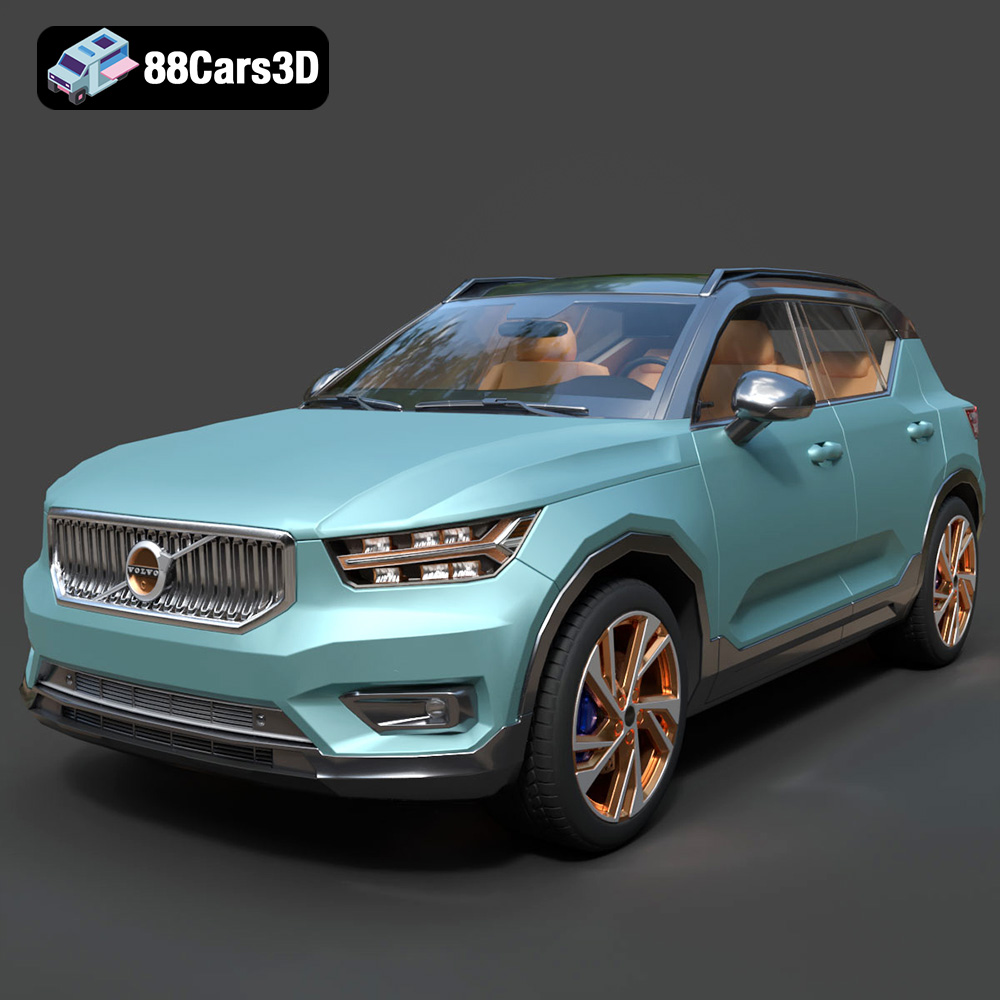
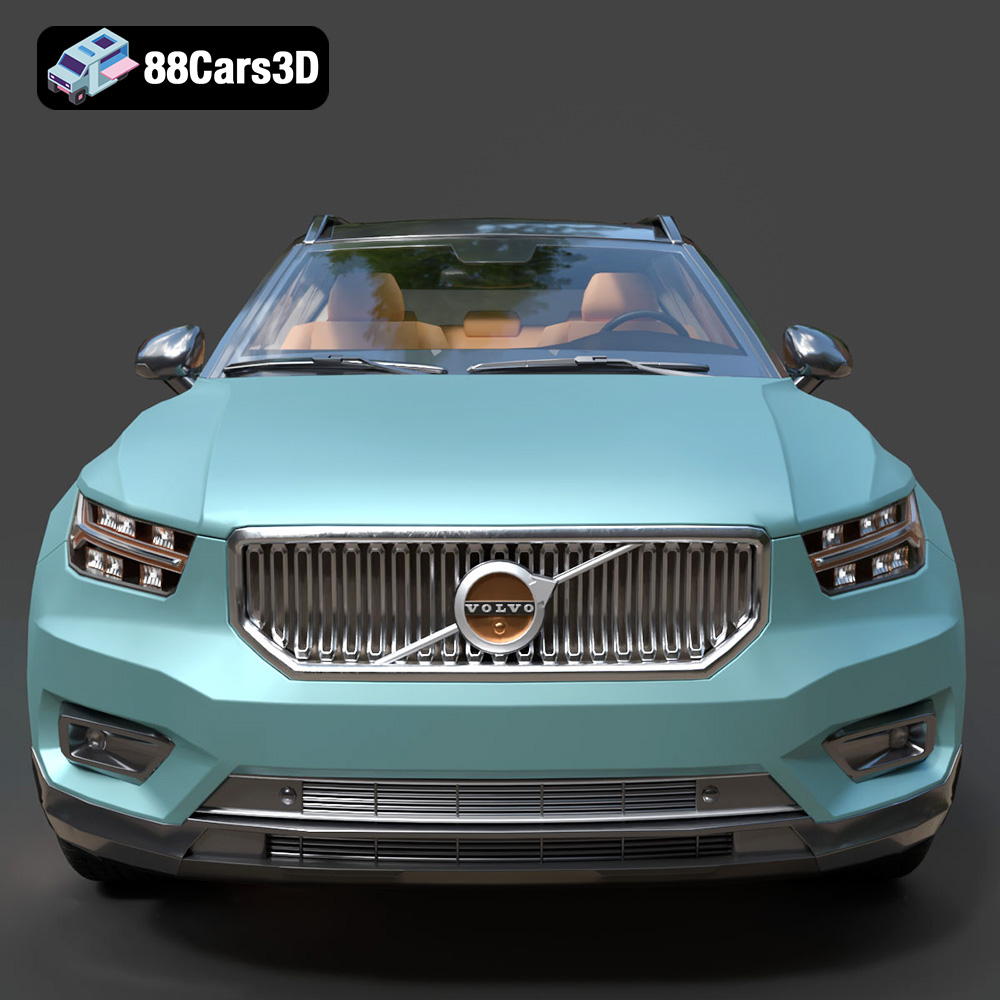
The foundation of any high-quality 3D car model is its geometry. It begins with meticulous reference gathering, often involving detailed blueprints, photographs from all angles, and real-world vehicle dimensions. For a model like the Volvo XC40 Recharge, capturing the distinctive Scandinavian minimalist design, the assertive stance, and the unique EV-specific elements – such as the closed-off front grille and “Thor’s Hammer” LED headlights – requires an unwavering commitment to accuracy. Every curve, panel gap, and ventilation slit must be replicated with precision. This model boasts accurate 2020 Volvo XC40 Recharge compact SUV proportions, ensuring that it looks convincing from any distance or camera angle, whether in a static render or a dynamic animation.
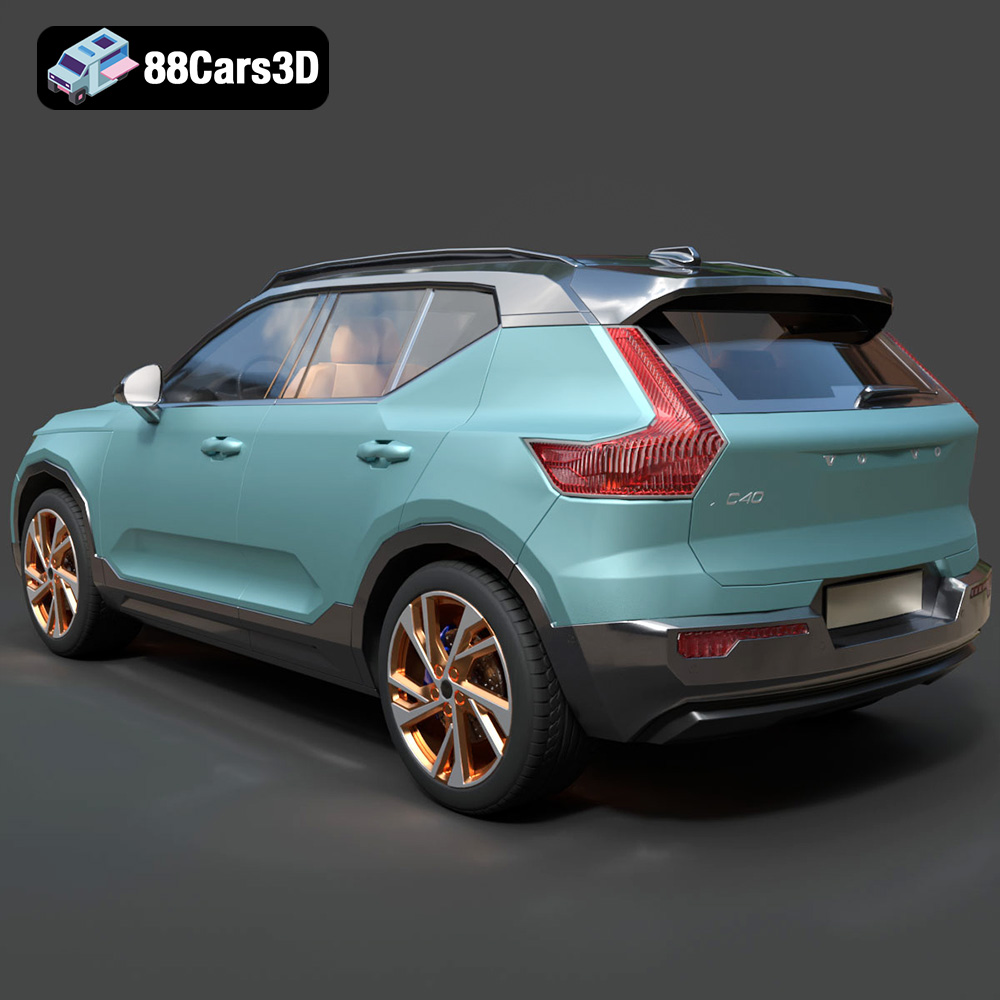
Beyond the mesh, materials and textures breathe life into a 3D model. The realistic representation of surfaces – from the gloss of paint to the subtle reflectivity of chrome and the intricate patterns of tire treads – is paramount for photorealism. For the XC40 Recharge, this includes simulating the unique properties of its R-Design aesthetic, such as the contrasting gloss black roof and mirror caps, and the realistic feel of its sustainable interior materials. PBR (Physically Based Rendering) workflows are essential here, ensuring that materials react accurately to light, mimicking real-world physics.
For dynamic applications like game development or animated commercials, a 3D car model must be prepared for movement. This involves separating key components and setting up proper pivots. The Volvo XC40 Recharge model explicitly states “Separate wheels, steering components, and doors for rigging and animation,” and “Proper pivot setup for steering and wheel rotation.” This attention to pre-production details saves countless hours for animators and technical artists.
The true value of a premium 3D car model, such as the Volvo XC40 Recharge (2020) 3D Model from 88cars3d.com, lies in its seamless integration into diverse professional workflows. Its optimized structure and wide format compatibility make it a versatile asset for a range of industries, dramatically reducing production time and elevating visual standards.
In ArchViz, realism is king. A photorealistic vehicle parked in a driveway or cruising down a street adds an unparalleled layer of authenticity and scale to an architectural rendering. The Volvo XC40 Recharge, with its modern aesthetic and eco-conscious appeal, is an ideal choice for populating high-end architectural visualizations. Its precise geometry and detailed materials ensure it holds up even in foreground shots.
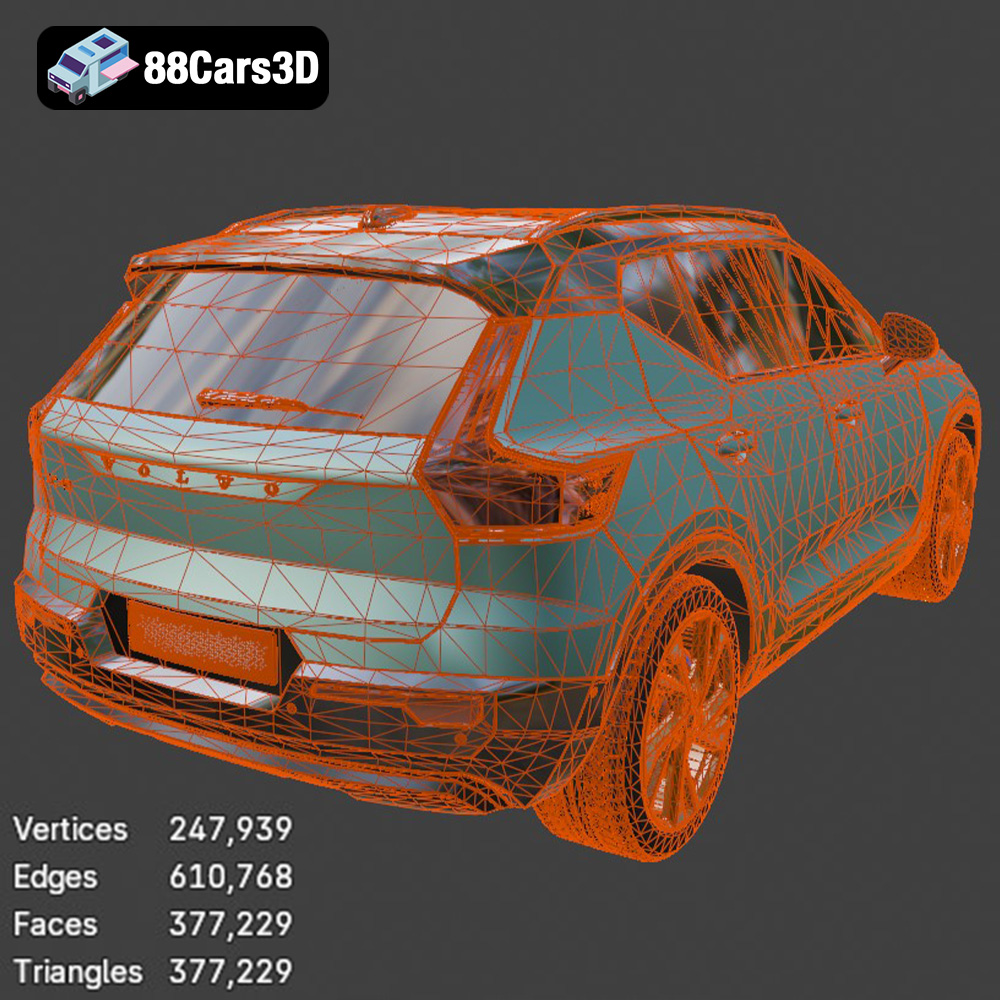
For game developers, balancing visual fidelity with performance is a constant challenge. The Volvo XC40 Recharge (2020) 3D Model, with its “highly efficient, impeccably clean mid-polygon topology (just over 377k triangles),” is perfectly poised for game environments. This polygon count allows it to function both as a detailed ‘hero’ vehicle for player interaction or as a high-quality background traffic asset, populating open-world cities without bogging down the engine.
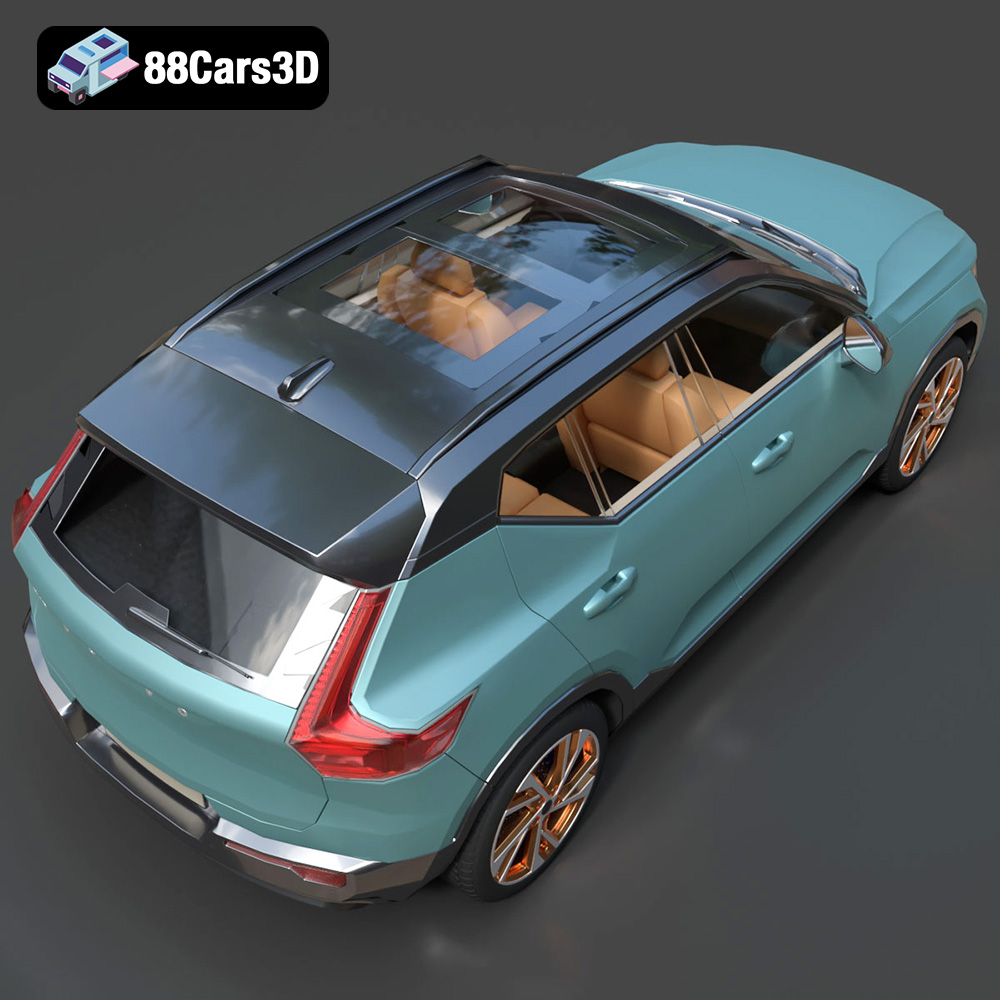
AR/VR applications demand lightweight, highly optimized assets for smooth, interactive experiences. Whether it’s an interactive digital EV showroom, a car configurator, or an immersive virtual test drive, the Volvo XC40 Recharge model’s balanced polygon count and `.glb` format make it an excellent candidate. The “optimized interior geometry tailored to look authentic from the exterior or in VR” is a crucial detail for VR experiences where users can often “sit inside” the car.
The utility of a premium 3D model extends beyond digital screens. With the advent of accessible 3D printing technology, these digital assets can be transformed into tangible objects, opening up new avenues for display, prototyping, and collectible creation. The Volvo XC40 Recharge (2020) 3D Model is explicitly designed with this physical manifestation in mind, providing the necessary `.stl` format and detailed printing recommendations.
For automotive enthusiasts, designers, or educators, converting a detailed 3D car model into a physical object offers a unique way to appreciate its form and design. The `.stl` format, the industry standard for 3D printing, simplifies this process by providing a manifold (watertight) mesh that slicing software can interpret into print instructions.
Bringing a 3D print to life often involves a significant post-processing stage. Just as a digital render benefits from detailed textures and lighting, a physical model can be enhanced with painting and finishing techniques to match its real-world counterpart. The Volvo XC40 Recharge model’s suggestions for post-processing are practical and design-centric.
In 3D content creation, particularly for complex assets like 3D car models, a constant negotiation occurs between achieving stunning visual fidelity and ensuring optimal performance. This balance is especially critical when assets are intended for real-time applications such as games or AR/VR, where frame rates directly impact user experience. The Volvo XC40 Recharge (2020) 3D Model embodies this equilibrium, designed to excel in both high-end renders and performance-sensitive environments.
The concept of “mid-poly” topology is key to this balance. With approximately 377,000 triangles, the XC40 Recharge model sits in a sweet spot. It’s detailed enough to convincingly capture the vehicle’s complex curves and features, making it ideal for close-up shots in architectural visualizations or high-quality product renders. Yet, it avoids the excessive polygon counts found in CAD models, which can cripple real-time engine performance.
Beyond the raw poly count, the *quality* of the mesh topology is paramount. The description emphasizes a “beautifully clean, quad-heavy structure.” This isn’t just an aesthetic preference for modelers; it has profound technical implications.
Investing in high-quality, versatile 3D car models like the Volvo XC40 Recharge (2020) 3D Model is not just about meeting current project demands, but also about future-proofing your creative endeavors. The adaptability of such assets ensures they remain relevant and usable across evolving technologies and workflows, providing long-term value to professionals and studios.
The extensive range of included file formats (.blend, .fbx, .obj, .glb, .stl, .ply, .unreal, .max) is a clear indicator of the model’s future-readiness. As software ecosystems change and new platforms emerge, having an asset available in multiple industry-standard and widely supported formats ensures its longevity and utility.
A truly valuable 3D asset offers ample room for customization, allowing artists to tailor it to specific project requirements without starting from scratch. The Volvo XC40 Recharge model’s design lends itself well to various modifications.
In the demanding world of digital visualization, the quality of a 3D car model is paramount. It dictates not only the aesthetic appeal of a project but also its technical performance and versatility across diverse applications. The Volvo XC40 Recharge (2020) 3D Model stands out as an exemplary asset, meticulously crafted to meet the highest professional standards.
From its impeccably clean, mid-polygon topology (optimized for both stunning automotive rendering and efficient real-time performance) to its accurate capture of the distinctive EV styling and detailed interior, this model is a powerful tool for any digital artist or developer. Its comprehensive support for various file formats – from .blend and .max for native editing, to .fbx and .unreal for game engines, .glb for AR/VR, and .stl for 3D printing – ensures its adaptability across virtually any workflow.
Whether you are designing a cutting-edge architectural visualization, developing an immersive open-world game, creating an interactive AR/VR experience, or even producing a physical scale model, this Volvo XC40 Recharge 3D Model delivers the technical precision and visual fidelity required for truly impactful results. It embodies the perfect balance between artistic detail and technical optimization, making it an invaluable addition to any professional asset library. For those seeking premium 3D car models that truly elevate their projects, 88cars3d.com offers a curated selection of top-tier assets, where quality and versatility are always in the driver’s seat.
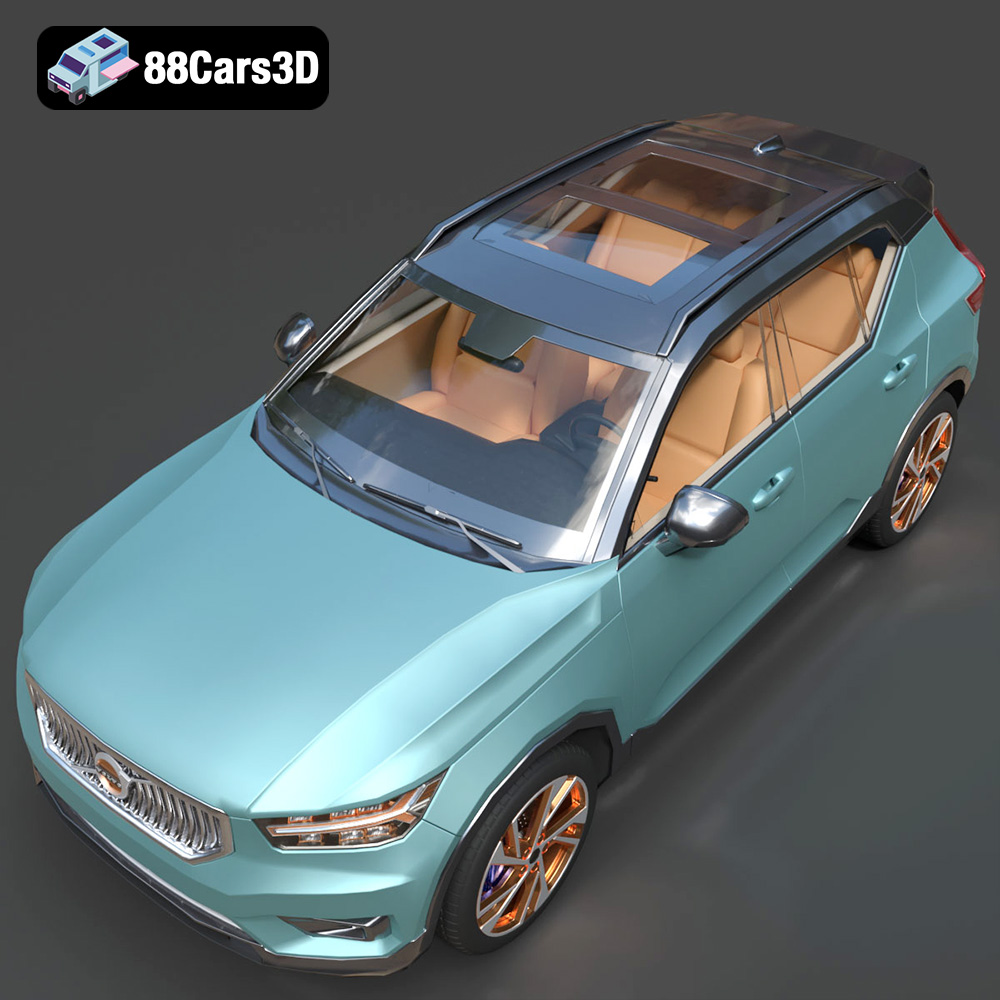
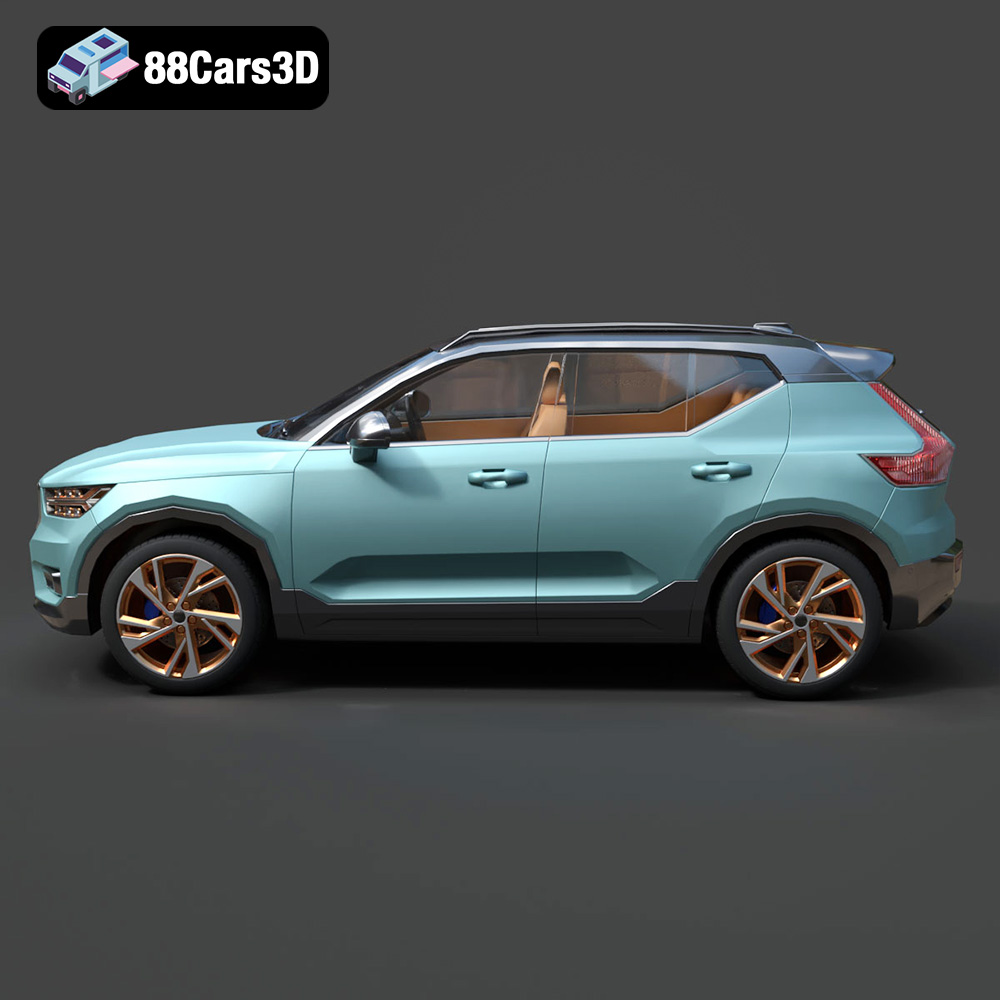
The Volvo XC40 Recharge (2020) 3D Model is an exceptionally accurate digital recreation of the Swedish brand’s groundbreaking first fully electric SUV. Marrying Volvo’s renowned commitment to safety and Scandinavian minimalism with a cutting-edge EV powertrain, the XC40 Recharge is a highly recognizable and premium compact crossover built on the CMA platform. This 3D model perfectly captures the distinct, modernized EV styling of the 2020 Recharge edition. It features the signature closed-off, body-color front grille (a hallmark of Volvo’s electric line), the iconic “Thor’s Hammer” LED headlight assemblies, an aerodynamic contrast-color roof, and the muscular yet compact crossover stance. Built with a highly efficient, impeccably clean mid-polygon topology (just over 377k triangles), it strikes the absolute perfect balance. It provides crisp visual fidelity for close-up automotive rendering while remaining lightweight enough to populate modern virtual environments, ArchViz driveways, and real-time game engines. Perfect for populating modern, eco-conscious street scenes, luxury architectural visualizations, electric vehicle commercial mockups, and mobile/PC game development.
$9.99
.archviz
.blend
.ev
.fbx
.obj
.rendering
.volvo
.xc40
car-3d-model
compact-suv
electric-vehicle
game-ready
mid-poly
Scandinavian design
SUV
traffic-car
xc40-recharge