Get 50% OFF All Premium 3D & STL Models!

In the dynamic world of 3D visualization, automotive design, and interactive media, the quality of your foundational assets can make or break a project. Whether you’re an architect integrating a vehicle into a photorealistic street scene, a game developer populating an open-world environment, or a product designer creating compelling marketing visuals, a meticulously crafted 3D car model is indispensable. This is where premium assets, like the exceptional BMW 1 Series Coupe 2009 3D Model, truly shine. It’s not just a collection of polygons; it’s a gateway to bringing your creative visions to life with unparalleled realism and efficiency.
The 2009 BMW 1 Series Coupe itself is an icon – a compact, rear-wheel-drive sports coupe celebrated for its engaging driving dynamics and distinctive BMW styling. Its digital counterpart, available on 88cars3d.com, encapsulates this essence perfectly, offering a high-detail digital recreation that extends its legacy into the virtual realm. This model isn’t just about static beauty; it’s engineered for versatility, ready to be deployed across a spectrum of professional applications, from high-fidelity rendering to real-time game development and even 3D printing.
The BMW 1 Series Coupe 2009 holds a special place in the hearts of automotive enthusiasts. Its compact footprint, powerful engine options, and classic BMW rear-wheel-drive layout made it a driver’s car in every sense. Digitally, this translates into an asset with broad appeal. For designers and artists, replicating such a distinctive vehicle requires significant time and expertise. Opting for a pre-built, high-quality 3D model allows immediate integration into projects, drastically cutting production cycles and costs without compromising on visual fidelity.
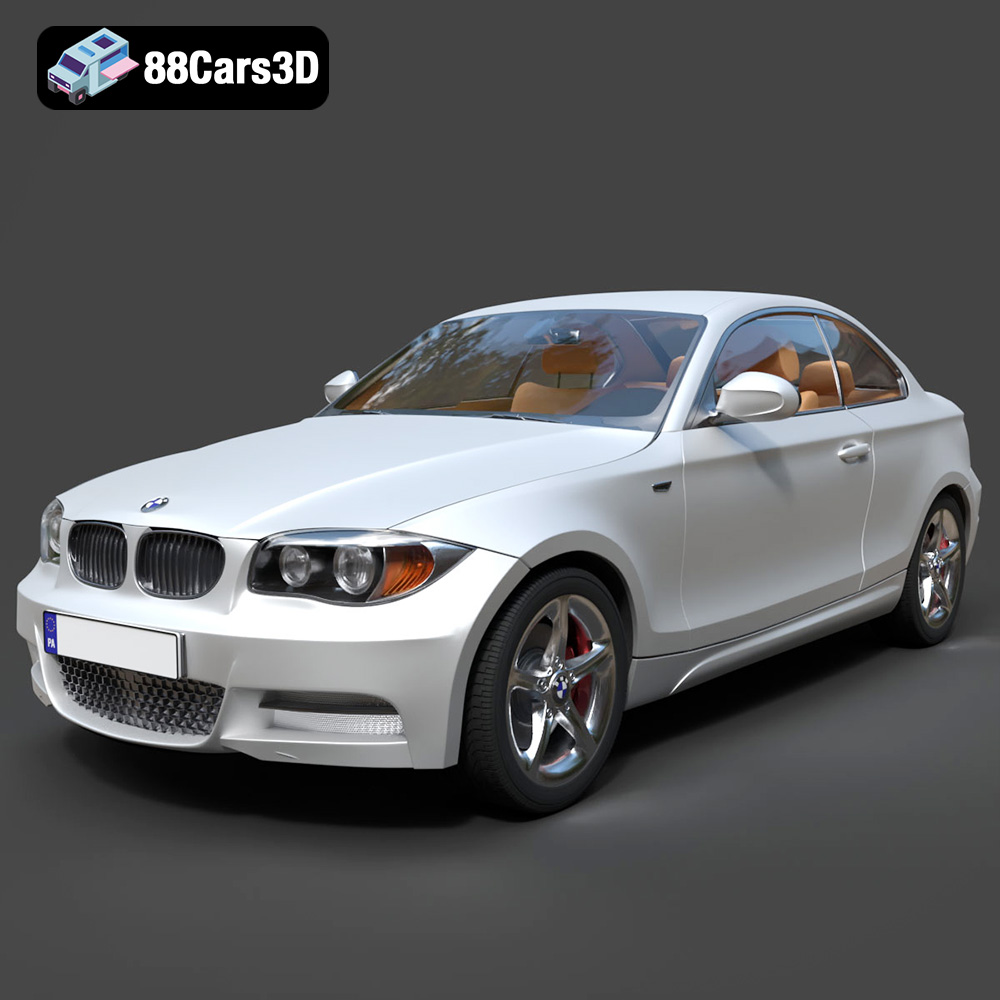
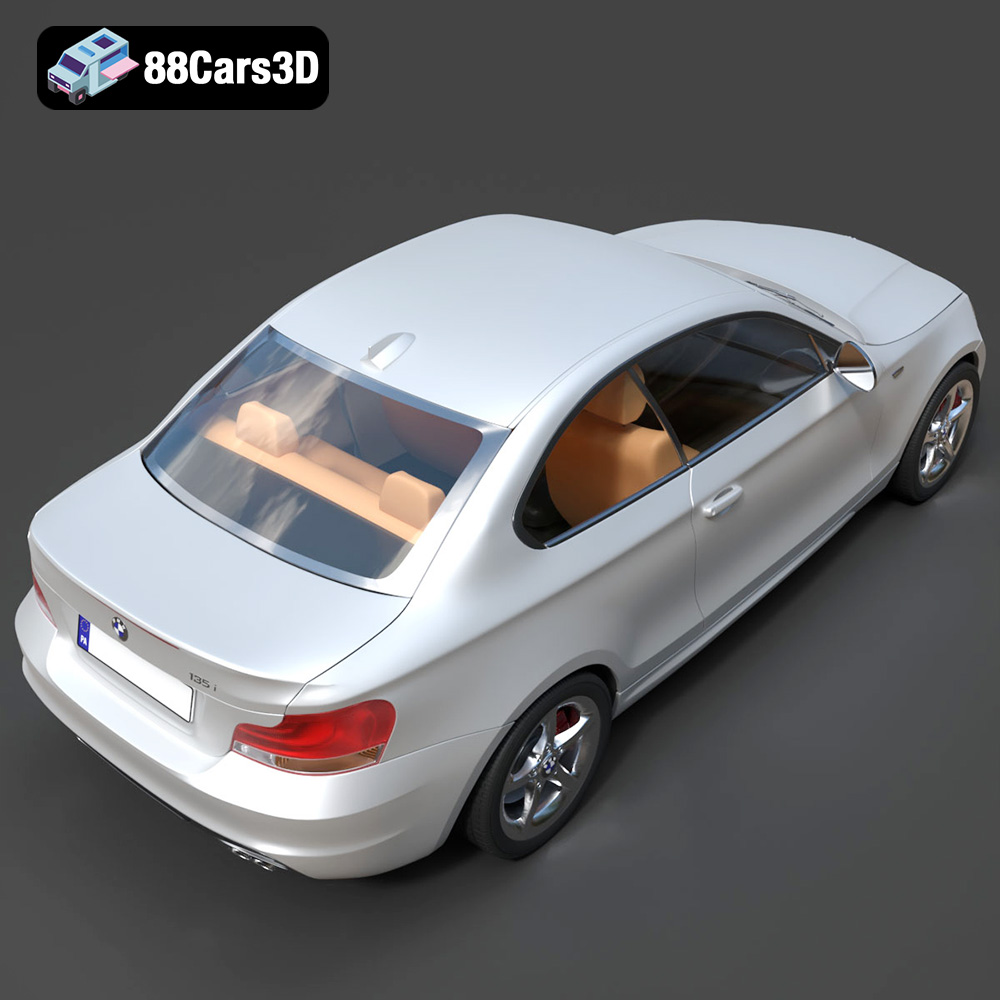
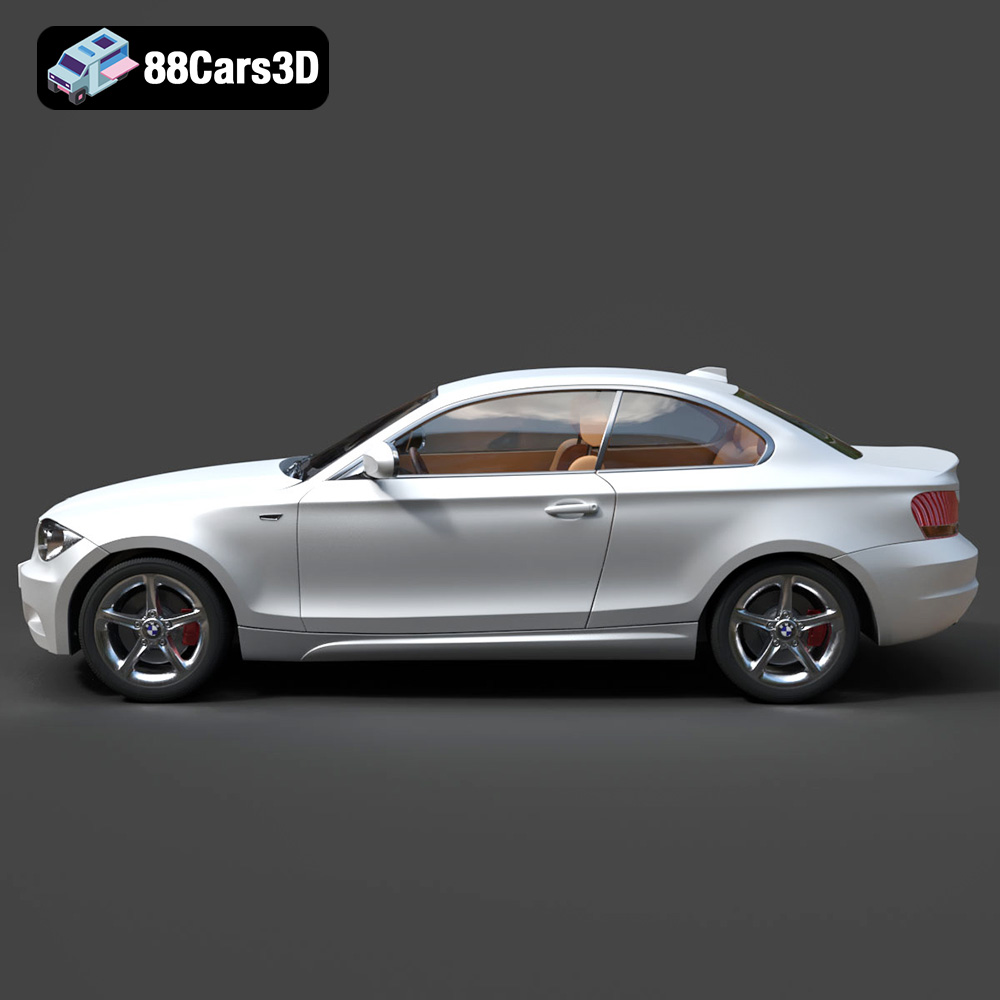
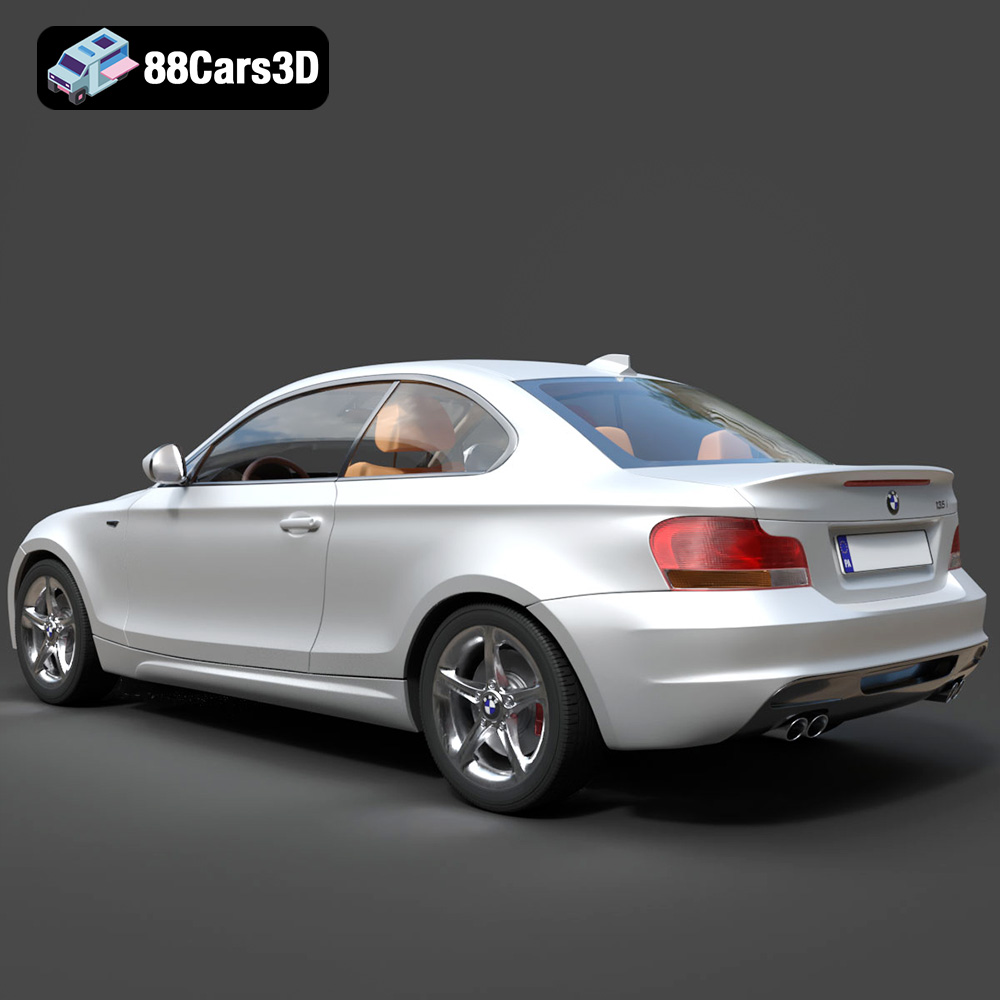
The BMW 1 Series Coupe 2009 3D Model excels in its attention to detail, accurately reproducing the vehicle’s signature design cues. From the iconic kidney grille and dual headlight design to the sculpted hood lines and the sporty coupe roofline, every aspect has been meticulously translated into 3D. The model includes detailed alloy wheels with brake components, transparent glass materials, and even separate components for steering and wheels, enabling realistic animation. This level of accuracy is critical for automotive visualization, where brand integrity and realistic representation are paramount.
A truly valuable 3D asset is one that can adapt to various pipelines and creative demands. The BMW 1 Series Coupe 2009 3D Model is designed with this versatility in mind. Its clean topology and real-world scale make it suitable for a wide array of uses, from cinematic rendering and advertising campaigns to immersive AR/VR experiences and fast-paced game development. Imagine integrating this model into an urban driving scene for a car commercial, placing it as a background vehicle in an architectural visualization, or even using it as a player-controlled car in a racing simulation. The possibilities are extensive, making it a cornerstone asset for any professional digital library.
Choosing the right 3D file format is a critical decision that impacts workflow efficiency, compatibility, and the final output of your project. The BMW 1 Series Coupe 2009 3D Model comes with a comprehensive suite of file formats, ensuring maximum flexibility across various software and platforms. Understanding each format’s strengths and typical use cases is essential for any professional working with 3D assets.
The `.blend` format is Blender’s native file type, offering a complete and fully editable scene with materials, textures, lighting, cameras, and animation data. It’s the ideal choice for Blender users who need full control over the model’s intricacies. When you download the BMW 1 Series Coupe in `.blend` format, you get the original project file, allowing for deep customization, adjustments to shaders, rigging, and even re-topology if specific project needs demand it. It’s perfect for artists who want to delve into the model’s construction and leverage Blender’s powerful toolset for rendering with Cycles or Eevee.
`.fbx` (Filmbox) is arguably the most widely adopted proprietary file format for 3D data exchange, especially prevalent in game development and animation pipelines. It supports geometry, materials, textures, animations, and skeletal data, making it an excellent choice for transferring complex 3D assets between different software packages like Maya, 3ds Max, Cinema 4D, and game engines such as Unreal Engine and Unity. For the BMW 1 Series Coupe, the `.fbx` format ensures that the model can be seamlessly imported into virtually any professional 3D application or real-time environment, preserving its mesh, UVs, and hierarchical structure for efficient integration into a wider project.
`.obj` (Wavefront OBJ) is a universal, open-standard format primarily used for transferring 3D geometry data. It’s renowned for its broad compatibility across almost all 3D software. While it handles mesh data (vertices, normals, UVs) very well, its support for materials and animations is more limited compared to `.fbx`. Materials are typically defined in a separate `.mtl` file, and animations are not natively supported. However, for static models like the BMW 1 Series Coupe, `.obj` is a robust and reliable choice, offering a clean, lightweight mesh that can be easily imported into any software for texturing and rendering.
`.glb` (GL Transmission Format Binary) is the binary version of glTF, a royalty-free specification for the efficient transmission and loading of 3D scenes and models by applications. It’s specifically designed for web-based 3D, AR (Augmented Reality), and VR (Virtual Reality) experiences. A `.glb` file embeds textures and other assets directly into a single file, making it incredibly convenient for quick loading and deployment on platforms like Sketchfab, Facebook 3D posts, or custom web viewers. The BMW 1 Series Coupe in `.glb` format is pre-optimized for real-time display, making it an excellent choice for virtual showrooms, interactive product configurators, or integrating into AR apps.
`.stl` (Standard Tessellation Language) is the de facto standard format for 3D printing. It represents a 3D model as a series of connected triangles (a tessellated surface) without any color, texture, or material information. Its primary purpose is to define the surface geometry of a 3D object for manufacturing. The inclusion of the BMW 1 Series Coupe in `.stl` format means the model has been prepared with manifold geometry, ensuring it is watertight and ready for slicing software. This allows users to physically produce scaled models, prototypes, or collectible miniatures of the car, extending its utility beyond digital screens.
`.ply` (Polygon File Format or Stanford Triangle Format) is another format for storing 3D data, particularly popular in academic and research contexts for storing 3D scanner data. It can store a variety of properties including color, transparency, normals, texture coordinates, and even reliability information. While less common for general 3D asset exchange, `.ply` is valuable for applications requiring precise mesh data, often used in CAD, reverse engineering, or detailed analysis where mesh integrity is paramount. For the BMW 1 Series Coupe, its inclusion offers an alternative for highly precise geometrical data handling.
The `.unreal` format signifies an asset specifically optimized and ready for Unreal Engine. This often implies that the model has been exported with Unreal’s specific requirements in mind, potentially including pre-configured materials, LODs (Levels of Detail), and collision meshes, making the import process incredibly smooth. For game developers and real-time visualization artists, having the BMW 1 Series Coupe 3D Model in a native Unreal-ready format dramatically reduces the setup time, allowing for immediate integration into an interactive scene or project without extensive tweaking.
The `.max` format is Autodesk 3ds Max’s native project file. Like `.blend` for Blender, it contains the entire scene data, including geometry, materials, textures, lighting, cameras, animation, and scene settings. It is the preferred format for 3ds Max users who require complete flexibility and access to all elements of the original scene. This allows for deep modification, leveraging 3ds Max’s robust modeling and rendering capabilities (like V-Ray or Corona Renderer) to achieve photorealistic results or to integrate the car into complex architectural or product visualization projects with full editing control.
Achieving photorealistic renders and seamless real-time performance requires more than just a visually appealing design; it demands robust technical foundations. The BMW 1 Series Coupe 2009 3D Model on 88cars3d.com is built with these considerations at its core, ensuring it meets professional standards for geometry, scale, and functional readiness.
The exterior of the 1 Series Coupe is where its iconic design truly shines. This 3D model features accurate body proportions, a critical element for any automotive visualization. The signature BMW kidney grille, dual headlights, sculpted hood, and side character lines are all represented with precision. Beyond the overall form, smaller details like the alloy wheels with their intricate spoke patterns and visible brake components (calipers, discs) add significant depth. Crucially, transparent glass materials and mirror geometry are correctly implemented, ready for physically based rendering (PBR) workflows. The separate wheel and steering components are not just aesthetic; they are functional, properly pivoted and ready for animation, a fundamental requirement for dynamic scenes or game integration.
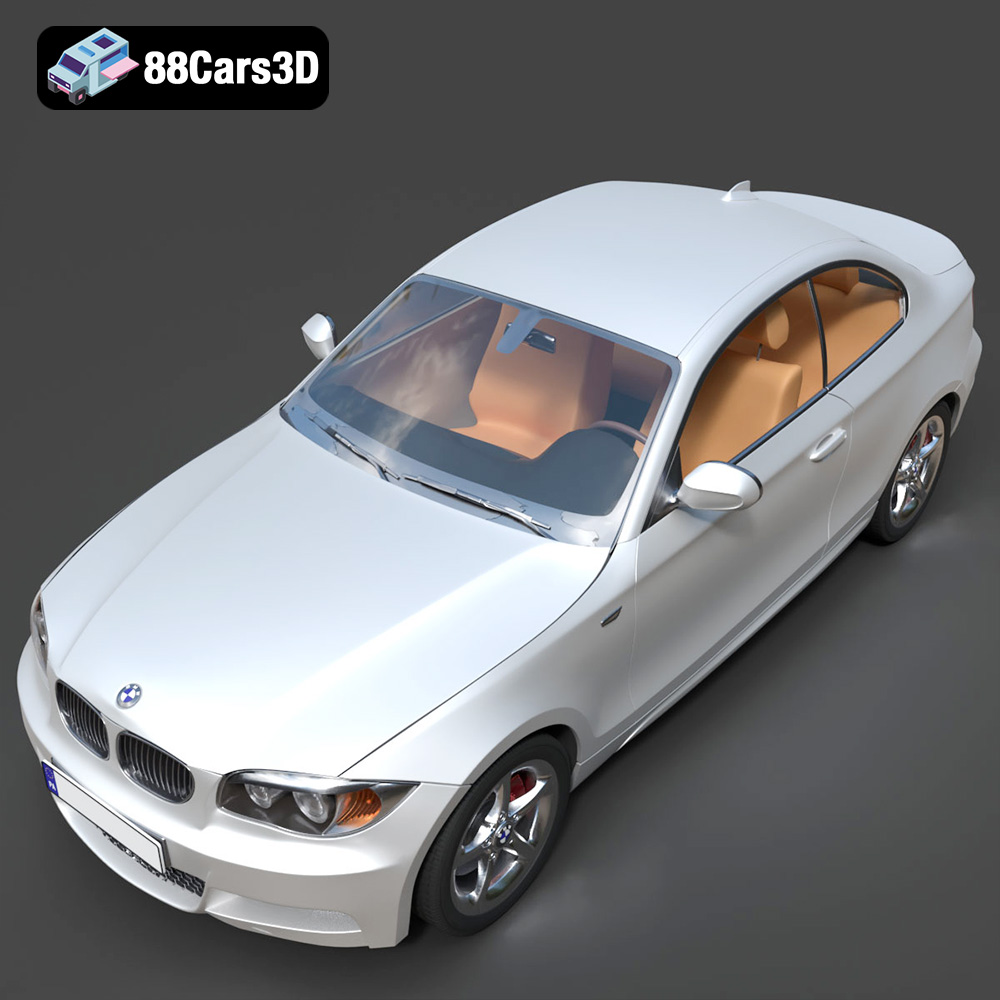
While often secondary to the exterior, a well-modeled interior elevates the realism of any automotive project, especially for close-up shots, virtual showrooms, or first-person game perspectives. The BMW 1 Series Coupe 2009 3D Model includes a detailed dashboard with an analog instrument cluster, a multifunction steering wheel, a center console with an infotainment layout, and front sport seat geometry. Gear shifter and pedal detailing further enhance the realism, along with door panel and trim representations. This level of interior fidelity is achieved with optimized geometry, striking a balance between visual richness and performance efficiency, making it suitable for both high-quality renders and real-time engines.
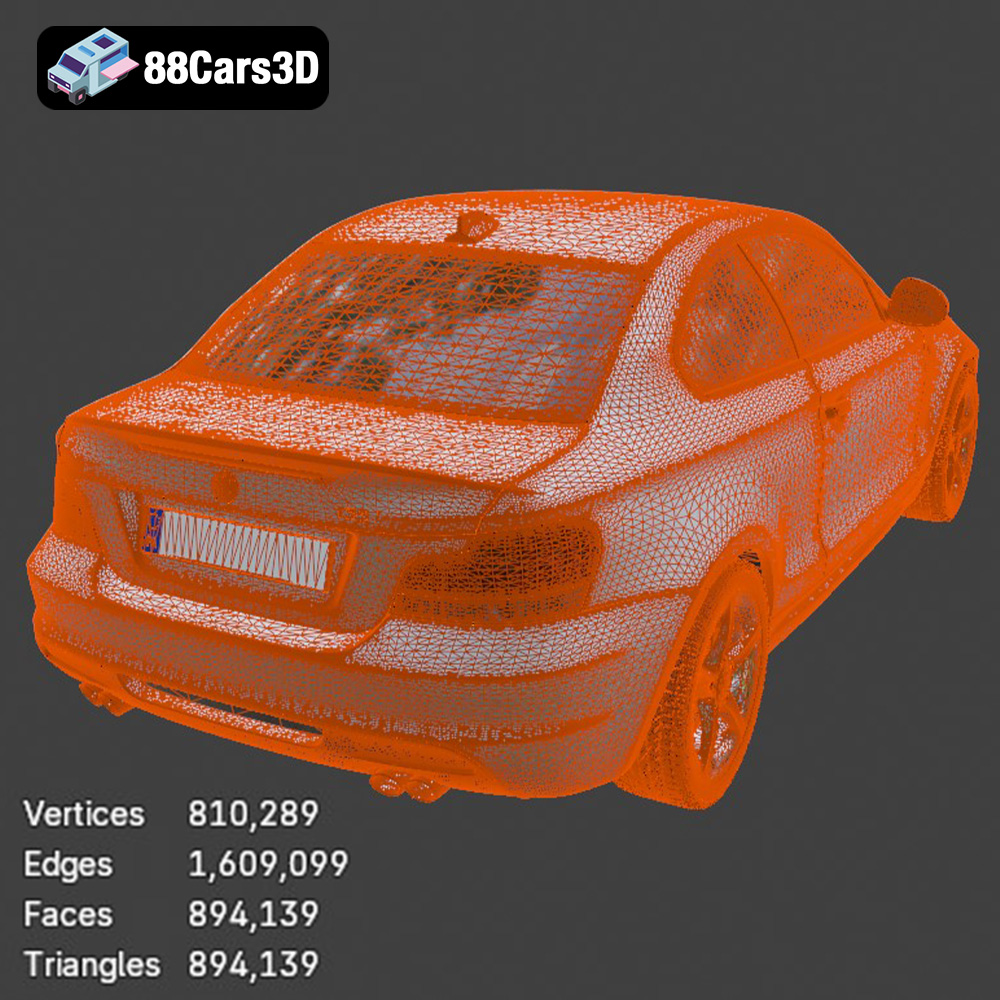
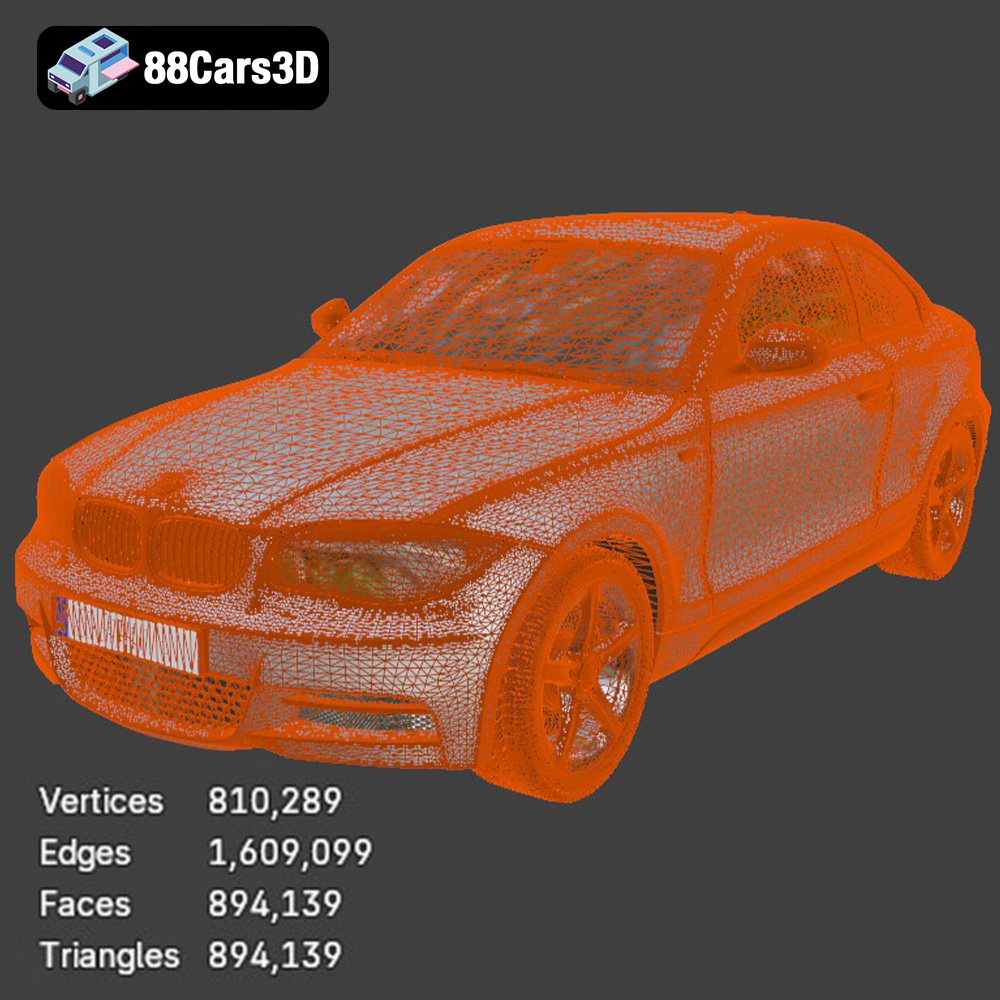
Underpinning the visual appeal is a clean and well-organized mesh structure. This implies efficient polygon distribution, minimizing unnecessary geometry while retaining critical details. Real-world scale accuracy is maintained, ensuring the model integrates seamlessly with other scaled assets in a scene. The “proper pivot setup for steering and wheel rotation” is a technical advantage that simplifies animation significantly, preventing complex re-rigging. The “optimized polygon flow for performance and realism” means the mesh is structured to deform naturally if rigged for advanced animation, and also to ensure efficient rendering in game engines by preventing shading artifacts and reducing draw calls where possible. These technical advantages translate directly into faster workflows and superior final results for any professional project.
The true value of a versatile 3D asset lies in its practical application across diverse professional workflows. The BMW 1 Series Coupe 2009 3D Model is designed to seamlessly integrate into various pipelines, from cinematic rendering to interactive real-time environments and even physical production through 3D printing.
For artists focused on photorealistic imagery, the model’s clean topology and detailed materials make it an excellent candidate for advanced rendering engines. In 3ds Max, users can import the `.max` or `.fbx` file, leveraging powerful renderers like V-Ray or Corona. The workflow typically involves setting up sophisticated lighting environments (e.g., HDRIs for realistic reflections), refining material properties (using PBR workflows for paint, glass, rubber, and chrome), positioning cameras for dramatic angles, and then rendering out high-resolution stills or animations. Similarly, Blender users can utilize the native `.blend` file or import `.fbx`, taking advantage of Cycles or Eevee for rendering. Both software packages offer extensive post-processing capabilities to fine-tune color grading, add depth of field, and enhance atmospheric effects, resulting in visuals indistinguishable from reality for automotive marketing or visualization projects.
Game developers and real-time experience creators will find the `.fbx` and `.unreal` formats particularly useful. In Unreal Engine, importing the `.fbx` or the pre-optimized `.unreal` asset is the first step. The engine’s powerful material editor allows for PBR material setup, ensuring realistic reflections and lighting responses. Key steps include setting up appropriate collision meshes (simple or complex) for physics interactions, generating LODs (Levels of Detail) to optimize performance at varying distances, and integrating the car into a vehicle blueprint for controllable driving mechanics. The proper pivot setup means wheels and steering can be easily connected to vehicle physics components, allowing for realistic turning and rotation. For AR/VR applications, the `.glb` format is ideal, allowing the BMW 1 Series Coupe to be seamlessly embedded into interactive environments, offering virtual showrooms or immersive driving experiences.
Beyond the digital screen, the inclusion of an `.stl` file unlocks the potential for physical creation. This format is the standard for 3D printing, allowing designers and enthusiasts to produce tangible scale models of the BMW 1 Series Coupe. The provided 3D print settings are invaluable:
This capability extends the model’s utility from virtual showcases to tangible automotive collectibles, showcasing the versatility of high-quality 3D assets from 88cars3d.com.
A high-quality 3D model serves as an excellent foundation, but its true power is often realized through customization. The BMW 1 Series Coupe 2009 3D Model provides ample opportunities for artists and developers to tailor it to their specific project needs, adding unique touches and personalizing its appearance and behavior.
The ability to easily change body color and trim accents is fundamental for any automotive visualization. Whether you need to match a specific brand palette, depict different model years, or simply create a unique look, the model’s well-organized materials allow for straightforward modifications. Adding sport package elements or performance wheels can transform the car’s aesthetic from a standard coupe to a high-performance variant. Modifying ride height or stance is crucial for achieving specific visual dynamics, from a sleek, lowered custom look to a more rugged rally stance. Custom license plates, easily implemented through texture mapping, further enhance realism and can tie the vehicle to a specific region or narrative. These customization options enable artists to craft a unique story and visual identity around the vehicle, making it an invaluable asset for advertising, film, or game development.
Beyond static appearance, the model’s structural design facilitates dynamic animation. The separate wheels and steering components, coupled with proper pivot setups, mean animating realistic driving sequences is significantly streamlined. Users can configure lighting for various scenes—city nightscapes, bright track days, or illuminated showroom environments—to enhance mood and realism. This capability is vital for car commercials, cinematic sequences, or interactive driving simulations where the vehicle needs to perform convincingly within its digital environment. The ability to manipulate these elements provides full creative control, allowing the BMW 1 Series Coupe to become a dynamic character in any digital narrative.
The BMW 1 Series Coupe 2009 3D Model is more than just a digital replica; it’s a meticulously crafted, technically robust asset designed to empower professionals across various industries. From its accurate exterior and detailed interior to its optimized geometry and wide array of file formats, it addresses the diverse needs of rendering artists, game developers, AR/VR creators, and even those venturing into 3D printing.
Its versatility, clean technical foundation, and ease of customization make it an invaluable addition to any creative toolkit, significantly reducing development time and elevating the quality of your projects. Whether you’re aiming for photorealistic renders for a marketing campaign or seamless integration into a real-time game, this model provides the precision and flexibility you need. Discover this exceptional 3D car model and many more high-quality automotive assets by visiting 88cars3d.com today, and take the first step towards transforming your digital creations.
The BMW 1 Series Coupe 2009 3D Model is a high-detail digital recreation of the compact premium sports coupe known for its balanced chassis, rear-wheel-drive dynamics, and distinctive BMW styling. The 2009 1 Series Coupe blends everyday practicality with sporty performance, making it a popular choice among driving enthusiasts. This 3D model accurately represents the signature kidney grille, dual headlight design, sculpted hood lines, compact coupe proportions, sporty side profile, rear trunk layout, and alloy wheel detailing. Built with clean topology and real-world scale accuracy, it is ideal for rendering, animation, automotive visualization, game development, and AR/VR experiences. Perfect for urban driving scenes, car commercials, open-world simulations, cinematic projects, and automotive showcases.
$9.99
.1series
.arvr
.automotive
.blend
.bmw
.bmw2009
.car3dmodel
.compactcoupe
.fbx
.gameasset
.glb
.max
.obj
.ply
.rendering
.simulation
.sportcoupe
.stl
.unreal