Get 50% OFF All Premium 3D & STL Models!

The world of automotive design and visualization has undergone a dramatic transformation thanks to advancements in 3D modeling technology. What was once a realm confined to physical clay models and hand-drawn sketches is now a dynamic, digital landscape where creativity knows no bounds. From stunning automotive renderings to immersive game environments and detailed 3D printed replicas, 3D car models are at the heart of this revolution. This article will explore the key aspects of working with 3D car models, covering everything from file formats to practical workflows and real-world applications.
The selection of the right file format is crucial for any 3D project. Different formats offer varying levels of compatibility, data preservation, and optimization for specific applications. Here’s a breakdown of the most common 3D model file formats and their ideal use cases:
The .blend format is the native file type for Blender, a powerful and free open-source 3D creation suite. It contains all the information about a Blender scene, including geometry, textures, materials, animation data, and modifiers. Using .blend files allows for complete editability within Blender. It’s the go-to format for Blender users who need to maintain full control over their 3D car models.
Filmbox, or .fbx, is a proprietary file format developed by Autodesk. Its strength lies in its broad compatibility with a wide range of 3D software packages, including Unreal Engine, Unity, Maya, and 3ds Max. Crucially, .fbx supports the transfer of complex data such as meshes, textures, materials, animations, and skeletal rigs. This makes it the ideal format for transferring 3D car models between different software environments, especially in real-time applications like game development and simulations. It’s highly recommended when using 3D car models purchased at 88cars3d.com in game engines.
The .obj (or Wavefront .obj) format is a simple, text-based format that has become a widely supported standard for 3D model exchange. It stores basic geometric data, including vertices, faces, texture coordinates, and normals. While it doesn’t support animation or complex material properties, its simplicity and universality make it invaluable for transferring models between different software packages, particularly when dealing with static models. It’s a good choice for simple geometry imports where you don’t need animation data.
.glb (GL Transmission Format Binary) is a relatively new format specifically designed for efficient delivery and display of 3D models in web browsers, augmented reality (AR), and virtual reality (VR) environments. It’s a binary format that packages the entire 3D scene, including geometry, textures, and animations, into a single file, minimizing file size and loading times. This makes it perfect for interactive 3D experiences on the web and mobile devices.
Stereolithography, or .stl, is the standard file format for 3D printing. It represents the surface geometry of a 3D model as a collection of triangles. While .stl files don’t contain color or texture information, they accurately define the shape of the object, making them suitable for creating physical prototypes and models using 3D printing technologies.
.ply (Polygon File Format) is a format designed for storing 3D data acquired from 3D scanners and other sources. It can store a variety of properties per vertex, including color, normals, and other custom data. This makes it particularly useful for applications in CAD (Computer-Aided Design), reverse engineering, and scientific visualization where precise geometric data is essential.
The .unreal format is a direct asset format specific to Unreal Engine. Usually, this refers to a package of assets prepared within the Unreal Engine editor itself. It ensures optimal performance and compatibility within the Unreal Engine environment, with features like LODs, materials and textures correctly assigned and referencing the overall project architecture.
The .max format is the native project file for Autodesk 3ds Max. Similar to .blend for Blender, it encapsulates the entire scene setup within 3ds Max, including all geometry, textures, materials, lighting, animation rigs, and modifiers. Using .max files allows for complete control and editability of the 3D car model within 3ds Max. If you plan to extensively animate, rig or customize a 3D car model in 3ds Max, this is the ideal format to work with.
High-quality automotive rendering requires meticulously crafted 3D car models. Optimizing these models for rendering involves balancing visual fidelity with performance considerations.
Polygon count directly impacts rendering time and performance. While high polygon counts can capture intricate details, they can also bog down the rendering process. A good strategy is to use subdivision surfaces, such as TurboSmooth in 3ds Max or Subdivision Surface modifier in Blender. These techniques allow you to work with a relatively low-polygon base mesh while generating a smooth, detailed surface during rendering. Adjusting the subdivision levels controls the level of detail and computational cost.
Realistic materials and textures are essential for achieving photorealistic automotive renderings. Use physically based rendering (PBR) materials that accurately simulate how light interacts with surfaces. PBR materials typically include parameters like base color, roughness, metallic, and normal maps. High-resolution textures are also crucial for capturing fine details like paint imperfections, chrome reflections, and tire treads. Careful attention to material settings and texture quality can significantly enhance the realism of your renderings.
The gaming industry relies heavily on 3D car models for creating immersive racing games and open-world environments. When preparing 3D car models for game engines like Unreal Engine and Unity, optimization is paramount.
Game engines require 3D models to be highly optimized for real-time performance. This often involves significantly reducing the polygon count of the models compared to those used for rendering. Techniques like decimation and retopology can be used to simplify the geometry while preserving the overall shape and silhouette of the car. Level of Detail (LOD) systems are also essential for optimizing performance. LODs involve creating multiple versions of the same model with progressively lower polygon counts. The game engine automatically switches between these LODs based on the distance of the car from the camera, reducing the rendering load when the car is far away.
Proper UV unwrapping is crucial for applying textures to 3D car models in game engines. UV unwrapping involves unfolding the 3D model’s surface onto a 2D plane, allowing you to create textures that accurately map onto the model. Texture baking is another essential technique. It involves transferring details from a high-polygon model to a low-polygon model using texture maps like normal maps and ambient occlusion maps. This allows you to achieve a high level of detail in the game engine without sacrificing performance. Many high-quality 3D car models from 88cars3d.com are already optimized for game engines with excellent UV unwrapping and LODs.
This section outlines a practical workflow for importing and optimizing a 3D car model in Unreal Engine.
First, import the 3D car model into Unreal Engine. The .fbx format is generally recommended for this purpose due to its compatibility with Unreal Engine’s asset pipeline. In the Content Browser, click the “Import” button and select the .fbx file. Configure the import settings as needed, such as specifying the desired material import method and creating collision meshes.
Once the model is imported, set up the materials. Unreal Engine uses a material editor that allows you to create complex materials using a node-based system. Create new material instances for each part of the car, such as the body, windows, and tires. Use PBR material parameters like base color, roughness, and metallic to achieve realistic material properties. Connect texture maps for added detail. You can import textures from the same source where you got the 3D car model, or create your own.
For realistic vehicle behavior, you’ll need to set up collision and physics. Unreal Engine provides several options for creating collision meshes, such as using simple collision primitives (boxes, spheres, capsules) or generating a complex collision mesh from the model’s geometry. After creating collision, set up a VehicleMovementComponent that controls the car’s movement and physics. Configure parameters like engine power, braking force, and tire friction to achieve the desired handling characteristics.
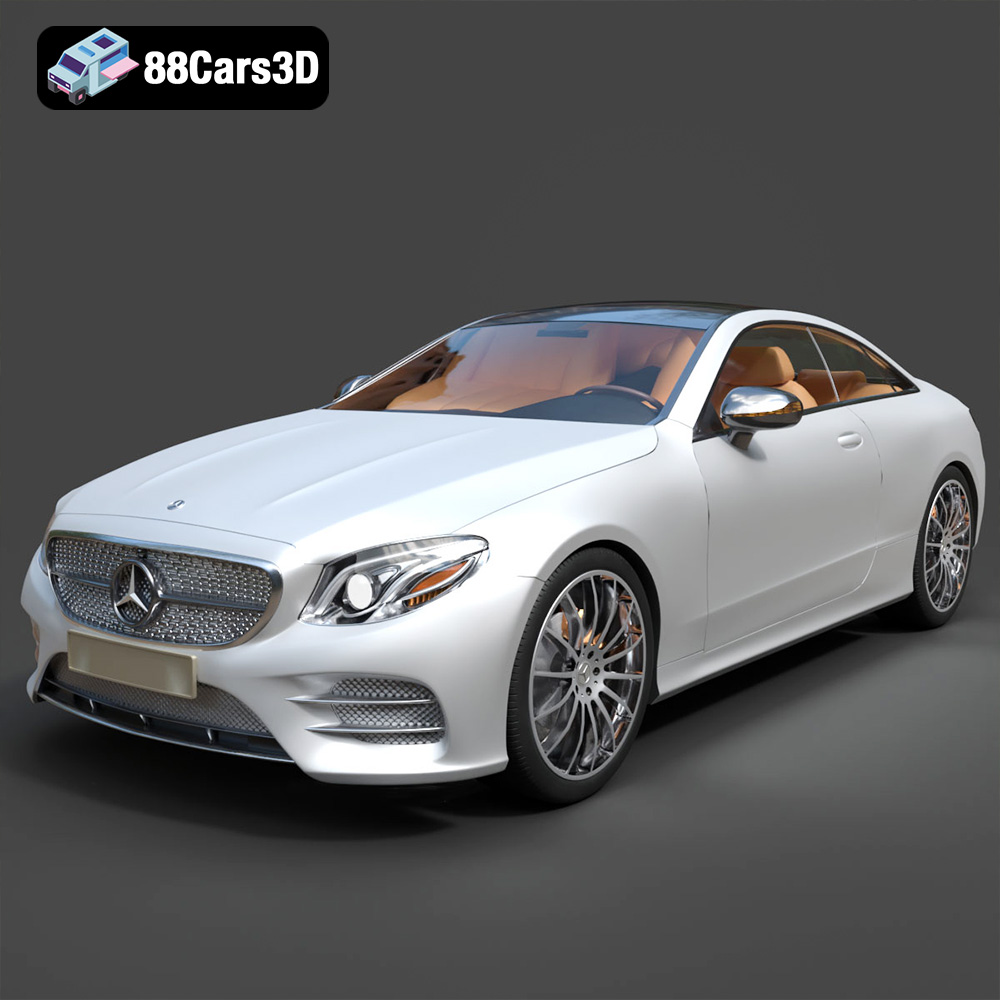
Many automotive design studios now use 3D car models for visualization and presentation purposes. One such studio, “Visionary Automotive,” recently used 3D car models to create a series of photorealistic renderings for a new concept car. They selected high-quality 3D car models with meticulous attention to detail to ensure the final images would impress potential investors and stakeholders.
Visionary Automotive faced the challenge of producing high-quality renderings quickly while maintaining a high degree of realism. They needed to showcase the concept car’s design from various angles and in different lighting conditions. Building models from scratch for each rendering would have been too time-consuming.
Visionary Automotive partnered with 88cars3d.com to acquire highly detailed, optimized 3D car models. They then used these models as the foundation for their renderings. By leveraging the existing models, they were able to focus their efforts on refining the materials, lighting, and composition of the scenes.
The results were stunning. Visionary Automotive produced a series of photorealistic renderings that effectively showcased the concept car’s design. The renderings played a key role in securing funding for the project and generating excitement among potential customers.
3D car models have become indispensable tools for automotive design, game development, and visualization. By understanding the different file formats, optimization techniques, and workflows, you can effectively leverage these models to create stunning visuals and immersive experiences. The journey from clay models to digital masterpieces is ongoing, and the future promises even more exciting possibilities for 3D car models and automotive design. Whether you’re designing the next generation of vehicles, creating captivating game environments, or visualizing your automotive dreams, 3D car models are your gateway to innovation.

Price: $129.99

Price: $99.99
Price: $89.99