Get 50% OFF All Premium 3D & STL Models!

Few automobiles command the same reverence and admiration as the Rolls-Royce Phantom V. A true icon of post-war luxury, this stately limousine, produced between 1959 and 1968, served royalty, heads of state, and the world’s most discerning individuals. Its imposing presence, exquisite hand-crafted detailing, and whisper-quiet performance cemented its status as a symbol of ultimate prestige. Today, in an age dominated by digital innovation, the allure of the Phantom V transcends physical presence, finding new life as a meticulously crafted 3D car model.
For automotive artists, game developers, visualization specialists, and AR/VR creators, having access to high-fidelity 3D car models like the Rolls-Royce Phantom V is invaluable. It’s not merely about replicating a vehicle; it’s about capturing its essence, its history, and its detailed engineering in a format that can be manipulated, animated, and rendered across countless platforms. The Rolls-Royce Phantom V 3D Model, available on platforms like 88cars3d.com, offers precisely this level of detailed authenticity and technical versatility, allowing professionals to integrate this piece of automotive history into their modern digital projects with unparalleled realism.
When working with complex 3D car models, understanding the various file formats is paramount. Each format serves a specific purpose, catering to different software, engines, and project requirements. The Rolls-Royce Phantom V 3D Model comes with a comprehensive suite of formats, ensuring maximum compatibility and utility across diverse professional pipelines. Choosing the right format is critical for optimizing workflow, maintaining data integrity, and achieving desired output quality.
The .blend format is Blender’s native file type. It encapsulates an entire Blender scene, including mesh data, materials, textures, lighting, cameras, animations, modifiers, and even scripts. For users deeply integrated into the Blender ecosystem, this is often the preferred format. It offers full editability, allowing for comprehensive customization, rigging adjustments, and material tweaks using Blender’s powerful rendering engines like Cycles or Eevee. This format is ideal for artists who want to delve deep into the model’s construction, make extensive modifications, or use Blender for their primary rendering and animation tasks.
.fbx (Filmbox) is an Autodesk-developed proprietary file format widely considered the industry standard for 3D data exchange between different software applications and game engines. It supports geometry, materials, textures, animation, and even skeletal deformation. Its robust nature makes it ideal for transferring assets to Unreal Engine, Unity, 3ds Max, Maya, and other professional tools. For real-time pipelines, .fbx is often the go-to choice due to its efficient handling of complex scenes and animation data. The Rolls-Royce Phantom V in .fbx ensures seamless integration into game development and real-time visualization projects.
The .obj (Wavefront OBJ) format is one of the oldest and most universally supported 3D file formats. It primarily stores geometry (vertices, normals, texture coordinates, and faces) and can reference external material files (.mtl) for basic shading information. While it doesn’t support animation or advanced rigging, its simplicity and widespread compatibility make it excellent for cross-software transfers where only static mesh data is needed. It’s a reliable fallback for ensuring your 3D car models can be opened and worked with in virtually any 3D application.
.glb (GL Transmission Format Binary) is the binary version of glTF, a royalty-free specification for the efficient transmission and loading of 3D scenes and models by engines and applications. .glb files package all assets (model, textures, animations) into a single, self-contained file, making them highly optimized for web-based 3D, augmented reality (AR), and virtual reality (VR) experiences. Their efficiency and ability to convey PBR (Physically Based Rendering) materials accurately make them perfect for interactive applications and browser-based viewers, ensuring the Rolls-Royce Phantom V can be showcased interactively online or in an AR app.
The .stl (Stereolithography) format is the ubiquitous standard for 3D printing. It represents a 3D model as a series of connected triangles, describing only the surface geometry of an object without color, texture, or material information. While it lacks visual data, its simplicity is precisely what makes it ideal for manufacturing. When preparing the Rolls-Royce Phantom V 3D Model for physical creation, converting to .stl is the crucial step, allowing 3D printers to accurately interpret the mesh for layer-by-layer fabrication.
.ply (Polygon File Format or Stanford Triangle Format) is another format that stores 3D data, often used for representing 3D scanned data. It can store a wider range of properties, including color, transparency, surface normals, and various data types. While less common for general 3D model distribution, it’s a precision mesh format valuable for CAD applications, scientific visualization, or when precise geometric analysis and detailed vertex data are required. It offers an alternative for highly accurate geometric representation of the Phantom V.
The .unreal format signifies an asset specifically optimized and packaged for use within Unreal Engine. While often derived from .fbx imports, an .unreal file represents the asset once it has been processed and integrated into an Unreal project, complete with Unreal-specific materials, collision meshes, LODs (Levels of Detail), and blueprint configurations. Having a model supplied in this format dramatically accelerates the workflow for Unreal developers, offering a ready-to-use asset tailored for high-performance real-time environments.
Similar to .blend for Blender, the .max format is the native file type for Autodesk 3ds Max. It contains all scene data specific to 3ds Max, including geometry, materials (with support for advanced renderers like V-Ray or Corona), lighting, cameras, animation, and modifiers. For professionals working within a 3ds Max pipeline for high-end rendering, architectural visualization, or animation, the .max file provides the fullest control and editability. It allows for intricate adjustments and leverages 3ds Max’s robust toolset for creating stunning cinematic visuals of the Rolls-Royce Phantom V.
The inclusion of all these formats with the Rolls-Royce Phantom V 3D Model from 88cars3d.com underscores its versatility and value, ensuring that no matter your preferred software or end-use application, you have the right tools at your disposal.
Bringing a vehicle as historically significant and visually complex as the Rolls-Royce Phantom V into the digital realm requires immense skill and attention to detail. This 3D model is a testament to that craftsmanship, offering a high-detail digital recreation that faithfully captures every nuance of the original ultra-luxury limousine.
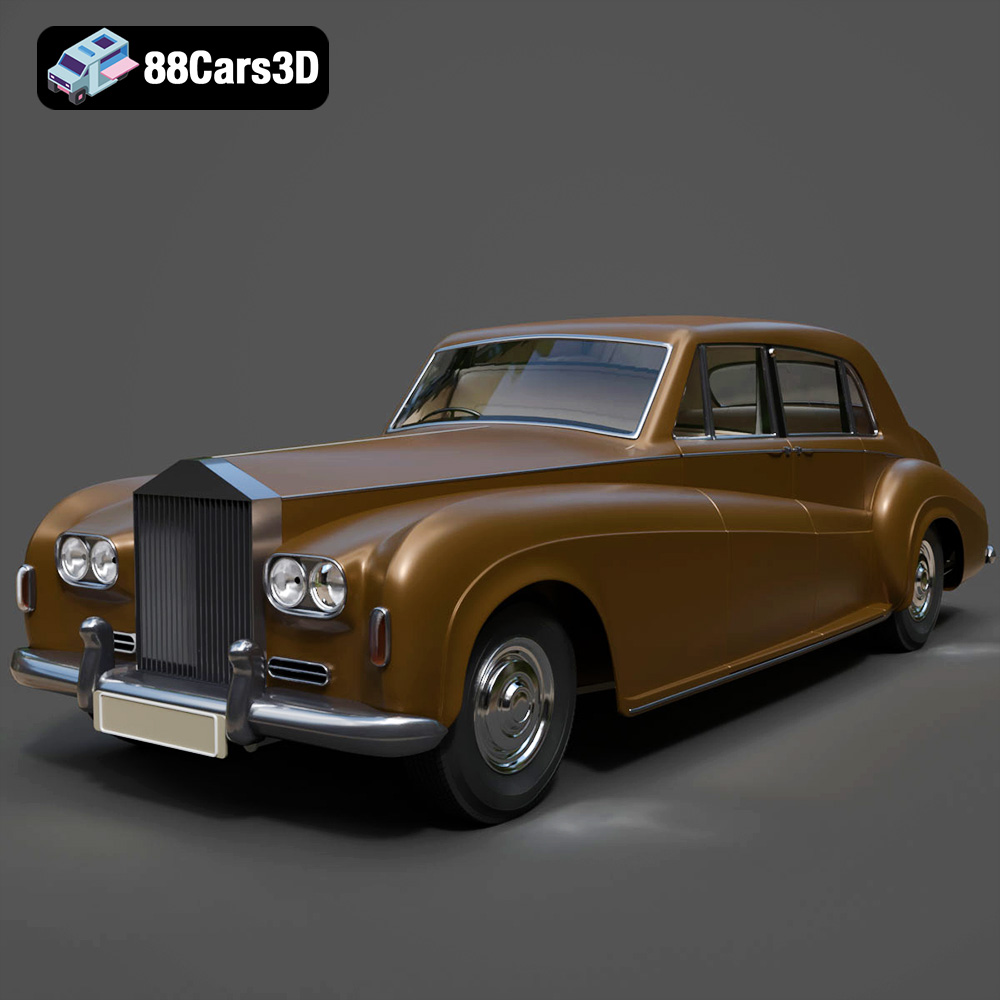
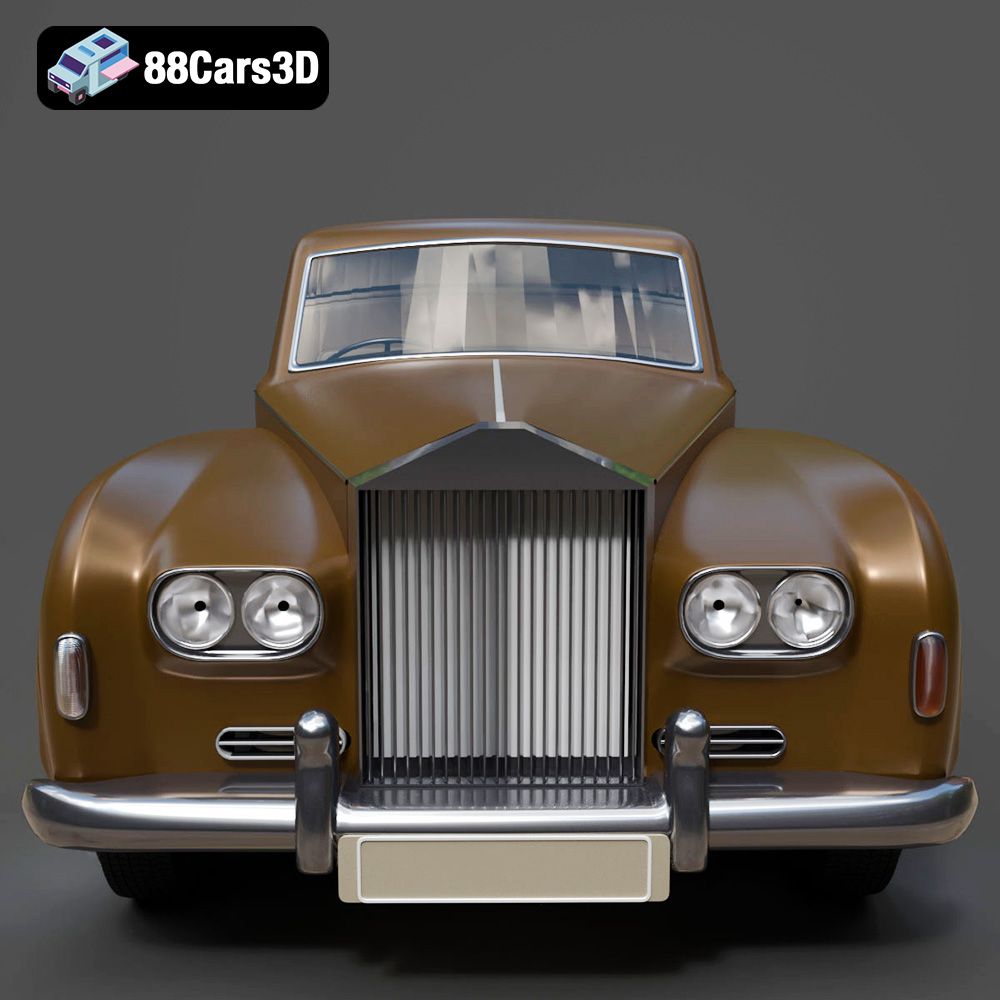
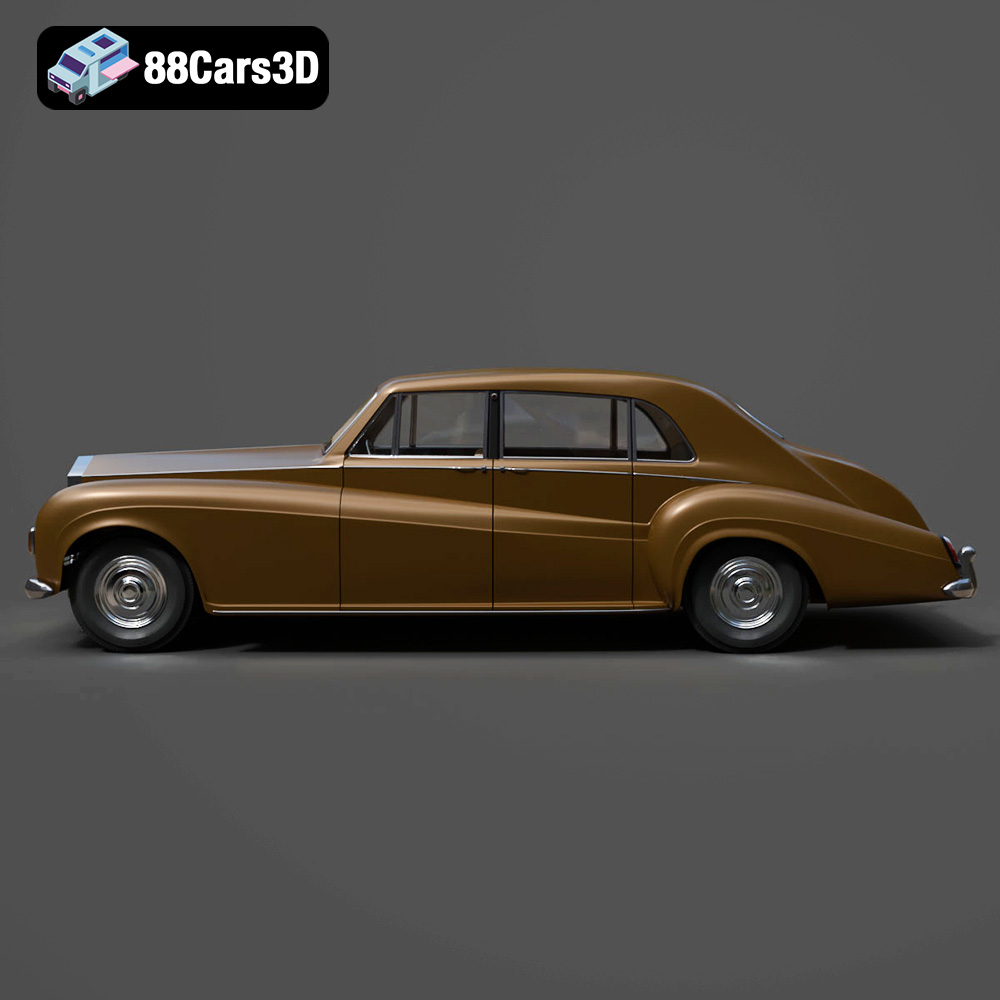
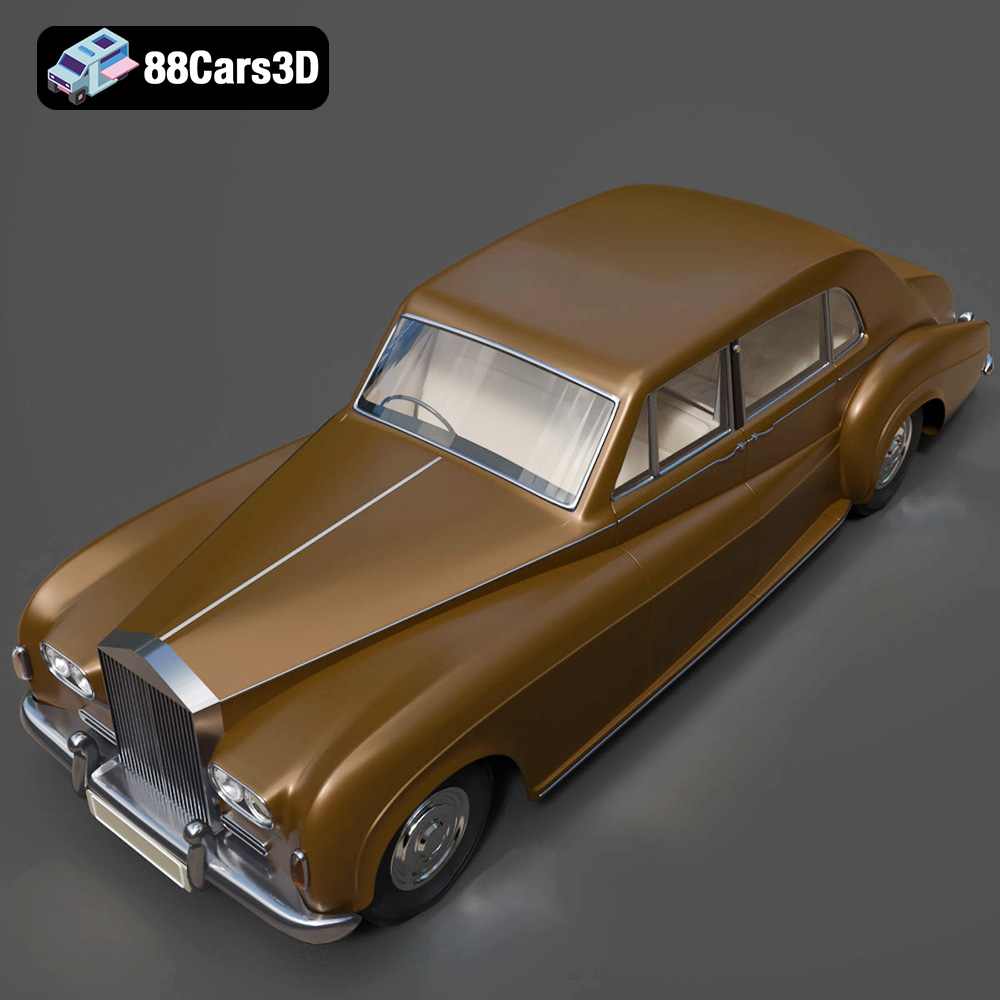
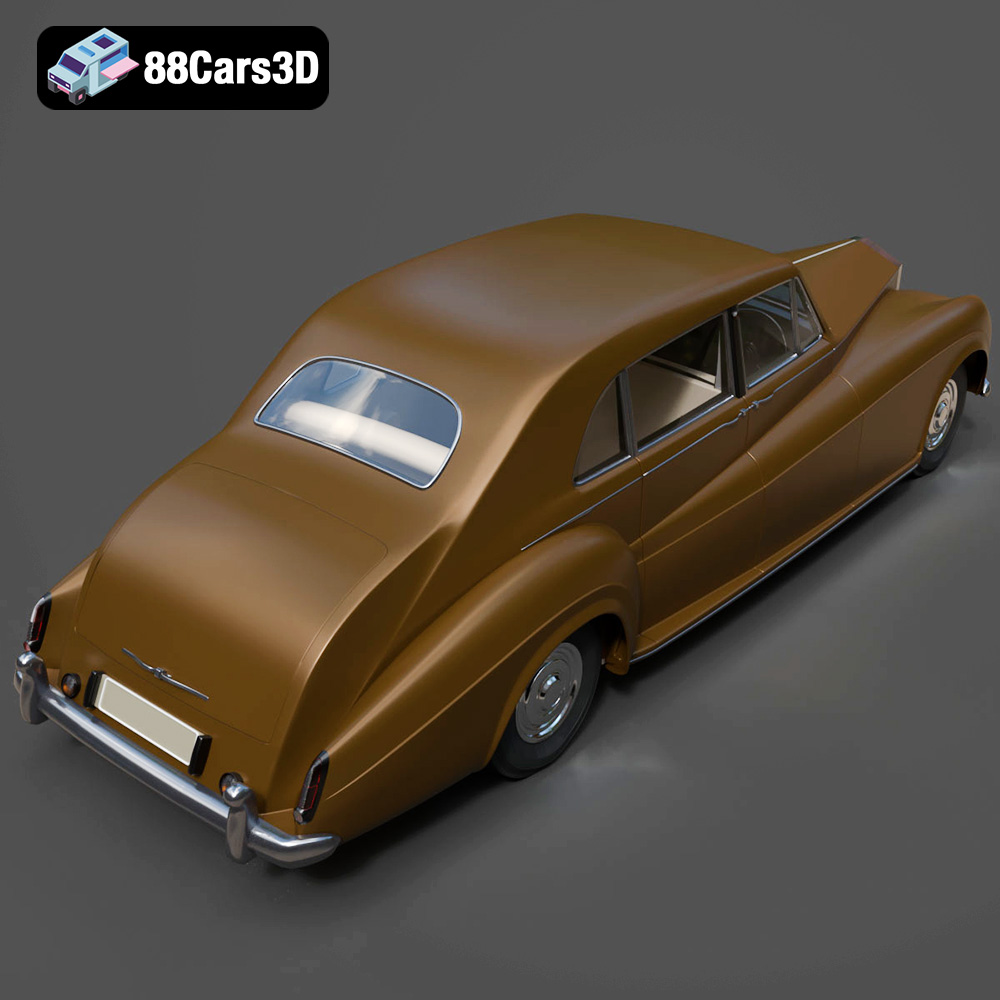
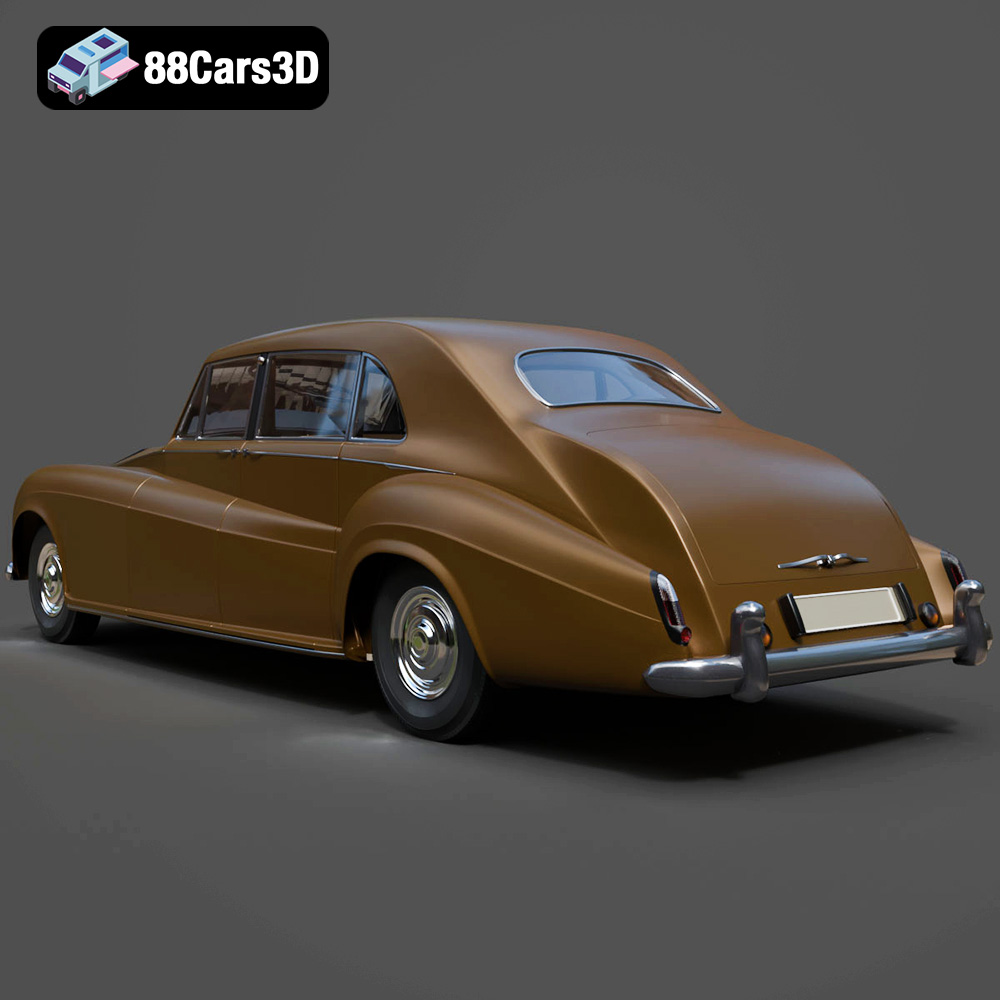
The model’s exterior is where its grandeur truly shines. It meticulously replicates the Phantom V’s iconic long-wheelbase proportions, a defining characteristic that sets it apart. The upright chrome grille, a timeless symbol of Rolls-Royce, is accurately detailed, complete with the intricate vertical slats. Perched atop the bonnet is the Spirit of Ecstasy hood ornament, rendered with precision to retain its elegant silhouette. From the dual round headlight configuration to the gleaming chrome bumpers and trim accents, every element speaks of period-correct luxury. The rear-hinged (coach-style) door setup is correctly modeled, a detail crucial for authenticity. Furthermore, the classic luxury wheels feature period-correct styling, and importantly, the wheels and steering components are separated, allowing for realistic animation in automotive rendering and game development scenarios.
While the Phantom V’s exterior is about stately presence, its interior is about unparalleled luxury. The 3D model translates this opulence with a vintage luxury dashboard layout, including the large classic steering wheel. The rear passenger limousine seating configuration, a hallmark of its purpose, is accurately represented. Subtle details like wood veneer trim and door panels with chrome and wood accents enhance the realism. Critically, this interior geometry is optimized. This means it’s detailed enough for high-quality renders, showcasing the Phantom V’s bespoke craftsmanship, yet also efficient enough for real-time engines, preventing unnecessary polygon overhead in interactive experiences like AR/VR.
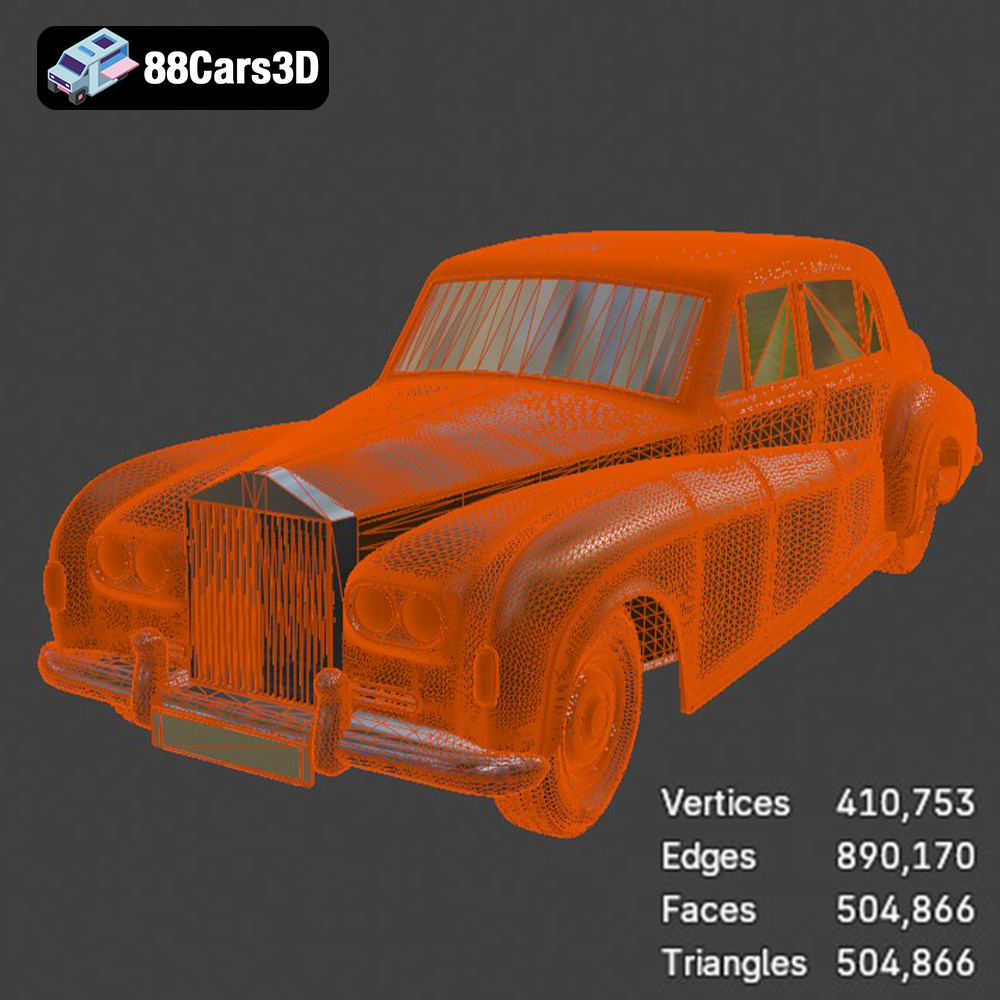
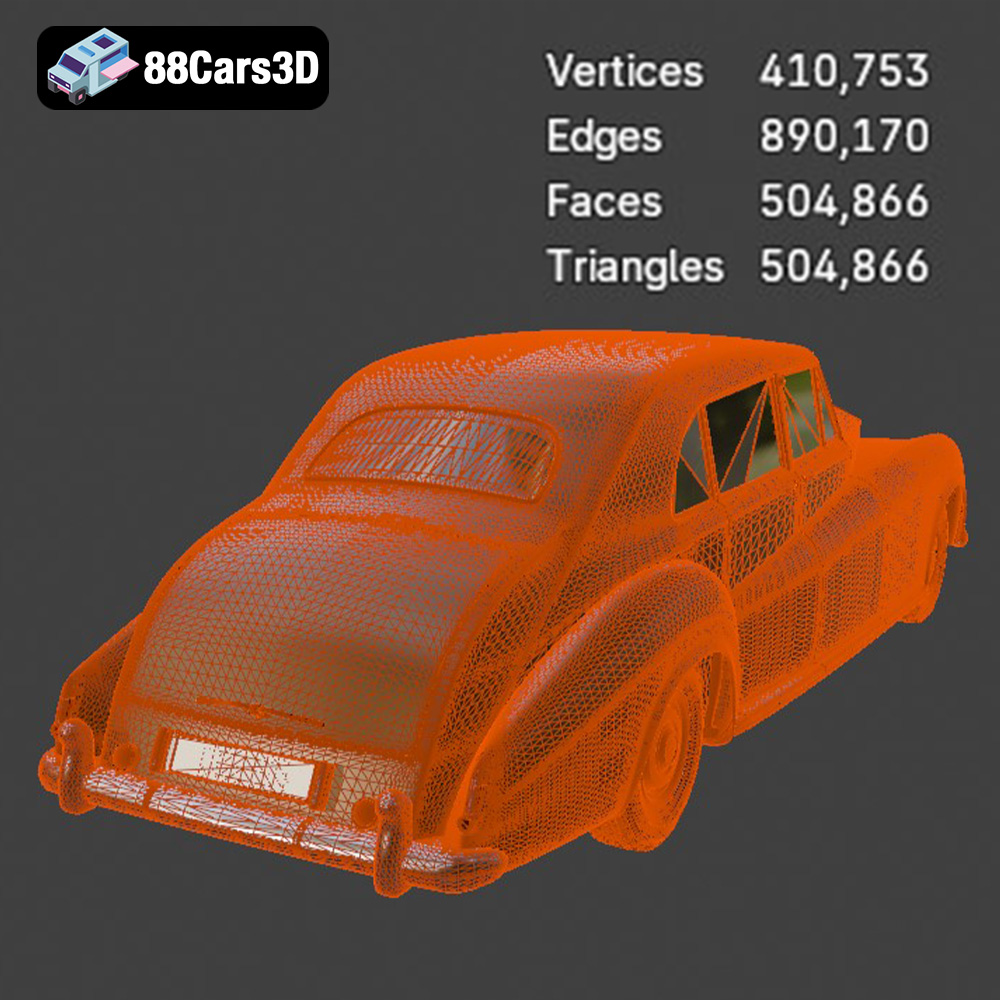
Beyond visual fidelity, the technical underpinnings of this Rolls-Royce Phantom V 3D Model are crucial for professional workflows. It boasts a clean and well-organized mesh structure, which is vital for smooth subdivisions, efficient UV mapping (essential for texture application), and easy modifications. Real-world scale accuracy ensures that when the model is imported into any scene or engine, it fits naturally without needing constant resizing or recalibration. The proper pivot setup for steering and wheel rotation is a seemingly small detail that has a massive impact on animation realism and ease of use. Finally, optimized polygon flow ensures a balance between detail and performance, making the model versatile for both cinematic rendering and demanding real-time applications.
The versatility of a high-quality 3D car model like the Rolls-Royce Phantom V extends across a multitude of industries and creative endeavors. Its detailed design and diverse file format support make it a powerful asset for professionals seeking to integrate historical luxury into modern digital contexts.
For automotive visualization studios, marketing agencies, and historical archiving projects, this model is an indispensable tool. Imagine creating stunning, photorealistic renders for luxury heritage marketing campaigns, showcasing the Phantom V in an elegant virtual showroom, or animating its majestic presence for ceremonial visuals and classic automotive promotions. In workflows utilizing 3ds Max with V-Ray or Corona Renderer, or Blender with Cycles, the clean topology and detailed materials (if included or easily applied) allow for breathtaking results. Artists can experiment with various lighting scenarios, camera angles, and environments to capture the car’s inherent grandeur, producing imagery that is virtually indistinguishable from real photography.
Game developers constantly seek high-fidelity game assets that enhance immersion. The Rolls-Royce Phantom V 3D Model is perfectly suited for open-world city games, historical environments, and luxury vehicle simulations. Its optimized geometry and proper pivot setup make it ready for integration into engines like Unreal Engine and Unity. Developers can create different Levels of Detail (LODs) from the base model – a high-poly version for close-up shots and cinematics, and lower-poly versions for distant views – ensuring optimal performance without sacrificing visual quality. Its inclusion in .fbx and .unreal formats significantly streamlines the import process, allowing artists to focus on gameplay integration, material setup, and physics application within the game world.
Augmented Reality (AR) and Virtual Reality (VR) are revolutionizing how we interact with digital content. The Phantom V 3D Model offers an exceptional opportunity for immersive vintage showroom experiences and interactive historical exhibitions. Using the .glb format, developers can easily integrate the model into web-based AR viewers or dedicated VR applications. Users could virtually walk around the Phantom V, inspect its intricate details, open its coach doors, or even sit inside and explore the vintage luxury interior, all within a fully immersive environment. This provides a unique educational and promotional tool, offering a dynamic way to experience automotive history.
Beyond digital screens, the Rolls-Royce Phantom V 3D Model offers a unique pathway to physical manifestation through 3D printing. This capability transforms a virtual asset into a tangible collectible, perfect for enthusiasts, model makers, and educational purposes.
The .stl format included with the model is specifically designed for 3D printing. However, successful 3D printing requires careful preparation and adherence to specific settings. The recommended scales (1:32, 1:24, 1:18, 1:12) provide options for various display sizes, with larger scales generally allowing for finer detail. Layer height is crucial for surface finish; finer layers (e.g., 0.08–0.16 mm) will result in smoother surfaces, especially for the bodywork. Wall thickness (1.5–2.5 mm) ensures structural integrity for the printed model. Infill (15–25%) balances strength with material consumption.
Complex geometries, like the Phantom V’s mirrors, hood ornament, and bumper overhangs, will necessitate support structures during printing to prevent sagging. Print orientation is also strategic: printing the body angled can minimize visible layer lines on prominent surfaces, while printing wheels separately ensures optimal detail for these crucial components. Post-processing is where the miniature truly comes alive. Sanding is essential to smooth out layer lines, followed by primer to create an even base. A gloss black or two-tone finish, replicating the Phantom V’s classic livery, alongside meticulous chrome detailing (using chrome paints or foils), can elevate a raw print to a museum-quality scale model. For enthusiasts, this opens up a world of customization, adding custom license plates or ceremonial flags to truly personalize their collectible.
A truly professional 3D car model isn’t just about good looks; it’s about efficient design and robust technical execution. The Rolls-Royce Phantom V 3D Model exemplifies these principles, providing a foundation for both stunning realism and fluid performance across diverse applications.
The “clean and well-organized mesh structure” is a critical technical advantage. This refers to the model’s topology – how its polygons (triangles and quads) are arranged. Good topology ensures:
“Real-world scale accuracy” is fundamental for seamless integration into professional environments. When a model is built to actual physical dimensions (e.g., meters or feet), it aligns correctly with real-world camera settings, physics simulations, and environmental lighting. This prevents scale discrepancies when importing into scenes with other assets or into game engines that rely on accurate scale for collision detection and gameplay mechanics. Furthermore, “proper pivot setup for steering and wheel rotation” speaks to the precise positioning of origin points for individual components. This allows for straightforward animation of complex parts like wheels, which need to rotate perfectly on their axis, and steering components that articulate naturally.
While the product description mentions “Material: Yes” and “Texture: Yes” in the meta description, understanding their role is key. For high-fidelity rendering and game development, physically based rendering (PBR) materials are the standard. This involves using maps like Albedo (color), Normal (surface detail), Roughness (specularity spread), Metalness (metallic properties), and Ambient Occlusion. A well-constructed 3D model with clean UVs allows these texture maps to be applied flawlessly, creating the illusion of real-world surfaces – from the sheen of gloss paint to the subtle reflections on chrome and the texture of vintage leather interiors. For different engines like Unreal or Blender, these materials would be set up using their respective shader networks, leveraging the model’s clean mesh and UVs.
In an increasingly digital world, the demand for high-quality 3D car models like the Rolls-Royce Phantom V continues to grow. Investing in premium assets is not just about convenience; it’s about leveraging professional-grade work that saves time, ensures accuracy, and elevates the final output of any project.
Developing a detailed 3D car model from scratch, especially one as intricate and historically specific as the Rolls-Royce Phantom V, is a monumental undertaking. It requires hundreds of hours of research, modeling, UV mapping, and texturing by skilled artists. By purchasing a ready-made, high-quality asset from a reputable marketplace like 88cars3d.com, professionals can drastically cut down development time and costs, allowing them to focus resources on other aspects of their project, whether it’s animation, scene composition, or game mechanics.
Premium 3D models are built to exacting standards. They feature accurate proportions, clean topology, optimized geometry, and precise detailing that would be challenging and time-consuming for an individual artist to replicate without specialized experience. This ensures that the digital Rolls-Royce Phantom V maintains the integrity and visual grandeur of its real-world counterpart, making it suitable for even the most demanding professional applications, from cinematic rendering to accurate historical simulations.
The extensive range of included file formats (.blend, .fbx, .obj, .glb, .stl, .ply, .unreal, .max) for the Rolls-Royce Phantom V 3D Model makes it incredibly versatile. It ensures compatibility across a wide spectrum of 3D software and game engines, making it a future-proof asset. As technologies evolve, this model can be readily adapted for new visualization techniques, AR/VR platforms, or even future 3D printing methodologies, ensuring its continued relevance and value in your digital asset library.
The Rolls-Royce Phantom V stands as a monumental achievement in automotive design and luxury. Its digital counterpart, the Rolls-Royce Phantom V 3D Model, captures this legacy with remarkable fidelity and technical prowess. From its historically accurate exterior proportions and iconic chrome details to its vintage luxury interior, every aspect has been meticulously crafted for professional-grade applications.
Whether you’re creating cinematic renders in 3ds Max, developing immersive game environments in Unreal Engine, building interactive AR/VR experiences, or even fabricating a tangible scale model through 3D printing, this versatile 3D asset provides the perfect foundation. Its inclusion of comprehensive file formats – from .blend and .max for native software use, to .fbx and .unreal for game engines, and .stl for manufacturing – ensures seamless integration into virtually any professional pipeline.
For artists, developers, and enthusiasts seeking to infuse their projects with a touch of classic automotive royalty and uncompromised digital quality, the Rolls-Royce Phantom V 3D Model from 88cars3d.com represents an exceptional investment. It’s more than just a model; it’s a piece of history, exquisitely preserved and ready to drive your creative visions forward.
The Rolls-Royce Phantom V 3D Model is a high-detail digital recreation of the ultra-luxury limousine produced between 1959 and 1968. Renowned for its stately proportions, hand-crafted refinement, and association with royalty and world leaders, the Phantom V represents one of the most prestigious classic luxury vehicles ever built. This 3D model accurately captures the long-wheelbase limousine body, upright chrome grille, Spirit of Ecstasy hood ornament, round headlamps, chrome bumpers, rear-hinged coach doors, and elegant body lines. Designed with clean topology and real-world scale accuracy, it is ideal for rendering, animation, automotive visualization, game development, and AR/VR experiences. Perfect for heritage automotive showcases, ceremonial scenes, luxury-themed projects, cinematic productions, and classic car simulations.
$9.99
.arvr
.automotive
.blend
.britishluxury
.car3dmodel
.classiclimousine
.fbx
.gameasset
.glb
.luxurycar
.max
.obj
.phantomv
.ply
.rendering
.rollsroyce
.simulation
.stl
.unreal
.vintagecar