Get 50% OFF All Premium 3D & STL Models!

The world of 3D modeling is constantly evolving, driven by an insatiable demand for highly realistic, performant, and versatile digital assets. From cutting-edge video games and immersive virtual reality experiences to high-fidelity architectural visualizations and compelling marketing renders, the quality of a 3D model can make or break a project. Automotive and motorcycle models, in particular, demand a blend of artistic precision and technical optimization to truly capture the essence of their real-world counterparts.
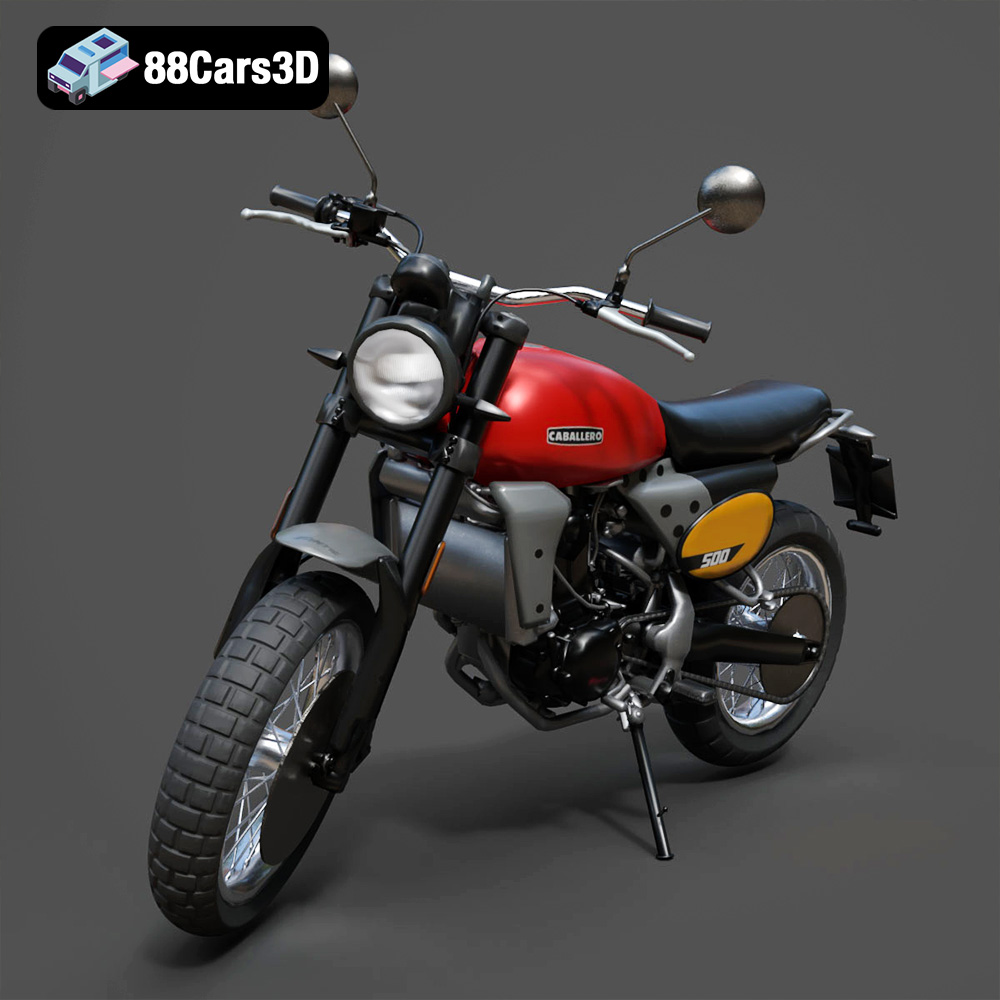
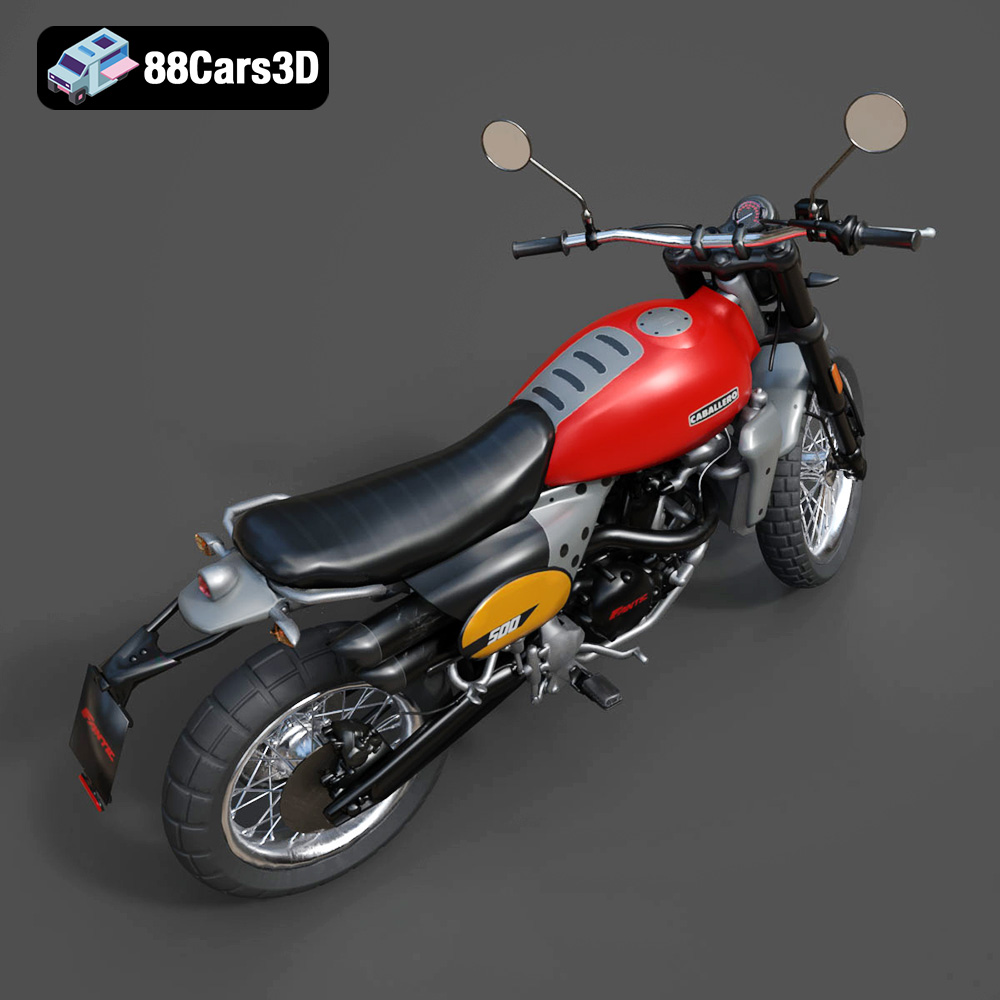
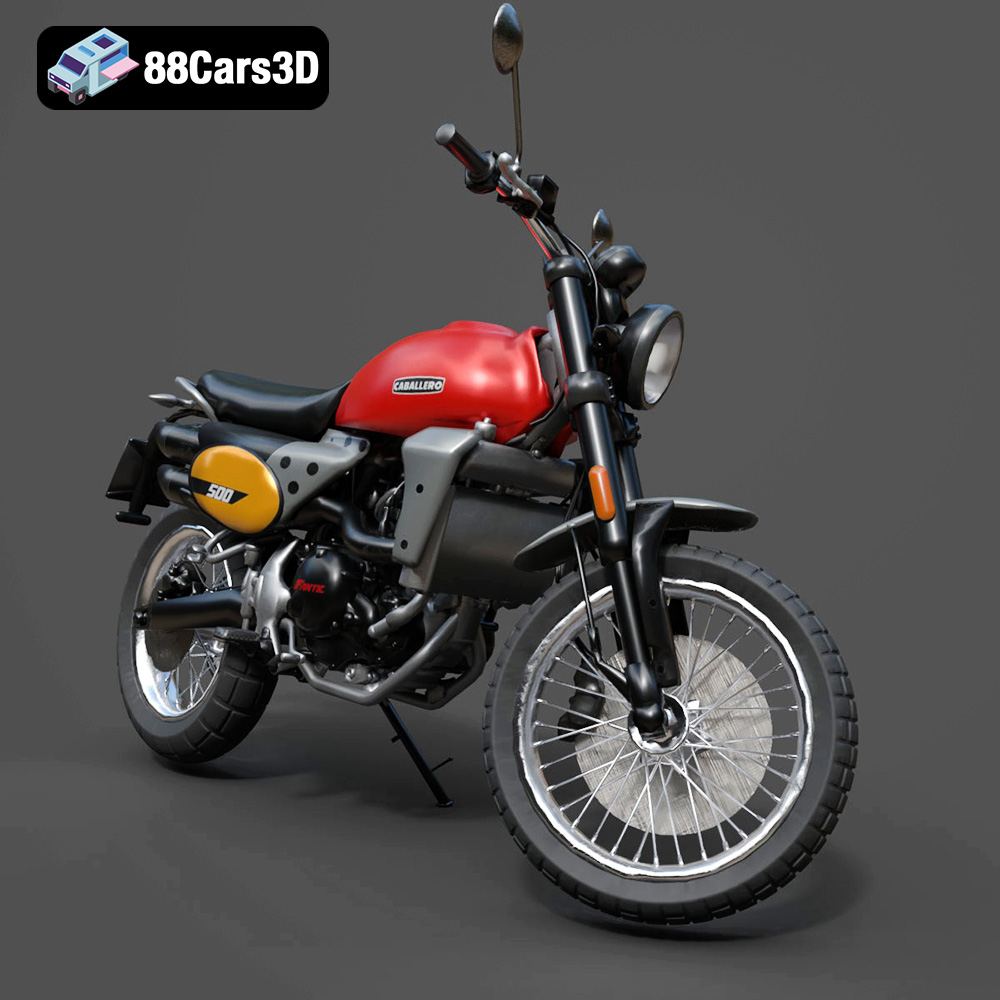
Today, we’re taking a close look at a prime example of such a meticulously crafted asset: the Fantic Caballero 500 Scrambler 3D Model. This digital recreation is not merely an aesthetic marvel but a testament to the technical prowess required to deliver a truly game-ready and render-ready piece of digital machinery. It perfectly embodies the rugged, adventurous spirit of the iconic Italian scrambler, making it an invaluable asset for a diverse range of creative and technical applications.
The Fantic Caballero 500 Scrambler is more than just a motorcycle; it’s a statement. It effortlessly fuses the raw, rebellious charm of 1970s dirt-track bikes with the precision and performance of modern Italian engineering. Its signature features – the round LED headlight, teardrop fuel tank, exposed steel tube frame, and distinctive high-mount Arrow exhaust – evoke a sense of freedom and adventure. This unique blend of retro aesthetics and contemporary functionality makes it a beloved icon, and translating that character accurately into a 3D model requires exceptional skill and attention to detail.
For 3D artists, game developers, and visualization specialists, having access to pre-made, high-quality 3D car models and motorcycle assets like the Fantic Caballero 500 Scrambler can drastically accelerate workflows and elevate project quality. This specific model is designed not just to look good in a static render, but to perform flawlessly in dynamic, real-time environments. Its optimized topology and careful segmentation for animation are key indicators of a professional-grade asset, offering unparalleled flexibility for various digital endeavors.
Navigating the ecosystem of 3D software and engines often requires a solid understanding of various file formats. Each format serves specific purposes, offering unique advantages for different stages of a 3D project. The Fantic Caballero 500 Scrambler 3D Model exemplifies a comprehensive package by providing a wide array of formats, ensuring maximum compatibility and utility across professional workflows. Let’s break down the most crucial ones:
The .blend format is Blender’s native file type. It’s a powerhouse for Blender users because it saves everything: the 3D mesh, materials, textures, lighting, camera setups, animations, physics simulations, and even custom scripts. For artists working primarily in Blender, receiving a .blend file for an asset like the Fantic Caballero 500 Scrambler means instant access to a fully editable scene. You can immediately inspect the material nodes, tweak UV layouts, modify geometry, or extend any included animation. This format is ideal for deep customization and for continuing development within the Blender ecosystem.
.fbx (Filmbox) is arguably the industry standard for exchanging 3D data, especially for real-time applications like game development. Developed by Autodesk, it’s highly versatile and supports not only geometry but also animations, rigs, materials (often as basic properties or placeholders that need re-setting), and cameras. For a game-ready asset like our Fantic Scrambler, an .fbx file is crucial for seamless import into game engines like Unreal Engine and Unity. It ensures that the model’s pivot points, hierarchical structure (for separate wheels, suspension, and steering), and basic material assignments are preserved. It’s the go-to for complex animated scenes and skeletal meshes.
.obj (Wavefront OBJ) is another widely supported format, often considered the most universal for geometry exchange. While it’s excellent for transferring mesh data, UV coordinates, and basic material references (via an accompanying .mtl file), it lacks support for advanced features like animation, rigging, or complex material networks. For the Fantic Caballero 500, an .obj file provides a clean, raw mesh that can be imported into virtually any 3D software for rendering or further modification. It’s perfect for static renders or as a base for building new assets.
.glb (GLB Transmission Format) is quickly becoming the standard for 3D models in web, AR, and VR applications. It’s a binary version of glTF (GL Transmission Format) that packages all asset data – geometry, materials, textures, and animations – into a single file. This self-contained nature makes it incredibly efficient for streaming and display in browser-based viewers or mobile AR experiences. For showcasing the Fantic Caballero 500 in an interactive online configurator or an augmented reality showroom, .glb is the optimal choice due to its optimization for fast loading and rendering.
The .unreal format refers to engine-ready assets specifically packaged for Unreal Engine. This might imply a .uasset file or a set of files organized for direct import and use within Unreal. Such a file would typically include optimized meshes, materials set up with Unreal’s Physically Based Rendering (PBR) system, collision meshes, and potentially LODs (Levels of Detail). For the Fantic Caballero 500, having an .unreal variant means developers can drop the asset directly into their project with minimal setup, saving significant time on material conversion and optimization for real-time environments.
.stl (Stereolithography) is synonymous with 3D printing. It represents a 3D model as a series of connected triangles, defining only the surface geometry without color or texture information. For the Fantic Caballero 500 Scrambler, providing an .stl file means the model is ready to be sent to a 3D printer, allowing enthusiasts or designers to create physical prototypes or collectibles. The product description’s recommendations for scale, layer height, and supports highlight its viability for physical production.
.ply (Polygon File Format or Stanford Triangle Format) is another format for storing 3D data, particularly useful for scanned data and high-precision meshes. It can store not just geometry but also properties like color, transparency, and normals per vertex or face. While not as common for general asset exchange as FBX or OBJ, it’s valuable in scientific visualization, CAD, and other fields where accurate mesh data and attributes are critical. For highly detailed components of the Fantic, a .ply export could be useful for specific analysis or archival purposes.
Finally, the .max format is Autodesk 3ds Max’s native scene file. Similar to .blend for Blender, a .max file contains a complete 3ds Max scene, including geometry, materials, textures, lights, cameras, animations, and modifiers. For artists who primarily use 3ds Max for automotive rendering, animation, or architectural visualization, the .max file for the Fantic Caballero 500 provides full editability and control within their familiar software environment, allowing for complex scene integration and advanced rendering setups.
The provision of this extensive range of file formats for the Fantic Caballero 500 Scrambler 3D Model underscores its versatility and professional-grade quality, positioning it as an adaptable resource for virtually any 3D workflow. This commitment to cross-platform compatibility is a hallmark of premium 88cars3d.com assets.
The journey from a real-world vehicle to a highly optimized, game-ready 3D model is a complex one, demanding meticulous attention to detail at every stage. The Fantic Caballero 500 Scrambler 3D Model showcases best practices in this regard, making it a stellar example for aspiring and professional 3D artists alike.
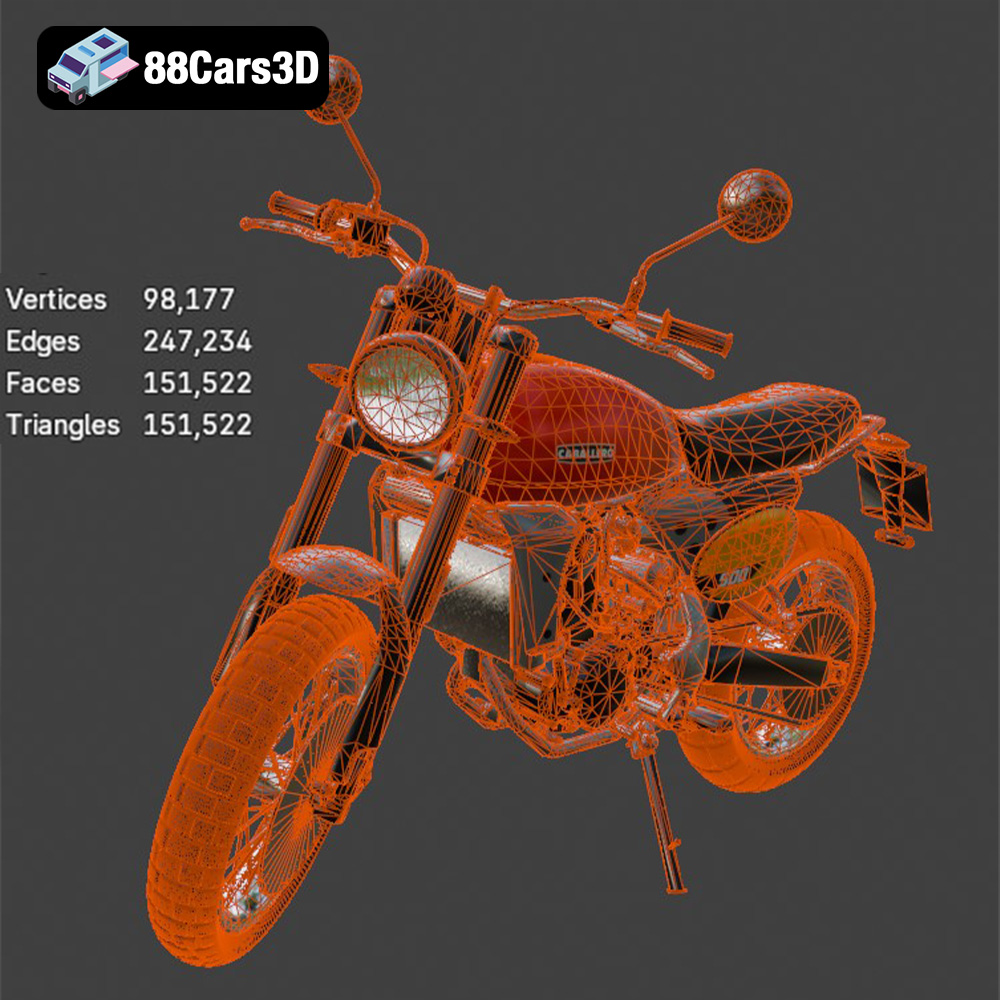
One of the most critical aspects of any game asset is its topology. The Fantic Caballero 500 Scrambler boasts a triangle count of just over 150,000. For a detailed motorcycle model, this strikes an exceptional balance between visual fidelity and real-time performance. Good topology means:
This careful optimization ensures that whether it’s roaring through a virtual landscape in Unreal Engine or being inspected up close in an AR application, the model maintains its visual integrity while remaining efficient.
A static 3D model, however beautiful, has limited utility in interactive environments. The Fantic Caballero 500 Scrambler 3D Model is built with animation in mind, featuring separate components for steering, wheel rotation, and suspension travel. This modularity is crucial for:
Proper pivot setup for each movable part is foundational to a seamless animation workflow, and this model delivers on that front.
While the product description highlights the model’s geometry, the mention of “Texture: Yes | Material: Yes” in the meta description is vital. Modern PBR (Physically Based Rendering) workflows demand high-quality textures (Albedo/Base Color, Normal, Roughness, Metallic, Ambient Occlusion maps) to achieve photorealistic results. For a scrambler, textures would bring to life:
A well-developed material pipeline ensures the Fantic Caballero 500 Scrambler looks authentic under various lighting conditions, from the harsh glare of a desert sun to the moody glow of city lights.
The versatility of the Fantic Caballero 500 Scrambler 3D Model extends across numerous digital domains, proving its value far beyond a single use case.
For professionals in advertising, product design, or architectural visualization, high-quality automotive rendering is paramount. The Fantic Caballero 500 Scrambler 3D Model excels here due to its real-world scale accuracy and detailed geometry. Imagine using this model in:
Artists using 3ds Max, Blender, or other rendering packages can achieve stunning photorealistic outputs, saving countless hours over building a model from scratch.
Augmented Reality (AR) and Virtual Reality (VR) are transforming how we interact with digital content. The optimized nature and .glb format compatibility of the Fantic Caballero 500 Scrambler make it an ideal candidate for:
The model’s clean topology and moderate polycount ensure smooth performance even on less powerful mobile devices or VR headsets.
Game developers constantly seek optimized yet visually rich assets. The Fantic Caballero 500 Scrambler 3D Model is tailor-made for this industry:
Its game-ready optimization means less time spent on optimization and more time on integrating it into gameplay, physics, and AI systems. The ability to separate parts for animation directly translates to realistic in-game physics and responsive controls.
Beyond the digital realm, the Fantic Caballero 500 Scrambler 3D Model also bridges the gap into physical manifestation through 3D printing. This capability opens up new avenues for enthusiasts, collectors, and prototyping.
Converting a digital asset into a tangible object requires specific considerations. The provided 3D print settings for the Fantic Caballero 500 Scrambler offer valuable guidance:
This level of detail in printing recommendations demonstrates a thorough understanding of physical manufacturing, ensuring users can successfully bring the scrambler to life.
The journey doesn’t end when the print bed is clear. Post-processing steps are essential to achieve a professional, display-worthy model:
The ability to 3D print this model transforms a digital asset into a collectible, a prototype, or a unique gift for motorcycle enthusiasts, further extending the value of premium 3D models available on platforms like 88cars3d.com.
Beyond its inherent quality, a truly versatile 3D model offers extensive customization options, empowering artists to adapt it to diverse creative needs. The Fantic Caballero 500 Scrambler 3D Model provides just this flexibility, allowing designers to imbue it with their unique vision.
A single 3D model can tell many stories with the right customization. For the Fantic Caballero 500 Scrambler, the possibilities are rich:
These options allow the Fantic Caballero to seamlessly integrate into various environments, from a dusty desert trail to a chic urban cafe backdrop, all while maintaining its core identity.
The inherent modularity of this 3D model, with separate components for wheels, suspension, and steering, further enhances customization. This means:
This extensibility ensures that the Fantic Caballero 500 Scrambler 3D Model remains a valuable asset throughout a project’s lifecycle, offering boundless creative potential for any artist or developer.
In the dynamic landscape of 3D visualization, game development, and digital content creation, the demand for high-quality, technically robust assets is unwavering. The Fantic Caballero 500 Scrambler 3D Model stands out as an exemplary product, meticulously crafted to meet the stringent requirements of professional workflows. From its optimized, game-ready topology and versatile file format support to its suitability for both high-fidelity rendering and physical 3D printing, it offers an unparalleled foundation for creative projects.
Whether you’re building an immersive open-world game, designing a compelling automotive rendering campaign, crafting an interactive AR experience, or simply seeking a beautifully detailed model to 3D print and display, this Fantic Caballero model delivers. Its thoughtful design, attention to real-world detail, and technical advantages make it a smart investment for any digital artist or developer looking to elevate their projects. Platforms like 88cars3d.com are dedicated to providing such premium 3D car models and motorcycle assets, empowering creators with the tools they need to bring their visions to life.
Embrace the freedom and adventure of the Fantic Caballero 500 Scrambler and unlock new creative possibilities for your next endeavor. The digital road awaits!
The Fantic Caballero 500 Scrambler 3D Model is a highly detailed, optimized digital recreation of the iconic Italian modern-classic motorcycle. Blends 1970s retro dirt-track aesthetics with contemporary engineering, the Caballero 500 is famous for its rugged off-road stance, punchy single-cylinder engine, signature dual Arrow exhaust, and aggressive knobby tires. Built with incredibly clean, game-ready topology (just over 150k triangles), it delivers premium visual fidelity without bogging down real-time engines. It is the perfect asset for game development, AR/VR experiences, animation, and lifestyle automotive visualization.
$9.99
.blend
.fbx
.obj
.rendering
.scrambler
caballero-500
dirt-bike
fantic
flat-tracker
game asset
game-ready
low-poly
motorcycle-3d-model
optimized
retro-motorcycle
VR/AR