Get 50% OFF All Premium 3D & STL Models!

In the fast-evolving landscape of digital design, the demand for realistic and versatile 3D assets has never been higher. From breathtaking cinematic renders to immersive virtual realities and high-octane gaming environments, the backbone of any successful project lies in the quality of its foundational models. Automotive design, in particular, thrives on precision and visual fidelity, where every curve, reflection, and material detail contributes to the overall authenticity. This is where premium 3D car models become not just useful, but absolutely indispensable.
These sophisticated digital representations are more than just static objects; they are engineering marvels in their own right, built to exact specifications and optimized for a myriad of applications. They empower designers, developers, and artists to push boundaries, prototype ideas, and create compelling experiences without the prohibitive costs and time constraints of physical production. Take, for instance, a prime example of such digital craftsmanship: the Aston Martin Vantage 2019 3D Model. This meticulously crafted asset embodies the very essence of modern automotive design, offering unparalleled detail and flexibility, making it an invaluable tool for any professional workflow requiring top-tier 3D car models.
Choosing the right 3D model file format is a critical decision that impacts workflow, compatibility, and ultimately, the success of your project. Each format is engineered with specific strengths, catering to different stages of the 3D pipeline—from initial modeling and animation to real-time rendering and physical fabrication. Understanding these nuances is paramount for anyone working with 3D car models, especially when sourcing high-quality assets like those found on 88cars3d.com, which offers a comprehensive range of options for maximum flexibility.
The .blend format is Blender’s native file type, offering a complete, editable scene with all its components: meshes, materials, textures, lights, cameras, animation data, and even physics simulations. It’s ideal for users primarily working within Blender, providing full control and preserving every aspect of the project. For the Aston Martin Vantage 2019 3D Model, a .blend file would provide the most comprehensive starting point for customization, allowing artists to delve deep into its clean topology, modify materials, or extend animations with ease.
As a proprietary format developed by Autodesk, .fbx (Filmbox) has become an industry standard for data exchange between various 3D applications and game engines. It excels at transferring geometry, materials, textures, skeletal animations, and blend shapes. Its robust support for animation makes it the go-to choice for real-time pipelines like Unreal Engine and Unity. When integrating the Aston Martin Vantage into a racing game or an animated sequence, the .fbx file ensures that all crucial elements, including the separate wheels and steering components for animation, are preserved during transfer.
The .obj (Wavefront OBJ) format is a widely supported, plain-text file format for representing 3D geometry. While it supports vertex positions, normals, UV coordinates, and basic material definitions (via an accompanying .mtl file), it does not store animation data or complex scene information. Its strength lies in its universal compatibility, making it an excellent choice for transferring static mesh data between almost any 3D software. For cross-software asset sharing or simple model imports, the .obj version of the Aston Martin Vantage 2019 3D Model offers a reliable, no-frills option.
.glb (GL Transmission Format Binary) is a modern, compact, binary format designed for efficient transmission and loading of 3D scenes and models, especially in AR/VR and browser-based applications. It encapsulates textures and other assets within a single file, making it incredibly portable and performant for real-time display. The Aston Martin Vantage in .glb format would be perfect for interactive car configurators on a website or immersive virtual showroom experiences in AR/VR, leveraging its optimized geometry for smooth performance.
.stl (STereoLithography) is the most common file format for 3D printing. It describes only the surface geometry of a 3D object using a collection of interconnected triangles. It does not store color, texture, or material information. For designers looking to convert the Aston Martin Vantage 2019 3D Model into a physical collectible or a scale prototype, the .stl file is essential. The model’s manifold geometry ensures it’s “watertight” and ready for fabrication, adhering to the recommended scales and print settings provided.
The .ply (Polygon File Format, also known as Stanford Triangle Format) is a file format for storing 3D data, particularly from 3D scanners. It can store a wider range of properties than .obj, including color, transparency, surface normals, and even confidence values. While less common for general asset exchange, its precision makes it valuable for applications requiring accurate mesh data for CAD, reverse engineering, or scientific analysis. For highly detailed inspection of the Aston Martin Vantage’s surface topology or integration into engineering workflows, .ply offers a robust solution.
The .unreal designation typically refers to assets specifically prepared and optimized for direct import and use within Unreal Engine. This often implies proper scaling, collision meshes, LODs (Levels of Detail), and material setups tailored to Unreal’s physically based rendering (PBR) system. An .unreal package for the Aston Martin Vantage 2019 3D Model would ensure seamless integration into game development projects, offering immediate access to its high-quality textures and optimized polygon flow for real-time performance.
Similar to .blend for Blender, .max is the native file format for Autodesk 3ds Max, a powerful 3D modeling, animation, and rendering software widely used in architectural visualization, automotive design, and film. A .max file contains the complete scene, including models, textures, lighting, camera setups, and animation data. For users entrenched in the 3ds Max ecosystem, the Aston Martin Vantage .max file offers full editability and control for high-end rendering, complex animation sequences, and integration with V-Ray or Corona renderers, leveraging its clean and well-organized mesh structure.
Automotive visualization is a blend of technical precision and artistic flair, where the goal is to create images and animations that are indistinguishable from reality. High-quality 3D car models are the bedrock of this discipline, enabling designers and marketers to showcase vehicles in their best light long before physical prototypes exist. The Aston Martin Vantage 2019 3D Model, with its detailed recreation of the modern British sports coupe, serves as an exemplary asset for this purpose.
In professional rendering studios, the workflow revolves around pushing visual boundaries. Using software like 3ds Max or Blender, artists can leverage the Aston Martin Vantage model’s accurate body proportions, realistic LED headlights, and sculpted side air intakes to craft stunning visuals. The model’s clean topology ensures smooth subdivision surfaces for close-up shots, while its transparent glass materials and mirror detailing enhance realism. With advanced rendering engines such as V-Ray, Corona Renderer, or Cycles, designers can simulate complex lighting scenarios—from sun-drenched coastal roads to dramatic studio setups—to highlight the car’s aggressive stance and sharp aerodynamic profile. The ability to customize body color, add carbon-fiber exterior packages, and adjust wheel designs transforms a static model into a dynamic canvas for creative expression.
Cinematic presentations demand not only visual fidelity but also dynamic movement. The Aston Martin Vantage 2019 3D Model is built with animation in mind, featuring separate wheels and steering components with proper pivot setups. This allows animators to accurately simulate driving dynamics, suspension compression, and precise steering maneuvers. Imagine the Vantage gracefully navigating a winding mountain pass or performing a powerful launch on a racetrack, all rendered with photo-realistic detail. The model’s optimized geometry and organized mesh structure facilitate efficient rigging and animation, making it suitable for high-performance driving simulations and promotional campaigns where fluid motion and dramatic camera work are key. Such detailed 3D car models are crucial for creating promotional content that resonates with audiences, giving them a virtual taste of the car’s performance and luxury.
The interactive realm of game development and AR/VR demands a unique balance of visual quality and computational efficiency. Assets must be highly detailed yet optimized to run smoothly on diverse hardware. The Aston Martin Vantage 2019 3D Model, with its “optimized polygon flow for performance and realism,” is perfectly tailored for these demanding environments, proving its value as a top-tier game asset.
For game developers, integrating a vehicle like the Aston Martin Vantage requires meticulous preparation. The model’s compatibility with major 3D software platforms and engines, particularly through formats like .fbx and .unreal, simplifies this process significantly. In Unreal Engine or Unity, developers can import the model, apply physically based rendering (PBR) materials, and set up advanced vehicle physics. The “optimized geometry for real-time engines” means the model can maintain its visual integrity even with multiple instances on screen, crucial for racing simulators or open-world driving games where frame rates are paramount. The inclusion of distinct interior features such as a modeled sport dashboard layout and performance bucket seats also allows for immersive first-person cockpit views, elevating the player experience.
Augmented Reality (AR) and Virtual Reality (VR) offer revolutionary ways for consumers to interact with products. For the automotive industry, this means virtual showrooms and interactive car configurators where potential buyers can explore a vehicle in unprecedented detail. The Aston Martin Vantage 2019 3D Model is “perfect for interactive car configurators and immersive virtual showroom experiences” thanks to its high detail and optimized format options like .glb. Users can walk around the car, open doors, examine the premium sport-focused interior layout, change body colors, and even configure wheel designs and trim accents—all in a real-time, 3D environment. This level of immersion provides a powerful sales tool, allowing customers to visualize their dream car without ever stepping into a physical dealership, highlighting the incredible potential of high-quality 3D car models from marketplaces like 88cars3d.com.
While digital visualization and interactive experiences are powerful, sometimes there’s no substitute for a physical object. The ability to transition a high-fidelity 3D model into a tangible item opens up a new world of possibilities, from collectible scale models to functional prototypes. The Aston Martin Vantage 2019 3D Model embraces this versatility, being “convertible to .stl format for collectible scale sports car models and display miniatures.”
The journey from a digital file to a physical print involves specific technical considerations. The .stl format is the standard for 3D printing, and the Aston Martin Vantage model’s inherent clean mesh structure is a significant advantage. For successful printing, the model needs to be “manifold,” meaning it has a completely closed surface without any holes or intersecting geometry. This ensures the 3D printer can interpret the model correctly. Recommended print settings, such as layer height (0.10–0.16 mm), wall thickness (1.5–2.5 mm), and infill (15–25%), are crucial guidelines provided for achieving optimal results. Understanding where to place supports—for delicate areas like mirrors, diffuser fins, and splitter edges—and the ideal print orientation (body angled, wheels printed separately) is key to capturing the intricate details of the Vantage’s design, from its wide grille to its quad exhaust system.
Once printed, the real magic begins with post-processing. Sanding, priming, and applying a gloss automotive paint finish can transform a raw print into a breathtaking scale replica. Enthusiasts can even add optional carbon-fiber detailing to mimic the luxury supercar’s real-world counterparts. The recommended scales (1:32 / 1:24 / 1:18 / 1:14) cater to various collector preferences, allowing for anything from desktop display pieces to larger, more detailed models. These 3D printed models serve not only as magnificent collectibles but also as valuable prototypes for designers or educational tools for aspiring automotive enthusiasts. The availability of such high-quality 3D car models, ready for both digital and physical manifestation, truly showcases the comprehensive utility offered by resources like 88cars3d.com.
In the professional realm of 3D content creation, the difference between a passable model and an exceptional one often boils down to subtle technical advantages. These aren’t just aesthetic preferences; they directly impact workflow efficiency, performance, and the ultimate quality of the output. The Aston Martin Vantage 2019 3D Model exemplifies these critical technical advantages, setting a benchmark for high-quality 3D car models.
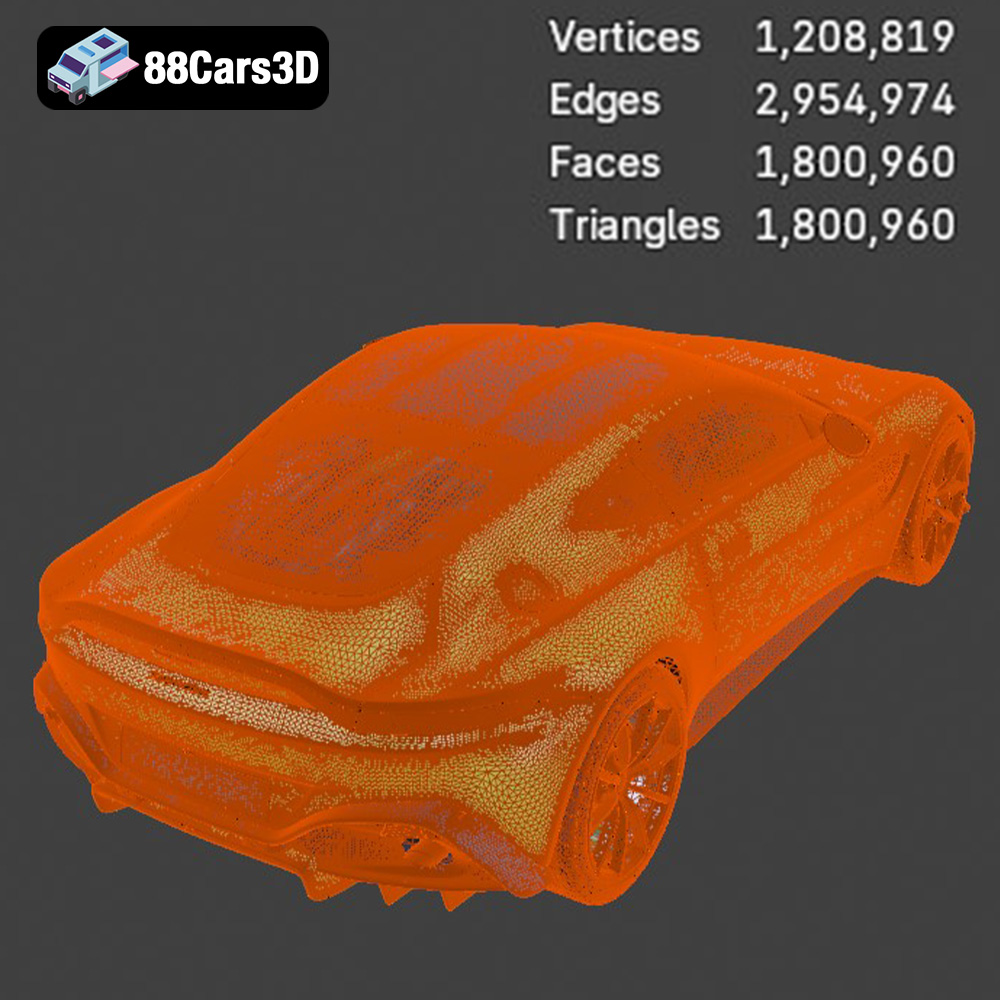
A “clean and well-organized mesh structure” is fundamental. Good topology means efficient polygon distribution, smooth deformation during animation, and flawless subdivision when rendered at high fidelity. This prevents visual artifacts like pinching or stretching, especially on the Vantage’s sculpted side intakes and muscular rear haunches. Proper UV mapping is equally vital, ensuring textures are applied without distortion and maximizing texture resolution. For complex materials like metallic paint, carbon fiber, or intricate interior stitching details on the performance bucket seats, precise UVs allow for realistic material reproduction, directly contributing to the model’s ability to shine in “luxury automotive marketing and showroom visuals.”
Accuracy is paramount in automotive design. “Real-world scale accuracy” ensures that the Aston Martin Vantage 3D Model integrates seamlessly into any scene without requiring manual adjustments, saving invaluable time for artists. Furthermore, the “proper pivot setup for steering and wheel rotation” transforms a static model into an animation-ready asset. This attention to detail allows for realistic physics simulations in games and accurate motion studies in animations, critical for showcasing the Vantage’s dynamic capabilities. An optimized polygon flow, balanced between visual detail and performance, combined with these precise technical features, elevates this model beyond a mere representation into a truly professional-grade asset, suitable for even the most demanding automotive rendering and game development projects.
The journey through the intricate world of 3D car models reveals a profound truth: quality and versatility are not merely desirable features, but essential components for success in today’s digital landscape. From the nuanced demands of automotive rendering and cinematic visualization to the rigorous optimizations required for game assets and the tangible outputs of 3D printing, a well-crafted 3D model forms the bedrock of countless creative and technical endeavors.
The Aston Martin Vantage 2019 3D Model stands as a testament to this principle, offering an exceptional blend of visual fidelity, technical precision, and format flexibility. Whether you are a professional studio aiming for photo-realistic renders, a game developer crafting the next-gen racing simulator, an AR/VR innovator building immersive experiences, or a hobbyist bringing a luxury sports car to life through 3D printing, this model provides the robust foundation you need. Its comprehensive file formats, meticulous detailing, and optimized structure ensure seamless integration across diverse workflows, allowing creators to focus on innovation rather than wrestling with technical limitations. For professionals seeking premium 3D car models that empower creativity and deliver outstanding results, exploring the curated selection at 88cars3d.com is a definitive step towards achieving digital excellence.
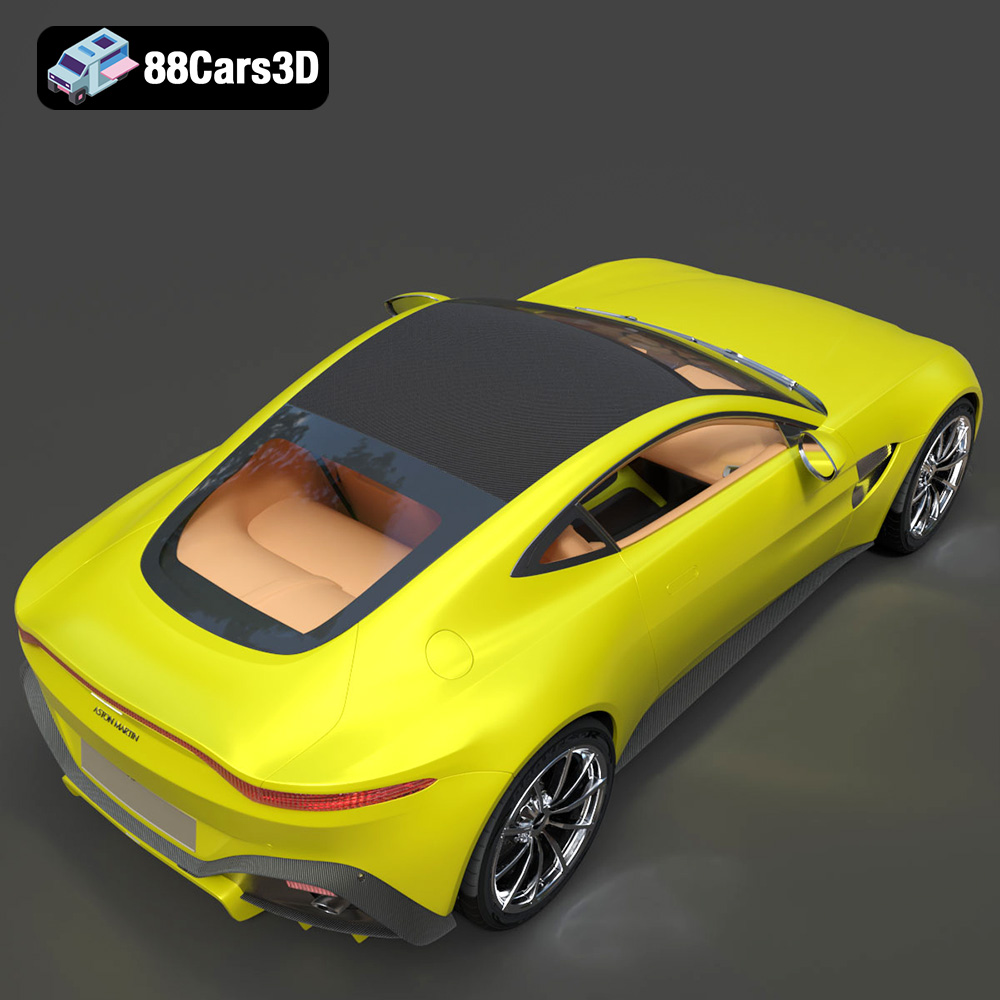
The Aston Martin Vantage 2019 3D Model is a high-detail digital recreation of the modern British sports coupe known for its aggressive stance, sharp aerodynamic profile, and performance-focused engineering. Redesigned for 2019, the Vantage features a bold front fascia, sculpted side intakes, lightweight aluminum structure, and a powerful twin-turbocharged V8 configuration. This 3D model accurately represents the wide grille design, aerodynamic splitter, sleek LED headlights, muscular rear haunches, rear diffuser, quad exhaust system, and premium sport-focused interior layout. Built with clean topology and real-world scale accuracy, it is ideal for rendering, animation, automotive visualization, game development, and AR/VR showroom applications.
$9.99