Get 50% OFF All Premium 3D & STL Models!

In today’s fast-paced digital landscape, the demand for realistic and technically precise 3D assets is paramount across industries. From architectural visualization and product design to cutting-edge game development and immersive AR/VR experiences, the quality of a 3D model can significantly impact a project’s success. This is especially true for industrial equipment, where accuracy directly translates to effective planning, realistic simulations, and compelling marketing materials. Imagine designing a complex warehouse layout, developing a logistics training simulator, or simply needing a robust industrial element for an animation – the foundation of these endeavors relies on exceptional 3D models.
At the heart of this need for precision and versatility lies a standout asset: the Toyota Forklift 3D Model. This isn’t just a static representation; it’s a meticulously crafted digital twin of a modern industrial workhorse, built to meet the rigorous demands of professional workflows. Whether you’re aiming for photorealistic automotive rendering, integrating seamless game assets, or preparing a model for physical 3D printing, this Toyota Forklift 3D Model provides an unparalleled starting point, streamlining production and elevating visual fidelity.
The world of 3D modeling is rich with diverse file formats, each designed with specific strengths and applications in mind. Selecting the correct format is crucial for workflow efficiency, ensuring compatibility, preserving data integrity, and optimizing performance for your intended use. Here at 88cars3d.com, we understand this complexity, which is why our 3D models, including the detailed Toyota Forklift, are offered in a comprehensive range of formats to suit every professional need.
The .blend format is native to Blender, the popular open-source 3D creation suite. When you receive a .blend file, you’re getting a fully editable Blender scene, complete with materials, textures, lighting, and any scene-specific setups like animation rigs or modifiers. This format is ideal for artists and studios working primarily in Blender who require maximum flexibility for customization, rigging, animation, and rendering directly within their preferred environment. It ensures that all scene data, not just the mesh, is perfectly preserved and easily accessible.
.fbx (Filmbox) stands as one of the most widely adopted proprietary file formats for 3D data exchange, especially favored in game development and animation pipelines. Its strength lies in its ability to store not just geometry, but also animation data, skinning, camera information, and material assignments in a robust, industry-agnostic package. This makes .fbx the go-to choice for importing assets into real-time engines like Unreal Engine and Unity, as well as major DCC applications like Maya, 3ds Max, and Cinema 4D. For the Toyota Forklift 3D Model, an .fbx export guarantees a smooth transition into virtually any professional pipeline.
The .obj (Wavefront Object) format is a cornerstone of 3D modeling, renowned for its universality and simplicity. It primarily stores geometric data – vertices, normals, UV coordinates, and faces – making it incredibly compatible across almost all 3D software. While it doesn’t typically embed animation or advanced material properties directly, it’s an excellent choice for straightforward mesh transfer and serves as a reliable fallback when other formats present compatibility issues. For projects prioritizing clean geometry and broad software support, .obj is indispensable.
.glb (GL Transmission Format Binary) is quickly gaining traction as the preferred format for efficient transmission and loading of 3D scenes and models in web, augmented reality (AR), and virtual reality (VR) applications. It’s a binary version of glTF, embedding textures and other data directly into a single file, which results in faster loading times and easier deployment. If your project involves deploying the Toyota Forklift 3D Model in an AR experience on a mobile device or integrating it into a browser-based configurator, .glb offers optimal performance and portability.
When it comes to physical fabrication, .stl (STereoLithography) is the undisputed king. This format represents 3D surfaces as a series of connected triangles (a tessellation). It’s the standard input for almost all 3D printers and slicing software. The Toyota Forklift 3D Model’s availability in .stl format means it’s ready to be transformed from a digital asset into a tangible, scale model, perfect for prototypes, collectibles, or educational aids. Its manifold geometry ensures printability.
.ply (Polygon File Format) is a file format designed to store 3D data from 3D scanners. It can store a variety of properties including color, transparency, surface normals, texture coordinates, and data confidence values. While less common for general interchange, .ply is excellent for precision mesh data, often used in CAD, reverse engineering, and scientific analysis where detailed point cloud or polygonal information is critical. It offers a robust option for specific industrial visualization needs.
The inclusion of an .unreal file (or an asset package specifically optimized for Unreal Engine) signifies an asset that has been prepared with real-time performance in mind. This means materials are set up, collision meshes might be pre-generated, and the asset is ready for direct import and use within Unreal Engine projects. For game developers and simulation engineers, this pre-optimized format drastically reduces setup time, allowing for immediate integration of the Toyota Forklift 3D Model into high-fidelity, interactive environments.
Finally, the .max format is the native file type for Autodesk 3ds Max, a leading software for 3D modeling, animation, rendering, and visual effects. A .max file contains all scene data, including geometry, lights, cameras, materials, textures, animations, and render settings. This is invaluable for professionals who use 3ds Max for high-end automotive rendering, architectural visualization, or complex industrial animations, providing a fully editable and native project file to work with.
By offering the Toyota Forklift 3D Model in such a comprehensive array of formats, 88cars3d.com ensures that creators have the flexibility and technical foundation needed to integrate this exceptional asset into any workflow, for any application.
The true value of a 3D model lies in its meticulous attention to detail and its practical utility. The Toyota Forklift 3D Model exemplifies this, crafted not just for visual appeal but for functional accuracy across various demanding applications. Every component has been carefully reconstructed to reflect its real-world counterpart, making it a robust asset for any project requiring industrial realism.
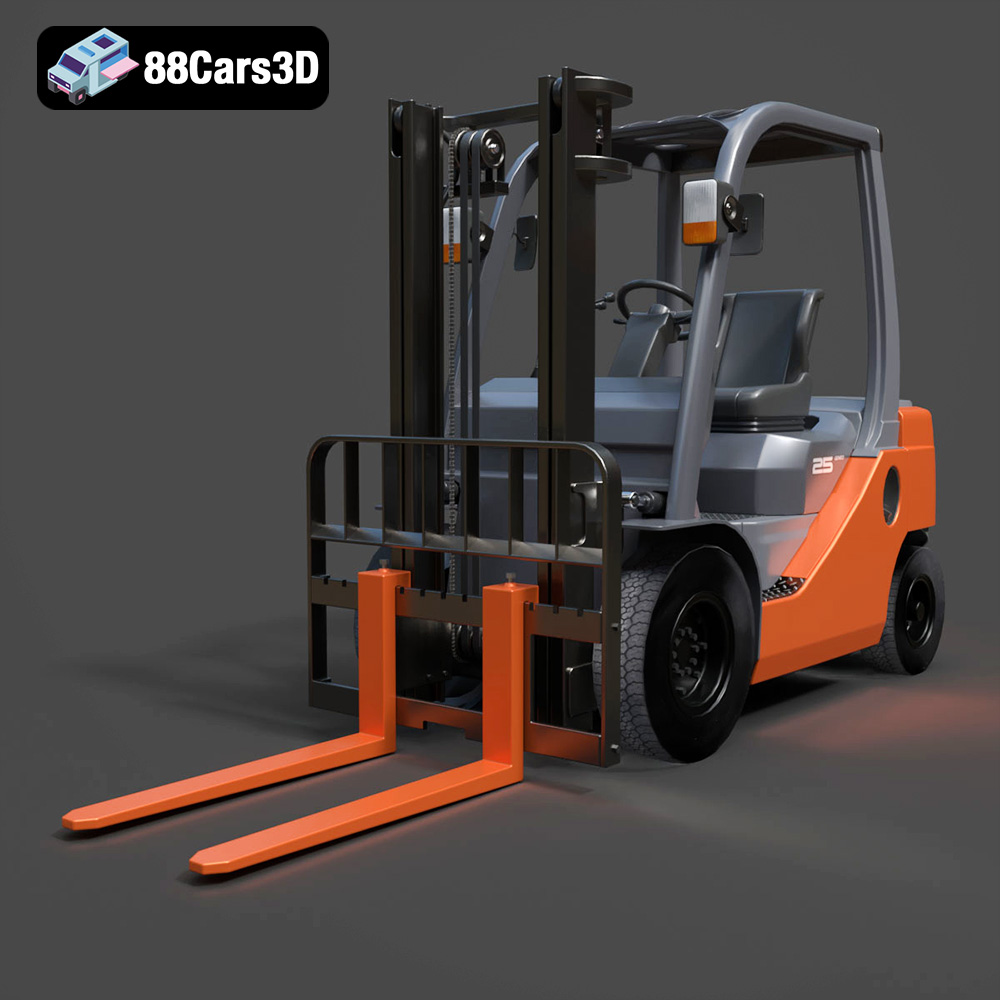
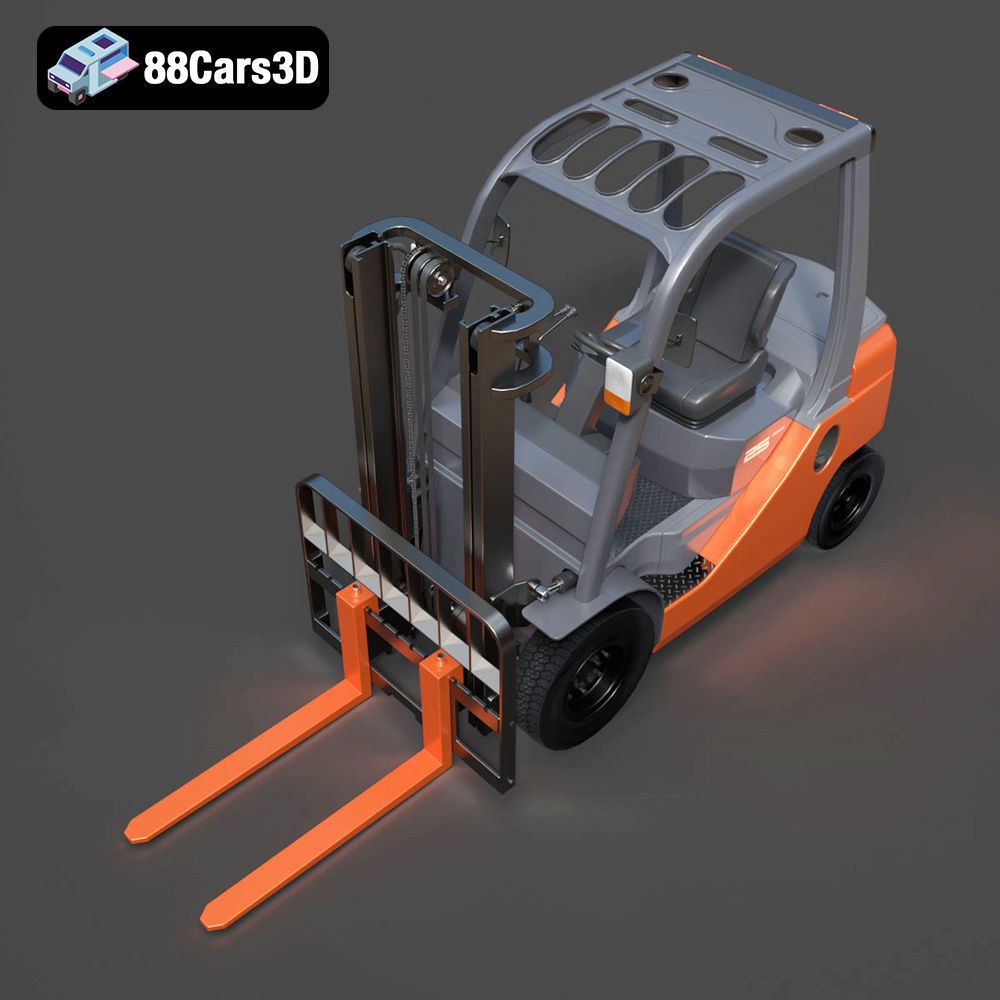
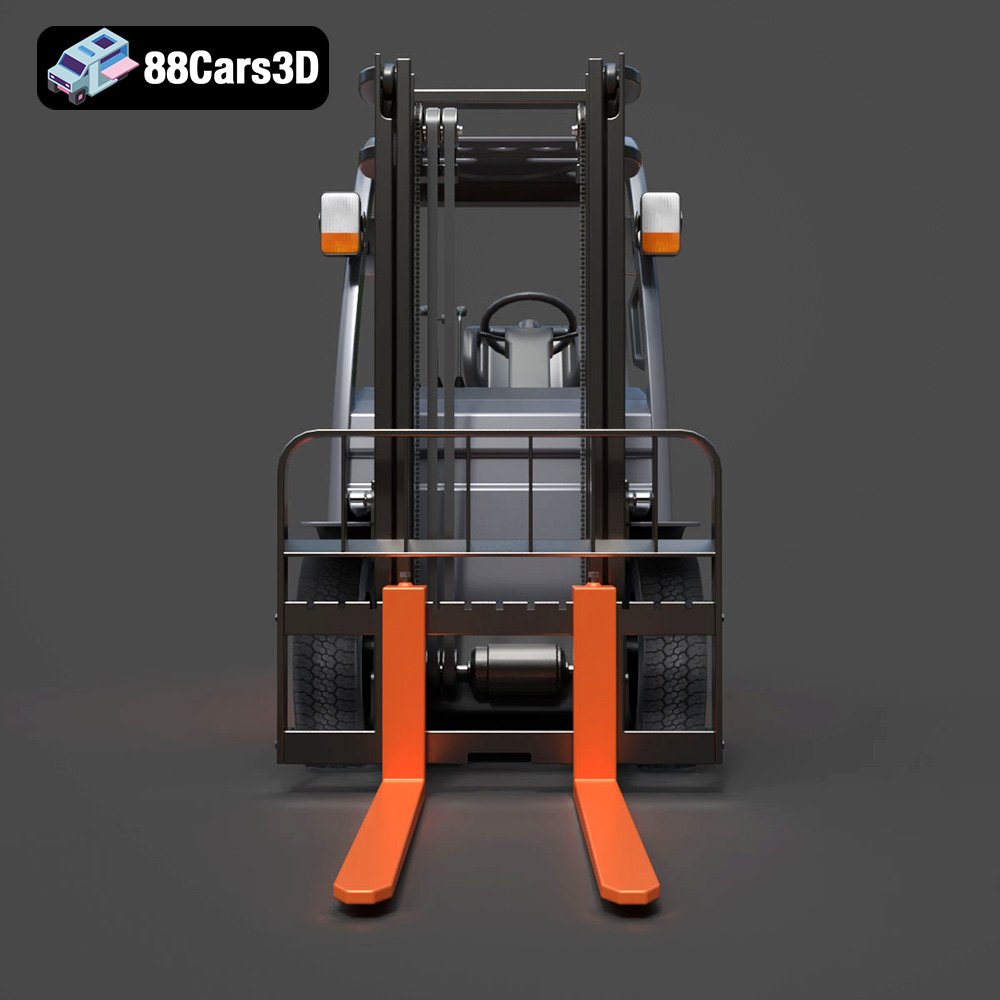
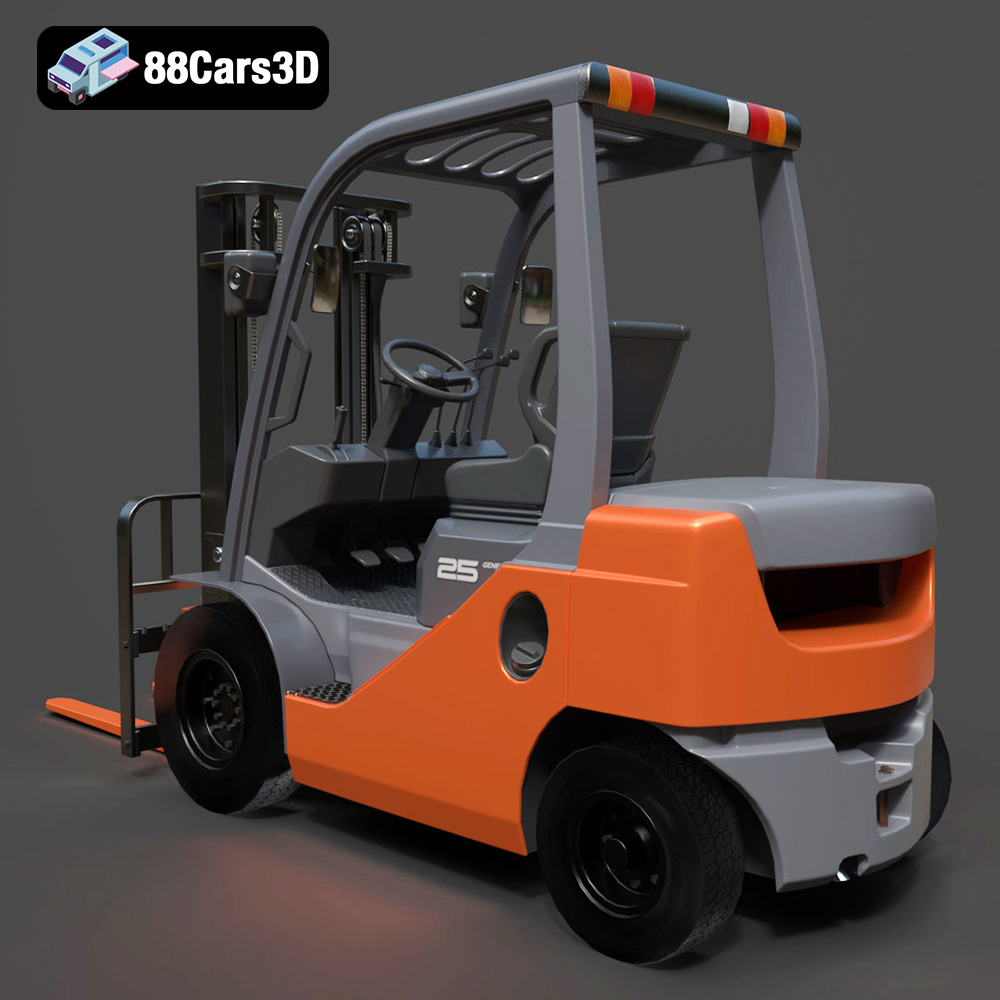
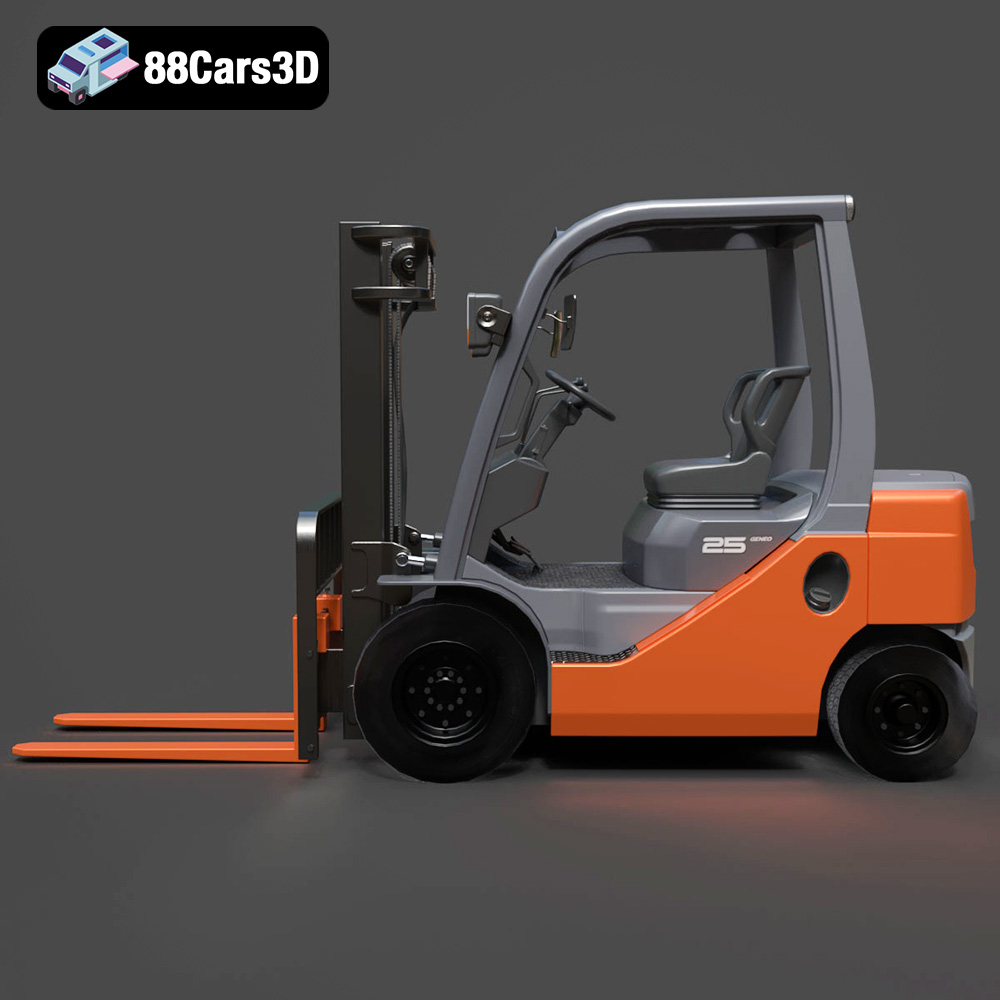
This model captures the rugged essence of a Toyota forklift with remarkable precision. The foundational accurate forklift body proportions ensure that the model behaves and appears realistically within any scene. The detailed mast assembly with lift rails isn’t merely aesthetic; it’s designed to articulate convincingly, crucial for animations and simulations. Complementing this are the realistic fork arms with adjustable spacing, allowing for dynamic interactions within a virtual warehouse. The inclusion of hydraulic cylinder and chain detailing adds a layer of mechanical authenticity, while the robust overhead safety guard structure and the distinct counterweight rear body design contribute to both realism and structural integrity.
No industrial vehicle is complete without its foundational components, and the Toyota Forklift 3D Model features industrial tire geometry with tread detail, ensuring realistic contact and movement. A significant technical advantage is the provision of separate wheels and lifting components for animation. This foresight in modeling empowers animators to easily rig and articulate the forklift’s operational elements, from steering and lifting to tilting, without complex geometry manipulation.
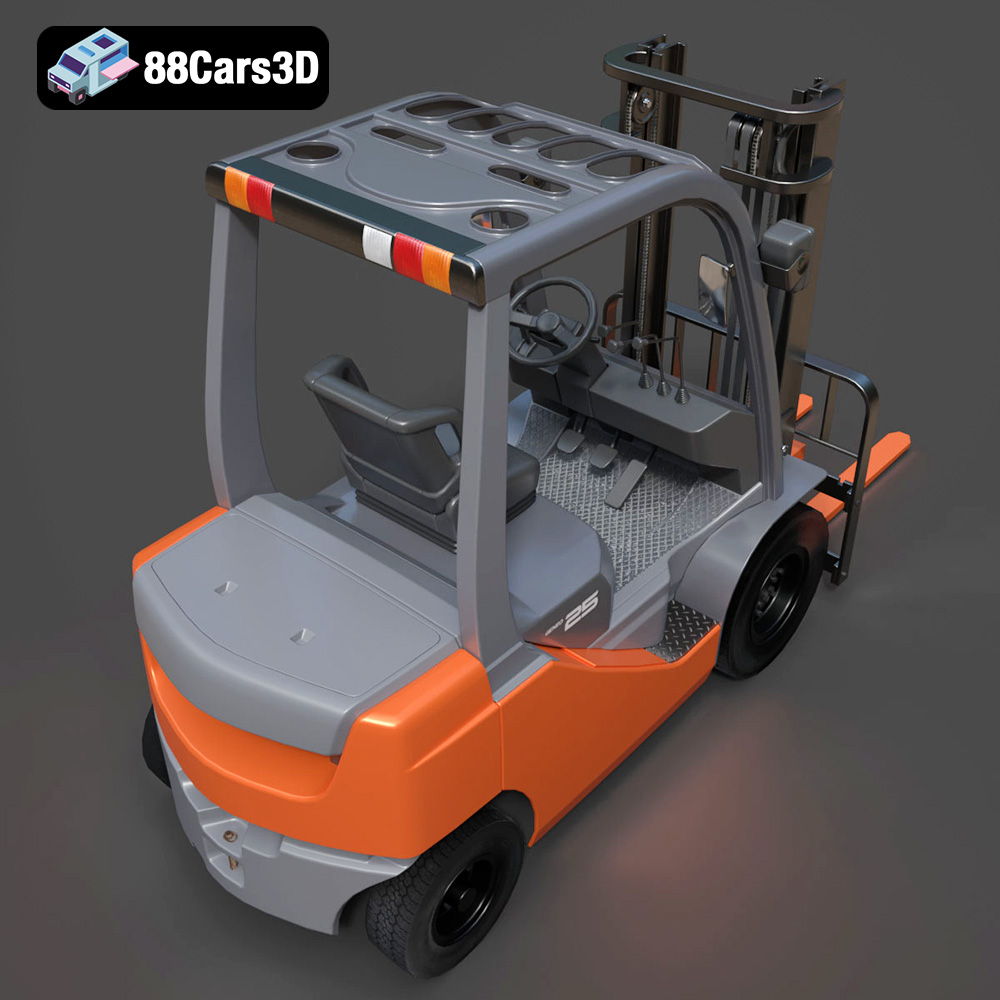
Stepping into the operator’s area, the model maintains its commitment to detail. The modeled driver seat and backrest provide a credible focal point, while the steering wheel and control levers are accurately represented for interactive simulations or close-up renders. The dashboard and instrument panel feature enough detail to convey realism without unnecessary polygon overhead, crucial for performance in real-time applications. Further enhancing the environment are the pedal layout and operator floor platform, and the essential safety bars and structural framing. This level of detail in the operator area is not just for show; it’s vital for creating believable first-person perspectives in VR training or highly detailed cinematic sequences.
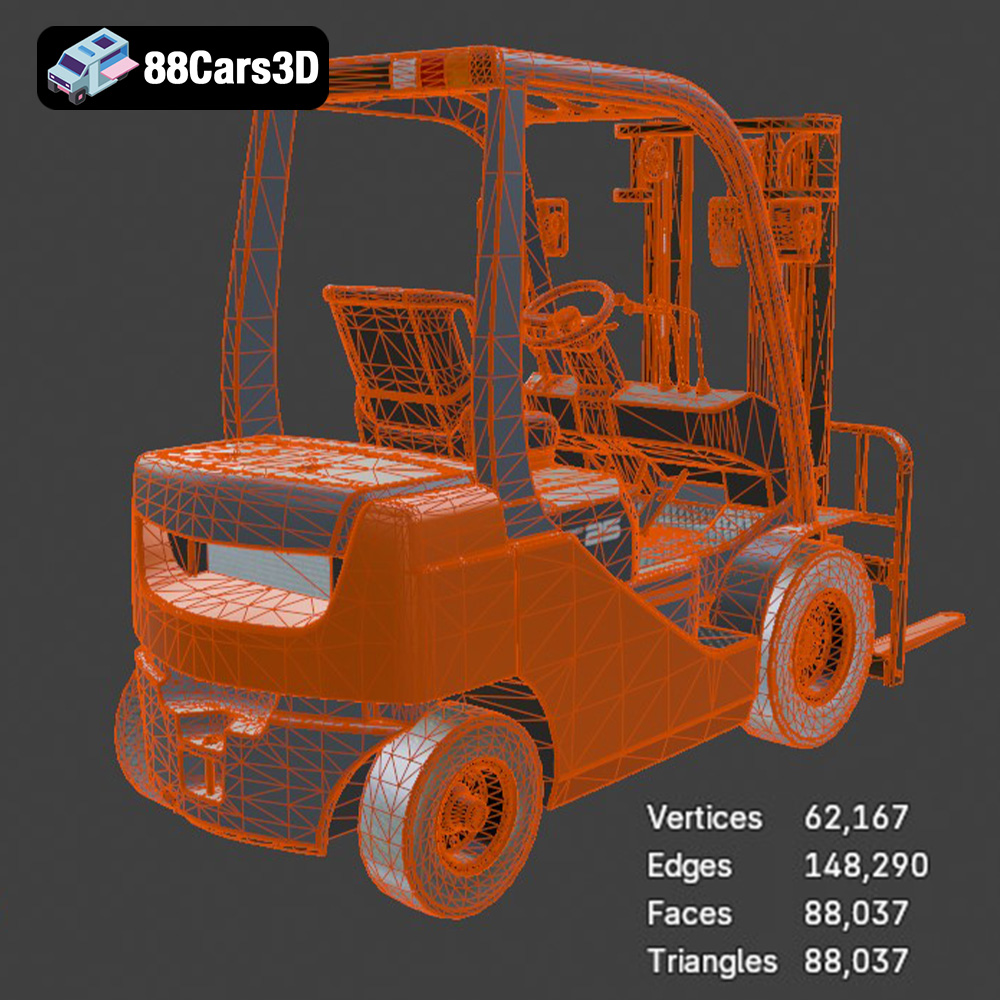
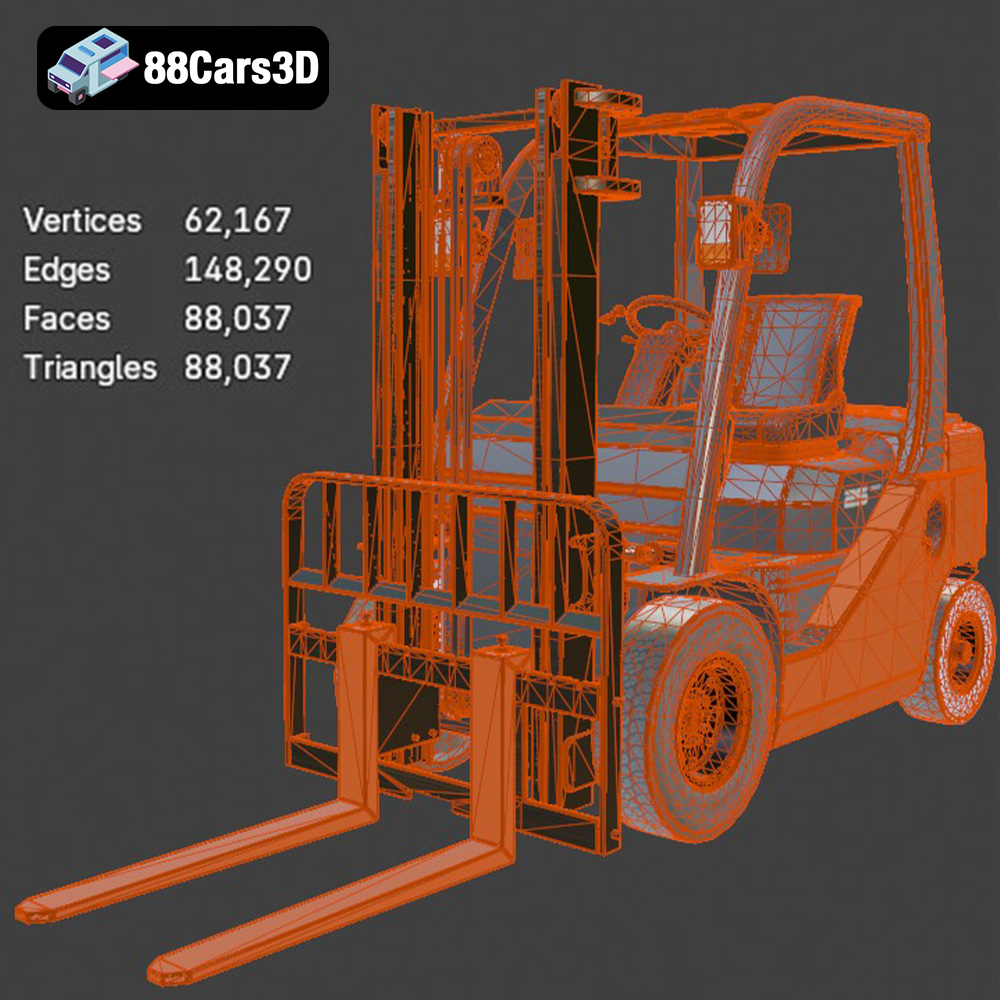
Crucially, the entire model, including the operator area, boasts optimized geometry for real-time engines and high-quality renders. This means the mesh is clean, efficient, and balanced between fidelity and performance, ensuring that whether it’s destined for a cinematic marketing piece or an interactive game environment, it performs optimally.
Beyond its visual accuracy, the Toyota Forklift 3D Model offers several technical advantages that elevate it above typical 3D assets. Its clean and well-organized mesh structure is a hallmark of professional-grade modeling, making it easy to modify, unwrap, or texture without encountering common issues like non-manifold geometry. The adherence to real-world scale accuracy is fundamental for integration into existing scene files, ensuring proper proportions when placed alongside other assets or within architectural blueprints.
For animators, the model’s proper pivot setup for steering and mast lift animation is a game-changer. This foresight saves countless hours in rigging, as the core rotational and translational points are already correctly defined. Coupled with optimized polygon flow for performance and realism, the model strikes an ideal balance, appearing highly detailed without excessive computational cost. Finally, its compatibility with major 3D software platforms and engines, supported by the extensive file formats available from 88cars3d.com, ensures seamless integration into virtually any professional pipeline.
The true power of a high-quality 3D asset like the Toyota Forklift 3D Model lies in its versatility across numerous professional applications. It’s not just an object; it’s a dynamic tool that can enhance communication, facilitate training, and drive innovation in a multitude of fields.
For industrial marketing and corporate presentations, photorealistic rendering is non-negotiable. The Toyota Forklift 3D Model is ideal for creating stunning visuals that highlight warehouse planning, logistics efficiency, and material handling capabilities. Imagine a sleek architectural visualization of a new distribution center; placing this detailed forklift within the scene immediately adds realism and conveys operational efficiency. Companies can use it to craft compelling promotional videos, brochures, or website content, showcasing their logistical prowess. Its high fidelity allows for close-up shots that demonstrate the intricate mechanics and ergonomic design, crucial for appealing to B2B clients.
The gaming industry and serious games sector benefit immensely from such well-optimized game assets. The Toyota Forklift 3D Model is perfectly suited for warehouse simulators, where players learn operational procedures in a risk-free virtual environment. It can be integrated into construction games, factory management simulations, or even broader logistics management systems, adding a layer of authenticity and functionality. With its optimized polygon flow and ready-to-animate components, it seamlessly integrates into engines like Unreal and Unity, providing a robust and performant asset for developers looking to create immersive and educational experiences.
AR/VR represents the next frontier for industrial applications, offering immersive training and interactive demonstrations. This 3D model is perfect for developing realistic forklift training modules in VR, allowing operators to practice complex maneuvers and safety protocols without the risks of real equipment. In AR, it can be used for interactive industrial demonstrations, overlaying a virtual forklift onto a real-world factory floor plan to visualize potential layouts or operational flows. Its inherent detail and real-world scale make it an invaluable tool for creating compelling and effective AR/VR content that educates and engages.
Beyond digital screens, the Toyota Forklift 3D Model offers a unique pathway to physical creation. Its design, with clean topology and separate components, makes it an excellent candidate for 3D printing, allowing for the creation of tangible scale models and industrial miniatures.
The inclusion of the .stl format is a direct testament to the model’s readiness for 3D printing. The meticulous modeling process ensures that the geometry is manifold and robust, crucial for successful slicing and printing. Whether you’re a hobbyist creating a miniature collection or an engineer prototyping a factory layout, the ability to convert this intricate digital asset into a physical object offers immense value. This transforms the forklift from a visual element into a tactile component of a larger physical display or prototype.
Achieving a high-quality physical print requires attention to detail in the slicing software. The recommended print settings provided for the Toyota Forklift 3D Model are critical guidelines. For FDM printers, a recommended scale of 1:32 / 1:24 / 1:18 / 1:12 allows for varying levels of detail and size, catering to different project needs. A layer height of 0.12–0.20 mm balances print time with surface quality. A wall thickness of 2–3 mm ensures structural integrity, while an infill of 20–35% provides sufficient strength without excessive material use.
Supports are required for intricate sections like the forks, overhead guard, and mast assembly, given their overhangs and delicate structures. Thoughtful print orientation, such as printing the body flat and the mast separately, optimizes for detail and minimizes support marks. After printing, post-processing steps like sanding, priming, and applying an industrial yellow/orange paint finish, complete with safety decals, will transform the raw print into a professional-grade model, mirroring its real-world counterpart.
The 3D printable nature of the Toyota Forklift 3D Model also opens doors for extensive customization. Users can modify the model digitally before printing to change body color and branding, add company logos or warehouse decals, or even slightly modify fork length or width to represent different forklift configurations. This capability makes it invaluable for creating unique scale models for display, bespoke prototypes for client presentations, or specialized training aids that reflect specific operational environments. From a tabletop display to a detailed automotive collectible, the possibilities are vast.
The true test of any 3D asset lies in its seamless integration into established professional workflows. The Toyota Forklift 3D Model excels in this regard, offering flexibility and compatibility across leading software platforms.
For professionals leveraging 3ds Max for architectural visualization or high-end animations, integrating the Toyota Forklift 3D Model is straightforward. Utilizing the native .max file or the highly compatible .fbx format, users can import the model directly into their scene. The pre-setup pivots for the wheels, steering, and mast assembly significantly reduce rigging time. Artists can then apply V-Ray or Corona Renderer materials, set up studio-quality lighting, and easily animate the forklift’s movements to populate warehouse scenes or demonstrate logistical operations. The clean topology also makes it easy to apply subdivision surfaces for ultra-high-quality renders, ensuring crisp details even in close-up shots.
Blender users will find the dedicated .blend file invaluable. This native file contains the model with all its materials and potentially basic rigging, allowing for immediate customization. Independent artists can modify the model, add specific textures, create complex material nodes for realism, and render stunning visuals using Cycles or Eevee. The model’s separate components are perfectly suited for non-destructive workflows, enabling users to easily adjust the mast height or fork position using Blender’s powerful animation tools. For visual effects shots, the real-world scale makes it easy to match the model to live-action footage.
Game developers and simulation engineers can efficiently integrate the Toyota Forklift 3D Model into Unreal Engine. The .fbx or pre-optimized .unreal formats ensure a smooth import. Once in Unreal, artists can quickly set up physically based rendering (PBR) materials, configure collision meshes for realistic interactions within the game world, and even add basic physics for dynamic movement. The model is primed for use in interactive warehouse environments, vehicle driving mechanics for logistics simulations, or as a background prop in a larger industrial scene. Its optimized geometry ensures that it maintains a high frame rate, critical for real-time performance.
The modern digital landscape demands more than just visually appealing 3D models; it requires assets that are technically robust, versatile, and optimized for a diverse range of applications. The Toyota Forklift 3D Model stands as a prime example of such an asset, meticulously crafted to serve the needs of professionals in automotive rendering, game development, AR/VR, simulation, and even physical 3D printing. Its detailed exterior and operator features, coupled with thoughtful technical advantages like clean mesh and proper animation pivots, make it an indispensable tool for enhancing any project’s realism and efficiency.
From complex industrial visualizations to immersive training simulators and tangible scale models, this Toyota Forklift 3D Model offers a comprehensive solution. Its availability in a wide array of file formats, including .blend, .fbx, .obj, .glb, .stl, .ply, .unreal, and .max, ensures seamless integration into virtually any professional workflow. For creators seeking high-quality 3D car models and industrial equipment that can drive their projects forward, 88cars3d.com provides the reliable and detailed assets needed to achieve exceptional results. Invest in precision, versatility, and the future of your digital and physical creations.
The Toyota Forklift 3D Model is a high-detail digital recreation of a modern industrial forklift designed for warehouse, logistics, and material handling operations. Known for reliability, maneuverability, and industrial durability, Toyota forklifts are widely used in factories, storage facilities, and distribution centers worldwide. This 3D model accurately represents the reinforced mast assembly, lifting forks, hydraulic cylinders, overhead guard, operator seat, steering controls, counterweight body, industrial tires, and rear steering configuration. Built with clean topology and real-world scale proportions, it is ideal for rendering, animation, simulation, game development, and AR/VR industrial visualization. Perfect for warehouse scenes, logistics centers, factory environments, cargo loading simulations, and commercial presentations.
$9.99
.arvr
.blend
.fbx
.forklift
.forklift3dmodel
.gameasset
.glb
.industrialvehicle
.logistics
.materialhandling
.max
.obj
.ply
.rendering
.simulation
.stl
.toyota
.unreal
.warehouseequipment