Get 50% OFF All Premium 3D & STL Models!

In the vibrant world of 3D visualization, automotive rendering, and game asset development, the demand for truly exceptional 3D car models and vehicle assets is ever-present. Artists, designers, and developers constantly seek models that not only capture the essence of a real-world machine but also provide the technical fidelity required for professional-grade projects. Whether it’s for breathtaking cinematic sequences, immersive virtual experiences, or highly detailed physical prototypes, the foundation of any successful project lies in the quality of its core assets.
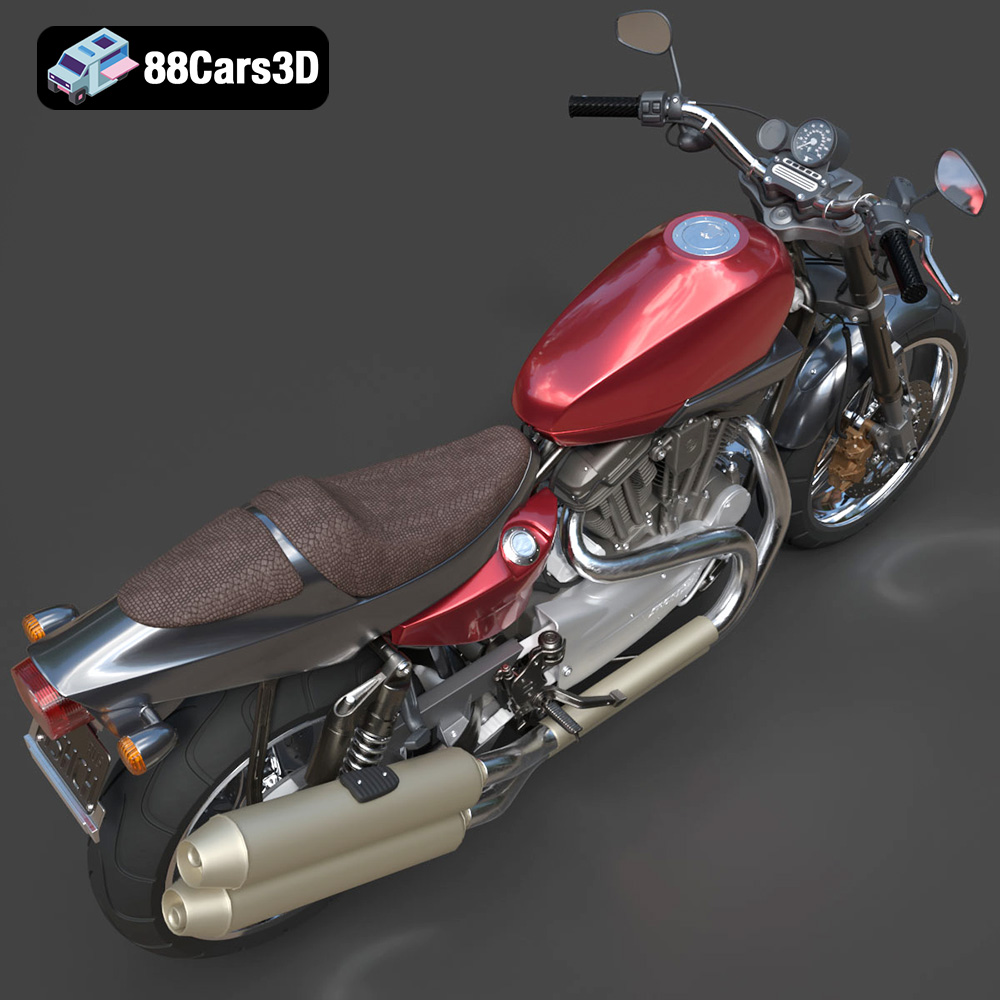
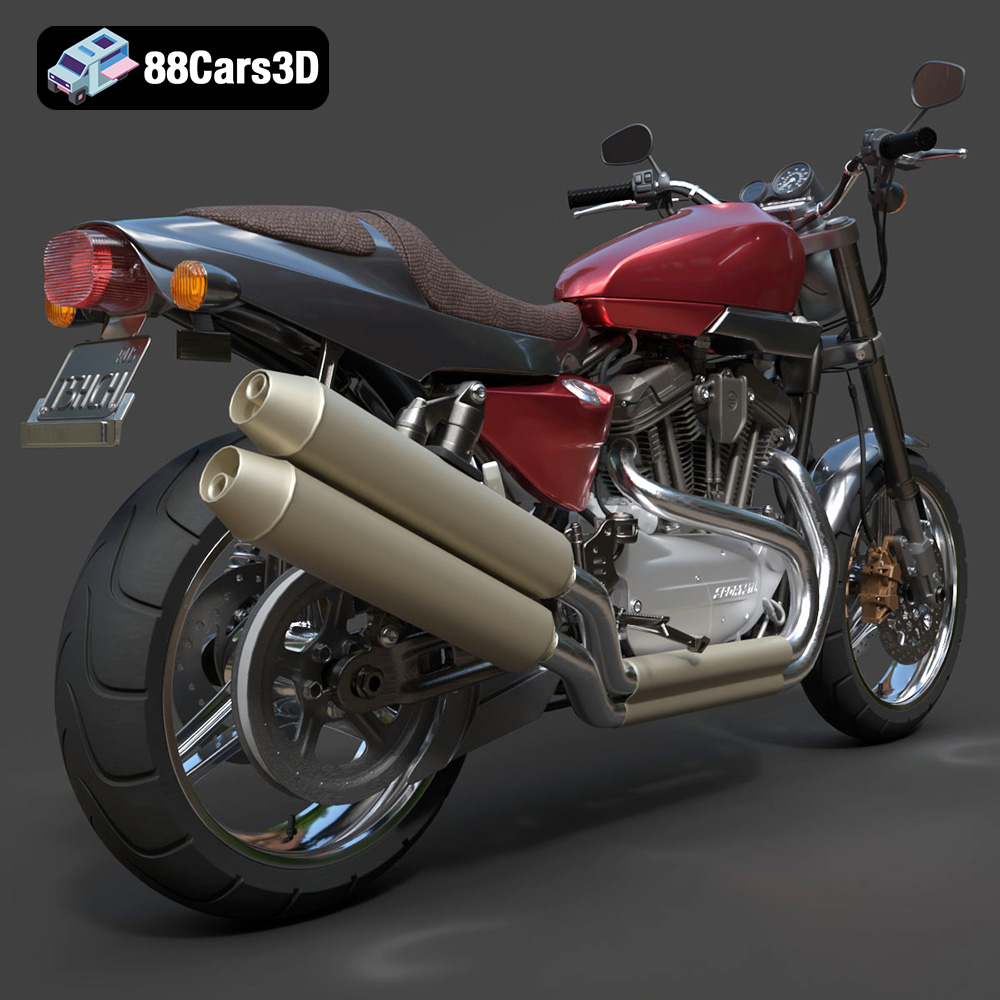
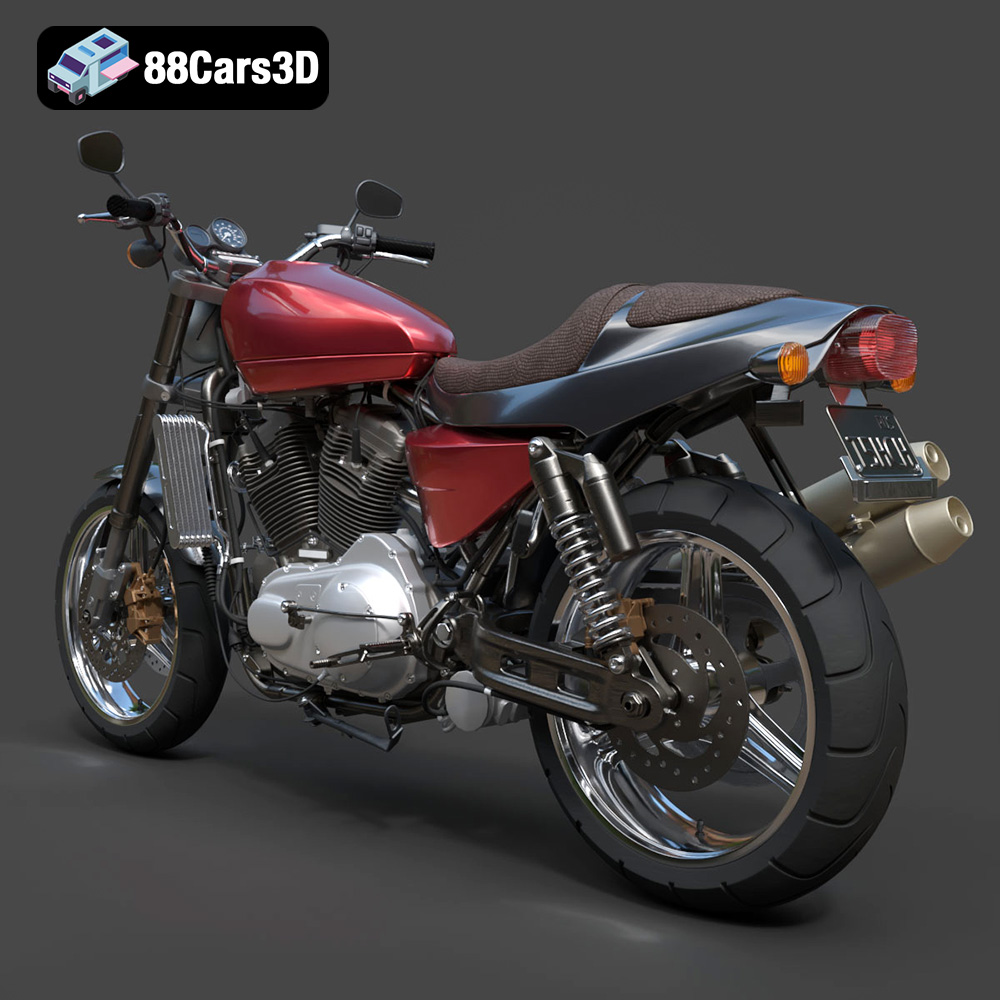
Today, we’re diving deep into an exemplary piece of digital craftsmanship: the Harley-Davidson XR1200X 3D Model. This isn’t just any motorcycle model; it’s an ultra-high-detail recreation of an iconic machine, built to satisfy the most stringent demands for photorealism and precision. From its flat-track racing heritage to its intricate V-Twin engine, this model offers a masterclass in digital automotive design, providing an unparalleled starting point for a myriad of creative endeavors across rendering, 3D printing, and even game development (with strategic optimization).
The Harley-Davidson XR1200X is more than just a motorcycle; it’s a direct descendant of Harley-Davidson’s legendary XR750 flat-track racers, a bike that dominated dirt ovals for decades. The XR1200X brought that aggressive, performance-focused spirit to the street, blending raw power with enhanced handling thanks to its upgraded Showa suspension, powerful brakes, and distinctive flat-track styling. Its blacked-out Evolution V-Twin engine, wide handlebars, and upswept exhaust system all contribute to an unmistakable profile that commands attention.
Capturing such an iconic machine in 3D demands an uncompromising approach to detail, and this particular Harley-Davidson XR1200X 3D Model delivers. It’s a digital homage, meticulously crafted to reflect every curve, every component, and every defining characteristic that made the original bike a legend. For artists seeking to evoke the thrill of flat-track racing, the freedom of canyon carving, or simply the raw beauty of American motorcycle engineering, this model provides an authentic and highly detailed foundation.
The XR1200X was designed for performance, and its 3D counterpart reflects this with accurate sport-tuned chassis geometry and flat-tracker proportions. This isn’t merely about aesthetics; it’s about providing a faithful representation that allows for realistic physics simulations in virtual environments or accurate scale modeling for 3D printing. The distinct design elements, such as the clipped rear tail cowl and the classic XR-style teardrop fuel tank, are all present and accounted for, allowing for truly authentic renders and visualizations.
At the heart of any Harley-Davidson is its engine, and the XR1200X’s blacked-out 1200cc Evolution V-Twin is a focal point. The 3D model meticulously recreates this powerhouse, featuring intricate cooling fins, detailed cylinder heads, and accurate engine mounts. Such high fidelity in engine modeling is crucial for extreme close-up renders, where every bolt and wire contributes to the overall photorealism. Artists can leverage this detail for exploded views, mechanical showcases, or dynamic shots that emphasize the raw power of the bike.
When working with professional 3D car models or any complex asset, understanding the various file formats is paramount. Each format serves a specific purpose, offering different levels of data preservation, compatibility, and optimization for various stages of the production pipeline. The Harley-Davidson XR1200X 3D Model, available on 88cars3d.com, is provided in a comprehensive suite of formats, ensuring maximum flexibility for artists and developers.
The .blend format is the native file type for Blender, the popular open-source 3D creation suite. When you receive a .blend file, you’re getting the full, editable Blender scene, complete with materials, textures, lighting setups, camera angles, and any rigging or animation data. This is often the most flexible format for artists who primarily work in Blender, allowing for direct manipulation of the mesh, material adjustments, and scene composition without any loss of information that might occur during export to a generic format. It’s ideal for in-depth customization and leveraging Blender’s powerful rendering engines like Cycles or Eevee.
.fbx (Filmbox) is a proprietary file format developed by Autodesk, widely regarded as the industry standard for exchanging 3D data between different software applications. It’s particularly ideal for game engines like Unreal Engine and Unity, as it efficiently handles geometry, materials (though often simplified), textures, animations, and skeletal data. For the Harley-Davidson XR1200X, the .fbx format ensures that the model’s complex geometry and hierarchical structure (separate wheels, steering, suspension) are preserved when transferring to other DCC (Digital Content Creation) tools or real-time pipelines.
The .obj (Wavefront Object) format is a universal standard for storing 3D geometry. It’s incredibly robust and supported by virtually every 3D software application, making it excellent for cross-software compatibility. An .obj file primarily contains vertex positions, UV coordinates, normals, and polygon faces. While it doesn’t typically store advanced material definitions or animation data in the same way .blend or .fbx might, it’s perfect for clean mesh transfer. For the XR1200X, the .obj provides a solid base for artists who might import it into a custom pipeline or an application that favors simpler geometry imports.
.glb (GLB format for glTF) is a relatively newer format gaining significant traction, especially in AR, VR, and browser-based 3D applications. It’s a binary container format for glTF (Graphics Language Transmission Format), which is designed to be an efficient, extensible, and interoperable format for transmitting 3D scenes and models. .glb files embed all assets (geometry, textures, animations, materials) into a single file, making them highly optimized for quick loading and display on the web or in mobile augmented reality experiences. This format would be crucial if you plan to showcase the Harley-Davidson XR1200X in an interactive web viewer or a mobile AR application.
The .stl (STereoLithography) format is the cornerstone of 3D printing. It represents 3D surfaces as a collection of unconnected triangles, forming a “shell” that 3D printers can interpret to build a physical object layer by layer. The Harley-Davidson XR1200X 3D Model specifically highlights its suitability for 3D printing, and the .stl file is what you would feed into your slicer software. It’s a simple yet effective format for manufacturing, ensuring the detailed geometry of the bike can be accurately reproduced in physical form.
.ply (Polygon File Format) is another common format for storing 3D data, particularly popular in academic and research fields, as well as for storing data from 3D scanners. It’s known for its ability to store a wide range of data, including color, transparency, normals, texture coordinates, and properties specific to different mesh elements (vertices, faces). While less common for general asset exchange than .fbx or .obj, it’s a precision mesh format that can be valuable for CAD applications, geometric analysis, or if a project requires a highly robust representation of the model’s surface attributes.
The .unreal format signifies an asset specifically prepared or optimized for direct import into Unreal Engine. While Unreal primarily uses .fbx for importing external assets, a pre-packaged .unreal file might include specific material setups, collision meshes, or other engine-specific optimizations that streamline the integration process. This can be a significant time-saver, particularly for complex assets like the XR1200X, reducing the manual setup required within the engine.
Finally, the .max format is the native file type for Autodesk 3ds Max, a powerful 3D modeling, animation, and rendering software widely used in architectural visualization, game development, and film production. Similar to the .blend file for Blender, a .max file provides the complete, editable scene with all its components, including geometry, materials, textures, lighting, cameras, and animation data. For professionals working within the 3ds Max ecosystem, this format offers the highest level of control and editability over the Harley-Davidson XR1200X 3D Model.
The true value of a premium 3D model often lies in its technical specifications and the level of detail it brings to the table. The Harley-Davidson XR1200X 3D Model stands out as an “ultra-high-poly hero asset,” designed for scenarios where visual fidelity is paramount. This isn’t a low-poly asset for a mobile game; it’s a meticulously crafted digital sculpture intended for extreme close-ups, cinematic sequences, and high-resolution output.
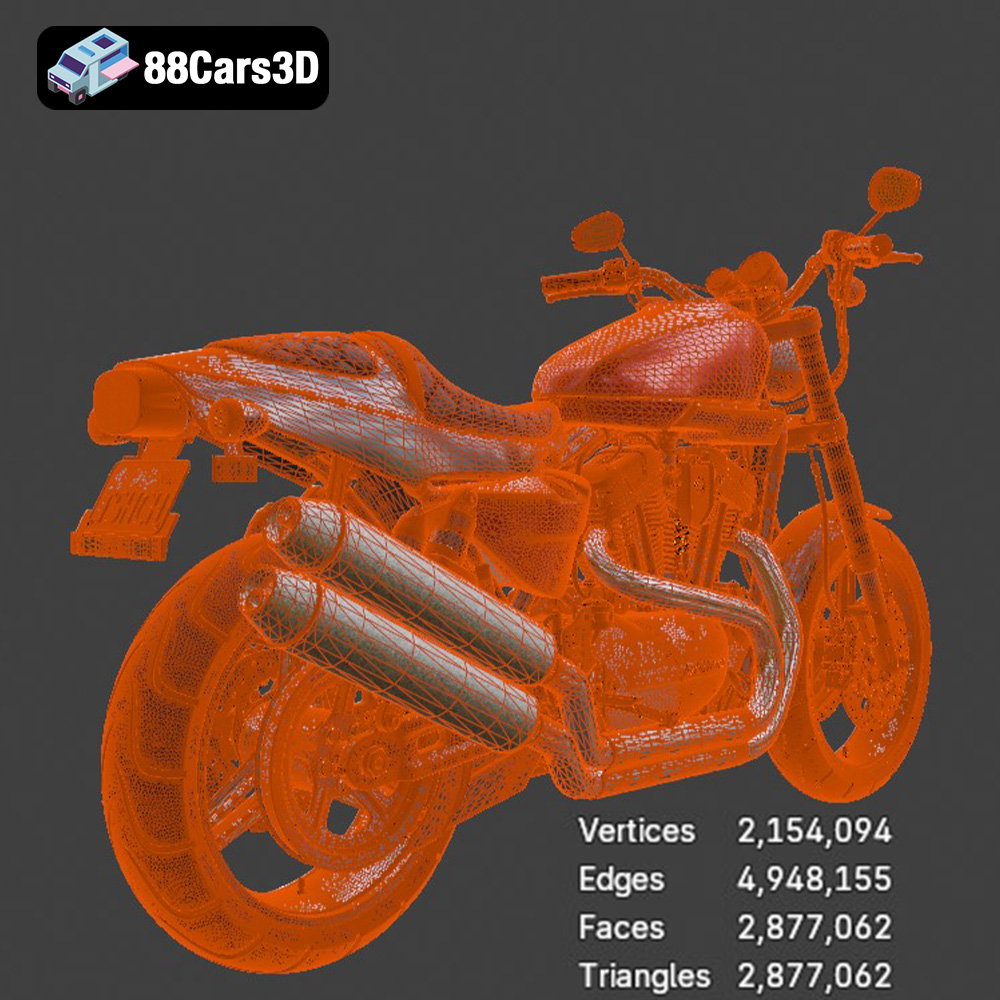
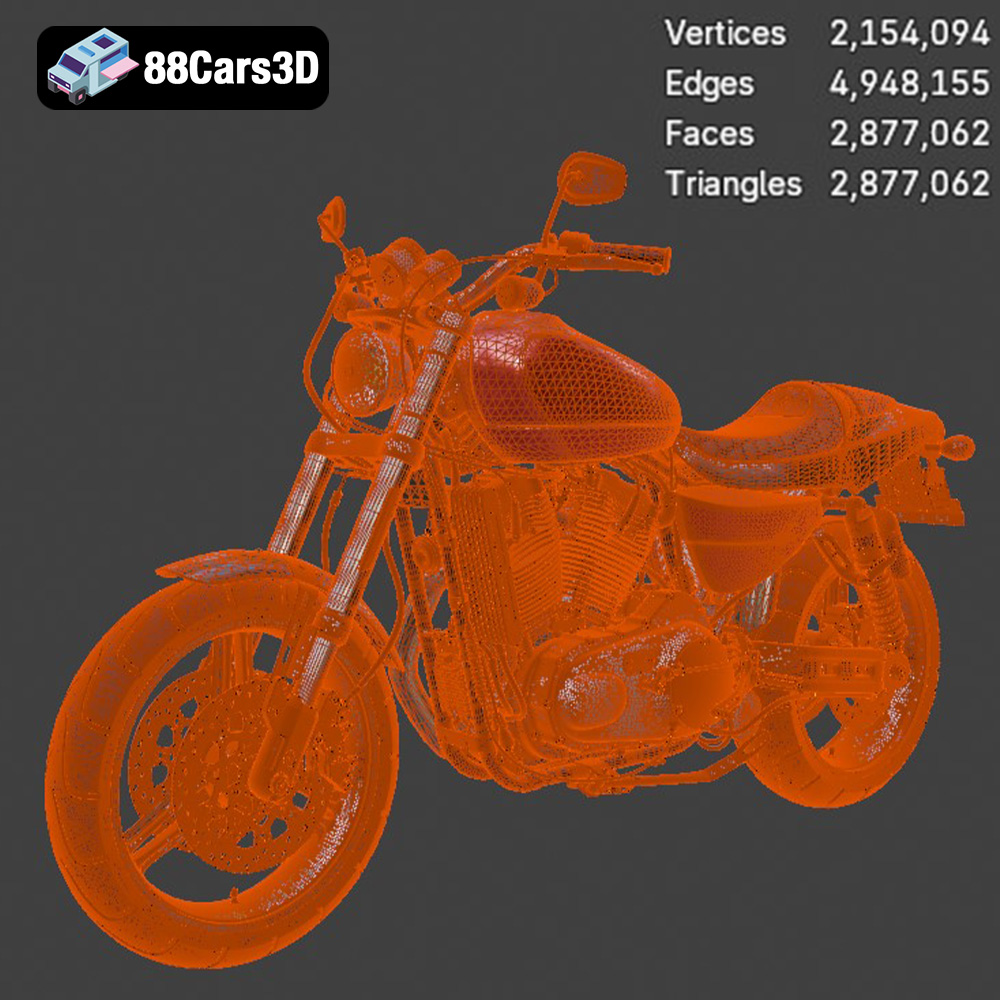
With nearly 2.9 million triangles, this model boasts an uncompromising geometric accuracy. Every bolt, every wire, and every engine fin is rendered with explicit geometry, rather than relying solely on normal maps or displacement. This level of detail is what enables absolute photorealism, allowing the model to hold up flawlessly under the closest camera scrutiny. For cinematic automotive visualization or premium studio rendering, this dense topology is a distinct advantage, providing rich surface detail that reacts authentically to lighting.
Beyond the sheer polycount, the model is built with real-world scale accuracy based on the XR1200X chassis. This ensures that when integrated into scenes, it looks and feels authentic, adhering to realistic proportions. Furthermore, the model features proper pivot setups for steering, wheel rotation, and suspension articulation. This engineering-level precision is invaluable for animators who need to create dynamic motion, whether it’s the subtle compression of the Showa suspension over bumps or the lean of the bike through a turn.
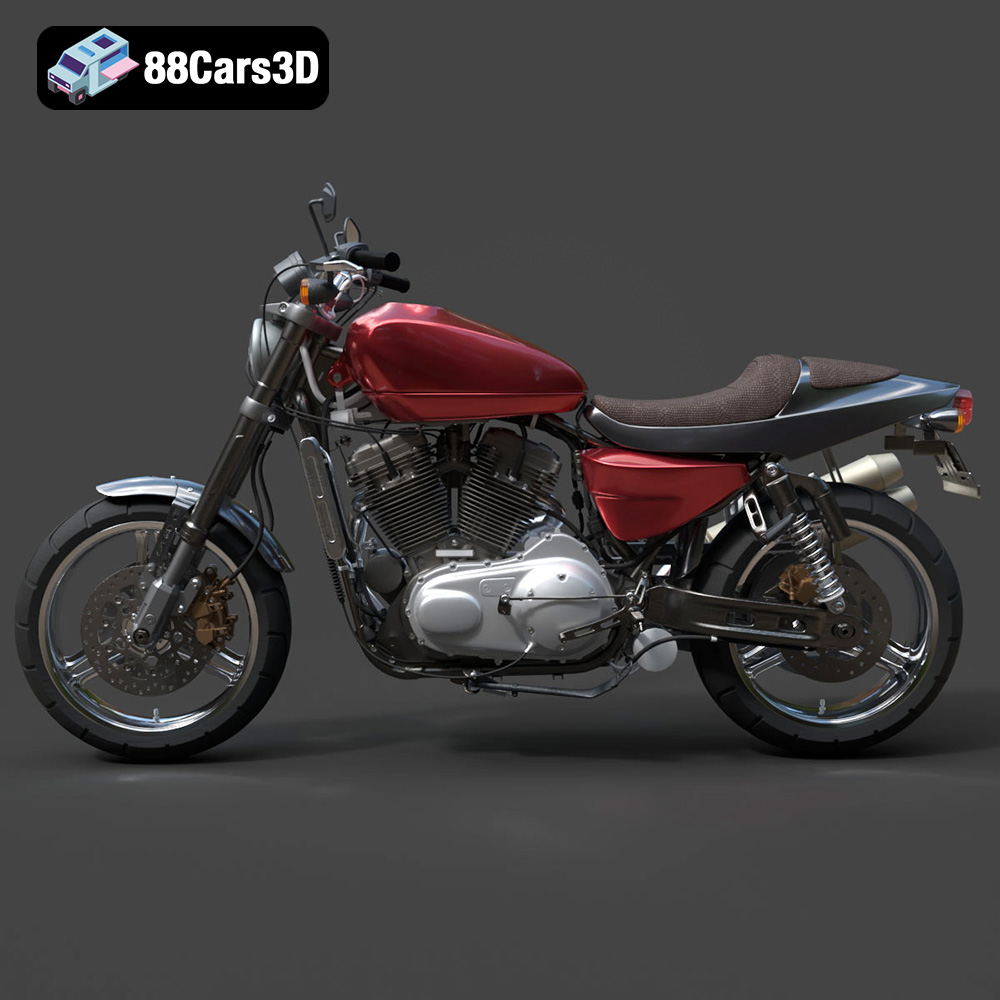
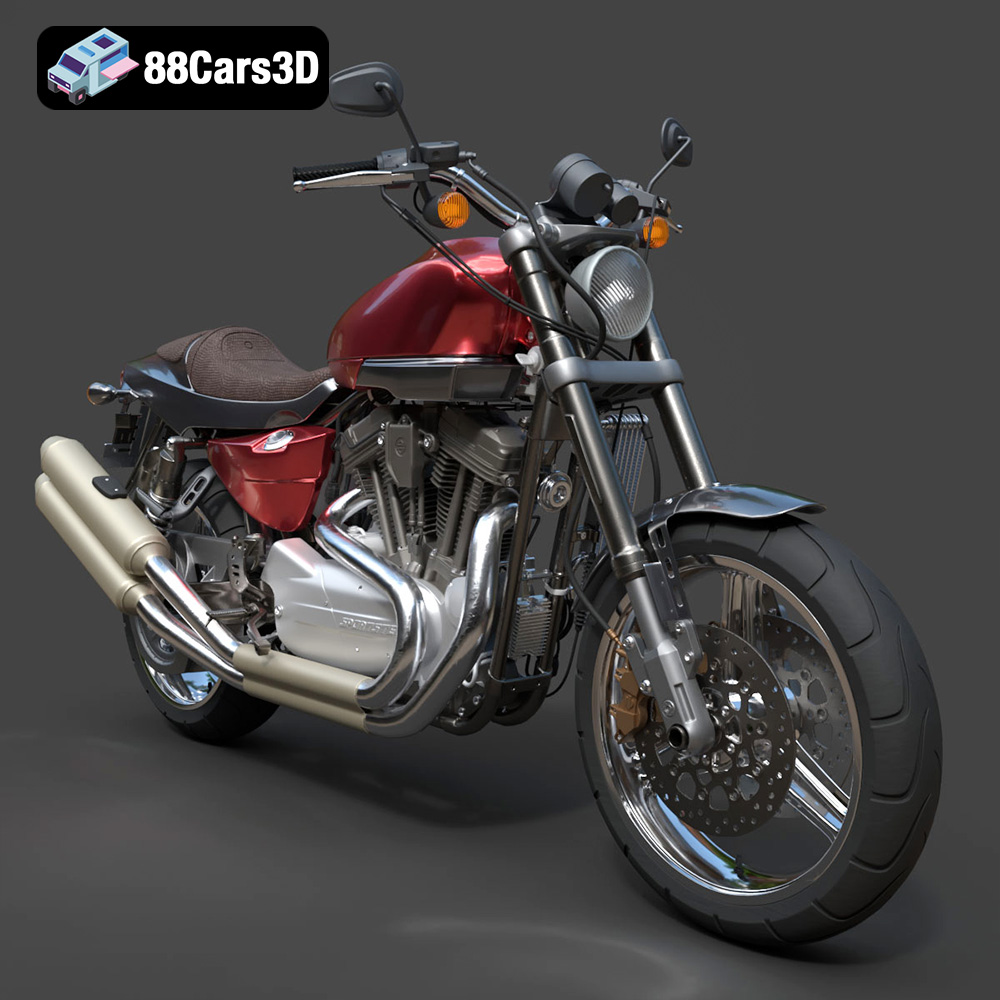
The model’s exterior features are a testament to its comprehensive detail. It includes the accurate sport-tuned chassis, the hyper-detailed blacked-out 1200cc Evolution V-Twin engine with intricate cooling fins, and the signature upswept, performance-tuned flat-track exhaust system. The high-performance Showa Big Piston front forks and fully adjustable rear piggyback shocks are also meticulously modeled, complete with springs and reservoirs. Even the dual front disc brakes feature detailed Nissin calipers and braided lines, leaving no stone unturned in the pursuit of realism.
The detail extends to the rider’s interface. The sporty, stepped solo seat geometry includes authentic seam detailing, while the wide, dirt-track inspired handlebars are ready for aggressive leverage. Authentic semi-rearset foot controls and peg placements enhance the realism, perfect for posing a rider or simulating dynamic riding stances. The signature asymmetrical instrument cluster, featuring a prominent analog tachometer and digital speedometer, is optimized for extreme high-resolution first-person POV rendering, making it suitable for immersive virtual experiences where the rider’s perspective is key.
The Harley-Davidson XR1200X 3D Model is explicitly designed as a “hero asset” for high-end rendering and cinematic production. Its ultra-high-poly nature and meticulous detailing make it a powerhouse for creating visually stunning imagery and animations. Whether you’re a seasoned professional in automotive visualization or a passionate independent artist, this model provides the raw quality needed to produce truly standout work.
For premium studio lighting setups, the model’s rich geometric detail shines. Each curve, bolt, and engine fin catches light with exquisite realism, producing accurate reflections, specular highlights, and ambient occlusion. Software like 3ds Max (using renderers like V-Ray or Corona) or Blender (with Cycles) can leverage this high fidelity to generate renders indistinguishable from reality. Artists can experiment with different lighting environments – from clean, sterile studio setups to dramatic, moody garages – to showcase the XR1200X in various stylistic contexts, making it perfect for high-octane lifestyle campaigns or extreme-close-up mechanical design showcases.
Using the .max or .blend files, artists gain immediate access to a fully prepared scene (assuming materials/textures are bundled, as implied). In 3ds Max, one might import the .fbx or .max file, then proceed with setting up advanced V-Ray or Corona materials, leveraging PBR (Physically Based Rendering) workflows for realistic metal, paint, and rubber. In Blender, the .blend file provides a complete scene, allowing for immediate rendering with Cycles. Artists can then fine-tune materials, add subsurface scattering for rubber tires, or create custom paint shaders for the fuel tank and tail cowl, such as classic Black Denim or White Hot Denim finishes. The proper pivot setup for articulation also makes it straightforward to pose the bike or animate subtle suspension movements for static beauty shots.
In cinematic productions, whether for commercials, short films, or game trailers, the demand for uncompromised mechanical detail is critical. The Harley-Davidson XR1200X 3D Model excels here. Its high polygon count means that even when the camera zooms in tight on the braided brake lines or the intricate cooling fins of the V-Twin engine, the detail holds, eliminating the need for complex displacement maps or tessellation that can add overhead and complexity.
With separate components for wheels, steering, and suspension, the model is built for animation. This allows animators to create dynamic sequences, such as the bike leaning into a turn, the suspension compressing over rough terrain, or the front wheel lifting during acceleration. These subtle yet crucial movements bring a static model to life, enhancing the storytelling capabilities of any cinematic scene. Imagine a camera sweeping around the upswept exhaust as the bike roars past, or a dramatic slow-motion shot highlighting the detailed Nissin calipers in action – all made possible by the model’s inherent detail and thoughtful articulation setup.
While the Harley-Davidson XR1200X 3D Model is presented as an “ultra-high-poly hero asset” primarily for rendering and cinematics, its robust detail also makes it a powerful base for game development, AR, and VR applications. However, its nearly 2.9 million triangles present a significant challenge for real-time engines, which typically require much lower polygon counts for optimal performance.
The product description explicitly notes that due to its extreme polycount, this model will require manual retopology, baking, or decimation before it can be used efficiently as a drivable vehicle in real-time game engines like Unreal Engine or Unity. This isn’t a limitation of the model itself but rather a standard workflow for integrating highly detailed assets into performance-sensitive environments.
The ideal workflow for game assets involves creating a lower-polygon version of the model (retopology) that retains the overall silhouette and form. The intricate details of the high-poly model are then “baked” onto texture maps (normal maps, ambient occlusion maps, displacement maps) of the low-poly mesh. This process allows the game engine to render a visually rich model using significantly fewer polygons, thus maintaining high frame rates. For the XR1200X, this would mean carefully retopologizing the complex engine, suspension, and bodywork to create a game-ready mesh, then baking the fine details from the 2.9 million triangle model onto it. Tools within Blender, 3ds Max, or dedicated retopology software like ZBrush can facilitate this process.
The inclusion of .unreal and .fbx formats for the Harley-Davidson XR1200X 3D Model is beneficial for game developers. Once the necessary optimization (retopology, baking) is complete, the optimized low-poly .fbx can be easily imported into Unreal Engine. The .unreal file, if it contains pre-configured materials or scene elements, could further streamline the setup, providing a starting point for creating physically-based materials (PBR) within the engine. Developers can then set up physics assets, collision meshes, and integrate the model into a vehicle blueprint for a drivable experience in a virtual environment.
For AR/VR experiences, performance is even more critical due to the constant 90+ FPS target required to prevent motion sickness. While the .glb format is optimized for web and AR/VR display, the underlying geometry of the original XR1200X 3D Model would still need significant optimization. For an AR app showcasing the bike in a real-world environment, a highly optimized low-poly version (with baked textures) of the model would be necessary to ensure smooth performance on mobile devices or VR headsets. However, for high-end VR experiences on powerful PCs, a moderately decimated version of the original model might be feasible for static display or limited interaction, pushing the boundaries of fidelity in virtual spaces.
One of the most exciting applications for the Harley-Davidson XR1200X 3D Model is 3D printing. This model is an “absolutely incredible base for highly detailed, large-scale custom resin prints for motorcycle hobbyists.” The inherent high-polygon count, which is a challenge for real-time engines, becomes a significant advantage for 3D printing, enabling capture of even the most minute details.
The .stl format, specifically designed for 3D printing, translates the 2.9 million triangles into a dense mesh that printers can interpret with exceptional accuracy. This means that features like the intricate cooling fins of the Evolution V-Twin engine, the springs in the Showa suspension, and the fine details of the brake calipers will be accurately reproduced in the physical model. This level of precision is crucial for creating collector-quality scale models or prototypes.
The detailed product information for the Harley-Davidson XR1200X 3D Model provides specific recommendations for 3D printing:
For motorcycle enthusiasts and model builders, the ability to 3D print such a detailed representation of the XR1200X opens up a world of possibilities. Imagine a custom-painted, meticulously assembled 1:8 scale model gracing your display shelf, or using the 3D print as a base for further custom modifications. This process bridges the gap between the digital and physical realms, turning a digital asset from 88cars3d.com into a tangible piece of art.
A high-quality 3D model is not just a static representation; it’s a versatile foundation for endless creative exploration. The Harley-Davidson XR1200X 3D Model offers extensive customization options, empowering artists to make it uniquely their own, or to adapt it perfectly for specific project requirements.
The ability to change fuel tank and tail cowl colors is a fundamental customization. Whether you prefer the aggressive Black Denim, the striking White Hot Denim, or the vibrant classic XR Racing Orange, the model’s clean material setup allows for easy color modifications. This is crucial for branding, stylistic consistency, or simply matching a specific artistic vision.
Customization extends to adding unique details. Imagine integrating custom racing numbers to the flat-track style tail section, transforming the XR1200X into a personalized racing machine for a render. Modifying the exhaust material to add realistic thermal bluing effects or intricate heat wrap textures can dramatically enhance the visual storytelling, conveying wear and tear or a high-performance history. These small details contribute significantly to the overall realism and narrative depth of any project.
The model’s adaptability also extends to its integration into various environments. Its detailed nature ensures it looks convincing whether placed on a sunny dirt track, in a moody garage setting, or under the stark, bright lights of a studio setup. Artists can leverage different lighting schemes and HDRI (High Dynamic Range Imaging) environments to drastically alter the mood and context of their renders, creating diverse scenes from a single core asset. This flexibility makes the Harley-Davidson XR1200X 3D Model a truly versatile asset for any professional or enthusiast.
The world of 3D modeling for automotive rendering, game assets, and 3D printing demands precision, detail, and versatility. The Harley-Davidson XR1200X 3D Model from 88cars3d.com embodies these qualities, offering an ultra-high-detail recreation of a true motorcycle icon. With its nearly 2.9 million triangles, meticulously modeled components, and accurate scale, it stands as a premier “hero asset” for projects where visual fidelity is non-negotiable.
From captivating cinematic visualizations in 3ds Max or Blender to creating stunning photorealistic renders for advertising, this model provides an unparalleled digital canvas. While its high polycount necessitates optimization for real-time game engines like Unreal, its detailed foundation makes it an ideal source for baking rich textures onto optimized meshes. Furthermore, its inherent geometric precision makes it an exceptional candidate for 3D printing, allowing enthusiasts to bring this legendary flat-tracker into the physical world as a highly detailed scale model. Whatever your creative pursuit, this Harley-Davidson XR1200X 3D Model offers the technical excellence and artistic potential to elevate your next project.
The Harley-Davidson XR1200X 3D Model is an ultra-high-detail digital recreation of the American brand’s legendary performance-focused Sportster. Deeply inspired by Harley-Davidson’s dominant XR750 flat-track racing heritage, the XR1200X was built for handling and speed, featuring a blacked-out Evolution V-Twin engine, upgraded Showa suspension, and aggressive dirt-tracker styling. This 3D model meticulously captures the sport-tuned geometry of the original bike, featuring the distinctive flat-track style tail section, wide handlebars, dual front disc brakes, fully adjustable piggyback rear shocks, and the signature upswept exhaust system. Built with an uncompromising, ultra-high-polygon topology (nearly 2.9 million triangles), it delivers absolute photorealism and maximum visual fidelity for extreme close-up studio rendering, cinematic automotive visualization, and high-end 3D printing.
$9.99
.blend
.fbx
.obj
.rendering
.stl
.xr1200x
2m-polygons
3d printing
evolution-engine
flat-tracker
harley-davidson
hero-asset
high poly
motorcycle-3d-model
sportster
xr1200