Get 50% OFF All Premium 3D & STL Models!

In the dynamic world of automotive design, visualization, and interactive media, the distinction between a good 3D model and an exceptional one lies in its fidelity, versatility, and underlying technical integrity. For professionals seeking to push the boundaries of realism, efficiency, and creative freedom, a meticulously crafted digital asset is not merely a convenience—it’s a necessity. Imagine capturing the aggressive elegance of a luxury grand tourer, not just in static renders, but in a fully interactive, real-time environment, or even bringing it to life as a tangible, high-detail 3D printed collectible. This is precisely the realm where assets like the BMW 8-Series Mk2 G15 Coupe M850i 2019 3D Model shine, offering a gateway to unparalleled digital craftsmanship.
The BMW 8-Series M850i is a vehicle that commands attention, blending raw power with sophisticated aesthetics. Its muscular stance, sharp lines, and luxurious interior make it an ideal subject for high-end digital representation. Whether your project involves cinematic automotive advertising, developing a cutting-edge racing simulation, creating an immersive AR/VR car configurator, or even prototyping for 3D printing, a precision-engineered 3D model is the foundation. This article delves into the technical intricacies, professional workflows, and boundless applications of such a premium asset, exemplified by the exceptional BMW 8-Series Mk2 G15 Coupe M850i 2019 3D Model available at 88cars3d.com.
The automotive industry has long been a pioneer in leveraging advanced visualization technologies. From initial concept sketches to final marketing campaigns, 3D models are indispensable tools that bridge the gap between imagination and tangible output. The demand for highly accurate and optimized 3D car models has never been greater, driven by evolving trends in media consumption and interactive experiences.
Before a single physical prototype is built, vehicle designers spend countless hours in digital environments, iterating on shapes, experimenting with materials, and refining aerodynamics. High-fidelity 3D models allow for rapid conceptualization and evaluation, significantly compressing development cycles. Every curve, every vent, and every interior stitch can be analyzed and perfected in a virtual space, ensuring that the final product meets exacting standards. The BMW 8-Series Mk2 G15 Coupe M850i 2019 3D Model provides a ready-made digital twin, perfect for further design exploration, competitive analysis, or simply understanding BMW’s design philosophy at an intimate level.
Today’s consumers expect more than just static images. They want interactive experiences, realistic game environments, and immersive virtual showrooms. This shift necessitates 3D assets that are not only visually stunning but also technically robust. A model like the G15 M850i, with its detailed large kidney grille, realistic LED lighting, and precisely sculpted bodywork, offers the realism required to captivate audiences. For marketing agencies, this translates into compelling visuals for advertisements; for game developers, it means an authentic driving experience; and for AR/VR platforms, it creates truly immersive product showcases. The underlying clean topology and real-world scale accuracy of such models are critical for these diverse applications.
Developing a complex 3D car model from scratch is an arduous, time-consuming, and expensive endeavor. It requires specialized skills in modeling, UV unwrapping, texturing, and rigging. By utilizing pre-made, professional-grade 3D car models, studios and individual artists can drastically cut down production time and costs, allowing them to focus on creative direction, animation, and scene composition. Investing in a high-quality asset from a reputable source like 88cars3d.com means acquiring a meticulously prepared foundation, ready to be integrated into any project with minimal overhead.
The choice of 3D model file format is crucial for workflow efficiency, software compatibility, and the specific end-use of your digital asset. Each format has distinct advantages and is optimized for different stages of the 3D pipeline, from initial modeling to real-time rendering and physical production. The BMW 8-Series Mk2 G15 Coupe M850i 2019 3D Model is offered in a comprehensive suite of formats, ensuring maximum flexibility for any professional.
The .blend format is Blender’s native file type, preserving an entire Blender scene with all its data, including meshes, materials, textures, animations, cameras, lighting setups, and even modifiers. When working directly within Blender, .blend files are ideal as they retain full editability and provide a complete project environment. This is perfect for artists who want to delve deep into the model’s construction, make extensive modifications, or integrate it seamlessly into a Blender-centric animation or rendering pipeline without losing any original data.
Similar to .blend for Blender, the .max format is proprietary to Autodesk 3ds Max. It stores a complete 3ds Max scene, including all geometry, material definitions (often V-Ray, Corona, or standard Max materials), lights, cameras, and animation data. For professionals whose primary software is 3ds Max, working with a .max file offers the most robust and editable experience, allowing for direct manipulation of the model’s components, setting up complex renders, and integrating it into large-scale architectural visualizations or product animations. The 8-Series M850i .max file would typically include sophisticated material setups for realistic automotive paint and reflections.
The .fbx (Filmbox) format, also owned by Autodesk, has become the de facto standard for exchanging 3D data between various software applications and game engines. It is incredibly versatile, capable of storing not just geometry, but also materials (though often simplified to basic diffuse/specular maps), textures, skeletal animations, blend shapes, and camera data. For pipelines involving software like 3ds Max, Maya, Blender, ZBrush, Unity, and Unreal Engine, .fbx is invaluable. Its robustness makes it ideal for game assets, cinematic animation, and virtual production, providing a reliable bridge across different platforms while maintaining crucial animation and rigging information.
The .obj (Wavefront Object) format is one of the oldest and most widely supported 3D file formats. It primarily stores geometric data (vertices, UVs, normals) and references to external material files (.mtl). While it doesn’t support animation or complex rigging, its universal compatibility makes it excellent for static model exchange across almost any 3D software. For simple transfers, archival, or when you only need the raw mesh data, .obj is a reliable choice. It’s often used for initial mesh export before more advanced material or animation setups are applied.
The .unreal format, or more broadly, assets specifically prepared for Unreal Engine, represents a significant advantage for real-time applications. While not a singular file extension in the same way .fbx is, a model described as ‘.unreal’ often means it has been carefully optimized, textured, and configured within Unreal Engine itself, or designed for direct import and immediate use. This implies proper material instancing, collision meshes, LODs (Levels of Detail), and sometimes even basic Blueprint setups. For game developers or real-time visualization specialists using Unreal Engine, an “.unreal” optimized asset like the G15 M850i can save countless hours of post-import work, ensuring maximum performance and visual quality in real-time environments.
.glb (GL Transmission Format Binary) is an increasingly popular format optimized for efficient transmission and loading of 3D scenes and models in web-based, AR, and VR applications. It’s a binary container format that includes geometry, materials, textures, and animation in a single, self-contained file. Its efficiency and ease of use make it perfect for interactive online showrooms, augmented reality product displays, or virtual reality experiences where file size and quick loading are paramount. The BMW M850i .glb model would be perfect for embedding directly into a website for a 360-degree interactive viewer.
The .stl (Stereolithography) format is the industry standard for 3D printing. It represents a 3D model as a series of connected triangles, defining only the surface geometry. While it lacks color, texture, or material information, its simplicity and widespread support by slicing software make it indispensable for additive manufacturing. For producing a physical replica of the BMW 8-Series M850i, the .stl file is the go-to. The .ply (Polygon File Format or Stanford Triangle Format) is similar to .stl but can also store color, transparency, and other properties. It’s often used for scanned data or precise mesh analysis in CAD and engineering workflows, offering a more robust representation for certain manufacturing or inspection tasks.
The true value of a premium 3D model lies in its meticulous attention to detail and its adherence to real-world specifications. The BMW 8-Series Mk2 G15 Coupe M850i 2019 3D Model exemplifies this, offering a digital representation that captures the essence of this luxury grand tourer.
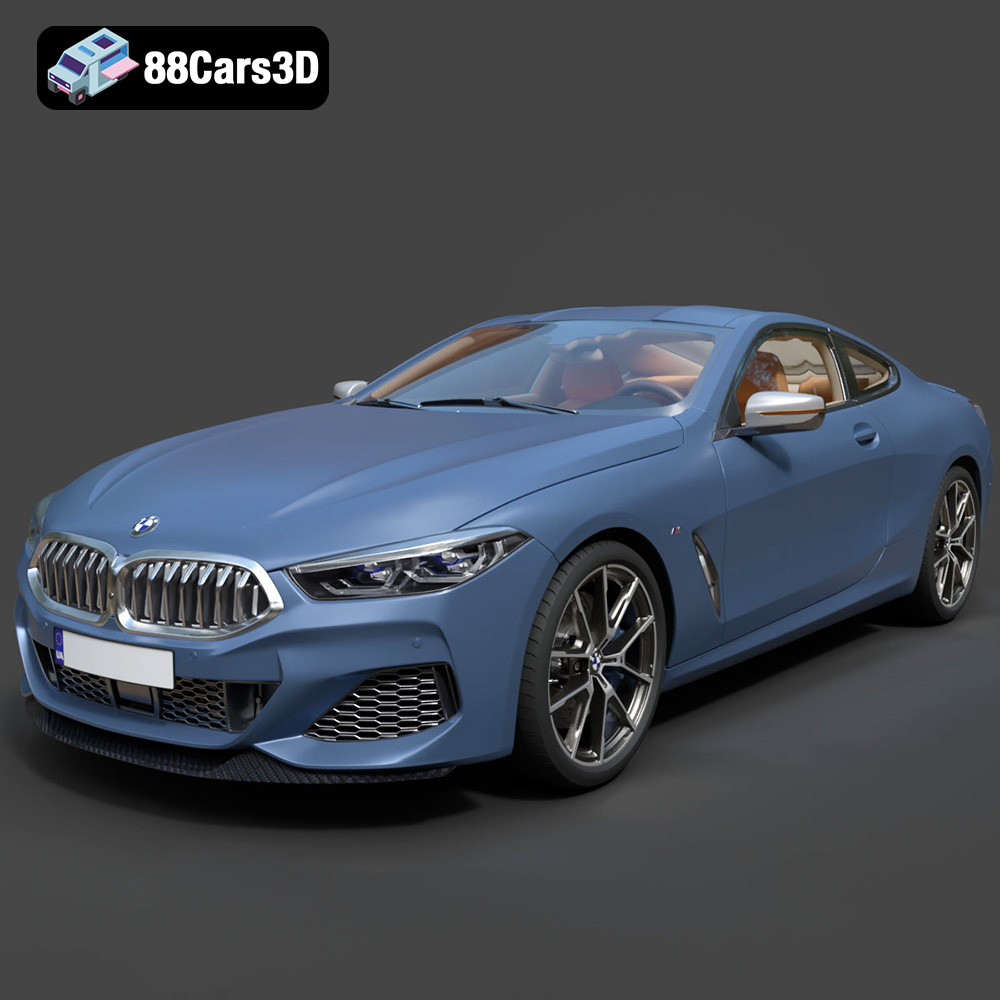
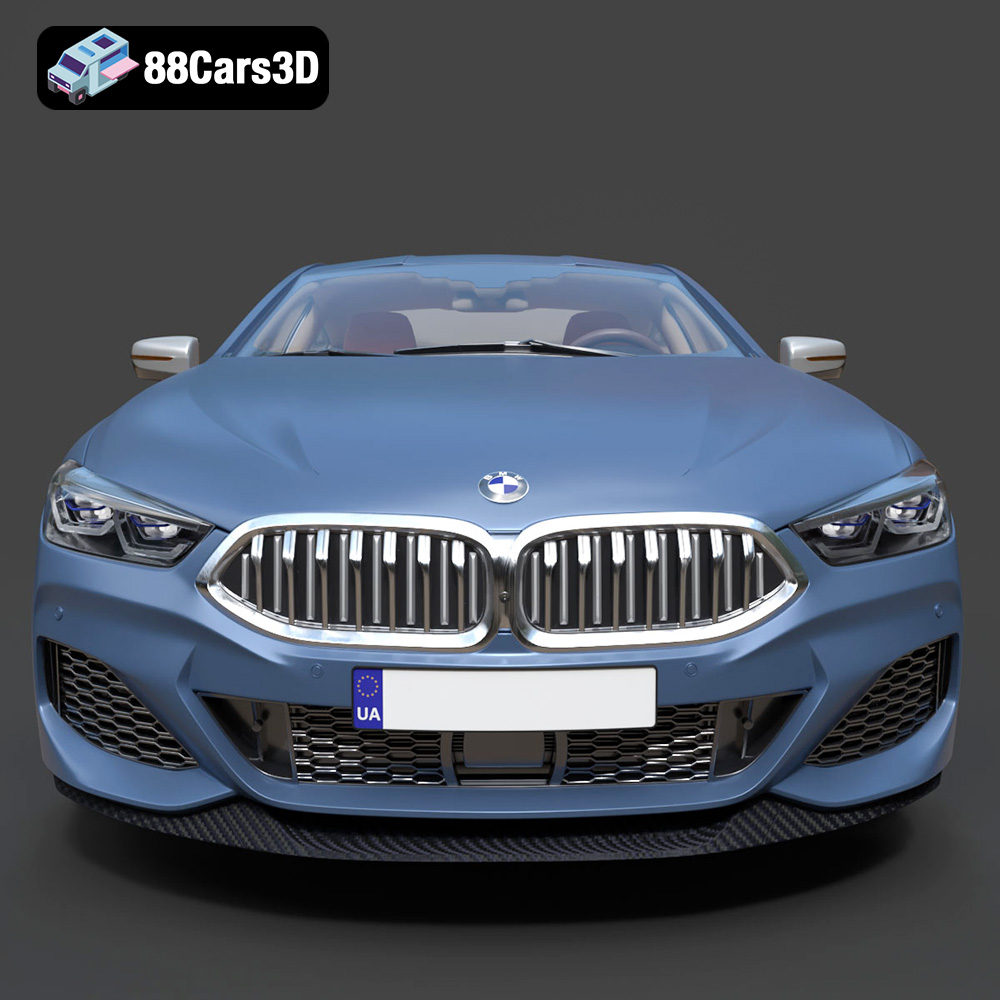
Every element of the G15 M850i’s aggressive performance styling is faithfully recreated. The model boasts accurate body proportions, from the iconic wide kidney grille and sharp LED headlight signature to the sculpted hood and aerodynamic side vents. The muscular side profile, defined character lines, and the rear diffuser with its distinctive quad exhaust outlets are all precisely modeled. High-detail performance alloy wheels, complete with visible brake calipers, enhance the realism. Transparent glass materials and mirror detailing are crucial for convincing reflections and refractions in rendering, elevating the model from merely good to truly exceptional.
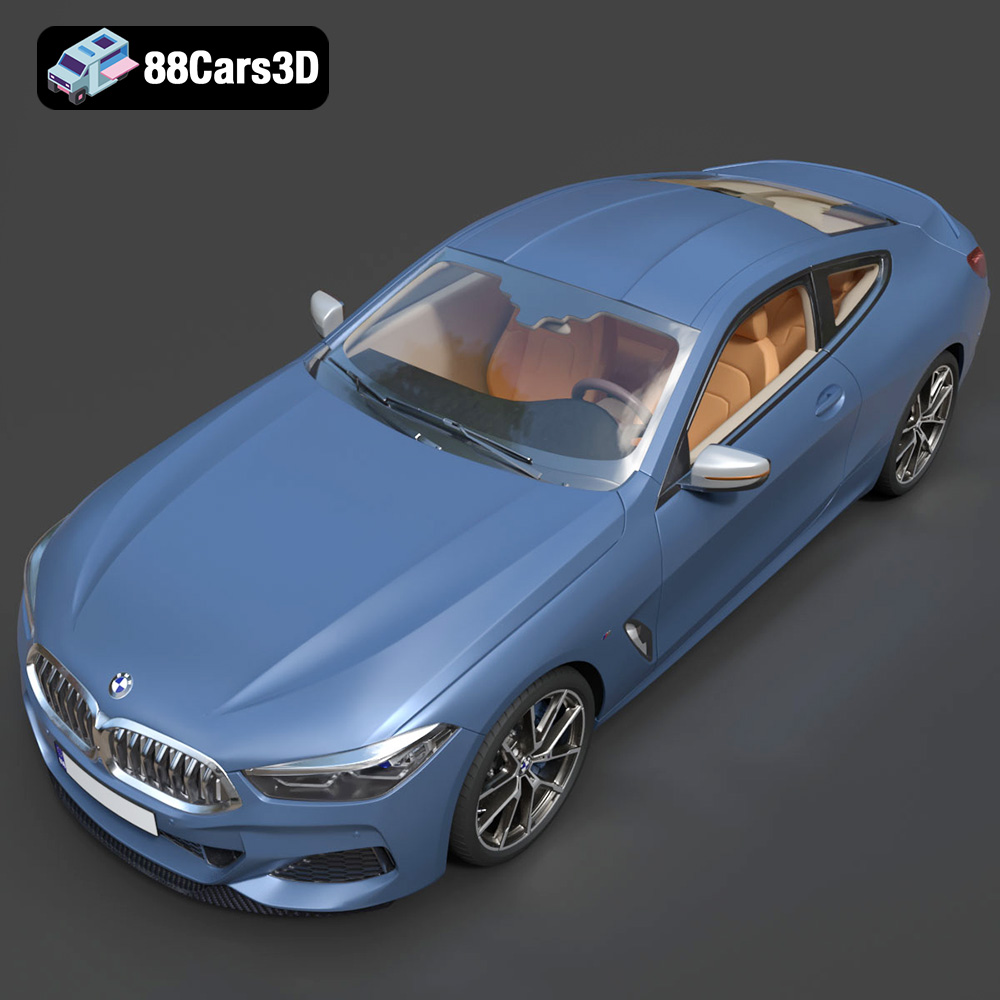
The exterior only tells half the story. The interior of the BMW 8-Series is a masterclass in luxury and technology, and this 3D model brings that experience to life digitally. Features such as the modeled digital instrument cluster, the sport steering wheel with its multifunction controls, and the premium leather seat geometry with subtle stitching details are all present. The center console, complete with its infotainment system, and the intricate door panels and trim detailing contribute to an immersive cockpit layout. This level of interior detail is vital for virtual showroom experiences, in-car visualizations, and even cinematic shots that peer into the vehicle’s luxurious cabin.
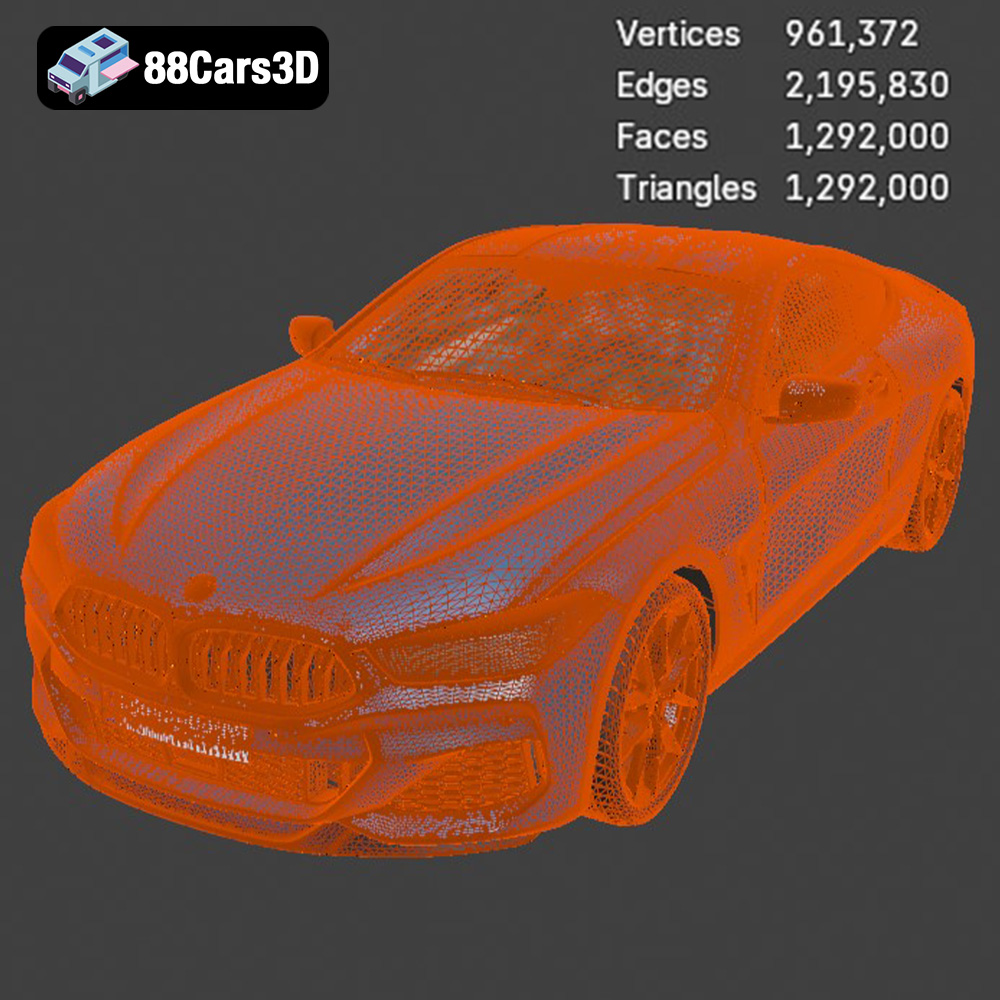
Beyond visual accuracy, a professional 3D model must be built on a solid technical foundation. The BMW M850i 3D model features clean and well-organized mesh structures, crucial for smooth deformations during animation and efficient rendering. Its real-world scale accuracy ensures correct integration into diverse scenes without tedious scaling adjustments. Furthermore, the proper pivot setup for steering and wheel rotation is a critical technical advantage, making the model animation-ready right out of the box for driving simulations or dynamic cinematic sequences. Optimized polygon flow balances performance with realism, making it suitable for both high-quality offline renders and efficient real-time game engines.
The versatility of the BMW 8-Series Mk2 G15 Coupe M850i 2019 3D Model allows it to be seamlessly integrated into various professional pipelines, serving a multitude of creative and commercial purposes.
For advertising agencies, automotive configurators, and architectural visualization studios, high-quality rendering is paramount. Using software like 3ds Max or Blender, paired with powerful renderers such as V-Ray, Corona Renderer, or Cycles, artists can create breathtaking visuals. The M850i model’s clean topology, detailed materials, and accurate reflections make it ideal for luxury automotive marketing. Imagine the model positioned under dramatic lighting in an urban night scene, or showcased in a sleek studio environment, highlighting its sophisticated design for a promotional campaign. The included .max and .blend files provide native project setups for these powerful rendering packages.
The gaming industry demands efficient yet visually stunning assets. The optimized geometry of the G15 M850i model is perfectly suited for open-world driving games, racing simulators, and premium vehicle systems. With formats like .fbx and .unreal, developers can import the model directly into Unreal Engine or Unity, leveraging its pre-configured elements for immediate implementation. The separate wheels and steering components are invaluable for realistic physics and animation in driving simulations. LODs (Levels of Detail) can be generated from the robust base mesh to ensure optimal performance across different platforms and viewing distances, without compromising visual fidelity when up close.
Augmented Reality (AR) and Virtual Reality (VR) are transforming how we interact with products. For interactive car configurators or immersive virtual showroom experiences, the M850i 3D model is a perfect fit. The .glb format, in particular, is optimized for these environments, allowing for lightweight yet detailed presentations. Customers can explore the vehicle from any angle, customize colors and interior options in real-time, and even “sit” inside the car virtually, providing a level of engagement far beyond traditional static imagery. This opens up new possibilities for sales, marketing, and design reviews.
The utility of a high-quality 3D model extends beyond digital screens. The ability to translate a digital asset into a physical object via 3D printing offers unique opportunities for prototypes, collectibles, and educational models.
The inclusion of the .stl and .ply formats with the BMW 8-Series Mk2 G15 Coupe M850i 2019 3D Model directly facilitates its transition from digital to physical. These formats are specifically designed for 3D printing, providing the necessary manifold geometry for slicers to interpret and prepare the model for additive manufacturing. Artists and hobbyists can convert this luxury coupe into a tangible scale model, allowing them to appreciate its design in a new, tactile way. This is particularly valuable for creating automotive collectibles, display miniatures, or even physical prototypes for design validation.
To achieve the best results when 3D printing the M850i, careful consideration of print settings and post-processing techniques is essential. The recommended scales of 1:32, 1:24, 1:18, or 1:14 offer a range of options for collectors. Optimal layer height (0.10–0.16 mm for FDM, even finer for resin prints) and wall thickness (1.5–2.5 mm) ensure structural integrity and detail preservation. Supports will be necessary for intricate areas like mirrors, splitter edges, and diffuser fins. Printing the body angled for smooth surface quality and printing wheels separately are common best practices. After printing, meticulous post-processing—sanding, priming, applying a gloss automotive paint finish, and optional chrome detailing—can transform a raw print into a stunning, showroom-quality miniature.
The ability to 3D print the BMW 8-Series M850i offers enthusiasts and professionals alike the chance to own a physical representation of this iconic vehicle. Beyond personal collections, this capability is invaluable for educational purposes, allowing students to study automotive design hands-on. Furthermore, for product designers or engineers, 3D printed models can serve as quick, cost-effective prototypes for testing ergonomics, aesthetic appeal, or fitting into dioramas before committing to more expensive manufacturing processes.
A well-structured 3D model is not a rigid asset but a flexible foundation for boundless creativity. The BMW 8-Series Mk2 G15 Coupe M850i 2019 3D Model is designed with customization in mind, offering extensive possibilities for tailoring it to specific project requirements.
The included .blend and .max files, with their comprehensive material setups, allow for effortless customization of the vehicle’s aesthetics. Changing the exterior color to match a specific brand palette or personal preference is straightforward. Modifying trim accents, interior material finishes, wheel designs, and brake caliper colors can dramatically alter the car’s character. Artists can even add M Performance styling package elements or adjust the suspension stance to create unique “tuner” versions or showcase specific aftermarket parts. This level of adaptability ensures the model remains relevant across a wide array of visual styles and project needs.
The model’s technical advantages, such as separate wheels and steering components with proper pivot points, make it fully prepared for animation. This allows for dynamic sequences showcasing the car in motion, from a subtle suspension compression over a bump to a full-blown high-speed chase. Beyond the car itself, artists can configure lighting for various scenarios—be it the crisp highlights of a studio, the dramatic glares of a city night, or the warm hues of a highway sunset scene. Combining these elements transforms the M850i 3D model into a star player in any digital narrative.
The comprehensive nature of the included file formats (.blend, .fbx, .obj, .glb, .stl, .ply, .unreal, .max) ensures that the BMW 8-Series M850i 3D model is future-proof. Regardless of how software or engine preferences evolve, you will always have a compatible version ready. This adaptability protects your investment and provides a reliable asset that can be revisited and repurposed for years to come across new projects and technologies, making it a truly invaluable addition to any professional’s 3D asset library.
The digital age has elevated the importance of high-fidelity 3D assets, transforming them from simple visual aids into indispensable tools for design, visualization, and interactive experiences. The BMW 8-Series Mk2 G15 Coupe M850i 2019 3D Model stands as a prime example of a premium asset that meets these exacting demands, offering unparalleled detail, technical precision, and format versatility. From its meticulously recreated exterior and interior features to its optimized mesh structure and animation-ready components, this model empowers professionals across diverse fields.
Whether your goal is to produce stunning automotive renders, create immersive game environments, develop cutting-edge AR/VR showrooms, or even bring the iconic M850i to life as a tangible 3D printed collectible, this model provides the robust foundation you need. Its comprehensive file format support ensures seamless integration into virtually any professional workflow, from 3ds Max and Blender to Unreal Engine and web-based applications. By choosing a high-quality 3D car model from a trusted source like 88cars3d.com, you are investing in efficiency, realism, and boundless creative potential.
Elevate your projects with an asset that truly reflects the luxury and performance of the BMW 8-Series M850i. Its exceptional detail and technical advantages will undoubtedly make it a cornerstone of your digital automotive library.
The BMW 8-Series Mk2 G15 Coupe M850i 2019 3D Model is a high-detail digital recreation of the luxury grand tourer that blends aggressive performance styling with executive-level refinement. The G15 generation M850i features a powerful V8 configuration, sculpted aerodynamic bodywork, and advanced digital interior technology. This 3D model accurately represents the wide kidney grille, sharp LED headlight signature, aerodynamic front bumper, muscular side profile, quad exhaust system, performance alloy wheels, and premium cockpit layout. Built with clean topology and real-world scale accuracy, it is ideal for rendering, animation, automotive visualization, game development, and AR/VR showroom applications. Perfect for luxury showroom scenes, urban night renders, cinematic automotive projects, promotional campaigns, and high-performance driving simulations.
$9.99
.8series
.arvr
.automotive
.blend
.bmw
.car3dmodel
.fbx
.g15
.gameasset
.glb
.luxurycoupe
.m850i
.max
.obj
.ply
.rendering
.simulation
.sportsCar
.stl
.unreal