Get 50% OFF All Premium 3D & STL Models!

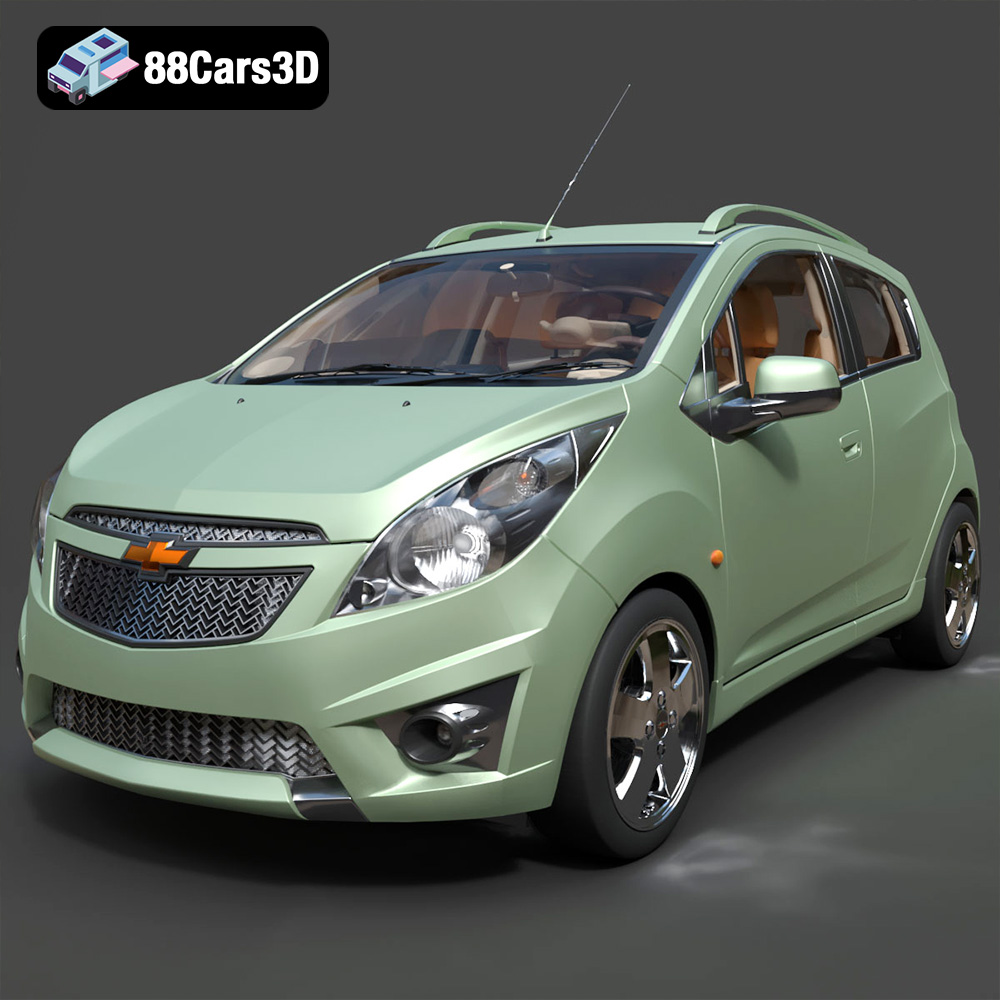
The Chevrolet Spark LT, a beloved subcompact city car, can now grace your desk, diorama, or game with a tangible presence, thanks to the power of 3D printing. This guide will provide you with all the necessary information to successfully 3D print the Chevrolet Spark LT 3D model available on 88cars3d.com. We’ll cover everything from choosing the right materials and printer settings to pre-print preparation and post-processing techniques, ensuring you achieve a stunning and accurate replica.
The Chevrolet Spark LT 3D model can be effectively printed using two primary 3D printing technologies: Fused Deposition Modeling (FDM) and Stereolithography (SLA) resin printing.
FDM, or Fused Deposition Modeling, involves extruding a thermoplastic filament through a heated nozzle, layer by layer, to build the model. This method is cost-effective and widely accessible, making it ideal for larger scale prints of the Spark LT, such as 1:32 or 1:43 scales. Common materials for FDM printing include PLA, PETG, and ABS. PLA is recommended for its ease of use and biodegradability, while PETG offers increased durability and heat resistance. ABS, while more challenging to print with, provides superior strength and temperature resistance.
SLA, or Stereolithography, utilizes a UV laser to cure liquid resin, layer by layer. This technology excels at producing parts with exceptional detail and smooth surfaces, making it perfect for smaller scale models (1:43 or 1:64) where intricate features like the headlight housings, grille details, and wheel designs need to be accurately reproduced. Resin printing requires careful handling of the resin and proper post-processing, including washing and curing.
The Chevrolet Spark LT 3D model is provided in a variety of file formats, each designed for different applications. Understanding these formats is crucial for a successful 3D printing experience.
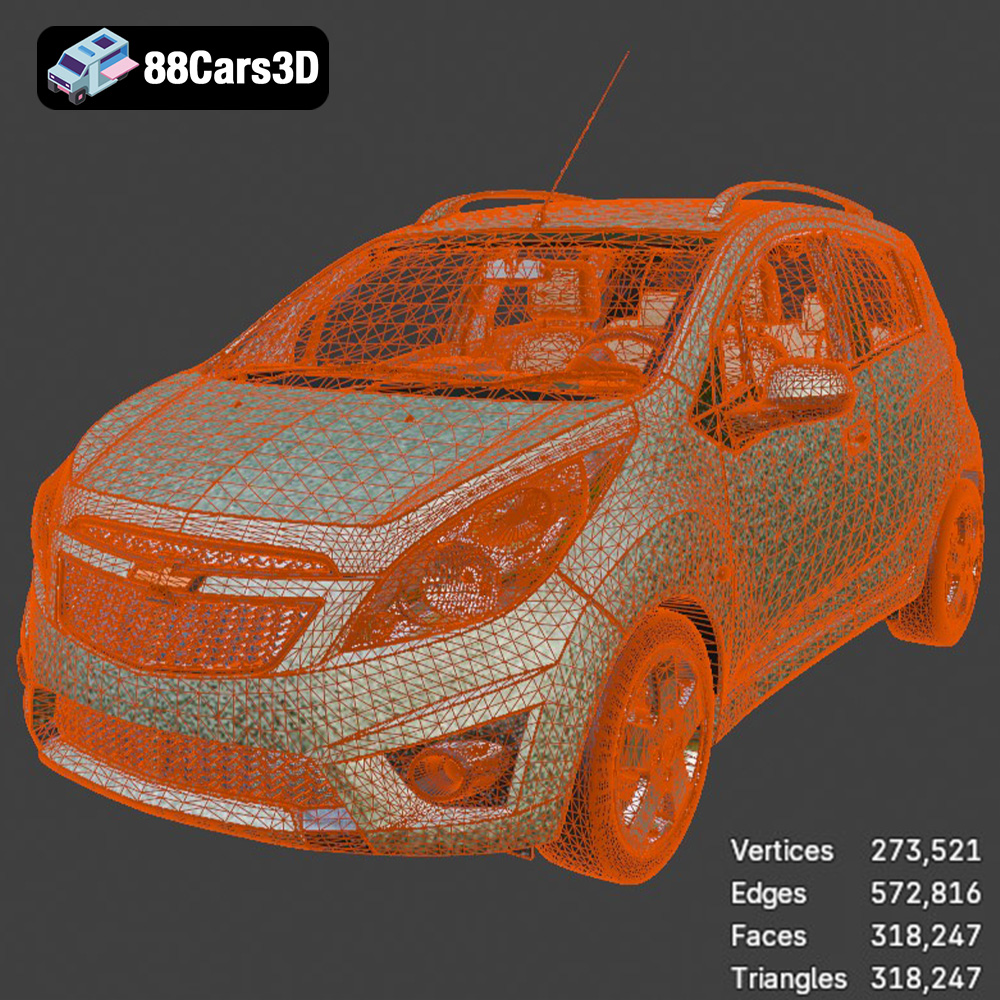
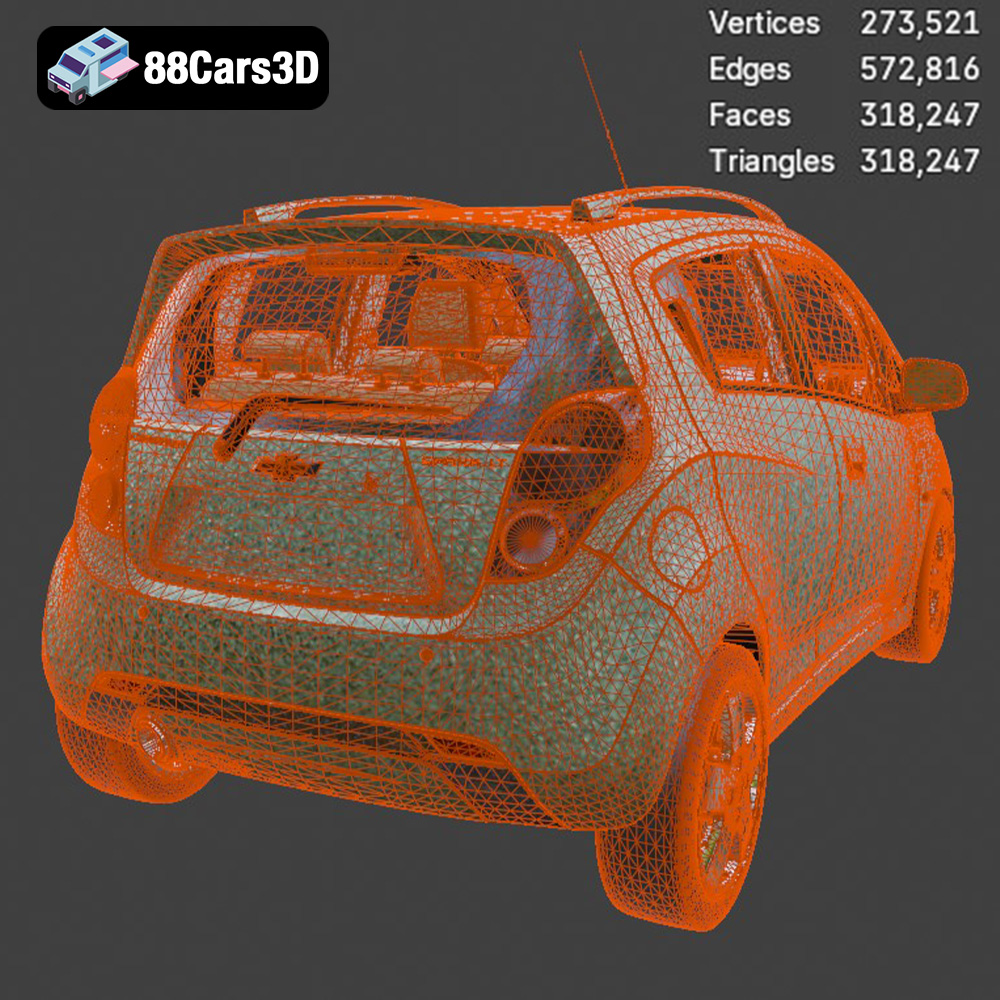
The STL (Stereolithography) file format is the workhorse of 3D printing. It represents the 3D model’s surface geometry as a mesh of triangles. This format is universally compatible with slicing software, which prepares the model for printing by converting it into instructions for the 3D printer. For the Chevrolet Spark LT, the STL file will be your primary format for 3D printing. The quality of the STL file directly impacts the final print. A higher triangle count results in a smoother surface but also increases file size and processing time. The Chevrolet Spark LT model available on 88cars3d.com boasts a optimized topology with just over 318k triangles, a good balance between detail and performance. Ensure that your chosen slicing software can handle the file size comfortably.
The OBJ (Object) file format is another common format that can store both geometry and texture information. While useful for rendering and visualization, OBJ files are less frequently used for 3D printing directly, especially if the model doesn’t require color or texture information during the print. Slicing software typically focuses on the geometry data within the OBJ file.
The PLY (Polygon) file format is designed to store 3D data acquired from 3D scanners. It is capable of representing highly detailed meshes with color and texture information. While PLY files can be used for 3D printing, they are often larger and more complex than STL files.
The BLEND file is the native format for Blender, a popular open-source 3D modeling software. This format allows you to directly edit the Chevrolet Spark LT model, making modifications such as scaling, adding details, or customizing the design before exporting it to a 3D printable format like STL.
The FBX (Filmbox) file format is widely used for exchanging 3D data between different software applications. It supports geometry, textures, materials, and animations. While FBX files can be imported into some slicing software, they are primarily used for transferring the model with its associated materials to other 3D applications.
The GLB (GL Transmission Format Binary) file format is a binary version of the glTF format, designed for efficient transmission and loading of 3D models. It’s particularly useful for previewing models in Augmented Reality (AR) applications before printing, allowing you to visualize the model in a real-world environment.
The MAX file is the native format for Autodesk 3ds Max, a professional 3D modeling and animation software. Similar to BLEND files, MAX files allow for extensive editing and customization of the Chevrolet Spark LT model before exporting it for 3D printing.
Before you can start printing your Chevrolet Spark LT, you need to prepare the STL file using slicing software. Popular options include Cura, PrusaSlicer, Simplify3D, and Chitubox (for resin printing).
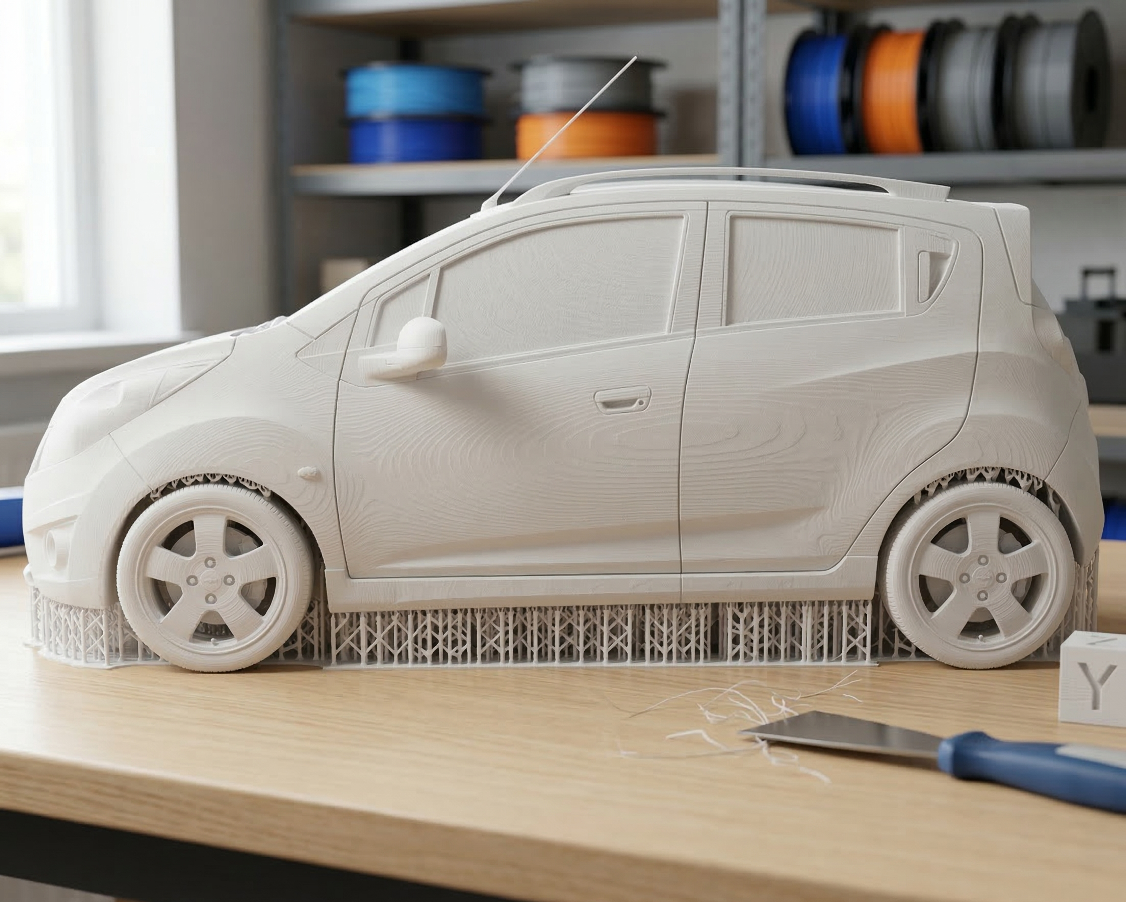
Inspect the STL file for any errors, such as non-manifold geometry or holes. Most slicing software includes tools to automatically repair these issues. Proper orientation is crucial for print quality and support placement. As the product description suggests, orient the body of the Spark LT at an angle to minimize the need for supports on the curved surfaces and to improve the surface finish. The wheels should be printed separately.
* **Layer Height:** 0.1mm to 0.2mm. A lower layer height yields finer details but increases print time.
* **Infill:** 15-25%. This provides sufficient internal support without adding excessive weight or material cost.
* **Wall Thickness:** 1.2mm to 2.0mm. This ensures sufficient strength and rigidity for the printed model.
* **Supports:** Enable supports, particularly for overhanging features like the side mirrors, wheel arches, and rear spoiler. Experiment with support placement and density to minimize material usage and simplify removal.
* **Print Speed:** Adjust print speed based on your printer and material. A slower speed generally improves print quality.
* **Layer Height:** 0.04mm to 0.08mm. Resin printing allows for significantly lower layer heights than FDM, resulting in exceptional detail.
* **Exposure Time:** Calibrate your resin printer with the specific resin you are using. Incorrect exposure times can lead to over- or under-cured parts.
* **Supports:** Resin printing typically requires more supports than FDM printing due to the nature of the process. Use a support generation tool to automatically add supports, paying close attention to critical areas like the side mirrors and spoiler.
The choice of material significantly impacts the final appearance, durability, and functionality of your 3D printed Chevrolet Spark LT.
PLA (Polylactic Acid) is a biodegradable thermoplastic known for its ease of printing and wide availability. It’s an excellent choice for beginners and for creating display models. PLA offers good detail resolution and comes in a vast array of colors. However, PLA is not as heat-resistant or durable as other materials.
PETG (Polyethylene Terephthalate Glycol-modified) is a durable and impact-resistant thermoplastic that offers a good balance between strength and ease of printing. It’s a suitable option if you plan to handle the 3D printed Spark LT frequently or if you require parts with higher temperature resistance.
Resin, specifically photopolymer resin used in SLA/DLP printers, is ideal for creating highly detailed models with smooth surfaces. It’s the recommended choice for smaller scale models (1:43 or 1:64) where intricate features need to be accurately reproduced. However, resin parts are typically more brittle than FDM-printed parts and require careful handling.
Post-processing is essential for achieving a professional-looking finish on your 3D printed Chevrolet Spark LT.
Carefully remove the supports using pliers or a sharp knife. For FDM prints, sanding is necessary to smooth out layer lines and imperfections. Start with coarse-grit sandpaper and gradually move to finer grits. For resin prints, minimal sanding is usually required due to the smoother surface finish.
Apply a primer coat to the model to create a smooth surface for painting. Choose a primer specifically designed for plastics or resins. Once the primer is dry, you can paint the model with your desired colors. Consider using spray paint for a uniform finish. Refer to Chevrolet factory colors like Red Hot, Mystic Blue, or Summit White for an authentic look.
If you printed the wheels separately, carefully attach them to the body using glue or small screws. Ensure proper alignment for a realistic appearance.
Encountering issues during 3D printing is common, but most problems can be resolved with careful troubleshooting.
Warping occurs when the printed part lifts from the build plate due to uneven cooling. Ensure that your build plate is properly leveled and heated. Using a brim or raft can also help to prevent warping.
Stringing is caused by excessive material oozing from the nozzle during travel moves. Adjust retraction settings in your slicing software to minimize stringing.
Layer delamination occurs when layers don’t properly adhere to each other. Increase the printing temperature or reduce the print speed to improve layer adhesion.
If supports are difficult to remove or leave behind excessive marks, try adjusting support settings in your slicing software. Reduce support density or increase the support separation distance.
The print time and material costs will vary depending on the size of the model, the chosen printing technology, and the specific printer settings. As a general estimate, a 1:32 scale FDM print could take 10-15 hours and cost $5-$10 in material. A 1:64 scale resin print might take 4-8 hours and cost $2-$5 in resin.
The 3D printed Chevrolet Spark LT offers ample opportunities for customization.
Experiment with different paint colors to create a unique and personalized Spark LT. Consider vibrant city-car palettes or replicate your own vehicle’s color scheme.
Swap the standard alloy wheels for custom compact tuner wheels to give the Spark LT a sporty and aggressive look.
Add custom decals or delivery branding to the side panels to create a miniature commercial vehicle.
Integrate LED lights into the headlights and taillights to create realistic lighting effects.
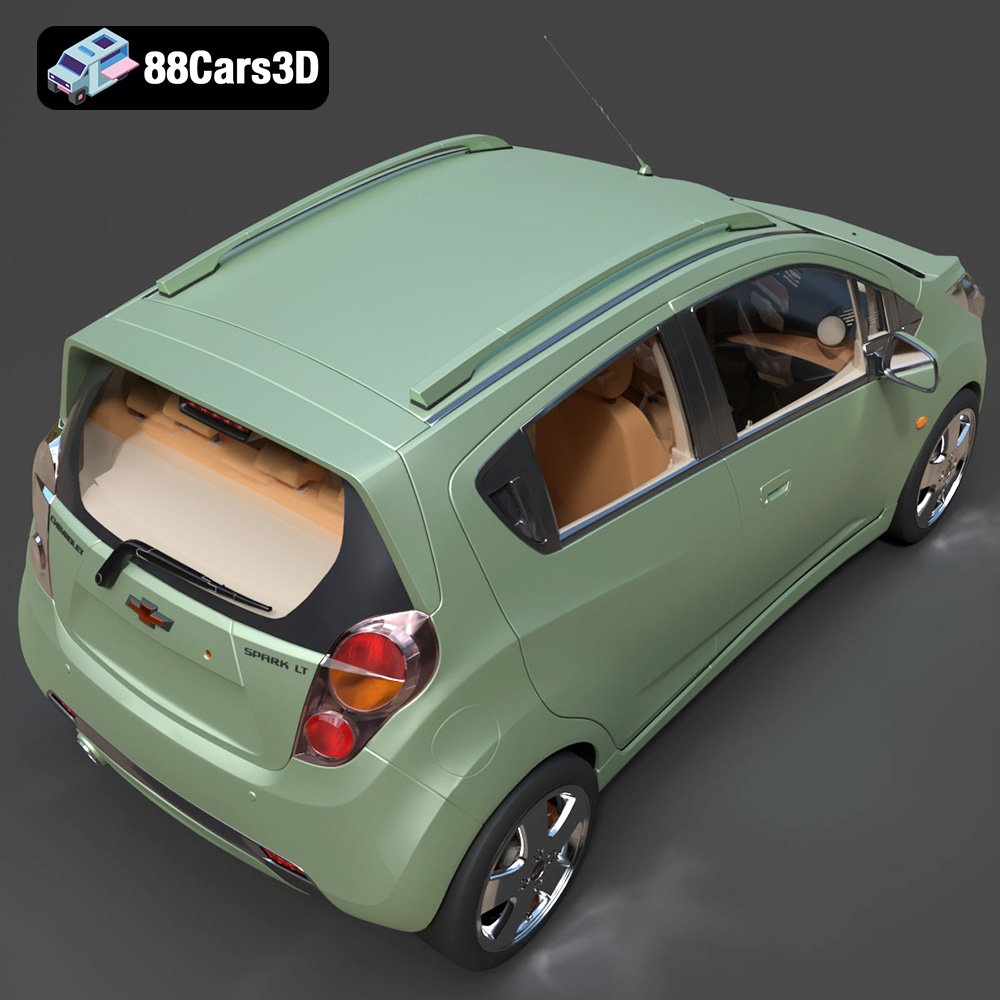
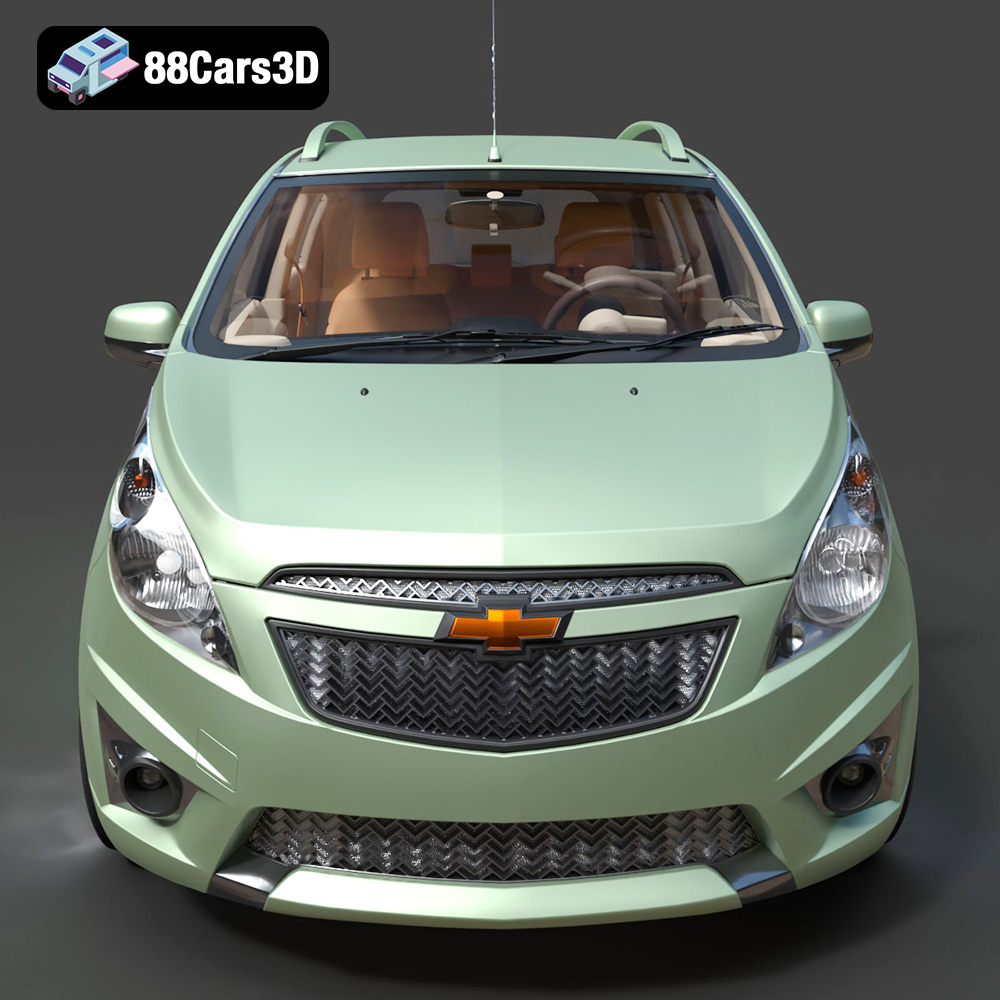
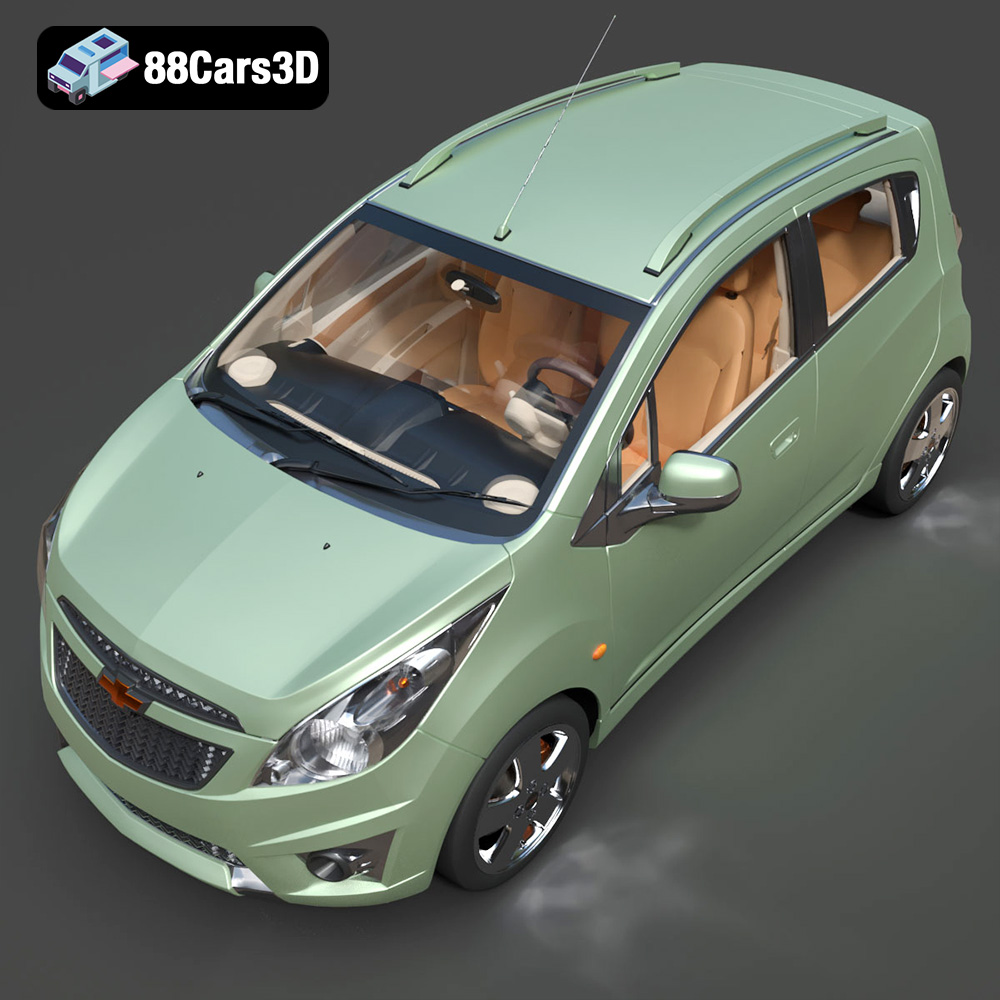
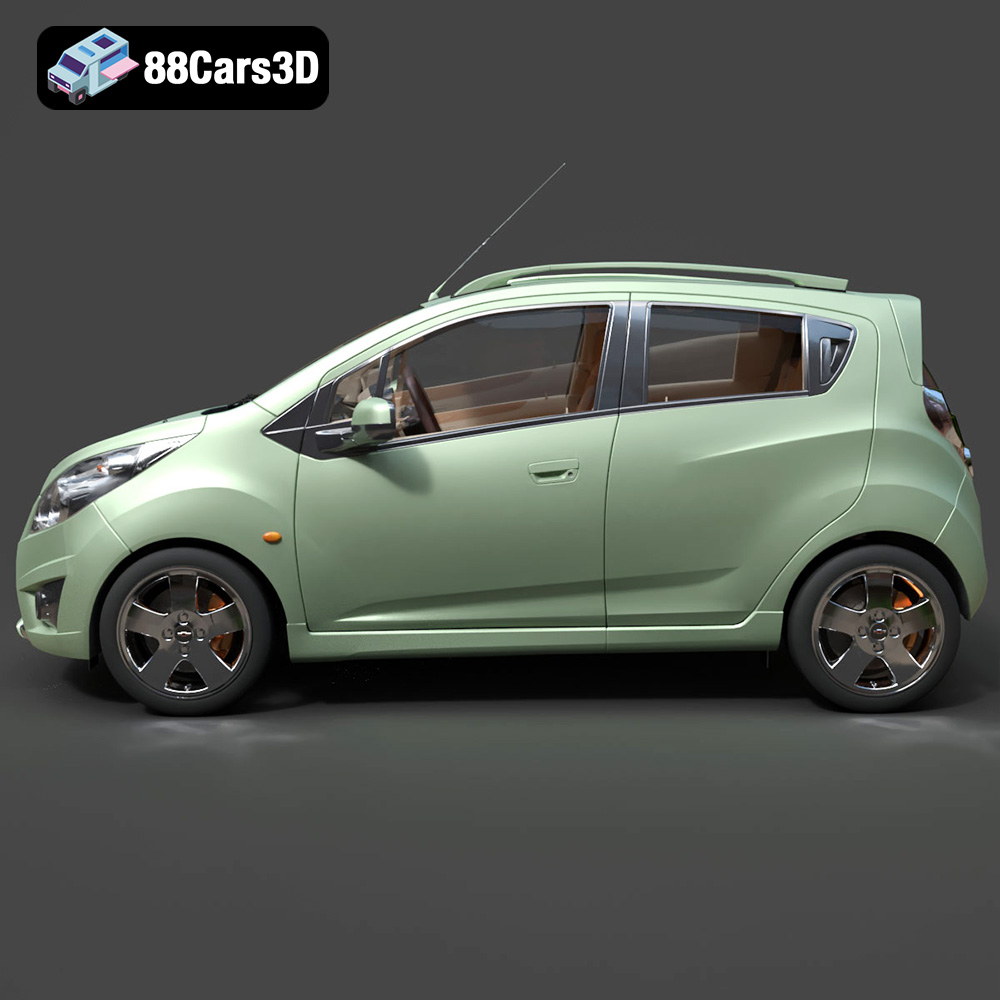
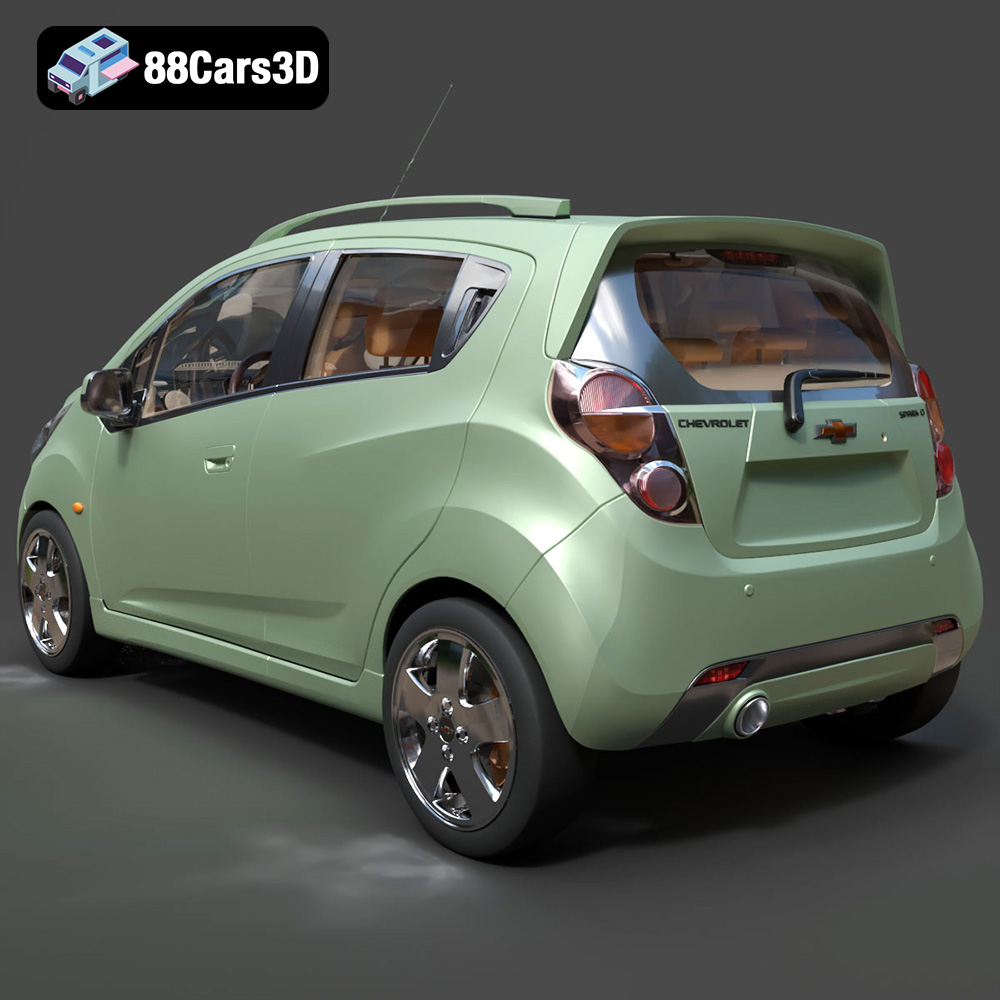
The Chevrolet Spark LT 3D Model is a highly accurate, efficiently modeled digital recreation of the popular subcompact city car. Known for its nimble handling, practical dimensions, and expressive styling, the Spark is a staple of modern urban environments across the globe. Perfect for populating modern city streets, architectural visualizations, urban traffic simulations, and mobile game development. Convertible to .stl format for display-scale modern diecast hobbyists.
$9.99
3D printing the Chevrolet Spark LT 3D model offers a rewarding experience, allowing you to create a tangible representation of this iconic city car. By carefully considering the factors outlined in this guide, including material selection, printer settings, pre-print preparation, and post-processing techniques, you can achieve exceptional results. Remember to visit 88cars3d.com for a wide selection of high-quality 3D models optimized for 3D printing and other applications. With a little patience and attention to detail, you’ll soon have a stunning 3D printed Chevrolet Spark LT to display and enjoy.
.archviz
.automotive
.blend
.chevrolet
.fbx
.hatchback
.obj
.rendering
.subcompact
car-3d-model
chevy-spark
city-car
game-ready
mid-poly
spark-lt
traffic-car