Get 50% OFF All Premium 3D & STL Models!

In the dynamic world of 3D visualization, the demand for highly realistic and versatile assets continues to grow. From captivating cinematic renders to immersive real-time game environments, the quality of your 3D models dictates the perceived professionalism and impact of your work. Achieving true digital realism requires not only artistic skill but also a deep understanding of technical specifications, file formats, and integration workflows.
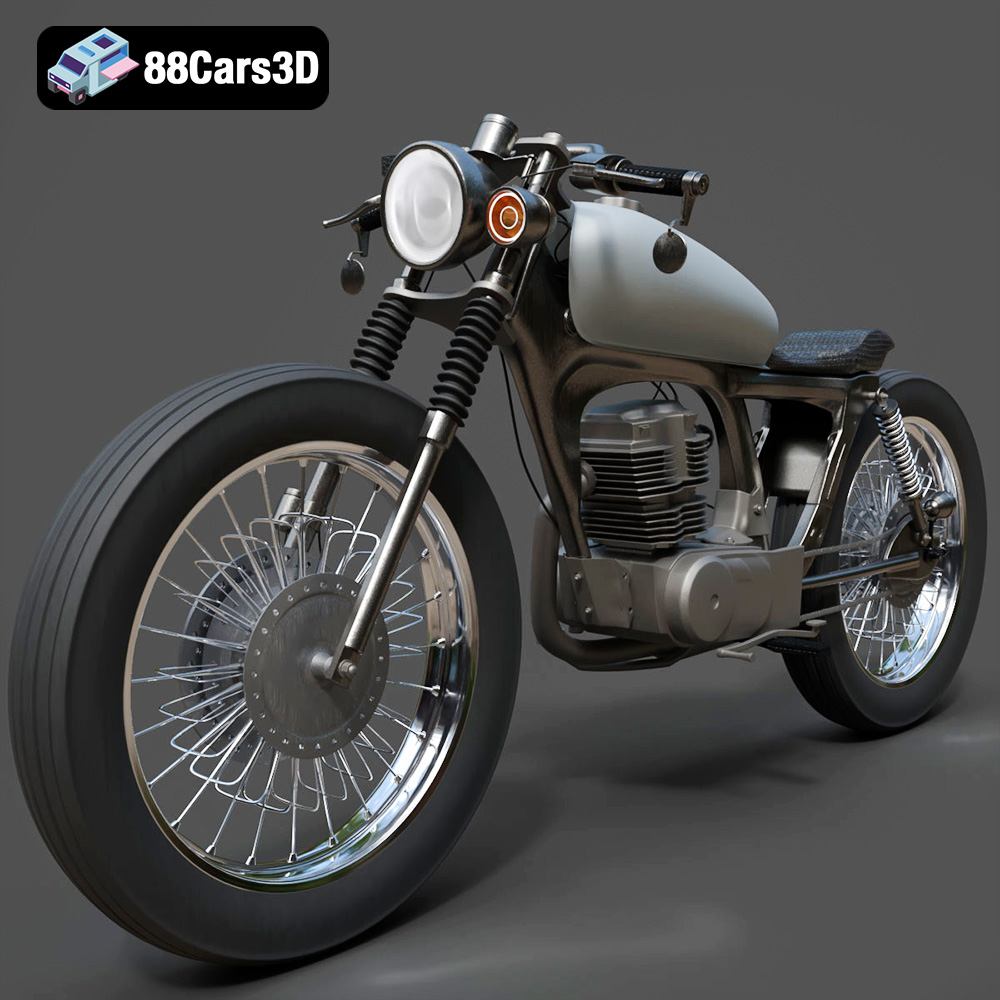
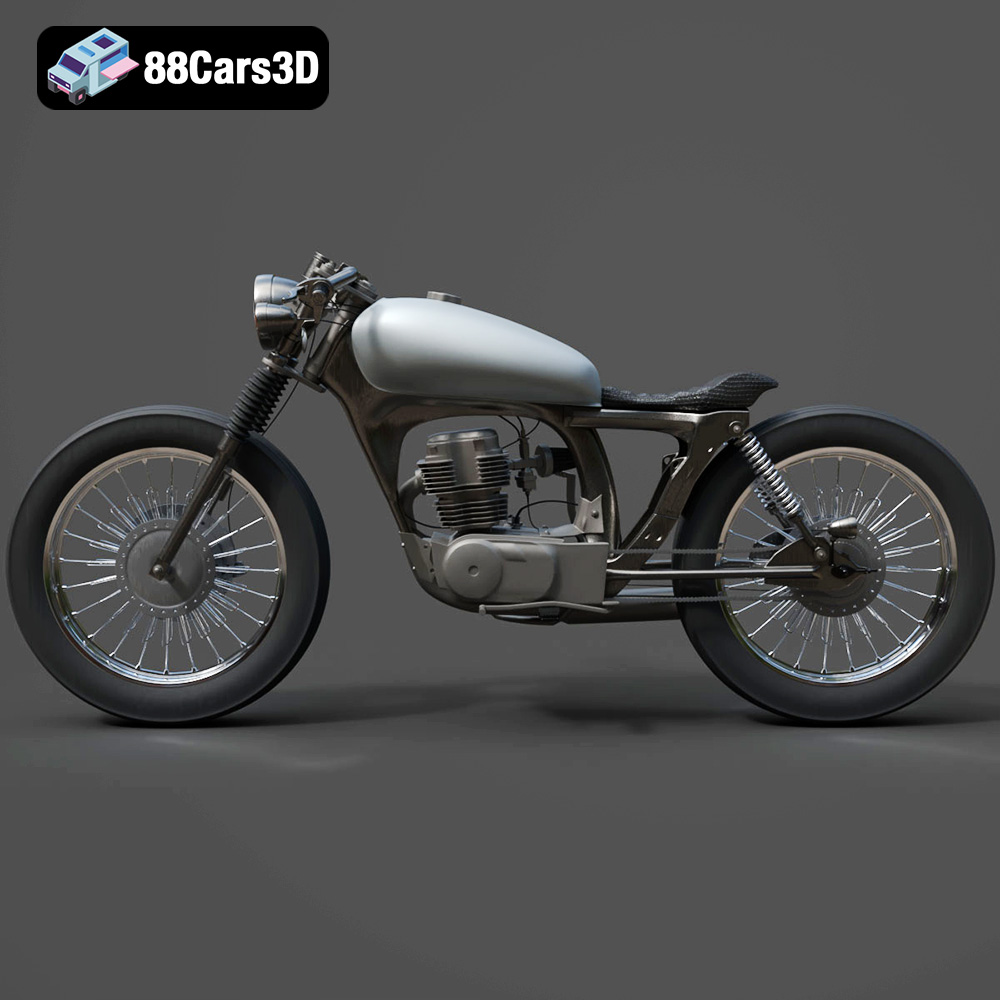
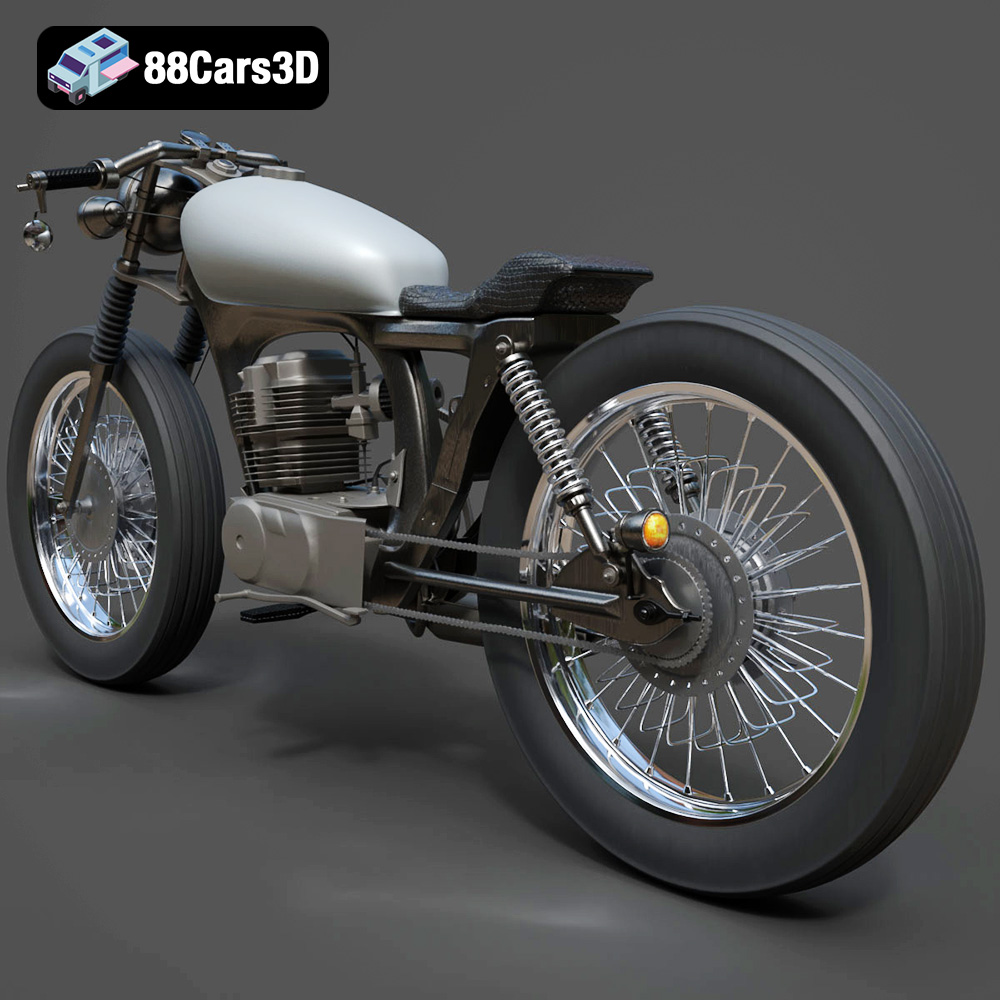
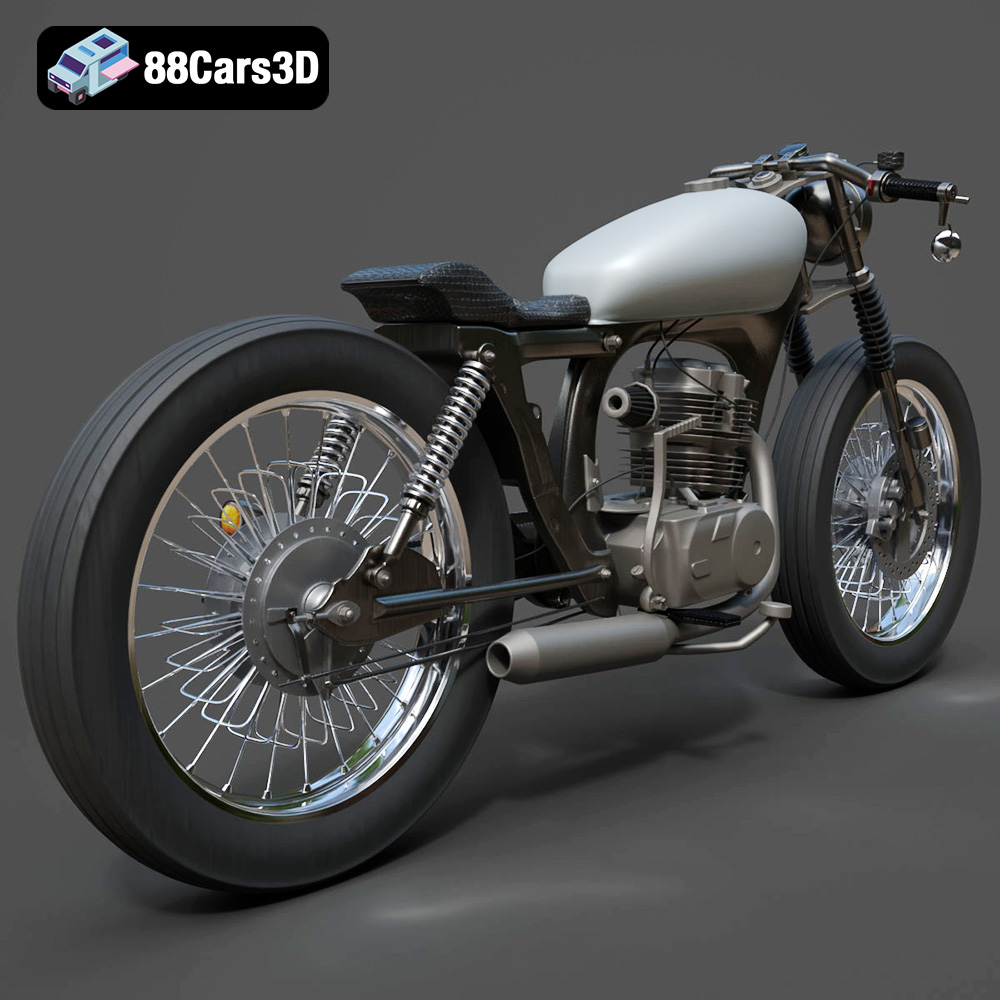
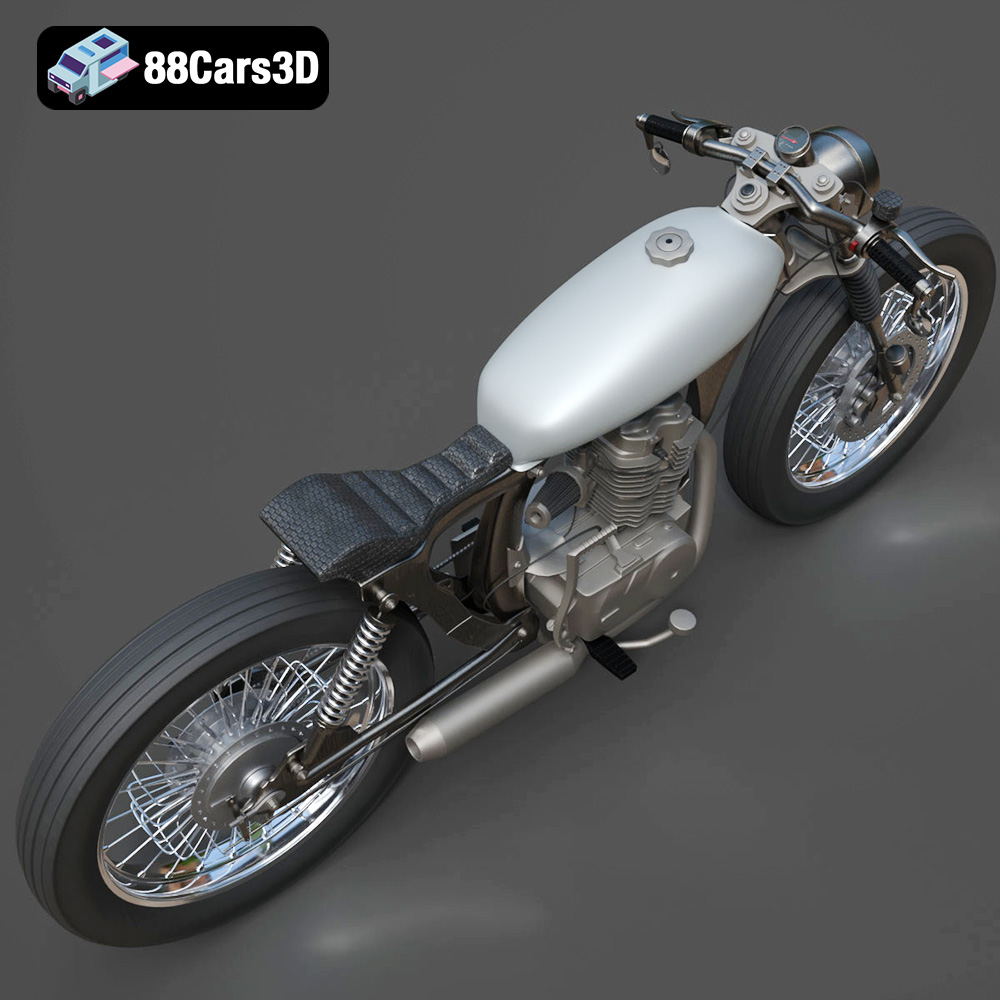
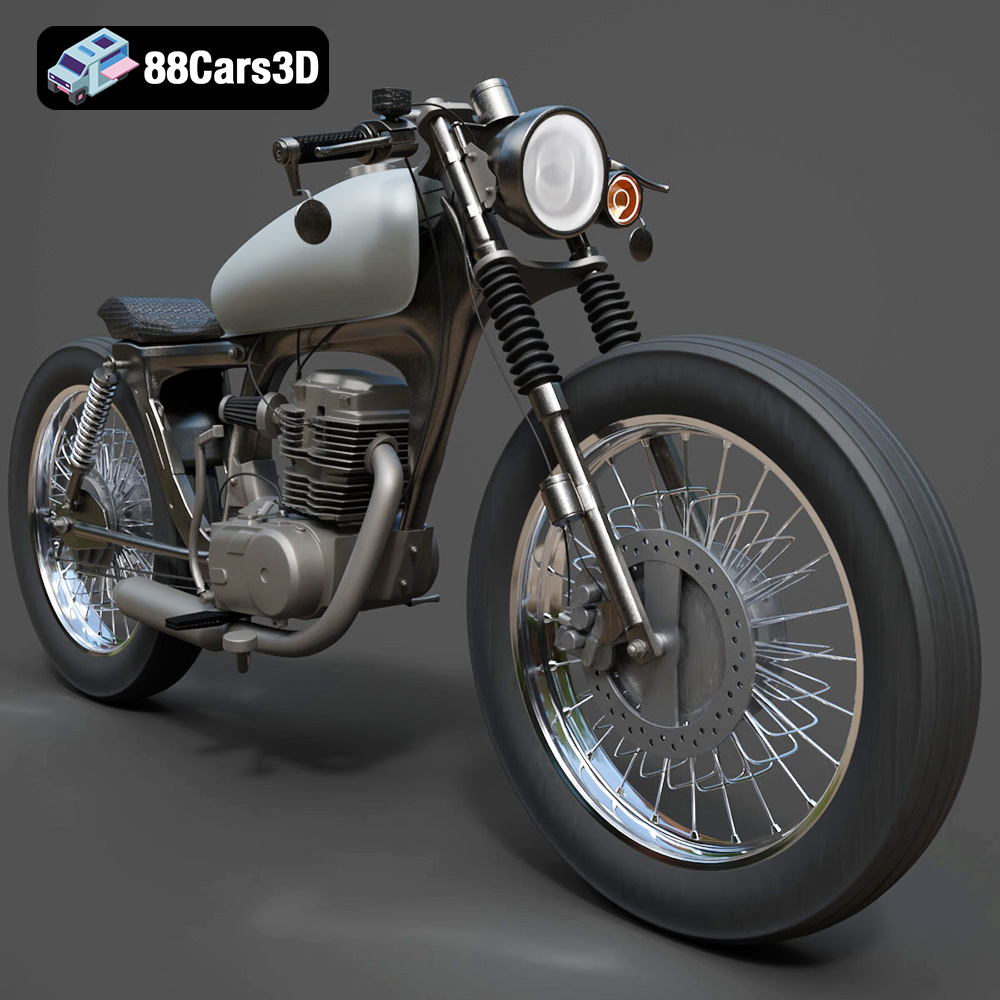
Today, we delve into the intricate details of professional 3D asset creation, using an exemplary model to illustrate key concepts: the Honda CG125 Motorcycle 3D Model. This iconic commuter bike, faithfully recreated in digital form, serves as a perfect case study for exploring the journey from meticulous modeling to diverse applications in rendering, game development, and interactive experiences. Whether you’re an automotive designer, a game developer, or an architectural visualization artist, understanding the underlying principles of a well-crafted 3D model is paramount to accelerating your projects and achieving unparalleled visual fidelity.
Automotive design, whether for cars or motorcycles, is a field where precision and aesthetics converge. Digital artists strive to translate the tactile experience of a physical vehicle into a virtual representation that evokes the same sense of engineering marvel and design elegance. This pursuit of accuracy is what defines a professional-grade 3D model.
The human eye is remarkably discerning, especially when it comes to familiar objects like vehicles. Even subtle inaccuracies in proportion, surface curvature, or material response can break the illusion of reality. This is why detail matters immensely. A high-fidelity 3D model, such as the Honda CG125 Motorcycle 3D Model, doesn’t just represent the form; it captures the very essence of the original. Every screw, every weld line, every texture on the seat or tire needs to be meticulously modeled and textured. This level of dedication ensures that whether viewed up close in a high-resolution render or as part of a dynamic game environment, the model holds up under scrutiny. Clean geometry, proper UV mapping, and PBR-ready materials are not mere suggestions but fundamental requirements for achieving true visual excellence in automotive rendering.
One of the greatest advantages of investing in premium 3D models is their inherent versatility. A single, well-optimized model can serve multiple purposes, significantly streamlining production pipelines and reducing development costs. Imagine needing a detailed motorcycle for a marketing campaign, then repurposing it for a game, and later adapting it for an AR training application. A truly professional asset is built with these diverse applications in mind. It comes prepared with multiple file formats, optimized geometry, and robust material setups, ready for immediate integration into various software environments. This eliminates the need to remodel or rebuild assets for each new project, freeing up valuable time and resources for creative iteration and refinement.
The choice of 3D model file format is critical and often dictated by the specific software, workflow, and ultimate purpose of your project. Each format comes with its own strengths, limitations, and areas of optimal use. A comprehensive 3D car model or motorcycle asset, like the Honda CG125 Motorcycle 3D Model available at 88cars3d.com, often includes a suite of formats to ensure maximum compatibility and flexibility for artists across various disciplines.
The decision of which format to use should always be guided by your specific needs. If you’re working in Blender, the .blend file is your best bet for full control. For game development, .fbx or the dedicated .unreal asset are crucial. Web or AR/VR projects will benefit from .glb. And for physical prototypes, .stl is non-negotiable. A vendor like 88cars3d.com providing all these options for a single 3D car model, or in this case, the Honda CG125 Motorcycle 3D Model, offers unparalleled flexibility and ensures the asset can truly integrate into any professional pipeline.
Creating a professional 3D car model or a detailed motorcycle asset is a meticulous process that combines artistic interpretation with rigorous technical execution. It’s a journey from conceptualization to a fully realized digital object, ready for diverse applications. The realism and versatility of models like the Honda CG125 are a testament to this comprehensive workflow.
The foundation of any high-quality 3D model begins with comprehensive reference material. For vehicles, this often involves gathering blueprints, engineering schematics, detailed photographic references from every angle, and even CAD data if available. These references serve as the digital artist’s guide, ensuring accurate proportions and intricate details are captured.
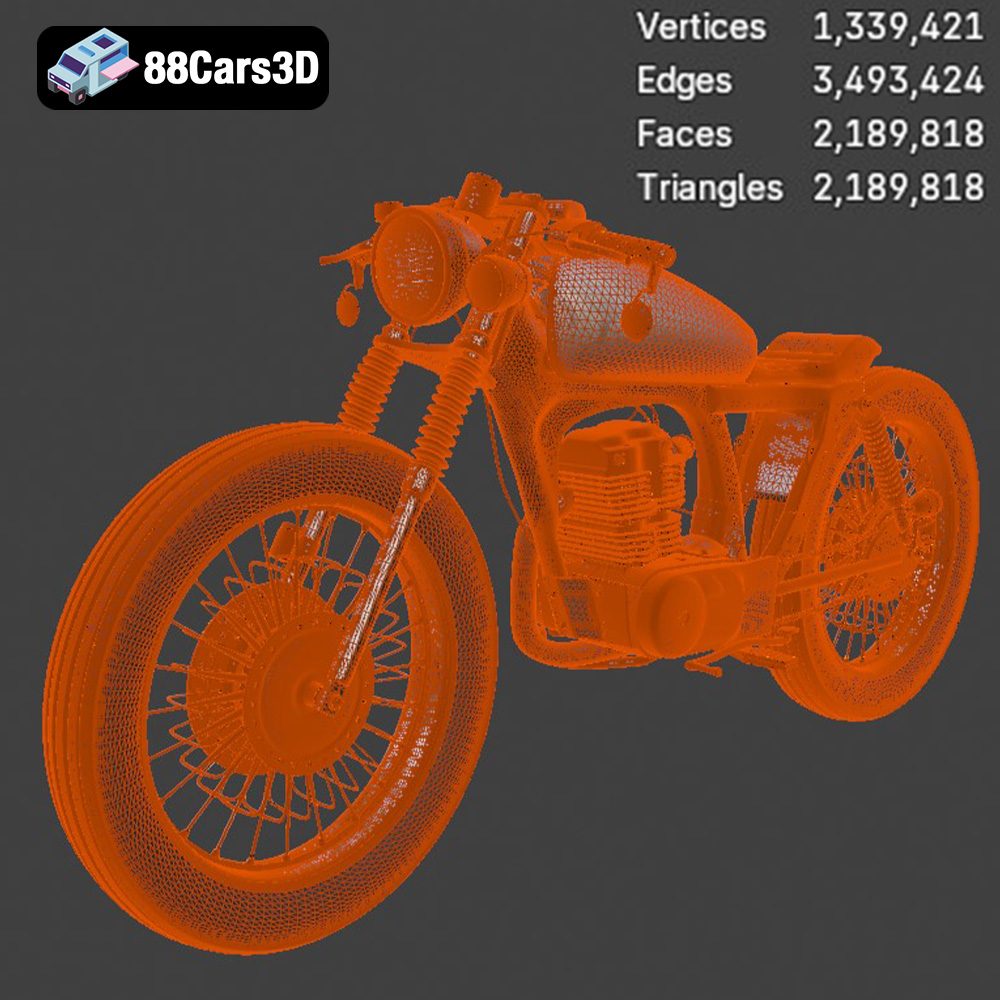
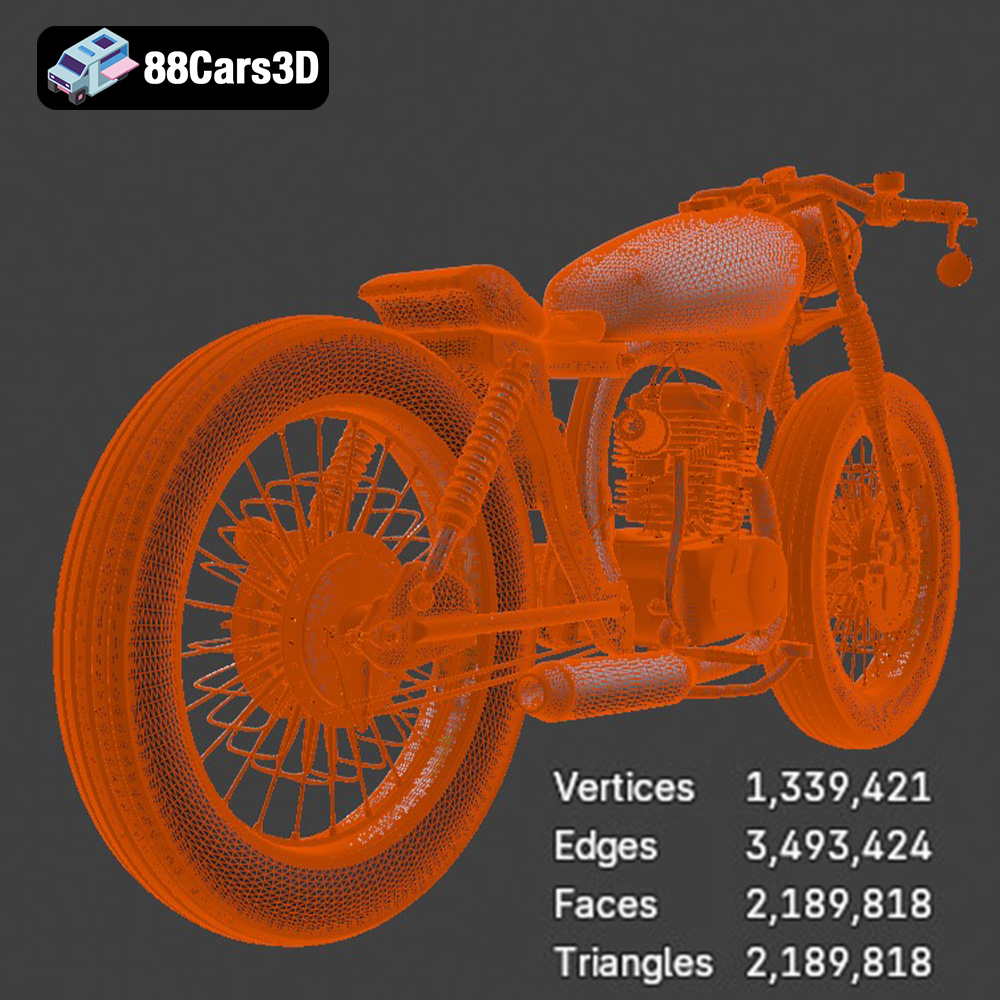
The modeling process itself typically employs hard surface modeling techniques, often using polygonal modeling in software like 3ds Max or Blender. Artists focus on creating clean topology, which refers to the arrangement of vertices, edges, and faces that make up the mesh. Good topology is crucial for smooth subdivisions, efficient UV unwrapping, and proper deformation if the model is ever animated. Maintaining consistent edge loops around critical features, ensuring quadrangulated polygons, and avoiding Ngons (polygons with more than four sides) are hallmarks of professional work. For a motorcycle 3D model like the Honda CG125, every component – from the engine block to the exhaust pipe, the frame, and the handlebars – is carefully constructed. The goal is to perfectly replicate the real-world dimensions and visual nuances, making sure the digital bike 3D model is as faithful as possible to its physical counterpart.
Once the geometry is complete, the model needs to be brought to life with realistic materials and textures. This is where Physically Based Rendering (PBR) principles come into play. PBR materials accurately simulate how light interacts with different surfaces in the real world, providing consistent and believable results across various lighting conditions and rendering engines.
For a detailed vehicle, this involves creating high-resolution textures for various surfaces:
Before texturing, the model must be UV unwrapped. This process involves flattening the 3D surface of the model into a 2D space, much like unfolding a cardboard box. Efficient UV unwrapping maximizes texture resolution, minimizes distortion, and prevents texture seams from being visible. Well-organized UV layouts are essential for applying complex details like decals, warning labels, or subtle grime, significantly contributing to the visual fidelity of automotive rendering. The Honda CG125 Motorcycle 3D Model features clean geometry and realistic materials, indicating that these crucial steps have been meticulously executed to ensure a professional-grade asset.
The true measure of a professional 3D model lies in its seamless integration into diverse production pipelines. The Honda CG125 Motorcycle 3D Model, with its comprehensive file format support, is designed precisely for this purpose, enabling artists to leverage it across various industry-standard software.
For high-end architectural visualization and product rendering, Autodesk 3ds Max paired with powerful renderers like V-Ray or Corona is often the tool of choice. The included `.max` file for the Honda CG125 allows 3ds Max users to directly open a fully editable project, complete with materials and potentially even lighting setups.
The workflow typically involves:
Game developers demand optimized assets that perform efficiently in real-time environments without sacrificing visual quality. The Honda CG125 Motorcycle 3D Model caters to this need with dedicated `.unreal` and `.fbx` formats, as well as a fully editable `.blend` file for Blender users.
In both scenarios, the clean geometry and efficient UVs of the Honda CG125 make it an excellent foundation for creating compelling game assets that look great and run smoothly.
The utility of a high-quality 3D model extends far beyond static imagery. In today’s interactive landscape, game assets and models for immersive experiences are vital. The Honda CG125 Motorcycle 3D Model is engineered to excel in these dynamic environments.
For game development, performance is paramount. Every 3D car model or motorcycle asset must be optimized to render efficiently without causing frame rate drops. This involves a delicate balance between visual fidelity and polygon count. While the Honda CG125 is crafted for realism, its underlying structure is built with real-time considerations in mind.
Key optimizations for game assets include:
The Honda CG125, provided with formats like `.fbx` and `.unreal`, is a robust game asset, ready to be dropped into racing games, open-world simulations, or driving training modules. Its attention to detail, combined with an intelligent structure, ensures it performs well even under demanding real-time conditions.
Augmented Reality (AR), Virtual Reality (VR), and browser-based 3D experiences are transforming how we interact with digital content. These platforms require models that are not only visually appealing but also lightweight and easily distributable. This is where the `.glb` format, included with the Honda CG125, becomes incredibly powerful.
Use cases for a detailed motorcycle 3D model in these interactive realms include:
The `.glb` format’s single-file, optimized nature makes it ideal for these applications, ensuring quick load times and smooth performance across a wide range of devices. A high-quality model like the Honda CG125 greatly enhances user engagement and provides a truly immersive experience.
The digital realm often intersects with the physical, especially in design and engineering. High-fidelity 3D models can bridge this gap, serving as blueprints for physical fabrication. The Honda CG125 Motorcycle 3D Model supports this by including `.stl` and `.ply` formats.
3D Printing with .STL: The `.stl` format is the cornerstone of additive manufacturing. It defines the geometry of a 3D object as a collection of triangles, which 3D printers then translate into layers of material. For the Honda CG125, providing an `.stl` file means designers can:
It’s crucial that an STL model is “watertight” – meaning it has no holes or gaps in its surface – to ensure a successful print. Professional models are typically prepared to meet this requirement.
Precision with .PLY: The `.ply` format, or Polygon File Format, is often associated with 3D scanning and high-precision data. It can store not just the mesh, but also properties like color, normal vectors, and even confidence values, making it invaluable for applications requiring extreme accuracy.
While `.ply` is less common for direct 3D printing, its inclusion signifies the model’s capability for advanced engineering and analytical applications, providing a robust digital twin for various industrial and research purposes.
Consider an engineering firm tasked with designing an aftermarket exhaust system for the Honda CG125. With the provided 3D model, engineers can import the motorcycle’s frame and engine geometry into CAD software using the `.ply` or a carefully prepared `.obj` or `.fbx` file. This allows them to digitally prototype and fit their new exhaust design, check for interferences, and even run simulations without needing a physical bike until much later in the development cycle. This significantly reduces costs and accelerates the design process.
In an educational setting, a technical college could use the Honda CG125 Motorcycle 3D Model to teach students about vehicle mechanics. By importing the model into a visualization tool, instructors can virtually “disassemble” the bike, highlighting individual components like the carburetor, ignition system, or suspension. Students can then interact with the model, explore its internal workings, and understand complex assemblies in a way that static diagrams or even real-world bikes with restricted access cannot facilitate. This hands-on, interactive learning approach is greatly enhanced by the availability of such detailed and versatile 3D assets.
In an industry where time is money and quality is king, relying on expertly crafted 3D models is a strategic advantage. Whether you’re a solo artist, a small studio, or a large enterprise, access to a library of high-fidelity assets can profoundly impact your project’s efficiency and visual output.
Sourcing premium 3D models from reputable marketplaces like 88cars3d.com offers several compelling benefits:
By leveraging these resources, creative teams can allocate more time to innovative design, storytelling, and refining the overall experience, rather than getting bogged down in repetitive foundational work.
The Honda CG125 Motorcycle 3D Model is an exceptional example of a professional asset that embodies all these advantages. Its faithful recreation of an iconic commuter bike, with meticulous attention to every component from engine to frame, guarantees a high degree of realism suitable for a wide array of applications. The clean geometry and realistic materials mean less post-purchase cleanup and more immediate usability. Furthermore, the inclusion of a comprehensive suite of file formats – .blend, .fbx, .obj, .glb, .stl, .ply, .unreal, and .max – makes it an incredibly versatile addition to any 3D artist’s toolkit. This thoughtful provision ensures that whether you’re working in Blender, 3ds Max, Unreal Engine, or preparing for AR/VR or 3D printing, the Honda CG125 is ready for integration, saving you valuable time and ensuring project success.
For just $19.99, this model represents an invaluable investment for anyone looking to enhance their automotive rendering, game development, or visualization projects with a high-quality motorcycle 3D model without compromising on detail or flexibility. It’s a testament to the quality and convenience that 88cars3d.com aims to provide to the professional 3D community.
The journey through the creation and application of a high-fidelity 3D model like the Honda CG125 Motorcycle 3D Model underscores a fundamental truth in digital content creation: quality assets are the bedrock of exceptional projects. We’ve seen how meticulous modeling, precise texturing, and intelligent file format provision combine to create a versatile tool capable of elevating workflows across diverse industries.
From breathtaking automotive rendering and dynamic game development to immersive AR/VR experiences and practical 3D printing, the right 3D model acts as a catalyst for creativity and efficiency. Understanding the technical nuances of formats like .blend, .fbx, and .glb, and appreciating the detailed craftsmanship behind clean geometry and PBR materials, empowers artists and developers to make informed decisions that directly impact their project’s success. The Honda CG125 Motorcycle 3D Model, with its comprehensive features and broad compatibility, stands as a prime example of an asset built to meet these demanding professional standards.
For your next project, remember the value of investing in quality. Explore the diverse range of professional 3D car models and vehicle assets, including the Honda CG125, available at 88cars3d.com. Equip yourself with the tools that enable you to push the boundaries of digital realism and bring your visions to life with unparalleled fidelity and efficiency.
Immerse yourself in the intricate details of the Honda CG125 Motorcycle 3D Model, a faithful recreation of this iconic commuter bike. This model has been crafted to provide a high degree of realism, making it suitable for a wide array of applications. Every component, from the engine to the frame, has been meticulously modeled to ensure accuracy and visual fidelity. The model features clean geometry and realistic materials, providing a professional-grade asset ready for integration into your projects. This 3D model is ideal for game development, rendering projects, AR/VR experiences, and architectural visualizations. Its versatility makes it a valuable addition to any 3D artist’s toolkit. The following file formats are included: .blend – Editable Blender file with materials and lighting setup; .fbx – Game-engine ready format for Unreal Engine and Unity; .obj – Standard 3D model format compatible with all major software; .glb – Optimized for AR/VR and web-based visualization; .stl – Suitable for 3D printing and prototyping; .ply – Detailed polygon mesh for analysis and visualization; .unreal – Pre-configured for Unreal Engine use; .max – Editable 3ds Max file for rendering and animation.
$19.99
.arvr
.bike3dmodel
.blend
.cg125
.cg125motorcycle
.commuterbike
.fbx
.gameasset
.glb
.honda
.max
.motorcycle
.obj
.ply
.rendering
.simulation
.stl
.unreal