Get 50% OFF All Premium 3D & STL Models!

In today’s visually driven world, the demand for high-fidelity 3D assets is more critical than ever. From blockbuster game titles to captivating architectural visualizations, and from groundbreaking AR/VR experiences to persuasive marketing campaigns, the quality of a 3D model can make or break a project. Automotive visualization, in particular, stands at the forefront of this evolution, requiring unparalleled precision and realism to accurately represent vehicles that are often the focal point of a scene.
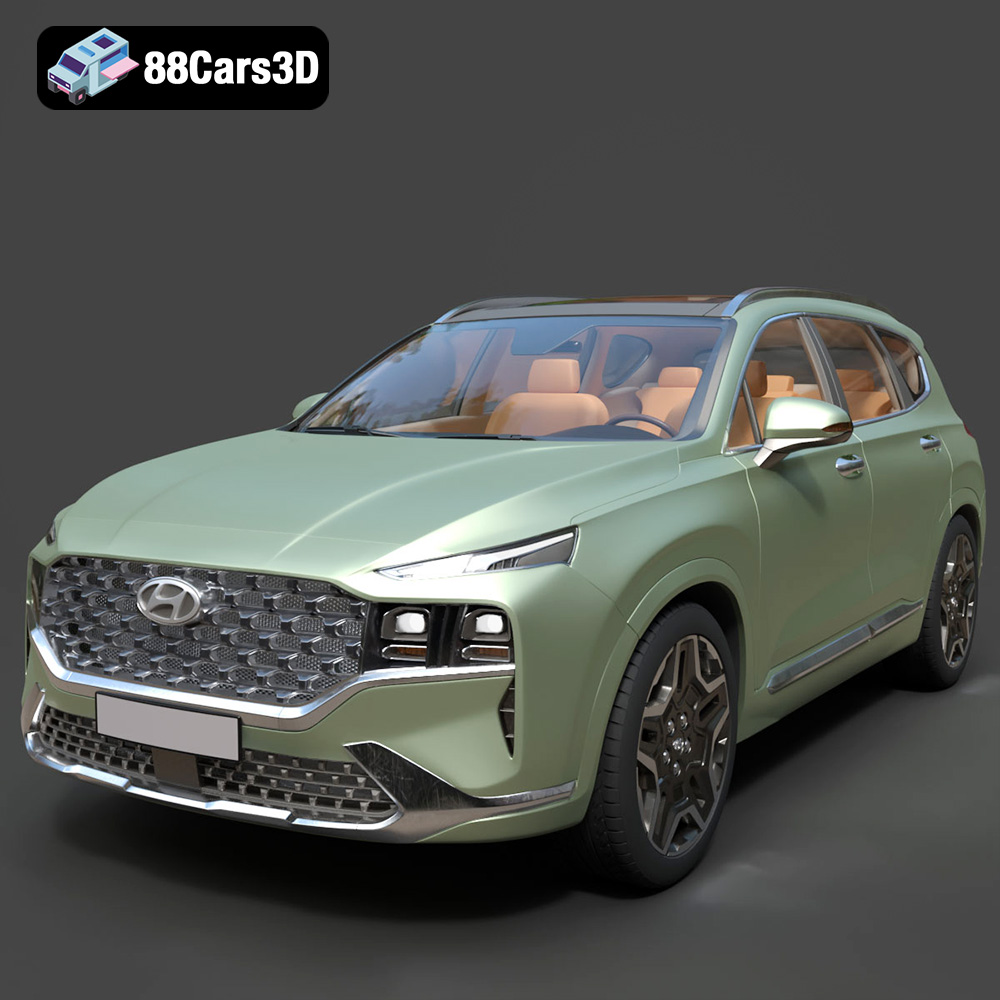
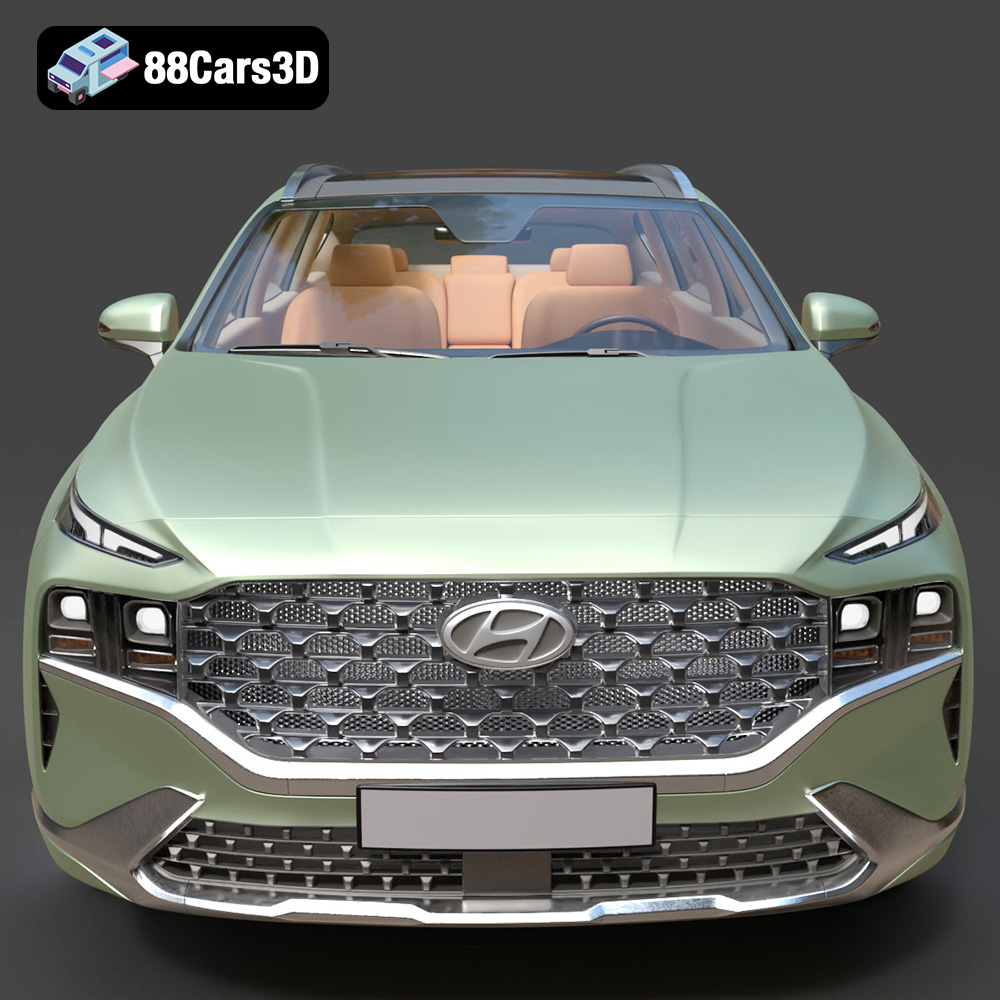
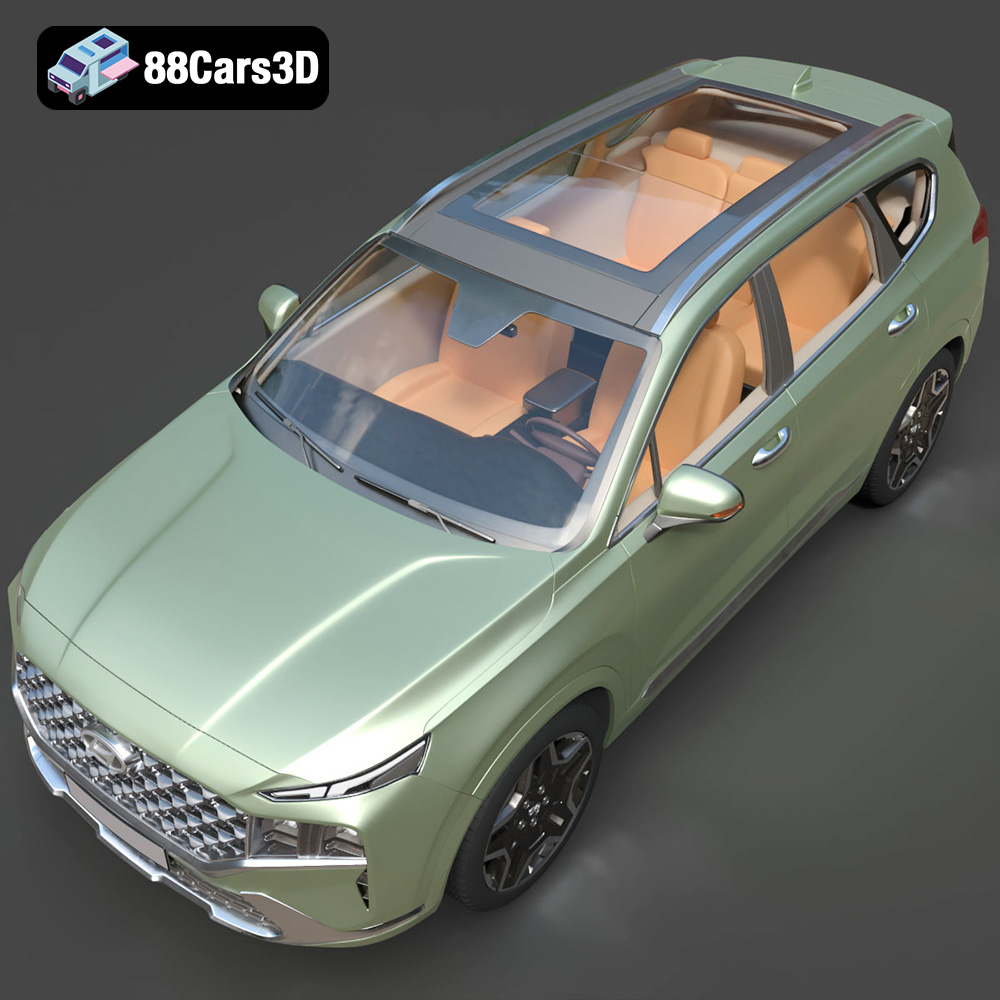
Enter the realm of expertly crafted 3D car models, assets that bridge the gap between imagination and tangible digital reality. These models are not merely static representations; they are dynamic tools that serve as the foundation for countless creative and technical applications. A prime example of such a versatile and meticulously designed asset is the **Hyundai Santa Fe 2021 3D Model**. This model embodies the professional-grade quality that artists, developers, and designers seek, offering clean geometry, realistic materials, and a design optimized for a diverse range of uses. Whether you’re a game developer looking for an authentic vehicle, an architect needing to populate a scene, or a VR creator building an immersive experience, a high-quality 3D car model like the Hyundai Santa Fe 2021 is an invaluable resource that significantly streamlines production and elevates visual standards.
The automotive industry has always been at the cutting edge of design and technology, and its digital representation is no exception. Modern 3D car models are central to various stages of a vehicle’s lifecycle, from initial concept validation to final marketing. The complexity and detail required have pushed the boundaries of 3D modeling and rendering techniques.
Before a single physical prototype is built, vehicle designers rely heavily on 3D models to iterate on concepts, refine aesthetics, and test ergonomics. These early-stage models, while often less detailed than production assets, provide crucial visual feedback. As the design matures, the 3D models evolve, incorporating more intricate details, precise measurements, and material definitions. This iterative process, fueled by high-quality 3D car models, significantly reduces development time and costs, allowing manufacturers to visualize and test their designs in a virtual environment before committing to expensive physical builds. For artists and studios creating marketing materials or external visualizations, having access to a pre-built, accurate model like the Hyundai Santa Fe 2021 3D Model saves countless hours that would otherwise be spent on modeling from scratch.
In the interactive entertainment sector, 3D car models are the backbone of racing games, open-world adventures, and simulation experiences. Players expect vehicles to look and behave realistically, demanding models with optimized topology, detailed textures, and accurate physics proxies. Similarly, Augmented Reality (AR) and Virtual Reality (VR) applications utilize these models to create immersive showrooms, interactive training simulations, or engaging virtual test drives. The challenge in these real-time environments is balancing visual fidelity with performance, a task made easier when starting with a model that features clean geometry and efficient UV layouts. The Hyundai Santa Fe 2021 3D Model, with its game-engine-ready formats, is perfectly suited for these demanding applications, ensuring smooth performance without compromising on visual impact.
In any application, the level of detail and accuracy in a 3D car model directly correlates with its perceived realism and professionalism. Low-polygon models with stretched textures or inaccurate proportions can instantly detract from an otherwise well-designed scene or experience. High-quality 3D models, characterized by clean topology, precise surfacing, high-resolution PBR (Physically Based Rendering) materials, and realistic lighting setups, elevate the entire project. This meticulous attention to detail is evident in models available on platforms like 88cars3d.com, where the Hyundai Santa Fe 2021 3D Model exemplifies the standards required for professional-grade work. Such models ensure that the vehicle looks authentic from every angle, under various lighting conditions, and in different environments, providing a true-to-life representation that resonates with viewers and users alike.
The versatility of a 3D model is often determined by the array of file formats it supports. Each format is designed with specific use cases and software ecosystems in mind, offering unique advantages for different stages of a production pipeline. The **Hyundai Santa Fe 2021 3D Model** includes a comprehensive suite of formats, ensuring broad compatibility and utility across various professional workflows. Understanding these formats is crucial for selecting the right tool for the job.
The `.blend` file format is native to Blender, a powerful and increasingly popular open-source 3D creation suite. When a 3D car model like the Hyundai Santa Fe 2021 is provided in `.blend` format, it means you get a fully editable Blender scene. This typically includes not just the mesh data but also the materials, textures, lighting setups, camera positions, and sometimes even animation rigs or modifiers. For artists working in Blender, this is the most convenient format, allowing for direct modification, rendering, and integration into existing Blender projects without any loss of data or conversion artifacts. It’s ideal for those who want to customize the model, experiment with different lighting scenarios, or incorporate it into a larger scene directly within their native DCC (Digital Content Creation) application. The `.blend` file ensures maximum flexibility and creative control within the Blender environment.
These three formats are cornerstones of inter-application data exchange in 3D.
The `.fbx` (Filmbox) format is widely considered the industry standard for exchanging 3D data between various software applications and game engines. Developed by Autodesk, it supports geometry, materials, textures, animations, and skeletal data. This makes it an ideal choice for pipelines involving software like 3ds Max, Maya, Blender, and game engines such as Unreal Engine and Unity. When the Hyundai Santa Fe 2021 3D Model is provided as `.fbx`, it ensures smooth integration into real-time environments, often with pre-configured settings ready for import. Its robust support for hierarchies and animation makes it indispensable for character rigs, complex scenes, and, of course, vehicle assets in games.
The `.obj` (Wavefront OBJ) format is one of the oldest and most universally supported 3D formats. It’s a simple, text-based format primarily used to store geometry (vertices, normals, texture coordinates, and faces) and references to external material files (`.mtl`). While it doesn’t support animation or rigging, its simplicity and widespread compatibility make it an excellent choice for basic mesh exchange across virtually any 3D software. If you need to import the Hyundai Santa Fe 2021 into a niche 3D application or simply need the raw geometry, `.obj` is a reliable fallback.
The `.glb` (GL Transmission Format Binary) is a relatively newer format, rapidly gaining traction, especially in web-based 3D, AR, and VR applications. It’s an optimized, self-contained binary format that bundles 3D models, textures, animations, and PBR material definitions into a single file. This efficiency makes it perfect for quick loading and rendering in browsers, mobile devices, and AR/VR headsets. For showcasing the Hyundai Santa Fe 2021 in an online configurator, a web-based presentation, or an AR overlay, the `.glb` format provides an optimized, lightweight solution that ensures fast performance and consistent visual quality.
Beyond general-purpose exchange formats, several specialized formats cater to very specific applications.
The `.stl` (Stereolithography) format is the de facto standard for 3D printing. It represents a 3D model as a collection of unconnected triangular facets, without color, texture, or other model attributes. While not suitable for rendering or animation, an `.stl` file of the Hyundai Santa Fe 2021 is perfect for creating physical prototypes, scale models, or custom parts via additive manufacturing. It’s a purely geometric representation tailored for fabrication.
The `.ply` (Polygon File Format, or Stanford Triangle Format) is another format for storing 3D data, particularly useful for scanned data, point clouds, and mesh data with additional properties. It can store not only geometry but also color, transparency, surface normals, and other attributes per vertex or face. While less common for general 3D car models, its inclusion for the Hyundai Santa Fe 2021 suggests a focus on providing detailed polygon mesh data, potentially for analysis, scientific visualization, or specialized rendering workflows where per-vertex data is crucial.
The `.unreal` format, often referring to a pre-packaged asset or a specific export pipeline for Unreal Engine, signifies an asset that has been specifically configured and optimized for use within Epic Games’ powerful real-time engine. This usually means that the model, its materials, and textures are set up according to Unreal Engine’s PBR guidelines, with proper collision meshes, LODs (Levels of Detail), and potentially even basic blueprints for interactivity. For game developers leveraging Unreal, having the Hyundai Santa Fe 2021 3D Model in this engine-ready state drastically reduces setup time and ensures optimal performance and visual fidelity within the game environment.
Finally, the `.max` file format is native to Autodesk 3ds Max, one of the most widely used 3D software applications for architectural visualization, product rendering, and animation. Similar to the `.blend` file, a `.max` file typically contains the complete scene data, including geometry, materials, textures, lighting, cameras, and animation. For professionals working in 3ds Max, this provides the highest level of editability and allows them to fully leverage the software’s powerful rendering engines like V-Ray or Corona to achieve photorealistic results with the Hyundai Santa Fe 2021.
The inclusion of this diverse range of formats with the Hyundai Santa Fe 2021 3D Model highlights its adaptability, catering to virtually every conceivable 3D production pipeline and application, making it a truly universal asset for professionals.
In the competitive world of game development, high-quality vehicle assets are paramount. They need to look stunning, perform efficiently in real-time, and be easily integrated into game engines. The Hyundai Santa Fe 2021 3D Model exemplifies how a professional asset is designed to meet these rigorous demands.
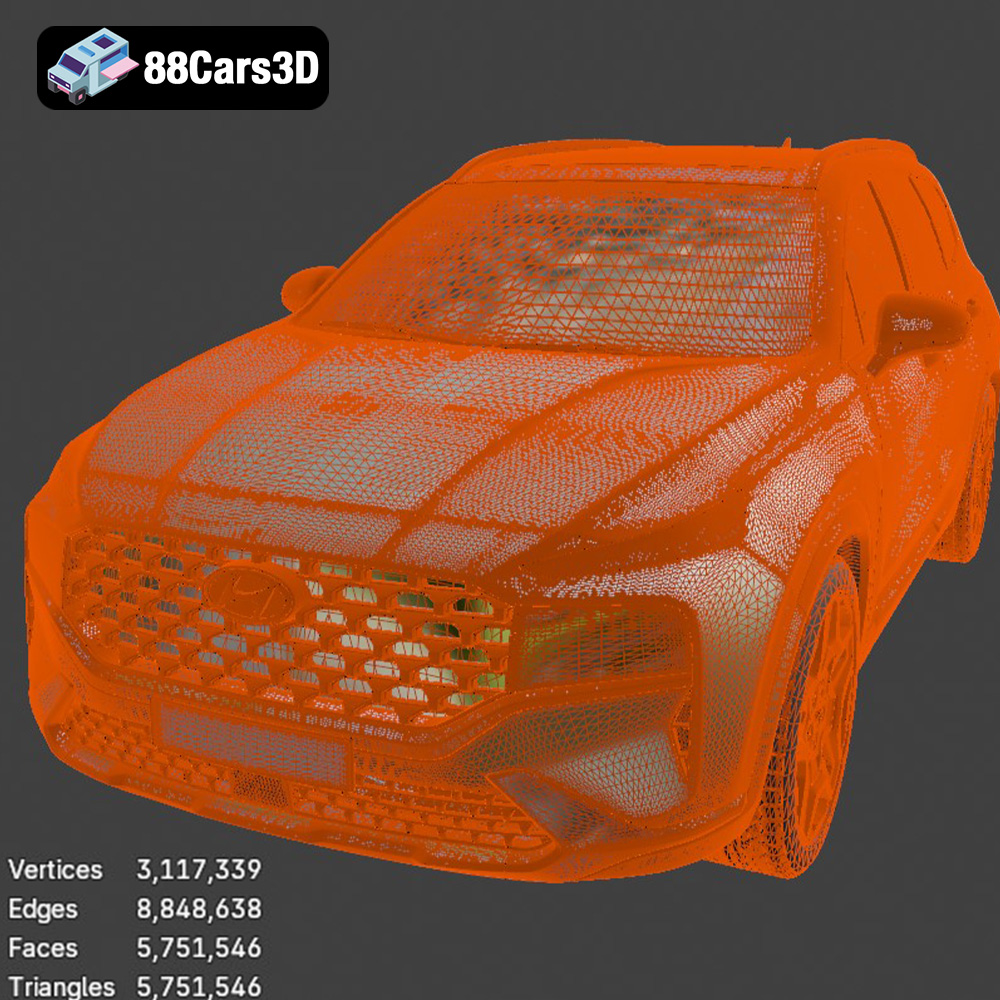
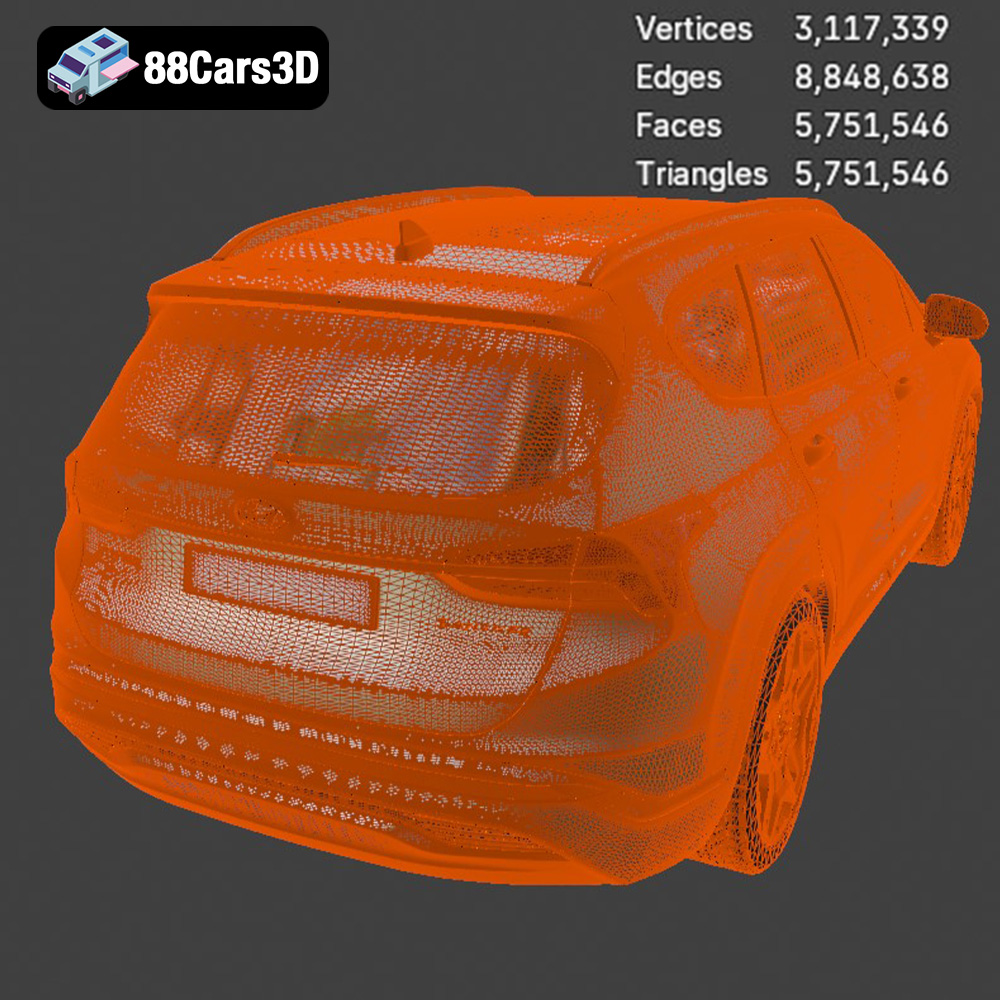
Game development requires a careful balance between visual fidelity and computational efficiency. A professional 3D car model designed for games must feature optimized geometry. This means having an appropriate polygon count – detailed enough for close-up shots but not so excessive that it bogs down the game engine. Clean topology, often employing quads, ensures smooth deformation if the model is animated or damaged, and facilitates the creation of efficient collision meshes. The Hyundai Santa Fe 2021 3D Model is meticulously crafted with this balance in mind, ensuring it looks great while maintaining a manageable poly count. Furthermore, textures play a vital role. Using high-resolution PBR textures (Albedo, Normal, Roughness, Metallic, Ambient Occlusion) allows for realistic material properties and surface details without adding unnecessary polygons. These textures are carefully UV-mapped, ensuring no stretching or distortion, and are optimized for quick loading and efficient rendering within game engines.
Integrating a vehicle model into a game engine like Unreal Engine or Unity involves more than just importing the mesh. It requires setting up materials, collision, and sometimes, levels of detail (LODs). For the Hyundai Santa Fe 2021, the inclusion of `.fbx` and `.unreal` formats signifies that this preparation has largely been done. In Unreal Engine, this would typically involve importing the `.fbx` or the pre-configured `.unreal` asset, which would automatically bring in the mesh, PBR textures, and material instances. Artists can then fine-tune the materials, set up physics assets for realistic vehicle dynamics, add simple blueprints for opening doors or turning lights, and integrate it into their game world. Similar steps apply to Unity, where the `.fbx` file allows for straightforward import, material assignment, and physics setup. This ready-to-use nature of the Hyundai Santa Fe 2021 3D Model drastically reduces the technical overhead for game developers, allowing them to focus on gameplay and immersive experiences.
Photorealism in games is largely driven by Physically Based Rendering (PBR) materials. PBR workflows simulate how light interacts with surfaces in the real world, producing highly convincing results. The Hyundai Santa Fe 2021 3D Model comes with realistic, high-resolution PBR materials that accurately represent the vehicle’s paintwork, glass, tires, and interior surfaces. When integrated into a game engine, these materials respond correctly to various lighting conditions, whether it’s a sunny day, a dimly lit garage, or a stormy night. Combined with dynamic lighting, reflections, and global illumination systems within Unreal or Unity, these PBR materials bring the Hyundai Santa Fe to life, ensuring it looks authentic and grounds the vehicle firmly within the game’s environment.
Beyond games, high-quality 3D car models are indispensable in architectural visualization and product rendering, where they lend realism, scale, and context to static images and animations.
An architectural rendering of a new building or urban plan feels incomplete without the inclusion of everyday elements that bring it to life. A high-quality 3D car model, such as the Hyundai Santa Fe 2021, instantly grounds the scene in reality, providing a sense of scale, motion, and human activity. Imagine a meticulously rendered modern home with a beautiful driveway – placing a generic, low-detail vehicle would undermine the entire composition. However, integrating the photorealistic Hyundai Santa Fe 2021 3D Model seamlessly blends into the scene, enhancing its credibility and visual appeal. Similarly, for product renderings, especially for items related to automotive accessories or urban infrastructure, a well-placed vehicle provides crucial context and demonstrates how the product interacts with its intended environment.
For professionals using 3ds Max, the `.max` file format for the Hyundai Santa Fe 2021 3D Model offers the ultimate flexibility. It allows artists to leverage powerful rendering engines like V-Ray or Corona Renderer to achieve stunning photorealistic results. These engines utilize advanced global illumination, physically accurate cameras, and intricate material definitions to simulate real-world light behavior. With the Hyundai Santa Fe 2021, artists can easily assign V-Ray or Corona materials, adjusting properties like reflectance, refractance, and displacement to perfectly match real-world car finishes. They can then set up complex lighting scenarios, from studio lighting for product showcases to realistic exterior environments with HDRI (High Dynamic Range Image) maps, ensuring every curve and reflection on the vehicle is rendered with exquisite detail. The clean geometry of the model also ensures smooth subdivision and accurate shading, which are critical for close-up shots.
In automotive marketing, visuals are everything. Manufacturers invest heavily in creating stunning images and animations to showcase their latest models. For marketing agencies and visualization studios, having access to accurate, high-fidelity 3D car models like the Hyundai Santa Fe 2021 is a game-changer. These models can be placed in virtual environments ranging from futuristic cityscapes to serene natural landscapes, allowing for marketing visuals that are impossible or too costly to achieve with traditional photography. The ability to render the vehicle from any angle, with any lighting, and in any color, without the limitations of a physical car, provides unparalleled creative freedom. This flexibility ensures that marketing materials are always fresh, dynamic, and perfectly aligned with campaign objectives. The professional quality found in models on 88cars3d.com directly translates into compelling marketing assets.
The realms of Augmented Reality (AR) and Virtual Reality (VR) are transforming how we interact with digital content. For the automotive sector, these technologies open new avenues for customer engagement, training, and design review, all powered by sophisticated 3D car models.
One of the greatest challenges in AR/VR and web-based 3D is delivering high-quality assets efficiently. The `.glb` format, included with the Hyundai Santa Fe 2021 3D Model, is specifically designed to address this. It bundles the entire 3D model, its textures, and PBR materials into a single, compact file. This optimization is crucial for AR applications on mobile devices or VR experiences where loading times and performance are paramount. Imagine a customer using their smartphone to project the Hyundai Santa Fe 2021 into their driveway, viewing it from all angles before a dealership visit. The `.glb` format ensures this experience is smooth, interactive, and visually rich, without requiring bulky downloads or specialized software. It democratizes access to high-fidelity 3D content, making sophisticated automotive visualization accessible through web browsers and mobile apps.
Beyond static AR overlays, 3D car models are fundamental to creating interactive automotive simulations. These simulations can range from virtual test drives for potential buyers to complex training environments for mechanics or emergency responders. The Hyundai Santa Fe 2021 3D Model, with its clean geometry and accurate representation, forms the perfect basis for such simulations. In a VR environment, users can virtually sit inside the vehicle, interact with its dashboard, open doors, and even “drive” it in a simulated landscape. The precision of the model ensures that all these interactions feel authentic, contributing to a truly immersive and educational experience. Game-engine-ready formats like `.fbx` and `.unreal` are crucial here, allowing developers to quickly integrate the model into a real-time simulation framework and add physics, scripts, and interactive elements.
The success of any AR/VR experience hinges on seamless real-time performance and deep user engagement. A high-quality 3D car model, optimized for these platforms, is key to achieving this. If a model is too heavy or poorly optimized, it can lead to frame rate drops, visual glitches, and a broken sense of presence. The Hyundai Santa Fe 2021 3D Model is designed to minimize these issues, allowing for smooth navigation and interaction. This optimization directly translates to higher user engagement, as users can comfortably explore the vehicle’s details, understand its features, and experience it in a way that static images or videos cannot replicate. Whether it’s for training, sales, or entertainment, professional 3D car models are the bedrock of compelling immersive automotive experiences.
The true mark of a professional 3D model lies beneath its polished surface – in its underlying technical structure. The Hyundai Santa Fe 2021 3D Model exemplifies this dedication to technical excellence, which is crucial for versatility and ease of use in any professional pipeline.
Clean, optimized mesh flow, often referred to as good topology, is fundamental for any high-quality 3D car model. It refers to the organized arrangement of vertices, edges, and faces that define the shape of the model. For a vehicle, especially one intended for animation or simulation, good topology ensures that surfaces deform smoothly without artifacts or pinching. If the model were to be rigged for opening doors, turning wheels, or even minor damage effects in a game, an optimized mesh flow simplifies these processes and yields more realistic results. It also makes the model easier to edit and modify, should specific project requirements arise. The Hyundai Santa Fe 2021, with its “clean and optimized geometry,” promises this level of technical craftsmanship, which is a major time-saver for any 3D professional.
UV mapping is the process of unwrapping a 3D model’s surface into a 2D space, allowing textures to be applied accurately. High-quality UV maps are crucial for avoiding texture stretching, seams, and distortion, which can instantly detract from a model’s realism. Professional 3D car models feature clean, non-overlapping UVs across all components, allowing artists to apply detailed, high-resolution textures with precision. The “realistic and high-resolution materials” mentioned for the Hyundai Santa Fe 2021 3D Model imply that its UVs are expertly laid out, enabling these textures to shine. These textures, typically PBR maps (Albedo, Normal, Roughness, Metallic, Height, Ambient Occlusion), define every nuanced surface characteristic, from the reflectivity of the paint to the subtle imperfections of the tire rubber, ensuring the model reacts to light as it would in the real world.
In summary, the technical precision built into a 3D model like the Hyundai Santa Fe 2021 directly translates into a simplified and more efficient workflow for the user. Clean geometry means fewer hours spent fixing topology issues, re-UV mapping parts, or struggling with rendering artifacts. It allows for seamless integration into various software packages and game engines, reducing the friction typically associated with asset pipelines. When you acquire a professional-grade 3D car model from a reputable source like 88cars3d.com, you are not just purchasing a digital representation; you are investing in a meticulously engineered asset that saves time, reduces frustration, and elevates the overall quality of your projects, giving you the freedom to focus on creativity rather than technical corrections.
The landscape of 3D visualization is continually evolving, driven by the relentless pursuit of realism and efficiency. In this dynamic environment, high-quality 3D car models are not just commodities; they are essential tools that empower artists, developers, and designers across a myriad of industries. From shaping the future of game development and revolutionizing architectural visualization to creating compelling AR/VR experiences and driving innovative marketing campaigns, the impact of meticulously crafted 3D vehicles is undeniable.
The **Hyundai Santa Fe 2021 3D Model** stands as a testament to what professional-grade 3D assets can offer. With its clean geometry, realistic high-resolution materials, and an extensive array of compatible file formats – including .blend, .fbx, .obj, .glb, .stl, .ply, .unreal, and .max – it is engineered for maximum versatility and ease of integration into virtually any professional pipeline. Whether your goal is to build an immersive racing game, render a stunning architectural scene, develop an interactive product configurator, or create a detailed simulation, this model provides the foundational quality needed to achieve exceptional results.
By choosing assets like the Hyundai Santa Fe 2021 3D Model, professionals can significantly streamline their workflows, save valuable production time, and elevate the visual fidelity of their projects to new heights. For those seeking a reliable source for such premium 3D car models, 88cars3d.com offers a curated selection of assets that meet the rigorous demands of modern 3D production. Invest in quality, and let your creative visions come to life with unparalleled realism and efficiency.
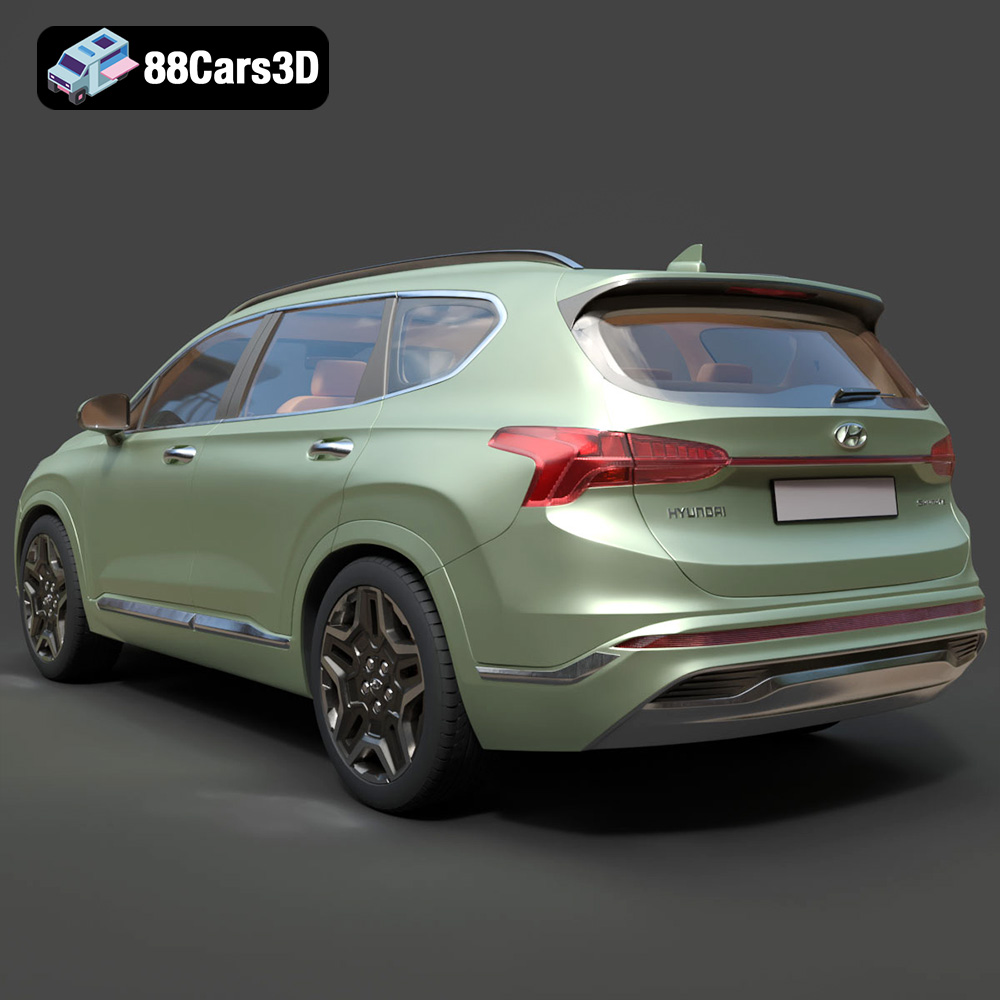
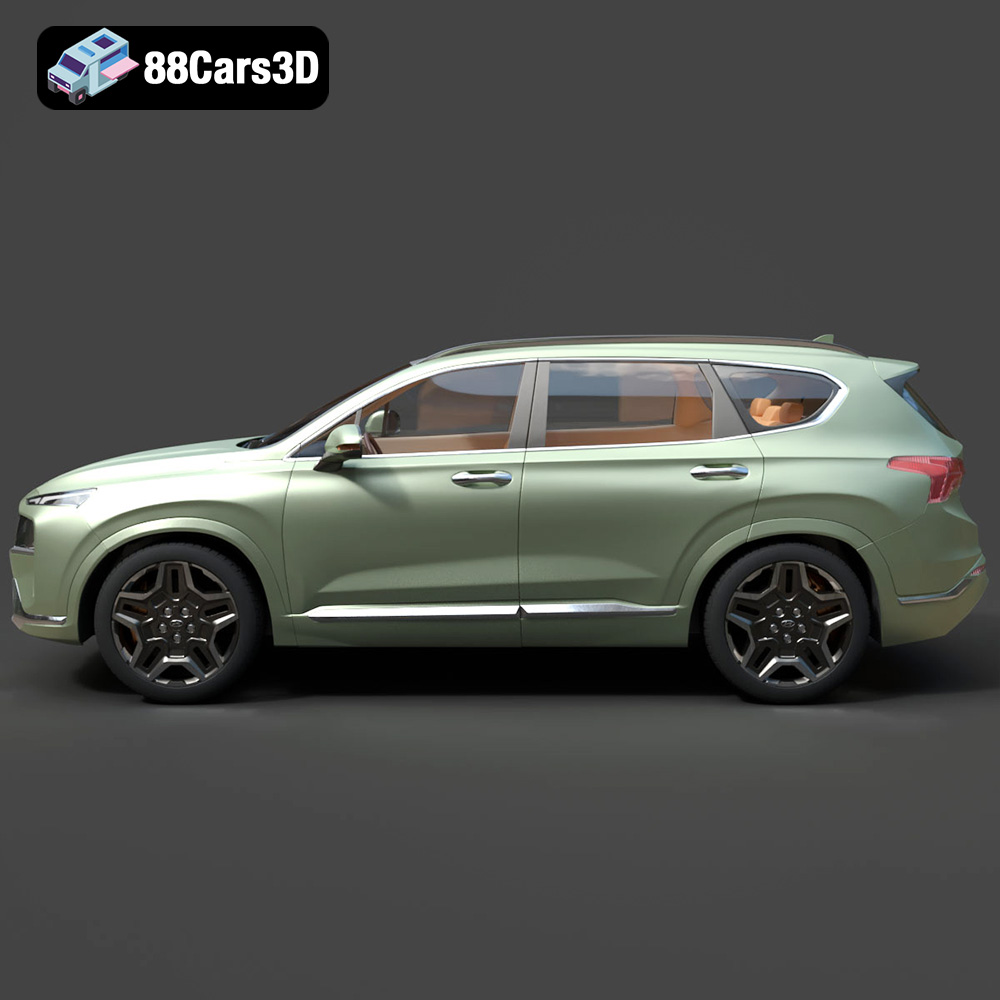
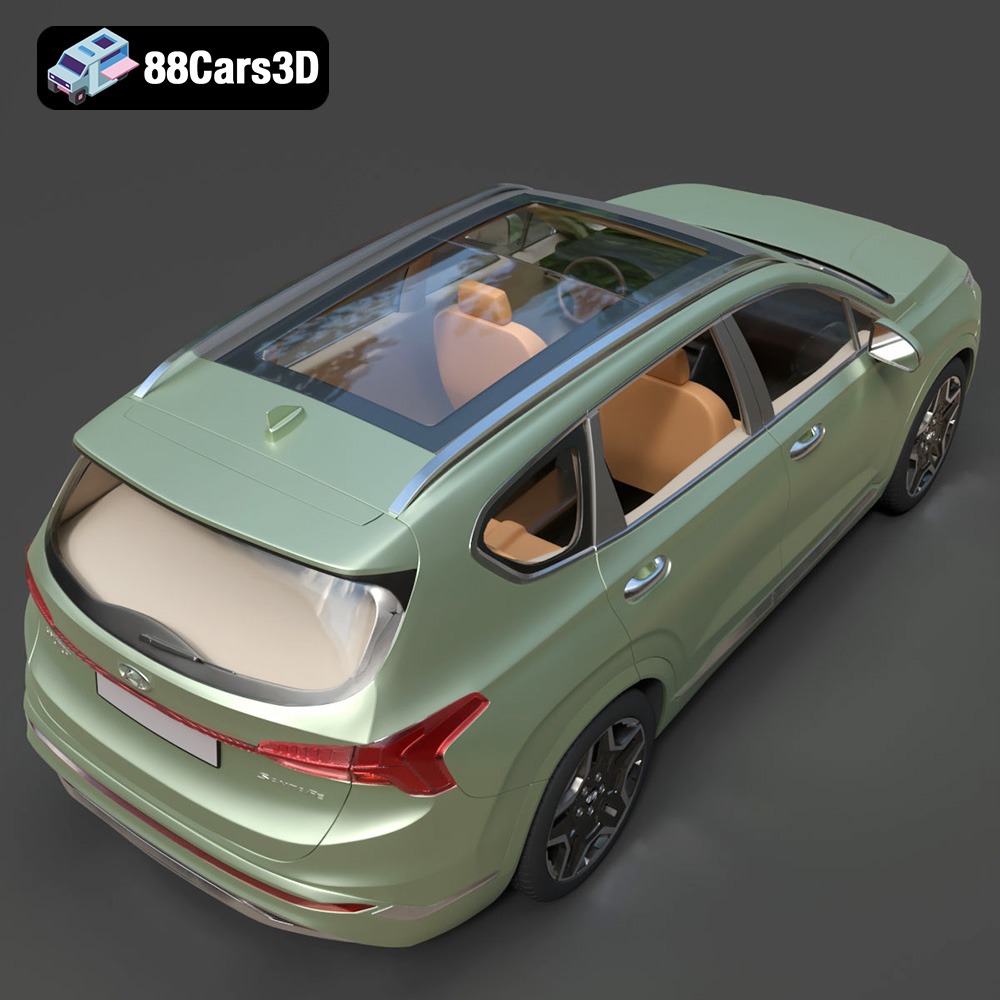
Experience the realism of the Hyundai Santa Fe 2021 3D Model, meticulously crafted for exceptional detail and accuracy. This model offers clean geometry, realistic materials, and a professional-grade design, making it ideal for a wide range of applications.
Key features of this 3D model include:
This 3D model is perfect for various applications, including:
The following file formats are included:
Tags:
.hyundai, .santafe, .hyundaisantafe, .suv, .car3dmodel, .rendering, .simulation, .gameasset, .arvr, .blend, .fbx, .obj, .glb, .stl, .ply, .unreal, .max
Tags:
.hyundai, .santafe, .hyundaisantafe, .suv, .car3dmodel, .rendering, .simulation, .gameasset, .arvr, .blend, .fbx, .obj, .glb, .stl, .ply, .unreal, .max
$19.99
.arvr
.blend
.car3dmodel
.fbx
.gameasset
.glb
.hyundai
.hyundaisantafe
.max
.obj
.ply
.rendering
.santafe
.simulation
.stl
.unreal
SUV