Get 50% OFF All Premium 3D & STL Models!

In the rapidly evolving world of digital content creation, high-quality 3D car models have become indispensable across numerous industries. Whether you’re an automotive designer visualizing a new concept, a game developer populating an open-world environment, an architect integrating vehicles into a scene, or an AR/VR enthusiast creating immersive experiences, the fidelity and versatility of your 3D assets are paramount. The demand for accurate, detailed, and production-ready models is consistently high, driving artists and studios to seek out reliable sources for their digital garages.
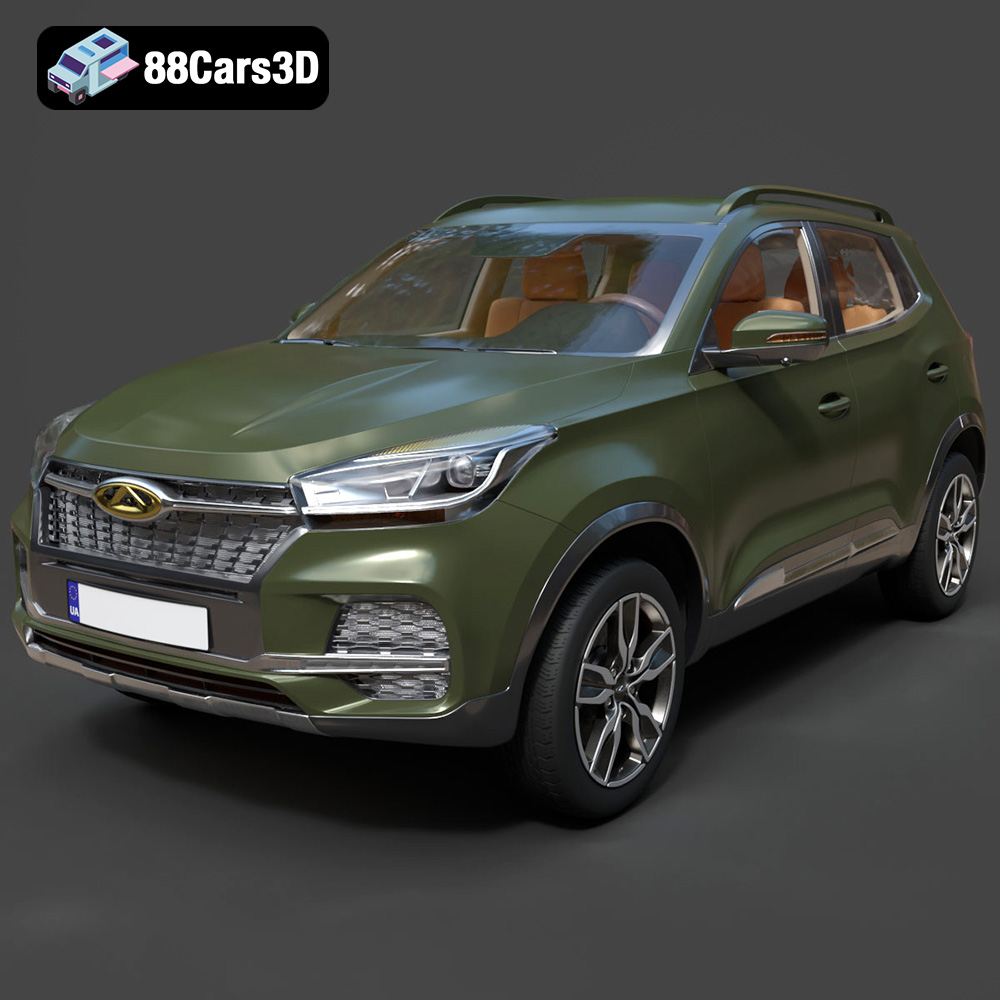
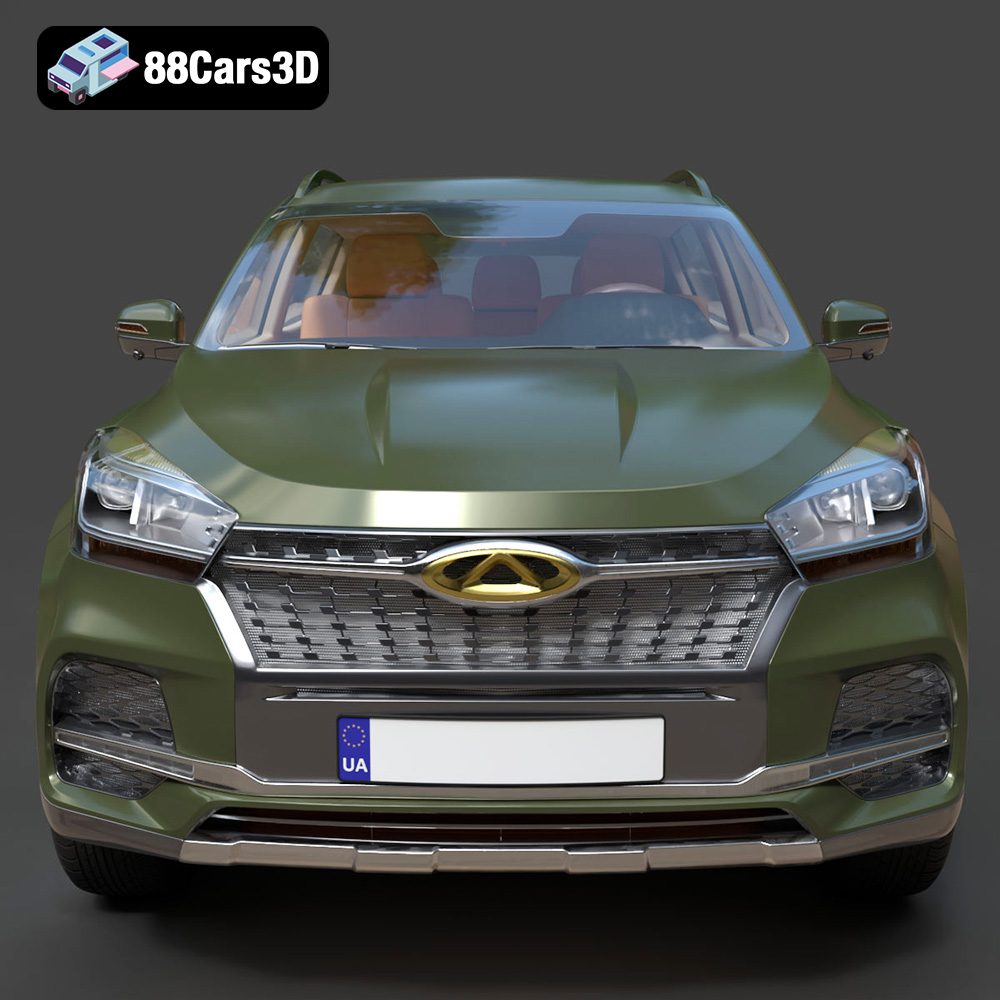
This pursuit of perfection often leads professionals to specialized marketplaces offering meticulously crafted 3D car models, designed to streamline workflows and elevate visual standards. One such exceptional offering that exemplifies this commitment to detail is the Chery Tiggo 4 RU-Spec 2019 3D Model. This particular asset represents a pinnacle of digital craftsmanship, accurately recreating the popular compact crossover SUV tailored for the Russian market. Its robust exterior, striking matrix grille, and detailed interior are all captured with an impressive polygon count, making it a perfect foundation for a multitude of projects, from high-fidelity rendering to interactive simulations and even physical 3D prints.
Let’s delve deeper into the technical aspects of automotive 3D modeling, exploring how a high-quality asset like the Chery Tiggo 4 RU-Spec 2019 3D Model can transform your creative endeavors across diverse applications.
The journey of any 3D model, from creation to implementation, relies heavily on the file format it is saved in. Each format serves a specific purpose, excelling in certain environments or workflows while having limitations in others. Understanding these distinctions is crucial for professionals seeking to maximize compatibility, preserve data integrity, and optimize performance. The Chery Tiggo 4 RU-Spec 2019 3D Model, recognizing this need for versatility, is provided in a comprehensive array of formats, ensuring its adaptability across virtually any pipeline.
The .blend format is the native file type for Blender, a powerful and increasingly popular open-source 3D creation suite. A .blend file offers a complete, fully editable Blender scene, encompassing not just the mesh geometry but also materials, textures, lighting setups, cameras, animations, and even modifiers. For users working within the Blender ecosystem, this format provides the most flexibility for customization, allowing for intricate adjustments to the model’s appearance, rigging, or integration into existing Blender projects. Artists can easily modify the Chery Tiggo 4’s materials, adjust the subdivision surfaces, or prepare it for a Cycles or Eevee render directly within Blender.
.fbx (Filmbox) stands as one of the most widely adopted proprietary file formats for 3D data exchange, especially prevalent in game development and animation. Developed by Autodesk, FBX files can store a vast amount of 3D data, including models, materials (often as references to external textures), animations, cameras, and lights. Its strength lies in its ability to transfer complex scene information between different 3D software applications (like 3ds Max, Maya, Blender, Cinema 4D) and real-time engines such as Unreal Engine and Unity. When importing the Chery Tiggo 4 as an FBX, users can expect excellent preservation of mesh data, pivots, and basic material assignments, making it an ideal choice for integrating the vehicle into game environments or animation sequences.
The .obj (Wavefront OBJ) format is a universal, non-proprietary standard primarily focused on storing geometry data – vertices, faces, normals, and UV coordinates. It’s a plain-text format, making it highly compatible with virtually every 3D application, even older ones. While OBJ doesn’t typically store advanced material properties or animation data directly, it often references an accompanying Material Template Library (.mtl) file for basic material definitions and texture paths. For cross-software compatibility or situations where only the pure mesh data of the Chery Tiggo 4 is required, the .obj format is an exceptionally robust and reliable choice.
.glb (GL Transmission Format Binary) is an increasingly important format, especially optimized for AR, VR, and browser-based 3D display. It’s the binary version of glTF, a royalty-free specification for the efficient transmission and loading of 3D scenes and models by applications. A .glb file encapsulates all necessary data – geometry, materials, textures, animations – into a single binary file, making it incredibly easy to share and integrate into web viewers, augmented reality apps, and virtual reality experiences. The Chery Tiggo 4 in .glb format is perfect for interactive virtual car showrooms or integrating into web-based product configurators.
The .stl (Stereolithography) format is the de facto standard for 3D printing. It represents a 3D model as a collection of unconnected triangles (a tessellation) that describes only the surface geometry of an object without color, texture, or other CAD attributes. For physical output, an STL file must contain a “manifold” mesh, meaning it must be a completely closed, watertight surface. The Chery Tiggo 4’s availability in .stl format means it’s ready for digital fabrication, allowing users to print detailed scale models of the SUV, making it suitable for display-scale SUV models or prototyping.
.ply (Polygon File Format, or Stanford Triangle Format) is another format for storing 3D data, often used in scientific applications, 3D scanning, and CAD. Similar to OBJ, it primarily focuses on geometry but can store additional properties like color, transparency, and even texture coordinates directly associated with vertices or faces. It’s excellent for precision mesh representation and analysis, making it useful for scenarios where the detailed geometry of the Chery Tiggo 4 might be used for simulations or further engineering analysis rather than purely visual rendering.
While not a universal file extension in the same vein as FBX or OBJ, the inclusion of a proprietary .unreal file type typically implies an asset that has been specifically prepared and packaged for direct import into Unreal Engine. This often means the mesh has been correctly scaled, materials are set up with PBR (Physically Based Rendering) parameters, and sometimes even includes collision meshes or LODs (Levels of Detail). For Unreal Engine developers, this pre-optimized format for the Chery Tiggo 4 can significantly reduce setup time, allowing for immediate integration into real-time environments and projects, from automotive configurators to driving simulations.
The .max format is the native file type for Autodesk 3ds Max, a leading software for 3D modeling, animation, rendering, and compositing. Similar to a .blend file for Blender, a .max file contains the complete 3ds Max scene, including all geometry, materials, textures, lighting, cameras, animation data, and modifiers. For users working in 3ds Max, the .max version of the Chery Tiggo 4 provides full access to the original model’s construction, allowing for extensive modifications, re-rigging, and seamless integration into high-end rendering pipelines like V-Ray or Corona Renderer.
The sheer breadth of formats offered for the Chery Tiggo 4 RU-Spec 2019 3D Model underscores its professional-grade utility, ensuring that whether your project is destined for a photorealistic advertisement, an immersive game, or a physical tabletop display, you have the right tools at your disposal.
Creating a truly convincing 3D car model is an intricate process that goes far beyond simple geometric construction. It involves a deep understanding of automotive design, meticulous attention to detail, and advanced 3D modeling techniques. The goal is to produce a digital asset that not only looks authentic from every angle but also behaves realistically in various digital environments.
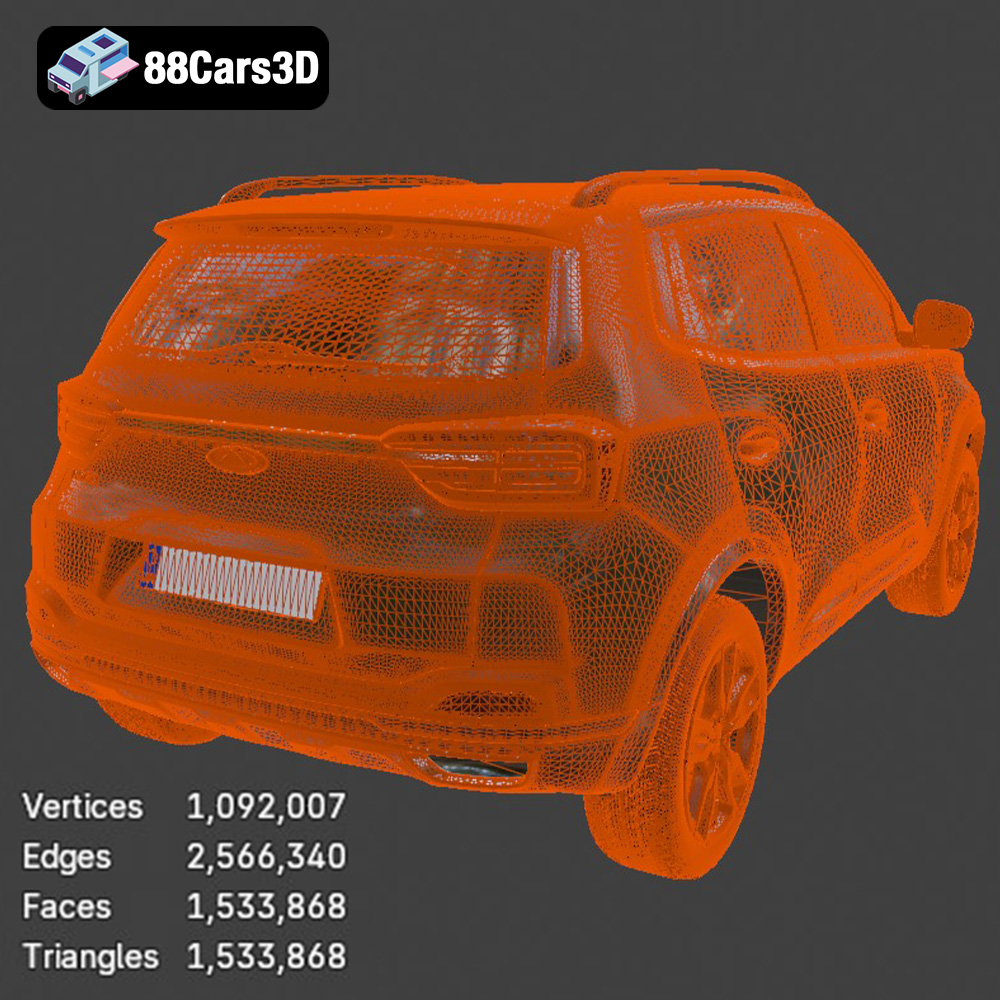
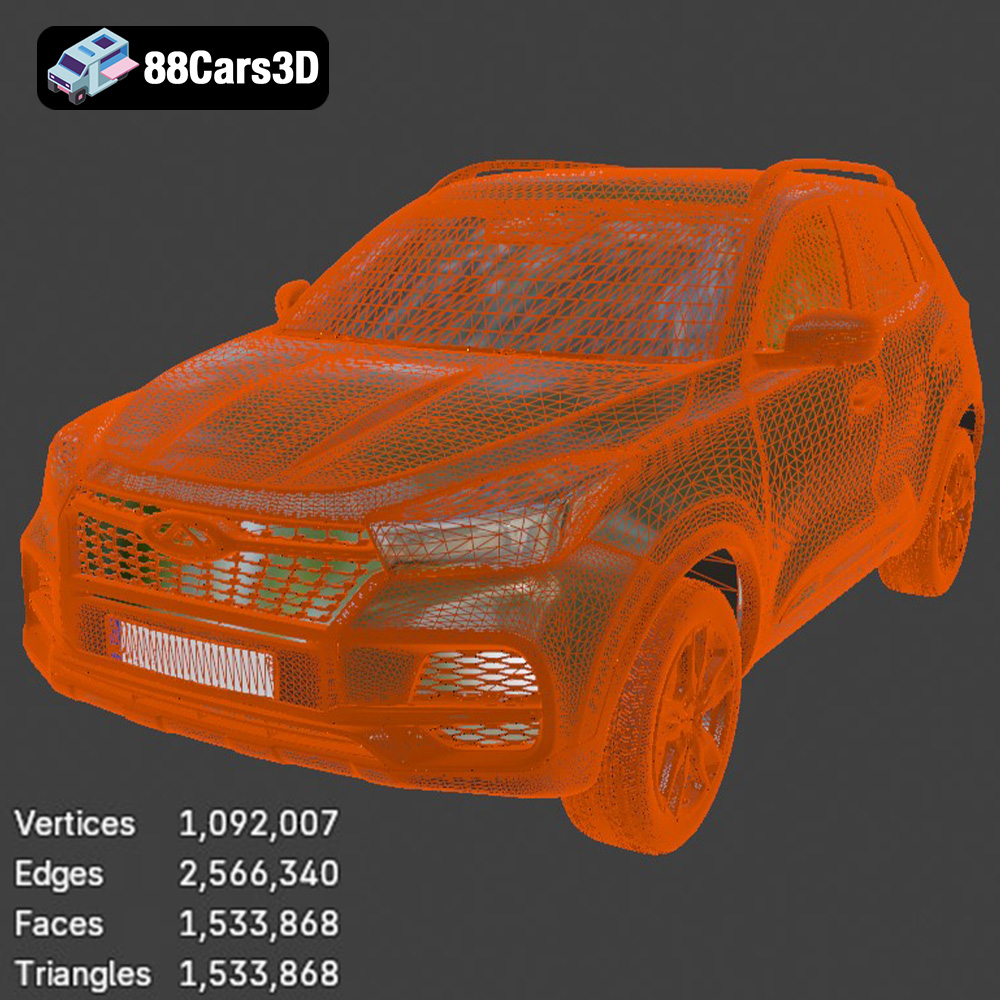
The foundation of a realistic 3D car model lies in its mesh topology. The Chery Tiggo 4 RU-Spec 2019 3D Model boasts a high-polygon count, with over 1.3 million polygons (faces/triangles). This dense mesh allows for the accurate capture of complex curves, sharp edges, and subtle surface variations that define the vehicle’s design. Details like the bold matrix front grille, the intricate headlight and taillight assemblies with LED signatures, and the sculpted body lines are all precisely represented. Such fidelity is crucial for close-up renders and detailed automotive visualizations where every reflection and highlight must accurately define the car’s form.
Accuracy in 3D modeling also extends to real-world scale and proportions. A model that is correctly scaled ensures it fits seamlessly into scenes without requiring manual adjustments, which can save significant time in production pipelines. The Chery Tiggo 4 RU-Spec 2019 3D Model is built with real-world scale accuracy, meaning its dimensions precisely match those of the actual vehicle. This is particularly important for architectural visualizations, urban planning simulations, and driving simulators, where the vehicle’s size relative to its environment is critical for believability.
Automotive rendering and visualization are about more than just a beautiful image; they are about communicating design intent, highlighting features, and creating an emotional connection with the viewer. High-quality 3D car models like the Chery Tiggo 4 RU-Spec 2019 are the cornerstone of this process.
Professionals in automotive visualization frequently rely on powerful rendering engines integrated into software like 3ds Max or Blender. The .max and .blend formats for the Chery Tiggo 4 model offer native compatibility, allowing artists to leverage their preferred tools for stunning results.
For commercial applications, 3D models provide an unparalleled advantage. Automotive manufacturers, marketing agencies, and product designers use these models to create compelling visuals long before a physical prototype is built.
In the realm of game development, AR, and VR, 3D car models are crucial for creating immersive and believable environments. While high fidelity is desired, real-time performance is equally critical.
Game developers need assets that are optimized for real-time performance without sacrificing visual quality. The Chery Tiggo 4 RU-Spec 2019 3D Model is provided in .fbx and .unreal formats, making it highly compatible with industry-leading game engines like Unreal Engine and Unity.
The rise of augmented and virtual reality has opened new avenues for automotive visualization. Immersive experiences demand high-fidelity models that can be rendered smoothly in real time.
The utility of 3D models extends beyond digital screens, venturing into the physical world through 3D printing. This technology allows designers, hobbyists, and manufacturers to create tangible representations of their digital assets.
The inclusion of the .stl format for the Chery Tiggo 4 RU-Spec 2019 3D Model is a testament to its versatility, enabling users to transform the digital SUV into a physical scale model. The .stl format, being the standard for additive manufacturing, ensures compatibility with virtually all 3D printers and slicing software.
Achieving a professional-grade physical model from a 3D print involves careful post-processing. The Chery Tiggo 4 model provides a fantastic base for this.
In a demanding industry, time is money, and efficiency is key. Sourcing pre-made, high-quality 3D assets like the Chery Tiggo 4 RU-Spec 2019 3D Model from reputable platforms significantly reduces development cycles and ensures professional results. 88cars3d.com stands as a prime example of an online marketplace dedicated to providing such high-caliber assets.
Developing a detailed 3D car model from scratch can take hundreds of hours for an experienced artist. This includes meticulous blueprint matching, complex surface modeling, UV unwrapping, texturing, and setting up materials. By acquiring a production-ready model, studios and individual artists can:
Consider an architectural firm planning a new residential complex. Integrating lifelike vehicles into their renders can significantly enhance the realism and visual appeal of their presentations. Instead of custom-modeling every car, they can acquire a range of 3D car models that accurately represent typical urban traffic. The Chery Tiggo 4, being a popular compact crossover, is an excellent choice for populating modern urban environment scenes. Its detailed exterior and interior, combined with real-world scale, allow it to blend seamlessly into architectural visualizations, giving clients a true sense of scale and atmosphere for their future projects.
Even with a production-ready model, the ability to customize it to fit specific project requirements is invaluable. The Chery Tiggo 4 RU-Spec 2019 3D Model offers several customization options, reflecting its thoughtful design.
The organized mesh structure and separate components of the Chery Tiggo 4 model allow for extensive modifications:
This level of flexibility ensures that the Chery Tiggo 4 RU-Spec 2019 3D Model isn’t just a static asset, but a dynamic tool that can be adapted to a broad spectrum of creative challenges, making it a truly versatile addition to any professional’s 3D asset library.
The world of 3D modeling for automotive design, rendering, game development, and specialized applications like AR/VR and 3D printing demands precision, detail, and adaptability. As we’ve explored, a high-quality 3D car model is not merely a visual representation but a foundational asset that influences every stage of a digital production pipeline.
The Chery Tiggo 4 RU-Spec 2019 3D Model exemplifies the ideal digital vehicle asset. Its meticulous detail, real-world accuracy, and comprehensive technical specifications – including a high-polygon count, separate animated components, and a robust interior – make it suitable for a vast array of professional applications. From generating photorealistic renders in 3ds Max or Blender to integrating into real-time game engines like Unreal, or even fabricating a tangible collectible through 3D printing, this model offers unparalleled versatility.
Furthermore, the availability of this model in a wide range of essential file formats, including .blend, .fbx, .obj, .glb, .stl, .ply, .unreal, and .max, ensures seamless integration into diverse workflows, providing flexibility and saving valuable production time. Professionals seeking to enhance their projects with top-tier 3D car models will find that assets like the Chery Tiggo 4 RU-Spec 2019 are indispensable tools, elevating visual fidelity and streamlining creative processes.
Investing in production-ready 3D car models from trusted sources like 88cars3d.com allows artists and studios to focus their energy on creative execution, rather than the painstaking process of asset creation. This approach not only ensures a higher standard of output but also empowers creators to bring their visions to life with efficiency and unparalleled realism.
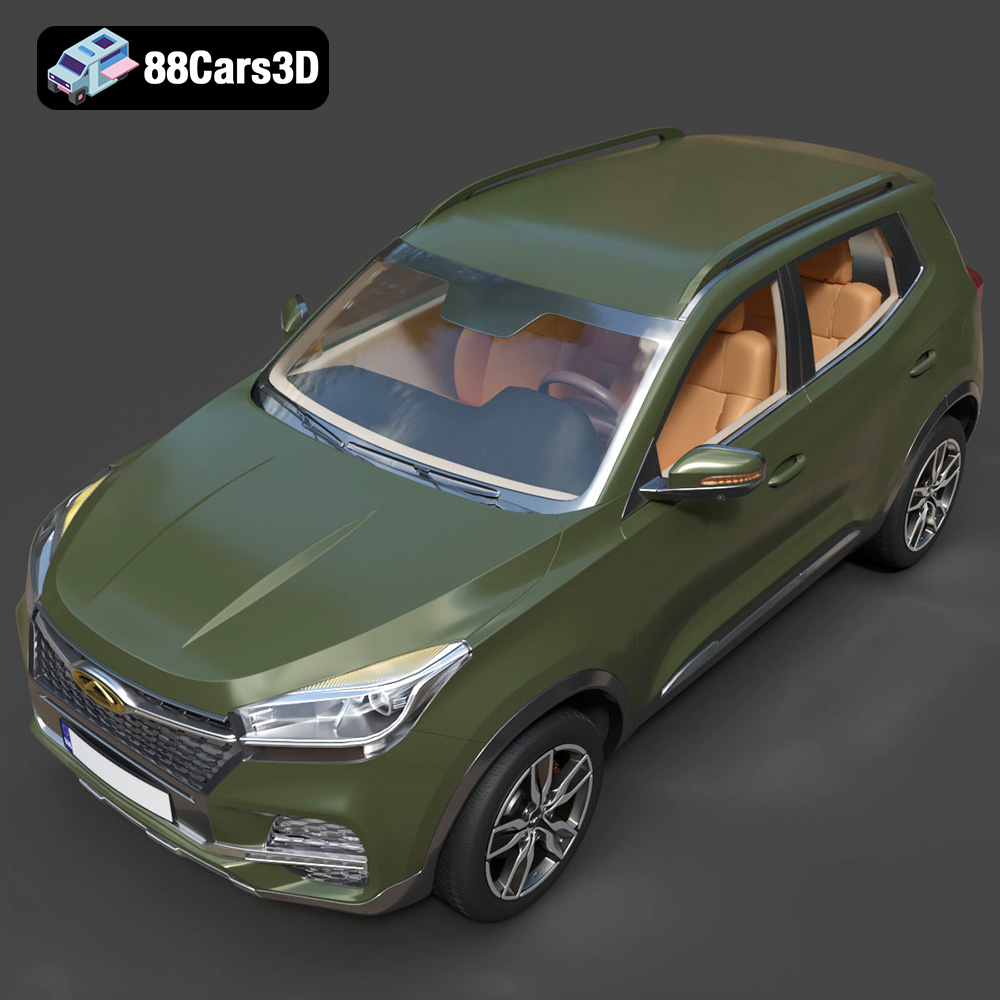
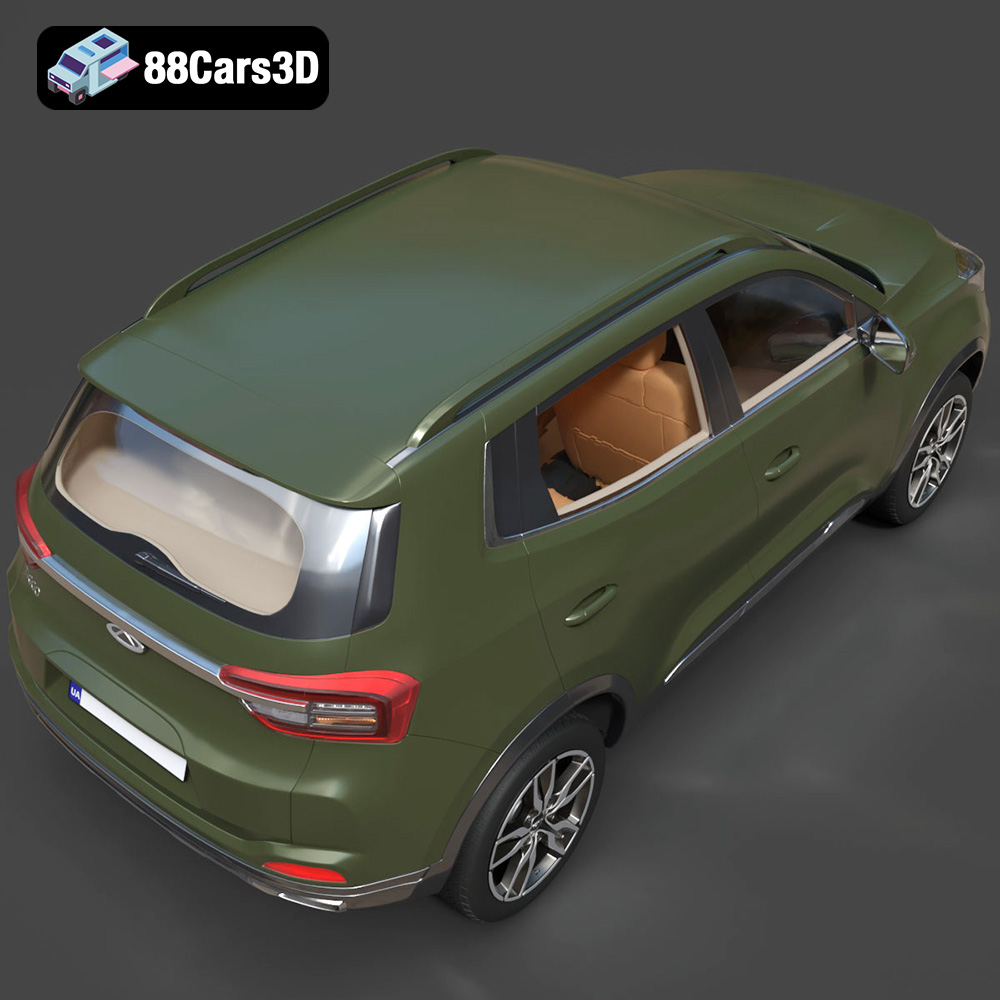
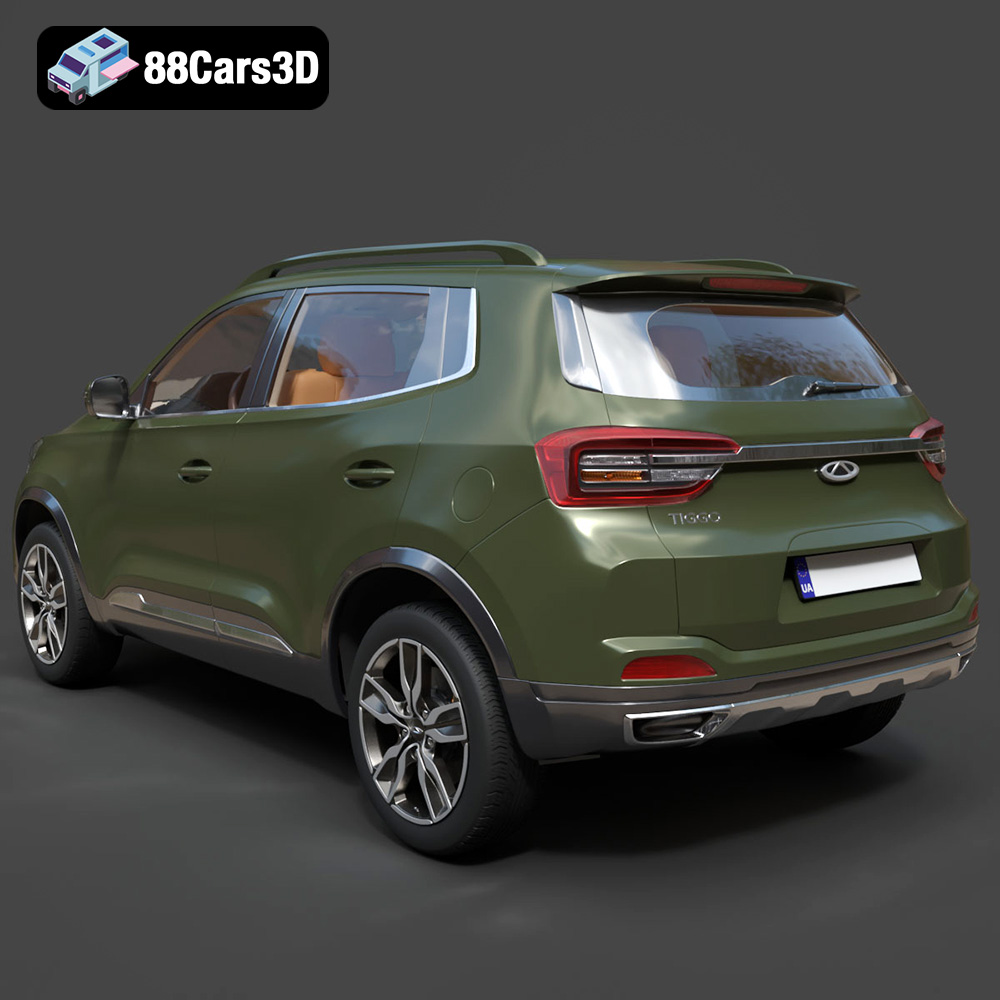
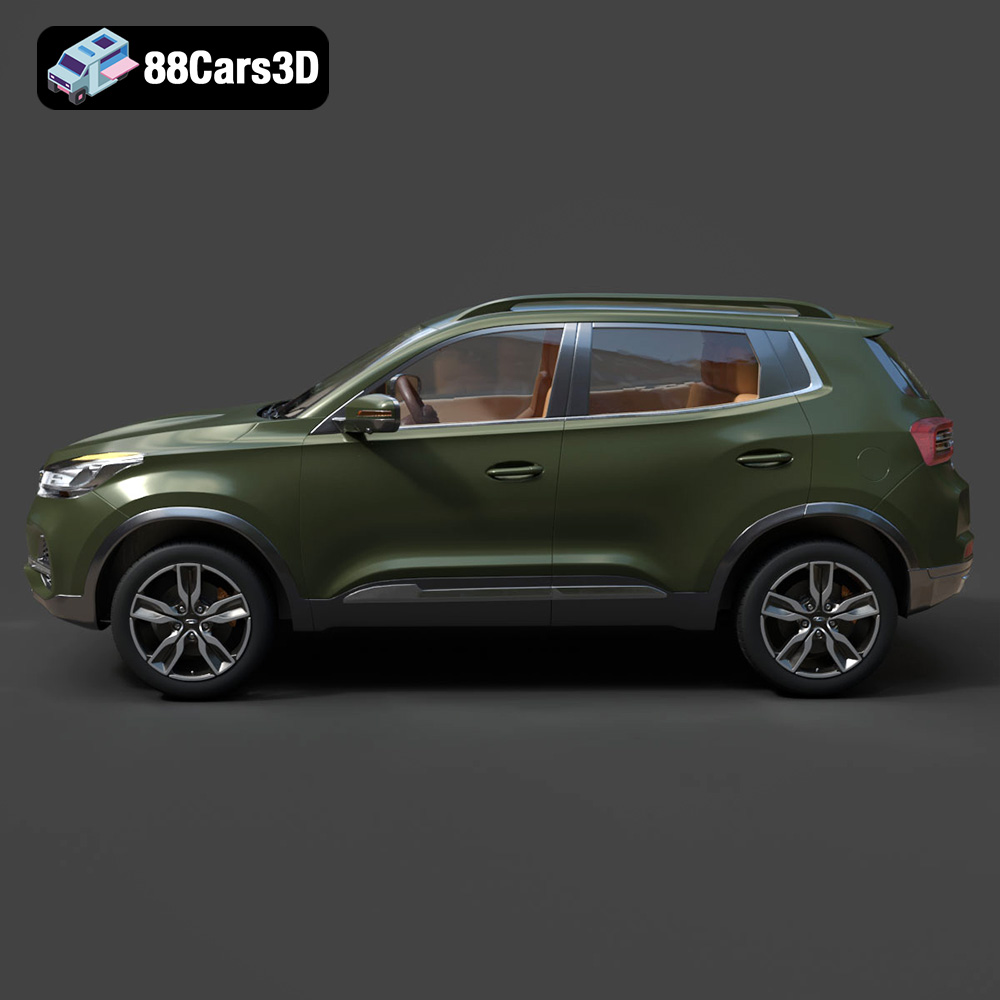
The Chery Tiggo 4 RU-Spec 2019 3D Model is a high-detail digital recreation of the popular compact crossover SUV tailored for the Russian market. Designed as a versatile and practical urban vehicle, the Tiggo 4 features a bold front fascia, rugged lower body cladding, elevated ground clearance, and a modern, dynamic silhouette. This 3D model accurately represents robust exterior proportions, striking matrix grille, detailed headlight clusters, functional roof rails, five-door layout, and distinct alloy wheels. Built with dense, high-polygon topology for premium visual fidelity and real-world scale accuracy, it is ideal for close-up rendering, automotive visualization, animation, game development, AR/VR, and 3D printing.
$9.99
.automotive
.blend
.fbx
.obj
.rendering
.stl
2019-suv
3d printing
car-3d-model
chery
compact-crossover
game asset
high poly
ru-spec
tiggo-4
urban-suv
vehicle-design
VR/AR