Get 50% OFF All Premium 3D & STL Models!

In the dynamic realm of 3D visualization and digital design, the quest for unparalleled realism and detail drives innovation. Whether you’re an automotive designer, an architectural visualization artist, a game developer, or a cinematic VFX specialist, the quality of your 3D assets directly impacts the final output. This is particularly true for high-stakes projects demanding absolute fidelity, where every curve, reflection, and material shimmer must convey perfection. Today, we delve into an exceptional asset that embodies this pursuit of digital excellence: the BMW i7 xDrive60 2023 Ultra High-Poly 3D Model, available exclusively on 88cars3d.com.
The BMW i7 represents a monumental shift in luxury electric vehicles, blending progressive design with cutting-edge technology. To recreate such an icon in the digital space requires meticulous attention to every facet, from its “Iconic Glow” grille to its opulent interior with the revolutionary BMW Theatre Screen. This particular 3D model goes beyond mere representation; it is a profound digital recreation, engineered for environments where compromise is not an option. Join us as we explore the technical prowess, diverse applications, and workflow advantages this incredible 3D car model offers to professionals across various industries.
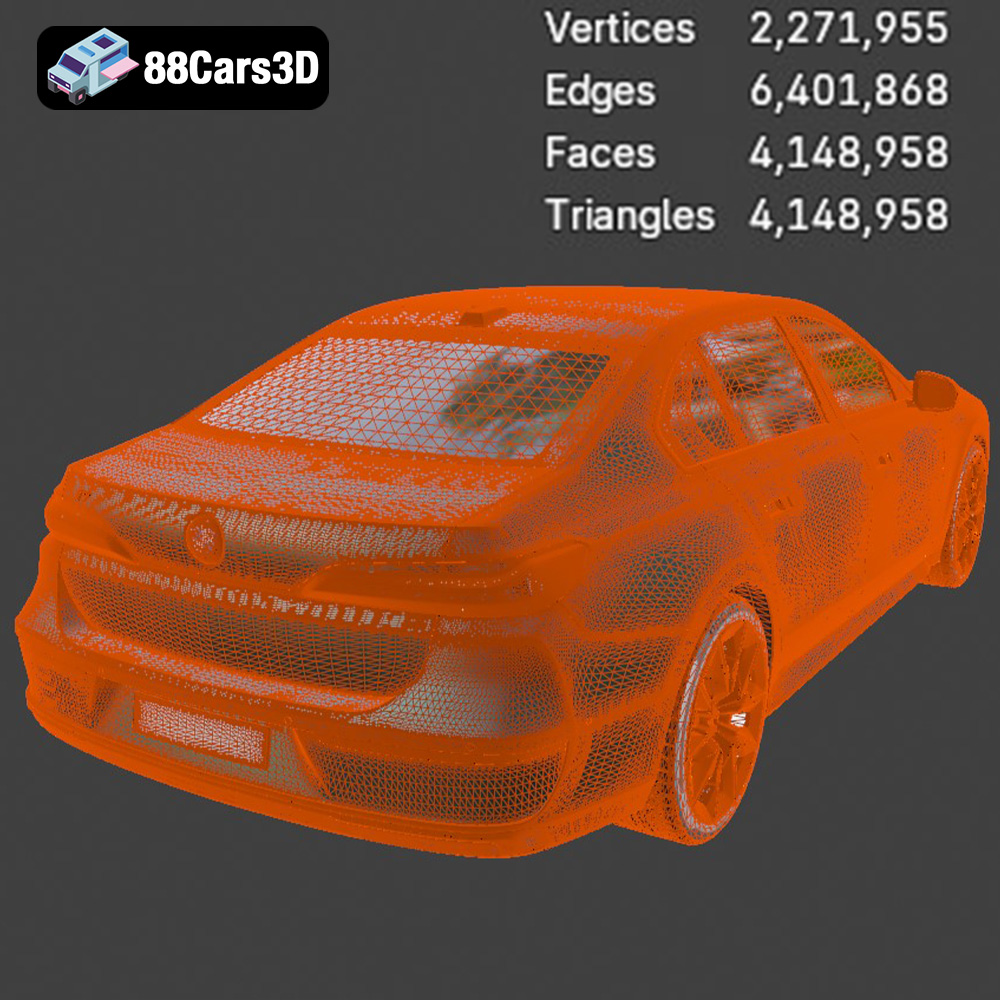
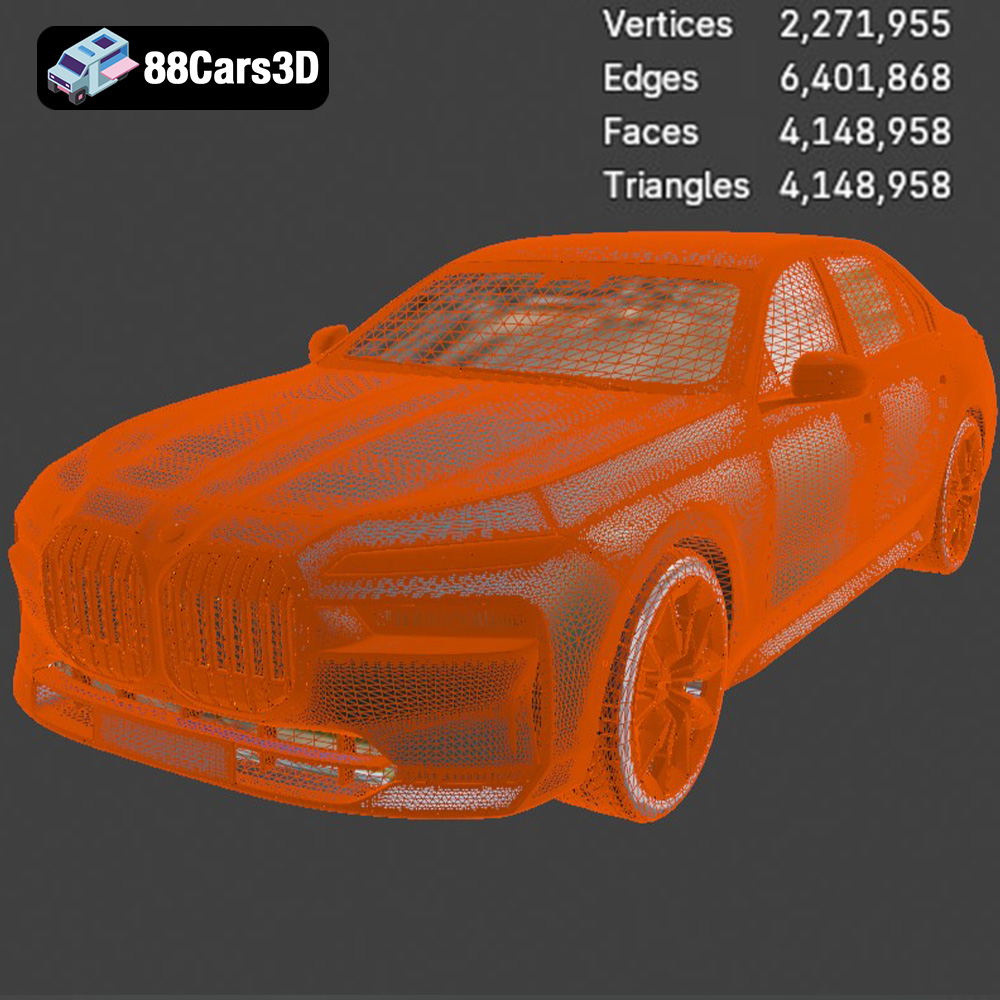
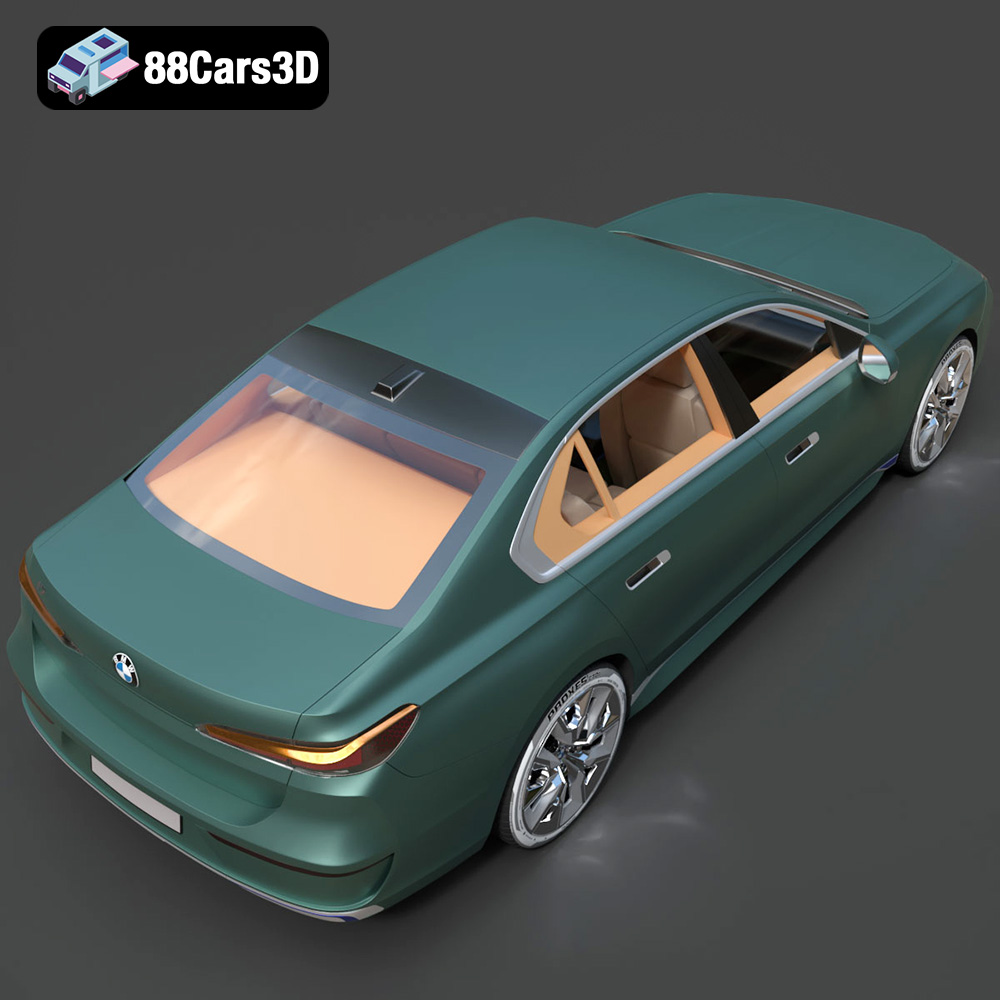
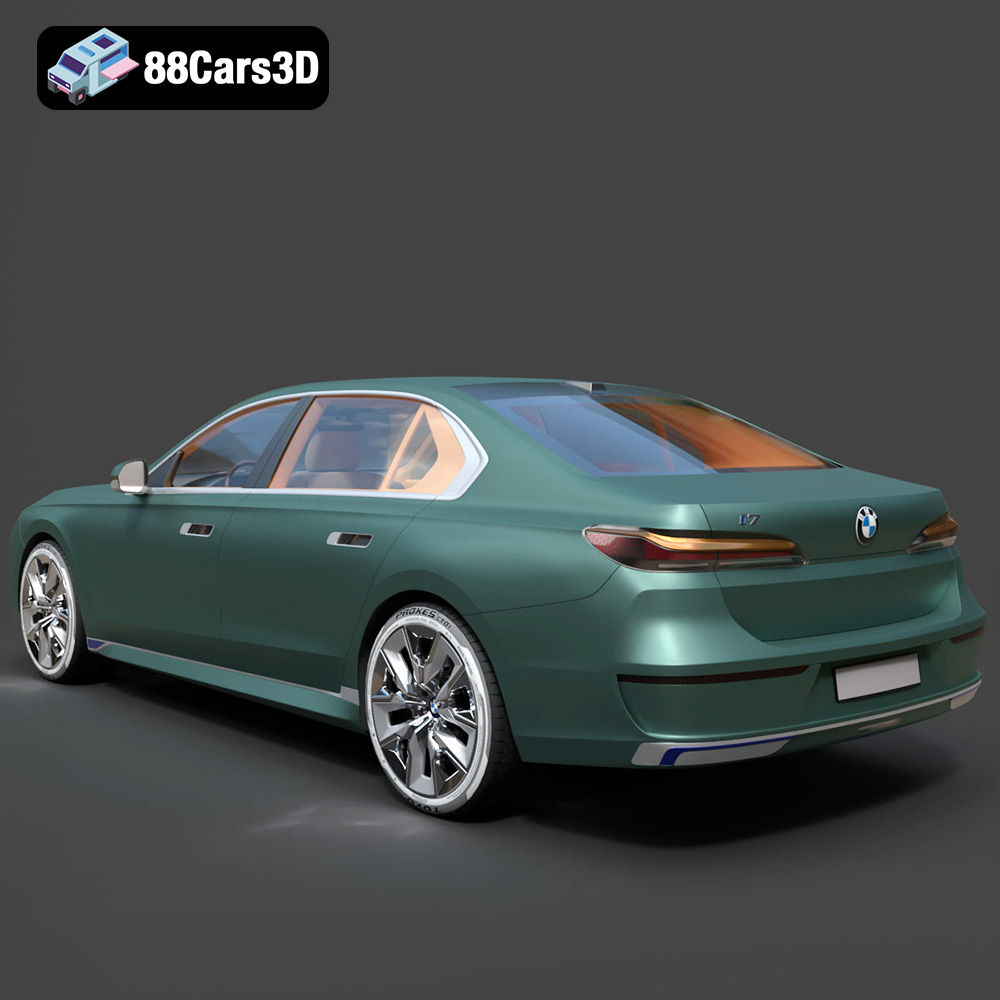
The BMW i7 xDrive60 2023 Ultra High-Poly 3D Model is more than just a collection of polygons; it’s a testament to digital craftsmanship, designed to meet the rigorous demands of professional visualization. With over 4.14 million triangles, this model is built for scrutiny, holding up flawlessly under extreme close-up macro shots and high-resolution renders.
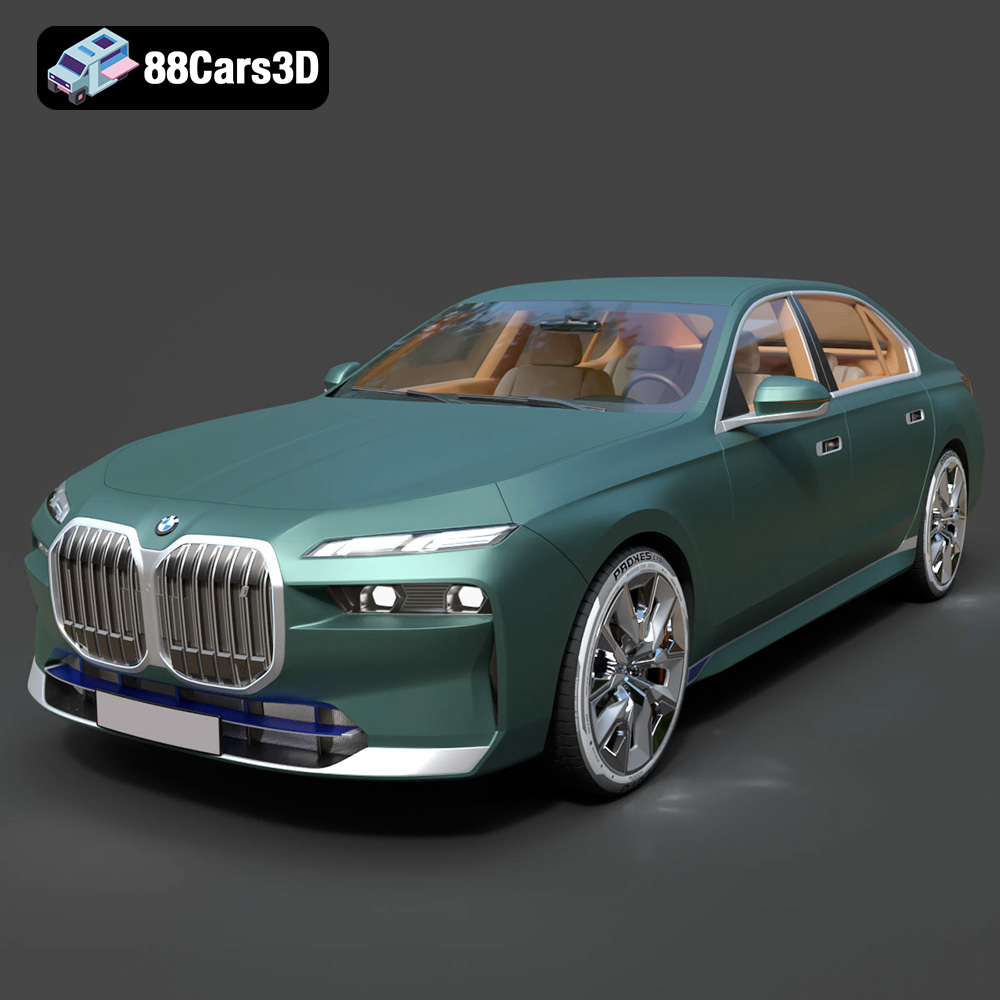
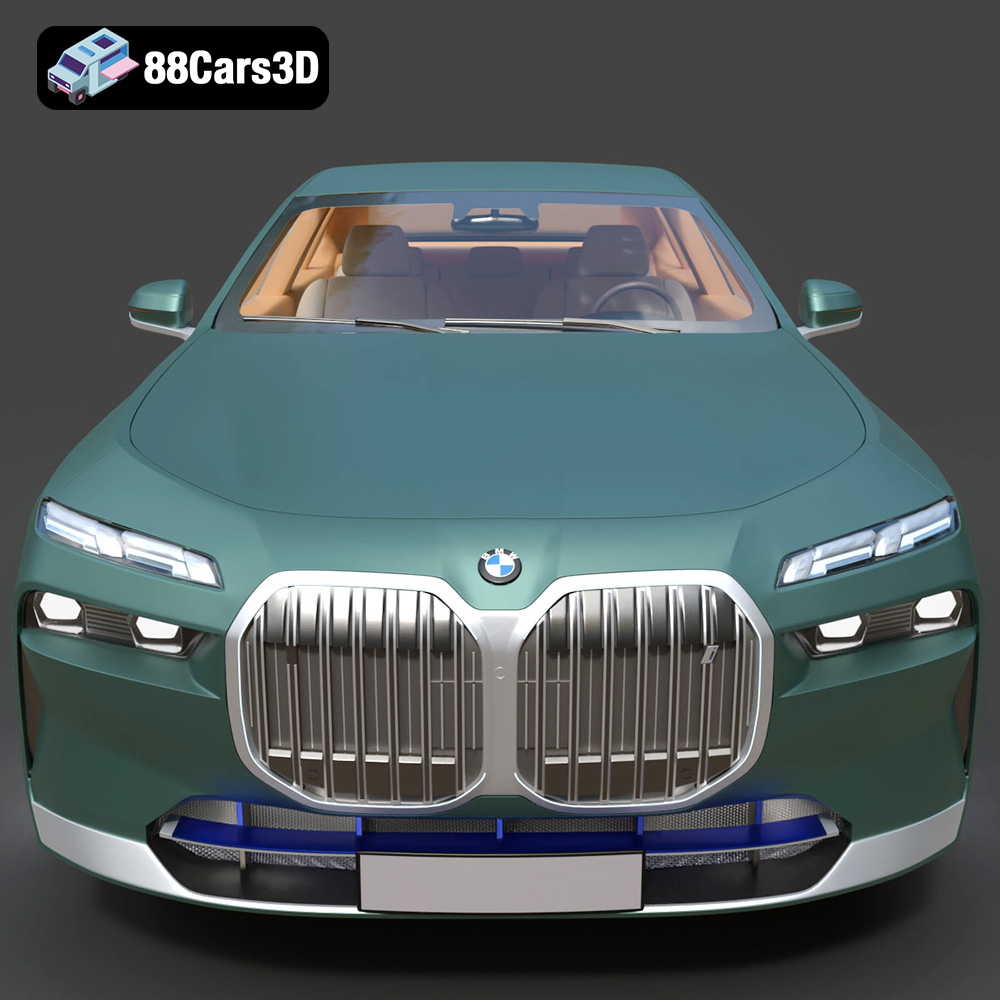
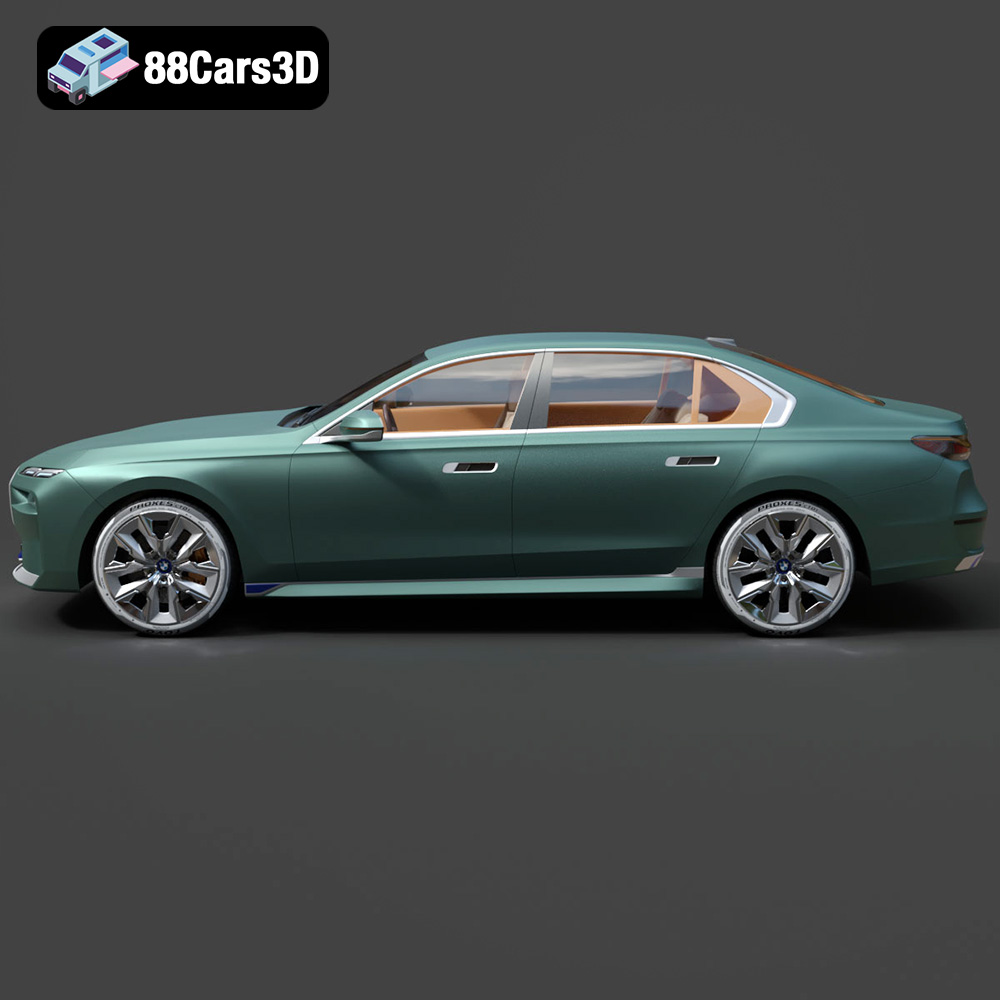
BMW’s latest 7 Series, and its electric counterpart the i7, introduced a bold, monolithic design language. This 3D model faithfully translates that vision into the digital domain. You’ll find the distinctive “Iconic Glow” illuminated kidney grille, a signature element that defines its presence. The two-tiered lighting setup, featuring intricate Swarovski crystal daytime running lights and advanced matrix LED headlights, is meticulously modeled, ensuring accurate light refraction and reflections. The flush-fitting door handles, seamless side windows, and the elegant, forward-surging side profile are all reproduced with precision, maintaining the real-world scale and proportions of the G70 generation.
The interior of the i7 is as revolutionary as its exterior, and this 3D model leaves no detail unchecked. The sumptuous, fully modeled driver-centric and rear-passenger luxury cabin layout is a highlight. The highly detailed dashboard features the impressive BMW Curved Display, seamlessly combining the 12.3-inch instrument and 14.9-inch control screens. Perhaps most striking is the faceted, crystalline BMW Interaction Bar that stretches elegantly across the dashboard, a complex design element perfectly replicated. For rear passengers, the opulent Executive Lounge seating geometry with its prominent quilting (mapped for Merino Leather or Wool/Cashmere blends) and the awe-inspiring 31.3-inch BMW Theatre Screen descending from the roof are all present. This level of interior detail is explicitly tailored for high-resolution first-person POV renders and immersive VR experiences, making it an invaluable asset for showcasing luxury.
With 2,271,955 vertices and 4,148,958 triangles, this model stands as a premium “hero” asset. This exceptionally dense, quad-heavy structure is paramount for achieving perfectly smooth reflections, flawless light interplay, and zero faceting, even when rendered at extreme macro magnifications. For automotive rendering professionals, this means no unsightly polygon edges disrupting the sleek lines of the i7, ensuring that every render is visually impeccable. The model also features proper pivot setups for steering, wheel rotation, and door articulation, streamlining the animation process for dynamic scenes and presentations.
When acquiring 3D car models, understanding the various file formats is crucial for seamless integration into your workflow and optimal performance. The BMW i7 xDrive60 2023 Ultra High-Poly 3D Model from 88cars3d.com comes with a comprehensive suite of formats, each serving distinct purposes. Selecting the correct format can save significant time and effort, ensuring compatibility and leveraging specific software capabilities.
The .blend format is Blender’s native file type. When you download a .blend file, you’re getting a fully editable Blender scene, complete with materials, textures, lighting, and camera setups as envisioned by the artist. This format is ideal for Blender users who want to dive directly into a well-organized project, tweak materials, adjust scene elements, or simply use the model as a starting point for their own creations. It offers maximum flexibility within the Blender ecosystem, often preserving intricate node-based materials and modifiers that might be lost in other export formats.
.fbx (Filmbox) is a proprietary file format developed by Autodesk, widely regarded as the industry standard for exchanging 3D data between different software applications. It excels in transferring animated models, rigs, and complex scene data. For artists working in Unreal Engine, Unity, or other real-time pipelines, .fbx is often the go-to choice. It efficiently carries mesh data, materials (though sometimes simplified), textures, animations, and even camera/light information. Its robust nature makes it highly compatible, ensuring that your 3D car model retains its essential attributes when moving between applications like 3ds Max, Maya, Blender, and game engines.
.obj (Wavefront OBJ) is one of the oldest and most universally supported 3D file formats. It’s a simple, text-based format that primarily stores geometry data—vertices, normals, texture coordinates, and faces. While it doesn’t typically store advanced material definitions or animations, its strength lies in its widespread compatibility. Almost every 3D software can import and export .obj files. This makes it an excellent choice for cross-software compatibility when the primary concern is the mesh itself. Materials are usually referenced via a companion .mtl (material template library) file, which defines basic properties like color and texture maps.
.glb (GL Transmission Format Binary) is the binary version of glTF, an open-standard, royalty-free specification for 3D scenes and models. It’s specifically optimized for efficient transmission and loading of 3D content, particularly for web-based applications, augmented reality (AR), and virtual reality (VR) experiences. A single .glb file can encapsulate mesh data, textures, materials, animations, and even skeletal information, making it incredibly convenient for sharing and deploying interactive 3D content. Its compact size and optimized structure are perfect for environments where performance and quick loading are critical, such as online configurators or mobile AR apps.
.stl (STereoLithography) is the standard file format for 3D printing and computer-aided manufacturing (CAM). It represents a 3D model as a collection of unconnected triangular facets, without color, texture, or material information. While not suitable for rendering or animation, its simplicity makes it ideal for defining the surface geometry of physical objects. When you want to bring the detailed BMW i7 3D Model to life through 3D printing, the .stl format is what your slicer software will use to prepare the model for fabrication.
.ply (Polygon File Format or Stanford Triangle Format) is another format used for storing 3D data, particularly data from 3D scanners. It can store a wider range of properties than .obj, including color, transparency, and even confidence values for each vertex. It’s often used in CAD (Computer-Aided Design) applications and for representing mesh data that has been generated from real-world scans. For analytical tasks or workflows involving precise mesh data and attributes, .ply offers a robust solution.
The .unreal format signifies an asset that is specifically packaged and optimized for direct import into Unreal Engine. While Unreal Engine often uses .fbx for initial import, a .unreal asset typically implies a pre-configured, engine-ready package that might include specific material setups, LODs (Levels of Detail), collision meshes, and blueprints, simplifying the integration process for game developers and real-time visualization artists. This can save immense time in asset preparation and ensure the model performs optimally within the engine’s environment.
Finally, the .max format is the native scene file for Autodesk 3ds Max. Similar to .blend for Blender, a .max file contains the entire 3ds Max project, including all geometry, materials, textures, lighting, cameras, animation, and scene settings. It’s the most comprehensive format for users of 3ds Max, offering complete editability and access to all the features and modifiers used during the model’s creation. This is invaluable for artists who wish to fully dissect the model, adapt its rigging, or integrate it into complex 3ds Max scenes for high-end automotive rendering.
The BMW i7 xDrive60 2023 Ultra High-Poly 3D Model is engineered not just for beauty, but for seamless integration into various professional pipelines. Its technical specifications and multi-format availability make it a versatile tool for demanding creative projects.
For ArchViz specialists and luxury real estate marketers, an automotive element often elevates a scene from good to breathtaking. The i7 3D model is the absolute gold standard for creating compelling, forward-thinking visualizations. Imagine this electric luxury sedan parked elegantly in the driveway of a modern, minimalist mansion, its “Iconic Glow” grille subtly illuminating the scene. Its uncompromised detail ensures that even when the car is a secondary element, it commands attention. Its dense topology ensures perfect reflections on its surfaces, critical for conveying opulence and realism in high-end renders. From virtual showrooms to lifestyle campaigns, this model serves as an indispensable asset for conveying prestige and innovation.
In cinematic commercial productions and film VFX projects, every pixel matters. The BMW i7 xDrive60 2023 Ultra High-Poly 3D Model shines as a primary “hero” vehicle, capable of withstanding the closest scrutiny. Its meticulously detailed exterior, including the intricate Swarovski crystal headlights and flush door handles, provides the necessary fidelity for complex visual effects shots. For example, a commercial might feature a dramatic close-up revealing the texture of the Merino Leather interior or the glow of the Interaction Bar. The model’s separate wheels, steering components, and doors simplify the rigging and animation process, allowing VFX artists to create dynamic shots, from high-speed chases to elegant, slow-motion reveals. Compatibility with major rendering engines like V-Ray, Corona, and Arnold ensures stunning, photorealistic output that matches live-action footage.
While the BMW i7 xDrive60 2023 Ultra High-Poly 3D Model boasts over 4.14 million triangles, which is exceptionally heavy for standard real-time game engines or mobile/VR applications, it finds its niche in cutting-edge environments. For high-fidelity game development, particularly with Unreal Engine 5’s Nanite virtualized geometry system, this model is perfectly suited. Nanite allows game engines to render millions of polygons without significant performance overhead, meaning the i7 can be directly implemented with its full detail. For other real-time applications, the model serves as an excellent base for creating highly optimized versions through manual retopology or decimation. Game artists can bake its incredible detail into normal maps and other texture maps for a lower-poly version, ensuring visual fidelity without sacrificing performance. This makes it a versatile starting point for racing simulations, open-world games, or interactive configurators where high visual quality is paramount.
The true potential of an ultra-high-poly 3D model like the BMW i7 xDrive60 2023 lies in its flexibility for rendering and customization. Professionals need assets that not only look good out-of-the-box but can also be adapted to fit specific project requirements and creative visions.
The BMW i7 model is compatible with industry-leading rendering engines such as V-Ray, Corona, and Arnold. These engines leverage the model’s dense, quad-heavy topology to produce renders that are virtually indistinguishable from photographs. Key to this photorealism is the accurate representation of physically based rendering (PBR) materials. The model’s structure ensures that reflections behave correctly across its smooth surfaces, light interacts realistically with the “Iconic Glow” grille and Swarovski crystal headlights, and the opulent interior materials like Merino Leather or Wool/Cashmere blends react appropriately to light. Mastering these engines involves careful material setup, precise lighting, and thoughtful camera placement, all of which are enhanced by the inherent quality of the i7 3D asset from 88cars3d.com.
Beyond its inherent quality, the i7 3D model offers significant customization options, allowing artists to tailor it to specific scenes or brand requirements. You can apply BMW’s bespoke Two-Tone exterior paint schemes, such as Liquid Copper over Black Sapphire, to showcase unique luxury configurations. The model also allows for switching between the aggressive M Sport package styling and the more elegant Design Pure Excellence trims, providing visual versatility. Inside, you can configure the ambient lighting to showcase the subtle glow of the Interaction Bar, perfect for moody, nighttime scenes or demonstrating the vehicle’s advanced technology in a virtual showroom.
The interaction of light with the i7’s meticulously modeled surfaces is what truly brings it to life. Artists can adapt High Dynamic Range Images (HDRIs) to create diverse environmental reflections and lighting scenarios. Whether it’s a bright, sun-drenched modern architectural environment, a dramatic studio setup with controlled highlights, or a moody, rainy urban street, the model’s high-fidelity surfaces will capture these nuances beautifully. This capability is vital for creating persuasive automotive renders that tell a story and evoke emotion, showcasing the i7 in its ideal context, whether digital or imagined.
The versatility of the BMW i7 xDrive60 2023 Ultra High-Poly 3D Model extends beyond the digital realm, offering an excellent foundation for physical fabrication through 3D printing. For hobbyists, designers, or automotive enthusiasts, bringing this luxury sedan into the tangible world at a detailed scale is a rewarding endeavor.
Given the ultra-high-poly nature of the model and its intricate details like the Swarovski crystal headlights and interior screens, resin printing is highly recommended. Resin printers (SLA/DLP/LCD) offer significantly finer detail resolution compared to FDM printers. Recommended scales range from 1:24 to 1:12, allowing for a substantial, highly detailed replica. A layer height of 0.04–0.08 mm will ensure that microscopic details are captured. Wall thickness should be between 1.5–2.5 mm for structural integrity. Supports will be required for overhangs such as side mirrors, wheels, and the complex grille structure. Printing the body angled for a smooth surface finish and the wheels separately will optimize print quality and simplify assembly.
After printing, post-processing is crucial to achieve a flawless, professional finish that mirrors the real BMW i7. This typically involves careful sanding to remove support marks and smooth surfaces, followed by the application of primer to create an even base. The final step is painting, where modern BMW paint finishes (e.g., Space Silver, Black Sapphire, or striking BMW Individual Two-Tone finishes) can be meticulously applied. The goal is to replicate the luxurious sheen and color depth of the actual vehicle, transforming a raw 3D print into a display-worthy model. This process allows for an immersive, tactile experience with a digital asset that started its life in a virtual environment.
The BMW i7 xDrive60 2023 Ultra High-Poly 3D Model stands as a benchmark for digital automotive assets. Its uncompromising detail, from the “Iconic Glow” grille to the immersive BMW Theatre Screen interior, provides professionals with a powerful tool for a multitude of applications. Whether your project demands photorealistic automotive rendering for architectural visualization, high-fidelity visual effects for cinematic productions, or a detailed base for cutting-edge game development, this model delivers. Its comprehensive range of file formats, including .blend, .fbx, .obj, .glb, .stl, .ply, .unreal, and .max, ensures seamless integration into virtually any professional workflow.
The ability to customize finishes, interior configurations, and lighting setups empowers artists to tell compelling stories and create visually stunning experiences. For those looking to bridge the gap between the digital and physical, the model also serves as an exceptional foundation for highly detailed 3D prints. For professionals seeking the absolute best in 3D car models, the BMW i7 xDrive60 2023 Ultra High-Poly 3D Model available at 88cars3d.com is an indispensable asset that truly redefines digital luxury and precision.
The BMW i7 (2023) 3D Model is an uncompromising, ultra-high-detail digital recreation of the Bavarian automaker’s all-electric flagship luxury sedan. Representing the groundbreaking G70 generation, the i7 redefines the modern luxury segment by combining progressive, monolithic design language with next-generation electric mobility and uncompromised digital innovation. This 3D model meticulously captures the bold, visionary aesthetic of the new 7 Series architecture. It features the massive, striking “Iconic Glow” illuminated kidney grille, the split-level Swarovski crystal headlights, flush-fitting door handles, and the elegant, forward-surging side profile. Built with an incredibly dense and uncompromised topology (over 4.14 million triangles), it delivers absolute photorealism. This model is engineered to hold up to the most extreme close-up macro shots, making it the ultimate asset for high-end architectural visualization, cinematic commercial productions, and luxury lifestyle renders. Perfect for ultra-luxury ArchViz driveways, cinematic automotive showcases, high-end commercial VFX, and premium virtual showrooms.
$19.99
.archviz
.automotive
.blend
.bmw
.ev
.fbx
.g70
.i7
.obj
.rendering
2023-bmw
bmw-i7
car-3d-model
electric-vehicle
hero-car
high poly
luxury-sedan
vfx