Get 50% OFF All Premium 3D & STL Models!

In the vibrant world of 3D visualization and simulation, the demand for highly detailed, optimized, and versatile 3D models is perpetually on the rise. From blockbuster game titles and immersive architectural visualizations to cutting-edge AR/VR experiences and even precision 3D printing, professionals across diverse industries rely on quality assets to bring their visions to life. At the heart of many modern digital scenes and interactive environments are meticulously crafted vehicles, serving as crucial elements that ground virtual worlds in realism and provide essential context.
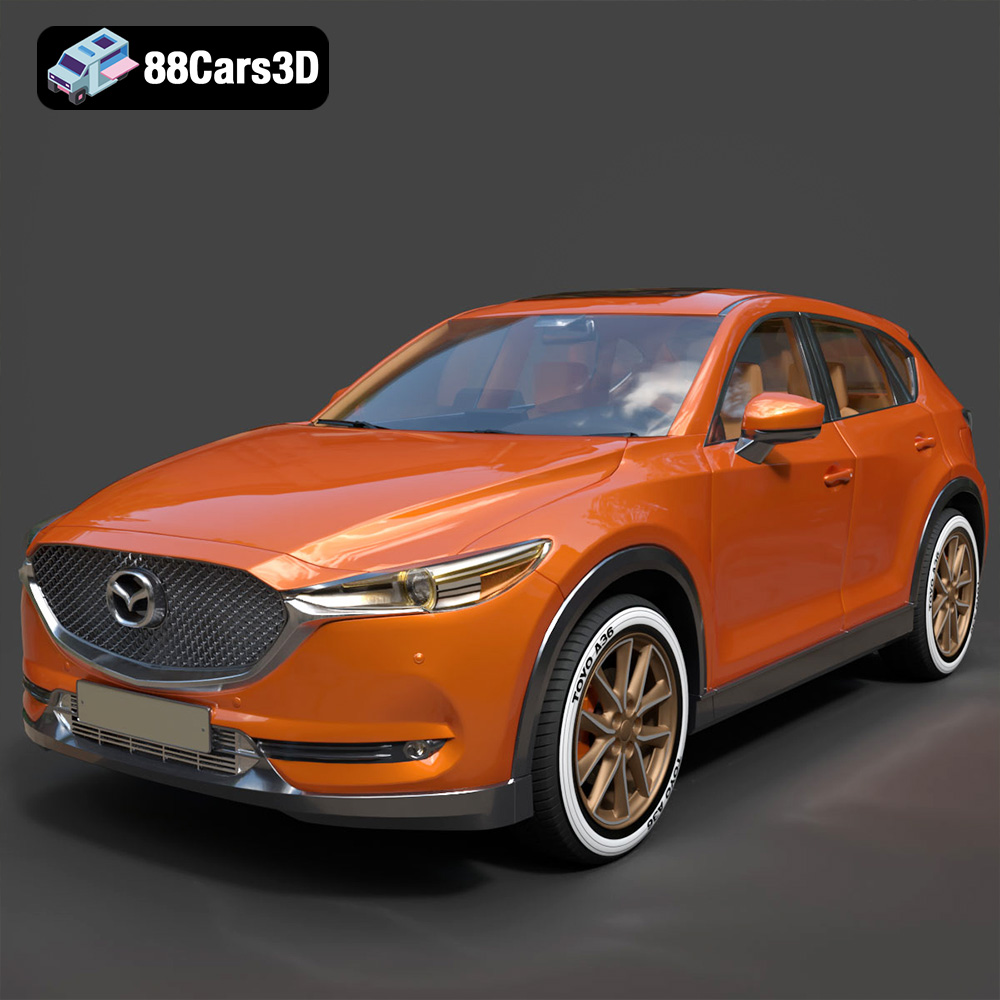
Few models exemplify the blend of aesthetic appeal and technical efficiency quite like a well-executed contemporary vehicle. Consider the Mazda CX5_2014, a model that captures the essence of Mazda’s “Kodo: Soul of Motion” design philosophy in a compact crossover SUV. This particular 3D model stands out as a prime example of an asset designed not just for visual fidelity, but also for practical application across a spectrum of professional workflows. Whether you’re populating a bustling urban street in an architectural render, integrating a drivable vehicle into a new open-world game, or even creating an interactive showroom in augmented reality, the quality and versatility of your chosen 3D car models are paramount. This article will delve into the technical nuances and creative applications of such an asset, showcasing how a single, well-crafted model can serve multiple high-stakes purposes in today’s demanding digital landscape.
Navigating the ecosystem of 3D software and real-time engines requires a clear understanding of the various file formats available. Each format serves a specific purpose, offering unique advantages for different stages of a project, from initial modeling and animation to final rendering, game integration, or even physical fabrication. The Mazda CX5_2014 model, for instance, is offered in a comprehensive range of formats, ensuring maximum compatibility and utility for any professional workflow. Let’s break down these essential formats and their optimal use cases.
The .blend format is the native file type for Blender, a powerful open-source 3D creation suite. When you receive a .blend file, you’re getting a complete Blender scene, including the 3D geometry, materials, textures, lighting, cameras, animations, and even physics simulations. For a model like the Mazda CX5_2014, this means full access to its construction. Artists can open the model, modify its mesh, adjust materials directly within Blender’s node editor, rig new components, or even animate the doors and wheels. It’s ideal for users who want complete control over the asset, wish to learn from its topology, or need to adapt it extensively for a Blender-centric project before exporting to other platforms.
FBX (Filmbox) is a proprietary file format owned by Autodesk and is one of the most universally adopted formats in the 3D industry, particularly for game development. It’s excellent for transferring 3D data between different software applications while preserving crucial information like meshes, materials (often as basic assignments, with PBR needing re-setup), animations, bones, and even camera data. For game engines like Unreal Engine and Unity, .fbx is often the preferred import format due to its robust support for animation and skeletal data. The Mazda CX5_2014 in .fbx format ensures that its separate wheels, steering components, and doors can be easily imported and rigged within these engines, making it game-ready for dynamic simulations or player-controlled vehicles.
OBJ (or Wavefront OBJ) is a simple, widely supported geometry definition file format. While it doesn’t typically store animation or rigging information, it’s a powerhouse for transferring static mesh data, including vertices, normals, UV coordinates, and basic material group assignments (often accompanied by an .mtl file for material properties). Its strength lies in its universal compatibility; almost every 3D software can import and export .obj files. This makes it an invaluable “lowest common denominator” for ensuring that the geometry of the Mazda CX5_2014 can be accessed and worked on by virtually any 3D artist, regardless of their primary software.
GLB is the binary version of the glTF (GL Transmission Format), an open-standard, royalty-free specification for 3D scenes and models. It’s rapidly becoming the “JPEG of 3D” due to its efficiency and suitability for web, AR, and VR applications. A .glb file encapsulates not only the 3D model but also its textures, materials (often PBR-ready), and animations into a single, compact file. This makes the Mazda CX5_2014 in .glb format perfect for lightweight interactive experiences, real-time web viewers, e-commerce product displays, and mobile augmented reality apps, delivering high-quality visuals with minimal loading times.
STL (Stereolithography) is the standard file format for 3D printing. It represents a 3D model as a series of connected triangles (a triangulated surface mesh) without color, texture, or other CAD attributes. While simple, it’s universally understood by 3D slicing software, which prepares the model for printing. The Mazda CX5_2014, when converted to .stl, can be brought into the physical world, allowing hobbyists and professionals to 3D print scale models of the vehicle. This requires attention to details like wall thickness and supports, as detailed in the product specifications, to ensure a successful print.
PLY (Polygon File Format, or Stanford Triangle Format) is a versatile format often used for storing 3D data from 3D scanners, CAD software, or for scientific and engineering applications. It can store a wider range of properties than .obj or .stl, including color per vertex, normal information, and often more robust topological data. While less common for everyday artistic asset transfer, its inclusion for the Mazda CX5_2014 speaks to its potential for high-precision workflows, such as reverse engineering, detailed analysis, or integration into specialized CAD systems where exact mesh data is critical.
While not a traditional standalone file format in the same vein as .fbx or .obj, the inclusion of “.unreal” typically implies a version of the asset specifically prepared and optimized for direct import into Unreal Engine projects. This might mean the .fbx has been tested for Unreal’s specific import settings, materials might be pre-configured with basic PBR shaders (or placeholders), and collision meshes or LODs (Levels of Detail) could be pre-generated. For the Mazda CX5_2014, this offers an immediate pathway for game developers to drop the asset into their Unreal Engine scenes with minimal setup, saving significant time on material and scale adjustments.
The .max format is the native scene file for Autodesk 3ds Max, a leading software for 3D modeling, animation, rendering, and compositing. Similar to .blend for Blender, a .max file contains all scene data—geometry, materials, textures, lights, cameras, animations, and modifiers. Having the Mazda CX5_2014 in .max format provides 3ds Max users with the highest level of flexibility for modification, high-end rendering with V-Ray or Corona, and complex animation setups. This is particularly valuable for architectural visualization studios or automotive design firms that rely on 3ds Max for their primary workflow.
The availability of the Mazda CX5_2014 in such a broad array of formats underscores its adaptability, allowing professionals to integrate this high-quality 3D car model seamlessly into virtually any production pipeline. Sourcing such versatile 3D car models from marketplaces like 88cars3d.com ensures that you have the right tool for every job.
Automotive visualization is a cornerstone of modern design, marketing, and architectural rendering. It’s where the sleek lines and dynamic presence of a vehicle like the Mazda CX5_2014 truly shine. High-quality 3D car models are indispensable for creating compelling photorealistic imagery, allowing artists to place vehicles in any imagined environment, under any lighting condition, long before a physical prototype exists.
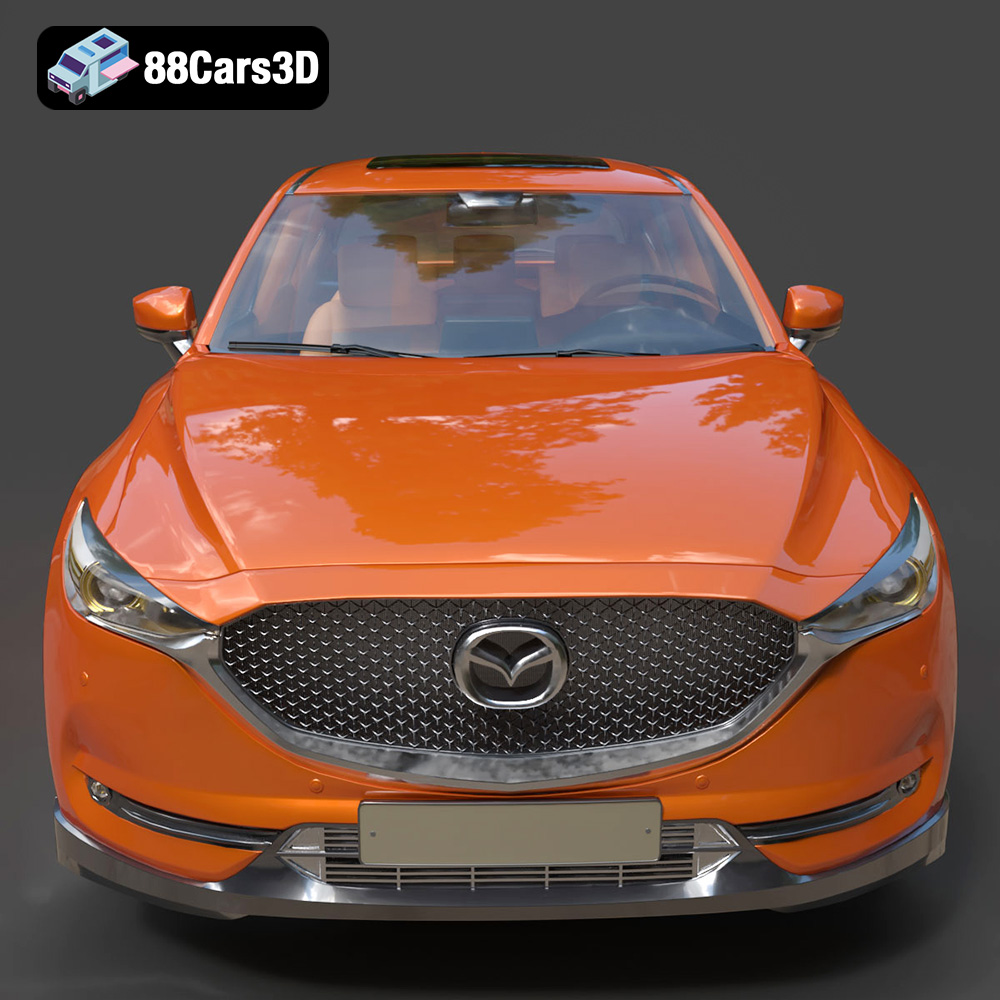
In architectural visualization (ArchViz), the surrounding environment is just as crucial as the building itself. A well-placed vehicle can instantly convey a sense of scale, lifestyle, and realism. The Mazda CX5_2014, with its “Kodo: Soul of Motion” design language, represents a modern, stylish compact SUV – a common sight in contemporary suburban or urban settings. Its accurate 2014 proportions and distinctive features like the prominent signature front grille and sleek swept-back headlight housings make it instantly recognizable and relatable. For an ArchViz project, dropping this model into a driveway, parking lot, or street scene immediately adds authenticity and a touch of everyday premium, enriching the narrative of the architectural design. It’s not just a car; it’s a character element that tells a story about the inhabitants and their environment. Marketing professionals also leverage such models for product showcases, allowing them to render the CX-5 in ideal scenarios, highlighting its aesthetic appeal without the logistical complexities of physical photography.
Achieving photorealistic automotive rendering demands a meticulous approach to lighting and materials. Software like 3ds Max and Blender, often paired with powerful render engines like V-Ray, Corona Renderer, Octane, or Cycles, are the industry standards. When working with the Mazda CX5_2014, its highly optimized, clean quad-based topology provides an excellent foundation. Artists can apply complex PBR (Physically Based Rendering) materials that accurately simulate paint reflectivity, tire rubber, window glass, and chrome details. For instance, recreating Mazda’s iconic “Soul Red Metallic” paint requires careful manipulation of clear coat layers, metallic flakes, and subsurface scattering properties within the shader. In 3ds Max, using a layered material or composite material can achieve this intricate effect. In Blender, a similar result is attainable using a principled BSDF shader combined with metallic and roughness maps. Advanced lighting setups, such as HDRI (High Dynamic Range Image) environment maps combined with targeted area lights, are used to simulate real-world lighting, capturing nuanced reflections and shadows that define the car’s sculpted surfaces. The model’s real-world scale accuracy further ensures that these lighting and material interactions behave realistically within the digital scene, leading to breathtakingly lifelike renders.
The interactive entertainment industry relies heavily on efficient yet visually stunning 3D assets. Game developers constantly balance graphical fidelity with performance, especially for real-time environments. The Mazda CX5_2014 3D model, with its intelligently optimized topology, is an ideal candidate for integration into modern game engines, from AAA titles to mobile experiences.
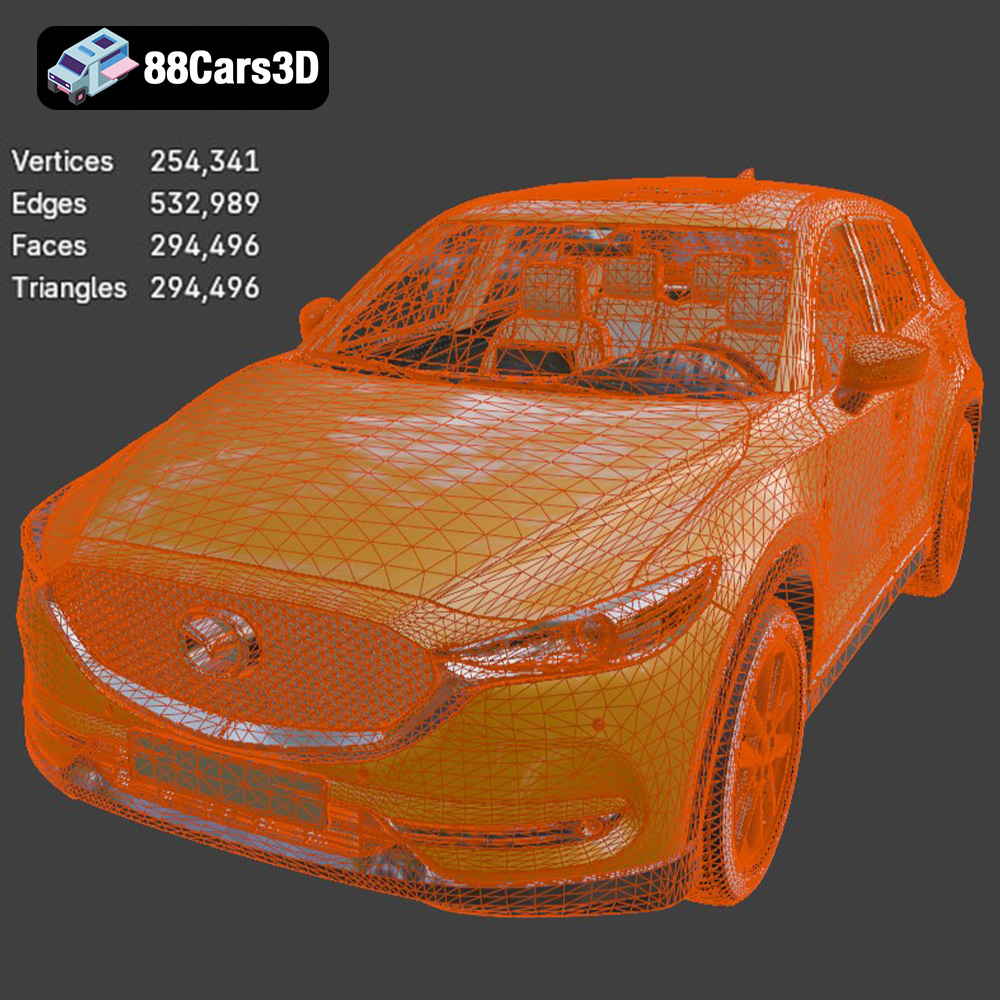
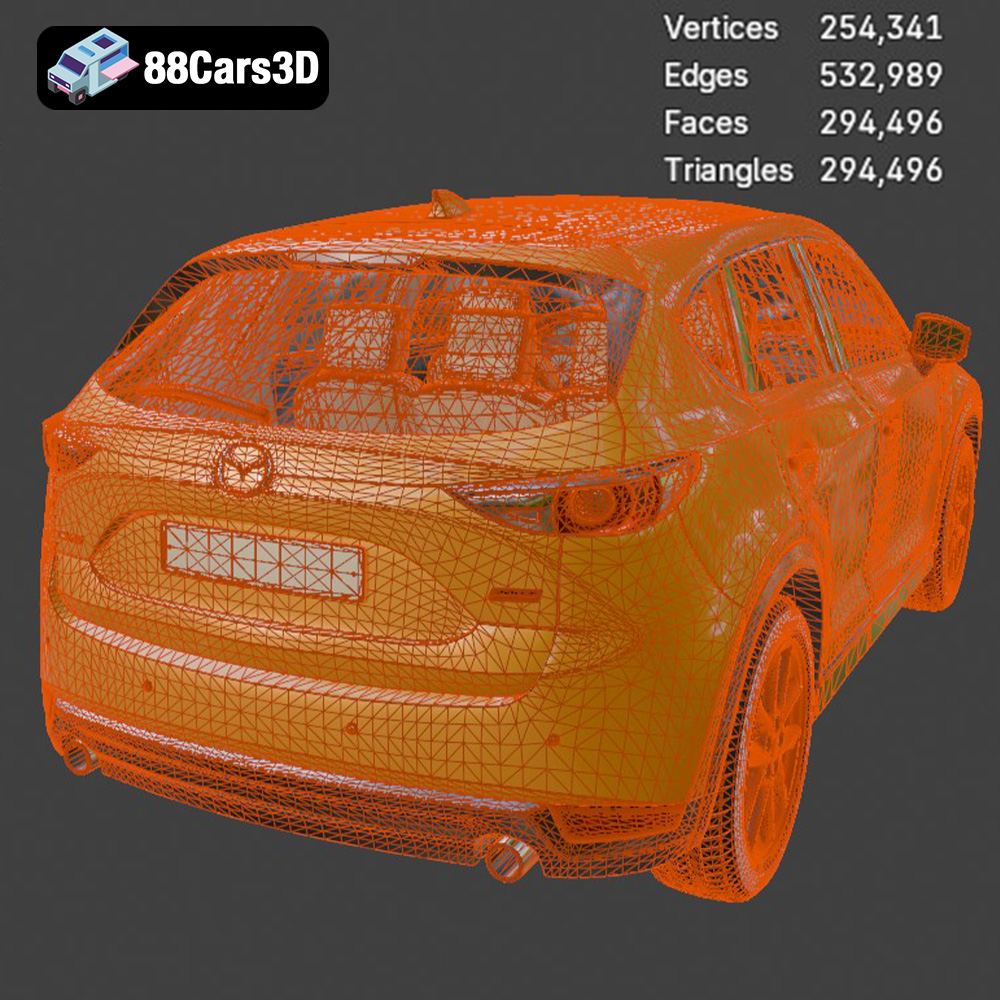
The technical specifications of the Mazda CX5_2014 are perfectly suited for game development. With just under 295k triangles, it hits a sweet spot for a mid-poly asset. This poly count is detailed enough for close-up views or even as a drivable vehicle, yet efficient enough for populating dense traffic simulations or background elements without crippling frame rates. For Unreal Engine and Unity, the model’s clean, quad-based structure simplifies the process of generating LODs (Levels of Detail). Developers can automatically or manually create lower-polygon versions of the model that swap in as the car moves further from the camera, further boosting performance. The included `.fbx` and `.unreal` formats streamline the import process, ensuring that the separate wheels, steering components, and doors maintain their pivot points. This allows for straightforward rigging and animation within the game engine, enabling realistic physics-based driving mechanics, door openings, or even simple car washes in open-world games. Developers can also easily set up collision meshes and implement destructible elements if desired, all built upon the robust base geometry.
Beyond traditional gaming, the rise of augmented reality (AR) and virtual reality (VR) has opened new frontiers for 3D models. The optimized geometry of the Mazda CX5_2014 makes it perfect for AR/VR applications, where performance is paramount to avoid motion sickness and maintain immersion. Imagine an interactive digital showroom where potential buyers can explore the CX-5 in full 3D, change its paint color (like the “Soul Red” or “Crystal White Pearl”), open its doors, and even sit inside the virtual cabin. The `.glb` format, specifically designed for web and AR/VR, ensures that this experience is lightweight and loads quickly on various devices, from high-end VR headsets to mobile phones. For urban planning VR experiences or interactive web configurators, having a realistic yet performance-friendly vehicle model allows users to engage with digital content seamlessly, enhancing the overall user experience and providing tangible value for design and sales teams.
The utility of 3D models extends beyond the digital realm. The ability to translate a virtual object into a physical one has revolutionized prototyping, education, and hobbyist communities. The Mazda CX5_2014 model offers a fantastic opportunity for this, especially for enthusiasts of automotive design and model making.
The transformation from a digital 3D car model to a tangible object begins with format conversion. The `.stl` file format, included with the Mazda CX5_2014, is the universal language for 3D printers. This triangulated mesh data is fed into a “slicer” software, which digitally cuts the model into thin layers, generating the toolpath for the 3D printer. For automotive enthusiasts, this means they can create display-scale models of the 2014 CX-5, allowing for a hands-on appreciation of its “Kodo” design elements and accurate proportions. It’s a bridge between the virtual design world and the physical hobby of model building, offering a unique opportunity to own a personalized, custom-scaled representation of this compact crossover.
Successfully 3D printing a detailed automotive model like the Mazda CX5_2014 requires careful attention to specific settings. The recommended scales (1:24, 1:32, 1:43) are standard for model cars, balancing detail with manageable print times and material usage. For smaller scales and intricate details like the grille mesh and wipers, resin printing is highly recommended due to its ability to achieve finer layer heights (0.04–0.12 mm) and sharper features compared to filament-based FDM printers. Wall thickness (1.2–2.0 mm) is crucial for structural integrity, ensuring the model doesn’t become brittle. Infill (15–25%) provides internal support without excessive material consumption. Supports are almost always required for overhangs such as side mirrors, wheel arches, and the rear roof spoiler to prevent warping and ensure fidelity. Printing the body angled for a smooth surface finish and printing wheels separately allows for optimal detail and easier post-processing. After printing, post-processing such as sanding, priming, and applying a paint finish – perhaps the signature “Soul Red Metallic” or classic “Crystal White Pearl” – transforms the raw print into a stunning miniature replica, showcasing the journey from digital design to physical artifact.
The true value of any 3D asset lies not just in its visual appeal, but in its underlying technical quality. For professionals, robust technical specifications translate directly into workflow efficiency and superior end results. The Mazda CX5_2014 model from 88cars3d.com embodies this principle, offering a meticulously crafted foundation for diverse applications.
At the core of the Mazda CX5_2014 model’s efficiency is its highly optimized topology. With 254,341 vertices and 294,496 triangles, it strikes an impressive balance between detail and performance. The description emphasizes a “beautifully clean, quad-based structure,” which is the gold standard in 3D modeling. Quad-based topology facilitates smooth subdivision, clean deformation during animation, and easier mesh editing. This efficiency means artists can render dense, realistic scenes with multiple instances of the CX-5 without overwhelming their hardware. The model also adheres to real-world scale accuracy, based on Mazda factory dimensions. This is critical for seamless integration into architectural scenes, accurate physics simulations in games, and correct sizing for 3D printing. Furthermore, the model comes with a proper pivot setup for steering and wheel rotation, and separate components for wheels, steering, and doors. This “rigging readiness” drastically cuts down on preparation time for animators and game developers, allowing them to quickly set up vehicle dynamics or create interactive elements, saving countless hours in production.
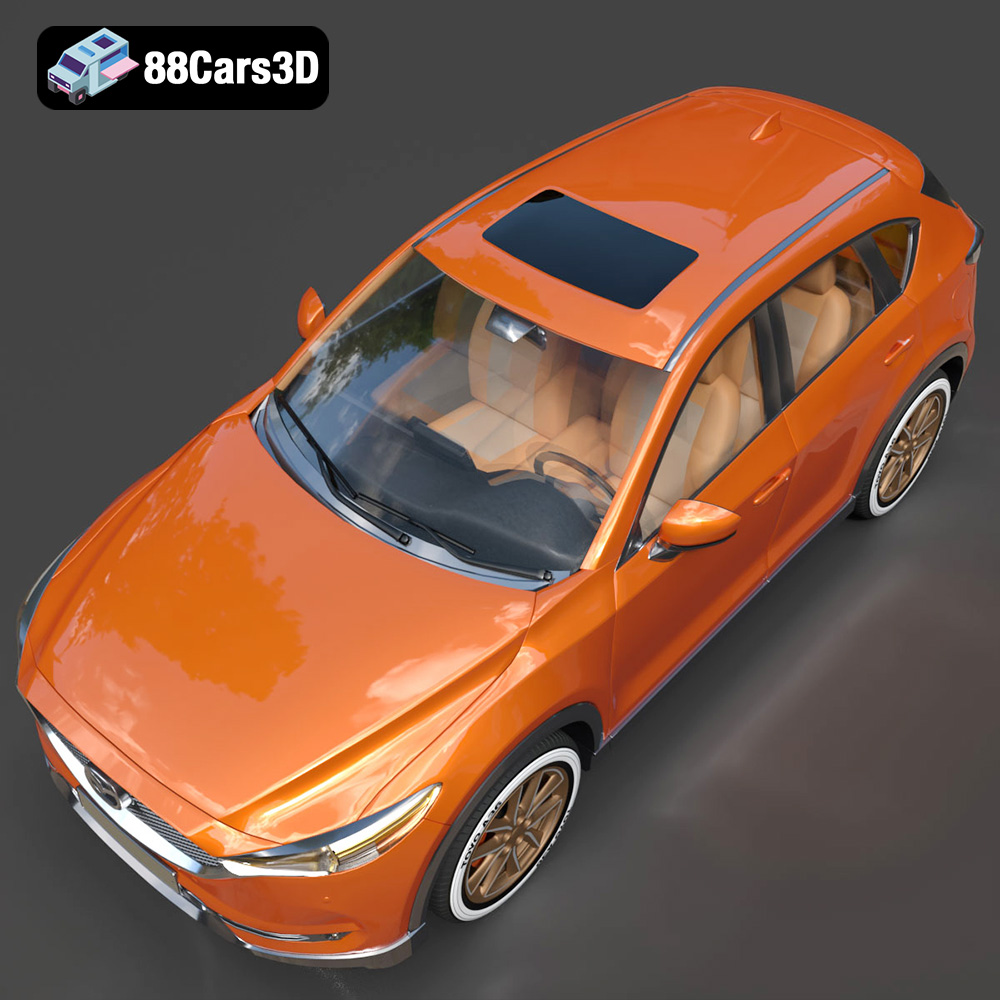
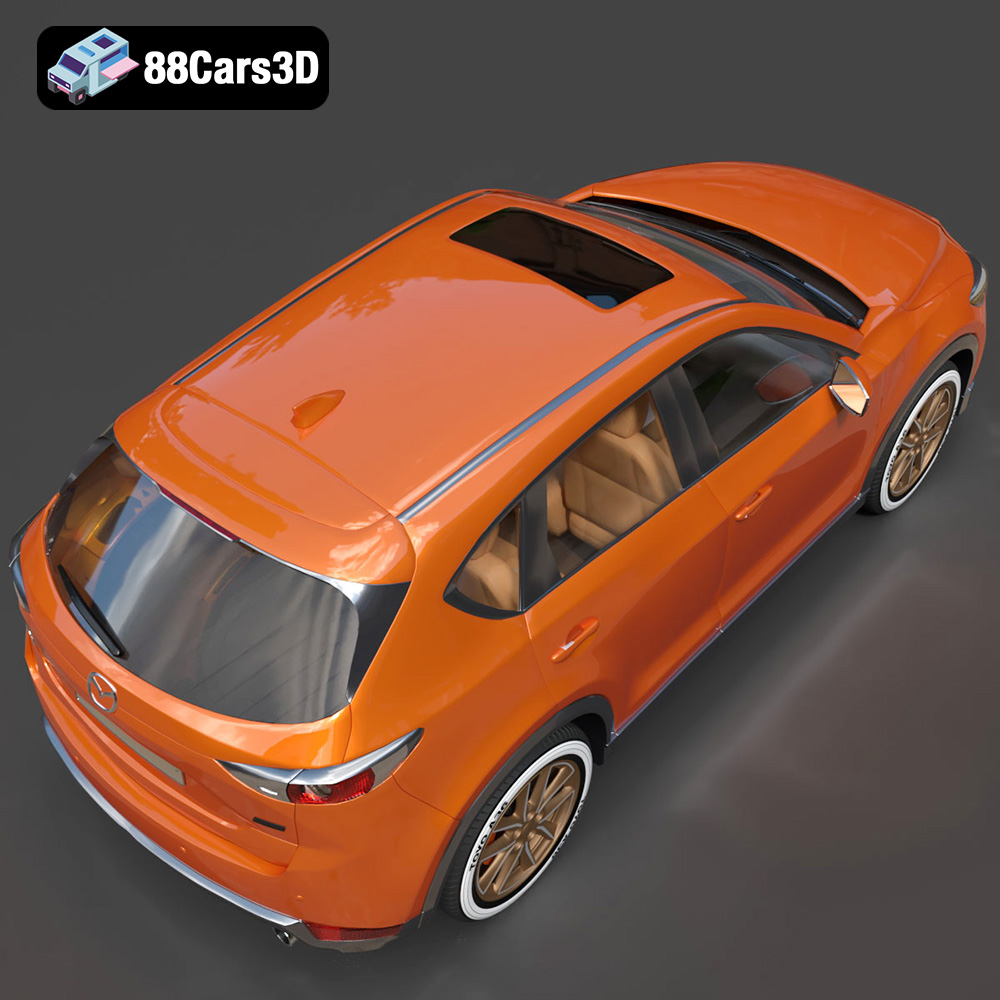
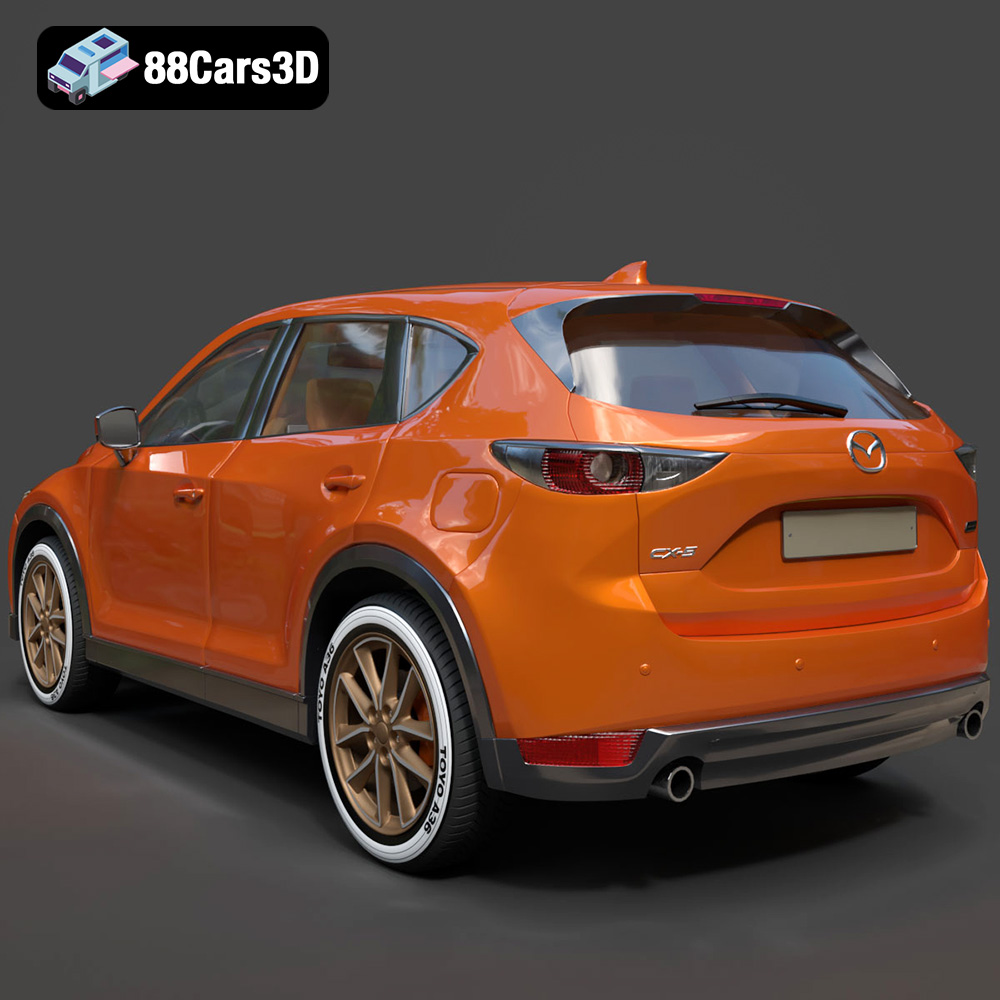
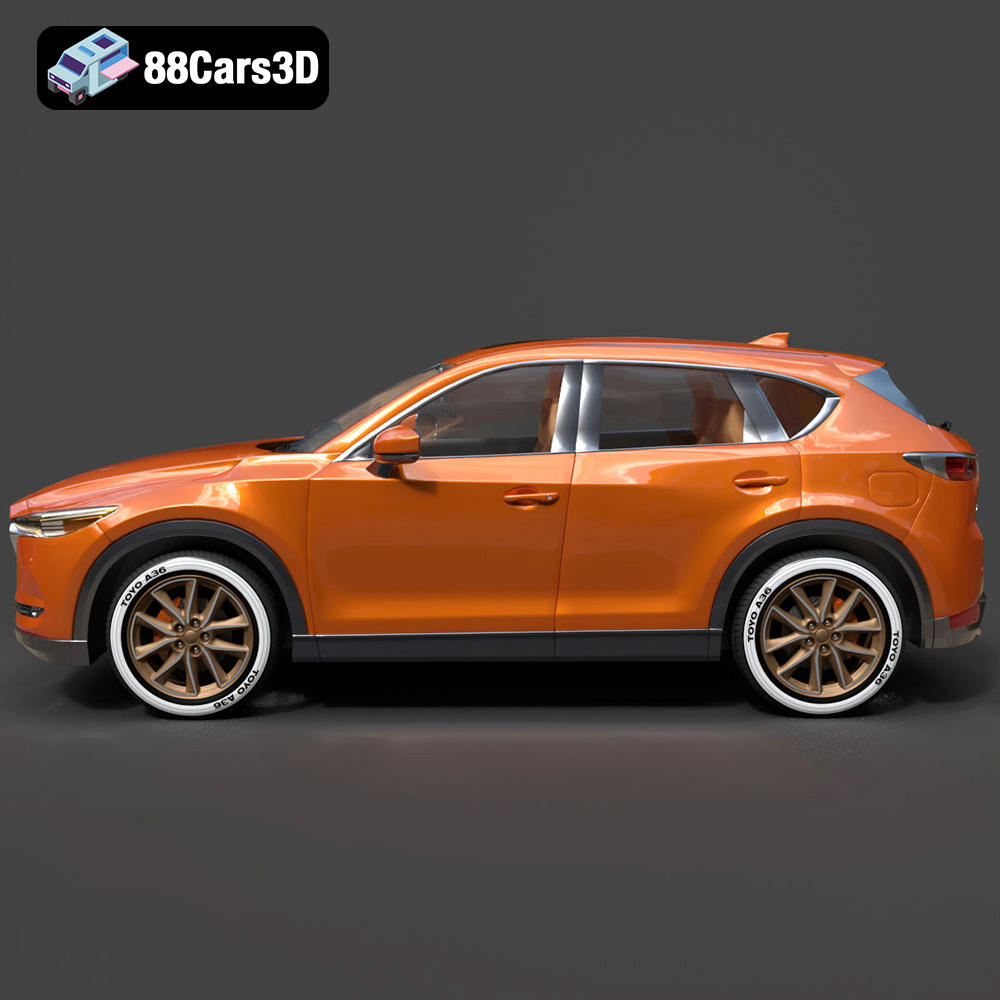
The attention to detail in the Mazda CX5_2014 extends to both its exterior and interior. Externally, it perfectly captures the dynamic “Kodo” design language, from the prominent signature front grille and sleek swept-back headlight housings to the smooth, flowing aerodynamic body lines and sculpted side panels. These details are crucial for realistic rendering and for the immediate recognition of the vehicle’s make and model. Internally, the model features an authentic, driver-focused cabin layout. This includes a detailed dashboard with an infotainment screen housing and instrument cluster, realistic seating geometry for five passengers, and a clean center console with gear shifter and cup holder representations. Critically, the interior geometry is “optimized… to look great from the exterior or in VR without bloating the poly count.” This smart optimization ensures that the model can be used effectively for various scenarios – from background traffic where only the exterior is visible, to close-up shots or immersive VR experiences where the interior needs to hold up under scrutiny. This thoughtful balance of detail and optimization makes the Mazda CX5_2014 an incredibly versatile and valuable asset for any professional requiring high-quality 3D car models.
The journey through the technical depths and creative applications of the Mazda CX5_2014 3D model reveals it to be far more than just a digital representation of a car. It is a highly versatile and meticulously engineered asset, designed to meet the rigorous demands of contemporary 3D production pipelines. From enriching architectural visualizations with its dynamic “Kodo” design and optimizing real-time environments for immersive game development, to providing a robust base for precision 3D printing, this model offers unparalleled flexibility.
Its clean, mid-polygon topology, accurate real-world scale, and thoughtful structural breakdown for rigging exemplify the highest standards of professional 3D asset creation. The comprehensive range of included file formats ensures that artists and developers, regardless of their preferred software or engine, can seamlessly integrate this model into their workflows. Whether you are an ArchViz artist striving for photorealism, a game developer building an expansive open world, or a designer exploring AR/VR showrooms, the quality and adaptability of models like the Mazda CX5_2014 are critical to achieving exceptional results. Investing in high-quality 3D car models from reputable sources like 88cars3d.com empowers creators to focus on their artistic vision, knowing they have a reliable and powerful tool at their disposal.
The Mazda CX-5 (2014) 3D Model is a highly accurate, beautifully optimized digital recreation of the acclaimed compact crossover SUV. As the first Mazda vehicle to fully embody the striking “Kodo: Soul of Motion” design language and feature the full suite of Skyactiv technologies, the 2014 CX-5 boasts a dynamic, athletic stance that stands out from standard commuter SUVs. This 3D model perfectly captures the sweeping, muscular lines of the first-generation CX-5. It features the signature five-point front grille, sleek swept-back headlight housings, sporty dual exhausts, and an aerodynamic profile. Built with an incredibly clean and highly efficient mid-polygon topology (just under 295k triangles), it strikes the ultimate balance between crisp visual fidelity for ArchViz renders and lightweight performance for real-time game engines. Perfect for populating modern suburban street scenes, architectural visualizations, urban traffic simulations, and mobile or PC game development.
$19.99
.archviz
.blend
.crossover
.cx5
.fbx
.mazda
.obj
.rendering
2014-mazda
car-3d-model
cx-5
game-ready
kodo-design
mazda-cx5
mid-poly
SUV
traffic-car