Get 50% OFF All Premium 3D & STL Models!

In the realm of automotive design, concept cars are more than just vehicles; they are bold declarations, pushing the boundaries of aesthetics, technology, and luxury. They offer a glimpse into a potential future, igniting imagination and setting new benchmarks. Among these visionary creations, the Cadillac Ciel Concept 2011 stands out as a breathtaking symbol of open-air grand touring, blending dramatic proportions with an unapologetically modern design language. Its elongated body, rear-hinged doors, and roofless four-door convertible layout redefined what a luxury sedan could be.
For professionals across various industries – from cutting-edge game development studios and architectural visualization firms to automotive design houses and immersive AR/VR experience creators – having access to high-fidelity 3D car models of such iconic vehicles is invaluable. These digital assets serve as the foundational building blocks for diverse projects, enabling artists and engineers to integrate stunning realism and design intent into their work. This is where a marketplace like 88cars3d.com excels, providing meticulously crafted models that save countless hours of development time. Today, we delve deep into one such exceptional asset: the
The choice of file format for a 3D model is not merely a technicality; it dictates compatibility, workflow efficiency, and the ultimate utility of the asset across different software and pipelines. The Cadillac Ciel Concept 2011 3D Model generously provides a comprehensive suite of formats, ensuring maximum flexibility for any professional application. Understanding each one is crucial for leveraging its full potential.
By offering this comprehensive range of formats, the
The allure of the Cadillac Ciel Concept 2011 lies not only in its real-world vision but also in how meticulously its every detail has been translated into a digital asset. This 3D model from 88cars3d.com isn’t just a basic representation; it’s a high-fidelity digital sculpture that captures the very essence of the original design philosophy.
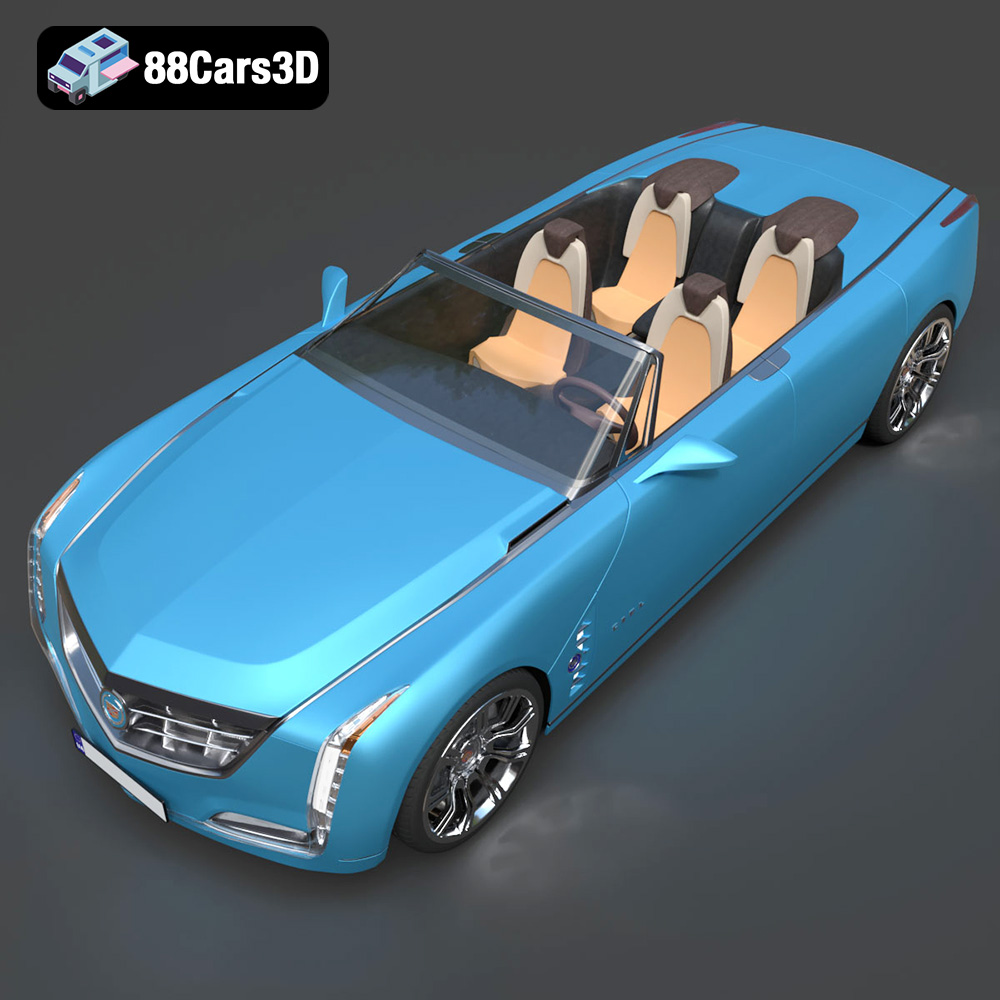
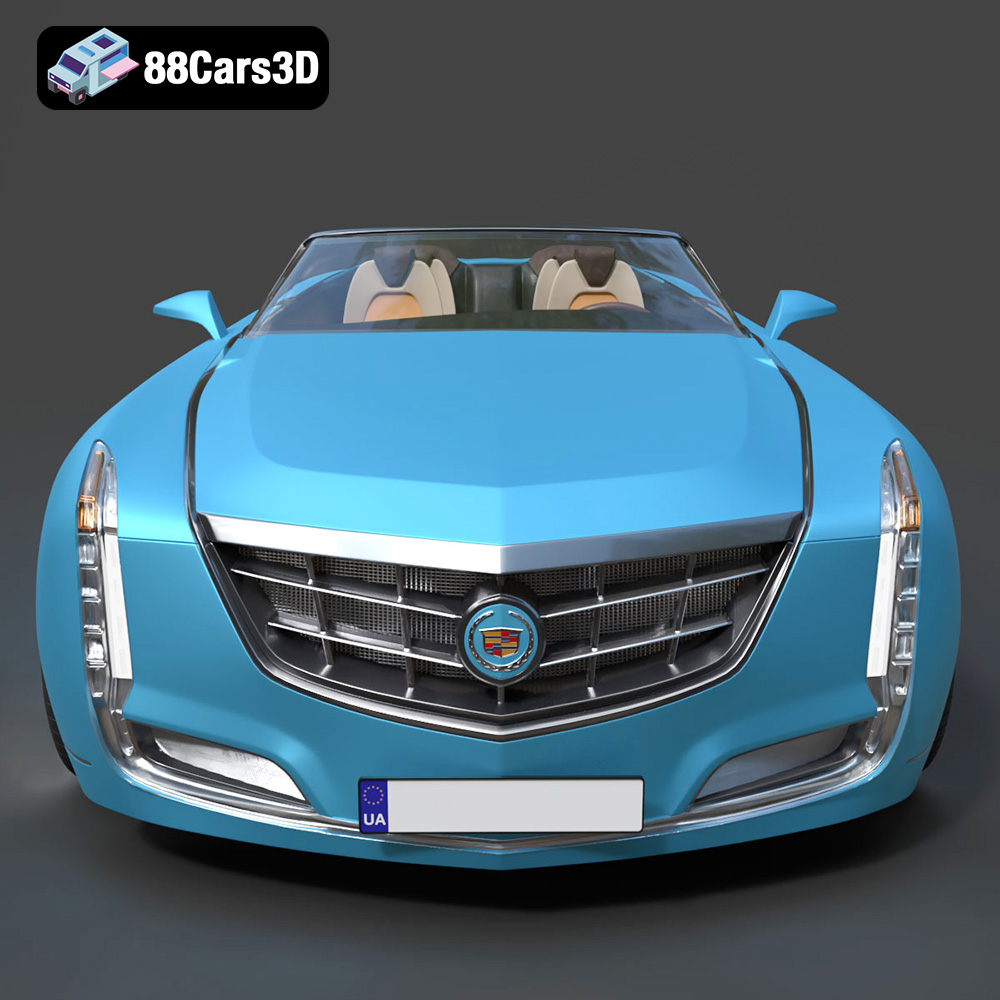
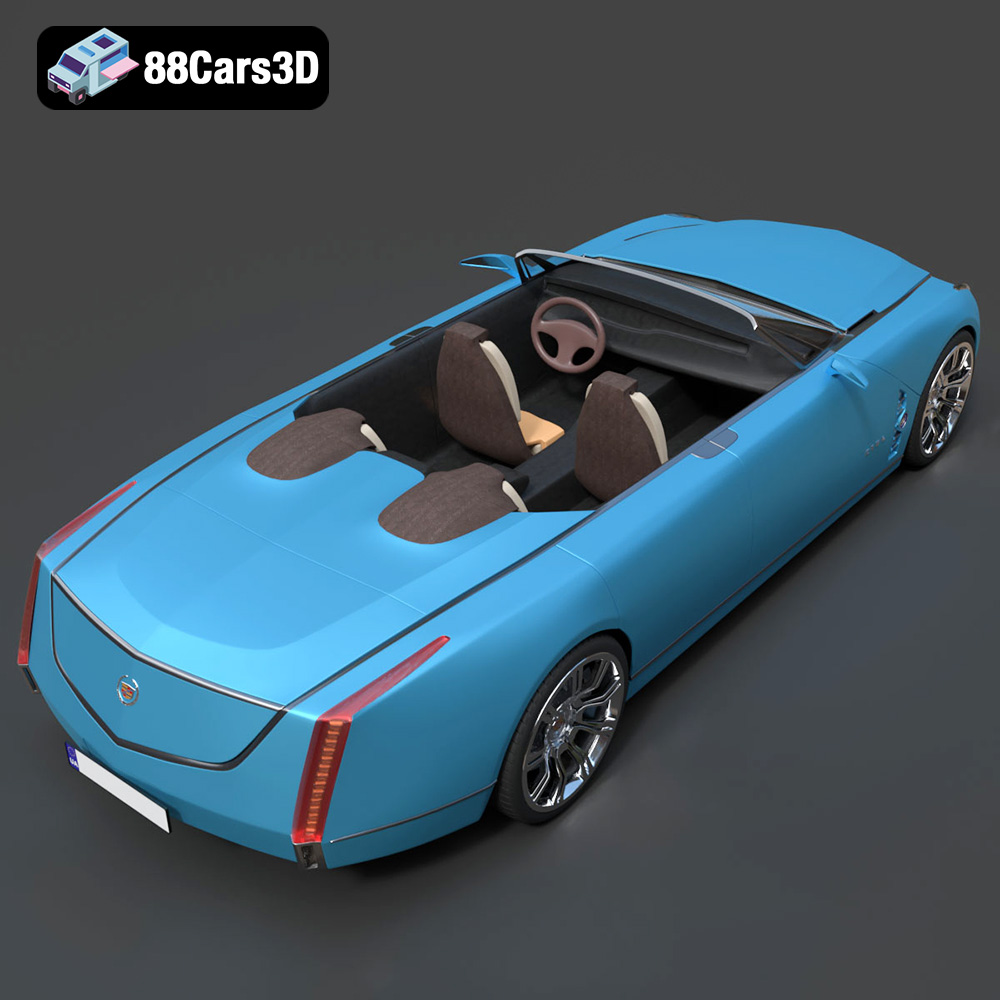
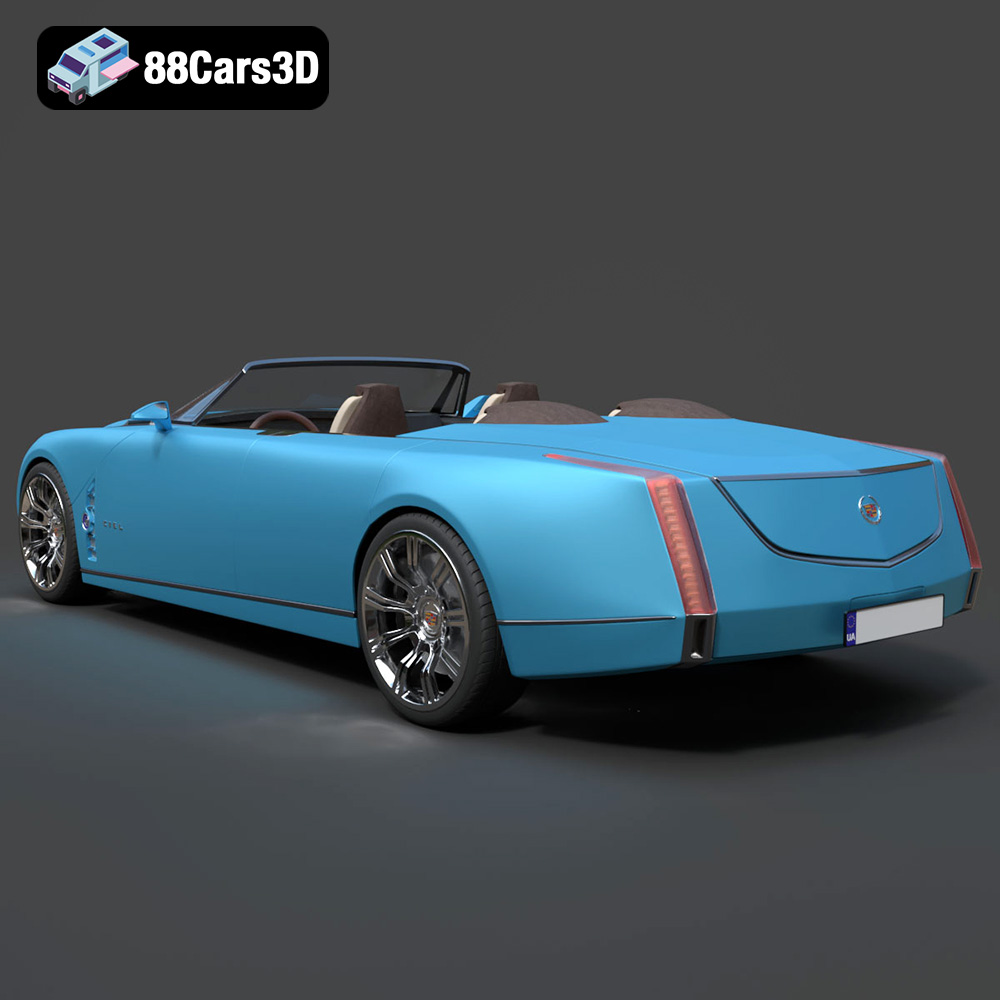
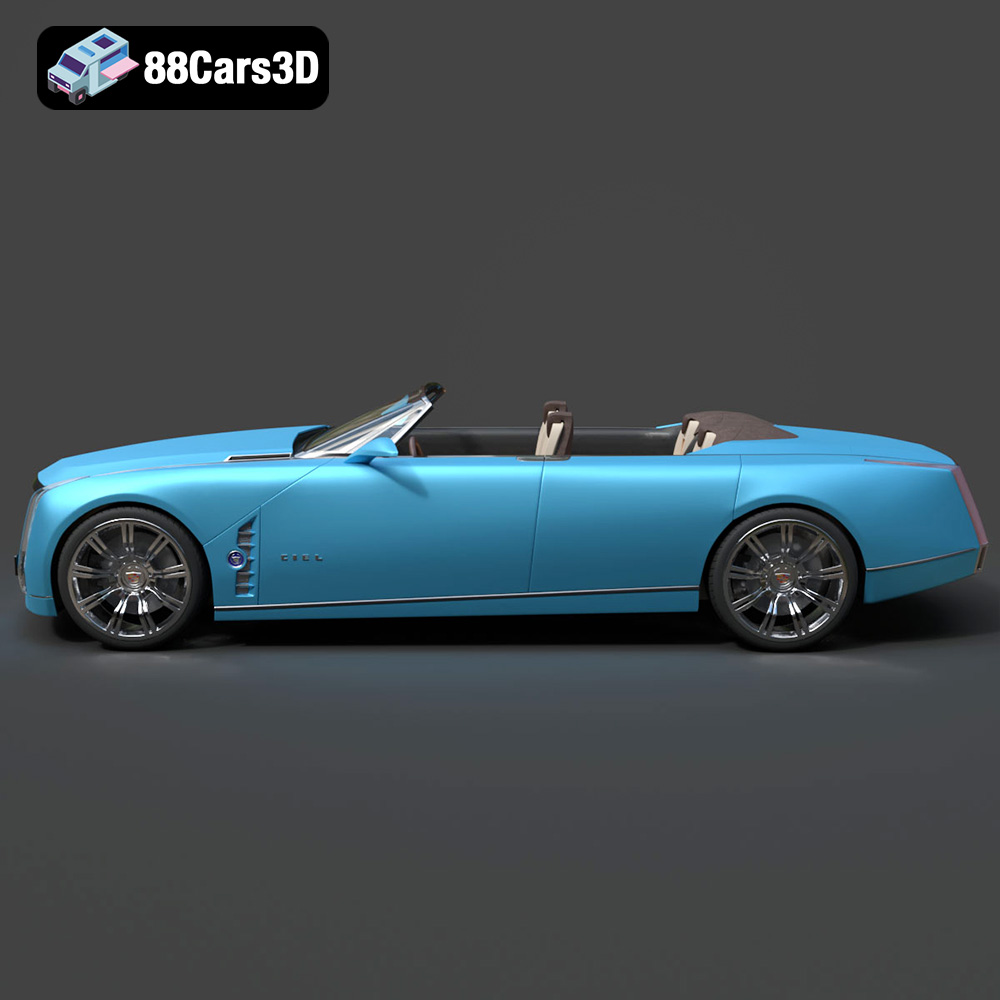
The exterior of the Cadillac Ciel Concept is a study in dramatic elegance, and the 3D model faithfully reproduces its defining characteristics. The accurate 2011 concept car proportions, including the extended wheelbase and elongated hood design, are immediately apparent. The bold Cadillac grille, flanked by the signature vertical LED light signature, commands attention, reflecting the brand’s contemporary design language. Furthermore, the sculpted body panels, subtle chrome trim detailing, and the distinctive rear-hinged door configuration are all precisely modeled. Even the large, luxurious concept wheel design is rendered with exceptional fidelity, ensuring that every angle showcases the car’s intended grandeur. The roofless four-door convertible layout is accurately represented, offering an unobstructed view into the equally detailed interior, perfect for cinematic automotive rendering.
Beyond the striking exterior, the interior of the Cadillac Ciel Concept 2011 3D Model is a testament to its comprehensive detail. The model features a four-seat executive layout, presented in a sophisticated two-tone tan and brown colorway. Every element of the premium dashboard concept design is meticulously sculpted, from the intricate gauges to the flowing lines of the console. The detailed center console structure and sculpted luxury seating geometry invite close-up renders, showcasing the intended high-end trim and material representation. This attention to interior detail is crucial for projects requiring immersive experiences, such as AR/VR applications or detailed visualization where the user might explore the vehicle from within.
The creators of this 3D car model have clearly prioritized precision. The commitment to real-world scale accuracy ensures that the digital asset maintains authentic proportions, making it suitable for direct integration into diverse scenes without scale discrepancies. Furthermore, the separate wheels and steering components with proper pivot setup for rotation and steering provide crucial functionality for animation. This level of preparation means that the model isn’t just a static representation but a dynamic asset ready for motion studies, cinematic sequences, or interactive simulations.
For any professional 3D asset, technical specifications are just as critical as aesthetic appeal. The Cadillac Ciel Concept 2011 3D Model boasts impressive metrics that underscore its suitability for high-end production environments. Understanding these details helps artists and developers make informed decisions about integration and optimization.
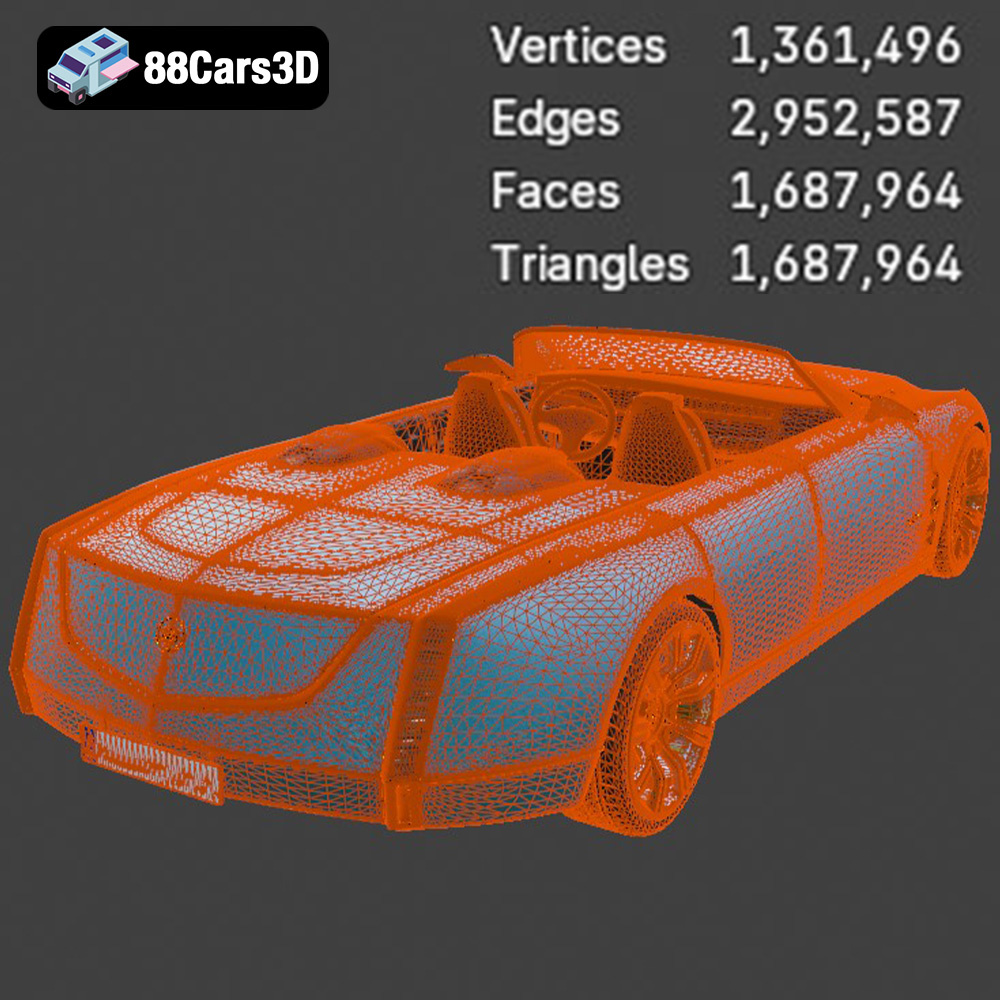
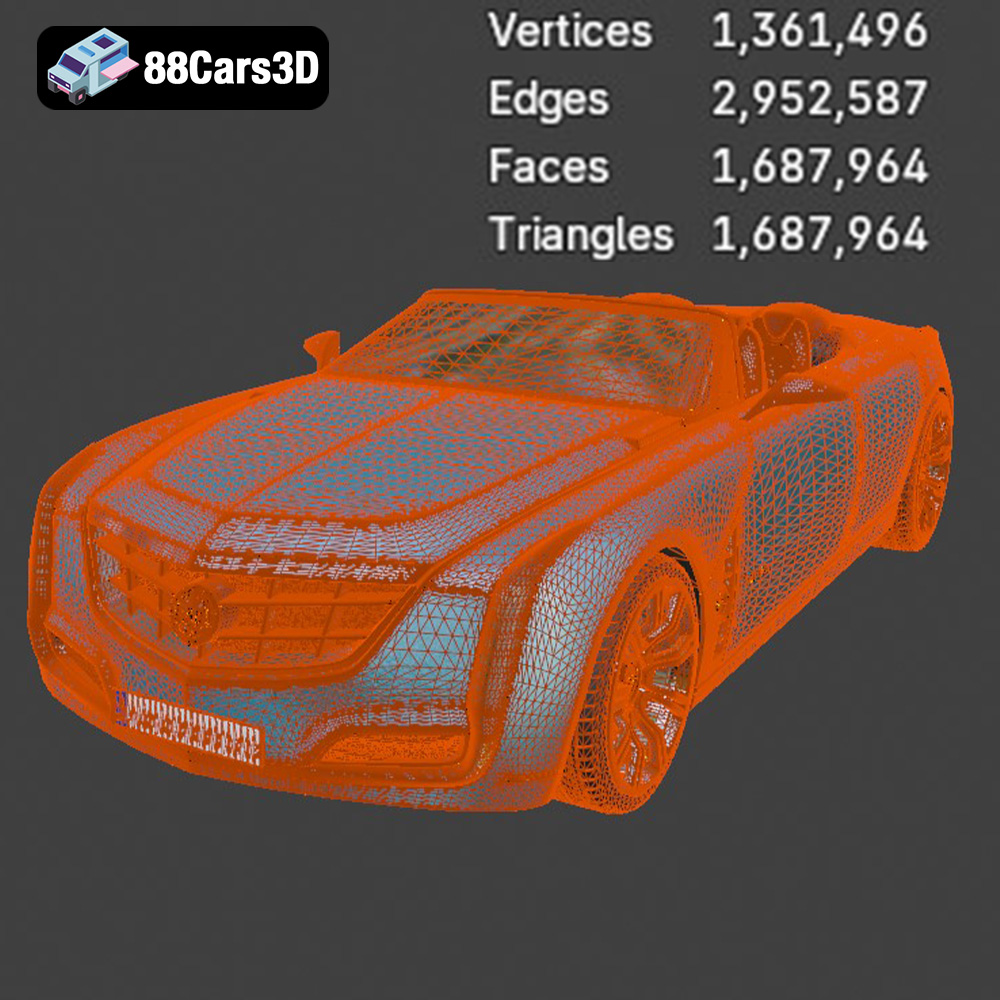
The model’s technical specifications reveal a robust and detailed mesh structure: 1,361,496 Vertices, 2,952,587 Edges, and 1,687,964 Faces / Polygons (Triangles: 1,687,964). This high-polygon count is a direct indicator of its premium visual fidelity. For automotive rendering and visualization, a dense mesh allows for incredibly smooth surfaces, subtle curvatures, and sharp details without relying solely on normal maps for intricate geometry. While a model with over 1.6 million polygons is excellent for close-up renders and cinematic sequences, it’s important to acknowledge its potential impact on real-time performance in game engines or AR/VR applications. For such scenarios, developers often employ retopology techniques or utilize Levels of Detail (LODs) to create lower-polygon versions for distant views, ensuring optimal frame rates without sacrificing visual quality up close. The well-organized mesh structure of this particular 3D car model simplifies these optimization processes.
Real-world scale accuracy is not just a convenience; it’s a necessity for professional projects. Whether integrating the vehicle into an architectural visualization, a virtual environment, or a product design mockup, consistent scale ensures believable interaction with other assets and environments. The
While specific UV mapping details are not explicitly listed, a model of this complexity and polygon count, designed for high-resolution concept visualization, implies a professional UV layout. Proper UV unwrapping is essential for applying textures and materials without distortion, ensuring that the metallic paint finishes, interior leather, and chrome detailing appear flawless in renders. The high-poly nature also means that intricate details are baked directly into the geometry rather than relying solely on texture maps, resulting in a more physically accurate and robust visual. This combination makes the Cadillac Ciel a prime candidate for projects demanding photographic realism and unparalleled visual quality.
The Cadillac Ciel Concept 2011 3D Model is designed as a versatile asset, ready to be deployed across a spectrum of professional 3D pipelines. Its multi-format availability and high-fidelity detail make it an excellent choice for a wide array of applications, from static renders to interactive experiences.
For automotive rendering, this 3D car model truly shines. In software like 3ds Max (with renderers like V-Ray or Corona) or Blender (using Cycles or Eevee), the high-polygon count and detailed geometry allow artists to achieve stunning, photorealistic results. The model’s real-world scale makes it easy to integrate into existing scene environments, such as luxury showrooms, futuristic cityscapes, or scenic coastal roads. Artists can experiment with various lighting setups – from studio softboxes to dramatic sunset hues – and apply advanced material shaders to perfectly replicate metallic paint, polished chrome, and sumptuous leather. The separate, pivot-ready wheels and steering components are invaluable for creating dynamic animations, from simple drive-by shots to complex camera fly-throughs that highlight the vehicle’s elegant lines. The included .max and .blend formats ensure that artists can immediately access and manipulate the model within their preferred software, focusing their efforts on creative direction rather than asset preparation.
While the Cadillac Ciel Concept 2011 3D Model is described as high-poly, its inclusion of the .fbx and .unreal formats makes it highly adaptable for game development. For high-end luxury vehicle packs or futuristic open-world games, this model provides an excellent foundation. Game developers can import the .fbx into Unreal Engine (or Unity) and proceed with standard optimization techniques. This might involve generating automatic or manual Levels of Detail (LODs) to maintain performance at varying distances, creating custom collision meshes, and setting up advanced PBR (Physically Based Rendering) materials using Unreal’s robust material editor. The organized mesh and separate components simplify the rigging process for vehicle physics and suspension systems. Even if direct integration of the full 1.6M+ poly model is too dense for certain real-time applications, it serves as a perfect base for retopology, from which normal maps can be baked to a lower-poly mesh, retaining the visual fidelity at a fraction of the computational cost.
The rising prominence of AR/VR creates new opportunities for showcasing luxury automotive concepts. The Cadillac Ciel Concept 2011 3D Model is perfect for immersive virtual auto shows and interactive concept vehicle experiences. Using the .glb format, developers can easily integrate the model into web-based AR viewers or dedicated VR applications. Imagine potential customers or designers “walking around” the Ciel in virtual reality, opening its distinctive rear-hinged doors, and exploring the two-tone interior in full 3D. The high detail allows for a truly convincing and engaging experience, blurring the lines between concept and reality. For architectural firms or city planners, the model can populate virtual cityscapes, lending an air of sophistication and future-forward design to their presentations.
One of the most exciting and tangible applications for the
The .stl file format, a standard for stereolithography, defines the surface geometry of a 3D object using triangular facets. While the digital model is high-poly, the provided .stl version is optimized for additive manufacturing. This means the mesh is likely manifold (watertight), free of non-manifold edges or inverted normals, and ready to be sliced by a 3D printer’s software. The recommended scales – 1:32, 1:24, or 1:18 – offer flexibility, allowing users to print anything from a desk display piece to a larger, more detailed collector’s item. For those requiring even finer details, especially at smaller scales, resin printing (SLA/DLP) is often recommended over FDM for its ability to capture intricate elements like the bold Cadillac grille and vertical light signatures with greater precision.
Successful 3D printing relies heavily on precise settings in the slicing software. For the Cadillac Ciel, several parameters are critical:
Once printed, a physical Ciel Concept model often benefits from post-processing to achieve a truly professional, showroom-quality finish. This typically involves sanding to smooth out any layer lines or imperfections, followed by the application of primer to create a uniform surface for paint. For a luxury concept car, a metallic or pearl paint finish would be highly recommended, perhaps even a deep, reflective clear coat to mimic a real car’s paintwork. Chrome detailing can be added to trim elements to further enhance realism. For the interior, careful painting of the two-tone tan and brown areas, along with highlighting smaller details, can bring the scaled model to life, making it a proud display piece or a valuable prototype for design studies. This ability to move from a digital concept to a tangible, high-quality physical representation truly highlights the versatility of high-end 3D car models available on platforms like 88cars3d.com.
The Cadillac Ciel Concept 2011 is more than just a beautiful car; it’s a testament to bold automotive design. The
Its comprehensive file format support – including .blend, .fbx, .obj, .glb, .stl, .ply, .unreal, and .max – ensures unparalleled compatibility and ease of integration into virtually any workflow. The high-polygon count, meticulous detailing of both exterior and interior, and thoughtful preparation for animation and 3D printing underscore its value as a premium asset. Whether you’re a seasoned professional seeking to elevate your projects with an iconic luxury vehicle or an enthusiast looking to create a physical scale model, the Cadillac Ciel Concept 2011 3D Model offers an outstanding blend of aesthetic appeal and technical robustness.
Discover this exceptional asset and many more high-quality 3D car models to fuel your creative endeavors. Explore the full range of possibilities for automotive rendering, game development, AR/VR, and 3D printing by visiting 88cars3d.com today.
The Cadillac Ciel Concept 2011 3D Model is a high-detail digital recreation of the stunning four-door convertible luxury concept revealed in 2011. Designed as a vision of open-air grand touring, the Ciel combines dramatic proportions, elongated body lines, rear-hinged doors, and futuristic luxury styling that reflects Cadillac’s modern design language. This 3D model accurately represents the long hood silhouette, bold front grille with vertical LED lighting signature, sculpted body panels, rear-hinged (suicide-style) doors, elegant multi-spoke wheels, and flowing convertible layout without a fixed roof. Built with dense, high-polygon topology for premium visual fidelity and real-world scale accuracy, it is ideal for close-up rendering, concept visualization, animation, game development, and AR/VR automotive showcases. Perfect for luxury design presentations, futuristic city scenes, high-end automotive galleries, and cinematic productions.
$9.99
.automotive
.blend
.cadillac
.fbx
.obj
.rendering
.stl
1m-polygons
2011-concept-car
3d printing
blue-convertible
car-3d-model
ciel-concept
futuristic-car
game asset
high poly
luxury-convertible
vehicle-design
VR/AR