Get 50% OFF All Premium 3D & STL Models!

The digital automotive landscape is a realm where precision meets artistry, demanding meticulous attention to detail to breathe life into virtual machines. Whether you’re crafting a cinematic masterpiece, developing an immersive game, or pushing the boundaries of AR/VR, the foundation of any successful project lies in the quality of its 3D assets. Few vehicles embody the fusion of raw power and refined engineering quite like the Nissan GTR R35 Nismo, a track-focused titan renowned for its aggressive aesthetics and blistering performance.
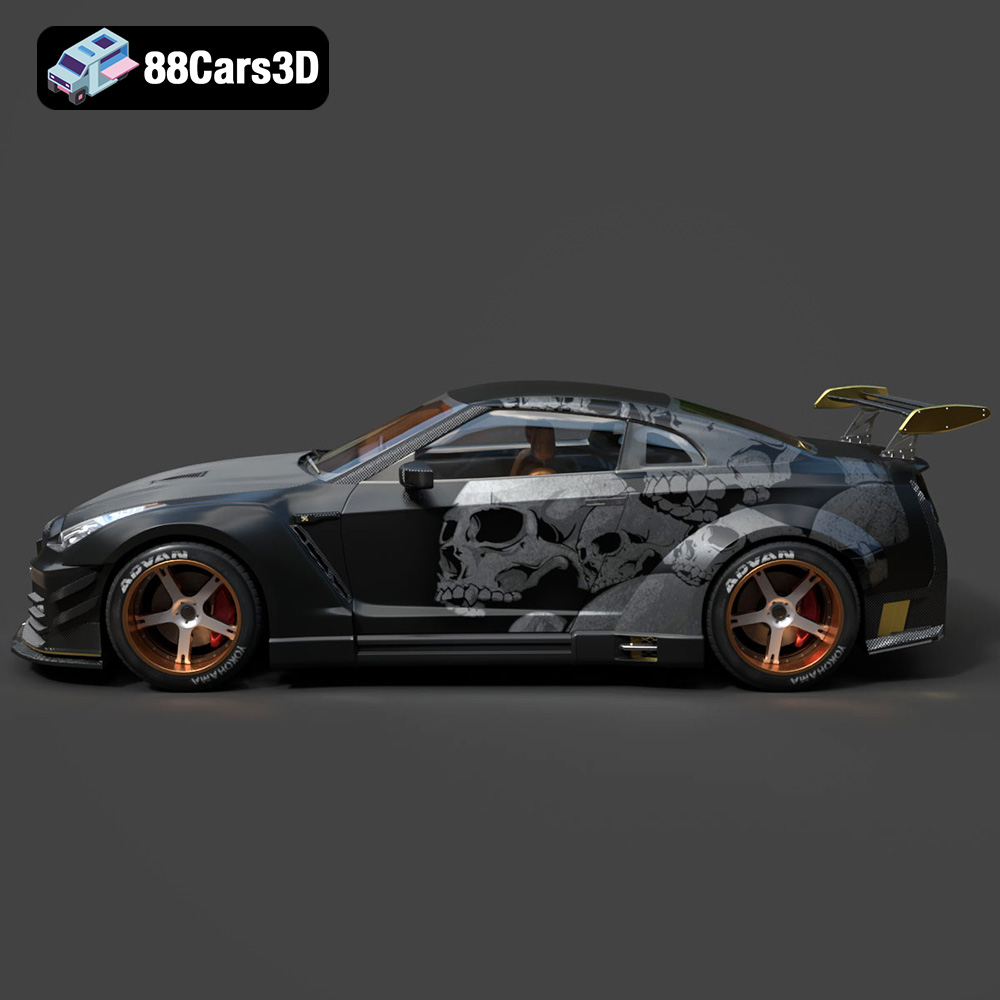
For 3D artists and developers, translating such an iconic vehicle into a digital model presents both a challenge and an opportunity. The Nissan GTR R35 Nismo 3D Model stands out as a prime example of what professional-grade digital assets can achieve. It’s not just a collection of polygons; it’s a meticulously crafted digital twin, capturing every aerodynamic curve, every widened stance, and the distinctive Nismo design language. This model from 88cars3d.com offers a gateway to integrating this legendary vehicle seamlessly into your most demanding projects, from high-fidelity renders to real-time interactive experiences.
Choosing the right file format is a critical decision in any 3D workflow, directly impacting compatibility, performance, and the scope of editable data. Professional 3D car models, especially those designed for diverse applications, must offer a range of formats to ensure seamless integration into various software and engines. The Nissan GTR R35 Nismo 3D Model exemplifies this versatility by providing a comprehensive suite of options, each tailored for specific use cases.
The .blend format is Blender’s native file type, offering a complete, editable scene. When you acquire a .blend file, you’re getting more than just the raw geometry; you’re receiving the full project environment, including materials, textures, lighting setups, cameras, and even animation data if present. This makes it incredibly valuable for artists who use Blender as their primary DCC (Digital Content Creation) tool, allowing them to dive straight into refining the model, adjusting shaders, or setting up custom render passes without starting from scratch. For the Nissan GTR R35 Nismo, the .blend file provides an immediate and comprehensive starting point for Blender users.
Autodesk’s .fbx (Filmbox) format has become the de facto standard for exchanging 3D data between different software applications and, crucially, for importing assets into game engines like Unreal Engine and Unity. Its strength lies in its ability to support a wide range of data, including geometry, UV maps, materials, textures, animations, skeletons, and camera information, all within a single file. For the Nissan GTR R35 Nismo 3D Model, the .fbx version is optimized for real-time pipelines, ensuring that the model’s clean geometry and material assignments transfer efficiently, making it game-engine ready for performance-critical applications.
The .obj (Wavefront Object) format is a universal standard, highly compatible with virtually all 3D software. It’s a simpler, text-based format primarily used for transferring polygon geometry and UV data. While it can reference external material files (like .mtl), it doesn’t embed complex scene information or animation. Its simplicity ensures maximum compatibility, making it an excellent fallback or starting point for projects requiring only static meshes. For cross-software consistency, the .obj version of the GTR Nismo is invaluable.
.glb (GL Transmission Format Binary) is an increasingly vital format, particularly for augmented reality (AR), virtual reality (VR), and web-based 3D applications. It’s a binary version of the glTF format, designed for efficient transmission and loading of 3D scenes and models. A single .glb file can contain geometry, materials (PBR textures are well-supported), animations, and scene graph information, all optimized for modern real-time rendering. The Nissan GTR R35 Nismo in .glb format is perfect for showcasing the model interactively on websites or deploying it in mobile AR experiences.
The .stl (Stereolithography) format is the cornerstone of 3D printing. It represents 3D surfaces as a collection of unconnected triangles, forming the basis for slicing software to prepare models for physical fabrication. Critically, .stl files do not store color, texture, or material information—only the raw geometry. For a professional model like the GTR Nismo, an .stl version would typically be watertight (manifold) and optimized for successful printing, allowing for physical prototypes or collectibles to be produced from the digital asset.
The .ply (Polygon File Format) is another common format for storing 3D data, particularly useful for models generated from 3D scanners or for scientific and engineering applications. It can store a wider range of properties than .obj or .stl, including color, transparency, surface normals, and other attributes per vertex or face. This makes it ideal for precision analysis, reverse engineering workflows, or detailed visualizations where vertex-level data is paramount. The .ply version of the GTR Nismo offers a high-fidelity mesh suitable for advanced technical scrutiny.
While not a standalone file format in the same vein as .fbx, the inclusion of an .unreal specific package for the Nissan GTR R35 Nismo 3D Model signifies that the asset has been pre-configured or optimized specifically for direct integration into Unreal Engine. This often means textures are packed correctly, materials are set up with appropriate shaders (e.g., physically based rendering materials), collision meshes might be included, and LODs (Levels of Detail) are often pre-generated. This significantly reduces import and setup time for game developers, offering a truly plug-and-play experience within Unreal Engine.
The .max format is the native file type for Autodesk 3ds Max. Like .blend for Blender, it saves an entire 3ds Max scene, including geometry, materials, textures, lighting, cameras, animation, and modifier stacks. For professionals working in architectural visualization, product design, or cinematic rendering who rely on 3ds Max, having the .max file for the Nissan GTR R35 Nismo provides maximum flexibility for customization, advanced rendering setups with V-Ray or Corona, and complex animation sequences.
Automotive rendering is a specialized discipline that marries technical precision with artistic vision. The goal is to create photorealistic images or animations of vehicles that are indistinguishable from real photographs. This demands not only a high-quality 3D car model but also a deep understanding of lighting, materials, and composition. The Nissan GTR R35 Nismo 3D Model provides an exceptional foundation for such endeavors.
The essence of a convincing render lies in its materials. For a vehicle like the GTR Nismo, this means replicating everything from the glossy sheen of its paintwork to the subtle reflections of carbon fiber, the metallic glint of its wheels, and the texture of its tires. The Nissan GTR R35 Nismo 3D Model from 88cars3d.com comes equipped with realistic materials, often pre-configured for PBR (Physically Based Rendering) workflows, which are essential for achieving consistent and accurate lighting responses across different environments. Artists can further refine these with custom grunge maps, clear coat imperfections, and intricate normal details to push the realism to the extreme. In 3ds Max, this would involve V-Ray or Corona materials, while Blender users would leverage Principled BSDF shaders within Cycles or Eevee.
Lighting is arguably the most critical element in rendering. Professional automotive visualization often employs studio-style HDRI (High Dynamic Range Image) lighting, combined with targeted area lights, to accentuate the car’s curves and form. Imagine placing the Nissan GTR R35 Nismo 3D Model within a virtual light tent, using a high-quality HDRI of a bright overcast sky or a specific studio setup to bring out the subtle reflections on its body panels. Achieving dramatic results involves understanding how light interacts with the car’s surfaces, creating compelling highlights and shadows that define its shape and texture. This model’s clean geometry ensures that light bounces and refracts accurately, contributing to stunning final outputs.
Beyond static renders, the Nissan GTR R35 Nismo 3D Model is perfectly suited for dynamic animation. Imagine a camera sweeping around the car, showcasing its aggressive stance, or a high-octane sequence of it speeding down a track. For animation, models need clean topology, often with proper pivot points for wheels and doors. The editable .max or .blend files would provide the necessary flexibility to rig the vehicle for complex movements, allowing artists to create breathtaking cinematic trailers or product showcases that highlight the Nismo’s performance prowess.
The demands of game development are unique, balancing visual fidelity with strict performance requirements. A high-quality 3D car model like the Nissan GTR R35 Nismo is a valuable asset, but its integration into a game engine like Unreal Engine requires careful optimization and setup to ensure smooth gameplay.
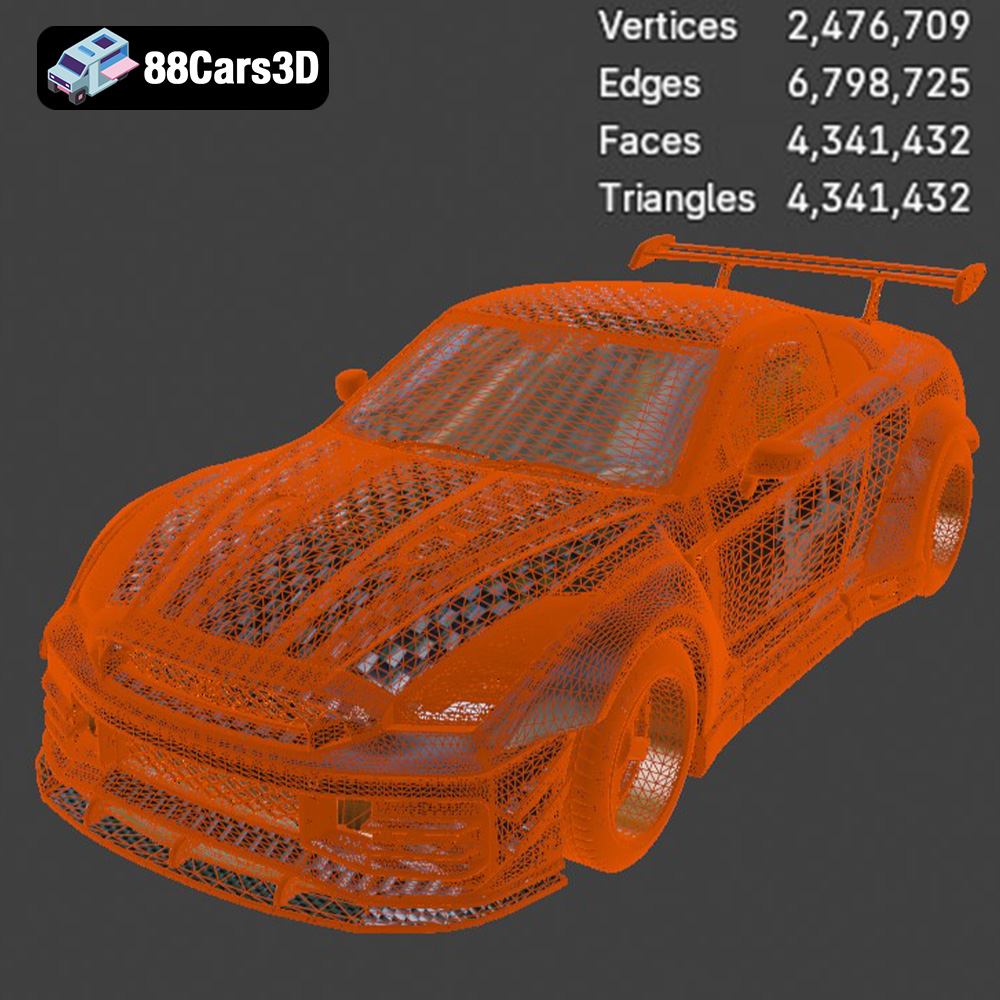
Game engines thrive on efficiency. While cinematic renders can afford extremely high poly counts, real-time environments require optimized polygon structures. The Nissan GTR R35 Nismo 3D Model boasts an “optimized polygon structure,” which is crucial for maintaining high frame rates. This often involves creating multiple Levels of Detail (LODs)—lower polygon versions of the model that swap in when the car is further from the camera, reducing the rendering load without a noticeable drop in visual quality. Furthermore, efficient UV mapping and texture atlasing are essential to minimize draw calls and optimize memory usage.
For Unreal Engine, the provided .fbx and especially the .unreal specific file are game-changers. The .fbx imports geometry, UVs, and PBR texture maps (albedo, normal, roughness, metallic, ambient occlusion). The .unreal package often provides a fully configured asset, including properly set up materials using Unreal’s robust material editor, ensuring the GTR Nismo looks its best within the engine. This includes realistic car paint shaders, reflective glass, and emissive headlights. Collision meshes are also vital, often created as simplified representations of the car’s form to ensure accurate physics interactions without taxing the engine with complex geometry for collision detection.
In racing games or interactive showrooms, accurate physics simulations are paramount. The Nissan GTR R35 Nismo 3D Model’s “accurate scaling” and clean geometry ensure it behaves realistically within physics engines. Developers can use this model to create immersive driving experiences, where the car responds authentically to terrain, speed, and impacts. For interactive applications, its detailed interior can be fully explored, allowing players or users to open doors, inspect dashboards, or even customize paint schemes in real-time. This level of detail elevates a simple game asset into a fully interactive experience.
The versatility of a professional 3D car model extends far beyond traditional rendering and game development. Emerging technologies like Augmented Reality (AR), Virtual Reality (VR), and 3D printing are opening up new avenues for digital assets, and the Nissan GTR R35 Nismo 3D Model is perfectly positioned to excel in these domains.
AR and VR demand high-quality, optimized assets for seamless performance and immersion. The .glb format, included with the Nissan GTR R35 Nismo model, is a significant advantage here. It’s specifically designed for web and real-time AR/VR applications, allowing users to experience the Nismo in a truly interactive and spatial manner. Imagine placing a life-sized GTR Nismo in your driveway via an AR app, or exploring its meticulously crafted interior in a fully immersive VR environment. The model’s “optimized polygon structure” and “realistic materials” ensure that these experiences are visually stunning and run smoothly on target hardware, whether it’s a smartphone or a dedicated VR headset. Developers can use this model to create virtual showrooms, interactive training simulations, or engaging marketing campaigns that bring the car directly to the user’s environment.
While often overlooked in purely digital contexts, the ability to physically manifest a 3D model is a powerful feature. The inclusion of an .stl file for the Nissan GTR R35 Nismo 3D Model caters directly to 3D printing and rapid prototyping. An .stl file provides a triangulated mesh of the model’s surface, essential for sending to a 3D printer. For successful 3D printing, the model must be “watertight” or “manifold” (meaning it has no holes or gaps in its surface), ensuring a solid, printable object. A high-quality commercial model like this will have been prepared with this in mind, allowing designers, engineers, or enthusiasts to print physical scale models, custom parts, or even detailed collectibles. This capability bridges the gap between the digital and physical realms, offering tangible results from a virtual asset.
The .ply format, along with the “exceptionally clean geometry” of the GTR Nismo model, makes it suitable for various technical visualization and engineering analysis tasks. Engineers can use this precise mesh for aerodynamic simulations (CFD), structural analysis (FEA), or simply for detailed product design reviews. The accuracy of the digital representation is crucial in these scenarios, and a professional 3D model provides the necessary foundation for reliable results. Its “authentic proportions and realistic exterior styling” ensure that any derived analysis is based on a true-to-life representation of the vehicle.
Behind every visually stunning 3D model lies a foundation of robust technical specifications and adherence to professional best practices. The Nissan GTR R35 Nismo 3D Model from 88cars3d.com is built with these considerations at its core, making it a reliable asset for serious production pipelines.
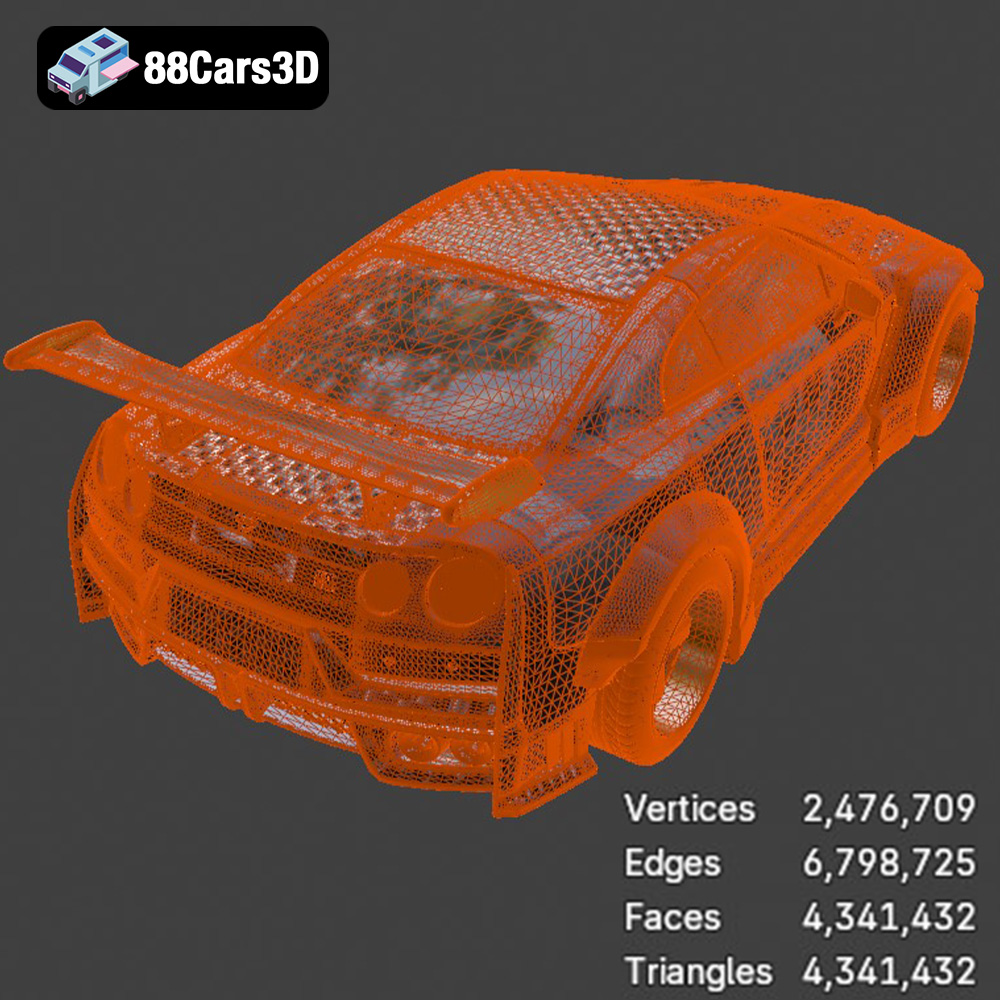
The phrase “exceptionally clean geometry” is not just marketing speak; it’s a critical technical attribute. Clean geometry means that the mesh is free from common issues like non-manifold edges, overlapping faces, ngons (polygons with more than four sides), or isolated vertices. Such issues can cause rendering artifacts, problems with subdivision surfaces, and difficulties in animation or UV unwrapping. For the GTR Nismo, this clean topology ensures smooth deformations, predictable lighting, and easy integration into various workflows without constant cleanup. An optimized polygon structure also implies efficient use of polygons, avoiding unnecessary density where it’s not needed, and distributing detail intelligently across the model.
Effective UV mapping is just as important as good geometry. UVs (U and V coordinates) are the 2D representation of a 3D model’s surface, essentially telling the software how to project textures onto the model. “Realistic materials” rely on well-unwrapped UVs that minimize stretching and allow for high-resolution textures to be applied without distortion. For a complex model like a car, this means careful unwrapping of every component – the body, interior panels, wheels, and intricate carbon fiber parts – to ensure texture accuracy and efficient texture packing. This meticulous approach is vital for achieving the high visual fidelity promised by the Nissan GTR R35 Nismo 3D Model.
Consider a large automotive marketing agency tasked with creating a new campaign for a competitor, or perhaps a futuristic racing game. The agency needs a high-fidelity GTR Nismo for a comparison shot, or as an AI opponent in the game. Building such a model from scratch is a labor-intensive process, potentially taking weeks or even months for a team of experienced modelers. Acquiring a pre-made, professionally crafted asset like the Nissan GTR R35 Nismo 3D Model from 88cars3d.com drastically cuts down production time and costs. It allows artists to focus on creative tasks like lighting, animation, and scene composition, rather than the tedious work of modeling and UV unwrapping. This efficiency is a massive advantage in fast-paced production environments, enabling studios to deliver high-quality results on tight deadlines.
In the competitive world of digital content creation, the difference between good and great often comes down to the quality of your foundational assets. Investing in a professional-grade 3D car model like the Nissan GTR R35 Nismo isn’t just a purchase; it’s an investment in efficiency, quality, and creative potential.
The most significant advantage of a pre-built, high-quality 3D car model is the time it saves. Creating a vehicle of this complexity and detail from scratch requires specialized skills, extensive reference materials, and hundreds of hours of work. By leveraging an existing asset, studios and individual artists can dramatically reduce production timelines and reallocate valuable resources to other aspects of their projects, such as animation, scene development, or post-production.
A poorly modeled or textured asset can undermine the entire visual integrity of a project. Professional 3D car models adhere to industry standards for poly count, topology, UVs, and material setup, ensuring that the final output meets the highest visual benchmarks. The Nissan GTR R35 Nismo 3D Model, with its “meticulous attention to detail” and “built to professional standards,” guarantees a level of polish and realism that elevates any project it’s a part of, projecting professionalism and quality to your audience.
With a comprehensive suite of file formats (including .blend, .fbx, .obj, .glb, .stl, .ply, .unreal, and .max), the Nissan GTR R35 Nismo 3D Model is a versatile asset that can adapt to future projects and evolving software pipelines. This ensures that your investment remains relevant and usable across a wide array of applications, from new game engines to emerging AR/VR platforms. It becomes a reliable staple in your digital arsenal, ready for any challenge.
The Nissan GTR R35 Nismo is a legend in the automotive world, and its digital counterpart, the Nissan GTR R35 Nismo 3D Model, is a testament to the power of professional 3D asset creation. We’ve explored how its meticulous detailing, clean geometry, and extensive file format support make it an indispensable tool for a wide range of applications, from cinematic rendering in 3ds Max and Blender to seamless integration into game development with Unreal Engine, and cutting-edge uses in AR/VR and 3D printing.
Understanding the nuances of file formats, the demands of various creative workflows, and the technical specifications that underpin a truly great 3D model is key to unlocking its full potential. This model isn’t just a collection of data; it’s a meticulously engineered digital asset designed to streamline production, enhance visual fidelity, and provide unparalleled versatility for artists and developers. Whether you’re a seasoned professional or an aspiring enthusiast, this Nissan GTR R35 Nismo 3D Model from 88cars3d.com offers the precision and performance needed to drive your creative projects to new heights.
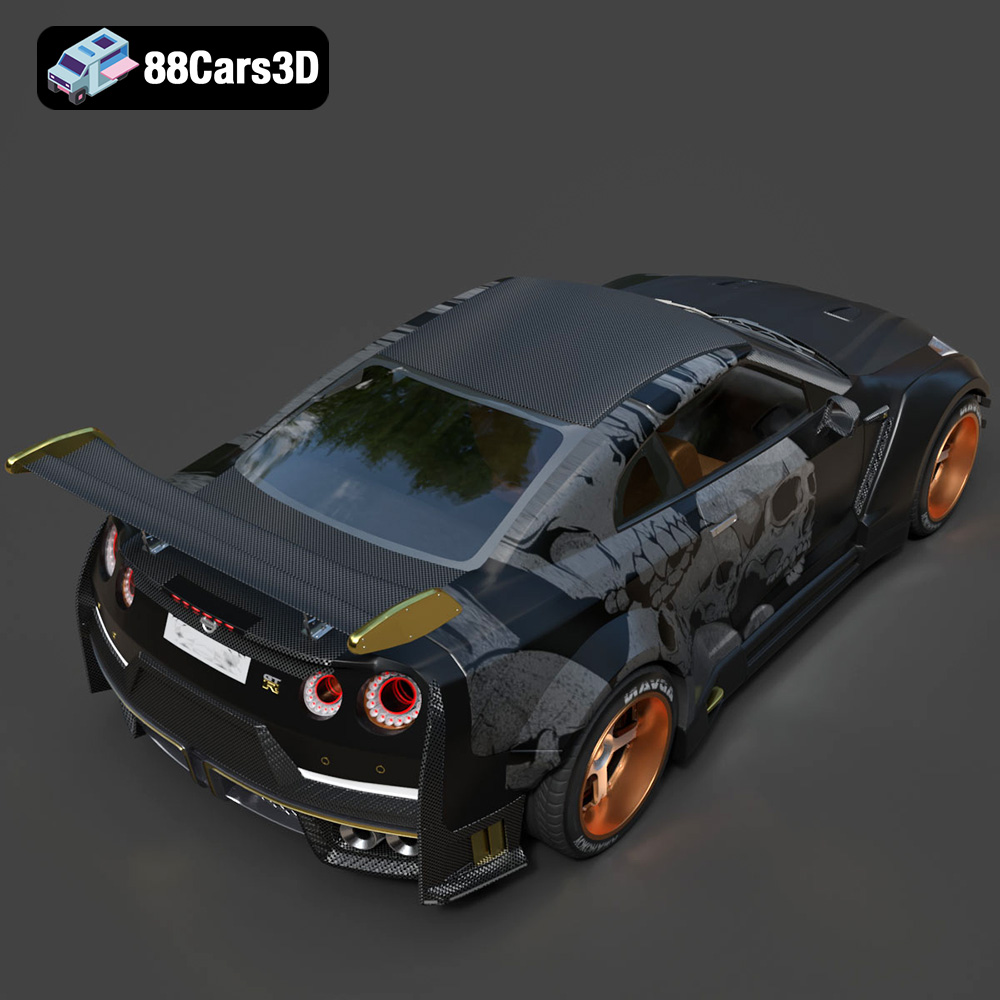
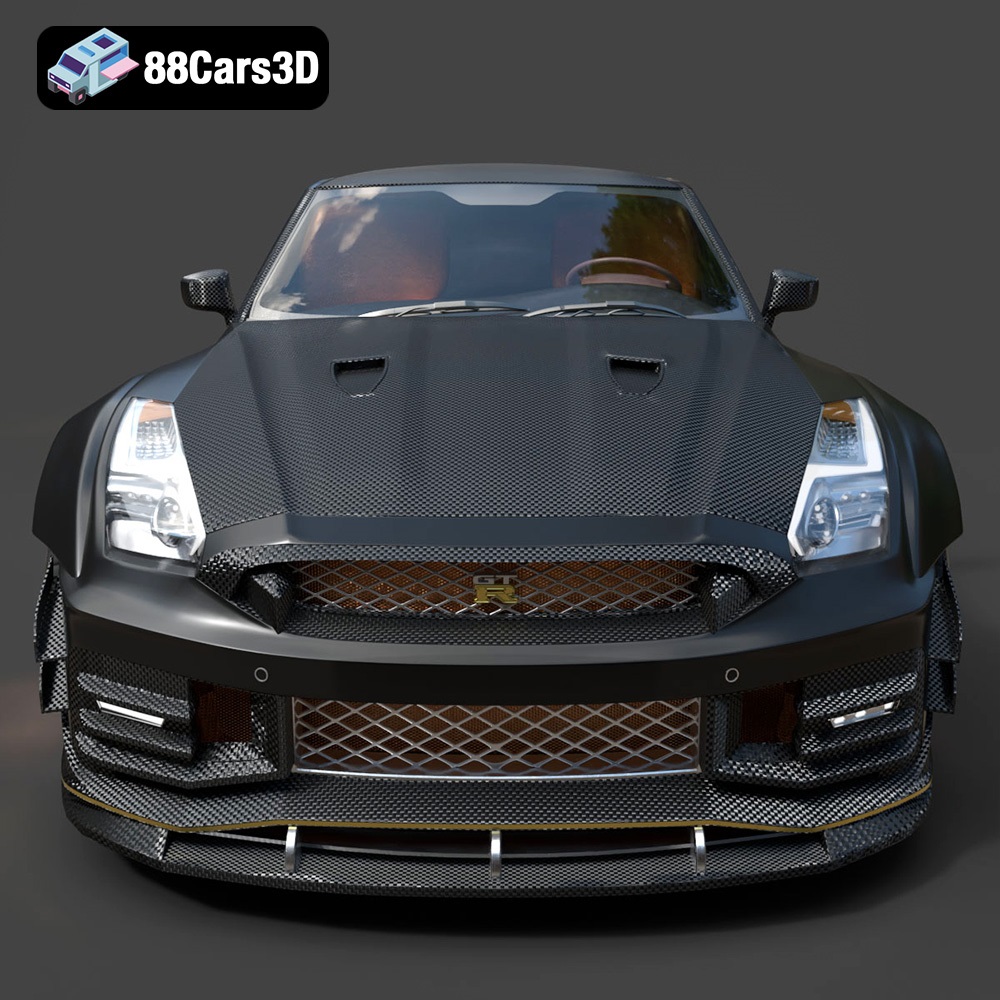
Experience the precision and performance of a legendary track-focused vehicle with the Nissan GTR R35 Nismo 3D Model. Crafted with meticulous attention to detail, this digital asset perfectly captures the aggressive aerodynamics, widened stance, and iconic design language of the real-world counterpart. The authentic proportions and realistic exterior styling make it an essential addition to any professional digital automotive library.
This model boasts exceptionally clean geometry and is equipped with realistic materials to ensure a seamless integration into your projects. Built to professional standards, the optimized polygon structure guarantees efficient performance across various digital platforms without compromising visual fidelity. Every element, from the carbon fiber aero components to the intricate wheel designs and fully modeled interior, has been constructed with exacting precision.
Ideal for a multitude of applications, this vehicle asset is tailored for seamless use in game development, cinematic automotive rendering, immersive AR/VR experiences, and technical visualization. Its versatility and accurate scaling ensure it functions flawlessly in physics simulations and interactive showroom displays.
The package provides a comprehensive suite of file formats to guarantee full compatibility with your preferred creative software:
.blend – Editable Blender file with materials and lighting setup
.fbx – Game-engine ready format for Unreal Engine and Unity
.obj – Standard 3D model format compatible with all major software
.glb – Optimized for AR/VR and web-based visualization
.stl – Suitable for 3D printing and prototyping
.ply – Detailed polygon mesh for analysis and visualization
.unreal – Pre-configured for Unreal Engine use
.max – Editable 3ds Max file for rendering and animation
Tags: .nissan, .gtr, .r35, .nismo, .sportscar, .supercar, .coupe, .car3dmodel, .rendering, .simulation, .gameasset, .arvr, .blend, .fbx, .obj, .glb, .stl, .ply, .unreal, .max
Tags:
.nissan, .gtr, .r35, .nismo, .sportscar, .supercar, .coupe, .car3dmodel, .rendering, .simulation, .gameasset, .arvr, .blend, .fbx, .obj, .glb, .stl, .ply, .unreal, .max Mercedes Benz CLS 500 3D Model 3D Printable STL
$19.99
.arvr
.blend
.car3dmodel
.coupe
.fbx
.gameasset
.glb
.gtr
.max
.nismo
.nissan
.obj
.ply
.r35
.rendering
.simulation
.sportsCar
.stl
.supercar
.unreal