Get 50% OFF All Premium 3D & STL Models!

In the dynamic worlds of automotive design, game development, architectural visualization, and even product prototyping, the quality of your 3D assets can make or break a project. From breathtaking cinematic renders to seamlessly immersive real-time environments, the demand for precision, optimized topology, and versatile file formats is paramount. A high-fidelity 3D car model isn’t just a visual element; it’s a critical component that drives realism, efficiency, and creative freedom.
Today, we delve into the intricate details of what makes a superior 3D vehicle asset, exploring its technical underpinnings, its myriad applications, and how it seamlessly integrates into professional workflows. We’ll examine the benefits of clean geometry, real-world scale, and broad compatibility, all while showcasing a prime example from 88cars3d.com: the Chevrolet Spark LT 3D Model. This efficiently modeled digital recreation of the popular subcompact city car offers a compelling case study in balancing visual fidelity with lightweight performance, making it an invaluable asset for various digital endeavors.
The journey of a 3D model from concept to application often involves traversing a landscape of diverse file formats, each with its unique strengths and intended use cases. Selecting the correct format is crucial for maintaining data integrity, optimizing performance, and ensuring compatibility across different software and platforms. Understanding these formats is fundamental for any professional working with 3D car models.
The
Autodesk’s
The
The
The
The
While not a traditional standalone file format in the same vein as .fbx or .obj, the
Similar to .blend for Blender, the
The creation of a high-quality 3D car model is an intricate blend of artistic skill and technical precision. It demands an eye for detail, a deep understanding of automotive design language, and an expert grasp of 3D modeling principles. The Chevrolet Spark LT 3D Model from 88cars3d.com serves as an excellent illustration of these qualities, striking a meticulous balance between aesthetic accuracy and technical optimization.
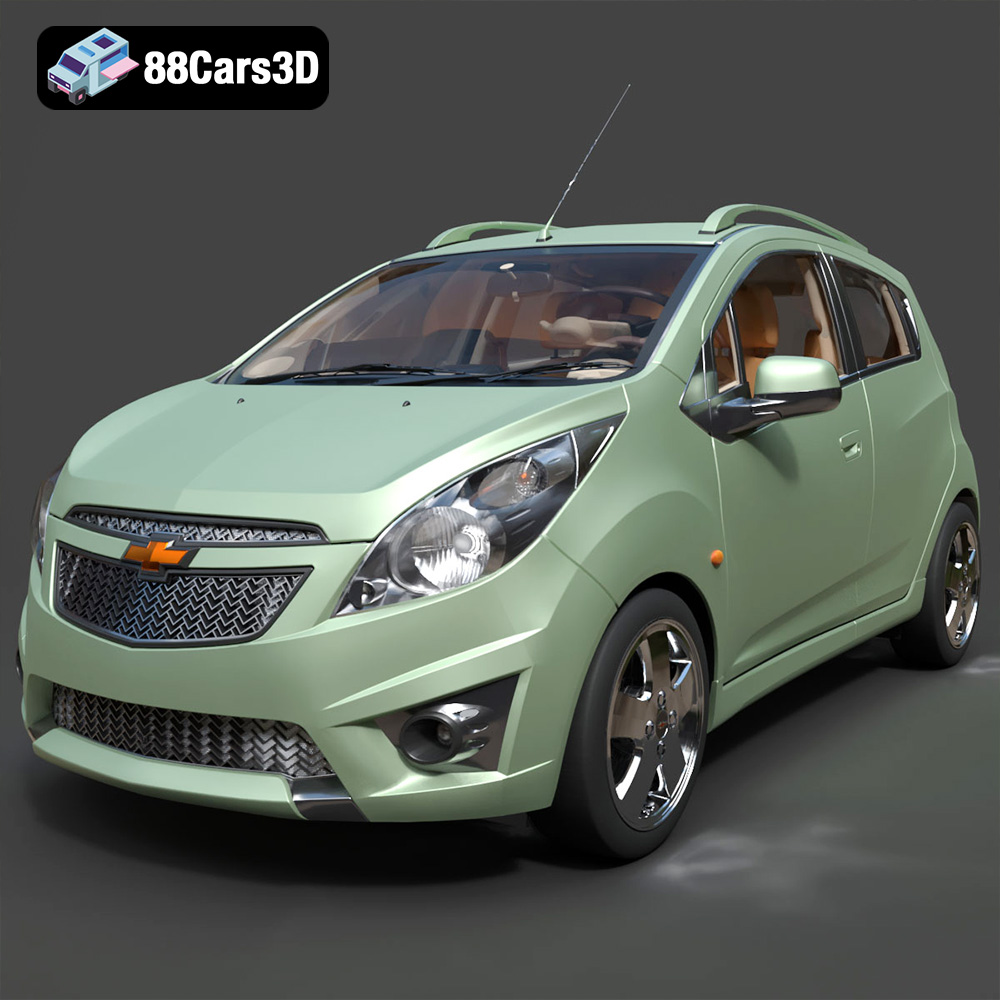
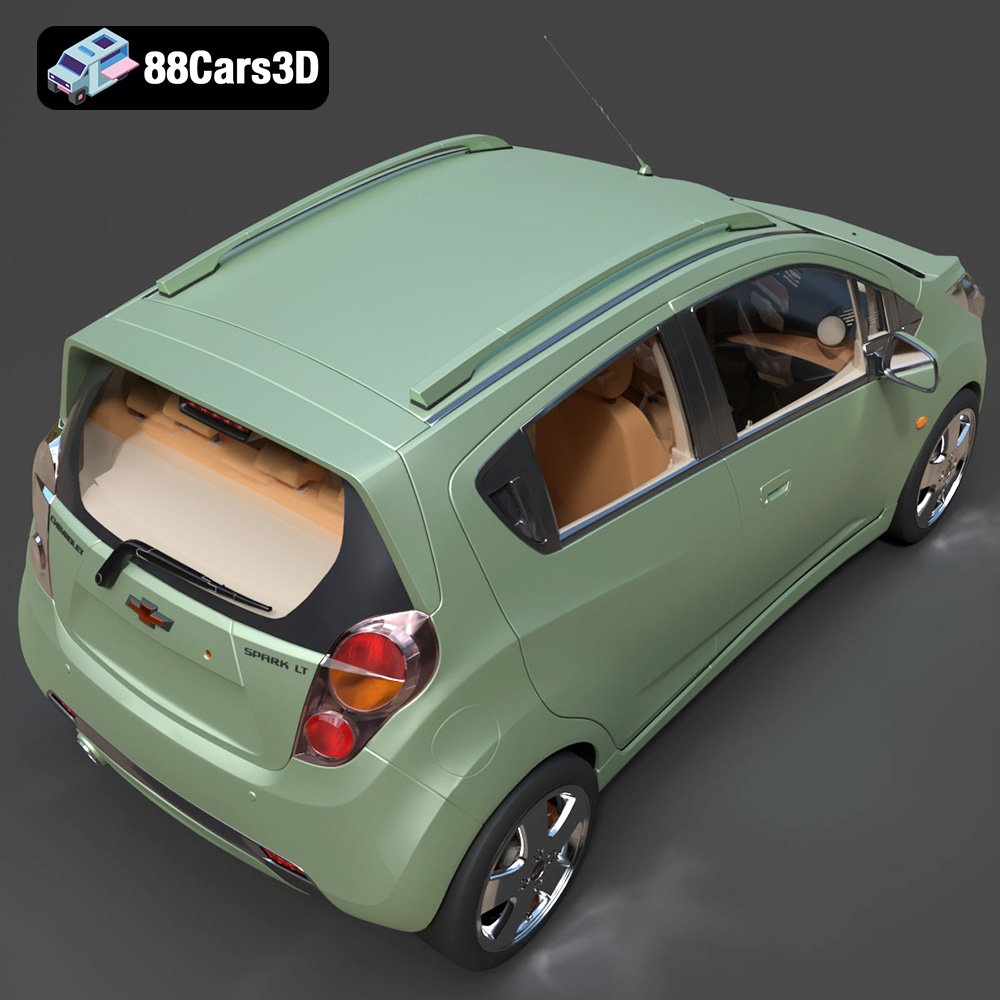
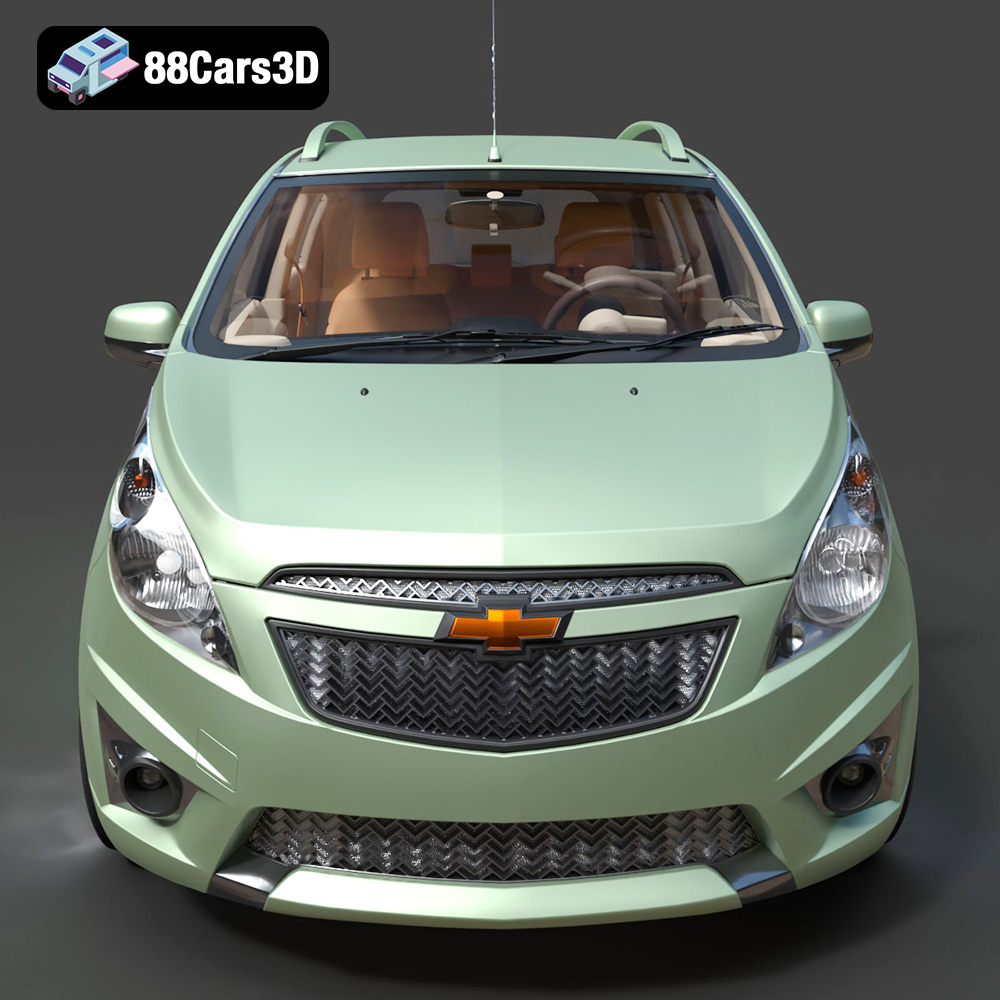
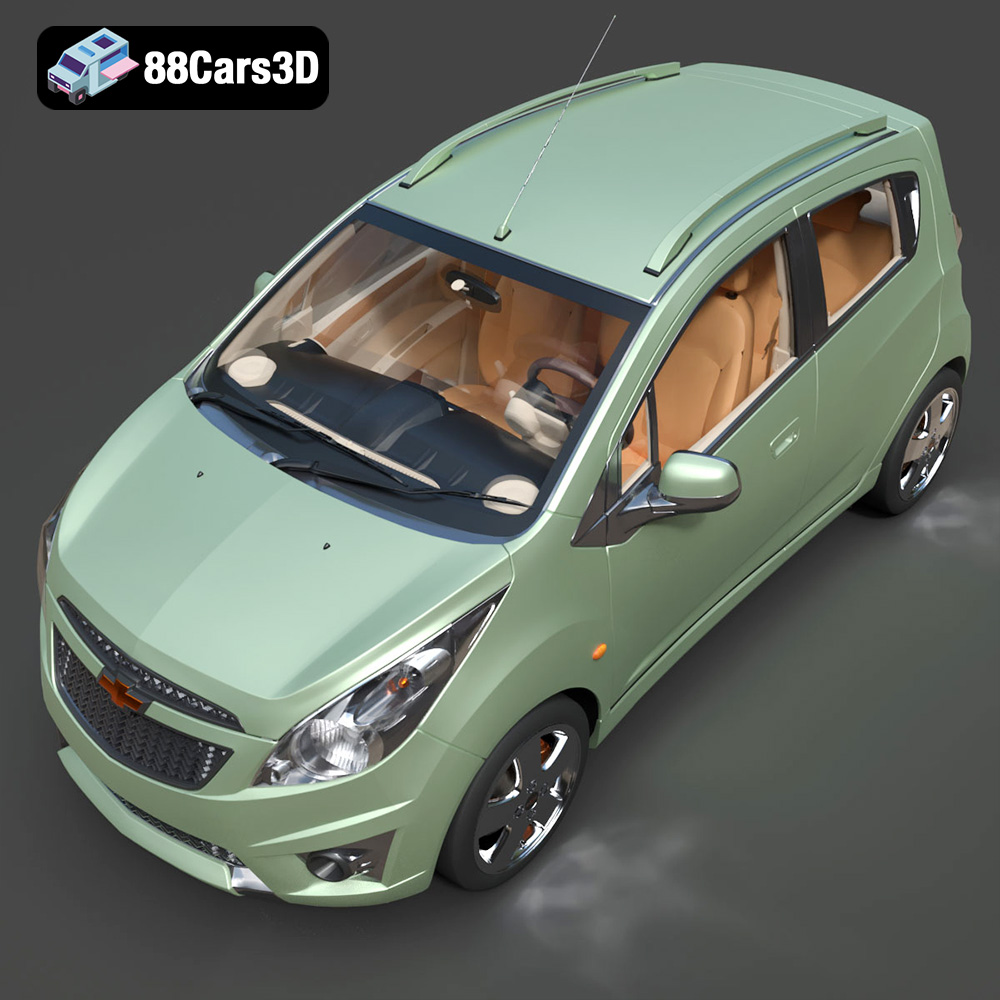
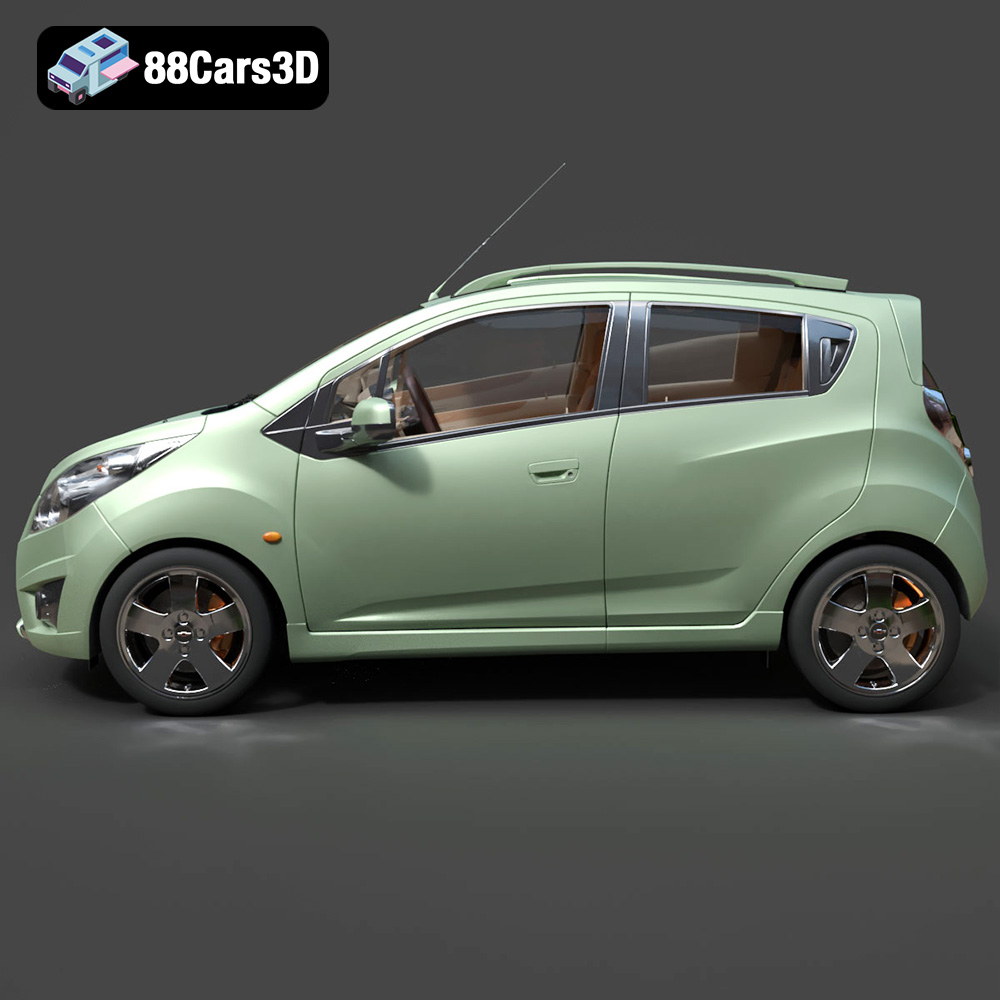
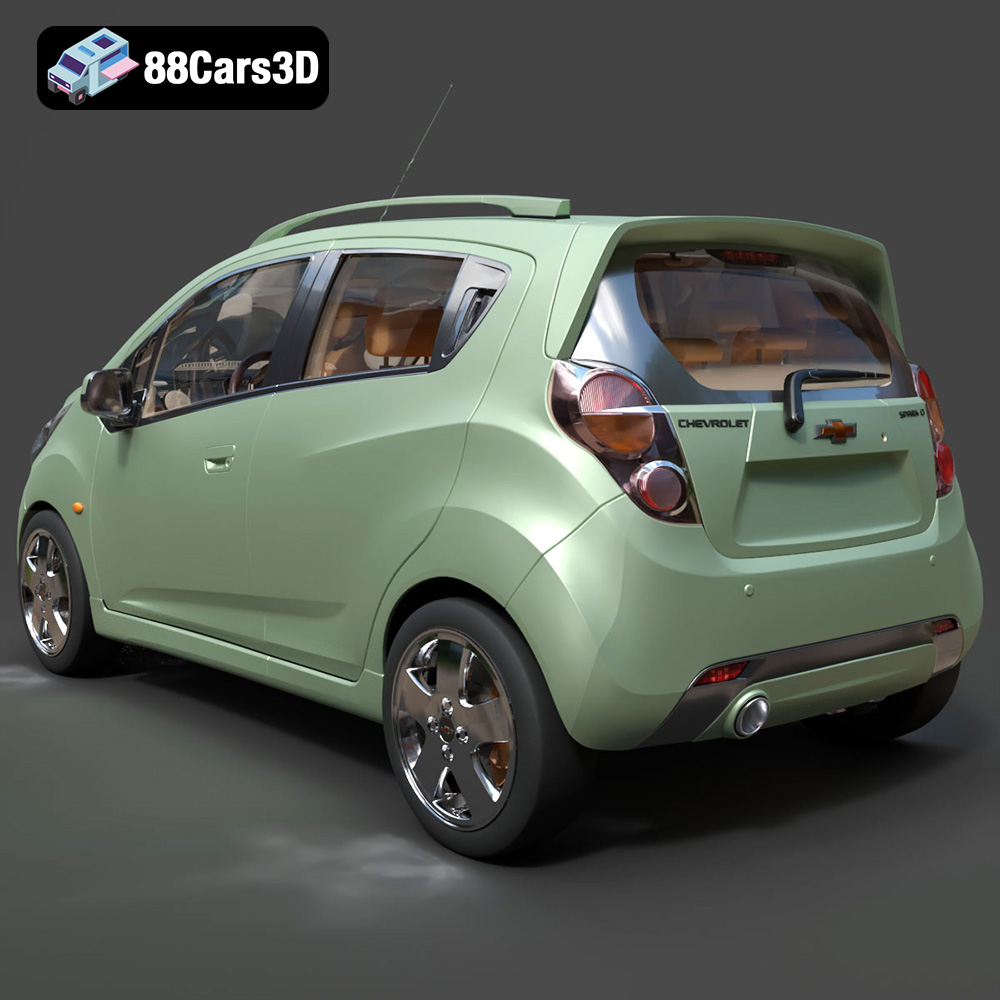
The first impression of any vehicle is its exterior, and capturing its essence in 3D requires careful attention to every curve, line, and proportion. The Spark LT model precisely replicates the sleek, modernized aesthetic of its real-world counterpart. This includes its signature swept-back headlight housings, which convey a sense of dynamism, and the distinctive dual-port Chevrolet grille, an unmistakable brand hallmark. Even subtle yet impactful details, like the cleverly integrated rear door handles in the C-pillar, which give the subcompact a sporty, two-door appearance, are faithfully reproduced. The sleek aerodynamic roofline, complete with an integrated rear spoiler, and the detailed factory alloy wheels wrapped in realistic street tires, further enhance its authenticity. Crucially, the model is built to real-world scale accuracy, based on Chevrolet factory dimensions, ensuring seamless integration into scenes without needing manual resizing or scale adjustments.
Furthermore, for enhanced functionality and animation potential, the exterior features separate components such as wheels, steering elements, and doors. This modular approach is essential for game developers and animators who need to rig the vehicle for dynamic movement, opening and closing doors, or interactive sequences. Such attention to practical utility alongside visual accuracy elevates the model from a static representation to a versatile, production-ready asset.
While often less visible than the exterior, a well-modeled interior significantly enhances the overall realism of a 3D vehicle, particularly for close-up shots, virtual reality experiences, or interactive walk-throughs. The Chevrolet Spark LT model features a practical, modern driver-centric cabin layout that mirrors the real car’s design philosophy. This includes a detailed dashboard housing the central infotainment screen and a representation of the sporty, motorcycle-inspired instrument cluster.
Crucially, the interior geometry is optimized specifically to look great both from the exterior through windows and in VR environments. This means balancing detail where it matters most with efficient polygon usage, avoiding unnecessary complexity that could impact performance. Realistic seating geometry for a four-passenger layout completes the interior, providing a convincing environment that stands up to scrutiny, whether it’s for an architectural visualization project or an immersive AR/VR application.
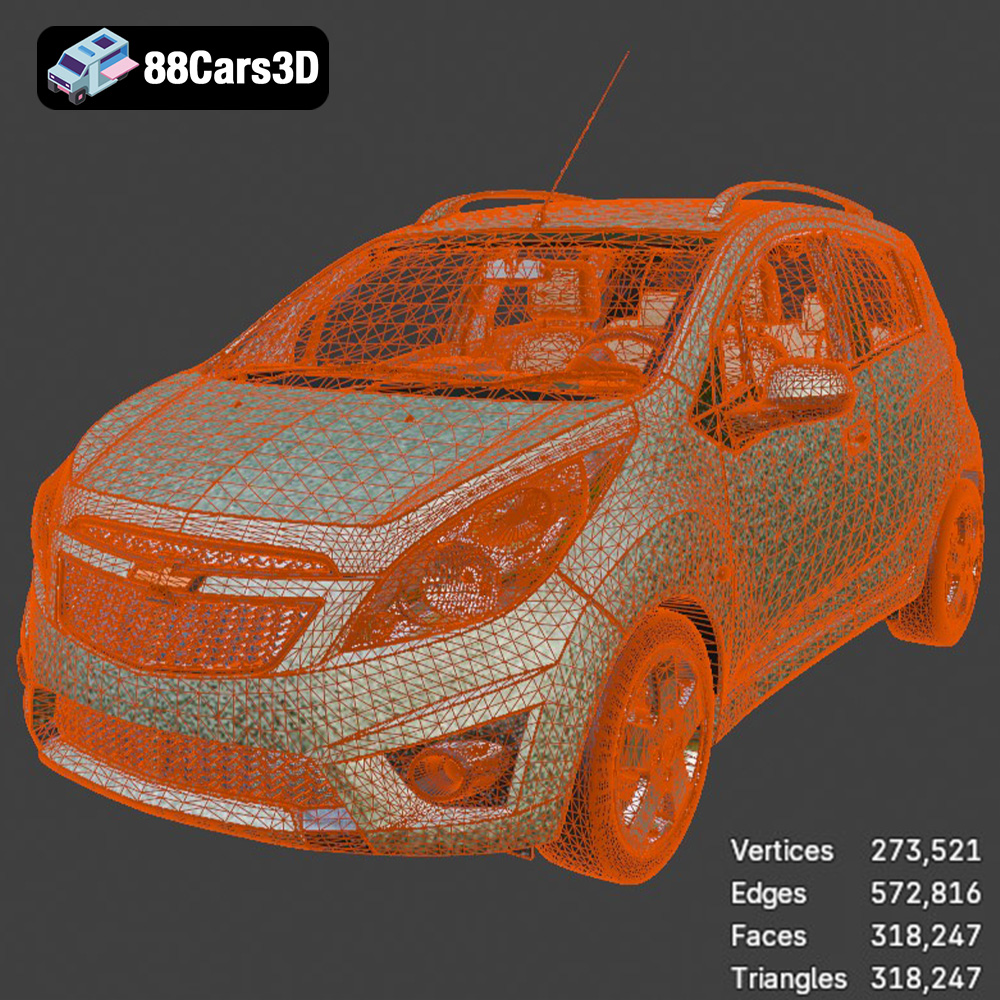
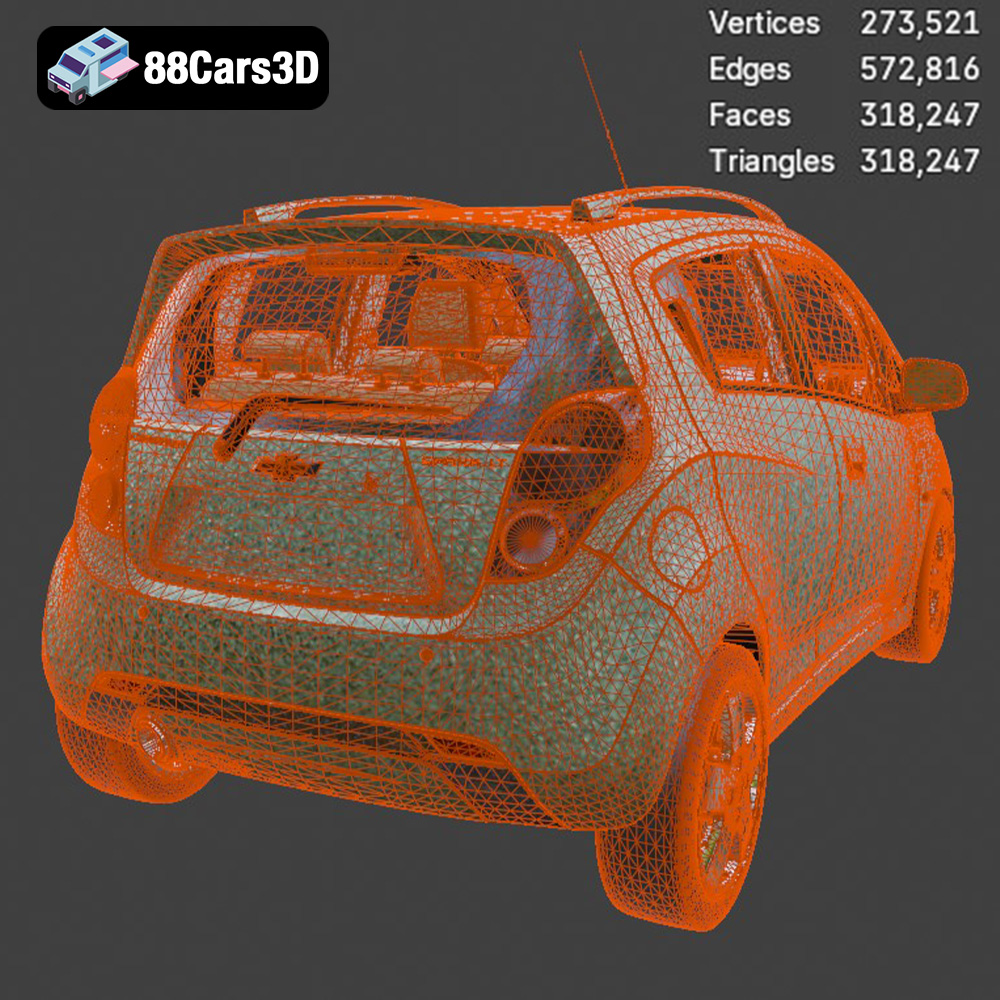
In the realm of 3D modeling, particularly for assets destined for real-time engines or large-scale renders, “optimized topology” is a frequently used but often misunderstood term. For the Chevrolet Spark LT 3D Model, it’s a core advantage, signifying a meticulous balance between visual fidelity and technical efficiency. At just over 318,000 triangles, this model demonstrates how clean geometry can deliver stunning results without overwhelming system resources.
The total triangle count of 318,247 is a sweet spot for many applications. For modern game development, a character or primary vehicle might have millions of polygons, but a background or traffic car needs to be far more optimized. The Spark LT’s mid-polygon count ensures it’s lightweight enough to be duplicated dozens, even hundreds of times, as background traffic in an open-world game without significant impact on frame rates. Yet, it retains enough detail to look convincing even when the camera gets relatively close.
The wireframe analysis would reveal a beautifully clean, quad-heavy structure. Quads (four-sided polygons) are generally preferred over triangles (three-sided) during the modeling phase because they deform better during animation, are easier to subdivide smoothly, and contribute to cleaner UV unwrapping. This clean topology is not just about aesthetics; it directly translates to better performance in game engines, more predictable deformation during rigging, and easier texture application. Furthermore, the model comes with a proper pivot setup for steering and wheel rotation, streamlining the animation process for game developers or cinematic artists.
The optimized nature of this 3D car model makes it incredibly versatile for architectural visualization (ArchViz) and urban traffic simulations. Imagine populating an entire city street or a sprawling parking lot; using high-polygon assets for every single vehicle would quickly bring even the most powerful workstations to a crawl. The Chevrolet Spark LT 3D Model, with its efficient polygon count, allows artists to add dozens of unique, detailed vehicles to their scenes, breathing life into urban environments without sacrificing render times or real-time performance.
Its real-world scale accuracy further simplifies integration into existing ArchViz scenes. Artists can drop the model directly into their building renders, knowing it will sit naturally alongside architectural elements. This capability for scalability is a significant advantage, enabling creators to build rich, believable digital worlds with ease and efficiency. Whether it’s for a serene suburban driveway render or a bustling downtown intersection, the Spark LT fits perfectly into the scene, enhancing realism without becoming a resource hog.
The true value of a well-crafted 3D asset lies in its utility across various professional applications. The Chevrolet Spark LT 3D Model is designed to be a versatile workhorse, ready for integration into diverse digital pipelines, from interactive experiences to high-fidelity renderings.
For game developers, finding the right balance between visual quality and performance is a constant challenge. The Spark LT model excels in this area. Its “mid-poly” count and optimized topology make it the ultimate “everyday traffic” vehicle for open-world games, ensuring that cityscapes feel alive and bustling without taxing the game engine. Its clean geometry also means it’s straightforward to apply custom physics assets, collision meshes, and level-of-detail (LOD) systems. For mobile racing titles or delivery simulators, its lightweight nature is a crucial advantage, allowing for smooth gameplay on less powerful hardware while still maintaining visual appeal.
The inclusion of separate components for wheels, steering, and doors significantly speeds up the rigging and animation process. Developers can quickly integrate the model into their vehicle physics systems, set up driving mechanics, and create cinematic sequences without having to spend valuable time separating mesh parts or cleaning up geometry. The .fbx and .unreal formats further ensure a seamless transition into popular game engines like Unreal Engine and Unity, providing a ready-to-use asset.
In architectural visualization, vehicles are essential elements that provide context, scale, and a sense of life to proposed structures and environments. The Chevrolet Spark LT, representing a common city car, is perfect for populating driveways, parking lots, and busy city intersections in ArchViz renders. Its accurate proportions and modern aesthetic complement contemporary architectural designs beautifully. Artists can easily duplicate and array multiple Spark LT models, varying colors and orientations, to create realistic traffic flow or parking scenarios around buildings. This adds an immediate layer of realism and relatability to architectural presentations.
Beyond static renders, this model can be integrated into dynamic urban planning simulations, allowing city planners and developers to visualize traffic density, parking demands, and the flow of people and vehicles within new developments. The ability to use a readily available, optimized 3D car model significantly reduces the overhead typically associated with creating such complex simulations.
Augmented Reality (AR) and Virtual Reality (VR) are increasingly used for interactive digital showrooms, virtual tours, and immersive experiences. The Chevrolet Spark LT 3D Model is an excellent candidate for these applications due to its optimized interior and exterior geometry. In a VR city-planning experience, users can “walk through” a virtual street populated with these cars, gaining a tangible sense of scale and environment. For interactive web configurators, a lightweight model like the Spark LT ensures fast loading times and smooth interaction, allowing potential customers to explore color options, wheel designs, or even basic interior layouts in real-time, directly in their browser or on a mobile device.
The .glb format, specifically designed for web and AR/VR, makes integrating the Spark LT into these platforms straightforward and efficient. Its balanced poly count ensures that it can be rendered smoothly on various devices, from high-end VR headsets to mobile phones, without compromising visual quality.
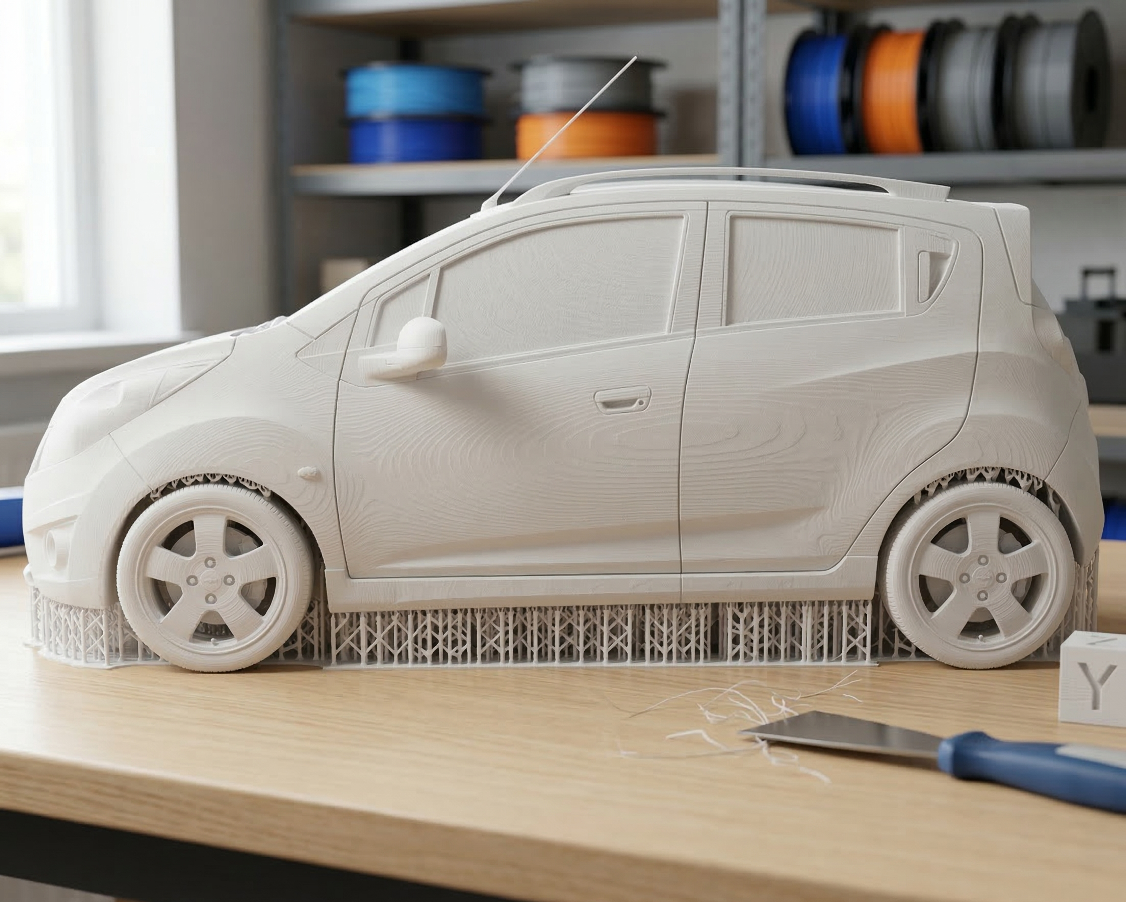
One of the most exciting aspects of modern 3D modeling is the ability to bridge the gap between digital creation and physical manifestation. The Chevrolet Spark LT 3D Model is not just for screens; it’s also designed to be 3D printable, opening up a world of possibilities for hobbyists, collectors, and prototyping enthusiasts. The inclusion of the .stl file format specifically caters to this rapidly growing application.
For a 3D model to be successfully printed, it must possess “manifold” geometry—meaning it must be a completely enclosed, watertight mesh with no holes, inverted normals, or non-manifold edges. The clean topology described earlier for the Spark LT model is a strong indicator of its print readiness. It ensures that the digital representation translates smoothly into a physical object without errors that could lead to failed prints or undesirable artifacts.
Hobbyists interested in creating display-scale modern diecast models or urban dioramas will find this feature particularly appealing. The transition from a digital file on 88cars3d.com to a tangible object on their desk allows for a unique connection to the design and a greater appreciation for the car’s physical form. This fusion of digital artistry and physical craftsmanship expands the utility of the 3D asset significantly.
To achieve the best results when 3D printing the Chevrolet Spark LT, specific settings are recommended. A recommended scale of 1:32, 1:43, or 1:64 is perfect for urban dioramas or collectible models. These scales balance detail with printability. For fine details, especially at smaller scales, resin printing (SLA/DLP) is highly recommended over FDM, allowing for layer heights between 0.04–0.12 mm. This results in incredibly smooth surfaces and sharp edges, crucial for capturing the nuances of the car’s design.
Standard wall thickness (1.2–2.0 mm) and infill (15–25%) provide structural integrity without excessive material usage. Supports are required for overhangs like side mirrors, wheel arches, and the subtle rear spoiler to prevent drooping during printing. Printing the body angled for a smooth surface finish and the wheels separately simplifies post-processing and often yields superior results. After printing, careful post-processing, including sanding, priming, and painting with vibrant factory colors such as Red Hot, Mystic Blue, or Summit White, can bring the miniature Spark LT to life with remarkable realism.
A truly versatile 3D model provides a robust foundation for creativity, allowing artists and designers to adapt it to their specific project needs. The Chevrolet Spark LT 3D Model offers a wealth of customization options, empowering users to personalize its appearance and integrate it seamlessly into any scene or narrative.
The ability to change exterior paint colors is a fundamental customization. With the Spark LT model, users can easily apply a spectrum of striking, vibrant city-car palettes, from subtle metallics to eye-catching solids, matching specific branding guidelines or creative visions. This instantly alters the mood and context of the vehicle within a scene, making it suitable for diverse settings. Beyond color, the model allows for modifications to the wheel setup, enabling users to swap the standard alloy wheels for custom compact tuner wheels or other aftermarket designs, further enhancing personalization.
For commercial vehicle renders or branded content, artists can add custom decals or delivery branding to the side panels. This transforms the generic city car into a specific utility vehicle, a corporate fleet member, or a unique advertising platform, significantly expanding its application in marketing, product visualization, and themed game environments.
Beyond static appearance, the Spark LT model offers flexibility in adapting to dynamic scene requirements. Artists can easily adjust and adapt lighting to simulate various environmental conditions, from sunny urban commutes with crisp reflections to moody, rainy night-time city scenes with wet surfaces and diffused light. This capacity for environmental adaptation ensures the model always looks its best, regardless of the scene’s time of day or weather. The clean material setup, often found in assets from 88cars3d.com, allows for straightforward modification of material properties, such as reflectivity or roughness, to match different lighting scenarios or material finishes. This level of control over both visual and environmental integration makes the Chevrolet Spark LT a highly adaptable and invaluable asset for any 3D professional.
The modern digital landscape demands 3D assets that are not only visually stunning but also technically robust and highly adaptable. The Chevrolet Spark LT 3D Model exemplifies these qualities, offering an unparalleled blend of real-world accuracy, optimized topology, and broad compatibility across diverse file formats. Whether you’re a game developer seeking efficient game assets, an architect needing realistic vehicles for urban planning, a visualizer crafting breathtaking automotive renders, or a hobbyist eager to 3D print a miniature masterpiece, this model provides the foundation for exceptional results.
Its thoughtful design, from the faithfully replicated exterior to the optimized interior, ensures peak performance in real-time engines and efficient rendering in visualization projects. The comprehensive array of included file formats—ranging from .blend and .max for full editability to .fbx and .unreal for game development, and .stl for 3D printing—underscores its versatility. Investing in high-quality 3D car models like the Chevrolet Spark LT from 88cars3d.com is investing in efficiency, realism, and boundless creative potential for your projects. Elevate your digital creations and bring your visions to life with assets designed for the modern era.
The Chevrolet Spark LT 3D Model is a highly accurate, efficiently modeled digital recreation of the popular subcompact city car. Known for its nimble handling, practical dimensions, and expressive styling, the Spark is a staple of modern urban environments across the globe. This 3D model beautifully captures the sleek, modernized aesthetic of the latest-generation Spark, featuring its signature swept-back headlight housings, the distinctive dual-port Chevrolet grille, its compact hatchback profile, and the cleverly integrated rear door handles that give it a sporty, two-door appearance. Built with a highly optimized, clean mid-polygon topology (just over 318k triangles), it strikes the perfect balance between visual fidelity for close-up renders and lightweight performance for real-time game engines. Perfect for populating modern city streets, architectural visualizations, urban traffic simulations, and mobile game development.
$9.99
.archviz
.automotive
.blend
.chevrolet
.fbx
.hatchback
.obj
.rendering
.subcompact
car-3d-model
chevy-spark
city-car
game-ready
mid-poly
spark-lt
traffic-car