The Front Lines of Digital Design: Crafting Immersive Military 3D Environments
In the vast landscape of 3D modeling, few subjects command as much meticulous detail and technical prowess as military vehicles. From the sleek lines of fighter jets to the imposing presence of main battle tanks, these assets are not merely models; they are intricate pieces of digital engineering, designed to convey power, authenticity, and a visceral sense of realism. Whether destined for the intense battlefields of a AAA game, the precise simulations of military training, or the dramatic scenes of a cinematic rendering, the demand for high-quality, production-ready military 3D models is constant.
The challenge lies in balancing extreme fidelity with optimal performance. Artists and developers must navigate complex topologies, realistic texturing, and intelligent rigging to bring these formidable machines to life. It’s about capturing every rivet, every weld, and the rugged wear of combat, all while ensuring the asset is versatile enough for diverse applications. Today, we’re diving deep into the technical specifications and broad applications of such an asset, exemplified by the Heavy Armored Tank 3D Model available on 88cars3d.com, a platform dedicated to providing exceptional vehicle models.
The Demand for Authenticity in Digital Warfare
Modern audiences and professional clients expect nothing less than hyper-realism. In games, players demand to feel the weight and power of the vehicle they command. In simulations, accuracy is paramount for effective training. This drives the need for models that aren’t just visually appealing but also technically sound, built to real-world scale, and articulated for dynamic interaction. The Heavy Armored Tank 3D Model, with its accurate proportions, detailed continuous track systems, and fully rotating turret, stands as a testament to this commitment to authenticity.
Bridging Realism and Performance in Game and Simulation Assets
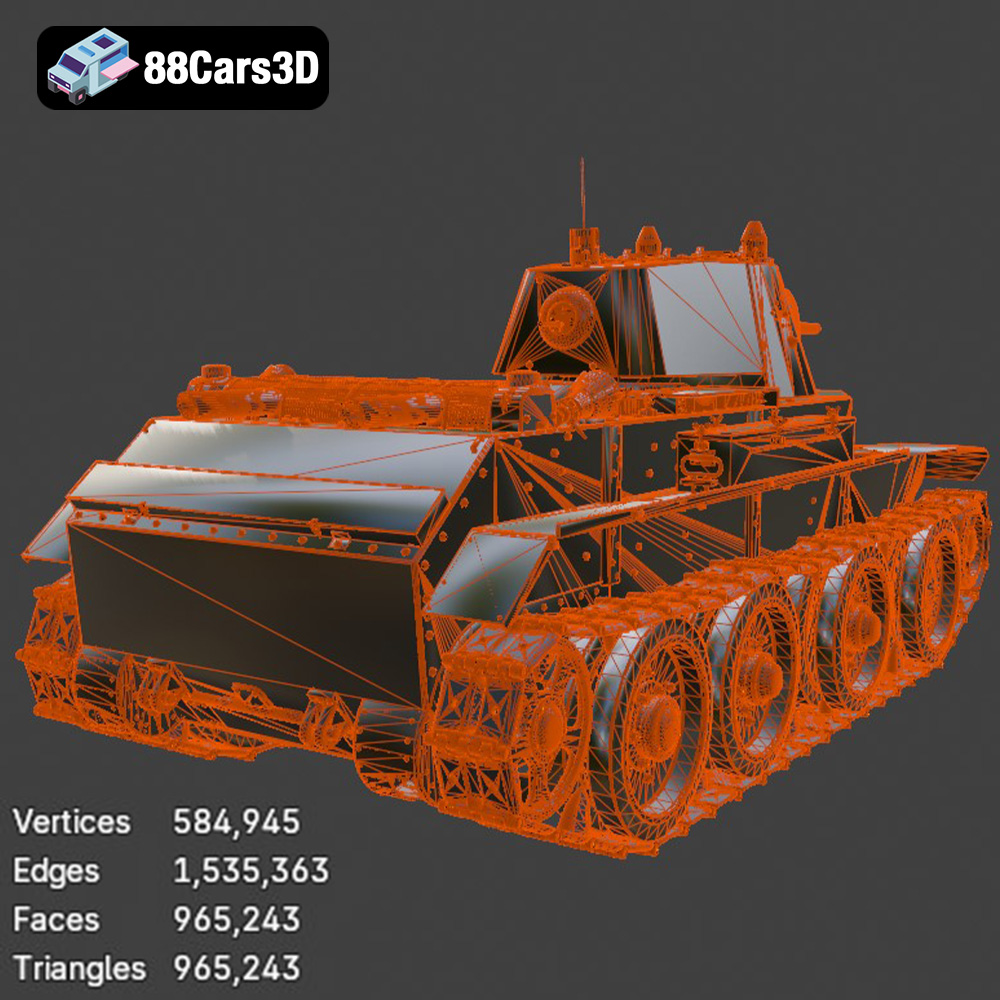
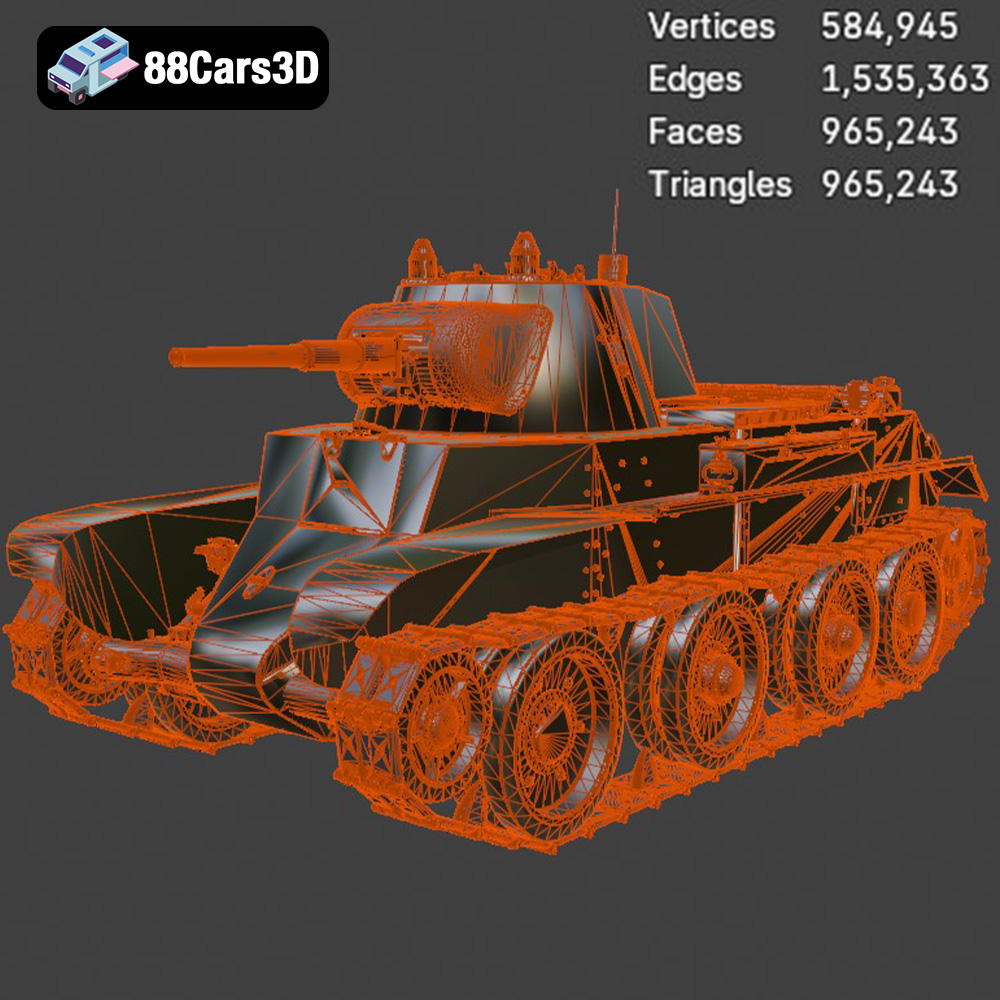
Achieving realism often comes with a performance cost. High polygon counts can bog down real-time engines, while overly complex textures can inflate memory budgets. The key is intelligent optimization. A well-designed military 3D model strikes a delicate balance, offering incredible visual fidelity for close-up renders while maintaining a manageable poly count suitable for current-generation game engines. The specified 965,243 triangles for the Heavy Armored Tank are a prime example of a perfectly balanced topology, providing substantial detail without being overly burdensome.
Understanding 3D Model File Formats
The utility of any 3D model hinges significantly on its file format. Professionals working across different software packages and pipelines need versatility, and the ability to seamlessly import, export, and utilize assets without losing data integrity or critical features is paramount. The Heavy Armored Tank 3D Model is provided in a comprehensive array of formats, each serving distinct purposes and workflows. Understanding these formats is crucial for any 3D artist or developer aiming for efficient production.
Software-Specific Powerhouses (.blend, .max, .unreal)
Certain file formats are intrinsically tied to specific software, offering the deepest level of integration and access to all native features.
- .blend – Fully Editable Blender Scene with Materials: For artists entrenched in the Blender ecosystem, the .blend file is the gold standard. It contains the entire scene, including the mesh geometry, materials, textures, lighting, camera setups, and even animations. This format allows for complete editing and customization of the Heavy Armored Tank model within Blender, from adjusting UVs and modifying the mesh to refining shader networks and setting up custom rigs. It ensures that all native Blender features, modifiers, and node-based materials are preserved, making it ideal for artists who wish to extend or modify the asset deeply within their preferred DCC (Digital Content Creation) tool.
- .max – Editable 3ds Max Project for Animation and Rendering: Similarly, the .max format is native to Autodesk 3ds Max, a powerhouse in architectural visualization, animation, and game development. A .max file provides the complete 3ds Max scene for the tank model, retaining all hierarchical data, object properties, modifiers, and rendering settings. This is invaluable for professionals who use 3ds Max for complex rigging, advanced V-Ray or Corona rendering, or integrating the tank into larger animated sequences. It ensures fidelity to the original design and allows for full manipulation within a professional studio environment.
- .unreal – Engine-Ready Asset for Real-Time Environments: This format is specifically optimized for direct import into Unreal Engine, one of the leading real-time 3D creation tools for games, simulations, and virtual production. An .unreal asset typically comes pre-configured with materials, textures, and proper pivot points, streamlining the integration process. It means less time spent on setup and more time focused on level design, lighting, and gameplay implementation. For a complex asset like the Heavy Armored Tank, having an engine-ready format significantly reduces the development overhead for game artists and developers.
Universal Compatibility and Real-Time Optimization (.fbx, .obj, .glb, .ply, .stl)
While software-specific formats offer depth, cross-application compatibility is often achieved through more universal standards.
- .fbx – Ideal for Unreal, Unity, and Real-Time Pipelines: The Filmbox (FBX) format, developed by Autodesk, is one of the most widely supported formats for transferring 3D data between different software applications and game engines. It can store not just geometry, but also materials, textures, animation data, and even rudimentary rigging. For the Heavy Armored Tank, the .fbx version is crucial for integration into game engines like Unity and Unreal, providing a robust, industry-standard pathway for moving the asset into real-time environments while preserving its complex articulation and material assignments.
- .obj – Universal Format for Cross-Software Compatibility: The Wavefront .obj format is a truly universal standard, primarily storing geometry (vertices, normals, UVs) and group information. While it doesn’t typically store animation or advanced material definitions directly, its simplicity makes it incredibly compatible across virtually all 3D software. For the tank model, the .obj format serves as a reliable fallback, ensuring that the core mesh data can be accessed and manipulated in any 3D package, making it perfect for base mesh import and re-texturing in different environments.
- .glb – Optimized for AR, VR, and Browser-Based Display: The GL Transmission Format (.glb) is a compact, binary form of glTF, designed for efficient transmission and loading of 3D scenes and models by engines and applications. It’s the go-to format for augmented reality (AR), virtual reality (VR), and web-based 3D viewers due to its optimized nature and inclusion of textures and animations directly within a single file. For showcasing the Heavy Armored Tank in a web portfolio, an AR experience, or a lightweight VR application, the .glb variant is invaluable.
- .stl – Suitable for 3D Printing Output: The Stereolithography (.stl) format describes only the surface geometry of a 3D object using a collection of triangular facets. It’s the de facto standard for 3D printing. The availability of the tank model in .stl format means it’s ready for physical production, allowing enthusiasts and professionals to print the intricate details of the tank at various scales, as highlighted in the product’s 3D print settings. This opens up entirely new applications beyond digital visualization.
- .ply – Precision Mesh Format for CAD or Analysis: The Polygon File Format (.ply) is a flexible format primarily used for storing 3D data from 3D scanners. It supports properties like color, transparency, and range data, making it useful for scientific and engineering applications, as well as CAD workflows. While less common for everyday artistic endeavors, its inclusion indicates the model’s robustness and suitability for precise analytical or manufacturing pipelines beyond typical rendering or gaming.
This comprehensive suite of file formats ensures that the Heavy Armored Tank 3D Model from 88cars3d.com is not only visually stunning but also incredibly versatile, ready for deployment in almost any professional 3D pipeline.
Deep Dive into the Heavy Armored Tank 3D Model: Technical Precision and Design
The true measure of a high-quality 3D asset lies in its underlying technical execution. The Heavy Armored Tank 3D Model exemplifies this with its robust technical specifications and thoughtful design choices, making it a professional-grade asset ready for immediate deployment.
Topology and Mesh Integrity: A Closer Look at 965k Triangles
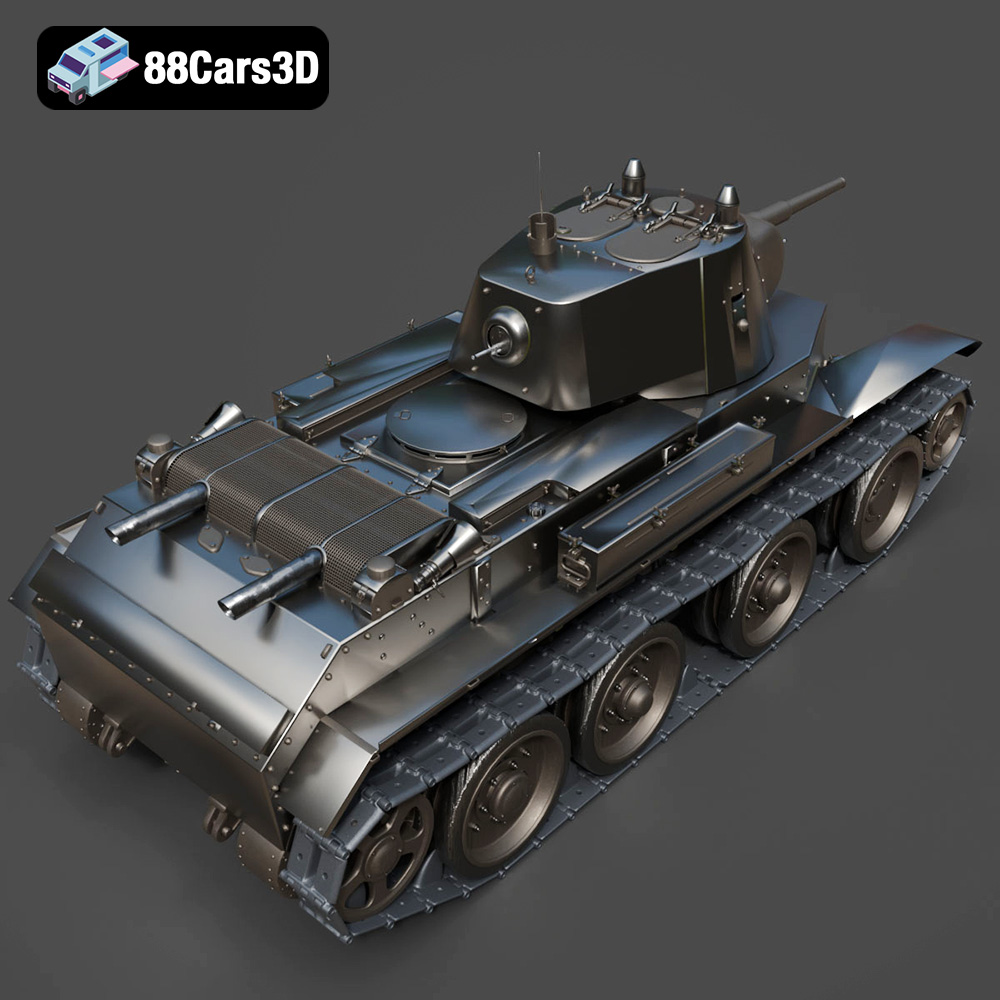
At the heart of any compelling 3D model is its mesh. This tank boasts 584,945 vertices, 1,535,363 edges, and a polygon/triangle count of 965,243. This “just under 1 million triangles” count is described as “perfectly balanced topology.” What does this mean in practical terms? It signifies that the model achieves an exceptional level of detail—essential for complex components like individual track links, exhaust grilles, and reactive armor plating—without becoming overly dense to the point of impeding performance in real-time applications. For game developers, this is a sweet spot: enough fidelity for a hero asset visible in close-ups, yet optimized enough to be integrated into a bustling battlefield scene without crippling frame rates. For render artists, it provides ample geometric detail to catch specular highlights and cast realistic shadows, elevating the visual impact of any cinematic or still image.
Articulation and Modular Design for Dynamic Scenes
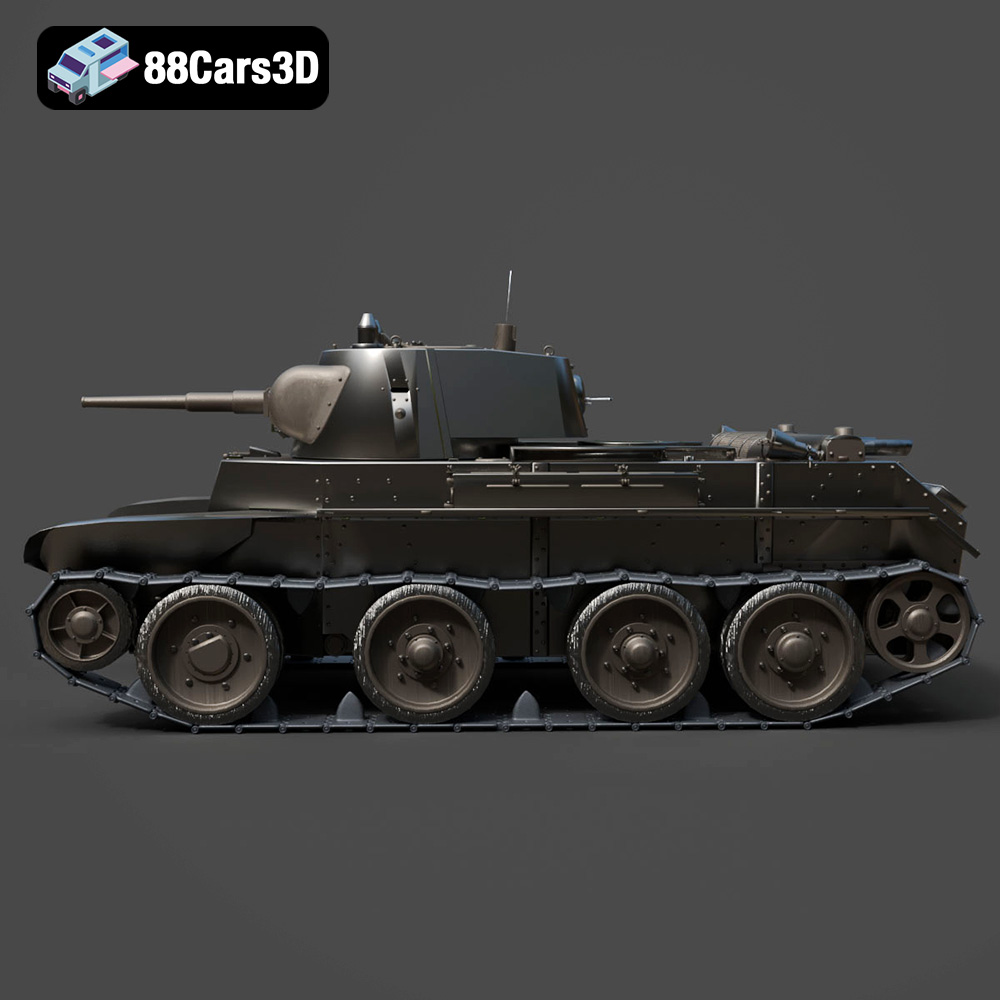
Beyond static beauty, a military vehicle must convey motion and operational capability. This tank model is designed with practicality in mind, featuring “separate turret, main gun, wheels, and tracks for realistic animation and physics rigging.” This modularity is a critical advantage.
- Turret and Main Gun: The fully rotating turret assembly with an elevating main gun barrel allows for dynamic combat scenarios. Artists can easily rig these components for realistic aiming, recoil animations, and battlefield interaction.
- Continuous Track System: The intricate caterpillar tracks, with individual links and drive sprockets, are often the most challenging part of tank animation. The model’s design facilitates the creation of realistic track deformation and movement over uneven terrain, adding immensely to the authenticity of any simulation or game.
- Pivot Setup: The mention of “proper pivot setup for turret rotation, barrel elevation, and track/wheel movement” is crucial. Correct pivot points streamline the rigging process, ensuring that rotations and translations occur around the natural axis of movement, saving countless hours for animators and technical artists.
Real-World Scale and Battle-Ready Aesthetics
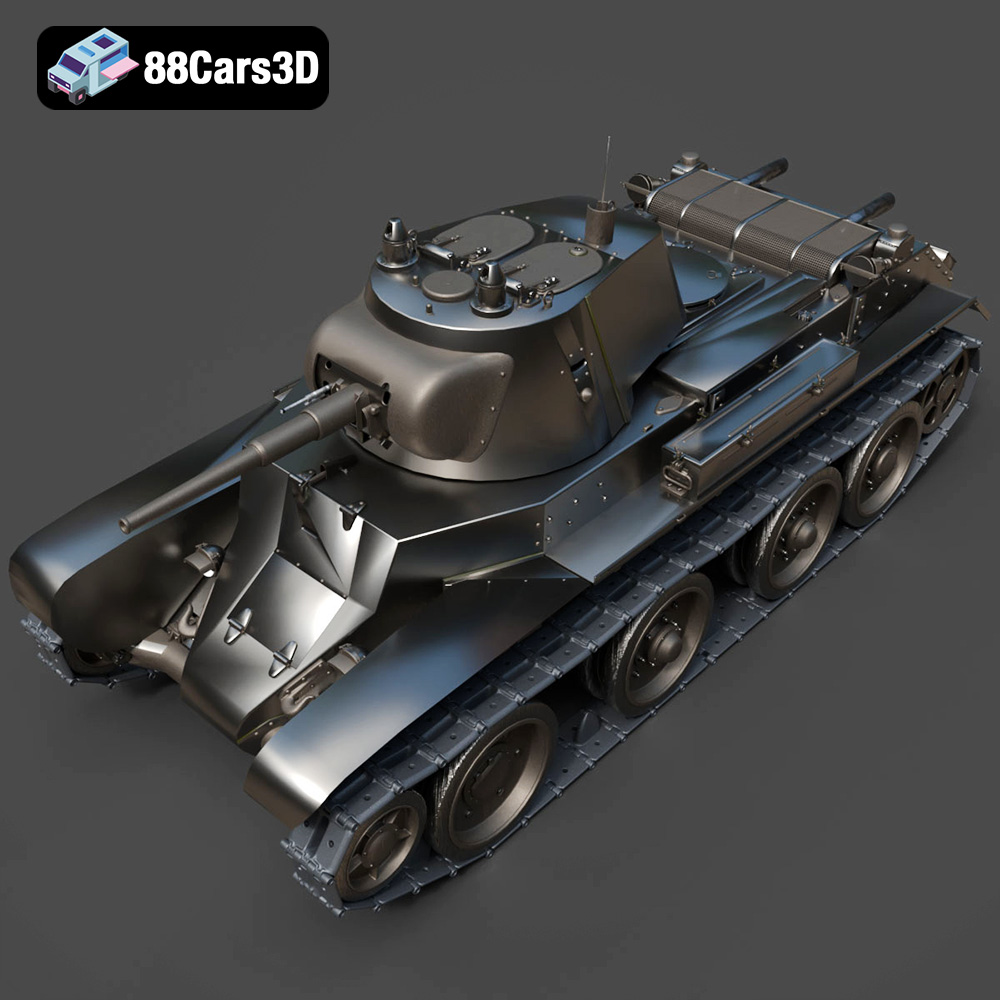
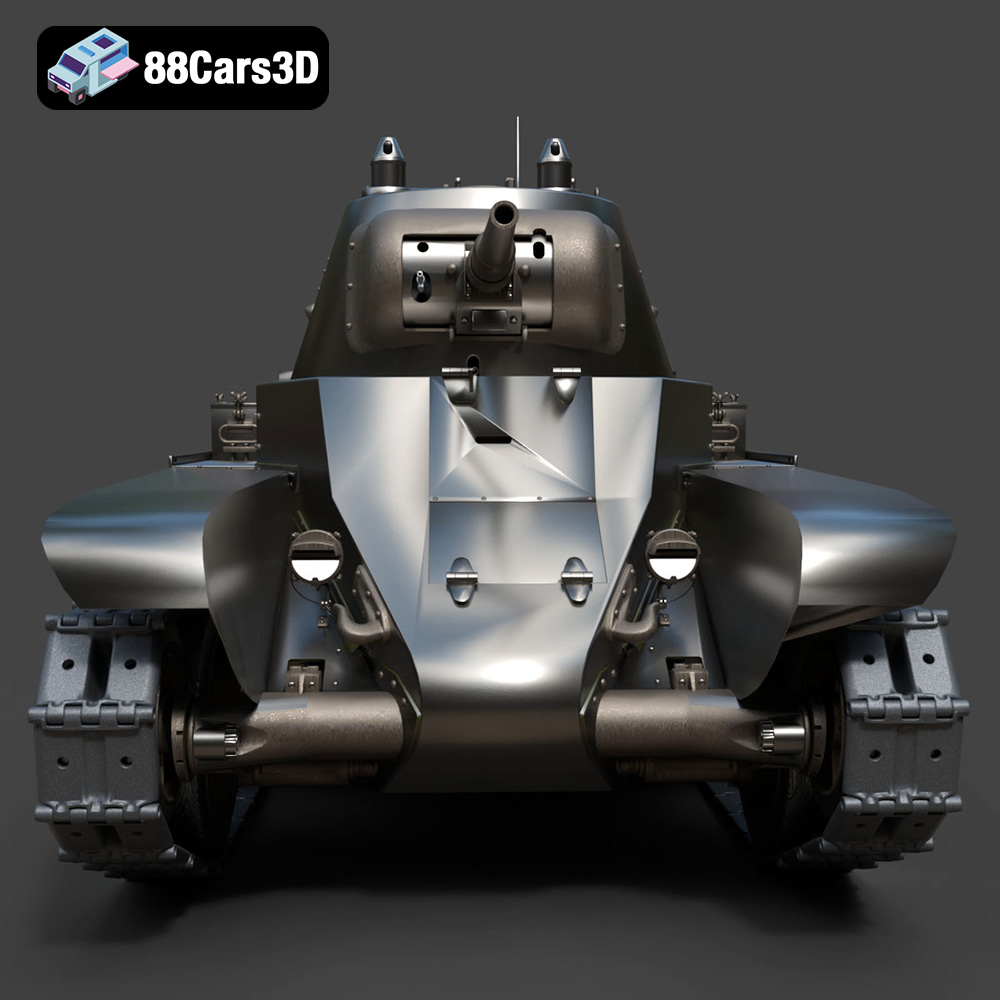
The model adheres to “real-world scale accuracy based on standard Main Battle Tank (MBT) dimensions.” This attention to scale is vital for immersion and compatibility. In a game, it ensures the tank feels appropriately massive compared to infantry or other vehicles. In architectural visualization or military training simulations, accurate scale is a non-negotiable requirement for realistic scene composition and spatial understanding. Furthermore, the model’s exterior features—heavy hull geometry, commander and gunner hatches, optical viewports, heavy machine gun mounts, detailed engine exhaust grilles, tow cables, and reactive/sloped armor—all contribute to a “rugged, battle-ready aesthetic.” This level of detail elevates the model from a generic tank to a specific, formidable presence, capable of conveying a powerful narrative.
Professional Workflows: Integrating the Tank Model into Your Projects
A high-quality 3D model is only as good as its integration into professional pipelines. The Heavy Armored Tank 3D Model is designed for seamless use across various industry-standard software, making it a versatile asset for a wide range of projects.
Mastering the Render: High-Fidelity Visualization in 3ds Max and Blender
For cinematic sequences, marketing materials, or detailed portfolio shots, the tank model truly shines in rendering environments.
- 3ds Max Workflow: Utilizing the `.max` file, 3ds Max users gain full access to the original project structure. This allows for precise adjustments, advanced material assignments using render engines like V-Ray or Corona, and sophisticated lighting setups. Artists can leverage 3ds Max’s robust animation tools to create dynamic camera paths around the tank, animate its turret and tracks, and even integrate it into complex scenes with environmental effects like dust, smoke, or muzzle flashes. The “proper pivot setup” mentioned in the specifications directly facilitates quick rigging and animation within Max.
- Blender Workflow: The `.blend` file offers a native, fully editable experience for Blender artists. This means all existing materials can be easily tweaked or replaced with custom PBR (Physically Based Rendering) shaders using Blender’s node editor. Cycles or Eevee can be employed for stunning renders, capturing the heavy plating and intricate details with photorealistic accuracy. Blender’s comprehensive sculpting tools also allow for further weathering effects or damage if desired, making it highly adaptable for diverse rendering needs.
The balanced topology of the tank model is particularly beneficial here, providing enough polygons for crisp detail without overtaxing render times, even in complex scenes with global illumination.
Optimizing for Real-Time: Unreal Engine Integration for Game Development
Game development demands efficiency. The inclusion of the `.unreal` and `.fbx` formats makes the Heavy Armored Tank an ideal game asset.
- Unreal Engine Integration: The `.unreal` file is a direct pipeline for Unreal Engine users, potentially offering pre-set materials and collision meshes, significantly speeding up development. For the `.fbx` format, importing into Unreal involves a straightforward process:
- Import the FBX file, ensuring “Combine Meshes” is handled appropriately for modularity.
- Assign PBR textures (Albedo, Normal, Roughness, Metallic, Ambient Occlusion) to the imported materials.
- Create a skeletal mesh if animation is desired, linking the separate turret, gun, and track meshes to a rig.
- Set up physics assets for destruction or realistic movement.
The “optimized, highly balanced topology” ensures the tank can serve as a “hero” drivable vehicle for current-gen PC/console shooters or strategy games, maintaining high visual fidelity at playable frame rates.
- Unity Integration: While not explicitly mentioned, the `.fbx` format is equally compatible with Unity. The workflow mirrors Unreal’s: import, texture assignment, and then scripting for movement, combat mechanics, and special effects.
Animation, Physics, and Destruction: Bringing the Tank to Life
Beyond static display, military assets are often dynamic. The tank’s modular design (separate turret, gun, tracks, and wheels) is engineered for complex animation and physics.
- Animation Rigging: Artists can create robust control rigs for the turret’s rotation and main gun’s elevation, ensuring smooth, realistic articulation. The continuous track system can be animated using path constraints or more advanced procedural methods common in game engines, simulating the unique movement of tank tracks.
- Physics Simulation: For game development, proper physics assets are crucial. The tank’s heavy hull geometry and separate components lend themselves well to realistic collision detection and destruction physics. Imagine reactive armor blocks detaching, or tracks being damaged, adding layers of immersion to gameplay.
- VFX Integration: Combining the animated tank with particle effects for dust, smoke from the exhaust grilles, muzzle flashes, and shell casings can elevate its presence in any scene, making it feel like a truly operational war machine.
Beyond the Screen: 3D Printing the Heavy Armored Tank
The versatility of a well-crafted 3D model extends far beyond digital rendering and real-time environments. The Heavy Armored Tank 3D Model, with its detailed geometry, is also ideally suited for 3D printing, opening up new avenues for physical models, collectibles, and tabletop wargaming. The inclusion of the `.stl` format specifically caters to this rapidly growing application.
From Digital Mesh to Tangible Model: Preparing for Physical Production
The journey from a digital file to a physical object requires careful consideration, and the tank model’s design already incorporates many features that make this transition smooth. The detailed components, such as individual track links, commander hatches, and the main gun barrel, will translate well into a physical print.
- Scale Considerations: The recommended scales (1:35 / 1:48 / 1:72) align with standard military modeling scales, ensuring compatibility with existing model kits and dioramas. This makes it a valuable asset for hobbyists looking to expand their collections with unique, high-detail vehicles.
- Manifold Geometry: For 3D printing, a model must have “manifold” geometry—meaning it’s a completely sealed, watertight mesh with no holes or intersecting faces. While not explicitly stated, high-quality professional models like this tank typically adhere to this standard, minimizing errors during slicing for printing. Tools like Meshmixer or Blender’s 3D Print Toolbox can be used for final checks and repairs if necessary, though good source models usually require minimal adjustment.
Recommended Settings for Superior Print Quality
Achieving a high-quality physical print of the Heavy Armored Tank requires adherence to specific print settings, especially given its intricate details.
- Layer Height: A low layer height of 0.04–0.08 mm is recommended. This is particularly crucial for capturing the fine details of the track links, exhaust grilles, and machine gun barrels. For such intricate components, resin printing (SLA/DLP) is highly recommended over FDM (Fused Deposition Modeling) due to its superior resolution and ability to produce finer details without visible layer lines.
- Wall Thickness and Infill: A wall thickness of 1.5–2.5 mm ensures the model is robust enough to withstand handling without being overly heavy or prone to warping. An infill of 20–40% provides sufficient internal support and strength, especially important for larger prints to prevent deformation during cooling. Tanks, by their nature, are solid, and a denser infill helps convey this solidity.
- Supports and Orientation: Supports are essential for overhanging features like the main gun barrel, external fuel tanks, and parts of the turret. Proper print orientation—with the hull printed flat for structural integrity and the turret and barrel printed separately—minimizes support structures and optimizes surface finish on critical areas. Separating components also allows for easier post-processing and painting.
The Art of Post-Processing and Diorama Integration
Once printed, the physical model offers a canvas for further artistic expression.
- Finishing Touches: Post-processing typically involves careful removal of supports, sanding to smooth any rough patches, and applying a primer coat to prepare the surface for painting.
- Painting and Weathering: This is where the model truly comes alive. Applying a base coat in classic military colors (Olive Drab, Desert Sand, Woodland Camo) is just the beginning. The product description highlights the application of “heavy weathering (mud, rust, dust)” which can be achieved through various modeling techniques like washes, dry brushing, pigments, and chipping effects. This weathering transforms the clean print into a battle-hardened veteran.
- Diorama Potential: The printed tank is perfect for highly detailed diorama renders and physical displays. Paired with miniature figures, terrain, and environmental elements, it can tell a compelling story of military operations, historical battles, or speculative future conflicts. The accurate scale ensures it integrates seamlessly into existing military modeling scenes.
Strategic Customization and Battlefield Realism
A static, generic model, no matter how detailed, often falls short of meeting the diverse needs of creative projects. The true power of a flexible 3D asset, such as the Heavy Armored Tank 3D Model from 88cars3d.com, lies in its capacity for extensive customization, allowing artists and developers to tailor it precisely to their vision and imbue it with narrative depth.
Implementing Dynamic Textures and Material Variations
The aesthetic appeal and realism of any 3D vehicle often come down to its surface properties. The tank model provides a robust foundation for applying a vast array of textures and materials.
- Camouflage Liveries: The ability to “apply various camouflage liveries (e.g., Desert Storm, Winter Splinter, Urban Digital, or Classic Olive)” is a significant advantage. This can be achieved by creating multiple PBR material sets or using texture masks and blend layers in software like Substance Painter or directly within game engines. This allows for quick adaptation to different environments, from arid deserts to snowy tundras, without needing to modify the underlying geometry.
- Weathering and Damage: “Add intense weathering textures (mud-caked tracks, scorch marks on the barrel, rusted exhaust)” dramatically enhances realism. This can involve layering grime, rust, and dirt maps, or using procedural textures that dynamically adapt to the environment in real-time. For cinematic renders, detailed texture work can convey the tank’s operational history, battle scars, and environmental exposure, telling a story through its appearance.
- Material Wear: Beyond simple texture overlays, detailed material definitions can simulate chipped paint, scratched metal, and the subtle variations in reflectivity and roughness that occur on heavily used machinery. This is where advanced shader networks in Blender or 3ds Max, or complex material instances in Unreal Engine, become invaluable.
Modular Attachments and Environmental Integration
Military vehicles are rarely seen in isolation; they are often equipped with mission-specific gear and interact dynamically with their surroundings. The tank model’s modularity supports this.
- External Payloads: “Swap external payloads (add extra fuel drums, sandbags, or reactive armor blocks)” extends the model’s utility. These elements can be separate meshes that are easily toggled on or off, or swapped out to represent different loadouts or operational theaters. This modularity not only adds visual interest but also provides gameplay variations in simulators or strategy games.
- Environmental Adaptation: The model can be seamlessly integrated into diverse environmental lighting conditions. “Adapt lighting for dramatic nighttime firefights or bright, dusty desert engagements” allows artists to create specific moods and atmospheric effects. Coupling the tank with environmental assets like debris, craters, or ruined buildings enhances the realism and narrative context of any scene.
- First-Person Immersion: The “optimized geometry suitable for immersive first-person ‘commander view’ in gaming or VR” is a subtle but powerful feature. While interior cabin mapping is optimized for external viewing, the exterior hatch geometry and commander’s cupola detailing enable compelling close-up views that enhance player immersion in games and simulations.
This level of customization and readiness for environmental integration transforms the Heavy Armored Tank 3D Model into a truly versatile tool for any professional seeking maximum impact from their military assets.
Empowering Your Projects with Production-Ready Military Assets
In the fast-paced world of 3D production, time is a critical resource. Investing in pre-built, high-quality assets like the Heavy Armored Tank 3D Model offers significant advantages for studios and independent creators alike. It’s a strategic decision that directly impacts efficiency, quality, and creative freedom.
The Economic and Creative Advantages of Pre-Built Quality
Developing a complex 3D model like a heavy armored tank from scratch is an arduous, time-consuming process. It demands extensive research into real-world references, meticulous modeling of thousands of components, careful UV unwrapping, detailed texturing, and often complex rigging. These tasks require highly specialized artists and significant financial investment.
- Cost-Effectiveness: By acquiring a production-ready model, studios circumvent the substantial costs associated with a full development cycle. The initial purchase price of an asset like the Heavy Armored Tank is a fraction of what in-house creation would entail.
- Time Savings: Immediate access to a finished asset dramatically accelerates project timelines. Instead of spending weeks or months on asset creation, artists can immediately focus on integration, scene composition, animation, and rendering.
- Guaranteed Quality: Reputable marketplaces like 88cars3d.com curate models that meet professional standards. The Heavy Armored Tank, with its balanced topology, real-world scale, and articulated components, assures a base level of quality that an individual artist might struggle to achieve under tight deadlines.
- Creative Freedom: With the foundational asset handled, artists are free to dedicate their creative energy to unique aspects of their project, such as custom scenarios, narrative elements, or advanced visual effects, rather than being bogged down by basic asset construction.
Investing in Detail: Why 88cars3d.com Stands Out
For discerning professionals, the source of their 3D models is as important as the models themselves. 88cars3d.com positions itself as a provider of high-quality 3D car models and vehicle assets, offering an experience designed to meet professional demands. The Heavy Armored Tank 3D Model is a prime example of the caliber of assets available on the platform. The detailed product description, transparent technical specifications, and broad compatibility across multiple file formats (including .blend, .fbx, .obj, .glb, .stl, .ply, .unreal, and .max) demonstrate a clear understanding of what artists and developers need. This commitment to providing versatile, technically sound assets makes 88cars3d.com a valuable resource for anyone working in automotive rendering, game development, simulation, or 3D printing who requires reliable, high-performance vehicle models.
Conclusion
The journey of a 3D model, especially one as complex and significant as a heavy armored tank, is multifaceted. It begins with meticulous design and extends through sophisticated technical implementation, diverse application in rendering and game engines, and even culminates in tangible form through 3D printing. The Heavy Armored Tank 3D Model stands as an exemplar of an asset engineered for this demanding ecosystem.
Its perfectly balanced topology, clocking in at just under a million triangles, ensures a remarkable blend of visual fidelity and performance efficiency. The inclusion of separated, properly pivoted components—from the fully articulating turret to the intricate continuous track system—empowers artists and developers with the tools for realistic animation and physics. Crucially, the model’s availability across a comprehensive array of industry-standard file formats, including .blend, .fbx, .obj, .glb, .stl, .ply, .unreal, and .max, guarantees seamless integration into virtually any professional workflow, whether for high-end cinematic rendering, demanding game development, precise military simulation, or detailed 3D printing projects.
For professionals seeking to elevate their projects with assets that marry technical precision with creative flexibility, the Heavy Armored Tank 3D Model from 88cars3d.com offers an invaluable solution. It’s not just a model; it’s a foundation for immersive experiences, dynamic visuals, and realistic simulations, empowering creators to focus on innovation and storytelling. Investing in such production-ready quality is a strategic move, enabling faster development, higher visual standards, and ultimately, more compelling digital worlds.
Featured 3D Model
Heavy Armored Tank 3D Model 3D Printable STL
The Heavy Armored Tank 3D Model is a high-detail digital recreation of a formidable tracked combat vehicle. Designed to represent the raw power and tactical dominance of armored warfare, this model features heavy plating, a commanding main gun barrel, a fully articulated turret, and intricate continuous track (caterpillar) systems. Built with an optimized, highly balanced topology (just under 1 million triangles), it provides fantastic visual fidelity for close-up rendering while remaining efficient enough to serve as a high-end hero asset in modern game engines or military simulators. Perfect for intense battlefield cinematic scenes, military strategy games, historical or modern combat simulations, and highly detailed diorama renders. Includes .blend, .fbx, .obj, .glb, .stl, .ply, .unreal, .max formats.
$9.99
View This Model
Related Tags
.blend
.fbx
.mbt
.military
.obj
.rendering
.stl
.tank
3d printing
armored-vehicle
combat
game asset
main-battle-tank
mid-poly
military-3d-model
tracks
turret
war