Get 50% OFF All Premium 3D & STL Models!

In the dynamic world of digital content creation, the demand for unparalleled realism and intricate detail in automotive visualization is soaring. Whether you’re a game developer crafting the next immersive racing simulation, an architect integrating vehicles into a stunning visualization, a cinematic artist bringing a scene to life, or an AR/VR specialist building interactive experiences, the quality of your 3D car models can make or break your project. These digital assets are more than just static objects; they are foundational elements that convey atmosphere, functionality, and aesthetic appeal.
Achieving this level of fidelity requires access to meticulously crafted 3D models – assets built with clean geometry, authentic proportions, and production-ready materials. It’s about finding models that don’t just look good but are also technically sound and optimized for diverse workflows. This is precisely where a high-caliber asset like the Volvo Trucks Benz GT-001 3D Model distinguishes itself, offering a robust solution for professionals seeking precision and accuracy in vehicle design and integration. This article delves into the technical intricacies of utilizing such premium assets, exploring their impact across various industries and demonstrating how they streamline complex digital pipelines.
The pursuit of realism in digital environments is an ongoing journey, and at its heart lies the quality of 3D assets. For automotive projects, generic or poorly constructed models can instantly detract from the immersive experience, breaking the illusion of reality. Professional-grade 3D car models, like those found on 88cars3d.com, are not merely about visual appeal; they embody a set of technical standards critical for seamless integration and optimal performance across various applications.
A truly high-quality 3D model goes far beyond its surface appearance. It’s engineered from the ground up with technical excellence in mind. This begins with **clean geometry** – a well-organized mesh free of issues like non-manifold geometry, overlapping faces, or inverted normals. Such clean topology is crucial for smooth deformation during animation, reliable subdivision surfacing, and efficient rendering. Closely related is an **optimized poly count**, which strikes a balance between detail and performance. While a high polygon count can provide intricate detail, it can also bog down real-time engines or increase rendering times. Professional models are intelligently poly-modeled, often employing techniques like quad-based topology that allows for efficient subdivision where needed, without excessive overhead.
Another critical component is **accurate UV mapping**. UVs are the 2D coordinates that tell the software how to wrap textures onto the 3D model. Flawless UVs ensure textures appear crisp, without stretching or distortion, and enable efficient texture packing, which is vital for game engines. Finally, **PBR (Physically Based Rendering) material setup** is paramount for photorealistic results. PBR materials accurately simulate how light interacts with surfaces, using parameters like Albedo (base color), Metallic, Roughness, Normal, and Ambient Occlusion maps. A well-constructed model comes with these materials pre-configured, saving artists countless hours and guaranteeing a consistent look across different rendering engines. The Volvo Trucks Benz GT-001 3D Model, for instance, emphasizes these foundational qualities, ensuring it’s not just a pretty picture but a technically sound asset ready for production.
The versatility of professional 3D automotive models extends across a multitude of industries. In **architectural visualization (ArchViz)**, vehicles add context and scale to renders, bringing scenes to life. For **game development**, optimized car models are the bedrock of realistic driving simulations, open-world environments, and cinematic cutscenes, requiring meticulous attention to poly count, LODs (Levels of Detail), and collision meshes. In **AR/VR experiences**, these models facilitate immersive training simulations, interactive product showcases, and virtual tours, where real-time performance is non-negotiable. Even in **industrial visualization and product design**, high-fidelity models are invaluable for prototyping, marketing, and presenting complex machinery or concept vehicles like the GT-001, allowing stakeholders to interact with digital twins before physical production. The ability of a single, high-quality asset to serve such diverse purposes underscores its immense value in the digital pipeline.
Navigating the landscape of 3D production pipelines often means dealing with a multitude of software applications, each with its preferred ways of handling data. This is why understanding 3D model file formats is not just helpful but essential for any professional leveraging digital assets. High-quality models, such as the Volvo Trucks Benz GT-001 3D Model available at 88cars3d.com, are often provided in a comprehensive package of formats, ensuring maximum compatibility and utility across different workflows.
No single 3D file format is a panacea for all digital needs. Each format has evolved to serve specific purposes, optimizing for different aspects like editability, cross-platform compatibility, real-time performance, or manufacturing readiness. The decision of which format to use depends heavily on the project’s requirements, the target software, and the final output medium. A professional asset provider anticipates these needs, offering a diverse range of options to ensure seamless integration and avoid tedious conversion processes that can introduce errors or compromise data integrity. This multi-format approach is a hallmark of truly production-ready 3D car models.
Let’s break down the technical details and use cases for the most prevalent 3D model file formats, including those provided with the Volvo Trucks Benz GT-001:
The native file format for Blender, a powerful open-source 3D creation suite. A .blend file encapsulates an entire scene, including mesh data, materials, textures, lighting, cameras, animations, rigging, and even modifiers. It’s ideal for users who primarily work in Blender and require complete editability and access to the original scene setup. Professionals often use .blend files for further development, customization, or to understand the construction of the model in detail before exporting to other formats. The GT-001’s .blend file would provide a ready-to-render setup straight out of the box.
Developed by Autodesk, FBX (Filmbox) is a widely adopted proprietary file format for 3D content exchange, particularly favored in the game development and animation industries. It supports geometry, materials, textures (though often as external links), bones, skinning, and animations. Its robust support for animation data makes it the go-to format for transferring animated characters and vehicles into game engines like Unreal Engine and Unity. When importing an .fbx, it’s crucial to pay attention to scale, axis systems, and material assignment to ensure a correct translation.
The OBJ (Object) format is one of the oldest and most universally compatible 3D file formats. It primarily stores geometry (vertices, normals, texture coordinates, and faces) and can link to an external .mtl (Material Template Library) file for basic material definitions. While it doesn’t support animation or rigging, its simplicity and widespread support across virtually all 3D software packages (from Maya and 3ds Max to ZBrush and Substance Painter) make it excellent for static model exchange. It’s a reliable choice for initial model import and texture application.
GLB (GL Transmission Format Binary) is the binary version of glTF, an open-standard 3D file format for the web. GLB files package all assets (geometry, materials, textures, animations) into a single, self-contained file, making them highly efficient for transmission and loading in web browsers, augmented reality (AR), and virtual reality (VR) applications. Its compact size and ease of integration into web-based viewers make it invaluable for showcasing interactive 3D models online or deploying them in lightweight AR/VR experiences, perfect for a concept truck like the GT-001.
STL (Stereolithography) is almost exclusively used for 3D printing and rapid prototyping. It represents a 3D model as a series of connected triangles (a triangulated surface mesh) without color, texture, or material information. While it’s excellent for physical fabrication, it lacks the detail required for rendering or animation. When preparing a model like the Volvo Trucks Benz GT-001 for 3D printing, careful consideration must be given to manifold geometry and wall thickness to ensure printability.
The PLY (Polygon File Format) is designed to store 3D data from 3D scanners, CAD software, and other precision modeling tools. It can store various properties beyond just geometry, including color, transparency, normals, texture coordinates, and even data like range and confidence of measurement. It’s often used in scientific, engineering, and CAD applications where detailed mesh information for analysis or reconstruction is paramount.
This specifically refers to assets pre-configured and optimized for direct import or use within Unreal Engine projects. Such a file might be a `.uasset` or a packaged asset folder ready to drop into the engine’s content browser, complete with materials, collision, LODs, and potentially blueprints. This format saves significant time in the asset preparation phase for Unreal Engine developers, as much of the heavy lifting of optimization and material setup has already been done.
The native file format for Autodesk 3ds Max, a leading software for 3D modeling, animation, and rendering. Similar to .blend, a .max file contains the entire scene data, including complex scene hierarchies, sophisticated materials (like V-Ray or Corona), intricate lighting setups, animation paths, and modifiers. It’s the preferred format for studios and artists who rely on 3ds Max for high-end automotive rendering and animation, providing full control and editability of the GT-001 model for custom projects.
The comprehensive file format support for the Volvo Trucks Benz GT-001 ensures that professionals can pick the optimal version for their specific software and project needs, drastically reducing integration friction and enabling a smoother workflow from purchase to final output.
Creating photorealistic automotive renders is an art form that blends technical proficiency with an keen eye for aesthetics. The process involves meticulous setup of lighting, materials, cameras, and post-production, all built upon a foundation of high-quality 3D car models. Whether you’re aiming for still images or complex cinematic animations, the right workflow and assets are crucial.
Autodesk 3ds Max has long been an industry standard for architectural visualization, product rendering, and cinematic animation. When working with a detailed model like the Volvo Trucks Benz GT-001, 3ds Max offers robust tools for achieving stunning realism.
After importing the `.max` file, artists typically begin by setting up a suitable **rendering engine**, with V-Ray and Corona Renderer being popular choices for their physically accurate light simulations. A studio environment with HDR (High Dynamic Range) image-based lighting, combined with strategically placed area lights and reflectors, can dramatically enhance the vehicle’s form and reflections. The GT-001’s realistic materials, pre-configured for 3ds Max, serve as an excellent starting point, requiring minimal adjustments to match specific scene lighting. Artists would then refine paint shaders, glass properties, and tire textures to achieve maximum fidelity. For animations, 3ds Max’s animation tools allow for complex camera paths, vehicle movements, and environmental interactions, bringing the GT-001 to life in dynamic sequences.
Blender, with its powerful Cycles and Eevee rendering engines, has emerged as a formidable contender for high-end automotive rendering. Its open-source nature, coupled with a rapidly evolving feature set, makes it a go-to choice for many independent artists and smaller studios.
Utilizing the provided `.blend` file for the Volvo Trucks Benz GT-001, users can immediately access a pre-configured scene. In Cycles, artists can leverage advanced node-based material creation to customize the truck’s paint, add intricate wear and tear, or design unique liveries. Procedural textures can be layered with image textures to create complex, believable surfaces. Eevee, Blender’s real-time renderer, offers a fast preview of lighting and materials, accelerating the look development process before committing to a longer Cycles render. Blender’s comprehensive animation tools allow for compelling presentations, from turntable renders showcasing every angle of the GT-001 to more elaborate driving simulations with environmental interaction. Its flexibility makes it an excellent platform for both rapid prototyping and final production renders.
The demands of real-time applications, such as video games and interactive AR/VR experiences, differ significantly from those of offline rendering. Here, performance is paramount, requiring meticulously optimized 3D car models that can run smoothly while maintaining visual fidelity. Premium assets from 88cars3d.com are designed with these considerations in mind.
Unreal Engine is a powerhouse for creating visually stunning and highly interactive real-time experiences. Integrating a 3D car model like the Volvo Trucks Benz GT-001 into Unreal Engine involves several critical steps to ensure optimal performance and visual quality.
The `unreal` file format, often a `.uasset` or a set of assets specifically packaged for Unreal, provides a significant advantage. This means the model comes pre-configured with materials, potentially LODs (Levels of Detail), and even basic collision meshes, saving developers considerable setup time. If using an `.fbx` file, the import process requires careful attention to scale, coordinate systems, and material assignments. Once imported, artists would optimize the model further by generating additional LODs to ensure performance across different viewing distances. Material instances are crucial for efficient texture adjustments, allowing quick color changes or decal applications without recompiling shaders. For interactive driving, Unreal’s physics engine (Chaos or PhysX) can be leveraged, combined with Blueprint scripting, to create realistic vehicle dynamics, sound effects, and interactive elements. The GT-001, with its clean geometry and realistic materials, provides an excellent foundation for such immersive integration.
Unity, another leading game engine, along with other real-time applications, also benefits immensely from well-optimized 3D car models. The principles of integration remain similar, focusing on efficiency and visual quality.
For Unity, the `.fbx` format is typically the most versatile import option. Developers must pay attention to mesh import settings, ensuring proper scaling, material slot assignments, and generation of collision meshes. Just like in Unreal, creating LODs is essential for performance optimization, reducing the polygon count of the model as it moves further from the camera. The `.glb` format becomes particularly relevant for web-based AR/VR experiences or applications deployed on mobile platforms, where lightweight, single-file assets are crucial for fast loading times and smooth performance. The inclusion of a fully modeled interior in the Volvo Trucks Benz GT-001 3D Model expands its utility for first-person simulation setups in both Unreal and Unity, allowing players to experience the truck from within the cabin, further enhancing realism and immersion.
The Volvo Trucks Benz GT-001 3D Model stands as a prime example of what a high-quality, production-ready automotive asset should be. It embodies the blend of artistic craftsmanship and technical precision required for modern digital workflows across various industries.
The product description highlights the model’s “robust presence and intricate aesthetic of the original vehicle,” a testament to its faithful recreation. This isn’t just about exterior beauty; the inclusion of a “fully modeled interior” significantly expands the model’s utility. For cinematic rendering, this means the camera can seamlessly transition from an exterior wide shot to an interior close-up, revealing detailed dashboards, steering wheels, and seating without breaking immersion. In game development, this enables immersive first-person cockpit views, crucial for driving simulators or open-world games where players spend significant time inside the vehicle. For AR/VR experiences, a detailed interior allows for interactive exploration of the cabin, offering a truly immersive product showcase or training environment. Such comprehensive detailing differentiates a professional asset from a basic one, providing maximum value and flexibility for creators.
The GT-001 model is “engineered with clean geometry, authentic proportions, and realistic materials,” underscoring its technical soundness. This meticulous construction ensures “optimal performance across various platforms,” making it a truly versatile asset.
This commitment to quality is what customers expect from platforms like 88cars3d.com, ensuring that the Volvo Trucks Benz GT-001 3D Model isn’t just a purchase, but an investment in project success.
In the fast-paced world of 3D content creation, merely having a beautiful model is often not enough. It must also be efficient, adaptable, and ready for future technological advancements. Implementing best practices for optimization and scalability ensures that your 3D assets, including high-quality 3D car models, deliver both visual excellence and robust performance.
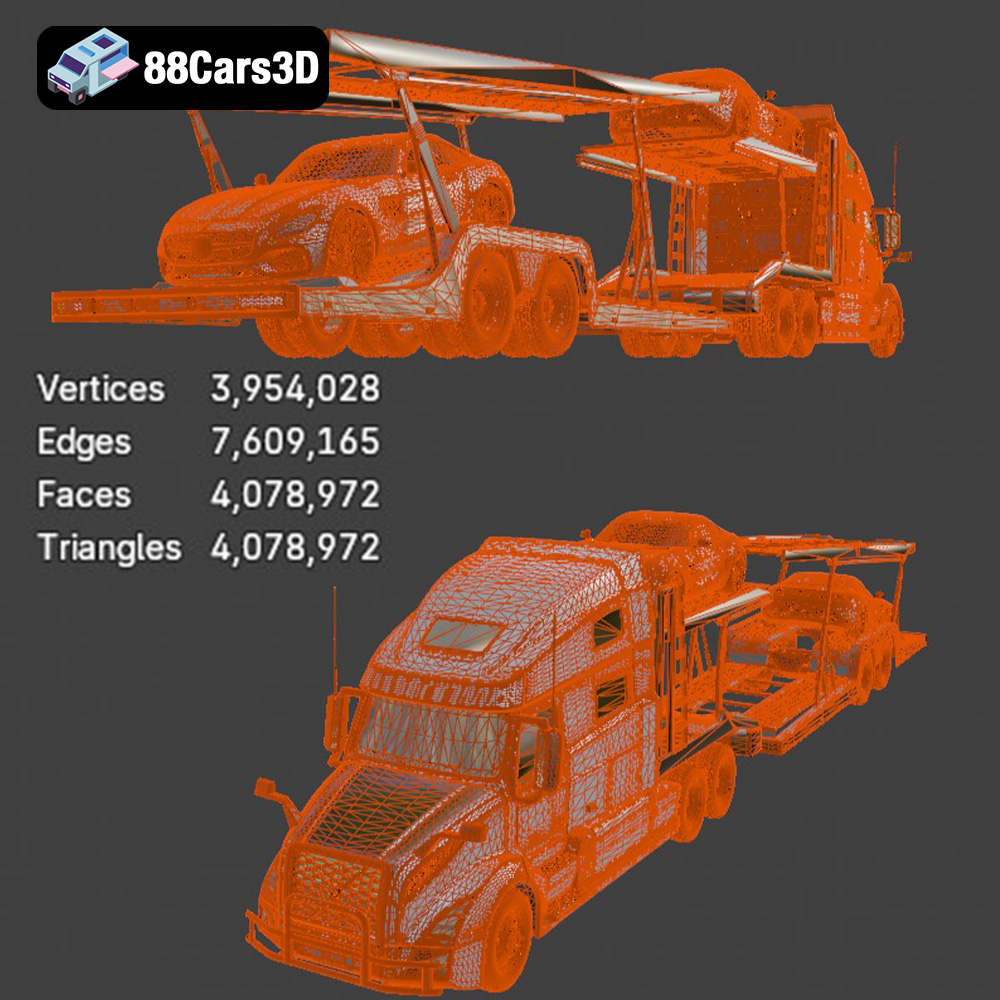
One of the constant challenges in 3D modeling is striking the right balance between intricate detail and computational efficiency. A model intended for high-resolution cinematic rendering might have millions of polygons, while a game asset might need to be drastically lower, perhaps a few thousand, to maintain frame rates. Professional assets like the Volvo Trucks Benz GT-001 are designed with this balance in mind, often featuring clean topology that facilitates easy creation of **LODs (Levels of Detail)**. LODs are simplified versions of the model that automatically swap in at a distance, drastically reducing the poly count rendered without noticeable visual degradation.
Furthermore, **efficient UV mapping and texture atlases** play a crucial role. A well-laid-out UV map maximizes texture resolution and minimizes draw calls in real-time engines by packing multiple texture maps onto a single sheet. This not only improves performance but also simplifies material management. Understanding when to use high-poly meshes for close-ups and low-poly meshes for distant objects, and how to effectively manage their transitions, is a cornerstone of professional 3D workflow.
Investing in high-quality 3D car models is about more than just current project needs; it’s about building a robust and future-proof digital asset library. Assets like the Volvo Trucks Benz GT-001, which come with clean PBR materials and comprehensive file format support, are inherently more adaptable to evolving rendering technologies and software updates.
Ensuring that assets are well-organized, properly named, and fully documented also contributes to their longevity. A consistent naming convention for meshes, materials, and textures allows for easy asset management and integration into new projects by different team members. The detailed attention paid to geometry and material standards in models from 88cars3d.com means they are ready for current generation engines and renderers, and also poised for integration into future real-time ray tracing or virtual production pipelines without extensive re-work. This foresight saves time and resources in the long run, ensuring your digital library remains a valuable resource for years to come.
The landscape of digital creation is constantly evolving, with an increasing demand for realistic and immersive experiences. At the core of meeting this demand lies the strategic use of high-quality 3D models. As we’ve explored, the technical specifications—from clean geometry and optimized poly counts to robust PBR materials and extensive file format support—are not just buzzwords; they are critical components that empower artists and developers to achieve unparalleled results.
The Volvo Trucks Benz GT-001 3D Model exemplifies this commitment to excellence. Its meticulous craftsmanship, versatile file format package (including .blend, .fbx, .obj, .glb, .stl, .ply, .unreal, and .max), and production-ready detailing make it an indispensable asset for a myriad of applications—be it high-end automotive rendering, immersive game development, interactive AR/VR experiences, or precision industrial visualization. By providing a solid technical foundation, this model streamlines complex workflows in platforms like 3ds Max, Blender, and Unreal Engine, allowing creators to focus on artistic vision and project delivery.
Ultimately, investing in premium 3D car models is an investment in efficiency, quality, and the future-proofing of your digital projects. For professionals seeking to elevate their creations with assets that perform as exceptionally as they look, exploring the comprehensive collection of high-quality 3D car models available at 88cars3d.com is a definitive step towards achieving digital realism and project success.
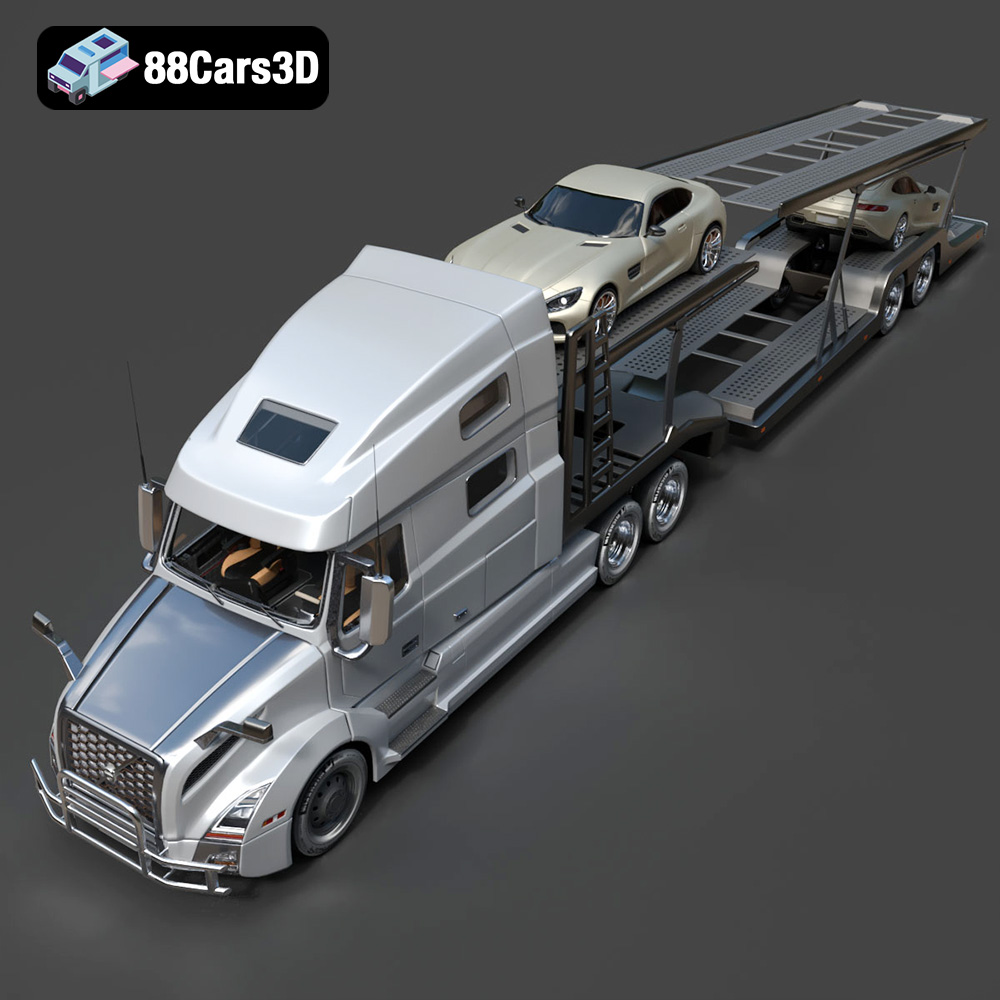
Discover exceptional digital realism with the Volvo Trucks Benz GT-001 3D Model, crafted for professionals seeking precision and accuracy in vehicle design. This model captures the robust presence and intricate aesthetic of the original vehicle, providing an incredible asset for your digital environment. Engineered with clean geometry, authentic proportions, and realistic materials, this model delivers a professional standard without unnecessary polygon overhead. Every detail is meticulously constructed to ensure optimal performance across various platforms. It perfectly highlights the modern design elements and functional features synonymous with premium truck concepts. Whether you are working on game development, creating cinematic rendering sequences, building interactive AR/VR experiences, or producing industrial visualizations, this versatile model provides the foundation you need. The inclusion of a fully modeled interior expands its utility for both external showcase shots and immersive first-person simulation setups. The package includes a comprehensive set of industry-standard file formats to guarantee seamless integration into any pipeline: .blend – Editable Blender file with materials and lighting setup, .fbx – Game-engine ready format for Unreal Engine and Unity, .obj – Standard 3D model format compatible with all major software, .glb – Optimized for AR/VR and web-based visualization, .stl – Suitable for 3D printing and prototyping, .ply – Detailed polygon mesh for analysis and visualization, .unreal – Pre-configured for Unreal Engine use, .max – Editable 3ds Max file for rendering and animation.
$29.99
.arvr
.benz
.blend
.car3dmodel
.commercialvehicle
.concepttruck
.fbx
.gameasset
.glb
.gt001
.max
.obj
.ply
.rendering
.simulation
.stl
.truck
.unreal
.volvo
.volvotrucks