Get 50% OFF All Premium 3D & STL Models!

In the dynamic world of 3D visualization, the demand for hyper-realistic assets continues to escalate. From blockbuster cinematic sequences to cutting-edge architectural presentations and immersive game environments, the quality of a 3D model directly impacts the final output’s believability and impact. Nowhere is this more apparent than in automotive rendering, where precision, luxury, and technological innovation converge. Modern vehicles are complex machines, blending intricate design with advanced engineering, and capturing this essence digitally requires an equally sophisticated approach.
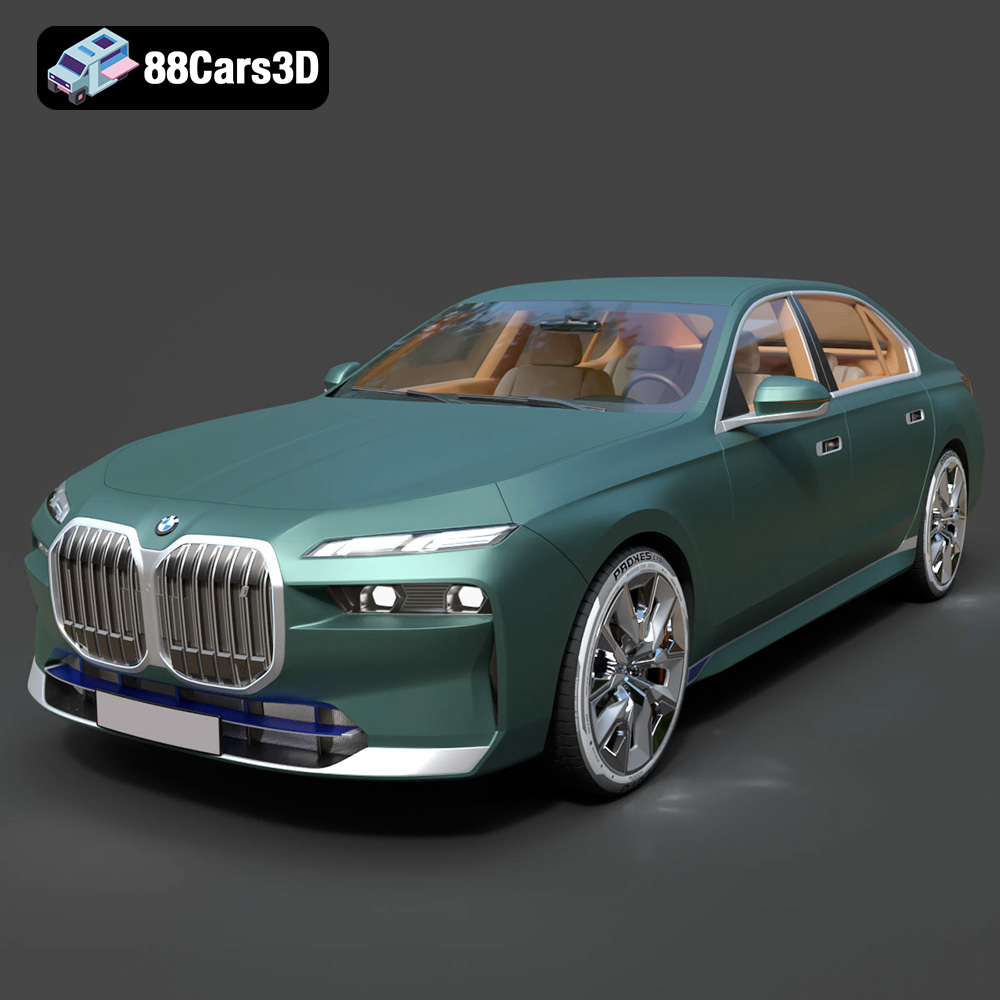
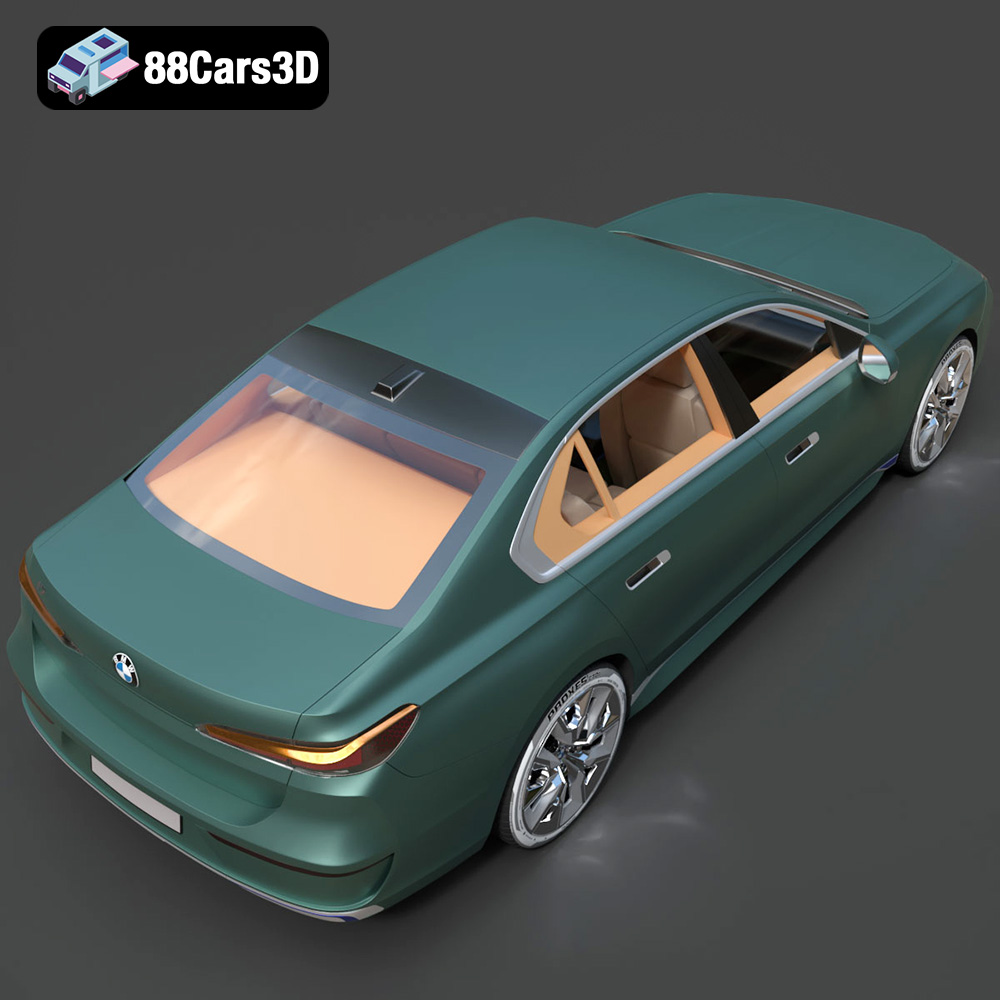
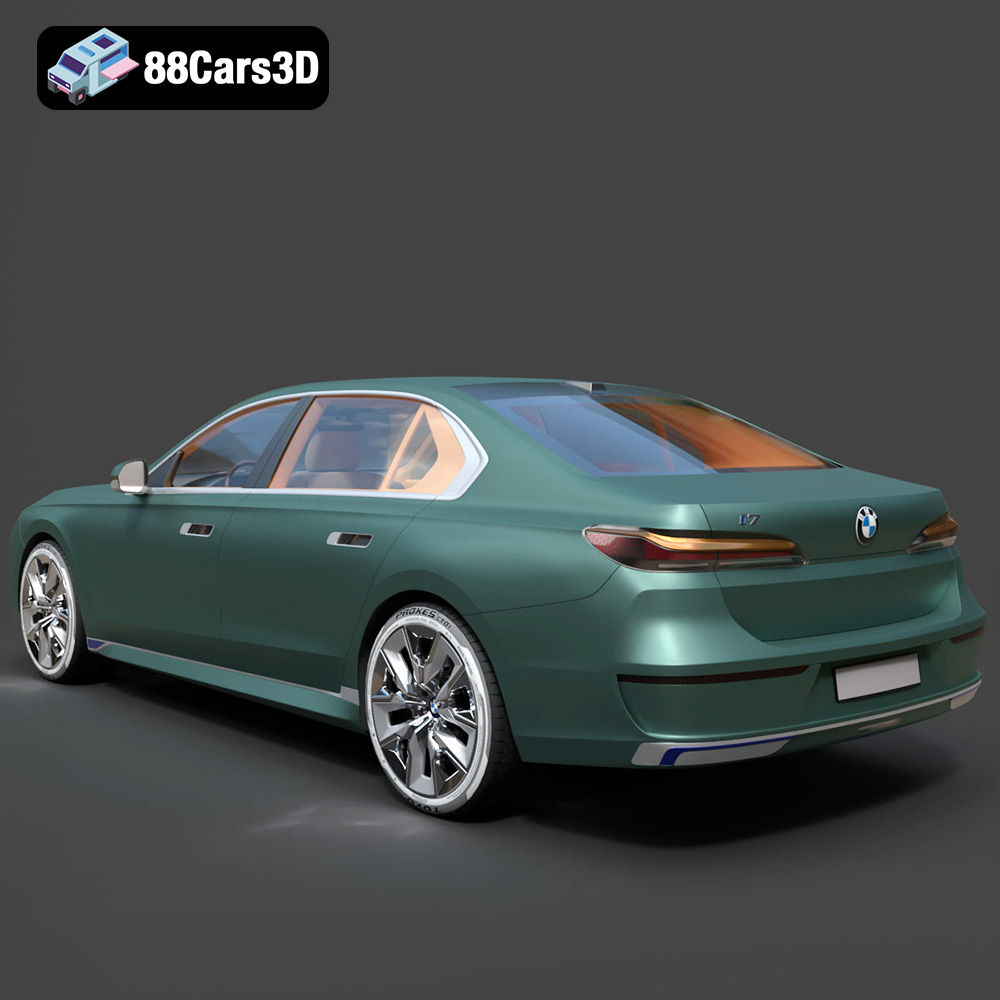
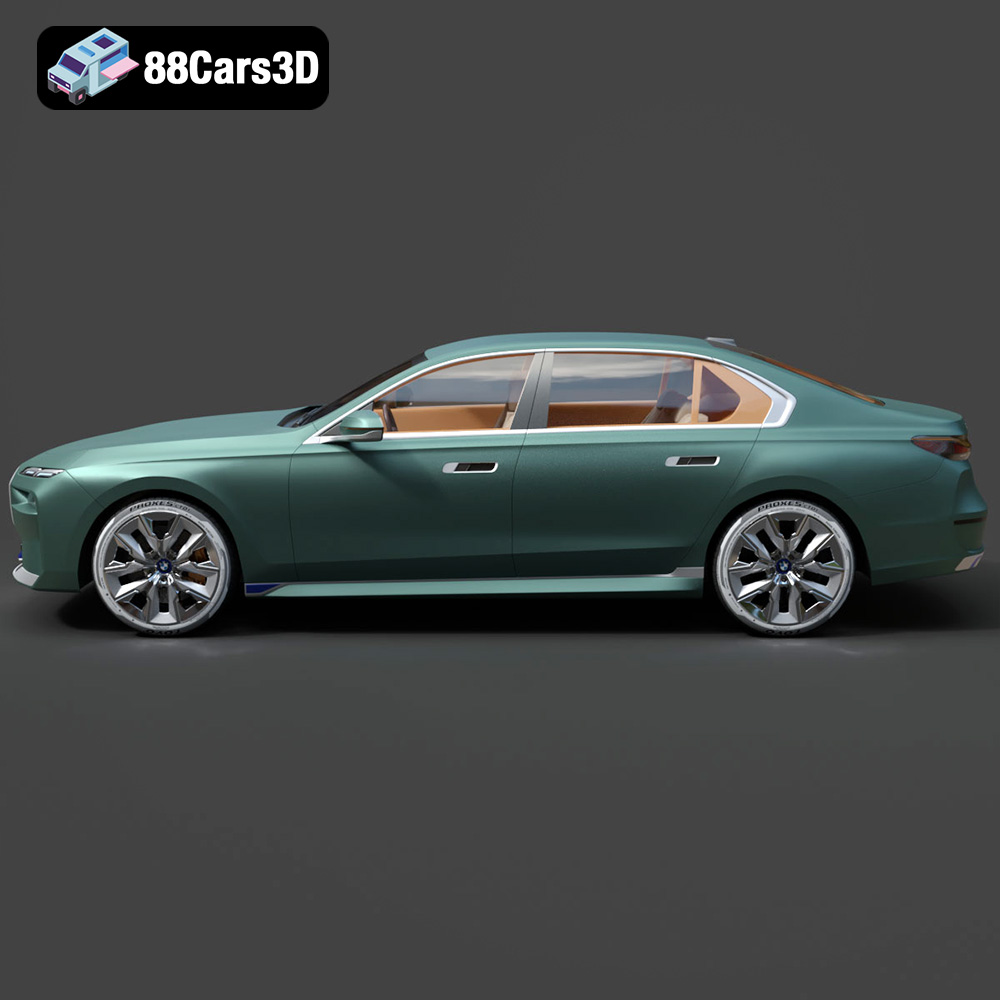
Today, we’re exploring the pinnacle of digital automotive artistry through the lens of a truly remarkable asset: the BMW i7 xDrive60 2023 Ultra High-Poly 3D Model. This isn’t just another car model; it’s a meticulously crafted digital sculpture, designed to meet the rigorous demands of professional artists and studios. Sourced from expert platforms like 88cars3d.com, such a model provides an invaluable foundation for projects that demand nothing less than perfection.
The BMW i7 represents a new era of luxury electric vehicles, and its digital counterpart mirrors this forward-thinking philosophy. This ultra-high-detail 3D model allows designers, animators, and game developers to integrate the very latest in automotive design into their projects with unparalleled realism. We’ll delve into the technical specifications, explore its versatile applications across various industries, and understand why investing in such a premium 3D asset is a game-changer for high-stakes visualization projects.
One of the first considerations when acquiring a 3D model is understanding the various file formats it comes in. Each format serves a specific purpose, offering unique advantages for different stages of the production pipeline, software compatibility, and end-use applications. The BMW i7 xDrive60 2023 Ultra High-Poly 3D Model, for instance, provides a comprehensive suite of formats, ensuring maximum flexibility for professionals. Let’s break down the most common and crucial ones.
The .blend format is native to Blender, a powerful and increasingly popular open-source 3D creation suite. When a model is provided in .blend, it typically means it’s a fully editable Blender scene, complete with materials, textures, lighting, and sometimes even animation setups native to Blender. This is ideal for artists who primarily work within Blender, offering seamless integration and the ability to easily modify every aspect of the model, from topology to material properties, without loss of data fidelity. It’s an excellent starting point for custom renders and animations within the Blender ecosystem.
Autodesk’s .fbx (Filmbox) format is arguably the most widely adopted interchange format in the 3D industry, particularly favored in game development and real-time pipelines. It can store a vast array of 3D data, including geometry, materials, textures, animations, and even rigging information. Its strength lies in its ability to efficiently transfer complex scenes between different 3D software packages (like 3ds Max, Maya, Blender) and game engines such as Unreal Engine and Unity. For the BMW i7, an .fbx file ensures that the model’s intricate details, along with its pivot points for wheels and doors, can be reliably imported into your engine of choice, making it a critical format for game assets and interactive experiences.
The .obj (Wavefront Object) format is a venerable and widely supported format, often considered the most universal for exchanging basic 3D geometry. It primarily stores vertex positions, UV coordinates, normals, and polygonal faces. While it can reference material libraries (.mtl files) for basic color and texture mapping, it generally lacks support for complex material networks, rigging, or animation data. However, its simplicity and widespread compatibility make it an excellent fallback or starting point for cross-software integration when only the raw mesh data is needed. For artists who need to import the BMW i7 into less common software or simply want the pure polygonal structure, .obj is a reliable choice.
.glb (GL Transmission Format Binary) is a relatively newer format, rapidly gaining traction for its efficiency and optimization for real-time applications, especially in AR, VR, and browser-based 3D displays. It’s a binary container format that bundles 3D model data, textures, and animations into a single, compact file. This “all-in-one” nature makes it incredibly convenient for sharing and deploying 3D content on the web or within mobile AR/VR experiences, minimizing load times and simplifying asset management. For showcasing the BMW i7 in a virtual showroom or an interactive web configurator, .glb offers the best performance and ease of use.
.stl (STereoLithography) is the de facto standard file format for 3D printing. It represents a 3D model as a series of connected triangles, essentially describing the surface geometry without color, texture, or material information. Its primary purpose is to define the external surface of a physical object for fabrication. The BMW i7 .stl file would be directly used by slicing software to prepare the model for a 3D printer, allowing hobbyists and professionals alike to create highly detailed physical replicas. This format is crucial for manufacturing, prototyping, and creating collector’s items.
The .ply (Polygon File Format) is another format for storing 3D data, primarily from 3D scanners or for CAD applications. It can store not only geometry (vertices, faces) but also additional attributes like color per vertex, normals, and even confidence values. While less common for general 3D asset exchange than .fbx or .obj, it’s highly valued in specific fields requiring precise mesh data, often for scientific, engineering, or detailed reverse-engineering applications. For analysis or highly technical CAD integration of the BMW i7’s intricate bodywork, .ply can be beneficial.
The .unreal format, or more accurately, assets prepared and sometimes exported directly from an Unreal Engine project, signifies an asset specifically optimized and configured for Unreal Engine’s powerful real-time rendering capabilities. This might involve optimized meshes, PBR materials, collision setups, and LODs (Levels of Detail). While not a standalone file type in the same vein as .fbx, having an “unreal” option implies a pre-optimized package for direct integration into an Unreal project, potentially leveraging features like Nanite for ultra-high-poly models like the i7, minimizing manual setup and ensuring peak performance within the engine.
Similar to .blend for Blender, the .max format is the native file type for Autodesk 3ds Max, a long-standing industry standard for 3D modeling, animation, and rendering. An .max file contains the complete scene, including geometry, modifiers, materials (V-Ray, Corona, Arnold, etc.), cameras, lights, and animation data. For users of 3ds Max, this format offers the most direct and uncompromised access to the model’s construction, allowing for extensive modifications, material adjustments for various rendering engines, and sophisticated animation setups. The BMW i7 .max file is essential for professionals who rely on 3ds Max for their high-end architectural visualization and cinematic rendering projects.
At the heart of the BMW i7 xDrive60 2023 Ultra High-Poly 3D Model’s appeal is its commitment to absolute detail. In a world where visual fidelity is paramount, especially for luxury products, a high-quality 3D car model is an indispensable tool. This particular model stands out as a “hero” asset, meaning it’s designed to be the focal point of any scene, capable of holding up under intense scrutiny and extreme close-ups.
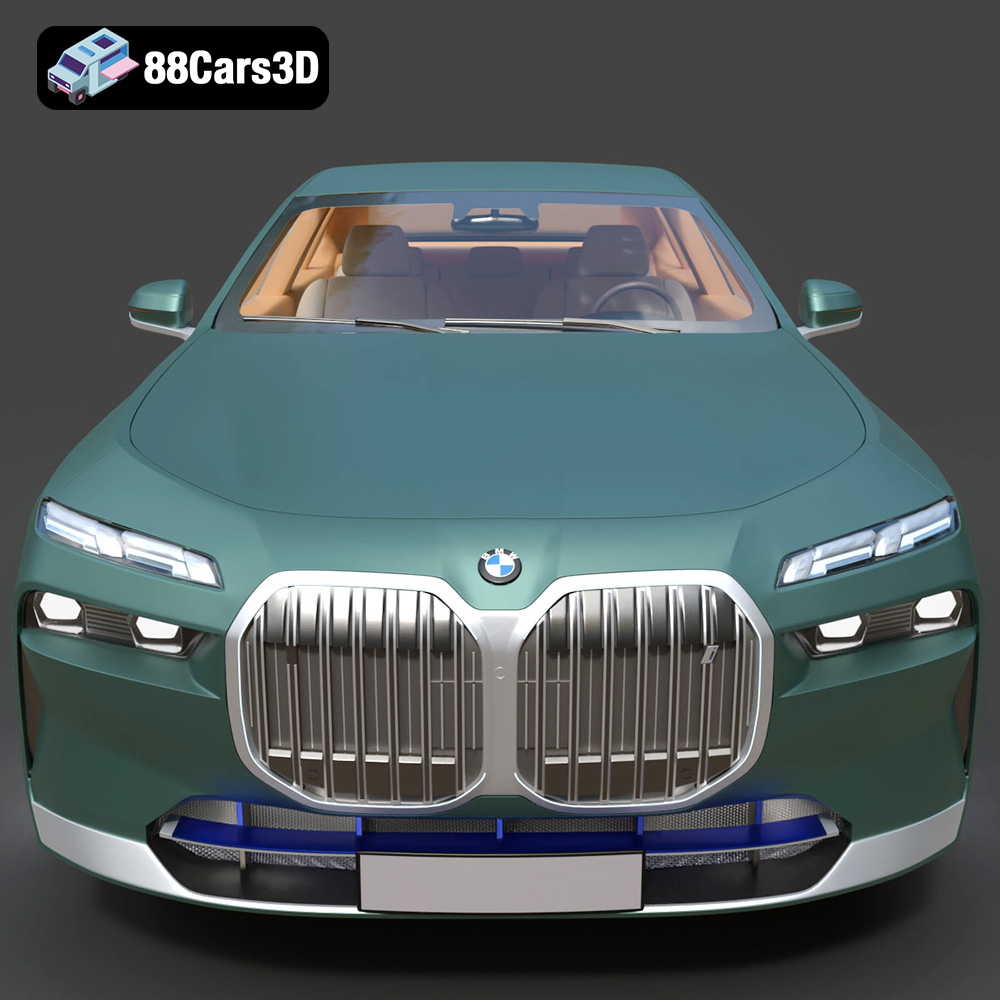
The real-world BMW i7 (G70 generation) embodies a bold, monolithic design philosophy, pushing the boundaries of luxury sedans. This 3D model meticulously recreates every facet of this visionary aesthetic. From its iconic, massive “Iconic Glow” illuminated kidney grille – a signature design element – to the striking split-level Swarovski crystal headlights that add an unparalleled touch of sophistication, no detail is overlooked. The flush-fitting door handles, the elegant, forward-surging side profile, and the precise Hofmeister kink framed by intricate chrome detailing are all accurately represented. This level of exterior fidelity ensures that the digital i7 conveys the same sense of presence and luxury as its physical counterpart, making it perfect for premium automotive rendering projects.
The true measure of an ultra-high-poly model often lies beyond its exterior, extending into a fully realized interior. The BMW i7 3D model boasts a sumptuous, fully modeled driver-centric and rear-passenger luxury cabin. This includes the highly detailed BMW Curved Display, seamlessly combining the instrument and control screens, and the unique, faceted crystalline BMW Interaction Bar stretching across the dashboard. For rear passengers, the opulent Executive Lounge seating with prominent quilting and the spectacular 31.3-inch BMW Theatre Screen descending from the roof are faithfully reproduced. This optimized interior geometry is explicitly tailored for high-resolution first-person POV renders and immersive VR experiences, providing an uncompromised sense of being inside the vehicle.
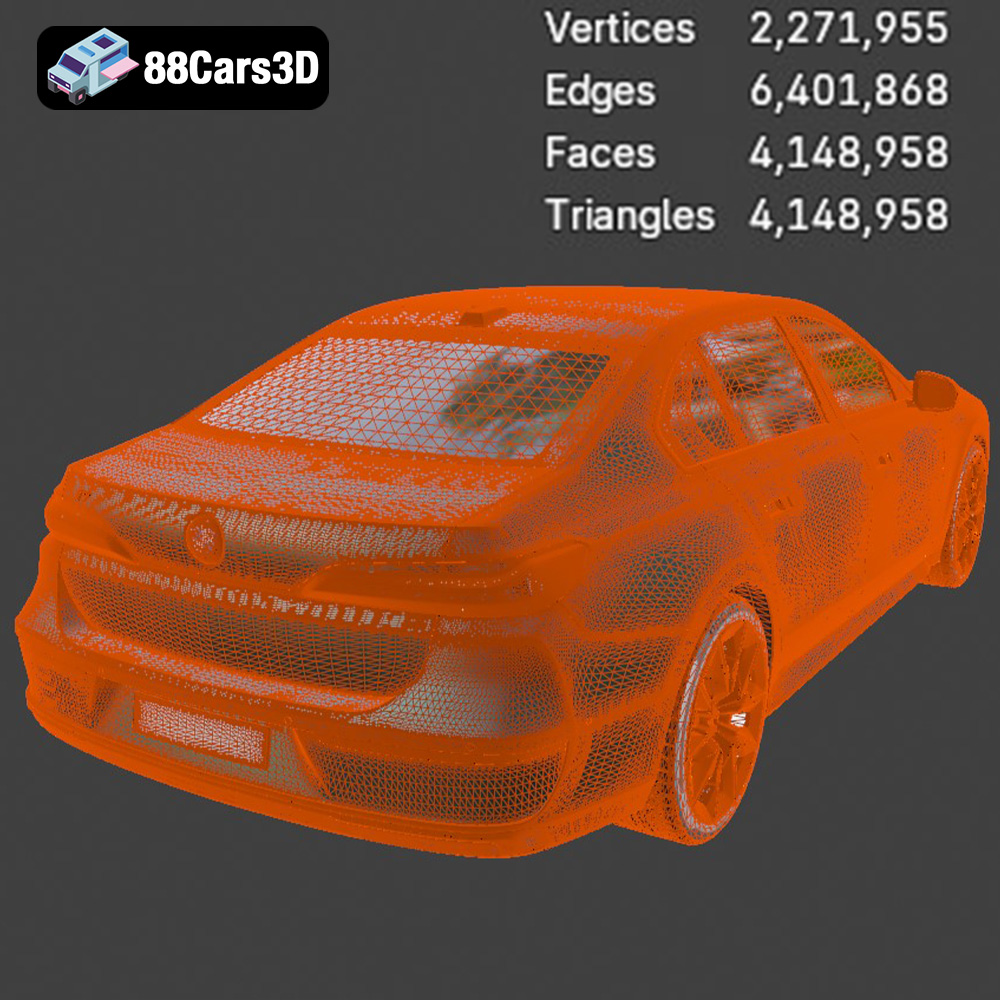
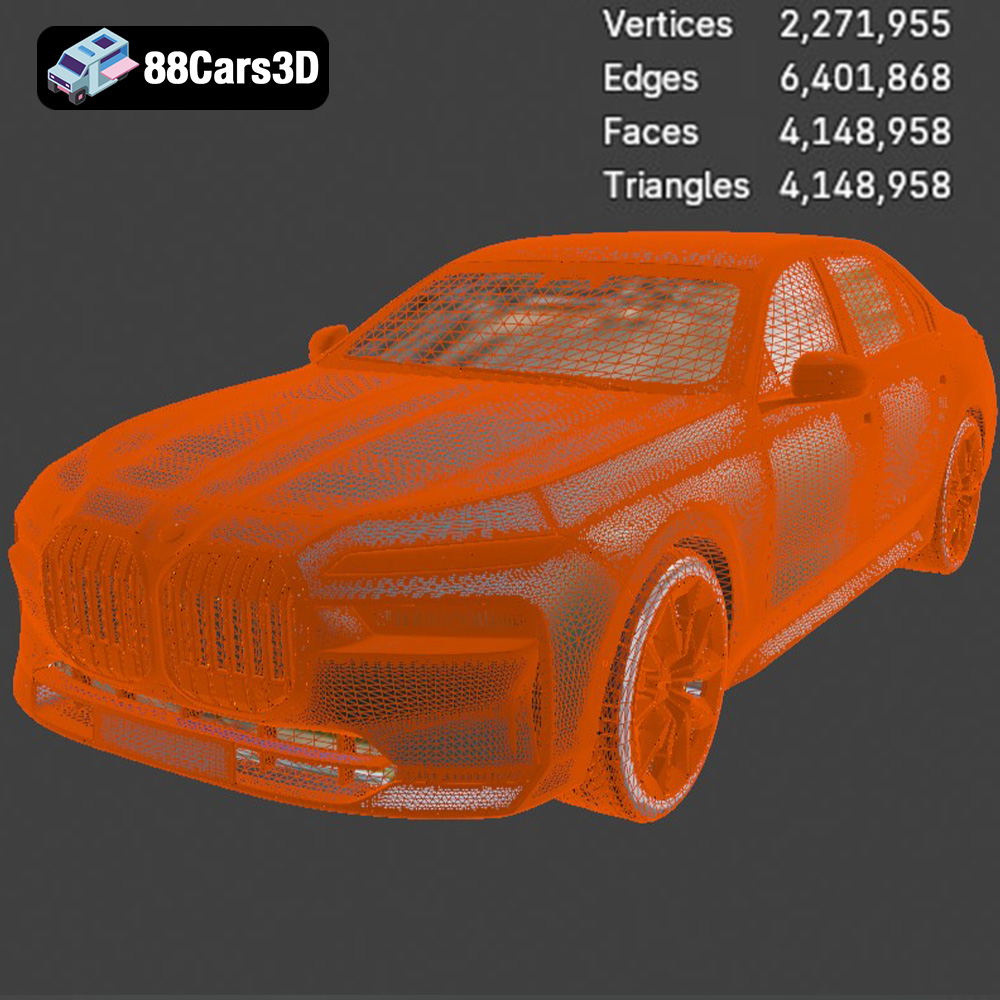
The technical specifications of this 3D car model are staggering, boasting over 4.14 million triangles. This ultra-high-poly topology isn’t merely a number; it’s the foundation for absolute photorealism. With 2,271,955 vertices and 4,148,958 faces, the model exhibits an exceptionally dense, quad-heavy structure. This ensures perfectly smooth reflections across every curve and panel, flawless light interplay that mimics real-world physics, and crucially, zero faceting. This means even under extreme macro magnification – where lower-poly models would reveal their polygonal structure – the BMW i7 remains impeccably smooth. Such detail is essential for cinematic productions, high-end architectural visualization, and any project where the 3D car model is the star, demanding the highest level of visual fidelity.
A premium 3D model like the BMW i7 xDrive60 offers immense value across diverse professional applications. Its robust technical foundation and aesthetic accuracy make it a versatile asset for various industries, each leveraging its strengths in unique ways.
For architectural visualization studios and luxury real estate marketers, incorporating high-quality 3D car models is a standard practice to breathe life and context into their renders. The BMW i7 model is the absolute gold standard for this. Imagine showcasing a modernist villa with the i7 gracefully parked in the driveway, its “Iconic Glow” grille subtly illuminating the scene. Its sleek lines and advanced aesthetic perfectly complement contemporary architecture, instantly elevating the perceived value and sophistication of the property. For luxury brand lifestyle campaigns, this model can serve as the centerpiece, conveying exclusivity, innovation, and environmental consciousness, resonating with a discerning audience.
When it comes to commercials, films, or high-end automotive showcases, the BMW i7 3D model shines as a primary hero vehicle. Its uncompromised luxury detailing, from the Swarovski crystal headlights to the finely tuned interior, ensures it holds up under the intense scrutiny of cinema cameras. Animators can leverage its separate wheels, steering components, and doors for precise rigging and animation, creating dynamic sequences. Whether it’s a dramatic tracking shot down a winding road, an artistic close-up on the intricate grille, or an interior POV shot showcasing the Theatre Screen, this model delivers the visual fidelity required for top-tier VFX and cinematic productions.
While the BMW i7’s ultra-high-poly count (over 4.14M triangles) means it’s incredibly heavy for traditional real-time engines, it’s perfectly suited for next-generation platforms like Unreal Engine 5 leveraging Nanite technology. Nanite allows game developers to import cinematic-quality assets directly into the engine, handling massive polygon counts with incredible efficiency. This opens up possibilities for unparalleled realism in virtual production, high-fidelity driving simulators, or premium virtual showrooms. For standard real-time mobile or VR applications, the model would require heavy manual retopology or decimation. However, as a source asset for creating optimized LODs (Levels of Detail) or for pre-rendered cinematics within games, its detail is invaluable. The included .fbx and .unreal formats facilitate integration into game development pipelines.
The utility of a high-fidelity 3D model isn’t limited to digital screens. The precision and detail of the BMW i7 xDrive60 model extend to the physical realm, offering exciting opportunities for 3D printing and physical prototyping.
For hobbyists, collectors, or designers looking to create tangible representations, the BMW i7 3D model serves as an excellent base for highly detailed, large-scale luxury replicas. Imagine a 1:18 or 1:12 scale model of this iconic vehicle, capturing every curve and intricate component. The .stl format provided is specifically designed for 3D printing, enabling users to transform the digital asset into a physical object. This is perfect for creating bespoke collector’s items, desktop showcases, or even functional prototypes for design exploration.
To achieve the best results when 3D printing the BMW i7, specific settings are crucial. A recommended scale of 1:24, 1:18, or 1:12 allows for significant detail capture. Resin printing is strictly recommended over FDM for this model, with a layer height of 0.04–0.08 mm, to truly capture microscopic details like the Swarovski crystal headlights and the fine textures of the interior screens. Wall thickness should be around 1.5–2.5 mm with an infill of 15–25%. Supports will be necessary for overhangs such as side mirrors, wheels, and the intricate grille. For optimal surface finish, the body should be printed at an angle, and wheels printed separately. After printing, post-processing with sanding, primer, and applying modern BMW paint finishes (like Space Silver, Black Sapphire, or a bespoke Two-Tone) will bring the physical model to life, mirroring the luxury of its digital and real-world counterparts.
A truly professional 3D car model provides not just raw detail, but also the flexibility for extensive customization, allowing artists to tailor the asset to fit unique project requirements and creative visions.
The BMW i7 3D model offers numerous avenues for personalization. Artists can experiment with BMW’s bespoke Two-Tone exterior paint schemes, such as Liquid Copper over Black Sapphire, to create truly unique visual statements. The model allows for switching between the aggressive M Sport package styling and the more elegant Design Pure Excellence trims, instantly altering the vehicle’s character to suit different scenes or narratives. Furthermore, the ability to configure interior lighting is a powerful tool. By adjusting the ambient glow of the Interaction Bar or the luminance of the Theatre Screen, artists can craft moody, atmospheric nighttime scenes or vibrant, technologically advanced interior showcases. These customization options are vital for achieving the exact aesthetic required for any high-end automotive rendering project.
Beyond the model itself, manipulating the environment is key to achieving photorealistic renders. The BMW i7 model integrates seamlessly with various HDRI (High Dynamic Range Image) environments. Artists can adapt HDRIs to cast dramatic studio reflections for commercial shoots, or place the vehicle within bright, sun-drenched modern architectural environments for ArchViz projects. The interplay of light and reflections on the i7’s smooth, monolithic surfaces is paramount for realism. By carefully selecting and adjusting HDRIs, designers can dictate the mood, time of day, and overall context of the scene, ensuring the BMW i7 always looks its best. This level of environmental control, combined with the model’s inherent quality, makes it an unmatched asset for creating compelling visual narratives.
The BMW i7 xDrive60 2023 Ultra High-Poly 3D Model is more than just a digital asset; it’s an investment in unparalleled visual fidelity and creative flexibility. Its meticulous detail, from the iconic exterior features to the immersive interior, makes it the ultimate “hero” asset for any project demanding photographic realism. Whether you are an architectural visualizer aiming to elevate your property showcases, a cinematic artist crafting a blockbuster car commercial, or a game developer pushing the boundaries of real-time graphics with Nanite, this model delivers the quality you need.
The comprehensive range of included file formats—from .blend and .max for native software workflows, to .fbx and .unreal for game development, and .stl for 3D printing—ensures seamless integration into virtually any professional pipeline. This level of versatility, combined with the inherent quality and customization options, makes it a cornerstone asset for serious 3D professionals.
For those who understand that uncompromising quality is non-negotiable, assets like the BMW i7 xDrive60 2023 3D model are invaluable. Explore this and other exceptional 3D car models and game assets by visiting 88cars3d.com, where excellence in automotive 3D visualization is always the standard.
The BMW i7 (2023) 3D Model is an uncompromising, ultra-high-detail digital recreation of the Bavarian automaker’s all-electric flagship luxury sedan. Representing the groundbreaking G70 generation, the i7 redefines the modern luxury segment by combining progressive, monolithic design language with next-generation electric mobility and uncompromised digital innovation. This 3D model meticulously captures the bold, visionary aesthetic of the new 7 Series architecture. It features the massive, striking “Iconic Glow” illuminated kidney grille, the split-level Swarovski crystal headlights, flush-fitting door handles, and the elegant, forward-surging side profile. Built with an incredibly dense and uncompromised topology (over 4.14 million triangles), it delivers absolute photorealism. This model is engineered to hold up to the most extreme close-up macro shots, making it the ultimate asset for high-end architectural visualization, cinematic commercial productions, and luxury lifestyle renders. Perfect for ultra-luxury ArchViz driveways, cinematic automotive showcases, high-end commercial VFX, and premium virtual showrooms.
$19.99
.archviz
.automotive
.blend
.bmw
.ev
.fbx
.g70
.i7
.obj
.rendering
2023-bmw
bmw-i7
car-3d-model
electric-vehicle
hero-car
high poly
luxury-sedan
vfx