Get 50% OFF All Premium 3D & STL Models!

In the vast landscape of automotive history, some vehicles transcend their humble origins to become cultural touchstones. The Daewoo Nexia N100 is precisely one such car. For millions across Eastern Europe, Russia, and Central Asia, this unassuming sedan wasn’t just transportation; it was a reliable companion, a ubiquitous sight on every street, and the backbone of countless taxi fleets. Its distinctive, no-nonsense 90s aesthetic, built on the robust foundation of the Opel Kadett E, etched itself into the collective memory. Now, through the power of advanced 3D modeling, this iconic vehicle is being meticulously resurrected, offering digital artists, game developers, and visualization specialists an unparalleled asset to infuse their projects with authentic, era-specific character.
The Daewoo Nexia N100 (Classic) 3D Model, available on 88cars3d.com, is far more than a simple digital replica. It’s a meticulously crafted piece of virtual automotive history, designed with both visual fidelity and technical optimization in mind. Whether you’re aiming to create a hyper-realistic architectural visualization of a 90s street scene, populate a sprawling open-world game with period-accurate traffic, or even 3D print a tangible piece of automotive nostalgia, this model provides the foundational quality and versatility required for professional results. Let’s delve into the technical intricacies, workflow applications, and sheer creative potential offered by this exceptional 3D car model.
The versatility of a 3D model often hinges on the range of file formats it supports. The Daewoo Nexia N100 (Classic) 3D Model is provided in a comprehensive suite of formats, each optimized for specific applications and software environments. Understanding these distinctions is crucial for seamless integration into your professional workflow, ensuring compatibility and preserving critical data.
The .blend file is Blender’s native format, offering the most complete and editable version of the model within the Blender ecosystem. When you open a .blend file, you gain access to the full scene setup, including materials, textures, lighting, camera angles, and any non-destructive modifiers or rigging present. For artists whose primary DCC (Digital Content Creation) tool is Blender, this format provides maximum flexibility for customization, animation, and rendering, allowing for deep dives into the model’s structure and shaders. It’s ideal for those who want to modify the topology, re-texture, or animate specific components like the doors and wheels.
The .fbx (Filmbox) format is arguably the most widely adopted standard for exchanging 3D data between different software applications and game engines. It’s a binary format capable of storing model geometry, materials, textures, bone animation, and even camera and light data. Its strength lies in its robustness and wide support across major platforms like Unreal Engine, Unity, 3ds Max, Maya, and Blender itself. For real-time pipelines, .fbx is often the go-to choice, as it efficiently packages complex asset hierarchies for game development and virtual production. The Daewoo Nexia N100’s .fbx version ensures its smooth transition into game environments with intact rigging for wheels and doors.
The .obj (Wavefront OBJ) format is a simpler, text-based format primarily used for transferring mesh data, including vertices, normals, UV coordinates, and faces. While it doesn’t typically embed animation or advanced material properties, it’s universally compatible, making it an excellent fallback or starting point for cross-software compatibility when complex features aren’t required. If you need to import the Nexia N100 into an obscure renderer or a legacy application, .obj will almost certainly work, providing a clean mesh for you to apply your own materials and textures.
The .glb (GL Transmission Format Binary) format is a compact, single-file representation of 3D models, specifically designed for efficient transmission and loading in web-based applications, augmented reality (AR), and virtual reality (VR) environments. It encapsulates geometry, materials, textures, and even animations into a single binary blob, making it incredibly easy to share and display 3D assets online. For interactive digital city planning in VR or browser-based vehicle configurators featuring the Nexia, .glb offers optimal performance and portability.
The .stl (Stereolithography) format is the standard file type for 3D printing. It represents a 3D model as a series of connected triangles (a triangulated mesh) that describe the surface geometry without color or texture information. For hobbyists looking to bring the Daewoo Nexia N100 into the physical world as a miniature scale model or a display piece, the .stl file is essential. The provided .stl for the Nexia N100 is prepared with manifold geometry, ready for slicing and printing.
The .ply (Polygon File Format) is another versatile format often used for storing 3D data from 3D scanners, CAD applications, and scientific analyses. It can store not only geometry but also color, transparency, and other properties per vertex or face. While less common for general asset exchange than .fbx, it offers precision and flexibility for applications where exact geometric data is paramount, potentially useful for reverse engineering or integrating the Nexia N100 into specialized engineering simulations.
While not a direct file extension in the same vein as .fbx or .obj, “.unreal” in the context of file formats often implies an asset specifically prepared and optimized for direct import into Unreal Engine. This typically means an .fbx file with correct scaling, pivot points, material slots, and potentially even pre-built static mesh assets, Blueprints, or example scene files. The Daewoo Nexia N100’s “unreal” offering signifies its readiness for Unreal Engine, implying a streamlined workflow for developers, minimizing the need for extensive post-import setup and ensuring it functions correctly as a drivable vehicle or background traffic asset.
The .max file is the native format for Autodesk 3ds Max, a powerhouse in architectural visualization, automotive rendering, and animation. Like .blend for Blender, the .max file provides the complete project scene, including all modifiers, materials, textures, lights, cameras, and animation tracks. For users of 3ds Max, this format allows for full access to the original scene setup, enabling detailed customization, re-lighting, and integration into existing ArchViz projects with minimal fuss. It’s the ideal choice for high-fidelity rendering and complex scene assembly.
The quality of a 3D model is often measured by its technical specifications and the meticulousness of its construction. The Daewoo Nexia N100 (Classic) 3D Model exemplifies this with its balanced topology, accurate proportions, and thoughtful detailing.
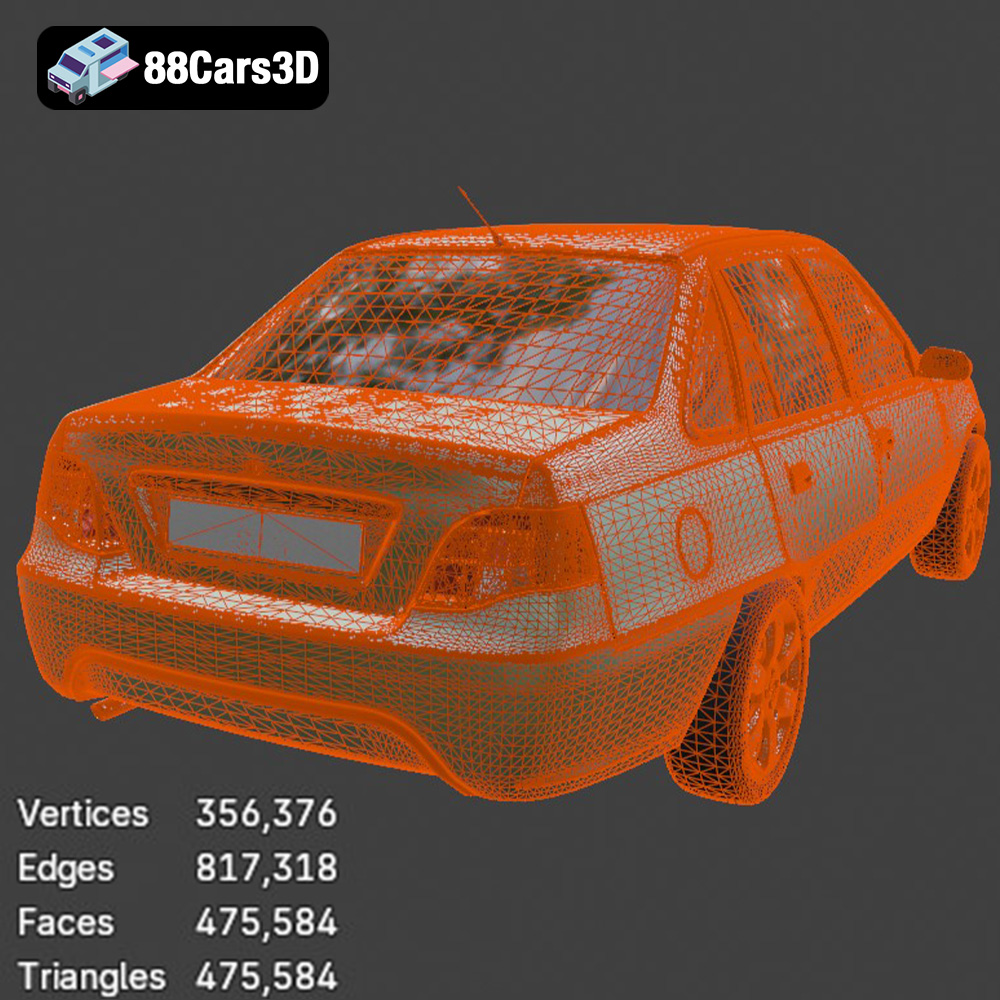
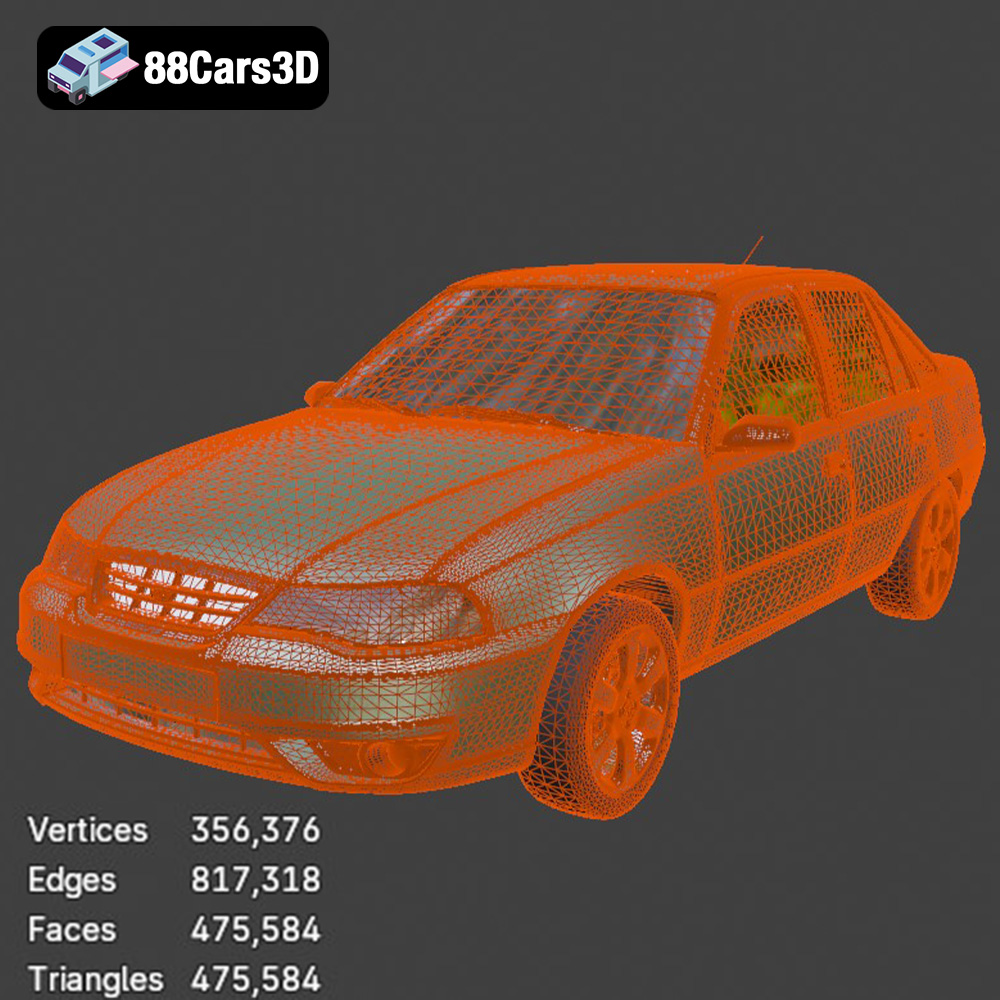
At approximately 475,584 triangles (475k triangles), with 356,376 vertices and 817,318 edges, this model strikes a remarkable “Goldilocks zone” for polygon count. This level of detail is critical. For high-fidelity automotive rendering and architectural visualization (ArchViz), particularly in foreground shots, the clean, well-balanced mid-to-high polygon topology ensures smooth surfaces, crisp edges, and excellent visual fidelity without appearing overly faceted. Simultaneously, this polygon count remains highly optimized for real-time environments like game engines (Unreal Engine, Unity) and simulations. It’s detailed enough to serve as a hero car in a driving game, yet optimized enough to be used en masse as background traffic without causing significant performance bottlenecks. This balance is a testament to experienced modeling practices.
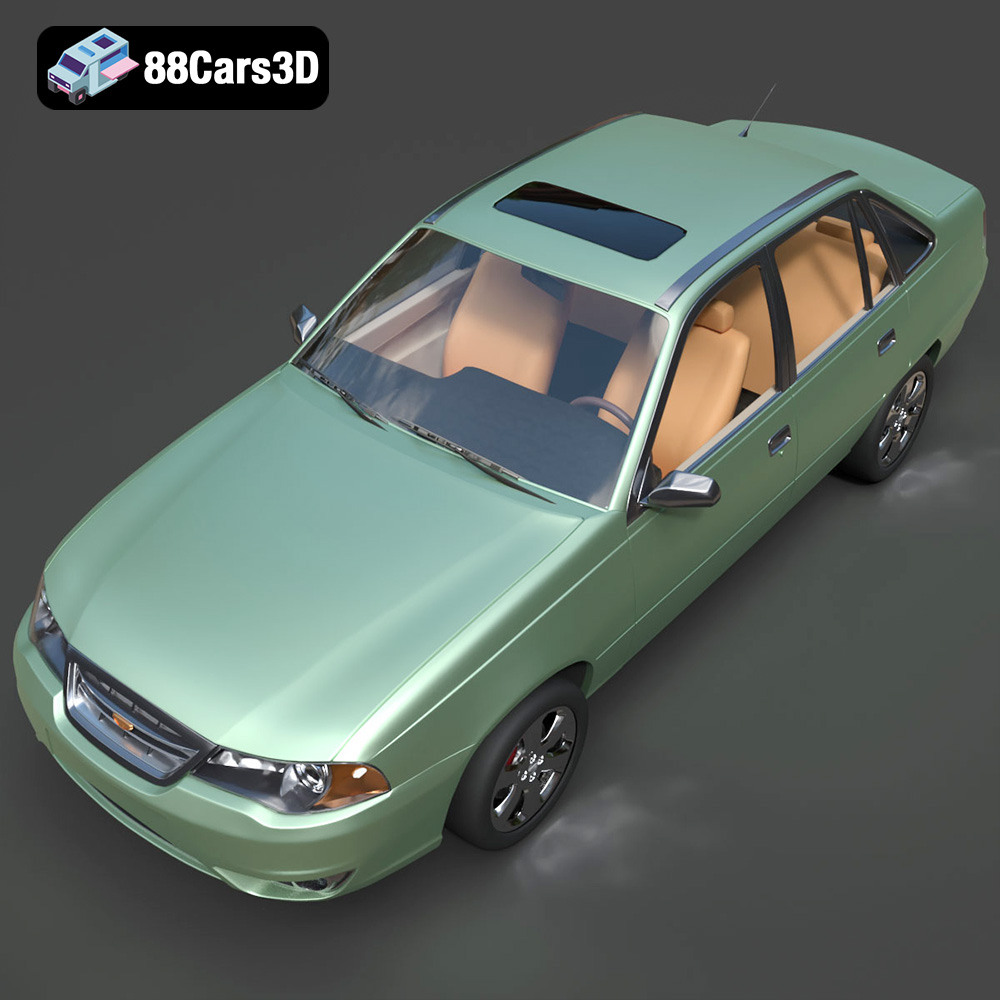
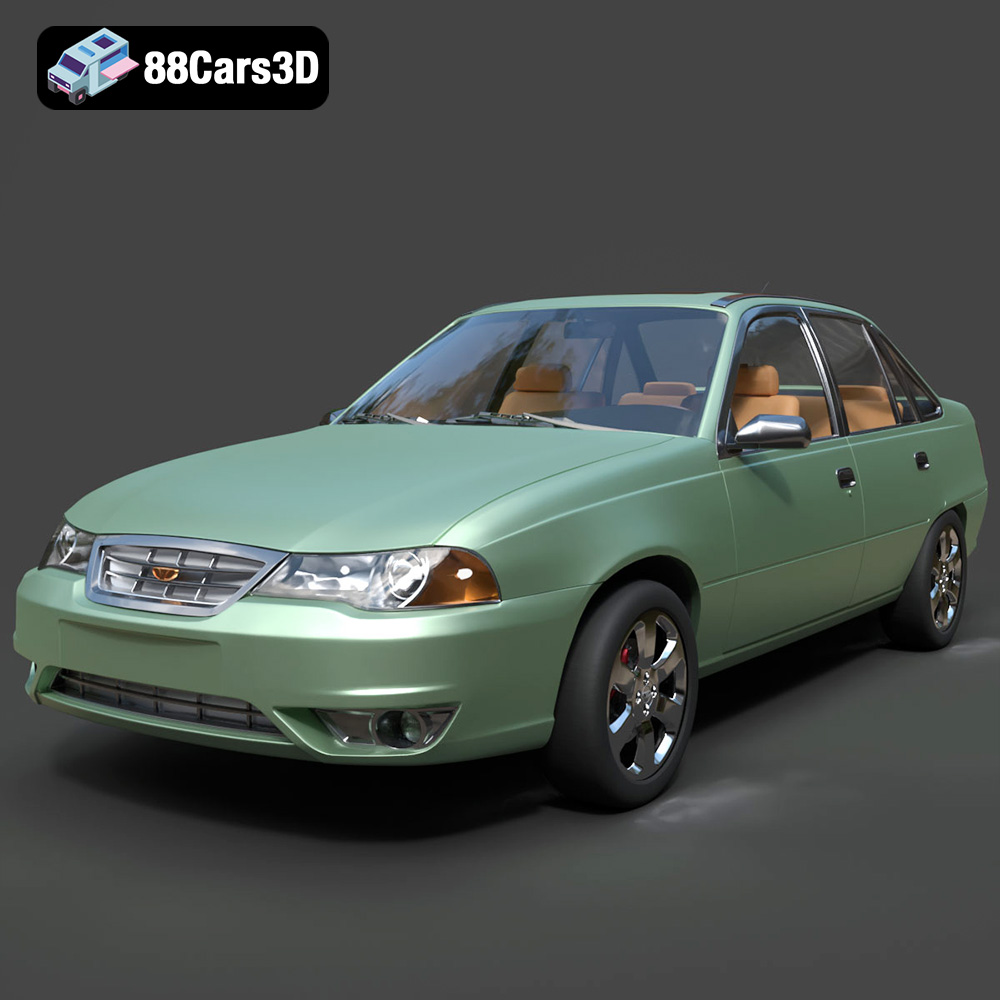
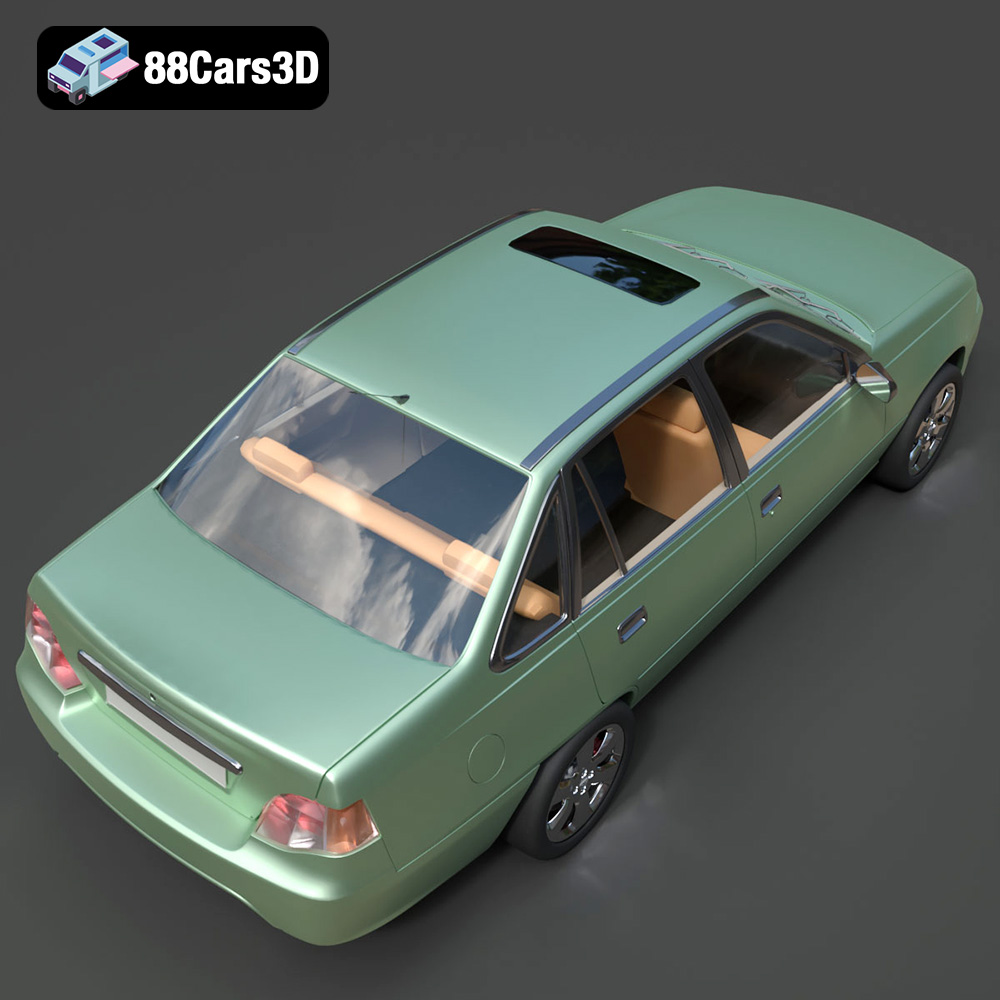
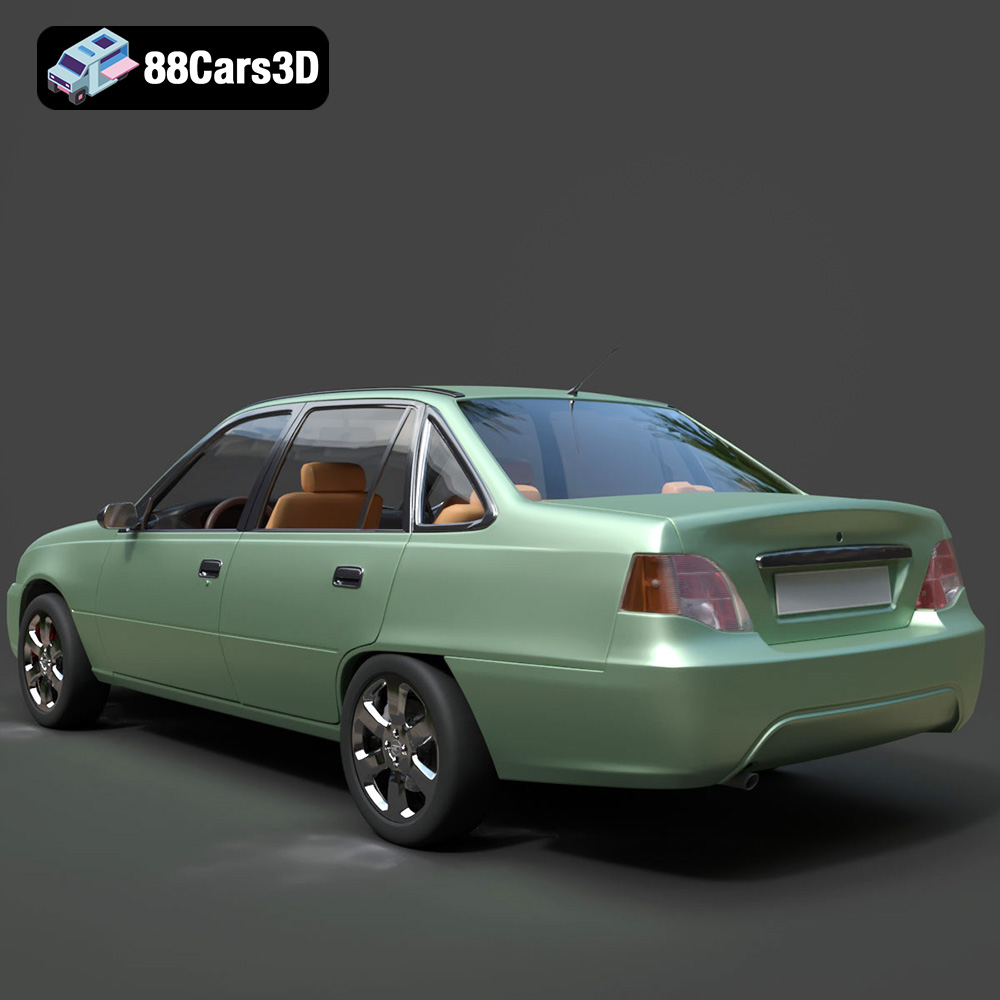
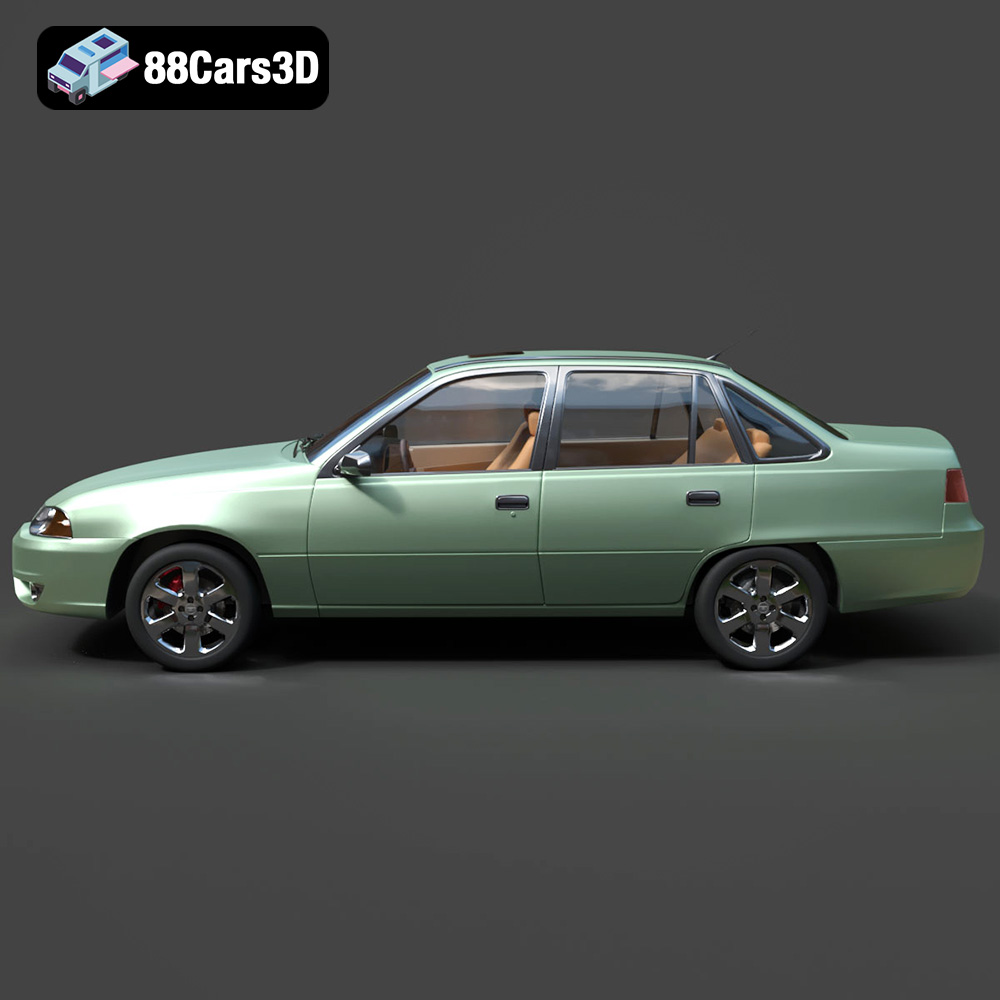
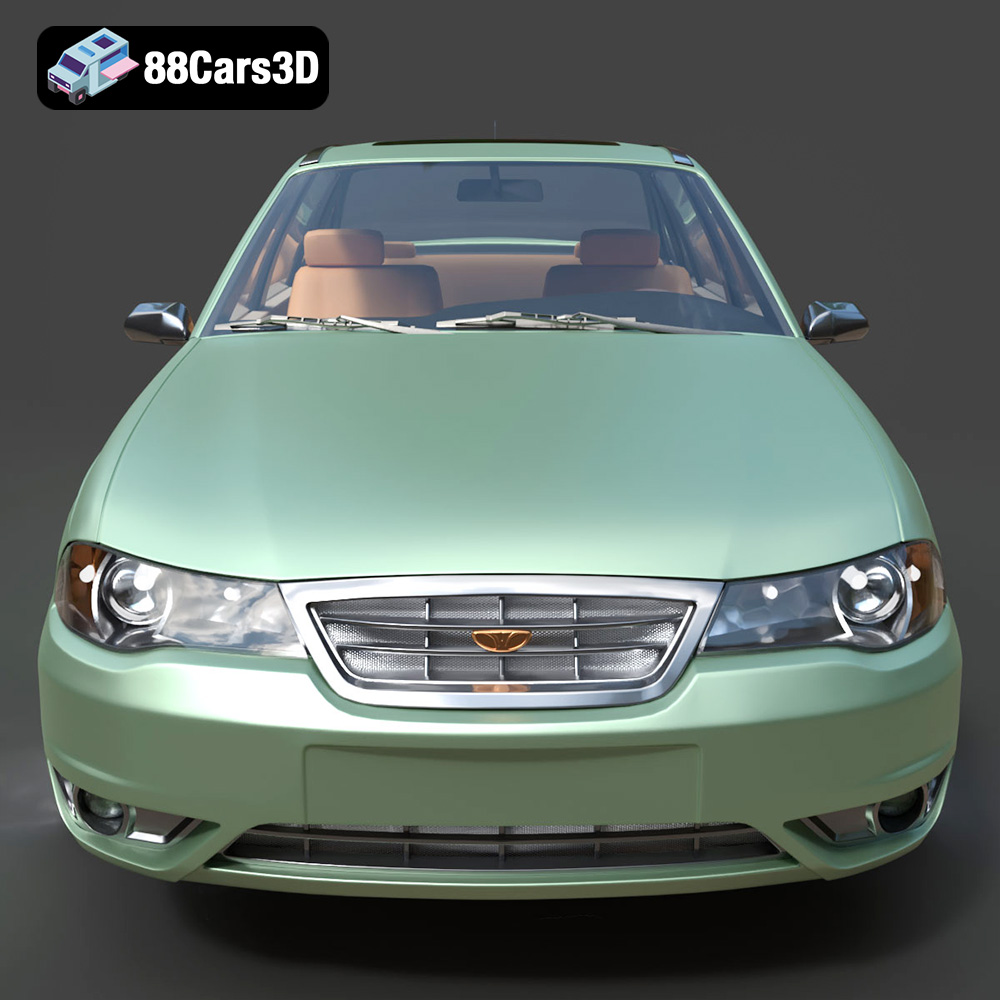
The accuracy of the Daewoo Nexia N100 3D Model extends to its most iconic features. The exterior perfectly captures the pre-facelift N100’s quintessential 90s aesthetic: the distinctive rectangular headlight housings, the classic split front grille, and the simple yet functional body molding. Realistic panel gaps, classic door handles, and functional side mirrors contribute to its believability. The model includes detailed standard factory wheels—whether classic basic alloys or steelies with hubcaps—wrapped in street tires, crucial for an authentic look.
The interior is equally well-considered, providing an authentic, practical driver-centric cabin layout typical of 90s budget sedans. From the detailed dashboard with its classic center console and analog instrument cluster to the realistic seating geometry for a five-passenger layout (with retro cloth/vinyl texture mapping), every element evokes the era. Even the classic two-spoke or three-spoke steering wheel and manual gear shifter representation are present. Crucially, the interior geometry is optimized to look great from the exterior through windows or in immersive VR experiences, where performance is paramount.
The true value of a premium 3D model lies in its seamless integration into various professional workflows, saving artists and developers countless hours of modeling and optimization. The Daewoo Nexia N100 (Classic) 3D Model excels in this regard, proving an invaluable asset for a range of creative and technical endeavors.
For architectural visualization artists, contextual elements are vital for breathing life and realism into renderings. The Daewoo Nexia N100 is the absolute perfect vehicle for projects set in Eastern Europe, Russia, or Central Asia. Imagine an ArchViz scene depicting a bustling city street in Kyiv or Tashkent – populating it with generic vehicles would immediately break immersion. The Nexia, with its highly recognizable form, instantly grounds the scene in its specific region and era. Its mid-to-high poly count ensures that even in close-up renders, the car holds up beautifully, showcasing its distinct features and textures, enriching the narrative of the architectural space.
Leveraging the provided .max or .blend files, automotive rendering specialists can take full advantage of the model’s clean topology and separate, animatable parts (wheels, steering components, doors). In 3ds Max, artists can easily load the model, apply advanced V-Ray or Corona Renderer materials, set up studio lighting, and create stunning photorealistic renders for advertising, historical reconstructions, or nostalgic art pieces. Similarly, Blender users can utilize Cycles or Eevee, integrating the Nexia N100 into complex scenes, adding custom paint shaders, and even experimenting with weathered or customized looks to tell a unique story. The proper pivot setup for steering and wheel rotation further simplifies animation tasks, enabling dynamic camera movements around the vehicle.
The utility of the Daewoo Nexia N100 extends far beyond static images, offering robust solutions for interactive and physical applications.
The game-ready nature of this 3D model is a significant advantage. With its optimized polygon count, the Nexia N100 can serve as an excellent drivable vehicle in open-world titles, a primary character car in retro 90s delivery simulators, or a highly efficient background traffic asset. The included .fbx and “unreal” formats are tailored for seamless integration into game engines like Unreal Engine and Unity. Developers can readily import the model, set up collision meshes, configure physics, and integrate the separated wheels and doors for realistic rigging and animation. Its era-specific design makes it indispensable for creating authentic settings in games centered around post-Soviet or Eastern European themes, from gritty urban landscapes to charming rural roads.
For immersive experiences, the Daewoo Nexia N100 is a fantastic fit. In augmented reality (AR) applications, it could populate interactive digital city-planning visualizations, allowing users to see period-accurate traffic flow. In virtual reality (VR), it could enhance historical neighborhood reconstructions, offering users a deeply immersive journey back to the 90s. The .glb format is particularly beneficial here, ensuring optimized performance and broad compatibility across various AR/VR platforms. For vehicle simulators, particularly those focused on urban taxi driving in specific regions, the Nexia offers an authentic experience, enhancing realism and player immersion.
For hobbyists and model enthusiasts, the ability to translate a digital asset into a physical object is incredibly appealing. The Daewoo Nexia N100 (Classic) 3D Model is convertible to the .stl format, making it suitable for 3D printing. The product description provides highly specific print settings: recommended scales (1:24, 1:32, 1:43), ideal for urban dioramas, layer height (0.04–0.12 mm for resin printing of fine details like the grille), wall thickness, infill, and crucial support requirements (side mirrors, wheel arches, exhaust pipe). This level of detail empowers users to achieve high-quality physical replicas, allowing them to hold a piece of automotive history in their hands, perfect for display or incorporating into intricate scale models.
Beyond its out-of-the-box utility, the Daewoo Nexia N100 (Classic) 3D Model offers extensive opportunities for customization, allowing artists to adapt it precisely to their project’s needs and creative vision.
The ability to change exterior paint colors is fundamental. Artists can easily apply striking, vibrant palettes for a pristine look, or opt for weathered, city-car textures (dust, mud, rust, snow) to create gritty, realistic winter environment scenes or evoke a sense of aged resilience. Imagine a Nexia covered in a fine layer of dust on a summer road, or caked in mud from rural travel. The interior textures, while providing a solid retro cloth/vinyl foundation, can also be adjusted to reflect different levels of wear and tear, enhancing the narrative of a well-used vehicle.
The Nexia’s iconic status as a taxi in many regions opens up exciting customization avenues. Artists can easily add classic yellow “Taxi” roof signs and checker decals, transforming the model into a perfect replica of a Moscow or Tashkent taxi. This seemingly small detail dramatically enhances the authenticity of a street scene. Furthermore, the model can be integrated with other props – luggage in the trunk, custom license plates, or even minor damage effects – to tell a richer story within the digital environment.
Acquiring high-quality 3D assets is paramount for professionals in rendering, game development, and visualization. 88cars3d.com stands as a premier online marketplace dedicated to providing meticulously crafted 3D car models that meet the rigorous demands of modern digital production. The Daewoo Nexia N100 (Classic) 3D Model is a prime example of the commitment to detail, technical excellence, and versatility found across their catalog.
When you choose models from 88cars3d.com, you’re not just buying a file; you’re investing in a professionally prepared asset that has undergone careful modeling, optimization, and testing. This saves valuable production time, reduces technical headaches, and ensures that your projects start with a strong, reliable foundation. Whether you’re an independent game developer needing game-ready assets, an ArchViz studio requiring period-accurate vehicles, or a hobbyist eager to bring iconic cars into the digital (or physical) realm, 88cars3d.com offers a curated selection designed to elevate your work.
The Daewoo Nexia N100 (Classic) 3D Model is a remarkable digital asset that bridges the gap between automotive history and cutting-edge 3D visualization. Its meticulous attention to detail, balanced topology, and comprehensive file format support make it an indispensable tool for a wide array of creative professionals. From populating authentic 90s street scenes in architectural renders to serving as a drivable hero car in game engines, or even becoming a tangible scale model through 3D printing, the Nexia N100 offers unparalleled versatility and historical accuracy. It’s a testament to the power of 3D modeling to preserve and reimagine iconic vehicles, providing artists and developers with the resources to tell compelling visual stories.
For those seeking to infuse their projects with genuine character, regional authenticity, and a touch of nostalgic realism, the Daewoo Nexia N100 (Classic) 3D Model from 88cars3d.com is an exceptional choice, embodying the quality and utility demanded by today’s complex digital workflows.
The Daewoo Nexia N100 3D Model is a highly accurate digital recreation of the classic 1990s budget sedan that became a global phenomenon. Built on the proven architecture of the Opel Kadett E, the original N100 Nexia (also known in various markets as the Cielo or Heaven) earned a legendary reputation for rugged reliability. It remains an absolute icon of everyday commuting and taxi fleets across Eastern Europe, Russia, and Central Asia to this day. This 3D model beautifully captures the quintessential 90s aesthetic of the pre-facelift N100. It features the classic rectangular headlight housings, the iconic split front grille, the simple yet functional body molding, and the timeless three-box sedan silhouette. Built with an incredibly clean and well-balanced mid-to-high polygon topology (approx. 475k triangles), it provides excellent visual fidelity for close-up automotive rendering while remaining highly optimized for background traffic in modern game engines and simulations. Perfect for populating realistic 90s or modern CIS (Commonwealth of Independent States) street scenes, architectural visualizations, urban taxi simulators, and mobile game development.
$9.99