Get 50% OFF All Premium 3D & STL Models!

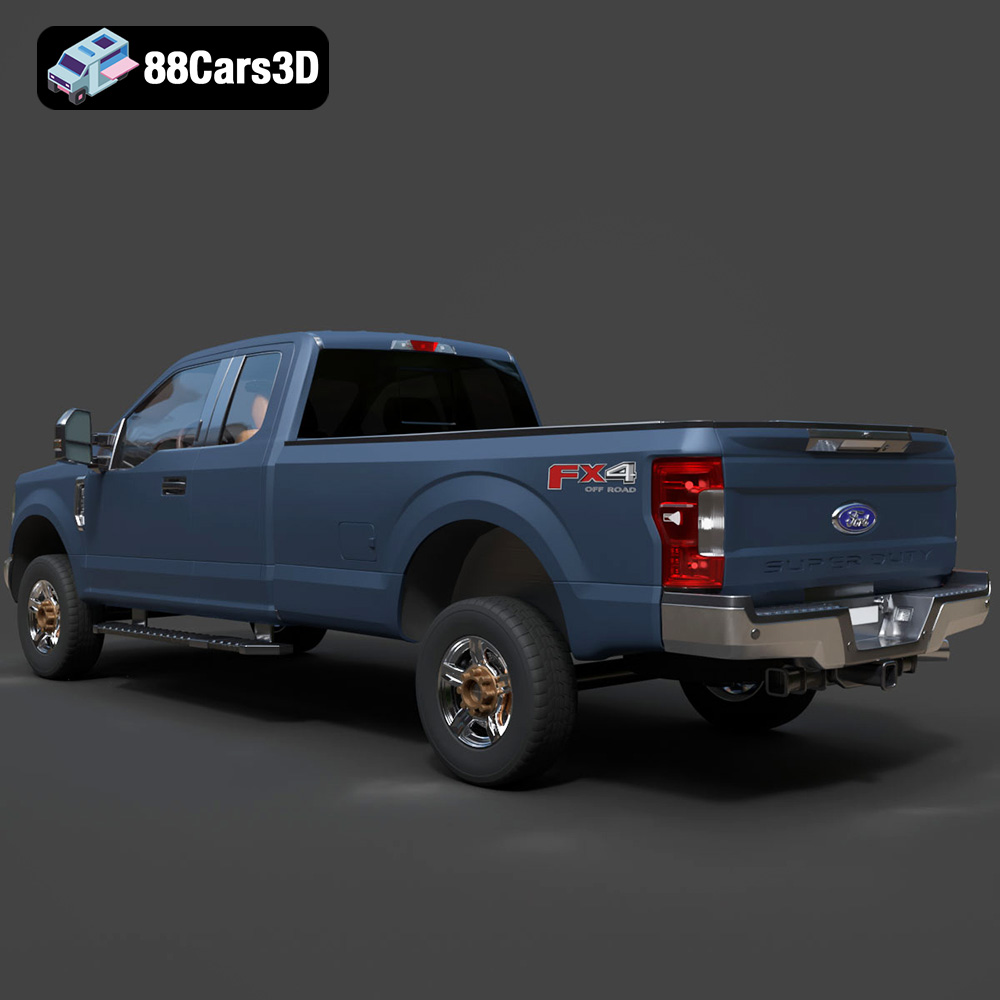
In the dynamic worlds of automotive design, cinematic production, architectural visualization, and even hobbyist 3D printing, the quality of a 3D model can make or break a project. From showcasing a vehicle in a photorealistic rendering to integrating it seamlessly into a game environment, the demand for precision and detail is paramount. Today, we delve deep into the technical intricacies and creative possibilities offered by professional-grade 3D car models, using a prime example: the Ford F-250 Super Duty Super Cab XLT 2015 3D Model. This iconic American heavy-duty truck, meticulously recreated, serves as an excellent case study for understanding the benchmarks of quality and versatility in digital automotive assets.
Automotive 3D modeling is far more than just creating a shape; it’s about capturing the essence, the engineering, and the tactile feel of a vehicle in a digital space. A truly exceptional model, like the F-250 offered on 88cars3d.com, is built from the ground up to meet diverse professional needs, whether it’s for a high-stakes commercial, an immersive VR experience, or a highly detailed scale replica. We’ll explore how such assets are utilized, the technical considerations behind their creation, and how they empower artists and developers to push the boundaries of digital realism and physical fabrication.
The flexibility and utility of a 3D car model are often defined by the file formats it supports. Each format is designed with specific workflows and platforms in mind, offering distinct advantages for different stages of production. Understanding these formats is crucial for any professional working with 3D automotive assets, ensuring seamless integration and optimal performance. The Ford F-250 Super Duty Super Cab XLT 2015 3D Model, for instance, is offered in a comprehensive suite of formats, catering to a wide array of applications.
The .blend format is Blender’s native file type, offering a complete, editable scene. When you receive a model in .blend format, it’s not just the mesh; it’s the entire project, including materials, textures, lighting setups, cameras, animation data, and even modifiers. For artists who primarily use Blender, this means immediate access to the model’s construction, allowing for easy modifications, material tweaks, and scene assembly without any import/export issues. It’s ideal for in-depth customization and leveraging Blender’s powerful rendering capabilities with Cycles or Eevee.
Autodesk’s .fbx (Filmbox) format is arguably the most widely adopted interchange format in the 3D industry. Its strength lies in its ability to encapsulate complex scene data—meshes, materials, textures, animations, skinning, and camera information—while maintaining compatibility across a vast range of 3D software (like 3ds Max, Maya, Cinema 4D, Blender) and real-time engines (Unreal Engine, Unity). For game development and real-time visualization, .fbx is often the go-to choice due to its robust support for animation and hierarchal data. When importing a model like the F-250 into Unreal Engine, an .fbx file ensures that separate components like wheels and doors retain their pivot points and relationships, critical for animation.
The .obj (Wavefront OBJ) format is a venerable and highly compatible format, often considered a universal choice for exchanging raw mesh data. It stores vertex positions, UV coordinates, normals, and material references (via an accompanying .mtl file). While it doesn’t typically carry animation or scene hierarchy, its simplicity and widespread support make it excellent for static model exchange between virtually any 3D application. For users needing just the clean mesh of the F-250 for sculpting, retopology, or initial scene setup in less common software, .obj is invaluable.
.glb (GL Transmission Format Binary) is a relatively newer format, rapidly gaining traction for its efficiency in web-based 3D, Augmented Reality (AR), and Virtual Reality (VR) applications. It’s a binary version of the .gltf format, combining the 3D model, textures, and animations into a single, self-contained file. This optimization makes .glb ideal for fast loading and rendering in browsers or on mobile devices, crucial for interactive product configurators or AR experiences showcasing the F-250 in a user’s driveway.
The .stl (STereoLithography) format is the undisputed standard for 3D printing. It represents a 3D model as a collection of unconnected triangular facets, defining the surface geometry without color or texture information. While simple, its universal acceptance by slicing software and 3D printers makes it essential for physical output. For the Ford F-250 Super Duty Super Cab XLT 2015 3D Model, the .stl version allows hobbyists and professionals to print highly detailed scale models or custom RC truck bodies, leveraging the model’s inherent manifold geometry suitable for physical fabrication.
The .ply (Polygon File Format or Stanford Triangle Format) is another format for storing 3D data, often used in applications requiring high precision, such as 3D scanning, CAD, and scientific visualization. It can store not only the geometry but also color, transparency, normals, texture coordinates, and even properties like confidence values per vertex. While less common for general rendering, its robustness makes it suitable for engineering analysis or reverse-engineering workflows of complex surfaces like automotive body panels.
The .unreal format, or more accurately, an optimized asset package designed for Unreal Engine, signifies a model pre-configured and possibly integrated directly into an Unreal project structure. While not a standalone file extension in the same way as .fbx, its inclusion implies that the asset has been prepared to meet Unreal’s specific requirements, potentially with optimized materials, collision meshes, and LODs (Levels of Detail). For the F-250, this would mean a streamlined import process for game developers, even if further retopology is needed for a drivable in-game asset.
Similar to .blend for Blender, .max is Autodesk 3ds Max’s native scene file format. It contains the complete 3ds Max project, including all geometry, materials, textures, lighting, cameras, animation, and scene settings. For 3ds Max users, this format offers the most control and flexibility for animation, high-end rendering with V-Ray or Corona, and extensive scene customization. Professionals working in architectural visualization or advertising often rely on .max files for their comprehensive capabilities, enabling them to integrate the F-250 into diverse scenes with full editability.
The availability of such a diverse range of formats for the Ford F-250 Super Duty Super Cab XLT 2015 3D Model underscores its versatility, making it a valuable asset for almost any 3D artist or studio seeking high-quality 3D car models for their projects.
Creating a truly authentic 3D car model is a fusion of artistic skill and engineering precision. It demands an obsessive attention to detail, from the broad strokes of a vehicle’s silhouette down to the minute textures of its interior. The Ford F-250 Super Duty Super Cab XLT 2015 3D Model exemplifies this balance, offering a robust foundation for a multitude of professional applications.
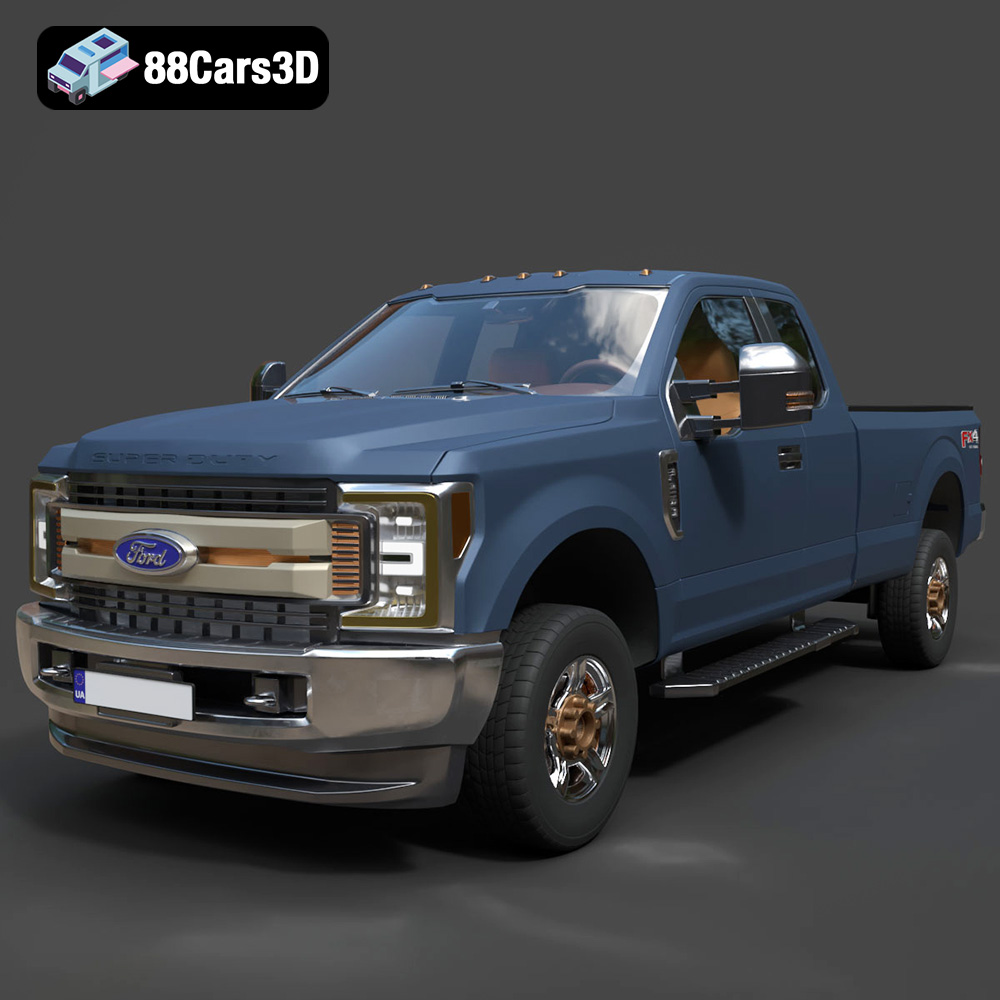
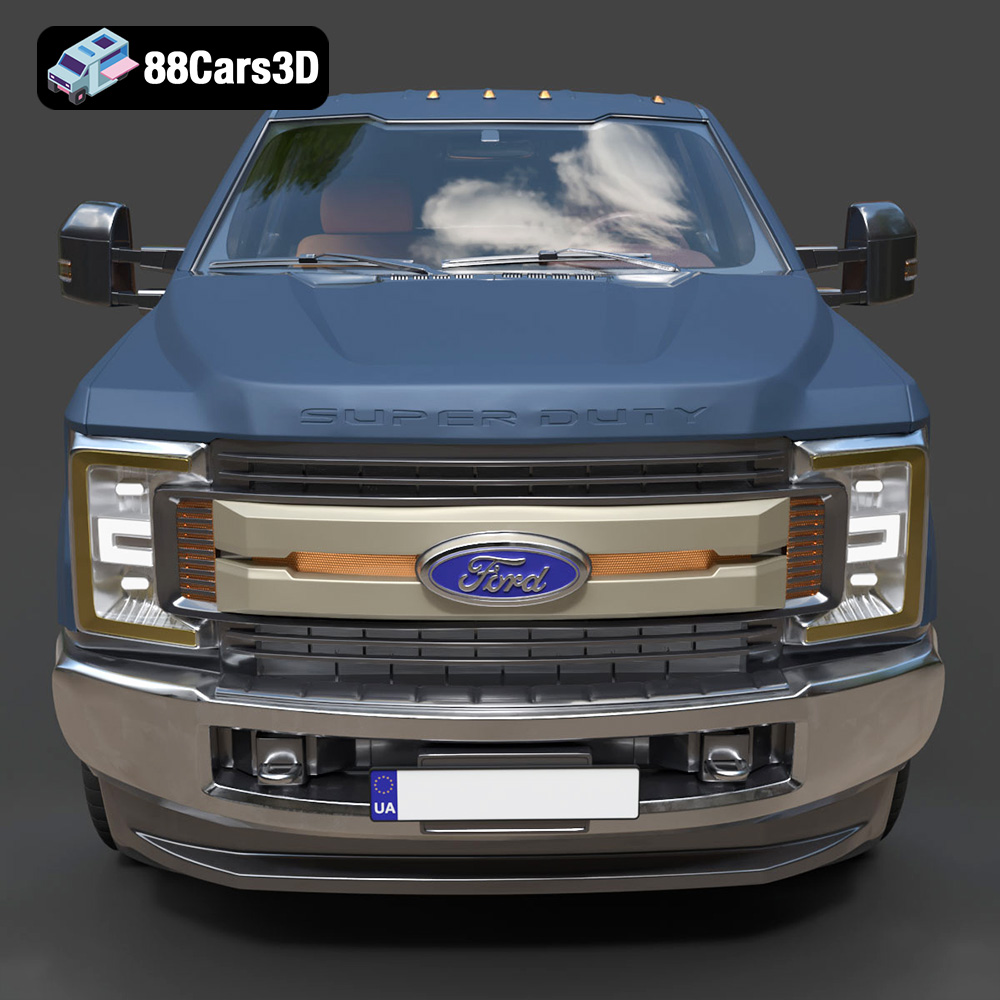
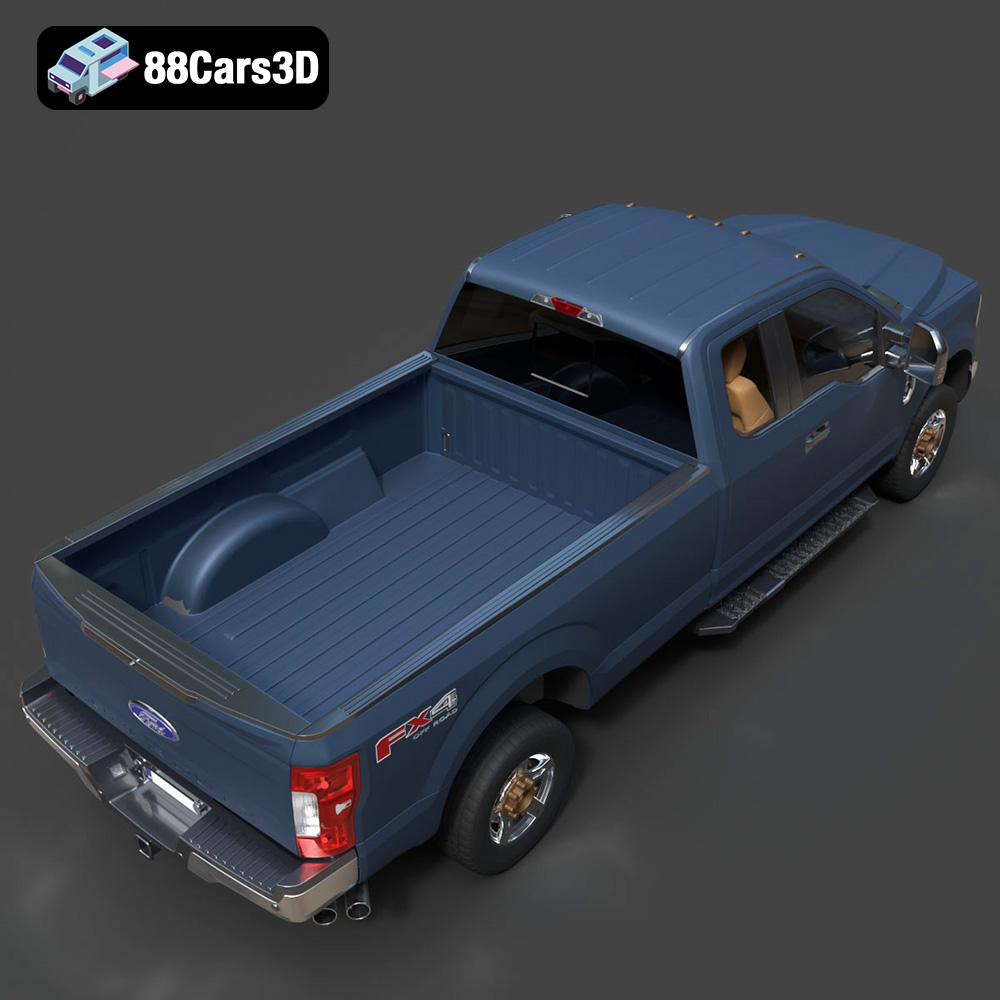
An exceptional automotive 3D model begins with accurate replication of real-world dimensions and visual cues. The 2015 F-250 Super Duty model precisely captures the imposing, muscular stance of the real truck, from its distinct XLT-spec chrome front grille and massive stacked headlight clusters to the unique Super Cab extended cabin configuration with accurate door panel gaps. These details are not merely cosmetic; they are fundamental to how the vehicle is perceived, affecting its weight, presence, and overall realism in any digital scene. The inclusion of telescoping trailer-tow side mirrors, heavy-duty chrome bumpers, and a detailed cargo bed further enhances its authenticity, making it instantly recognizable to enthusiasts and professionals alike.
True high-fidelity models go beyond just the exterior. The F-250 model includes a spacious Super Cab layout with accurate front bucket/bench seating and rear folding seats, featuring XLT-spec cloth or durable vinyl seating geometry with authentic seam detailing. The dashboard is replicated with a central infotainment screen layout and rugged climate controls, along with a heavy-duty multi-function steering wheel and column shifter. This level of interior detail is crucial for first-person POV renders, cinematic shots, or even virtual showrooms where users might inspect the cabin. Furthermore, undercarriage details, even if not explicitly listed for this model, are often vital for dynamic animations or scenarios where the vehicle might be viewed from unconventional angles, adding another layer of realism and credibility to the asset.
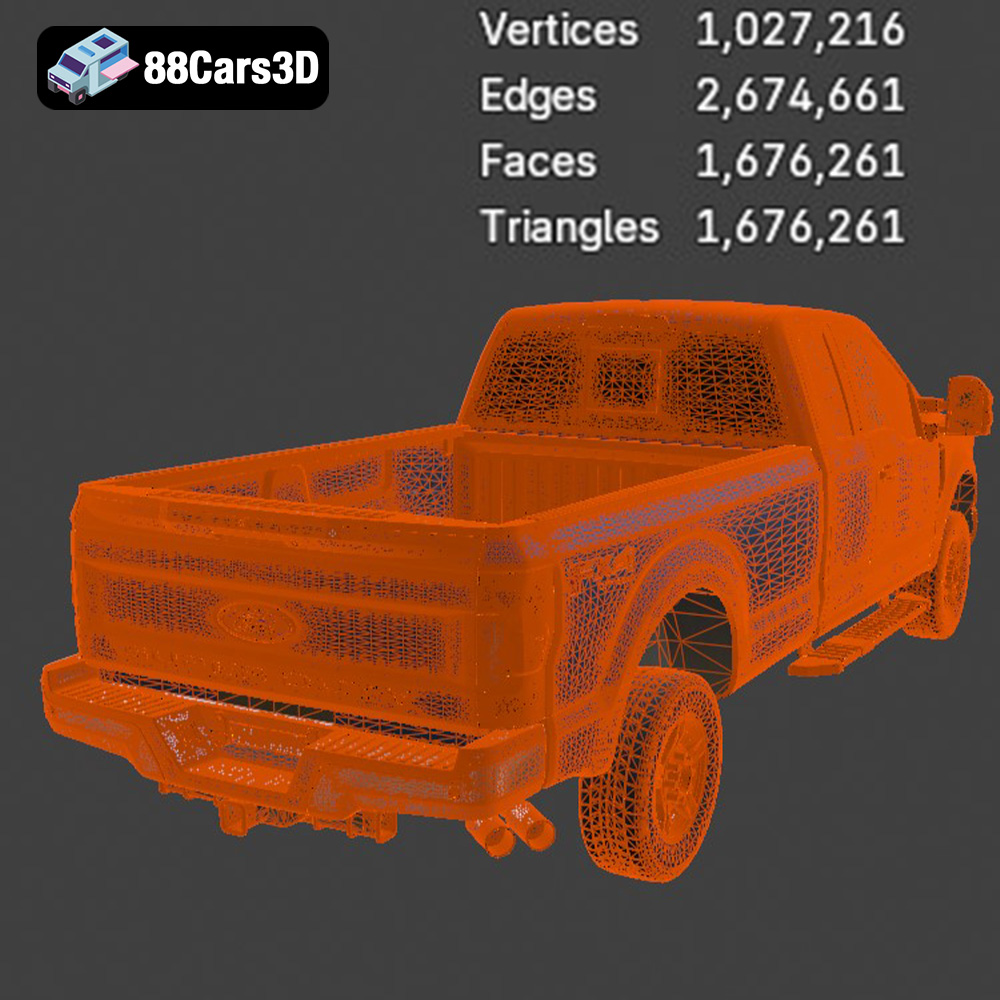
The technical specifications are where the engineering shines. With over 1.6 million polygons (1,676,261 triangles), the F-250 model boasts a dense, well-organized mesh structure. This high poly count provides maximum visual fidelity for extreme close-up rendering and cinematic visualization, ensuring smooth curves and sharp edges without sacrificing detail. Real-world scale accuracy, based on Ford factory dimensions, guarantees that the model will fit seamlessly into any scene without requiring manual scaling adjustments. Crucially, components like wheels, steering, doors, and the tailgate are separated and feature proper pivot setups, making the model ready for animation straight out of the box. This “animation-ready” state drastically reduces setup time for riggers and animators, allowing for dynamic sequences such as doors opening, wheels turning, or the tailgate lowering.
Photorealistic rendering is where high-detail 3D car models truly come alive. Leveraging the intricate geometry and realistic materials of a model like the Ford F-250 Super Duty Super Cab XLT 2015 3D Model, artists can create stunning visuals for advertising, product showcases, and cinematic productions.
For rendering, a strong mesh is only half the story; materials and textures complete the illusion. Professional 3D car models typically come with carefully crafted materials that simulate real-world surfaces – glossy paint, reflective chrome, rugged tire rubber, and detailed interior fabrics. For the F-250, this includes the XLT trim’s signature chrome grille, the texture of the cloth or vinyl seats, and the hard plastics of the dashboard. Using physically based rendering (PBR) workflows, these materials interact with light in a believable way, reflecting and refracting light accurately to create photorealistic results. Artists can further customize these materials, changing exterior paint colors to match classic 2015 Ford factory options like Oxford White or Blue Jeans Metallic, or applying silver metalizer for chrome accents, providing immense creative control.
The way light interacts with a 3D model is paramount to its visual impact. Whether it’s a sunny construction site, a moody, rain-slicked off-road trail, or a pristine studio environment, the lighting setup dictates the mood and realism. High-fidelity models like the F-250 are designed to respond beautifully to various lighting conditions, highlighting their contours and material properties. Using HDR (High Dynamic Range) image-based lighting or complex three-point lighting setups, artists can dramatically enhance the perceived quality of the model. The robust geometry ensures that shadows are cast accurately and reflections are crisp, essential for convincing automotive visualization.
Imagine a marketing campaign for a commercial fleet or a new off-road tire. The Ford F-250 Super Duty Super Cab XLT 2015 3D Model becomes an invaluable asset. Instead of expensive physical photoshoots, companies can produce a myriad of scenarios and branding mockups entirely in 3D. The F-250 can be placed in rugged landscapes, construction sites, or urban environments, with various accessories added (a toolbox, tonneau cover, or fifth-wheel hitch). This allows for rapid iteration, consistent branding, and cost-effective production of high-resolution imagery and animations, making it an ideal choice for rendering and visualization applications. Platforms like 88cars3d.com specialize in providing these types of ready-to-use, high-quality 3D car models for immediate project integration.
The realm of interactive experiences, from video games to AR/VR applications, presents a unique set of challenges and opportunities for 3D car models. While high-poly models like the Ford F-250 Super Duty Super Cab XLT 2015 3D Model offer unparalleled visual fidelity, their integration into real-time engines requires careful optimization.
With 1.67 million triangles, the F-250 is designed as a “hero” asset – perfect for cinematic pre-renders or still images where performance is not a bottleneck. However, for use as a drivable vehicle in real-time game engines like Unreal Engine or Unity, this poly count is excessively high for efficient rendering. This is where retopology becomes crucial. Retopology is the process of reconstructing a mesh with a much lower polygon count while retaining the visual fidelity of the original high-detail model. Artists manually or semi-automatically create a new, optimized mesh that is clean, efficient, and suitable for real-time performance. Normal maps, ambient occlusion maps, and other texture baking techniques are then used to transfer the intricate details from the high-poly F-250 onto the low-poly game mesh, creating the illusion of high detail without the performance cost.
Beyond retopology, further optimizations are essential. Levels of Detail (LODs) are simplified versions of the model that automatically switch based on the camera’s distance from the object. This ensures that the game engine only renders the necessary detail, saving precious processing power. For the F-250, multiple LODs would be created, progressively reducing the polygon count as the truck moves further away from the player’s view. Additionally, custom collision meshes are necessary to define the physical boundaries of the vehicle for accurate physics simulation and interaction with the game world, ensuring the F-250 behaves realistically when driving or colliding with objects. While this model requires manual retopology for real-time drivable use, its high-fidelity base makes it an excellent source for creating these optimized assets.
For AR/VR, the need for both visual quality and performance is balanced. While a fully drivable, 1.67M poly F-250 might be too heavy for untethered VR headsets, it’s perfect for high-end VR experiences or AR applications where the model is viewed statically or with limited interaction. Imagine an automotive configurator in VR, allowing potential buyers to explore the F-250’s detailed interior and exterior in a fully immersive environment. The .glb format, included with this model, is specifically optimized for these kinds of browser-based or mobile AR/VR deployments, ensuring efficient loading and display of the detailed truck without compromising on visual quality.
The digital world now extends into the physical, thanks to 3D printing. The Ford F-250 Super Duty Super Cab XLT 2015 3D Model is not just for screens; it’s an excellent base for highly detailed, tangible creations, transforming pixels into plastic, resin, or metal.
Converting a digital 3D model into a physical object requires specific considerations. The .stl format, included with the F-250 model, is the industry standard for 3D printing, representing the model’s surface geometry as a series of triangles. Crucially, a good 3D printable model must have “manifold” geometry, meaning it has no holes, intersecting faces, or inverted normals that would confuse a 3D printer’s slicing software. The high-poly, well-organized mesh of the F-250 ensures it’s an excellent candidate for detailed physical reproduction, providing a clean foundation for consistent and accurate prints.
The product description provides detailed 3D print settings, which are vital for successful physical replication. Recommended scales of 1:24, 1:18, or 1:10 are perfect for custom RC truck bodies or larger scale models. The advice on layer height (0.08–0.16 mm), wall thickness (1.5–2.5 mm), and infill (15–25%) offers practical guidance for FDM (Fused Deposition Modeling) printers, recommending thicker walls for a robust truck body. For more intricate details, especially at smaller scales, resin printing (SLA/DLP) would provide even finer resolution, capturing the subtle nuances of the F-250’s grille or interior components. The need for supports for features like tow mirrors, wheel arches, exhaust, and undercarriage details is a common requirement for complex automotive prints, preventing sagging during the printing process.
3D printing is often just the beginning. Post-processing is where the F-250 model truly comes to life as a physical object. Sanding smooths layer lines, priming prepares the surface for paint, and meticulous painting transforms the raw print into a factory-fresh or custom-modified replica. The suggestion to use standard factory paint colors like Oxford White, Blue Jeans Metallic, or Ingot Silver, along with silver metalizer for chrome accents, guides hobbyists toward achieving an authentic finish. This process allows for extensive customization, from realistic weathering effects for an off-road beast to pristine showroom finishes, enabling creators to craft unique automotive collectibles or functional RC bodies based on this high-quality 3D car model.
Time is money in professional 3D production. Leveraging pre-made, high-quality 3D car models significantly streamlines workflows, allowing artists and studios to focus on creativity rather than foundational asset creation. The Ford F-250 Super Duty Super Cab XLT 2015 3D Model from 88cars3d.com is a prime example of an asset that accelerates production.
Building a complex vehicle from scratch, especially one as detailed as the F-250 with its 1.67 million polygons and intricate interior, can take hundreds of hours of a skilled artist’s time. Purchasing a pre-made, professionally crafted model eliminates this significant initial investment. This allows teams to jump straight into scene assembly, lighting, rendering, or animation, dramatically reducing project timelines and overall costs. For smaller studios or freelance artists, this means they can take on more ambitious projects without needing to expand their team or allocate excessive time to modeling.
Professional 3D car models adhere to high standards of quality. This includes clean topology, accurate real-world scale, proper pivot setups, and well-organized mesh structures. Such attributes ensure that the model will behave predictably in various software environments and render flawlessly. When multiple artists work on a project, using standardized, high-quality assets like those found on 88cars3d.com ensures consistency across all visuals. The F-250’s robust construction and animation-ready components mean fewer unexpected issues during production, leading to smoother workflows and more reliable results.
A versatile 3D asset can be repurposed for multiple projects, maximizing its value. The Ford F-250, with its diverse file formats (.blend, .fbx, .obj, .glb, .stl, .ply, .unreal, .max) and detailed construction, can be used for architectural visualization (placing it next to a building render), product advertising (showcasing heavy equipment), game development (as a static background element or hero vehicle), and even educational simulations. Its inherent customizability, allowing for changes in paint colors, wheel setups, and bed accessories, further extends its utility, making it a powerful addition to any 3D asset library.
A high-quality 3D model is not merely a static representation; it’s a dynamic canvas for creativity and future innovation. The Ford F-250 Super Duty Super Cab XLT 2015 3D Model offers extensive customization options, paving the way for unique projects and evolving applications.
The beauty of a well-structured 3D model lies in its capacity for modification. The F-250 model can be easily adapted to suit specific creative visions. Artists can swap stock wheels for aggressive aftermarket lift-kit setups, add different tires for various terrains, or adjust bed accessories to tell a specific story—from a pristine work truck to a rugged off-road explorer. Changing exterior paint colors or interior trim options allows for endless variations, catering to client requests or personal artistic flair. This flexibility ensures the model remains relevant and inspiring for a wide range of projects, giving it longevity in any asset library.
As technology advances, so do the applications for 3D car models. We are seeing increased demand for automotive assets in interactive training simulations, autonomous vehicle development (for sensor simulation and virtual testing), and advanced digital twins for predictive maintenance. High-fidelity models, particularly those with accurate real-world scale and detailed internal components like the F-250, form the foundation for these cutting-edge applications. Their precision allows for accurate physics simulations and visual feedback, making them indispensable tools for engineering, research, and development in the automotive sector.
Furthermore, the convergence of AR, VR, and mixed reality (MR) continues to open new frontiers. Imagine a holographic F-250 projected into a meeting room, allowing stakeholders to review design iterations in a collaborative, immersive environment. Or an interactive showroom where customers can explore every detail of a new truck from anywhere in the world. The versatility and quality of models available at marketplaces like 88cars3d.com are crucial for powering these futuristic visualization and interaction paradigms.
The journey from concept to final render, or from digital file to physical print, is profoundly influenced by the quality of the 3D assets involved. A meticulously crafted 3D car model, such as the Ford F-250 Super Duty Super Cab XLT 2015 3D Model, stands as a testament to the blend of artistic passion and technical mastery required in the field. Its high polygon count, accurate real-world scale, detailed interior and exterior, and animation-ready components make it an exceptional tool for demanding applications in automotive rendering, cinematic production, and even detailed 3D printing projects.
Understanding the diverse file formats—from .blend and .max for full editability, to .fbx for industry interoperability, .glb for web and AR/VR, and .stl for 3D printing—is essential for maximizing the utility of such a versatile asset. While high-fidelity models may require optimization for real-time game engines, their detailed base provides an unparalleled starting point for creating truly stunning and performant interactive experiences. By investing in professional 3D car models, artists and studios can significantly streamline their workflows, enhance visual quality, and unlock new creative possibilities, driving innovation across various industries. For those seeking such premium assets, marketplaces like 88cars3d.com offer a curated selection designed to meet the highest professional standards.
The Ford F-250 Super Duty Super Cab XLT 2015 3D Model is a premium, high-detail digital recreation of America’s iconic heavy-duty work truck. Representing the final iteration of the legendary steel-body generation, this 2015 model captures the imposing, muscular stance that makes the F-250 a favorite for towing, off-roading, and commercial fleets. Built with dense, uncompromising topology (over 1.6 million polygons), it provides maximum visual fidelity for extreme close-up rendering, cinematic automotive visualization, commercial fleet mockups, and high-end 3D printing. Perfect for rugged off-road scenes, construction site environments, commercial vehicle pitches, and high-end cinematic productions.
$9.99
.automotive
.blend
.fbx
.ford
.obj
.rendering
.stl
.xlt
2015-ford
3d printing
car-3d-model
f-250
heavy-duty
high poly
pickup-truck
super-cab
super-duty