Get 50% OFF All Premium 3D & STL Models!

In the dynamic world of 3D design, the demand for hyper-realistic automotive assets continues to surge across diverse industries. From breathtaking architectural visualizations (ArchViz) to immersive game environments and cinematic productions, a meticulously crafted 3D car model is often the linchpin that elevates a project from good to truly exceptional. These aren’t just decorative elements; they are complex digital sculptures that convey status, lifestyle, and a profound sense of realism.
The challenge lies in sourcing assets that meet stringent technical and artistic standards. Designers, architects, and game developers constantly seek models that boast clean topology, accurate proportions, and detailed materials, ensuring seamless integration and stunning output. It’s about precision, fidelity, and the assurance that the digital vehicle will perform flawlessly under various rendering and real-time conditions. This pursuit of perfection brings us to a prime example of such an asset: the BMW 1 Series 5-Door (2016) 3D Model, a premium offering designed to meet the rigorous demands of professional workflows. Sourced from platforms like 88cars3d.com, such models embody the quality and versatility essential for cutting-edge projects, providing a solid foundation for everything from a subtle background detail to a hero asset in a commercial.
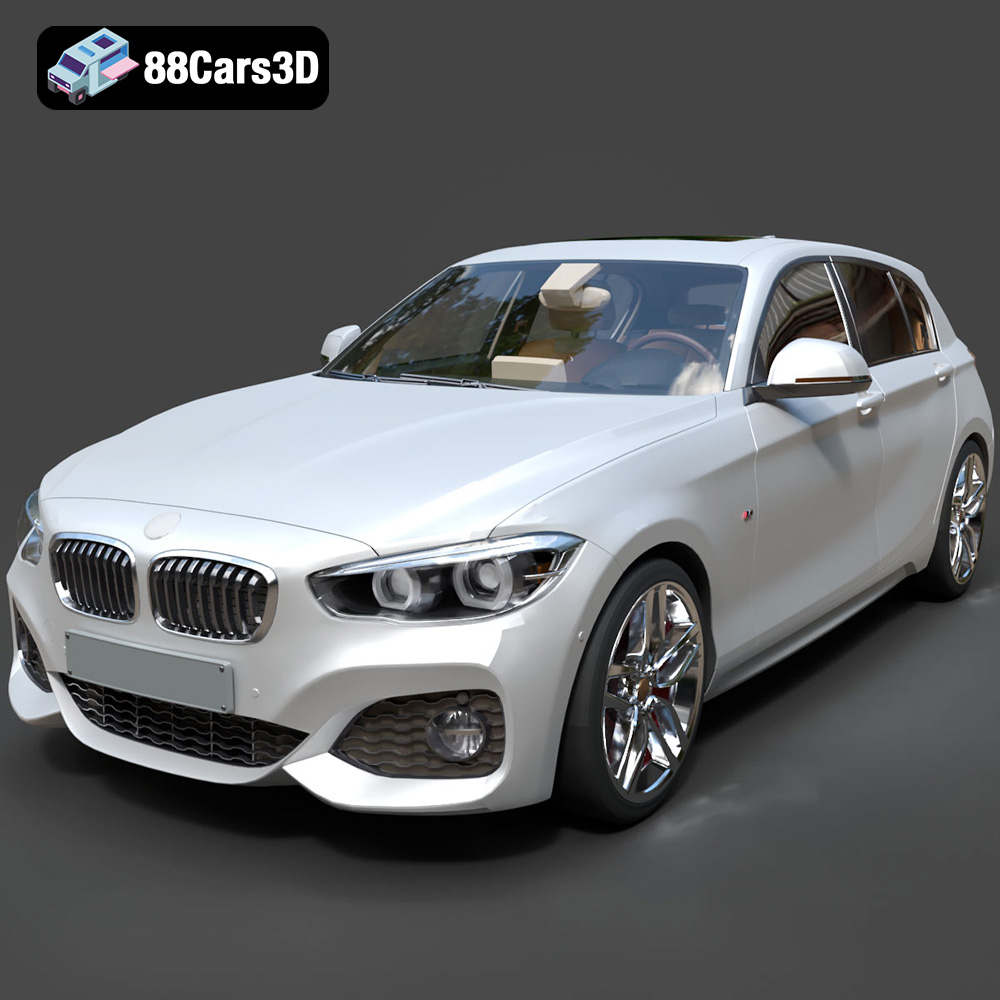
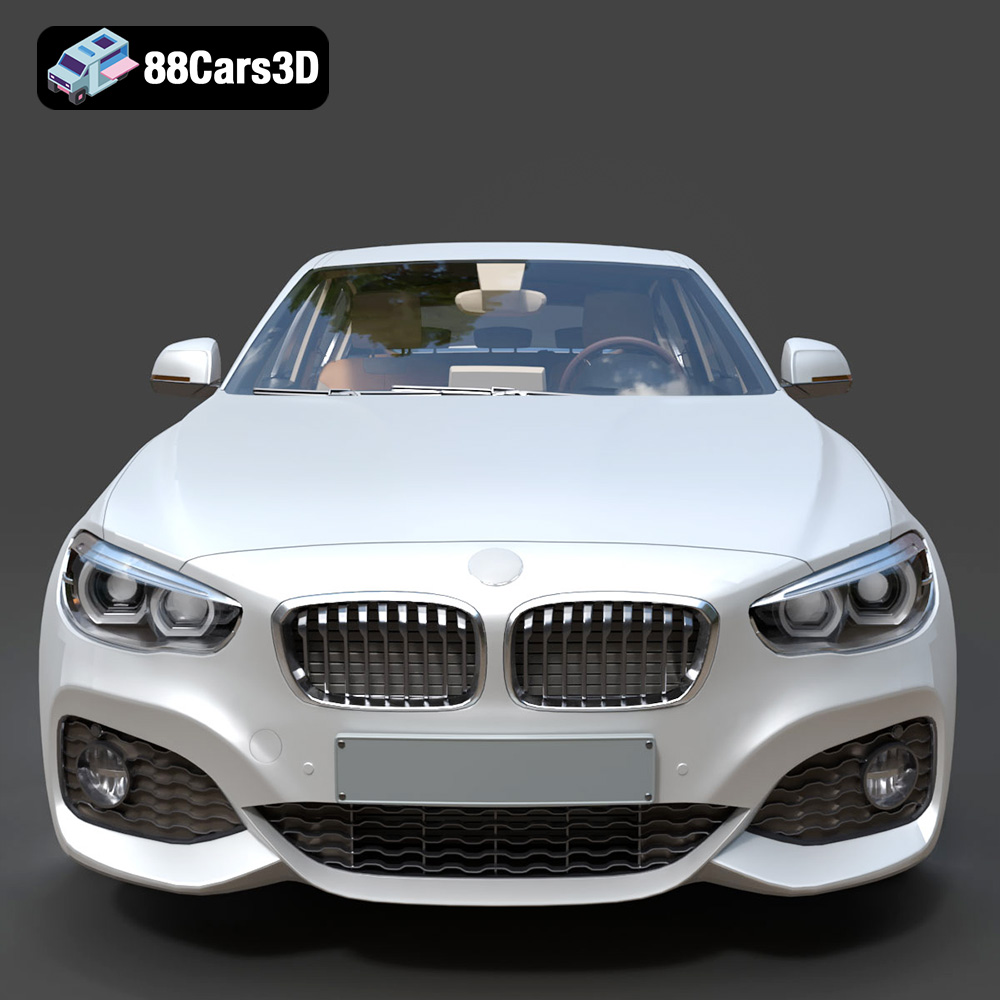
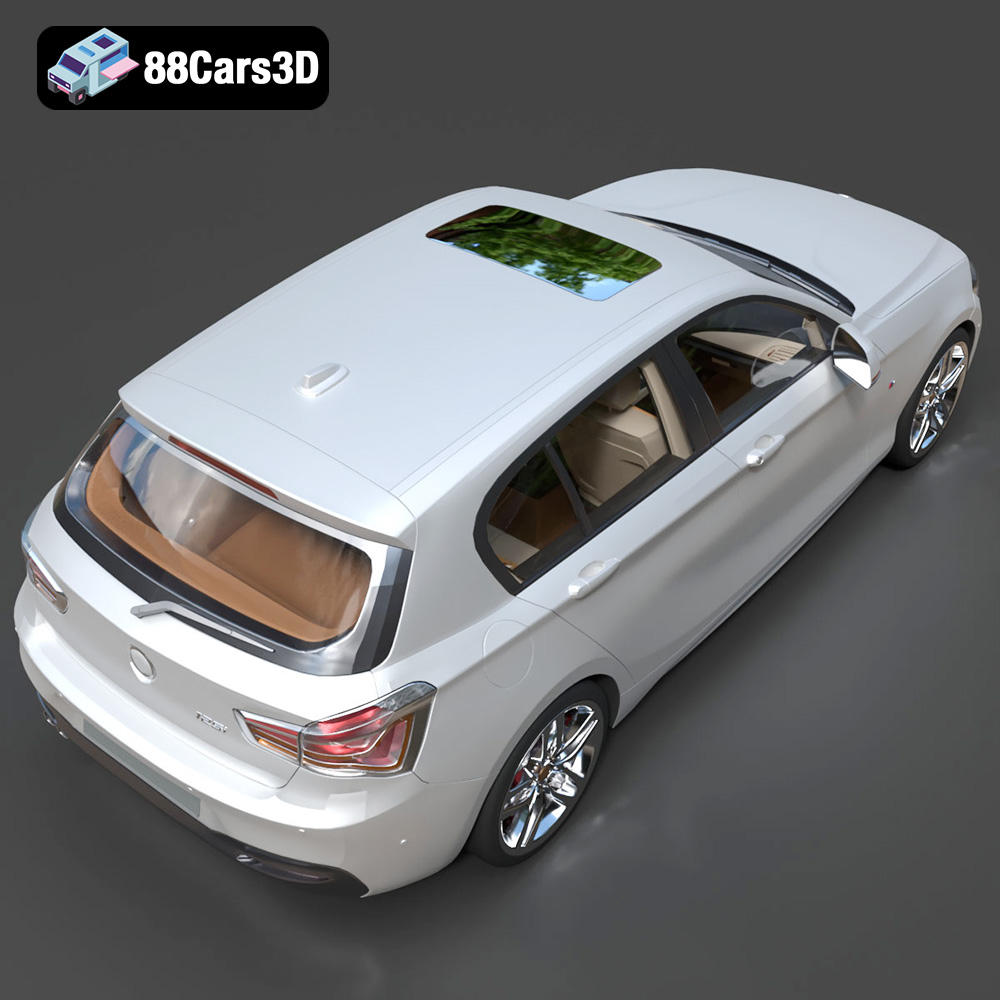
The BMW 1 Series 5-Door (2016), specifically the F20 LCI (Life Cycle Impulse / facelift) generation, represents a significant milestone in BMW’s compact premium segment. Its distinct sporty proportions, elongated hood hinting at its rear-wheel-drive dynamics, and refined aesthetics made it a standout. Translating such an iconic vehicle into a high-fidelity 3D model requires an obsessive attention to detail. This particular 3D model captures the modernized 2016 aesthetic flawlessly, showcasing the sleeker LED headlight clusters, the wider signature BMW kidney grilles, the distinct L-shaped LED taillights, and the sophisticated bumper designs. Every curve, panel gap, and aerodynamic character line is precisely replicated, resulting in an incredibly accurate digital twin that is perfect for close-up renders and animations.
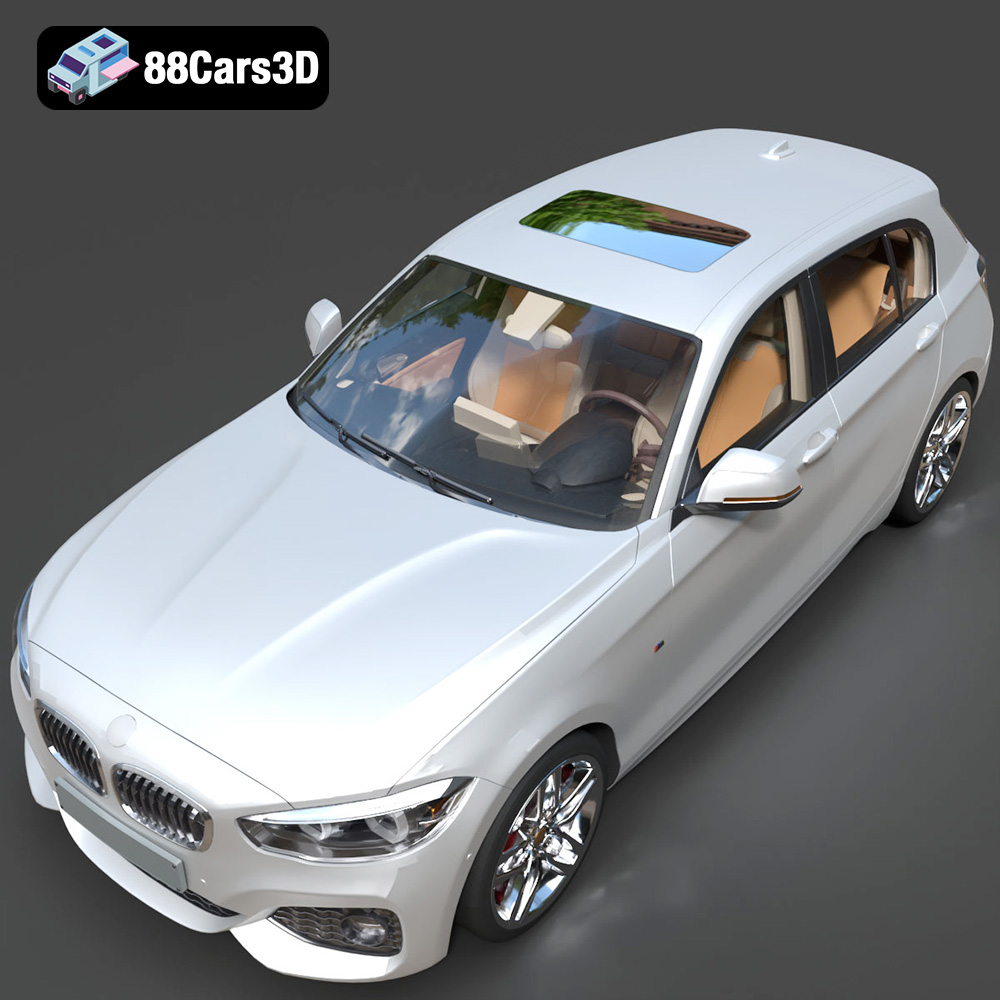
Beyond the exterior, the model extends its authenticity to the interior. It features an authentic, driver-focused cabin layout, complete with a detailed dashboard, the iDrive infotainment display, a sporty multi-function steering wheel, and realistic seating with accurate stitching. This comprehensive detailing means the model isn’t just a shell; it’s a complete, believable vehicle ready for any scene.
The world of 3D modeling is rich with various file formats, each designed for specific purposes and workflows. Understanding which format to use and when is crucial for optimizing your projects, ensuring compatibility, and maximizing efficiency. The BMW 1 Series 5-Door (2016) 3D Model, exemplary in its versatility, is offered in a comprehensive range of formats, making it accessible to professionals across different software ecosystems and application needs.
The .blend format is the native file type for Blender, the popular open-source 3D creation suite. When you receive a .blend file, you’re getting a fully editable Blender scene. This means not only the mesh data but also all materials, textures, lighting setups, cameras, animation data, modifiers, and even scene properties are preserved. For artists deeply integrated into the Blender ecosystem, this format offers unparalleled flexibility. You can dissect the model, modify its geometry, adjust PBR materials, re-rig components, or animate it directly within Blender without any loss of data or conversion artifacts. It’s ideal for those who wish to extend the model’s functionality, create custom variations, or integrate it into complex Blender-centric pipelines.
Autodesk’s .fbx (Filmbox) format has become an unofficial industry standard for 3D data exchange, particularly between different software applications and into game engines like Unreal Engine and Unity. It excels at storing not just mesh data but also animations, rigs, cameras, and material assignments (though complex PBR materials often require re-setup in the destination software). Its robust support for hierarchies and animation makes it indispensable for character animation and complex object interactions. For game developers or animators needing to transfer the BMW 1 Series model with its separate wheels, steering components, and doors ready for rigging, .fbx is the go-to choice due to its wide compatibility and efficient handling of animated assets.
The .obj (Wavefront Object) format is one of the oldest and most widely supported 3D file formats, making it truly universal for cross-software compatibility. It primarily stores geometric data – vertices, normals, UV coordinates, and faces – and can reference external material (.mtl) and texture files. While it doesn’t typically store advanced features like animation or rigging, its simplicity and ubiquitous support mean almost any 3D software can import an .obj file. It’s an excellent choice for static mesh transfers, especially when you need a clean mesh that can be easily re-textured and re-shaded in your preferred application. For the BMW model, .obj offers a reliable base mesh for any project.
.glb (GL Transmission Format Binary) is the binary version of glTF, a modern, open-standard format designed for efficient transmission and loading of 3D scenes and models by engines and applications. It’s highly optimized for AR (Augmented Reality), VR (Virtual Reality), and browser-based display because it packs all necessary assets (geometry, materials, textures, animations) into a single, compact file. This “asset delivery format” is quickly becoming the standard for displaying 3D content on the web and in real-time AR/VR experiences, offering faster load times and smaller file sizes. If you’re showcasing the BMW 1 Series model on a website or in an interactive AR application, .glb is the most efficient and performant option.
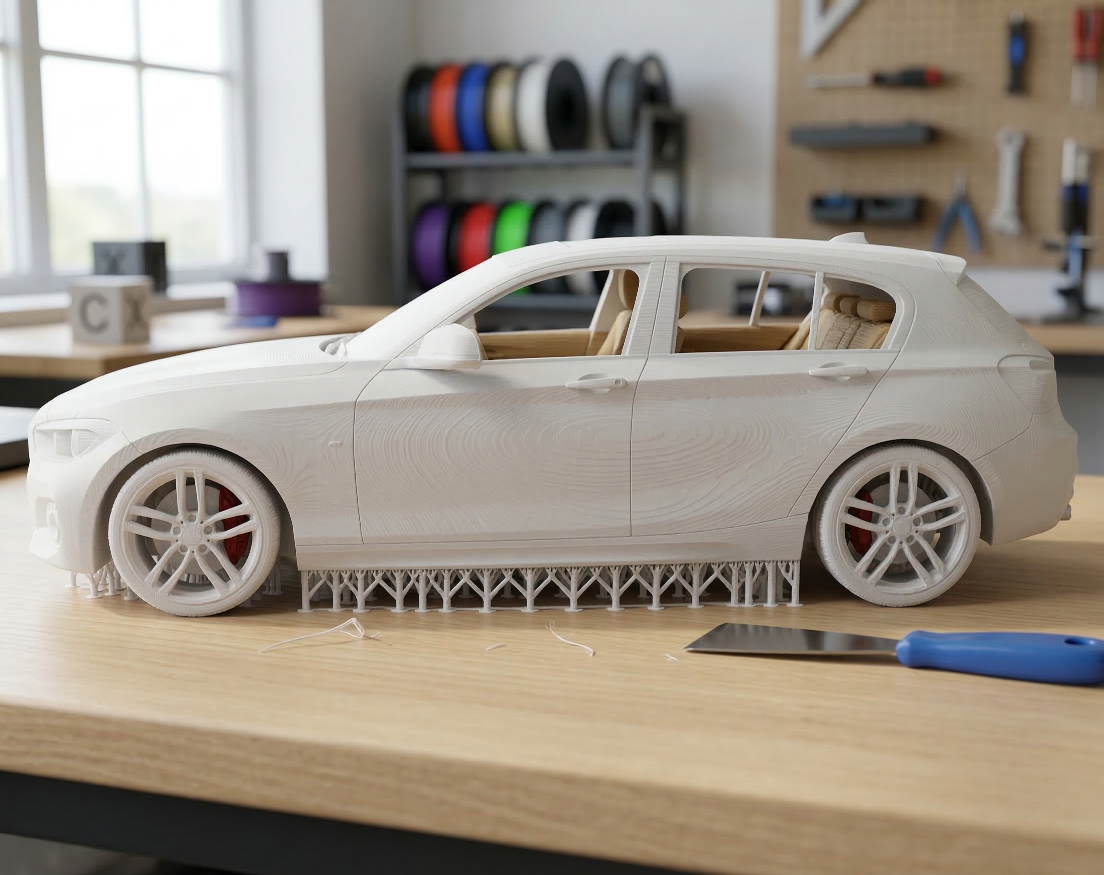
The .stl (STereoLithography) format is the cornerstone of 3D printing. It represents a 3D model as a series of connected triangles (a triangulated surface mesh) without color, texture, or other CAD attributes. Its primary function is to define the surface geometry of a 3D object for manufacturing, typically through additive processes. For the BMW 1 Series 5-Door model, the inclusion of an .stl file means it’s ready to be sent to a 3D printer, allowing enthusiasts to create physical miniatures or custom RC bodies. It’s critical for .stl files to have “manifold” geometry, meaning they are watertight and free of gaps, which this high-quality model ensures, making it suitable for physical output.
The .ply (Polygon File Format or Stanford Triangle Format) is another format for storing 3D data, particularly useful for high-resolution scan data and scientific applications. It can store a wider range of properties than .obj or .stl, including color, transparency, normals, texture coordinates, and reliability information for each vertex and face. It’s often used in academic and research settings, CAD workflows, or for storing data from 3D scanners where precision and extensive attribute information are paramount. For detailed analysis or specialized engineering projects involving the BMW model, .ply offers a robust data structure.
The inclusion of an .unreal file (or specific assets pre-configured for Unreal Engine) signifies an asset that is genuinely engine-ready for real-time environments. This typically means the model has been optimized, imported, and sometimes pre-configured with basic materials or blueprints within an Unreal Engine project. This saves considerable time and effort for game developers and real-time visualization artists, allowing for immediate drag-and-drop integration into Unreal Engine projects. For the BMW 1 Series model, this means it arrives prepared for the powerful rendering capabilities of Unreal Engine, including features like Nanite in UE5 for high-poly assets.
The .max format is the native file type for Autodesk 3ds Max, a leading software for 3D modeling, animation, rendering, and visualization. Similar to .blend, a .max file contains a complete scene, including geometry, materials, lighting, cameras, animation, and rendering settings. It’s the preferred format for users who work extensively within 3ds Max, providing full editability and control over every aspect of the scene. This format is crucial for architectural visualization artists or animators who use 3ds Max in conjunction with powerful rendering engines like V-Ray, Corona, or Arnold, allowing them to leverage the BMW 1 Series model’s detailed geometry and material setup within their established pipelines.
By offering the BMW 1 Series 5-Door (2016) 3D Model in such a comprehensive array of formats, 88cars3d.com ensures that users can select the perfect version for their specific software and project requirements, streamlining workflows and enhancing compatibility across the vast landscape of 3D production.
Creating a realistic 3D car model is far more complex than simply extruding shapes. It’s a blend of artistic interpretation and scientific precision, demanding meticulous attention to form, function, and underlying mesh structure. The BMW 1 Series 5-Door (2016) model exemplifies this intricate balance.
The foundation of any high-quality automotive 3D model lies in its accuracy. This involves working with extensive reference data – blueprints, schematics, and countless photographic references – to ensure every dimension, curve, and subtle surface undulation matches its real-world counterpart. For the BMW 1 Series, this means recreating the distinctive modernized BMW kidney grilles, the intricate LED headlight housings, and the precise panel gaps that define the vehicle’s premium finish. Small details, like the textured rubber tires wrapped around detailed factory alloy wheels, are what truly sell the realism and differentiate a professional asset from an amateur one.
Beneath the polished surface, the topology of a 3D model is paramount. The BMW 1 Series model boasts incredibly clean, quad-heavy topology, with approximately 1.17 million triangles. This isn’t merely a high poly count for the sake of it; it signifies a highly organized, smooth-flowing mesh structure. Clean quad topology ensures that the model subdivides perfectly, meaning it can be smoothed further without introducing unwanted artifacts, making it suitable for extreme close-ups and high-resolution renders. It also facilitates easier UV unwrapping, texturing, and rigging, preventing issues like stretching or distortion during animation. A well-optimized mesh, even at high polygon counts, contributes to efficient rendering and overall project stability.
The most accurate geometry can fall flat without compelling materials and textures. Modern automotive rendering relies heavily on Physically Based Rendering (PBR) workflows, which simulate how light interacts with surfaces in the real world. This includes complex car paint shaders with multiple layers (base coat, metallic flakes, clear coat), realistic glass for windows and headlights, rubber for tires, and various interior materials like leather, fabric, and plastic. The BMW 1 Series 5-Door (2016) 3D Model comes with materials set up for compatibility with major rendering engines (V-Ray, Corona, Arnold), ensuring that its digital surfaces reflect light and color with lifelike fidelity, enhancing its presence in any scene.
High-fidelity 3D car models like the BMW 1 Series 5-Door (2016) are indispensable tools across several professional pipelines, offering versatility that extends far beyond simple imagery.
In architectural visualization, a high-quality vehicle can dramatically enhance the perceived realism and value of a render. Placing the BMW 1 Series in a driveway, a street scene, or a parking garage instantly grounds the architectural design in a believable, upscale context. The model’s real-world scale accuracy and detailed geometry make it the absolute perfect vehicle for high-end ArchViz. Using software like 3ds Max or Blender, artists can integrate the model into a scene, set up realistic lighting using HDRIs (High Dynamic Range Images), and render with engines like V-Ray, Corona, or Arnold to achieve photorealistic results. The model’s clean topology ensures it performs beautifully even under intense ray tracing calculations, producing pristine reflections and shadows. For architects and designers looking for professional-grade automotive assets, 88cars3d.com offers a curated selection that stands up to the closest scrutiny.
The demands of game development and real-time visualization are unique, balancing visual fidelity with performance. While the BMW 1 Series model, at 1.17 million triangles, is highly detailed, its clean structure makes it suitable for advanced real-time applications. In Unreal Engine 5, technologies like Nanite allow for the direct use of high-poly assets without manual LOD (Level of Detail) creation, making this BMW a perfect “hero asset.” For projects targeting older engines, mobile, or optimized VR experiences, the model serves as an excellent base for generating efficient LODs through decimation, ensuring smooth performance. Its separate wheels, steering components, and doors are already set up with proper pivots, making it ready for rigging and animation within any game engine, offering dynamic interaction and movement.
In film, television, and advertising, high-quality 3D car models play a crucial role. They can serve as hero vehicles, meticulously animated and rendered for close-up shots, or populate background traffic in bustling cityscapes. The BMW 1 Series model, with its authentic design and detailed interior, is excellent for both roles. For commercials, it can be customized with specific paint finishes (like Alpine White or Estoril Blue) and integrated into compelling narratives. Its precision allows for dynamic camera angles and detailed reflections, critical for conveying the luxury and performance associated with the BMW brand. Animators will appreciate the model’s pre-separated components, simplifying the rigging process for complex shots involving turning wheels, opening doors, or suspension movements.
The versatility of high-quality 3D models extends beyond digital displays into the physical realm, particularly with 3D printing. The BMW 1 Series 5-Door (2016) 3D Model is not just for rendering; it’s also an excellent base for creating tangible replicas.
3D printing relies on a specific type of geometry: manifold, or “watertight,” meshes. The .stl format is the standard for this, representing the model’s surface as a collection of triangles. The clean topology and inherent structural integrity of this BMW model make it a great candidate for 3D printing. Designers can use this detailed digital asset to produce custom 1:24, 1:32, or 1:43 scale RC car bodies or highly accurate display models. Key considerations for printability include wall thickness (recommended 1.2–2.0 mm) and ensuring all parts are merged or properly shelled to prevent internal voids.
For a model as intricate as the BMW 1 Series, the choice of 3D printing technology significantly impacts the final quality. While FDM (Fused Deposition Modeling) can produce larger parts, resin printing (SLA/DLP) is highly recommended for capturing the intricate details of the grille, wheel spokes, and fine body lines, allowing for layer heights as low as 0.04–0.12 mm. Supports will be necessary for overhangs like side mirrors, wheel arches, and exhaust tips, but strategic print orientation can minimize their use. Once printed, post-processing is crucial. This involves sanding to remove layer lines, applying primer to achieve a smooth surface, and then painting with authentic BMW factory colors (e.g., Black Sapphire or Estoril Blue) before finishing with a clear gloss coat to replicate a showroom shine. This process allows enthusiasts to create truly bespoke, miniature versions of their favorite premium compact hatchback.
A truly professional 3D car model offers not just inherent quality but also a wealth of customization options, empowering designers to adapt it to specific project needs and artistic visions.
The BMW 1 Series 5-Door (2016) 3D Model provides an excellent foundation for endless visual modifications. Changing the exterior paint color to match factory BMW specifications – from a classic Alpine White to a vibrant Valencia Orange – is a simple yet impactful way to alter its character. Beyond color, you can apply M-Sport or Shadowline textures to black out chrome kidney grilles and window trim, giving the car a more aggressive or sporty aesthetic. The ability to modify the wheel setup, swapping standard alloys for aggressive M-Performance wheels, further enhances its customization potential, allowing the vehicle to fit seamlessly into different visual narratives, from luxurious to performance-oriented.
The versatility of this model also extends to its integration within various environments. Designers can adapt its lighting setup for realistic daylight HDRIs, creating bright and inviting scenes, or transform it for moody, rain-slicked night scenes with dramatic reflections. Whether it’s positioned on a sunny European street, a gritty urban alleyway, or an immaculate showroom floor, the model’s robust geometry and material compatibility ensure it looks convincing in any context. This adaptability makes it an invaluable asset for recurring use in different projects, maximizing its return on investment for any studio or individual artist.
In the competitive landscape of 3D visualization and content creation, the difference between a good project and a truly outstanding one often boils down to the quality of its foundational assets. High-fidelity 3D car models, such as the BMW 1 Series 5-Door (2016) 3D Model, serve as crucial elements that inject realism, detail, and professional polish into any design. From their meticulous geometry and clean topology to their comprehensive file format support, these assets are engineered to streamline workflows and unlock creative possibilities across architectural visualization, game development, cinematic production, and even 3D printing.
The featured BMW 1 Series model exemplifies the pinnacle of automotive 3D design, offering exceptional visual fidelity and technical versatility for diverse applications. Whether you’re populating a modern city scene in Unreal Engine, crafting a photorealistic render in 3ds Max, or bringing a miniature replica to life through 3D printing, the precision and adaptability of such a model are unparalleled. For professionals seeking to elevate their projects with premium 3D car models, resources like 88cars3d.com provide access to a curated selection of assets that meet the most rigorous industry standards, empowering artists to realize their visions with confidence and unparalleled quality.
The BMW 1 Series 5-Door (2016) 3D Model is a highly accurate digital recreation of the beloved premium compact hatchback. Representing the widely praised F20 LCI (Life Cycle Impulse / facelift) generation, this model captures the unique sporty proportions, elongated hood, and rear-wheel-drive stance that made this specific 1 Series a standout in its class. Built with incredibly clean, quad-heavy topology (approx. 1.17 million triangles), it delivers exceptional visual fidelity for photorealistic close-up rendering, high-end architectural visualization, and automotive animations.
$9.99
.archviz
.automotive
.blend
.bmw
.fbx
.hatchback
.obj
.rendering
.stl
1-series
2016-bmw
3d printing
car-3d-model
f20
high poly
premium-compact