Get 50% OFF All Premium 3D & STL Models!

In the vibrant world of 3D visualization, automotive rendering, and game development, the quest for unparalleled realism often hinges on the quality of your foundational assets. A meticulously crafted 3D model can elevate a simple scene into a captivating narrative, transforming a static image into a dynamic experience. Whether you’re an architect looking to populate a luxury residential render, a marketing agency crafting a high-impact automotive campaign, or a game developer aiming for immersive environments, the vehicle models you choose are paramount.
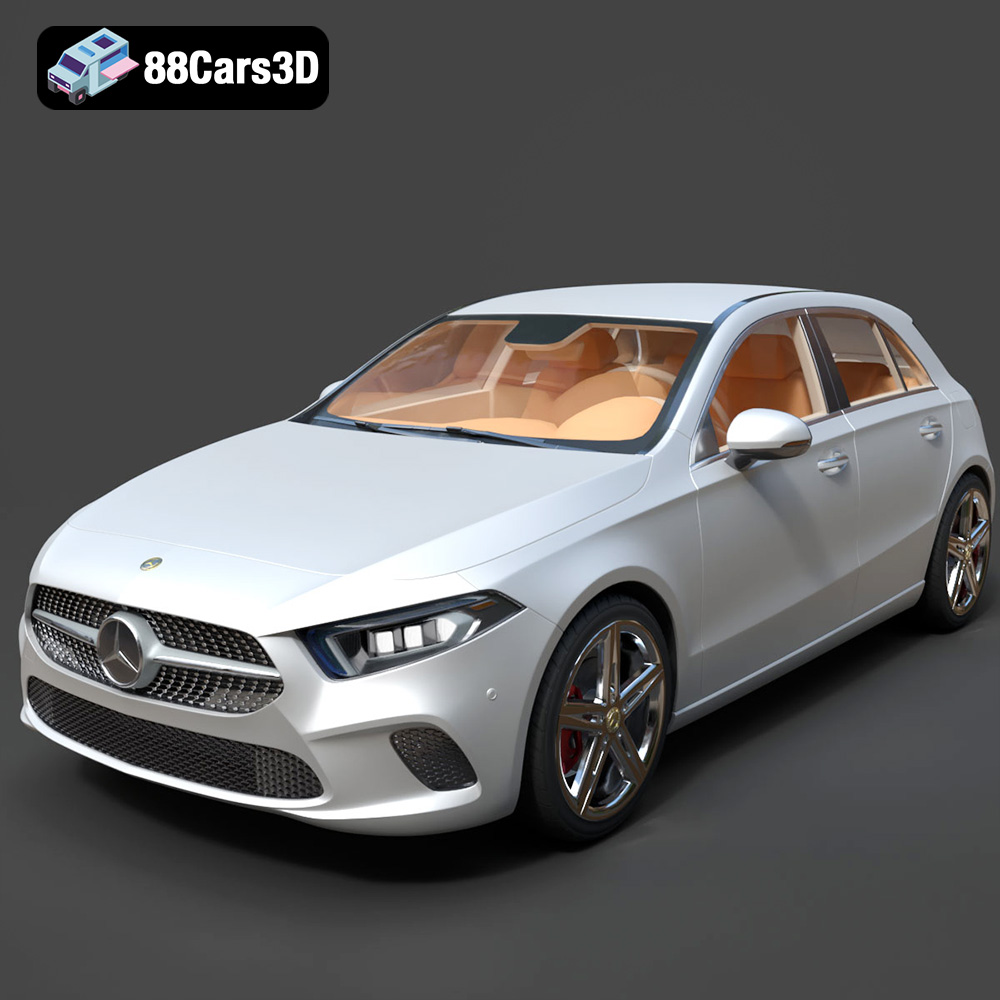
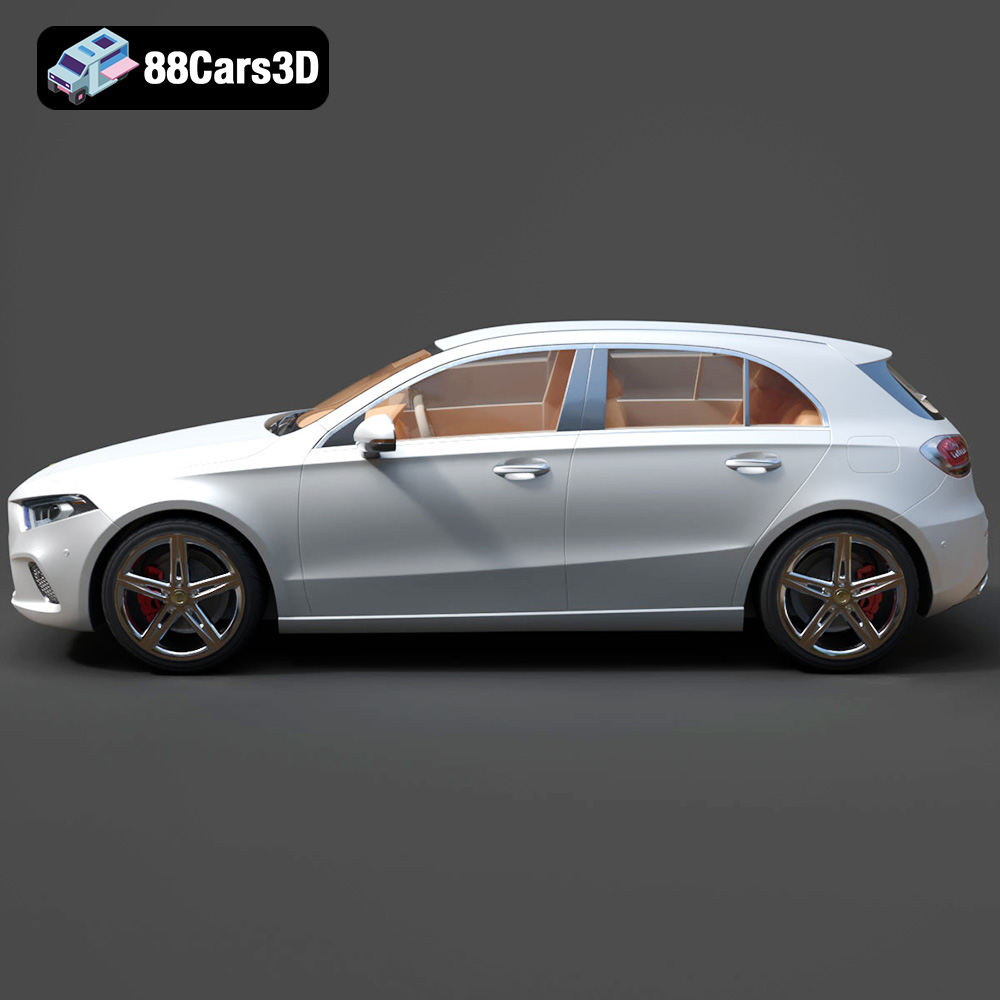
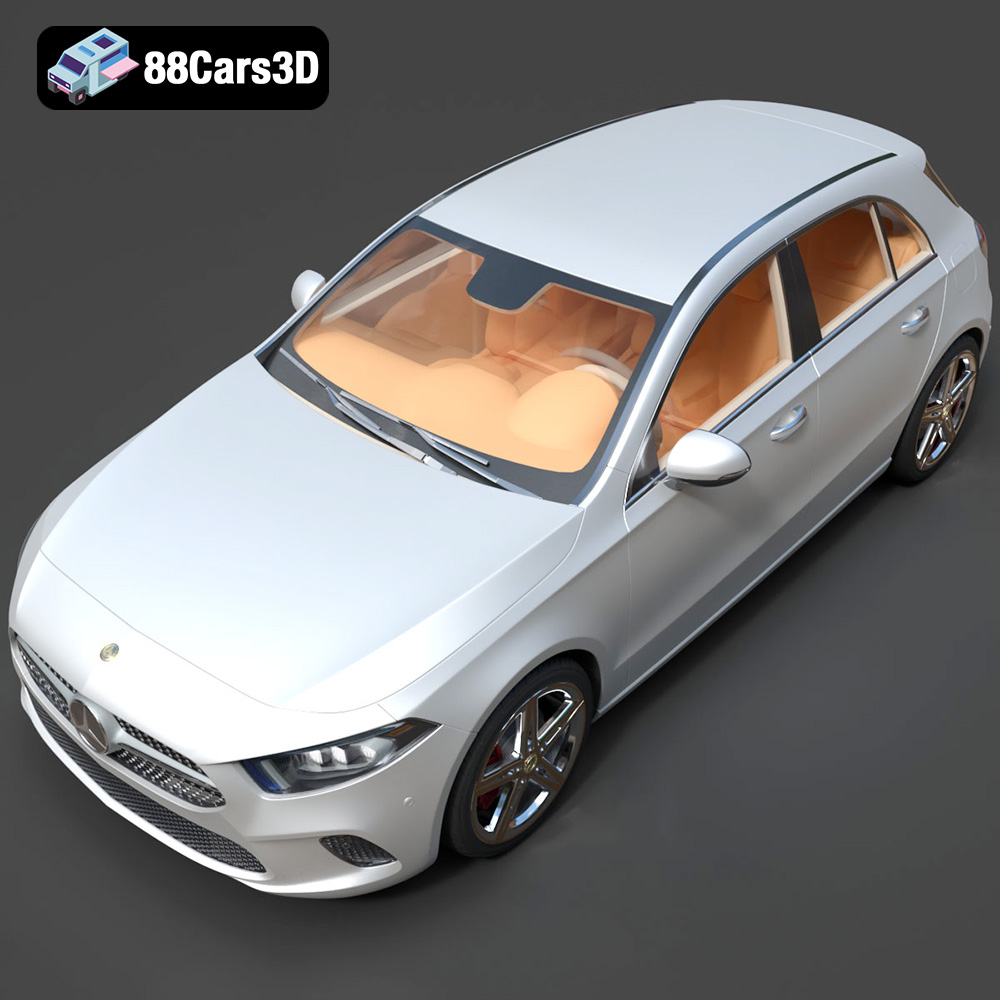
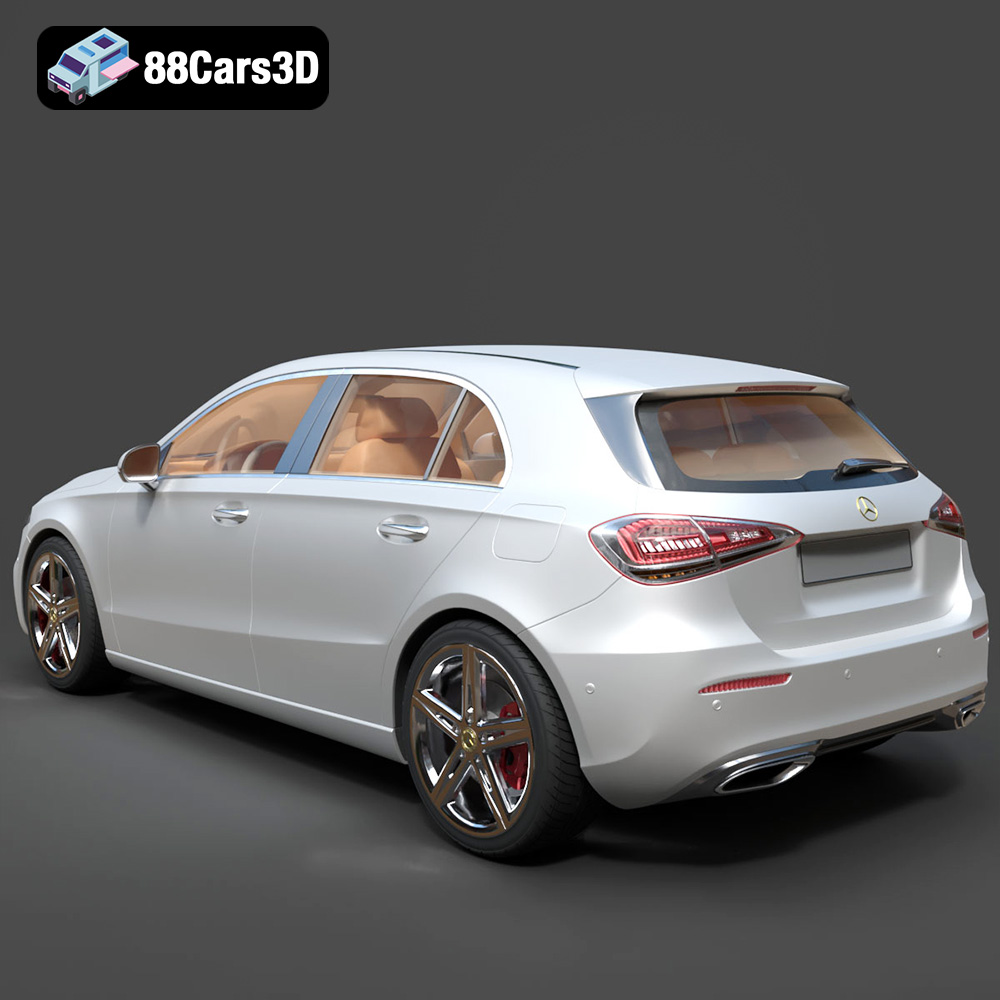
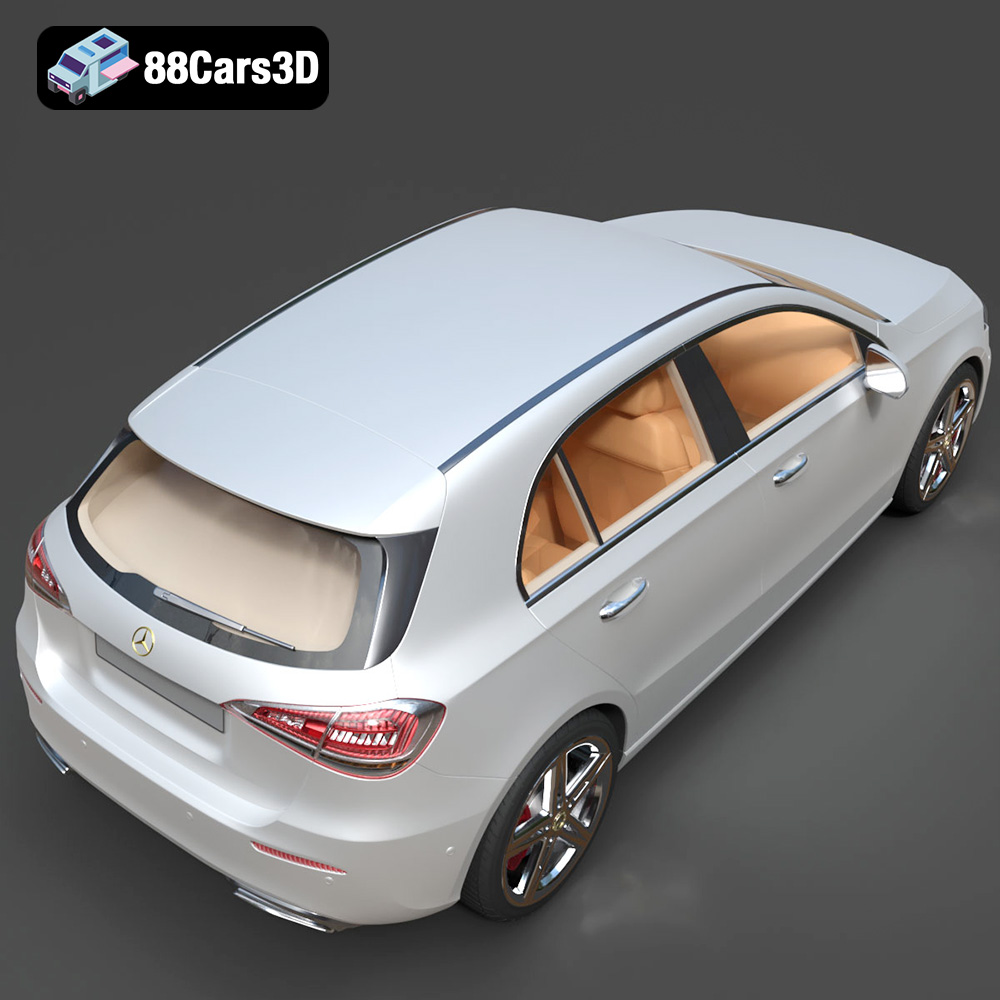
Today, we’re diving deep into an exemplary asset that truly embodies this commitment to quality: the Mercedes-Benz A-Class (W177) 3D Model. This premium digital recreation, available at 88cars3d.com, encapsulates the modern luxury and dynamic design of the fourth-generation A-Class, offering an incredibly detailed foundation for your most ambitious projects.
Automotive visualization is more than just placing a car in a scene; it’s about invoking emotion, conveying status, and telling a story. The realism of a 3D car model directly impacts the effectiveness of this storytelling, especially when targeting discerning audiences in high-stakes industries.
For architectural visualization (ArchViz) artists, a car is often the focal point that brings a scene to life. Imagine a sleek, modern residence with a driveway, but without a vehicle. The scene feels empty, unfinished. Add a highly detailed Mercedes-Benz A-Class (W177) 3D Model, and suddenly the house gains a personality, a sense of lived-in luxury. For commercial renders, the stakes are even higher. Businesses rely on these visuals to market products, envision urban developments, or showcase lifestyle concepts. A low-quality vehicle sticks out like a sore thumb, detracting from the overall presentation. A high-quality model, like the W177 with its intricate details and precise proportions, lends authenticity and aspiration to the scene, making it an absolute staple for high-end European street scenes or upscale architectural driveways.
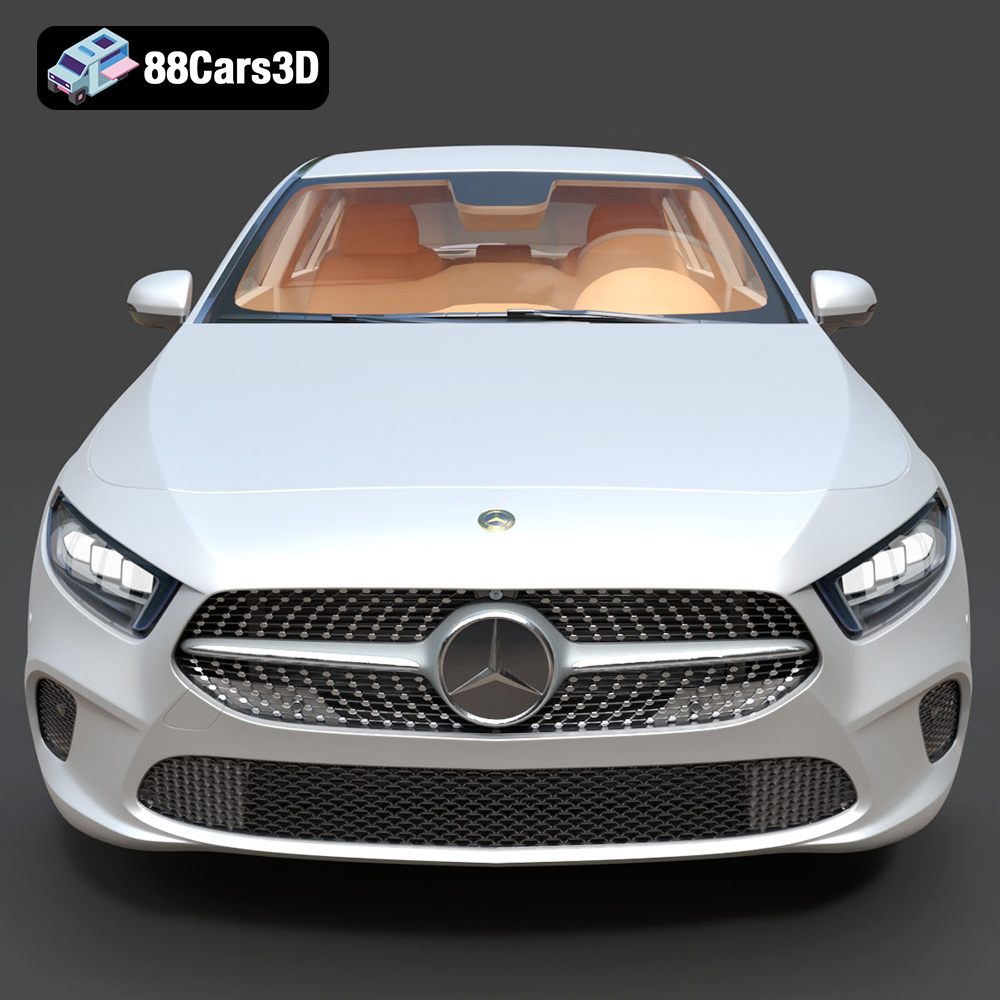
In the competitive realm of automotive marketing and advertising, photorealism isn’t just a goal; it’s a necessity. Consumers are accustomed to high-fidelity visuals, and anything less can undermine a brand’s prestige. When a client needs to visualize a new car in various environments, or showcase specific features before physical prototypes are ready, 3D models are indispensable. The Mercedes-Benz A-Class (W177) 3D Model, with its “Sensual Purity” design language accurately replicated, the signature “shark nose” front fascia, and the intricate diamond-block radiator grille, provides the visual fidelity required for compelling advertising campaigns. These details ensure that even in close-up shots or product highlights, the model holds up, reflecting perfectly contoured surfaces and authentic material properties.
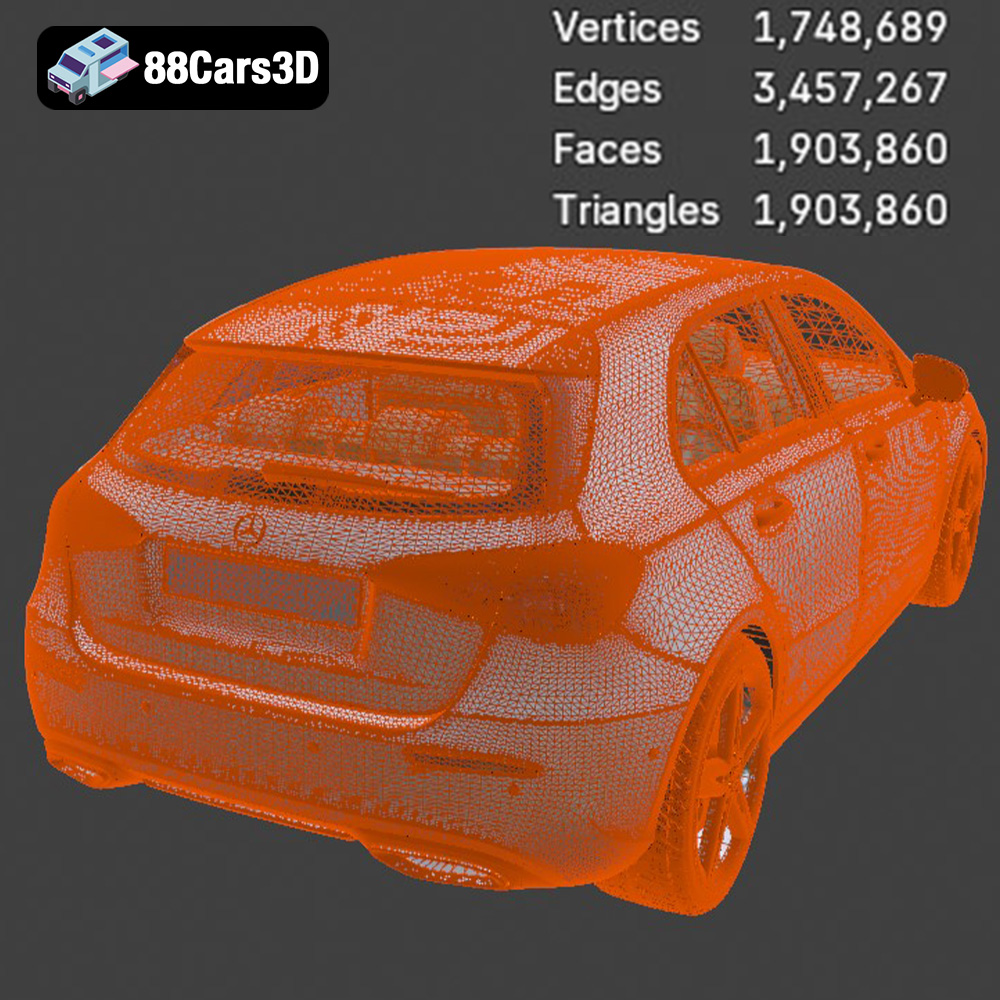
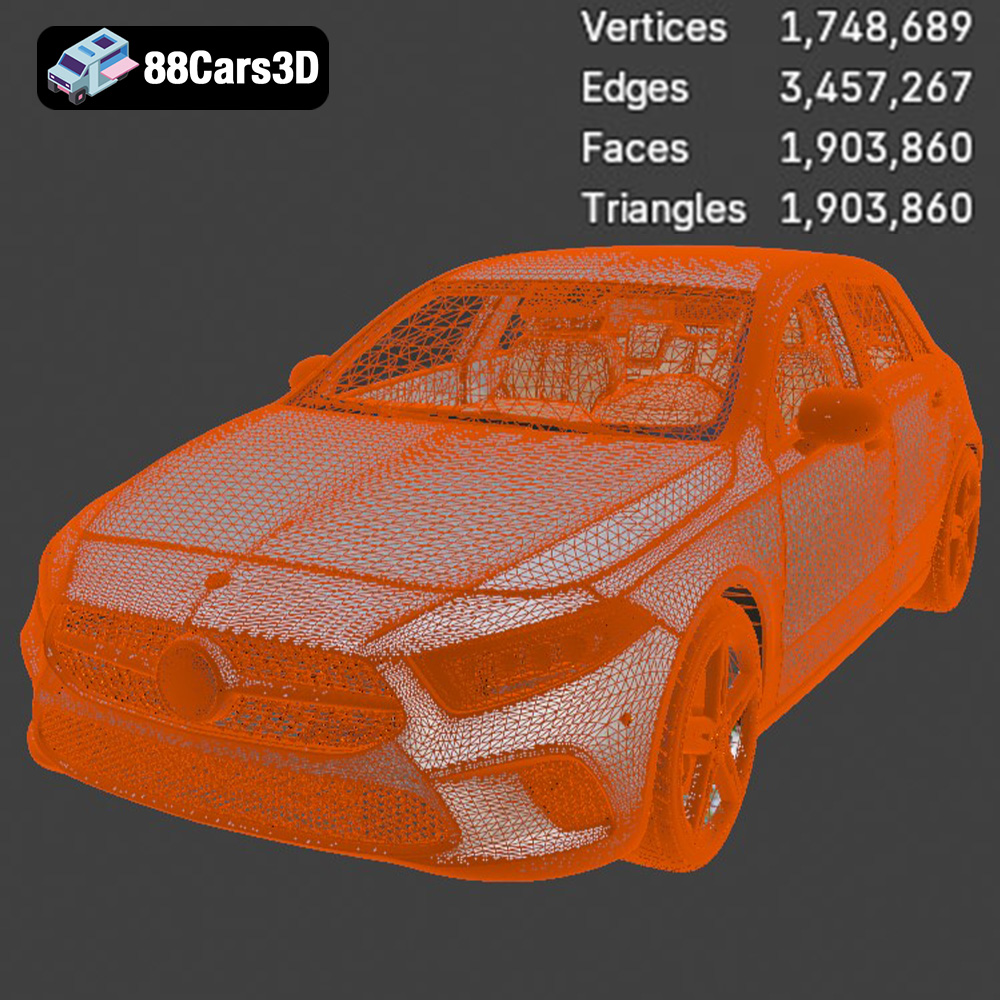
For cinematic production, whether in film, television, or commercials, a hero vehicle demands uncompromising detail. Visual effects (VFX) artists need models that can withstand intense scrutiny, from extreme close-ups to dynamic camera movements. The dense topology of the Mercedes-Benz A-Class (W177) 3D Model, boasting just over 1.9 million triangles, is perfectly suited for this demanding environment. This level of detail ensures beautifully smooth reflections, perfect light interplay across the curved panels, and flawless macro-level detailing that is critical for automotive pitches and lifestyle film projects. The ability to rig separate wheels, steering components, and doors further enhances its utility for complex animations, allowing for realistic vehicle dynamics and interactions within any cinematic sequence.
The flexibility of a 3D asset is often determined by the file formats it supports. Each format is designed with specific use cases in mind, offering advantages for different stages of a 3D pipeline, from initial modeling and animation to real-time rendering and manufacturing. Understanding these formats is crucial for optimizing your workflow and ensuring compatibility across various software platforms. The Mercedes-Benz A-Class (W177) 3D Model from 88cars3d.com, for instance, offers a comprehensive suite of formats to cater to almost any professional need.
The .blend format is Blender’s native file type. When you download a .blend file, you’re getting a fully editable Blender scene. This means it contains not just the mesh data, but also materials, textures, lighting setups, cameras, animations, physics simulations, and even scene properties. For users primarily working in Blender, this is the most advantageous format as it preserves all the scene data and allows for immediate, deep customization. The Mercedes-Benz A-Class (W177) in .blend format means artists can effortlessly modify materials, adjust lighting to match their scene, or even apply complex modifiers without losing any information. It’s the ideal choice for full artistic control and integration into a Blender-centric pipeline.
.fbx (Filmbox) is an industry-standard format developed by Autodesk, widely used for exchanging 3D data between different software applications. It supports geometry, materials, textures, animations, and skeletal data, making it incredibly versatile. It’s particularly ideal for game development in engines like Unreal and Unity, as well as for real-time pipelines where animation and rigging are crucial. Its robust support for animation curves and skeletal information ensures that rigged components like the separate wheels and doors of the W177 model transfer seamlessly. For professional studios requiring interoperability between software like 3ds Max, Maya, and ZBrush, .fbx is often the go-to. On the other hand, .obj (Wavefront OBJ) is a more universal, simpler format primarily focused on geometry (vertices, normals, UVs, faces) and material references. While it doesn’t support animation or advanced rigging, its wide compatibility makes it an excellent choice for straightforward mesh exchange across virtually any 3D software. If you primarily need the raw geometry and can re-apply materials, .obj offers a reliable, widely supported base.
.glb (GL Transmission Format Binary) is gaining significant traction as the preferred format for web-based 3D, augmented reality (AR), and virtual reality (VR) applications. It’s a binary version of the glTF format, which aims to be the “JPEG of 3D.” .glb files package all necessary assets (geometry, materials, textures, animations) into a single, self-contained file, making them highly efficient for transmission and quick loading in browsers or mobile AR/VR experiences. For showcasing the Mercedes-Benz A-Class (W177) interactively on a website or in an AR app, .glb is the optimal choice due to its compact size and render-ready nature. Meanwhile, .ply (Polygon File Format) is a precision mesh format often used for storing 3D data from 3D scanners, CAD software, or scientific analysis. It’s particularly good at representing complex geometric data, including color and other properties per vertex or face. While not as common for general animation, it’s valuable for specific engineering, reverse engineering, or high-fidelity CAD integration tasks, where the absolute precision of the W177’s shape is paramount.
For those interested in physical output, .stl (Stereolithography) is the standard format for 3D printing. It represents a 3D model as a series of connected triangles, defining only the surface geometry without color or texture information. The W177 model in .stl format is an excellent base for highly detailed, large-scale luxury diecast hobbyist prints. As noted, it’s recommended for resin printing to capture intricate details like the diamond grille. Moving to game engine specificity, .unreal refers to an engine-ready asset specifically for real-time environments within Unreal Engine. This often implies optimized meshes, PBR materials, and proper collision setups. While the Mercedes-Benz A-Class (W177) model at 1.9M triangles is heavy for standard real-time, its .unreal format means it’s ready for environments leveraging technologies like Nanite in Unreal Engine 5, which handles incredibly dense geometry with ease. Finally, .max is the native file format for Autodesk 3ds Max, one of the most widely used 3D modeling, animation, and rendering software packages. Like .blend, it preserves all scene information specific to 3ds Max, including complex modifiers, advanced materials (like V-Ray or Corona), lighting setups, and animation data. For professionals working within the 3ds Max ecosystem, the .max file for the W177 provides the highest level of editability and integration.
The true value of a premium 3D model lies in its faithful reproduction of the original object, and the Mercedes-Benz A-Class (W177) 3D Model excels in this regard. Every curve, every line, every intricate detail has been meticulously recreated to deliver an asset that stands up to the closest scrutiny.
Mercedes-Benz’s “Sensual Purity” design language is all about reductive surfacing and strong, purposeful lines. This 3D model beautifully captures the dynamic, forward-leaning aesthetic of the modern A-Class. From the aggressive “shark nose” front end, which gives the car its distinctive assertive stance, to the intricate diamond-block radiator grille that glints with sophisticated detail, no element has been overlooked. The razor-sharp LED High-Performance headlamps are accurately modeled, complete with their internal clusters, and the sleek, aerodynamic hatchback silhouette flows effortlessly into the sporty rear bumper with integrated exhaust finishers. Even the premium factory alloy wheels are highly detailed, wrapped in realistic street tires, and modeled separately, alongside the steering components and doors, to allow for complex rigging and animation.
Where many 3D car models cut corners on the interior, the Mercedes-Benz A-Class (W177) model delivers a sumptuous, fully modeled tech-centric premium cabin layout. This is crucial for renders that involve interior shots, first-person POV, or virtual tours. The centerpiece is the accurately modeled MBUX (Mercedes-Benz User Experience) system, featuring the striking free-standing dual-screen digital cockpit display. This iconic element, previously reserved for flagship models, is perfectly replicated, ready for custom UI maps. Further interior details include the signature illuminated turbine-style air conditioning vents, adding a touch of futuristic elegance, and a detailed multi-function sport steering wheel with touch-control buttons. The realistic premium seating geometry, with contoured bolsters and detailed stitching, ensures that the interior holds up in high-resolution renders, offering a truly immersive experience whether the doors are open or closed.
The technical specifications of this model underscore its premium quality. With 1,748,689 vertices, 3,457,267 edges, and 1,903,860 faces/polygons/triangles, this is undeniably a high-poly asset. This dense, quad-heavy topology is a deliberate choice, ensuring absolute visual fidelity for photorealistic close-up rendering and cinematic automotive showcases. The high polygon count ensures beautifully smooth reflections and perfect light interplay across the curved panels, eliminating any faceted appearance often found in lower-poly models. This level of detail is essential for macro-level detailing where realism is paramount. Furthermore, the model boasts real-world scale accuracy, based on Mercedes-Benz factory dimensions, and features proper pivot setup for steering, wheel rotation, and door articulation, making it animation-ready right out of the box. Its compatibility with major 3D software platforms and premium rendering engines (V-Ray, Corona, Arnold) further solidifies its position as a top-tier asset.
A high-quality 3D model is only as good as its integration into your existing production pipeline. The Mercedes-Benz A-Class (W177) 3D Model, with its diverse file formats and meticulous construction, is designed for seamless adoption across various professional workflows.
For architectural visualization artists utilizing 3ds Max, the included .max file is a direct plug-and-play solution. Upon import, the model will retain all its scene-specific data, including materials. If working with V-Ray or Corona Renderer, artists can easily assign their preferred PBR materials, adjusting reflectivity, glossiness, and normal maps to achieve ultimate photorealism. The model’s dense, quad-heavy topology ensures perfect shading and reflections under any lighting condition, which is critical for making a luxury car look pristine on a modern driveway or within a bustling city street scene. The separate components (wheels, doors, steering) allow for dynamic scene setups, such as showing a car with an open door or a slightly turned wheel to add naturalism. The real-world scale also means it drops effortlessly into architectural scenes without needing extensive resizing.
Blender users will find the .blend file provides a native and complete scene. Materials will be set up, allowing artists to immediately begin rendering with Cycles or Eevee. For animation, the pre-setup pivots for wheels, steering, and doors simplify the rigging process. Animators can quickly keyframe steering and wheel rotation for realistic driving sequences, or open doors to reveal the fully modeled interior with its detailed MBUX screens and turbine vents. The high-poly mesh lends itself perfectly to detailed reflections and subsurface scattering effects in Cycles, crucial for realistic paint finishes and tire textures. Blender’s robust suite of tools makes it easy to integrate the A-Class into complex environments, whether it’s an urban street or a stylized automotive showcase.
The .fbx and .unreal formats make the Mercedes-Benz A-Class (W177) 3D Model a powerful asset for Unreal Engine. While its 1.9 million triangle count is heavy for traditional real-time applications like mobile VR, it’s perfectly suited for Unreal Engine 5 environments leveraging Nanite. Nanite’s virtualized micropolygon geometry system can handle incredibly dense meshes with exceptional detail and performance, making this A-Class model a prime candidate for high-fidelity interactive experiences or virtual production stages. For those targeting standard real-time platforms, manual retopology and decimation would be required, but the existing high-poly model serves as an excellent base for generating optimized low-poly versions with baked normal maps, ensuring that visual detail is retained even with reduced poly counts. Proper UV unwrapping (as implied by the “Textures: Yes” meta description) would facilitate efficient texture baking and material creation within the engine.
The utility of high-fidelity 3D models extends beyond digital screens into the realm of physical creation. For hobbyists, collectors, and prototyping professionals, the ability to 3D print a detailed automotive model is a significant advantage.
The Mercedes-Benz A-Class (W177) 3D Model provides an excellent base for creating highly detailed, physical reproductions. The included .stl file, standard for 3D printing, translates the digital model’s intricate geometry into a printable format. Enthusiasts can produce luxury diecast hobbyist prints at various scales, from collectible 1:43 to more substantial 1:18 or 1:24 models. This allows for a tangible connection to the digital asset, transforming it into a display piece, a custom project, or even a component for larger dioramas. The faithful recreation of elements like the diamond grille and turbine air vents ensures that even these small, complex details can be captured in physical form.
To achieve the best results when 3D printing the Mercedes-Benz A-Class (W177) 3D Model, specific print settings are highly recommended. For capturing the intricate details, such as the fine mesh of the diamond grille and the delicate vanes of the turbine air vents, resin printing is strictly recommended. This method allows for significantly finer layer heights (0.04–0.08 mm) compared to FDM printing, ensuring a smooth surface finish and crisp details. Recommended wall thickness is between 1.5–2.5 mm, and infill at 15–25% for structural integrity without excessive material usage. Supports will be required for overhangs like the side mirrors, wheels, and front bumper. To optimize surface quality, printing the body angled is advised, with wheels printed separately. After printing, post-processing including sanding, priming, and applying authentic Mercedes-Benz paint finishes (such as Jupiter Red, Mountain Grey, or Polar White) will bring the miniature model to life with stunning realism.
A truly versatile 3D model offers more than just accuracy; it provides ample room for customization, allowing artists to adapt it to specific project requirements and creative visions.
The Mercedes-Benz A-Class (W177) 3D Model serves as a robust foundation for stylistic variations. Users can easily apply the sporty AMG Line body kit styling, which typically includes more aggressive bumpers, side skirts, and larger wheels, or maintain the sleek Progressive trim look, which emphasizes elegance and modernity. Furthermore, the Night Package styling, characterized by blacked-out window trim, mirror caps, and front splitter, can be emphasized through material changes, offering a more stealthy and dynamic aesthetic. These customizations allow the model to seamlessly fit into diverse scenes, from high-performance automotive advertisements to subtle luxury lifestyle visualizations.
The fully modeled interior of the W177 offers exceptional opportunities for personalization. The dual MBUX screens can be adapted with custom digital UI maps, making them perfect for specific commercial mockups, futuristic interfaces in game development, or tailored displays in virtual reality experiences. Imagine a custom navigation screen or a branded infotainment display. Beyond the screens, the interior ambient lighting settings can be configured to emit signature blue, pink, or purple glows from the dashboard and turbine vents. This capability allows artists to match the car’s interior mood to the overall scene’s atmosphere, enhancing realism and aesthetic appeal. Whether showcasing a tranquil evening drive or an energetic urban journey, the customizable interior lighting adds another layer of immersive detail.
In the demanding fields of 3D rendering, automotive design, and game asset development, the quality of your models is paramount. The Mercedes-Benz A-Class (W177) 3D Model from 88cars3d.com stands as a testament to meticulous craftsmanship and technical excellence. Its high-poly, quad-heavy topology, accurate real-world scale, and fully detailed exterior and interior provide an unrivaled level of visual fidelity, making it an indispensable asset for a wide range of applications.
From elevating architectural visualizations and driving compelling cinematic narratives to serving as a precise foundation for 3D printing, this model’s versatility is clear. The comprehensive range of included file formats—.blend, .fbx, .obj, .glb, .stl, .ply, .unreal, and .max—ensures seamless integration into virtually any professional pipeline, whether you’re working in 3ds Max, Blender, or Unreal Engine.
Investing in such a high-quality 3D car model not only streamlines your workflow but significantly enhances the realism and impact of your final projects. For artists and developers who refuse to compromise on detail and authenticity, the Mercedes-Benz A-Class (W177) 3D Model is an exceptional choice. Explore this premium asset and many other top-tier 3D car models by visiting 88cars3d.com today, and take the first step towards transforming your digital creations into stunning realities.
The Mercedes-Benz A-Class (W177) 3D Model is a highly accurate, premium digital recreation of the fourth-generation luxury compact hatchback. Showcasing the brand’s “Sensual Purity” design language, the W177 redefined the premium compact segment by combining a fiercely aggressive exterior with an incredibly luxurious, tech-forward interior previously reserved for the flagship S-Class. This 3D model beautifully captures the dynamic, forward-leaning aesthetic of the modern A-Class. It features the signature “shark nose” front fascia, the intricate diamond-block radiator grille, razor-sharp LED High-Performance headlamps, and a sleek, aerodynamic hatchback silhouette. Built with a highly detailed, dense topology (just over 1.9 million triangles), it provides absolute visual fidelity for photorealistic close-up rendering, premium architectural visualization, and cinematic automotive showcases. Perfect for populating high-end European street scenes, upscale architectural driveways, commercial automotive pitches, and luxury lifestyle renders.
$19.99
.archviz
.automotive
.blend
.fbx
.hatchback
.mercedes
.obj
.rendering
a-class
car-3d-model
hero-car
high poly
luxury car
mercedes-benz
premium-compact
vfx
w177