Get 50% OFF All Premium 3D & STL Models!

In the expansive and ever-evolving world of 3D modeling, the demand for high-quality, authentic assets is constant. Whether you’re an automotive rendering specialist striving for photorealism, a game developer building immersive virtual worlds, or an architect visualizing urban landscapes, the right 3D car models can make all the difference. Beyond generic vehicles, there’s a growing appreciation for models that capture specific regional character and everyday authenticity. This is where models like the Daewoo Nexia (N150) truly shine. It’s not always about hypercars and futuristic concepts; sometimes, the most valuable assets are those that realistically populate the background, providing a sense of place and time. This comprehensive guide will delve into the technical intricacies, practical applications, and creative potential of incorporating such detailed 3D car models into your professional workflows, using the exceptional Daewoo Nexia (N150) 3D Model available at 88cars3d.com as our prime example.
In digital content creation, the realism and credibility of a scene often hinge on the quality of its smallest, yet most ubiquitous, details. Cars, being a fundamental part of our urban and rural landscapes, play a crucial role in establishing environment fidelity. A well-crafted 3D car model is more than just a mesh; it’s a meticulously designed element that communicates scale, context, and narrative. From the subtle reflections on its paintwork to the accurate proportions of its chassis, every detail contributes to the overall immersive experience.
The challenge in 3D modeling, particularly for complex objects like vehicles, lies in balancing visual realism with performance optimization. A model that looks stunning in a high-resolution render might cripple a real-time game engine, and vice-versa. High-quality 3D car models achieve this delicate balance by employing intelligent topology, efficient UV mapping, and expertly crafted materials. The Daewoo Nexia (N150) model exemplifies this by offering a “Goldilocks zone” topology – detailed enough for close-up renders, yet optimized for background traffic in demanding real-time applications.
Authenticity in 3D assets goes beyond mere technical accuracy; it involves cultural and historical relevance. For scenes set in specific geographical regions, generic assets can break immersion. A model like the Daewoo Nexia (N150), an iconic vehicle in Eastern Europe, Russia, and Central Asia, provides instant regional recognition and adds a layer of genuine storytelling to architectural visualizations, game environments, and cinematic sequences. Its presence grounds the scene in a specific reality, making it more relatable and believable for target audiences.
Navigating the diverse landscape of 3D model file formats is a critical skill for any professional working with digital assets. Each format offers unique advantages and is optimized for specific applications, software, or pipelines. Understanding these distinctions is crucial for ensuring compatibility, maintaining data integrity, and maximizing efficiency in your workflow. The Daewoo Nexia (N150) 3D Model, available at 88cars3d.com, is offered in a comprehensive range of formats, making it incredibly versatile for various projects.
The .blend format is Blender’s native file type. It encapsulates not just the 3D mesh data but also materials, textures, animations, lights, cameras, and even scene settings within a single, self-contained file. For users of Blender, this is the most convenient and powerful format, offering full editability. You can easily modify geometry, adjust materials, rig components, or animate the vehicle directly within Blender, making it ideal for custom projects or for artists who prefer an open-source workflow. The .blend file for the Daewoo Nexia N150 would include all its meticulously set up textures and materials, ready for immediate rendering or further customization within Blender.
Autodesk’s .fbx (Filmbox) format is arguably the industry standard for interoperability between various 3D applications, especially for game development. It’s robust in handling not just geometry and materials but also crucial elements like animations, bone rigging, and blend shapes. Both Unreal Engine and Unity, the leading real-time game engines, heavily rely on .fbx for importing complex assets. When using the .fbx version of the Daewoo Nexia N150, developers can expect its separate wheels, steering components, and doors to be correctly structured for rigging and animation within their engine, ensuring it’s “game-ready.”
The .obj (Wavefront OBJ) format is one of the oldest and most widely supported 3D file formats. It’s a universal choice for simple geometry transfer between different 3D software packages because almost every 3D application can open and save .obj files. While it’s excellent for mesh data and basic material references (via an accompanying .mtl file), it typically doesn’t store animation or rigging data. For artists needing a clean mesh to work with in any software, the .obj version of the Nexia N150 provides a reliable, universally accessible starting point.
.glb (GL Transmission Format Binary) is the binary version of glTF, a royalty-free specification for 3D scenes and models. It’s specifically designed for efficient transmission and loading of 3D content, making it exceptionally popular for web-based 3D viewers, AR (Augmented Reality), and VR (Virtual Reality) applications. A single .glb file can contain models, textures, animations, and PBR (Physically Based Rendering) materials, all optimized for performance. The .glb version of the Daewoo Nexia N150 would be perfect for embedding into a website, showcasing in an AR app, or integrating into a lightweight VR experience without significant performance overhead.
.stl (STereoLithography) is the de facto standard format for 3D printing. It represents a 3D model as a series of connected triangles, defining only the surface geometry of an object without color, texture, or other CAD attributes. For hobbyists or professionals looking to physically manifest the Daewoo Nexia N150, the .stl file is essential. It provides the necessary manifold geometry for slicer software to prepare the model for FDM or resin 3D printers, making the digital design tangible.
The .ply (Polygon File Format) is another common format for storing 3D data, particularly from 3D scanners or for scientific and engineering applications. It can store a wider range of properties than .obj, including color, transparency, surface normals, and even confidence values. While less common for general asset exchange, .ply is valuable for applications requiring precise mesh analysis or for models derived from real-world scans. The .ply variant of the Nexia N150 might be preferred for those looking to use it in CAD programs or for specialized simulations where mesh integrity and additional per-vertex data are paramount.
While not a direct file extension like .fbx, the inclusion of .unreal typically signifies an asset package specifically configured and optimized for Unreal Engine. This often means the asset has been imported, materials are set up using Unreal’s PBR workflow, textures are correctly linked, and collision meshes might be pre-generated. For the Daewoo Nexia N150, an “.unreal” package would imply a streamlined import process into Unreal Engine, potentially saving significant setup time for game developers and real-time visualization artists.
Similar to .blend for Blender, .max is the native file format for Autodesk 3ds Max, a powerful 3D modeling, animation, rendering, and compositing software. An .max file contains all scene information, including geometry, lights, cameras, materials, textures, and animation data. For professionals using 3ds Max for high-end automotive rendering or detailed architectural visualization, the .max file of the Daewoo Nexia N150 offers the highest level of flexibility and control, allowing for full modification and integration into complex scenes.
The Daewoo Nexia (N150) 3D Model is more than just a digital replica; it’s a testament to thoughtful design and strategic optimization. Its value lies not just in its accurate representation of a specific vehicle, but in its balanced technical specifications that make it adaptable across a myriad of professional applications, from high-fidelity rendering to resource-constrained game development. This model, available at 88cars3d.com, encapsulates the essence of a widely recognizable vehicle, making it an invaluable asset for contextually rich digital environments.
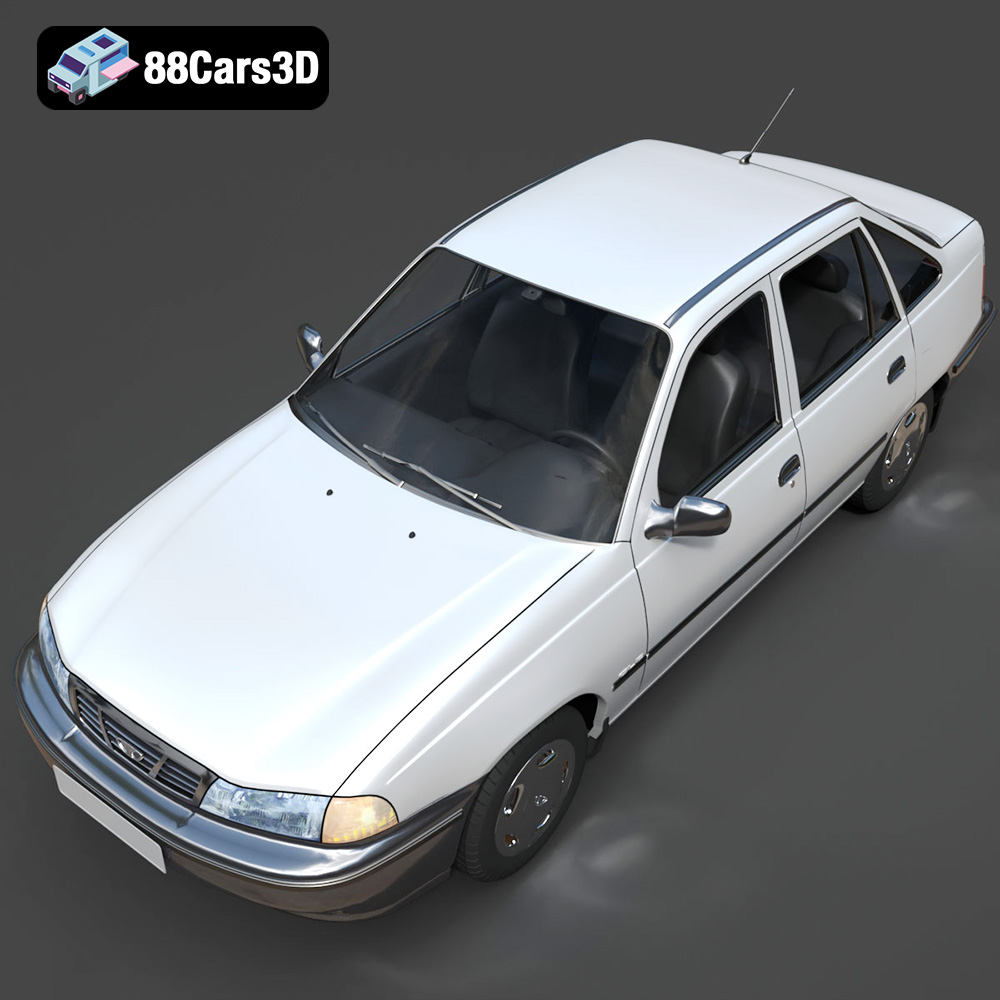
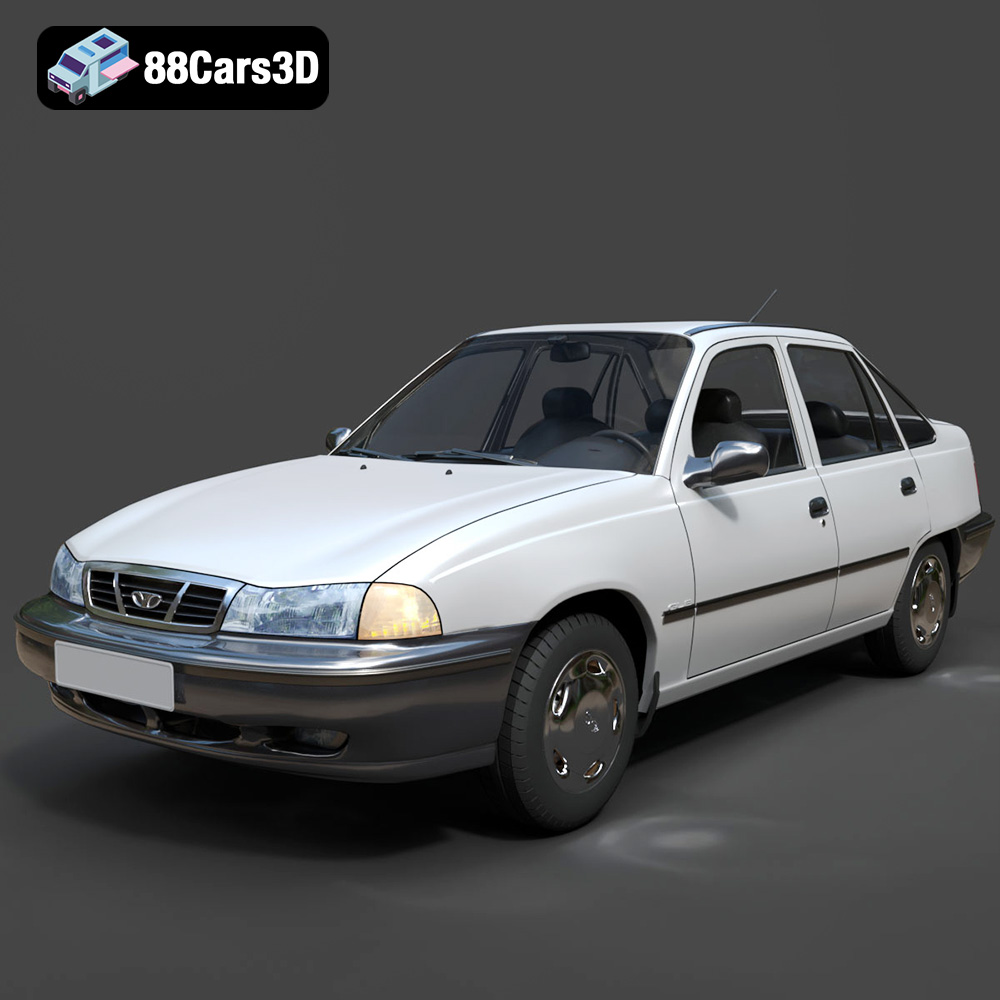
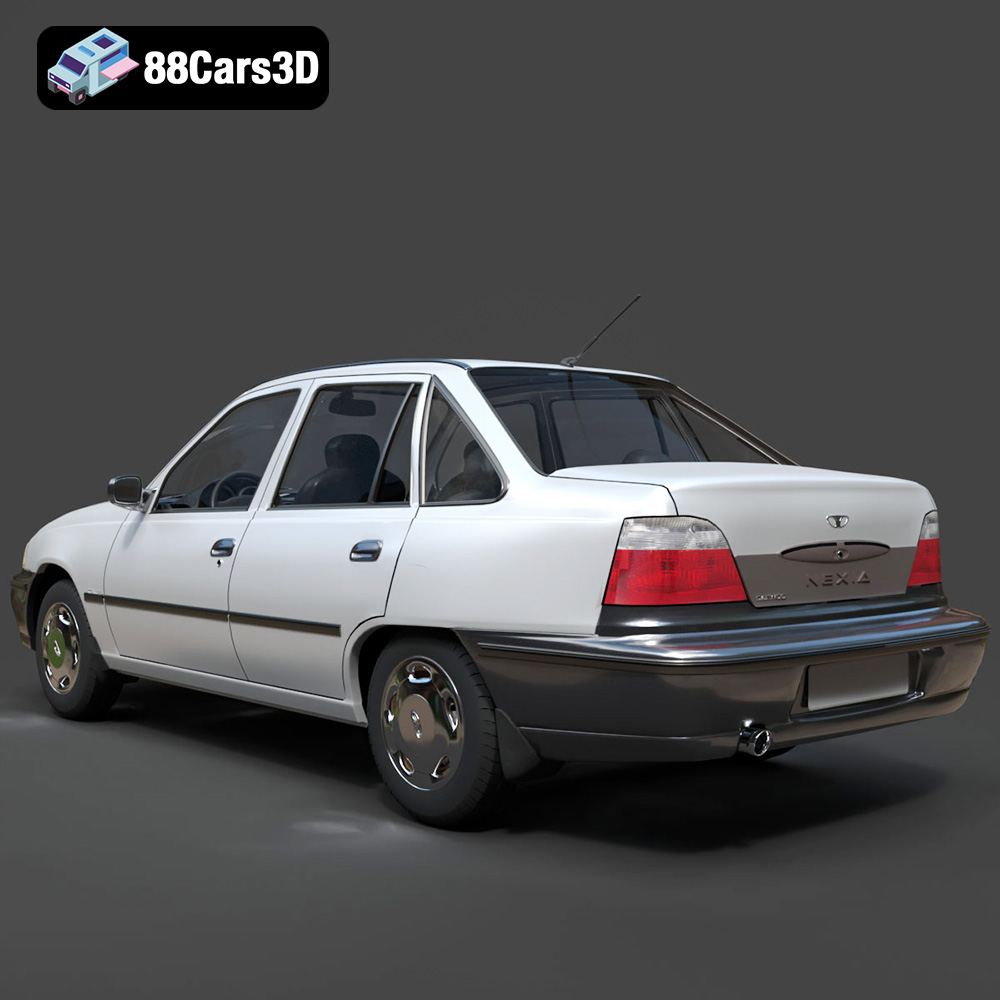
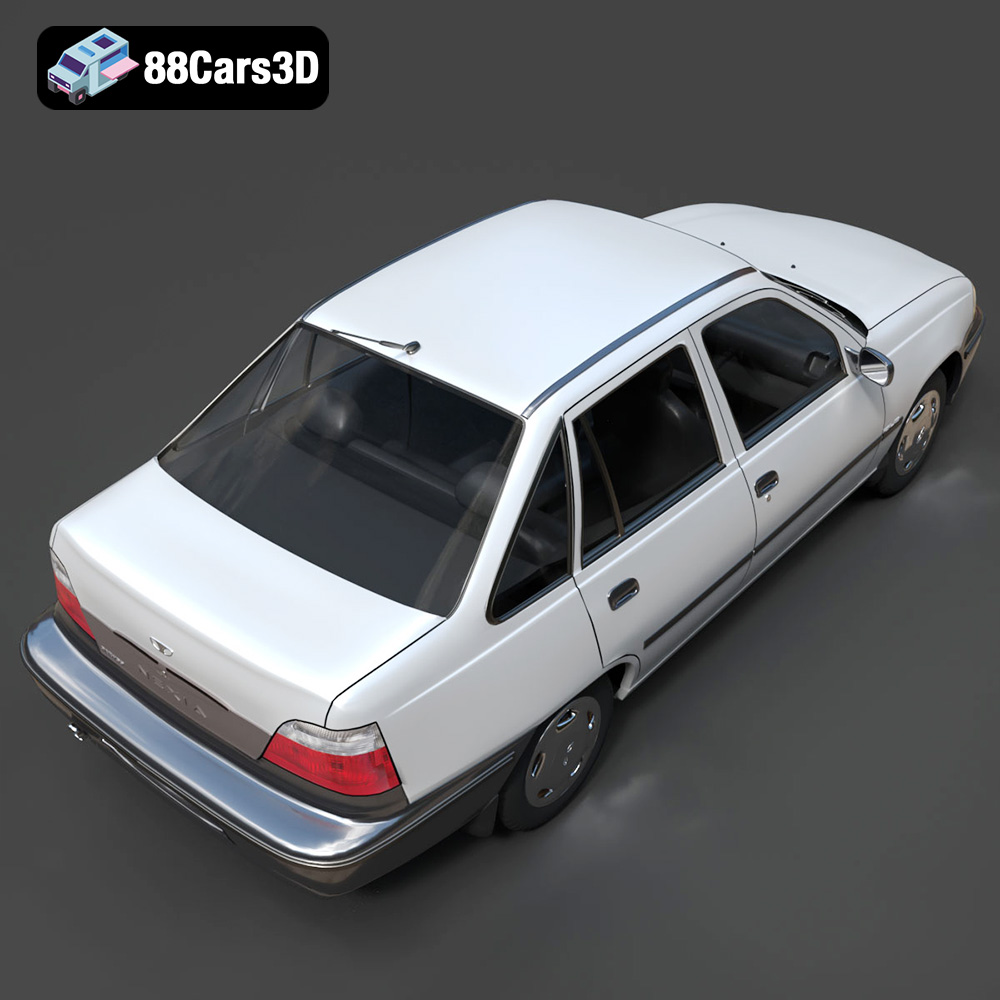
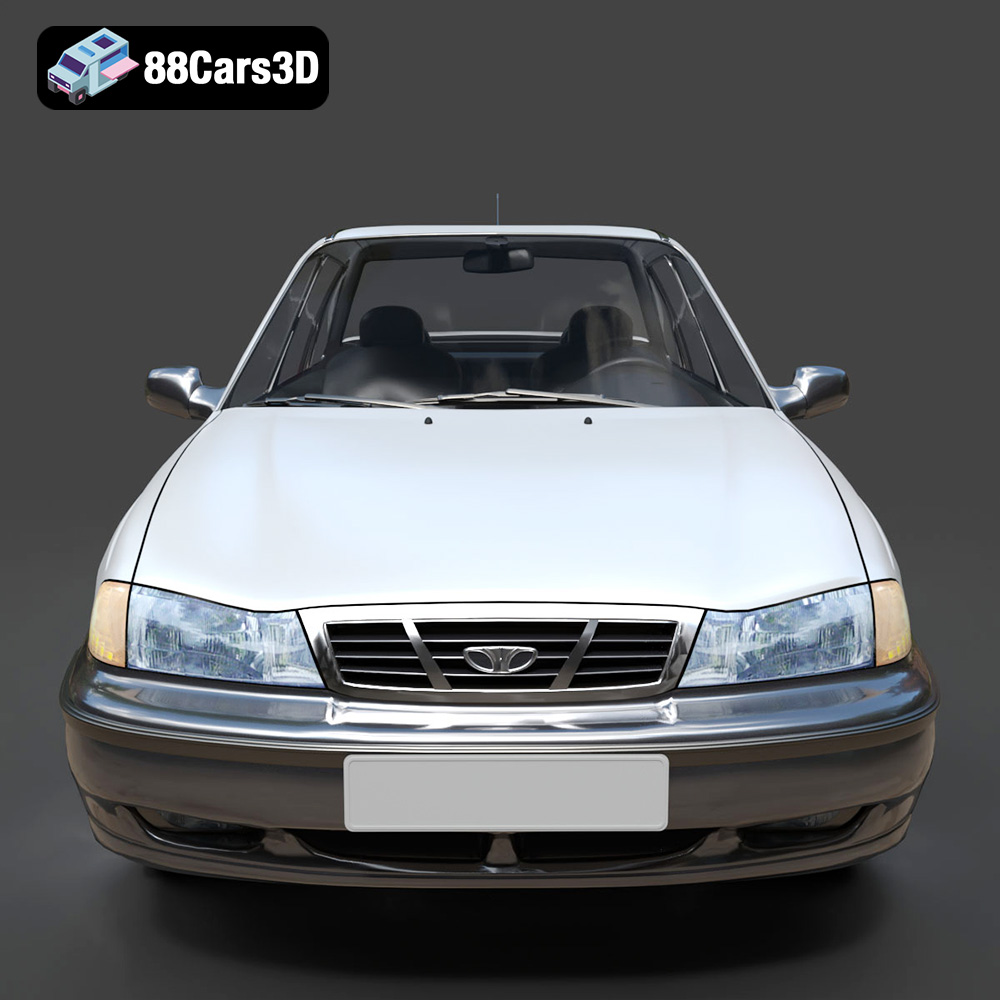
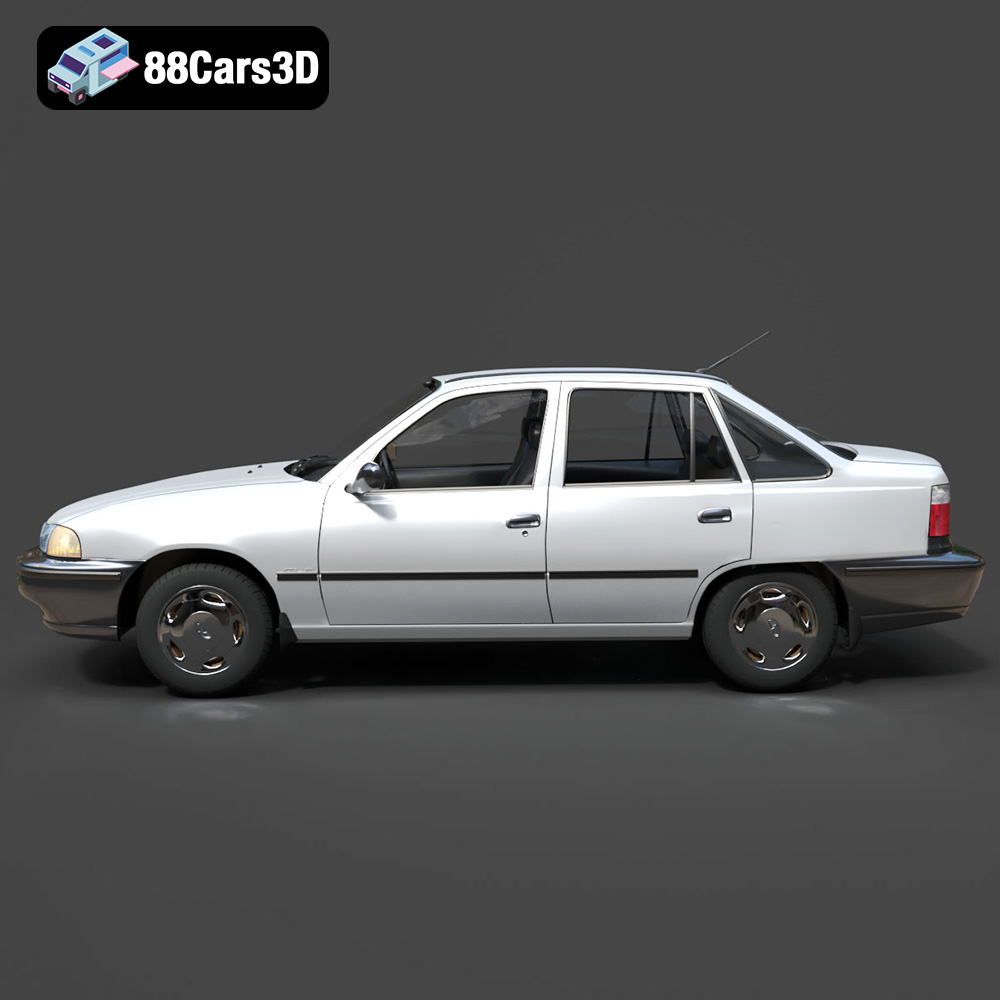
The exterior of the Daewoo Nexia N150 model meticulously recreates the N150 facelift generation, a common sight across Eastern Europe and Central Asia. This includes the distinctive projector-style headlight housings, the smoothed-out front bumper and grille, and the classic, practical sedan proportions derived from the Opel Kadett E platform. Details like realistic panel gaps, functional side mirrors, and accurate standard factory wheels (whether alloys or steelies with hubcaps) contribute significantly to its visual credibility. For architectural visualization artists creating scenes in these regions, this level of authentic detail transforms a generic street into a recognizable, living environment.
While often overlooked for background assets, a well-modeled interior enhances realism, especially for close-up shots, AR/VR experiences, or when the vehicle is intended to be drivable or interactive. The Daewoo Nexia N150 model features an authentic, practical driver-centric cabin layout, complete with a detailed dashboard, classic center console, analog instrument cluster, and realistic seating geometry. This optimized interior ensures that even from an exterior perspective or in a VR environment, the vehicle maintains a convincing level of detail without unnecessary poly count bloat, striking a perfect balance for immersion and performance.
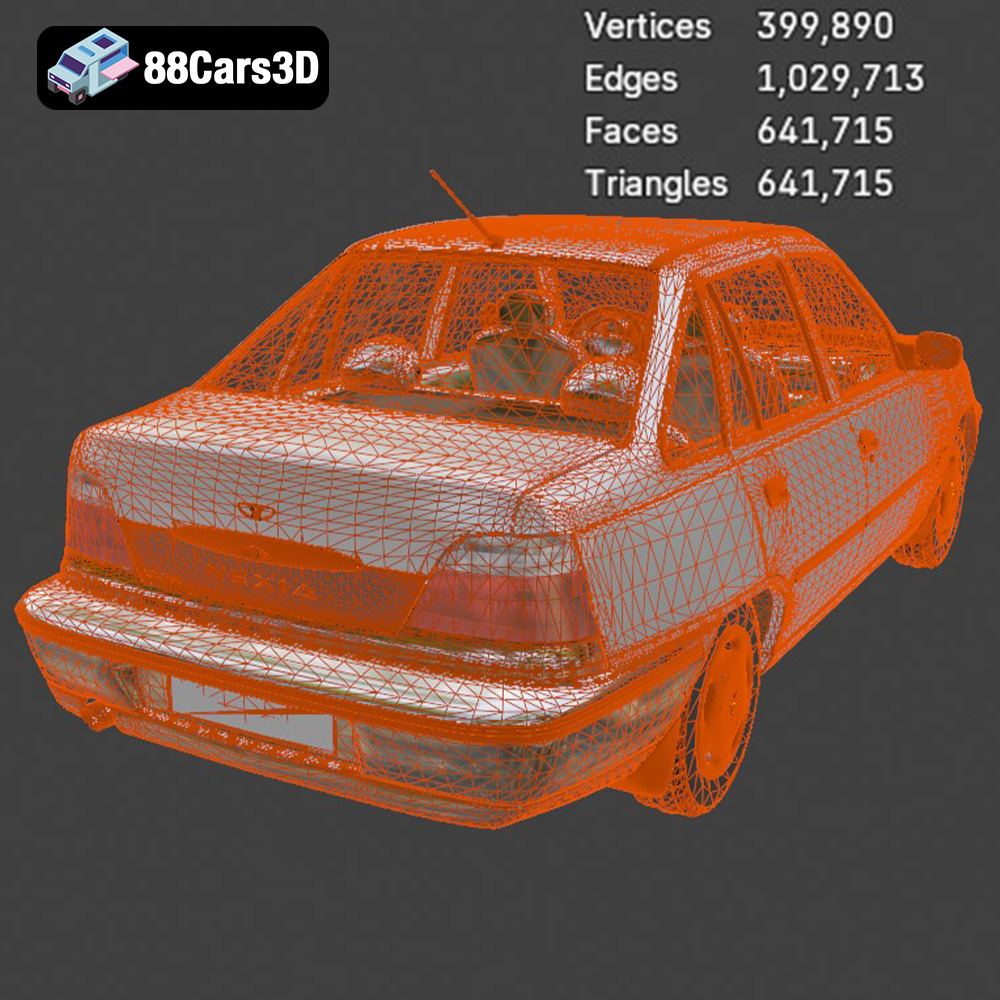
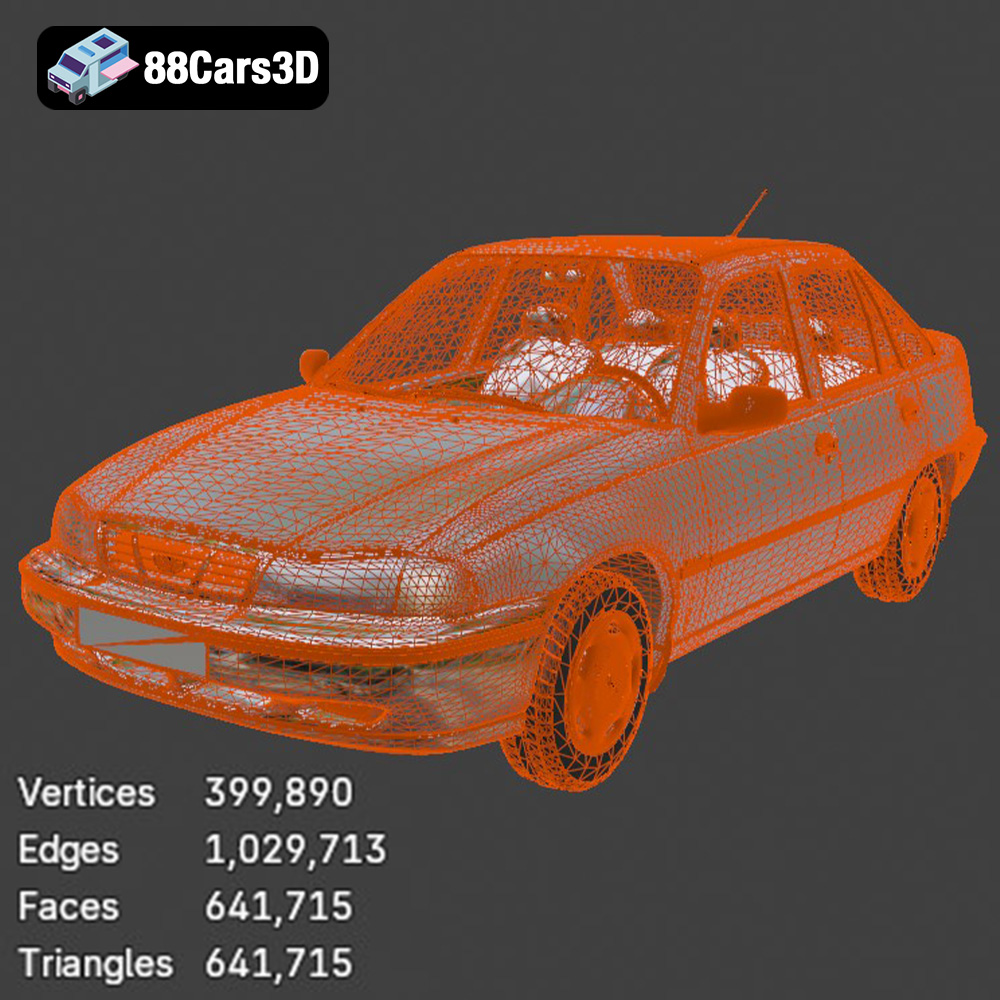
One of the most significant technical advantages of the Daewoo Nexia N150 3D Model lies in its perfectly balanced topology. With approximately 641,715 triangles, it sits squarely in what professionals often call the “Goldilocks zone.” This means it’s detailed enough to hold up under close scrutiny for high-quality architectural visualization (ArchViz) renders, where crisp lines and smooth surfaces are paramount. Simultaneously, it is optimized enough to be efficiently used as a drivable hero car or, crucially, as dense background traffic in demanding real-time engines like Unreal Engine or Unity, without causing severe lag. This versatility is key for studios needing a single asset that can perform multiple roles across different project requirements.
The true power of a versatile 3D asset like the Daewoo Nexia (N150) lies in its seamless integration into various professional pipelines. From high-fidelity cinematics to interactive simulations, understanding how to leverage its features within industry-standard software is crucial for maximizing its value. This model from 88cars3d.com is designed with broad compatibility in mind, ensuring it fits into diverse creative workflows.
For automotive rendering specialists and architectural visualization artists, the Daewoo Nexia N150 is an ideal candidate for populating scenes. In software like 3ds Max or Blender, its detailed exterior and interior can be leveraged for photorealistic output. Artists can import the .max or .blend file, which includes material setups, and apply advanced rendering techniques. This might involve setting up intricate lighting scenarios using HDRI maps for realistic reflections, adjusting shader properties for paint, glass, and rubber, and integrating the car into environments with realistic ground planes and foliage. For ArchViz projects set in Eastern European cities, placing several Nexias can instantly convey a sense of authenticity and local flavor, transforming generic street scenes into vibrant, believable urban landscapes. The ability to customize paint colors and add weathering effects allows for further tailoring to specific project moods and conditions.
In game development, optimization and authenticity are paramount. The Daewoo Nexia N150’s balanced topology (641k triangles) makes it perfectly suited for real-time engines such as Unreal Engine and Unity. The .fbx format, with its support for separate components like wheels, steering, and doors, simplifies the rigging and animation process. Developers can easily set up vehicle physics, create driving mechanics, and implement damage models. For open-world games, delivery simulators, or urban taxi games, this model can serve as a primary drivable vehicle or as a highly detailed traffic car, enriching the game world without compromising performance. Its regional accuracy is a huge boon for games set in CIS or Eastern European environments, adding a layer of realism often missing with generic vehicle assets.
Augmented Reality (AR) and Virtual Reality (VR) applications demand highly optimized assets that can run smoothly on various devices. The .glb format of the Daewoo Nexia N150 is specifically designed for these environments, offering an efficient, bundled package of geometry, textures, and PBR materials. In AR, the Nexia could be used to overlay realistic traffic onto real-world camera feeds for urban planning simulations or interactive marketing. In VR, it can populate virtual cityscapes, provide interactive elements for training simulations, or even serve as a “digital twin” for historical or cultural preservation projects. Its modest poly count for the detail it offers makes it an excellent choice for maintaining frame rates in demanding immersive experiences.
Beyond digital rendering and interactive experiences, the Daewoo Nexia (N150) 3D Model offers the unique possibility of physical manifestation through 3D printing. This opens up entirely new avenues for collectors, hobbyists, and model makers, allowing them to bring a tangible piece of automotive history to life. The inclusion of an .stl format specifically caters to this rapidly growing sector, providing a direct pathway from digital design to physical object.
When preparing the Daewoo Nexia N150 for 3D printing, choosing the right technology is key. For larger scales (e.g., 1:24), FDM (Fused Deposition Modeling) printers can be suitable, especially for hobbyists. However, to truly capture the model’s intricate details, such as the projector-style headlight assemblies, realistic panel gaps, and the delicate wheel designs, resin (SLA/DLP) printing is highly recommended, particularly for smaller scales like 1:32 or 1:43. Resin printers offer superior resolution, allowing for layer heights as fine as 0.04–0.12 mm, which is crucial for retaining sharp edges and minute features. The model’s manifold geometry in the .stl file ensures it is watertight and ready for slicing software, preventing common printing errors.
Once printed, the physical Daewoo Nexia N150 model enters the realm of traditional model-making. Post-processing steps are essential to achieve a professional finish. This typically involves:
The journey from a digital file on 88cars3d.com to a beautifully finished physical model is a rewarding one, blending digital precision with hands-on craftsmanship.
A truly versatile 3D model offers more than just accurate geometry; it provides a flexible foundation for creative customization and seamless integration into diverse digital environments. The Daewoo Nexia (N150) 3D Model, with its well-structured topology and accessible formats, empowers artists and developers to tailor it precisely to their project’s unique vision.
The beauty of a high-quality 3D model lies in its adaptability. While the Daewoo Nexia N150 comes with default textures and materials, its editable nature allows for extensive aesthetic modifications. Artists can easily change exterior paint colors to reflect various city-car palettes – from striking, vibrant hues to more subdued, weathered tones. Imagine a fleet of yellow Daewoo Nexia taxis populating a bustling urban scene, easily achievable by applying a new material and adding classic “Taxi” roof signs and checker decals. This level of customization breathes life into scenes, making the model a dynamic element rather than a static prop. For architectural visualizations, matching the car’s color to the overall aesthetic of a building or a neighborhood can subtly enhance the scene’s harmony and realism.
Beyond pristine showroom looks, 3D models gain immense character and realism when integrated with environmental storytelling through weathering. Artists can apply various material effects to create gritty, realistic scenarios. Adding dust and dirt textures, muddy splatters on the lower body, or a layer of digital snow can transform the Nexia N150 into a vehicle that has truly experienced its environment. For example, a snow-covered Nexia parked outside a typical Eastern European apartment building in a winter scene instantly conveys a narrative and adds depth to the visualization. Similarly, integrating the model into rainy night-time city streets requires adapting lighting and material properties to reflect wet surfaces and moody atmospherics, enhancing the emotional impact of the scene. This ability to adapt the model to different conditions and narratives makes it an incredibly powerful tool for visual storytelling.
The world of 3D modeling is continually pushing the boundaries of realism and immersion. Assets like the Daewoo Nexia (N150) 3D Model exemplify the thoughtful design and technical prowess required to meet these demands across various professional domains. From its meticulously crafted exterior and interior details to its “Goldilocks” topology, this model strikes an exceptional balance between visual fidelity and performance optimization. It serves as a cornerstone for creating authentic architectural visualizations, populating dynamic game worlds, and even bringing tangible physical models to life through 3D printing.
Whether you’re working in 3ds Max for high-end automotive rendering, developing interactive experiences in Unreal Engine, or crafting intricate dioramas, the versatility provided by its multiple file formats—including .blend, .fbx, .obj, .glb, .stl, .ply, .unreal, and .max—ensures seamless integration into virtually any workflow. This commitment to quality and compatibility makes it an invaluable addition to any digital artist’s library. For those seeking to infuse their projects with genuine regional character and robust technical performance, the Daewoo Nexia (N150) 3D Model, available at 88cars3d.com, stands as a prime example of an asset that truly delivers on all fronts.
The Daewoo Nexia 3D Model is a highly accurate digital recreation of the legendary budget-friendly sedan. Specifically representing the N150 facelift generation (widely produced by UzDaewoo), this vehicle is an absolute staple of everyday life, serving as a reliable family car, urban taxi, and daily commuter across Eastern Europe, Russia, and Central Asia. This 3D model beautifully captures the modernized aesthetic of the N150 facelift, featuring the updated projector-style headlight housings, the smoothed-out front bumper and grille, and the classic, practical sedan proportions originally derived from the Opel Kadett E platform. Built with a perfectly balanced mid-to-high polygon topology (just over 641k triangles), it provides excellent visual fidelity for close-up automotive rendering while remaining highly optimized for background traffic in modern game engines. Perfect for populating realistic CIS or Eastern European street scenes, architectural visualizations, urban taxi simulators, and mobile game development. Exterior Features: • Accurate Daewoo Nexia N150 facelift sedan proportions and body geometry • Updated front fascia with detailed projector-style headlight assemblies • Distinctive classic taillight clusters and smoothed rear bumper • Realistic panel gaps, door handles, and functional side mirrors • Detailed standard factory wheels (alloys or steelies with hubcaps) wrapped in street tires • Separate wheels, steering components, and doors for rigging and animation Interior Features: • Authentic, practical driver-centric cabin layout typical of budget sedans • Detailed dashboard featuring the classic center console and analog instrument cluster • Realistic seating geometry for a five-passenger layout with cloth/vinyl texture mapping • Classic steering wheel and manual gear shifter representation • Optimized interior geometry tailored to look great from the exterior or in VR Technical Specifications & Advantages: • Vertices: 399,890 • Edges: 1,029,713 • Faces / Polygons: 641,715 • Triangles: 641,715 • Perfectly Balanced Topology: At ~641k triangles, this model sits in the “Goldilocks zone.” It is detailed enough for high-quality ArchViz foreground renders, yet optimized enough to be used as a drivable hero car or dense background traffic in real-time engines without causing severe lag. • Real-world scale accuracy based on factory dimensions • Proper pivot setup for steering and wheel rotation • Compatible with major 3D software platforms and real-time engines (Unreal Engine, Unity) Applications: • Rendering & Visualization: The absolute perfect vehicle for breathing life into architectural visualizations (ArchViz) set in Eastern Europe or Central Asia, providing recognizable, region-accurate traffic. • Game Development: Excellent as a drivable vehicle or everyday traffic asset for open-world games, delivery simulators, and taxi driving games. • AR/VR: Great for interactive digital city-planning VR experiences. • 3D Printing: Convertible to .stl format for display-scale classic diecast hobbyists. 3D Print Setting: • Recommended scale: 1:24 / 1:32 / 1:43 (Perfect for urban dioramas) • Layer height: 0.04–0.12 mm (Resin printing recommended for the smaller scale details) • Wall thickness: 1.2–2.0 mm • Infill: 15–25% • Supports: Required for side mirrors, wheel arches, and exhaust • Print orientation: Body printed angled for a smooth surface finish; wheels printed separately • Post-processing: Sanding, primer, and classic factory colors (like Silver Metallic, Sahara Dust, or Classic White) Customization Options: • Change exterior paint colors to match striking, vibrant, or weathered city-car palettes • Add classic yellow “Taxi” roof signs and checker decals for urban renders • Apply weathering materials (dust, mud, or snow) to create gritty, realistic winter environment scenes • Adapt lighting for sunny urban commutes or moody, rainy night-time city streets Included File Formats: .blend, .fbx, .obj, .glb, .stl, .ply, .unreal, .max
$9.99