Get 50% OFF All Premium 3D & STL Models!

In the demanding world of digital content creation, the fidelity and versatility of 3D assets are paramount. From blockbuster game titles to breathtaking automotive visualizations, the foundation of any successful project lies in the quality of its core components. Nowhere is this more evident than with 3D car models, which require an intricate blend of artistic precision and technical mastery to truly shine.
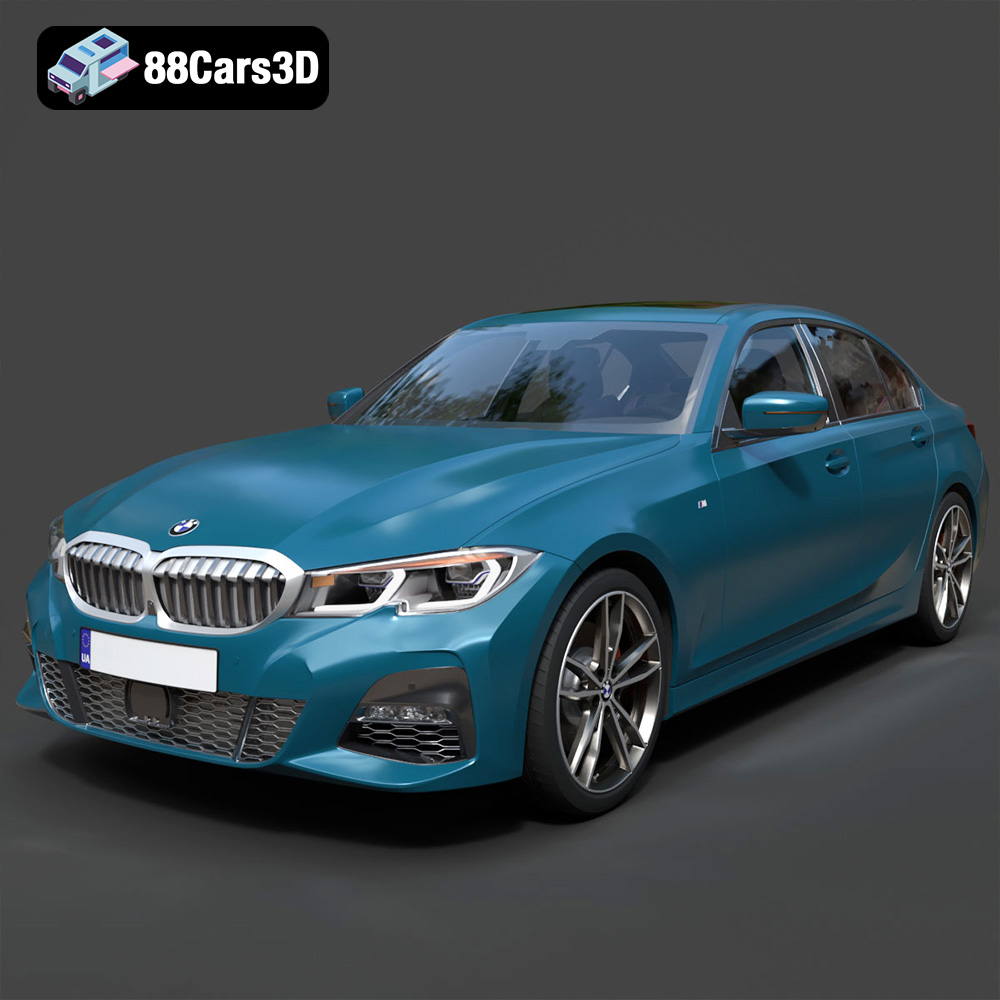
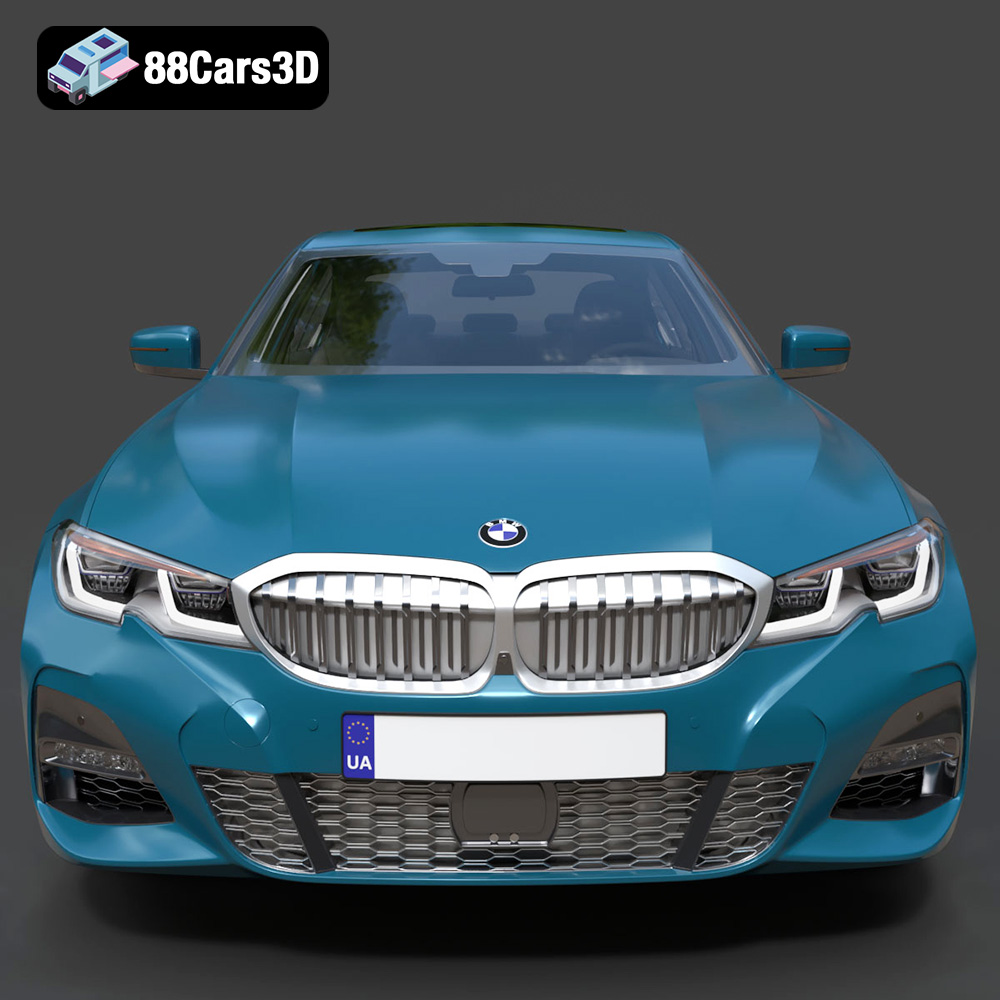
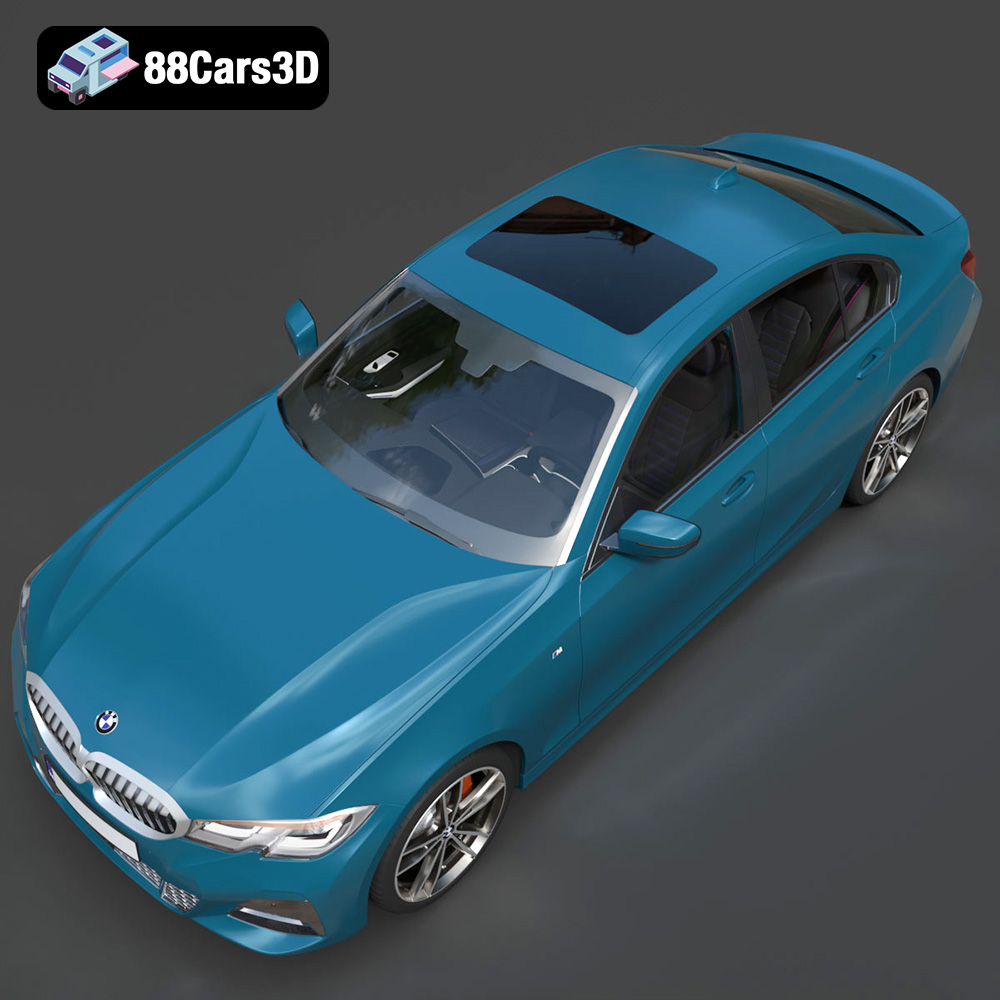
Today, we’re exploring the critical elements that define a professional-grade 3D car model, using the exceptional BMW 3 Series M-Sport Sedan 2019 3D Model as our benchmark. This digital replica isn’t just a collection of polygons; it’s a meticulously engineered asset designed to integrate seamlessly into the most rigorous production pipelines, from photorealistic rendering to real-time game environments and interactive AR/VR experiences. It exemplifies how premium 3D models can accelerate workflows, enhance visual quality, and provide a reliable cornerstone for diverse digital projects.
The pursuit of realism in 3D automotive design isn’t merely an aesthetic choice; it’s a functional necessity. A high-quality 3D car model provides an accurate, flexible, and efficient starting point for any creative endeavor. It eliminates the need for artists and developers to spend countless hours modeling from scratch, allowing them to focus on lighting, texturing, animation, and scene composition.
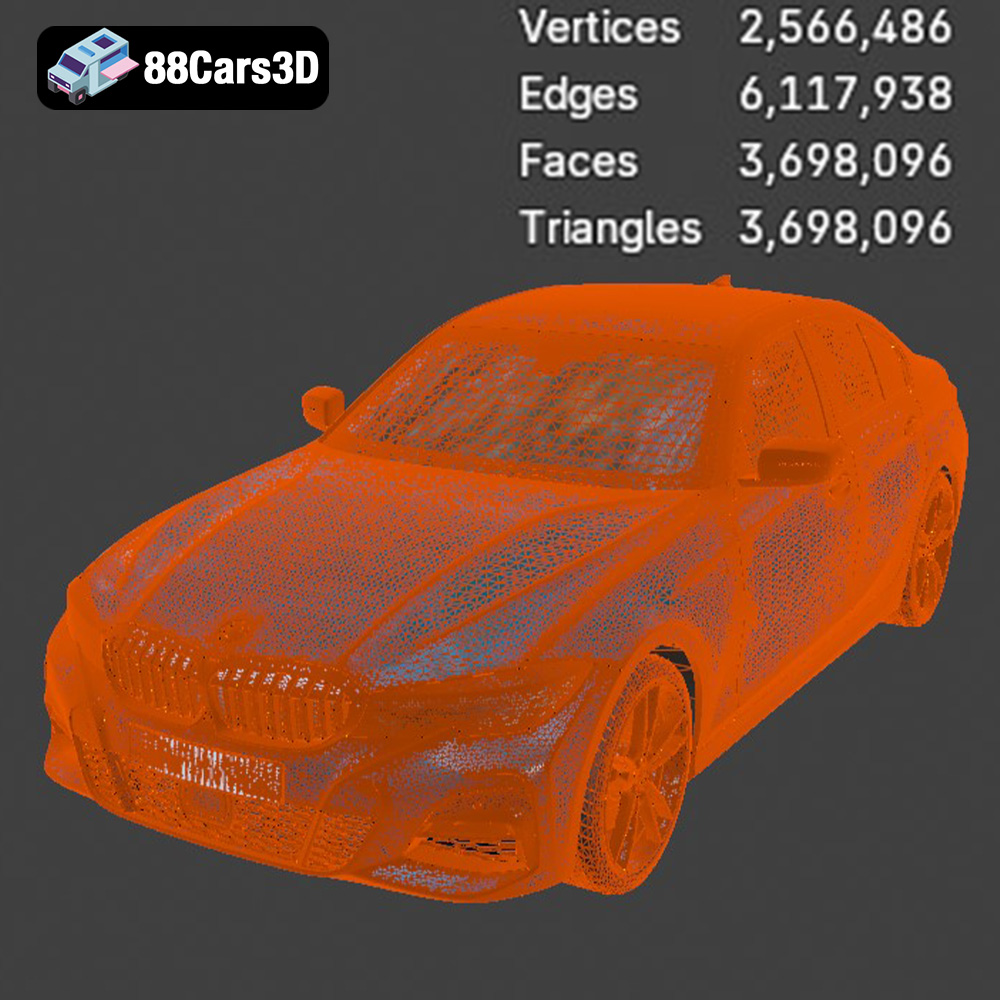
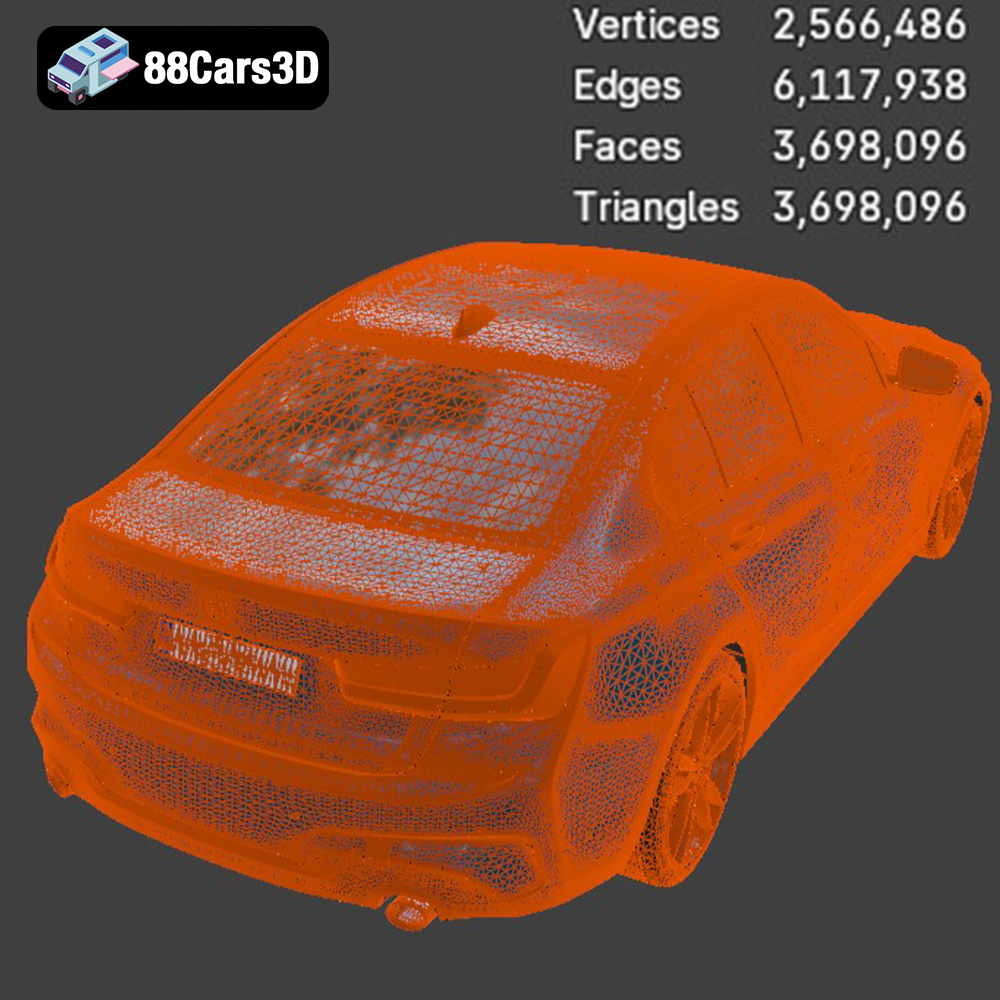
The first hallmark of a professional 3D car model like the BMW 3 Series M-Sport Sedan 2019 is its “meticulously optimized clean geometry.” This phrase refers to a model built with a clear and efficient polygon structure, often employing quad-dominant topology, which allows for smooth subdivision and distortion-free deformation. Accurate proportions are non-negotiable; even a slight deviation can break the illusion of realism. Technical artists use blueprints, CAD data, and extensive photographic references to ensure every curve, panel gap, and vent precisely matches the real-world vehicle. This precision is vital for automotive rendering, where subtle imperfections are glaringly obvious under close scrutiny.
Beyond the gleaming exterior, a truly versatile 3D car model features a “fully modeled interior.” This means seats, dashboard, steering wheel, door panels, and even minor controls are all accurately represented. For architectural visualizations that might place the car in a showroom, or for VR experiences where users can virtually sit inside, this level of detail is indispensable. Coupled with this is “realistic materials that react naturally under various lighting conditions.” This points to the use of Physically Based Rendering (PBR) workflows, where materials are defined by properties like albedo (base color), roughness, metallic, normal maps, and ambient occlusion. These PBR textures ensure that the paint glimmers, the leather reflects light, and the chrome shines authentically, regardless of the lighting setup, providing unparalleled authenticity for automotive rendering.
One of the most critical aspects of selecting a professional 3D asset, especially for complex subjects like 3D car models, is understanding the file formats it supports. The BMW 3 Series M-Sport Sedan 2019 3D Model, available on 88cars3d.com, comes equipped with a comprehensive suite of formats, each tailored for specific workflows and software compatibility. Choosing the right format can significantly impact your project’s efficiency, rendering quality, and overall production pipeline.
The .blend format is Blender’s native file type. When you receive a .blend file, you’re not just getting the raw geometry; you’re often getting a complete scene, including the model, materials, textures, lighting setups, cameras, and even animation data. This makes it incredibly powerful for Blender users, offering full editability. Artists can tweak the mesh, modify materials, adjust lighting, and render directly within Blender, leveraging its robust Cycles or Eevee rendering engines. For those who want to integrate the BMW 3 Series M-Sport Sedan 2019 into an existing Blender project or customize it extensively, the .blend file provides the ultimate flexibility.
FBX (Filmbox) is an industry-standard proprietary file format developed by Autodesk for 3D content exchange. It’s exceptionally versatile and widely supported across various 3D applications, but its real strength lies in game development. FBX files can store not only geometry, UVs, and materials but also rigging, skinning, and animation data, making them perfect for transferring animated 3D car models into game engines like Unreal Engine and Unity. When working with the BMW 3 Series M-Sport Sedan 2019 as a game asset, the .fbx format ensures that all critical data, including potentially optimized meshes and PBR material assignments, translates cleanly into your real-time environment, facilitating efficient game asset integration.
OBJ (or .obj) is one of the oldest and most universally recognized 3D model formats. It’s a simple, text-based format that primarily stores geometric data – vertices, normals, UV coordinates, and faces. While it doesn’t typically store animation or rigging data, it excels at providing a clean, cross-compatible mesh that can be imported into virtually any 3D software, from 3ds Max to Maya, Cinema 4D, and Blender. For maximum compatibility and a straightforward mesh, the .obj version of the BMW 3 Series M-Sport Sedan 2019 is an excellent choice, often accompanied by separate .mtl (material library) and image texture files.
GLB (GL Transmission Format Binary) is an increasingly popular format, especially for web-based 3D, Augmented Reality (AR), and Virtual Reality (VR) applications. It’s the binary version of glTF, designed to be compact and efficient for quick loading and display. A single .glb file can contain the model, materials, textures, and animations, making it a “single-file” solution that simplifies asset delivery. For interactive experiences where the BMW 3 Series M-Sport Sedan 2019 needs to be displayed in a browser or an AR app, .glb is the go-to format for its optimization and ease of use.
STL (Stereolithography) is another veteran format, predominantly used for 3D printing and rapid prototyping. It describes only the surface geometry of a 3D object using a collection of interconnected triangles. While it doesn’t carry color or texture information, its simplicity makes it ideal for direct conversion into toolpath instructions for 3D printers. If your project involves physical prototyping or creating a miniature replica of the BMW 3 Series M-Sport Sedan 2019, the .stl file is what you’ll need to send to your 3D printer.
PLY (Polygon File Format or Stanford Triangle Format) is a versatile format often used for storing 3D scanner data and meshes. It can store a wider range of properties than .obj or .stl, including color, transparency, normals, texture coordinates, and confidence values for each vertex or face. It’s particularly useful in scientific visualization, CAD, and situations requiring high-precision mesh data for analysis or direct manipulation of scanned objects. For detailed technical inspections or highly accurate representations, the .ply format offers robust data integrity for the BMW 3 Series M-Sport Sedan 2019.
The .unreal format, specifically referring to a pre-configured asset package or directly imported and optimized asset within an Unreal Engine project, signifies an asset ready for direct use in Unreal Engine. This means the model has likely undergone specific optimization for the engine, including proper material setup (often with PBR shaders), collision meshes, LODs (Levels of Detail), and potentially Blueprints for interactive functionality. This format streamlines the integration process, saving developers significant time in preparing game assets, making the BMW 3 Series M-Sport Sedan 2019 ready for immediate deployment in a cinematic or interactive Unreal scene.
The .max format is the native file type for Autodesk 3ds Max, a powerful software widely used in architectural visualization, automotive design, and animation. Like .blend, a .max file contains the entire scene, including geometry, materials, textures, lighting, cameras, and animation. For 3ds Max users, this format offers the highest level of control and editability. Artists can leverage 3ds Max’s robust modeling tools, V-Ray or Corona Renderer integrations, and animation capabilities to customize the BMW 3 Series M-Sport Sedan 2019 for high-fidelity automotive rendering projects or complex animations.
Automotive rendering is an art form that demands absolute precision and a deep understanding of light and materials. Professionals in this field rely on high-fidelity 3D car models to produce visuals indistinguishable from photographs. The BMW 3 Series M-Sport Sedan 2019 3D Model is an exemplary asset for achieving this level of photorealism.
For many professionals, Autodesk 3ds Max paired with renderers like V-Ray or Corona is the gold standard for automotive rendering. With the .max file provided, artists can load the BMW 3 Series M-Sport Sedan 2019 directly into their scene. The workflow typically involves:
The clean geometry and logical hierarchy of the BMW model ensure that modifications, such as changing tire treads or adjusting interior trim, are straightforward, accelerating iteration cycles.
The demand for real-time interactive automotive experiences is growing rapidly. Unreal Engine, with its powerful rendering capabilities, is at the forefront. The .unreal and .fbx formats of the BMW 3 Series M-Sport Sedan 2019 3D Model are perfectly suited for this environment.
The pre-configured nature of the .unreal asset minimizes setup time, letting developers jump straight into creating captivating real-time experiences.
In the realm of video games, high-quality 3D car models are essential for immersion and performance. The BMW 3 Series M-Sport Sedan 2019 3D Model, optimized for game engines, serves as an excellent example of a professional game asset.
Game assets operate under strict performance budgets. While the BMW model boasts “meticulously optimized clean geometry,” further steps are often taken for game integration:
Thanks to the inclusion of .fbx and .unreal formats, integrating the BMW 3 Series M-Sport Sedan 2019 into leading game engines is streamlined:
The versatility of the BMW 3 Series M-Sport Sedan 2019 3D Model makes it an invaluable asset for creating compelling and performant game environments.
The utility of high-quality 3D car models extends far beyond traditional rendering and game development, venturing into the immersive frontiers of Augmented Reality (AR), Virtual Reality (VR), and even physical fabrication through 3D printing.
AR and VR demand highly optimized assets that can be rendered smoothly on diverse hardware, from mobile phones to high-end headsets. The .glb format, included with the BMW 3 Series M-Sport Sedan 2019 3D Model, is specifically designed for this purpose. Its compact, single-file nature makes it ideal for rapid deployment and efficient loading in AR/VR applications.
The “optimized for AR/VR and web-based visualization” aspect of the BMW 3 Series M-Sport Sedan 2019 3D Model makes it a future-proof asset for these rapidly evolving technologies.
Sometimes, a digital asset needs to cross the boundary into the physical world. For this, 3D printing is invaluable, and the .stl format is the standard. While a digital model often contains complex materials and textures, the .stl file strips it down to its fundamental geometry, represented by a mesh of triangles.
The “suitable for 3D printing and prototyping” feature ensures that the detailed geometry of the BMW model can be accurately translated into a tangible object, demonstrating its incredible versatility.
In a fast-paced creative industry, time is money. Developing a high-quality 3D car model like the BMW 3 Series M-Sport Sedan 2019 from scratch can take hundreds of hours, demanding specialized skills in modeling, UV unwrapping, texturing, and material creation. This is where marketplaces like 88cars3d.com become indispensable, offering expertly crafted assets that streamline production without compromising on quality.
Purchasing a ready-to-use 3D model immediately provides a reliable foundation. For studios and freelance artists, this means:
The BMW 3 Series M-Sport Sedan 2019 3D Model, with its meticulously optimized geometry and multi-format support, is a prime example of an asset designed to accelerate professional workflows across various disciplines.
Premium 3D assets adhere to industry best practices:
Investing in such a detailed and versatile asset ensures that your final output – whether it’s an automotive rendering, a game scene, or an AR experience – will consistently exhibit a high level of quality and realism.
The digital automotive landscape demands unparalleled realism and efficiency. The journey from concept to final render, game scene, or interactive experience is paved with countless technical considerations, from intricate geometry and material fidelity to format compatibility and performance optimization. The BMW 3 Series M-Sport Sedan 2019 3D Model stands as a testament to what a professional-grade asset can deliver: a versatile, highly detailed, and meticulously crafted digital replica ready for the most demanding projects.
Whether you are crafting photorealistic automotive rendering in 3ds Max, developing immersive game assets for Unreal Engine, designing interactive AR/VR experiences with .glb, or even preparing for 3D printing with .stl, this model provides the robust foundation you need. Its comprehensive file format support ensures seamless integration into virtually any professional pipeline, saving invaluable time and guaranteeing consistent, high-quality results.
For artists, designers, and developers seeking to elevate their projects with premium 3D car models, exploring the curated selection at 88cars3d.com is a smart strategic move. It’s an investment in quality, efficiency, and the unparalleled realism that truly sets your work apart.
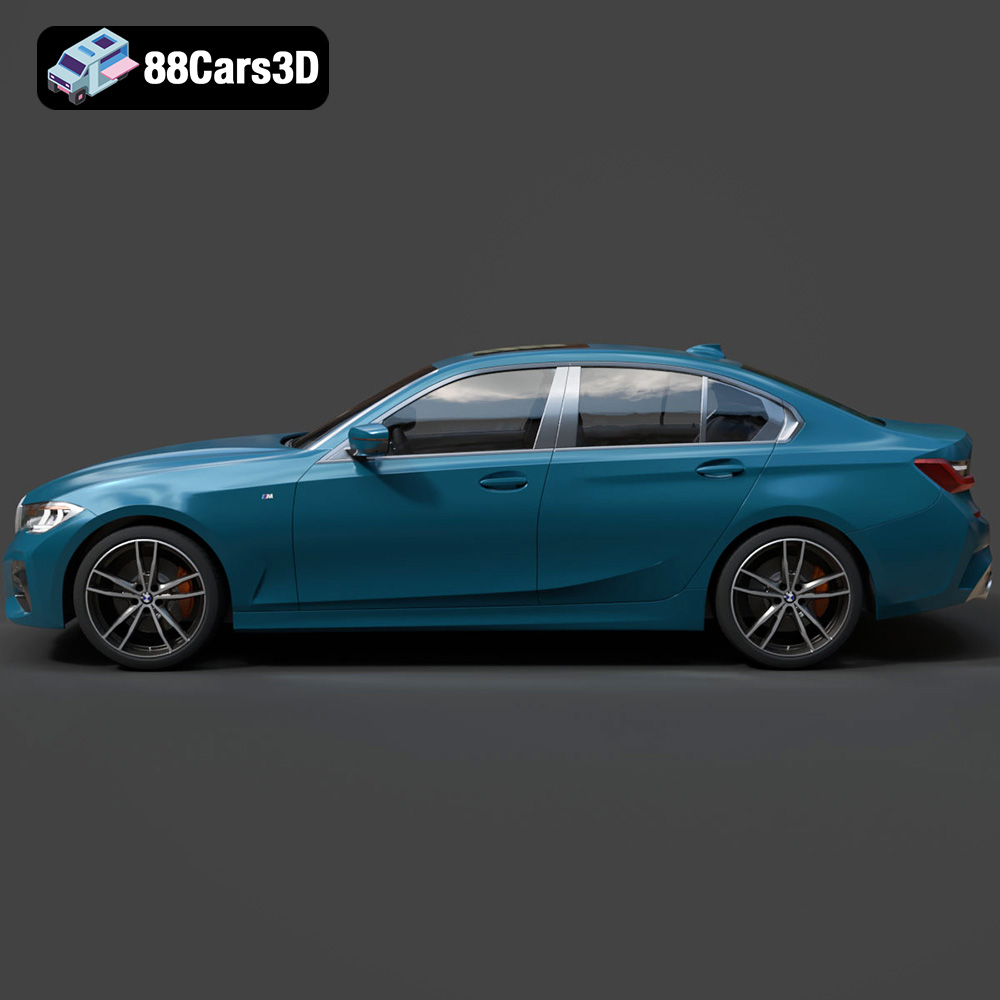
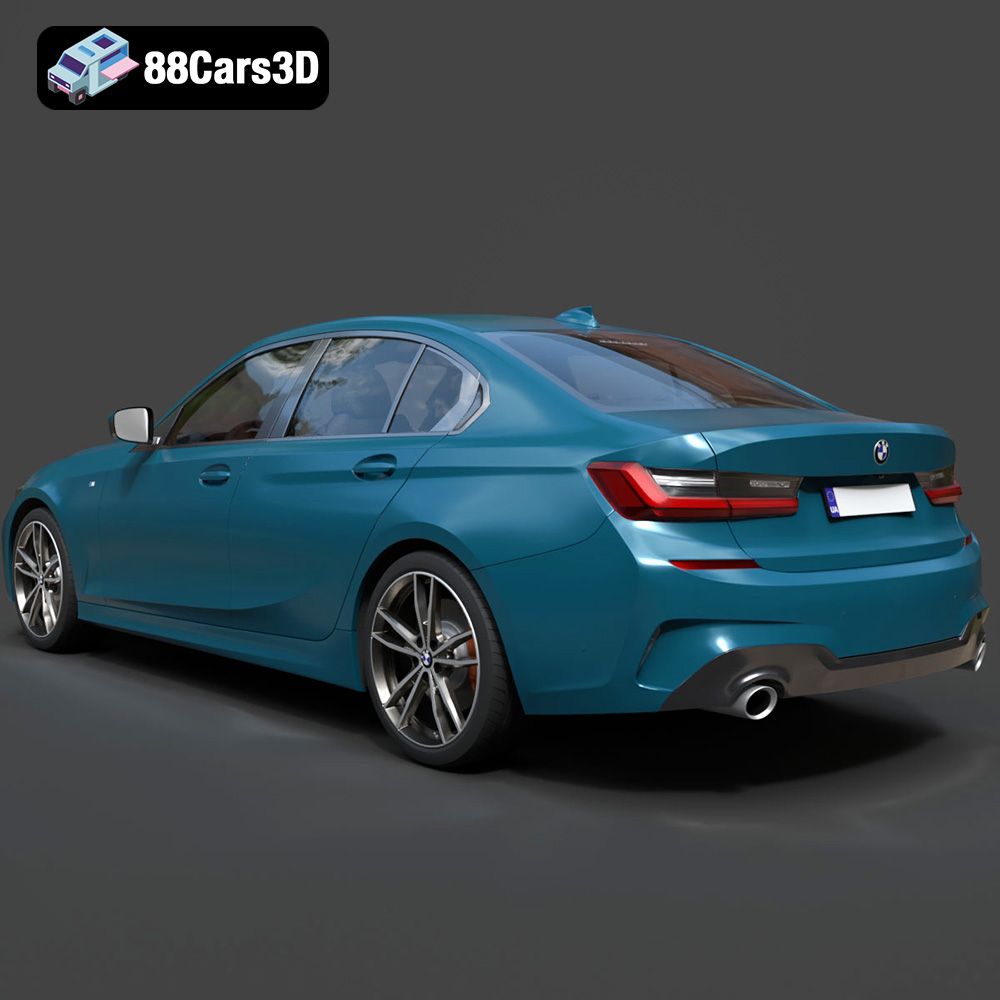
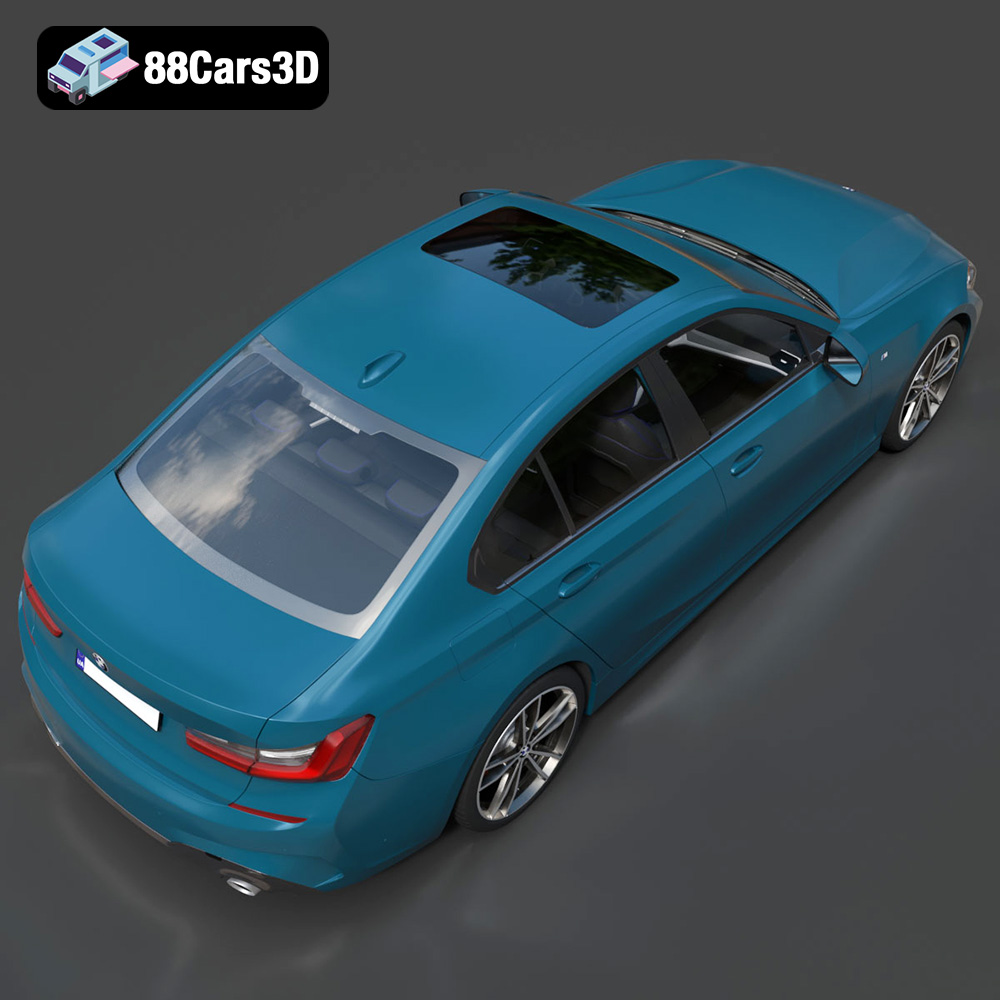
Experience true realism with the BMW 3 Series M-Sport Sedan 2019 3D Model. Crafted to exact specifications, this digital vehicle replica captures the sophisticated contours, aggressive styling, and dynamic presence of the iconic luxury sports sedan. Designed for versatility, this model delivers precise proportions and authentic detailing suitable for demanding digital environments. Key features include meticulously optimized clean geometry, a fully modeled interior, and realistic materials that react naturally under various lighting conditions. Every component has been designed to meet professional standards, ensuring seamless integration into complex scenes without compromising performance. The precise edge flow and logical hierarchy allow for easy modifications and rendering. This versatile 3D asset is perfectly suited for a wide array of professional applications. Whether developing immersive video games, creating photorealistic automotive visualizations, producing cinematic animations, or designing interactive AR/VR experiences, this model provides the reliable foundation needed for demanding digital projects. The package includes multiple industry-standard file formats to ensure compatibility across your preferred software pipeline: .blend – Editable Blender file with materials and lighting setup; .fbx – Game-engine ready format for Unreal Engine and Unity; .obj – Standard 3D model format compatible with all major software; .glb – Optimized for AR/VR and web-based visualization; .stl – Suitable for 3D printing and prototyping; .ply – Detailed polygon mesh for analysis and visualization; .unreal – Pre-configured for Unreal Engine use; .max – Editable 3ds Max file for rendering and animation.
$19.99
.3series
.arvr
.blend
.bmw
.car3dmodel
.fbx
.gameasset
.glb
.luxurycar
.max
.msport
.obj
.ply
.rendering
.sedan
.simulation
.sportssedan
.stl
.unreal