Get 50% OFF All Premium 3D & STL Models!

In the rapidly evolving landscape of digital content creation, the demand for hyper-realistic and functionally robust 3D assets has never been higher. From blockbuster game titles and cinematic sequences to cutting-edge architectural visualizations and immersive AR/VR experiences, high-quality 3D car models are indispensable. They serve as the foundation upon which captivating virtual worlds are built, providing both visual fidelity and the technical integrity required for demanding professional pipelines.
Creating such assets from scratch is a significant undertaking, requiring immense skill, time, and resources. This is where pre-fabricated, expertly crafted models become invaluable. Imagine needing a contemporary, universally recognized SUV for your next project – a vehicle that embodies modern design and performance. The Volkswagen Tiguan 2021 3D Model stands out as a prime example of a premium asset designed to seamlessly integrate into a myriad of professional workflows. Its precision, attention to detail, and comprehensive file format support make it an ideal choice for creators seeking efficiency without compromising on visual quality.
The choice of a 3D model file format is often as critical as the model itself, dictating compatibility, feature support, and overall workflow efficiency. Professional 3D car models, like the Volkswagen Tiguan 2021, are typically provided in multiple formats to ensure maximum utility across diverse software and applications. Understanding these formats is key to leveraging your assets effectively.
The .blend format is Blender’s native file type, offering a complete encapsulation of a project. When you acquire a .blend file, you’re not just getting the mesh; you’re often getting the entire scene with materials, textures, lighting setups, cameras, and even animations. This makes it incredibly powerful for Blender users, providing a fully editable and render-ready scene right out of the box. For projects that start and end in Blender, or for users who want to modify every aspect of the model, the .blend file for the Volkswagen Tiguan 2021 is the ultimate starting point.
.fbx (Filmbox) is arguably the most widely adopted interchange format in the 3D industry. Developed by Autodesk, it excels at transferring 3D data, including geometry, materials, textures, animations, and skeletal data, between different software packages. It is particularly revered in game development for its robust support in engines like Unreal Engine and Unity. When integrating the Volkswagen Tiguan 2021 3D Model into a real-time environment or a production pipeline involving multiple 3D applications, the .fbx format is the go-to choice due to its balance of fidelity and broad compatibility.
The .obj (Wavefront Object) format is a simpler, more universal alternative. It primarily stores geometric data – vertices, normals, UV coordinates, and faces – along with references to external material files (.mtl) and textures. While it doesn’t support animation or complex scene data, its simplicity makes it incredibly compatible across virtually all 3D software. For basic mesh transfers, sculpting, or situations where only the geometry is needed, the .obj version of the Volkswagen Tiguan 2021 offers reliable cross-software integration.
.glb (GL Transmission Format Binary) is the binary version of glTF, an open-standard format for 3D scenes and models. Designed for efficient transmission and loading of 3D models in web browsers, augmented reality (AR), and virtual reality (VR) applications, .glb packages everything into a single file, including textures. This optimization for real-time and web-based display makes the .glb variant of the Tiguan model perfect for interactive product configurators, online showrooms, or mobile AR experiences.
The .stl (Stereolithography) format represents a 3D model as a series of connected triangles, describing only the surface geometry without color, texture, or other attributes. It is the de facto standard for 3D printing and rapid prototyping. If your project involves physical prototyping or manufacturing, the .stl file for the Volkswagen Tiguan 2021 is precisely what you need to prepare it for additive manufacturing processes.
The .ply (Polygon File Format) is often used for storing 3D data from 3D scanners, capturing precise point cloud data and polygon meshes. It can store information beyond just geometry, such as color and transparency per vertex or face. For scientific visualization, CAD applications, or scenarios requiring highly detailed mesh data, the .ply format offers a robust solution for the Volkswagen Tiguan 2021.
The .unreal format implies a file that has been pre-configured or optimized specifically for direct import and use within Unreal Engine. This could mean pre-applied materials, collision meshes, LODs (Levels of Detail), and proper scaling, significantly reducing setup time for game developers and real-time visualization artists. Utilizing the .unreal version of the Volkswagen Tiguan 2021 ensures a streamlined workflow for projects within Epic Games’ powerful engine.
.max is the native file format for Autodesk 3ds Max, a leading software for modeling, animation, and rendering. Like .blend, it stores an entire scene, including complex materials, lighting rigs, cameras, and animation data. For professionals deeply embedded in the 3ds Max ecosystem, the .max file provides the highest fidelity and greatest flexibility for rendering with engines like V-Ray or Corona, allowing full control over every aspect of the Volkswagen Tiguan 2021 model for high-end automotive rendering.
Beyond simply having a model, its underlying construction dictates its usability and quality. A truly professional 3D car model, such as the Volkswagen Tiguan 2021 from 88cars3d.com, is built with meticulous attention to detail, ensuring it performs optimally across various applications.
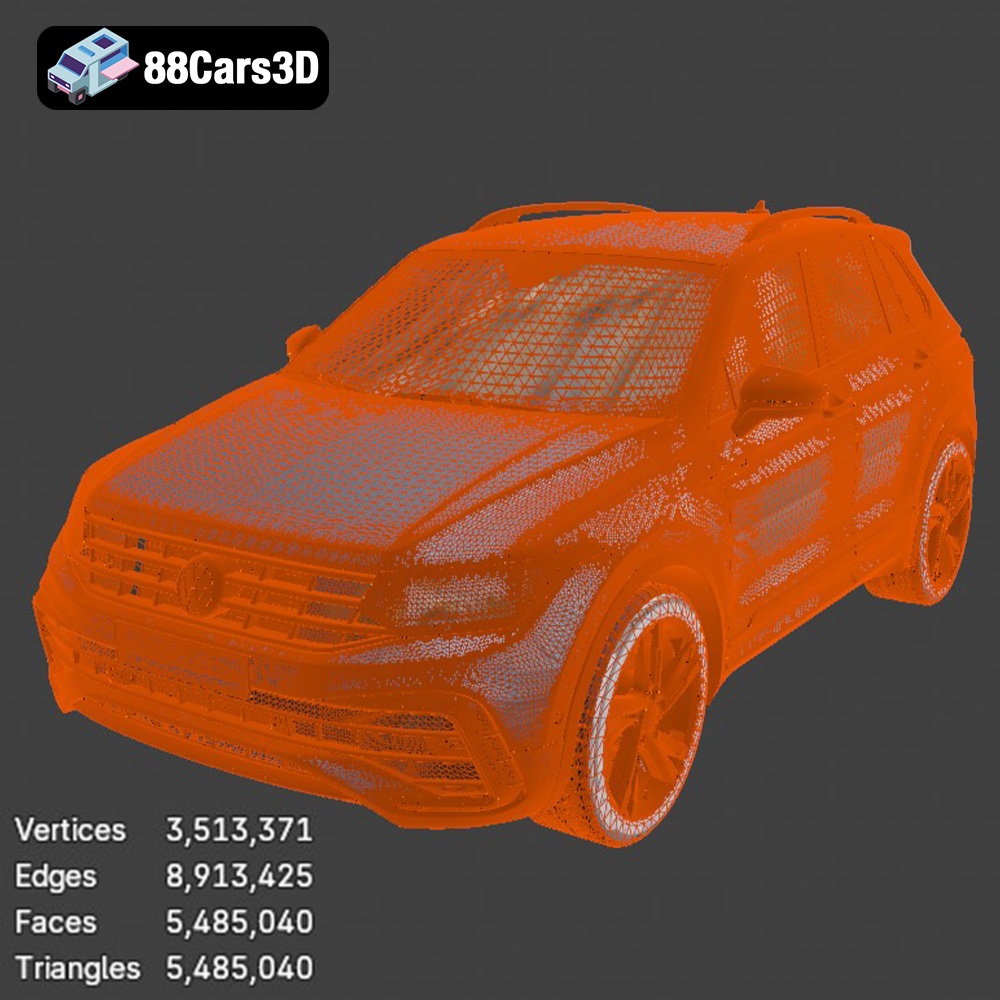
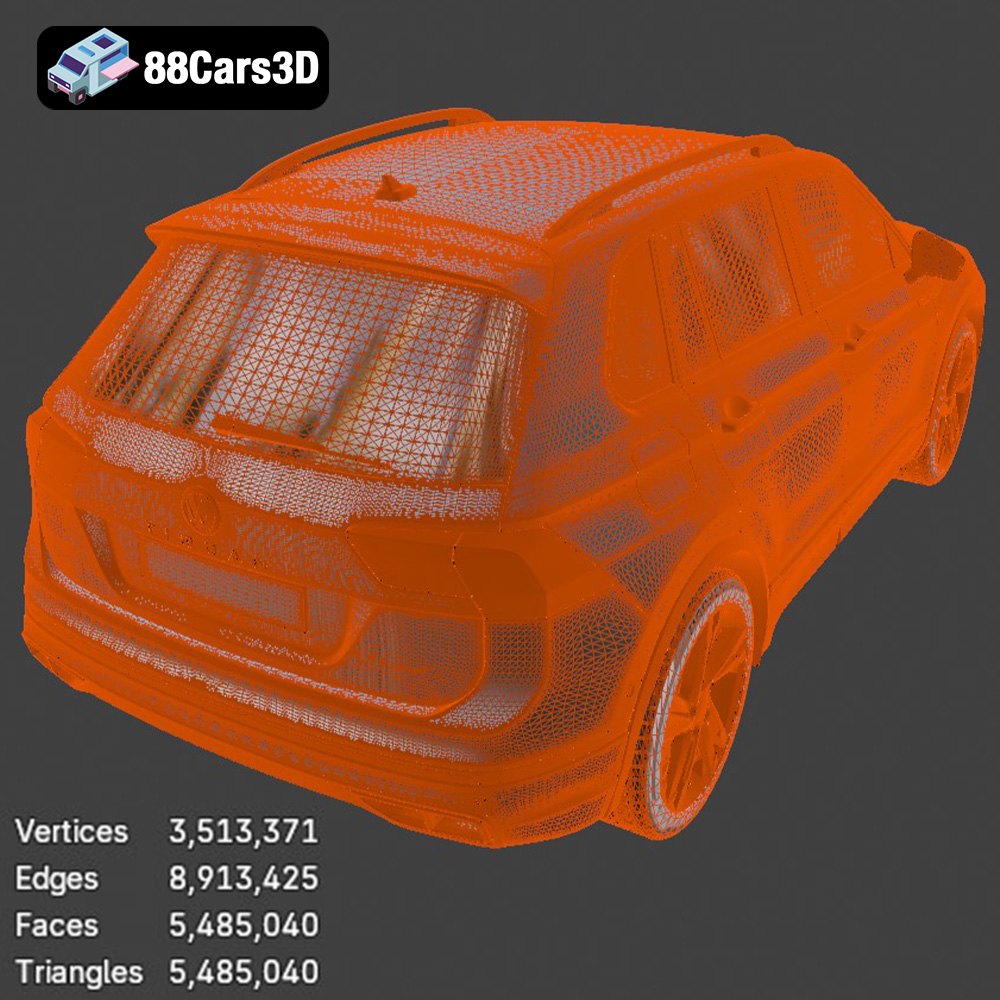
The foundation of any great 3D model is its geometry. The Volkswagen Tiguan 2021 3D Model boasts clean, quad-based topology, which is crucial for smooth subdivision and distortion-free deformation. A well-optimized poly count, typically ranging from 150,000 to 300,000 polygons for a high-detail vehicle, strikes a balance between visual fidelity and performance, making it suitable for both static renders and real-time game engines. Efficient edge loops follow the car’s contours, making it easy to apply subdivision modifiers or sculpt intricate details without introducing artifacts. This clean structure ensures that the model can be scaled, modified, or animated with predictable and professional results.
Realistic surfaces are paramount for convincing automotive rendering. This model features physically based rendering (PBR) materials, designed to accurately simulate how light interacts with different surfaces. This includes sophisticated car paint shaders with clear coat reflections, realistic tire rubber, intricate headlight and taillight glass, and metallic trim. Complementing these materials is non-overlapping, efficiently packed UV mapping. Proper UVs are essential for applying high-resolution textures without stretching or seams, ensuring that every detail, from the badge to the tire tread, appears crisp and authentic.
Accuracy is key in professional visualization. The Volkswagen Tiguan 2021 3D Model is meticulously crafted to real-world dimensions and proportions. This level of precision is vital for architectural visualization, automotive design reviews, and any scenario where the vehicle needs to integrate seamlessly with real-world assets or environments. Correct scale ensures that the model looks right in a scene, interacts believably with physics engines in games, and can be used for accurate measurements or prototyping.
The versatility of a high-quality 3D car model truly shines in its ability to adapt to diverse production pipelines. Let’s explore how the Volkswagen Tiguan 2021 3D Model can be integrated into common professional workflows.
For high-end architectural visualization and automotive marketing, 3ds Max combined with renderers like V-Ray or Corona remains a industry standard. The provided .max file for the Volkswagen Tiguan 2021 is designed for this environment. Artists can leverage the fully editable project to set up custom studio lighting, experiment with various camera angles, and fine-tune render settings for photorealistic output. The clean geometry and PBR materials translate directly, allowing for breathtaking reflections, accurate global illumination, and depth of field that rivals professional photography. Post-production in applications like Photoshop can then enhance the raw renders with effects, color grading, and environmental integration.
Game developers demand performance and visual quality. The .fbx and .unreal file formats of the Volkswagen Tiguan 2021 3D Model are specifically optimized for real-time engines like Unreal Engine. Importing these assets typically involves setting up material instances, configuring collision meshes for realistic physics interactions, and implementing Levels of Detail (LODs). LODs automatically swap lower-polygon versions of the model at a distance, ensuring optimal performance without sacrificing visual detail up close. The clean topology also makes it easier to set up dynamic decals, damage systems, or custom animations for opening doors and rotating wheels within the engine.
Blender, a powerful open-source 3D suite, offers incredible flexibility for visualization. With the .blend file, artists can customize the Volkswagen Tiguan 2021 model, integrate it into a virtual showroom, or create animated sequences using Blender’s Eevee or Cycles renderers. For augmented and virtual reality, the .glb format is indispensable. Artists can export the model directly from Blender or use the provided .glb to deploy it into web-based AR experiences (e.g., using A-Frame or three.js), mobile AR apps (ARKit, ARCore), or VR environments, offering users an interactive, real-scale view of the vehicle in their own space.
The utility of a premium 3D car model extends far beyond simple rendering, opening doors to advanced applications and deep customization possibilities.
With a model as detailed and accurate as the Volkswagen Tiguan 2021, virtual photography becomes a powerful tool for marketing and design exploration. Artists can create elaborate studio setups, manipulate lighting precisely, and use virtual cameras with photographic properties (aperture, focal length, shutter speed) to generate stunning still images or cinematic sequences. This allows for exploring different color schemes, environments, or even simulating adverse weather conditions, all without the cost and logistics of a physical photoshoot. The ability to control every aspect of the “shot” makes it an invaluable asset for creative agencies.
While often associated with digital display, 3D car models also bridge the gap to the physical world. The .stl format of the Volkswagen Tiguan 2021 allows for direct 3D printing, enabling rapid prototyping of scale models, design studies, or even custom parts. Considerations for 3D printing include ensuring the model has sufficient wall thickness, simplifying complex internal structures if necessary, and correctly scaling the model for the printer’s build volume. This capability is particularly useful for industrial design, engineering firms, and automotive aftermarket companies.
A well-structured 3D model empowers extensive customization. The Volkswagen Tiguan 2021 3D Model, with its clean geometry and logical material separation, makes it straightforward to modify. Artists can easily change body colors, swap out wheel designs, apply custom decals, or even simulate damage for crash test visualizations. This iterative design freedom is crucial for automotive configurators, product design reviews, and allowing clients to visualize bespoke options before physical production. The layered and organized nature of the source files (.max, .blend) facilitates these modifications, saving significant time compared to working with poorly organized or triangulated meshes.
In the competitive world of digital content, the quality of your assets directly impacts the final output. Opting for professional-grade 3D car models like the Volkswagen Tiguan 2021 from 88cars3d.com is a strategic decision that offers numerous advantages.
Developing a high-fidelity 3D car model from scratch is an incredibly labor-intensive process, often taking hundreds of hours for a skilled artist. This involves precise blueprint matching, complex surface modeling, detailed UV unwrapping, and meticulous material creation. Purchasing a ready-made, professionally optimized asset eliminates this monumental initial investment of time and resources. For a fraction of the cost of in-house development, you gain immediate access to a production-ready model, allowing your team to focus on creative execution rather than foundational asset creation.
High-quality assets ensure a consistent level of professionalism across your projects. When you acquire models from a reputable marketplace like 88cars3d.com, you are guaranteed assets built to industry standards. This means clean topology, accurate scale, PBR-ready materials, and comprehensive file format support. Such consistency is vital for maintaining brand image, delivering reliable client presentations, and ensuring your final renders or game environments meet the highest benchmarks for visual fidelity. It’s an investment in the overall quality and reputation of your creative output.
The digital realm is constantly evolving, and the need for high-fidelity 3D assets continues to grow. From game development and cinematic rendering to architectural visualization and AR/VR experiences, professional 3D car models are the backbone of compelling visual content. The Volkswagen Tiguan 2021 3D Model exemplifies what a premium asset should be: meticulously crafted, technically robust, and versatile across multiple platforms and workflows.
By understanding the nuances of various file formats and appreciating the intricate details of a well-constructed model, creators can make informed decisions that significantly enhance their projects. Whether you’re a seasoned professional looking to streamline your pipeline or a budding artist striving for photorealistic results, the Volkswagen Tiguan 2021 3D Model offers an exceptional foundation. Explore this and many other top-tier 3D car models designed to elevate your creative endeavors at 88cars3d.com.
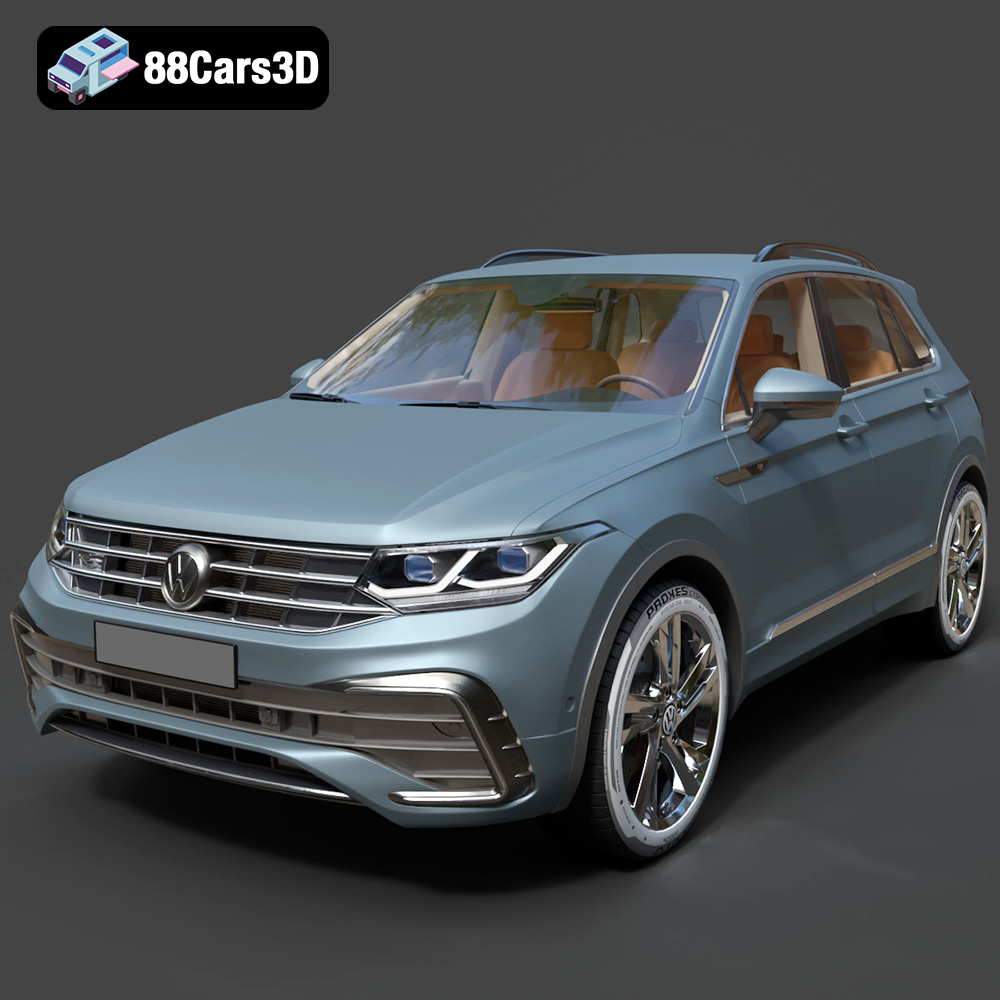
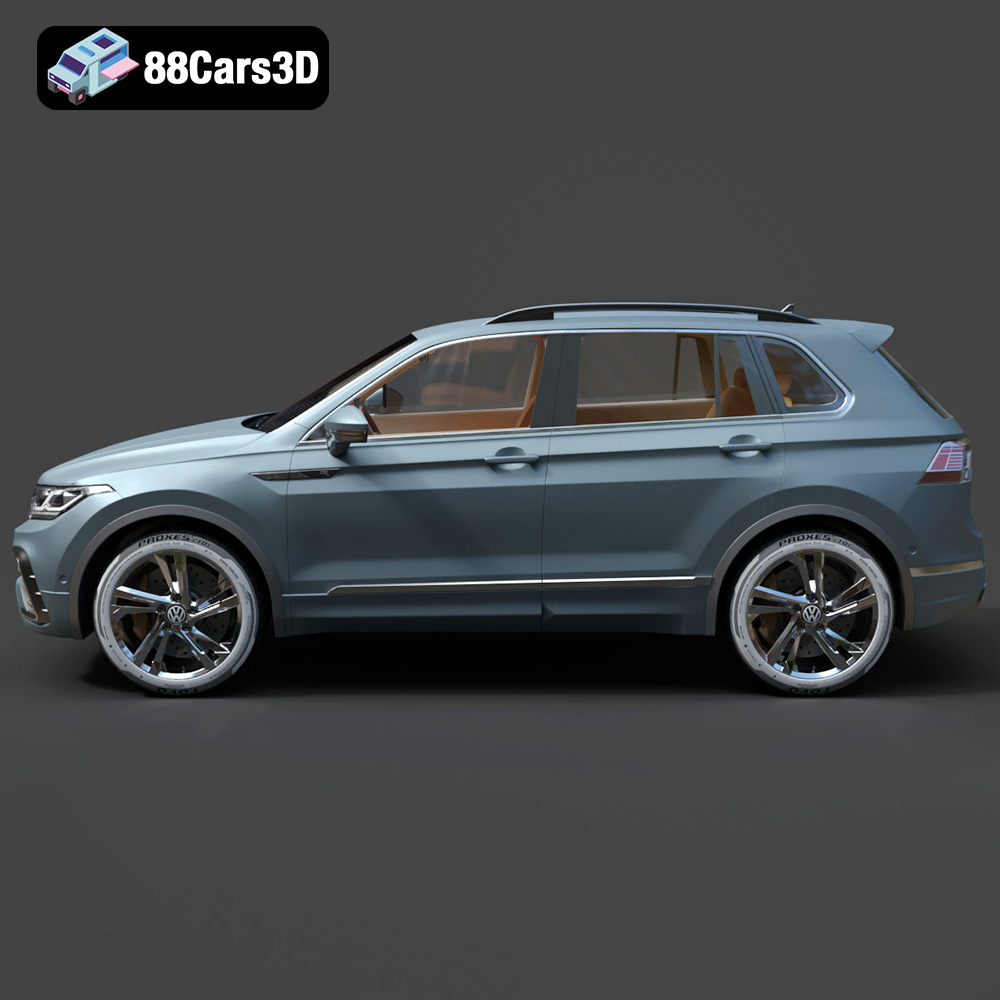
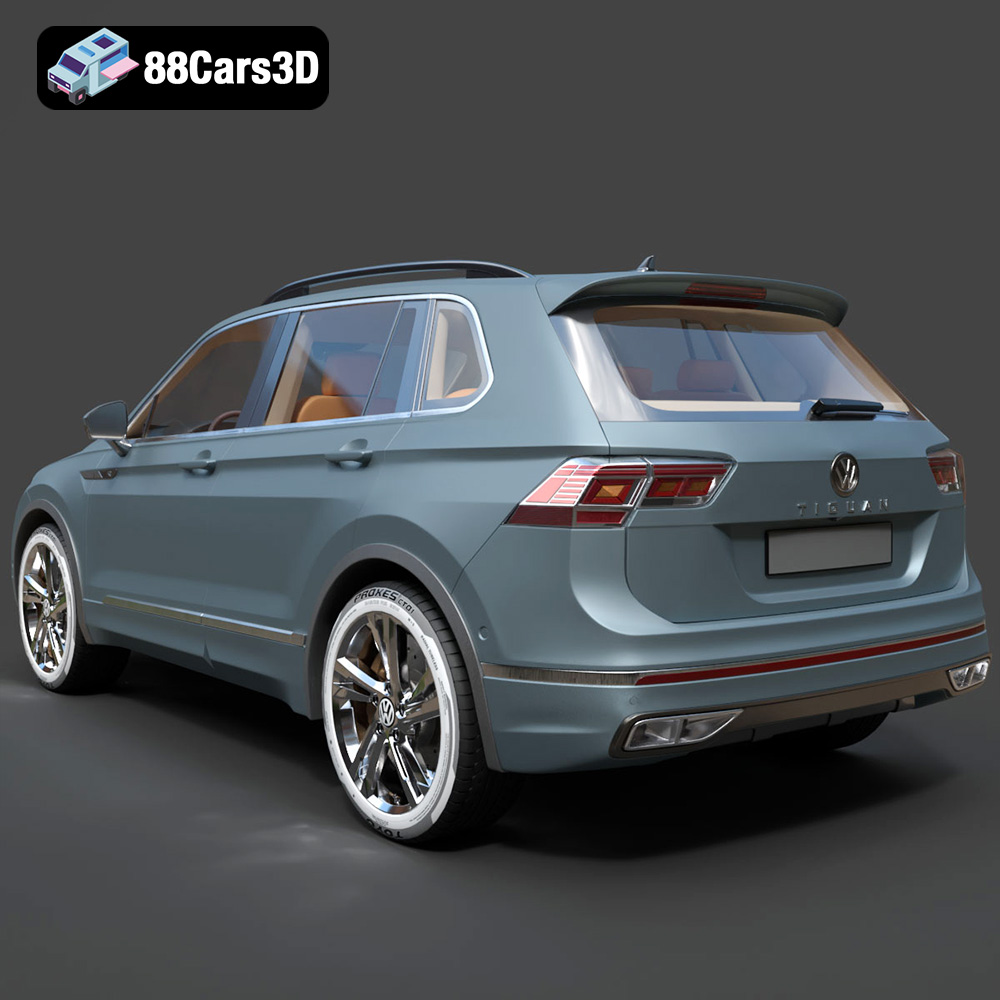
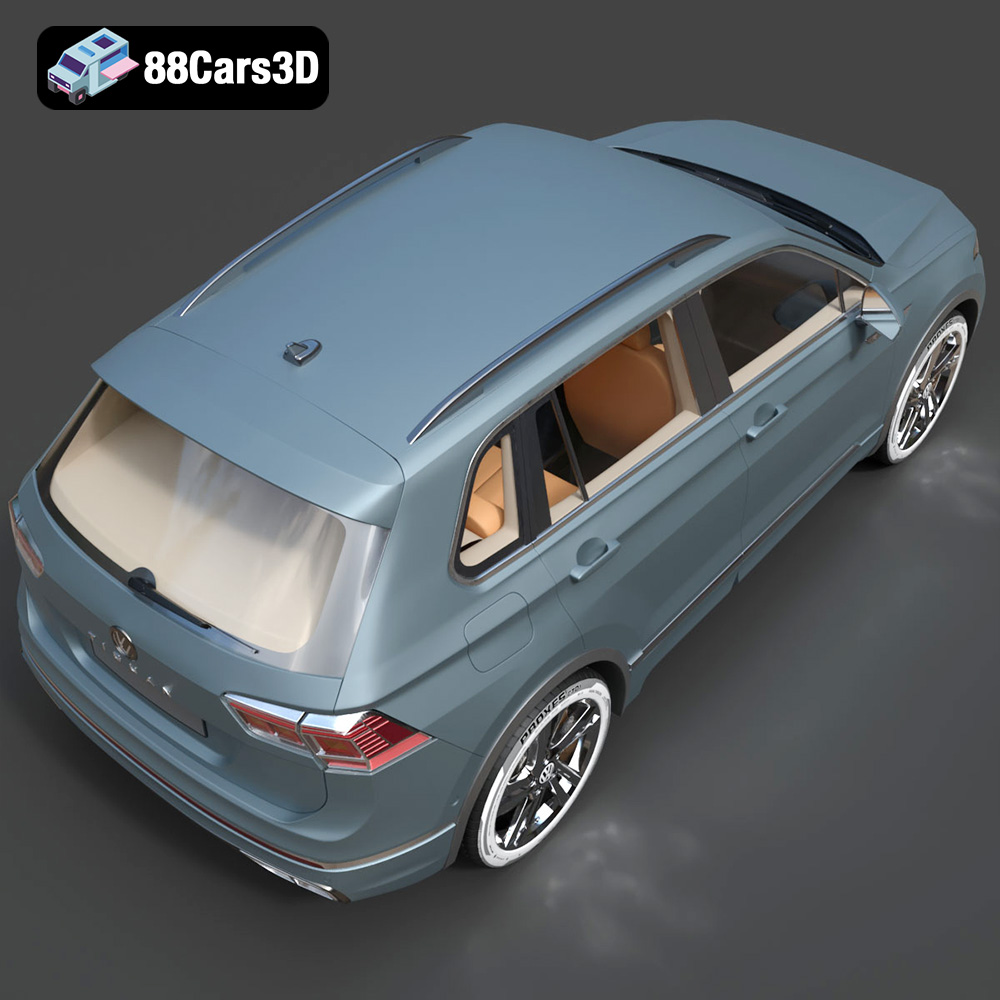
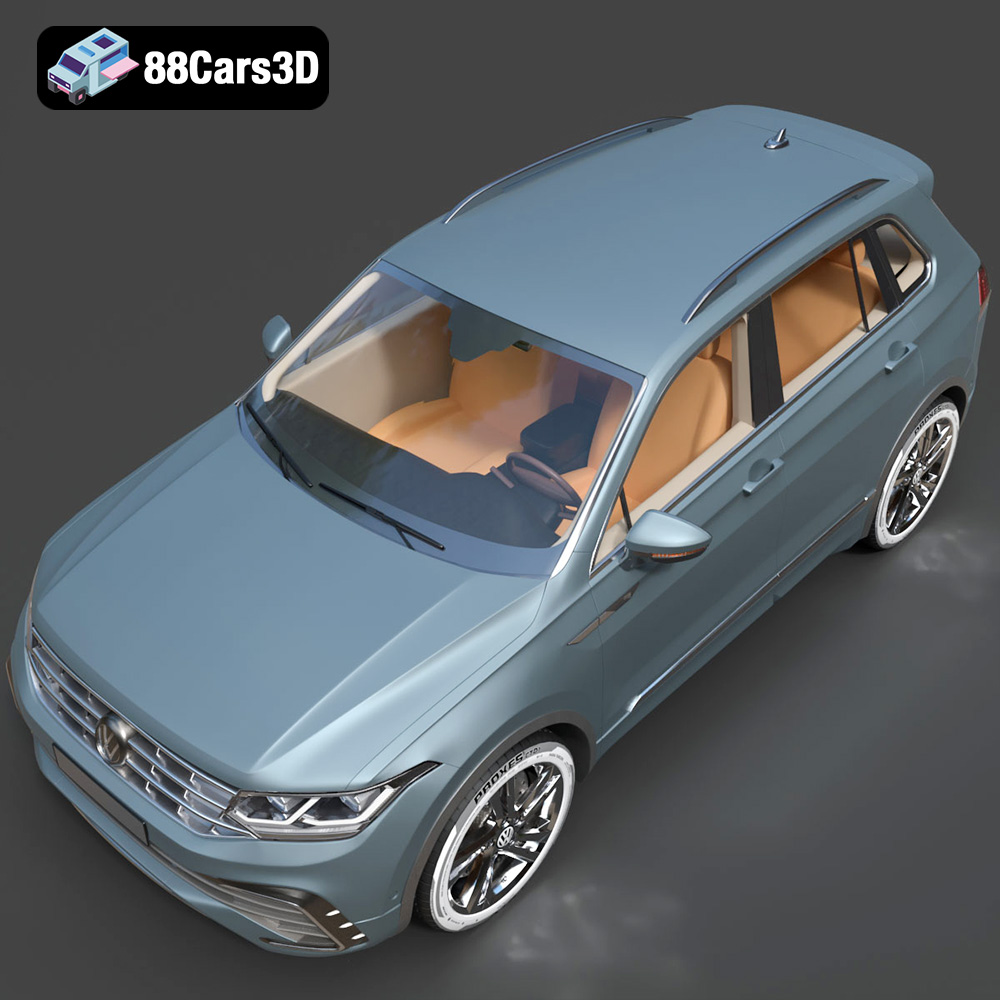
Experience the precision of the Volkswagen Tiguan 2021 3D Model, a realistic digital replica designed to meet professional standards. This model perfectly captures the modern styling, dynamic stance, and sophisticated details of the popular SUV, providing an exceptional asset for a diverse array of digital projects. Engineered with an emphasis on performance and visual fidelity, this 3D vehicle features clean geometry, accurate proportions, and realistic materials. The well-structured topology allows for seamless workflow integration, ensuring outstanding results in both tight studio close-ups and expansive dynamic environments. This versatile model is optimized for demanding applications, making it an excellent choice for game development, cinematic rendering, augmented and virtual reality (AR/VR) experiences, and architectural visualization. The comprehensive package is structured to integrate flawlessly into your preferred professional pipeline. Available file formats include: .blend – Editable Blender file with materials and lighting setup, .fbx – Game-engine ready format for Unreal Engine and Unity, .obj – Standard 3D model format compatible with all major software, .glb – Optimized for AR/VR and web-based visualization, .stl – Suitable for 3D printing and prototyping, .ply – Detailed polygon mesh for analysis and visualization, .unreal – Pre-configured for Unreal Engine use, .max – Editable 3ds Max file for rendering and animation.
$19.99
.arvr
.blend
.car3dmodel
.crossover
.fbx
.gameasset
.glb
.max
.obj
.ply
.rendering
.simulation
.stl
.tiguan
.unreal
.volkswagen
SUV