Get 50% OFF All Premium 3D & STL Models!

The roar of a finely tuned engine, the gleam of polished chrome, the defiant stance of a machine built not for speed alone, but for a statement – custom motorcycles embody a unique blend of engineering prowess and artistic rebellion. For designers, animators, game developers, and visualization artists, capturing this raw mechanical beauty in a digital realm presents both a challenge and an opportunity. It requires meticulous attention to detail, precise topology, and an understanding of how every curve, weld, and component contributes to the overall character.
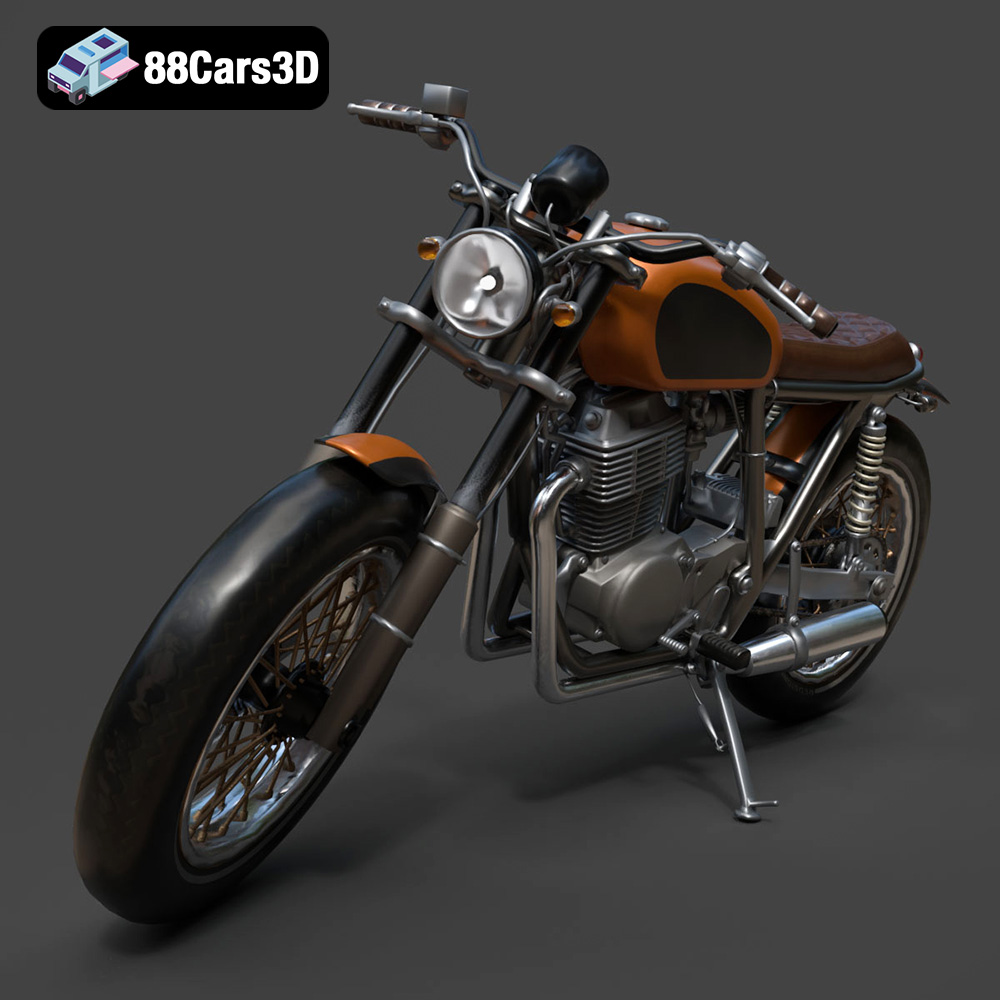
Enter the realm of high-quality 3D assets, where this vision can come to life with unparalleled fidelity. A prime example of such craftsmanship is the Custom_Motorcycle 3D Model available on 88cars3d.com. This isn’t just a generic two-wheeler; it’s a meticulously crafted digital recreation of a bespoke, one-of-a-kind build, designed to infuse your projects with the authentic spirit of custom bike culture. Whether you’re aiming for photorealistic renders, immersive game environments, or even tangible 3D prints, this model provides the foundational excellence needed to elevate your work.
In this comprehensive guide, we’ll delve into the technical intricacies of high-fidelity vehicle 3D models, exploring how assets like the Custom_Motorcycle 3D Model are utilized across various professional workflows. We’ll examine crucial file formats, discuss the art and engineering behind detailed models, and provide insights into leveraging such assets for cutting-edge automotive rendering, game development, AR/VR experiences, and even physical manufacturing through 3D printing. Join us as we uncover the power of a truly exceptional digital asset.
The versatility of a 3D model often hinges on the file formats it supports. Each format is designed with specific use cases, software compatibility, and data encapsulation in mind. Understanding these distinctions is crucial for seamless integration into your preferred pipeline, whether you’re working on advanced automotive rendering or developing real-time game assets. The Custom_Motorcycle 3D Model from 88cars3d.com is provided in a comprehensive suite of formats, ensuring maximum flexibility for any project.
The .blend format is Blender’s native file type. It’s a complete package, saving not just the mesh data but also all materials, textures, lighting setups, camera positions, animations, and even interface layouts within a single file. For users of Blender, this means immediate access to a fully prepared scene, ready for rendering or further modification. It’s ideal for artists who want to dissect the model’s construction, adjust materials, or integrate it into a Blender-centric workflow without losing any scene-specific data.
The .fbx (Filmbox) format is an industry-standard format developed by Autodesk, widely adopted for its excellent interoperability between different 3D software applications. It efficiently handles 3D model data, animations, cameras, and lights. For game developers, .fbx is often the go-to choice for importing assets into game engines like Unreal Engine and Unity. Its robust support for skeletal animation and PBR (Physically Based Rendering) materials makes it a cornerstone for creating high-performance game assets and cinematic sequences.
The .obj (Wavefront OBJ) format is one of the oldest and most universally supported 3D file formats. It’s a simple, text-based format that primarily stores geometric data (vertices, normals, texture coordinates, and faces). While it doesn’t typically encapsulate animations or complex material nodes, it’s highly reliable for transferring mesh data between virtually any 3D software. Its widespread compatibility makes it an excellent fallback or starting point for projects requiring broad software support. Materials are usually defined in an accompanying .mtl file.
The .glb (GLB format, derived from GL Transmission Format or glTF) is a relatively newer, highly efficient format gaining rapid traction, especially for web-based 3D, augmented reality (AR), and virtual reality (VR) applications. It packs 3D model data, textures, and animations into a single, compact binary file. This optimization allows for faster loading times and easier distribution across platforms, making it perfect for interactive web viewers, AR apps on mobile devices, and immersive VR experiences. The Custom_Motorcycle 3D Model in .glb is instantly ready for modern digital showcases.
The .stl (Stereolithography) format is the standard for 3D printing. It represents a 3D model as a series of connected triangles, describing only the surface geometry of an object without color, texture, or other attributes. For physical production, the .stl format ensures that your digital model can be accurately translated into a tangible object by a 3D printer. The Custom_Motorcycle 3D Model’s availability in .stl means enthusiasts can bring this bespoke bike into the real world as a detailed scale model.
The .ply (Polygon File Format, or Stanford Triangle Format) is primarily used for storing 3D data from 3D scanners. It supports properties like color, transparency, surface normals, and texture coordinates for each vertex and face, which makes it suitable for detailed geometric analysis or reverse engineering workflows. While less common for general 3D asset exchange than .fbx or .obj, its precision makes it valuable in CAD, scientific visualization, and specific engineering applications.
While not a standalone general-purpose format in the same vein as .fbx, when a product description mentions .unreal, it typically signifies that the asset is provided in a form highly optimized and possibly pre-configured for direct import and use within Unreal Engine. This might involve pre-authored material instances, collision meshes, or specific naming conventions that streamline the import process and ensure engine-ready performance, saving developers significant time on setup for creating dynamic game assets or interactive architectural visualizations.
The .max format is Autodesk 3ds Max’s native scene file. Similar to .blend, it stores the complete scene, including geometry, materials, lighting, cameras, and animations. For professionals working within the 3ds Max ecosystem, the .max file offers full editability, allowing for complete customization, complex animation setups, and high-fidelity rendering using powerful engines like V-Ray or Corona. It’s perfect for detailed automotive rendering and high-end visualization projects.
Creating a truly high-fidelity 3D model, especially for complex subjects like vehicles, is an intricate dance between artistic vision and technical precision. It’s about capturing not just the shape, but the very essence and character of the object. The Custom_Motorcycle 3D Model exemplifies this synergy, offering a digital asset that stands out in a crowded market of 3D car models and vehicle assets.
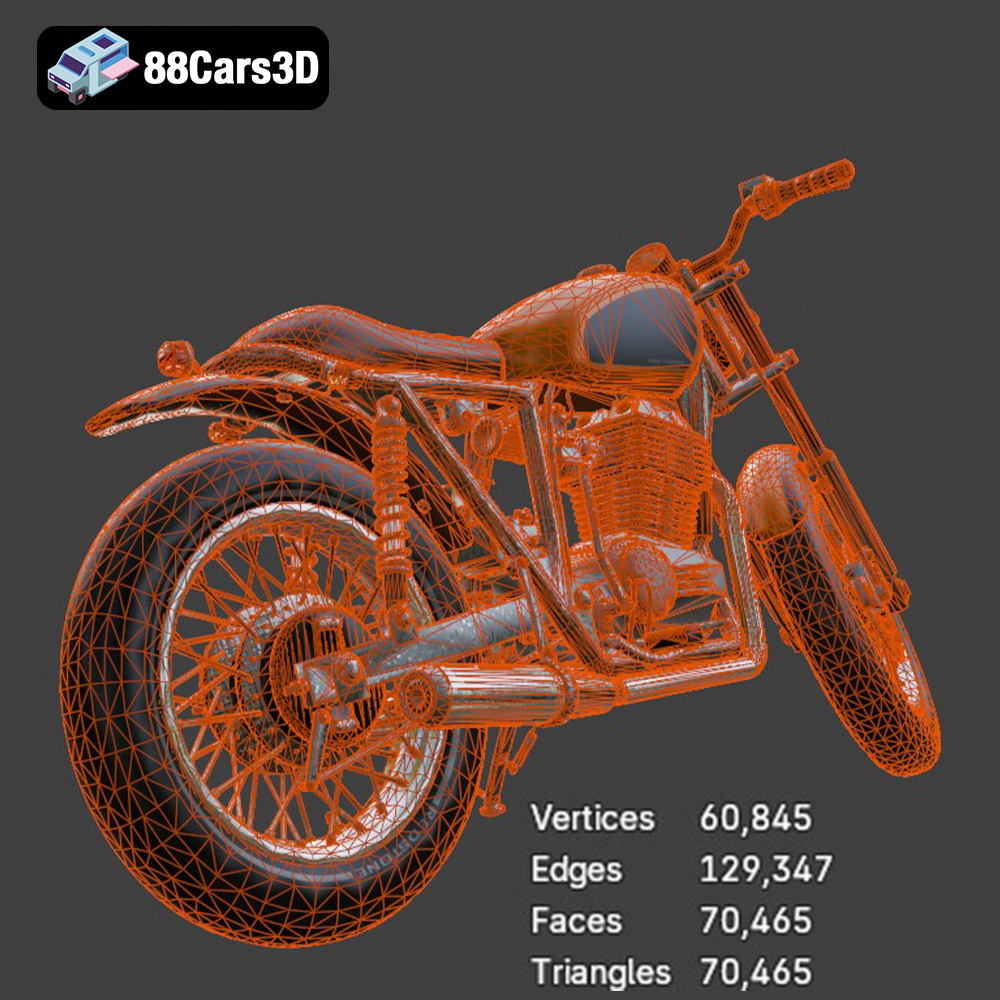
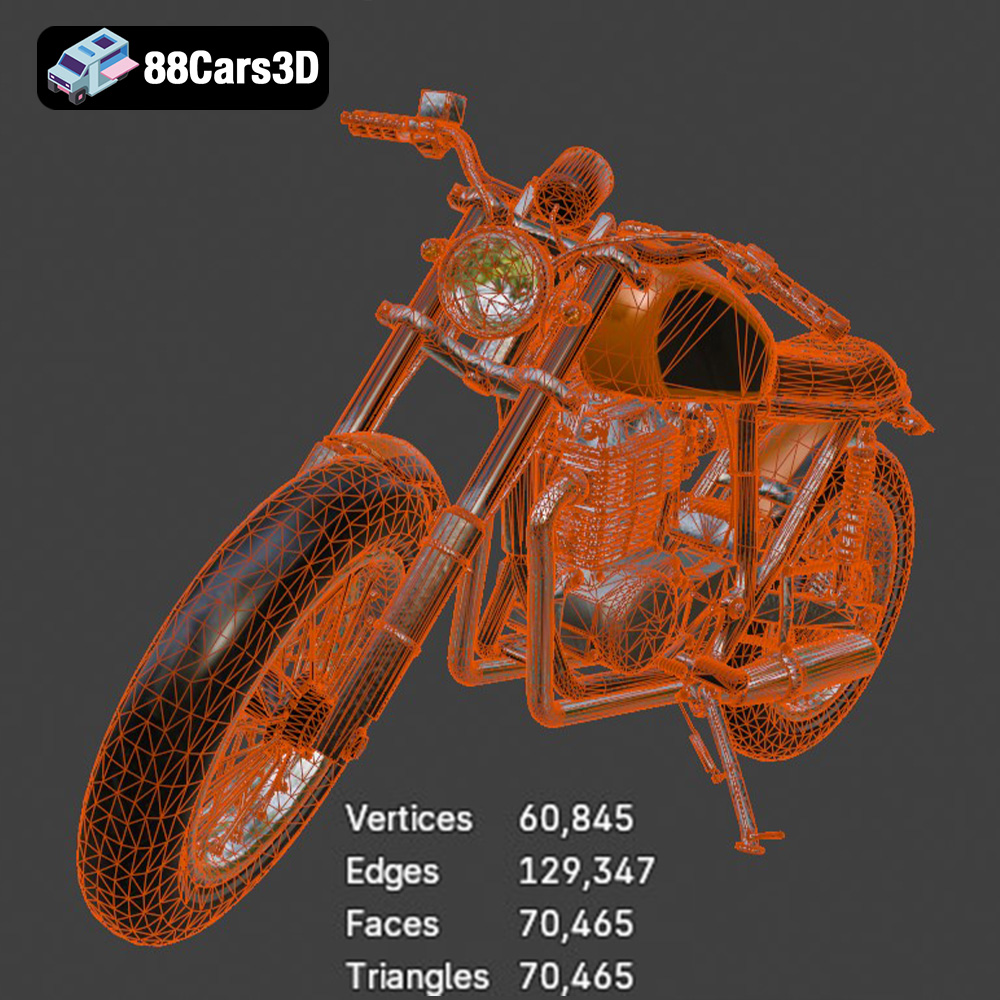
The foundation of any high-quality 3D model lies in its topology. The Custom_Motorcycle 3D Model boasts a dense, clean mesh structure, reflected in its impressive technical specifications: approximately 945,800 Vertices, 1,860,200 Edges, and 910,500 Faces/Polygons/Triangles. This high poly count is not merely for show; it’s essential for achieving maximum mechanical realism, particularly for close-up renders where every bolt, wire, and panel needs to be perfectly smooth and detailed without relying solely on normal maps.
Beyond polygon count, the organization of this mesh is crucial. Well-organized topology ensures smooth subdivision, accurate deformation during animation, and clean UV unwrapping for texture application. Furthermore, the model adheres to real-world scale accuracy. This is paramount for seamless integration into existing scenes, ensuring correct lighting, physics interactions in game engines, and realistic perspectives in architectural or environmental visualizations. The proper pivot setup for steering, wheel rotation, and kickstand articulation further underscores its engineering precision, making it immediately functional for animation rigs.
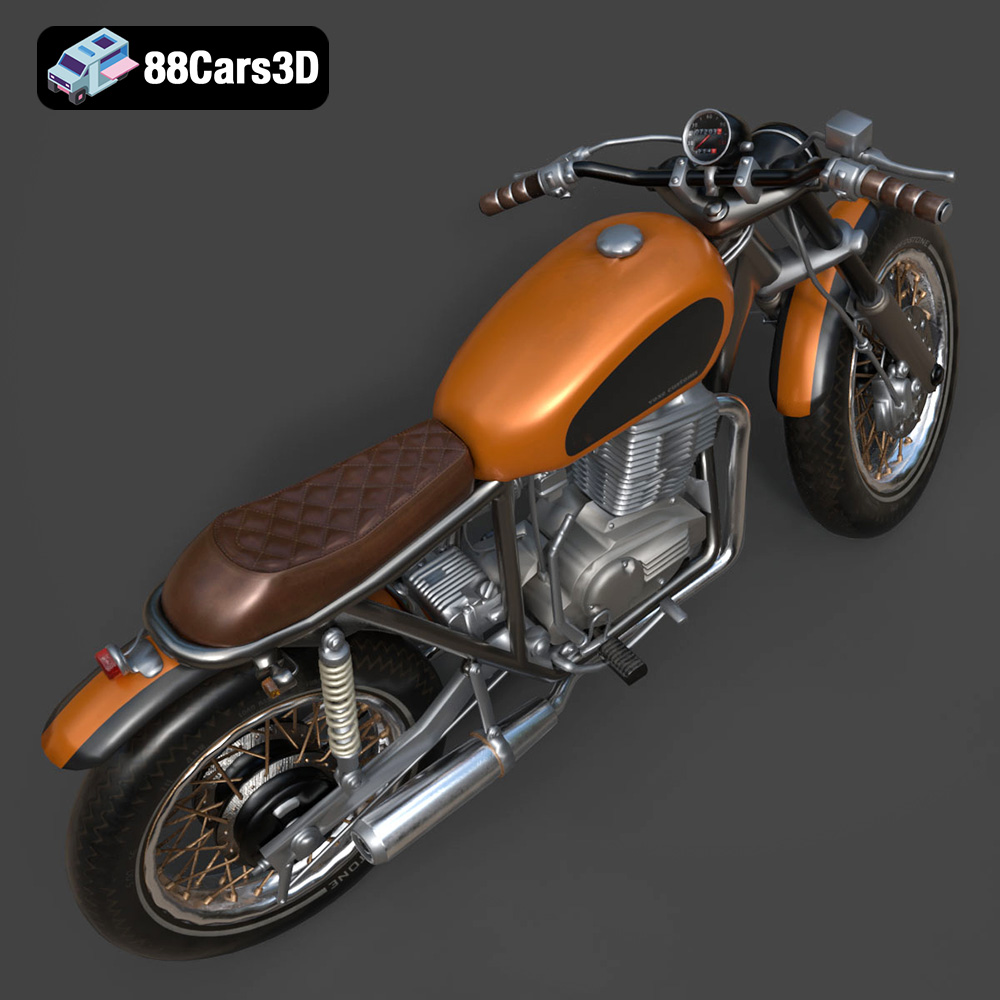
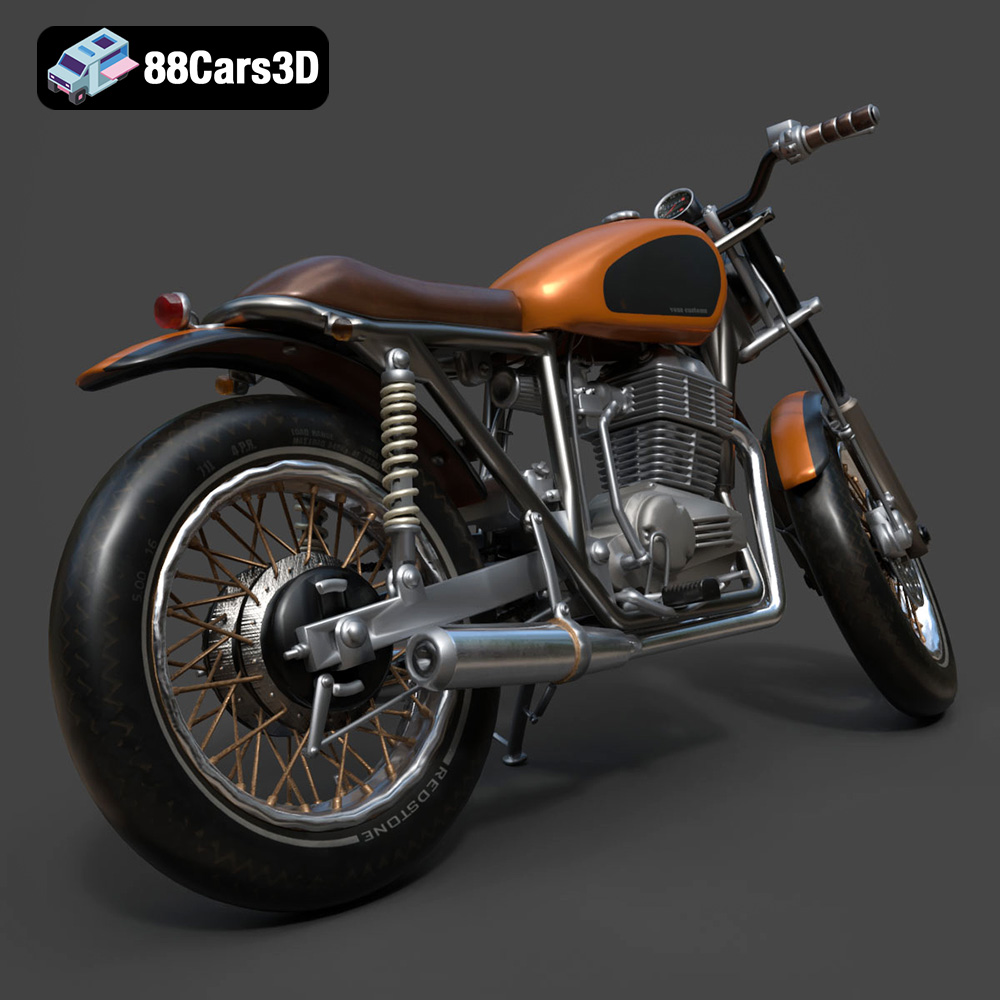
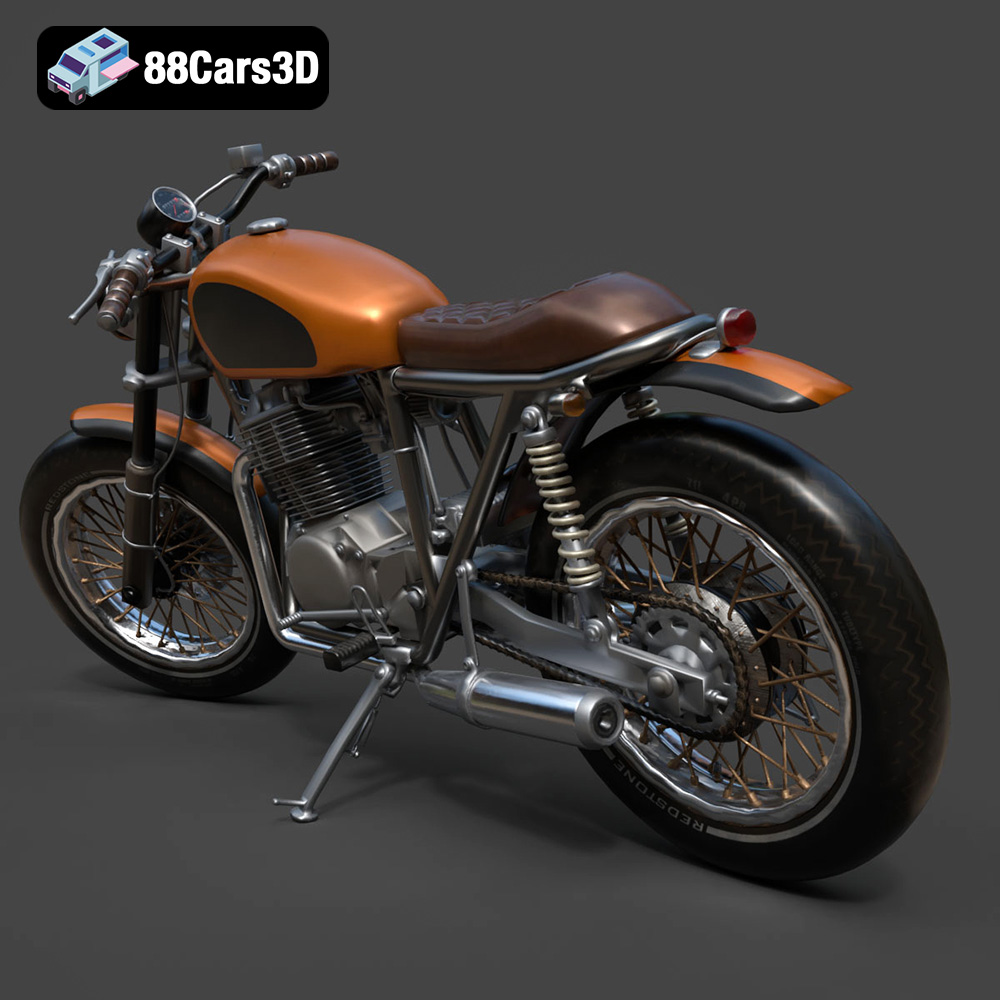
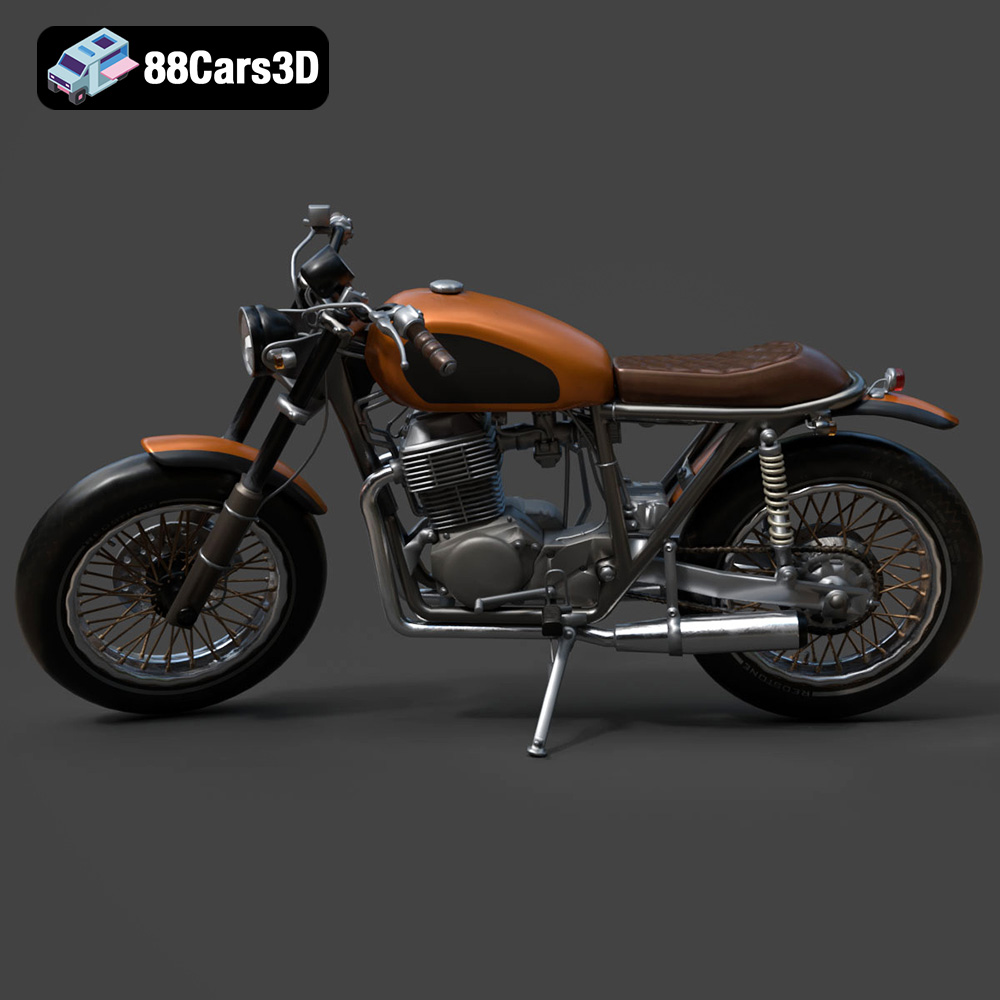
What truly distinguishes a custom motorcycle is its bespoke nature, and this model painstakingly captures that spirit. The “raw mechanical beauty and rebellious spirit of custom bike culture” is evident in every feature. From the bespoke custom frame geometry, adaptable for bobber, chopper, or cafe racer aesthetics, to the handcrafted-style fuel tank with smooth aerodynamic lines, every element speaks of thoughtful design.
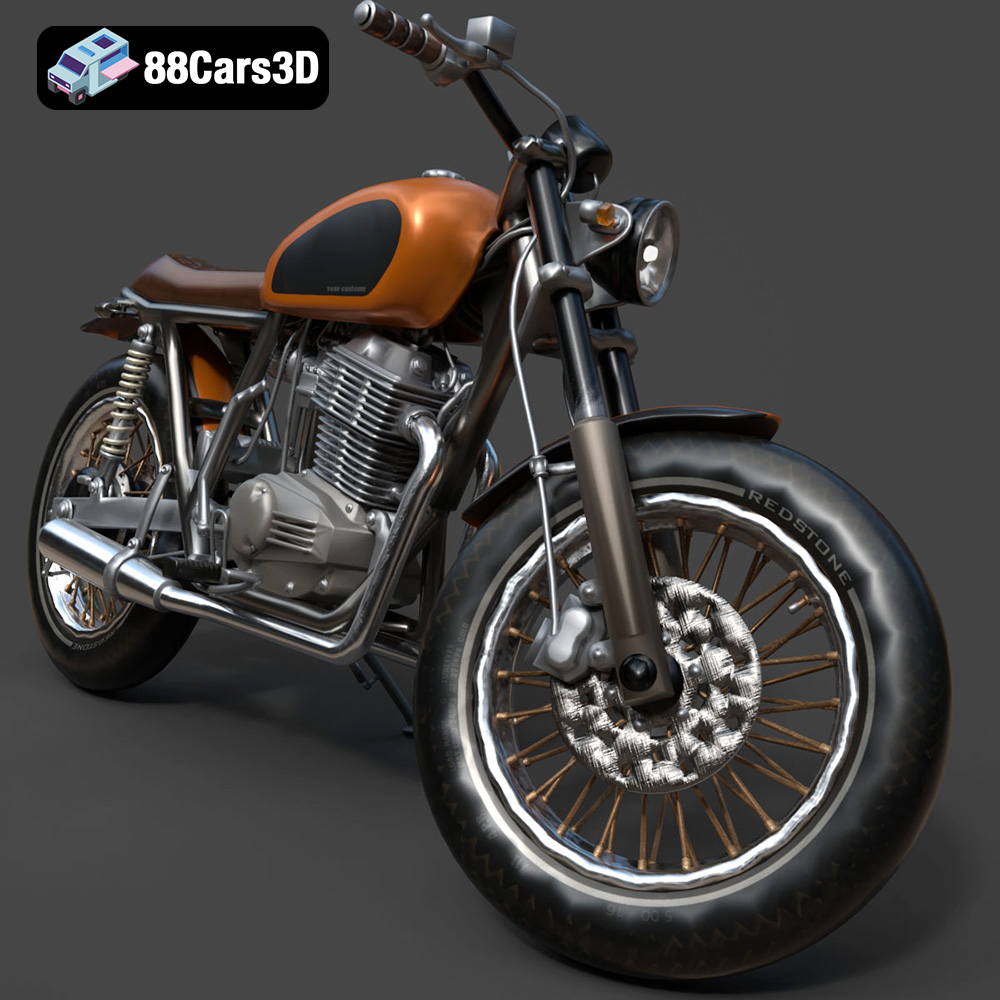
The heart of any motorcycle is its engine, and here the model excels with a highly detailed, exposed engine block and transmission assembly. This level of detail extends to the custom sweeping exhaust pipes with realistic weld and heat-stain material zones, suggesting a history and performance. Specialized custom wheel designs, whether intricate wire-spoke or machined alloy, further enhance its unique identity. Even the cockpit and rider interface are meticulously crafted, featuring a custom stitched leather saddle, minimalist handlebar setups, and retro-modern instrumentation, ensuring suitability for first-person POV rendering. Such attention to granular detail is what elevates this asset beyond a simple prop to a central visual element for demanding projects.
A truly versatile 3D model is one that can serve multiple professional purposes, adapting to the specific needs of different industries. The Custom_Motorcycle 3D Model’s high fidelity and comprehensive file format support make it an invaluable asset across a spectrum of creative and technical fields, cementing its place as a premium offering on 88cars3d.com.
For automotive artists and visualization studios, this model is a dream come true. Its high-poly, well-organized mesh and real-world scale make it ideal for producing breathtakingly photorealistic images and animations. Imagine the Custom_Motorcycle 3D Model as the centerpiece of a high-end lifestyle brand campaign, gleaming under studio lights, or parked against the backdrop of a gritty urban street scene. Its intricate details, from the exposed engine components to the custom stitched saddle, shine in close-up renders, conveying a sense of luxury and bespoke craftsmanship.
The model’s inherent customization options, allowing changes to fuel tank colors (like Candy Apple Red or Scratched Rat-Rod patina), engine finishes (high-polish chrome vs. blacked-out thermal wrap), and seat materials, provide endless creative freedom for diverse client briefs. This makes it perfect for motorcycle design showcases, virtual showrooms, and promotional materials where visual fidelity is paramount.
While high-poly models typically require optimization for real-time performance, the Custom_Motorcycle 3D Model serves as an excellent foundation for game development. Its detailed geometry is perfect for cinematic cutscenes, high-quality asset libraries, or even as a base for retopology to create lower-poly versions with baked normal maps. For “biker-themed open-world games and custom vehicle packs,” the model’s authentic design and separate, animatable components (wheels, suspension forks, steering) offer a robust starting point. Game developers can leverage the .fbx and .unreal formats for efficient integration into engines like Unreal and Unity, creating compelling visual experiences where custom vehicles play a central role. Even with potential retopology, starting with such a high-fidelity model ensures all critical design elements and proportions are accurately preserved.
The burgeoning fields of Augmented Reality (AR) and Virtual Reality (VR) demand highly detailed yet optimized 3D assets to create truly immersive experiences. The Custom_Motorcycle 3D Model, particularly in its .glb format, is perfectly suited for this. Envision an interactive virtual custom shop where users can explore the bike from every angle, customize paint jobs and components in real-time, or even place it within their physical environment using AR. Its “optimized geometry suitable for first-person POV rendering” ensures a compelling and engaging experience for users looking to virtually interact with a bespoke motorcycle. This asset can drive virtual custom bike configurators, educational simulations, or even be a standout piece in metaverse environments.
Integrating a complex 3D asset like the Custom_Motorcycle 3D Model into a professional pipeline requires an understanding of specific software workflows and optimization techniques. Leveraging the included file formats, artists and developers can seamlessly incorporate this model into their projects, transforming it from a static object into a dynamic, interactive element.
For artists working with industry-standard Digital Content Creation (DCC) tools, the included .max and .blend files offer unparalleled flexibility. In 3ds Max, artists can directly open the .max file, providing access to the full scene with its inherent hierarchy, materials, and potential lighting setups. The “proper pivot setup for steering, wheel rotation, and kickstand articulation” is particularly beneficial here, simplifying the rigging and animation process. Artists can immediately begin setting up complex camera moves, rendering photorealistic sequences with V-Ray or Corona, or further refining the material shaders to achieve specific aesthetic outcomes, such as distressed leather or highly reflective chrome.
Similarly, Blender users benefit from the .blend file, which encapsulates the entire project. This allows for in-depth exploration of the model’s construction, material nodes, and existing organization. Blender’s robust suite of tools can then be employed for further customization—perhaps adding custom decals, simulating dirt and wear using procedural textures, or integrating the bike into a larger environmental scene. Both platforms enable comprehensive control over the asset, facilitating everything from still renders to elaborate cinematic animations.
For real-time applications, particularly in game development with Unreal Engine, the .fbx and .unreal formats are essential. Importing the .fbx file into Unreal Engine allows developers to bring in the model’s mesh, basic materials, and skeletal animations if present. The “proper pivot setup” translates directly, making it easier to set up a vehicle blueprint for realistic movement and interaction. Developers can then create advanced PBR materials within Unreal, leveraging its powerful node-based shader system to achieve stunning visual fidelity for engine components, paintwork, and chrome. This might involve creating material instances for quick customization of colors or wear, optimizing textures, and setting up complex lighting scenarios.
If an .unreal file is provided, it often means the asset is pre-configured with Unreal-specific materials, collision meshes, and possibly even skeletal assets, significantly reducing setup time. For high-poly assets like this custom motorcycle, implementing Level of Detail (LODs) is crucial for performance. Developers would typically generate lower-poly versions of the model for distances to maintain high frame rates. Integrating this high-quality asset transforms a simple game environment into a rich, immersive experience, offering players or viewers a truly next-generation visual quality.
The ability to transition a digital 3D model into a physical object opens up exciting possibilities for hobbyists, collectors, and prototyping professionals. The Custom_Motorcycle 3D Model’s inclusion of the .stl format, alongside detailed 3D printing settings, means this digital masterpiece isn’t confined to screens; it can be held and admired in the real world.
The .stl format is the universal language of 3D printing, translating the complex geometry of the custom motorcycle into a series of triangular facets that a 3D printer can interpret. For successful printing, ensuring the model’s geometry is “manifold” or “watertight” is critical—meaning there are no gaps, overlapping faces, or inverted normals that could confuse the slicing software. While the provided .stl is designed for printability, some users might perform a quick check in their slicing software for any minor issues, especially if scaling the model significantly.
The recommended scales of 1:12, 1:10, or 1:8 offer a good balance between retaining fine details and managing print time and material. Resin printing (SLA/DLP) is highly recommended for this model due to its ability to capture the “fine mechanical details and spokes” that are central to the custom motorcycle’s aesthetic. The intricate wire-spoke wheels, the exposed engine components, and the delicate handlebars would benefit immensely from the precision of resin printing, producing a miniature replica with exceptional fidelity.
Achieving a high-quality physical print goes beyond simply having the right file; it requires careful consideration of print settings. A layer height of 0.04–0.12 mm is specified, underscoring the need for high resolution to capture the model’s nuances. Thicker layers might be faster but would compromise the smooth curves of the fuel tank and the intricate engine details. The recommended wall thickness of 1.2–2.0 mm ensures structural integrity for the delicate parts, while an infill of 20–30% provides internal support without excessive material consumption.
Supports are definitely required for the model’s overhangs, particularly for the handlebars, exhaust pipes, kickstand, and footpegs. The recommended print orientation—frame printed angled for structural integrity, with wheels and exhaust printed separately—is a crucial piece of advice, helping to minimize visible layer lines on prominent surfaces and allowing for easier support removal. Finally, the true artistry comes in post-processing. Sanding for smoothness, applying primer, and then painting with metalizer paints for the engine block, chrome or matte black finishes for other components, and custom tank livery can elevate the 3D print to a collector’s item, truly mirroring the digital model’s bespoke craftsmanship.
The world of 3D modeling is constantly evolving, driven by the demand for increasingly realistic and versatile digital assets. Whether for captivating automotive rendering, dynamic game development, immersive AR/VR experiences, or tangible 3D prints, the quality of your foundational assets can make all the difference. The Custom_Motorcycle 3D Model stands as a testament to meticulous craftsmanship and technical excellence, offering an unparalleled level of detail and flexibility for a wide array of professional applications.
From its precisely engineered topology and real-world scale to its comprehensive suite of file formats (including .blend, .fbx, .obj, .glb, .stl, .ply, .unreal, and .max), this model is designed to integrate seamlessly into virtually any creative pipeline. It empowers artists to capture the rebellious spirit and mechanical beauty of custom bike culture, transforming digital ideas into stunning visuals or physical creations. By providing an asset that is both technically robust and aesthetically compelling, the Custom_Motorcycle 3D Model saves countless hours of development and ensures your projects maintain the highest visual standards.
For those seeking to elevate their next project with exceptional 3D car models and vehicle assets, exploring the offerings at 88cars3d.com is highly recommended. The Custom_Motorcycle 3D Model is just one example of the high-quality resources available to bring your creative visions to life with precision and impact.
The Custom_Motorcycle 3D Model is a high-detail digital recreation of a bespoke, one-of-a-kind two-wheeled build. Designed to capture the raw mechanical beauty and rebellious spirit of custom bike culture, this model combines aggressive styling, exposed engine components, and premium aftermarket detailing that reflects top-tier motorcycle craftsmanship. Built with dense, clean topology for premium visual fidelity and real-world scale accuracy, it is ideal for close-up rendering, automotive visualization, animation, game development, AR/VR, and 3D printing.
$9.99
.biker
.blend
.bobber
.chopper
.fbx
.obj
.rendering
.stl
3d printing
cafe-racer
custom-bike
custom-motorcycle
engine-details
game asset
high poly
motorcycle-3d-model
two-wheeler
VR/AR