Get 50% OFF All Premium 3D & STL Models!

In the demanding world of 3D visualization, automotive design, and game development, the difference between a good project and a truly exceptional one often hinges on the quality of its assets. For professionals pushing the boundaries of realism, a generic 3D model simply won’t suffice. When it comes to iconic vehicles that command attention, like the Ford F-150 Raptor, anything less than absolute fidelity falls short. This is where ultra-high-poly 3D models become indispensable, providing a foundation for breathtaking visuals and intricate digital experiences.
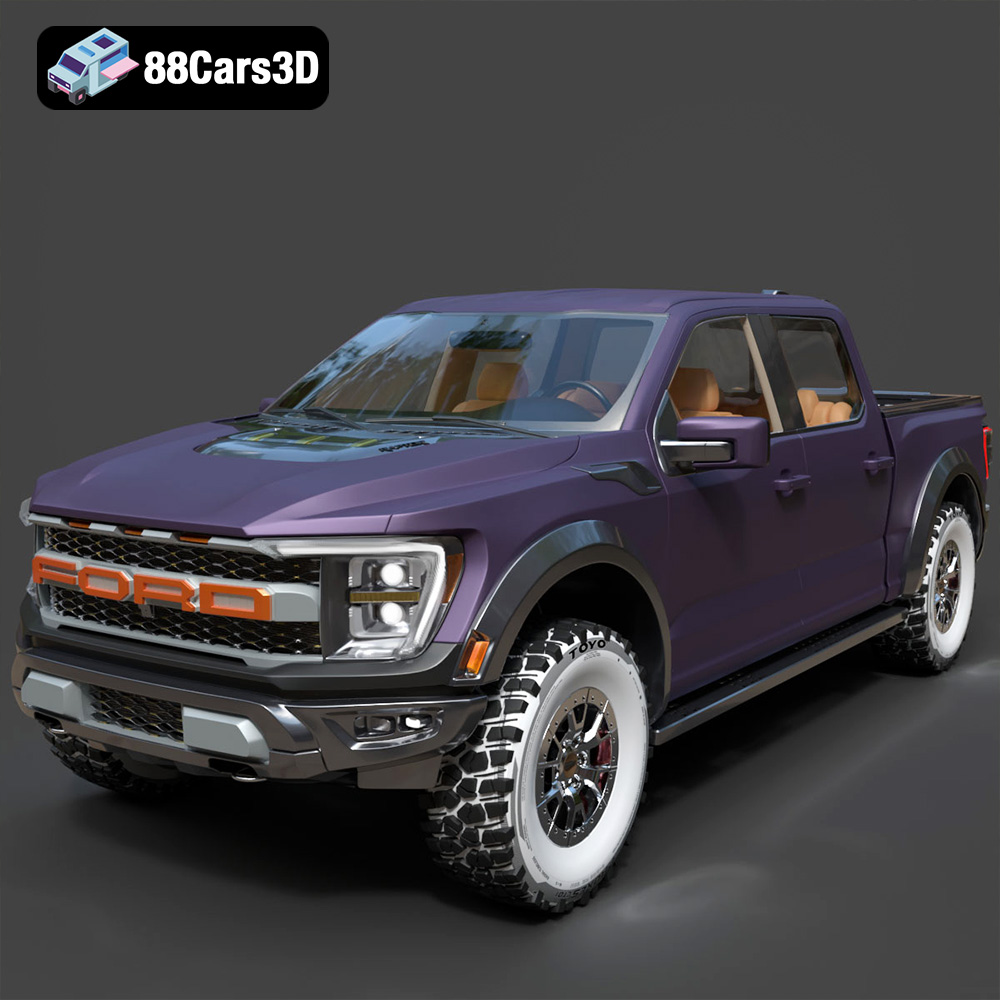
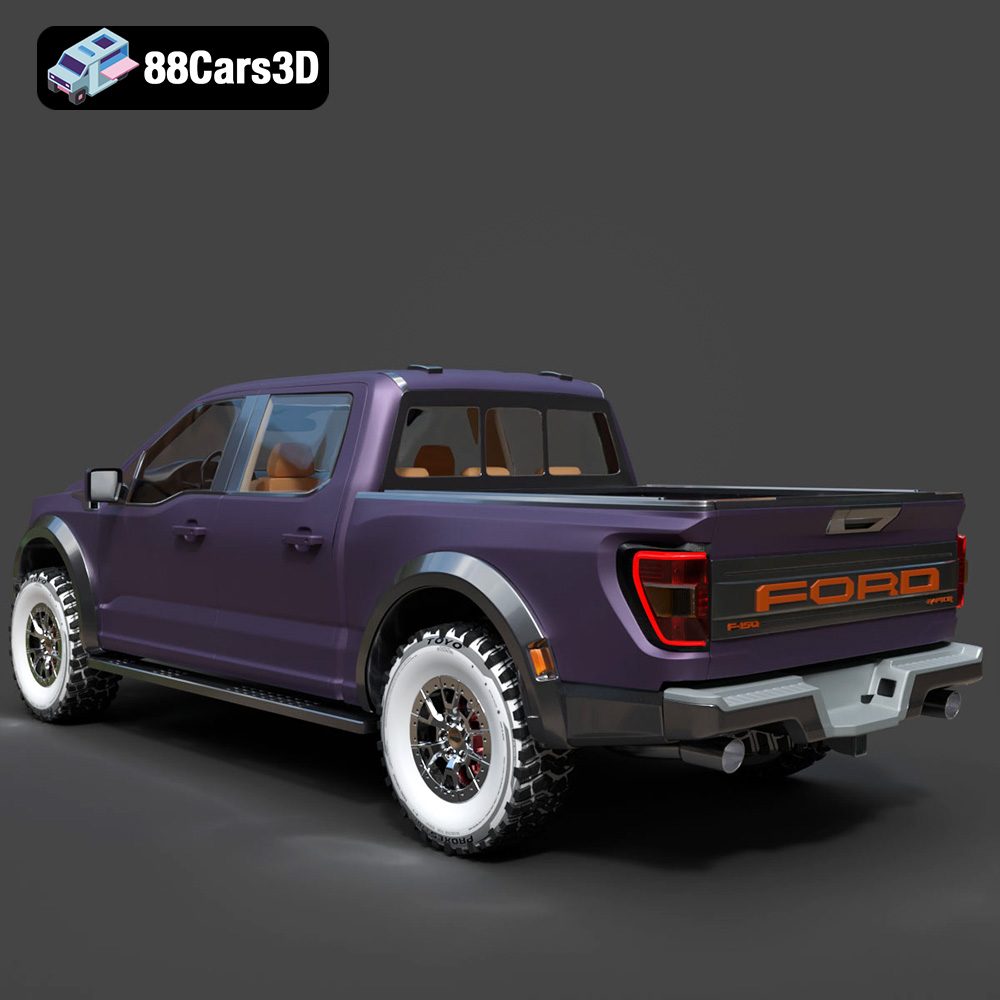
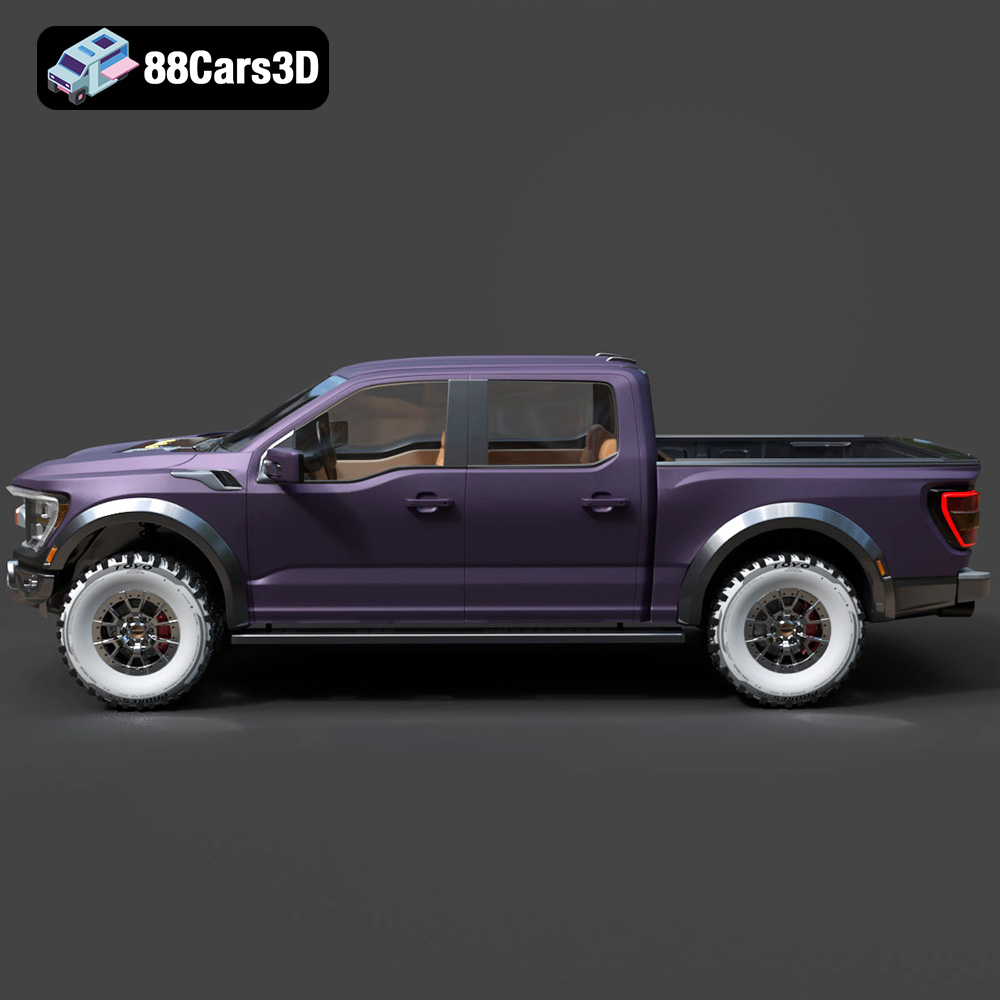
The Ford F-150 Raptor 2021 is not just a truck; it’s a statement. It’s an apex predator of the off-road, blending rugged capability with an aggressive, modern aesthetic. Capturing this essence in a digital format requires an unparalleled level of detail, from the signature widebody fenders to the complex mechanical undercarriage. For creators seeking to produce cinematic sequences, high-impact commercial renders, or realistic virtual environments, a meticulously crafted model like the Ford F-150 Raptor 2021 Ultra High-Poly 3D Model from 88cars3d.com is a game-changer. It’s engineered to perform as a “hero” asset, designed to withstand the closest scrutiny and deliver uncompromising photorealism.
The choice of file format for a 3D model is far more than a mere technicality; it dictates compatibility, functionality, and how seamlessly an asset integrates into various production pipelines. Understanding the strengths and weaknesses of each format is crucial for maximizing workflow efficiency and achieving desired project outcomes, especially for a complex automotive asset like the Ford F-150 Raptor 2021 Ultra High-Poly 3D Model.
The .blend file format is Blender’s native format, renowned for its comprehensive data storage. A .blend file can encapsulate an entire Blender scene, including not just the mesh data but also materials, textures, lighting setups, animation data, rigging, modifiers, and even custom scripts. This makes it an ideal choice for Blender users who want to retain full editability and access to all the original scene components. It’s perfect for collaborative projects where all team members use Blender, allowing for a complete, self-contained project transfer. For the Ford F-150 Raptor model, the .blend file would provide the most robust starting point for artists working within Blender, allowing them to dissect every intricate part, modify topology, or re-engineer materials with native tools.
Autodesk’s .fbx (Filmbox) format has emerged as an industry-standard interchange format, particularly for animation, real-time engines, and general 3D software compatibility. It excels at transferring geometry, materials, textures, lights, cameras, and crucially, animation data and rigging information between different applications. When preparing assets for game engines like Unreal Engine or Unity, .fbx is often the go-to choice due to its robust support for skeletal animations and efficient data handling. While the Ford F-150 Raptor model is ultra-high-poly, its .fbx version would be the primary candidate for import into these engines, where tools like Unreal’s Nanite can handle the polygon density, or for retopology efforts for standard real-time use.
The .obj (Wavefront OBJ) format is one of the oldest and most widely supported 3D file formats. It is a universal format primarily used for exchanging raw geometry data – vertices, normals, UVs, and polygonal faces. While it can reference external material files (.mtl), it doesn’t embed them, nor does it support animation or rigging. Its strength lies in its simplicity and widespread compatibility, making it an excellent fallback for cross-software compatibility when more complex formats fail or are not supported. For the Raptor model, the .obj file offers a clean, foundational mesh that can be imported into virtually any 3D application for basic rendering or further modeling work.
.glb (GLB, the binary version of glTF) is a relatively newer format designed for efficiency and interoperability, particularly in web-based 3D, Augmented Reality (AR), and Virtual Reality (VR) applications. It bundles all necessary assets – model, textures, animations, and materials – into a single binary file, making it highly optimized for fast loading and display in browsers and mobile environments. Its compact nature and modern design make it perfect for showcasing the Ford F-150 Raptor in an interactive online viewer or integrating it into an AR app, despite the model’s high poly count which would still require significant optimization for truly real-time, lightweight AR/VR experiences.
The .stl (Stereolithography) format is the ubiquitous standard for 3D printing. It represents a 3D model as a series of connected triangles (facets) without any color, texture, or material information. Its sole purpose is to define the surface geometry of a 3D object for manufacturing. When preparing the Ford F-150 Raptor for physical production, such as creating a highly detailed scale model, the .stl file would be the essential output. Given the Raptor model’s extreme detail, the .stl version would retain intricate features like suspension springs and tire treads, ensuring a high-quality print, though potentially requiring repair or optimization for complex meshes.
.ply (Polygon File Format) is another format for storing 3D data, often used for meshes resulting from 3D scanning or for applications requiring precise geometrical data like CAD or scientific analysis. It can store various properties beyond just geometry, such as color per vertex, normal vectors, and transparency, making it suitable for more complex data sets than .stl. While less common for general asset exchange, for specific industrial visualization or reverse engineering tasks involving the Ford F-150 Raptor, the .ply format could offer a robust and detailed representation of the mesh.
The term “.unreal” usually refers to a specific asset or project file optimized for direct import or integration into Unreal Engine. While not a native single file format like .blend or .max, it signifies an asset that has been meticulously prepared for the Unreal ecosystem. This preparation typically involves careful UV mapping, material setup, collision geometry, and potentially LODs (Levels of Detail) or Nanite-ready meshes. For the Ford F-150 Raptor 2021 model, the inclusion of an “.unreal” asset implies that it comes with a high degree of pre-configuration, saving significant setup time for developers aiming to drop this detailed truck into an Unreal Engine project, especially leveraging features like Nanite to handle its impressive polygon count.
Similar to .blend for Blender, .max is the native file format for Autodesk 3ds Max. It stores the complete scene, including geometry, materials, textures, lighting, cameras, animations, and modifiers, offering full editability within the 3ds Max environment. For professional studios and artists who rely on 3ds Max for its robust modeling, rendering (especially with V-Ray, Corona, or Arnold integrations), and animation capabilities, the .max file provides an uncompromised starting point. The Ford F-150 Raptor model in .max format ensures that all its intricate components and technical setups are preserved for users of this powerful software.
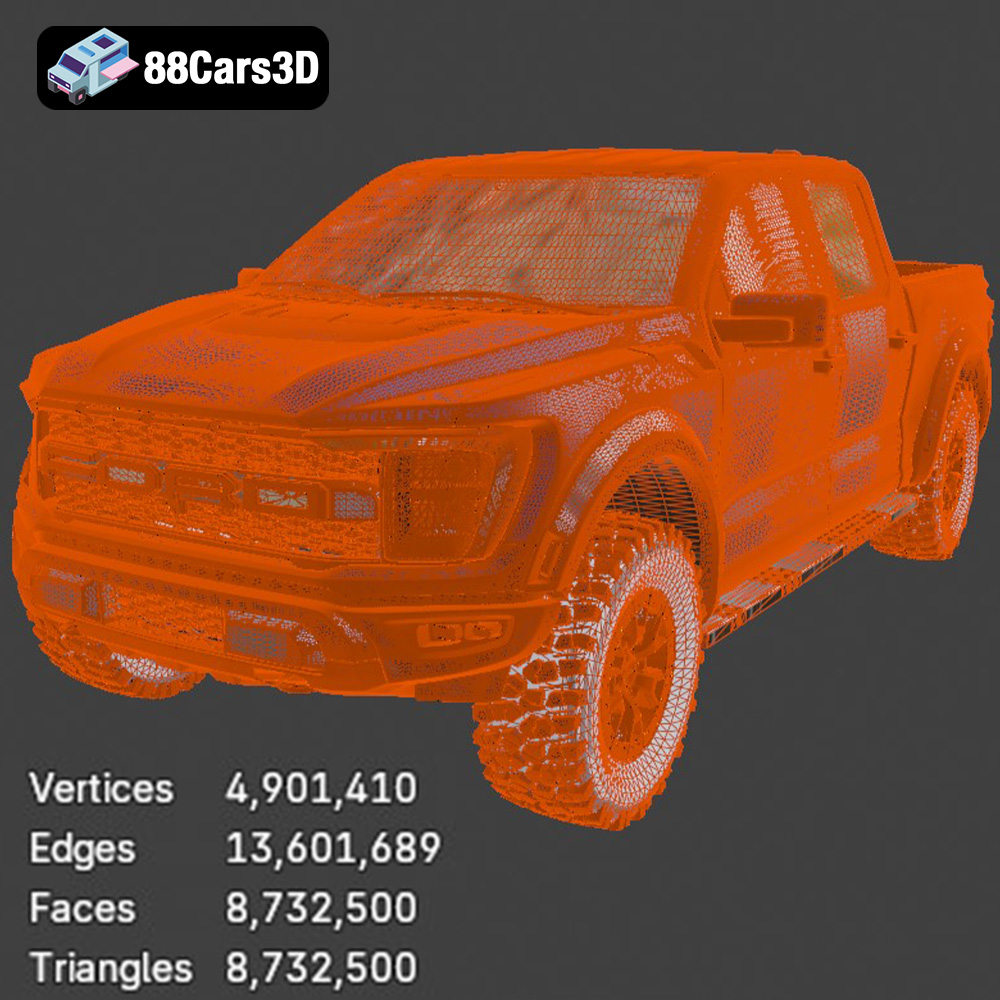
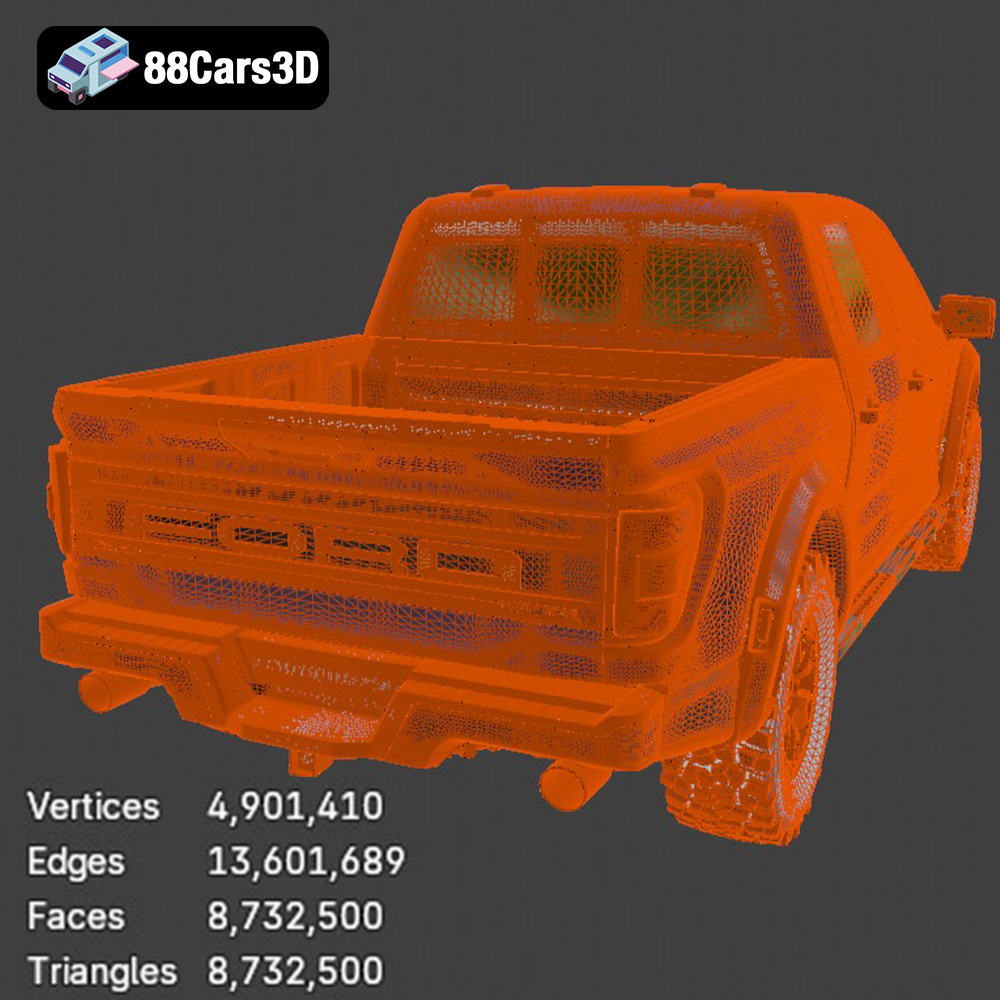
In the realm of high-end automotive visualization, mere likeness is insufficient. True photorealism demands a level of geometric fidelity that can withstand the closest inspection, particularly for cinematic-grade rendering and advanced virtual production. The Ford F-150 Raptor 2021 Ultra High-Poly 3D Model exemplifies this philosophy, boasting an astonishing 8.73 million triangles. This isn’t just a number; it’s a testament to the uncompromised artistic and technical effort invested in its creation.
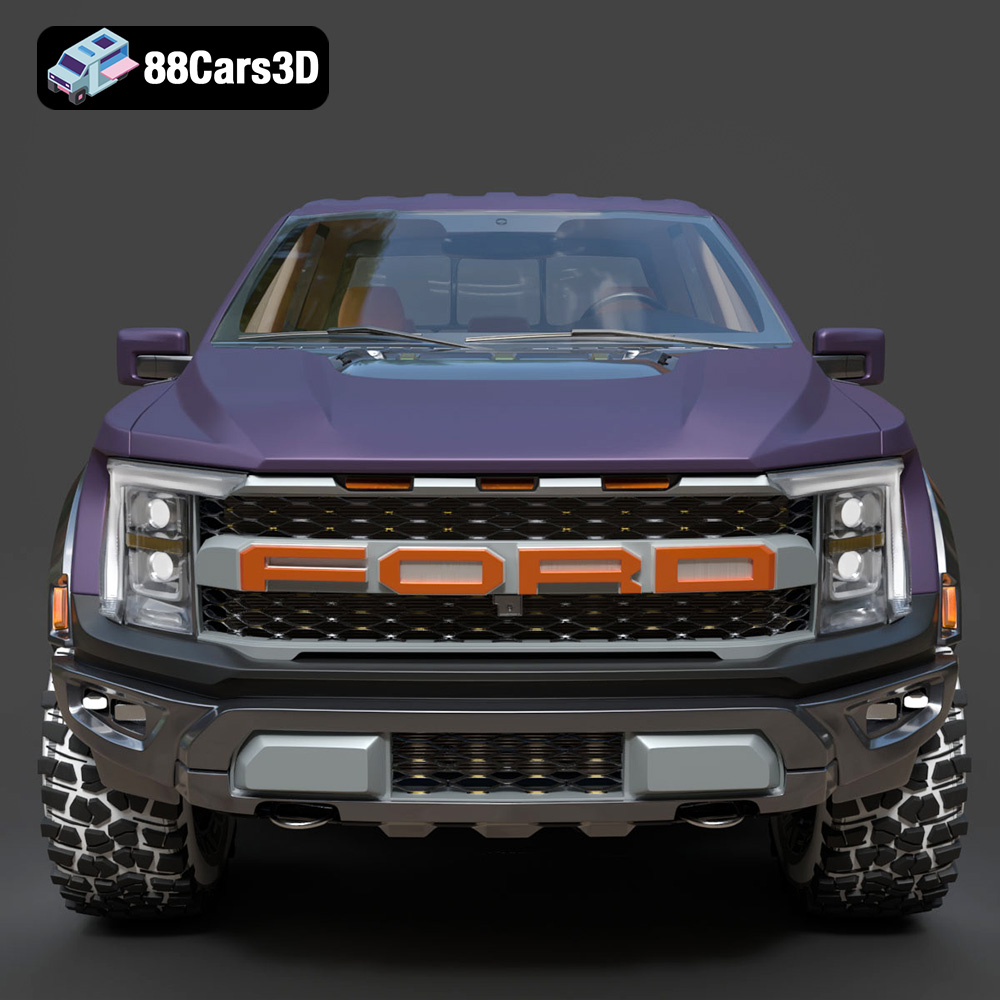
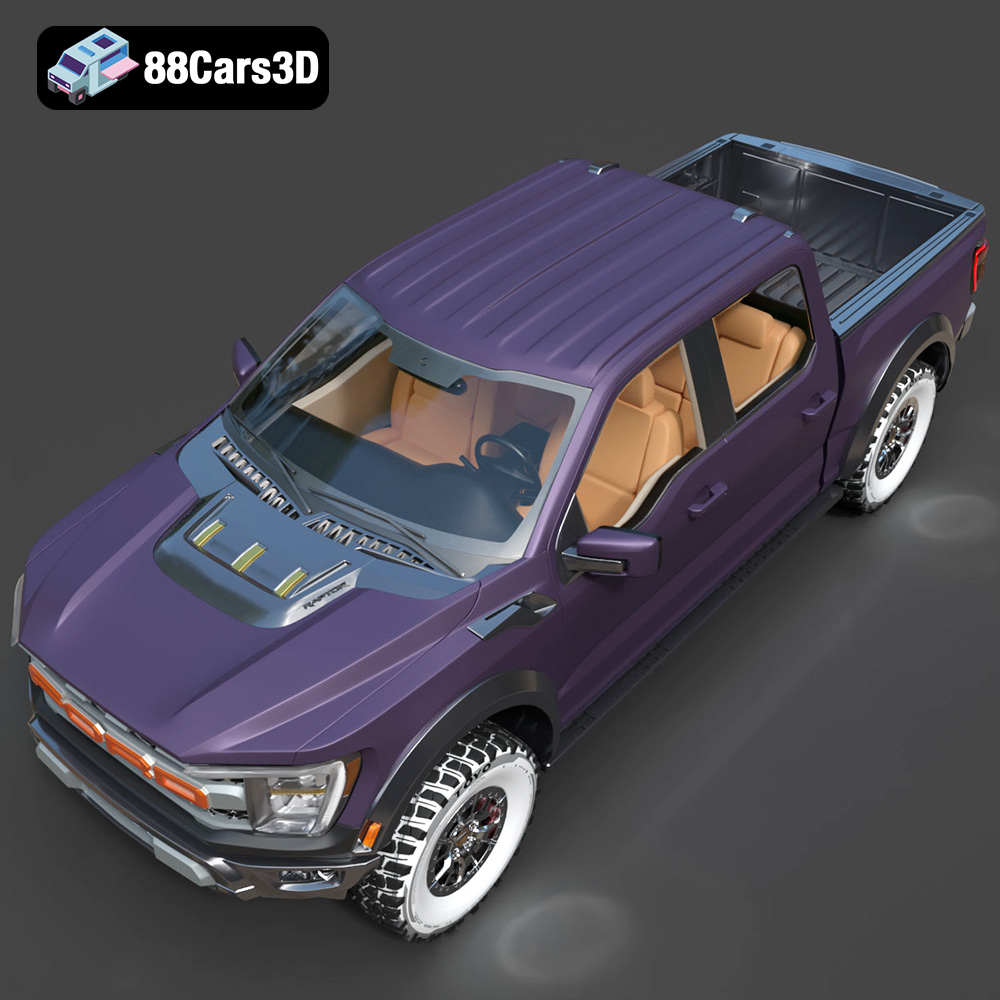
The 2021 Raptor’s design is inherently aggressive, from its widebody stance to its fighter-jet-inspired elements. This model painstakingly recreates every curve, vent, and component. The signature blacked-out “FORD” grille, complete with integrated amber LED marker lights, is not just a texture but a fully modeled, intricate mesh. Functional heat extractors on the hood and fenders, often simplified in lower-poly models, are here geometrically represented, ready to interact realistically with light and shadow. Even the 17-inch forged aluminum beadlock-capable wheels and their massive 37-inch BFGoodrich All-Terrain T/A KO2 tires feature intricate tread patterns and individual bolts, ensuring zero faceting even under extreme macro magnification. Such detail is crucial for establishing visual authenticity in any scene, from a dusty Baja desert to a high-gloss studio setup.
One of the true hallmarks of a premium automotive 3D model is its undercarriage detail, and the Ford F-150 Raptor 2021 Ultra High-Poly 3D Model sets a new standard. Unlike many models where the underside is an afterthought, this asset features a fully detailed mechanical underbelly. This includes heavy-duty bash plates, the revolutionary five-link rear suspension, Panhard rod, and next-generation FOX™ Live Valve shocks. Each component, from springs to hydraulic lines, is geometrically modeled. This level of detail is paramount for cinematic off-road showcases, where slow-motion suspension articulation shots are key, or for technical visualizations where the vehicle’s engineering needs to be highlighted. The proper pivot setup for steering, wheel rotation, door articulation, and complex suspension rigging further enables dynamic animation and interaction, making it invaluable for animators.
Beyond the rugged exterior, the interior of the 2021 Raptor is a blend of functionality and modern technology. This 3D model doesn’t neglect the cabin. It features an authentic, driver-focused layout, complete with the 12.0-inch SYNC 4 digital center touchscreen and the 12.4-inch digital instrument cluster. Premium seating geometry, whether for standard leather or the optional Recaro bucket seats with Alcantara inserts, is ready for high-resolution first-person POV renders. Even the distinctive Raptor-branded steering wheel, with its large aluminum paddle shifters and race-car-style top centering mark, is accurately modeled. This attention to interior detail ensures that the model is versatile enough for both external glamour shots and immersive internal perspectives, critical for marketing materials or interactive walkthroughs.
The true power of an ultra-high-poly asset like the Ford F-150 Raptor 2021 3D Model lies in its adaptability across various professional creative pipelines. From blockbuster visual effects to detailed 3D printing, its inherent quality streamlines complex tasks and elevates the final output.
For cinematic sequences, commercial VFX, and premium automotive pitches, visual integrity is non-negotiable. The Raptor’s 8.73 million triangles ensure that it performs as a “hero vehicle” asset, capable of holding up to extreme close-ups without a hint of artificiality. In 3ds Max or Blender, artists can leverage its separate components (wheels, steering, doors, suspension) for advanced mechanical rigging. This allows for realistic articulation in action sequences, such as simulating extreme off-road driving with fully functional suspension travel. Paired with powerful rendering engines like V-Ray, Corona, or Arnold, and dynamic HDRIs mimicking dusty Baja environments or moody studio lighting, the model enables the creation of renders indistinguishable from reality. This is the gold standard for automotive marketing and film-quality visual effects, where every reflection, every shadow, and every surface imperfection contributes to an immersive experience.
While an 8.73 million triangle model is exceptionally dense for traditional real-time game engines, it is perfectly positioned for next-generation platforms like Unreal Engine 5 leveraging Nanite technology. Nanite allows artists to import cinematic-quality assets directly into the engine, rendering millions of polygons per frame without performance degradation. This capability makes the Ford F-150 Raptor 2021 3D Model an incredible asset for photorealistic virtual production, high-fidelity driving simulators, or virtual reality experiences targeting high-end hardware. However, for standard game development, particularly for mobile or lower-spec VR applications, the model would require significant manual retopology and baking of normal maps from the high-poly mesh onto a much lower-poly game-ready version. This workflow, while intensive, ensures that the original ultra-high detail is preserved visually even on optimized meshes.
Beyond digital screens, the Ford F-150 Raptor model offers immense potential for physical creation. Its uncompromised topology makes it an incredible base for highly detailed, large-scale 3D prints, such as 1:10 or 1:8 custom RC crawler bodies or display-scale diecast hobbyist prints. The .stl format provided is directly compatible with 3D printing software. Given the intricate details of the undercarriage, suspension springs, beadlock bolts, and grille mesh, resin printing is strictly recommended to capture these fine elements. Users can experiment with print orientations – printing the body angled for a smooth surface finish, and components like wheels and chassis separately – to achieve optimal results. Post-processing with sanding, primer, and iconic Ford Raptor paint finishes like Code Orange or Velocity Blue can transform the digital model into a tangible, high-fidelity replica.
A truly versatile 3D asset provides not only raw detail but also the flexibility for artists and designers to tailor it to their unique project requirements. The Ford F-150 Raptor 2021 Ultra High-Poly 3D Model from 88cars3d.com offers extensive opportunities for customization and optimization, ensuring it integrates seamlessly into a myriad of creative endeavors.
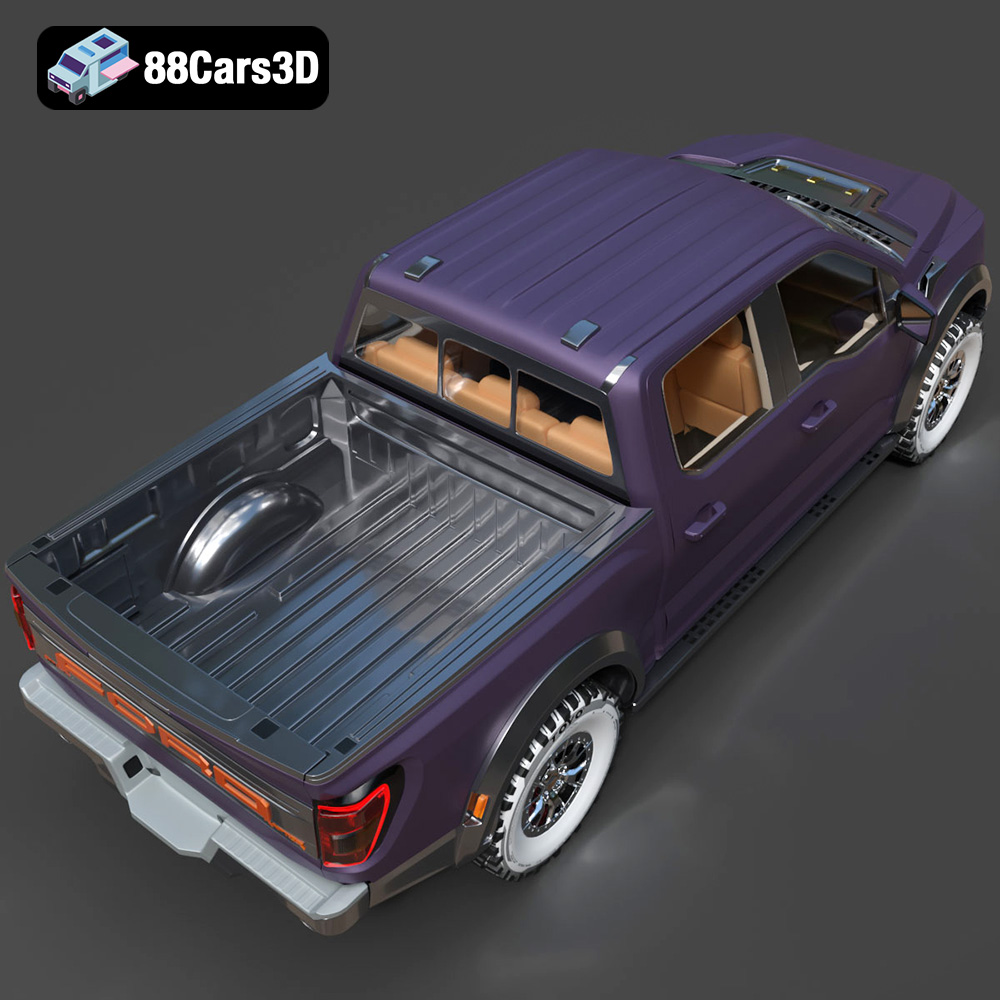
The base model provides an exceptional starting point, but the ability to personalize it is key for client work and diverse portfolio pieces. Artists can easily apply distinctive Raptor graphics packages, such as the prominent “37” bed side graphics or custom hood decals, to reflect specific trims or aftermarket looks. Furthermore, the model allows for configuring the exterior styling to match either the standard 35-inch tire setup or the more extreme Raptor 37 Performance Package, altering the vehicle’s stance and visual aggression. For specialized projects, the truck bed can be adapted to include functional elements like the 2.0-kW Pro Power Onboard generator or modular bed storage systems, adding another layer of realism and utility to renders or animations. This modularity extends to the rendering environment itself, enabling the use of various HDRIs to simulate bright, dusty Baja desert scenes or dramatic, moody studio lighting, each fundamentally changing the perceived character of the vehicle.
The inclusion of multiple file formats (.blend, .fbx, .obj, .glb, .stl, .ply, .unreal, .max) ensures maximum compatibility across industry-standard software. For a project requiring animation, the .fbx or .max/.blend files, with their proper pivot setups for steering, wheel rotation, and suspension articulation, are invaluable. This pre-rigged structure saves countless hours that would otherwise be spent setting up complex hierarchies and constraints from scratch. For designers leveraging the model for AR/VR presentations, the .glb format offers an optimized starting point for web-based viewers, although extensive retopology would still be necessary for real-time mobile performance. The real-world scale accuracy, based on Ford factory dimensions, guarantees that the model will fit perfectly into architectural visualization projects or other scenes requiring precise measurements without manual adjustments.
Investing in a meticulously crafted asset like this Ford F-150 Raptor model offers a significant strategic advantage. Building an ultra-high-poly vehicle of this caliber from scratch would demand hundreds, if not thousands, of hours from highly skilled 3D artists, modelers, and material artists. The cost and time associated with such an endeavor are prohibitive for many projects. By acquiring a production-ready model from a trusted source like 88cars3d.com, studios and freelancers can drastically reduce development timelines, reallocate resources to other critical project areas, and still deliver a superior visual product. It represents a powerful combination of quality, efficiency, and value, allowing creators to focus on artistic direction and storytelling rather than foundational asset creation.
The pursuit of visual excellence in 3D modeling is an ongoing journey, and for automotive enthusiasts and professionals, the Ford F-150 Raptor represents an iconic benchmark. The Ford F-150 Raptor 2021 Ultra High-Poly 3D Model from 88cars3d.com is not merely a digital representation; it is a meticulously engineered asset designed to empower creators across various industries. With over 8.7 million triangles, every detail, from the aggressive widebody to the intricate FOX™ Live Valve suspension and detailed interior, has been captured with uncompromised fidelity, ensuring true photorealism even under the most extreme close-up scrutiny.
This model’s versatility is underscored by its comprehensive range of included file formats – .blend, .fbx, .obj, .glb, .stl, .ply, .unreal, and .max – each catering to specific professional workflows, from cinematic rendering in 3ds Max to next-gen game development in Unreal Engine and high-fidelity 3D printing. Whether you are crafting a high-octane commercial, developing a cutting-edge simulation, or bringing a detailed scale model to life, this Raptor model provides the robust, production-ready foundation you need.
By leveraging such a high-quality asset, artists and studios save invaluable time and resources, allowing them to focus on innovation and creative storytelling rather than the arduous task of building complex vehicles from the ground up. The Ford F-150 Raptor 2021 Ultra High-Poly 3D Model stands as a testament to what’s possible when technical precision meets artistic passion, offering an unparalleled tool for anyone looking to push the boundaries of automotive visualization. Explore this exceptional 3D car model and elevate your next project to cinematic heights.
The Ford F-150 Raptor 2021 3D Model is an uncompromising, ultra-high-detail digital recreation of the third-generation apex desert predator. Built to conquer the harshest off-road environments at high speeds, the 2021 Raptor marries trophy-truck capability with an aggressive, jet-inspired widebody design. This 3D model meticulously captures the sheer brutality and complex engineering of the modern Raptor. It features the massive blacked-out “FORD” grille, functional heat extractors on the hood and fenders, Rigid™ LED off-road fog lamps, and dual active exhaust tips. Most importantly for a model of this caliber, the undercarriage is fully detailed, showcasing the revolutionary five-link rear suspension, Panhard rod, and next-generation FOX™ Live Valve shocks. Built with an unbelievably dense and uncompromised topology (over 8.7 million triangles), it delivers absolute photorealism. This model is engineered to hold up to the most extreme close-up macro shots of both the exterior body and the complex mechanical underbelly. Perfect for high-octane cinematic off-road showcases, premium commercial VFX, heavy-duty automotive visualization, and extreme-detail 3D printing.
$29.99
.4×4
.automotive
.blend
.fbx
.ford
.obj
.raptor
.rendering
2021-ford
3d printing
car-3d-model
f-150
f150-raptor
hero-car
high poly
off-road
pickup-truck
vfx