Get 50% OFF All Premium 3D & STL Models!

In the rapidly evolving landscape of digital visualization, the demand for incredibly detailed and authentic 3D assets has never been higher. From breathtaking cinematic sequences to immersive virtual reality experiences and hyper-realistic architectural renderings, the quality of a 3D model can make or break a project. Automotive design, in particular, thrives on precision and visual fidelity. Capturing the intricate curves, the purposeful aerodynamics, and the luxurious finishes of a modern supercar requires not just skill, but access to truly exceptional digital assets. This is where professional-grade 3D car models become indispensable tools for artists, developers, and designers alike.
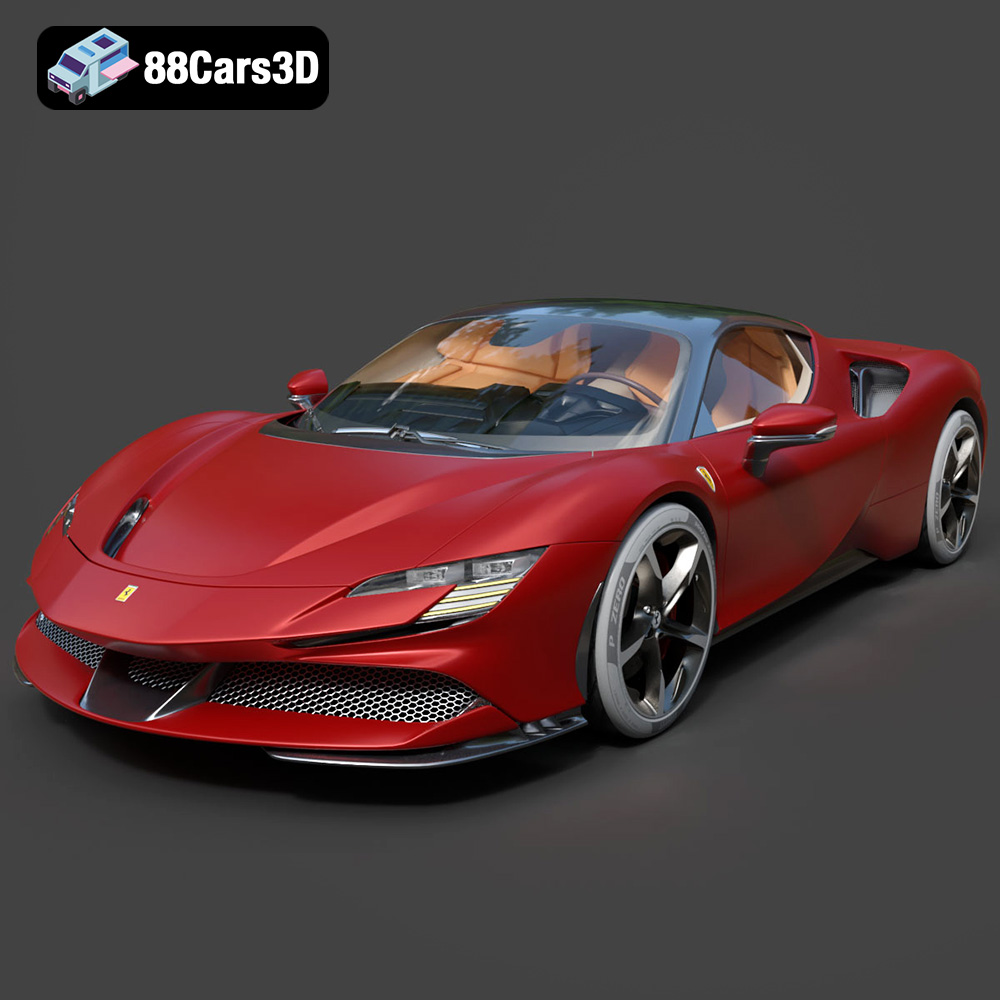
Imagine showcasing a vehicle that epitomizes peak engineering and aesthetic prowess, like the Ferrari SF90 Stradale. This isn’t just a car; it’s a statement of innovation, a symphony of form and function. To represent such a masterpiece in a digital realm, a 3D model must do it justice. It needs to possess clean geometry for smooth deformations, high-resolution textures for photorealistic rendering, and a thoughtful setup for seamless integration into various software pipelines. The right 3D model transforms a concept into a tangible, explorable reality, opening up a world of possibilities for marketing, simulation, and entertainment.
The choice of file format is a critical first step in any 3D project, directly impacting compatibility, functionality, and the efficiency of your workflow. Different formats are optimized for distinct purposes, from real-time game engines to high-fidelity rendering or even 3D printing. Understanding these distinctions is paramount for anyone working with professional 3D car models like the Ferrari SF90 Stradale 2020 3D Model, ensuring you select the right tool for the job.
The .blend format is native to Blender, a powerful and increasingly popular open-source 3D creation suite. A .blend file typically encapsulates an entire scene, including the 3D model itself, materials, textures, lighting setups, cameras, animations, and even physics simulations. This makes it an incredibly self-contained and flexible format for Blender users. When a model like the Ferrari SF90 Stradale is provided as a .blend file, it offers immediate access to a fully editable scene, allowing artists to dissect its construction, modify materials, adjust lighting, or integrate it into larger Blender projects without any loss of data. It’s ideal for those who prefer to work within the Blender ecosystem for modeling, rendering (Cycles or Eevee), and animation.
.fbx (Filmbox) is a proprietary file format owned by Autodesk and is widely considered the industry standard for exchanging 3D data between different software applications. Its strength lies in its ability to store not just mesh data, but also complex information like animations, skeletal rigs, skinning, blend shapes, cameras, lights, and material properties. This makes .fbx invaluable for pipelines involving multiple software packages, such as transferring a car model from 3ds Max to Unreal Engine or Unity. For game developers, an .fbx file of a 3D car model like the SF90 Stradale is often the first choice due to its robust support for game engine import, ensuring that materials, UVs, and hierarchical structures are preserved, making it truly “game-engine ready.”
The .obj (Object) format is one of the oldest and most universally supported 3D file formats. It’s a simple, text-based format primarily used to store 3D geometry (vertices, normals, texture coordinates, and faces) and can reference external material (.mtl) files for color and texture information. While it doesn’t support advanced features like animation or rigging, its widespread compatibility makes it an excellent choice for basic mesh exchange between virtually any 3D software. If you need to import the Ferrari SF90 Stradale into a niche application or ensure maximum compatibility, .obj is a reliable fallback, offering clean geometry without unnecessary complexities.
.glb (GL Transmission Format Binary) is the binary version of glTF, a royalty-free specification for the efficient transmission and loading of 3D scenes and models by applications. .glb files consolidate all assets (geometry, textures, animations) into a single file, making them highly optimized for web-based 3D, augmented reality (AR), and virtual reality (VR) applications. Its compact size and efficient parsing make it ideal for delivering interactive 3D content in browsers or mobile AR/VR experiences, where performance and loading times are crucial. A .glb version of a car model ensures it’s primed for these emerging interactive platforms.
.stl (Stereolithography) is almost exclusively used for 3D printing and rapid prototyping. It describes only the surface geometry of a 3D object using a collection of interconnected triangles. It does not carry color, texture, or material information. When preparing a 3D car model like the Ferrari SF90 Stradale for physical production, an .stl file is essential. It’s the standard input for most 3D printers, translating the digital form into a printable mesh.
The .ply (Polygon File Format) format is designed for storing data from 3D scanners, making it excellent for high-precision mesh data. It can store various properties beyond just geometry, such as color per vertex, normal vectors, transparency, and even material properties. While less common for general 3D model exchange, it is valuable for scientific visualization, CAD applications, and situations requiring detailed analysis of mesh structures, often used for representing complex surfaces or engineering data.
The .unreal designation often refers to assets that are not just compatible but specifically pre-configured and optimized for Unreal Engine. This typically means the model has been imported, had its materials set up using Unreal’s physically-based rendering (PBR) system, had collision meshes generated, and potentially includes LODs (Levels of Detail) and other engine-specific optimizations. For the Ferrari SF90 Stradale 3D model, a .unreal file implies a direct, drag-and-drop solution for integration into Unreal Engine projects, saving significant development time and ensuring visual consistency within the engine’s environment.
The .max format is the native file type for Autodesk 3ds Max, one of the most widely used 3D modeling, animation, and rendering software packages in the professional industry. Similar to .blend, a .max file contains a complete scene, including geometry, materials, textures, lights, cameras, animations, and modifiers. For artists and studios heavily invested in 3ds Max for architectural visualization, product design, or cinematic rendering, a .max file of the Ferrari SF90 Stradale provides the highest level of editability and direct access to all components of the model, enabling advanced customization and integration into complex 3ds Max scenes.
Automotive rendering is a specialized field where the boundaries between digital and reality blur. It’s about more than just applying a shiny material; it’s about meticulously recreating the physics of light, the nuances of reflection, and the subtle imperfections that give an object its character. When working with a premium 3D car model, such as the Ferrari SF90 Stradale 2020 3D Model from 88cars3d.com, the goal is often photorealism, whether for marketing, product visualization, or high-end cinematics.
The cornerstone of modern photorealistic rendering is Physically Based Rendering (PBR). PBR materials simulate how light interacts with surfaces in the real world, taking into account properties like metallicness, roughness, albedo (base color), normal maps for surface detail, and ambient occlusion. A high-quality 3D car model will come with PBR-ready materials and high-resolution textures, often 4K or even 8K, for crucial areas. For the Ferrari SF90 Stradale, this means accurately representing the paint’s metallic flake, the subtle grain of carbon fiber, the sheen of leather interiors, and the clear refraction of headlights. Clean UV mapping is essential here, ensuring textures are applied without distortion and maximizing resolution where needed most, such as on the car’s body panels and emblem.
Even the most exquisite 3D model will look flat without proper lighting. Automotive rendering often employs High Dynamic Range Image (HDRI) maps to simulate real-world lighting environments, providing accurate reflections and ambient illumination. Combined with targeted area lights, spotlights, and subtle global illumination settings, an artist can sculpt the car’s form, emphasize its lines, and create dramatic visual narratives. The Ferrari SF90 Stradale, with its dynamic form, benefits immensely from studio lighting setups that highlight its aggressive stance and elegant curves, or outdoor HDRIs that place it realistically within a chosen environment, whether a bustling city street or a serene mountain pass.
The rendering process doesn’t end when the image is calculated. Post-processing in tools like Adobe Photoshop or Nuke adds the final layer of realism and artistry. This includes color grading, bloom effects, depth of field, chromatic aberration, and subtle lens flares to mimic real camera optics. Compositing rendered passes—such as diffuse, specular, reflection, and shadow passes—allows for granular control over the final image, ensuring the Ferrari SF90 Stradale appears perfectly integrated into its background and conveys the desired mood and impact.
The interactive nature of game development places unique demands on 3D assets. Performance, optimization, and seamless integration are paramount. A top-tier 3D car model, like those available on 88cars3d.com, needs to strike a balance between visual fidelity and real-time efficiency. The Ferrari SF90 Stradale 2020 3D Model, designed with game development in mind, exemplifies this balance.
While high poly counts are acceptable for offline rendering, game engines require carefully optimized geometry. This involves techniques like polygon reduction, ensuring models use only as many triangles as necessary without sacrificing perceived detail. Implementing Levels of Detail (LODs) is crucial: lower-resolution versions of the model are swapped in when the car is further from the camera, dramatically reducing rendering overhead. The Ferrari SF90 Stradale model is built with “clean and efficient geometry,” indicating it’s ready for these optimizations. Beyond geometry, efficient UV mapping and texture packing (combining multiple textures into one atlas) further enhance performance.
Once imported (often via .fbx or the dedicated .unreal format for Unreal Engine), the 3D car model’s materials need to be configured within the game engine’s PBR system. This involves connecting albedo, normal, roughness, metallic, and ambient occlusion maps to the engine’s shader graphs. For a car like the SF90, proper material setup is vital for its appearance under dynamic lighting conditions. Furthermore, setting up collision meshes is critical for realistic physics interactions. This can involve simple box colliders for basic interaction or complex concave colliders for accurate car-on-car or car-on-environment collisions. Implementing vehicle physics, from suspension and tire friction to engine torque and aerodynamics, brings the Ferrari SF90 Stradale to life as a drivable asset within the game world.
Beyond static models, games often require animated elements. This includes opening doors, rotating wheels, steering, and even suspension compression. These animations can be pre-baked into the .fbx file or controlled dynamically by the game engine. Visual effects (VFX) such as tire smoke, headlight flares, brake glow, and exhaust heat haze add another layer of immersion. The Ferrari SF90 Stradale, with its high-performance nature, benefits from carefully crafted VFX that underscore its power and speed, enhancing the player’s experience. Integrating these elements requires a well-structured model with clearly defined pivot points and hierarchies.
The versatility of high-quality 3D car models extends far beyond traditional rendering and game development. Emerging technologies like Augmented Reality (AR) and Virtual Reality (VR), alongside practical applications like 3D printing and scientific visualization, are leveraging these digital assets in innovative ways. The Ferrari SF90 Stradale 2020 3D Model, with its diverse file format offerings, is perfectly positioned for these cutting-edge applications.
AR and VR environments demand highly optimized yet visually appealing 3D models. In AR, a virtual car can be placed in a real-world environment through a smartphone or tablet, allowing potential customers to explore it at scale in their driveway. In VR, users can step inside a virtual showroom, inspect every detail of the interior, and even “drive” the car in a simulated environment. The .glb format is particularly crucial here, as it provides an efficient, single-file solution for deploying the Ferrari SF90 Stradale model across these platforms with minimal loading times and excellent visual quality. This enables engaging product showcases and interactive training simulations that were once impossible.
The journey of a 3D car model can even lead to the physical world. While a full-scale Ferrari SF90 Stradale is out of reach for most, its 3D model can be prepared for 3D printing. The .stl format, specifically tailored for this purpose, allows designers and enthusiasts to create physical prototypes, scale models, or even intricate components for custom projects. This capability is invaluable for automotive designers to quickly iterate on physical forms, engineers to test concepts, or hobbyists to collect highly detailed replicas. The clean geometry of the digital model ensures a successful translation to a tangible object, free from mesh errors that could hinder printing.
Beyond aesthetics, 3D car models serve critical roles in scientific and engineering fields. For example, the detailed geometry of a vehicle like the SF90 Stradale can be used in computational fluid dynamics (CFD) simulations to analyze airflow, drag, and downforce. Engineers can visualize stress points, optimize structural integrity, or study crash dynamics. The .ply format, with its capacity for rich vertex data, can be particularly useful for representing highly precise scanner data or simulation results. This kind of visualization provides invaluable insights, driving innovation in automotive research and development.
The professional landscape of 3D content creation is diverse, with various software packages excelling in different aspects. Whether your focus is high-end rendering, game development, or general 3D art, knowing how to leverage a versatile 3D asset like the Ferrari SF90 Stradale 2020 3D Model within industry-standard tools is key to success.
Autodesk 3ds Max remains a powerhouse for architectural visualization, product rendering, and animation. With the .max file provided, users gain full control over the Ferrari SF90 Stradale model. This means immediate access to its intricate mesh, PBR materials configured for renderers like V-Ray or Corona, and potential animation rigs for elements like wheels or doors. Artists can easily integrate the car into complex scene setups, add detailed environments, create cinematic camera paths, and render photorealistic stills or animated sequences for marketing campaigns. The editable nature of the .max file allows for deep customization, from subtle material tweaks to complete scene overhauls, ensuring the Ferrari SF90 Stradale perfectly fits the client’s vision.
Blender’s open-source nature and robust feature set have cemented its place in many professional pipelines. The .blend file of the Ferrari SF90 Stradale offers a complete, editable scene that can be directly opened and manipulated. Blender artists can utilize its powerful modeling tools to further refine or modify the car, leverage its Cycles or Eevee renderers for stunning visuals, or even integrate it into physics simulations. Blender’s node-based shader system provides immense flexibility for material customization, allowing artists to adapt the car’s appearance to any artistic style or lighting condition. For independent creators and studios looking for a cost-effective yet professional solution, this makes the Ferrari SF90 Stradale model from 88cars3d.com an incredibly accessible and valuable asset.
Unreal Engine has transcended its gaming roots to become a leading platform for real-time architectural visualization, virtual production, and high-fidelity cinematics. The .unreal and .fbx formats are specifically tailored for seamless integration. Upon importing the Ferrari SF90 Stradale, developers can immediately leverage Unreal’s physically based rendering, global illumination systems (like Lumen), and advanced lighting tools to create interactive experiences or stunning real-time renders. From setting up drivable vehicles with realistic physics to choreographing cinematic fly-throughs, the engine-ready model significantly accelerates development. Its optimized geometry and pre-configured materials mean less setup time and more focus on creative implementation, making the Ferrari SF90 Stradale an ideal asset for cutting-edge real-time projects.
The market is flooded with 3D models, but discerning professionals understand that quality varies widely. When investing in a 3D car model, especially for high-stakes projects, several factors must be considered to ensure the asset meets technical and aesthetic standards. Products like the Ferrari SF90 Stradale 2020 3D Model available at 88cars3d.com exemplify the benchmarks for professional quality.
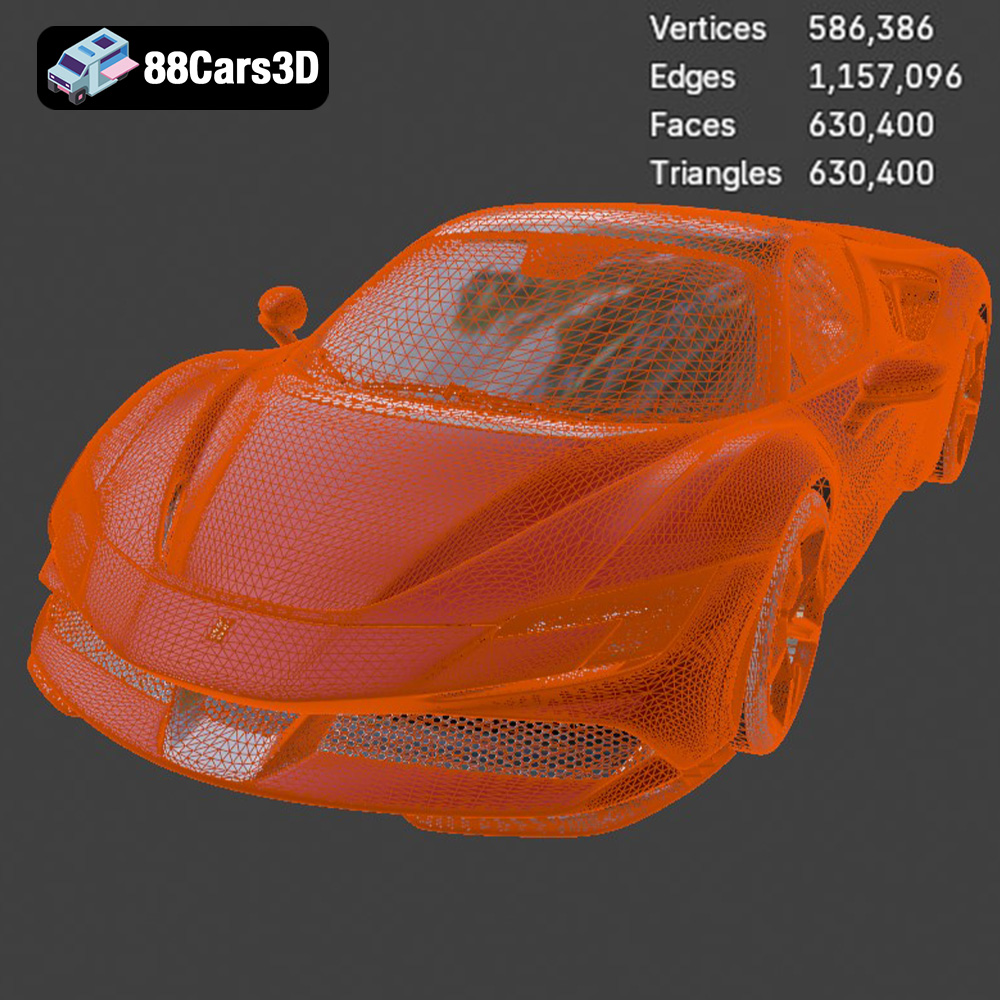
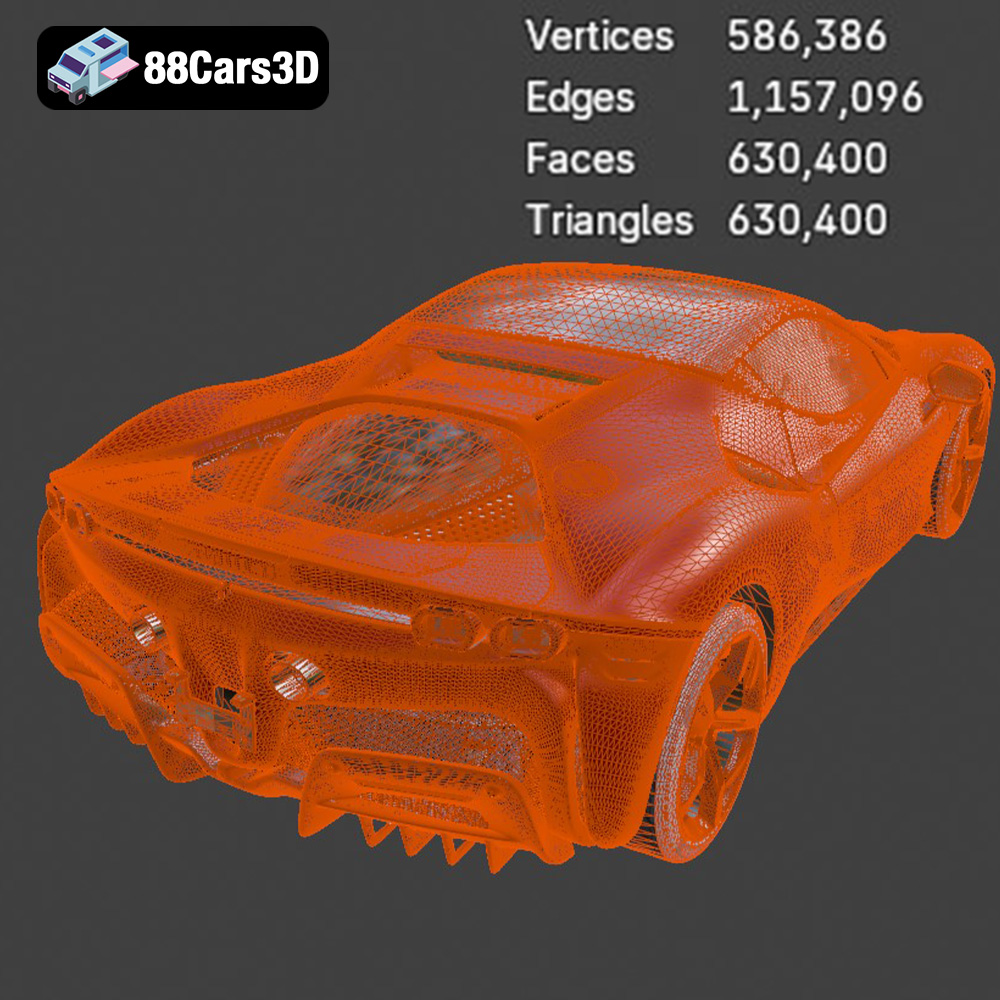
The underlying mesh structure, or topology, is fundamental. A high-quality model features “clean and efficient geometry,” typically composed primarily of quads (four-sided polygons) rather than tris (triangles) or n-gons (polygons with more than four sides) where possible. This ensures smooth subdivision, predictable deformation during animation, and ease of modification. Poor topology can lead to artifacts, shading errors, and difficulties in UV unwrapping. For a complex vehicle like the Ferrari SF90 Stradale, clean topology is crucial for representing its sleek lines and intricate details without visual glitches, whether it’s viewed up close or from a distance.
As discussed, PBR materials and high-resolution textures are non-negotiable for photorealism. Examine screenshots or inspect the model for texture quality, clarity, and whether essential maps (albedo, normal, roughness, metallic, ambient occlusion) are present. The difference between a generic gray material and a meticulously crafted paint shader, complete with metallic flake and subtle imperfections, is immense. The Ferrari SF90 Stradale model boasts “realistic and high-resolution materials,” promising a truly lifelike appearance straight out of the box, saving artists countless hours of texture creation and refinement.
A truly professional 3D car model offers versatility. This means providing a range of file formats to accommodate various software and project types. The Ferrari SF90 Stradale 2020 3D Model’s extensive format list—including .blend, .fbx, .obj, .glb, .stl, .ply, .unreal, and .max—is a testament to its “professional-grade quality” and readiness for any pipeline. This comprehensive support ensures that whether you’re rendering in 3ds Max, developing a game in Unreal Engine, creating AR experiences, or even 3D printing a miniature, you have the appropriate, optimized asset at your fingertips, minimizing conversion issues and maximizing workflow efficiency.
Choosing a reliable source like 88cars3d.com for your 3D car models ensures you acquire assets that meet these stringent professional standards, allowing you to focus on your creative vision rather than wrestling with subpar digital content.
The digital automotive landscape demands unparalleled realism and technical precision. From cinematic rendering to immersive game environments and groundbreaking AR/VR experiences, the foundation of any successful project lies in the quality of its 3D assets. Understanding the nuances of file formats, the intricacies of rendering pipelines, and the demands of real-time optimization are not just good practices—they are essential for bringing digital vehicles to life.
The Ferrari SF90 Stradale 2020 3D Model stands as a prime example of a professional-grade asset, offering not only breathtaking visual fidelity but also robust technical specifications designed for diverse applications. Its clean geometry, high-resolution PBR materials, and wide array of compatible file formats (from .blend and .max for traditional rendering to .fbx and .unreal for game engines, and .glb for AR/VR) ensure it’s a versatile tool for any artist or developer.
By leveraging meticulously crafted 3D car models from trusted sources like 88cars3d.com, you empower your projects with the realism, flexibility, and performance required to captivate audiences and achieve your creative ambitions. Whether you’re a seasoned professional or an aspiring enthusiast, investing in quality assets like the Ferrari SF90 Stradale 2020 3D Model is a critical step towards realizing truly stunning digital automotive experiences.
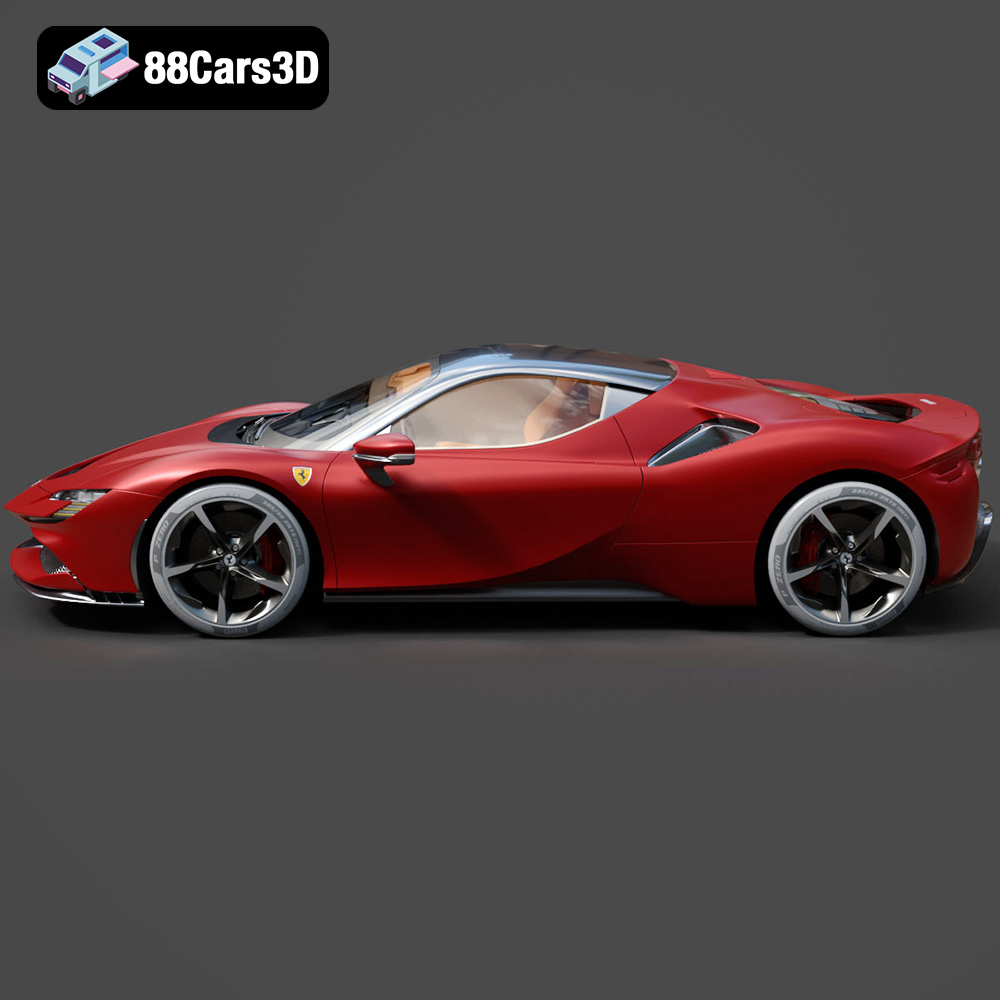
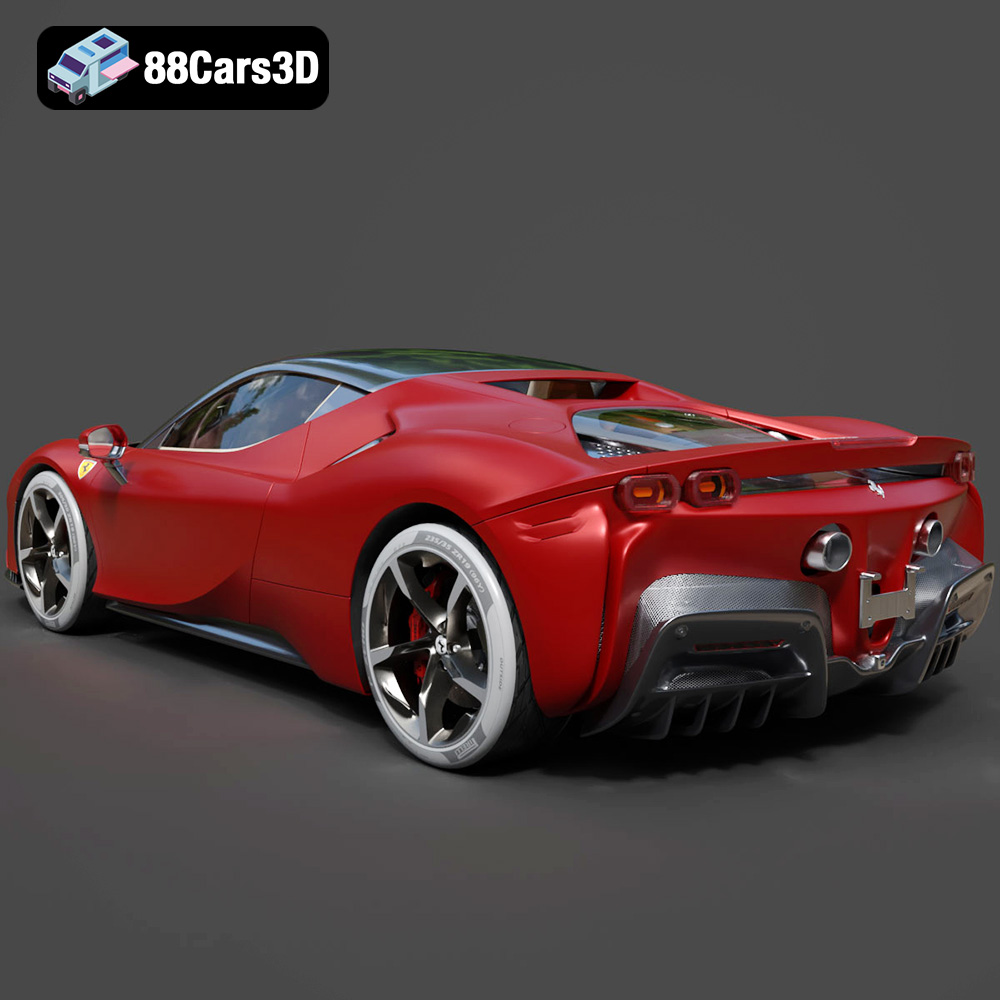
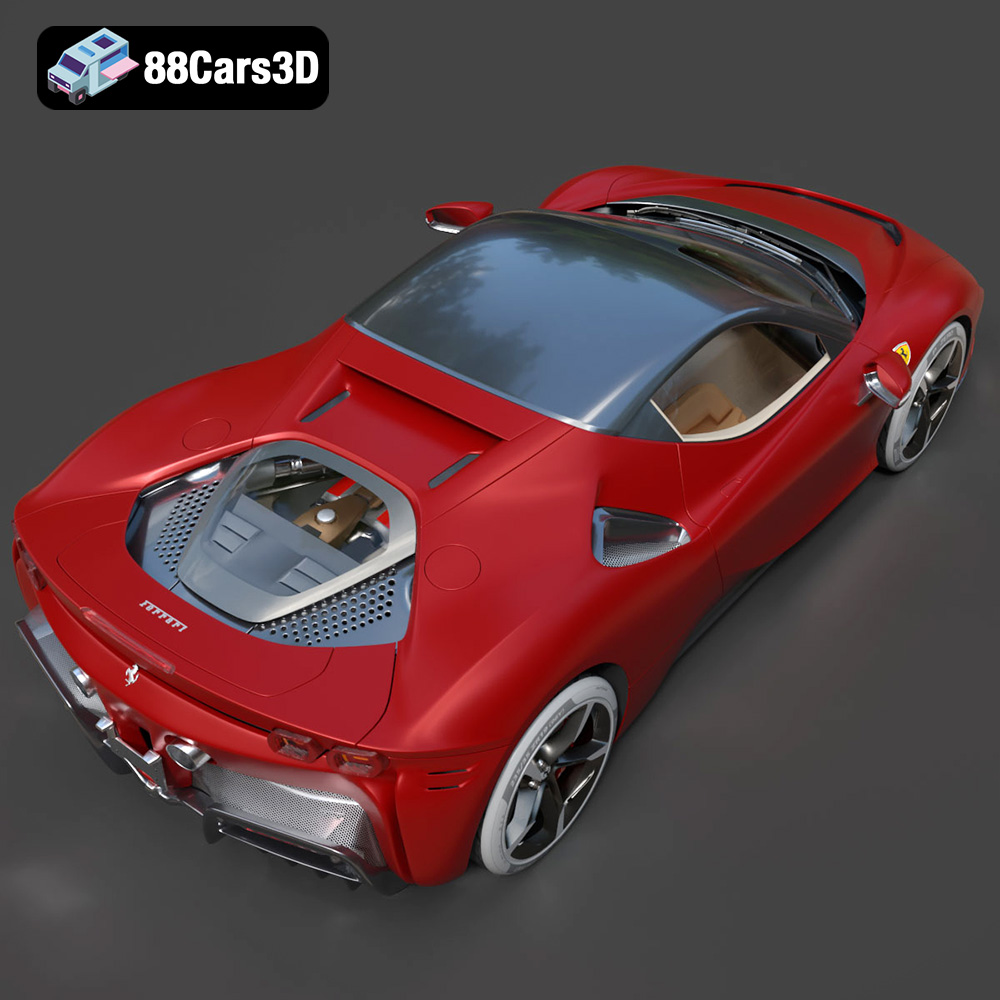
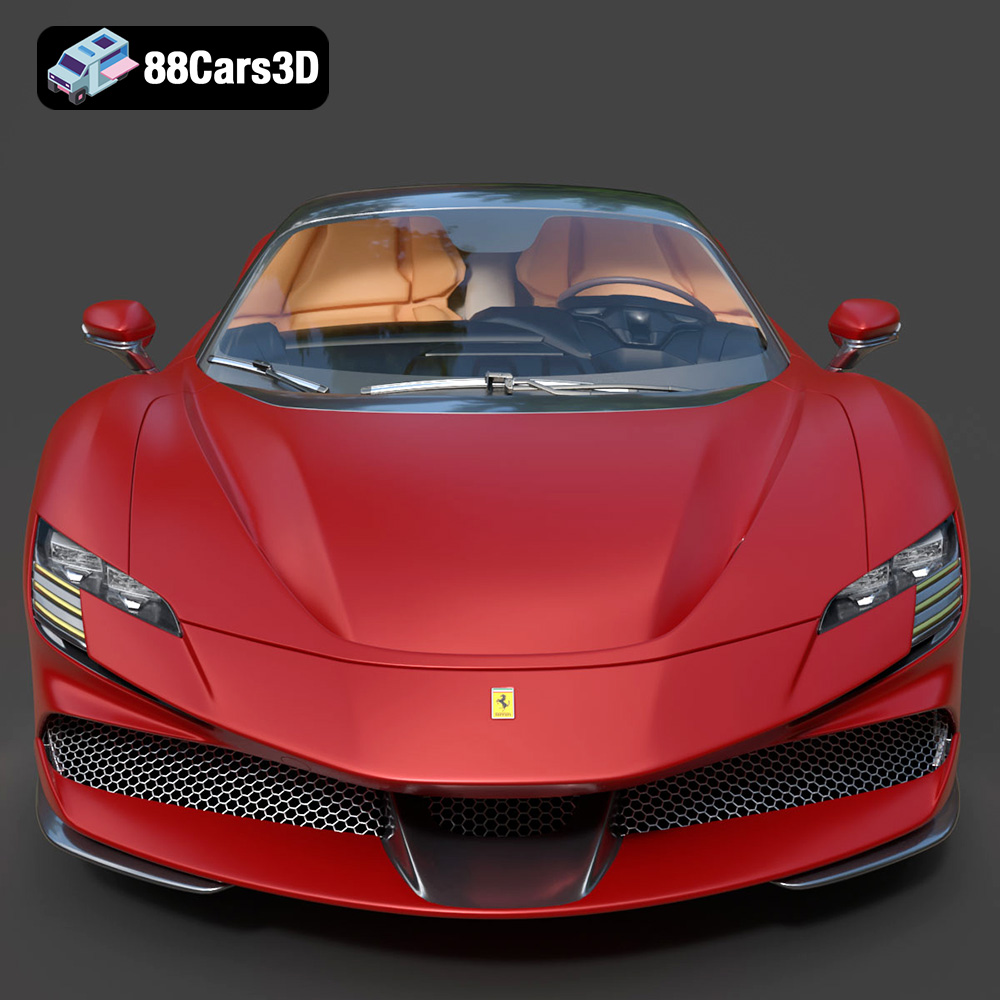
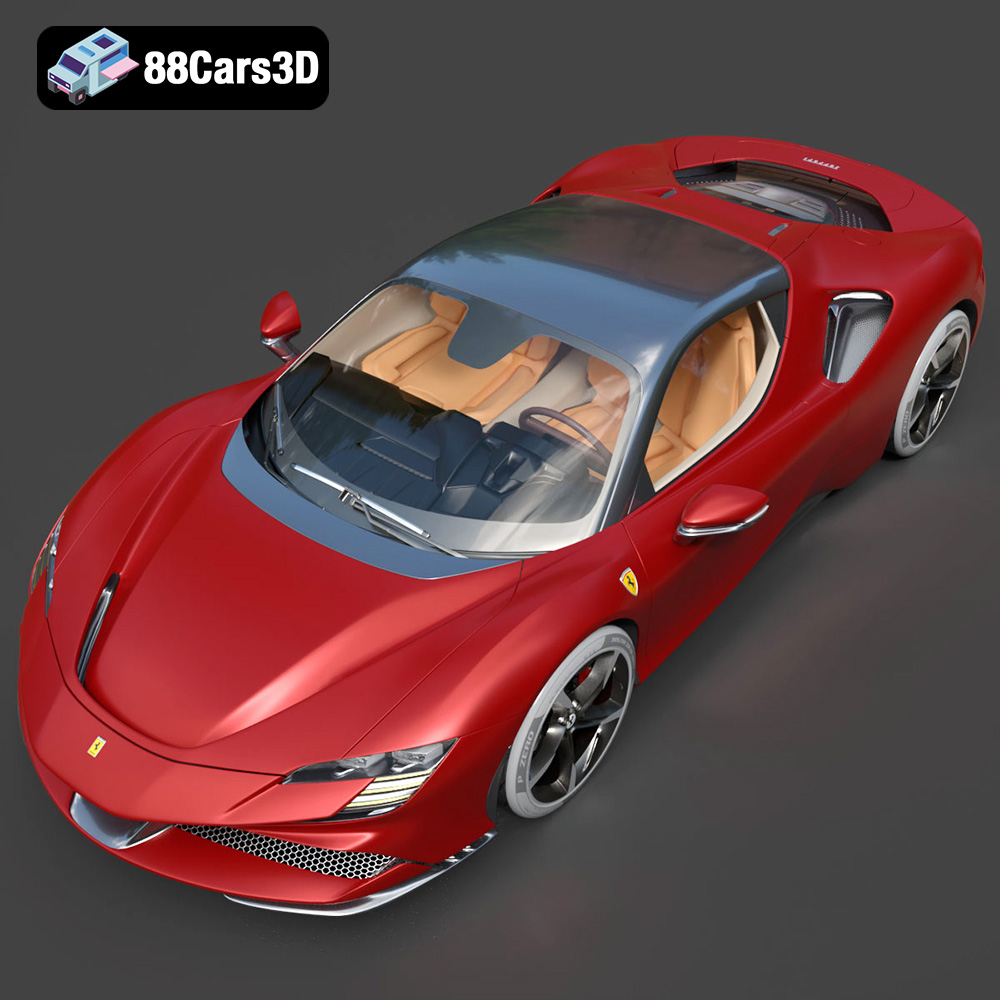
Experience the pinnacle of automotive engineering with our meticulously crafted 3D model of the Ferrari SF90 Stradale. This model embodies the perfect fusion of hypercar performance and cutting-edge technology, capturing every detail of the iconic Italian masterpiece with stunning accuracy. Our 3D model features clean geometry, ensuring seamless integration into any project. Realistic materials and textures enhance the visual fidelity, delivering a lifelike representation that stands out in any application. Created with professional quality in mind, this model is optimized for a variety of uses, from game development to high-end rendering.
$19.99
.arvr
.blend
.car3dmodel
.fbx
.ferrari
.gameasset
.glb
.max
.obj
.ply
.rendering
.sf90
.sf90stradale
.simulation
.sportsCar
.stl
.stradale
.unreal