Get 50% OFF All Premium 3D & STL Models!

In the dynamic world of 3D visualization, from breathtaking architectural renders to immersive game environments, the quality of your assets dictates the realism and impact of your project. High-fidelity 3D car models are not just decorative elements; they are crucial components that breathe life into virtual scenes, provide focal points for interactive experiences, and serve as essential tools for automotive design and simulation. Whether you’re a professional looking to populate a bustling city street in an ArchViz project or a game developer crafting a realistic open-world experience, the demand for well-optimized, accurate vehicle models is ever-present.
The challenge often lies in finding models that strike the perfect balance between visual detail and performance efficiency. This is where specialized marketplaces like 88cars3d.com excel, offering a curated selection of vehicle assets designed to meet the rigorous demands of various industries. Today, we’ll take a closer look at an exemplary asset that embodies this versatility: the Daewoo Nexia (N150) 3D Model. This particular model stands out not only for its cultural relevance across Eastern Europe and Central Asia but also for its carefully balanced technical specifications, making it an ideal candidate for a wide range of professional applications, from high-quality automotive rendering to being a highly optimized game asset.
Creating compelling 3D car models is a nuanced process that blends artistic vision with technical precision. Artists must not only replicate the aesthetic nuances of a vehicle but also ensure its underlying mesh structure is robust, efficient, and ready for deployment across diverse platforms. This means understanding everything from topology and UV mapping to material creation and export formats.
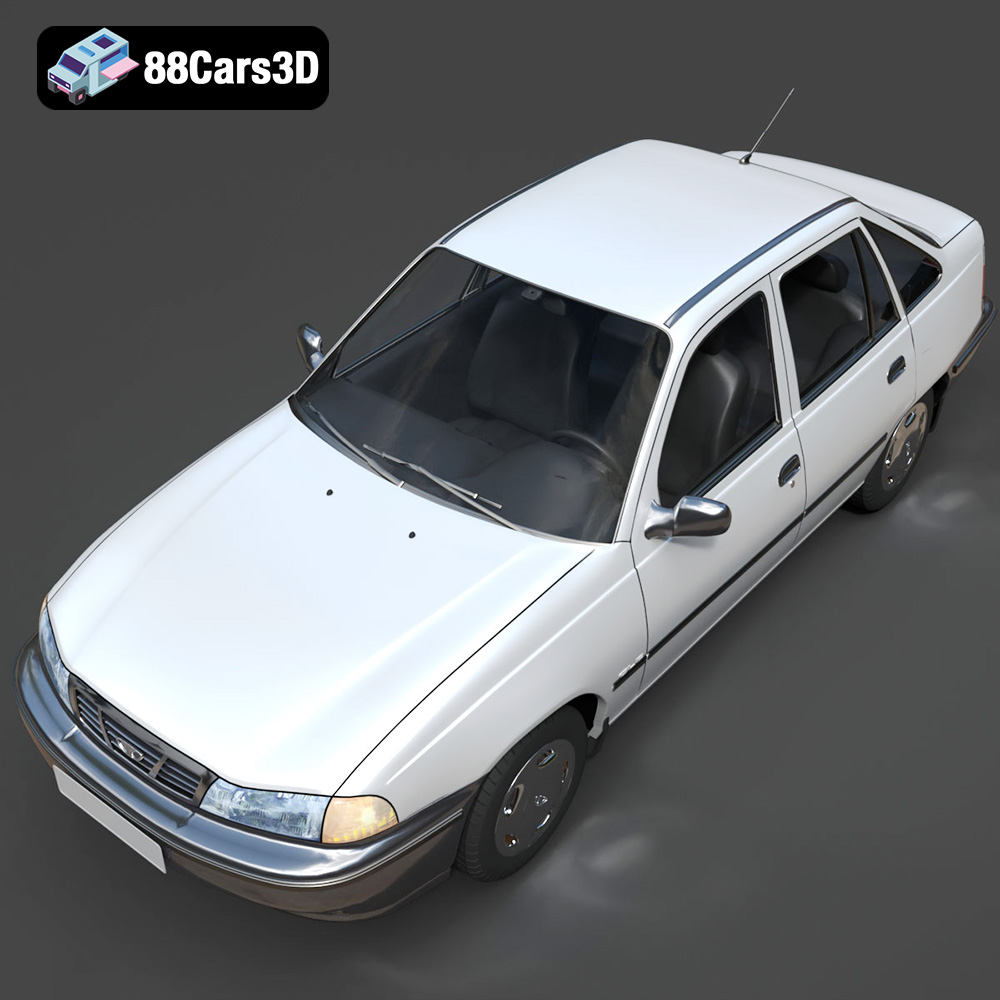
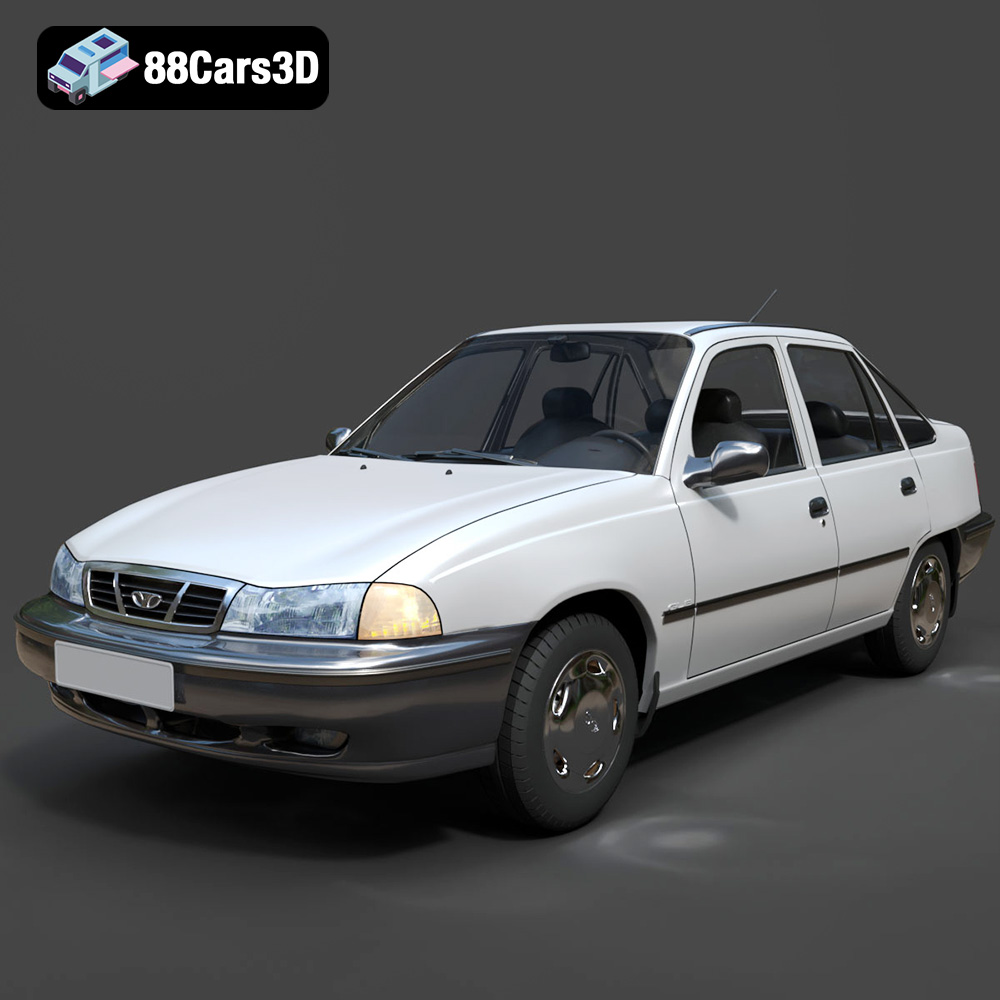
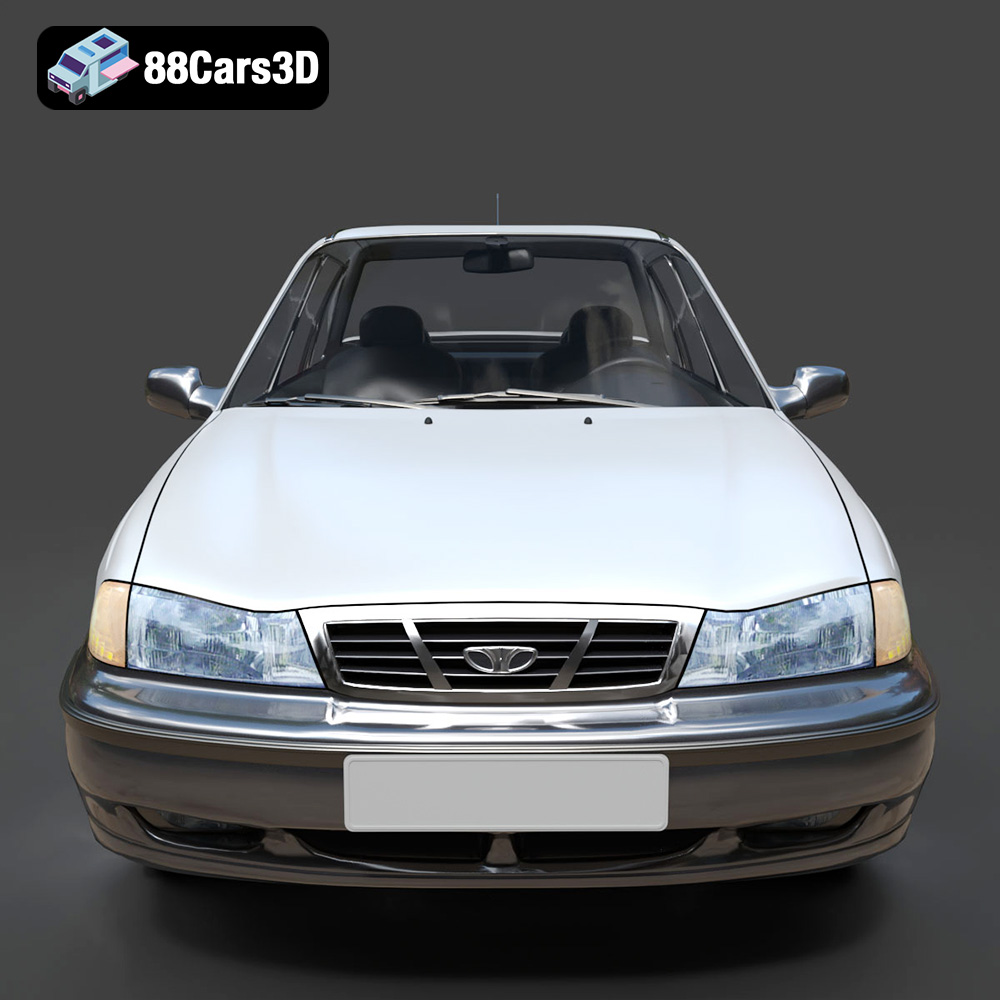
Authenticity in 3D car models goes beyond just looking good. It encompasses accurate proportions, realistic panel gaps, and intricate details that mirror their real-world counterparts. For a model like the Daewoo Nexia N150, this means meticulously recreating the updated projector-style headlight housings, the smoothed-out front bumper, and the classic, practical sedan proportions that define its identity. Such attention to detail is paramount for projects where realism is a key objective, whether it’s an architectural visualization requiring region-specific traffic or a simulation demanding believable vehicles.
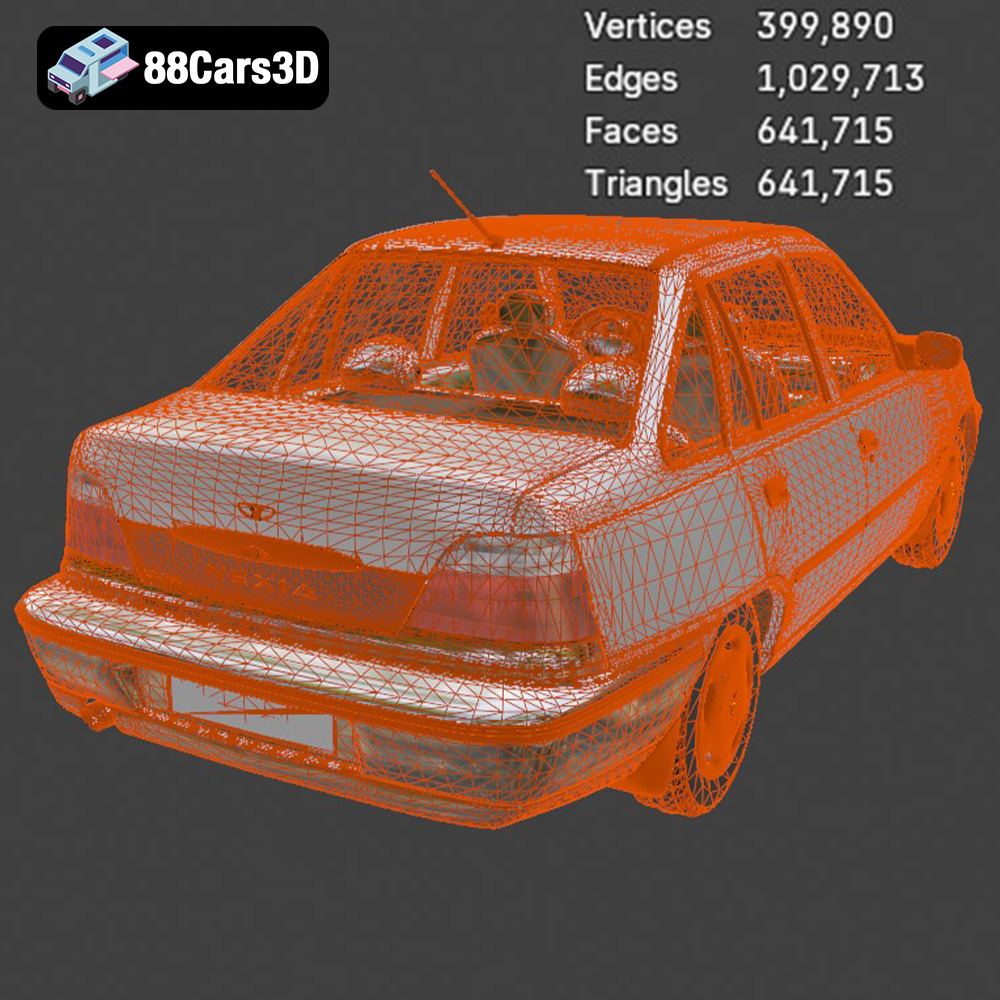
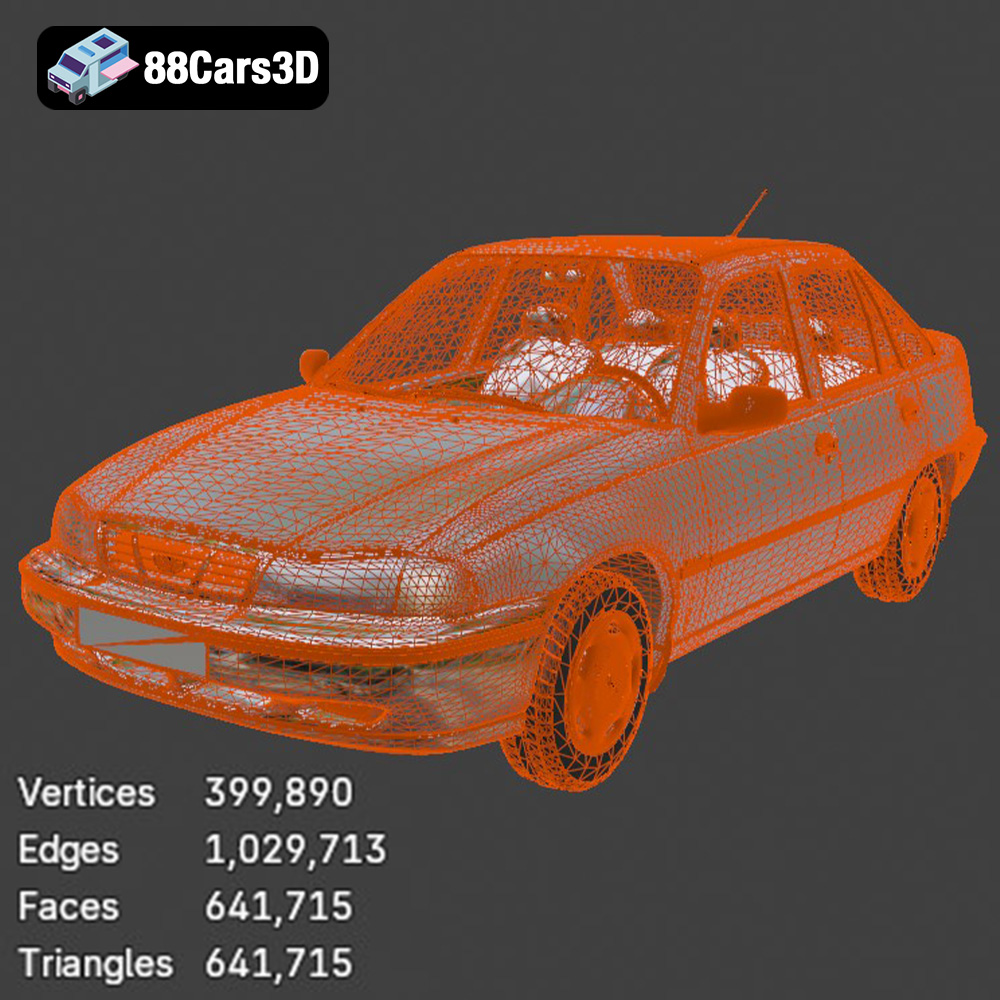
One of the most critical considerations in 3D modeling, especially for vehicles, is polygon count. A model with too few polygons will appear blocky and unrealistic, while one with too many can cripple performance in real-time applications like games or interactive AR/VR experiences. The “Goldilocks Zone” refers to that sweet spot where a model offers excellent visual fidelity without being overly demanding on system resources. The Daewoo Nexia N150 3D model, with its 641,715 triangles (or faces/polygons), exemplifies this balance. This mid-to-high polygon topology is detailed enough for foreground hero shots in high-resolution renders, yet optimized enough to be seamlessly integrated as dense background traffic or even a drivable vehicle in modern game engines without introducing severe lag. This strategic poly count ensures maximum utility across different project types, making it a truly versatile game asset and rendering solution.
Navigating the various 3D file formats available can often feel like learning a new language. Each format has its strengths, weaknesses, and specific use cases. Understanding which format to use and why is critical for efficient workflow, compatibility, and achieving optimal results. The Daewoo Nexia N150 3D Model comes packaged with a comprehensive array of formats, ensuring broad compatibility and flexibility for professionals.
The .blend format is the native file type for Blender, a powerful and popular open-source 3D creation suite. A .blend file typically contains an entire scene, including mesh data, materials, textures, animations, cameras, lighting, and even physics simulations. Its primary advantage is retaining full editability within Blender, making it ideal for artists who primarily work within this ecosystem. If you need to make extensive modifications, adjust material nodes, or delve into the underlying mesh, starting with the .blend file is the most robust option. It ensures all scene data is preserved as intended by the original creator, allowing for seamless iteration and customization.
.fbx (Filmbox) is arguably the most widely used proprietary 3D file format for interchange between different software applications. Developed by Autodesk, .fbx excels at preserving a wide range of 3D data, including geometry, materials (with some limitations depending on the software), animations, skeletal data, and sometimes even light and camera information. It’s the go-to format for exporting models from a DCC (Digital Content Creation) tool like 3ds Max or Blender into game engines like Unreal Engine and Unity. Its robustness in handling animation and skeletal data makes it ideal for animated 3D car models or character assets. When preparing assets for a real-time pipeline, .fbx is often the most reliable choice for transferring complex data while maintaining scene hierarchy.
The .obj (Wavefront Object) format is a simple, widely supported, and universal geometry definition file format. It primarily stores geometry data (vertices, normals, texture coordinates, and faces) and can reference external .mtl (Material Template Library) files for basic material properties and texture paths. While it doesn’t support animation or advanced scene data, its widespread compatibility makes it an excellent choice for static mesh interchange between virtually any 3D software. If you need a clean mesh for sculpting, basic rendering, or a fallback for compatibility, .obj is a solid, no-frills option. For the Daewoo Nexia N150, the .obj provides a universally accessible version of its detailed geometry.
.glb (GL Transmission Format Binary) is the binary version of glTF, a royalty-free specification for the efficient transmission and loading of 3D scenes and models by applications. .glb files contain both the 3D model data (geometry, textures, animations) within a single file, making them highly optimized for web-based 3D, augmented reality (AR), virtual reality (VR), and other real-time environments where file size and quick loading are paramount. If you’re developing an AR/VR application or need to display the Daewoo Nexia N150 model interactively in a browser, .glb offers superior performance and integration capabilities.
.stl (STereoLithography) is the standard file format for 3D printing. It describes only the surface geometry of a 3D object using a mesh of triangular facets. It does not carry color, texture, or other CAD attributes, focusing solely on manifold geometry suitable for physical fabrication. The inclusion of an .stl format for the Daewoo Nexia N150 means this digital asset can easily be converted into a physical miniature, perfect for hobbyists or architectural model making. This bridges the gap between digital visualization and tangible output, offering a unique dimension of utility.
The .ply (Polygon File Format, or Stanford Triangle Format) is another format used to store 3D data, particularly from 3D scanners or CAD applications. It can store various properties for each vertex (such as color, normals, transparency) and face (such as color), making it suitable for more complex data sets than .obj or .stl. While less common for general interchange than .fbx, it’s a valuable format for preserving detailed scan data or when precision mesh properties are critical for analysis or specific engineering workflows.
The .unreal file format, typically referring to assets directly imported and optimized for Unreal Engine, signifies an asset that has undergone specific preparation for this powerful real-time environment. This might include optimized mesh settings, collision meshes, LODs (Levels of Detail), and materials configured to Unreal’s physically based rendering (PBR) system. Having a dedicated .unreal format means the Daewoo Nexia N150 is designed for seamless drag-and-drop integration into your Unreal Engine projects, saving significant time on setup and optimization, making it an excellent game asset.
The .max format is the native file type for Autodesk 3ds Max, a leading software for 3D modeling, animation, rendering, and compositing. Similar to .blend, a .max file contains comprehensive scene data, including geometry, materials, textures, lighting, cameras, animation keyframes, and plugins. It’s the preferred format for users who work within the 3ds Max ecosystem, offering full editability and access to all the original scene’s components and settings. For professionals using 3ds Max for high-end automotive rendering or complex animations, the .max file provides the ultimate flexibility and control over the Daewoo Nexia N150 model.
The true value of a 3D model lies in its applicability across various professional domains. The Daewoo Nexia N150, available on 88cars3d.com, is meticulously crafted to fit into diverse workflows, enhancing project realism and efficiency.
For architectural visualization artists, populating street scenes with believable traffic is crucial for grounding a rendering in reality. The Daewoo Nexia N150 is an absolute perfect vehicle for breathing life into architectural visualizations (ArchViz) set in Eastern Europe or Central Asia. Its recognizable design provides region-accurate traffic, instantly enhancing the cultural context and realism of an urban environment. Imagine a newly designed building facade, and the Nexia N150 parked or driving by – it creates an immediate sense of place and authenticity that generic vehicle models simply cannot achieve. Its balanced topology ensures it looks fantastic in high-resolution renders without being overly complex for background elements.
In game development, versatility and optimization are paramount. The Daewoo Nexia N150 excels as both a hero vehicle and a background prop. Its ~641k triangle count places it perfectly in the “Goldilocks Zone” – detailed enough to be a drivable hero car in open-world games, delivery simulators, or taxi driving games, yet optimized enough to serve as dense, realistic background traffic without causing performance bottlenecks. The separate wheels, steering components, and doors are critical for rigging and animation, allowing developers to implement realistic physics and interactive elements. Its availability in .fbx and .unreal formats ensures seamless integration into major game engines like Unreal Engine and Unity, making it an indispensable game asset.
Augmented Reality (AR) and Virtual Reality (VR) applications demand highly optimized assets for smooth, immersive experiences. The Daewoo Nexia N150, particularly in its .glb format, is well-suited for interactive digital city-planning VR experiences or virtual tours. Its balanced polygon count means it can be rendered in real-time on a variety of devices, providing a tangible sense of presence. Imagine walking through a virtual city, and seeing a familiar, authentic vehicle like the Nexia N150 adding to the environment’s believability, making it a valuable interactive element for urban simulations and educational platforms.
Beyond its visual appeal, the true engineering of a 3D model lies in its technical specifications. Understanding these details helps professionals gauge a model’s suitability for specific tasks and its performance implications.
The Daewoo Nexia N150 boasts impressive technical specifications:
This count is a testament to its balanced topology. At ~641k triangles, it is significantly more detailed than typical low-poly game assets, yet far less dense than ultra-high-poly photogrammetry scans. This precision allows for smooth, detailed curves and surfaces that hold up well under close-up scrutiny in high-fidelity automotive rendering scenarios, such as product showcases or detailed ArchViz. Simultaneously, this level of detail is carefully managed to prevent excessive draw calls and computational overhead in real-time environments, maintaining its status as a highly efficient game asset. The model’s real-world scale accuracy, based on factory dimensions, further enhances its utility for precise simulations and visualizations.
A static mesh is often not enough. For game development or animated sequences, a vehicle model needs to be prepared for rigging. The Daewoo Nexia N150 comes with separated components crucial for animation: individual wheels, steering components, and doors. This foresight means less prep work for animators and riggers, allowing for:
The proper pivot setup for steering and wheel rotation further streamlines the rigging process, ensuring that the vehicle behaves predictably and realistically within any animation or simulation environment.
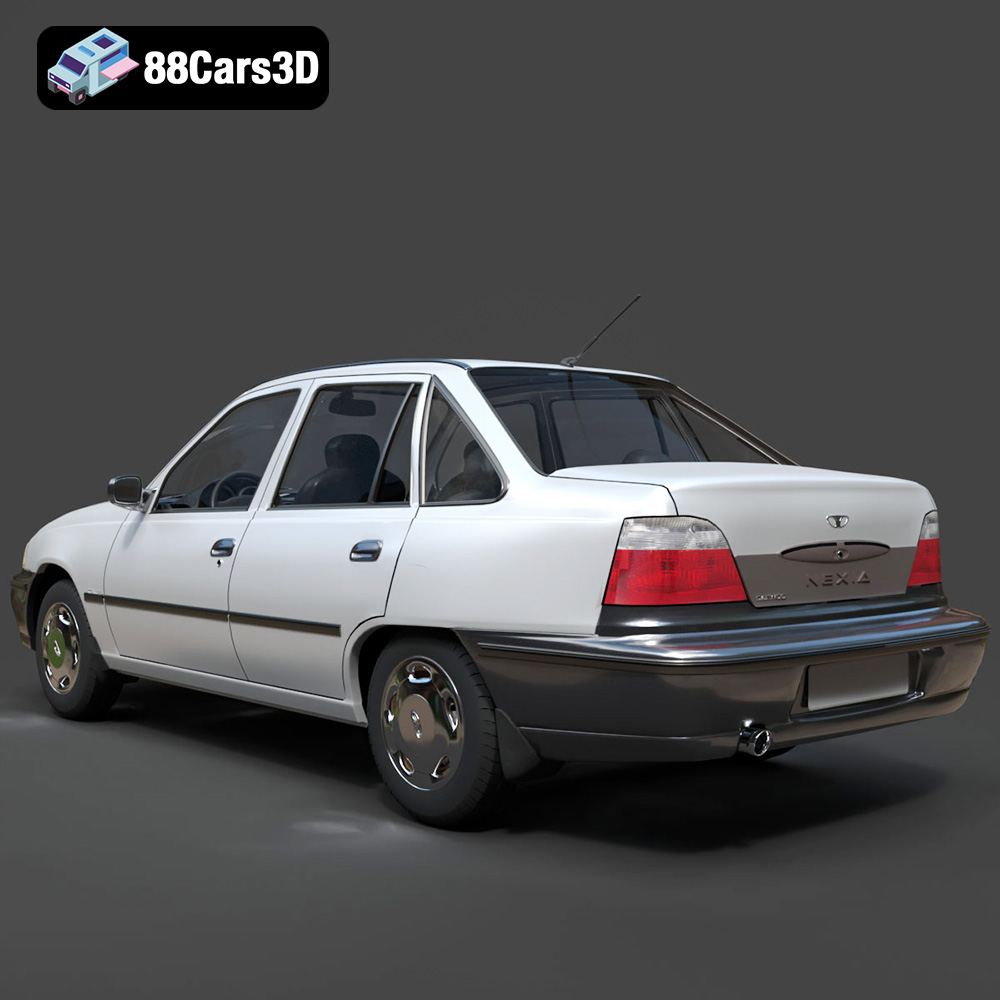
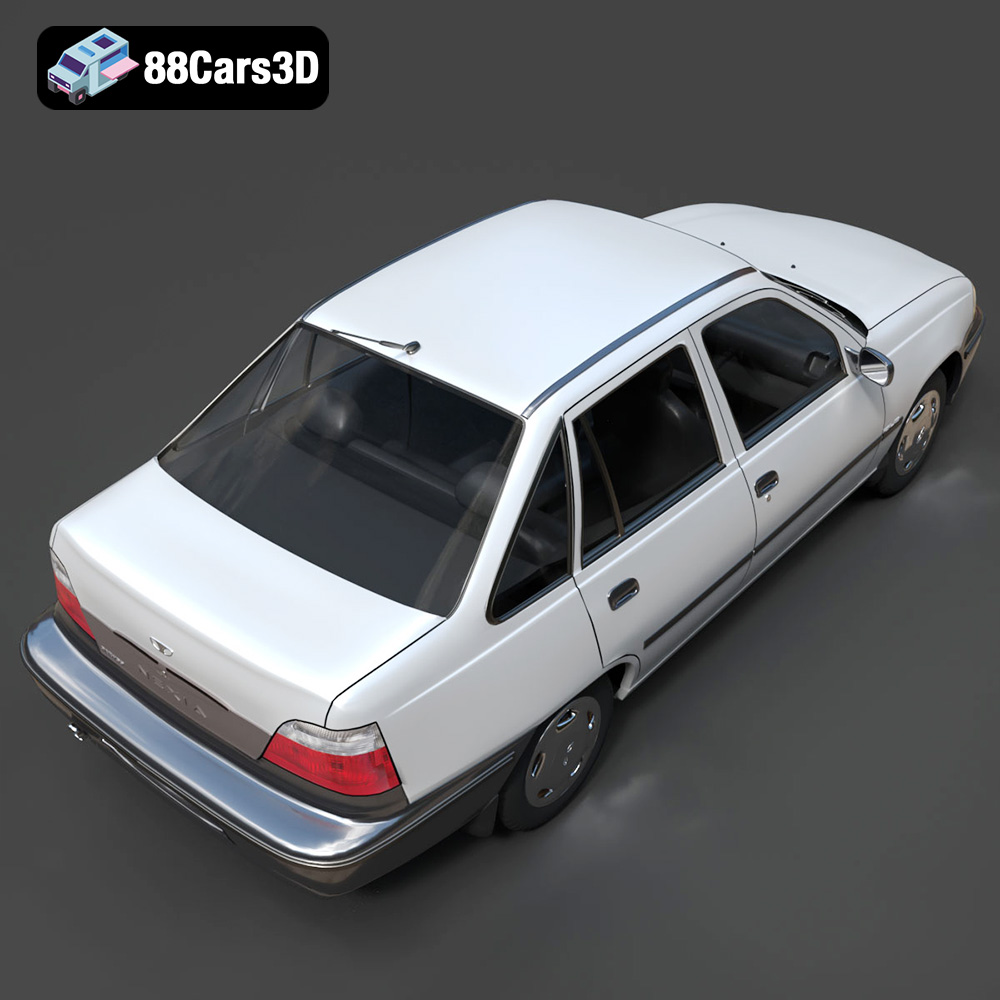
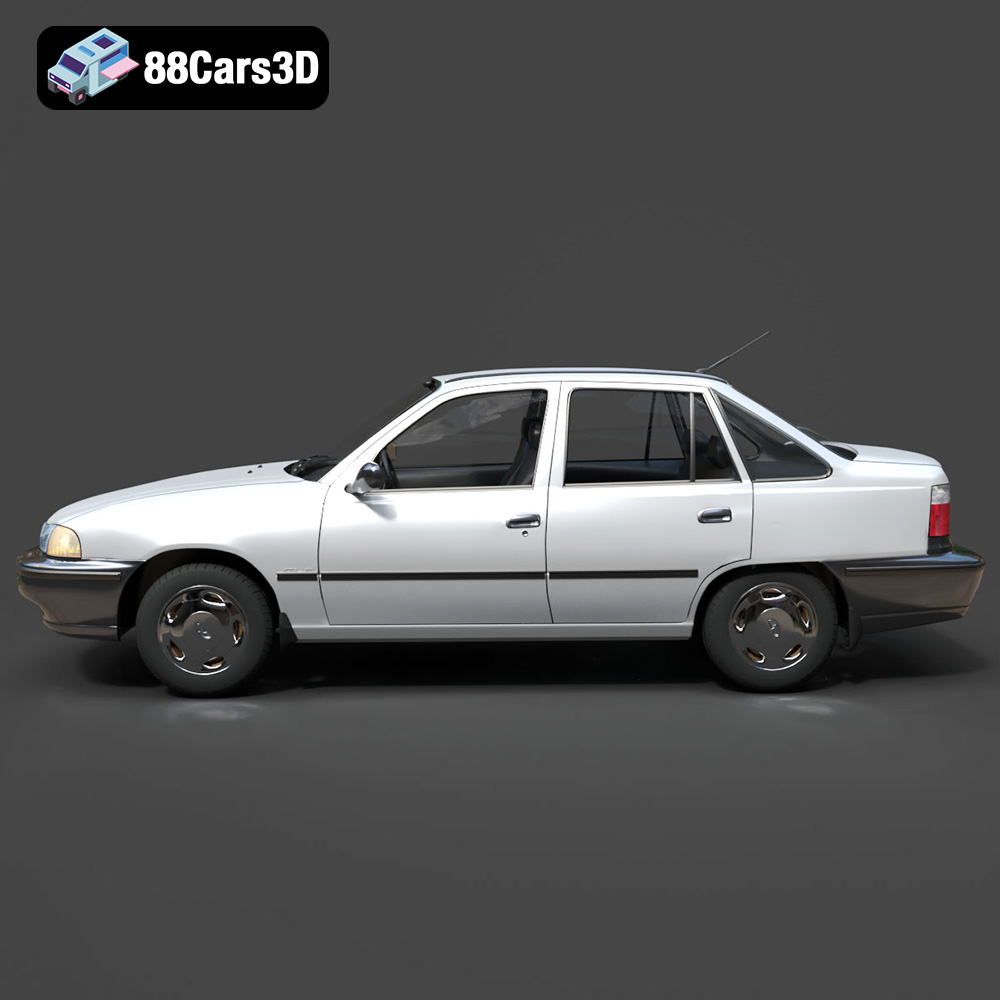
The model’s exterior accurately captures the N150 facelift sedan proportions, featuring detailed projector-style headlight assemblies, classic taillight clusters, and realistic panel gaps. The standard factory wheels, whether alloys or steelies with hubcaps, are wrapped in street tires, completing the authentic look. The interior, while optimized, offers an authentic, practical driver-centric cabin layout typical of budget sedans. From the detailed dashboard with its classic center console and analog instrument cluster to the realistic seating geometry for a five-passenger layout, the interior is tailored to look great from the exterior or in VR, ensuring a comprehensive and believable model for any perspective.
The utility of 3D models extends beyond the digital screen. The inclusion of an .stl format for the Daewoo Nexia N150 opens up a fascinating avenue for physical creation through 3D printing. This capability allows enthusiasts and professionals to transform a virtual asset into a tangible collectible or a component for physical dioramas.
3D printing a vehicle model requires specific considerations for scale, detail, and structural integrity. The recommended scales for the Daewoo Nexia N150—1:24, 1:32, or 1:43—are perfect for urban dioramas or display models. For achieving finer details, especially on smaller scales like the projector headlights, resin printing (SLA/DLP) is highly recommended over FDM printing. Key print settings include:
Printing the body angled can provide a smoother surface finish, while printing wheels separately allows for greater detail and easier post-processing. This foresight in design makes the Daewoo Nexia N150 a robust candidate for physical fabrication, appealing to classic diecast hobbyists and model makers.
Once printed, a raw 3D print often requires post-processing to achieve a polished look. This typically involves sanding to smooth layer lines, applying primer to create an even base, and then painting. Customizing the Daewoo Nexia N150 miniature offers immense creative freedom. You could opt for classic factory colors like Silver Metallic, Sahara Dust, or Classic White to capture its original appearance. Alternatively, you could add custom details like miniature taxi roof signs, weathering effects, or even battle damage for a unique diorama piece. The ability to bring this detailed 3D car model to life physically adds another layer of value and engagement for users.
A great 3D model serves as a strong foundation, but its ultimate realism and adaptability often depend on the customization options it affords. The Daewoo Nexia N150 provides ample opportunities for artists and developers to tailor it to specific project needs, elevating the visual fidelity and narrative impact.
The ability to easily change exterior paint colors is a fundamental customization. Users can match the model to striking, vibrant, or weathered city-car palettes, reflecting the diverse conditions in which these vehicles operate in real life. Beyond color, adding classic yellow “Taxi” roof signs and checker decals can instantly transform the Nexia into a recognizable urban cab, perfect for regional urban renders or simulator games. Furthermore, applying weathering materials such as dust, mud, or snow allows for the creation of gritty, realistic winter environment scenes or showing the wear and tear of daily city life. This dynamic adaptability makes the Daewoo Nexia N150 an incredibly flexible game asset and rendering tool, capable of fitting into a wide array of visual narratives.
The interaction of light with the Daewoo Nexia N150 model is crucial for realism. Artists can adapt lighting setups to depict sunny urban commutes, showcasing its clean lines and reflective surfaces, or shift to moody, rainy night-time city streets, where reflections, wet surfaces, and atmospheric haze can dramatically alter its appearance. Experimenting with different HDRI environments, artificial light sources, and volumetric effects (like fog or mist) can completely transform the perceived age, condition, and narrative context of the vehicle. For instance, pairing a slightly weathered Nexia with a gloomy, overcast sky and damp ground textures can evoke a strong sense of a post-industrial Eastern European city, creating a powerful visual story in any automotive rendering project.
The world of 3D modeling thrives on versatility, quality, and technical precision. High-quality 3D car models are indispensable assets for professionals across various industries, from creating immersive game environments to generating photorealistic architectural visualizations. The Daewoo Nexia (N150) 3D Model stands as an outstanding example of an asset that perfectly balances detail with optimization, making it suitable for a vast array of applications.
Its meticulously crafted geometry, combined with a sensible polygon count, ensures it shines in high-end automotive rendering while remaining an efficient game asset for real-time engines. The comprehensive suite of included file formats—ranging from .blend and .max for full editability, to .fbx and .unreal for game engine integration, and even .stl for 3D printing—underscores its adaptability and value. Whether you’re an ArchViz artist needing authentic regional traffic, a game developer building an open-world experience, or a hobbyist looking to 3D print a classic car miniature, the Daewoo Nexia N150 offers robust technical foundations and extensive customization potential.
Discovering high-quality, versatile models like the Daewoo Nexia N150 is made easy through specialized platforms. For this and many other expertly crafted 3D car models, be sure to explore the extensive collection available at 88cars3d.com, where quality meets professional demand.
The Daewoo Nexia 3D Model is a highly accurate digital recreation of the legendary budget-friendly sedan. Specifically representing the N150 facelift generation (widely produced by UzDaewoo), this vehicle is an absolute staple of everyday life, serving as a reliable family car, urban taxi, and daily commuter across Eastern Europe, Russia, and Central Asia. This 3D model beautifully captures the modernized aesthetic of the N150 facelift, featuring the updated projector-style headlight housings, the smoothed-out front bumper and grille, and the classic, practical sedan proportions originally derived from the Opel Kadett E platform. Built with a perfectly balanced mid-to-high polygon topology (just over 641k triangles), it provides excellent visual fidelity for close-up automotive rendering while remaining highly optimized for background traffic in modern game engines. Perfect for populating realistic CIS or Eastern European street scenes, architectural visualizations, urban taxi simulators, and mobile game development.
$9.99