Get 50% OFF All Premium 3D & STL Models!

In the dynamic world of 3D visualization, automotive assets stand as cornerstones for a vast array of projects, from photorealistic architectural renders to sprawling open-world video games. The demand for high-quality, technically precise 3D car models continues to grow, driven by an ever-increasing pursuit of realism and immersion. Whether you’re an automotive designer, an environment artist, a game developer, or an architect, the fidelity of your vehicle assets can make or break the visual impact of your work.
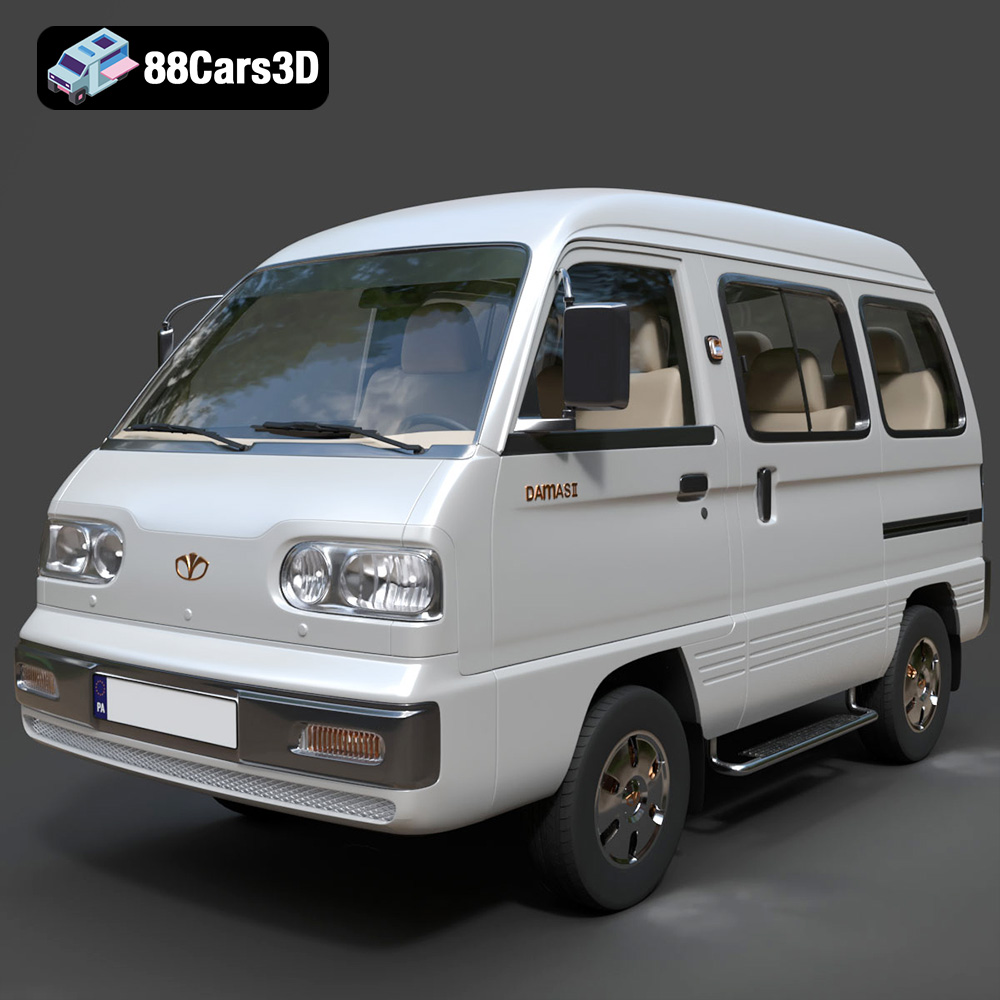
Today, we’re taking a closer look at a particularly charming and functional example of a digital vehicle asset: the Daewoo Damas 2 Microvan 3D Model. This seemingly humble microvan, a legendary workhorse in various parts of the world, offers a unique blend of character and utility that can enrich countless 3D scenes. Its accurate digital recreation serves as a perfect case study to explore the technical intricacies and broad applications of professional-grade 3D vehicle assets, highlighting why models from marketplaces like 88cars3d.com are essential tools for creative professionals.
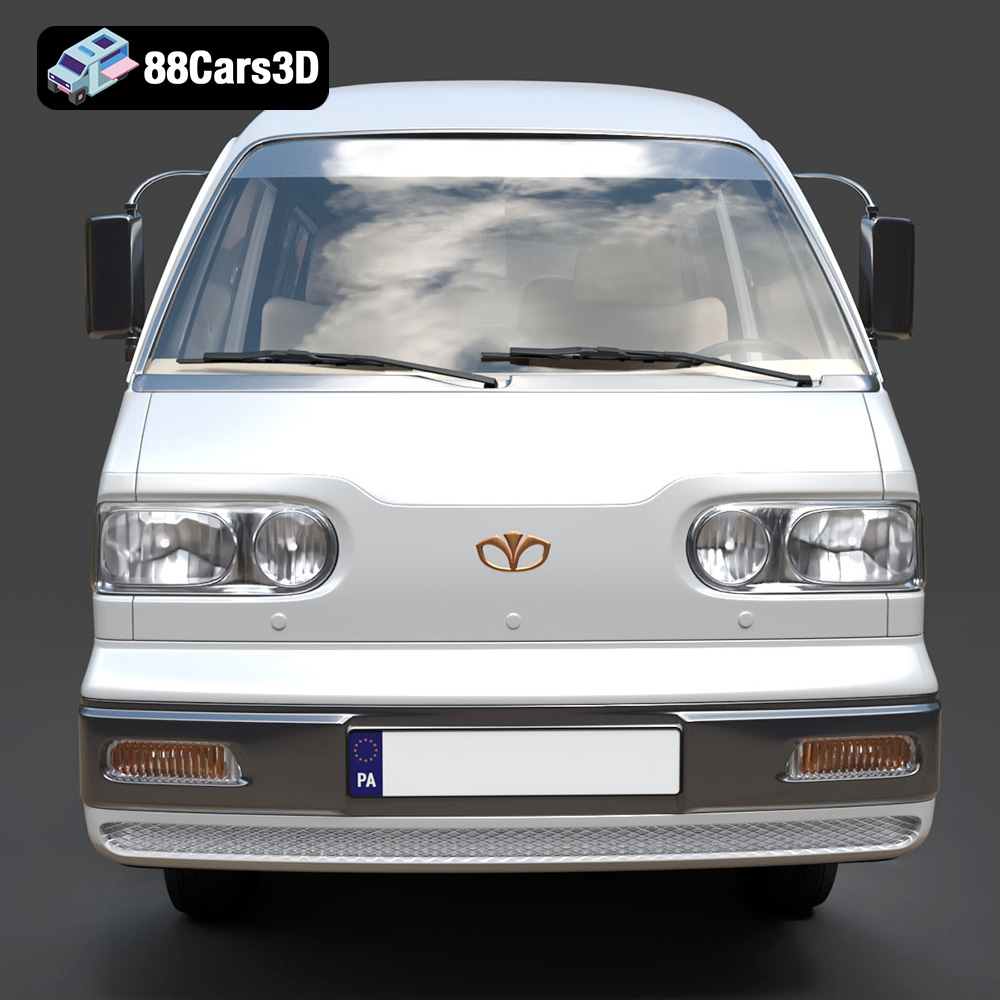
The Daewoo Damas 2 Microvan, with its distinctive cabover proportions and space-efficient design, carved out a niche as the ultimate urban delivery van and compact passenger transport across South Korea, Central Asia, and Eastern Europe. Its ubiquity and practicality make it an immediately recognizable and believable addition to any street scene or urban environment. The Daewoo Damas 2 Microvan 3D Model captures this essence perfectly, providing artists and developers with a meticulously crafted digital twin of this iconic vehicle.
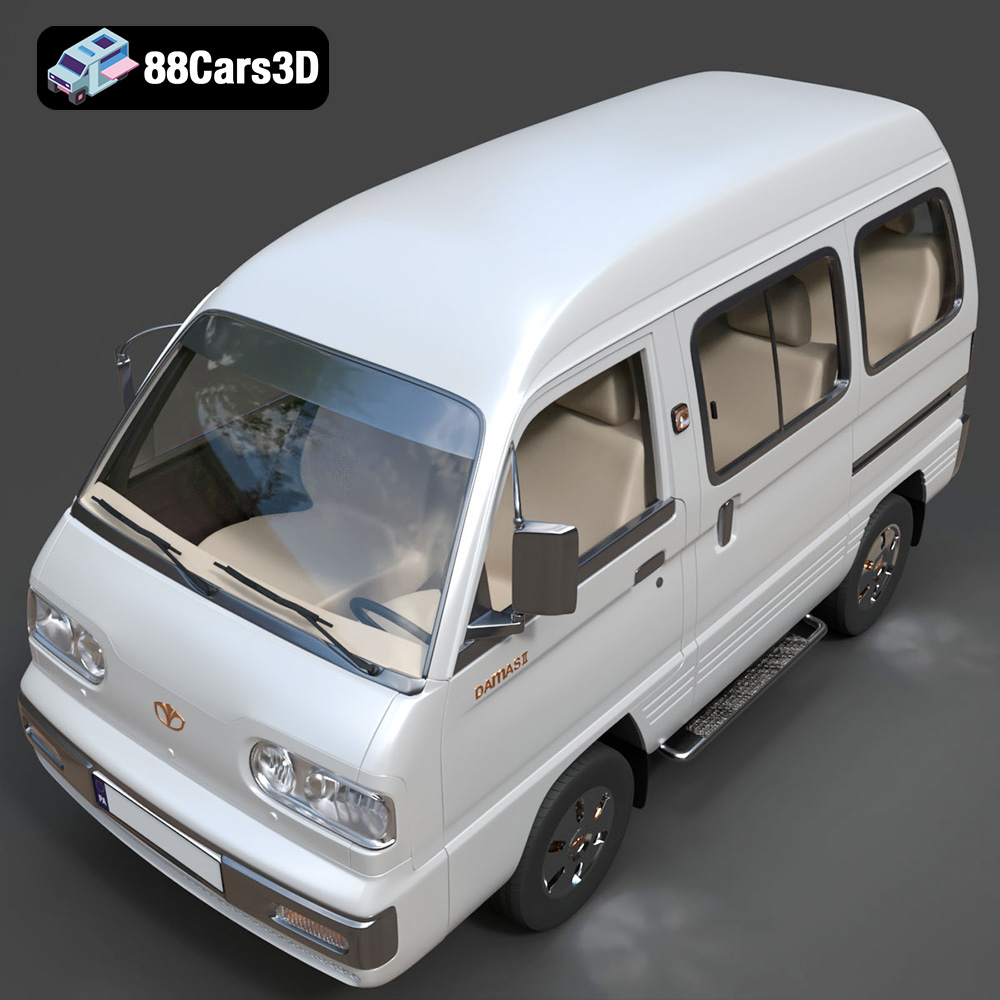
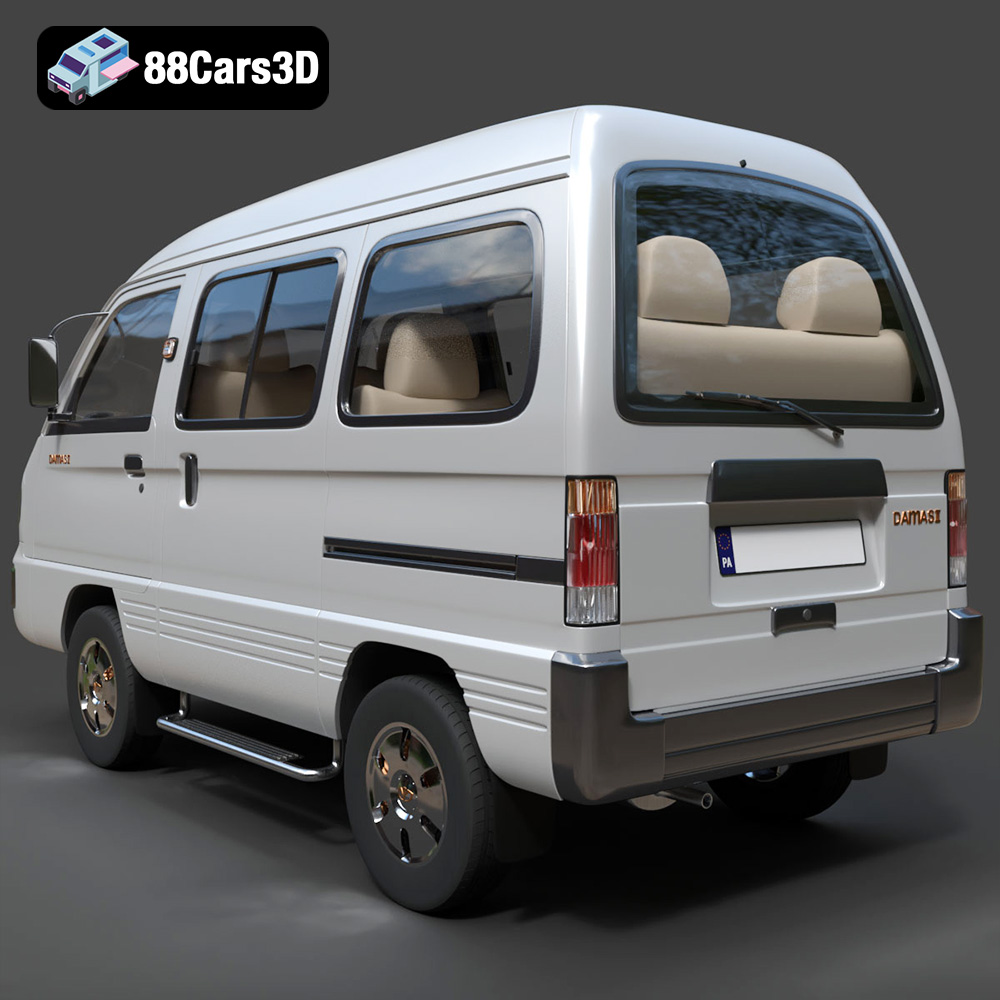
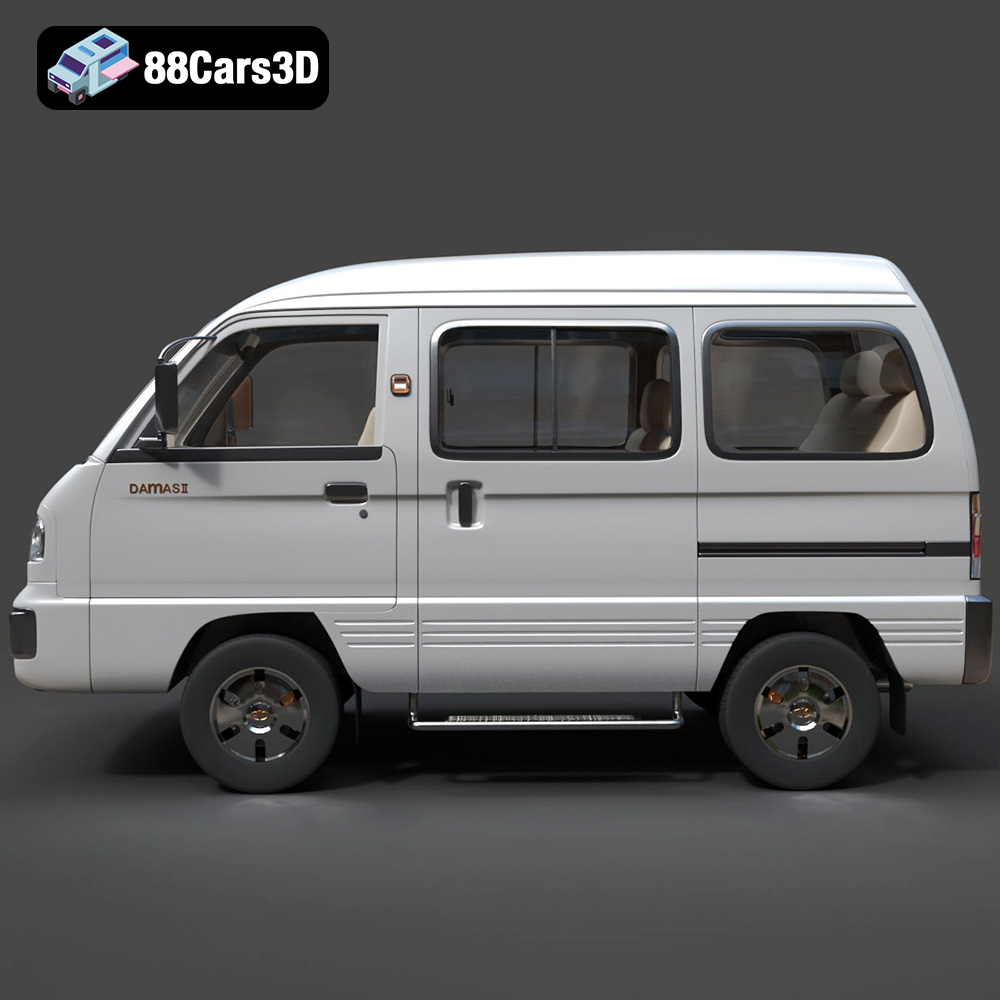
This 3D model accurately represents the facelifted exterior styling of the Damas 2, complete with its distinct curved headlight and indicator clusters, dual sliding rear doors, and functional rear liftgate. These details are not merely aesthetic; they speak to the vehicle’s design philosophy – maximum utility in a compact footprint. For artists working on scenes set in specific global locales, such a recognizable vehicle offers instant authenticity and a tangible connection to the real world.
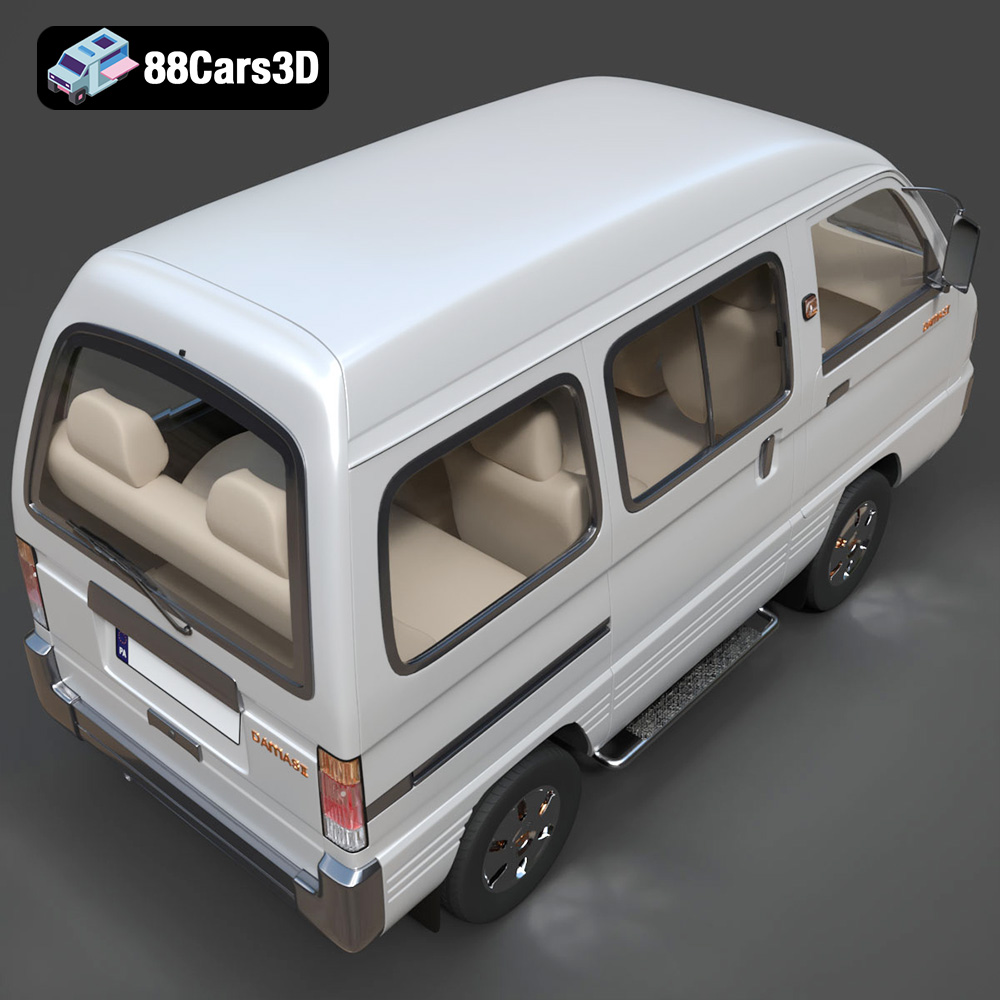
The digital Daewoo Damas 2 isn’t just about exterior looks. Its interior features a highly practical cabin layout, configurable rear space (ideal for showcasing either cargo or passenger variants), and a minimalist dashboard. This attention to both exterior and interior detail ensures the model is suitable not only for distant background elements but also for close-up rendering, internal shots, and interactive experiences. The model’s design, from its real-world scale accuracy to its clean topology, signifies a commitment to professional standards, ensuring seamless integration into complex projects.
The versatility of a 3D model often lies in its compatibility, and this is primarily determined by the file formats it supports. High-quality 3D car models, such as the Daewoo Damas 2 Microvan 3D Model, are typically provided in a range of formats to accommodate different software, workflows, and end applications. Understanding these formats is crucial for any 3D professional, ensuring smooth project execution and optimal performance.
The .blend format is native to Blender, the powerful open-source 3D creation suite. When you receive a .blend file, you’re getting a fully editable Blender scene, complete with materials, textures, lighting, camera setups, and even animation data. This format is ideal for users who primarily work in Blender, allowing them immediate access to all aspects of the model for modification, re-texturing, or animation. Technical advantages include efficient compression, support for Blender’s node-based materials, and the ability to link or append assets between different .blend files without bloating file sizes.
.fbx (Filmbox) is a proprietary file format developed by Autodesk, serving as a widely accepted interchange format across many 3D applications and game engines like Unreal and Unity. It’s particularly valued for its ability to store not just geometry, but also animation, cameras, lights, and skeleton/rigging information. This makes it an ideal choice for complex animated game assets. When exporting or importing .fbx, users gain control over various options like embedding media, triangulating meshes, and preserving bone hierarchies, ensuring integrity across different pipelines.
The .obj (Wavefront OBJ) format is one of the oldest and most universal 3D file formats. It’s excellent for exchanging pure geometry data (vertices, normals, texture coordinates, polygons) between virtually any 3D software. While it doesn’t typically store animation or rigging data, it’s highly reliable for mesh transfer. Materials are usually referenced via an accompanying .mtl (Material Template Library) file. Its simplicity and widespread support make it a go-to for basic cross-software compatibility, especially when the focus is solely on the mesh itself.
.glb (GLB format, often associated with glTF – Graphics Language Transmission Format) is an efficient, compact format designed for fast loading and rendering of 3D models in web browsers, AR (Augmented Reality), and VR (Virtual Reality) applications. It packs geometry, materials, textures, and animation into a single file, making it incredibly convenient for distribution. Its JSON-based structure and binary blob for data make it optimized for real-time environments, aligning perfectly with the needs of immersive experiences and browser-based configurators.
.stl (Stereolithography) is the de facto standard file format for 3D printing. It represents a 3D model as a series of connected triangles (a triangular mesh) that define its surface geometry. The format is simple, only describing the surface without color, texture, or other CAD attributes. For applications like prototyping, creating miniature models, or manufacturing physical components, an .stl file is indispensable. It’s crucial for the model’s geometry to be “manifold” (watertight) for successful 3D printing, a characteristic often found in purpose-built .stl exports.
.ply (Polygon File Format, or Stanford Triangle Format) is another format for storing 3D data, particularly useful for scan data and scientific applications. It can store various properties beyond just geometry, such as color, transparency, surface normals, and even confidence values for scanned points. This makes it a robust choice for precision mesh applications, reverse engineering, CAD integration, or when additional data attributes are critical for analysis, offering more flexibility than .obj in terms of data storage.
The inclusion of an .unreal (or .uasset) file typically means the asset is delivered pre-packaged and optimized for direct import into the Unreal Engine. This often implies that materials, textures, and collision meshes are already set up according to Unreal’s specifications, saving developers significant time on asset preparation. It streamlines the workflow for creating interactive experiences and visually stunning real-time environments, ensuring the asset is engine-ready for immediate use in game development.
Similar to .blend for Blender, the .max format is native to Autodesk 3ds Max. This file encapsulates the entire 3ds Max scene, including all geometry, modifiers, materials, textures, lighting setups, cameras, and animation data. It offers full editability within 3ds Max, making it the most flexible format for users of this software for detailed adjustments, complex animation sequences, or bespoke rendering setups. Professionals relying on 3ds Max for high-end visualization and animation will find the .max file indispensable.
The quality of a 3D car model isn’t just about how it looks; it’s deeply rooted in its underlying technical structure. The Daewoo Damas 2 Microvan 3D Model exemplifies how robust technical specifications translate into versatile and high-performance assets for various professional applications.
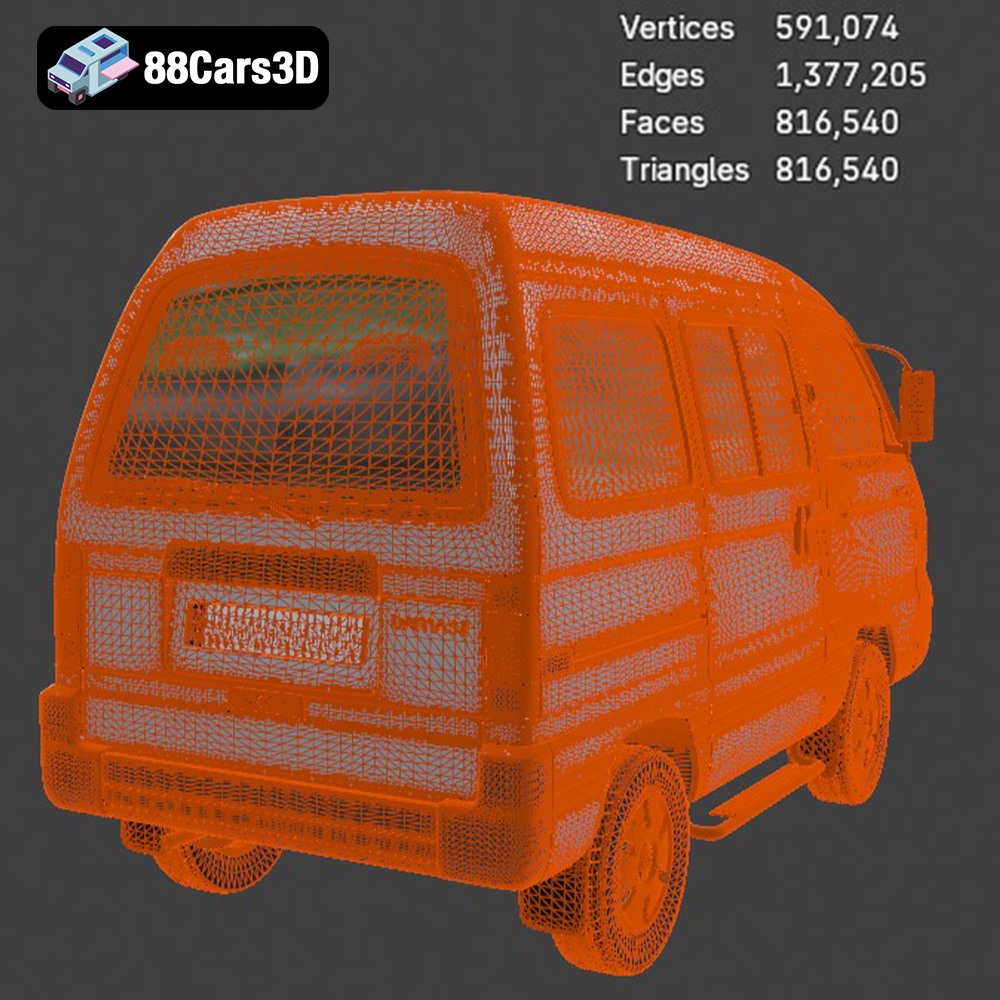
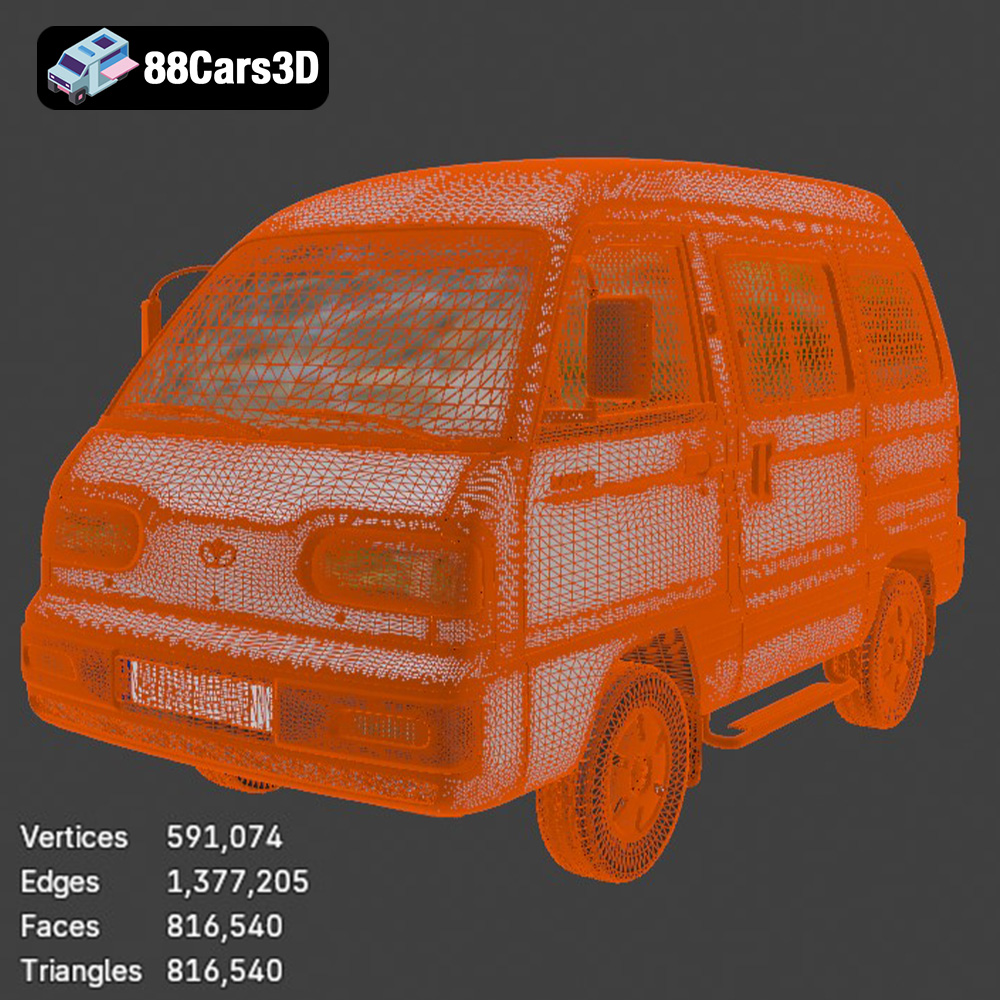
With 954,200 vertices, 1,890,500 edges, and 935,600 faces/polygons (and triangles), this model is firmly categorized as high-poly. This dense mesh structure is critical for achieving premium visual fidelity, especially for close-up rendering where smooth curves and subtle surface details are paramount. High-poly models minimize faceting and allow for intricate detailing without relying heavily on normal maps, which can sometimes break down at extreme angles or very close distances. However, such a poly count requires careful optimization for real-time applications, often involving LOD (Level of Detail) creation, a process where simplified versions of the model are swapped in at greater distances to maintain performance.
Beyond raw numbers, the well-organized mesh structure and clean topology are equally important. Clean topology refers to the orderly flow of polygons, typically quads, that allow for smooth deformation during animation and accurate subdivision for even higher detail if needed. This also simplifies UV mapping, texturing, and potential retopology for specific game engine requirements.
Accuracy is paramount in professional 3D work. The Daewoo Damas 2 Microvan 3D Model is built with real-world scale accuracy based on factory dimensions. This ensures that when dropped into an architectural visualization scene or a game environment, it fits seamlessly alongside other real-world objects without requiring manual scaling, which can introduce inconsistencies. Furthermore, the model features a proper pivot setup for steering, wheel rotation, and sliding door mechanisms. This pre-rigged articulation saves animators significant time, allowing for immediate animation of vehicle movement, opening doors, and turning wheels, critical for realistic simulations and engaging cinematic sequences.
The utility of a high-quality 3D car model like the Daewoo Damas 2 Microvan extends far beyond mere static renders. Its robust design and versatile formats make it a valuable asset across numerous professional pipelines.
For architectural visualization (ArchViz) and urban planning, populating scenes with realistic traffic is essential for conveying scale, atmosphere, and real-world context. The Damas 2, with its specific regional appeal, can instantly ground a scene in a particular geographical location, adding depth and narrative. Similarly, in logistics and urban planning simulations, accurately scaled and articulated vehicles are necessary for testing traffic flow, delivery routes, and urban infrastructure projects. The precise technical specifications and articulated components of the Damas 2 model make it an ideal candidate for such analytical applications.
Game developers, especially those creating open-world titles or simulation games, are always in need of authentic game assets. The Daewoo Damas 2 Microvan could serve as everyday traffic in a game set in Eastern Europe or Central Asia, a player-driven delivery vehicle in a logistics simulator, or even a unique quest vehicle in an adventure game. For AR/VR experiences, the model’s optimized geometry, combined with formats like .glb and .unreal, facilitates immersive virtual delivery configurations and compact van spatial planning. Imagine stepping into a virtual showroom and configuring a Damas 2 for a specific commercial need.
Automotive rendering is a specialized art form that demands meticulous attention to detail, lighting, and materials. With a robust model like the Daewoo Damas 2 Microvan, artists can achieve stunning photorealistic results across various rendering engines and software.
Whether working in 3ds Max or Blender, the initial setup is crucial. Importing the .max or .blend file provides a solid foundation. For rendering the Damas 2, artists typically start by setting up a studio lighting environment or integrating it into a real-world backplate. Using an HDRI (High Dynamic Range Image) environment map can quickly establish realistic global illumination and reflections, crucial for making the vehicle appear grounded in its surroundings. Reflective surfaces like paint, glass, and chrome demand accurate material properties – correct IOR (Index of Refraction), glossiness, and metallic values are key.
Customization options provided with the model, such as changing exterior color (e.g., to a classic white or light metallic blue) or modifying interior configuration, become powerful tools here. These variations allow artists to create diverse renders from a single base model, adapting it to different commercial pitches, cinematic shots, or visual narratives. The optimized geometry and clean UVs (essential for applying textures cleanly) ensure that even intricate details like the facelifted headlight clusters or the utilitarian steel wheels render beautifully.
The true magic of photorealism often lies in the materials. For the Daewoo Damas 2, this would involve creating distinct materials for the vehicle’s painted body, rubber tires, plastic trim, glass windows, and the sparse interior elements like basic cloth or durable vinyl seating. Physically Based Rendering (PBR) workflows are standard, utilizing maps like Albedo (color), Roughness/Glossiness, Metallic, Normal, and Ambient Occlusion. These maps precisely define how light interacts with each surface, mimicking real-world physics. The high-poly mesh of the Damas 2 ensures that these intricate material definitions are applied to a sufficiently detailed surface, resulting in incredibly convincing reflections and refractions.
Integrating a detailed 3D car model into a real-time environment like Unreal Engine or Unity requires a different set of considerations compared to offline rendering. The focus shifts to performance optimization while maintaining visual fidelity.
The inclusion of an .unreal file for the Daewoo Damas 2 Microvan is a significant advantage for developers. This means the model is likely already structured with Unreal’s specifications in mind, potentially including optimized meshes, PBR materials, collision geometry, and even basic rigging for vehicle physics. Upon importing, developers can quickly set up blueprints for vehicle movement, integrate it into traffic systems, or use it as a static prop. The separate components like wheels, steering, and doors, combined with a proper pivot setup, are crucial for creating interactive elements and dynamic animations within the engine. Performance can be managed through LODs, carefully crafted collision meshes, and texture atlasing to reduce draw calls.
For AR/VR applications, efficient performance is paramount to prevent motion sickness and ensure a smooth user experience. The .glb format is particularly well-suited for this, offering a compact, single-file solution for model distribution. When using the Daewoo Damas 2 in AR/VR, developers would focus on minimizing polygon count (perhaps by generating optimized LODs from the high-poly base), reducing draw calls, and simplifying material shaders. The goal is to strike a balance between visual quality and performance headroom, allowing users to experience the microvan immersively, whether for a virtual showroom experience or a logistics training simulation.
The journey of a 3D model doesn’t always end on screen. The inclusion of the .stl format and detailed 3D Print Settings for the Daewoo Damas 2 Microvan 3D Model opens up an exciting avenue for bringing digital creations into the physical world, transforming them into tangible collectibles, prototypes, or display pieces.
For 3D printing, the provided .stl format is ideal. The model’s manifold geometry (a characteristic of well-prepared .stl files) ensures that it’s a solid, watertight mesh, which is a fundamental requirement for successful printing. The recommended scales (1:32 / 1:24 / 1:18) are popular choices for miniature car models, allowing for a good balance between detail retention and printability. These scales are common for die-cast replicas and tabletop display models, making the Damas 2 suitable for collectors or enthusiasts.
The detailed 3D print settings are invaluable. A layer height of 0.08–0.16 mm strikes a good balance between print speed and surface detail, capturing the nuances of the Damas 2’s exterior. A wall thickness of 1.2–2.0 mm provides structural integrity, while an infill of 15–25% offers sufficient internal support without excessive material consumption. Supports will be required for overhangs such as side mirrors, wipers, and wheel arches to prevent sagging during printing. Printing the body angled and the wheels separately is a common practice to optimize surface finish and detail for circular components.
Post-processing is crucial for achieving a professional finish for 3D printed models. Sanding helps smooth out layer lines, primer provides a consistent base, and a glossy commercial paint finish (like classic white or light blue) can bring the miniature Damas 2 to life, mimicking its real-world counterparts. This process allows for creation of bespoke physical models, from pristine factory-fresh versions to weathered utility vehicles, offering a tangible extension of the digital asset.
The journey from a digital concept to a fully realized, versatile 3D asset is a testament to the skill and technical expertise involved in modern content creation. The Daewoo Damas 2 Microvan 3D Model stands as an excellent example of a professional-grade asset, offering dense, clean topology, real-world accuracy, and robust articulation. Its availability across a comprehensive range of file formats, including .blend, .fbx, .obj, .glb, .stl, .ply, .unreal, and .max, ensures seamless integration into virtually any professional pipeline, whether for high-end automotive rendering, demanding game assets, immersive AR/VR experiences, or tangible 3D prints.
For professionals seeking to infuse their projects with authenticity, efficiency, and exceptional visual fidelity, investing in meticulously crafted 3D car models like the Daewoo Damas 2 is a strategic choice. Resources such as 88cars3d.com specialize in providing these high-quality assets, enabling artists and developers to elevate their work and focus on their creative vision without compromise. The digital world thrives on detail, and with assets like these, the possibilities are truly limitless.
The Daewoo Damas 2 Microvan 3D Model is a highly detailed digital recreation of the ubiquitous and practical compact commercial vehicle. Based heavily on the classic kei-van architecture but refined with a modernized, slightly more rounded front fascia, the Damas 2 became a legendary workhorse across South Korea, Central Asia (particularly Uzbekistan), and Eastern Europe. Known for its incredible maneuverability and space efficiency, it serves as the ultimate urban delivery van and compact passenger transport. This 3D model accurately represents the facelifted exterior styling, including the distinct curved headlight and indicator clusters, cabover proportions, dual sliding rear doors, and functional rear liftgate. Built with dense, clean topology for premium visual fidelity and real-world scale accuracy, it is ideal for close-up rendering, urban environment visualization, animation, game development, and AR/VR commercial fleet showcases. Perfect for realistic street scenes, delivery logistics simulations, architectural visualizations, and indie game projects needing authentic everyday traffic.
$9.99
.automotive
.blend
.daewoo
.damas
.fbx
.obj
.rendering
.stl
3d printing
car-3d-model
chevrolet-damas
commercial-vehicle
damas-2
game asset
high poly
kei-van
microvan
utility-van
uzauto