Get 50% OFF All Premium 3D & STL Models!

In the expansive and increasingly sophisticated world of digital content creation, the demand for high-fidelity 3D assets is unwavering. From the breathtaking cinematic sequences of Hollywood blockbusters to the immersive landscapes of AAA video games, and from photorealistic architectural visualizations to ground-breaking AR/VR experiences, the quality of a 3D model dictates the perceived realism and overall impact of a project. Automotive models, in particular, hold a special place, requiring an exceptional blend of artistic interpretation and engineering precision to capture their unique character and mechanical integrity. This pursuit of perfection is precisely what drives platforms like 88cars3d.com, which serves as a vital resource for professionals seeking top-tier 3D car models and vehicle assets.
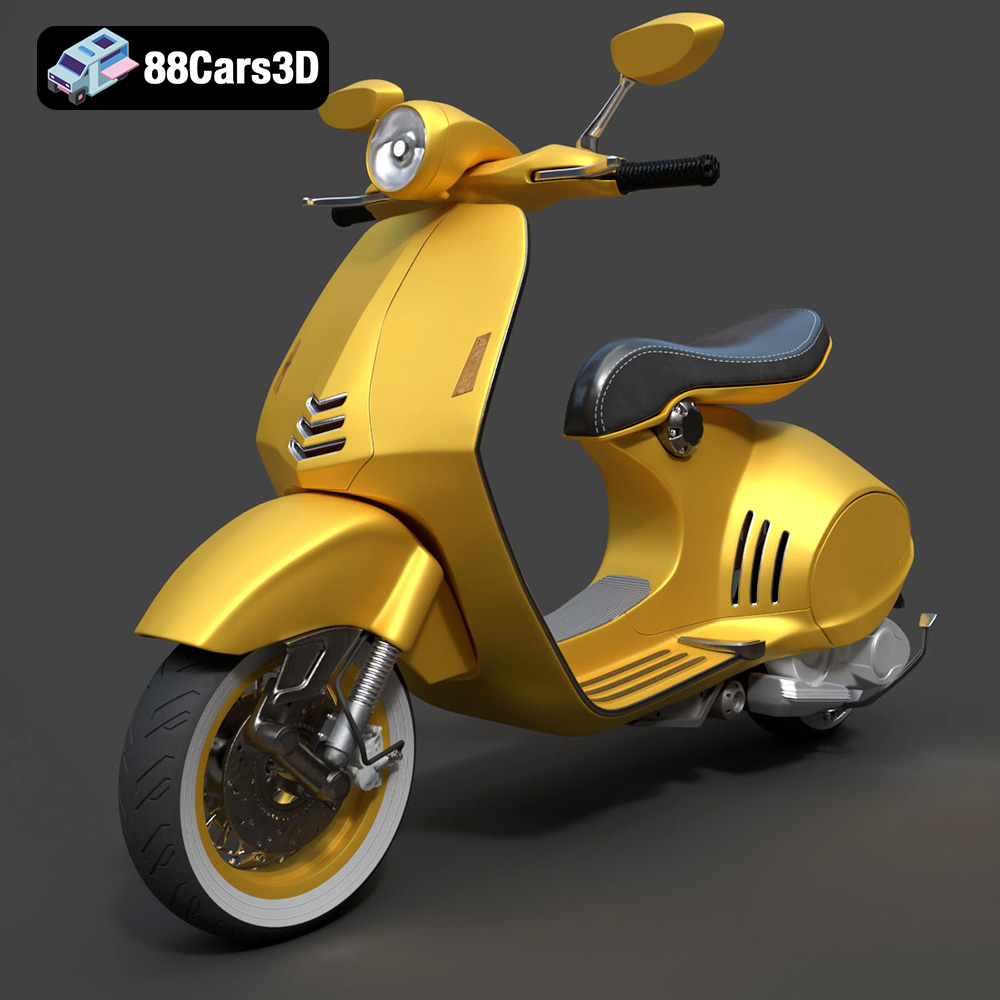
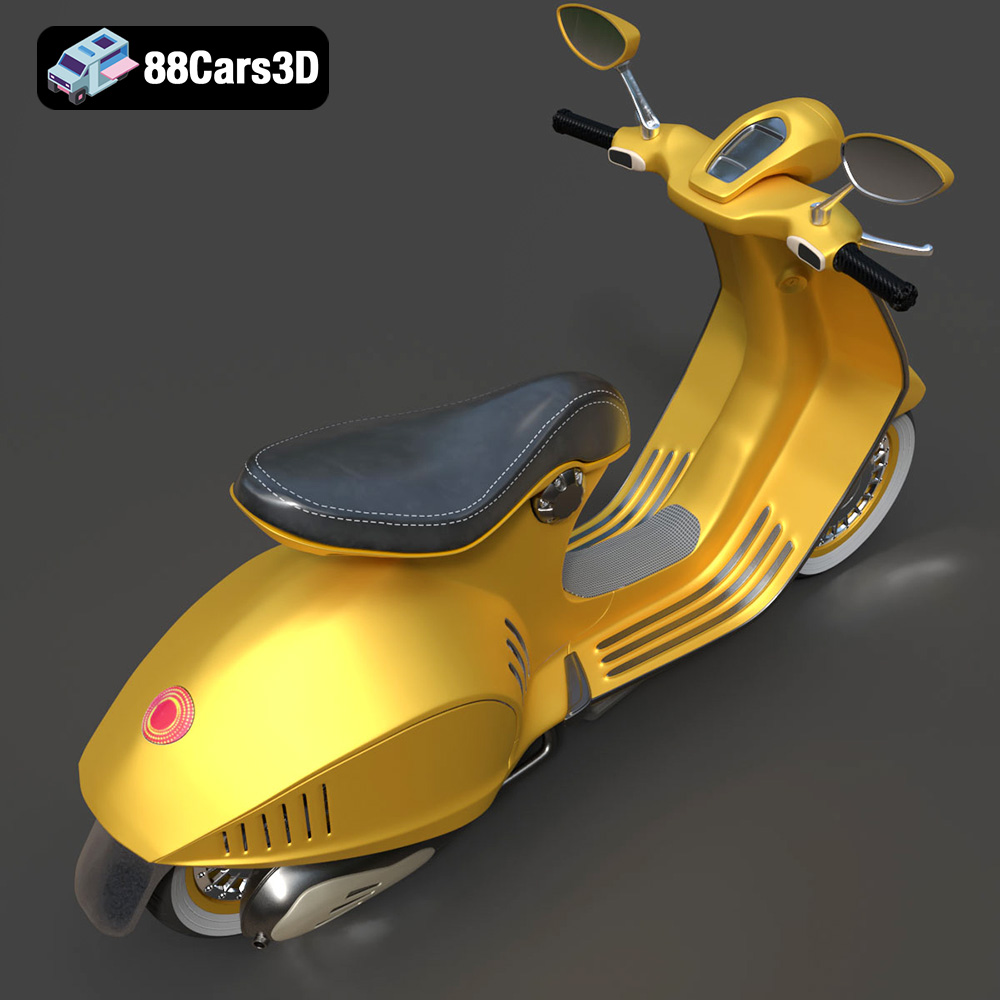
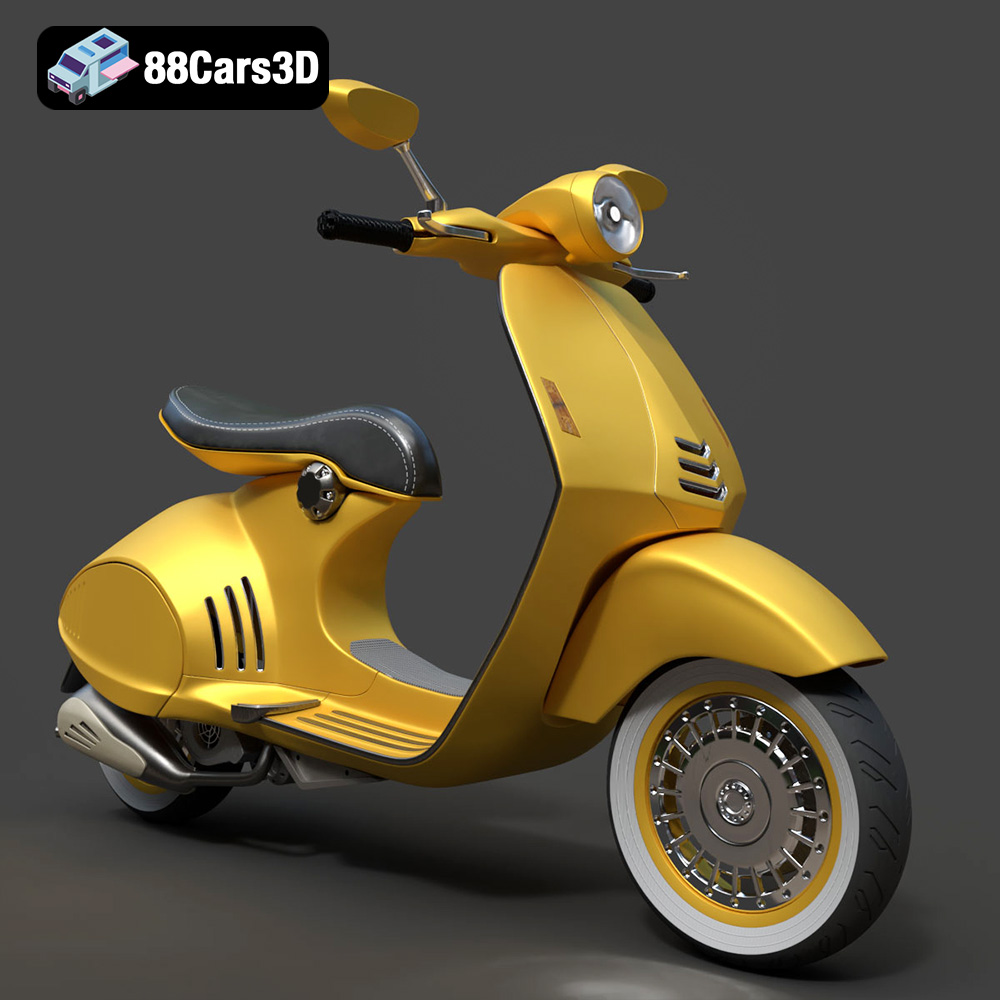
Today, we delve into the intricate details of what makes a truly outstanding 3D asset, using a prime example that effortlessly blends classic design with modern digital craftsmanship: the Vespa 946 3D Model. This meticulously crafted digital recreation offers an unparalleled opportunity to integrate an icon of Italian design into diverse professional pipelines. We’ll explore the technical specifications that define its quality, the various applications it excels in, and the critical role of file formats in enabling seamless integration across different software environments. Whether you’re an automotive rendering specialist, a game developer, or an AR/VR innovator, understanding the nuances of such an asset is crucial for elevating your digital creations.
The versatility of a 3D model isn’t just about its visual fidelity or polygon count; it’s also profoundly influenced by the range of file formats it supports. Each format serves specific purposes, optimized for different software, engines, or end-use applications. For professionals leveraging assets like the Vespa 946 3D model, knowing which format to use and why is critical for efficient workflow and optimal performance. Let’s break down the essential formats provided with this iconic scooter model:
The .blend file is the native format for Blender, a powerful open-source 3D creation suite. When you receive a .blend file, you’re getting the complete scene as the artist intended. This often includes not just the mesh data, but also materials, textures, lighting setups, camera angles, and even animation data. For the Vespa 946 3D Model, the .blend file offers full editability, allowing designers to tweak materials, adjust scene lighting, or even modify the geometry directly within Blender. This format is ideal for artists who use Blender as their primary DCC (Digital Content Creation) tool and require maximum flexibility for customization and rendering within the Blender Cycles or Eevee engines.
FBX (Filmbox) is a proprietary file format developed by Autodesk, widely recognized as the industry standard for 3D model interchange, especially in game development and animation. Its strength lies in its ability to store not only mesh and material data but also complex animation, rigging, and camera information. The .fbx format for the Vespa 946 is “game-engine ready,” meaning it’s typically optimized for real-time applications like Unreal Engine and Unity. It ensures that the model’s hierarchy, pivot points, and basic material assignments translate correctly, making it incredibly efficient for integrating assets into interactive environments without extensive re-work.
OBJ (or .obj) is one of the oldest and most widely supported 3D file formats. It’s a universal standard, compatible with virtually all 3D software packages. While it primarily stores geometric data (vertices, normals, UV coordinates, and faces), it can also reference external material definition files (.mtl) for color and texture assignments. The .obj version of the Vespa 946 is perfect for cross-software compatibility, serving as a reliable bridge between different platforms. It’s often chosen when a “clean” mesh is required, without the overhead of scene-specific data, making it excellent for initial imports or when the target software prefers to handle materials independently.
GLB (GL Transmission Format Binary) is a modern, compact, and efficient 3D file format designed for the web, AR (Augmented Reality), and VR (Virtual Reality) applications. It bundles all necessary data—geometry, materials, textures, and animation—into a single binary file, making it incredibly fast to load and display. For the Vespa 946, the .glb format is specifically optimized for immersive experiences and browser-based viewers, ensuring a smooth, high-quality display in real-time on various devices. This is invaluable for showcasing products on e-commerce sites, creating interactive demonstrations, or deploying models in AR/VR apps.
STL (STereoLithography) is the de facto standard file format for 3D printing. Unlike other formats that describe surface geometry and properties, .stl represents a 3D model as a series of connected triangles. It is a simple, robust format that conveys only the surface geometry of a three-dimensional object without color, texture, or other CAD attributes. The .stl version of the Vespa 946 3D model is specifically provided for users looking to physically prototype, print scale models, or even create custom parts. This format ensures geometric integrity for manufacturing processes, making digital assets tangible.
PLY (Polygon File Format or Stanford Triangle Format) is another format primarily used for storing 3D data from 3D scanners, CAD applications, or for scientific visualization and analysis. It can store a wide range of properties, including color, transparency, surface normals, and texture coordinates, in addition to the standard polygonal data. The .ply format for the Vespa 946 offers a high-precision mesh representation, making it suitable for applications where detailed analysis, engineering review, or specific CAD integration is required beyond simple visual rendering.
While often used in conjunction with .fbx, the inclusion of a dedicated .unreal file or project element signifies an asset specifically configured for Unreal Engine. This often means the model has undergone specific optimizations, material setups, and perhaps even collision meshes or LODs (Levels of Detail) that are tailored for Unreal’s real-time rendering pipeline. For the Vespa 946, this means streamlined import and setup within Unreal Engine, allowing developers to immediately drop the model into their scenes with minimal fuss, leveraging Unreal’s advanced rendering capabilities out of the box.
The .max file is the native format for Autodesk 3ds Max, a leading software in architectural visualization, animation, and high-end rendering. Similar to .blend, a .max file provides the complete scene, including complex hierarchies, modifiers, materials, lighting, and animation curves. For the Vespa 946 3D Model, the .max file offers full parametric control and an editable environment for users whose primary DCC tool is 3ds Max. This is invaluable for detailed studio renders, complex animation sequences, or integration into existing 3ds Max projects without data loss or conversion artifacts.
The provision of such a comprehensive array of formats for the Vespa 946 3D Model underscores its professional-grade quality and the foresight of its creators. This diverse offering ensures that no matter the user’s software preference or project requirement, a suitable, optimized version of the model is readily available, exemplifying the value found on platforms like 88cars3d.com.
Creating a 3D model as recognizable and aesthetically significant as the Vespa 946 requires more than just technical proficiency; it demands a deep appreciation for its design language and a relentless commitment to accuracy. The process involves multiple stages, each critical to achieving the “true-to-life realism” that professionals expect.
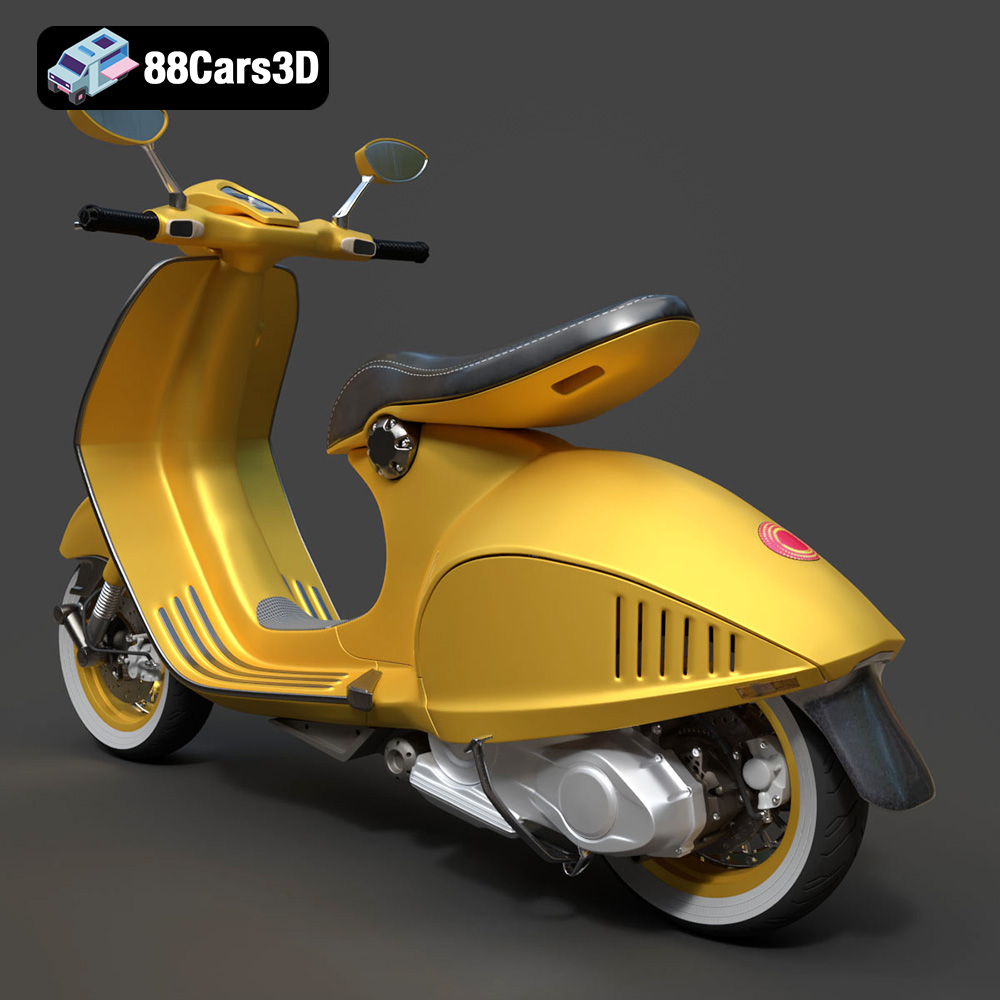
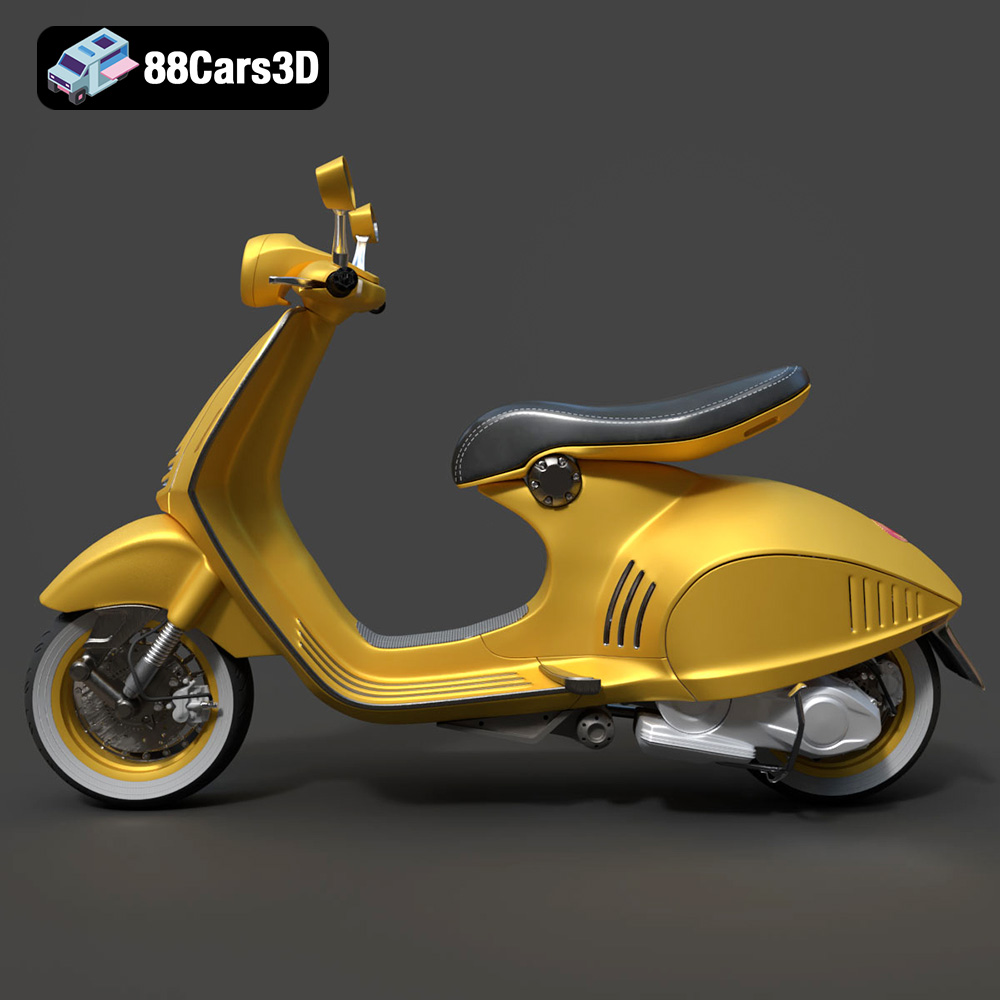
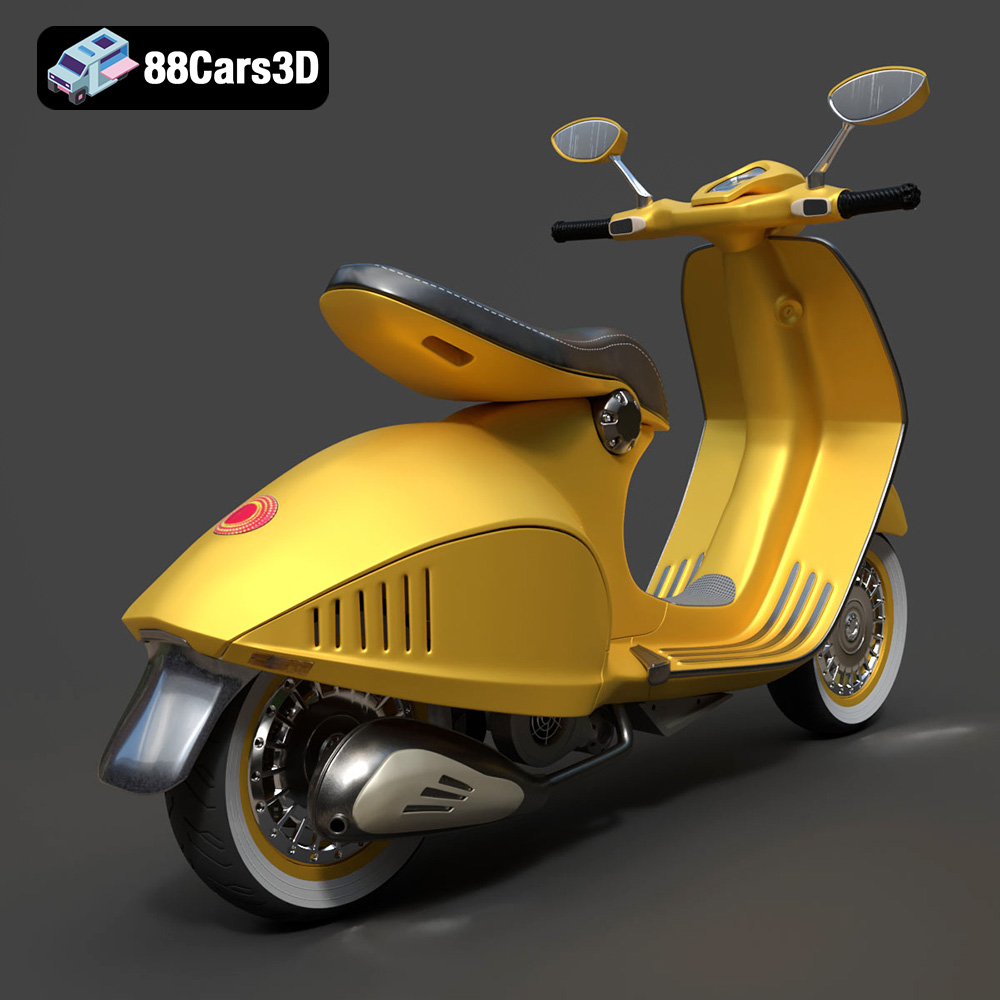
The defining characteristic of the Vespa 946 is its elegant, flowing curves. Replicating these in 3D is a meticulous task that begins with extensive reference gathering—blueprints, photographs, and even physical inspections of the real vehicle. Artists employ advanced modeling techniques, often starting with NURBS surfaces or carefully sculpted polygonal meshes, to ensure every line, every arc, and every subtle transition of the bodywork is faithfully reproduced. For the Vespa 946 3D Model, this meant capturing the iconic unibody steel chassis, the distinctive “floating” seat, and the intricate details of its headlight and chrome accents with millimeter precision. This foundational accuracy is what allows the model to hold up under the closest camera angles and highest resolutions.
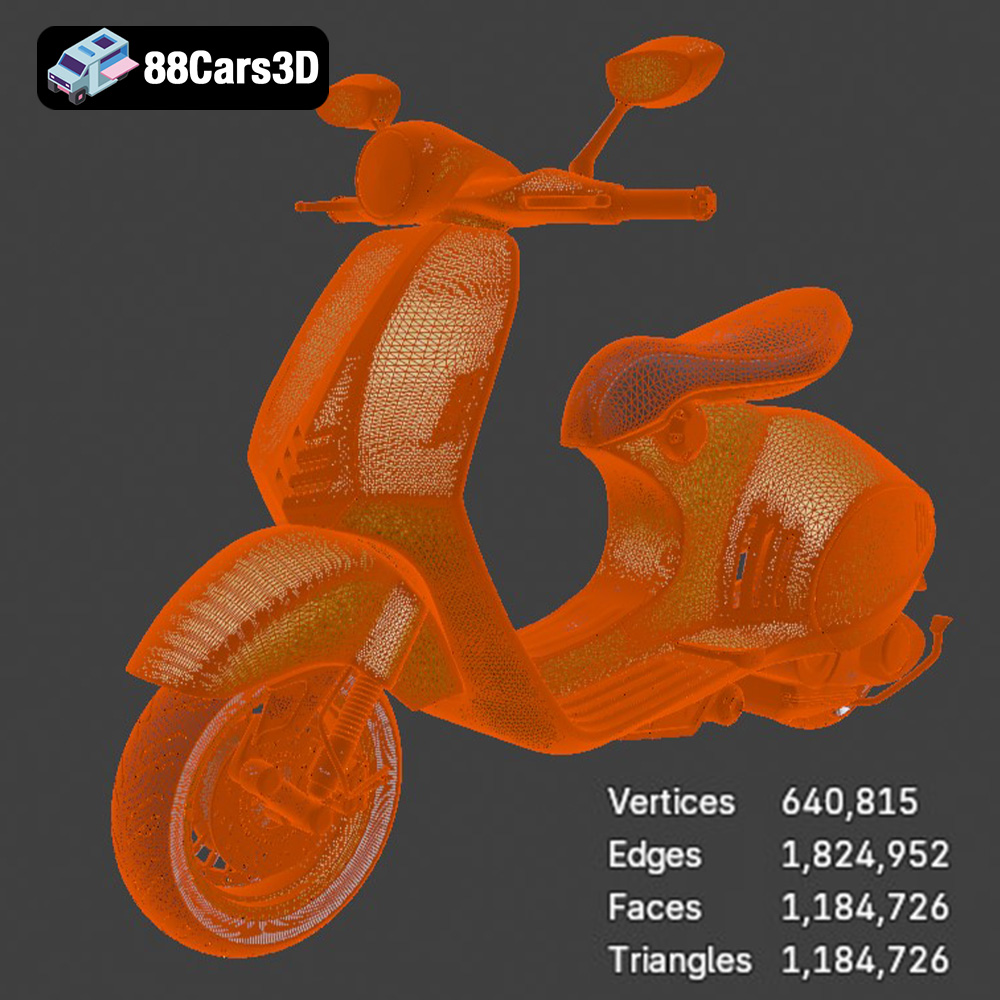
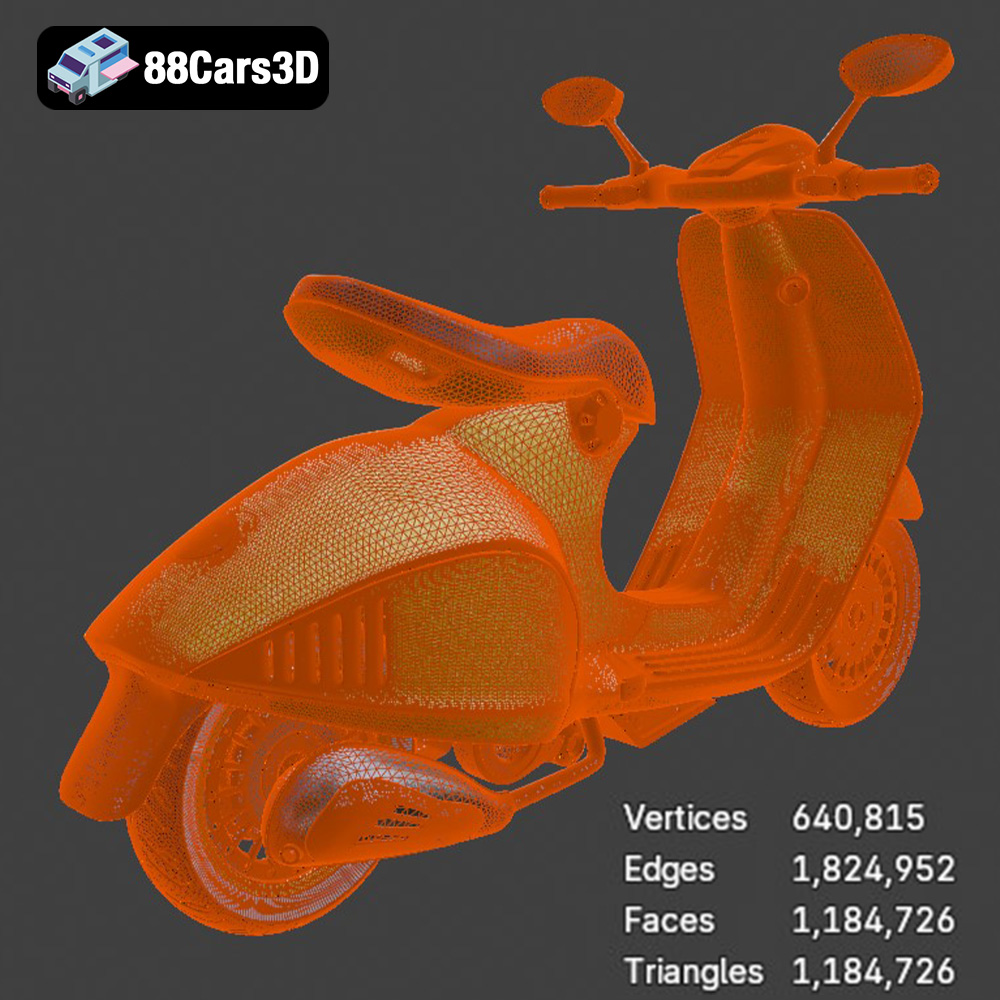
Beyond visual accuracy, a professional 3D model must possess clean geometry and optimized topology. “Clean geometry” refers to a mesh that is free from errors like non-manifold edges, overlapping faces, or flipped normals, which can cause rendering artifacts or issues during animation. “Optimized topology” means the polygon flow is intelligent, using just enough polygons to define the shape while allowing for smooth subdivision when higher detail is needed. The Vespa 946 3D model boasts professional-grade topology, ensuring smooth deformations if animated and optimal performance in real-time engines. Hand-in-hand with topology are UV layouts. Accurate UV unwrapping is crucial for applying textures without stretching or distortion. For complex surfaces like those of the Vespa, careful UV mapping ensures that realistic materials and intricate decals appear flawlessly, enhancing the model’s overall realism.
The final layer of realism comes from the materials and textures. Modern rendering pipelines heavily rely on Physically Based Rendering (PBR) workflows, which simulate how light interacts with surfaces in the real world. This involves creating texture maps (albedo, roughness, metallic, normal, ambient occlusion) that accurately describe the surface properties. For the Vespa 946, this translates to perfectly polished chrome, the subtle sheen of painted metal, the texture of the seat leather, and the intricate details of tires and engine components. Each material is crafted to respond realistically to light, making the model come alive whether it’s bathed in studio lighting or integrated into a dynamic outdoor scene. The inclusion of these realistic materials in the Vespa 946 3D model means less setup time for the user and immediate access to stunning visual fidelity.
The true test of a high-quality 3D model lies in its ability to seamlessly integrate into diverse professional workflows, saving artists and developers valuable time and resources. The Vespa 946 3D Model, available on 88cars3d.com, is engineered precisely for this purpose, offering broad compatibility and optimization across various applications.
For game developers, the Vespa 946 is a ready-to-use asset that can significantly enhance the visual fidelity of any game environment. Its optimized polygon counts and clean topology are ideal for maintaining high frame rates while delivering impressive detail. The included .fbx and .unreal formats are specifically designed for game engines like Unreal Engine and Unity. This means the model can be imported directly, often with pre-configured materials and collision meshes, allowing developers to focus on gameplay and scene composition rather than asset preparation. Imagine an open-world game set in a bustling European city, where the Vespa 946 could serve as an iconic background prop, a playable vehicle, or even a detailed asset for cinematic cutscenes.
In architectural visualization, vehicles are often crucial elements for contextualizing spaces and adding a sense of scale and realism. The Vespa 946, with its timeless design, is perfect for rendering sophisticated urban scenes, vibrant café exteriors, or modern residential driveways. Its high-fidelity materials and accurate modeling make it suitable for close-up studio renders within 3ds Max or Blender. Visualization artists can utilize the .max or .blend files to drop the scooter into their scenes, adjust lighting, and render photorealistic images or animations, instantly elevating the aesthetic appeal and believability of their architectural projects.
The burgeoning fields of Augmented Reality and Virtual Reality demand highly optimized yet visually appealing 3D assets. The .glb format provided with the Vespa 946 3D Model is specifically optimized for these real-time, interactive environments. Developers can effortlessly integrate the model into AR apps for product showcases, allowing customers to virtually place the Vespa in their driveway, or into VR experiences for immersive tours of historical cities. Furthermore, its web-optimized nature makes it perfect for interactive 3D viewers on e-commerce websites, giving potential buyers a dynamic, 360-degree view of the iconic scooter directly in their browser.
Beyond digital screens, the physical world offers another exciting application: 3D printing. The .stl format included with the Vespa 946 is tailored for this purpose, enabling designers and enthusiasts to bring the digital model into tangible reality. Whether for creating scale models, custom accessories, or prototyping design concepts, the clean mesh of the .stl file ensures a smooth transition from digital to physical. This capability expands the utility of the model far beyond traditional rendering, offering a hands-on experience with the iconic design.
To illustrate the practical value of a high-quality asset like the Vespa 946 3D Model, let’s consider a few hypothetical, yet entirely plausible, professional scenarios:
A prominent game studio is developing a new open-world adventure game set in a fictionalized version of Rome. They need authentic, high-quality vehicle assets to populate their bustling street scenes and create a believable atmosphere. Instead of dedicating valuable internal artist hours to model every vehicle from scratch, they turn to 88cars3d.com. They acquire the Vespa 946 3D Model, specifically utilizing its .fbx and .unreal formats. The model’s optimized geometry and realistic textures allow it to be placed throughout the city without impacting performance. For key narrative moments, they can even feature the Vespa prominently in cinematics, leveraging its detailed design for close-up shots. The ready-to-use nature of the asset significantly accelerates their development timeline, freeing up their team to focus on unique gameplay elements.
An automotive design firm is preparing a stunning presentation for a new line of electric scooters, drawing inspiration from classic designs. To benchmark their aesthetics and add a touch of historical elegance to their digital showcase, they integrate the Vespa 946 into their rendering pipeline. Using the .max file within 3ds Max, their visualization artists create a series of photorealistic studio renders. They position the Vespa 946 alongside their conceptual designs, demonstrating the timeless appeal and quality they aspire to. The meticulously crafted materials of the 3D model, from the chrome to the paint finish, allow for breathtaking reflections and detailed material interactions under various lighting conditions, enhancing the overall professional quality of their presentation.
A museum curator is developing an interactive exhibit on the evolution of urban transportation. They want visitors to be able to virtually “walk around” and examine iconic vehicles from different eras using VR headsets or AR applications on tablets. The Vespa 946 is an indispensable part of this collection. By utilizing the .glb version of the model, their development team can quickly deploy it into their AR/VR platforms. Visitors can then don a headset and experience the Vespa 946 in full 3D detail, rotating it, zooming in on specific components, and learning about its design history, all within an immersive, real-time environment. This interactive experience offers a level of engagement far beyond traditional static displays, thanks to the readily available and optimized 3D asset.
When selecting and utilizing 3D car models or any detailed vehicle asset, several technical aspects contribute to its overall quality and suitability for professional projects. These considerations are precisely what define assets like the Vespa 946 3D Model as “professional-grade.”
In real-time applications, managing polygon count (the number of faces that make up the model) is critical for performance. A high-quality model like the Vespa 946 is built with optimized polygon counts, meaning it achieves visual fidelity without excessive geometry. For game development and AR/VR, developers often employ Level of Detail (LOD) strategies. This involves having multiple versions of the same model, each with a progressively lower polygon count. The game engine then swaps between these LODs based on the camera’s distance to the object, ensuring high detail up close and optimized performance for distant objects. A well-constructed base model facilitates the creation of these LODs, demonstrating forward-thinking asset design.
As mentioned earlier, Physically Based Rendering (PBR) is the standard for achieving photorealistic results. Professional 3D car models come with PBR-ready materials, featuring albedo, roughness, metallic, normal, and ambient occlusion maps. Understanding how these maps interact with light sources is crucial for artists. When integrating the Vespa 946 into a scene, paying attention to the scene’s lighting environment – whether it’s an HDRi map for realistic outdoor lighting or a carefully crafted studio lighting setup – will unlock the full potential of its realistic materials, showcasing reflections, highlights, and shadow details with breathtaking accuracy.
While the Vespa 946 is a static prop, its clean topology and logical hierarchy make it inherently suitable for animation if desired. For example, wheels could be easily rotated, or the kickstand extended. Professional 3D car models are often structured in a way that allows for straightforward rigging, where virtual “bones” are set up to control different parts of the model. This is particularly important for models intended to be driven or interact dynamically within a game or animation sequence. The professional-grade topology of assets like the Vespa 946 ensures that if a user decides to rig and animate components, the mesh will deform cleanly and predictably, without tearing or strange artifacts.
The journey of creating and utilizing high-quality 3D assets is a blend of artistic vision and technical mastery. The demand for meticulous detail, optimized performance, and broad compatibility defines the professional landscape of 3D modeling. The Vespa 946 3D Model stands as a testament to these principles, offering an iconic piece of design history rendered with exacting precision for the digital realm.
Its comprehensive package of file formats—from the editable .blend and .max files to game-engine ready .fbx and .unreal, web-optimized .glb, and 3D-printable .stl—ensures its versatility across virtually any professional application. Whether you are crafting immersive game environments, producing stunning automotive rendering visualizations, developing cutting-edge AR/VR experiences, or simply seeking a beautifully crafted asset for a personal project, this model provides the foundation for exceptional results.
Investing in such a professional-grade asset from a trusted marketplace like 88cars3d.com not only guarantees quality but also significantly streamlines your workflow, allowing you to focus on creativity and project execution rather than the laborious process of asset creation. Embrace the power of perfectly engineered 3D car models and elevate your digital creations to new heights of realism and engagement.
Experience the iconic elegance of the Vespa 946 with this meticulously crafted 3D model. Designed to replicate the authentic curves and refined aesthetics of the renowned scooter, this asset provides true-to-life realism for professional projects. Whether for close-up studio renders or dynamic environments, every detail from the distinct seating to the polished chassis has been modeled with precision.
Built with clean geometry and optimized polygon counts, this model ensures seamless integration into various pipelines. It features realistic materials, accurate texturing, and a highly detailed structure, making it a perfect choice for demanding digital creations. The professional-grade topology guarantees smooth subdivisions and optimal performance.
This Vespa 946 3D model is highly versatile and ideal for a wide range of applications, including game development, architectural visualization, AR/VR experiences, animation, and realistic rendering. It provides creators with a ready-to-use asset that elevates the visual fidelity of any scene.
$19.99
.946
.arvr
.blend
.car3dmodel
.fbx
.gameasset
.glb
.max
.motorcycle
.obj
.ply
.rendering
.scooter
.simulation
.stl
.unreal
.vespa