Get 50% OFF All Premium 3D & STL Models!

The automotive industry is in constant motion, not just on the road but also within the digital realm. From concept design and engineering visualization to marketing campaigns and immersive game experiences, high-fidelity 3D car models are indispensable tools for professionals. These digital assets serve as the backbone for showcasing intricate designs, simulating performance, and engaging audiences with unparalleled realism. The shift towards electric vehicles (EVs) introduces new design languages and engineering challenges, making accurate digital representations more critical than ever.
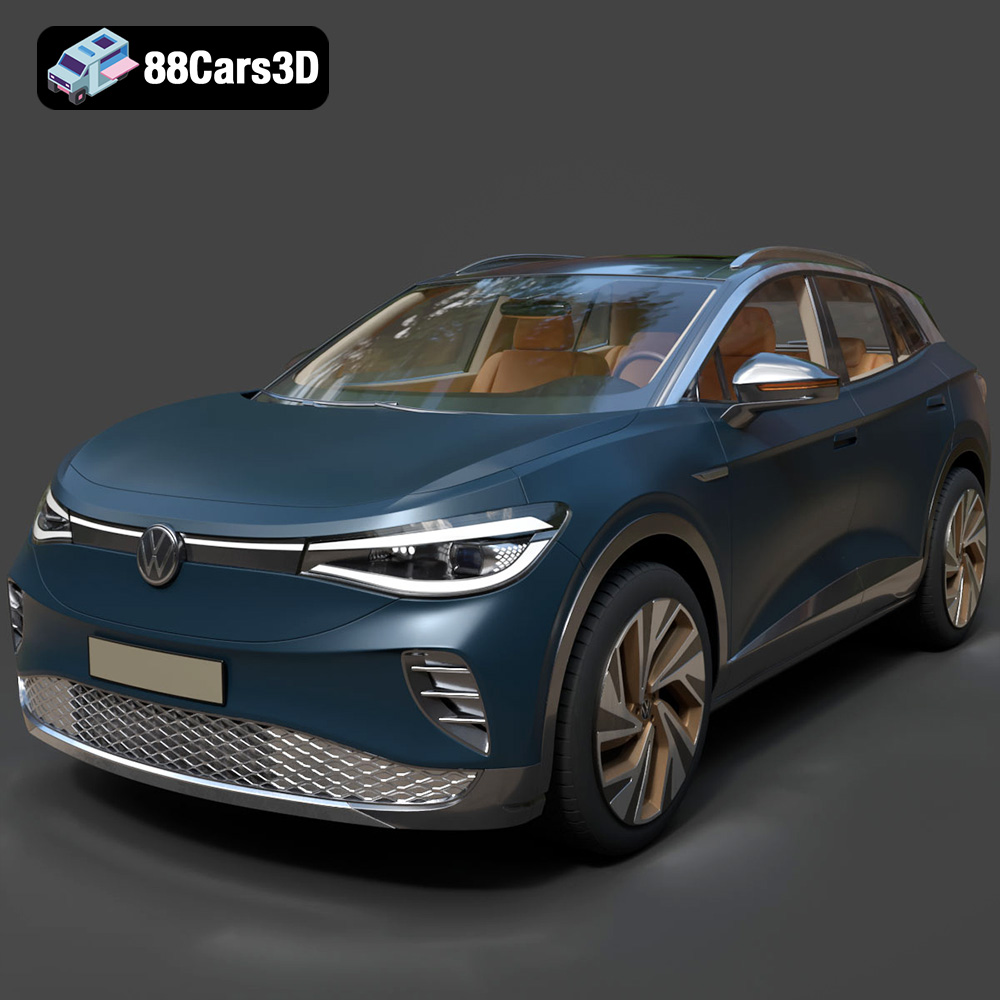
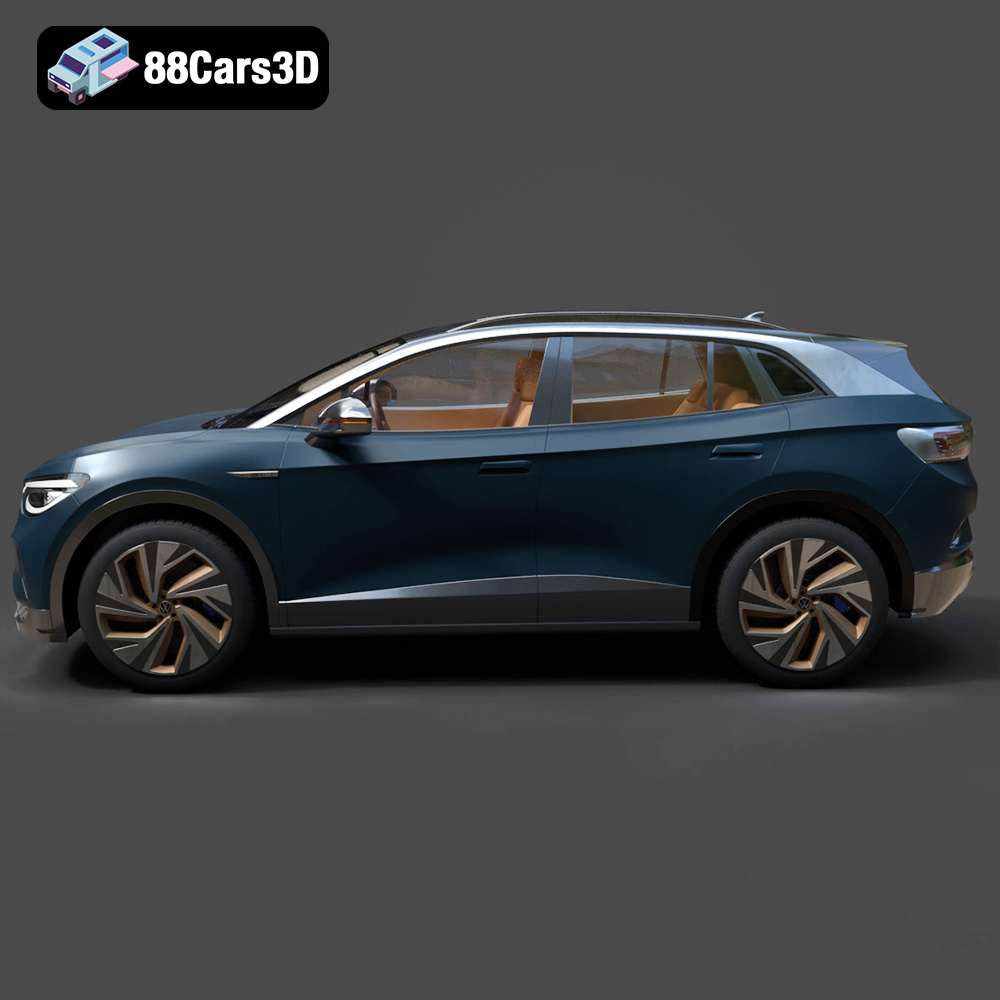
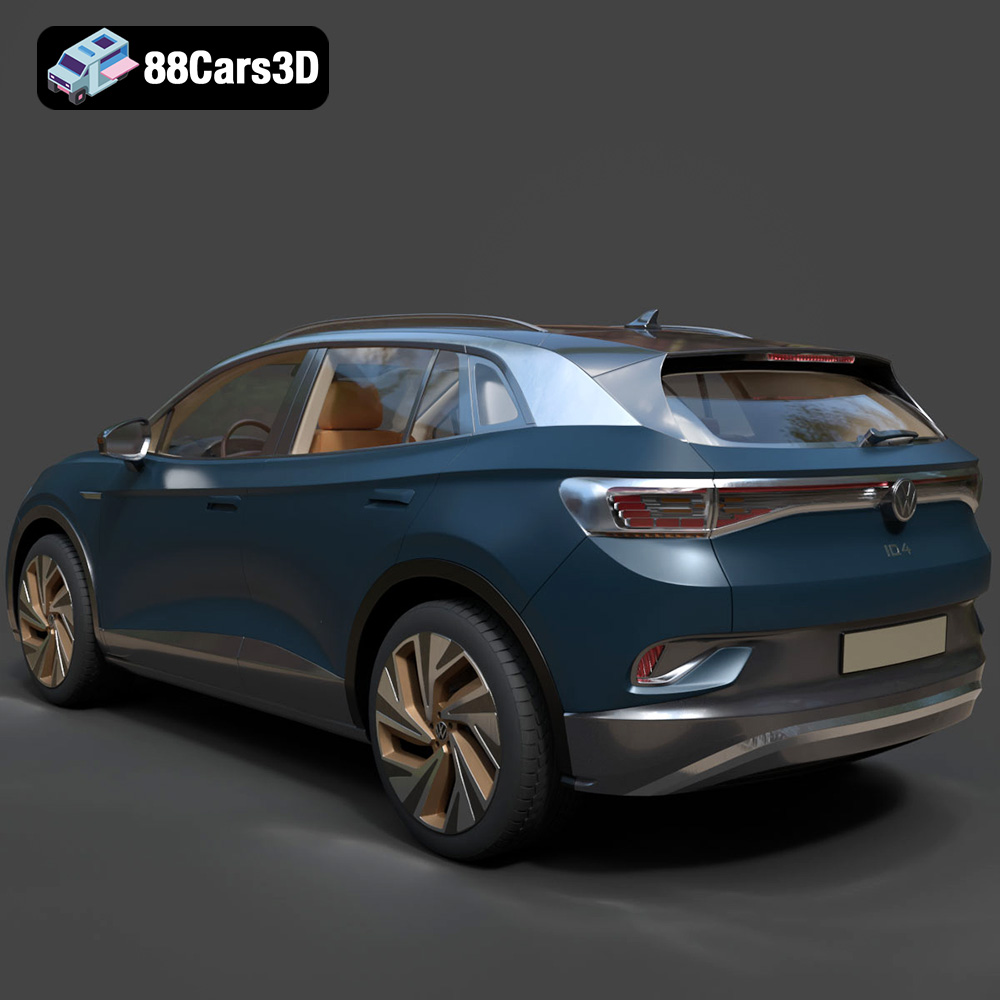
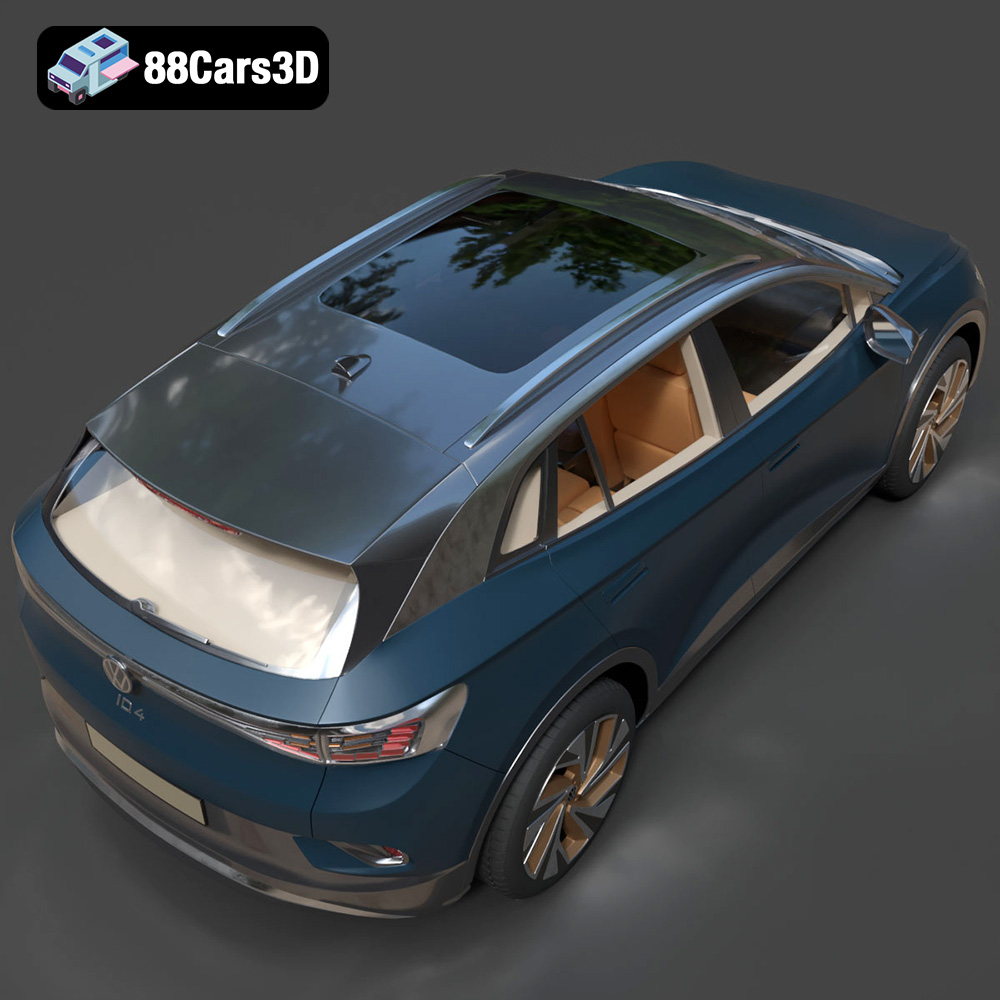
A prime example of a meticulously crafted asset for this evolving landscape is the Volkswagen ID4 2021 3D Model. This extensively detailed model perfectly captures the aerodynamic curves and modern design of the popular electric vehicle, providing an accurate representation suitable for professional digital environments. Whether you’re an automotive designer, a game developer, an architect visualizing smart cities, or a marketer creating cutting-edge campaigns, understanding the nuances of these models and their versatile applications is key to unlocking their full potential. Let’s explore how such a sophisticated 3D model integrates into diverse professional workflows, from conceptualization to deployment, and how platforms like 88cars3d.com provide access to these essential assets.
The utility of any 3D model, especially one as detailed as the Volkswagen ID4 2021 3D Model, is profoundly impacted by its file format. Different formats are optimized for various purposes, software compatibility, and pipelines. A comprehensive package, like the one offered for the ID4 model, provides a suite of formats, ensuring maximum flexibility for diverse professional applications. Understanding each format’s strengths and typical use cases is crucial for seamless integration into your projects.
The .blend format is Blender’s native file type. It encapsulates an entire Blender scene, including mesh data, materials, textures, lighting setups, cameras, animation data, and even physics simulations. For artists and studios primarily using Blender, the .blend file offers the highest degree of editability and ensures that all elements of the original artist’s setup are preserved. This is invaluable for making precise modifications, exploring alternative rendering styles, or animating the Volkswagen ID4 2021 model within a native environment without losing any data fidelity. Its open-source nature makes Blender and its .blend format a popular choice for cost-effective, high-quality production.
Autodesk’s .fbx (Filmbox) format is arguably the most widely adopted interchange format in the 3D industry, particularly for game development and real-time applications. It excels at transferring 3D model data, including geometry, materials (with some limitations on complex shaders), textures, skeletal animations, and cameras, between different software packages like 3ds Max, Maya, Blender, Unreal Engine, and Unity. Its robustness for animation and hierarchical scene data makes it the go-to format for bringing the Volkswagen ID4 into interactive environments. Developers rely on .fbx for its ability to maintain data integrity when migrating complex assets into game engines, ensuring that things like vehicle rigging for suspension and wheel rotation translate correctly.
The .obj (Wavefront OBJ) format is a venerable and highly compatible format, often considered the “lingua franca” of 3D geometry. It primarily stores vertex positions, UV coordinates, normals, and polygon faces. While it doesn’t typically store advanced scene data like animation or complex material setups (materials are usually referenced in a separate .mtl file), its universal acceptance across almost all 3D software makes it invaluable for basic mesh transfer. If you need to import the Volkswagen ID4 2021 3D Model into a less common application or simply require a clean mesh without extra scene data, .obj is an excellent choice for its simplicity and broad support.
The .glb (GL Transmission Format Binary) is an increasingly important format, especially for web-based 3D, augmented reality (AR), and virtual reality (VR) applications. It’s a binary version of glTF, which is designed to be a compact, efficient, and runtime-deliverable format. A .glb file packs all necessary assets—geometry, materials, textures, and even animations—into a single file, reducing load times and simplifying integration into web browsers and AR/VR platforms. For showcasing the Volkswagen ID4 2021 model directly on a website or in an immersive AR experience on a smartphone, .glb offers optimal performance and visual fidelity.
The .stl (Stereolithography) format is the standard for 3D printing. It represents a 3D model as a collection of unconnected triangular facets, defining only the surface geometry of an object without any color, texture, or material information. While simple, its ubiquity in the additive manufacturing world makes it essential for prototyping and physical reproduction. If the goal is to 3D print a scale model of the Volkswagen ID4 2021, the .stl file provides the clean, watertight mesh required by 3D printers and slicing software.
The .ply (Polygon File Format, or Stanford Triangle Format) is another format for storing 3D data, often used in scientific and engineering applications. Unlike .stl, .ply can store a wider range of properties, including color, transparency, surface normals, and even data from 3D scanners. This makes it suitable for precise mesh analysis, CAD integration, and applications where per-vertex data is crucial. For detailed examination or reverse engineering concepts of the Volkswagen ID4’s complex surfaces, a .ply file can offer greater data depth compared to a simple .obj.
The .unreal designation typically refers to a pre-configured asset package or project file specifically designed for Unreal Engine. This format goes beyond a simple mesh import; it often includes optimized meshes, PBR (Physically Based Rendering) materials set up with Unreal’s shader system, collision meshes, LODs (Levels of Detail), and sometimes even blueprint configurations for interactive elements. For developers using Unreal Engine, an .unreal asset like the Volkswagen ID4 2021 3D Model offers unparalleled ease of integration, saving significant time in asset preparation and ensuring optimal performance within the engine’s environment.
The .max format is Autodesk 3ds Max’s native file type, similar to .blend for Blender. It contains all the scene information, including geometry, materials, textures, lighting, cameras, modifiers, and animation data specific to 3ds Max. For professionals working within the 3ds Max ecosystem, the .max file provides full editability and control over the Volkswagen ID4 2021 3D Model, allowing for complex rendering setups with V-Ray or Corona, detailed animation, and precise scene construction. It’s the ultimate format for advanced customization and high-end automotive rendering.
The availability of such a diverse array of formats for the Volkswagen ID4 2021 3D Model underscores its versatility and value. Whether you need a fully editable project, an optimized real-time asset, or a file ready for 3D printing, 88cars3d.com ensures that professionals have the right tool for every job.
Automotive visualization is a specialized field that blends artistic vision with technical precision. It’s about more than just rendering a car; it’s about evoking emotion, highlighting design philosophy, and presenting a vehicle in its most appealing and informative light. High-quality 3D car models are the canvas upon which these visions are painted, and the Volkswagen ID4 2021 3D Model stands out as an exceptional example.
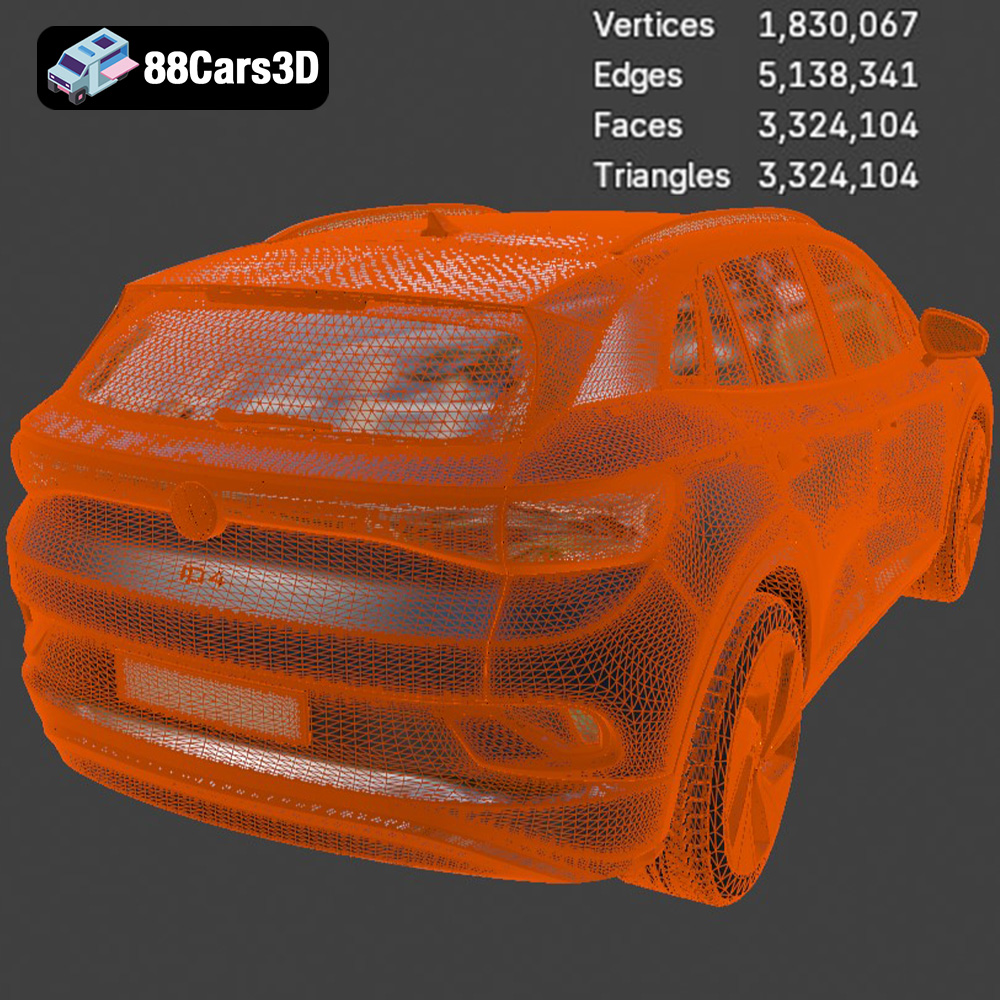
Achieving photorealistic renders requires a foundation of clean geometry, accurate proportions, and meticulously crafted materials. The Volkswagen ID4 2021 3D Model is engineered with precision, featuring clean topology that makes it highly adaptable for subdivision, ensuring smooth curves even in extreme close-up shots. Its accurate proportions are critical for maintaining the authentic look of the actual vehicle, a non-negotiable requirement for automotive marketing and design review. Realistic materials, encompassing everything from the metallic flake of the paint to the subtle reflections of glass and the texture of tires, are pre-applied or easily configurable. These elements collectively contribute to renders that are virtually indistinguishable from real-world photography, allowing designers to iterate on concepts and marketers to create compelling visuals long before a physical prototype exists.
The magic of realistic rendering often lies in the mastery of lighting and materials. For the Volkswagen ID4 2021 3D Model, artists typically employ a combination of HDRI (High Dynamic Range Imaging) environments for natural, physically accurate lighting, complemented by carefully placed area lights to emphasize specific contours or reflections. Physically Based Rendering (PBR) materials are essential, allowing artists to define properties like metallicness, roughness, normal maps, and displacement to simulate surface imperfections and detailed textures. Software like 3ds Max with V-Ray or Corona Renderer, or Blender with Cycles, provides the tools for these sophisticated setups. Post-processing, involving color grading, depth of field, motion blur, and lens effects, then adds the final layer of realism, transforming a raw render into a polished, professional image.
In the rapidly evolving world of interactive entertainment, the demand for realistic and performant game assets is paramount. High-quality 3D car models are central to racing simulators, open-world adventures, and even architectural visualizations within game engines. The Volkswagen ID4 2021 3D Model offers a robust foundation for these applications, particularly with its game-engine-ready .fbx and .unreal formats.
While photorealistic renders prioritize detail above all else, game engines demand optimization for real-time performance. This involves strategic polygon reduction, careful UV mapping to maximize texture efficiency, and streamlined material setups. The Volkswagen ID4 model, with its clean geometry, provides an excellent starting point for this optimization process. Developers can easily create multiple Levels of Detail (LODs) – progressively lower polygon versions of the car that swap in as the vehicle moves further from the camera – to maintain high visual fidelity up close while conserving computational resources at a distance. Efficient texture atlases combine multiple textures into one sheet, reducing draw calls and improving rendering speed within engines like Unreal Engine and Unity.
Beyond visual fidelity, functionality in a game environment requires additional technical assets. Collision meshes, simplified geometric representations of the car, define how the vehicle interacts physically with the game world and other objects without the overhead of complex visual geometry. The Volkswagen ID4 model’s structured hierarchy allows for easy creation of these elements, as well as separate meshes for wheels, suspension, and doors, which are crucial for realistic animation and interactive elements. Careful attention to material complexity, shader instructions, and the overall polygon budget ensures that the ID4 model performs smoothly even in demanding, open-world game environments, offering a seamless experience for players.
Augmented Reality (AR) and Virtual Reality (VR) are transforming how we interact with digital content, offering immersive experiences that blur the lines between the real and virtual. Automotive brands are at the forefront of this revolution, using AR/VR for interactive showrooms, virtual test drives, and advanced training simulations. A high-quality 3D model like the Volkswagen ID4 2021 is a critical asset for these cutting-edge applications.
Imagine potential customers exploring the Volkswagen ID4 in a virtual showroom, walking around it, opening doors, and even sitting inside, all without leaving their home. Or engineers training on maintenance procedures using an AR overlay on a physical vehicle. These experiences demand precise, high-fidelity 3D EV models that accurately represent every detail, from the interior dashboard to the charging port. The detailed interior and exterior elements of the Volkswagen ID4 2021 3D Model ensure that these immersive scenarios are not only visually stunning but also functionally accurate, enhancing user engagement and comprehension. Its realistic materials and accurate proportions are crucial for maintaining suspension of disbelief in these virtual worlds.
The accessibility of AR/VR experiences is heavily reliant on efficient 3D asset delivery, especially over the web. This is where the .glb format becomes invaluable. Optimized for AR/VR and web-based visualization, the .glb file of the Volkswagen ID4 model bundles all necessary data into a single, compact file. This allows for quick loading times and seamless integration into webGL-enabled websites, enabling users to view, interact with, and even place the ID4 in their real-world environment using their smartphone’s AR capabilities. This makes it a powerful tool for marketing, online configurators, and delivering instant, engaging product showcases to a global audience.
While digital visualization reigns supreme, there are still critical stages in design and engineering where a physical object is indispensable. 3D printing has revolutionized rapid prototyping, allowing designers to quickly translate digital concepts into tangible models for review, testing, and display. The Volkswagen ID4 2021 3D Model can bridge this gap between the virtual and the physical with its specialized .stl and .ply formats.
For 3D printing a physical model of the Volkswagen ID4, the .stl format is the industry standard. It provides a triangulated mesh that defines the surface geometry, which slicing software uses to generate instructions for the 3D printer. The clean geometry of the ID4 model ensures that the .stl conversion is smooth and watertight, preventing common printing errors. For more advanced applications where color or additional vertex data is required, the .ply format can be utilized. This might be for creating a prototype with specific color zones for design review, or for applications where precise measurement and analysis of the physical print are paramount.
Consider an automotive design studio using the Volkswagen ID4 2021 3D Model. After several digital iterations, the design team needs to physically assess the ergonomics of a new interior component or the aesthetic flow of an exterior panel. Using the .stl version of the ID4, they can rapidly 3D print scale models or individual parts. These physical prototypes allow for tactile feedback, hands-on evaluation of fit and finish, and a better understanding of how light interacts with the surfaces in the real world—insights that are difficult to fully grasp purely from a screen. This iterative process, leveraging both digital and physical forms derived from the same high-quality 3D model, significantly accelerates the design cycle and reduces costs.
The true power of a meticulously crafted 3D model like the Volkswagen ID4 2021 lies in its adaptability and suitability for advanced professional workflows. Beyond simple rendering, it serves as a robust foundation for deep customization, complex animation, and even technical simulations, demonstrating the value proposition of high-quality assets available on platforms like 88cars3d.com.
With the inclusion of fully editable .max and .blend files, artists and designers gain unparalleled control over the Volkswagen ID4 2021 3D Model. This allows for extensive customization, such as creating bespoke paint schemes, designing unique aftermarket accessories, or modifying interior elements to match a specific project brief. Beyond static customization, these native files are perfectly set up for animation. Whether it’s a simple wheel rotation for a turntable render, a complex suspension simulation, or an entire scene depicting the ID4 navigating a city street, the clean mesh and hierarchical structure facilitate rigging and keyframe animation. This flexibility is crucial for creating dynamic marketing materials, engaging cinematics, or even educational content explaining the vehicle’s features.
The precision engineering evident in the Volkswagen ID4 2021 3D Model’s geometry extends its utility into more technical applications. Its accurate proportions and clean topology make it an excellent candidate for various simulations and analyses. While the model itself isn’t a CAD file for direct engineering, its well-defined surfaces can be used as a visual proxy or a starting point for aerodynamic studies (e.g., fluid dynamics simulations to visualize airflow over the body), or for visualising load points and stress distribution in a conceptual manner. Architects and urban planners might use the model within larger city simulations to assess traffic flow, parking requirements for EVs, or the visual impact of electric vehicles in a smart city context. The reliability of its digital form ensures that these high-level analyses are based on an accurate representation of the real-world vehicle.
The journey through the diverse applications of a high-fidelity 3D car model underscores its indispensable role in modern digital production. From the nuanced demands of photorealistic automotive rendering to the performance-critical requirements of game development, and from the immersive possibilities of AR/VR to the tangible outputs of 3D printing, a well-engineered 3D asset is the linchpin of success. The Volkswagen ID4 2021 3D Model, with its exceptional realism, clean geometry, and comprehensive suite of file formats, embodies this versatility and professional utility.
Whether you are crafting the next-generation racing game, visualizing an urban landscape, designing a marketing campaign, or prototyping a new automotive accessory, the right 3D car model can significantly enhance your workflow and the quality of your output. Access to such high-quality 3D car models is made easy through platforms like 88cars3d.com, ensuring that professionals have the tools they need to bring their most ambitious projects to life. Investing in meticulously detailed and expertly formatted assets, such as the Volkswagen ID4 2021 3D Model, is not just about acquiring a digital file; it’s about empowering your creative and technical endeavors with the foundation for excellence.
Experience exceptional realism with the Volkswagen ID4 2021 3D Model. This extensively detailed model perfectly captures the aerodynamic curves and modern design of the popular electric vehicle, providing an accurate representation suitable for professional digital environments.
Engineered with precision, this model features clean geometry, accurate proportions, and realistic materials. The intricately modeled interior and exterior elements ensure seamless integration into close-up shots and demanding digital scenes.
Ideal for a wide range of professional applications, this model is perfect for automotive visualization, game development, rendering, AR/VR experiences, and interactive simulations.
Tags: .volkswagen, .id4, .ev, .electricvehicle, .suv, .crossover, .car3dmodel, .rendering, .simulation, .gameasset, .arvr, .blend, .fbx, .obj, .glb, .stl, .ply, .unreal, .max
Tags:
.volkswagen, .id4, .ev, .electricvehicle, .suv, .crossover, .car3dmodel, .rendering, .simulation, .gameasset, .arvr, .blend, .fbx, .obj, .glb, .stl, .ply, .unreal, .max
$19.99
.arvr
.blend
.car3dmodel
.crossover
.electricvehicle
.ev
.fbx
.gameasset
.glb
.id4
.max
.obj
.ply
.rendering
.simulation
.stl
.unreal
.volkswagen
SUV