Get 50% OFF All Premium 3D & STL Models!

In the dynamic world of 3D visualization, where photorealism meets performance, the demand for meticulously crafted assets is paramount. From blockbuster game titles and cinematic automotive renders to immersive architectural visualizations and cutting-edge AR/VR experiences, the quality of a 3D model can make or break a project. Automotive models, in particular, require a delicate balance of aesthetic accuracy, technical efficiency, and broad compatibility. It’s within this demanding landscape that a model like the Volvo XC40 Recharge (2020) 3D Model truly shines, embodying the pinnacle of modern 3D asset development.
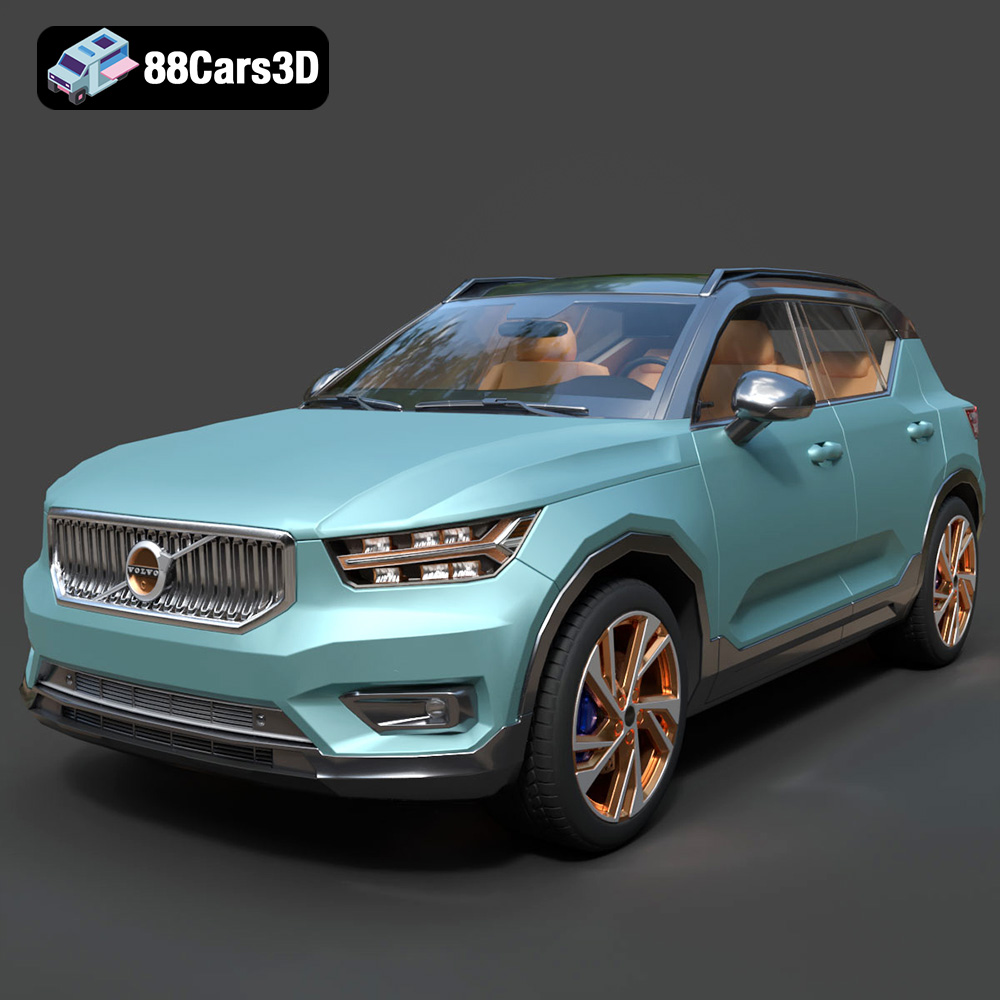
The Volvo XC40 Recharge isn’t just another car; it’s a statement. As Volvo’s first fully electric compact SUV, it combines the brand’s signature Scandinavian minimalism and unwavering commitment to safety with an advanced EV powertrain. This 2020 iteration, with its distinctive closed-off grille and “Thor’s Hammer” LED headlights, represents a pivotal moment in automotive design—a shift towards sustainable luxury. For 3D artists and developers, having access to such a contemporary, iconic vehicle in a high-quality, optimized format is invaluable. It’s an asset that not only populates a scene but elevates it, offering realism and relevance to any digital canvas.
This blog post will delve deep into the technical intricacies, versatile applications, and professional workflows enabled by premium 3D car models, using the Volvo XC40 Recharge (2020) 3D Model as our prime example. We’ll explore why choosing an optimized model from a reputable source like 88cars3d.com can dramatically streamline your projects and elevate your visual output.
The flexibility of a 3D model often comes down to the file formats it supports. Different formats are optimized for different stages of the 3D pipeline, from initial modeling and animation to real-time rendering and physical fabrication. The Volvo XC40 Recharge (2020) 3D Model offers an extensive array of formats, ensuring maximum compatibility and utility across diverse professional workflows. Understanding each is crucial for making informed decisions about how to integrate a premium asset into your project.
The native Blender format, .blend, offers a complete, editable scene. For artists and studios primarily using Blender, this is often the most desirable format. It typically includes the mesh geometry, materials, textures, lighting setups, and even animation data, all within a single file. For the Volvo XC40 Recharge, receiving a .blend file means having direct access to the model’s structure as intended by its creators, allowing for deep customization, material adjustments, and easy integration into existing Blender projects without the potential conversion issues sometimes encountered with generic formats.
FBX (Filmbox) is an industry-standard format for exchanging 3D data between various software applications, particularly prevalent in game development and animation. It’s excellent for transferring geometry, materials, textures, animations, and skeletal data. For real-time engines like Unreal Engine and Unity, .fbx is often the go-to choice due to its robust support for these complex data types. When importing the XC40 Recharge .fbx, developers can expect a smooth transition of the model’s clean topology, material assignments, and even pivot points for animation, making it truly game-ready.
OBJ (or Wavefront OBJ) is a widely supported, universal geometry definition file format. While it’s an older format, it remains incredibly popular due to its simplicity and broad compatibility across virtually all 3D software. An .obj file primarily stores vertex positions, UV coordinates, normals, and group information. Material and texture assignments are typically handled via an accompanying .mtl (material) file. The Volvo XC40 Recharge .obj offers a reliable fallback for cross-software compatibility, ensuring that even if your primary application doesn’t fully support .fbx, you can still access the core mesh data with ease.
GLB (GL Transmission Format Binary) is the binary version of glTF, a royalty-free specification for the efficient transmission and loading of 3D scenes and models by applications. GLB is often referred to as the “JPEG of 3D” due to its optimization for web and real-time experiences, especially AR/VR. It packages geometry, materials, textures, and animation into a single, compact file. The Volvo XC40 Recharge .glb format is perfect for interactive car configurators on websites, augmented reality apps that project the car into a real-world environment, or lightweight VR showrooms, offering stunning visual quality with minimal loading times.
STL (STereoLithography) is the most common file format for 3D printing. It represents a 3D model as a series of connected triangles, defining only the surface geometry of an object without color, texture, or other CAD attributes. For the Volvo XC40 Recharge (2020) 3D Model, the inclusion of an .stl file means it’s prepared for physical creation. This allows designers to print scale models for display, prototyping, or even tabletop games, bridging the gap between digital and physical. The product description’s detailed 3D print settings further emphasize this format’s utility, ensuring a successful print outcome for enthusiasts and professionals alike.
PLY (Polygon File Format, or Stanford Triangle Format) is another format for storing 3D data, particularly useful for scanned data or models with complex geometry and attributes. It can store not just vertices, faces, and normals, but also properties like color, transparency, and even material properties per vertex or face. While not as universally used as .obj or .fbx for general asset exchange, its precision makes it valuable for specialized applications such as scientific visualization, CAD interoperability, or detailed mesh analysis. The XC40 Recharge .ply could be used in engineering review or in workflows requiring very specific mesh properties.
The `.unreal` file format, or more accurately, the `.uasset` format within the Unreal Engine ecosystem, represents an asset that is fully configured and ready for direct import into an Unreal Engine project. While not a standalone file format in the traditional sense, its inclusion implies that the Volvo XC40 Recharge model comes pre-optimized and potentially pre-configured with materials and possibly even basic collisions or LODs (Levels of Detail) specifically for Unreal Engine. This significantly reduces setup time for game developers and real-time visualization artists using Unreal, offering a true plug-and-play experience for this powerful EV asset.
The .max file is the native project file for Autodesk 3ds Max, a leading software in architectural visualization, product design, and animation. Similar to .blend for Blender users, a .max file provides the complete scene, including geometry, materials, textures, lighting, cameras, and animations, all within the 3ds Max environment. For professionals heavily invested in the 3ds Max ecosystem, the Volvo XC40 Recharge .max file grants full editing control, allowing for advanced rendering setups with V-Ray or Corona, complex animations, and seamless integration into large-scale ArchViz scenes or automotive commercials.
Creating a compelling 3D car model is far more than just replicating shapes; it’s a blend of artistic vision and rigorous technical execution. It requires an understanding of real-world physics, material science, and computational efficiency. The Volvo XC40 Recharge (2020) 3D Model exemplifies this synthesis, capturing not just the visual appeal but also the underlying engineering philosophy.
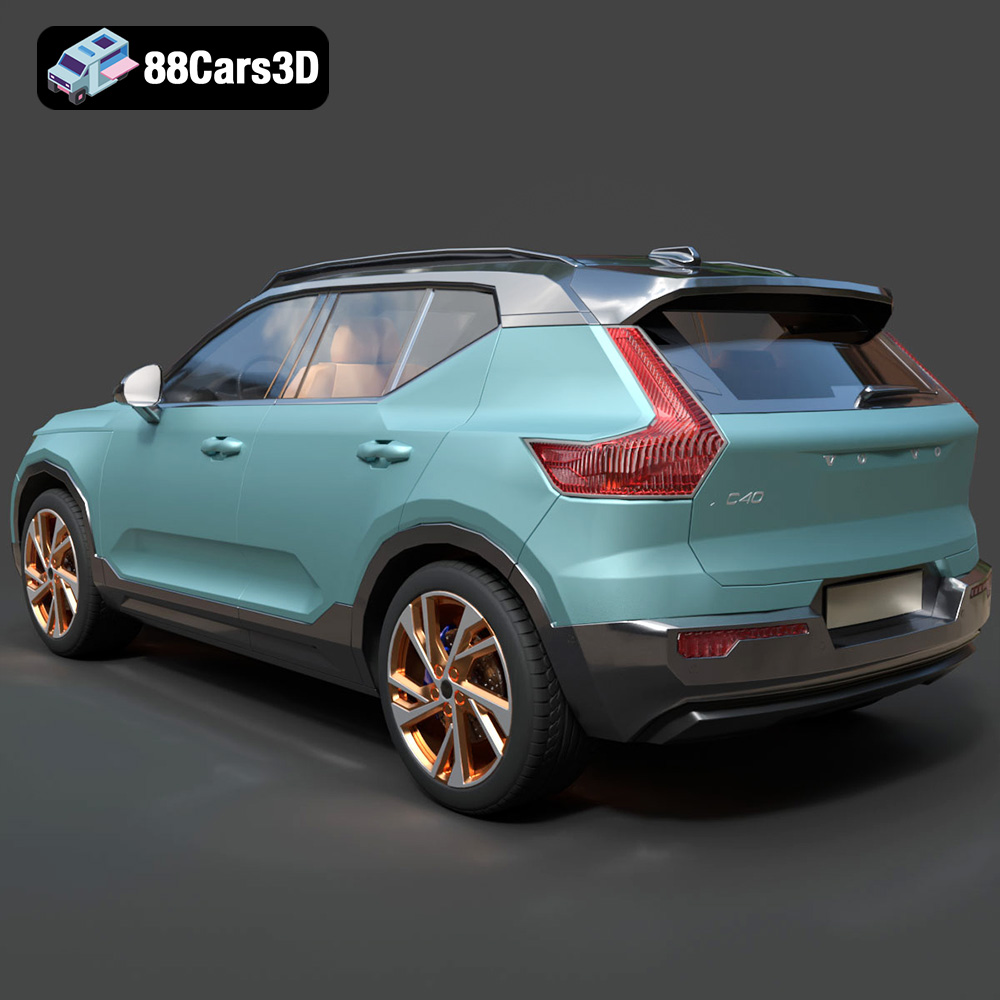
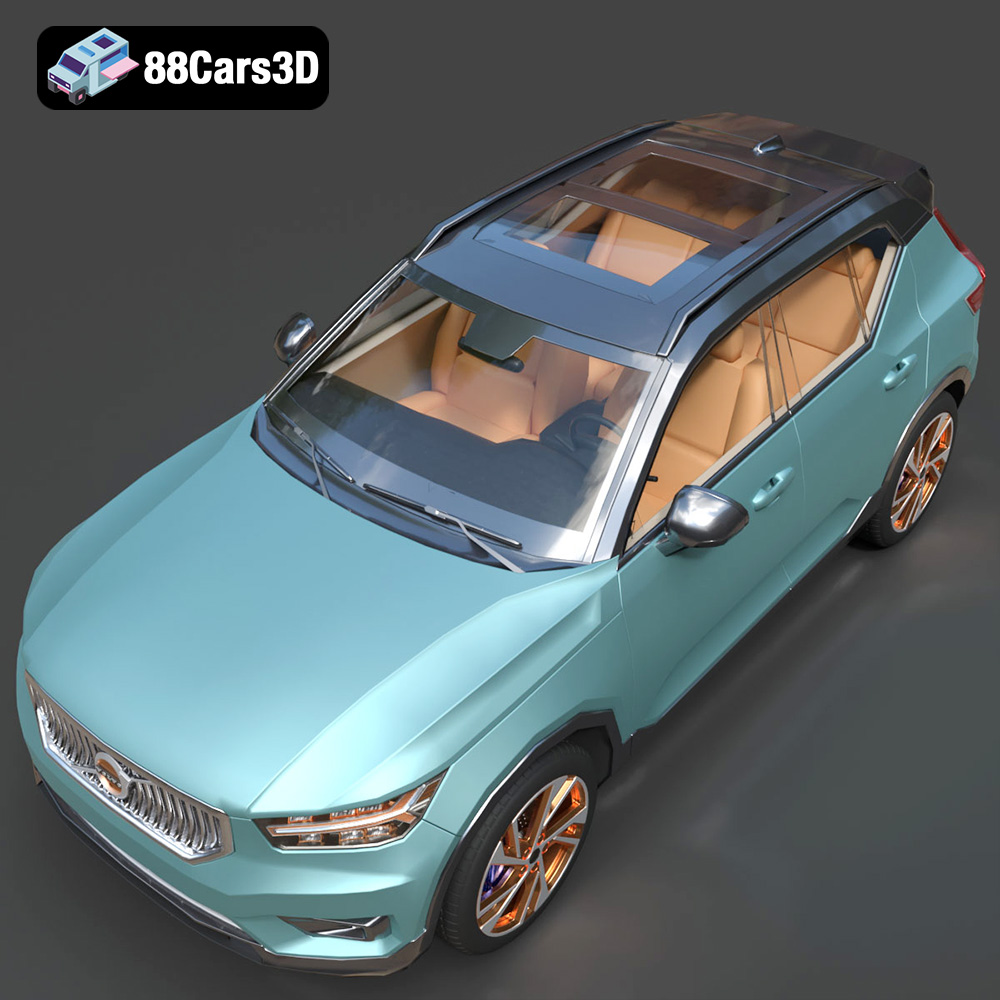
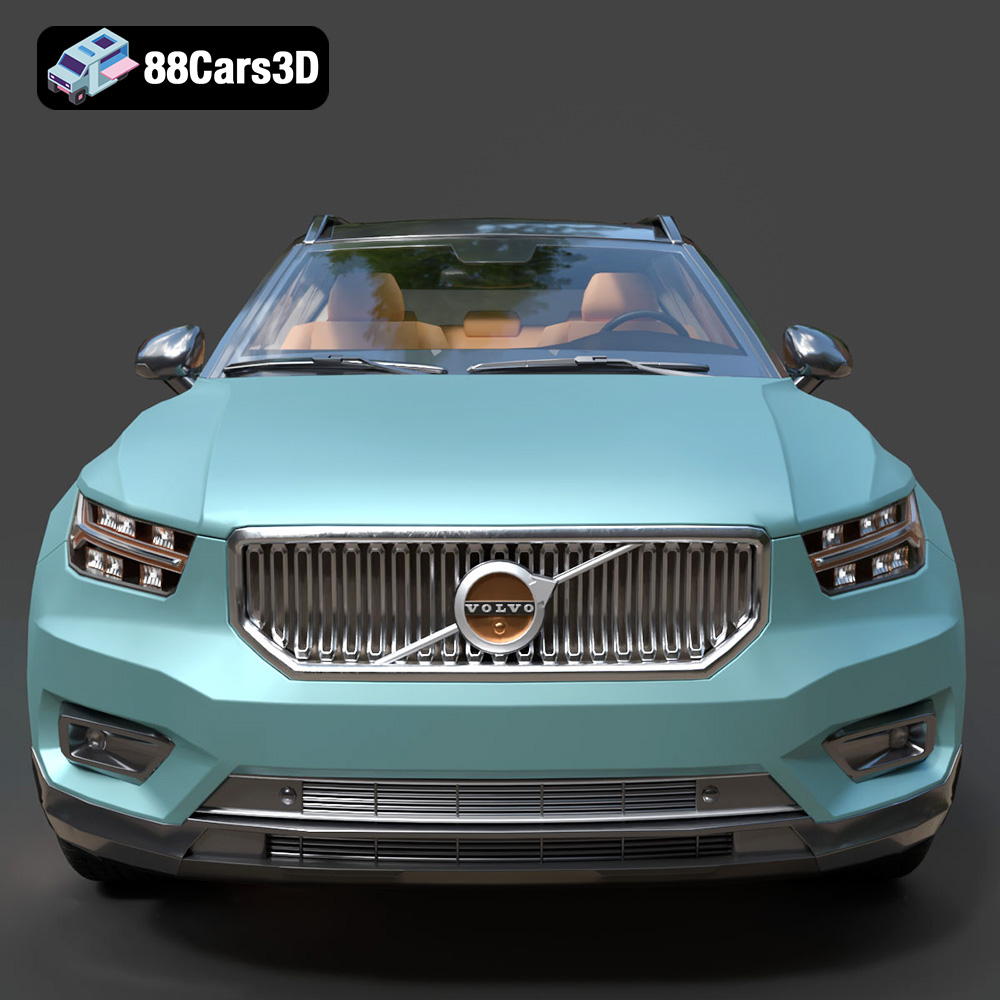
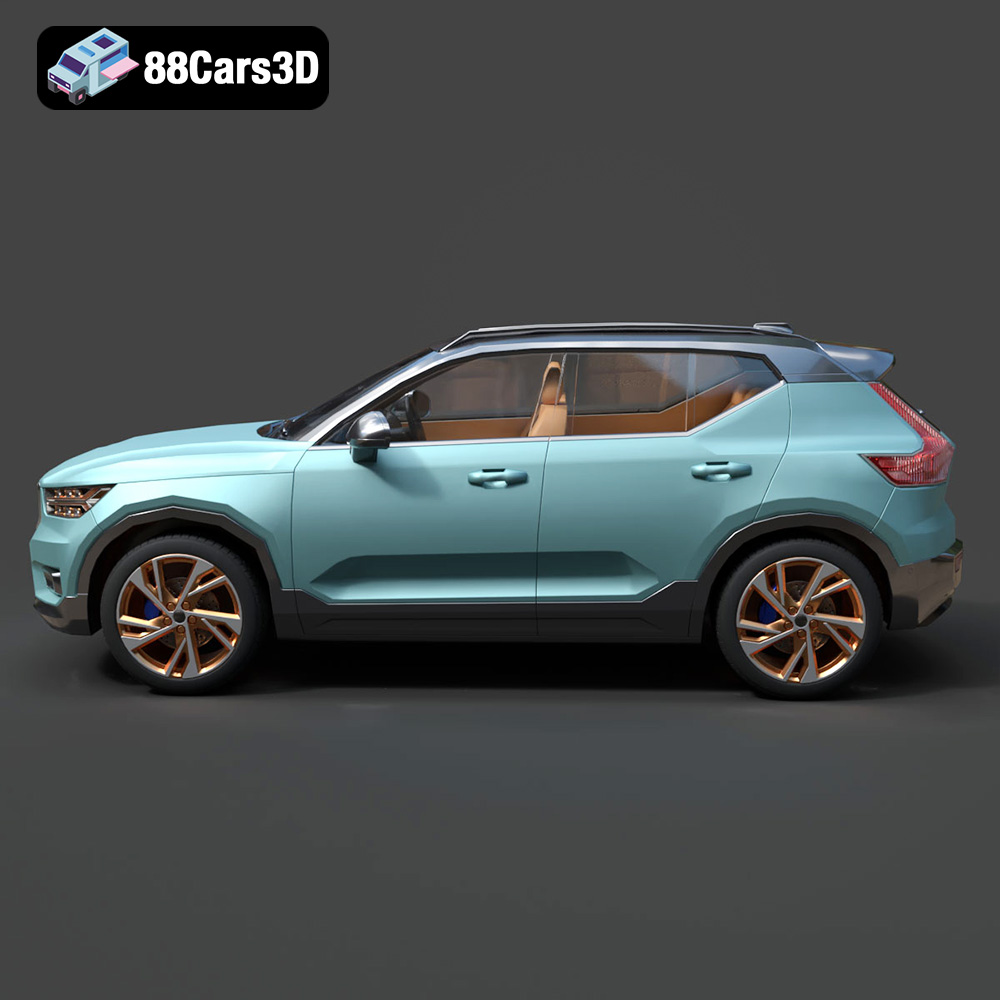
The first step in creating any high-quality 3D car model is meticulous attention to detail and accurate scaling. The Volvo XC40 Recharge model boasts accurate 2020 Volvo XC40 Recharge compact SUV proportions and geometry, derived from factory dimensions. This precision ensures that when integrated into an architectural visualization or a game environment, the vehicle sits correctly within its digital space, free from distortion. Key design elements like the distinctive EV-specific closed-off front grille and integrated Volvo iron mark, the highly detailed “Thor’s Hammer” LED headlight clusters, and the signature vertical taillights are all faithfully recreated. These small details are critical for brand recognition and visual authenticity, making the model instantly identifiable and believable.
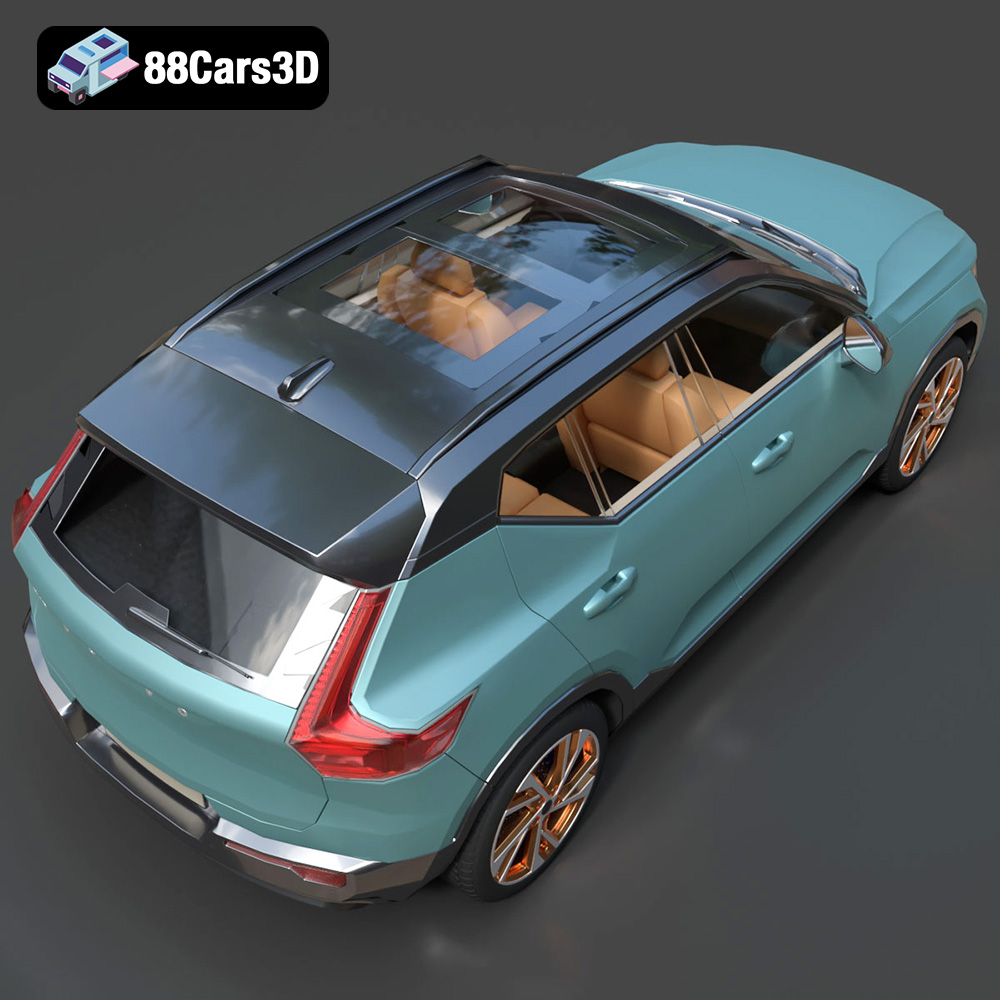
While often overlooked in exterior-focused renders, a well-detailed interior significantly enhances the overall quality and versatility of a 3D car model, especially for interactive experiences like AR/VR or close-up shots. The Volvo XC40 Recharge model features an authentic driver-centric, Scandinavian minimalist cabin layout. This includes the detailed dashboard with its portrait-oriented 9-inch infotainment touchscreen and digital driver display, realistic seating geometry designed for modern, sustainable texture possibilities, and the accurately sculpted center console with the signature Orrefors crystal-style gear shifter representation. Even for scenes where the interior isn’t the primary focus, the optimized interior geometry is tailored to look authentic from the exterior, adding depth and realism without excessive polygon overhead.
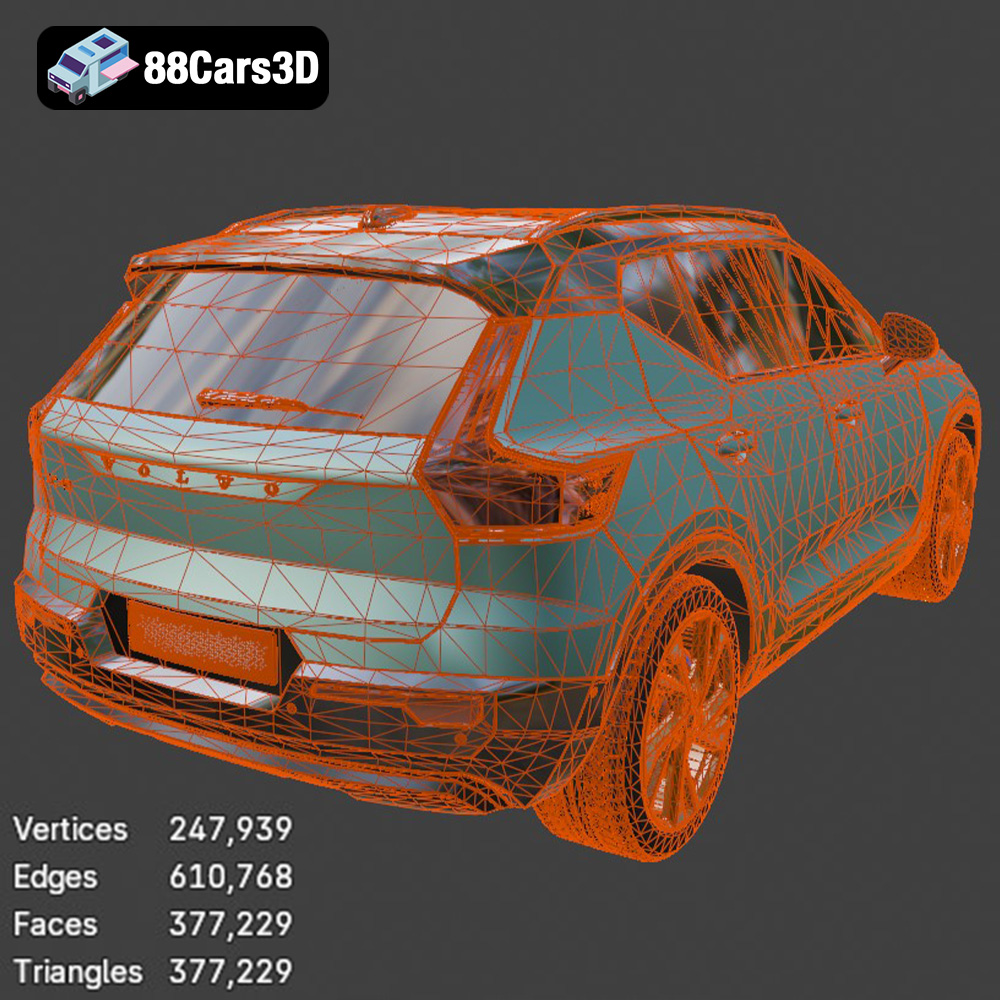
One of the most challenging aspects of 3D asset creation is finding the optimal balance between visual fidelity and performance. A model with too few polygons might look blocky, while one with too many can choke a rendering engine or game environment. The Volvo XC40 Recharge (2020) 3D Model strikes this perfect balance with a highly efficient, impeccably clean mid-polygon topology of just over 377,000 triangles. This count is high enough to provide crisp visual fidelity for close-up automotive rendering and detailed foreground shots, showcasing every curve and panel gap. Yet, it remains lightweight enough to populate dense modern virtual environments, ArchViz driveways, and real-time game engines without introducing significant performance bottlenecks. This “sweet spot” ensures the model is versatile across a spectrum of professional applications.
Beyond its visual accuracy, the true value of a professional 3D car model lies in its technical optimization. A clean mesh, proper rigging, and real-world scaling are fundamental for seamless integration into complex pipelines. The Volvo XC40 Recharge (2020) 3D Model has been engineered with these considerations at its core, making it a robust asset for any digital project.
The technical specifications of the Volvo XC40 Recharge model highlight its optimized structure: 247,939 Vertices, 610,768 Edges, 377,229 Faces/Polygons, and 377,229 Triangles. This “quad-heavy” structure is a hallmark of professional modeling, ensuring smooth subdivisions if needed and cleaner deformations during animation. At approximately 377k triangles, it’s an incredibly efficient asset. For automotive rendering, this means faster render times without compromising visual quality. For game development, it allows for populating dense scenes with multiple vehicles without taxing the game engine, crucial for open-world titles or city simulators where many vehicles are on screen simultaneously. This careful balance ensures that the model holds up gorgeously in foreground shots while being performant enough for background elements.
An automotive 3D model’s utility extends significantly if it’s prepared for animation and interaction. The Volvo XC40 Recharge model features separate wheels, steering components, and doors, each with proper pivot setups for easy rigging and animation. This is critical for creating realistic driving sequences, interactive showroom experiences where doors can be opened, or even virtual car configurators. Game developers can readily integrate the model into vehicle physics systems, allowing for realistic steering, suspension, and wheel rotation. For cinematic renders, animators can precisely control every movable part, bringing the digital car to life with subtle movements and dynamic sequences.
Accuracy in 3D modeling isn’t just about appearance; it’s about dimension. The Volvo XC40 Recharge model adheres to real-world scale accuracy based on Volvo factory dimensions, ensuring it fits perfectly into any scene without requiring manual adjustments or guesswork. This is invaluable for architectural visualization, where cars need to convincingly occupy driveways and streets, or for simulations where precise measurements are critical. Furthermore, the mention of “Texture: Yes” and “Material: Yes” in the meta description implies that the model comes with well-defined, physically based rendering (PBR) materials. PBR materials accurately simulate how light interacts with surfaces in the real world, producing highly convincing reflections, refractions, and diffuse lighting, whether rendering in V-Ray, Arnold, Cycles, or Unreal Engine.
The true measure of a high-quality 3D asset lies in its seamless integration into diverse professional workflows. Thanks to its optimized design and multiple file formats, the Volvo XC40 Recharge (2020) 3D Model offers unparalleled flexibility for artists and developers across various industries.
For users of industry-standard software like Blender and Autodesk 3ds Max, the inclusion of native .blend and .max files provides immediate access to the model in its most editable form. Artists can import the Volvo XC40 Recharge (2020) 3D Model directly, complete with materials and textures. In Blender, leveraging Cycles or Eevee, or in 3ds Max with renderers like V-Ray or Corona, professionals can set up sophisticated studio lighting, create custom backplates, and apply advanced shader modifications to achieve photorealistic results. This allows for bespoke paint schemes, modifications to the wheel setup to match different trim levels (Momentum vs. R-Design), or adding accessories like a sleek rooftop cargo box or crossbars for a rugged, lifestyle-oriented render. The clean topology facilitates further subdivision if ultra-close-up shots demand even greater detail, or allows for easy UV manipulation for custom decals and liveries.
Game developers and real-time visualization specialists will appreciate the model’s game-ready optimization and the availability of .fbx and specific .unreal formats. Importing the Volvo XC40 Recharge into Unreal Engine or Unity is straightforward. The optimized polygon count (377k triangles) is perfectly suited for modern game engines, allowing it to function as a drivable “hero” vehicle or a high-quality background traffic asset without performance overhead. Developers can configure collision meshes, set up LODs (Levels of Detail) for efficient rendering at varying distances, and integrate the model into vehicle physics systems. The separate wheels, steering, and doors, coupled with proper pivot points, make setting up functional vehicle controls and animations intuitive. This enables the creation of highly interactive driving simulations, urban environments, or even specialized training modules.
The .glb format makes the Volvo XC40 Recharge (2020) 3D Model an excellent candidate for cutting-edge AR/VR and web-based applications. In AR, the model can be placed in real-world environments via a smartphone or tablet, allowing users to virtually “see” the car in their driveway or office. For VR, it enables immersive digital EV showrooms or interactive car configurators where users can explore the interior and exterior in a fully immersive 3D space. The compact and efficient nature of .glb ensures fast loading times and smooth performance in browser-based viewers, making it ideal for showcasing the vehicle on product pages or interactive marketing campaigns. This versatility positions the model as a crucial asset for innovative digital marketing and experiential design.
The Volvo XC40 Recharge (2020) 3D Model isn’t just a collection of polygons; it’s a versatile tool designed to meet the rigorous demands of various professional applications. Its technical excellence and aesthetic fidelity make it indispensable for diverse creative and engineering projects.
In architectural visualization, the presence of vehicles can dramatically enhance the realism and relatability of a scene. The Volvo XC40 Recharge, with its modern, eco-conscious appeal and premium Scandinavian design, is the ultimate vehicle for high-end architectural visualization. It adds a touch of contemporary European realism to smart-home driveways, urban streetscapes, and luxury residential projects. Its detailed exterior and optimized interior mean it looks stunning whether parked prominently or glimpsed through windows. Architects and designers can use it to communicate the lifestyle associated with their proposed developments, creating richer narratives and more convincing presentations for clients. The ability to apply custom paint schemes and adapt lighting for various scenarios, from sunny suburban settings to moody, neon-lit city streets, provides endless creative possibilities.
For game developers, finding a 3D car model that offers both visual quality and performance is crucial. The Volvo XC40 Recharge (2020) 3D Model, with its optimized ~377k triangle count and clean topology, is an excellent choice as both a drivable “hero” vehicle and a high-quality background traffic asset for open-world games and city simulators. Its real-world scale and accurate proportions ensure it integrates seamlessly into virtual urban environments, enhancing immersion. The separation of components like wheels and doors facilitates the implementation of vehicle physics, damage models, and interactive elements. Whether players are driving it, or it’s simply part of a bustling street scene, the model contributes significantly to believable and vibrant virtual worlds, a testament to its “game-ready” attributes.
Beyond architecture and gaming, high-fidelity 3D car models are essential for product visualization and automotive commercials. The Volvo XC40 Recharge model allows marketing agencies and automotive brands to create stunning visual content without the need for expensive physical prototypes or location shoots. This includes digital mockups for advertising campaigns, interactive online configurators, and high-resolution animation sequences for television commercials. The model’s ability to easily change paint colors, wheel configurations, and even add accessories digitally offers incredible flexibility for showcasing various trim levels or personalization options. This accelerates the creative process and provides a cost-effective way to generate diverse marketing assets.
The inclusion of the .stl format, alongside detailed 3D print settings, opens up an entirely different realm of application: physical manufacturing. Enthusiasts and professional model makers can convert the Volvo XC40 Recharge (2020) 3D Model into a tangible object. With recommended scales like 1:24, 1:32, or 1:43, and specific guidance on layer height (0.04–0.12 mm, with resin printing recommended for fine details like the Thor’s Hammer headlights), wall thickness, infill, and support structures, the model is truly prepared for physical output. Post-processing suggestions, such as sanding, priming, and applying modern Volvo factory colors, allow for the creation of high-quality display-scale modern SUV diecast models, physical prototypes, or automotive collectibles, further demonstrating the comprehensive utility of this digital asset.
The landscape of 3D visualization is constantly evolving, driven by advancements in hardware, software, and creative demands. In this future, high-quality, optimized 3D car models will become even more indispensable. The Volvo XC40 Recharge (2020) 3D Model is not just a product for today; it’s an asset built for tomorrow’s challenges.
Industries worldwide are increasingly relying on sophisticated 3D content for everything from product development and marketing to immersive training and entertainment. The automotive sector, in particular, is at the forefront of this digital transformation, utilizing 3D models for virtual design reviews, virtual test drives, augmented reality sales experiences, and hyper-realistic marketing campaigns. As real-time rendering engines become more powerful and accessible, and as AR/VR technologies become mainstream, the need for assets that are both visually stunning and computationally efficient will only grow. Generic or poorly optimized 3D car models simply won’t suffice; the demand for technically sound, high-fidelity assets like those found on 88cars3d.com will become the standard.
In an era where time is a critical commodity, creating a photorealistic, optimized 3D car model from scratch can be an incredibly time-consuming and expensive endeavor. This is where platforms like 88cars3d.com offer immense value. By providing a curated selection of high-quality 3D car models, such as the Volvo XC40 Recharge (2020) 3D Model, they empower artists and developers to kickstart their projects with confidence. These assets are meticulously crafted, thoroughly optimized, and supplied in a wide array of formats, saving countless hours of modeling, texturing, and optimization work. This allows creative professionals to focus on their unique vision and project goals, rather than getting bogged down in foundational asset creation. Investing in a premium model from 88cars3d.com isn’t just a purchase; it’s an investment in efficiency, quality, and ultimately, the success of your project.
The Volvo XC40 Recharge (2020) 3D Model stands as a prime example of a premium 3D asset designed for the modern digital landscape. Its exceptional accuracy, optimized topology, and multi-format compatibility make it an invaluable tool for architectural visualization, game development, AR/VR experiences, and even 3D printing. From its distinct EV styling to its meticulously detailed interior, every aspect of this model is crafted to meet the highest professional standards.
For artists, designers, and developers seeking to elevate their projects with realistic, high-performance automotive assets, this model offers a seamless path to visual excellence. It embodies the technical sophistication required for today’s most demanding rendering and real-time environments, while simultaneously providing the aesthetic fidelity to capture the essence of a groundbreaking vehicle. Explore the possibilities and enhance your digital creations with this versatile Volvo XC40 Recharge (2020) 3D Model, available now at 88cars3d.com.
The Volvo XC40 Recharge (2020) 3D Model is an exceptionally accurate digital recreation of the Swedish brand’s groundbreaking first fully electric SUV. Marrying Volvo’s renowned commitment to safety and Scandinavian minimalism with a cutting-edge EV powertrain, the XC40 Recharge is a highly recognizable and premium compact crossover built on the CMA platform. Built with a highly efficient, impeccably clean mid-polygon topology (just over 377k triangles), it strikes the absolute perfect balance. It provides crisp visual fidelity for close-up automotive rendering while remaining lightweight enough to populate modern virtual environments, ArchViz driveways, and real-time game engines.
$9.99
.archviz
.blend
.ev
.fbx
.obj
.rendering
.volvo
.xc40
car-3d-model
compact-suv
electric-vehicle
game-ready
mid-poly
Scandinavian design
SUV
traffic-car
xc40-recharge