Get 50% OFF All Premium 3D & STL Models!

In the dynamic worlds of automotive design, cutting-edge game development, and immersive visualization, the quality of your 3D assets can make or break a project. From breathtaking photorealistic renders that sway purchasing decisions to finely tuned game assets that define a player’s experience, the demand for precision and realism in 3D car models has never been higher. Professionals across these sectors understand that a superior model isn’t just about aesthetics; it’s about efficient workflows, seamless integration, and ultimately, delivering an unparalleled end product.
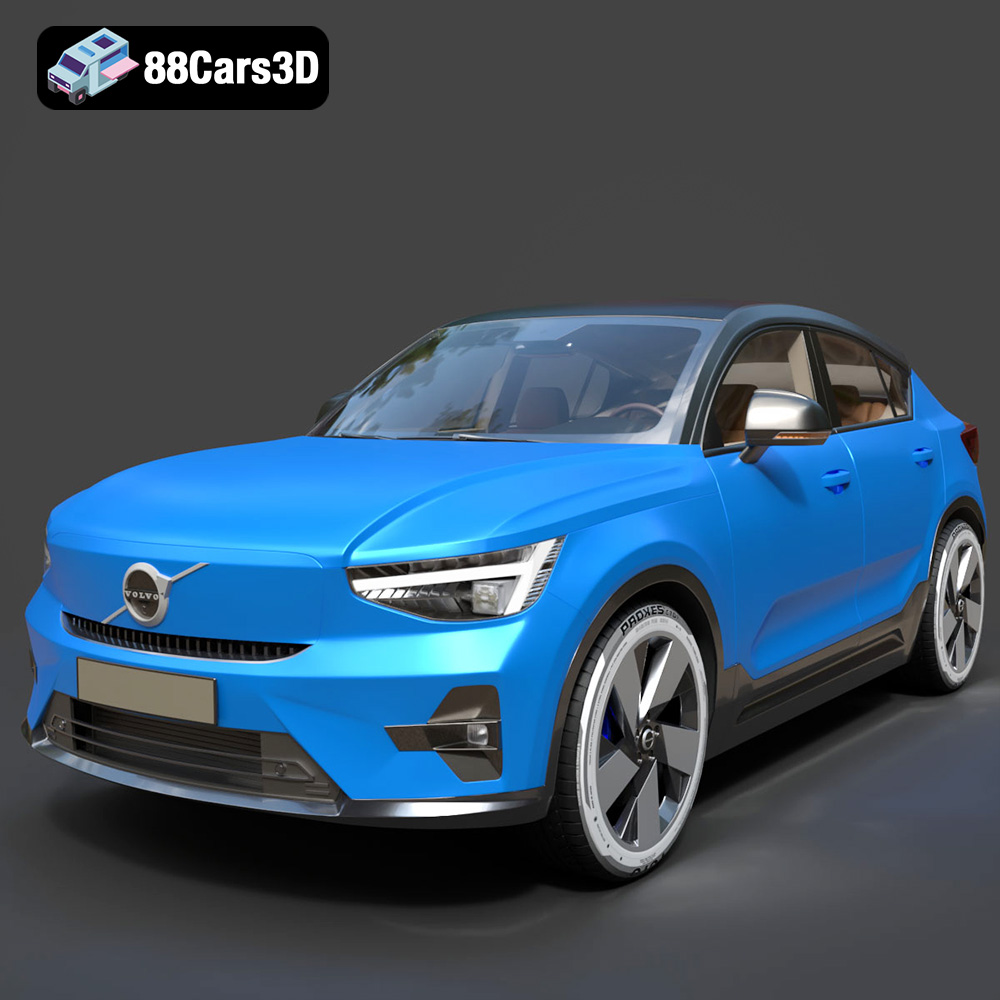
Today, we delve into the critical role that meticulously crafted 3D car models play in various industries, exploring technical aspects, workflow considerations, and the immense value they bring. We’ll specifically highlight how a product like the Volvo C40 Recharge 3D Model exemplifies the standard of excellence required for modern digital projects, offering a versatile foundation for everything from advanced simulations to interactive AR/VR experiences. This level of detail and adaptability is precisely what professionals seek when sourcing assets from marketplaces like 88cars3d.com.
The choice of a 3D model file format is far more than a technicality; it’s a strategic decision that dictates compatibility, functionality, and efficiency across your entire workflow. A high-quality 3D car model, such as the Volvo C40 Recharge, often comes packaged in multiple formats to ensure maximum utility for diverse applications. Understanding these formats is crucial for any professional working with 3D assets.
The .blend format is the native file type for Blender, a powerful open-source 3D creation suite. When you acquire a .blend file, you’re gaining access to a fully editable scene, often including pre-configured materials, textures, lighting setups, and sometimes even animations or rigging. For artists and studios committed to the Blender ecosystem, this format offers unparalleled flexibility. You can modify every aspect of the mesh, adjust shader networks, re-light the scene, or integrate the model into a larger Blender project without any data loss or conversion issues. This makes it ideal for custom automotive rendering projects or when significant design iterations are anticipated.
Developed by Autodesk, .fbx (Filmbox) is one of the most widely adopted interchange formats in the 3D industry, particularly within game development and animation. Its strength lies in its ability to encapsulate not just geometric data, but also complex scene information such as animation, rigging, skinning, camera data, and lighting. This makes it a go-to for exporting assets from DCC (Digital Content Creation) software like 3ds Max or Blender into game engines like Unreal Engine and Unity. The .fbx format ensures that your Volvo C40 Recharge 3D Model, complete with UVs and material assignments, transfers cleanly, ready for real-time applications where performance and fidelity are paramount.
The .obj (Wavefront OBJ) format is a venerable standard in the 3D world, valued for its simplicity and near-universal compatibility. It primarily stores geometric data – vertices, faces, normals, and UV coordinates – along with references to external material files (.mtl). While it doesn’t support advanced features like animation or rigging, its widespread support means an .obj file can be opened and worked with in virtually any 3D software, from Maya to ZBrush to Houdini. This makes it an excellent choice for basic mesh transfer or as a fallback format when interoperability is a primary concern.
.glb (GLB format, a binary form of glTF) has rapidly emerged as the standard for 3D model delivery on the web, and in AR/VR applications. This format is highly optimized, compact, and designed for efficient transmission and loading. It packages all necessary data – mesh, textures, materials, and sometimes animation – into a single file, eliminating external dependencies. For showcasing the Volvo C40 Recharge in an interactive web viewer, integrating it into an augmented reality experience on a mobile device, or building a virtual reality environment, .glb offers an unparalleled blend of quality and performance.
The .stl (Stereolithography) format is the cornerstone of additive manufacturing. It represents 3D surfaces as a collection of unconnected triangles, essentially defining the geometry needed for a 3D printer to build a physical object layer by layer. While it lacks color or texture information, its simplicity makes it universally understood by 3D printing software. For professionals looking to create physical prototypes or scale models of the Volvo C40 Recharge, the .stl format provides a direct pathway from digital design to tangible product.
.ply (Polygon File Format, or Stanford Triangle Format) is another format for storing 3D data, particularly known for its ability to store properties beyond just geometry, such as color per vertex, normal information, and confidence values. It’s often used in scientific and engineering applications, 3D scanning, and CAD workflows where precise mesh data and attribute storage are important. For intricate analysis or specific CAD integrations of the Volvo C40 Recharge model, .ply offers a robust solution for preserving detailed mesh information.
The .unreal format signifies an asset specifically prepared and optimized for direct import and use within Unreal Engine. This often means the model has already undergone crucial steps like proper scaling, material setup (using Unreal’s PBR system), collision mesh generation, and potentially even LOD (Level of Detail) implementation. Having a dedicated .unreal file for the Volvo C40 Recharge streamlines the entire integration process, saving developers countless hours of setup and ensuring the model performs optimally within the engine’s demanding real-time environment.
Similar to .blend for Blender, .max is the native file format for Autodesk 3ds Max, a leading software for 3D modeling, animation, and rendering, especially prominent in architectural visualization and product design. A .max file provides a complete 3ds Max scene, including all geometric data, materials (often V-Ray or Corona setups), lighting, cameras, and animation. For professionals ingrained in the 3ds Max ecosystem, this format offers the highest degree of editability and allows for sophisticated rendering setups and complex animations of the Volvo C40 Recharge 3D Model.
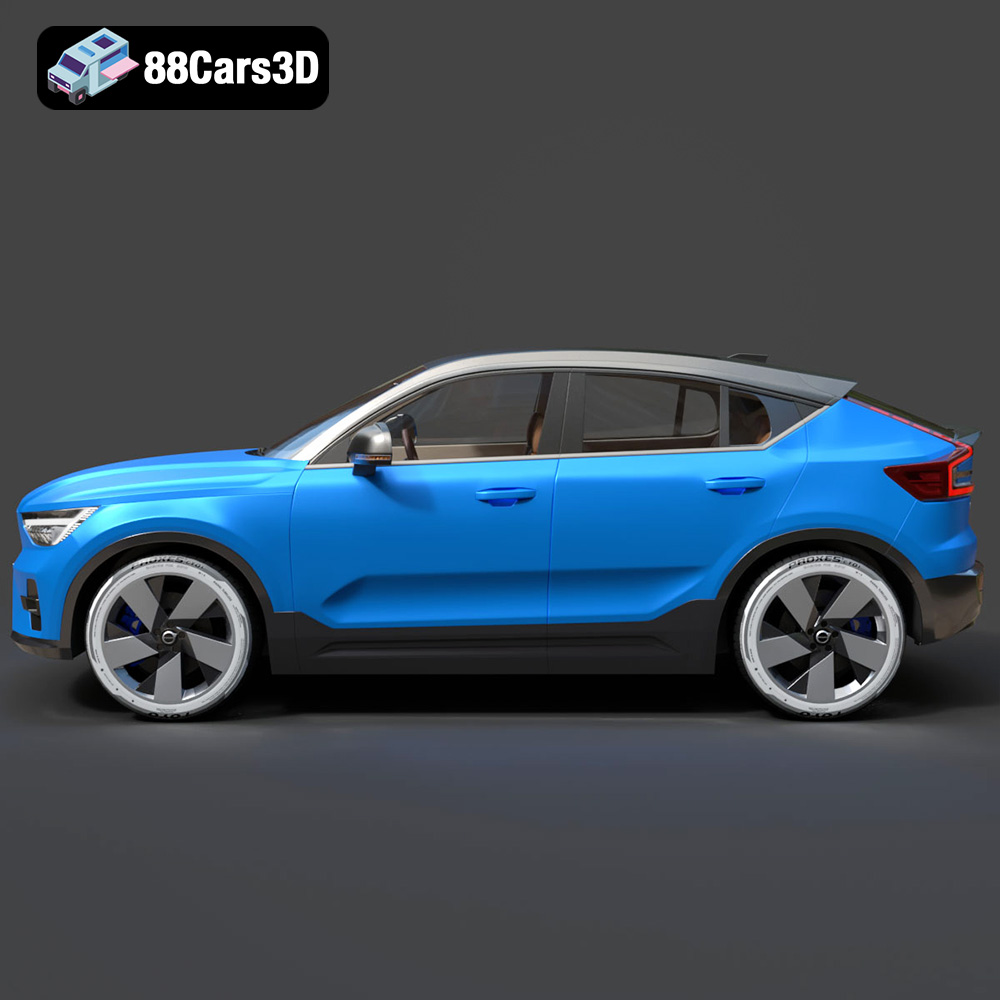
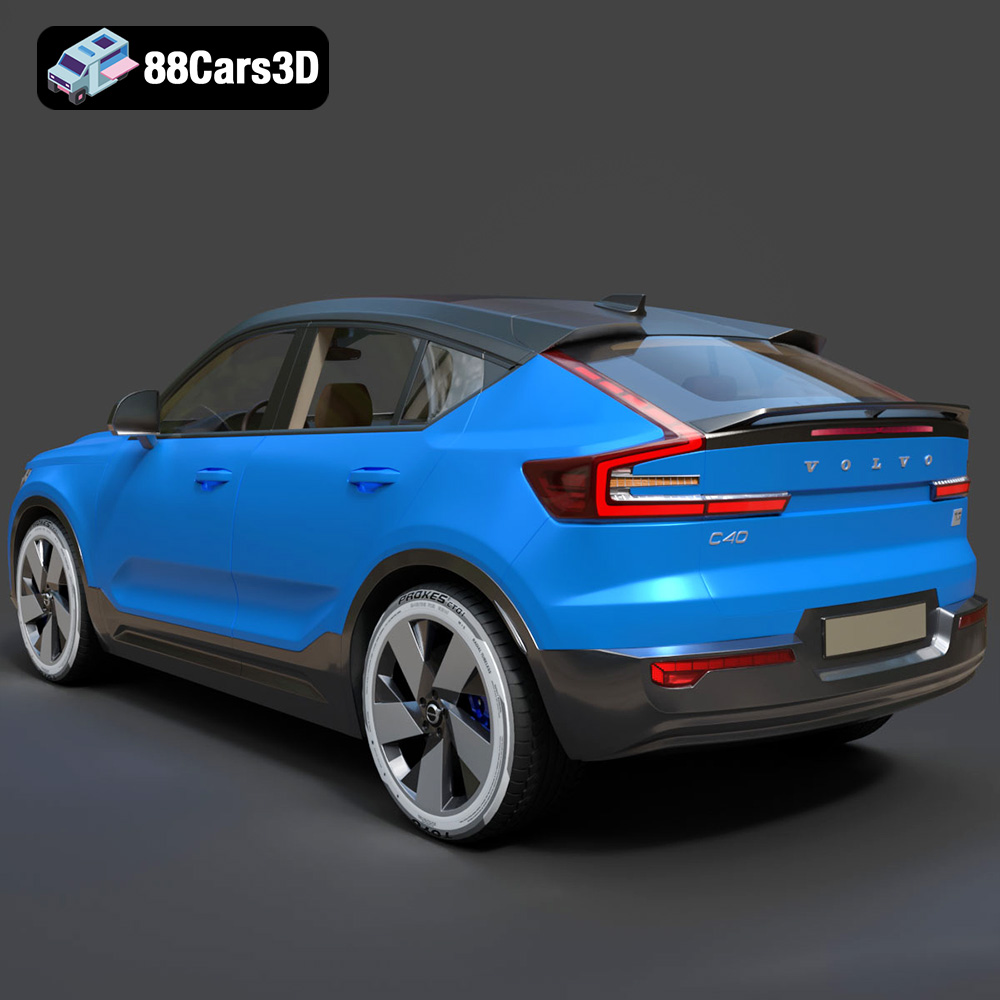
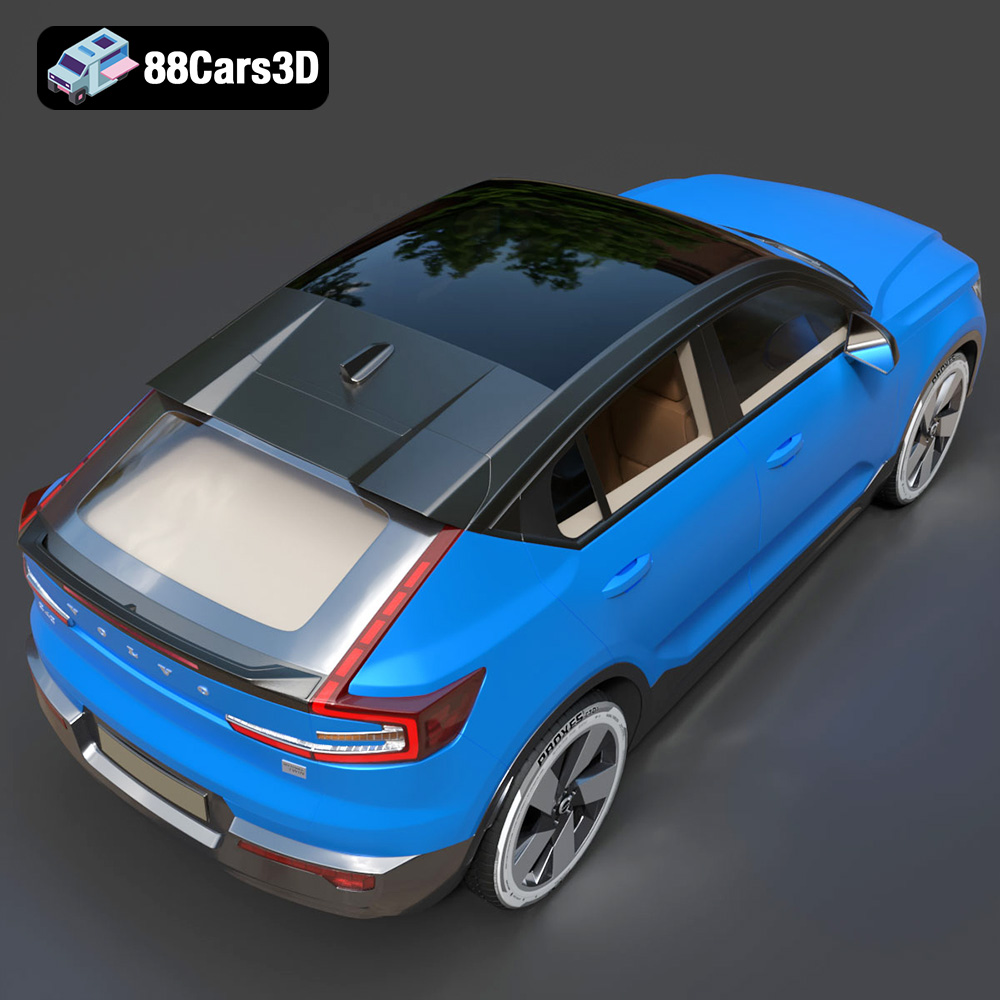
Automotive rendering is an intricate discipline, blending artistic vision with technical precision to create visuals that are often indistinguishable from reality. High-quality 3D car models are the bedrock of this process, providing the necessary fidelity to stand up to close-up shots and demanding lighting scenarios. The Volvo C40 Recharge 3D Model, with its “incredibly accurate proportions, sleek styling, and realistic textures,” is engineered precisely for these high-stakes rendering environments.
Modern automotive rendering heavily relies on Physically Based Rendering (PBR) workflows. PBR materials simulate how light interacts with surfaces in the real world, providing consistent and believable results under any lighting condition. This requires textures like albedo (color), roughness, metallic, normal, and ambient occlusion maps. A premium 3D car model, such as those found on 88cars3d.com, comes with these meticulously crafted PBR textures, ensuring that the car’s paint gleam, tire sidewall details, and interior finishes react authentically to light. For the Volvo C40 Recharge, its realistic textures mean that an artist can drop the model into a rendering scene and immediately achieve convincing results with minimal material tweaking.
Beyond materials, effective lighting and environment integration are crucial for photorealistic renders. HDR (High Dynamic Range) environments are commonly used to capture real-world lighting and reflections, creating a sense of presence and depth. A well-constructed 3D car model like the Volvo C40 Recharge, with its accurate proportions and clean geometry, reflects these environments correctly, allowing for stunning reflections on its exterior surfaces. Artists using software like 3ds Max or Blender can effortlessly place the model in various virtual studios or outdoor scenes, knowing its inherent quality will enhance the final output, whether for advertising campaigns or design reviews.
In the realm of video games, cars are often protagonists, requiring assets that are not only visually appealing but also optimized for real-time performance. Game developers need 3D car models that strike a perfect balance between visual fidelity and technical efficiency. The Volvo C40 Recharge 3D Model, with its “clean, optimized geometry” and “game-engine ready format for Unreal Engine and Unity,” is tailor-made for this demanding environment.
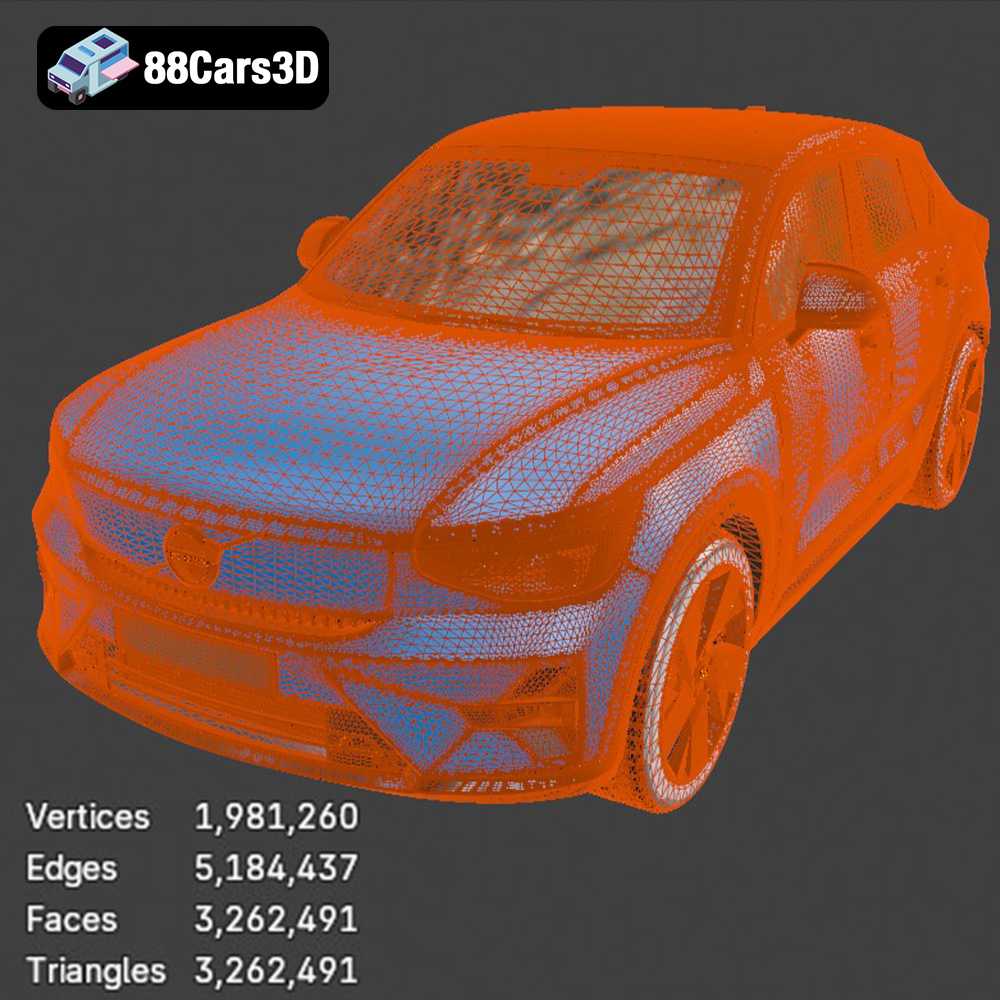
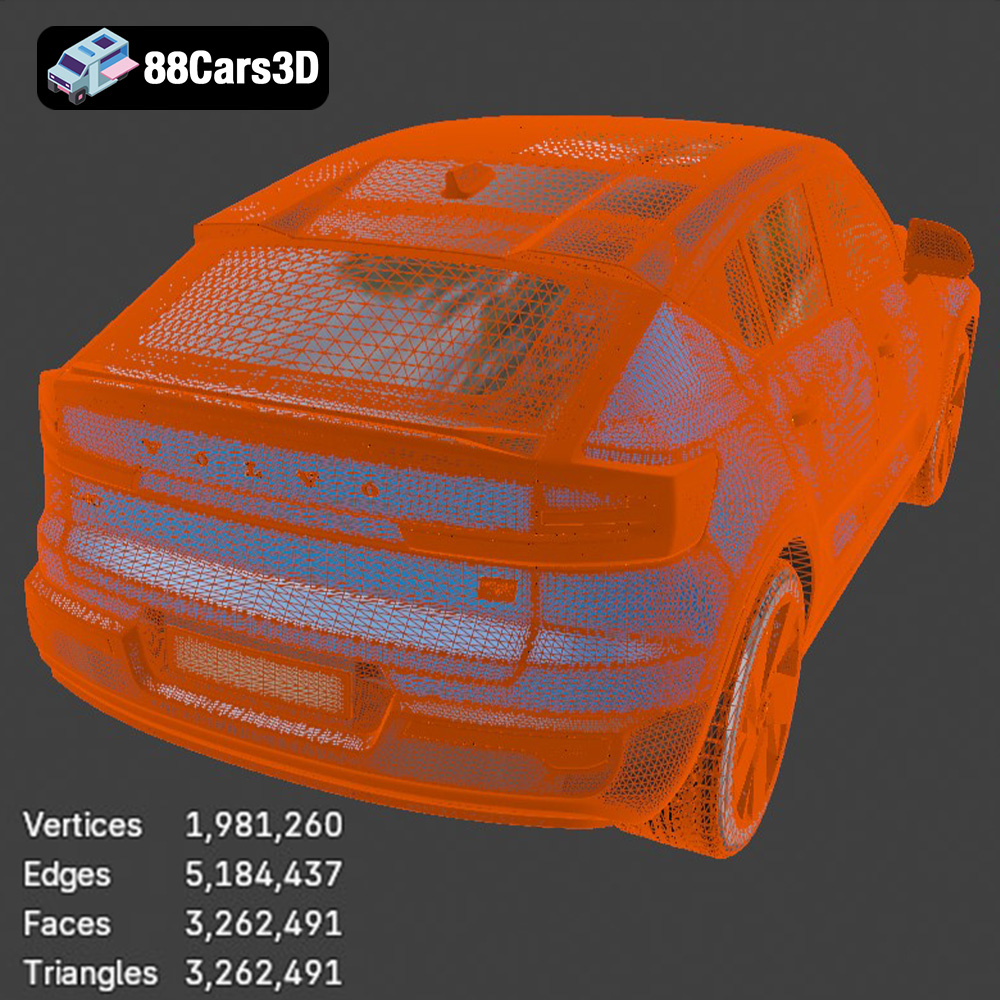
Real-time rendering in game engines necessitates careful optimization. High polygon counts, while great for offline rendering, can bog down a game’s frame rate. Professional 3D car models are typically designed with optimized geometry, sometimes including multiple Levels of Detail (LODs) that automatically swap out models of varying complexity based on distance from the camera. The Volvo C40 Recharge’s optimized geometry means fewer triangles to render without sacrificing visual quality at typical in-game distances, crucial for maintaining smooth gameplay and visual consistency across different platforms.
Unreal Engine is a powerhouse for modern game development, and having a 3D model pre-configured for its environment is a significant advantage. The inclusion of a dedicated .unreal file for the Volvo C40 Recharge speaks volumes about its readiness for professional game pipelines. This means materials are often set up using Unreal’s physically based shading model, UVs are properly unwrapped for texture mapping, and the scale is correct for the engine’s units. Such a pre-packaged asset significantly reduces the time and effort typically required for import, configuration, and optimization, allowing developers to focus on gameplay and interactive elements.
The utility of high-quality 3D car models extends far beyond traditional rendering and game development. Augmented Reality (AR), Virtual Reality (VR), and advanced simulation environments are rapidly growing fields that rely heavily on precise and versatile 3D assets. The Volvo C40 Recharge 3D Model, optimized for AR/VR via .glb and featuring a “fully modeled interior,” opens up a wealth of possibilities.
For AR/VR, models need to be lightweight, efficient, and visually rich. The .glb format, in which the Volvo C40 Recharge is available, is specifically designed for these immersive applications. It bundles all necessary data into a single, compact file, allowing for quick loading and smooth performance on mobile AR platforms or in VR headsets. Imagine placing a virtual Volvo C40 Recharge in your driveway via an AR app, or exploring its detailed interior in a VR showroom – the model’s accuracy and optimization are key to delivering these compelling, interactive experiences.
Automotive simulations, whether for driver training, accident reconstruction, or autonomous vehicle development, demand absolute precision. The “incredibly accurate proportions” and “fully modeled interior” of the Volvo C40 Recharge 3D Model make it an ideal candidate for such critical applications. Detailed dashboard components and seating are not just aesthetic; they provide realistic visual cues for simulation participants and accurate collision geometry for physics engines. This level of detail is essential for creating believable and functionally accurate virtual driving environments where subtle differences can have significant impacts on results.
In professional 3D production, time is money, and quality is non-negotiable. A “production-ready” 3D model translates directly into saved resources, improved project timelines, and superior final output. The Volvo C40 Recharge 3D Model embodies these qualities, offering a robust foundation for a myriad of professional applications.
The product description highlights “clean, optimized geometry and an intelligently organized structure.” This is not merely marketing jargon; it signifies that the model has been created by experienced 3D artists who understand the demands of professional pipelines. Clean geometry means fewer rendering artifacts, easier UV unwrapping, and smoother deformations if animation is required. An intelligently organized structure, typically involving logical naming conventions for objects and materials, allows other artists to quickly understand and integrate the model into their scenes without having to spend valuable time cleaning up messy hierarchies or deciphering obscure names. The model’s “fully modeled interior” further enhances its versatility, allowing for close-up views and immersive experiences without needing to source or build additional internal components.
The availability of the Volvo C40 Recharge in a “comprehensive range of industry-standard file formats” is a game-changer for streamlining workflows. Whether you’re a designer using 3ds Max for architectural visualization, a game developer in Unreal Engine, or an AR specialist leveraging .glb, having a pre-optimized model in your preferred format eliminates tedious conversion processes and potential data loss. This instant compatibility means your team can hit the ground running, integrating the asset immediately and focusing on creative iteration rather than technical troubleshooting. This commitment to professional-grade assets is a hallmark of marketplaces like 88cars3d.com, ensuring that creatives can find reliable resources for their ambitious projects.
While digital visualization is powerful, the ability to translate a virtual model into a tangible object offers unique advantages, particularly in automotive design and engineering. 3D printing provides a direct bridge between the digital and physical, and the quality of the source 3D model is paramount for successful prototyping.
The availability of the Volvo C40 Recharge 3D Model in .stl format makes it immediately suitable for 3D printing. Designers can use this file to create physical scale models for design reviews, aerodynamic testing (at a conceptual level), or simply for marketing displays. The model’s “incredibly accurate proportions” ensure that the printed prototype faithfully represents the digital design, allowing stakeholders to experience the vehicle’s form factor and aesthetic in a tactile way long before a full-scale physical prototype is even considered. This capability significantly accelerates design iterations and decision-making processes.
Beyond .stl, the inclusion of the .ply format caters to more specialized additive manufacturing and analysis needs. PLY files can carry additional data, making them suitable for scenarios where high precision and potential vertex-level attribute storage are important for the printing process or subsequent analysis. This ensures that even the most complex geometric details of the Volvo C40 Recharge can be accurately translated during 3D printing, supporting everything from rapid prototyping to detailed functional component printing, further extending the model’s value in an engineering or design studio setting.
In today’s fast-paced digital production landscape, the demand for high-quality 3D car models is a constant across industries, from immersive games and photorealistic advertising to advanced simulations and tangible prototypes. A truly professional asset, like the Volvo C40 Recharge 3D Model, stands out not just for its visual appeal but for its underlying technical integrity: clean, optimized geometry, realistic textures, intelligently organized structure, and broad file format compatibility.
These attributes are critical for streamlining workflows, ensuring seamless integration into diverse pipelines, and ultimately delivering superior results. By understanding the nuances of different file formats and appreciating the meticulous craftsmanship behind such models, professionals can make informed decisions that drive the success of their projects. For those seeking a reliable source of premium 3D car models that meet these rigorous standards, 88cars3d.com offers a curated selection designed to empower creators and innovators in the automotive and digital content creation industries.
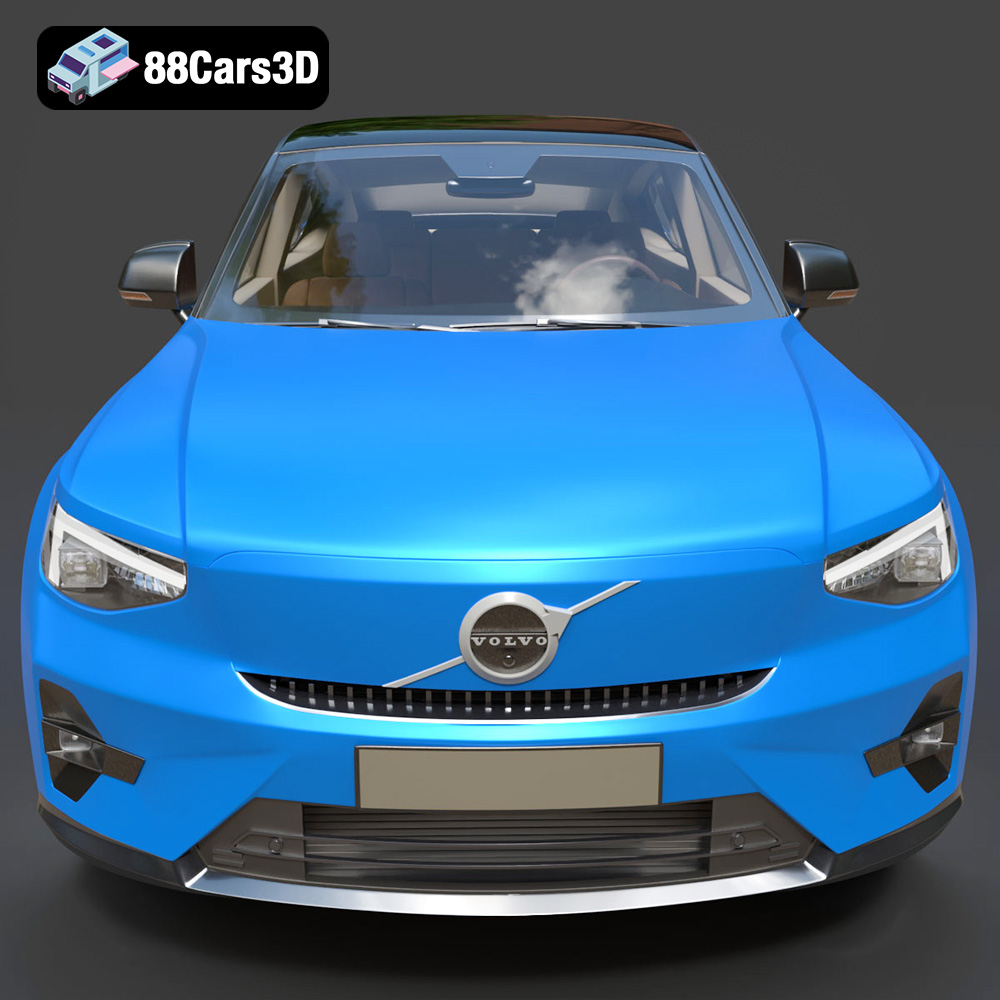
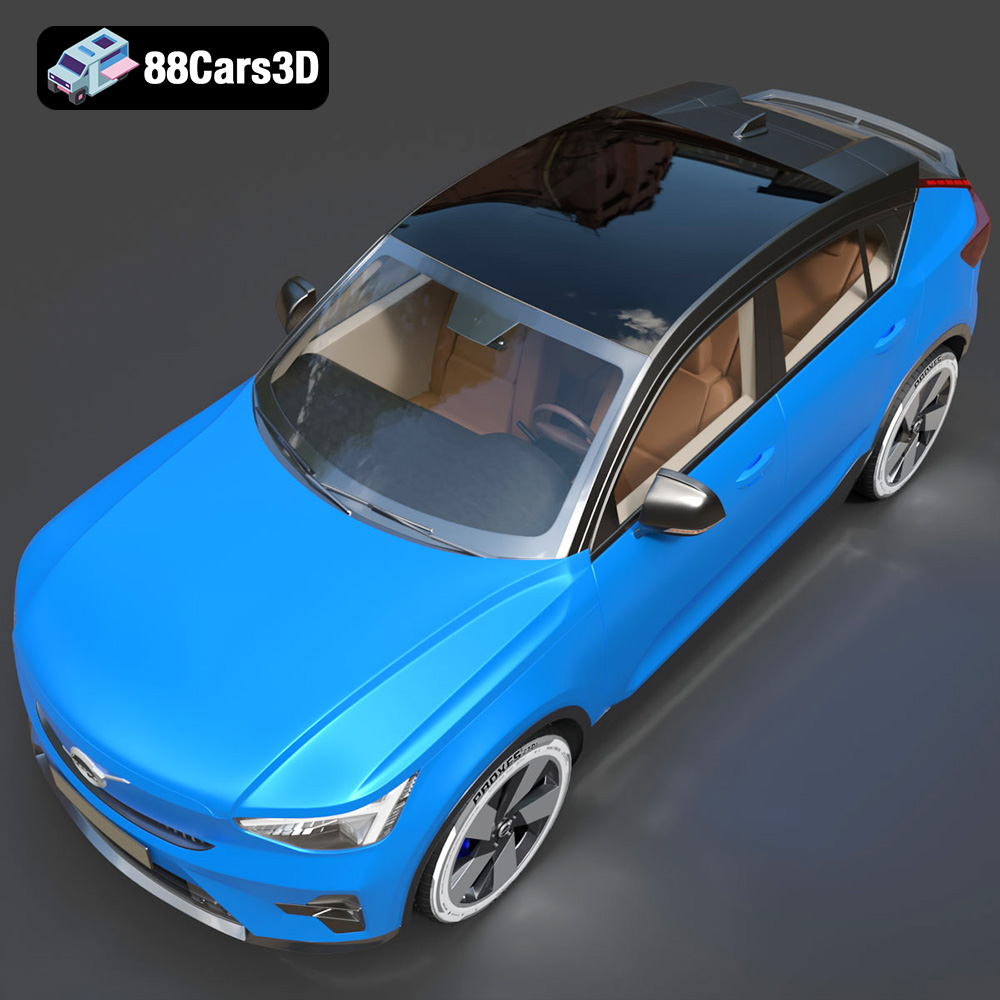
Discover the exceptional realism of the Volvo C40 Recharge 3D Model. Carefully crafted to mirror the actual vehicle, this 3D asset provides incredibly accurate proportions, sleek styling, and realistic textures ideal for any digital environment.
Featuring clean, optimized geometry and an intelligently organized structure, this model ensures seamless integration into your workflow. The exterior perfectly captures the distinctive aesthetic of the modern electric crossover, while the fully modeled interior presents detailed dashboard components and seating, enhancing its suitability for close-up shots and immersive experiences.
Whether you are developing cutting-edge video games, producing hyper-realistic automotive renderings, building interactive AR/VR applications, or conducting simulations, this versatile 3D model delivers outstanding performance and visual fidelity.
Available in a comprehensive range of industry-standard file formats to suit any pipeline:
$19.99
.arvr
.blend
.c40
.car3dmodel
.crossover
.electriccar
.ev
.fbx
.gameasset
.glb
.max
.obj
.ply
.recharge
.rendering
.simulation
.stl
.unreal
.volvo
SUV