Get 50% OFF All Premium 3D & STL Models!

In the fast-paced worlds of automotive design, game development, cinematic rendering, and architectural visualization, the demand for realistic and versatile 3D car models is constant. These digital assets are far more than mere visual elements; they are foundational tools that empower creators to bring complex visions to life with unparalleled fidelity and efficiency. From concept validation to marketing campaigns, a meticulously crafted 3D model can significantly streamline workflows and elevate the final output.
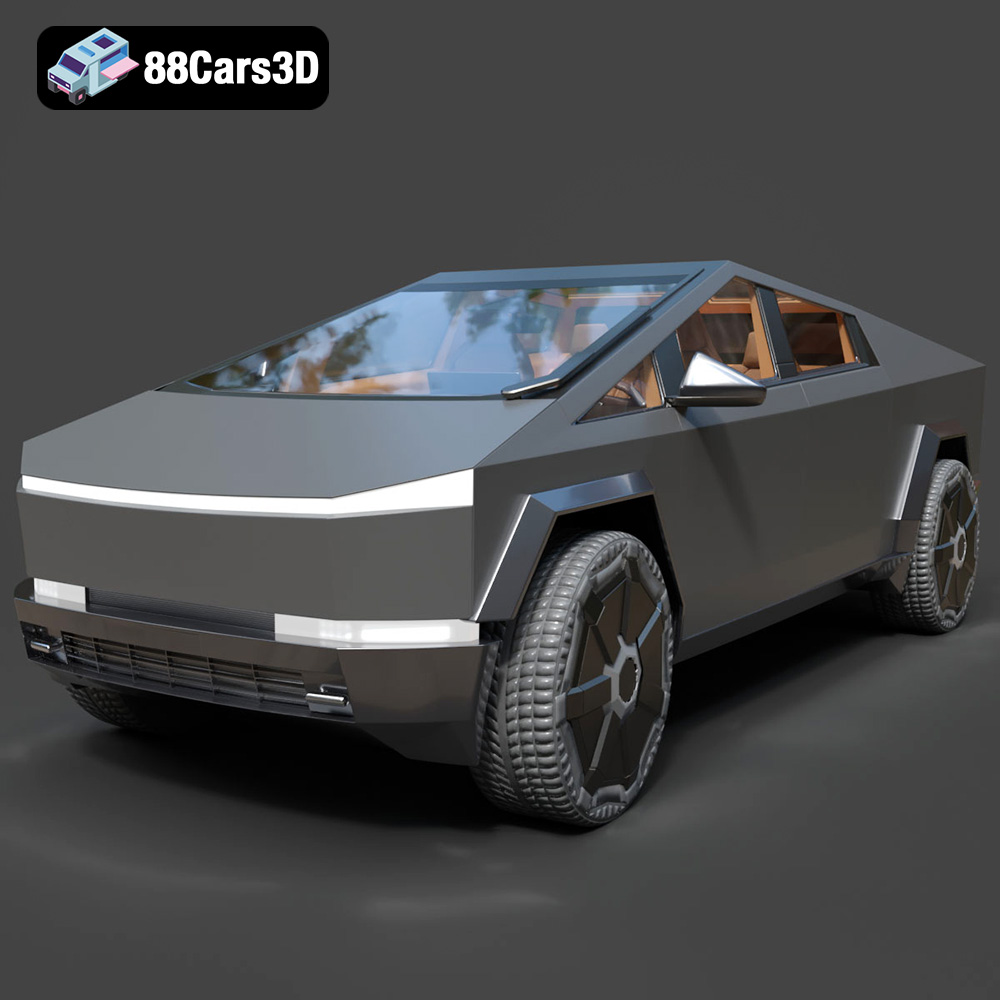
Consider the impact of a vehicle like the Tesla Cybertruck. Its distinctive, futuristic design has captivated the public imagination, presenting unique challenges and opportunities for 3D artists. Recreating such an iconic vehicle in a digital space requires not only artistic skill but also a deep understanding of technical precision and multi-platform compatibility. This is where a professional-grade asset like the Tesla Cybertruck 2024 3D Model from 88cars3d.com becomes indispensable. Crafted with clean geometry, professional-grade polygon edge flow, and realistic materials, this model captures the Cybertruck’s angular exoskeleton and advanced aesthetic, making it a perfect example of what a high-quality 3D car model should offer to professionals across various industries.
This article will delve into the technical intricacies and practical applications of premium 3D car models, exploring how they serve as catalysts for innovation. We’ll examine critical aspects such as file format selection, real-world integration into professional pipelines, and the underlying technical specifications that define a truly exceptional asset. Whether you’re an automotive designer, a game developer, an architect, or a VR/AR specialist, understanding these elements is key to leveraging the full potential of digital automotive assets.
The choice of file format is a critical decision in any 3D workflow, directly impacting compatibility, functionality, and performance across different software and platforms. A versatile 3D model, like the Tesla Cybertruck 2024, often comes with a suite of formats, each optimized for specific use cases. Understanding these formats is paramount for any professional utilizing 3D assets.
The .blend format is Blender’s native file type, offering a comprehensive package of everything within a Blender scene. This includes not only the mesh geometry but also materials, textures, lighting setups, cameras, animations, physics simulations, and even custom scripts. Its primary advantage is its complete editability; artists can open a .blend file and have full control over every aspect of the model, from tweaking a material shader to adjusting vertex positions. For the Tesla Cybertruck 2024 3D Model, the included .blend file provides a fully editable scene with materials and lighting pre-configured, making it ideal for artists who want to customize, re-render, or integrate the model into existing Blender projects.
.fbx (Filmbox) is arguably the most widely adopted proprietary file format for 3D data interchange, developed by Autodesk. It’s particularly favored in the game development and animation industries due to its robust support for geometry, materials, textures, animations, skinning, and rigs. When transferring models between different software packages like Maya, 3ds Max, Blender, Unity, and Unreal Engine, .fbx often provides the most reliable and complete transfer. For game developers working with the Tesla Cybertruck model, the .fbx variant is game-engine ready, ensuring all critical data like UVs, material assignments, and potential LODs (Levels of Detail) are preserved for optimal performance in real-time environments.
The .obj (Wavefront OBJ) format is a venerable and highly compatible format, often considered a universal standard for basic 3D model geometry. It primarily stores vertex positions, UV coordinates, normals, and polygon faces, often accompanied by an .mtl (material) file for basic material properties and texture references. While it doesn’t support advanced features like animation or rigging, its simplicity ensures near-universal compatibility across almost all 3D software. The .obj version of the Cybertruck model is excellent for straightforward imports into any major 3D application for rendering or basic manipulation where complex scene data isn’t required.
.glb (GL Transmission Format Binary) is rapidly gaining prominence, especially for augmented reality (AR), virtual reality (VR), and web-based 3D applications. It’s a binary version of glTF, designed to be a compact, single-file representation of a 3D scene, including geometry, materials, textures, and animations. Its efficiency and ease of loading make it perfect for delivering interactive 3D content in browsers or mobile AR/VR experiences. The Tesla Cybertruck’s .glb file is specifically optimized for these applications, allowing developers to seamlessly integrate a detailed, interactive model into web configurators or immersive virtual tours.
.stl (STereoLithography) is the de facto standard file format for 3D printing. It represents a 3D model as a series of connected triangles (a tessellated surface) without color, texture, or other CAD attributes. Its simplicity is its strength for manufacturing. An .stl version of the Cybertruck model would be used by product designers or enthusiasts looking to 3D print a physical prototype or miniature of the vehicle, requiring a watertight mesh suitable for additive manufacturing processes.
The .ply (Polygon File Format) format is designed to store 3D data from 3D scanners or other sources, including various properties like color, transparency, and even normal vectors for each vertex or face. It’s known for its precision in representing point clouds and polygon meshes, making it suitable for scientific visualization, 3D scanning applications, and detailed analysis where data integrity is crucial. For the Cybertruck, a .ply file might be used in specialized analysis software or for converting highly detailed scanned data to a usable mesh.
The .unreal format, or rather, assets specifically pre-configured for Unreal Engine, represents not a single file type but a collection of assets (meshes, materials, textures, Blueprints) packaged and optimized for direct import and use within Unreal Engine projects. This can often involve a specific folder structure, material instances, collision meshes, and LODs set up to Unreal’s specifications. The “unreal” variant of the Tesla Cybertruck 2024 3D Model is invaluable for game developers and real-time visualization artists, drastically reducing the time spent on setup and optimization, allowing for immediate integration into an interactive scene or game level.
Finally, the .max format is the native file type for Autodesk 3ds Max, a powerful 3D modeling, animation, and rendering software. Similar to .blend, a .max file stores a complete scene, including geometry, materials, lighting, cameras, animation data, and plugin-specific information. It provides full editability within 3ds Max, making it ideal for high-end rendering, complex architectural visualizations, and detailed automotive animations. The included .max file for the Tesla Cybertruck 2024 3D Model ensures that users of 3ds Max can leverage its robust toolset for creating stunning cinematic renders or integrating the vehicle into intricate visualization projects.
The availability of such a wide array of formats with a single purchase underscores the versatility and professional orientation of the Tesla Cybertruck 2024 3D Model from 88cars3d.com, ensuring it meets the diverse needs of any creative pipeline.
Automotive rendering is a specialized field that blends technical precision with artistic flair. It’s about more than just replicating a vehicle; it’s about conveying emotion, showcasing design intent, and presenting the product in its best possible light. A high-fidelity 3D car model is the canvas upon which these digital masterpieces are created.
For artists working in industry-standard software like 3ds Max or Blender, the foundation of photorealism begins with the model itself. The Tesla Cybertruck 2024 3D Model, with its clean geometry and professional-grade polygon edge flow, provides an excellent starting point. In 3ds Max, artists leverage advanced rendering engines like V-Ray or Corona Renderer. The .max file provided often includes a robust material setup, allowing artists to easily adjust parameters like metallic reflectance, roughness, and clear coat properties to accurately mimic the Cybertruck’s distinctive stainless steel exoskeleton. Lighting is crucial; HDR (High Dynamic Range) environment maps, combined with targeted area lights, help define the vehicle’s form, create sharp reflections, and accentuate its angular design. Post-processing in tools like Adobe Photoshop or DaVinci Resolve further refines the image, adding depth, atmosphere, and cinematic grading.
Similarly, Blender users can harness Cycles or Eevee renderers. The .blend file for the Cybertruck model offers a head start with pre-configured materials and lighting. Blender’s node-based shader system allows for intricate material creation, from replicating the nuanced brushed metal look to defining the refractive properties of the windows. Artists often employ real-world camera settings, depth of field, and motion blur to enhance realism. The ability to import and refine such a well-structured model significantly cuts down production time, allowing more focus on artistic direction and scene composition.
Imagine an architectural firm designing a futuristic residential complex. To ground their renders in reality and inject a sense of aspirational lifestyle, they need contemporary vehicles. The Tesla Cybertruck, with its avant-garde aesthetic, is a perfect fit. Integrating this 3D model into an architectural visualization project involves several steps. First, the Cybertruck model is imported into the scene (perhaps using the .fbx or .max format for compatibility). Scalability is key to ensure it fits the architectural context correctly. The model’s materials are then adjusted to match the scene’s lighting conditions and color palette, ensuring visual harmony. Placing the vehicle within the scene’s composition, considering how it interacts with the environment’s reflections and shadows, adds a layer of believability. A high-quality model like this one provides the necessary detail and material fidelity to stand up to close-up renders, making the overall visualization more compelling and professional. This seamless integration showcases how premium 3D car models enhance the visual storytelling of architectural projects.
For game developers and creators of interactive experiences, 3D car models must meet a distinct set of technical requirements beyond mere visual fidelity. Performance, optimization, and seamless integration into game engines are paramount. The Tesla Cybertruck 2024 3D Model is explicitly designed with these considerations in mind, making it an excellent game asset.
Game engines like Unreal Engine and Unity demand assets that are optimized for real-time performance. This typically means having a balanced polygon count, efficient UV mapping, and well-structured materials. The .fbx and .unreal file formats included with the Cybertruck model are tailored for these environments. When importing into Unreal Engine, for instance, the pre-configured .unreal asset can save hours of work. It likely includes optimized mesh geometry, PBR (Physically Based Rendering) materials that translate accurately, and potentially even LODs (Levels of Detail) to ensure smooth performance across different distances. Clean UVs are essential for texture baking and efficient lightmapping, contributing to both visual quality and rendering speed.
In Unity, the .fbx file is often the preferred choice. Developers can import the model, apply standard PBR shaders, and quickly integrate it into their game world. Collision meshes, often a separate, simplified mesh, would be created or adjusted to ensure accurate physical interactions within the game engine. The professional-grade polygon edge flow mentioned in the product description is critical here, allowing for proper subdivision where needed and efficient simplification for LODs without sacrificing silhouette integrity.
Beyond traditional games, high-quality 3D car models are fundamental to developing sophisticated driving simulators and interactive virtual showrooms. For a driving simulator featuring the Tesla Cybertruck, the model needs to be robust enough to handle dynamic physics, damage systems, and realistic lighting conditions. The accuracy of the model’s proportions, as highlighted in the product description, is vital for realistic handling and collision detection. Developers can create complex material setups in Unreal Engine, for example, to simulate dirt, rain, or damage effects on the Cybertruck’s stainless steel body, reacting dynamically to environmental factors and player actions.
For a virtual showroom, the focus shifts slightly towards pristine visual quality and interactive features. Imagine a customer exploring the Cybertruck in VR, opening doors, checking out the interior, and customizing paint options. The .glb format, optimized for AR/VR and web-based visualization, is excellent for such applications. The model’s realistic materials and textures would ensure that the digital showroom experience is as close to a physical one as possible, allowing potential buyers to truly experience the vehicle’s unique design and features in an immersive, interactive environment.
The utility of high-quality 3D car models extends far beyond traditional rendering and game development. Emerging technologies and specialized applications are increasingly relying on precisely crafted digital assets to drive innovation and provide unique user experiences. The multifaceted nature of the Tesla Cybertruck 2024 3D Model makes it incredibly adaptable to these diverse needs.
Augmented Reality (AR) and Virtual Reality (VR) platforms demand extremely optimized assets that can be rendered in real-time on a variety of devices, from high-end VR headsets to mobile smartphones. The .glb format included with the Cybertruck model is specifically designed for this purpose. Its compact, self-contained nature ensures quick loading times and efficient performance. For AR applications, a developer might use the Cybertruck model to let users place the virtual vehicle in their driveway via their phone camera, allowing them to walk around it and get a sense of its scale and presence. In VR, the model can be the centerpiece of a virtual test drive or an interactive demonstration, offering a truly immersive way to experience the vehicle’s design and features. The model’s “clean geometry” is crucial here, preventing rendering glitches and ensuring a smooth, visually appealing experience even under demanding real-time conditions.
In industries such as automotive engineering, logistics, and even defense, accurate 3D vehicle models are essential for various simulation and training purposes. From evaluating aerodynamic properties to planning complex operational maneuvers, a digital twin of a vehicle provides a safe and cost-effective environment for testing. The Tesla Cybertruck model, with its precise proportions, can be integrated into physics-based simulation software to analyze its performance under different conditions. For training scenarios, such as teaching new drivers about the Cybertruck’s unique blind spots or demonstrating its towing capabilities, the model provides a realistic visual aid. The inclusion of the .ply format could even be beneficial here, offering a highly detailed mesh for specialized computational analysis where precise surface data is required.
While often associated with digital display, 3D models also bridge the gap to the physical world through 3D printing. The .stl format is the standard for this application. For designers or hobbyists, having an .stl version of the Cybertruck allows for rapid prototyping of scaled models, testing physical dimensions, or even creating custom accessories. Automotive designers might use a 3D printed model to quickly review form factors or ergonomic elements before committing to expensive physical prototypes. The watertight mesh required for 3D printing means that the source model must be clean and error-free, a characteristic inherent in professional assets like the one offered at 88cars3d.com. This capability empowers creators to move fluidly between digital design and tangible output, accelerating the design cycle.
The difference between an average 3D model and a professional-grade asset lies in its technical foundation. These underlying attributes dictate a model’s versatility, performance, and ease of use across various pipelines. For any project demanding high standards, understanding these details is non-negotiable.
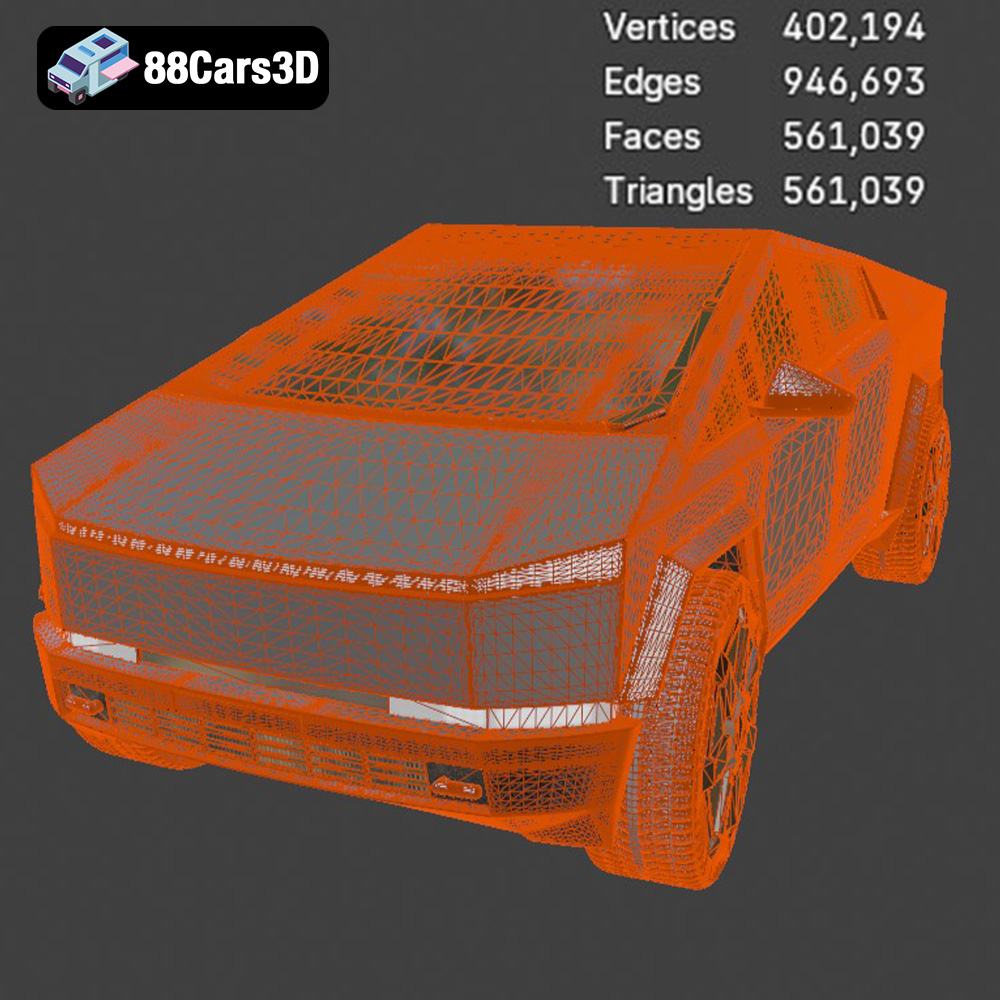
The description of the Tesla Cybertruck 2024 3D Model specifically highlights “clean geometry and professional-grade polygon edge flow.” This is not just marketing jargon; it’s a technical indicator of quality. Clean geometry implies an optimized mesh structure free from common issues like n-gons (polygons with more than four sides), overlapping faces, or isolated vertices. Such a clean mesh is easier to modify, subdivide for higher detail, and deform without artifacts. Professional-grade polygon edge flow refers to the strategic placement of edges to follow the natural curves and contours of the vehicle. This is vital for achieving smooth, realistic shading, especially when the model is subjected to subdivision surfaces or when light interacts with its form. Good edge flow ensures that reflections propagate correctly across the body, a particularly critical aspect for the Cybertruck’s angular, reflective exoskeleton. It also simplifies the process of creating efficient UV maps and ensures predictable deformations during animation.
The visual appeal of any 3D model hinges significantly on its materials and textures. The Cybertruck model is described as featuring “realistic materials and textures,” delivering an authentic look across various lighting conditions. This suggests the use of Physically Based Rendering (PBR) workflows, where materials are defined by real-world properties like albedo, metallicness, roughness, and normal maps. PBR materials ensure consistent and realistic appearance whether rendered in V-Ray, Cycles, or a game engine like Unreal. Integral to this is high-quality UV mapping – the process of flattening the 3D surface into a 2D plane to apply textures. Clean, non-overlapping UVs are essential for avoiding texture distortions, maximizing texture resolution, and allowing for efficient lightmap baking in game engines. The professional nature of this model implies that its UVs are meticulously laid out, ready for advanced texturing or even custom livery designs.
A professional 3D car model must be scalable. This means it can be adapted for different performance requirements without significant rework. For example, a high-fidelity version might be used for cinematic renders, while a lower-polygon version (LODs) is needed for real-time applications like games or AR/VR. While the Cybertruck model provides a high-quality base, its clean topology makes it easier for artists to generate these optimized versions. The number of polygons (poly count) is a key performance metric. A high poly count might be acceptable for a static hero shot, but a real-time environment requires careful optimization. The balance lies in maintaining visual fidelity with the lowest possible poly count, often achieved through techniques like normal mapping to simulate fine details without adding geometric complexity. For the Tesla Cybertruck 2024 3D Model, its “seamless integration” implies that these optimization considerations have been addressed or facilitated by its underlying structure, making it a truly versatile asset for any professional pipeline.
Selecting the appropriate 3D assets is a critical decision that can significantly impact the quality, efficiency, and ultimate success of any digital project. With a vast marketplace of options, understanding what to look for—and why a premium asset stands out—is essential. Websites like 88cars3d.com aim to simplify this process by offering curated, high-quality collections.
When browsing for 3D car models, it’s easy to be swayed by attractive render previews. However, true quality goes deeper. As discussed, factors like clean geometry, proper polygon edge flow, and optimized UV mapping are foundational. Professionals should always seek models with clear technical specifications. Does the model description clarify its poly count range? Are the materials set up using PBR workflows? Is there evidence of proper mesh topology? The Tesla Cybertruck 2024 3D Model‘s description provides these key indicators, stating its “clean geometry” and “professional-grade polygon edge flow,” which are strong signals of a well-crafted asset. It also mentions “realistic materials and textures,” indicating PBR compliance.
Furthermore, consider the included file formats. A comprehensive package, such as the .blend, .fbx, .obj, .glb, .stl, .ply, .unreal, and .max formats provided with the Cybertruck, offers unparalleled flexibility. This multi-format support minimizes conversion headaches and ensures the model is instantly usable across diverse software and platforms, from high-end rendering in 3ds Max to real-time interaction in Unreal Engine or AR/VR applications.
Time is a valuable commodity in any professional setting. While free or low-cost models might seem appealing, they often come with hidden costs in the form of cleanup, optimization, or re-texturing. A poorly constructed model can introduce rendering artifacts, performance bottlenecks, or even crash your software. Investing in a high-quality, pre-optimized 3D asset, such as those found on 88cars3d.com, is often a more cost-effective solution in the long run. It allows artists and developers to focus on their core creative tasks rather than spending hours fixing issues. The immediate usability of a model like the Tesla Cybertruck 2024, designed for “seamless integration” and “standard industry requirements,” directly translates into saved development time and a higher quality end product.
As technology evolves, so do the demands on 3D assets. Choosing models that are built to current industry standards and are versatile across multiple formats helps future-proof your digital library. A model with clean topology and PBR materials will remain relevant longer than one built with outdated techniques. Moreover, purchasing from reputable marketplaces like 88cars3d.com ensures that you receive support and consistent quality. By selecting assets that are meticulously crafted and extensively tested, you’re not just buying a file; you’re investing in a reliable tool that will serve your projects for years to come, enabling you to tackle the next generation of creative challenges with confidence.
The world of 3D visualization and interactive media thrives on high-quality digital assets, and nowhere is this more evident than with 3D car models. From the nuanced reflections required for photorealistic automotive rendering to the optimized geometry essential for smooth real-time game experiences and immersive AR/VR applications, the technical demands are stringent. Understanding the critical role of clean topology, professional polygon edge flow, precise material setups, and the strategic selection of file formats is paramount for any professional in these fields.
The Tesla Cybertruck 2024 3D Model exemplifies what a premium asset should offer. Its meticulous design, adherence to industry standards, and comprehensive suite of included file formats—ranging from .blend and .max for detailed scene work, to .fbx and .unreal for game engines, and .glb for web and AR/VR—make it an incredibly versatile and powerful tool. This model not only captures the futuristic essence of an iconic vehicle but also provides the technical foundation necessary for seamless integration into diverse professional workflows, ultimately saving time and elevating the quality of any project.
Whether you are crafting a cinematic visualization, building an interactive simulation, or developing the next generation of games, investing in a high-fidelity 3D car model is an investment in efficiency, quality, and creative freedom. Assets like the Tesla Cybertruck 2024 from 88cars3d.com empower creators to push the boundaries of digital design, transforming ambitious visions into stunning realities.
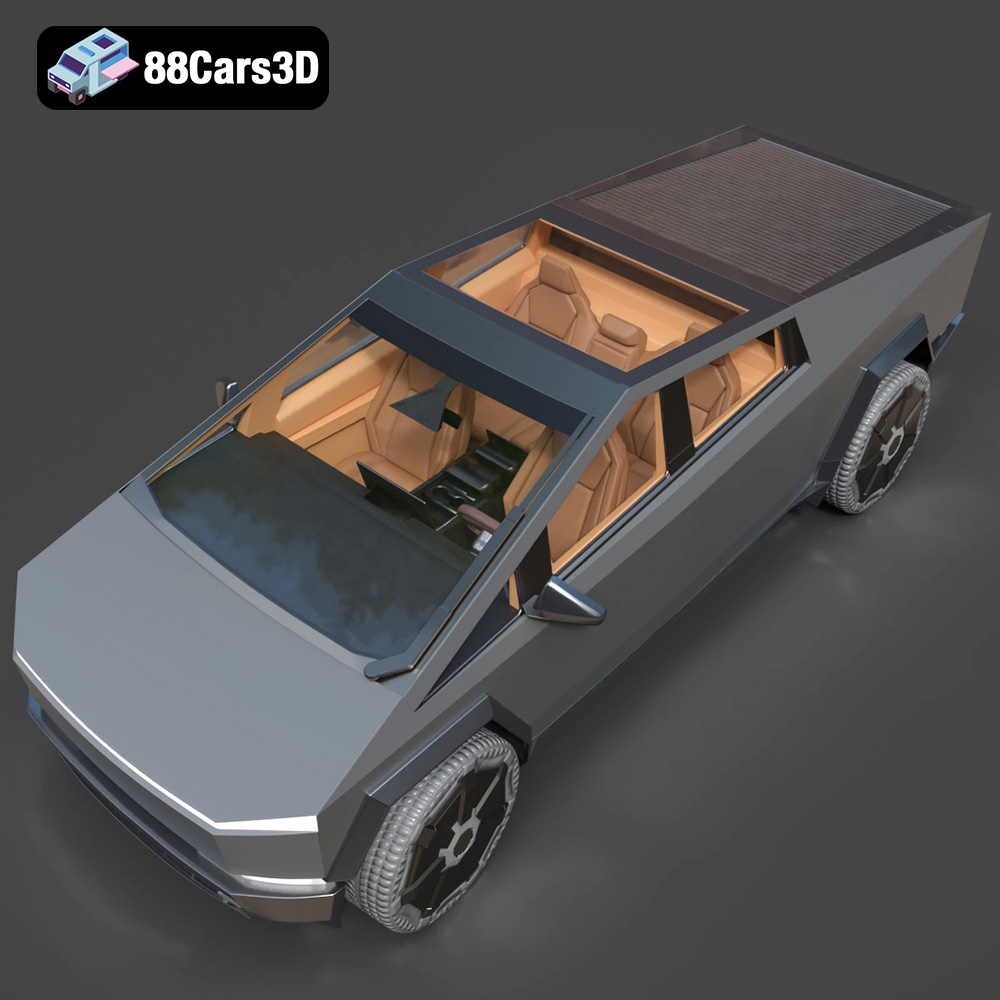
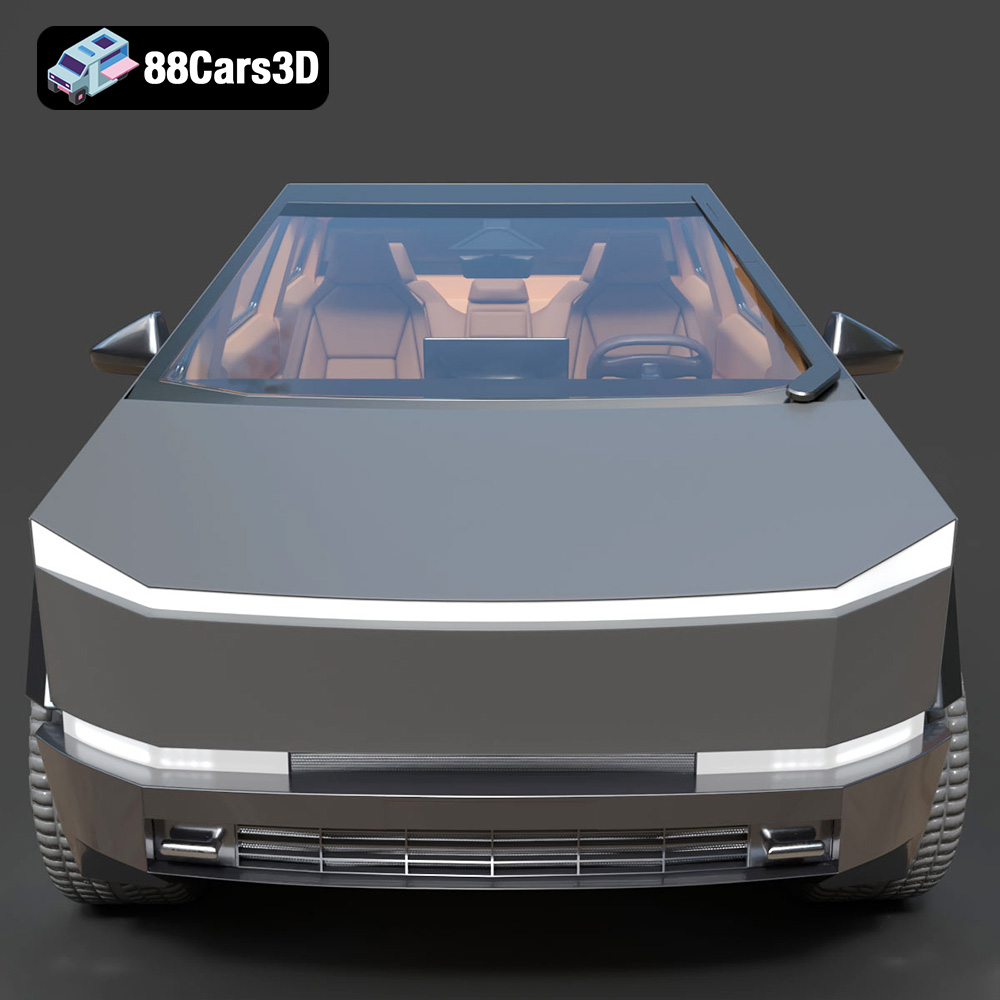
Experience the futuristic design of the Tesla Cybertruck 2024 with this exceptionally realistic 3D model. Built to precise proportions, this asset captures the distinctive angular exoskeleton and advanced aesthetic of the iconic electric pickup truck, ensuring a striking presence in any digital environment. This model is crafted with clean geometry and professional-grade polygon edge flow, making it an excellent choice for seamless integration. It features realistic materials and textures, delivering an authentic look across various lighting conditions. Perfectly suited for a multitude of professional applications, this model excels in game development, architectural visualization, cinematic rendering, and immersive AR/VR experiences. Whether creating dynamic simulation environments or detailed automotive showcases, this versatile asset meets standard industry requirements.
$19.99
.arvr
.blend
.car3dmodel
.cybertruck
.electricvehicle
.fbx
.gameasset
.glb
.max
.obj
.pickup
.ply
.rendering
.simulation
.stl
.tesla
.truck
.unreal