Get 50% OFF All Premium 3D & STL Models!

In the rapidly evolving landscape of 3D visualization, automotive design stands as a pillar of innovation and technical artistry. From groundbreaking concept vehicles to meticulously recreated classics, the demand for high-fidelity 3D car models is perpetually on the rise. These digital assets are not mere decorations; they are the bedrock for breathtaking cinematic renders, immersive game worlds, cutting-edge AR/VR experiences, and even precision engineering simulations. Professionals across industries require models that are not only visually striking but also technically robust, offering clean geometry, accurate proportions, and versatile file formats.
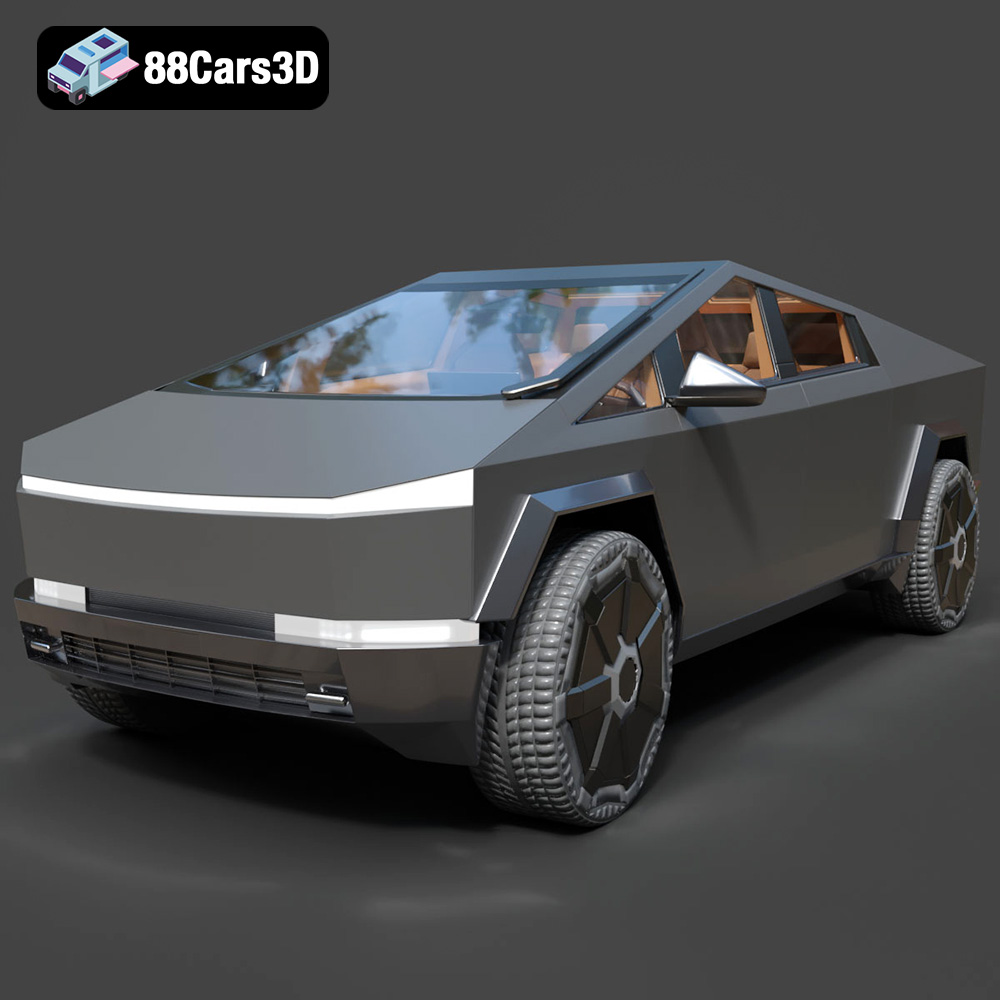
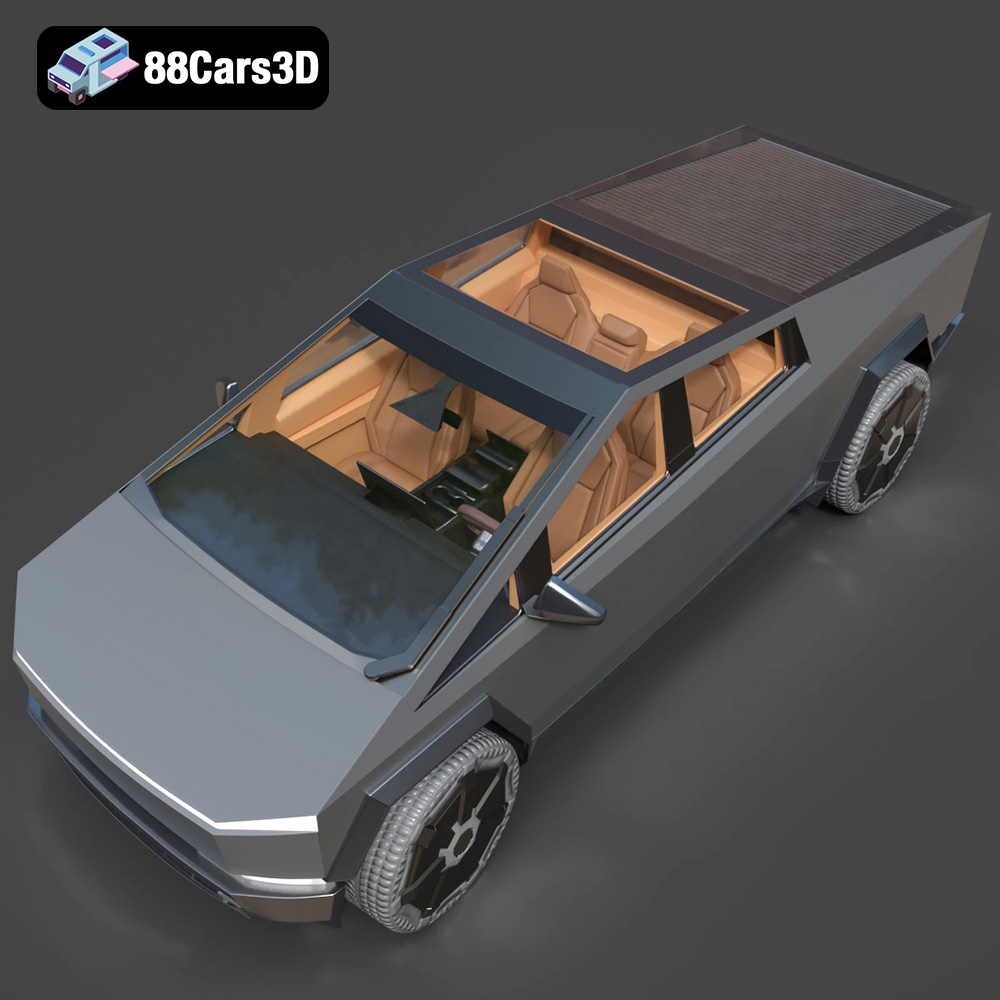
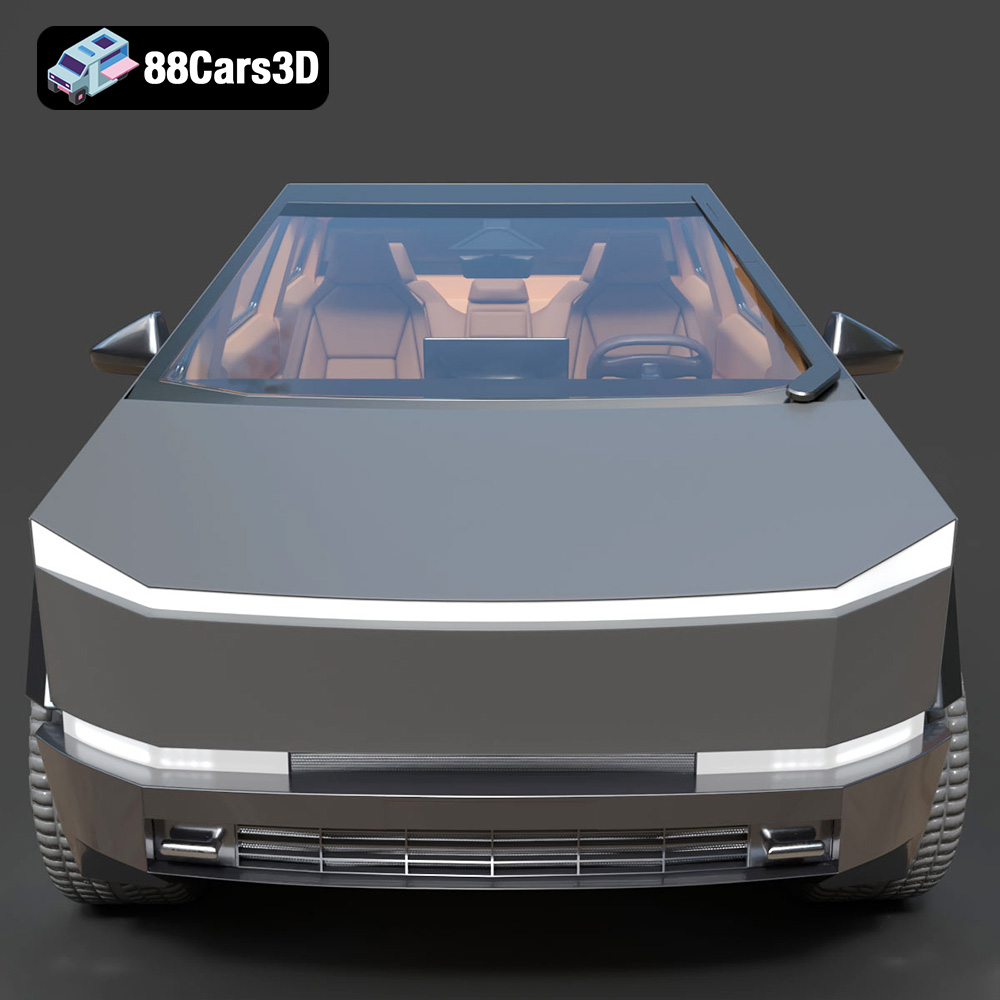
Few vehicles capture the imagination quite like the Tesla Cybertruck. Its unapologetically angular, futuristic exoskeleton and minimalist aesthetic represent a bold departure from traditional automotive design. Translating such a distinctive vehicle into a digital asset demands exceptional skill and attention to detail. This is where a meticulously crafted 3D model, like the Tesla Cybertruck 2024 3D Model available at 88cars3d.com, becomes an invaluable tool. Designed with precision, this asset captures the Cybertruck’s unique essence, providing a foundation for professionals to integrate this iconic vehicle into a vast array of digital projects. This comprehensive guide will explore the technical intricacies of working with such advanced 3D automotive assets, highlighting workflows, specifications, and the crucial role high-quality models play in professional pipelines.
The creation of a high-quality 3D car model is a fusion of artistic interpretation and rigorous technical execution. It begins long before any polygons are placed, often involving extensive research into blueprints, photographic references, and real-world dimensions. For a vehicle as distinctive as the Tesla Cybertruck, understanding its unique design philosophy – particularly its geometric simplicity and stainless steel finish – is paramount.
Translating a physical vehicle into a digital counterpart requires an unwavering commitment to accuracy. The Tesla Cybertruck, with its sharp edges and flat planes, presents a unique challenge: every angle and line must be meticulously replicated to maintain its signature look. A professional 3D model, such as the Cybertruck asset, is built to precise proportions, ensuring that its digital representation is indistinguishable from its real-world counterpart. This includes attention to wheelbase, overall length, height, and the specific rake of its windshield and bed cover. Such precision is critical not just for visual fidelity, but also for functional applications like architectural visualization, where vehicles need to fit into specific spatial contexts, or for simulations requiring accurate collision volumes.
The Cybertruck’s “exoskeleton” design means that its body panels are essentially structural elements. This translates into a distinct lack of complex curves, instead relying on precise angles and large, flat surfaces. While this might seem simpler at first glance, it actually requires even greater attention to detail in terms of edge flow and surface continuity. Any imperfections in the mesh become immediately apparent on such reflective, planar surfaces. The choice of materials is equally important. Replicating the brushed stainless steel finish of the Cybertruck requires sophisticated PBR (Physically Based Rendering) materials that accurately simulate reflectivity, anisotropy, and micro-surface details. The included realistic materials and textures in the Tesla Cybertruck 2024 3D Model ensure an authentic appearance across diverse lighting conditions, making it ready for high-fidelity rendering right out of the box.
The versatility of a 3D model is often determined by the range of file formats it offers. Professional workflows are rarely confined to a single software application, necessitating models that can seamlessly transition between different ecosystems. The Tesla Cybertruck 2024 3D Model excels in this regard, providing a comprehensive suite of formats tailored for various applications. Understanding each format’s strengths and ideal use cases is crucial for maximizing efficiency and achieving desired outcomes in projects involving 3D car models.
The provision of these diverse formats with the Tesla Cybertruck 2024 3D Model highlights its professional-grade design, catering to a broad spectrum of industry needs and ensuring maximum compatibility across various production pipelines.
Photorealistic automotive rendering is an art form that demands a deep understanding of light, materials, and composition. The Tesla Cybertruck, with its highly reflective and angular surfaces, presents both a challenge and an opportunity to create stunning visualizations. A high-quality 3D car model, such as the one from 88cars3d.com, is the essential foundation for achieving breathtaking results.
The distinctive look of the Cybertruck is heavily reliant on its stainless steel exoskeleton. Recreating this digitally requires meticulous material definition. Physically Based Rendering (PBR) workflows are crucial here, where properties like metallicness, roughness, normal maps, and potentially anisotropic reflections are precisely controlled. The Tesla Cybertruck 2024 3D Model comes equipped with realistic materials and textures, meaning much of this groundwork is already done. Artists can fine-tune these to adapt to specific lighting scenarios or artistic directions, ensuring that every reflection accurately portrays the truck’s unique surface qualities. This attention to detail extends to other elements like tire rubber, glass, and interior components, all contributing to the overall visual authenticity.
Lighting is the soul of any render. For automotive rendering, High Dynamic Range Images (HDRIs) are indispensable for providing realistic environmental reflections and illumination. Pairing an appropriate HDRI with carefully placed studio lights or area lights can dramatically enhance the Cybertruck’s presence. Global Illumination (GI) and ray tracing techniques are vital for capturing subtle color bounces and realistic soft shadows, bringing depth and realism to the scene. Because the Cybertruck model boasts clean geometry, light interacts with its surfaces predictably and accurately, avoiding visual artifacts and ensuring a smooth, polished look that is expected in professional automotive rendering.
For professionals working in architectural visualization or high-end product rendering, 3ds Max paired with render engines like V-Ray or Corona Renderer is a common choice. The included .max file for the Tesla Cybertruck 2024 3D Model streamlines this process considerably. The workflow typically involves:
This streamlined process, facilitated by a well-prepared model, empowers artists to focus on creative composition and lighting rather than tedious setup, crucial for delivering impactful automotive renders.
The integration of high-fidelity 3D car models into real-time environments like video games, simulations, and interactive experiences is a specialized field that balances visual quality with performance optimization. The Tesla Cybertruck 2024 3D Model, with its game-engine ready formats, is perfectly positioned for such applications.
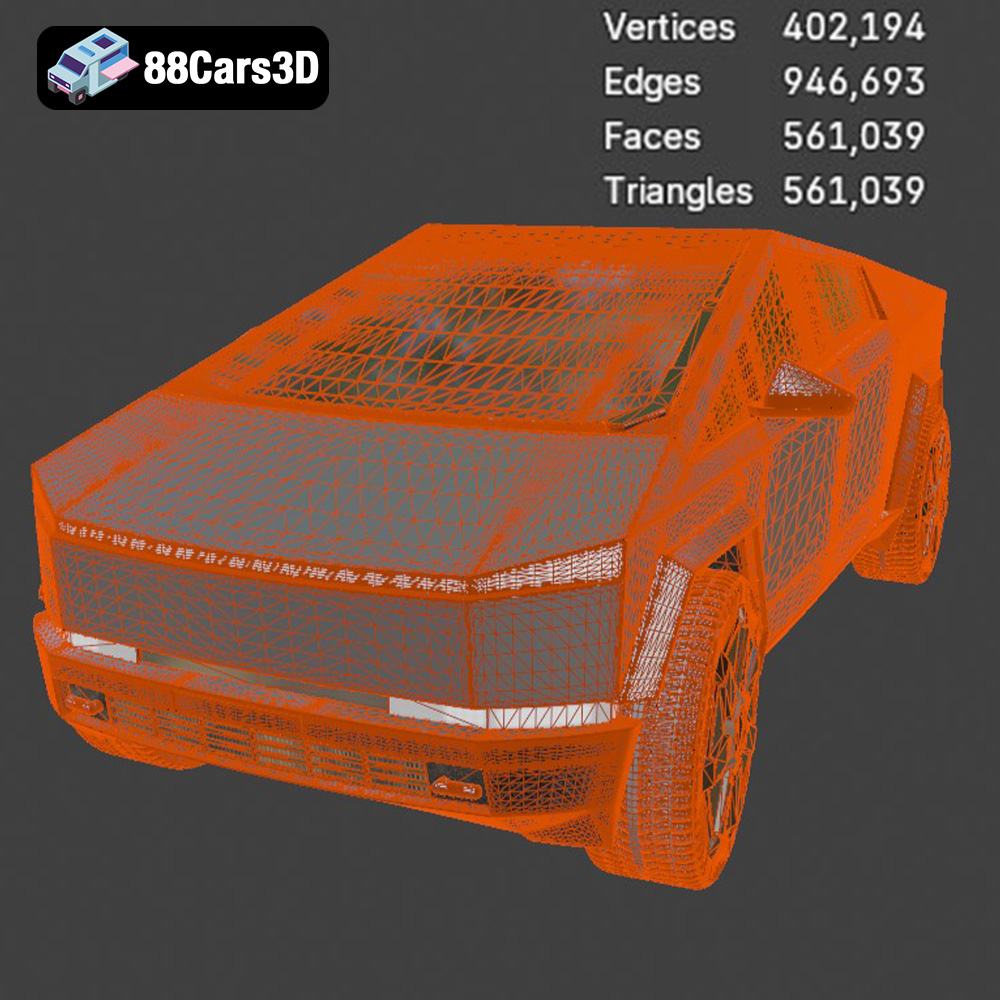
Game development demands efficiency. While cinematic renders can afford extremely high polygon counts, real-time engines require models to be optimized for smooth frame rates. A professional game asset typically includes several Levels of Detail (LODs), which are simplified versions of the model that automatically switch based on distance from the camera. The Tesla Cybertruck 2024 3D Model is designed with clean geometry and professional-grade polygon edge flow, making it ideal for generating these LODs efficiently. Additionally, optimized UV mapping ensures efficient texture memory usage, and the provision of collision meshes allows for accurate physics interactions within the game engine, crucial for driving simulations or vehicular combat scenarios.
The inclusion of .fbx and .unreal file formats for the Cybertruck model significantly eases its integration into the leading game engines. For Unreal Engine, the .unreal asset streamlines the process, often containing pre-configured materials, textures, and even basic physics assets. For both Unreal and Unity:
Having a high-quality base like the Cybertruck model from 88cars3d.com greatly accelerates this process, saving countless hours of development time and ensuring a polished result.
Augmented Reality (AR) and Virtual Reality (VR) applications demand efficient, highly optimized 3D assets due to their real-time nature and often mobile deployment. The .glb format included with the Tesla Cybertruck 2024 3D Model is specifically designed for this. Its single-file nature and inherent optimization make it ideal for quick loading and rendering in AR apps (like those on iOS ARKit or Android ARCore) or within VR environments. Developers can quickly place the Cybertruck into a real-world camera feed, allowing users to “see” the futuristic truck in their driveway, or integrate it as a highly detailed vehicle within an immersive virtual world, enhancing realism and user engagement.
The utility of a detailed 3D car model extends far beyond aesthetic visualization. In professional contexts, these models serve critical roles in engineering analysis, rapid prototyping, and even manufacturing processes. The technical robustness of the Tesla Cybertruck 2024 3D Model, with its array of specialized file formats, makes it a valuable asset for these highly technical applications.
The .stl file format, included with the Cybertruck model, is the gold standard for additive manufacturing (3D printing). For designers, engineers, or hobbyists looking to create a physical representation of the Tesla Cybertruck, this format is essential. A clean, “watertight” mesh – a characteristic of professionally built 3D models – ensures that the printer has no ambiguities about the model’s volume, preventing errors during the slicing process. Whether for scale models, functional prototypes, or even components for custom projects, the STL version of the Cybertruck allows for tangible output from the digital design. This capability is invaluable for rapid prototyping and iterative design processes in the automotive or product design fields.
For more detailed technical analysis, the .ply file format can be particularly useful. PLY files can store a richer set of data compared to STL, including vertex colors, normal vectors, and other properties, which can be critical for certain engineering or scientific visualizations. This precision mesh format might be used in CAD (Computer-Aided Design) software for further modifications, or for simulations such as:
The detailed polygon mesh of the Cybertruck model provides the necessary fidelity for these advanced analytical tasks, offering insights that are impossible with less precise models.
While often overlooked, the presence of vehicles in architectural visualizations (ArchViz) is critical for providing scale, context, and a sense of realism. The Tesla Cybertruck, with its striking design, can elevate an ArchViz scene, particularly for futuristic or modern developments. Integrating the Cybertruck model into an architectural rendering using software like 3ds Max or Blender involves:
A high-quality 3D car model, such as the one available at 88cars3d.com, becomes an essential element in creating compelling and believable ArchViz presentations, adding dynamism and a touch of realism that static elements alone cannot provide.
The world of 3D modeling is a dynamic intersection of art and engineering, where precision, versatility, and visual fidelity are paramount. Whether for the hyper-realistic demands of automotive rendering, the performance-driven requirements of game development, or the exactitude needed for engineering and prototyping, the quality of a 3D asset directly impacts project outcomes. The Tesla Cybertruck, with its iconic and forward-thinking design, represents a significant challenge for 3D artists to capture its essence accurately.
The Tesla Cybertruck 2024 3D Model stands out as a prime example of a professional-grade asset that meets these diverse needs. With its exceptionally realistic design, precise proportions, clean geometry, and a comprehensive suite of file formats – from .blend and .max for ultimate editability to .fbx and .unreal for game engines, and .glb for AR/VR, alongside .stl and .ply for technical applications – it is an indispensable tool for any professional. This model empowers creators to seamlessly integrate the future of automotive design into their projects, ensuring stunning visuals and robust technical performance across a multitude of applications. For anyone seeking to elevate their digital creations with a truly unique and high-quality 3D car model, 88cars3d.com offers this exceptional asset, ready to drive innovation in your next project.
Experience the futuristic design of the Tesla Cybertruck 2024 with this exceptionally realistic 3D model. Built to precise proportions, this asset captures the distinctive angular exoskeleton and advanced aesthetic of the iconic electric pickup truck, ensuring a striking presence in any digital environment. This model is crafted with clean geometry and professional-grade polygon edge flow, making it an excellent choice for seamless integration. It features realistic materials and textures, delivering an authentic look across various lighting conditions. Perfectly suited for a multitude of professional applications, this model excels in game development, architectural visualization, cinematic rendering, and immersive AR/VR experiences. Whether creating dynamic simulation environments or detailed automotive showcases, this versatile asset meets standard industry requirements.
$19.99
.arvr
.blend
.car3dmodel
.cybertruck
.electricvehicle
.fbx
.gameasset
.glb
.max
.obj
.pickup
.ply
.rendering
.simulation
.stl
.tesla
.truck
.unreal