Get 50% OFF All Premium 3D & STL Models!

In the dynamic world of 3D visualization, the demand for unparalleled realism continues to drive innovation. Whether it’s for breathtaking architectural visualizations, gripping cinematic sequences, or immersive interactive experiences, the quality of a 3D asset dictates the perceived authenticity of the entire project. Automotive design, in particular, requires an acute level of precision, where every curve, reflection, and material nuance must be flawlessly recreated. This pursuit of perfection is precisely what an ultra-high-detail 3D model offers, transforming digital scenes into believable realities.
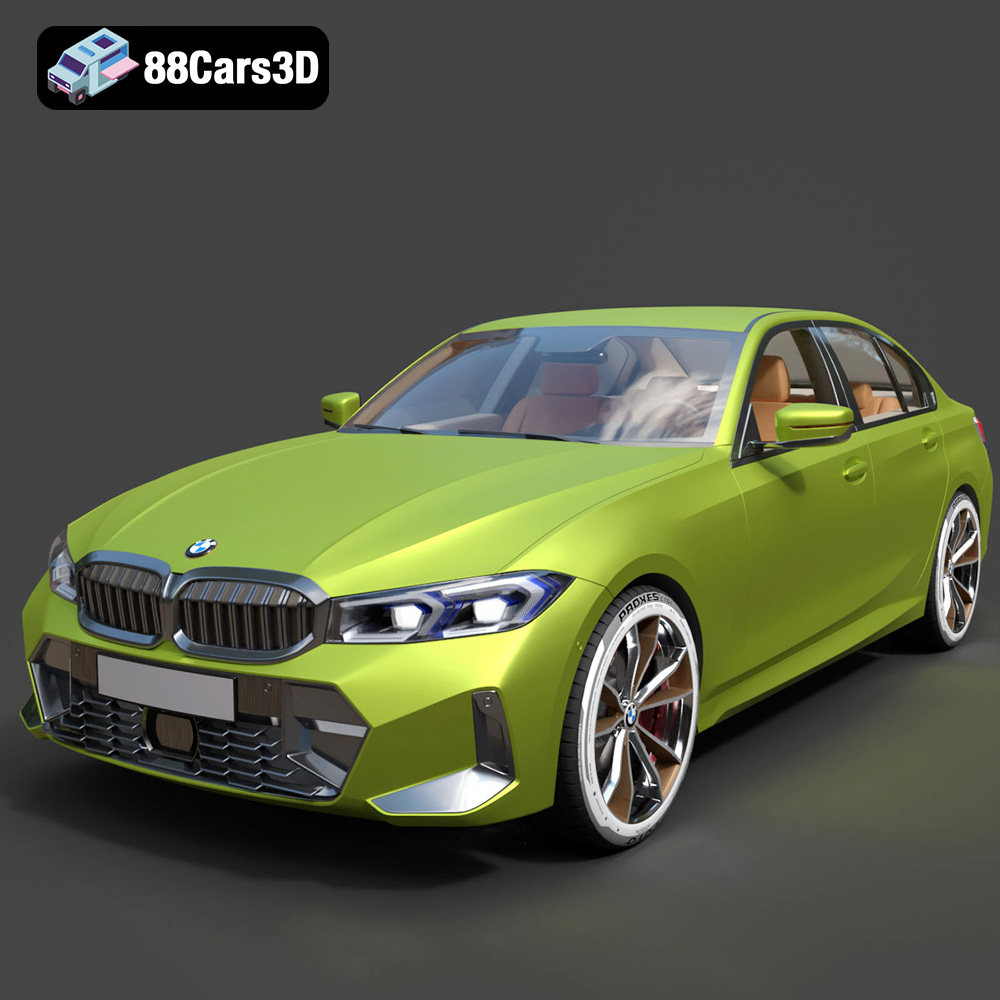
Today, we’re delving into a prime example of such craftsmanship: the BMW 3 Series Limousine 2022 Ultra High-Poly 3D Model. This isn’t just a generic car model; it’s a meticulously engineered digital twin of the iconic G20 LCI (Life Cycle Impulse / facelift) generation, designed to withstand the closest scrutiny. From its sharper LED headlights to the luxurious BMW Curved Display interior, every element has been captured with an uncompromising dedication to detail. Such a sophisticated asset is indispensable for professionals who require nothing less than absolute photorealism in their automotive rendering, game assets development, and visualization projects. Let’s explore the technical prowess and diverse applications of this remarkable model.
Creating a digital automotive twin goes far beyond simple modeling; it’s an intricate process of translating physical design into a virtual space while retaining every subtle characteristic that defines the real vehicle. For a luxury sports sedan like the BMW 3 Series, this means understanding the designer’s intent, the engineering behind its form, and the materials that give it its tactile presence.
The primary goal of a high-quality 3D car model is to serve as an accurate, flexible, and visually stunning representation of its real-world counterpart. This involves not only getting the overall proportions right but also meticulously detailing smaller elements that significantly impact realism. Consider the way light interacts with the bodywork: sharp creases catch highlights, while subtle concavities create nuanced shadows. An ultra-high-poly model ensures that these intricate light interactions are rendered perfectly, without any unsightly faceting or geometric imperfections. The BMW 3 Series Limousine 2022 Ultra High-Poly 3D Model, with its dense topology, achieves this by providing a robust mesh that smoothly captures reflections and light interplay, even under extreme macro magnification. This level of detail is paramount for high-end projects where visual fidelity is non-negotiable.
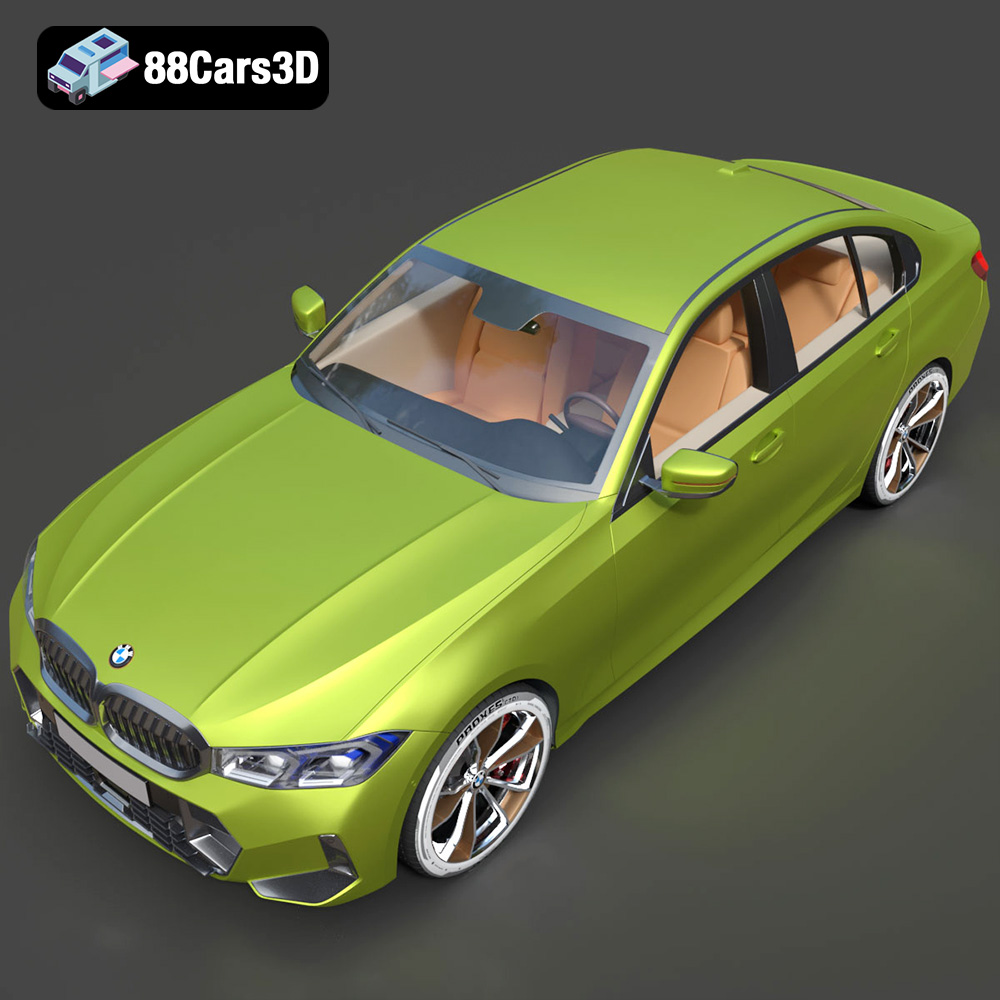
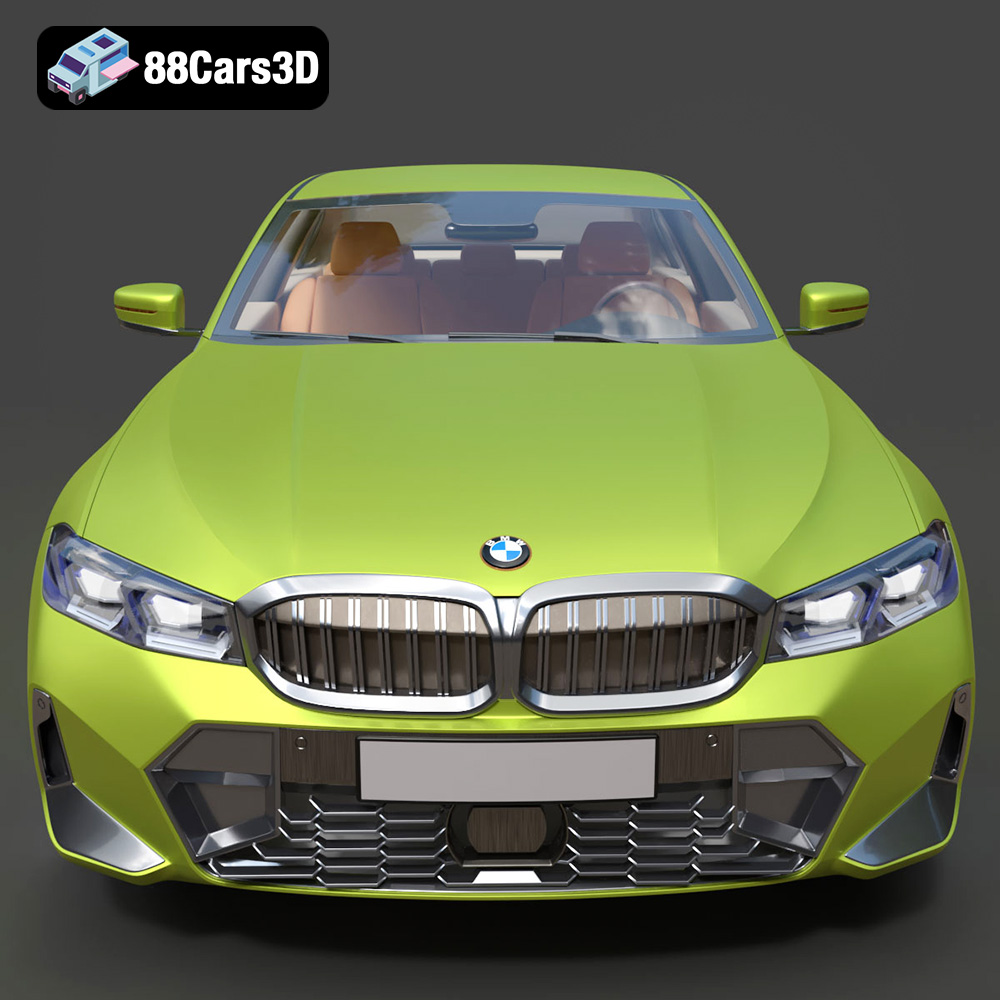
The 2022 BMW 3 Series Limousine represents a significant evolution of the G20 generation, featuring a facelift that refined its aggressive and sporty aesthetic. This 3D model faithfully replicates these critical updates. The slimmer, sharply contoured LED headlights with their signature inverted L-shaped daytime running lights are a prime example. The subtly tweaked twin-kidney grille, aggressive front and rear bumpers, and redesigned center console with the modern minimalist gear selector toggle are all meticulously recreated. Inside, the groundbreaking BMW Curved Display, combining a 12.3-inch information display and a 14.9-inch control display into a seamless glass panel, is accurately modeled. These specific design elements are what make the 2022 model distinct, and their accurate portrayal in the 3D asset is crucial for projects aiming for current-generation accuracy.
Choosing the correct file format for your 3D assets is a critical decision that impacts workflow efficiency, compatibility, and the final output quality. Different formats are optimized for specific uses, whether it’s full editability, real-time performance, or compatibility across diverse software. The BMW 3 Series Limousine 2022 Ultra High-Poly 3D Model from 88cars3d.com wisely offers a comprehensive suite of formats, ensuring its adaptability to virtually any professional pipeline. Let’s break down the included formats and their ideal applications.
The .blend format is native to Blender, the powerful open-source 3D creation suite. When you receive a .blend file, you’re getting a fully editable Blender scene, complete with materials, textures, lighting setups, and any associated animations or rigs. This format is ideal for users who primarily work within Blender and need to dissect, modify, or integrate the model directly into their existing projects. It offers maximum flexibility for material adjustments, geometric modifications, or custom rigging, leveraging Blender’s robust toolset.
.fbx (Filmbox) is arguably the most widely adopted interchange format in the 3D industry. Developed by Autodesk, it excels at transferring 3D model data, including geometry, materials, textures, bones, and animations, between different software packages. It’s an ideal choice for pipelines involving Unreal Engine, Unity, and other real-time applications due to its efficient handling of complex scene data. For the BMW 3 Series model, using .fbx ensures a smooth transfer into game engines or other DCC applications like Maya or Cinema 4D, preserving critical attributes like pivot points and hierarchies.
The .obj (Wavefront OBJ) format is a universal standard, revered for its simplicity and wide compatibility. It’s an excellent choice for transferring geometric data (vertices, faces, normals, UV coordinates) across virtually any 3D software. While it doesn’t typically store advanced material properties or animation data directly, it’s perfect for scenarios where you need a clean mesh to re-texture or use as a base for further modeling. For the BMW model, .obj offers a reliable fallback for cross-software compatibility, ensuring the core geometry is accessible everywhere.
.glb (GL Transmission Format Binary) is a relatively newer format designed specifically for the efficient transmission and loading of 3D scenes and models in web-based, augmented reality (AR), and virtual reality (VR) environments. It’s a self-contained single file that bundles geometry, textures, and animations, making it highly optimized for fast loading and deployment in these emerging platforms. For visualizing the BMW 3 Series in a browser, an AR application on a mobile device, or a lightweight VR experience, .glb is the format of choice.
.stl (Stereolithography) is the most common file format for 3D printing. It represents a 3D model as a collection of unconnected triangular facets, defining only the surface geometry without color or texture information. For hobbyists and professionals looking to physically manifest the BMW 3 Series Limousine model, the .stl format provides the necessary data for slicing software to prepare it for printing. The ultra-high-poly nature of this specific model translates directly into incredibly fine detail for resin printers, ensuring sharp lines and intricate interior features are retained in the physical print.
The .ply (Polygon File Format) format is designed to store graphical objects as a list of polygons. It supports a wider range of properties than .obj or .stl, including color, transparency, surface normals, and even data associated with individual vertices or faces. It’s often used in scientific computing, 3D scanning, and CAD applications where precise mesh data and attribute storage are important for analysis or complex visualizations.
The inclusion of an .unreal file (often referring to a .uasset or an Unreal-specific package) means the 3D model is pre-configured and optimized for direct integration into Unreal Engine. This typically includes pre-setup materials, collision meshes, and potentially LODs (Levels of Detail) or Nanite-ready configurations. This format significantly streamlines the workflow for Unreal Engine developers, as much of the import and setup process is already handled, saving valuable development time when deploying the BMW 3 Series as a hero asset in a real-time environment.
The .max format is the native file type for Autodesk 3ds Max, a leading software for 3D modeling, animation, and rendering. Like .blend, it contains a complete scene, including the model’s geometry, materials, textures, lights, camera setups, and animation data. For professionals primarily working in 3ds Max, this format offers full editability and seamless integration into their existing projects, making it ideal for high-end architectural visualization and cinematic automotive rendering using renderers like V-Ray or Corona.
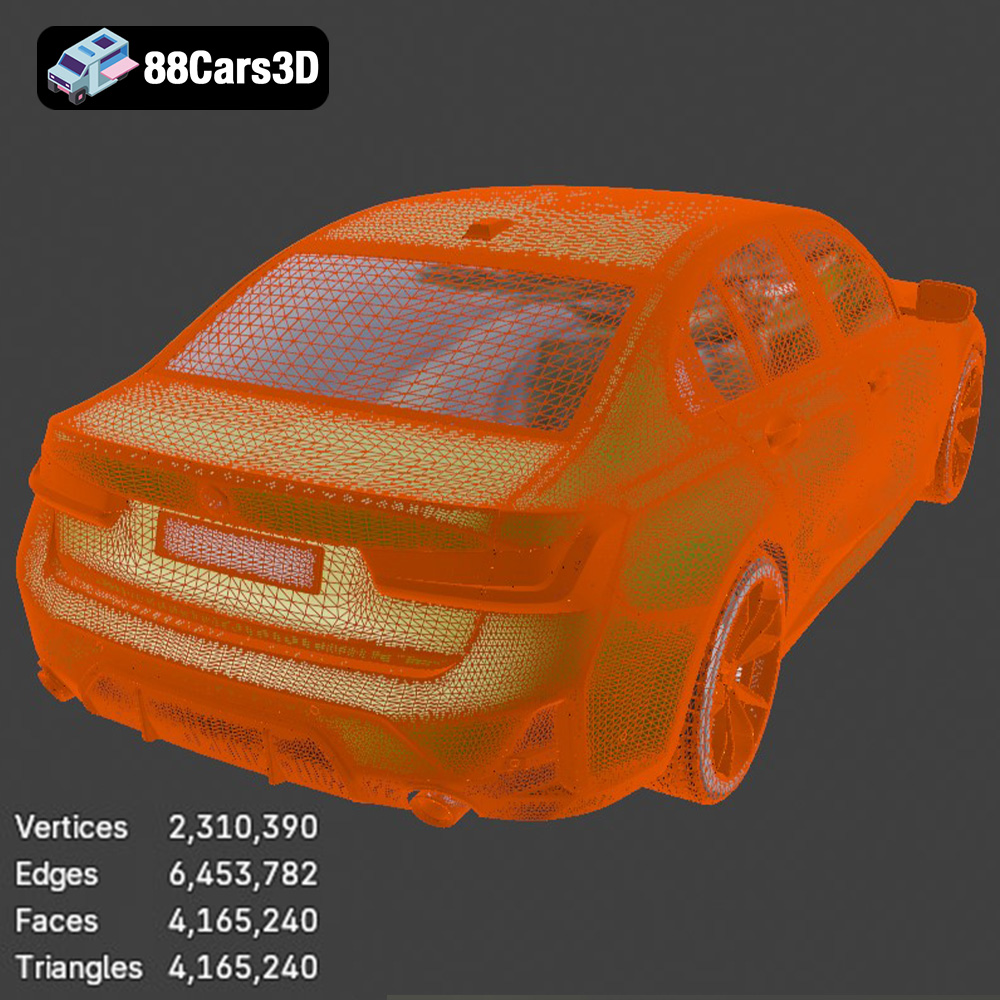
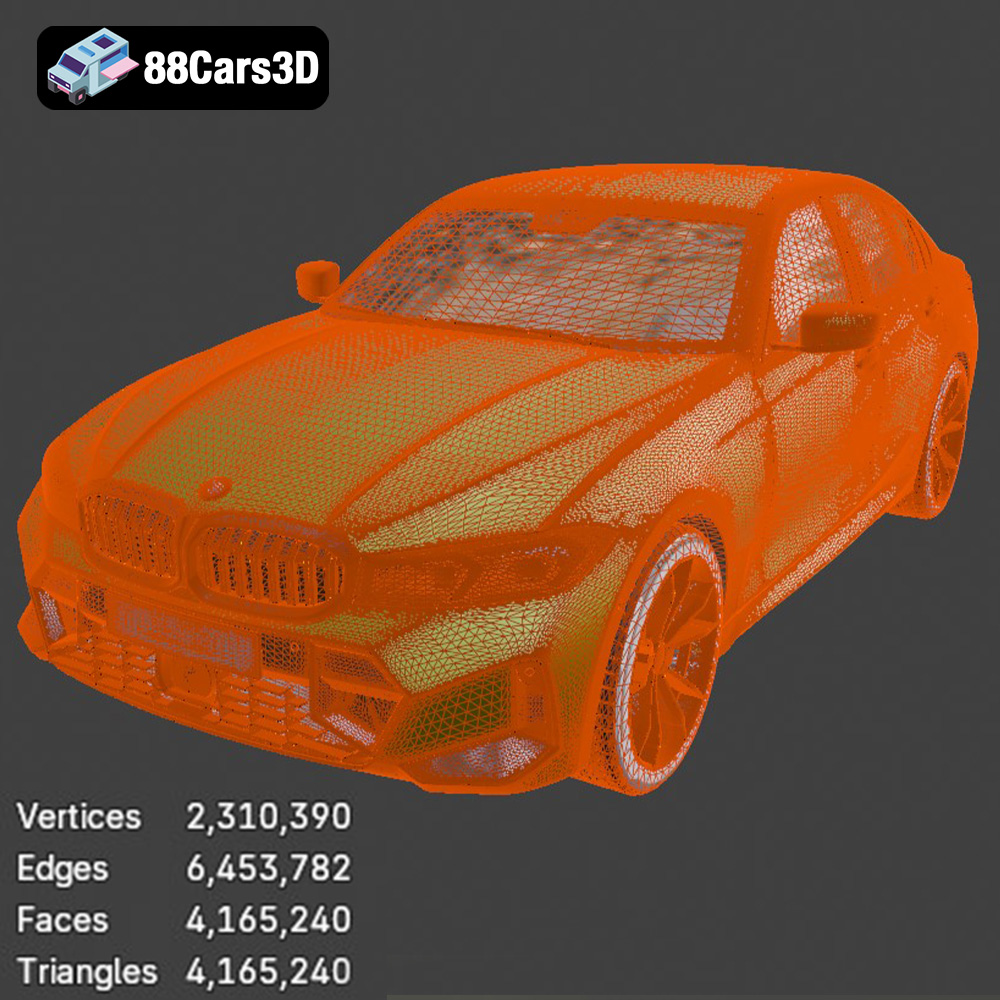
The term “ultra-high-poly” isn’t just a marketing buzzword; it refers to a specific level of geometric detail that fundamentally alters how a 3D model performs and is utilized. The BMW 3 Series Limousine 2022 Ultra High-Poly 3D Model exemplifies this with its staggering poly count, designed for the most demanding visual tasks.
With over 4.16 million triangles (and 2,310,390 vertices), this 3D model possesses an incredibly dense topology. This density is the bedrock of its photorealistic capabilities. In automotive rendering, smooth, unblemished surfaces are crucial for believable reflections and highlights. A lower-poly model would necessitate heavy reliance on normal maps or bump maps to simulate surface detail, which can break down under close inspection or specific lighting angles. In contrast, this ultra-dense, quad-heavy structure ensures that even the most extreme close-up macro shots reveal perfectly smooth reflections, flawless light interplay, and zero faceting. This makes it a true “hero” asset, suitable for scenes where the vehicle is the star and every detail must hold up under intense scrutiny, from the subtle curvature of the fender to the intricate mesh of the grille.
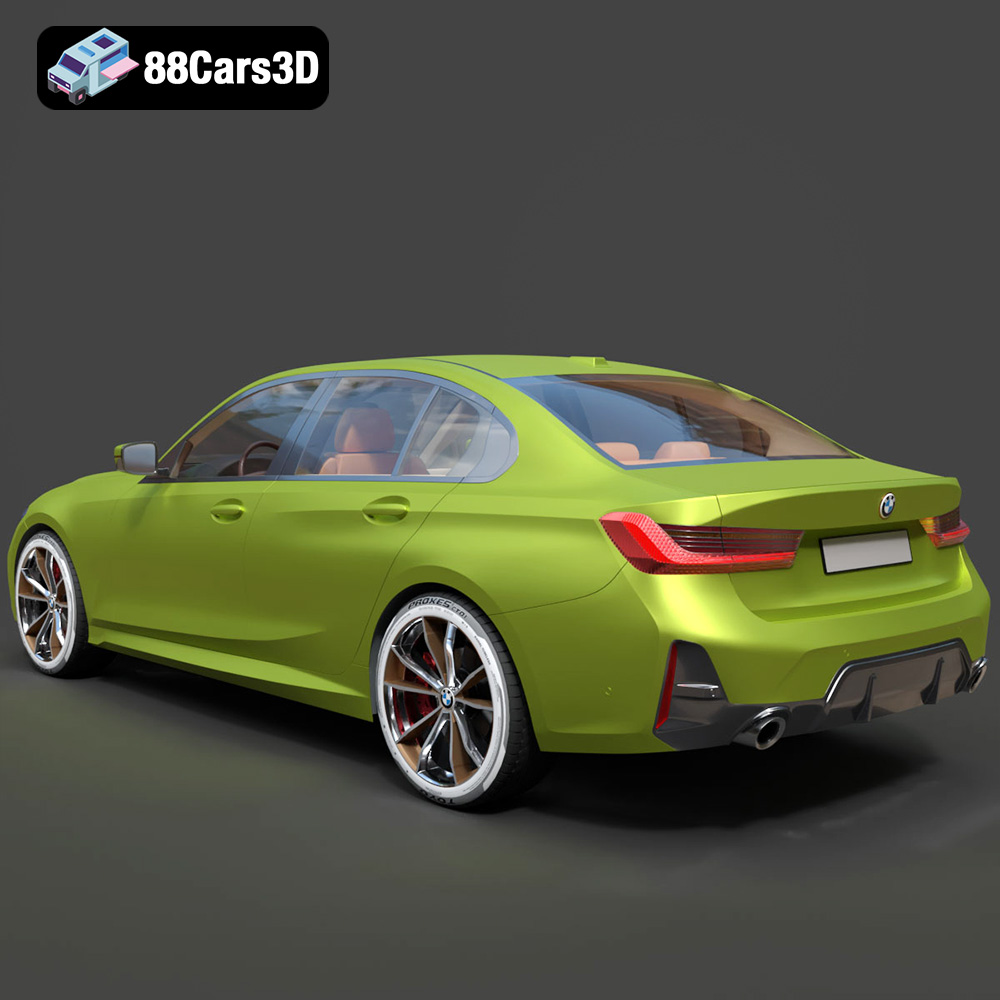
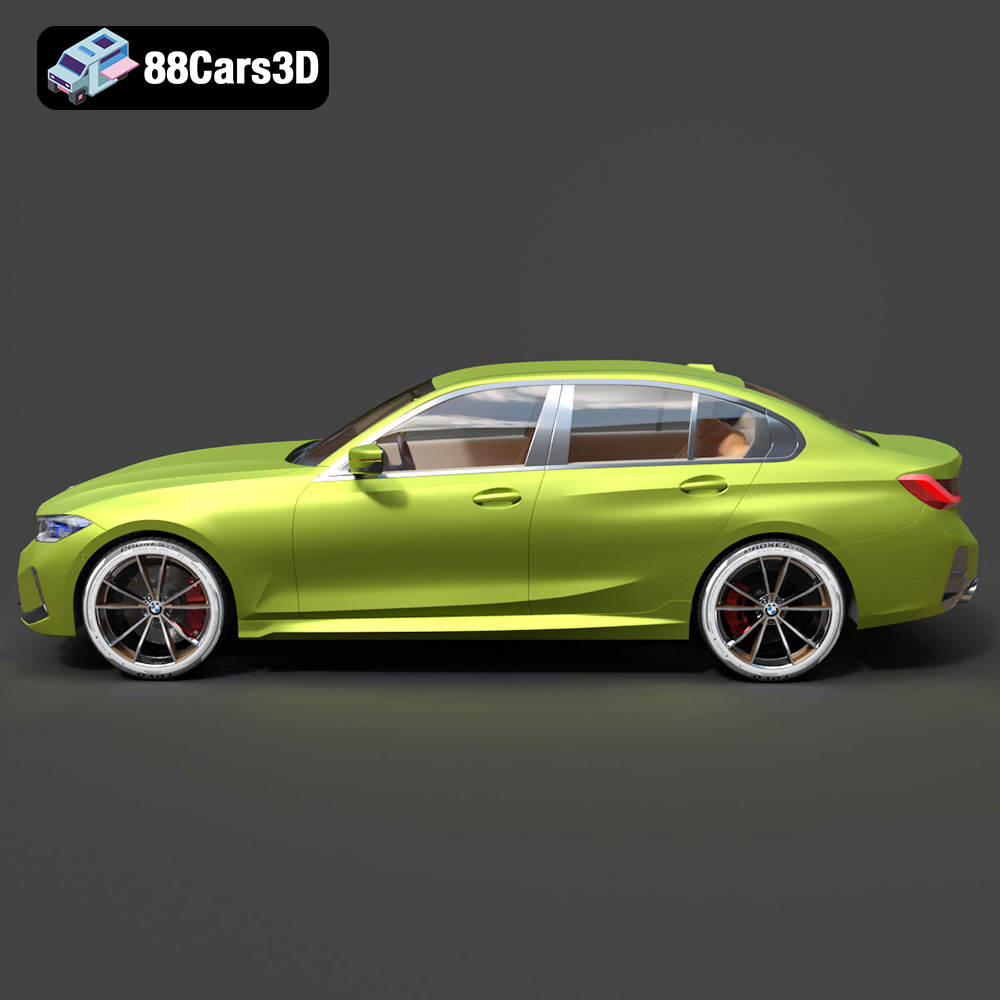
The product description highlights a remarkable commitment to both exterior and interior fidelity. On the exterior, accurate 2022 BMW 3 Series (G20 LCI) proportions are matched with redesigned elements like the modernized twin-kidney grille and aggressive lower intakes. The highly detailed, slimmer LED headlight clusters and iconic L-shaped 3D LED taillights are precisely modeled, as are the factory alloy wheels and the distinctive aerodynamic character lines. These are not merely textures; they are actual geometric forms.
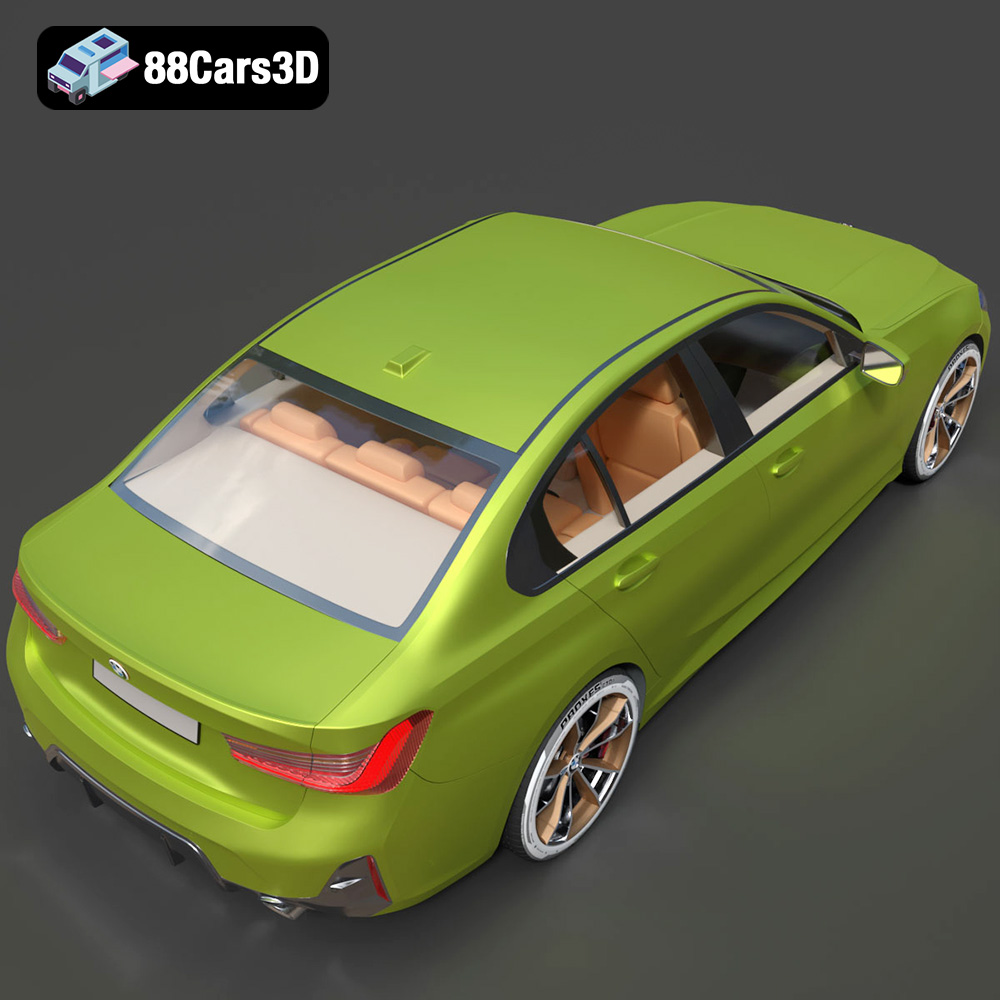
Inside, the model continues to impress with a sumptuous, fully modeled driver-centric premium cabin. The highlight is the accurately modeled BMW Curved Display, a major 2022 interior upgrade. Premium sports seating geometry, accurate stitching, and contour mapping are also present. This optimized interior geometry is explicitly tailored for high-resolution first-person POV renders and VR experiences, where the user will be able to immerse themselves fully without breaking the illusion of reality due to low-detail assets. Separate wheels, steering components, and doors with proper pivot setups further enhance its usability for rigging and animation, allowing for dynamic shots and interactive experiences.
Beyond static beauty, a professional 3D car model needs to be functional for animation. The inclusion of separate wheels, steering components, and doors, coupled with proper pivot setups, is a critical technical advantage. This thoughtful organization allows animators to quickly rig the vehicle for realistic movement. Imagine a cinematic shot where the BMW smoothly turns a corner, its wheels rotating naturally, or a product commercial showcasing the door opening to reveal the meticulously crafted interior. These elements are not afterthoughts; they are built-in features that streamline complex animation workflows and empower artists to bring the model to life with ease.
The versatility of a high-quality 3D asset like the BMW 3 Series Limousine 2022 model lies in its ability to seamlessly integrate into various professional pipelines. Its ultra-high-poly nature positions it perfectly for specific, high-fidelity applications.
For architectural visualization, realism is paramount. An empty street or driveway diminishes the impact of a meticulously designed building. Integrating recognizable, modern, premium European traffic immediately elevates the scene. The BMW 3 Series Limousine 2022 Ultra High-Poly 3D Model is an absolute gold standard for this. In a workflow leveraging 3ds Max with V-Ray or Corona Renderer, the model’s dense topology shines. Its perfectly smooth surfaces and precise details ensure that reflections from surrounding architecture and environment HDRI maps are rendered flawlessly. Imagine a grand residential facade, a sleek corporate building, or a vibrant urban streetscape – placing this BMW model adds immediate context, luxury, and realism, convincing viewers that they are looking at a photograph, not a render. The .max file format provides native integration, allowing architects and visualization artists to drop the model directly into their scenes and immediately benefit from its high fidelity and material setups.
When it comes to cinematic productions, whether for commercial VFX, automotive pitches, or film projects, uncompromised detailing is non-negotiable. This BMW 3D car model serves as an excellent primary hero vehicle. In Blender, artists can leverage the .blend file to fully customize materials, set up intricate camera paths, and utilize Cycles or Eevee for stunning renders. For those pushing the boundaries of real-time cinematography, Unreal Engine 5 is an ideal platform. The .unreal and .fbx formats facilitate seamless integration. With Unreal Engine 5’s Nanite virtualized geometry system, the model’s 4.16 million triangles can be handled with unprecedented efficiency, delivering cinematic quality in real-time. This allows for rapid iteration, dynamic camera movements, and interactive previews that would typically require hours of traditional rendering. This flexibility makes it invaluable for directors and VFX artists who need both visual splendor and efficient workflows.
While the ultra-high-poly nature (~4.16M triangles) of this asset is tailored for pre-rendered VFX or Unreal Engine 5 Nanite environments, its potential in AR/VR and game development is still significant with appropriate considerations. For standard real-time mobile or VR applications where performance is extremely critical and Nanite isn’t feasible, the model would require heavy manual retopology or decimation. This process involves reducing the polygon count while preserving as much visual detail as possible, often by baking high-poly detail into normal maps on a lower-poly mesh. However, for high-end VR experiences or PC games targeting powerful hardware, especially those leveraging Unreal Engine 5, the model can be used directly as a hero asset. The .glb format is particularly relevant for AR/VR, offering an optimized, self-contained package for deployment on these platforms, albeit likely after poly reduction for mobile targets. For those building serious game assets, having such a detailed source model is an incredible advantage for creating optimized variants.
The world of 3D printing offers a fascinating avenue for bringing digital assets into the physical realm. An ultra-high-poly model like the BMW 3 Series Limousine 2022 isn’t just for screen-based rendering; it’s also an excellent foundation for creating highly detailed, tangible replicas.
Utilizing the provided .stl format, enthusiasts and professionals can transform the virtual BMW into a physical object. The recommended scales of 1:24, 1:18, or 1:12 are ideal for luxury diecast hobbyist prints, allowing for a substantial size that can truly showcase the model’s intricate details. The critical recommendation for resin printing with a layer height of 0.04–0.08 mm underscores the need for precision. Resin printers (SLA/DLP/LCD) are known for their ability to produce incredibly fine details, which is essential to capture the sharp LCI headlight details, the aggressive lower intakes, and the miniature interior displays accurately. Adequate wall thickness (1.5–2.5 mm) and infill (15–25%) ensure structural integrity, especially for a multi-part print. Careful print orientation, with the body angled for a smooth surface finish and wheels printed separately, further optimizes the output quality, minimizing support marks on visible surfaces.
The journey from a raw 3D print to a showroom-quality model involves meticulous post-processing. Sanding is crucial to remove any layer lines or support nubs, creating a perfectly smooth surface. A high-quality primer prepares the surface for paint, ensuring excellent adhesion and a uniform finish. The ultimate step is applying modern BMW paint finishes, such as Brooklyn Grey, Portimao Blue, or Alpine White. These authentic colors, combined with clear coats and careful masking for details like window trim and headlights, elevate the 3D print from a prototype to a museum-worthy miniature replica. The ultra-high-poly source model ensures that all the subtle curves and design elements are present in the physical print, ready to be accentuated by a skilled hand.
The pursuit of photorealism in 3D visualization is a continuous journey, and the quality of your foundational assets dictates the success of that endeavor. The BMW 3 Series Limousine 2022 Ultra High-Poly 3D Model stands as a testament to this principle, offering an uncompromisingly detailed digital recreation of an automotive icon. Its immense polygon count, meticulous interior and exterior features, and careful organization for animation make it an indispensable tool for a wide array of professional applications.
From elevating architectural visualizations with stunning automotive rendering, to serving as a hero vehicle in cinematic productions and facilitating detailed 3D prints, this model empowers artists and designers to achieve unparalleled levels of visual fidelity. The comprehensive suite of file formats – from .blend and .max for native software users, to .fbx and .unreal for game engines, and .stl for 3D printing – ensures its adaptability across virtually any professional workflow.
For those who demand the very best in 3D car models, assets like this BMW 3 Series are not just additions to a library; they are investments in quality and efficiency. Explore this exceptional model and a wide range of other high-quality 3D car models available at 88cars3d.com, where attention to detail meets professional standards, enabling you to bring your most ambitious visualization projects to life with stunning realism.
The BMW 3 Series Limousine (2022) 3D Model is an uncompromising, ultra-high-detail digital recreation of the quintessential luxury sports sedan. Representing the highly acclaimed G20 LCI (Life Cycle Impulse / facelift) generation introduced in 2022, this model captures the sharper, more dynamic evolution of the iconic 3 Series. This 3D model meticulously captures the modernized aesthetic of the 2022 facelift, featuring the slimmer, sharply contoured LED headlights with inverted L-shaped daytime running lights, a subtly tweaked twin-kidney grille, and aggressive, highly structured front and rear bumpers. Built with an incredibly dense and uncompromised topology (over 4.16 million triangles), it delivers absolute photorealism. This model is engineered to hold up to the most extreme close-up macro shots, making it the ultimate asset for high-end architectural visualization, cinematic commercial productions, and premium automotive rendering. Perfect for upscale ArchViz streetscapes, cinematic automotive showcases, high-end commercial VFX, and luxury lifestyle renders.
$19.99
.archviz
.automotive
.blend
.bmw
.fbx
.obj
.rendering
2022-bmw
3-series
3er
car-3d-model
g20
g20-lci
hero-car
high poly
luxury-sedan
sports-sedan
vfx