Get 50% OFF All Premium 3D & STL Models!

In the fast-paced worlds of automotive design, game development, cinematic rendering, and architectural visualization, the demand for hyper-realistic and meticulously crafted 3D assets is ever-increasing. From conceptual ideation to final production, the quality of your 3D models directly impacts the realism, performance, and overall impact of your projects. A truly exceptional 3D car model isn’t just a visual representation; it’s a precisely engineered digital object, ready to be integrated into diverse and demanding professional pipelines.
Imagine showcasing a luxury vehicle in a virtual showroom, creating a thrilling racing sequence in a video game, or even visualizing a future smart city with photorealistic traffic. Each scenario hinges on the fidelity and technical robustness of your 3D assets. This is where specialized marketplaces like 88cars3d.com become invaluable, offering a curated selection of high-quality models designed to meet these exacting standards. Today, we’ll delve into the intricacies of professional 3D car modeling, exploring the technical considerations, workflow advantages, and diverse applications, using the exquisite Jaguar XFR-S 2014 3D Model as our prime example of excellence.
Automotive 3D modeling stands at the intersection of artistic vision and engineering precision. It’s a discipline that demands not only an eye for aesthetics but also a deep understanding of topology, materials, and optimization. A high-quality car model is not merely a pretty mesh; it’s a data-rich asset designed for performance across various platforms and applications.
The journey of a premium 3D car model begins long before a single polygon is laid down. It starts with comprehensive research, gathering blueprints, reference images, and understanding the real-world vehicle’s subtle curves and mechanical nuances. For a model like the Jaguar XFR-S 2014, this means capturing the aggressive front fascia, the sculpted side skirts, the distinctive rear spoiler, and the intricate details of its interior. Every vent, every panel gap, and every ergonomic curve must be translated into clean, efficient geometry. This level of detail ensures that whether you’re rendering a close-up of the alloy wheels or a wide shot of the car speeding down a digital highway, the model holds up under scrutiny.
In today’s competitive digital landscape, realism is paramount. Clients and audiences expect nothing less than photorealistic results, whether it’s for an automotive configurator, a VR experience, or a high-end commercial. Achieving this realism depends heavily on the model’s fundamental structure: clean topology, accurate scale, and meticulous UV mapping. When these foundations are solid, artists can then layer on sophisticated materials using Physically Based Rendering (PBR) workflows, creating surfaces that react to light precisely as they would in the real world – from the metallic flake of the paint to the subtle sheen of leather and the reflections on glass. This technical groundwork, exemplified by models like the Jaguar XFR-S 2014, empowers artists to create compelling, immersive visuals.
Choosing the right 3D model file format is a critical decision that impacts workflow, compatibility, and performance across different software and platforms. High-quality assets, such as those found on 88cars3d.com, typically offer a range of formats to ensure maximum versatility. Understanding when and why to use each format is key to a streamlined and efficient production pipeline.
The .blend format is Blender’s native file type, storing an entire scene, including meshes, materials, textures, lighting, cameras, animations, and even physics simulations. For artists primarily working within Blender, this is the most flexible option. It allows for full editability of all components, enabling quick adjustments to geometry, material properties, and scene setup. If you’re using Blender for rendering with Cycles or Eevee, or for further sculpting and animation, the .blend file provides a ready-to-use project with pre-configured materials and lighting, making it an excellent starting point for customization and immediate rendering.
Autodesk’s .fbx (Filmbox) format is widely considered the industry standard for transferring 3D data between various applications, especially for game development. It efficiently supports geometry, materials, textures, animations, rigging, and even blend shapes. Its robust compatibility makes it ideal for importing models into real-time engines like Unreal Engine and Unity. When working with .fbx, ensure your export settings align with your target engine’s requirements, focusing on proper scaling, axis orientation, and embedded media options for seamless integration. It’s designed to be lean and efficient for real-time applications, making it a go-to for interactive experiences.
The .obj (Wavefront Object) format is one of the oldest and most universally supported 3D formats. It excels at storing geometric data (vertices, normals, UVs, faces) and references external material files (.mtl). While it doesn’t support advanced features like animation or rigging, its simplicity ensures compatibility across virtually all 3D software, from Maya and 3ds Max to Blender and Cinema 4D. If you need a clean mesh for sculpting, retopology, or simply importing into a program that might not support more complex formats, .obj is a reliable, universal choice for cross-software compatibility.
.glb (GL Transmission Format Binary) is the binary version of glTF, specifically designed for efficient transmission and loading of 3D scenes and models by applications. It’s rapidly becoming the standard for 3D content on the web, AR (Augmented Reality), and VR (Virtual Reality) platforms. .glb files encapsulate all necessary data—geometry, materials, textures, animations—into a single, self-contained file, making them highly portable and optimized for fast loading and rendering in browser-based viewers and mobile AR/VR experiences. This format is crucial for interactive web presentations and emerging immersive technologies.
The .stl (Stereolithography) format is the de facto standard for 3D printing and CAD software. It represents a 3D model as a series of connected triangles, describing only the surface geometry of an object without color, texture, or other CAD attributes. While not suitable for rendering or animation due to its lack of material data and faceted appearance, it is indispensable for physical prototyping, rapid manufacturing, and ensuring your digital model can be accurately translated into a tangible object. For precise physical outputs, a clean, watertight .stl mesh is essential.
The .ply (Polygon File Format) is another format that describes a 3D object as a collection of polygons. It’s more versatile than .stl, capable of storing not just geometry but also properties like color, transparency, normals, texture coordinates, and even reliability information. This makes it particularly useful for 3D scanning applications, scientific visualization, and CAD/CAM where rich vertex and face data is paramount for analysis or reconstruction. For detailed mesh representation in academic or specialized industrial applications, .ply offers greater precision and data embedding than .obj or .stl.
The .unreal format, or rather assets specifically packaged and optimized for Unreal Engine, represents pre-configured assets that can be directly imported and used within the Unreal Editor. While not a standalone file type like .fbx, it signifies an asset package tailored to Unreal’s workflow, potentially including .uasset files, blueprints, materials, and textures set up to take advantage of Unreal’s rendering features like Lumen, Nanite, and its PBR shader system. This offers immediate plug-and-play functionality, drastically reducing setup time for game developers and real-time visualization artists working within the Unreal ecosystem.
Similar to .blend for Blender, the .max format is the native file type for Autodesk 3ds Max. It stores the complete scene data, including all geometry, modifiers, materials (V-Ray, Corona, Arnold), lighting, cameras, animation keyframes, and scene settings. For professionals using 3ds Max for high-end architectural visualization, product rendering, or animation, the .max file provides an editable project that allows for seamless manipulation, rendering setup, and integration into existing 3ds Max workflows. It ensures full control over the model’s appearance and behavior within the software.
The Jaguar XFR-S 2014 3D Model is more than just a collection of polygons; it’s a versatile asset engineered for seamless integration into a multitude of professional pipelines. Its meticulous detailing and optimized geometry make it suitable for a broad spectrum of applications, from high-fidelity marketing materials to interactive real-time experiences.
For ArchViz artists and cinematic creators, the Jaguar XFR-S 2014 3D Model is a game-changer. Imagine placing this sleek, performance sedan in front of a modern architectural masterpiece, driving down a photorealistic street scene, or featuring it in a dramatic product reveal. The model’s “meticulously crafted realistic materials” and “fully modeled interior and detailed exterior” mean it can hold up to extreme close-ups and high-resolution renders. Using the .max or .blend formats, artists can easily import it into 3ds Max (with V-Ray or Corona Renderer) or Blender (with Cycles), adjusting lighting and camera angles to achieve stunning, lifelike visuals. The clean geometry ensures quick rendering times and stable scene performance, crucial for meeting tight deadlines in film, advertising, and high-end property marketing.
In the realm of game development, balancing visual fidelity with performance is key. The Jaguar XFR-S 2014 3D Model, with its “optimized polygon count” and “game-engine ready .fbx format,” is perfectly suited for this demanding environment. Developers can drop it directly into Unreal Engine or Unity, leveraging its pre-configured materials and efficient mesh. For Unreal Engine users, the dedicated .unreal format offers even greater convenience, potentially bypassing some manual setup steps. This allows for rapid prototyping of racing games, open-world environments, or interactive car configurators, providing players with an immersive experience that boasts realistic vehicle aesthetics without compromising frame rates. The detailed interior also means players can experience the car from a first-person perspective, enhancing immersion.
AR/VR applications demand highly optimized assets for smooth, low-latency experiences. The “optimized for AR/VR .glb format” of the Jaguar XFR-S 2014 3D Model makes it an ideal candidate for creating immersive virtual showrooms, interactive product demonstrations, or even futuristic urban simulations in VR. The model’s clean geometry and efficient material setup contribute to a lighter footprint, ensuring it renders smoothly on VR headsets and AR-enabled mobile devices. This enables users to explore the vehicle from every angle, step inside, and even customize its features in a fully interactive, three-dimensional space, providing an unparalleled level of engagement for potential buyers or enthusiasts.
Beyond stunning visuals, the true mark of a professional 3D car model lies in its technical optimization. This is where raw artistic talent meets precise engineering, ensuring the model performs efficiently across diverse applications. The Jaguar XFR-S 2014 3D Model exemplifies these principles, offering a robust foundation for any project.
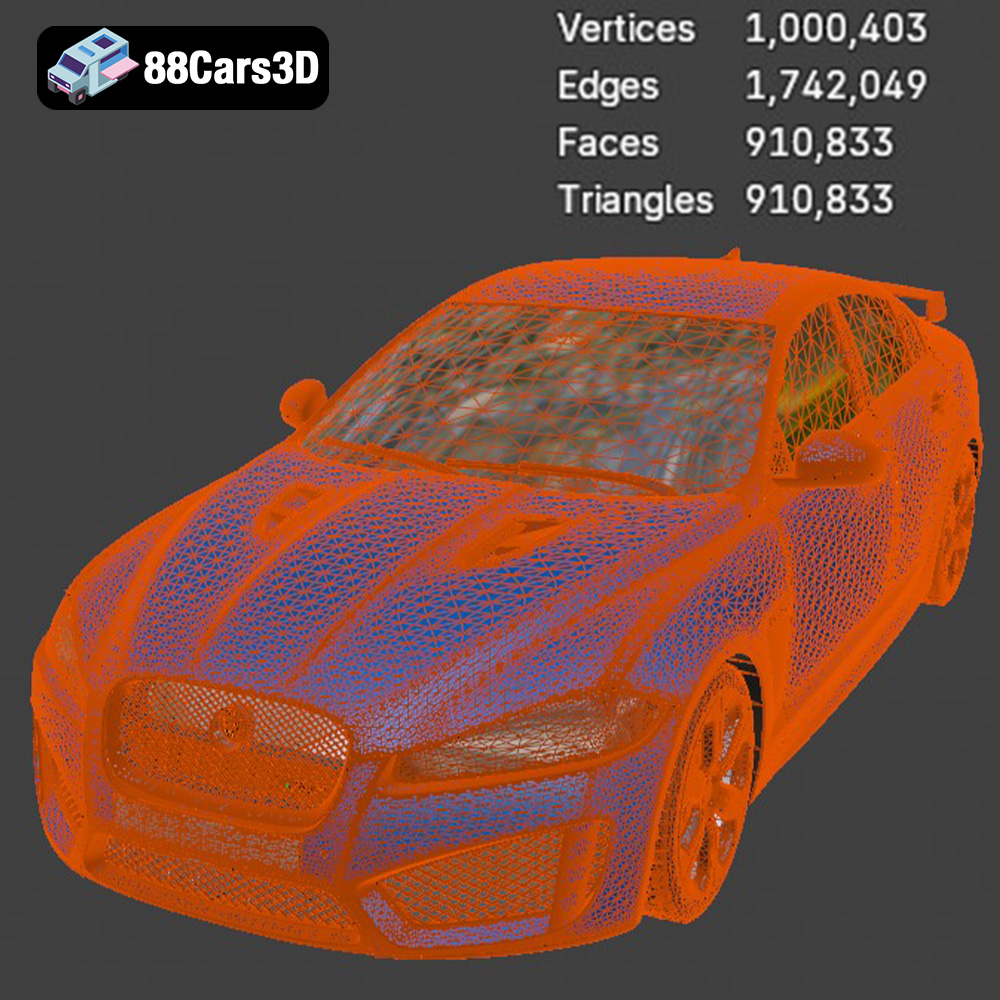
A “clean geometry” and “optimized polygon count” are crucial for any high-performance 3D asset. Excessive polygons can bog down real-time engines and increase render times in offline renderers. However, too few polygons can result in blocky, unrealistic shapes. The sweet spot, as achieved in models like the Jaguar XFR-S 2014, involves intelligent mesh distribution: higher detail where it’s visible (like the exterior panels, headlights, and interior dashboard) and lower detail in less critical areas. Techniques like quad-based topology, proper edge flow, and the use of subdivision surfaces (if the target application supports it) contribute to a clean, deformable, and render-friendly mesh. This optimization ensures that whether it’s viewed up close or from a distance, the model maintains its visual integrity and performance.
Meticulous UV mapping is the silent hero behind realistic textures. UVs define how a 2D texture is wrapped onto a 3D surface. “Meticulously crafted realistic materials” imply not only well-designed PBR textures but also a clean, non-overlapping UV layout. Proper UVs prevent stretching, distortion, and pixelation, ensuring that paint, carbon fiber, leather, and chrome textures appear crisp and accurate. High-resolution texture maps (e.g., 4K or 8K for primary surfaces) contribute significantly to realism, especially for close-up shots. For game assets, multiple UV channels might be used – one for base color/PBR maps, and another for lightmaps or ambient occlusion, further enhancing the visual quality within game engines.
Modern rendering relies heavily on Physically Based Rendering (PBR) workflows. This involves creating materials with physically accurate properties such as albedo (base color), roughness, metallicness, normal maps, and ambient occlusion. The “realistic materials” of the Jaguar XFR-S 2014 3D Model indicate that these PBR textures are likely included and correctly set up across the various components of the car. PBR materials ensure that the model reacts consistently and realistically to any lighting environment, whether it’s a studio setup in 3ds Max, an outdoor HDR in Blender, or a dynamic scene in Unreal Engine. This consistency dramatically reduces the effort required to achieve photorealism and makes the asset versatile across different rendering scenarios.
The practical application of premium 3D car models like the Jaguar XFR-S 2014 extends across numerous industries, demonstrating significant advantages in efficiency, visual impact, and creative freedom. These models aren’t just for show; they are powerful tools driving innovation.
One of the most impactful applications of high-quality 3D car models is in creating immersive automotive configurators and virtual showrooms. Car manufacturers and dealerships are increasingly using these tools to allow potential customers to explore vehicles, customize options, and experience them in realistic environments before they even step foot in a physical showroom. A model like the Jaguar XFR-S 2014, with its detailed interior and exterior, clean geometry, and PBR materials, forms the backbone of such systems. Users can change paint colors, wheel designs, interior trim, and see the results instantly, greatly enhancing the buying experience. The .glb format is particularly well-suited for web-based configurators, while .fbx and .unreal formats power sophisticated virtual reality showrooms.
Beyond aesthetics, precision 3D car models are crucial for realistic driving simulations and game physics. While the core physics are handled by separate engines, an accurately scaled and geometrically sound model provides the visual and collision data necessary for compelling gameplay. Developers can use the mesh of the Jaguar XFR-S 2014 for collision detection, wheel placement, and suspension articulation, ensuring that the visual representation aligns perfectly with the underlying physics. This integration creates a much more believable and immersive driving experience for players, whether in a high-octane racing game or a sophisticated driver training simulator.
Time is money in any creative industry. Developing a highly detailed, optimized 3D car model from scratch can take hundreds of hours, requiring specialized skills in modeling, UV unwrapping, texturing, and material setup. By leveraging ready-to-use, professional-grade assets from platforms like 88cars3d.com, studios and individual artists can dramatically reduce production timelines and costs. The Jaguar XFR-S 2014 3D Model, provided with multiple file formats and pre-configured materials, allows artists to focus on creative direction, scene composition, and rendering, rather than the laborious process of asset creation. This efficiency enables quicker iterations, faster project delivery, and ultimately, more ambitious and higher-quality outputs.
Finding reliable sources for high-quality 3D car models can be a challenge. The market is flooded with varying levels of detail and optimization. This is where 88cars3d.com distinguishes itself, offering a curated collection of assets designed to meet the rigorous demands of professional production.
At 88cars3d.com, the emphasis is on delivering models that adhere to professional standards. This means not just visually appealing models, but technically sound assets with clean topology, optimized polygon counts, accurate scale, and meticulously prepared PBR materials. The Jaguar XFR-S 2014 3D Model is a prime example of this commitment to quality, ensuring that every purchase is a robust foundation for your projects, saving you valuable time and effort in corrective modeling or optimization.
Whether you’re looking for classic automobiles, modern sports cars, luxury sedans, or utility vehicles, 88cars3d.com offers a diverse catalog to suit various project needs. Each model is provided with comprehensive file format support, as demonstrated by the Jaguar XFR-S 2014 model’s inclusion of .blend, .fbx, .obj, .glb, .stl, .ply, .unreal, and .max formats. This versatility ensures that regardless of your preferred software or target application – be it cinematic rendering, game development, AR/VR, or 3D printing – you’ll find an asset that integrates seamlessly into your workflow, enabling you to bring your creative visions to life with unparalleled realism.
The journey of creating compelling digital experiences in automotive design, gaming, and visualization is inextricably linked to the quality of your 3D assets. A truly professional 3D car model like the Jaguar XFR-S 2014 goes beyond mere aesthetics, offering a robust technical foundation that supports complex workflows, enhances realism, and optimizes performance across various platforms. Understanding the nuances of different file formats, appreciating the importance of mesh optimization, and leveraging the power of PBR materials are all crucial steps in elevating your digital automotive projects.
By choosing high-quality, pre-optimized assets from trusted sources like 88cars3d.com, you empower your creative vision, reduce development time, and ensure that your final output stands out with unparalleled fidelity. Whether you’re a seasoned professional or an aspiring artist, investing in premium 3D car models is a strategic move that pays dividends in quality, efficiency, and creative freedom. Explore the possibilities and drive your projects forward with the exceptional assets available today.
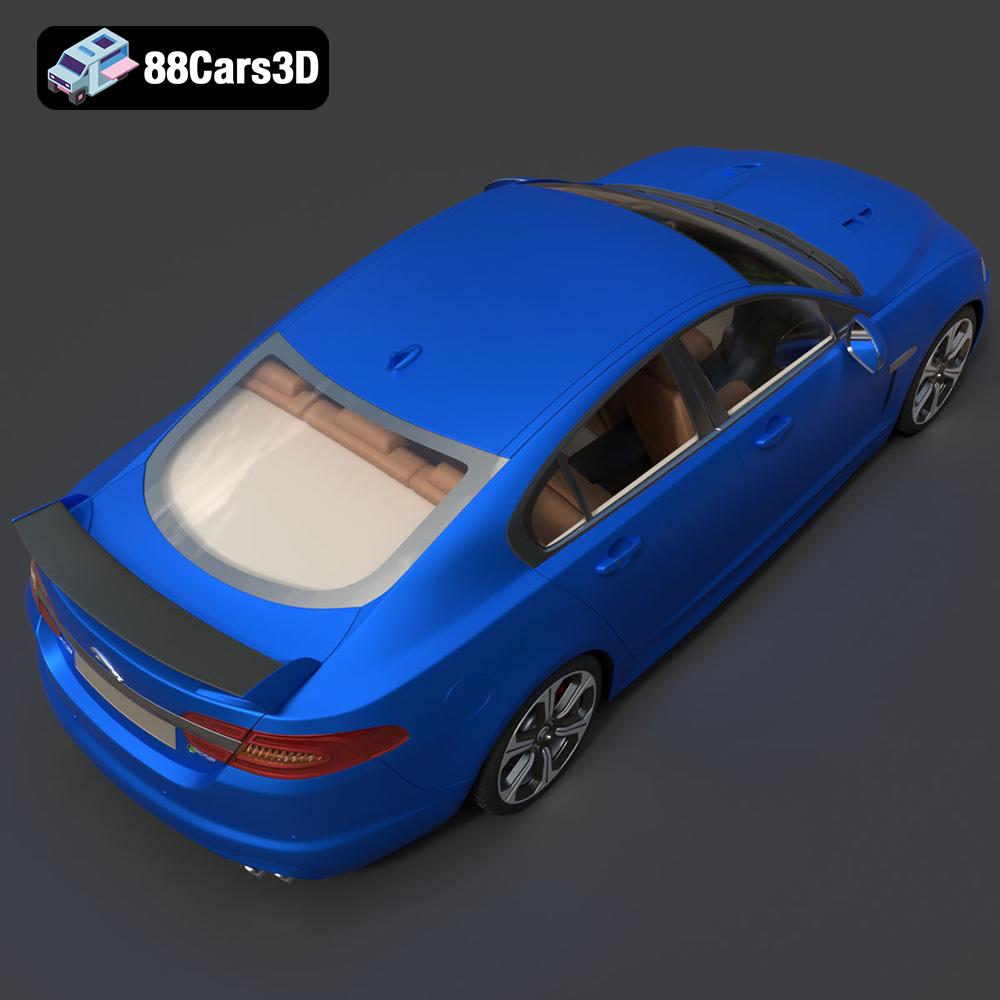
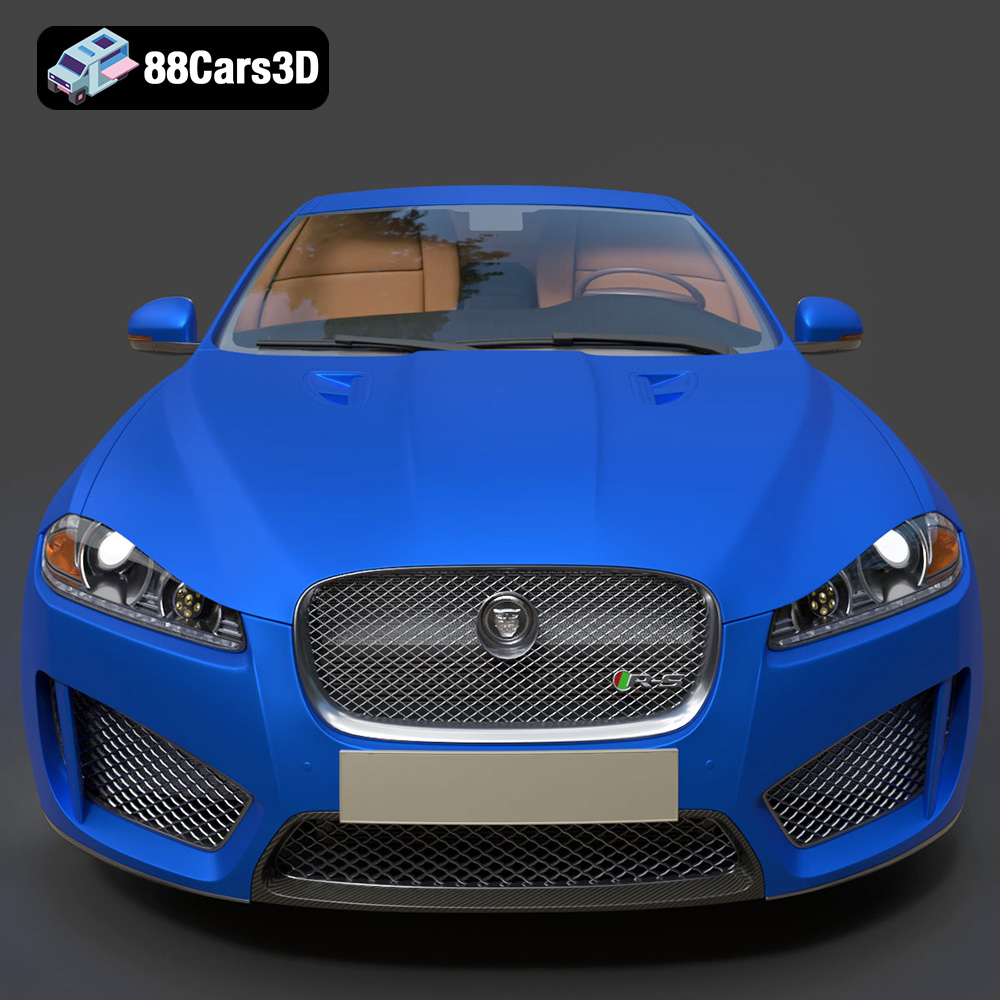
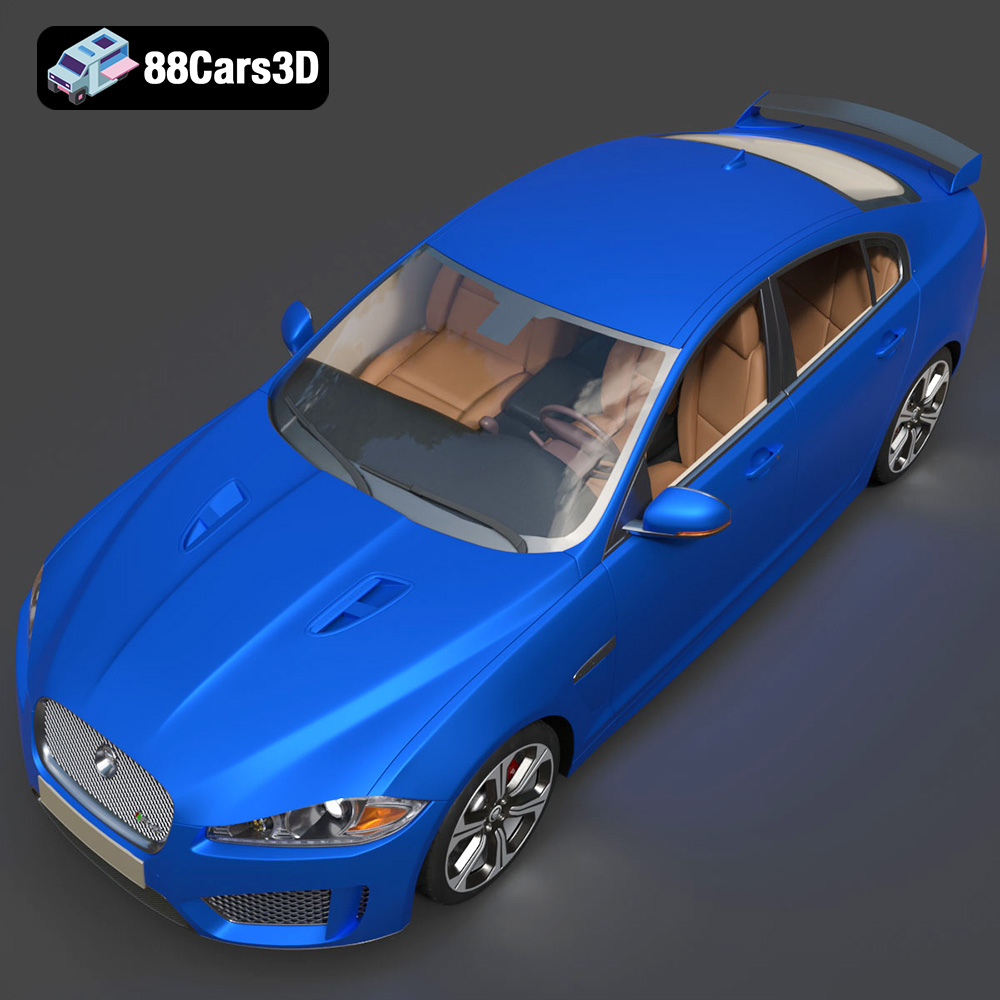
The Jaguar XFR-S 2014 3D Model delivers an exceptionally realistic representation of the iconic performance sedan. Designed with precision, this asset captures the aggressive styling, aerodynamic profile, and distinct characteristics of the XFR-S. Featuring clean geometry, meticulously crafted realistic materials, and an optimized polygon count, this model ensures professional-grade performance. The fully modeled interior and detailed exterior make it versatile for close-up shots and expansive scenes. Perfectly suited for game development, architectural visualization, cinematic rendering, and AR/VR applications, it provides a seamless integration into any production pipeline.
$19.99
.arvr
.blend
.car3dmodel
.fbx
.gameasset
.glb
.jaguar
.luxurycar
.max
.obj
.ply
.rendering
.sedan
.simulation
.sportssedan
.stl
.unreal
.xfrs