Get 50% OFF All Premium 3D & STL Models!

In the dynamic world of 3D visualization, automotive design, and game development, the quality and optimization of 3D car models are paramount. Whether you’re crafting a hyper-realistic cinematic render, populating an expansive open-world game, or designing immersive architectural visualizations, the foundation of your project lies in the assets you choose. A high-quality 3D model doesn’t just look good; it performs efficiently, integrates seamlessly into diverse pipelines, and offers the flexibility required for complex productions.
Today, we’re diving deep into the technical intricacies that define superior 3D car models, exploring how they empower artists and developers to achieve stunning results without compromising performance. We’ll examine crucial aspects like topology, file formats, and application-specific optimizations, illustrating these concepts with a truly unique example: the Daewoo Damas Microvan 3D Model. This legendary compact commercial vehicle, a ubiquitous sight across numerous global regions, stands as an excellent case study for discussing how a precisely crafted asset can serve multiple professional purposes, from realistic urban traffic in games to culturally accurate detailing in architectural scenes.
When working with 3D car models, understanding the nuances of various file formats is not just helpful; it’s absolutely essential for a smooth and efficient workflow. Each format serves a specific purpose, offering unique advantages in terms of compatibility, feature retention, and optimization for different applications. Knowing which format to choose can save countless hours in conversion, cleanup, and re-setup, ensuring that your 88cars3d.com purchase integrates effortlessly into your project.
The .blend format is the native file type for Blender, an incredibly powerful and widely used open-source 3D creation suite. When you acquire a .blend file, you’re getting a fully editable Blender scene. This means all the original mesh data, materials (Blender Cycles/Eevee), textures, lighting, cameras, and even animation rigs are preserved exactly as the artist created them. For Blender users, this is the most convenient format, offering maximum flexibility for customization, tweaking shaders, or integrating the model directly into a larger Blender project. The Daewoo Damas Microvan 3D Model in .blend format allows immediate access to its clean quad topology and meticulously set-up materials for rendering within Blender.
.fbx (Filmbox) is a proprietary file format owned by Autodesk, but it has become a de facto industry standard for 3D data exchange, especially between various 3D applications and game engines like Unreal Engine and Unity. Its strength lies in its ability to store not just mesh data, but also complex scene information including materials, textures, cameras, lights, and crucially, animation data and bone rigs. While .fbx might require some material setup adjustments in the target software, its robust support for animations and skeletal meshes makes it ideal for game development pipelines where the Daewoo Damas might need to be rigged for wheel rotation or door movement.
The .obj (Wavefront OBJ) format is one of the oldest and most universally supported 3D formats. It excels at transferring geometry (vertices, normals, texture coordinates, and faces) across virtually any 3D software. While it handles basic material definitions (via an accompanying .mtl file) and texture mapping, it typically doesn’t support advanced features like animation, rigging, or complex shader networks. For sheer compatibility and simple mesh transfer, .obj is a reliable choice, perfect for scenarios where you need the core geometry of the Daewoo Damas without its intricate rigging or material setups from the source program.
.glb (GL Transmission Format Binary) is the binary version of glTF, a royalty-free specification for the efficient transmission and loading of 3D scenes and models by applications. .glb packages all assets (geometry, materials, textures, animations) into a single, self-contained binary file, making it highly efficient for web-based 3D viewers, Augmented Reality (AR), Virtual Reality (VR), and other real-time browser-based displays. Its optimization for rapid loading and smaller file sizes makes it an excellent choice for deploying the Daewoo Damas in interactive web experiences or mobile AR applications.
.stl (Stereolithography) is almost exclusively used for 3D printing. It represents a 3D model as a series of connected triangles, describing only the surface geometry without color, texture, or other attributes. For manufacturing purposes, especially additive manufacturing, .stl is the standard. While the Daewoo Damas 3D Model is highly detailed, converting it to .stl ensures it’s manifold (watertight) and ready for slicing software, allowing enthusiasts to bring this digital microvan into the physical world as a miniature scale model.
The .ply (Polygon File Format) is primarily used for storing 3D data from 3D scanners, CAD applications, and scientific visualization tools. It can store a wider range of properties than .obj, including color per vertex, transparency, surface normals, and various confidence and property values, making it excellent for precision mesh transfer or when vertex-level data is crucial for analysis. It provides another robust option for cross-software compatibility, particularly for engineers or digital sculptors.
The .unreal format represents an asset specifically prepared and optimized for direct import into Unreal Engine. This often implies that the model has been exported with specific settings, naming conventions, and possibly even pre-configured materials or collision meshes tailored for Unreal Engine’s architecture. For game developers working with the Daewoo Damas, this format ensures a smoother pipeline into Unreal, potentially reducing setup time and maximizing engine performance for realistic traffic simulations.
Similar to .blend for Blender, the .max format is the native file for Autodesk 3ds Max. This file contains the complete 3ds Max scene, including all geometry, modifiers, materials (V-Ray, Corona, Arnold), lighting, cameras, and animation data. For users of 3ds Max, this format provides the highest level of detail and editability, offering access to every parameter used in the creation of the Daewoo Damas Microvan 3D Model, perfect for complex automotive rendering or animation projects.
The comprehensive availability of these formats for the Daewoo Damas Microvan 3D Model underlines its versatility, ensuring it can be integrated into virtually any professional 3D workflow you might encounter.
The Daewoo Damas is more than just a vehicle; it’s a cultural icon in many parts of the world. Recreating such an omnipresent workhorse as a 3D asset requires a meticulous balance of aesthetic accuracy and technical efficiency. The Daewoo Damas Microvan 3D Model from 88cars3d.com exemplifies this balance, offering a robust solution for a wide array of digital projects.
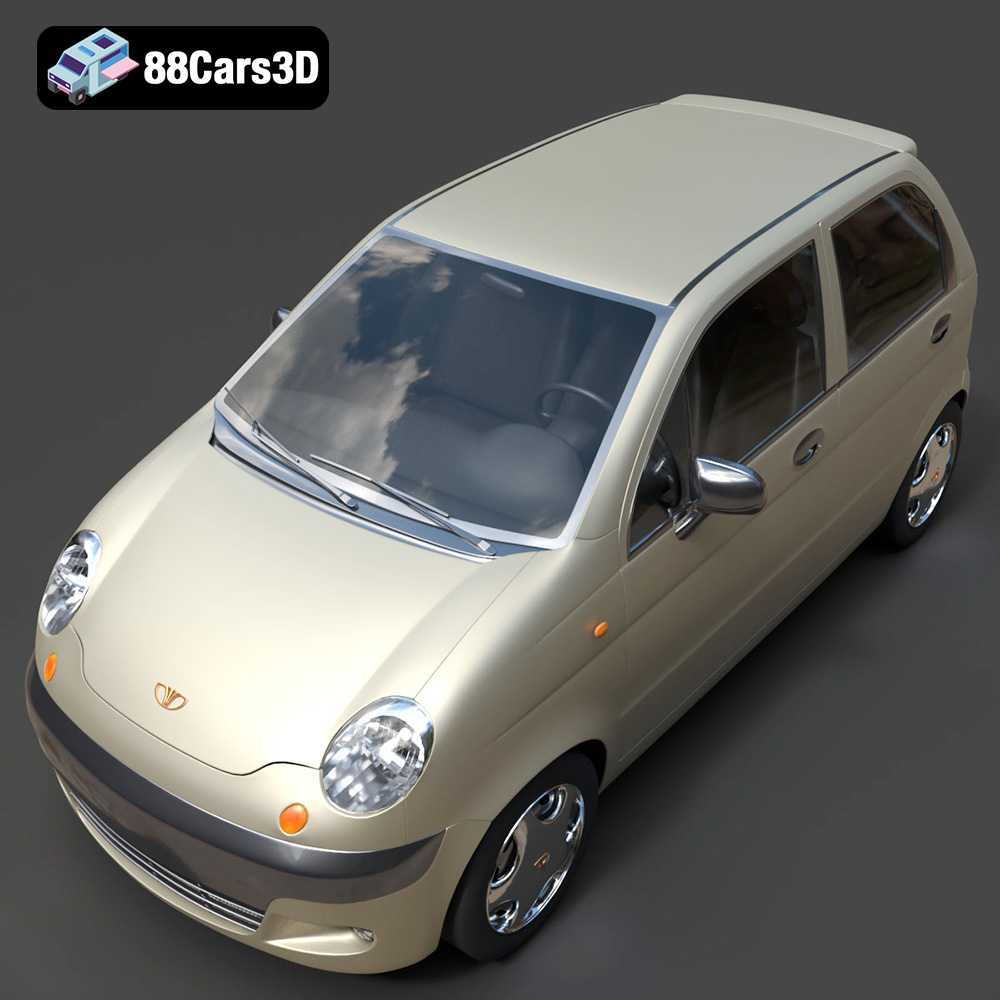
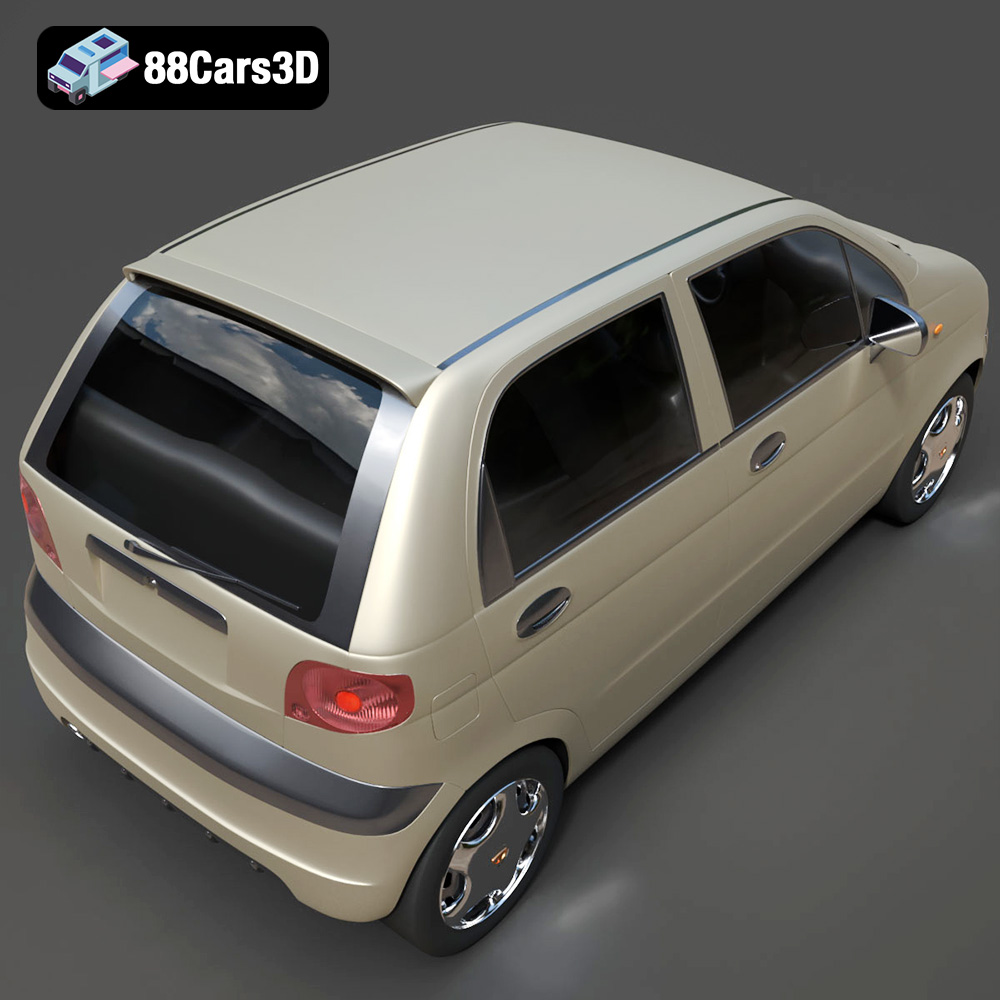
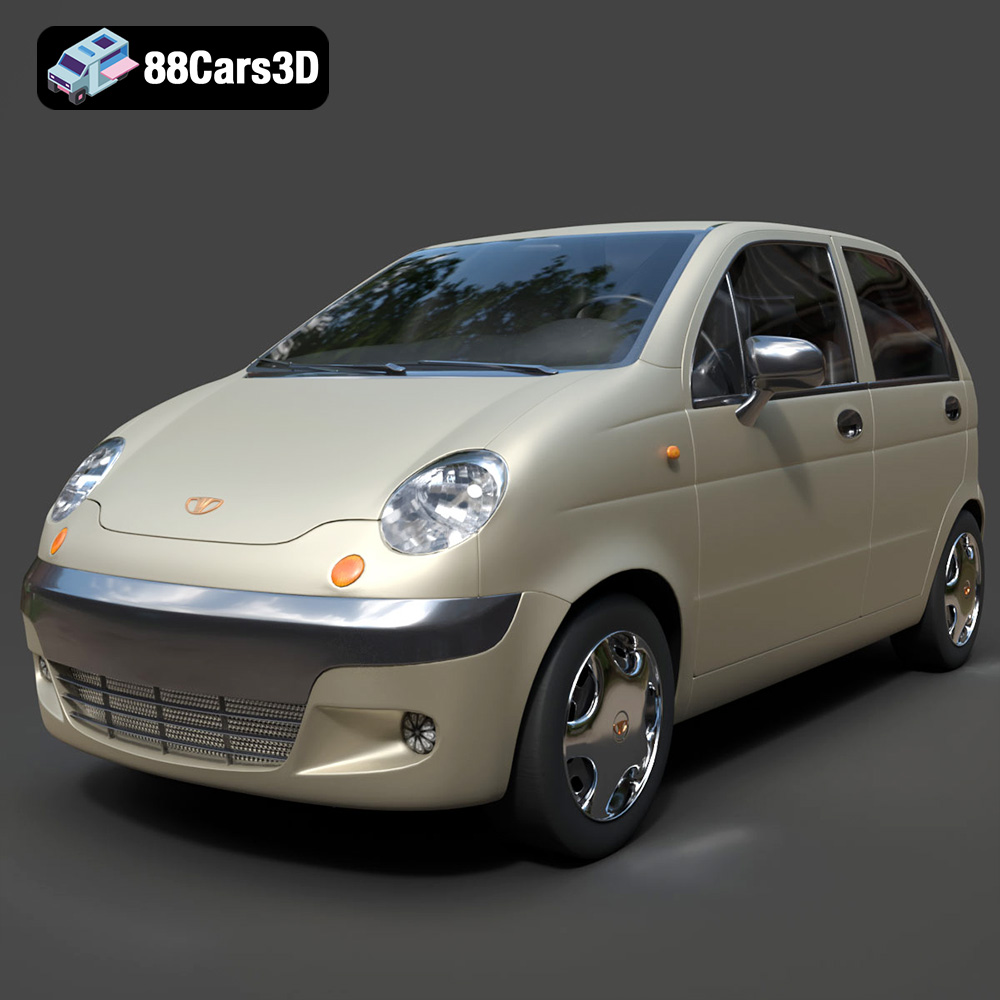
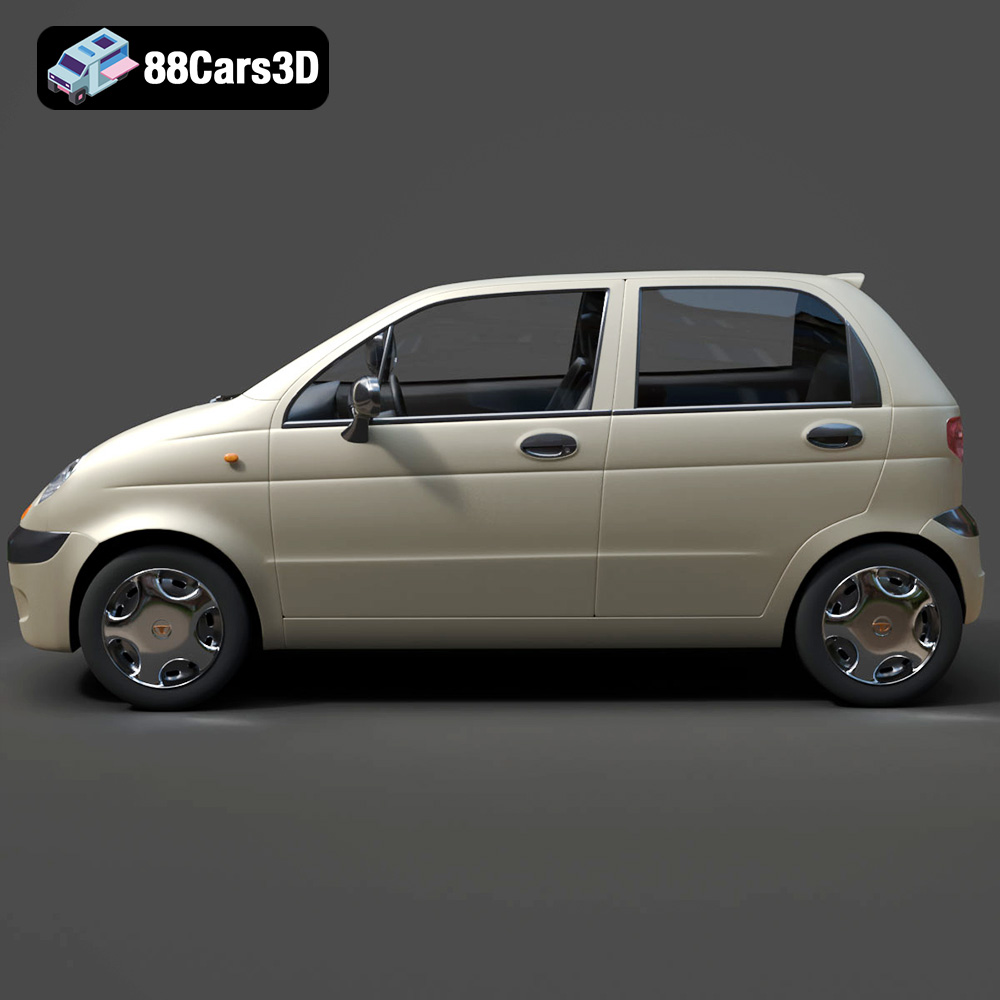
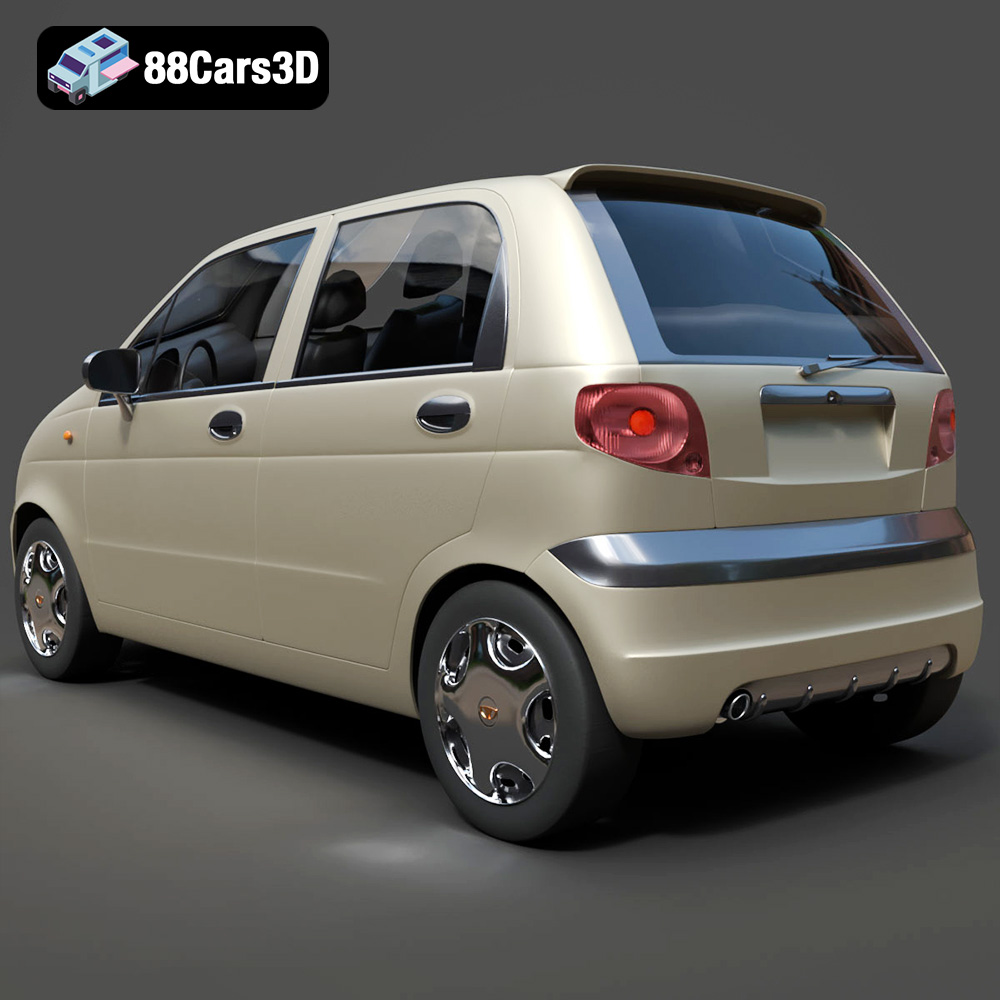
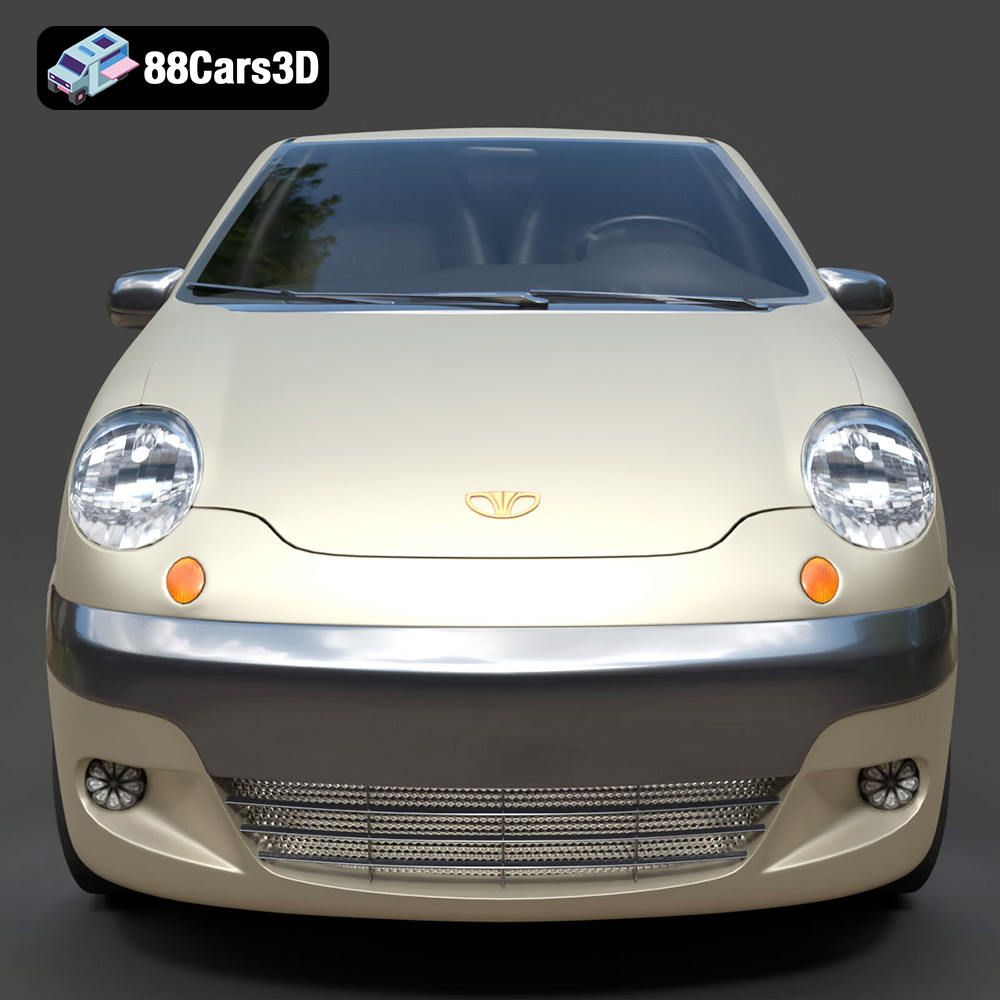
Capturing the essence of the Daewoo Damas meant faithfully reproducing its distinctive utilitarian aesthetic. The model boasts accurate classic Daewoo Damas proportions and space-efficient geometry, immediately recognizable by its flat front fascia, large rectangular headlight clusters, and robust black plastic bumpers. The classic cabover design, crucial for maximizing interior cargo space, is perfectly represented. Attention to detail extends to functional elements like the dual sliding rear doors and a large rear liftgate, all modeled separately for rigging and animation potential. Even the detailed 12-inch steel wheels wrapped in commercial-grade tires contribute to its authentic, real-world presence, making it ideal for scenes requiring genuine regional flavor.
While often viewed from the exterior, an optimized interior adds significant value, especially for VR or close-up shots. The Daewoo Damas 3D Model features a practical, spartan driver-centric cabin layout, true to its affordable commercial origins. A minimalist dashboard, classic two-spoke steering wheel, and analog gauges provide sufficient detail for authenticity without overburdening the polygon count. Realistic seating geometry, with front seats mounted directly over the front axle, further enhances its accuracy. The configurable rear space, suitable for empty cargo delivery or passenger benches, adds to its versatility, allowing artists to adapt the model for various storytelling needs.
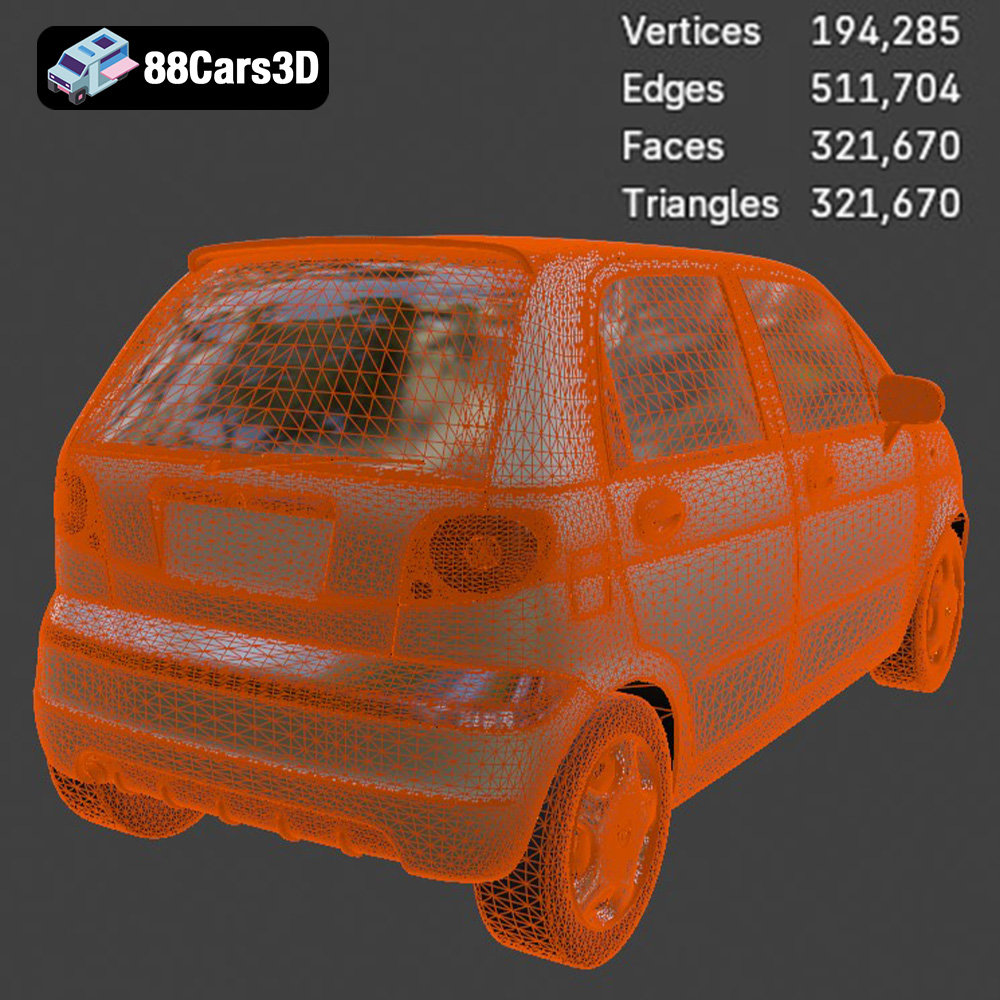
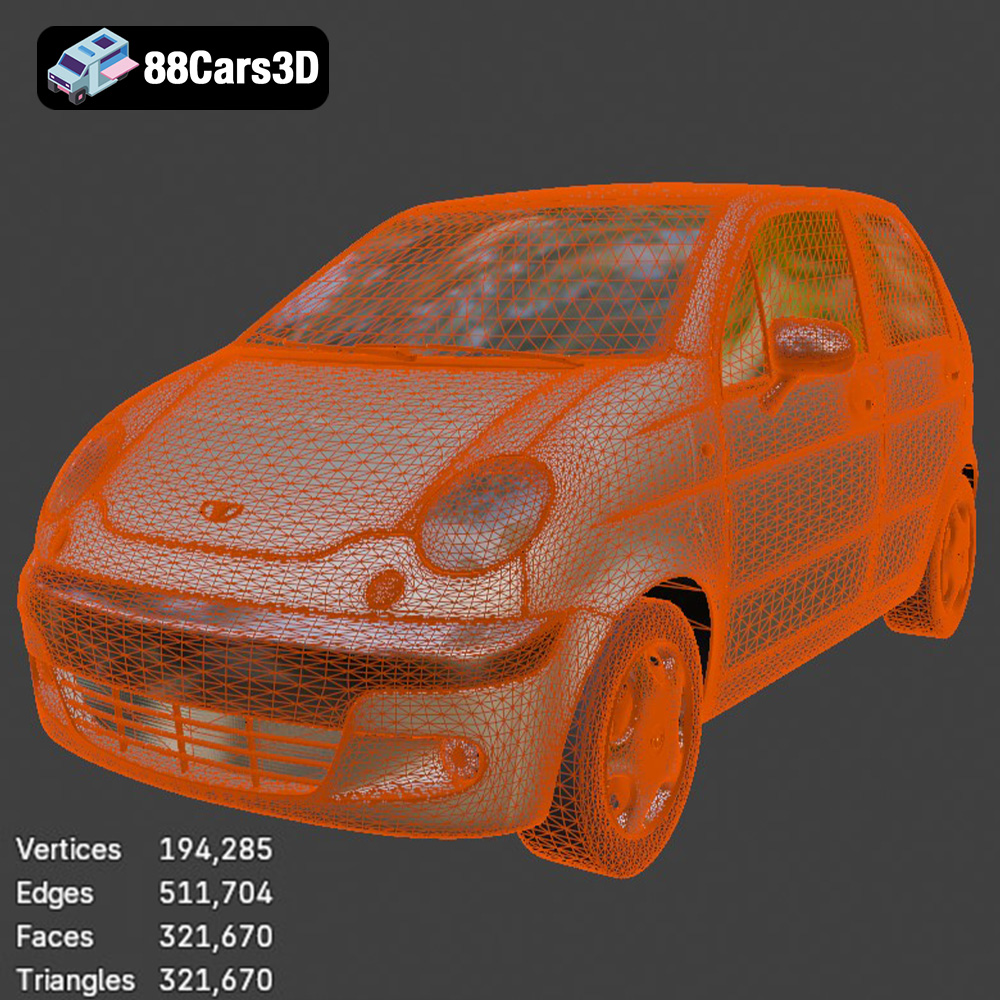
At the core of any professional 3D model are its technical specifications. The Daewoo Damas Microvan 3D Model shines here with its highly efficient mid-polygon topology. With approximately 194,285 vertices, 511,704 edges, and a clean 321,670 triangles (or faces/polygons), it strikes an optimal balance. This isn’t an arbitrary number; it’s a deliberate design choice. The model’s clean, quad-heavy structure ensures smooth subdivision if needed, but more importantly, it means crisp visual fidelity for close-up automotive rendering while remaining lightweight enough to be duplicated endlessly as background traffic in modern game engines. This makes it an incredibly efficient asset, perfect for scenes requiring dense, realistic traffic without choking the render engine.
The versatility of a well-crafted 3D car model is best demonstrated by its seamless integration into diverse professional pipelines. The Daewoo Damas Microvan 3D Model is engineered precisely for such flexibility.
For game developers, performance is king. The Daewoo Damas, with its optimized mid-poly count of 321k triangles, is game-ready. Its clean topology and real-world scale make it an ultimate “everyday traffic” and delivery vehicle for open-world games, logistics simulators, and mobile driving titles. The separate wheels, steering components, and doors are pivotal for rigging and animation, allowing for realistic driving mechanics, crash simulations, and interactive elements. Its availability in .fbx and .unreal formats ensures a streamlined workflow directly into Unreal Engine or Unity, enabling developers to populate vast cityscapes with authentic, region-specific traffic without sacrificing frame rates.
In architectural visualization and cinematic rendering, realism and contextual accuracy are key. The Daewoo Damas 3D Model is perfect for breathing authentic life into ArchViz scenes, particularly those set in regions where the Damas is a common sight. Imagine an urban development project in Uzbekistan or a bustling market scene in South Korea; populating these renders with the Daewoo Damas instantly grounds the visualization in a specific cultural and geographical context. Its high visual fidelity at close range, combined with its optimized geometry for background elements, makes it invaluable for creating highly recognizable, region-accurate traffic, adding layers of authenticity that generic models simply cannot achieve. Its .max and .blend formats provide native access for detailed rendering in 3ds Max, Blender, V-Ray, or Corona Renderer.
The growing fields of Augmented Reality and Virtual Reality demand highly optimized assets that can render smoothly on a variety of devices. The Daewoo Damas Microvan 3D Model, particularly in its .glb format, is an excellent candidate for interactive digital delivery fleet configurators or city-planning VR experiences. Imagine walking through a proposed urban layout in VR, with the Damas models accurately depicting traffic flow or parking scenarios. Its clean geometry ensures efficient rendering in real-time AR/VR environments, providing an immersive and realistic user experience for design reviews, educational tools, or interactive product showcases.
One of the most critical aspects distinguishing a professional 3D car model from a generic one is its topology. The geometric structure of a mesh directly impacts its visual quality, performance, and flexibility for modification. The Daewoo Damas Microvan 3D Model stands as a prime example of expert topological design.
The Daewoo Damas utilizes a mid-polygon approach, striking a delicate balance between high-detail subdivision models and ultra-low-poly game assets. At approximately 321,670 triangles, it delivers exceptional visual clarity for rendering close-ups while remaining light enough to be instanced thousands of times in a dense urban game environment. This scalability is crucial; artists can use the same base model for both hero shots and background elements, simplifying asset management and ensuring visual consistency across a project. It avoids the heavy processing cost of excessively high-poly models, which can cripple real-time applications, and the visual compromises of overly simplistic low-poly assets.
As showcased in wireframe renders, the model boasts a beautifully clean, quad-heavy structure. This clean geometry is not just aesthetically pleasing to a technical eye; it’s functionally vital. Quads deform better than triangles during animation and subdivision, making the model more robust for rigging and dynamic simulations. Furthermore, well-organized topology simplifies UV mapping—the process of unwrapping the 3D surface into a 2D texture space. Although not explicitly detailed in the product description beyond “Texture: Yes | Material: Yes,” clean geometry typically implies efficient UV layouts, which are essential for applying high-resolution textures without distortion, maximizing visual fidelity for automotive rendering and ensuring texture memory efficiency in game engines.
A static, unchangeable 3D car model has limited utility. True value comes from an asset’s inherent flexibility, allowing artists to adapt it to unique project requirements. The Daewoo Damas Microvan 3D Model is designed with customization in mind.
The ability to change exterior paint colors is fundamental. Artists can easily adapt the Daewoo Damas to match striking commercial palettes, weathered, dusty service vehicles, or even the vibrant livery of a “Marshrutka” (route taxi) found in Central Asia. Beyond basic color, the model allows for the addition of custom delivery logistics decals, company branding, or specific regional signage to the side panels, rear doors, and roof. This level of material customization is vital for creating unique fleet vehicles, personalized assets for advertisements, or historically accurate scenes that require specific visual identifiers. Applying weathering materials—such as dust, mud, or rust—can further enhance realism, creating gritty, lived-in urban environment scenes that resonate with authenticity.
The product description highlights separate wheels, steering components, and doors, all set up with proper pivots for rigging and animation. This is a game-changer for dynamic projects. For cinematic sequences, the ability to animate sliding doors, steering, and wheel rotation adds a layer of realism that brings the vehicle to life. In game development, these separate components are essential for interactive elements, vehicle physics, and player-controlled driving. The model’s clean topology supports deformation, allowing for potential modifications like subtle body damage or suspension compression, further expanding its utility in dynamic, interactive environments. Even adapting lighting for sunny urban commutes or moody, rainy night-time delivery routes can drastically alter the model’s appearance and integration within a scene.
The world of 3D modeling isn’t confined to digital screens; it extends into physical reality through 3D printing. The Daewoo Damas Microvan 3D Model offers a pathway for enthusiasts and professionals to create tangible scale models.
Converting the Daewoo Damas to the .stl format makes it ready for 3D printing. The recommended scales of 1:24, 1:32, or 1:43 are perfect for urban dioramas or collectible scale models. For optimal detail, especially for smaller elements like wipers and door tracks, resin printing is recommended, allowing for layer heights between 0.04–0.12 mm. FDM printers can also be used, with slightly higher layer heights. Crucially, supports are required for delicate features such as side mirrors, wheel arches, and bumper overhangs to prevent sagging during the printing process. Proper print orientation, with the body printed at an angle for a smooth surface finish and wheels printed separately, helps ensure the highest quality output.
Bringing the physical model to life involves careful post-processing. After printing, sanding helps smooth any layer lines, followed by a primer coat to prepare the surface for painting. For an authentic look, classic commercial colors like Factory White, Light Blue, or Taxi Yellow can be applied, echoing the Daewoo Damas’s real-world ubiquity. This process transforms a digital asset into a tangible collectible, perfect for display, model railways, or architectural maquettes, bridging the gap between digital creation and physical manifestation.
In the competitive landscape of 3D production, the investment in high-quality, optimized 3D car models is an investment in efficiency, versatility, and ultimately, the success of your project. As we’ve explored through the lens of the Daewoo Damas Microvan 3D Model, a truly professional asset is characterized by its meticulous attention to real-world accuracy, intelligent topological design, and broad compatibility across various software and applications.
From providing essential background traffic in demanding game engines to adding authentic cultural context in architectural visualizations, and even venturing into the physical realm via 3D printing, the Daewoo Damas showcases the multifaceted utility of a well-engineered 3D model. Its balance of visual fidelity and technical optimization makes it a prime example of the kind of reliable 3D car models available at 88cars3d.com. By understanding and leveraging such assets, artists and developers can streamline their workflows, achieve exceptional results, and bring their creative visions to life with unparalleled realism and performance.
The Daewoo Damas 3D Model is an incredibly accurate, highly optimized digital recreation of the legendary compact commercial microvan. Based on the classic kei-van architecture, the Damas is a ubiquitous and unstoppable workhorse recognized globally—serving as the ultimate urban delivery vehicle, taxi, and daily commuter, particularly across South Korea, Central Asia (such as Uzbekistan), and the Middle East. This 3D model beautifully captures the timeless, utilitarian cabover aesthetic of the classic Damas. It features the distinctive flat front fascia, large rectangular headlight assemblies, dual sliding passenger/cargo doors, and a tall, space-maximizing roofline. Built with a highly efficient, impeccably clean mid-polygon topology (just over 321k triangles), it strikes the absolute perfect balance. It provides crisp visual fidelity for close-up automotive rendering while remaining lightweight enough to be duplicated endlessly as background traffic in modern game engines. Perfect for populating realistic global street scenes, commercial fleet simulations, architectural visualizations, and mobile game development.
$9.99