Get 50% OFF All Premium 3D & STL Models!

In the dynamic world of 3D visualization, the creation and acquisition of high-quality assets are paramount to achieving stunning results, whether for cinematic sequences, interactive games, or cutting-edge augmented reality experiences. The automotive sector, in particular, thrives on precision and realism, demanding meticulously crafted 3D car models that capture every curve, reflection, and mechanical detail. From the sleek lines of a luxury sedan to the rugged charm of an off-road beast, the digital representation of vehicles has become an art form in itself, fueling industries across the globe.
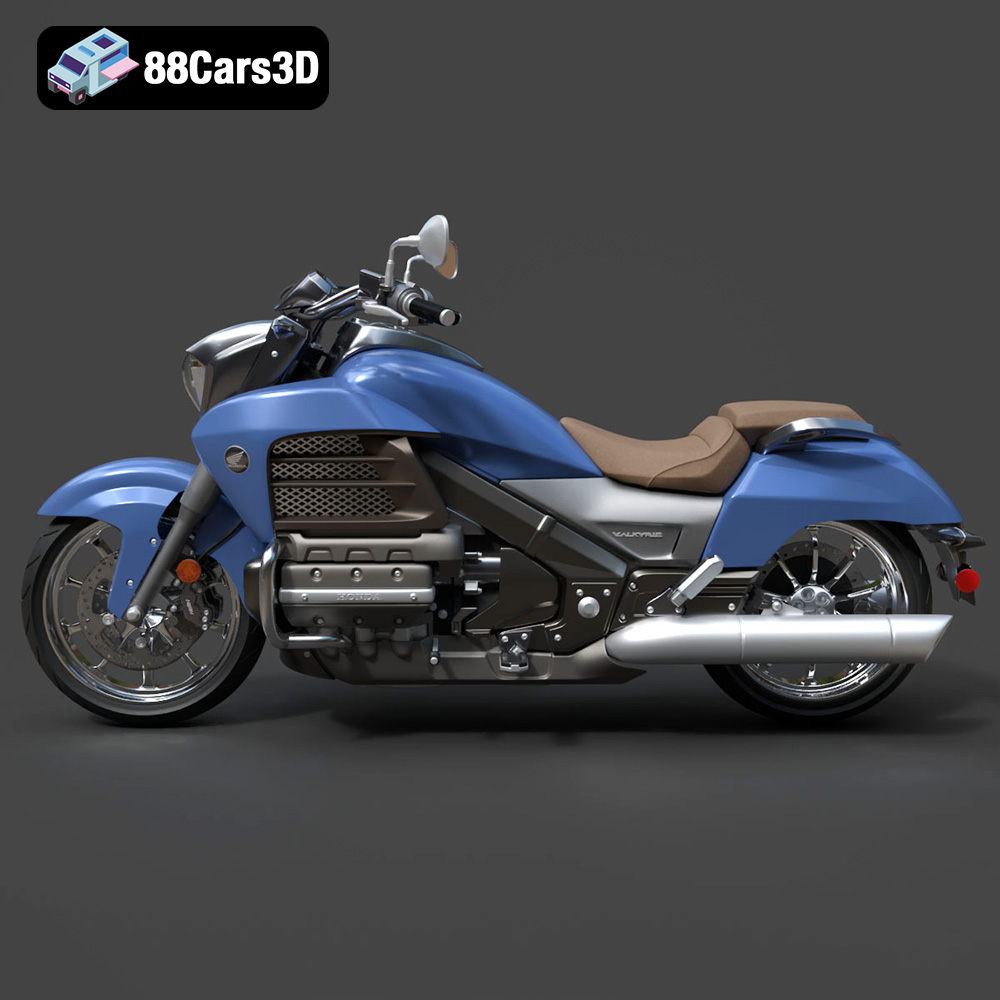
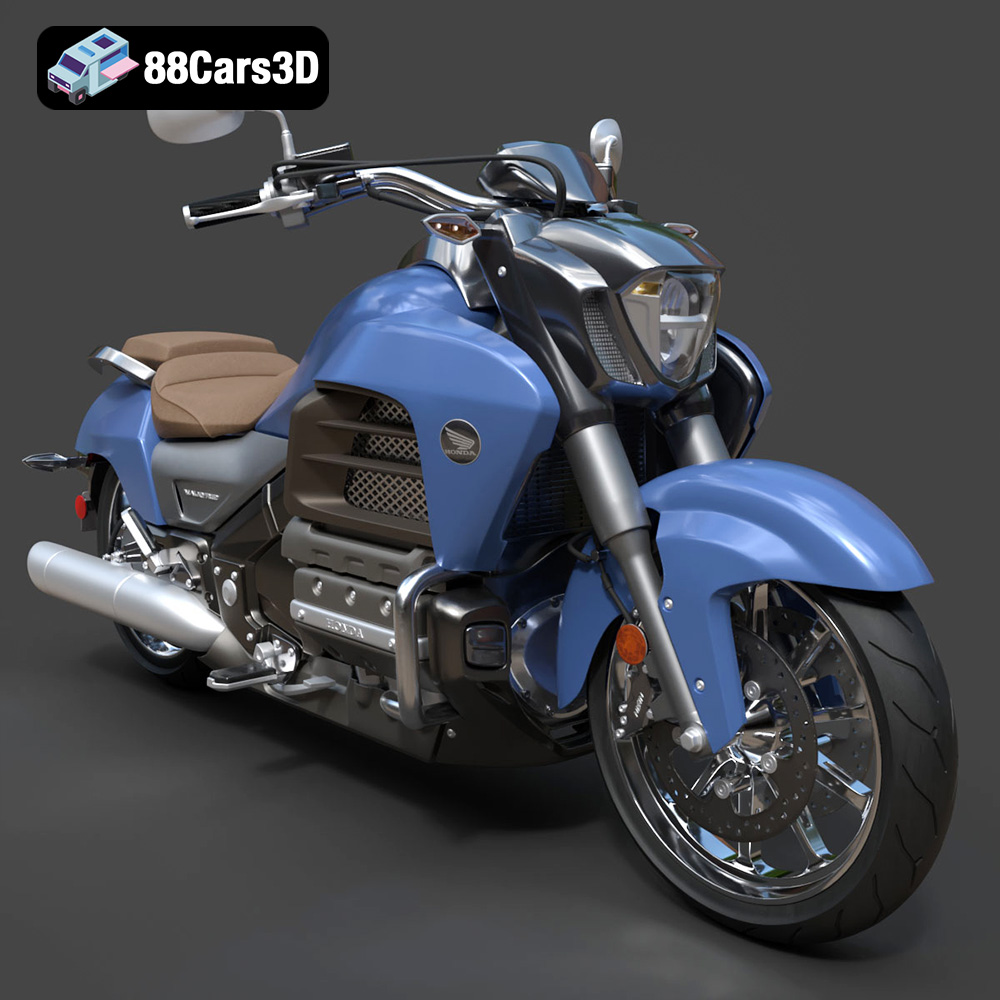
Today, we delve into the intricate process of utilizing such assets, highlighting the technical considerations and creative opportunities they unlock. We’ll explore workflows, file formats, and the diverse applications that benefit from professional-grade models. As a prime example of the caliber of assets available to professionals, we’ll frequently reference the **Honda Valkyrie GL1800C 2015 3D Model**, an exceptional digital replica that embodies the power and intricate design of this renowned motorcycle. This model, available on 88cars3d.com, is a testament to the level of detail and versatility required in modern 3D pipelines.
The foundation of any successful 3D project lies in selecting the appropriate file format. Each format serves distinct purposes, optimized for different software, platforms, and stages of the production pipeline. Understanding these nuances is critical for efficient workflow and seamless integration. The **Honda Valkyrie GL1800C 2015 3D Model** exemplifies this versatility by offering a comprehensive suite of formats, ensuring compatibility for a wide range of professional applications.
The .blend format is Blender’s native file type, offering a complete scene package. When you acquire a .blend file like that for the Honda Valkyrie, you’re not just getting the mesh; you’re receiving the entire working environment. This includes all geometry, materials, textures, lighting setups, cameras, animation data, and even physics simulations if they were part of the original creation. For artists working primarily in Blender, this is invaluable as it allows for immediate, deep customization. You can easily modify the model, adjust materials, re-light the scene, or animate components without needing to import and re-configure elements from scratch. Its strength lies in preserving all project data within a single, self-contained file, making it perfect for iterative design and detailed scene construction.
.fbx (Filmbox) is arguably the most ubiquitous interchange format in the 3D industry, particularly favored for game development and real-time applications. Developed by Autodesk, it efficiently stores 3D models, animation, and scene information in a robust, transferable package. For assets like the Honda Valkyrie GL1800C 2015 3D Model, an .fbx file typically includes the mesh, UV mapping, skinning, blend shapes, and often embedded textures or references to external texture files. Its excellent support for hierarchical structures (parent-child relationships) and animation makes it the go-to choice for importing complex rigged characters or vehicles into game engines like Unreal Engine and Unity, streamlining the asset integration process significantly.
.obj (Wavefront Object) is another cornerstone of 3D asset exchange, renowned for its simplicity and near-universal compatibility. While it doesn’t support animation or rigging directly, it’s excellent for transferring static mesh data, UV coordinates, and material references. An .obj file typically comes with an accompanying .mtl (material) file that defines surface properties, although textures usually remain as separate image files. For general 3D visualization, product design, or as a fallback for software that struggles with more complex formats, .obj is a reliable choice. Its widespread adoption means virtually any 3D software can open and work with an .obj version of the Honda Valkyrie, making it incredibly versatile for basic mesh transfer.
.glb (GL Transmission Format Binary) is gaining rapid traction, especially for web-based 3D, augmented reality (AR), and virtual reality (VR) applications. It’s a binary version of .glTF, designed to be compact and efficient for quick loading and rendering on various devices. A key advantage of .glb is its “self-contained” nature: it bundles all necessary data—geometry, materials, textures, and even animations—into a single file. This makes it ideal for integrating 3D car models like the Valkyrie into web viewers, social media filters, or mobile AR apps where performance and ease of deployment are critical. Its optimization for real-time rendering pipelines ensures smooth, interactive experiences.
.stl (STereoLithography) is the standard file format for additive manufacturing, commonly known as 3D printing. It represents the surface geometry of a 3D object using a collection of triangular facets, without any color, texture, or material information. When a model like the Honda Valkyrie GL1800C 2015 3D Model is provided in .stl, it means the mesh has likely been optimized and made watertight, crucial for successful printing. Engineers and designers use .stl to produce physical prototypes, custom parts, or scale models. While it simplifies the model, its precise geometric representation is perfect for translating digital designs into tangible objects.
.ply (Polygon File Format or Stanford Triangle Format) is a versatile format for storing 3D data, particularly useful for high-resolution scanned data, CAD, and scientific visualization. Unlike .stl, .ply can store a broader range of properties beyond just geometry, including color, transparency, surface normals, texture coordinates, and even reliability information. This makes it valuable for applications requiring high precision and detailed data analysis, such as reverse engineering, quality inspection, or complex simulations where every aspect of the mesh needs to be preserved and potentially analyzed. For detailed models like the Valkyrie, .ply could be used for advanced visualization or structural analysis.
While not a universal file extension in the same way .fbx or .obj are, an “.unreal” file often signifies an asset specifically configured and optimized for direct integration into Unreal Engine projects. This might be a pre-packaged Unreal Asset (.uasset) or a highly optimized .fbx designed with Unreal’s import settings in mind, potentially including pre-configured materials, collision meshes, LODs (Levels of Detail), and blueprint setups. For game developers using Unreal Engine, an “unreal” variant of the Honda Valkyrie GL1800C 2015 3D Model would represent a significant time-saver, reducing the effort needed for import, material creation, and optimization, allowing for immediate use within the game environment.
The .max format is Autodesk 3ds Max’s native file type, similar to Blender’s .blend. It stores an entire 3ds Max scene, including all 3D geometry, textures, materials, lighting, cameras, animation, render settings, and any plugins or modifiers used. For professionals whose primary DCC (Digital Content Creation) tool is 3ds Max, receiving a .max file of the Honda Valkyrie GL1800C 2015 3D Model offers the highest degree of flexibility. Artists can directly open the model in its native environment, allowing for complex scene assembly, advanced rendering with V-Ray or Corona, and intricate animation sequences without any loss of data or conversion artifacts. This ensures maximum control over the model’s appearance and behavior within a professional rendering pipeline.
Automotive rendering is a specialized field that pushes the boundaries of digital realism. It’s not just about creating a pretty picture; it’s about crafting an experience that mirrors the tangible world, evoking emotion and showcasing design intent. The success of an automotive render hinges on a blend of artistic vision and technical prowess, starting with the core model itself, like the precisely engineered **Honda Valkyrie GL1800C 2015 3D Model**.
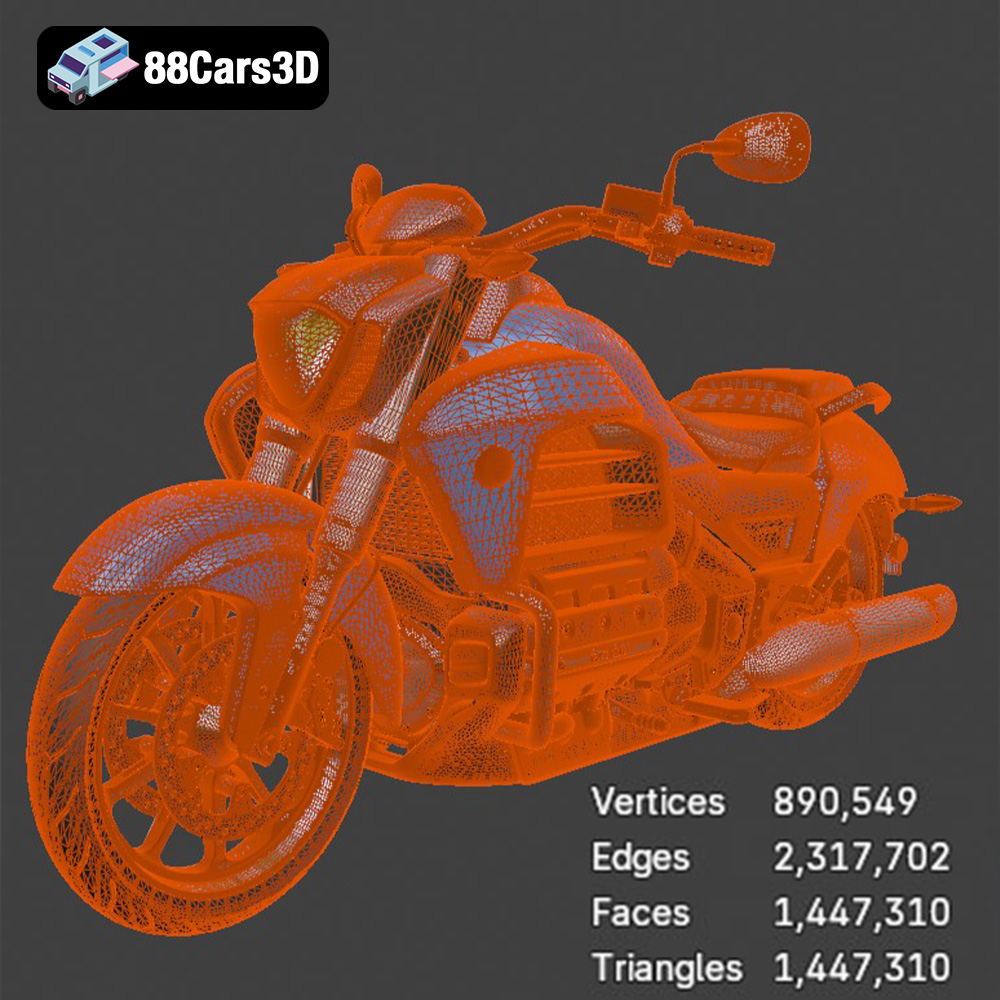
At the heart of any realistic 3D car model lies its geometry and topology. Clean geometry refers to a mesh constructed with optimal polygon distribution, primarily using quads (four-sided polygons) that allow for smooth deformation and subdivision. This is critical for achieving photorealistic results, as it prevents artifacts and allows for precise control over the surface. The **Honda Valkyrie GL1800C 2015 3D Model** boasts clean geometry and professional-grade polygon structures, which is a non-negotiable standard for high-end rendering.
Once the geometry is solid, realistic materials and expertly crafted textures are what truly bring a 3D car model to life. PBR workflows are standard, mimicking how light interacts with surfaces in the real world. This involves maps for albedo (base color), roughness, metallic, normal, and sometimes ambient occlusion or displacement.
Even the most perfect 3D car models will fall flat without compelling lighting and composition. This is where the artist’s eye truly comes into play, transforming a technical asset into a captivating visual narrative.
Game development presents a unique set of challenges and opportunities for 3D car models. Unlike static rendering, game assets must perform in real-time, demanding a delicate balance between visual fidelity and computational efficiency. The **Honda Valkyrie GL1800C 2015 3D Model**, designed for diverse professional applications including game development, perfectly illustrates how high-quality assets can be adapted for interactive environments.
The primary hurdle in game development is maintaining a high frame rate while delivering visually rich experiences. This requires meticulous optimization of 3D assets.
Unreal Engine and Unity are the two titans of game development, each offering robust tools for integrating 3D car models and creating immersive worlds. The availability of formats like .fbx and .unreal (for Unreal Engine) for the **Honda Valkyrie GL1800C 2015 3D Model** ensures smooth integration.
A static visual is only part of the equation in games. True immersion comes from how players interact with the environment and its objects.
The utility of high-quality 3D car models extends far beyond traditional rendering and game development. Emerging technologies like Augmented Reality (AR) and Virtual Reality (VR), along with established fields like 3D printing and architectural visualization, are increasingly leveraging detailed digital assets. The **Honda Valkyrie GL1800C 2015 3D Model**, with its diverse file formats, is perfectly positioned for these innovative applications.
AR and VR are transforming how we interact with digital content, placing virtual objects into the real world or transporting users to entirely new ones. Accurate and optimized 3D car models are central to creating convincing immersive experiences.
3D printing bridges the gap between digital design and physical reality, allowing for rapid prototyping, creation of bespoke parts, or even miniature collectibles. The inclusion of the .stl format for the **Honda Valkyrie GL1800C 2015 3D Model** opens up a world of tangible possibilities.
While often associated with buildings, architectural visualization frequently incorporates vehicles to add scale, context, and a sense of realism to renders. Similarly, product visualization, for marketing or design review, heavily relies on high-quality 3D assets.
The success of any 3D project hinges on the quality of its assets. When it comes to 3D car models, the options are vast, from bespoke creations to off-the-shelf marketplace purchases. Making the right choice involves understanding your project’s needs, budget, and the technical specifications of the models available. For professionals seeking reliable, high-quality assets, marketplaces like 88cars3d.com offer a curated selection that can significantly streamline production workflows.
A professional-grade 3D model isn’t just about looking good in a screenshot. It’s about adherence to technical standards that ensure seamless integration and future-proofing. When evaluating 3D car models, consider the following:
One of the biggest decisions is whether to commission a custom 3D car model or purchase a pre-made asset. Each approach has its merits:
Online marketplaces have democratized access to high-quality 3D assets, empowering individuals and studios of all sizes. 88cars3d.com stands out as a dedicated platform for premium 3D car models.
To illustrate the practical application of a high-quality asset, let’s consider how the **Honda Valkyrie GL1800C 2015 3D Model** could be deployed across various professional scenarios, leveraging its “realistic precision,” “clean geometry,” and comprehensive file formats.
Imagine a high-end commercial for a motorcycle manufacturer or a dramatic scene in a film. The Valkyrie model, with its .max (3ds Max) or .blend (Blender) files, would be imported into a professional rendering package like V-Ray, Corona, or Cycles. The artist would then:
A dealership or Honda itself could develop an online configurator, allowing potential customers to customize their dream Valkyrie. The .glb format would be ideal for a web-based configurator, while an .fbx or .unreal version could power a desktop or VR experience:
For mechanic training programs or motorcycle safety courses, interactive simulations offer a risk-free learning environment. The **Honda Valkyrie GL1800C 2015 3D Model** would be a cornerstone asset:
The journey through the world of 3D car models reveals a landscape of incredible technical complexity and boundless creative potential. From the intricate geometry that forms the foundation of realism to the diverse file formats that dictate compatibility across an array of applications, every aspect plays a crucial role in bringing digital visions to life. Whether your goal is a hyper-realistic cinematic render, an engaging real-time game asset, an immersive AR/VR experience, or a tangible 3D print, the quality of your initial 3D model is paramount.
The **Honda Valkyrie GL1800C 2015 3D Model** stands as a prime example of a professionally crafted asset, ready to be deployed across these diverse pipelines. Its clean geometry, realistic materials, and comprehensive suite of file formats—including .blend, .fbx, .obj, .glb, .stl, .ply, .unreal, and .max—ensure maximum flexibility and efficiency for artists and developers. By investing in such high-quality assets from reputable sources like 88cars3d.com, professionals can significantly elevate their projects, save valuable development time, and focus on pushing the boundaries of their creative endeavors. The future of visualization is bright, and it’s built on the solid foundation of expertly designed 3D models.
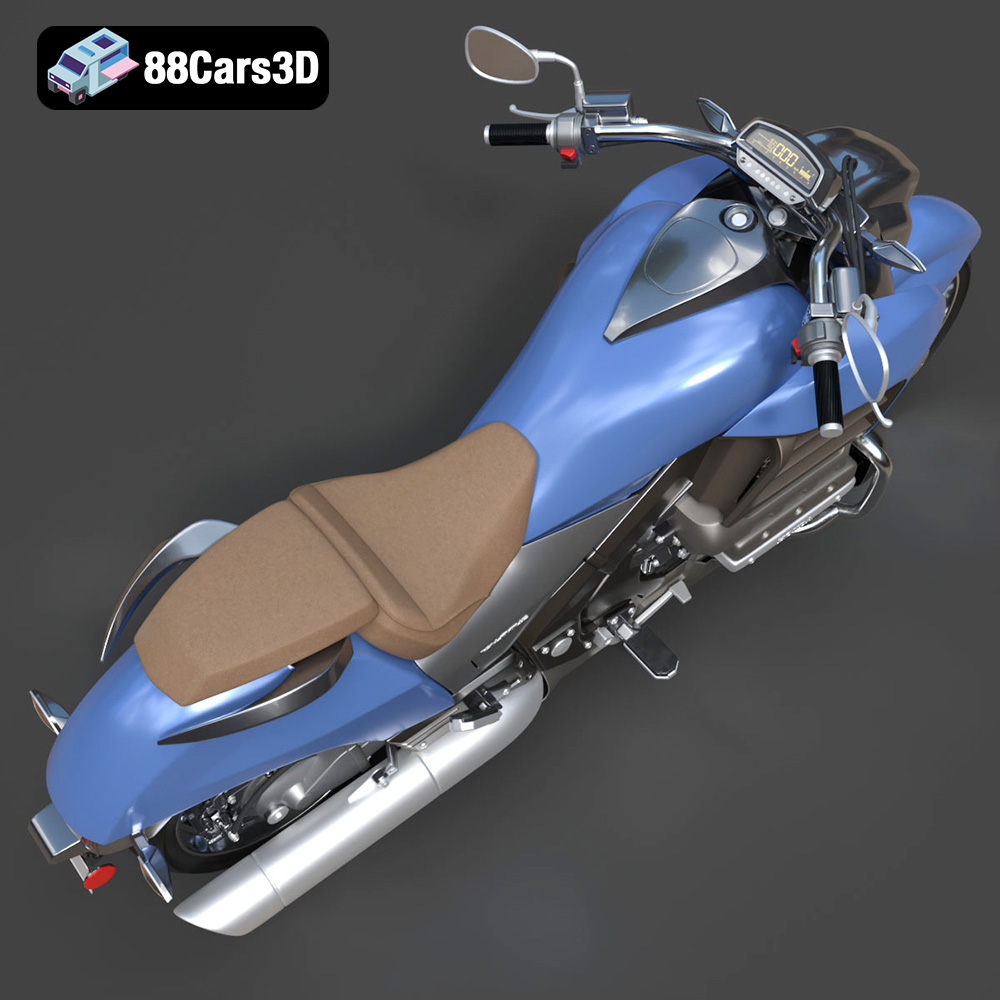
Experience the realistic precision of the Honda Valkyrie GL1800C 2015 3D Model. This authentic digital replica accurately captures the powerful stance and intricate mechanical details of the renowned motorcycle. Built with clean geometry and professional-grade polygon structures, this model ensures seamless integration into any digital pipeline. It features realistic materials and expertly crafted textures, bringing an accurate look to the engine, chassis, and bodywork. Designed for diverse professional applications, this model is perfectly suited for game development, cinematic rendering, AR/VR experiences, and interactive visualization projects. The package includes a comprehensive set of file formats to guarantee compatibility across various industry-standard software: .blend – Editable Blender file with materials and lighting setup, .fbx – Game-engine ready format for Unreal Engine and Unity, .obj – Standard 3D model format compatible with all major software, .glb – Optimized for AR/VR and web-based visualization, .stl – Suitable for 3D printing and prototyping, .ply – Detailed polygon mesh for analysis and visualization, .unreal – Pre-configured for Unreal Engine use, .max – Editable 3ds Max file for rendering and animation.
$19.99
.arvr
.blend
.car3dmodel
.cruiser
.fbx
.gameasset
.gl1800c
.glb
.honda
.max
.motorcycle
.obj
.ply
.rendering
.simulation
.stl
.unreal
.valkyrie