Get 50% OFF All Premium 3D & STL Models!

In the dynamic world of digital content creation, the quest for realism and efficiency is ceaseless. Whether you’re crafting a blockbuster game, visualizing an architectural masterpiece, or developing the next generation of interactive AR/VR experiences, the quality of your 3D assets is paramount. Automotive models, in particular, demand an exceptional level of detail and technical precision to truly resonate with an audience. These aren’t just static objects; they are complex assemblies of form, function, and aesthetic appeal that must perform flawlessly across diverse digital environments.
The journey from concept to a polished 3D vehicle can be incredibly time-consuming, requiring expert knowledge in modeling, texturing, rigging, and optimization. This is where professionally crafted 3D car models become indispensable tools for artists and developers alike. They represent a significant investment in quality and a strategic move to accelerate production timelines. Today, we’ll delve deep into the technical intricacies of premium automotive 3D assets, exploring their applications, the critical role of file formats, and how a meticulously designed product like the Dodge RAM 2019 3D Model can serve as the backbone for your most ambitious projects, available on platforms like 88cars3d.com.
Creating believable automotive scenes hinges on the realism of the vehicles themselves. From the subtle reflections on the paintwork to the intricate details of the interior, every element contributes to the overall immersive experience. Generic, low-quality models simply won’t cut it in an era where audiences expect cinematic fidelity.
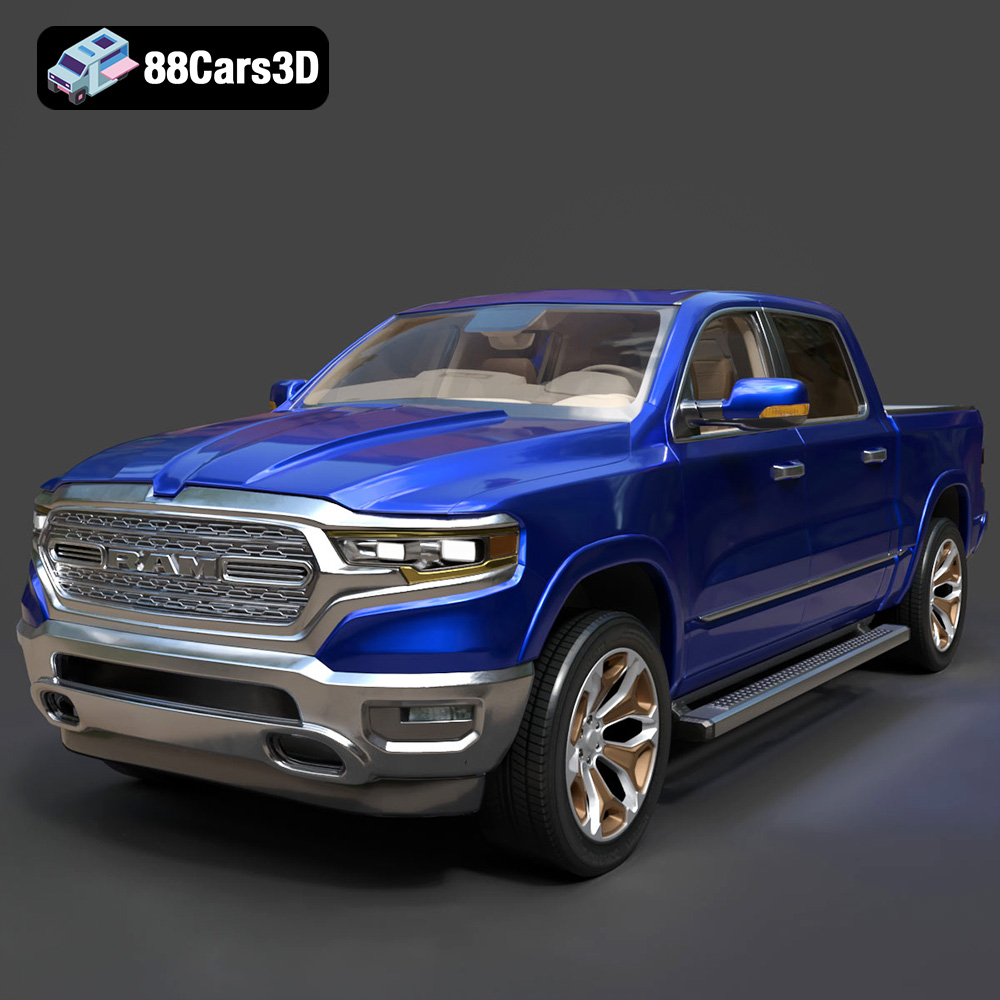
High-end automotive rendering, often seen in advertising and product showcases, requires models with impeccable topology, clean UVs, and physically accurate materials. This level of detail isn’t just for close-up shots; it ensures that the vehicle behaves correctly under various lighting conditions, reflecting the environment plausibly and interacting with shadows realistically. A poorly constructed model will quickly betray its artificiality, no matter how sophisticated the renderer or lighting setup. For instance, the Dodge RAM 2019 3D Model is designed with clean geometry, allowing for smooth subdivision and accurate reflections, crucial for those glossy car paint finishes.
Beyond aesthetic appeal, accurate 3D car models play a vital role in conceptual design, simulation, and engineering visualization. Designers can iterate quickly on ideas, engineers can test aerodynamic properties or crash simulations, and marketers can create compelling pre-production visuals. This bridge between digital creation and real-world application is precisely why assets must adhere to strict technical standards, providing a solid foundation that can be adapted, modified, and integrated into complex workflows without compromise.
The choice of file format is a fundamental technical decision that impacts compatibility, feature set, and overall workflow efficiency. A premium 3D model, such as the Dodge RAM 2019 3D Model, typically comes with a suite of formats to cater to diverse professional needs. Understanding when and why to use each format is critical for seamless integration into your preferred software and pipeline.
The .blend format is the native file type for Blender, an increasingly popular open-source 3D content creation suite. When a model is provided in .blend, it often includes the full scene setup: materials (typically PBR-ready Principled BSDF shaders), lighting, camera views, and even animation rigs if applicable. This makes it incredibly convenient for Blender users, offering maximum editability and a direct pathway to rendering within the software. The included .blend file for the Dodge RAM 2019 would allow artists to immediately begin customizing textures, adjusting lighting, or integrating the truck into existing Blender scenes with minimal setup.
.fbx (Filmbox) is arguably the most widely used interchange format in 3D production, especially prevalent in game development. Developed by Autodesk, it supports not only mesh data but also materials (though often simplified, requiring re-setup in target engines), animations, cameras, lights, and skeletal rigs. Its strength lies in its ability to transfer complex scene data between different software packages like 3ds Max, Maya, Cinema 4D, and game engines such as Unreal Engine and Unity. For a model like the Dodge RAM 2019, an .fbx file ensures that the geometric data, UVs, and basic material assignments are preserved when moving it into a real-time environment, laying a solid groundwork for engine-specific material setup.
The .obj (Wavefront Object) format is a venerable and universally compatible 3D data format. It primarily stores geometric data (vertices, normals, UVs, and faces) and can link to an accompanying .mtl (material) file for basic material properties. While it doesn’t support advanced features like animation or rigging, its simplicity and widespread adoption make it an excellent choice for broad cross-software compatibility. If you need to import the Dodge RAM 2019 into an older software version or a niche application, .obj is often the most reliable fallback.
.glb (GL Transmission Format Binary) is an increasingly important format, particularly for web-based 3D, augmented reality (AR), and virtual reality (VR) applications. It’s a binary version of glTF, designed for efficient transmission and loading of 3D scenes and models. .glb files encapsulate textures, materials, and animations directly within a single file, making them highly optimized and self-contained. The Dodge RAM 2019 as a .glb asset would be perfectly suited for an interactive car configurator on a website or for quickly deploying the model into an AR experience on a mobile device, offering good visual fidelity with minimal loading times.
.stl (Stereolithography) is the standard file format for 3D printing and rapid prototyping. It describes only the surface geometry of a 3D object using a collection of triangular facets. It lacks color, texture, or material information. When the Dodge RAM 2019 is provided as an .stl, it means the model’s geometry has been prepared for physical output, potentially needing adjustments for scale and printability, but offering a direct path to creating a tangible replica.
The .ply (Polygon File Format) is another format that stores 3D data, often used for scientific and CAD applications due to its ability to store properties like color, transparency, and even confidence measures for each vertex or face. It’s less common for general rendering but valuable for specific technical analyses or when precise mesh data with additional attributes is required, making the Dodge RAM 2019 .ply useful for specialized visualizations or data examination.
A dedicated .unreal file (often a .uasset or a project folder containing the asset) signifies that the model has been specifically prepared and configured for Unreal Engine. This means materials are often set up with Unreal’s PBR shaders, textures are imported and assigned, and potentially collision meshes and LODs are already in place. This pre-configured format for the Dodge RAM 2019 significantly reduces the time and effort required to get the asset looking and performing correctly within an Unreal Engine project, making it truly “game-engine ready.”
Similar to .blend, the .max format is the native file type for Autodesk 3ds Max, a leading software in architectural visualization and high-end rendering. A .max file contains the complete scene, including advanced V-Ray or Corona materials, lighting setups, cameras, and potentially animation. For 3ds Max users, this offers the highest level of flexibility and direct access to the original scene construction, perfect for integrating the Dodge RAM 2019 into professional visualization projects or further animation work.
Beyond file formats, the intrinsic technical quality of a 3D model is what truly defines its utility and longevity. A model like the Dodge RAM 2019 3D Model from 88cars3d.com is not just a visual representation; it’s a carefully engineered digital asset designed to perform across a spectrum of professional demands.
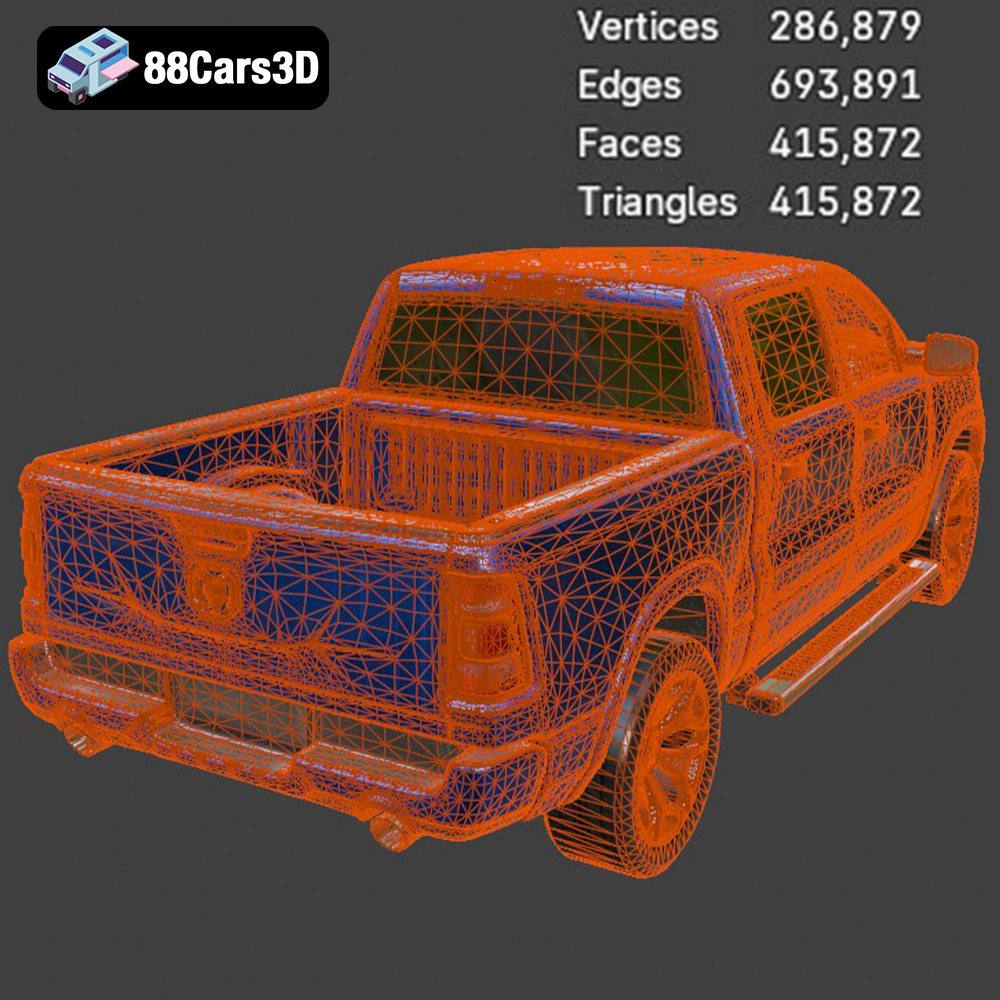
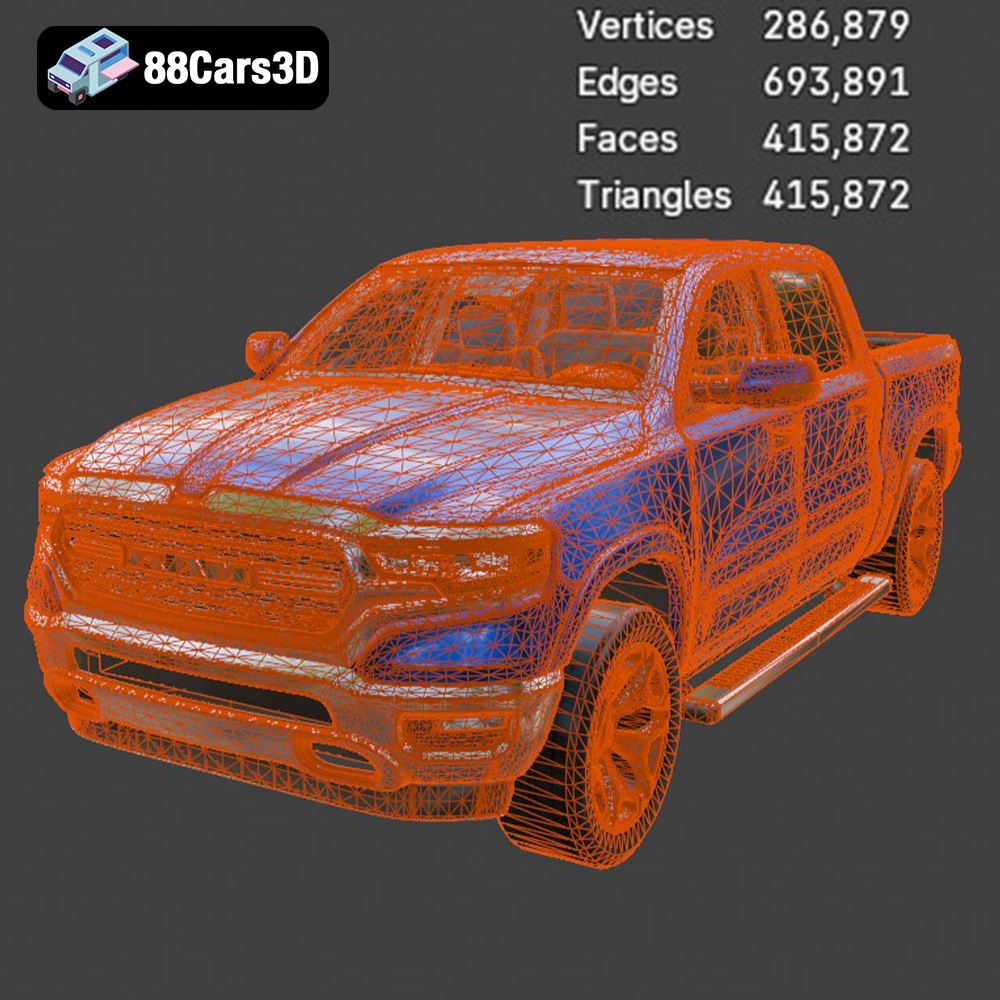
High-quality 3D car models strike a delicate balance between visual detail and polygon count. Excessive polygons can bog down real-time engines and increase render times, while too few result in blocky, unrealistic forms. Professional models employ efficient mesh topology, utilizing quad-based geometry (four-sided polygons) where possible, which ensures smooth subdivision and deformation. They also often include various levels of detail (LODs) – lower-poly versions of the model that automatically switch in at greater distances from the camera, optimizing performance without sacrificing visual fidelity up close. For a vehicle like the Dodge RAM 2019, this means meticulous modeling of every curve and panel, ensuring clean edge flow that accurately captures its rugged character while remaining efficient enough for interactive applications.
UV mapping is the process of flattening the 3D surface of a model into a 2D space, allowing textures to be applied accurately. Clean, non-overlapping UVs are crucial for preventing texture stretching, simplifying material creation, and generating pristine lightmaps for game engines. A professional 3D car model will feature optimized UV layouts that maximize texture resolution and minimize distortion. Paired with high-resolution PBR textures (Albedo, Roughness, Metallic, Normal, Ambient Occlusion), these UVs enable the creation of highly realistic surfaces, from the worn tread of tires to the reflective sheen of the body paint on the Dodge RAM 2019.
Physically Based Rendering (PBR) has become the industry standard for achieving photorealistic results. PBR materials simulate how light interacts with real-world surfaces, using a set of texture maps (e.g., Albedo/Base Color, Metallic, Roughness, Normal, Height, Ambient Occlusion). For a vehicle model, this means accurately representing everything from the specularity of chrome to the matte finish of plastic trim. When a model like the Dodge RAM 2019 comes with PBR materials, it significantly accelerates the setup process in any modern renderer or game engine, as the artist can simply load the provided textures and expect consistent, realistic results across different lighting environments.
The versatility of a well-crafted 3D automotive asset opens doors to a multitude of professional applications. The Dodge RAM 2019 3D Model exemplifies how a single, high-quality asset can serve diverse industries, providing substantial value across different creative and technical pipelines.
In the realm of game development, vehicles are often central to the player experience. From open-world adventure games needing background traffic to dedicated racing and off-road simulators, the demand for realistic, optimized 3D car models is constant. The Dodge RAM 2019, provided with game-engine ready formats like .fbx and .unreal, is ideally suited for this. Developers can integrate it directly, set up collision meshes, implement physics, and even customize it with paint jobs and upgrades. Its optimized geometry ensures it performs smoothly in real-time environments, while high-fidelity textures contribute to an immersive visual experience for players.
Architectural visualization (ArchViz) benefits immensely from realistic contextual elements. Placing a lifelike vehicle like the Dodge RAM 2019 in a driveway, parking lot, or street scene dramatically enhances the believability and scale of rendered buildings. It adds a human touch, making static architectural renders feel more alive and relatable. Similarly, product visualization, especially for automotive accessories or related industries, can leverage such a model to showcase how their products interact with a real-world vehicle, elevating marketing materials beyond mere product shots.
The burgeoning fields of Augmented Reality (AR) and Virtual Reality (VR) present exciting opportunities for 3D car models. Imagine a virtual car showroom where prospective buyers can walk around the Dodge RAM 2019, open its doors, and even “test drive” it in a simulated environment. Or consider interactive training simulations for mechanics, first responders, or military personnel, where accurate vehicle models are crucial for realistic scenario planning and skill development. The .glb format, included with the Dodge RAM 2019 3D Model, is specifically optimized for these real-time, lightweight, and interactive applications, making it an excellent choice for cutting-edge immersive projects.
Time is a precious commodity in any production pipeline. Investing in pre-made, professionally crafted 3D assets like those found on 88cars3d.com can dramatically streamline workflows, allowing artists and developers to focus on creativity rather than the laborious task of modeling every single detail from scratch.
For users of 3ds Max and Blender, the inclusion of native .max and .blend files with the Dodge RAM 2019 3D Model means instant project integration. All materials, lighting, and scene setups are typically preserved, allowing artists to drop the model into their scenes and immediately begin rendering or animating. This eliminates the need for extensive re-texturing or material setup, saving countless hours. Furthermore, the clean geometry provided ensures that if any modifications or custom animations are required, they can be executed smoothly and efficiently within these powerful DCC (Digital Content Creation) applications.
Game engine integration is a critical factor for any modern 3D asset. The Dodge RAM 2019 3D Model’s availability in .fbx and specific .unreal formats signifies its readiness for real-time environments. In Unreal Engine, for example, the .unreal file or well-prepared .fbx will import with proper scaling, pivot points, and a basic material structure. Artists can then quickly refine PBR materials using Unreal’s robust material editor, add specific collision meshes, and set up LODs to ensure optimal performance across different platforms and hardware specifications. This pre-optimization is a major time-saver, reducing the technical overhead associated with preparing assets for interactive experiences.
Sourcing high-quality 3D models from reputable marketplaces like 88cars3d.com ensures that you’re acquiring assets that meet professional standards. These models are typically checked for clean topology, optimized UVs, and PBR-ready materials, mitigating common issues that arise from poorly constructed free or low-quality assets. By starting with a solid foundation like the Dodge RAM 2019 3D Model, studios and individual artists can dedicate more resources to storytelling, animation, and unique creative elements, rather than wrestling with foundational asset creation and optimization.
In a rapidly evolving digital landscape, the longevity and adaptability of your 3D assets are crucial. A truly valuable 3D car model is one that can evolve with your projects, adapting to new technologies, changing requirements, and diverse creative visions. The Dodge RAM 2019 3D Model is designed with this kind of flexibility in mind.
Professional 3D models are often built with a degree of modularity, allowing for easier customization. While a base model like the Dodge RAM 2019 comes fully assembled, a well-structured mesh will allow artists to isolate components like wheels, tires, lights, or interior elements for individual modification. This enables countless possibilities for personalization, such as swapping out wheel designs, applying custom decals, changing paint colors, or even adding aftermarket accessories. This inherent flexibility extends the life and utility of the asset across multiple projects and iterations, making it a sustainable investment.
A high-fidelity 3D car model needs to be versatile enough to serve projects ranging from ultra-realistic cinematic renders to optimized mobile game experiences. This is achieved through careful modeling practices that allow for easy creation of LODs (Levels of Detail). A high-poly base mesh, meticulously crafted for close-ups, can be systematically reduced in polygon count to create lower-poly versions suitable for distant shots or less demanding real-time applications. The Dodge RAM 2019, with its emphasis on clean geometry, is an excellent candidate for this kind of scalable optimization, ensuring it remains relevant whether you’re targeting a high-end visualization or a performance-sensitive AR app.
The creation of compelling digital content relies heavily on the quality of its foundational assets. In the specialized niche of automotive visualization, the bar is set exceptionally high, demanding precision, realism, and technical robustness. Professional 3D car models are not just commodities; they are strategic investments that accelerate workflows, ensure visual fidelity, and provide a flexible foundation for a vast array of applications, from cutting-edge game development and high-impact automotive rendering to immersive AR/VR experiences.
The Dodge RAM 2019 3D Model stands as a prime example of such an asset, meticulously crafted for high-end visualization and interactive performance. Its comprehensive suite of file formats – from native .blend and .max files for maximum editability to optimized .fbx, .glb, and .unreal files for real-time applications, and even .stl for 3D printing – ensures seamless integration into virtually any professional pipeline. By choosing a model of this caliber from trusted sources like 88cars3d.com, artists and developers gain a significant advantage, empowering them to focus on creativity and innovation without getting bogged down by the complexities of asset creation. Elevate your projects and bring your visions to life with the unparalleled realism and flexibility that only truly professional 3D car models can offer.
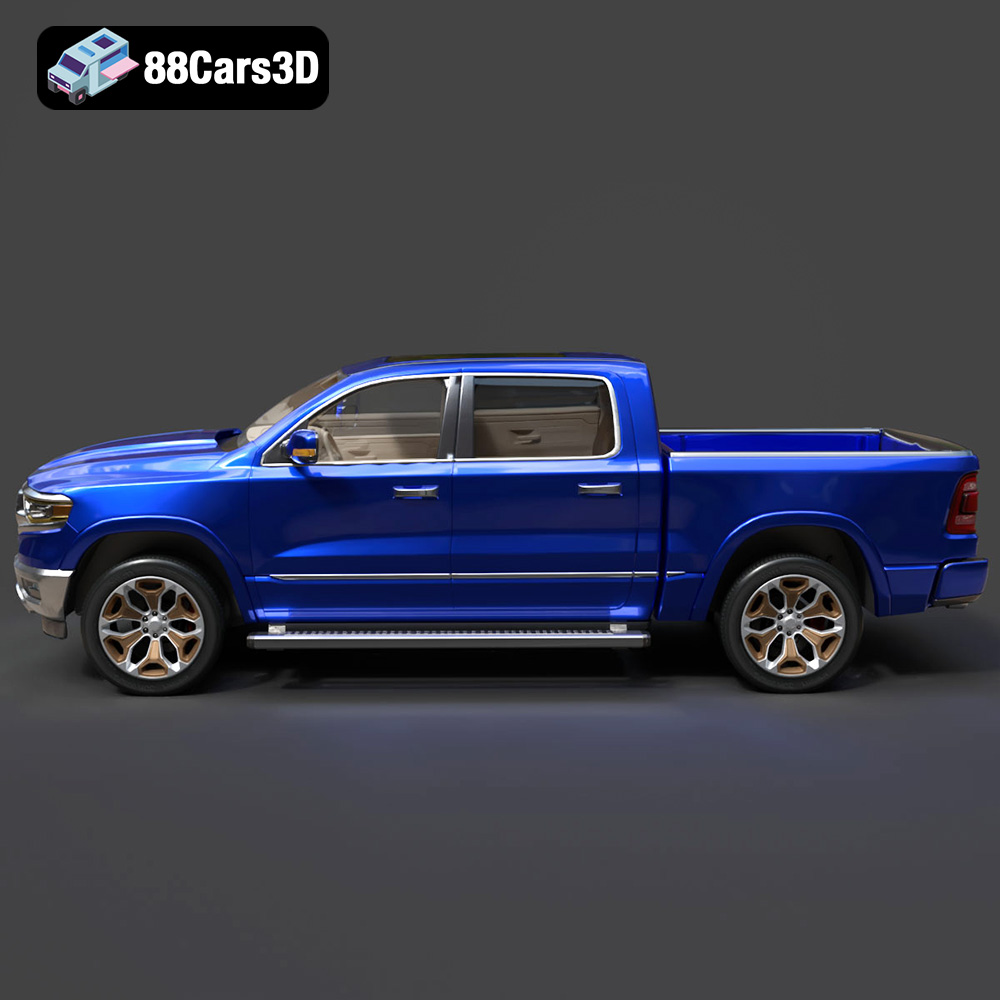
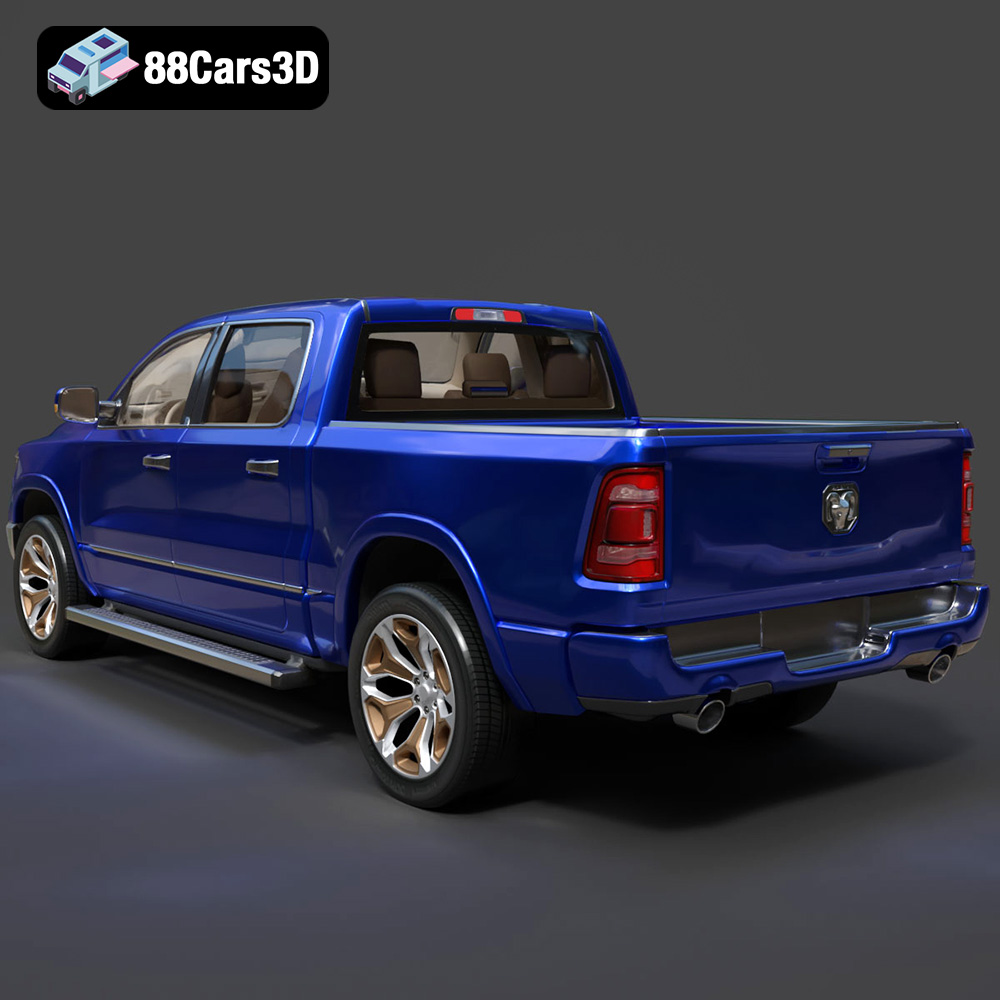
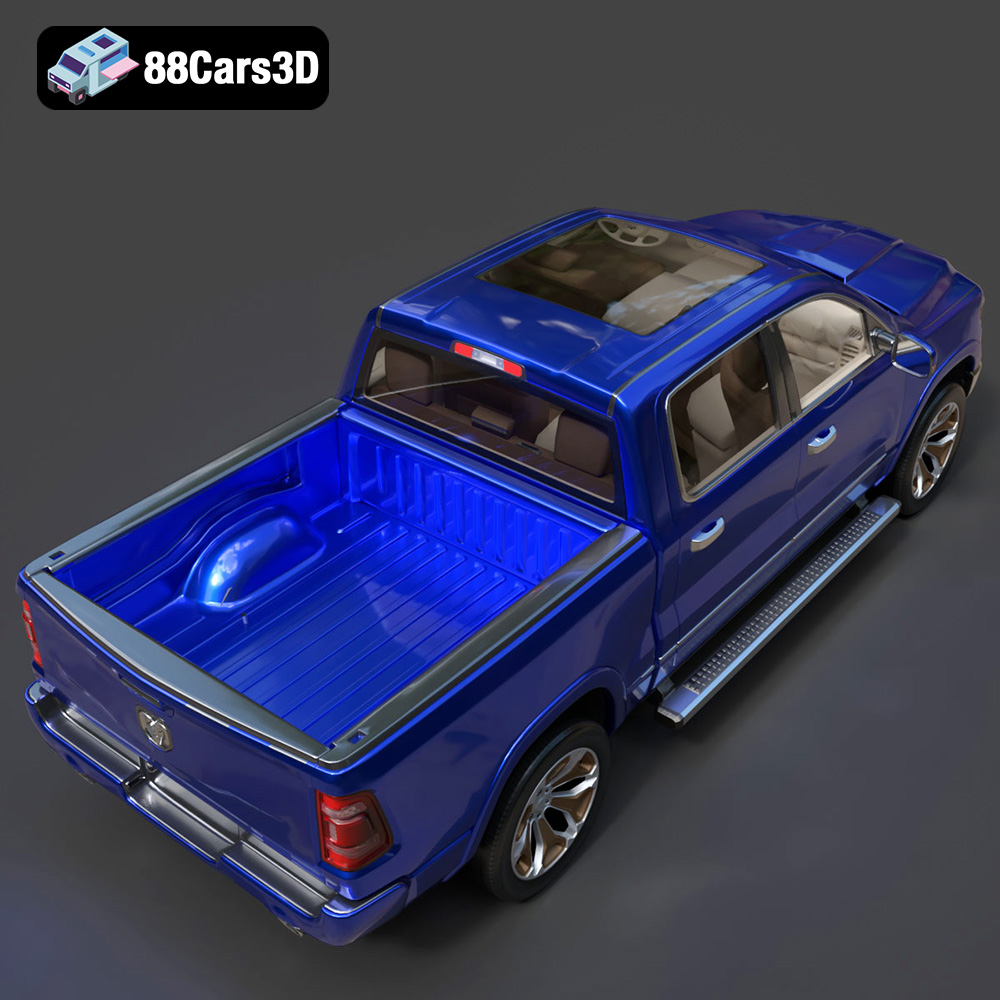
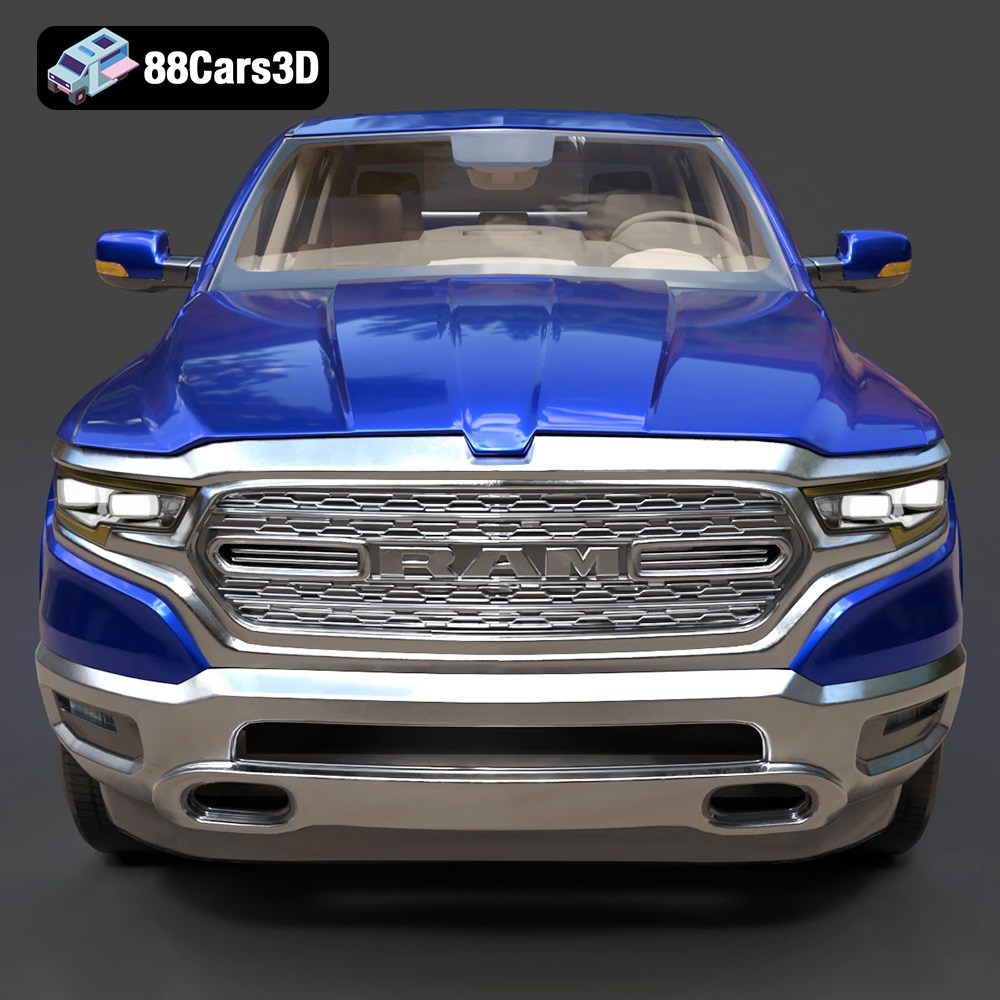
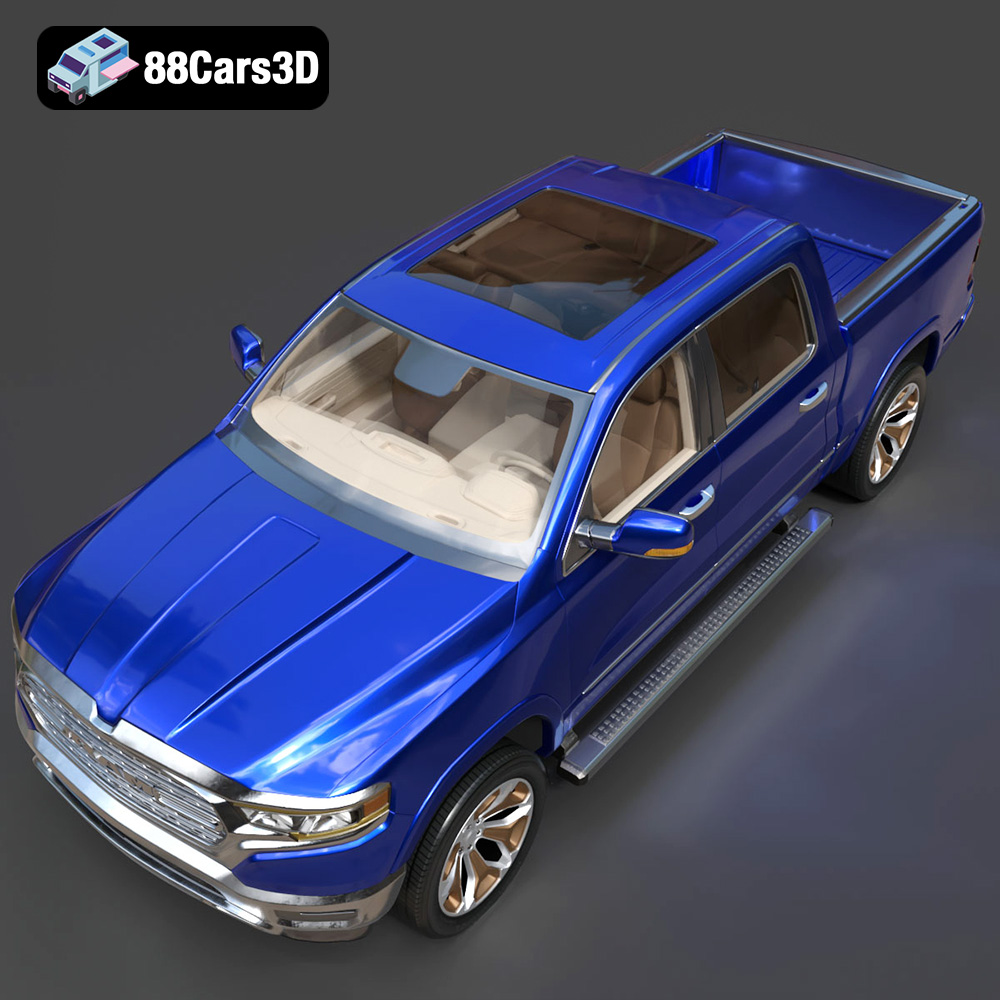
The Dodge RAM 2019 3D Model is a professionally crafted digital asset designed for high-end visualization and interactive applications. This model captures the rugged aesthetic and iconic design of the modern pickup truck with precision and accuracy.
This model features clean geometry and realistic materials, ensuring professional quality for close-up renders and complex scenes. Every surface is optimized to balance detail and performance, making it suitable for a wide range of creative projects.
Applications for this 3D model include game development, architectural visualization, automotive rendering, and AR/VR simulations. Whether you are creating a cinematic animation or an interactive driving experience, this asset provides the necessary realism and flexibility.
The following file formats are included:
.blend – Editable Blender file with materials and lighting setup
.fbx – Game-engine ready format for Unreal Engine and Unity
.obj – Standard 3D model format compatible with all major software
.glb – Optimized for AR/VR and web-based visualization
.stl – Suitable for 3D printing and prototyping
.ply – Detailed polygon mesh for analysis and visualization
.unreal – Pre-configured for Unreal Engine use
.max – Editable 3ds Max file for rendering and animation
$19.99