Get 50% OFF All Premium 3D & STL Models!

In the dynamic realm of digital design, the demand for high-fidelity 3D assets continues to escalate across industries. From cinematic spectacles and immersive game worlds to advanced product visualization and architectural renders, the quality of a 3D model can significantly dictate the success and realism of a project. Nowhere is this more apparent than with vehicles, where intricate mechanical details and sleek aesthetics demand meticulous digital representation.
Professional 3D car models and vehicle assets are more than just pretty pictures; they are robust, engineered data sets designed for versatile applications. They form the backbone of compelling automotive rendering, drive engaging game assets, and provide critical components for detailed simulations. Imagine showcasing a futuristic concept car with breathtaking realism, animating a chase sequence with perfect vehicle dynamics, or even prototyping a physical product through precise digital fabrication. All these scenarios hinge on the foundation of an exceptionally crafted 3D model.
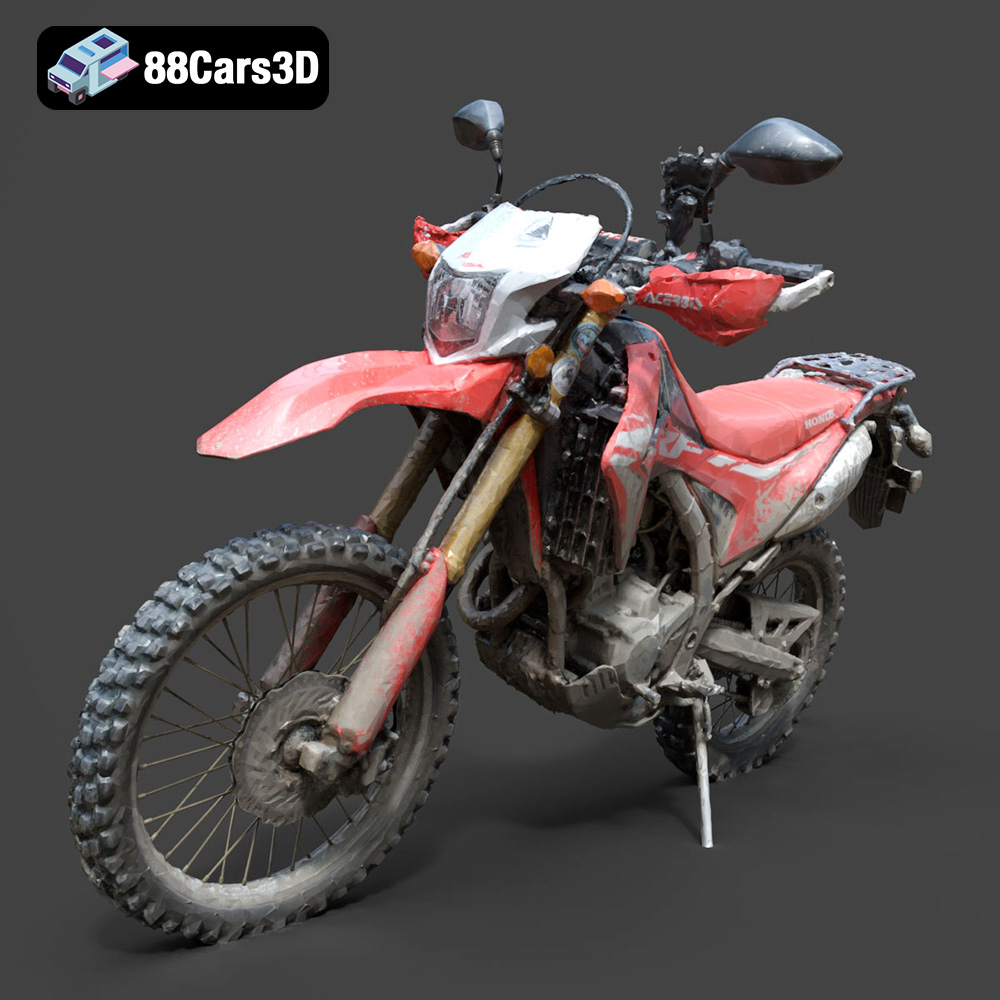
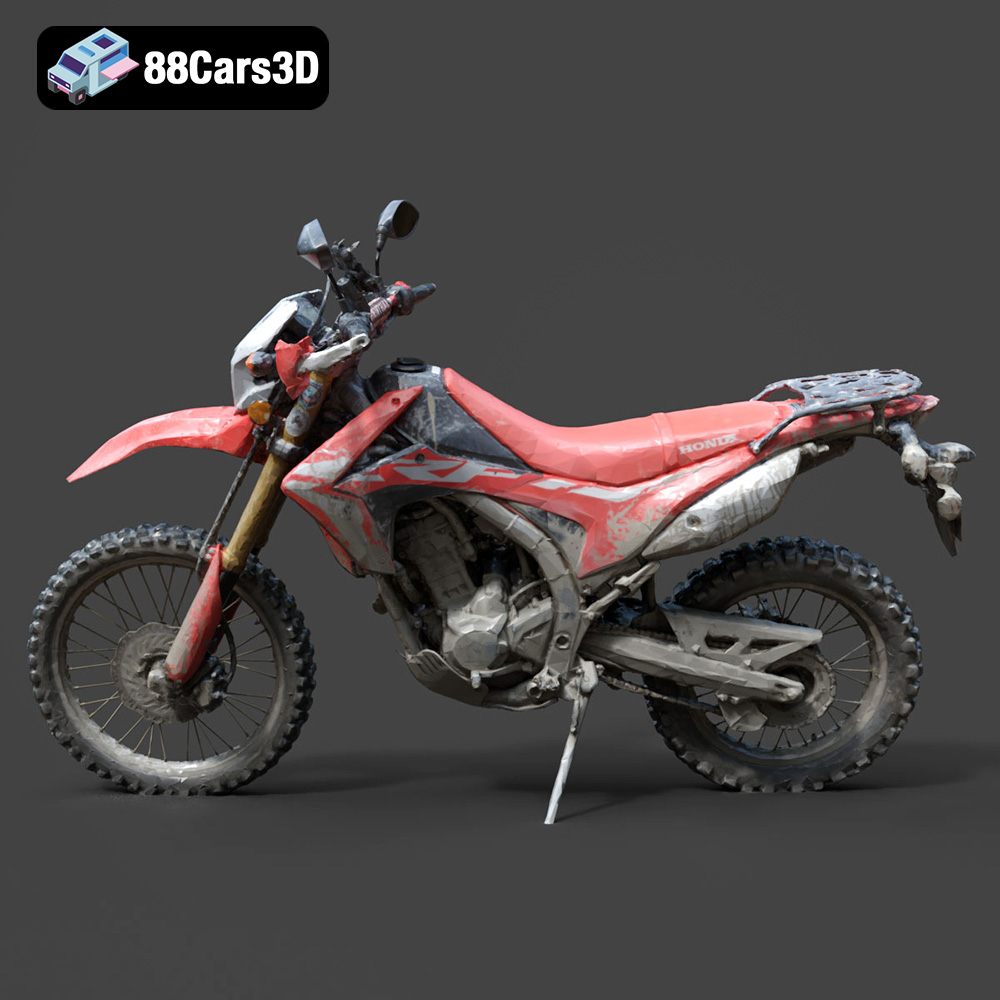
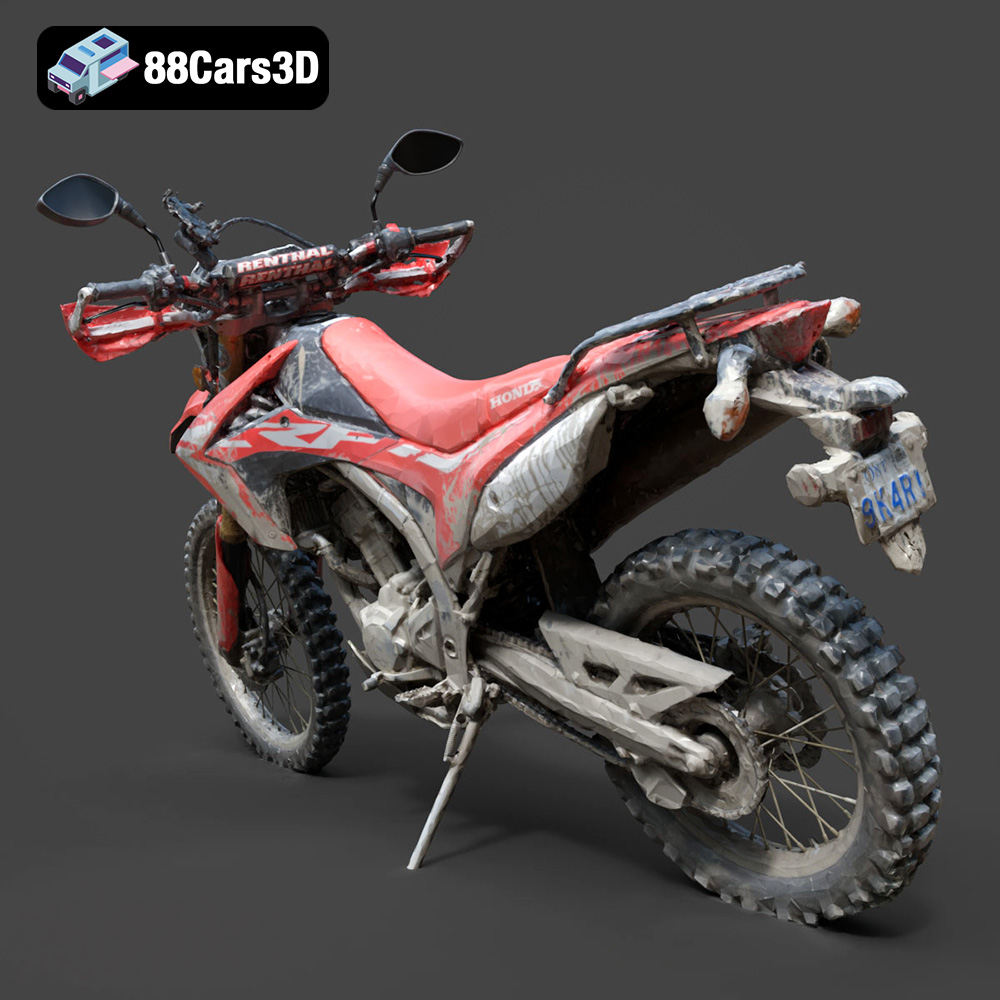
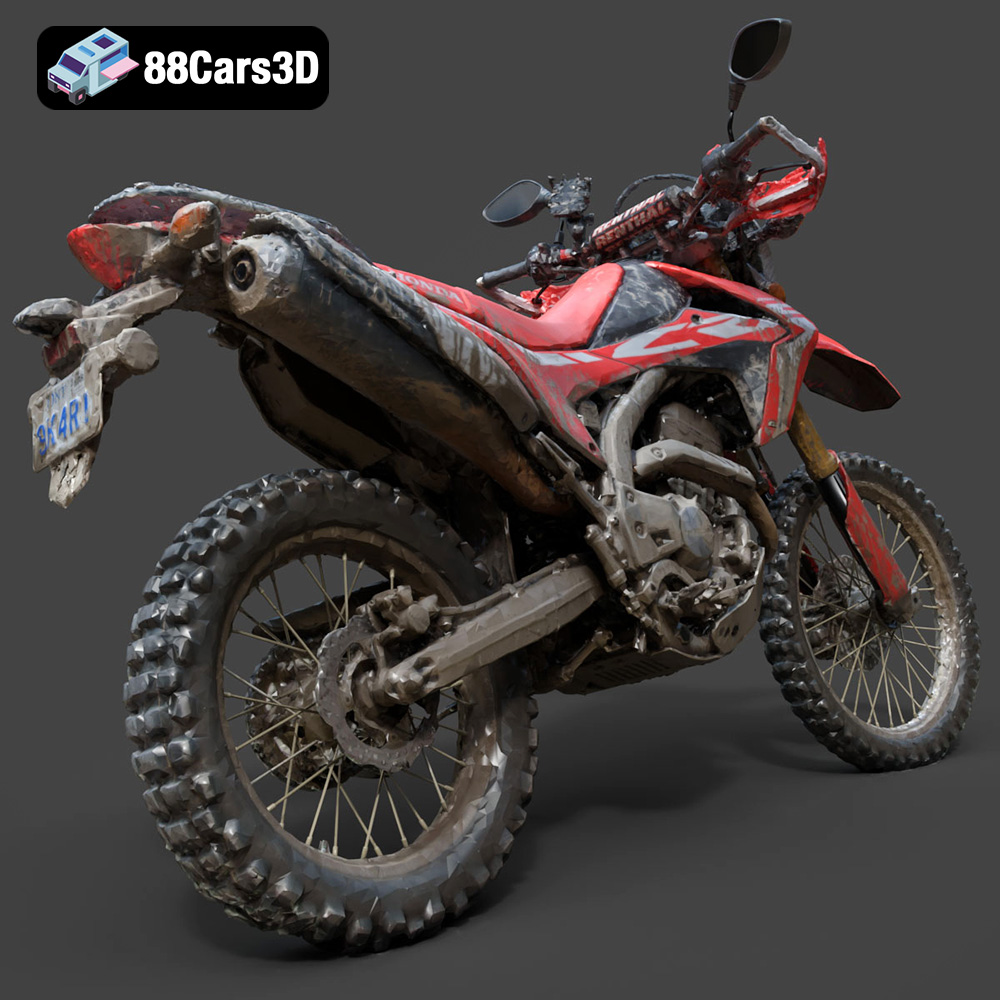
This pursuit of digital perfection is epitomized by assets like the Honda Motorcycle-001 3D Model, available on 88cars3d.com. This model isn’t merely a static representation; it’s a meticulously engineered digital twin, ready to be deployed across a spectrum of professional workflows. Its clean geometry, accurate topological structuring, and realistic material setup make it an invaluable resource for demanding projects where visual fidelity and uncompromised performance are paramount. Join us as we delve into the technical intricacies and expansive applications that define true professional-grade 3D vehicle assets.
The versatility of a professional 3D model is often defined by the range of file formats it supports. Each format serves a specific purpose, offering unique advantages for different stages of a production pipeline, from initial modeling to final rendering, real-time implementation, or even physical fabrication. Understanding these formats is crucial for any 3D artist or developer seeking to integrate high-quality assets like the Honda Motorcycle-001 3D Model seamlessly into their projects.
The .blend file format is native to Blender, a powerful open-source 3D creation suite. When an asset is provided as a .blend file, it means you’re receiving a fully editable Blender scene. This typically includes the model’s geometry, materials, textures, lighting setup, camera configurations, and even animation data if present. For users of Blender, this format offers the most flexibility, allowing for direct manipulation, modification, and integration within their existing Blender projects without any loss of data or conversion artifacts. It’s ideal for artists who want full control over the asset’s attributes and wish to leverage Blender’s comprehensive toolset for customization or further development.
.fbx (Filmbox) is arguably one of the most widely used proprietary 3D file formats, developed by Autodesk. It excels at transferring 3D data between different software applications, especially within game development. An .fbx file can encapsulate a vast amount of data, including geometry, materials, textures, bones, skinning, animation, and even camera and light data. Its robust support in game engines like Unreal Engine and Unity makes it the go-to format for exporting game assets, ensuring that all necessary data for real-time rendering and interaction is preserved. The Honda Motorcycle-001 3D Model‘s .fbx version is specifically tailored for these demanding real-time environments.
The .obj (Wavefront OBJ) format is a widely adopted, open, non-proprietary 3D geometry definition file format. It’s known for its simplicity and broad compatibility across almost all 3D software packages. While .obj files primarily store geometry (vertices, normals, texture coordinates, and faces), they can also reference external material definition files (.mtl) for basic material properties and texture maps. It’s an excellent choice for a clean mesh transfer when you need to ensure basic geometry integrity across disparate software or simply don’t require complex animation or rigging data.
.glb (GL Transmission Format Binary) is a relatively newer format, gaining rapid traction due to its optimization for modern web, Augmented Reality (AR), and Virtual Reality (VR) applications. It’s a binary container format that includes 3D model data (geometry, materials, textures, animations) in a single, compact file. This “all-in-one” nature makes it incredibly efficient for streaming and displaying 3D content in browser-based viewers, AR/VR experiences, and mobile applications where file size and loading speed are critical. Assets provided in .glb are pre-optimized for quick deployment in these interactive environments.
.stl (STereoLithography) is the de facto standard file format for 3D printing and CAD software. It represents a 3D model as a series of connected triangles (a tessellation) that describe the surface geometry of an object without color, texture, or other CAD attributes. Its simplicity makes it universally readable by 3D printers and slicing software. When a model like the Honda Motorcycle-001 3D Model is offered in .stl, it means the geometry is clean and watertight, making it suitable for physical prototyping or creating miniature replicas.
The .ply (Polygon File Format, or Stanford Triangle Format) is another format for storing 3D data, particularly useful for scanned data, point clouds, and mesh models with additional properties. While it can store geometry similar to .obj, .ply is capable of storing more complex attributes per vertex and face, such as color, transparency, normals, texture coordinates, and even scalar values. This makes it a powerful format for scientific visualization, 3D scanning workflows, and applications requiring precise mesh analysis or processing, offering a richer dataset than .stl.
While not a universal file format in the same vein as .fbx or .obj, the inclusion of an .unreal file often refers to an asset package specifically configured and optimized for Unreal Engine. This typically means the model has been imported, materials set up with Unreal’s Physically Based Rendering (PBR) system, textures linked, collision meshes generated, and potentially even LODs (Levels of Detail) configured. An .unreal package from a marketplace like 88cars3d.com significantly reduces setup time for developers, allowing immediate drag-and-drop integration into their Unreal projects, delivering engine-ready performance and visuals.
Finally, the .max file format is the native project file for Autodesk 3ds Max, a leading software for 3D modeling, animation, and rendering in architectural visualization, film, and game development. Similar to .blend, a .max file contains all scene information, including geometry, modifiers, materials, textures, lights, cameras, animation, and render settings. Providing a .max file offers 3ds Max users the full creative freedom to dissect, modify, and render the model within its native environment, taking advantage of 3ds Max’s extensive feature set for high-end rendering and animation tasks.
Creating a high-quality 3D vehicle model is a blend of artistic skill and engineering precision. It goes far beyond simply tracing blueprints; it involves an intricate understanding of topology, material science, and the specific demands of different digital pipelines. The Honda Motorcycle-001 3D Model exemplifies these principles, showcasing the rigorous standards that define professional-grade automotive assets.
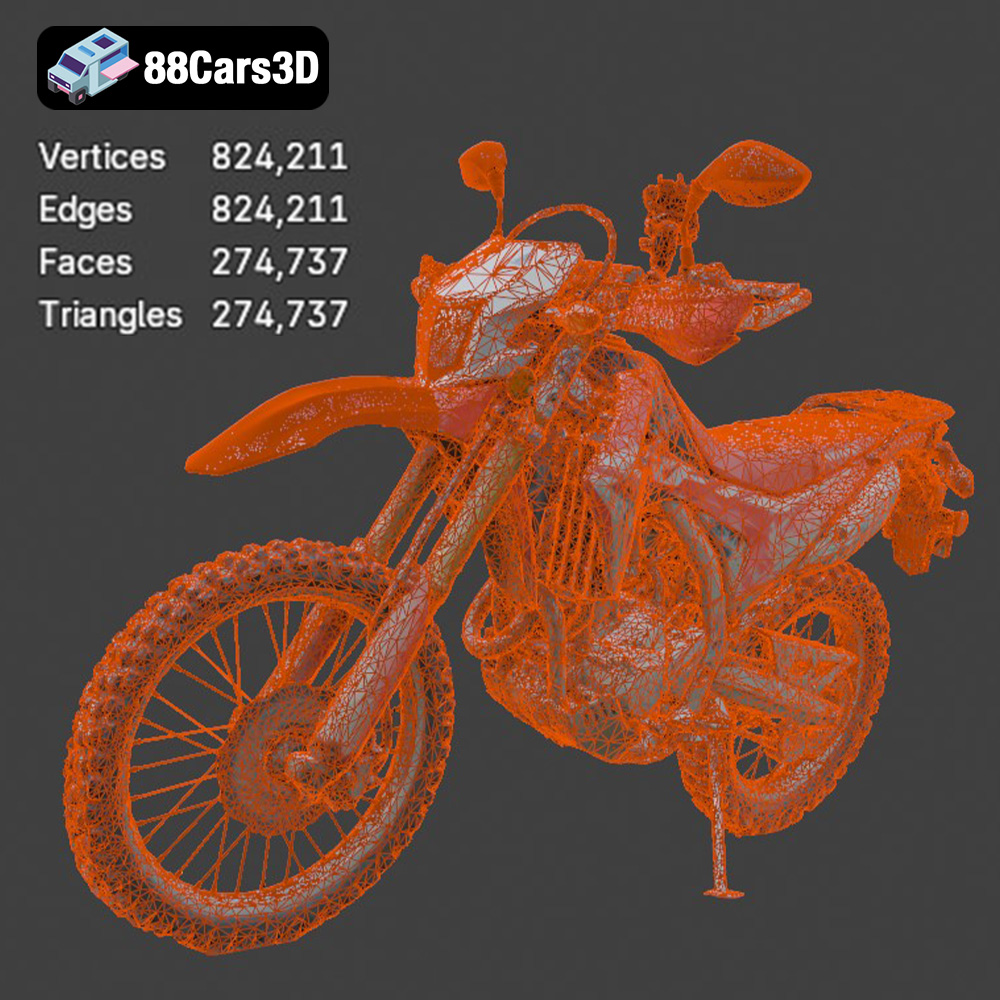
At the heart of any great 3D model is its geometry. For automotive assets, this means clean, optimized polygonal meshes that accurately capture the vehicle’s contours and details. Professional models feature quad-based topology, which facilitates smooth subdivision, deformation, and UV mapping. A low poly count where appropriate ensures efficient performance, especially for game assets, while higher detail areas maintain visual fidelity. The Honda Motorcycle-001 3D Model boasts accurate topological structuring, ensuring that its curves are pristine and its components can be easily manipulated or animated without visual artifacts, from the sleek fuel tank to the intricate engine block.
Beyond the mesh, materials and textures are what breathe life into a 3D model. Modern rendering relies heavily on Physically Based Rendering (PBR) workflows, which simulate how light interacts with surfaces in the real world. This requires precise albedo, roughness, metallic, normal, and ambient occlusion maps. A professional model includes expertly crafted PBR materials that mimic real-world paint, chrome, rubber, glass, and leather with convincing accuracy. The Honda Motorcycle-001 3D Model features realistic materials, ensuring that it looks stunning under any lighting condition, whether in a detailed close-up render or a fast-paced game environment. UV mapping, crucial for texture application, is clean and non-overlapping, maximizing texture resolution and minimizing distortion.
What truly sets a professional model apart is its meticulous attention to individual components. A vehicle isn’t a single monolithic object; it’s an assembly of hundreds of parts, each with its own specific form and function. From brake calipers and exhaust pipes to suspension linkages and dashboard gauges, each element requires careful modeling. For models like the Honda Motorcycle-001 3D Model, this means individual components are modeled with precision, allowing for detailed macro close-ups and dynamic shots. This modularity also facilitates animation (e.g., suspension compression, wheel rotation) and customization, offering greater flexibility for various project requirements.
The rise of interactive entertainment and immersive experiences has placed immense demands on 3D asset quality and optimization. Game development and AR/VR environments require models that are not only visually striking but also incredibly performant. Professional 3D car models are specifically engineered to meet these rigorous criteria, transforming complex designs into real-time ready assets.
Game engines like Unreal Engine and Unity are at the forefront of real-time rendering. Integrating a vehicle model into these platforms requires careful optimization. This involves balancing polygon counts through techniques like LODs (Levels of Detail), ensuring efficient UV mapping for texture streaming, and setting up collision geometry for realistic physics interactions. The Honda Motorcycle-001 3D Model, with its game-engine ready .fbx and pre-configured .unreal formats, is designed for seamless integration. Its clean geometry and optimized materials contribute to excellent visual fidelity without compromising frame rates, making it an ideal choice for racing games, open-world simulations, or virtual training applications.
Developers using Unreal Engine, for instance, can drop the pre-configured .unreal asset directly into their project, knowing that materials are set up with PBR shaders, textures are correctly linked, and the model is scaled appropriately. For Unity, the .fbx file provides a robust starting point, retaining crucial data like materials and potentially rigging for immediate use. This level of preparation saves countless hours of optimization and setup, allowing developers to focus on gameplay and interaction rather than asset preparation.
Augmented Reality (AR) and Virtual Reality (VR) represent the next frontier of immersive computing. These platforms demand even greater efficiency due to the need for high frame rates and often limited computational resources on mobile devices or standalone headsets. Models for AR/VR must be highly optimized, compact, and designed for quick loading. The Honda Motorcycle-001 3D Model‘s availability in the .glb format directly addresses these needs. The .glb format packages geometry, materials, and textures into a single, compact binary file, making it perfect for streaming 3D content to AR/VR viewers or web-based applications.
Imagine a virtual showroom where customers can explore the Honda Motorcycle-001 in full 3D, customize its colors, and even “sit” on it in a VR environment. Or an AR application where the motorcycle appears scaled to life in your driveway. These experiences are made possible by well-optimized assets that can perform flawlessly across different devices, delivering uncompromised performance and striking visuals. The meticulously modeled details of the Honda Motorcycle-001 3D Model ensure that even in these close-up, interactive environments, the realism holds up.
Beyond real-time applications, professional 3D car models are indispensable tools for generating stunning, high-resolution imagery and animation for marketing, advertising, film, and product design. This is where the full fidelity of a model can be unleashed, leveraging powerful offline renderers to achieve photorealistic results.
For artists working on commercials, product launches, or feature films, the ability to render vehicles with photorealistic precision is paramount. Software like 3ds Max and Blender, especially when paired with advanced renderers such as V-Ray, Corona, Cycles, or Octane, can produce images indistinguishable from real-life photography. The Honda Motorcycle-001 3D Model, offered in both .max and .blend formats, provides artists with the complete scene setup for immediate high-end rendering. This includes not just the model, but also potentially studio lighting, camera angles, and material configurations optimized for specific renderers.
The clean geometry and professional-grade materials of the model ensure that reflections are accurate, shadows are soft and realistic, and every surface reacts believably to light. Artists can easily adjust materials, swap out environments, or animate the motorcycle with confidence, knowing the underlying asset is robust enough to handle the demands of complex rendering pipelines. This capability makes it an ideal asset for crafting compelling marketing visuals, detailed product showcases, or dynamic sequences in cinematic productions.
The integration of vehicle models into architectural visualizations (ArchViz) has become a standard practice. Placing a realistic motorcycle in front of a modern building or within a garage interior adds context, scale, and a sense of lived-in authenticity to the scene. Similarly, in product visualization, a high-fidelity motorcycle model can be used to demonstrate accessories, test design iterations, or even create immersive configurators for potential buyers. The versatility of the Honda Motorcycle-001 3D Model extends perfectly into these realms.
Designers can import the model into their ArchViz scenes, utilizing its realistic materials and precise dimensions to enhance the overall credibility of their presentations. For automotive design firms, this model can serve as a benchmark or a placeholder for early-stage design reviews, allowing them to visualize how new components or environments interact with an existing, well-understood vehicle form factor. The quality available at 88cars3d.com ensures that these integrated models elevate the final output, rather than detracting from it with subpar assets.
While the digital world often receives the spotlight, the true versatility of a professional 3D model extends into the physical realm. With the advent of accessible 3D printing, digital assets can now be transformed into tangible objects, serving purposes from rapid prototyping to creating physical replicas. The Honda Motorcycle-001 3D Model supports this transition through its dedicated file formats.
The .stl file format is the universal language of 3D printing. When a 3D model is provided in .stl, it means the geometry has been processed to be “watertight” – a critical requirement for successful 3D printing. A watertight mesh has no gaps or holes, ensuring that the 3D printer can interpret the model as a solid object. The Honda Motorcycle-001 3D Model‘s availability in .stl format means designers, hobbyists, or engineers can easily export it to their slicing software and prepare it for printing.
This opens up possibilities for creating physical prototypes, scale models for presentations, or even functional components (depending on the printer and material capabilities). For instance, an engineer might 3D print a scale model of the motorcycle to test ergonomic layouts or physical clearances of surrounding objects. The high precision with which the digital model is constructed translates directly into the accuracy of the physical print, offering a reliable bridge between the virtual and real worlds.
The .ply format, while less common for direct 3D printing, plays a significant role in technical analysis and data visualization. Its ability to store additional properties per vertex and face (like color, normals, or even custom attributes) makes it highly valuable for scientific and engineering applications. For complex assets like the Honda Motorcycle-001 3D Model, providing a .ply file allows for advanced mesh inspection, simulations, or reverse engineering workflows.
Engineers could use the .ply data for finite element analysis (FEA) to study stress points on the motorcycle frame, analyze aerodynamic properties, or even reconstruct parts based on existing scan data. This level of detail and data richness supports more than just visual representation; it empowers technical professionals with a robust dataset for deep analytical work, ensuring that the model is not just a visual asset, but a functional data package for rigorous study.
The demand for high-quality 3D assets in today’s digital landscape is undeniable, and for complex subjects like vehicles, the standard of excellence is exceptionally high. From creating breathtaking cinematic renders to developing immersive game worlds and prototyping physical designs, a truly professional 3D model serves as a cornerstone for successful projects. It’s not just about aesthetics; it’s about meticulously engineered geometry, realistic materials, and versatile file format support that can adapt to any pipeline.
The Honda Motorcycle-001 3D Model stands as a prime example of such an asset. Its detailed construction, accurate topology, and comprehensive suite of industry-standard file formats – including .blend, .fbx, .obj, .glb, .stl, .ply, .unreal, and .max – ensure it’s an authoritative digital twin for a vast array of demanding professional applications. Whether you are an architectural visualizer seeking to add realism to your scenes, a game developer optimizing for performance, or a product designer exploring 3D printing, this model offers the quality and flexibility required.
Investing in such high-caliber 3D car models from trusted sources like 88cars3d.com significantly streamlines production workflows, enhances visual fidelity, and ultimately elevates the impact of any digital endeavor. Explore the possibilities and empower your creative vision with assets designed for distinction.
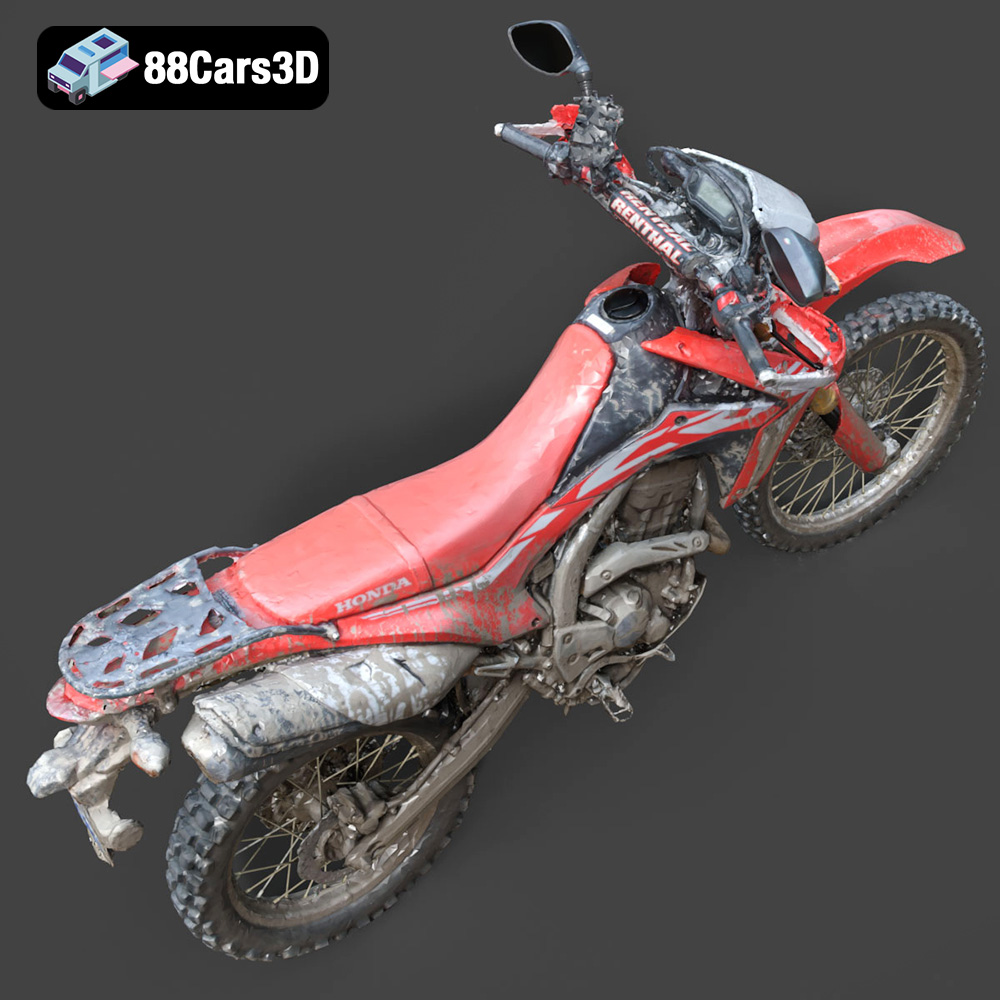
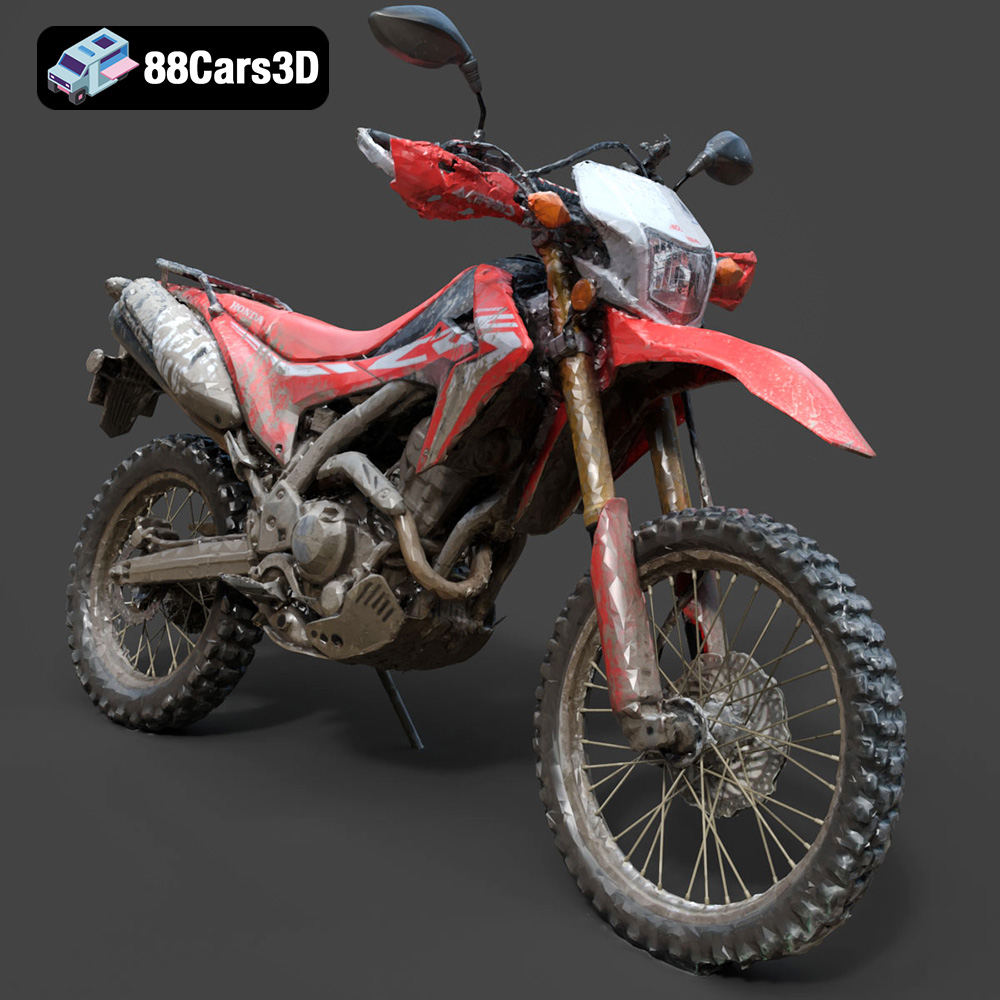
Experience an exceptional level of realism with the Honda Motorcycle-001 3D model. Meticulously constructed to capture the exact engineering, sleek aesthetic, and dynamic profile of this renowned motorcycle, it serves as an authoritative digital twin for demanding professional projects. This model features clean geometry and accurate topological structuring, guaranteeing seamless integration into a wide range of digital pipelines. Boasting realistic materials, a professional grade setup, and meticulously modeled individual components, it stands as a reliable asset for both macro close-ups and wide dynamic shots. Engineered for versatility, this asset is an ideal choice for advanced game development, striking cinematic rendering, immersive AR/VR environments, and technical visualizations. It delivers excellent visual fidelity and uncompromised performance across platforms. Available in a comprehensive suite of industry-standard file formats to suit any workflow: .blend – Editable Blender file with materials and lighting setup, .fbx – Game-engine ready format for Unreal Engine and Unity, .obj – Standard 3D model format compatible with all major software, .glb – Optimized for AR/VR and web-based visualization, .stl – Suitable for 3D printing and prototyping, .ply – Detailed polygon mesh for analysis and visualization, .unreal – Pre-configured for Unreal Engine use, .max – Editable 3ds Max file for rendering and animation.
$19.99
.arvr
.bike
.blend
.car3dmodel
.fbx
.gameasset
.glb
.honda
.max
.motorcycle
.motorcycle001
.obj
.ply
.rendering
.simulation
.stl
.streetbike
.twowheeler
.unreal